
Home » Philosophy
Category Archives: Philosophy

Leading with Integrity: Standing Firm Against the Echo Chamber

Sallek Yaks Musa
Truth hurts. Few appreciate it, and even fewer defend it when it threatens comfort or convention. My understanding of this reality came through personal experience, an early lesson in leadership that continues to shape how I view authority and the dangerous allure of sycophancy.
Two decades ago, my journey into education began in an unusual way. For five years, my father had spoken passionately about his dream to establish a nursery, primary, and secondary school that would help transform the state of education in our city. In 2004, we finally decided to bring that dream to life. What followed was both the beginning of my passion for education and my first encounter with the complexity of leading people and institutions.
The process of establishing the school was neither smooth nor simple. I remember every detail – the struggle to develop infrastructure that met required standards and equip it, the endless paperwork, the defence of proposals before career bureaucrats, and the scrutiny of regulatory inspections. Each stage tested our patience and resolve, yet the experience became invaluable. It offered me lessons no textbook could teach and laid the solid foundation of my leadership philosophy.
By the time we received approval to open in September 2005, I led over a hundred interviews to staff the school. That period sharpened my ability to read people and situations intuitively, a skill I have trusted ever since. The school went on to succeed beyond expectation: self-sustaining, thriving, and impacting tens of thousands of young lives. Yet, behind this success lay one central principle – truth.
My commitment to truth shaped the school’s ethos. Every decision, from recruitment to remuneration, from board meetings to relationships with parents and staff, was guided by sincerity. My academic training would later frame this conviction in philosophical terms. With leadership, I align with Auguste Comte’s positivist epistemology, rooted in the belief that truth is objective, concrete, and independent of social interpretation. This, I discovered, is easier preached than practised.
In practice, truth is disruptive. It offends vanity, challenges comfort, and exposes deception. My insistence on it often placed me in direct opposition to others on the Board, including my father. He later confided that while my defiance was difficult to bear, it forced him to confront realities he had overlooked. I further learned that the defender of truth often stands alone. My father eventually recognised what I had resisted all along: the quiet but corrosive power of flattery.
Sycophancy, though rarely discussed openly, remains one of the greatest dangers to leadership. It thrives where authority is unquestioned, and dissent discouraged. Flattery seduces leaders into believing they are infallible. It builds an echo chamber that filters information, reinforcing biases and creating an illusion of competence. Over time, this isolation from reality becomes costly as decisions are made on false premises, honest critics are sidelined, and mediocrity is rewarded over merit. But this is not a modern affliction.
The 16th-century political theorist Niccolò Machiavelli, in The Prince, warned rulers of this very danger. He cautioned that the wise Prince must deliberately surround himself with people courageous enough to speak the truth, for flatterers ‘take away the liberty of judgment.’ Centuries later, the philosopher Hannah Arendt would echo this concern, arguing that the loss of truth in public life leads to moral decay and political collapse. The persistence of these warnings shows how deeply entrenched sycophancy remains in systems of power.
The psychology behind flattery is deceptively simple. It feeds the ego, providing comfort that masquerades as respect and support. Leaders, craving affirmation, often mistake it for loyalty. But as Daniel Kahneman and other cognitive theorists have shown, human judgment is easily distorted by bias and praise. Flattery, therefore, becomes not merely a social nicety but a psychological trap, one that blinds decision-makers to inconvenient truths.
For those newly stepping into student’s course representative roles, these lessons carry special relevance. Academic leadership is often less about authority and more about stewardship, the quiet work of creating conditions where ideas can flourish, student’s voices are heard, and students can contribute honestly. Resist the temptation to surround yourself with agreeable voices. Encourage critique, invite dissent, and create a culture where questioning is not perceived as confrontation but as commitment to excellence. The strength of representation lies not in the leader’s popularity but in their willingness to confront complexity, admit limits, and make decisions grounded in truth rather than convenience.
As the once “baby school” turned twenty this year, its anniversary passed in my absence. My father’s message of appreciation reached me nonetheless, and his words reminded me why truth, though often costly, remains indispensable to authentic leadership. He wrote:
Remember, son, true leadership lies in listening attentively, sieving facts from noise, embracing unpopular voices, acting on truth, and valuing others above yourself.
That reflection closed a circle that began two decades ago. It reminded me that leadership rooted in truth is not about being right but about being realistic. It is about creating space where honesty thrives, even when it unsettles.
Flattery may offer short-term peace, but truth builds long-term strength and relationships. The leader who welcomes honesty, however uncomfortable, not only guards against failure but also nurtures a culture of integrity that outlives their term.
Twenty years after that first bold step into education, leading teams and managing academic programmes in education, I remain convinced that truth is not a luxury in leadership – it is its lifeline. Legacies are not defined by applause or position, but by the integrity to lead with sincerity, listen without fear, and act with unwavering commitment to what is right. People are ultimately remembered not for simply opposing flattery, but for the truth they championed and the courage they demonstrated to stand firm in their convictions when it mattered most.
Share this:


A review of In-Extremis: The Life of War Correspondent Marie Colvin
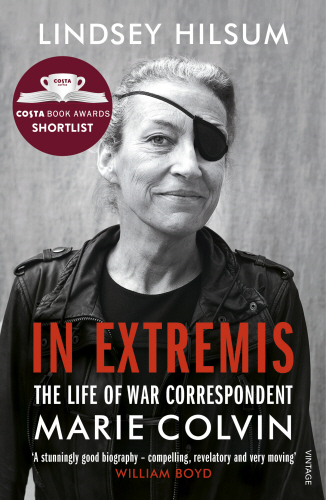
Recently, I picked up a book on the biography of Marie Colvin, a war correspondent who was assassinated in Syria, 2012. Usually, I refrain from reading biographies, as I consider many to be superficial accounts of people’s experiences that are typically removed from wider social issues serving no purpose besides enabling what Zizek would call a fetishist disavowal. It is the biographies of sports players and singers, found on the top shelves of Waterstones and Asda that spring to mind. In-Extremis, however, was different. I consider this book to be a very poignant and captivating biography of war correspondent Marie Colvin, authored by fellow journalist Lindsey Hilsum. The book narrates Marie’s life before her assassination. Her early years, career ventures, intimate relationships, friendships, and relationships with drugs and alcohol were all discussed. So too were the accounts of Marie’s fearless reporting from some of the world’s most dangerous conflict zones, including Sri-Lanka, Iraq, Lebanon, and Syria. Hilsum wrote on the events both before Marie’s exhilarating career and during the peak of her war correspondence to illustrate the complexities in her life. This reflected on Marie’s insatiability of desire to tell the truth and capture the voices of those who are absent from the ‘script’. So too, reporting on the emotions behind war and conflict in addition to the consistent acts of personal sacrifice made in the name of Justice for the disenfranchised and the voiceless.
Across the first few chapters, Hilsum wrote on the personal life of Marie- particularly her traits of bravery, resilience, persistence, and an undying quest for the truth. Hilsum further delved into the complexities of Marie’s personality and life philosophies. A regular smoker, drinker and partygoer with a captivating personality that drew people in were core to who Marie was according to Hilsum. However, the psychological toils of war reporting became clear, particularly as later in the book, the effects of Marie’s PTSD and trauma began to present itself, particularly after Marie lost eyesight in her left eye after being shot in Sri-Lanka. The eye-patch worn by Marie to me symbolised the way she carried the burdens of her profession and personal vulnerabilities, particularly between maintaining her family life and navigating her occupational hazards.
In writing this biography, Hilsum not only mapped the life of one genuinely awesome and inspiring woman, but also highlighted the importance of reporting and capturing the voices of the casualties of war. Much of her work, I felt resonated with my own. As an academic researcher, it is my job to research on real-life issues and to seek the truth. I resonated with Marie’s quest for the truth and strongly aligned myself to her principles on capturing the lived experiences of those impacted by war, conflict, and social justice issues. These people, I consider are more qualified to discuss these issues than those of us who sit in the ivory towers of institutions (me included!).
Moreover, I considered how I can be more like Marie and how I can embed her philosophies more so into my own research… whether that’s through researching with communities on the cost-of-living crisis or disseminating my research to students, fellow academics, policymakers, and practitioners. I feel inspired and moving forward, I seek to embody the life and spirit of Marie and thousands of other journalists and academics who work tirelessly to research on and understand the truth to bring forward the narratives of those who are left behind and discarded by society in its mainstream.
Share this:


Embracing Technology in Education: Prof. Ejikeme’s Enduring Influence
Sallek Yaks Musa, PhD, FHEA

When I heard about the sudden demise of one of my professors, I was once again reminded of the briefness and vanity of life —a topic the professor would often highlight during his lectures. Last Saturday, Prof. Gray Goziem Ejikeme was laid to rest amidst tributes, sadness, and gratitude for his life and impact. He was not only an academic and scholar but also a father and leader whose work profoundly influenced many.
I have read numerous tributes to Prof. Ejikeme, each recognizing his passion, dedication, and relentless pursuit of excellence, exemplified by his progression in academia. From lecturer to numerous administrative roles, including Head of Department, Faculty Dean, Deputy Vice Chancellor, and Acting Vice Chancellor, his career was marked by significant achievements. This blog is a personal reflection on Prof. Ejikeme’s life and my encounters with him, first as his student and later as an academic colleague when I joined the University of Jos as a lecturer.
Across social media, in our graduating class group, and on other platforms, I have seen many tributes recognizing Prof. Ejikeme as a professional lecturer who motivated and encouraged students. During my undergraduate studies, in a context where students had limited voice compared to the ‘West,’ I once received a ‘D’ grade in a social psychology module led by Prof. Dissatisfied, I mustered the courage to meet him and discuss my case. The complaint was treated fairly, and the error rectified, reflecting his willingness to support students even when it wasn’t the norm. Although the grade didn’t change to what I initially hoped for, it improved significantly, teaching me the importance of listening to and supporting learners.
Prof. Ejikeme’s classes were always engaging and encouraging. His feedback and responses to students were exemplary, a sentiment echoed in numerous tributes from his students. One tribute by Salamat Abu stood out to me: “Rest well, Sir. My supervisor extraordinaire. His comment on my first draft of chapter one boosts my morale whenever I feel inadequate.”
My interaction with Prof. Ejikeme significantly shaped my teaching philosophy to be student-centered and supportive. Reflecting on his demise, I reaffirmed my commitment to being the kind of lecturer and supervisor who is approachable and supportive, both within and beyond the classroom and university environment.
Prof. Ejikeme made teaching enjoyable and was never shy about embracing technology in learning. At a time when smartphones were becoming more prevalent, he encouraged students to invest in laptops and the internet for educational purposes. Unlike other lecturers who found laptop use during lectures distracting, he actively promoted it, believing in its potential to enhance learning. His forward-thinking approach greatly benefited me and many others.
Building on Prof. Ejikeme’s vision, today’s educators can leverage advancements in technology, particularly Artificial Intelligence (AI), to further enhance educational experiences. AI can personalize learning by adapting to each student’s pace and style, providing tailored feedback and resources. It can also automate administrative tasks, allowing educators to focus more on teaching and student interaction. For instance, AI-driven tools can analyse student performance data to identify learning gaps, recommend personalized learning paths, and predict future performance, helping educators intervene proactively.
Moreover, AI can support academics in research by automating data analysis, generating insights from large datasets, and even assisting in literature reviews by quickly identifying relevant papers. By embracing AI, academics can not only improve their teaching practices but also enhance their research capabilities, ultimately contributing to a more efficient and effective educational environment.
Prof. Ejikeme’s willingness to embrace new technologies was ahead of his time, and it set a precedent for leveraging innovative tools to support and improve learning outcomes. His legacy continues as we incorporate AI and other advanced technologies into education, following his example of using technology to create a more engaging and supportive learning experience.
Over the past six months, I have dedicated significant time to reflecting on my teaching practices, positionality, and the influence of my role as an academic on learners. Prof. Ejikeme introduced me to several behavioural theories in social psychology, including role theory. I find role theory particularly crucial in developing into a supportive academic. To succeed, one must balance and ensure compatible role performance. For me, the golden rule is to ensure that our personal skills, privileges, dispositions, experiences from previous roles, motivations, and external factors do not undermine or negatively impact our role or overshadow our decisions.
So long, Professor GG Ejikeme. Your legacy lives on in the countless lives you touched.
Disclaimer: AI may have been used in this blog.
Share this:


I’m not Black; my Friends and I are Brown, not Black

I recently began the process of preparing my child for the imminent transition to a new school situated in a diverse community. Despite being born into a similarly diverse environment, his early educational exposure occurred in an ethnically varied setting. Venturing into this new chapter within a racially diverse community has sparked a keen interest in him.
My child soon articulated a perspective that challenged conventional racial labels. He asserted that he and his friend Lucien are not accurately described as ‘black,’ rather he believes they are ‘brown.’ He went further to contest the classification of a lady on TV, who was singing the song “Ocean” by Hillsong, as ‘white.’ According to him, his skin is not black like the trousers he was wearing, and the lady is not white like the paper on my lap. This succinct but profound statement held more critical significance than numerous conversations I’ve encountered in my over five years of post-PhD lecturing.
The task at hand, guiding an under seven-year-old questioning the conventional colour-based categorisation, proved challenging. How do I convince an under seven-year-old that his knowledge of colours should be limited to abstract things and that persons with brown toned skin are ‘black’ while those with fair or light toned skinned are ‘white’? I found myself unprepared to initiate this complex conversation, but his persistent curiosity and incessant ‘why prompts’ compelled me to seek creative ways to address the matter. Even as I attempted to distract myself with a routine evening shower and dinner, my mind continued to grapple with the implications of our conversation.
Post-dinner, my attempt to engage in my usual political news catch-up led me to a YouTube vlog by Adeola titled ‘How I Almost Died!’ where she shared her pregnancy challenges. One statement she made struck a chord: ‘if you are a black woman and you are having a baby in America, please always advocate for yourself, don’t ever keep quiet, whatever you are feeling, keep saying it until they do something about it’ (18:39). This sentiment echoed similar experiences of tennis star Serena Williams, who faced negligence during childbirth in 2017.
The experiences of these popular ‘black’ women not only reminds me that the concept ‘black’ and ‘white’ are not only symbolic, but a tool for domination and oppression, and disadvantaging the one against the other. Drawing inspiration from Jay-Z’s ‘the story of O.J’, the song drew attention to the experiences of race, success, and the complexities of navigating the world as a ‘black’ individual. In the song, two themes stood out for me, the collective vulnerability to prejudice and the apparent bias in the criminal justice system towards ‘black’ people. In the UK, both proportional underrepresentation in staff number and proportional overrepresentation of minoritized groups in the criminal justice system and the consequences therefrom is still topical.
Jay-Z’s nuanced understanding of ‘black’ identity rejects simplistic narratives while emphasising its multifaceted nature. The verse, “O.J. ‘like I’m not black, I’m O.J.’ Okay” underscores the challenges even successful ‘black’ individuals face within racial systems. As criminologists, we recognize the reflection of these issues in daily experiences, prompting continuous self-reflexivity regarding our values, power positions, and how our scholarly practice addresses or perpetuates these concerns. Ultimately, the question persists: Can a post-racially biassed world or systems truly exist?
Share this:


The Origins of Criminology

The knife was raised for the first time, and it went down plunging into naked flesh; a spring of blood flowed cascading and covering all in red. The motion was repeated several times. Abel fell to his death and according to scriptures this was the first crime. Cain who wielded the knife roamed the earth until his demise. The fratricide that was committed was the first recorded murder and the very first crime. A colleague tried to be smart and pointed that the first crime is Eve’s violation in the garden with the apple, but I did point out that according to Helena Kennedy QC, she was framed! In the least Eve’s was a case of entrapment which is criminological but leaves the first crime vacant. So, murder it is! A crime of violence that separates aggressor and victim.
The response to this crime is retribution. In the scriptures a condemnation to insanity. In later years this crime formed the basis of the Mosaic Law inclusive of the 10 commandments and death as the indicative punishment. In the Ancien Régime the punishment became a spectacle on deterrence whilst the crowds denounced the evildoer as they were wheeled into the square! In modern times this criminality incorporated rehabilitation to offer the opportunity for the criminal to repent and make amends.
‘The first man who having enclosed a piece of ground bethought himself of saying “This is mine”’! This is an alternative interpretation of the first crime, according to Jean-Jacques Rousseau (1762/1993: 192). In The Social Contract he identifies the first crime very differently from the scriptures. In this case the crime is not directed at a person but the wider community. The usurping of land or good in any manner that violates the rights of others is crime because it places individualism ahead of the common good. As in this crime there is no violence against the person, the way in which we respond to it is different. Imperialism as a historical mechanism accepts the infringement of property, rights, and human rights as a necessity in human interactions. The law here is primarily protected for the one who claims the land rather than those who have been left homeless. In this case, crime is associated with all those mechanisms that protect privilege and property. Soon after titles of land emerged and thereafter titles of people owning other people follow. The land becomes an empire, and the empire allows a man and his regime to set the laws to protect him and his interests. Traditionally empires change from territories of land to centres of government and control of people. The land of the English, the land of the Finnish, the land of the Zulu. In this instance the King become a figure and custom law subverts natural law to accommodate authority and power.
These two “original” crimes represent the diversity in which criminology can be seen; one end is the interpersonal psychological rendition of criminality based on the brutality of violence whilst on the other end is an exploration of wider structural issues and the institutional violence they incorporate. The spectrum of variety criminology offers is a curse and a blessing in one. From one end, it makes the discipline difficult to specify, but it also allows colleagues to explore so many different issues. Regardless of the type of crime category for any person attracted to the discipline there is a criminology for all.
Between these two polar apart approaches, it is interesting to note their interaction. In that it can be seen the interaction of the social and historical priorities of crime given at any given time. This historical positivism of identifying milestones of progression is an important source of understanding the evolution of social progression and movements. Let’s face it, crime is a social construct and as such regardless of the perspective is indicative of the way society prioritises perceptions of deviance.
Arguably the crimes described previously denote different schools of thought and of course the many different perspectives of criminology. A perfectly contorted discipline that not only adapts following the evolution of crime but also theorises criminality in our society. When you are asked to describe criminology, numerous associations come to mind, “the study of crime and criminality” the “discipline of criminal behaviours” “the social construction of crime” “the historical and philosophical understanding of crime in society across time” “the representation of criminals, victims, and agents in society”. These are just a few ways to explain criminology. In this entry we explore the origins of two perspectives; theology and sociology; image that the discipline is influenced by many other perspectives; so consider their “origin” story. How different the first crime can be from say a psychological or a biological perspective. The origins of criminology is an ongoing tale of fascinating specialisms.
Rousseau, Jean-Jacques, (1762/1993), The Social Contract and Discourses, tr. from the French by G.D.H. Cole, (London: Everyman’s Library)
Share this:


The Lockdown Lowdown
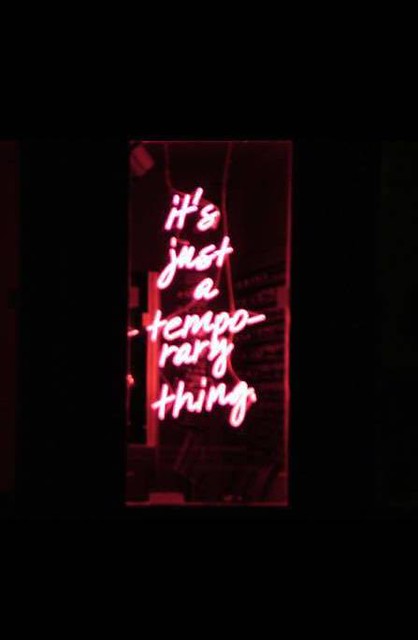
I took this photo a few years ago on a solo visit to Copenhagen, I had just quit my job and was in the process of leaving where I called home, my PTSD was certainly at its worst and the future was entirely uncertain…
A cosy Sunday evening, the flat has been hoovered, the washing is out to dry, lunch has been prepped for the following day…yet despite all of this normality me and my partner sit here on our cosy Sunday armed with the knowledge that another national lockdown is imminent. So whats next for us?
Before I explore whats next I want to reflect on what has been, it was only this time last year that my mental health was at its worst since I was diagnosed with PTSD some years ago and it was during this month last year that I found out I was pregnant. After many difficult conversations I decided that that chapter of my life was not ready to begin, not just yet, and so the guilt consumed me and I relied on anti-depressants to help me through that difficult time. Eventually as time passed so did the guilt and my mental health became stronger, because I willed it so, and after a short stint I stopped using the anti-depressants because I knew within myself I didn’t have to rely on them…
…More time passed and I found that the strength of my mental health had started to peak, I set myself goals that only I knew about and only I could achieve, I started to be critical of the people I surround myself with to ensure that I was living as authentically true to who I am as possible. This was my attempt at self care, As I withdrew from these friendships I simultaneously removed my negative addictions and repeated behaviours (drugs, alcohol, time-wasting, self-depreciation), I realised that my actions allowed me to concentrate my full energy on the things that truly matter in my life (my studies, my family, my relationship)… and then lockdown happened.
And boy was I prepared for that, I wont deny that I grew a few stretch marks and after some self hate Ive learnt to accept and love them as a natural process of my body. I realised I didn’t do much exercise during lockdown and my appetite was unruly, with zoom quiz night’s came alcohol and snacks (lots of them). Despite my growing waist I was okay mentally and yes I wont deny that having my own apartment and living with my partner helps but also having dealt with a bit of a breakdown some months prior helped order my perspective on my life, how I want to live it and how I would tackle this challenging time. As a 2nd year student I lost all hope and focus for a while as the outstanding assignments were piling up and I was heavily relying on the august submission date, I felt like I wasn’t worthy of being a university student, that I was never going to graduate and self doubt quickly reappeared into my life, Its a strange thing really during lockdown I didn’t really do anything at all, but I also never found the time to study? And the strangest thing is that actually most students felt this way and when me and my peers communicated how we were feeling we were able to support each other more and eventually those assignments were submitted and here we are… 3rd years!
So 3 days to go before lockdown 2 and how can I get through this?… how can you get through this? Undoubtedly there are many people who have dealt with a world of pain since coronavirus first graced our planet and yet in my experience I found this year to be quite grounding and it has allowed me to focus my energy on me, who I am, what I want and who I want to be (without sounding narcissistic but rather rightfully selfish), because I have no control over external happenings neither do you and thats okay. what we can do is focus on our little world; ourselves and the people around us. heres a few quotes I find to be quite relevant to this train of thought.
“To what goal are you straining? The whole future lies in uncertainty; live immediately” – Seneca
“Just keep in mind the more we value things outside our control, the less control we have” – Epictetus
“Man conquers the world by conquering himself” – Zeno
So how can you, how can we, get through lockdown? granted it may not be as-long as the last one but we’ve had a taste of normality again and so this time round it may be harder, this time we have long winter days and a lack of vitamin D combined with the uncertainty of celebrating Christmas with family looming over us, so in consideration of Epictetus’ wise words lets focus on what we can control; 1. lets schedule consistent self care( for me that comes in the medium of being disciplined, in terms of uni work.. and diet), 2. Lets move our bodies! go for a walk outside and pick up litter? (later in this blog post you’ll find some of my suggestions for walks around Northamptonshire), 3. don’t pressure yourself into being consistently pro-active! 4. do drink hot chocolate. 5. And if your sad about missing out on getting your Christmas shopping in early then try to buy from local independant businesses, you might find many local stores posting available items onto their social media pages and offering contact-free deliveries! 6. Check up on your friends and family, be mindful of keeping communication going, you don’t know who just might be struggling! 7. Buy a homeless person a warm meal!
(TIP: when looking for businesses check out this new hashtag on instagram introduced by some local Northampton businesses to get people buying more locally)… #SHOPLOCALSAVECHRISTMAS
https://www.instagram.com/explore/tags/shoplocalsavechristmas/
Overall lets focus on our own self betterment and where possible our local communities betterment (and as always wear a mask!!)
And most importantly if you are struggling then reach out to someone and let them know, as always with my posts as the focus tends to be on mental health I will provide links to the university’s, the local communities and national charities mental health resources, so please take note and rely on them if you need to.
For my previous blogs/context have a read of the following:
Navigating Mental Health at University
Navigating your mental health whilst studying at university during a worldwide health pandemic
“Joy comes to us from those whom we love even when they are absent” – Seneca
“Never let the future disturb you. You will meet it, if you have to, with the same weapons of reason which today arm you against the present” – Marcus Aurelius
“Don’t hope that events will turn out the way you want, welcome events in whichever way they happen: this is the path to peace” – Epictetus
I could continue on with a great deal more of these philosophical quotes and if you are interested in them then I’d recommend reading up on the discipline of stoicism, but if you’d like to read on you’ll find a few suggestions of areas to walk in and around Northamptonshire in aid of keeping your body moving during this lockdown, (and if you can take a bag and pick up litter).
Exploring Northampton’s Parks and Reservoirs
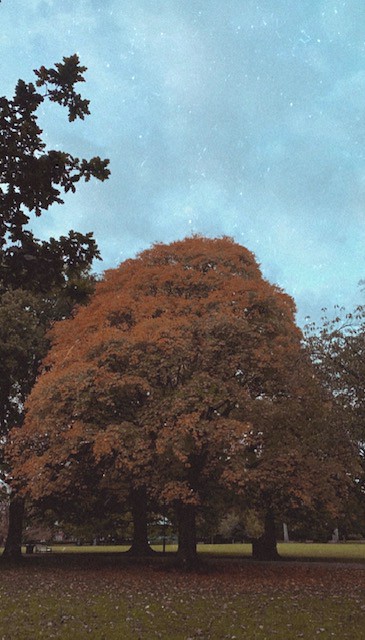
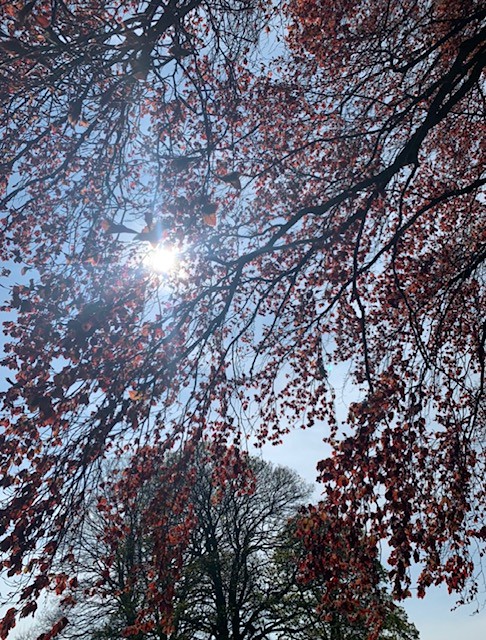
Abington Park; Located in the NN1 postcode a short distance from the town centre. The park has plenty of areas to explore with ponds, forestry areas and it offers some lovely autumnal photo opportunities, heres a particularly orangey-ember tree that caught my eye.
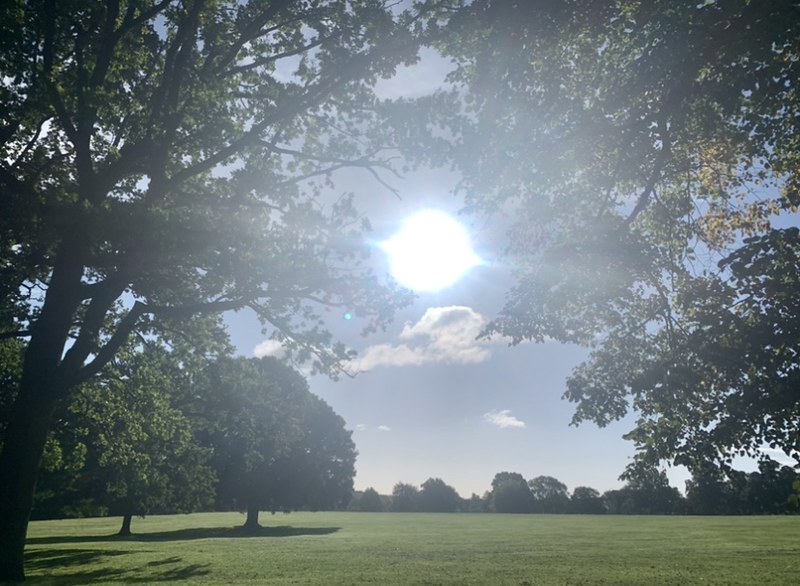

Sixfields lakes and reservoir; Unless you know of this lake you wouldn’t know it was there, Its situated a little down from the Sixfields football stadium, there is a small roundabout you can take to go up towards the cinema (Walter Tull Way), down Edgar Mobbs way, or join the A5076, and there is a fourth almost hidden turning that will take you down a road adjacent to Duston mill road, it is down this road that you will find this little gem.
There are two lakes to walk around, one being the main option where most people park up (there is parking on site) at a leisurely stroll the walk will take around an hour, you may see plenty of fishermen and lots of wildlife!
There is a second walk which I’ve only recently discovered myself, just down from the car park there is a small gate and it is through there you can explore to your hearts content!

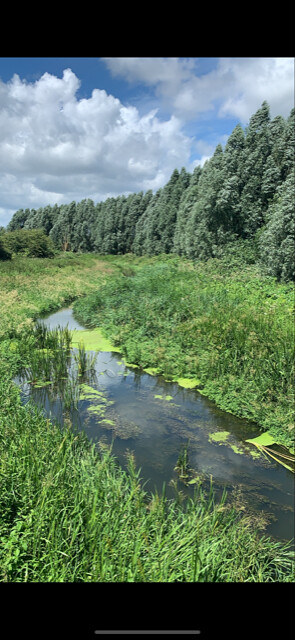
The Racecourse; I Imagine plenty of students and teachers alike will be aware of this location as it housed the university campus for many many years. As a budding criminologist I cant ignore the fact that the Racecourse has developed a rather unruly reputation for crime, I’ve personally never experienced anything and Ive lived in Northampton the majority of my life but thats not to say that it doesn’t happen, so as always be wise about your walk, perhaps avoid late night’s, let someone know where you are walking and stick to the street lights. The racecourse is a roughly 15 minute walk from the town centre and on good weather days offers views like this;

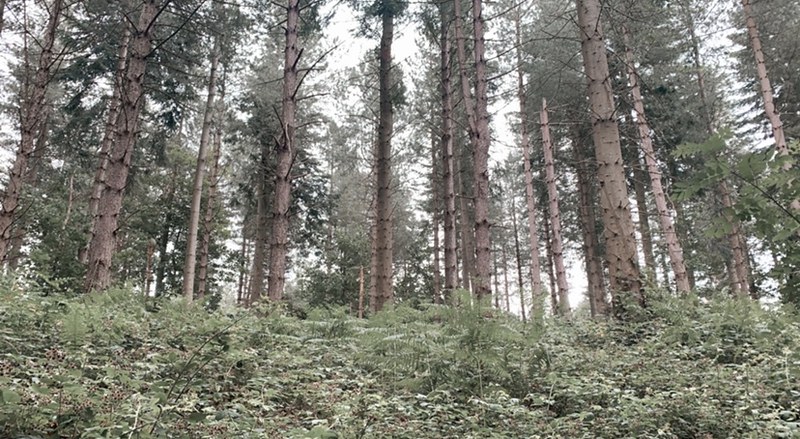
a-bit further afield: Harlestone Firs; I would recommend driving to this location if you can, there may be local busses that run in the area but I would recommend checking the COVID guidance with regard to bus routes. So Harlestone Firs is a fantastic location to get lost in the woods for a few hours, and I literally mean get lost… I have been there countless times and I still lose myself in there, but its a welcome loss. You’ll find endless amounts of huge ferns, fir trees, endless pathways and there is a working timber yard in amongst this location too. Wear boots for this spot I always choose my trusty Dr.Martens.
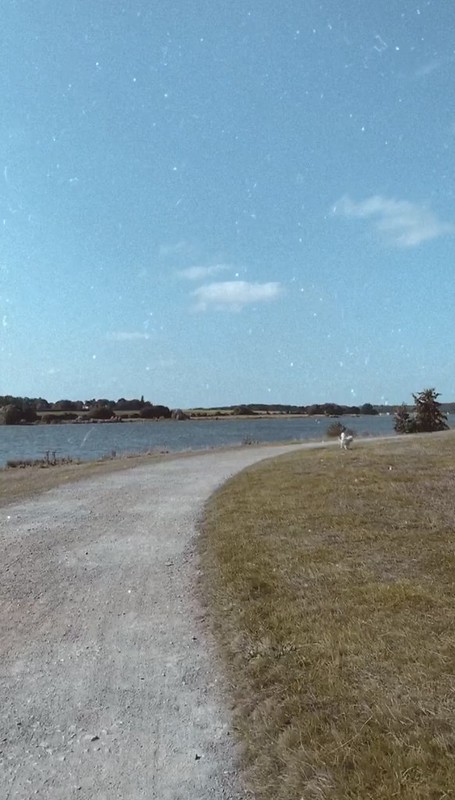
Brixworth Country Park/ Pitsford Reservoir; Another location you’ll likely need a vehicle to visit. This huge location offers a giant walk or a bike ride, you can of-course take your pooch with you too but keep them on a lead as theres plenty of cyclists at this location. I recently made the mistake of biking around here with the pooch on an extremely hot day and wow was that an interesting experience. There is paid parking on site or a little slip road you can park along. If you need to just take a few hours or even the whole day go and visit this location, take a packed lunch and sit and enjoy the view.
Here are some more locations that you may already know about and can explore during this lockdown, do make sure to check local COVID guidance, and even if you cant visit some locations now then make a note of them and visit them when you get a chance, Northamptonshire has such a vast amount of countryside to offer!
Becketts Park – Located just of the university campus offering a short distanced walk but plenty of wildlife and a nice view of the canals and lake.
Sywell Reservoir – You’ll likely need a vehicle to visit this location but you could also take the X46 bus (or X47?) Sywell takes around 2-3 hours to walk depending on pace, its one of my favourite spots as I grew up walking around this location.
Victoria Park and Dallington Park – Both are situated in St.James, and both are relatively small in comparison to the other locations but well worth incorporating into your daily exercise if you live within this location.
– Brackmills Country Park
– Delapre Park and Delapre Wood
– Earls Barton just of Doddington road, a pathway leading down to Summer Leys, here you can explore plenty of the river nene, beautiful views of the surrounding landscape and lots of horses!
– Rectory Farm fields; Here you can explore the fields (but be respectful of the farmers land) these fields stretch out to Overstone and Sywell, if you’d like to visit sywell reservoir and living within rectory farm then just take the fields route this route would take around 30 mins to walk to sywell reservoir and its well worth it.
So thats it for me, if you have any of your own suggestions not just in regard to walks around Northamptonshire but also how to keep your mind healthy during this next lockdown then please do comment any suggestions you might have, were all in this together!
If you’ve read this far then here’s one last quote to guide you into your day…
“The impediment to action advances action, what stands in the way becomes the way” – Marcus Aurelius
see below for references to guidance and advice.
- Counsellors – The Counsellors will listen to you and help you respond to the difficulties in your life, they will allow you to develop your abilities to address and resolve issues in your life. https://www.northampton.ac.uk/student-life/support/counselling-and-mental-health-team/counsellors@northampton.ac.uk
- Mental Health Advisors – The Mental Health Advisors will provide a private and comfortable space to discuss your mental health difficulties and work with you to develop coping strategies whilst studying. https://www.northampton.ac.uk/student-life/support/counselling-and-mental-health-team/
mha@northampton.ac.uk - Assist – Assist can give you advice and guidance for managing your disability whilst studying, for me they helped with a DSA application regarding my Anti-Depressant medication, the DSA application will give me the opportunity to have 6 appointments with the counselling team who can further help me work through my issues by providing me with a safe and comfortable space to talk. https://www.northampton.ac.uk/student-life/support/about-assist/ ASSIST@northampton.ac.uk
- Speak to your GP, they can refer you to the NHS Mental Health Services.
- https://www.nhs.uk/using-the-nhs/nhs-services/mental-health-services/how-to-access-mental-health-services/
- Other helpful support links (local and national)
- https://www.mind.org.uk/
- http://thelowdown.info/
- https://www.mentalhealth.org.uk/
Share this:


Is justice fair?

There is a representation of justice. A woman (lady justice) blindfolded holding the scales of justice in one hard and a sword in the other. This representation demonstrates a visualisation of the core principles of justice: blindfold for impartiality, the scales for weighting the evidence and the sword, the authority. The need for this representation is making the point that justice is fair. To all people justice is an equaliser that brings the balance back to everyday life. Those who break the natural order are faced with the consequences of the arbitration made by the system that assumes equality for all against the law.
The representation of justice must be convincing in order to be accepted by the public. The impartiality has to be demonstrable and the system forms a bond across all social strata. Well, at least in principle. There is a difference between representation and reality. This is something we learn from early on. As a kid, I remember a special ice-cream in a cup that had a little toy in the bottom of the cup. It looked so appealing, but the reality never met my expectations. Still, I continued to buy it, in anticipation that maybe the representation and the reality will meet. Like the ice cream, the justice system, has a beautiful packaging that makes it incredibly appealing.
Forged in the flames of the renaissance and the enlightenment, justice transformed from a convenient divinity to a philosophical ideal and a social need. It became a concept that reflected social changes and economic growth. Many of the principles of justice, like equality and fairness, carried forward from the classical era. Only at this time these concepts were enriched with philosophical arguments influenced by humanism. The age of exploration and knowledge added to the scientific rigour of forensic investigation and the procedures became standardised. Great minds conceptualised some of theoretical aspects and transferred them in everyday practice. Cesare Beccaria’s treatise On Crimes and Punishments demonstrated how humanist principles can affect procedure and sentencing.
This justice system was/is our social “ice cream”. Desirable and available to all citizens. A system beyond people and social status, able to call individuals to account. Unfortunately like my childhood “ice cream” equally disappointing, primarily because the reality is not even close to the representation. The principles of justice are all noble and inspiring. There is however something behind the systems that needs to be explored in order to understand why reality and representation are so far apart. The guiding principle of any justice system from inception to this day is not to restore the balance (as so beautifully demonstrated with the scales) but to maintain the established order or the social status quo.
On the occasions where societies broke down because of war or revolution, significant changes happened. Those allowed some reforms in different parts of the system allowing changes, sometimes even radical. Even at those situations the reforms were never too radical or too extensive. Regardless of the political system, tyrannical, dictatorial or democratic, the establishment is keen to maintain its authority over the people. For this to happen, the system must be biased in its inception about what we mean about justice. If the expectations of law and order are given a direction, then the entire system follows that direction and all changes are more cosmetic than fundamental. Quite possibly this explains what we recognise as miscarriages of justice as simply the inability of the system to be more tactful about its choices and arbitrations.
Therefore, tax avoidance and drug use take a different level of priority in the system. It is the same reason that people from different socioeconomic groups are seem differently, regardless of the system’s reassurance on equality and fairness. Maybe the biggest irony of all is that the representation of justice is a woman, in one of the most male dominated systems. From the senior judiciary to the heads of police and the prison systems, women are still highly underrepresented. Whilst the representation of ethnic minorities is even lower. Of course, even if it was to change in composition, that would be arguably a cosmetic change. Perhaps it is time as society to use consumer law and demand that our justice system is like it’s been advertised…fair.

Share this:


“My Favourite Things”: Kiera Slaven

My favourite TV show - Let’s start this off by going full nerd and saying that my all time fave tv show has to be Star Trek. Something that resonates with me is that this TV show paints the possibility of exploration of the unknown and as a global society we’ve constructed that reality. Perhaps not to the extent of beaming onto another space ship but certainly sending our own technology out to Mars…. it just fascinates me. fact check: the show started production in 67’ and we went to the moon in 69’

My favourite place to go - Easy… into nature! I’ve most definitely spent the majority of my life at Sywell Reservoir, Northamptonshire has a beautiful countryside to offer, in the spring/summer I tend to drive out into the small country villages and find a nice spot (usually a farmer's field with a public walking path) and just go for a stroll

My favourite city - Not a city person! I’ve travelled to many great cities but naturally I drift to the outskirts, the small towns, the countrysides. My favourite town would have to be Alice Springs, Australia. That dirt red town is full of so much life, vibrancy, culture, yes there is an evil side to it but there is so much beauty too

My favourite thing to do in my free time - Oh, easy one…. I love visiting second hand, vintage and charity shops. Honestly you find so many great wonders. Usually on the hunt for 60’s/70’s retro vintage furniture. Northampton has a great deal of vintage shops to offer, I would personally recommend the Vintage Retreat, lovely spot for lunch too

My favourite athlete/sports personality - certainly an oddball answer, but it would have to be Rey Mysterio. His identity eluded me when I was younger and he’s been in the business a long old time! (wrestling business that is)

My favourite actor - Jeff Bridges… what a man

My favourite author - H.P Lovecraft, an outsider in every sense of the word. He dove deep into his own mind and questioned the importance of the human race by stripping back the ego that surrounds us, and enforced the notion that actually human beings are not the most important thing in this universe. Also, he brought Cthulu to life

My favourite drink - Johnny Walker Red Label and Irn Bru (Scottish Heritage)

My favourite food - A sloppy Joe burger with extra rib sauce from Buddies. I'm bit rubbish at this because I can’t just pick one thing, so my other fave food would be my Granny’s home-made stovies

My favourite place to eat - Smoke Pit, in Northampton town centre, bit pricey but the food is so worth it

I like people who - are honest with themselves

I don’t like it when people - act out of fear

My favourite book - Collection of books, would have to be the graphic novel series Berserk which follows the lone mercenary Guts, for any comic book/manga fans out there, this one is a must

My favourite book character - Sorry but I have spent a few hours trying to figure my fave book character out and its just not happening. In replacement I will offer my fave TV show character and it would have to be Ragnar Lothbrok (from Vikings). Although I'm sure he exists in a historical book somewhere

My favourite film - No Country for Old Men. Need I say more

My favourite poem - I have never been one to frequent in poems, so I will insert my favourite quote here instead and you may seem to notice a reoccurring theme here (my love for H.P Lovecraft). “The oldest and strongest emotion of mankind is fear, and the oldest and strongest kind of fear is fear of the unknown.” It is certainly poetic

My favourite artist/band - Metallica!!!

My favourite song - Sam Cooke, A Change is Gonna Come and The Eagles, Hotel California

My favourite art - ANYTHING Raoul Dufy. Light hearted bursts of colour that paint the most luxurious and relaxing scenes. Artwork to get lost in

My favourite person from history - Marcus Aurelius. If you don’t know who it is get your google on, you won’t regret it. Fun fact: Aurelius’ personal ethics are informed by the philosophical concept of stoicism, a fascinating philosophical concept and one I deeply resonate with
Share this:


A utilitarian argument for human rights
I am minded to write something about both utilitarianism and human rights as a consequence of watching the news the other night. Two separate but linked news articles struck a chord. The first about police being heavy handed in applying the emergency laws surrounding the restricting of movement and the second about the emergency laws being passed to suspend jury trials in Scotland. Both have an impact in respect of human rights.
Turning to the first, the complaint is that the police across England and Wales have in some cases been disproportionate in their dealing with the public when attempting to manage the restrictions around movement. The example shown was the uploading of videos onto social media depicting people walking around the Peak District. The captions simply asked whether the trip was necessary.
The government guidance is pretty clear regarding staying at home but perhaps is a little less clear about travelling to a location to partake in exercise. I must admit though I am a little perplexed at the accusation of heavy handedness. The Human Rights Act 1998 provides for a right to life and it has been held that the government and its agencies have a positive obligation to facilitate this. There are of course some caveats as it would be almost impossible to ensure this in all circumstances. There is no doubt that people are dying from Covid-19. The approach to enforce social distancing, presently predominantly through information and the reliance on responsibility and good will, seems to be the only current viable approach to combating this killer. The curtailment of some Human Rights is it seems necessary to ensure the greater good and to preserve life. The latter of course is a primary duty that most police officers would recognise. The greater good for the many is it seems compatible with a key principle of human rights.
Turning to the second news article. The right to a fair trial is a fundamental human right. The suspension of a jury may be against longstanding legal principles but, the Human Rights Act does not specify that the trial should be before a jury, merely an independent judge. The argument could be made that trials should be suspended but this might be impinging on rights in respect of defendants being held in custody awaiting trial. The convening of a jury would flout the rationale behind current legislation in place to enforce social distancing and would quite simply be contrary to obligations to protect life.
The notions of utilitarianism are often viewed as in conflict with individual rights and therefore the Human Rights Act. Many see the two as incompatible, one relates to the many and the other the individual. This argument though fails to have vision, it is not truly consequentialist. Human Rights are utilitarian in their very nature. Is it not to the greater good that people have a right to life, a right to freedom of association, a right to a fair trail to name but a few? Should it not be considered that every individual case that is examined under the Human Rights Act has consequences for the many as well as the individual? A breach of the Act if unchallenged opens the way for abuses by governments and their agencies, it is utilitarian in nature, it is there for the greater good, not just the individual circumstances that are being examined. But should we also not consider that there is a need to prioritise rights, particularly in the circumstances the country and world finds itself in? Some parts of the Act are in clearly on occasions, incompatible with others. Curtailment of some freedoms and rights is necessary for the greater good but more importantly, it is necessary to save lives, perhaps even the life of the individual complaining of the curtailment. We can but hope that amidst all of this, good sense prevails.
Share this:


“Truth” at the age of uncertainty
Research methods taught for undergraduate students is like asking a young person to eat their greens; fraught with difficulties. The prospect of engaging with active research seems distant, and the philosophical concepts underneath it, seem convoluted and far too complex. After all, at some point each of us struggled with inductive/deductive reasoning, whilst appreciating the difference between epistemology over methodology…and don’t get me stated on the ontology and if it is socially proscribed or not…minefield. It is through time, and plenty of trial and error efforts, that a mechanism is developed to deliver complex information in any “palatable” format!
There are pedagogic arguments here, for and against, the development of disentangling theoretical conventions, especially to those who hear these concepts for the first time. I feel a sense of deep history when I ask students “to observe” much like Popper argued in The Logic of Scientific Discovery when he builds up the connection between theory and observational testing.
So, we try to come to terms with the conceptual challenges and piqued their understanding, only to be confronted with the way those concepts correlate to our understanding of reality. This ability to vocalise social reality and conditions around us, is paramount, on demonstrating our understanding of social scientific enquiry. This is quite a difficult process that we acquire slowly, painfully and possibly one of the reasons people find it frustrating. In observational reality, notwithstanding experimentation, the subjectivity of reality makes us nervous as to the contentions we are about to make.
A prime skill at higher education, among all of us who have read or are reading for a degree, is the ability to contextualise personal reality, utilising evidence logically and adapting them to theoretical conventions. In this vein, whether we are talking about the environment, social deprivation, government accountability and so on, the process upon which we explore them follows the same conventions of scholarship and investigation. The arguments constructed are evidence based and focused on the subject rather than the feelings we have on each matter.
This is a position, academics contemplate when talking to an academic audience and then must transfer the same position in conversation or when talking to a lay audience. The language may change ever so slightly, and we are mindful of the jargon that we may use but ultimately we represent the case for whatever issue, using the same processes, regardless of the audience.
Academic opinion is not merely an expert opinion, it is a viewpoint, that if done following all academic conventions, should represent factual knowledge, up to date, with a degree of accuracy. This is not a matter of opinion; it is a way of practice. Which makes non-academic rebuttals problematic. The current prevailing approach is to present everything as a matter of opinion, where each position is presented equally, regardless of the preparation, authority or knowledge embedded to each. This balanced social approach has been exasperated with the onset of social media and the way we consume information. The problem is when an academic who presents a theoretical model is confronted with an opinion that lacks knowledge or evidence. The age-old problem of conflating knowledge with information.
This is aggravated when a climatologist is confronted by a climate change denier, a criminologist is faced with a law and order enthusiast (reminiscing the good-old days) or an economist presenting the argument for remain, shouted down by a journalist with little knowledge of finance. We are at an interesting crossroad, after all the facts and figures at our fingertips, it seems the argument goes to whoever shouts the loudest.
Popper K., (1959/2002), The Logic of Scientific Discovery, tr. from the German Routledge, London

 Thoughts from the criminology team