
Home » Peers
Category Archives: Peers

Meet the FBL Student Experience Assistant Team – Kayleigh
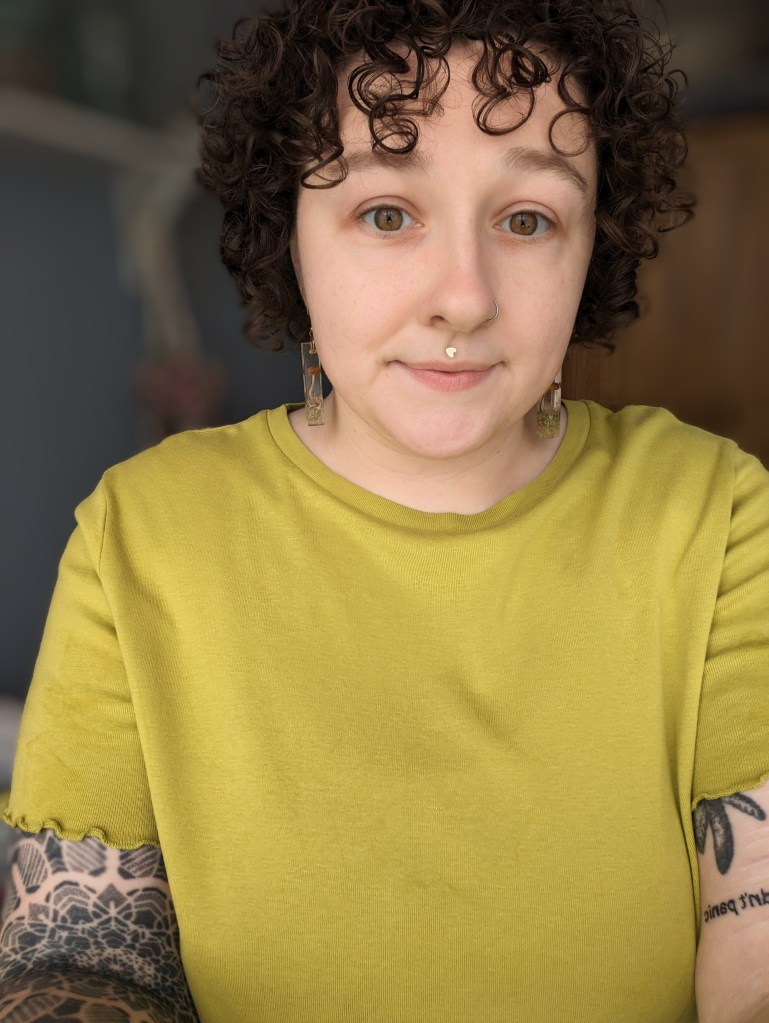
My name is Kayleigh, and I am one of the Student Experience Assistants (SEAs) for the Faculty of Business and Law at UON.
I graduated from UON in 2024 with a BA in Psychology with Criminology, and alongside this role I have just started a Master of Research degree. I also work in mental health for the NHS at the weekends. My academic and professional interests are largely around peer support, diversity and inclusion; particularly around the value of lived and living experience, forensic mental health, and neuroscience.
I came to UON in 2021 as a mature student having worked and volunteered within various forensic mental health settings, and I assumed this would be the area I went back into when I finished my degree, but now I’m not so sure… Despite a lot of adversity, university was overall a hugely positive and pivotal experience for me and so I am currently exploring a more academic path. I have a lot of experience to call upon and to share and I’m hopeful that I can support you so that your time at university is positive too.
I am here to support both students and staff in the Faculty of Business and Law by meeting with teams to identify their needs and ensuring students get the right help. As a recent UON graduate, I understand the challenges you might be facing and can offer guidance, connect you with the right people, or just have an informal chat. I have been assigned to support Criminal Justice Studies and Strategy & International Business teams, but support to students is not necessarily limited to these subjects. You can reach out to any of the SEAs for help.
Contact the team at fblseat@northampton.ac.uk, or me directly at kayleigh.willis@northampton.ac.uk. We also hold a drop-in outside LH201, Monday to Friday, 10am-4pm, no booking needed.
Share this:


Meet the FBL Student Experience Assistant Team – Kezia

Hello everyone! My name is Kezia Asante, and I’m part of the Student Experience Assistance Team [SEAT]. I’ll be working with the Criminology and Law departments and am looking forward to meeting you all and providing necessary support wherever it’s needed.
My primary objective in this role is to enhance your overall student experience, and as a recent graduate of the university myself, I understand how overwhelming student life can be. Challenges like balancing coursework, managing deadlines, and navigating university resources can feel daunting, but I’m here to help guide and support you through all of it. Feel free to reach out whenever you need assistance or just a friendly chat!
Choosing criminology to study was a great decision, and if you allow yourself to, you can gain a wealth of knowledge and a fresh perspective on the world. I’ve developed a genuine passion for the subject, particularly because I believe it encourages us to examine the complexities in grey areas that others might view as simply black and white. Criminology has so many different aspects that stem from various fields such as sociology, psychology, law, policing, and forensics. It delves into the root causes of crime, the workings of the criminal justice system, and the societal impacts of crime and punishment and much much more! Moreover, pursuing a degree in criminology can lead you down numerous career paths. For instance, I will be starting my MSc in Cyber Security and Forensics in January, inspired by my interest in the digital realm initiated by my criminology studies.
Overall, what I’m trying to say is to make the most of your criminology studies. Immerse yourself in the subject, engage with your peers and professors, and take advantage of all the resources available to you. Attend workshops, research, and read up on areas of the subject you enjoy and participate in relevant events to deepen your understanding and broaden your perspective. The more actively you engage, the more you’ll get out of it.
Please don’t navigate the university experience on your own. There are many people like me and various support systems available to help you and make your journey easier.
Look forward to meeting you all!
Kezia Asante
kezia.asante-nkansa@northampton.ac.uk
Share this:


Navigating Clearing: What’s next?

Today marks the second day of clearing at our prestigious University of Northampton. Firstly, I’d like to congratulate those who have secured a place in the university to study their dream course, and to other applicants that are currently navigating their way through clearing, I wish you the best of luck.
Clearing may seem quite overwhelming – many of us have been there – but as you may know, it provides an alternative route for first-time applicants, those who may have missed out on offers, and those that may have missed their required grades or other reasons. For those at this stage, this blog is to provide some tips on how you can make the most of clearing:
- First, try not to panic if you have not met the grade threshold. Panic will only cause more anxiety – so relax. Remember, clearing offers plenty of opportunities – so when you make that call – ask as many questions as possible. Remember the saying, closed mouths don’t get fed. Ask for your options, think it through before you decide, and ensure a plan B.
- Make sure to have done your research about the course you are applying for. Demonstrate enthusiasm, passion, and motivation for the course during your interview (if any). Look at the university websites and academic staff profiles to see what they offer and where graduate testimonies are.
- I’m sure this is no news to you – but remember that popular courses like Criminology, Psychology, Law and others fill up fast through clearing. Wake up early, get on the call queue and maximise your choices. The admissions team at the University of Northampton is one of the quickest when it comes to processing applicants’ offers. These emails are sent within an hour after you have made your call – so ensure to set up email alerts so you don’t miss communications.
- You may find it beneficial to keep an open mind about other courses. This is so because you don’t get disappointed if you don’t get a place on your desired course or if what you are looking for is not for you after speaking to an academic. Again, ask questions.
- As I pointed out earlier, the university website should be your first call, where you will find all the necessary information regarding clearing. On the website, there is lots of support available – so make the most out of it.
- Generally, clearing often turns into a great university experience. Focus on the opportunity ahead; your effort will pay off with time, and don’t give up if your first plans don’t work out. Remain optimistic, be thorough, and embrace this next step towards your future.
Remember that the transition into higher education takes time and adjustment. Overcoming obstacles will build resilience. Progress may feel slow, but your growth is constant. Embrace uncertainty, connect with others, and take chances. By doing so, you will gain skills, knowledge, memories, and relationships to last a lifetime. Your adventure begins now – enjoy it!
Share this:


Empathy Amid the “Fake Tales of San Francisco”*

This time last week, @manosdaskalou and I were in San Francisco at the American Society of Criminology’s conference. This four-day meeting takes place once a year and encompasses a huge range of talkers and subjects, demonstrating the diversity of the discipline. Each day there are multiple sessions scheduled, making it incredibly difficult to choose which ones you want to attend.
Fortunately, this year both of our two papers were presented on the first day of the conference, which took some of the pressure off. We were then able to concentrate on other presenters’ work. Throughout discussions around teaching in prison, gun violence and many other matters of criminological importance, there was a sense of camaraderie, a shared passion to understand and in turn, change the world for the better. All of these discussions took place in a grand hotel, with cafes, bars and restaurants, to enable the conversation to continue long after the scheduled sessions had finished.
Outside of the hotel, there is plenty to see. San Francisco is an interesting city, famous for its Golden Gate Bridge, the cable cars which run up and down extraordinarily steep roads and of course, criminologically speaking, Alcatraz prison. In addition, it is renowned for its expensive designer shops, restaurants, bars and hotels. But as @haleysread has noted before, this is a city where you do not have to look far to find real deprivation.
I was last in San Francisco in 2014. At that point cannabis had been declassified from a misdemeanour to an infraction, making the use of the drug similar to a traffic offence. In 2016, cannabis was completely decriminalised for recreational use. For many criminologists, such decriminalisation is a positive step, marking a change from viewing drug use as a criminal justice problem, to one of public health. Certainly, it’s a position that I would generally subscribe to, not least as part of a process necessary to prison abolition. However, what do we really know about the effects of cannabis? I am sure my colleague @michellejolleynorthamptonacuk could offer some insight into the latest research around cannabis use.
When a substance is illegal, it is exceedingly challenging to research either its harms or its benefits. What we know, in the main, is based upon problematic drug use, those individuals who come to the attention of either the CJS or the NHS. Those with the means to sustain a drug habit need not buy their supplies openly on the street, where the risk of being caught is far higher. Thus our research population are selected by bad luck, either they are caught or they suffer ill-effects either with their physical or mental health.
The smell of cannabis in San Francisco is a constant, but there is also another aroma, which wasn’t present five years ago. That smell is urine. Furthermore, it has been well documented, that not only are the streets and highways of San Francisco becoming public urinals, there are also many reports that public defecation is an increasing issue for the city. Now I don’t want to be so bold as to say that the decriminalisation of cannabis is the cause of this public effluence, however, San Francisco does raise some questions.
- Does cannabis cause or exacerbate mental health problems?
- Does cannabis lead to a loss of inhibition, so much so that the social conventions around urination and defecation are abandoned?
- Does cannabis lead to an increase in homelessness?
- Does cannabis increase the likelihood of social problems?
- Does the decriminalisation of cannabis, lead to less tolerance of social problems?
I don’t have any of the answers, but it is extremely difficult to ignore these problems. The juxtaposition of expensive shops such as Rolex and Tiffany just round the corner from large groups of confused, homeless people, make it impossible to avoid seeing the social problems confronted by this city. Of course, poor mental health and homelessness are not unique to San Francisco or even the USA, we have similar issues in our own town, regardless of the legal status of cannabis. Certainly the issue of access to bathroom facilities is pressing; should access to public toilets be a right or a privilege? This, also appears to be a public health, rather than CJS problem, although those observing or policing such behaviour, may argue differently.
Ultimately, as @haleysread found, San Francisco remains a City of Contrast, where the very rich and the very poor rub shoulders. Unless, society begins to think a little more about people and a little less about business, it seems inevitable that individuals will continue to live, eat, urinate and defection and ultimately, die upon the streets. It is not enough to discuss empathy in a conference, no matter how important that might be, if we don’t also empathise with people whose lives are in tatters.

*Turner, Alex, (2006), Fake Tales of San Francisco, [CD]. Recorded by Arctic Monkeys in Whatever People Say I Am, That’s What I’m Not, The Chapel: Domino Records
Share this:

‘Guilty’ of Coming Out Daily – Abroad. #BlackenAsiaWithLove

I am annoyed that our apartment-building manager told my husband that a two-bedroom had recently become available, and that we should move in because we would be “more comfortable.” My husband always takes such statements at face value, then performs his own cost/benefits analysis. Did the manager offer a discount, I asked? I mean, if he’s genuinely concerned about our comfort, shouldn’t he put his money where his mouth is? That’s probably just the American in me talking: He was either upselling the property or probing us to see what the deal was – not at all concerned about our comfort. I speak code, too.
The most homophobic thing that anyone has ever said to me is not any slur, but that gay people should not “flaunt it.” As if concealing our identities would magically erase homophobia. This reveals that the speaker either doesn’t know – or doesn’t care to know – how readily people everywhere speak about our personal lives. There are random people I have met in every single part of the world, that ask my marital status. It comes shortly after asking my name and where I’m from. The words used are revealing – just ask any divorced person who has engaged with any society’s traditions. Is it deceptive to say that they are “single,” instead? What’s more, regardless of language, preferred terms like “unmarried” reveal the value conferred upon this status. You’re not a whole person until you’re married, and a parent. It is only then that one is genuinely conferred what we sociologists call ‘personhood’. Also, are married lesbians called two Mrs.?
Come out, come out wherever you are.
In many parts of the world, being ‘out’ carries the death penalty, including parts of my father’s homeland, Nigeria. I’ve literally avoided visiting Nigeria because of the media-fueled fear of coming out. I hate the distance it’s wedged between my people, our culture and I. There was a time when coming out was literally the hardest thing I ever had to do. Now, l must come out daily.
Back in the UK, many educators would like to believe that they don’t discuss their personal lives with students. But who hasn’t been casually asked how one spent the weekend? Do I not say “My husband and I…” just as anyone else might? Abroad, do I correct co-workers when they refer to us as ‘friends’? Yesterday, I attended an academic conference. All the usual small talk. I came out a dozen times by lunch.
In teaching English here in Asia, isn’t it unfair for me to conceal from my students the gender of my “life-partner,” which is actually our formal legal status? Am I politicising my classroom by simply teaching gender-neutral terms like ‘spouse’ or ‘partner’? Or, do I simply use the term ‘husband’ and skim over their baffled faces as they try to figure out if they have understood me properly? Am I denying them the opportunity to prepare for the sought-after life in the west? Further, what about the inevitability of that one ‘questioning’ student in my classroom searching for signs of their existence!
I was recently cornered in the hallway by the choreographer hired by our department to support our contribution to the university’s staff talent competition (see picture below*). She spoke with me in German, explaining that she’d lived several years in the former GDR. There are many Vietnamese who’d been ‘repatriated’ from the GDR upon reunification. So, given the historical ties to Communism, it’s commonplace to meet German (and Russian) speakers here. Naturally, folks ask how/why I speak (basic) German. My spouse of seventeen years is German, so it’d be weird if I hadn’t picked up any of the language. It’s really deceptive to conceal gender in German, which has three. I speak German almost every day here in Hanoi.

The word is ‘out’.
In Delhi, we lived in the same 2-bedroom flat for over 7 years. It became clear to our landlady very early on that we slept in one bedroom. Neighbours, we’re told, also noticed that we only ever had one vehicle between us and went most places together. Neither the landlady nor any neighbour ever confronted us, so we never had to formally come out. Yet, the chatter always got back to us.
As a Peace Corps volunteer in rural Mali in the late 90’s, I learned to speak Bambara. Bambara greetings are quite intimate: One normally asks about spouses, parents and/or children, just as Black-Americans traditionally would say “How yo’ momma doin?’” In Mali, village people make it their business to get single folks hitched. Between the Americans, then, it became commonplace to fake a spouse, just so one would be left in peace. Some women wore wedding bands for added protection, as a single woman living alone was unconscionable. The official advice for gays was to stay closeted L. While I pretended to be the husband of several volunteers, I could never really get the gist of it in my village. Besides, at 23 years old, being a single man wasn’t as damning as it is for women. I only needed excuses to reject the young women villagers presented to me. Anyhow, as soon as city migrants poured back to the village for Ramadan, I quickly discovered that there are plenty of LGBTQ+ folks in Mali! This was decades before Grindr.
Here in Hanoi, guys regularly, casually make gestures serving up females, as if to say: ‘Look, she’s available, have her’. I’ve never bothered to learn the expected response, nor paid enough attention to how straight men handle such scenarios. Recently, as we left a local beer hall with another (gay) couple, one waiter rather cheekily made such gestures at a hostess. In response, I made the same gestures towards him; he then served himself up as if to say ‘OK’. That’s what’s different about NOW as opposed to any earlier period: Millennials everywhere are aware of gay people.
A group of lads I sat with recently at a local tea stall made the same gestures to the one girl in their group. After coming out, the main instigator seamlessly gestured towards the most handsome in his clique. When I press Nigerian youth about the issue, the response is often the same: We don’t have a problem with gay people, we know gay people, it’s the old folk’s problem. Our building manager may be such a relic.
*Picture from The 2019 Traditional Arts Festival at Hanoi University of Science and Technology (HUST)
Share this:


Ignorance to curiosity

My name is Sean, I started studying Criminology at the University of Northampton in 2012, graduating in July 2016.
I started University as a switched off young man. I was very much in tune with media and social attitudes as wearing them cost very little and seemed to reap gratification. Studying was always enjoyable as it sparked my brain in ways television and games, or at least my choices in such, didn’t. Appreciating the concept and the opportunity however was always lacking in my 18 year old self. Coming to University and experiencing the electricity of passion mixed with contempt was very perplexing time. Not for long had I decided to think freely or passionately; choosing to study Criminology was a start. Meeting peers and idols of simultaneous do-good and work little nature, was an intense influence. Gratification ultimately came from within and this was the basis to which I began to restructure myself.
Personally, the highest credit should be placed with my course leaders and the content provided. Never in an academical setting had I experienced someone ask me so many questions, yet rather than make me feel stupid; made me feel unprepared. Rather than build themselves up to be superior and towering; made them feel wise and welcoming. It was this, paired with the already enticingly dark yet morally complex content of Criminology that lead to me to free many barriers and much ignorance. This is when the real questions followed and the search for real answers began. Never before had I truly questioned what I had read, seen, heard, even felt or experienced and wholly questioned myself.
This change truly opened a new way of living for me. I am fully aware that such reasoning and ways of thinking could been explored previously, however it was my ignorance and choices, rebellion and ego, that locked these gates. In reference to the timeless ‘Nature vs Nurture’ topic; it was within my path that University, Criminology, @paulaabowles and @manosdaskalou were to be the ones to trigger the break in the lock. Now, admittedly, this was not just an overnight spawning of a butterfly from a larva. I still, like many in life, held onto what was familiar with a tight grasp as for an ignorant; change is to admit defeat. Furthermore, to change, to really change, requires dedication and belief. But once logically thinking, questioning and reasoning, alongside giving in to pure curiosity; it is extremely hard not to follow the exciting direction within a moral compass.
From here I can genuinely say I have enjoyed life more and all of its experiences. I have appreciated people more, and taken much more time to try and understand exactly where they stand and come from. I have spent a long time questioning everything, looking for answers or options wherever I can, trying to better myself as a human and continuing to do so. I am honestly far from where I would like to ideally be, but I am truly proud of my experience and change. When I finished University I saw this as the end of my further education, and having worked full time for a few years I could feel my curiosity shift towards less academic interests and the passion begin to fade. However it was not long before a shift back began. This is where I came to a conclusion, which fills me with a happy heart when taken with a positive perspective, that we are all students; students of life. The stronger my curiosity is, the more passionately I will study. So thank you, Criminology Team, for igniting mine. I intend to try and share this passion wherever I go.
Share this:


The Criminology Toolbox

Whilst sitting at my desk at work recently I realised just how much I took away with me in my toolbox from my time studying Criminology. I wanted this blog to be about exactly how this discipline has helped me in my personal and working life and the transferable skills I acquired without even realising I was using them.
In 2011 I came to University an 18 year old with a very closed and one sided mind set and this is something I will openly admit to! A memory that I feel will stick with me forever is from a Crime and Society seminar in the first year with @manosdaskalou. I remember openly saying to him that I felt prisoners should not be allowed to have televisions whilst in prison and that they were there to do their sentence and not watch this week’s Hollyoaks (@manosdaskalou you may remember that sour faced girl sat in front of you, although the sour face is still very much there!). I am sure those of you reading will be cursing BUT my self-righteous opinions did change and the more I attended various lectures and seminars, the more I became open to listening to and respecting the opinions of my peers and became further educated about the impact rehabilitation and second chances have on lives.
In my second year I volunteered for an organisation focusing primarily on helping individuals who had been in the Criminal Justice System with gaining employment and education. As soon as I walked through those doors I saw first-hand the positive impact this organisation had on the lives of those using the service.
I had an opportunity to assist on a healthy living course for individuals recovering from drug and alcohol addictions. Some of those attending the course had never taken an exam before or even been in an educational setting and others struggled with reading. I quickly realised the privileged position I was in to be able to even be at University and do things I feel we all take for granted sometimes such as reading. I also provided some advice to a young female who completely freaked out at the idea of taking a multiple choice test. I gave her some tips before that I had acquired from my own experiences. She was so very thankful to me and I will always remember her.
In terms of the other skills I now have in my toolbox, the thought of standing up and presenting in front of my peers at University terrified me, however in doing that I can now confidently stand up in front of my colleagues and bosses to present information and contribute in meetings. I can also provide evidence in court thanks to learning about the criminal process.
Having the opportunity to debate certain issues within the criminological world and society has taught me to have a voice and provide my point in a professional manner whilst listening to others. From the assignments set, to working within a timetable, it has all enabled me to build upon my time management and organisational skills. Working to tight deadlines also does not daunt me especially when I now have work to them daily.
I think we can all be truthful here and say we did groan a little bit when we were given extra reading to do at home and to critically analyse various pieces of text for the next seminar (heaven forbid!). However, being able to analyse a piece of text is a skill I use every day in my job with Northamptonshire Police especially when building court files and reading the fibs and fairy tales that some of our customers can provide. Criminology taught me to be critical of everything around me, take on board criticism and ask questions. I now ensure I stick my head above the parapet and often put the police officers in their place, as they do need it sometimes!
On the whole, I am thankful for the transferable skills I acquired from studying Criminology despite using them daily and not realising until my desk epiphany! I graduated in 2014 with a toolbox of skills ready for the big wide world and I will cherish them always. Who knows, it may even help me with becoming a parent in November!

 Thoughts from the criminology team