
Home » Parliament
Category Archives: Parliament
Corruption: A Very Noble Pastime

Only a couple of months ago there was a furore about the current prime minister Sir Keir Starmer receiving gifts from Lord Alli. He wasn’t the only one to benefit but it rather tainted the Labour Party’s victory in the election and made a mockery of promises to clean up politics. Let’s not get too hung up about political parties though, there is plenty of previous evidence of other parties dabbling in, let’s call them, immoral practices that benefit the individual.
I shouldn’t have been surprised then to hear about some research carried out by Tortoise that suggested a quarter of the members of the House of Lords do two thirds of the work in the upper chamber. They found that approximately 210 members of a total of 830 are actively involved in the business of the upper chamber and the rest well, your guess is as good as mine. So what you might ask, we have some rather lazy nobles, but they don’t get paid unless they turn up. Well true, but then if you read some other research, it becomes apparent that there are vast sums of money being paid for doing nothing. Turning up is one thing, working is quite something else.
‘Over the course of the last parliament, £400,000 has been paid to 15 peers who have claimed attendance for at least 80 per cent of days in at least one month without any discernible activity in that time. Some have made repeated claims of this kind over the parliament’ (Tortoise, 2024).
Up till now I’ve always had a begrudging respect for the upper chamber, particularly when they have knocked back poor, ill thought out or inappropriate legislation conjured up by the government. That’s not to say I haven’t questioned the manner in which the chamber is constituted but I have felt a sense of relief when government have had a hard task railroading through some of their legislation. But it doesn’t seem to matter which chamber it is in parliament, there are a significant number of individuals in both houses whose actions can only be described as corrupt. From the expenses scandal in 2009 to the latest failures to declare interests, it becomes clear that corruption is endemic.
It seems to me during an era of cuts in public services, the withholding of funds to the most vulnerable designed to help them keep warm, and job losses in sectors where past and present policies make organisations unsustainable, the disregard for proper financial management and constraint in government is immoral. I will leave the debate about whether we should have governance in its current format to others who probably know better than I do but there is clearly a need to abolish the policies and processes that allow for what can only be described as a corrupt noble gravy train.
The Nolan Principles setting out the standards that those involved in public life should adhere to are still in existence and expected to be complied with and yet I fail to see how so many members of our great institutions have even come close to adherence. In case you are unsure what those principles are, I have listed them below and I will leave you to judge whether the nobility stand up to scrutiny.
- Selflessness
- Integrity
- Objectivity
- Accountability
- Openness
- Honesty
- Leadership
References
BBC (2019) MPs’ expenses: The Legacy of a Scandal [online] Available at https://www.bbc.co.uk/news/uk-politics-48187096 Accessed: 22/11/2024.
BBC (2024) Keir Starmer received more clothes worth £16,000 [online] Available at https://www.bbc.co.uk/news/articles/cdd4z9vzdnno Accessed: 22/11/2024.
Information Commissioner’s Office (ND) MP’s expenses scandal [online] Available at https://ico.org.uk/for-the-public/ico-40/mp-expenses-scandal/ Accessed: 22/11/2024
Tortoise (2024a) Lording it: some peers claim £400,000 for little discernible work, [online] available at https://www.tortoisemedia.com/2024/11/20/lording-it-some-peers-claim-400000-for-little-discernible-work/, Accessed: 22/11/2024
Tortoise (2024b) The Lords’ work: Tortoise’s Peer Review [online] available at https://www.tortoisemedia.com/2024/11/20/the-lords-work-tortoises-peer-review/, Accessed: 22/11/2024.
UK Parliament (ND) Standards, [online] available at https://www.parliament.uk/about/mps-and-lords/members/standards/, Accessed: 22/11/2024.
Share this:


Doing the right thing
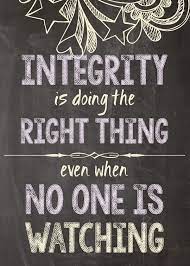
It seems that very often, the problem with politics in this country is that it gets in the way of doing the right thing. Despite the introduction of the The Seven Principles of Public Life known as the Nolan Principles, politicians (not all of them of course, but you will have seen ample examples) still seem to be hell bent on scoring political advantage, obfuscating on matters of principle and where possible avoiding real leadership when the country is crying out for it. Instead, they look to find someone, anyone, else to blame for failures that can only be described as laying clearly at the door of government and at times the wider institution of parliament.
One example you may recall was the complete farce in parliament where the speaker, Sir Lyndsay Hoyle, was berated for political interference and breaking the rules of the house prior to a debate about a ceasefire in Gaza. It became quite obvious to anyone on the outside that various political parties, Conservatives, Labour and the Scottish National Party were all in it to score points. The upshot, rather than the headlines being about a demand for a ceasefire in Gaza, the headlines were about political nonsense, even suggesting that the very core of our democracy was at stake. Somehow, they all lost sight of what was important, the crises, and it really is still a crisis, in Gaza. Doing the right thing was clearly not on their minds, morals and principles were lost along the way in the thrust for the best political posturing.
And then we come to the latest saga involving political parties, the WASPI women (Women Against State Pension Inequality) campaign. The report from the Parliamentary and Health Service Ombudsman has ruled that the Department for Work and Pensions (DWP) “failed to provide accurate, adequate and timely information” about changes to pension ages for women. The report makes interesting reading. In essence, it accuses the DWP of maladministration on several counts.
The Pensions Act 1995 changed the way in which women could draw their pensions in an effort to equalise the age with men. A timetable was drawn up raising the qualifying age for women from 60 to 65, with the change phased in between 2010 and 2020. However, under the Pensions Act 2011, the new qualifying age of 65 for women was brought forward to 2018. The report acknowledges that the DWP carried out campaigns from 1995 onwards but in 2004 received results of research that a considerable number of affected women still believed that their retiring age was 60. Unfortunately, through prevarication and for some quite inexplicable reasoning the women affected were not notified or were notified far too late. There was a calculation carried out that suggested some women were not told until 18 months before their intended retirement date. The matter was taken before the courts but the courts ruling did nothing to resolve the issue other than providing a ruling that the DWP were not required by law to notify the women.
You can read about the debacle anywhere on the Internet and the WASPI women have their own Facebook page. What seems astounding is that both the Government and the opposition have steadfastly avoided being drawn on the matter of compensation for these women. I should add that the maladministration has had serious detrimental impacts on many of them. Not even a sorry, we got it wrong. Instead we see articles written by right wing Conservatives suggesting the women had been provided with ample warning. If you read the report, it makes it clear that provisions under the Civil Service Code were not complied with. It is maladministration and it took place under a number of different governments.
Not getting it right in the first instance was compounded by not getting it right several times over later on. It seems that given the likely cost to the taxpayer, this maladministration is likely, like so many other cock ups by government and its agencies, to be kicked into the long grass. Doing the right thing is a very long, long way away in British politics. And lets not forget the Post Office scandal, the infected blood transfusion scandal and the Windrush scandal to name but a few. So little accountability, such cost to those impacted.
- The quotation in the image is often wrongly misattributed to C. S. Lewis. ↩︎
Share this:


Do we have to care?

In recently published The end-to-end rape review report on findings and actions the responsible minister admitted that “victims of rape [are] being failed”. This stark admission is based on data that indicates that the current situation on dealing with rape is far worst than 5 years ago. The ministers are “ashamed” of the data but luckily in their report they offer some suggestions on how to improve things; what to do to bring the conviction rates to the 2016 level and to move more cases forward for trial, leading to successful convictions. At that point, the report presents the Criminal Justice System [CJS] as a singular entity that needs to address the issue collectively. This, in part, is a fair assessment although it ignores the cultural differences of the constituent parts of the system. Nonetheless, the government has identified a problem, commissioned a report and has a clear “ambitious” plan of how to address it.
The report indeed presents some interesting findings and I urge people to review it whenever they can (https://www.gov.uk/government/publications/end-to-end-rape-review-report-on-findings-and-actions). We know for example already that the number of cases that went into prosecution were low; in the last years this has become even lower. That despite the prevalence rate remaining more or less the same. Victims report that they are treated poorly, not believed arguing that the investigative model needs changing. No wonder the ministers appear apologetic of the situation. A headline crime category that is likely to cause an uproar and whilst thinking of the political fallout they come out in support of the victims! Who wouldn’t? Supporting a victim of crime, any crime is one of the main objectives of the CJS; once they have handed out retribution and prioritised on making an example of specific crimes and focusing on particular criminals, then their focus is on the victims! The findings were expected, but even so when reading about the higher vulnerability of disabled women to rape and sexual abuse, underscores the systemic failure to deal with this crime. It does not read like care!
If I was an agitator, I would say that a criminal committing rape has less chance (statistically) to be convicted than someone who commits theft; but then I will be making a criminological cardinal sin; conflating criminalities and confusing the data. In our profession we deal with data all the time. Many of them come in the form of metrics looking at the way different crimes are reported, recorded etc. We also know that context gives a perspective to these data. Numbers may look the same, but that is arguably part of the problem. It does not take into account the source of the data and their circumstances. Not all numbers are the same and most importantly they do not measure similar trends. The way the success rates are to be measured is not dissimilar from before and without owning a magic ball, it can be foreseen that rape will remain as is. Of course, the metrics may change colour to signal improvement, but that will not alter the fundamental issues.
On the day, one may have their car broken into, to report the incident can be a requirement from their insurance if they are to cover the cost. On the day, the said person got raped by a current/former partner the matter is not about insurance. These acts are not similar and to treat criminality as a singularity draws up uneven comparisons. In this case we have a list of recommendations trying to ameliorate the bad metrics. What are the recommendations? The focus is again on the police and the Crime Prosecution Service [CPS] and the court experience the victims will have. Again, indicates that these institutions have been criticised before for similar failings. The change of practices in the police does not go as far as exploring the institutional culture. The CPS’s requirement to do more is tied with the successful cases they will prosecute. The need for the two organisations to work together more closely has been a discussion point for the last 20 years; as for the better experience in courts, it is definitely welcomed but in recent years, Victim Support as an organisation was stripped bare, the additional services cut and the domestic violence shelters disappearing. The call for more services was continuously met with the offer of voluntary organisations stepping in, into such a complex area to provide help and support. One may think that if we are to prioritise on victim experience these services may need to become professional and even expand the current ones.
Lastly in this document the tone is clear; the focus yet again is reactionary. We have some bad data that we need to change somehow; we have got some clear action plans and we can measure them (as the report intimates) at regular times. This approach is the main problem on dealing with rape! It does not offer any interventions prior to the crime. There is nothing to deal say with rape culture, the degradation of women, the inequality and the rape myths that women are still subjected to. Interestingly there are mention of empathy toward the rape victim but there is not a plan to instil empathy for people more widely. No plan to engage the educational system with respect for the other (whoever the other is; a woman, a person of colour, disability, different origin) regarding sexual behaviours. The report tenuously mentions consent (or lack of understanding it) instead of making plans how it can be understood across. Unfortunately, this crime reveals the challenges we face in the discipline but also the challenges we face as a society that has traded care for metrics and the tyranny of managerialism.
Share this:


A pit and no pendulum

Laughter is a great healer; it makes us forget miserable situations, fill us with endorphins, decreases our stress and make us feel better. Laughter is good and we like people that make us laugh. Comedians are like ugly rock-stars bringing their version of satire to everyday situations. Some people enjoy situational comedy, with a little bit of slapstick, others like jokes, others enjoy parodies on familiar situations. Hard to find a person across the planet that does not enjoy a form of comedy. In recent years entertainment opened more venues for comedy, programmes on television and shows on the theatres becoming quite popular among so many of us.
In comedy, political satire plays an important part to control authority and question the power held by those in government. People like to laugh at people in power, as a mechanism of distancing themselves from the control, they are under. The corrosive property of power is so potent that even the wisest leaders in power are likely to lose control or become more authoritarian. Against that, satire offers some much needed relief on cases of everyday political aggression. To some people, politics have become so toxic that they can only follow the every day events through the lens of a comedian to make it bearable.
People lose their work, homes and even their right to stay in a country on political decisions made about them. Against these situations, comedy has been an antidote to the immense pain they face. Some politicians are becoming aware of the power comedy has and employ it, whilst others embrace the parody they receive. It was well known that a US president that accepted parody well was Ronald Reagan. On the other end, Boris Johnson embraced comedy, joining the panel of comedy programmes, as he was building his political profile. Tony Blair and David Cameron participated in comedy programmes for charity “taking the piss” out of themselves. These actions endear the leaders to the public who accept the self-deprecating attitude as an acknowledgment of their fallibility.
The ability to humanise leaders is not new, but mass media, including social media, make it more possible now. There is nothing wrong with that, but it is something that, like smoking, should come with some health warnings. The politicians are human, but their politics can sometimes be unfair, unjust or outright inhuman. A person in power can make the decision to send people to war and ultimately lead numerous people to death. A politician can take the “sensible option” to cut funding to public spending directed at people who may suffer consequently. A leader can decide on people’s future and their impact will be long lasting. The most important consequence of power is the devastation that it can cause as the unanticipated consequence of actions. A leader makes the decision to move people back into agriculture and moves millions to farms. The consequence; famine. A leader makes the decision not to accept the results of an election; a militia emerges to defend that leader. The political system is trying to defend itself, but the unexpected consequences will emerge in the future.
What is to do then? To laugh at those in power is important, because it controls the volume of power, but to simply laugh at politicians as if they were comedians, is wrong. They are not equivalent and most importantly we can “take the piss” at their demeanour, mannerisms or political ideology, but we need to observe and take their actions seriously. A bad comedian can simply ruin your night, a bad politician can ruin your life.
Share this:


“Back to the future”: 2019 A Year of Violence?

When I was young, 2020 seemed like the stuff of science fiction. Programmes like Tomorrow’s World held the promise of a future full of leisure, with technology taking the strain in all aspects of human life. Now we’re in 2020 it appears we have plenty of technology, but whether it adds or subtracts from the lived human experience, is still very much up for discussion. Certainly, it is increasingly difficult to separate work from leisure with the liquidity technology brings.
As is traditional for this time of year, the mind turns to reflection on the year gone by. This year is no different, after all it, like many others, has been packed with both good and bad experiences. Personally, 2019 was challenging in a number of different arenas, my patience, temerity and resilience have been tested in many novel ways. Events have caused me to reflect upon my own values and philosophies and my moral and ethical compass has been and continues to be tested. I don’t intend to go into lots of detail here, but it feels to me as if violence is increasingly impinging on all aspects of life. The first few days of 2020 suggests this perception is likely to continue with Trump’s decision to assassinate ‘Iran’s top general and second most powerful official, Qassem Suleimani’.
In December, 2019 we saw yet another general election. Whatever your particular persuasion, it is difficult to view British politics as anything other than increasingly personalised and aggressive. Individuals such as David Lammy MP, Diane Abbott MP, Caroline Dinenage MP, as well as campaigners such as Gina Miller and Greta Thunberg are regularly attacked on twitter and through other media. However, it is not all one sided, as Drillminster showed us in 2018 with his artistic triumph Political Drillin. It is clear that these verbal attacks are beginning to become part and parcel of political life. Such behaviour is dangerous, on many levels, political discourse is a necessity in a mature democracy and shutting up discordant voices cannot lead to unity in the UK.
In November, we were shocked and horrified by the terrorist attack at Fishmonger’s Hall. This attack on colleagues involved in prison education, raised questions around individual and collective decisions to engage with criminology with convicted criminals. Nevertheless, despite such horrific violence, the principles and practice of prison higher education remain undaunted and potentially, strengthened.
October, saw the publication of Grenfell Phase 1. This document identifies some of the issues central to the horrific fire at Grenfell Tower in 2017. Whether this and later publications can ever really make sense of such complexity, offer the victims and survivors comfort and go some way to ensuring justice for all those involved, remains to be seen. Those who have studied CRI3003 Violence with me are likely to be cynical but it is early days.
For much of September, the focus was on the prorogation of parliament and the subsequent court case. As with December, there were many complaints about the violence of language used both inside and outside parliament. Particularly, notable was the attack on MP Jess Phillips’ constituency office and arguments around the inflammatory language used by PM Boris Johnson.
In August, the media published video footage of Prince Andrew with his friend, the convicted sex offender Jeffrey Epstein. This story rumbles to the end of the year, with more allegations made toward the prince, culminating in an infamous interview which threatens to continue unabated.
July saw the end of a trial into modern slavery, leading to prison sentences for 8 of those involved. The judge concluded that slavery was still thriving in the UK, often ‘hiding in plain sight’. What support is available to those subjected to this violence, is not clear, but prison sentences are unlikely to make any material benefit to their lives.
In June, shocking footage emerged of MP Mark Field forcibly removing a female protester. Strikingly his colleague, MP Johnny Mercer tweeted ‘if you think this is “serious violence” you may need to recalibrate your sensitivities’. After some years teaching around violence, I have no idea what Mr Mercer feels qualifies as violence, but putting your hands on another’s throat would seem to a reasonable starting point.
May saw attention drawn to the media, with the racism of Danny Baker and inherent cruelty of the Jeremy Kyle Show. Arguments which followed suggest that, for many, neither were seen as problematic and could be dismissed as so-called “entertainment”.
April saw the collapse of the first trial of David Duckenfield, police commander at the 1989 Hillsborough disaster. Although put on trial again, later in the year, he was found not guilty on the 28 November, 2019. The chair of the Hillsborough Family Support Group, Margaret Aspinall perhaps spoke for everyone involved when she asked ‘When 96 people – they say 95, we say 96 – are unlawfully killed and yet not one person is accountable. The question I’d like to ask all of you and people within the system is: who put 96 people in their graves? Who is accountable?’ After 30 years, it seems justice is still a long way away for the victims, survivors and their families.
After years of growth in life expectancy, in March the Institute and Faculty of Actuaries published data suggested that this was no longer the case in the UK. Although they offered no conclusions as to why this was the case, evidence indicating that the ideology of austerity costs lives, cannot be discounted.
In February, the Office for National Statistics announced homicidal knife crime was at the highest level for over 70 years. Despite harsher sentences for those carrying knifes, evidence from the College of Policing indicates that such penalties exacerbate rather than improve the situation.
The new year began with squabbling about Brexit and the expected impact on Northern Ireland. On the 20 January 2019 a bomb detonated in Londonderry, fortunately with no injuries. For those of us old enough to remember “The Troubles”, footage of the incident brings back many horrific memories. Nevertheless, discussions around Northern Ireland and Brexit continue throughout 2019 and into 2020, with little regard for the violence which has ensued in the past.
Many events have happened in 2019, as with every other year and what stays in the mind is an individual matter. I feel that my world has become more violent, or maybe I have just become more attuned to the violence around me. I make no apology for my adherence to pacifist ideology, but this perspective has been and no doubt, will continue to be challenged. I must consider whether there comes a time when ideology, values, philosophy, temerity and resilience, are little more than good old-fashioned stubbornness. Until that point of no return comes, I will stand my ground and for every violent action that occurs, I will try my best to work toward a better world, once in which equality, peace and social justice reign supreme.
Share this:


Ho ho homeless: Boris and reasons to be cheerful.

“Homeless Rough Sleeper” by Deadly Sirius is licensed under CC BY-NC-ND 2.0
A week has passed since the election and our political parties have had time to reflect on their victory or demise. With such a huge majority in parliament, we can be certain, whether we agree with it or not, that Brexit will be done in one form or another. The prime minister at the first meeting of his cabinet, and as if on cue ready for my blog, in front of the cameras repeated the pre-election promise of 40 extra hospitals and 50,000 extra nurses.
Putting aside my cynicism and concern about how we, as a country, are going to grow enough money trees without our foreign agricultural workers after Brexit, I welcome this much needed investment. I should add here that in the true sense of fairness, pre-election, other parties were likewise offering wonderful trips to fairyland, with riches beyond our wildest dreams. Trying to out trump each other, they managed to even out trump Trump in their hyperbole.
However, rather appropriately as it turns out, whilst sitting in the waiting room at a general hospital on election day, I read a couple of disturbing articles in the i newspaper. Pointing to the fact that makeshift shelters are becoming increasingly common in British cities one article quoted statistics from Homeless Link showing that rough sleeping had increased by 165% since 2010 (Spratt, 2019). Alongside, another article stated that A&E admissions of homeless patients had tripled in the last eight years with 36,000 homeless people attending in the last year (Crew 2019). Whilst I am always cautious regarding statistics, the juxtaposition makes for some interesting observations.
The first being that the promised investment in the NHS is simply a sticking plaster that attempts to deal with the symptoms of an increasingly unequal society.
The second being that the investment will never be enough because groups in society are becoming increasingly marginalised and impoverished and will therefore become an increasing burden on the NHS.
Logic, let alone the medical profession and others, leads me to conclude that if a person does not have enough to eat and does not have enough warmth then they are likely to become ill both physically and probably mentally. So, alongside the homeless, we can add a huge swathe of the population that are on the poverty line or below it that need the services of the NHS. Add to this those that do not have job security, zero-hour contracts being just one example, have massive financial burdens, students another example, and it is little wonder that we have an increasing need for mental health services and another drain on NHS resources. And then of course there are the ‘bed blockers’, a horrible term as it suggests that somehow, it’s their fault, these are of course the elderly, in need of care but with nowhere to go because the social care system is in crises (As much of the right-wing pre-Brexit rhetoric has espoused, “It’ll be better when all the foreigners that work in the system leave after Brexit”). It seems to me that if the government are to deal with the crises in the NHS, they would be better to start with investment in tackling the causes, rather than the symptoms*.
Let me turn back to the pre-election promises, the newspaper articles, and another post-election promise by Boris Johnson.
My recollection of the pre-election promises was around Brexit, the NHS, and law and order. We heard one side saying they were for the people no matter who you were and the other promising one nation politics. I don’t recall any of them specifically saying they recognised a crisis in this country that needed dealing with urgently, i.e. the homeless and the causes of homelessness or the demise of the social care system. Some may argue it was implicit in the rhetoric, but I seem to have missed it.
In her article, Spratt (2019:29) quotes a Conservative candidate as saying that ‘nuisance council tenants should be forced to live in tents in a middle of a field’. Boris Johnson’s one nation politics doesn’t sound very promising, with friends like that, who needs enemies?**
* I have even thought of a slogan: “tough on poverty, tough on the causes of poverty”. Or maybe not, because we all know how that worked out under New Labour in respect of crime.
** The cynical side of me thinks this was simply a ploy to reduce the number of eligible voters that wouldn’t be voting Conservative but, I guess that depends on whether they were Brexiteers or not.
Crew, J. (2019) Homeless A&E admissions triple. i Newspaper, 12 Dec 2019, issue 2824, pg. 29.
Spratt, V. (2019) ‘You Just didn’t see tents in London or in urban areas on this scale. It’s shocking’: Makeshift shelters are becoming increasingly common in British cities. i Newspaper, 12 Dec 2019, issue 2824, pg. 29.
Share this:

Constitutional Crisis? What Crisis
Dr Stephen O’Brien is the Dean for the Faculty of Health, Education and Society at the University of Northampton
Over the past few weeks our political lexicon has been further developed. We have all learned a new word. The word in question is prorogation. Hands up who had heard of this term before recent events in parliament? I see very few hands up. What we all now know is that this is the term that defines the discontinuation of a session of a parliament or other legislative assembly without dissolving it. It means parliament’s sitting is suspended and it ends all current legislation under discussion. It is usual for this to happen every autumn. The current prorogation is for five weeks and includes a three-week period that would typically be recess anyway, during which the Liberal Democrat, Labour and Conservative party conferences are held, but is nevertheless longer than usual. However, there are several highly irregular factors at play here. For prorogation to last more than a month is unprecedented in recent times. For example, since the 1980s prorogation has typically lasted less than a week. So, what is going on and why is this prorogation proving to be so contentious?
The heart of the matter is the issue that has dominated UK politics for the past three years, namely Brexit. Despite a vote to leave the European Union (EU) back in June 2016 we currently remain part of the EU with the deal negotiated under the previous prime minister Theresa May culminating in a withdrawal agreement that was soundly rejected by parliament on several occasions. This has set up tensions between the people and parliament. How do we enact the will of the people and honour the referendum result within a parliamentary democracy where there is no majority for any Leave deal on the table?
The new prime minister Boris Johnson and his cabinet are resolved to break the political impasse by leaving come what may “do or die” by October 31st, 2019. So, with the country rapidly approaching the deadline for leaving the EU, Parliament has been working to pass a law that would prevent the UK crashing out without a deal, regardless of the fact that Boris Johnson has promised to leave on that date. With no deal currently agreed and no law allowing a no deal exit the Government would be obliged to ask the EU for another extension. There are suggestions from some quarters that the Government might ignore any law requiring them to agree an extension with the EU. Given this situation some politicians have been dismayed that parliament will not be sitting while the situation remains unresolved. Hence the view that this prorogation is stifling parliamentary debate on the most crucial political issue in a generation.
The act of prorogation took place in the early hours of Tuesday September 10th with a ceremony involving a message from the Queen being read in the House of Lords and then Black Rod summoning MPs from the Commons. A list of all the bills passed by the parliament was read, followed by a speech on behalf of the Queen announcing what has been achieved by the government before MPs were sent home. Johnson intends for parliament to return on 14 October with a Queen’s speech, which he says will “bring forward an ambitious new legislative programme for MPs’ approval”. He will then almost immediately have to head to Europe for the vital EU council, which is the last chance for him to obtain a new Brexit deal or to ask for an extension of article 50.
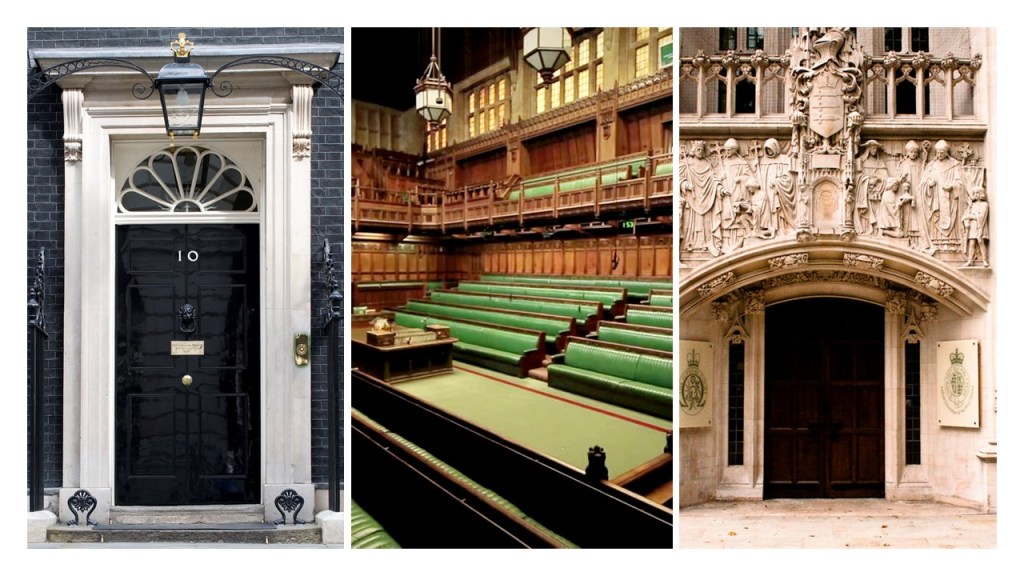
The situation has been deemed a constitutional crisis by some and the fact that parliament is not sitting at this critical time is being seen by some as undemocratic, indeed unlawful. Indeed, the act of prorogation has been subject to judicial review for the past couple of weeks. Scottish appeal court judges declared Boris Johnson’s decision to suspend parliament in the run-up to the October Brexit deadline unlawful. The three judges, chaired by Lord Carloway, Scotland’s most senior judge, overturned an earlier ruling that the courts did not have the power to interfere in the prime minister’s political decision to prorogue parliament. The key issue in question being whether the act was in breach of the constitution, as it was designed to stifle parliamentary debate and action on Brexit.
Regardless of the legal arguments which ended up being played out in three dramatic days this week in the Supreme Court the Brexit process and endgame has pointed up a range of tensions at the intersections of our constitution. The old political landscape is being swept away and being replaced by a much more complex set of political indicators. Left versus Right which had been making a comeback after years of centrist neo-liberalism has been replaced by Leave versus Remain which pervades across the old battle lines. Furthermore, other tensions are apparent as set out below.
- People versus Parliament (How to deliver the referendum result in a parliamentary democracy)
- Executive (Government) versus Parliament (especially when the executive has no overall voting majority)
- The Executive versus the Judiciary
- The position of the Judiciary as related to Constitution
- Politics versus The Law
- The roles and power relationships of the Executive, Parliament and the Judiciary as related to The Constitution.
What the overall Brexit process has created is a new socio-political landscape in the UK, with distinct differences in each of the four countries. It also illustrates how complex the nature of our constitution is given there is no written version and we depend on precedent and convention. The intersections are thrown into sharp relief by the current “crisis”.
Whilst all of this may be concerning as the old order shifts the really concerning question is whether the Executive will abide by the law. Given the outcomes of Parliament in terms of blocking “no deal” regardless of the Supreme Court Judgement on the legality of the prorogation. So, will we leave EU on October 31st? Utilising classic political phraseology, I’d say there is still all to play for, it’s too close to call and all bets are off.
Dr Stephen O’Brien
Share this:

Cutting to the chase: A policy of ruination and mayhem.

“London Riots (Hackney) 8/8/11” by Mohamed Hafez is licensed under CC BY-SA 4.0 (edited)
The governments contingency plan ‘Operation Yellowhammer’ has just been released. Notice I use the words released rather than published, the latter suggesting that the government provided the information to the public willingly. Of course, nothing is further from the truth, the government were forced by parliament to release the document and it does not make pretty reading.
On closer examination, there are few surprises. Food prices will go up as certain foods become less available. More importantly, the document recognises that vulnerable groups, those on low incomes “will be disproportionately affected by any price rises in food and fuel”.
Protests and counter protest will take place across the country, inevitably this will lead to major disorder and will stretch an already overstretched police service to breaking point. The 20,000 extra police officers the government has promised are going to be needed. Some serious magic is required to produce these and quickly.
Lorries will be queuing up to cross the channel further stretching police and highways resources as they attempt to implement ‘Operation Brock’. The flow of goods will be severely disrupted and could have an impact on the supply of medicines and medical supplies. Once again, the vulnerable will be hit the hardest.
Some businesses will cease trading. You can bet that the people affected will not be those with money, only those without. Unemployment will go up as the economy takes a nose dive and fewer jobs become available.
There will be a growth in the black market. It doesn’t take a genius to work out the concept of supply and demand. Left unchecked, we could see the rise of organised crime far beyond that impacting the country presently. To exacerbate the problem, law enforcement data between the EU and the UK will be disrupted. Those 20,000 police officers are going to need to do double shifts.
Social care providers might fail. Never mind, its only the most vulnerable in society that are being looked after by them. If you can afford a good care home, it shouldn’t impact, if not, there are always police cells.
Just a few minor problems then with the advent of a ‘no deal Brexit’. Possibly exacerbated by natural phenomena such as flooding (of course that never happens) or a flu pandemic (I hope you’ve had your flu vaccine).
It doesn’t matter whether you voted to leave the European Union, or you voted to stay, you would have to be rather vacuous if you are not concerned by the contents of ‘Operation yellowhammer’.
But the most worrying aspect of all of this is that the government have been openly and vigorously pursuing a policy of leaving the EU with or without a deal. Let’s cut to the chase then, by pursuing its course of action, this government’s policy is to ruin the country and create mayhem. Would you really vote for that, I know I wouldn’t?
Share this:


Brexit, bullying and bull****.
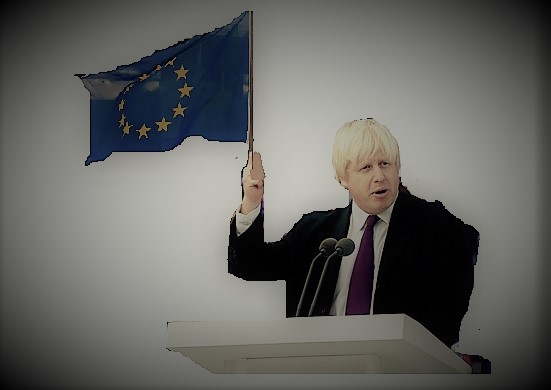
“Boris Mayor of London” by Fred Dawson is licensed under CC BY-NC-ND 2.0 (edited)
It seems remarkable doesn’t it that that we have reached the stage where the democratic institutions we hold dear are so openly crumbling before our eyes. Whilst many have been sceptical about how much you can trust a politician; rarely do we get the opportunity to gaze at the vitriolic evidence that embodies everything that we thought about politics in this country.
We have a prime minister who appears so simplistically single minded that he is blinded to the obvious and prepared to put the peace process in Ireland at risk, ruin the fragile economy, run rough shod over democracy and further damage his own party in the process.
Two concepts come to mind, the concept of leadership and ethics. There are several leadership typologies and I don’t propose to rehearse them here, save to say that there are good leaders and there are bad. The good ones we will follow anywhere, the bad, well they fall by the wayside eventually but usually not without having some calamitous impact. And as for ethics, I am minded to revert to the ‘Nolan principles’, the basis of ethical standards in public life. An examination of some of these principles against the backdrop of past and current political events reveals some interesting incongruities.
Selflessness – Holders of public office should act solely in terms of the public interest.
When former prime minister David Cameron called for a referendum did he have the ‘national interest’ at heart or was it more to do with the divisions within the Tory party? What government would be so foolhardy to think that there would be no consequences from such a referendum? Where were the government advisors pointing to the very real possibility that peace on the Irish mainland would be threatened if the referendum went the wrong way? Did anyone in government really care; was healing the divisions in the Tory party more important?
When Boris Johnson decided to prorogue parliament, did he do so in the public interests or was it simply to ensure that the possibility of parliament having its say on Brexit would be seriously curtailed? For ministers to state this is simply ordinary business appears to be somewhat disingenuous given the circumstances and the extraordinary length of the break.
When ‘leave means leave’ does that mean that ‘a no deal’ Brexit is in the public interests?
Objectivity – Holders of public office must act and take decisions impartially, fairly and on merit, using the best evidence and without discrimination or bias.
How can the prime minister state that he is taking decisions on merit using best evidence when he intends to shut down parliament, preventing any debate? Where is the impartiality when he is so single minded? How can he be viewed as impartial when he advocates bullying to get his own way, threatening to withhold the whip from any that vote against his wishes. Bullying is not leadership, threats of job losses will not galvanise people to the cause, it only alienates and divides.
Accountability – Holders of public office are accountable to the public for their decisions and actions and must submit themselves to the scrutiny necessary to ensure this.
Just where is the scrutiny if parliament is prorogued? Just how accountable are ministers if they avoid confirming that they will abide by any legislation that prevents a ‘no-deal’ Brexit being passed?
Honesty – Holders of public office should be truthful.
Now here lies the crux of it all. Leaders are not leaders if the have a propensity to be somewhat economical with the actualité. Enter the red bus, just how truthful was it to suggest that we could save £350 million a week and use that to fund the NHS? Just how honest is it to say that proroguing parliament had nothing to do with shutting up opponents? Just how much can we believe this prime minister or any other leader when the lies are so obviously blatant?
Leadership – Holders of public office should exhibit these principles in their own behaviour. They should actively promote and robustly support the principles and be willing to challenge poor behaviour wherever it occurs.
It isn’t too difficult to conclude that a leader that does not display ethical behaviours is hardly likely to promote them elsewhere. Currently, as with so many institutions, this government lacks real leadership and it would appear that principles are no more than a wish list. Just who will hold government and the past and current leaders to account for Brexit, bullying and all the bull****?
Share this:


Hillsborough 30 years on. A case study in liberating the truth

Dr Stephen O’Brien is the Dean for the Faculty of Health and Society at the University of Northampton
Before I start this blog, it is important to declare my personal position. I am a lifelong supporter of Liverpool Football Club (LFC) and had I not been at a friend’s wedding on that fatal Saturday in April 1989, I may well have been in the Leppings Lane end of the Hillsborough stadium in Sheffield. I have followed the unfolding Hillsborough phenomenon for 30 years now and like the football club itself, it is an integral part of my life. To all caught up in the horrific events of Hillsborough, I echo a phrase synonymous with LFC and say; “You’ll Never Walk Alone”.
On April 15th, 1989 ninety-six men, women and children, supporters of Liverpool Football Club, died in a severe crush at an FA Cup semi-final at the Hillsborough Stadium, Sheffield. Hundreds were injured, and thousands traumatised. Within hours, the causes and circumstances of the disaster were being contested. While an initial judicial inquiry found serious institutional failures in the policing and management of the capacity crowd, no criminal prosecutions resulted, and the inquests returned ‘accidental death’ verdicts. Immediately, the authorities claimed that drunken, violent fans had caused the fatal crush. In the days and weeks following the disaster, police fed false stories to the press suggesting that hooliganism and drunkenness by Liverpool supporters were the root causes of the disaster. The media briefing was most significantly demonstrated in the headline “THE TRUTH” which appeared in The Sun newspaper immediately after the event devoting its front page to the story and reporting that: ‘Some fans picked pockets of victims; Some fans urinated on the brave cops; Some fans beat up PC giving life kiss’. What of course we appreciate now is that this headline was far from truth, however the blame narrative was already being set. For example, Chief Superintendent David Duckenfield, the match commander on the day, misinformed senior officials from the Football Association that fans had forced entry causing an inrush into already packed stadium pens. Yet it was Duckenfield who had ordered the opening of the gates to relieve the crush at the turnstiles. Within minutes the lie was broadcast internationally.
Blaming of Liverpool fans persisted even after the Taylor Report of 1990, which found that the main cause of the disaster was a profound failure in police control. While directing its most damning conclusions towards the South Yorkshire Police, it also criticised Sheffield Wednesday Football Club, its safety engineers and Sheffield City Council. However, following the Taylor Report, the Director of Public Prosecutions (DPP) ruled there was no evidence to justify prosecution of any individuals or institutions. On a more positive note, the disaster did lead to safety improvements in the largest English football grounds, notably the elimination of fenced terraces in favour of all seated stadiums.With the media allegations unchallenged and in the absence of any imminent prosecutions the families of the 96 hugely supported by the people of the City of Liverpool and it’s two football clubs began an exerted and prolonged campaign for truth and justice. In late June 1997, soon after the election of the Labour Government and following a concerted campaign by families, the Home Secretary Jack Straw proposed an unprecedented judicial scrutiny of any new evidence and appointed senior appeal court judge and former MI6 Commissioner Lord Justice Stuart-Smith to review further material that interested parties wished to submit. A large volume of new material was presented. However, Stuart-Smith rejected the new evidence concluding that there was no basis for a further public inquiry or new material of interest to the DPP or police disciplinary authorities. Undeterred by such a devastating outcome the families undertook a series of private prosecutions again to no avail.
It is important to note that public inquiries, convened in the aftermath of major incidents such as Hillsborough or to address alleged irregularities or failures in the administration of justice, should not be considered a panacea but provide an opportunity to speedily ensure that management failings are exposed to public scrutiny. They are popularly perceived to be objective and politically independent. On the other hand, they also have the potential to act as a convenient mechanism of legitimation for the state. It appeared to the families that the various inquiries that followed Hillsborough were incapable of surfacing the truth as the cards were stacked in favour of the state.
Roll forward to 2009. On the 20th anniversary, invited by the Hillsborough Family Support Group, Minister for Health Andy Burnham MP addressed over 30,000 people attending the annual memorial service at Liverpool FC’s Anfield stadium. Whilst acknowledging the dignity, resolve and courage they had exhibited in all the events of the previous 20 years he offered support and hope that their struggle would be further supported by the MPs in Liverpool as a whole. The cries of “Justice for the 96” that rang out that day heralded a turning point. Consequently, in December 2009, following the families unrelenting campaign, the Bishop of Liverpool, James Jones, was appointed to chair the Hillsborough Independent Panel. It was given unfettered access to all the documentation that had been generated in all the enquiries and investigations to date. The outcomes of their deliberations were presented in closed session to the bereaved families at Liverpool’s Anglican Cathedral on 12 September 2012, the report concluded that there was no evidence among the vast documentation to support or verify the serious allegations of exceptional levels of drunkenness, fans with no tickets or violence. The bereaved families and survivors were overwhelmed by the unqualified exoneration of those who died and survived. Shortly after, the Prime Minister David Cameron responded in detail to a packed House of Commons. He made a proper apology to the families of the 96 for all they have suffered over the past 23 years. In April 2016, a special Coroner’s Court ruled that the Hillsborough dead had been unlawfully killed and a campaign for justice that had run for well over two decades was concluded.
This year will be the 30th anniversary of that tragic event and I believe it is fair to say that the ensuing years have provided us with a troubling case study with features of institutional cover up, the power of the state, the Establishment, the resilience of the victim’s families, community and a social movement which Scraton (1999, 2013) refers to as an alternative method for liberating truth, securing acknowledgement and pursuing justice. Scraton has written extensively on the disaster and the subsequent events. He draws on human rights discourse to show how ‘regimes of truth’ operate to protect and sustain the interests of the ‘powerful’. He examined in detail the formal legal processes and their outcomes regarding Hillsborough and demonstrated how they were manipulated to degrade the truth and deny justice to the bereaved. He exposed the procedural and structural inadequacies of these processes and raised fundamental questions about the legal and political accountability of the instruments of authority. The broader socio/legal policy question that emerges from Hillsborough is whether ‘truth’ can ever be acknowledged and institutionalized injustices reconciled in a timely fashion when the force of the state apparatus works to differing ends. Time will only tell. In 2019 there are many other tragic examples where we could replace Hillsborough with Orgreave, Lawrence, Windrush, Grenfell. Let’s hope that it doesn’t take 30 years for truth and justice to emerge in the future.
References
Scraton P., (1999) Policing with Contempt: The Degrading of Truth and Denial of Justice in the Aftermath of the Hillsborough Disaster. Journal of Law and Society 26, 3, p273-297
Scraton P., (2013) The Legacy of Hillsborough: liberating truth, challenging power Race and Class, 55, 2, p1-27

 Thoughts from the criminology team