
Home » Parenting
Category Archives: Parenting

Birth Trauma
I recently passed through Rugby Motorway Services with my family and I was amazed by what was on offer. It consisted of a free internal and external play area and the most baby friendly changing rooms that I have ever encountered. This visit to the Rugby services made me think;
Isn’t it a shame that the same amount of family friendly consideration is not found elsewhere.
Even more so;
Isn’t it a shame that many babies, mothers and birthing parents are treated with such a common and serious violence during the birth
The Birth Trauma Inquiry has been published this week, I am sure that CRI3003 students would be able to critique this Inquiry but in terms of the responses from mothers who have experienced birth trauma it makes for an incredibly harrowing read.
In the words of one mother;
‘Animals were treated better than the way we were treated in hospital’ (p.26).
Yet, none of these accounts of violence are surprising; casual conversations with friends, family, relatives resemble many of the key themes highlighted within the inquiry. The inquiry includes accounts of mothers before, during and after birth being ‘humiliated’ (p.20) and bullied, experiencing extreme amounts of pain, financial ruin, life limiting physical and mental health problems, due to institutional issues raised such as: negligence, poor professional practice, mistakes, mix ups, lack of consent, inhumane treatment, lack of pain relief and compassion. With the most serious consequences being baby and or mother loss.
The report also makes reference to at least a couple of incidents involving mobile phone usage. This did remind me of a conversation that I was having with a fellow criminologist quite recently. Aside from issues that have existed for a long time, it seems that the use of phones may impact on our ability to work in a safe and compassionate manner. I am sure that some staff scroll on phones when victims of crime report to the police station, or scroll whilst ‘caring’ for someone who is either mentally or physically unwell. How such small technological devices seem to have such huge impact on human interaction amazes me.
A quote from the inquiry states: ‘the baby is the candy, the mum is the wrapper, and once the baby is out of the wrapper, we cast it aside’ (p.20), how awful is that?
All-Party Parliamentary Group. Listen to Mums: Ending the Postcode Lottery on Perinatal Care (2024). Available at: https://www.theo-clarke.org.uk/sites/www.theo-clarke.org.uk/files/2024-05/Birth%20Trauma%20Inquiry%20Report%20for%20Publication_May13_2024.pdf [Accessed 16/05/24].
Share this:


Behind the Filter: Navigating the Fine Line Between Genuine Parenting and Child Exploitation in the World of Influencers

As the world of social media influencers continues to expand, certain high-profile cases have brought the issue of mum influencers exploiting their children into the spotlight. These cases serve as cautionary tales, highlighting the potential dangers and ethical pitfalls that come with blurring the lines between personal family life and commercial partnerships. It is important to note that while the spotlight has indeed centred on ‘mum’ influencers this discussion cannot go forward without acknowledging, that we should be shaping the discussion on the way PARENTS create content online.
Mum influencers have become a powerful force in the influencer landscape. They provide a glimpse into the daily lives of mothers, discussing topics such as parenting tips, family dynamics, and the challenges of balancing work and family life. Initially, many followers were drawn to these influencers for their relatability and authenticity. This has created an opportunity for dads to also partake in the ‘business’ of family influencing as many people yearn for the whole family picture, which brings a non-traditional demographic of followers and thus an expansion of interest and growth of followers, and thus bringing the allure of financial opportunities.
As followers increase, family influencers often receive offers from brands seeking to collaborate. This is where the ethical dilemma arises – how far is too far when it comes to integrating children into sponsored content? While some collaborations may involve innocent and genuine family moments, others might push the boundaries, putting children in situations that prioritize profit over their well-being. It is essential to differentiate between content that genuinely celebrates parenthood/ family and content that exploits it. Sharing heartfelt stories, documenting milestones, and discussing the challenges of parenthood and family dynamics can be informative and supportive for other parents. However, the line blurs when children are consistently used to endorse products and/ or services in a way that feels forced or invasive.
Children of influencers often have their lives documented from birth, which raises concerns about their privacy. As they grow older, they might not consent to having their childhood experiences permanently etched into the online realm. The potential impact on their mental and emotional well-being as they come to grips with their digital footprint is a significant consideration. We all have that embarrassing childhood picture that parents have on the wall or in a photo album, however that is in the confines of their home and whose eyes view them can be monitored. The tricky nature of the internet removes that possibility. With visibility comes risk. Publicly showcasing one’s life includes exposure to not only praise but also criticism and negativity. Children that have an online presence in the capacity of being influencers can become targets of online trolls or even predators, who might misuse their images or information. Protecting children from these potential dangers should be a priority for any parent, online or offline.
My previous point made on children of influencers being documented from birth begs reflection on the concept of consent. This can be viewed in many ways; however, the notion of consent becomes murky when children are too young to understand the implications of their online presence. While some influencers argue that their children enjoy being part of the content creation process, it is challenging to gauge how much choice a young child truly has. Blurring the lines between what is a personal family moment and what is a scripted advertisement can complicate this matter further.
As family influencers grapple with this dilemma, there’s an increasing call for responsible content creation, and thus drawing clear boundaries between what is acceptable and what crosses the line into exploitation. Making conscious decisions about the type and frequency of content involving children and avoiding situations that compromise their well-being for the sake of likes, shares, and sponsorship should be paramount, but in many ways, this does not always seem to be considered. There are many examples that come to mind, but for this blog entry I will use a particularly shocking case. In 2020 YouTubers Myka and James Stauffer faced backlash after publicly announcing the decision to “rehome” their adopted son with autism. The Stauffer family, known for their parenting content, had initially garnered support for their adoption journey. The family seemed like any other online family that people aspired to be like. They had four biological children and presented their happy loving family for all to see. However, the revelation that they had monetized the adoption process through sponsored content and merchandise raised concerns about the child’s well-being and whether he was being exploited for financial gain. The backlash following their announcement saw them lose thousands of followers. While there were numerous followers and news outlets that spoke out against the Stauffer’s actions, there was little commentary that focused on the impact that the ‘rehoming’ of their adopted son had on him or their other children. The children should have been at the centre of this story but instead they were pushed to the side.

This blog entry servers as poignant reminders of the potential pitfalls in the world of family influencers and their children. While some cases may involve genuine oversight, it’s essential for influencers and brands to exercise caution and ethical responsibility when involving children in their content.
As influencers strive to maintain authenticity while navigating commercial opportunities, it is crucial that they strike a balance between sharing genuine family moments and protecting the well-being, privacy, and dignity of their children. In a landscape where the line between public and private blurs, parent influencers must remember that their children’s well-being is paramount. Instead of exploiting their children for financial gain, fame and clout.
Share this:


Calling All Dads: Girls Girls Girls wanted. #SpokenWord
Calling all dads.
Reward for the first hundred daughters!
Calling all dads, Magic City Club is recruiting!
Magic city is the most elite strip joint in the world,
Any dad should be proud to have his daughter work for us!
We value our customers and want to give YOU the chance to shape Magic City Club’s future.
So we’re recruiting.
PLEASE send your daughters in right away.

We need your girls, girls, girls.
The most beautiful daughters in the world, we ask all dads to send them now.
You’re our valued-customers so you know MCC is about quality!
Send them in to Magic City Club, by express, in a rush, by plane or by bus!
Hurry, hurry, hurry we need girls – quick – these polls aren’t going to oil them selves.
We don’t care how you get these girls here we need strippers now!
Now we know this is a difficult task,
So we are offering a reward for the first hundred daughters!
The first hundred days to send in their daughters will get a lifetime ticket!
A lifetime supply of girls swinging on poles, every dad’s dream.
So send in your daughters, and the first hundred new donors receive a lifetime supply of free entry to any of our prestigious establishments around the world for you and a party of 10 men.
Imagine how your career will explore when you bring your colleagues on an annual, all-expense-paid trip to Magic city, and enjoy some other men’s daughters swinging from the polls. Swish. Slide. Spin, Twirl. And flap, flat on the ground, she’s in a split!
Dads, you will not be missed on any neighbor’s Christmas list when you invite the dads from your hood right on down to Magic City.
Don’t miss Father’s Day. Each year, Luxury Life Liquors sponsors our special Father’s Day event and fills pool on stage with whiskey. Watch these girls swim like mermaids. After the show, you know MC doesn’t waste good liquor.
Magic City.

It’s magic.
And somebody’s daughter has got to do it, has got to swing from these polls!
Act now, send in yours! Send in your daughters right away.
As our valued customer, you know Magic City Club has a ‘don’t ask don’t tell’ policy for the backrooms, so: Employer shall be not liable for sexual harassment, STD’s, or in any way held responsible for unwanted pregnancies.
We provide the costumes; daughters must provide their own contraception.
Yours truly,
The management
*P.S. Magic City Club is not affiliated with that MC strip joint all the rappers rap about.
Share this:


Let it be Light

You may have probably heard of the title before and you may or may not be able to place it. It is a quote from the bible! It is profoundly creationist proclaiming the world created in days; from the 1st for the light and the 6th for the people and animals. A seemingly busy week for an almighty being who needed a day of rest afterwards. The contribution of organised religion to everyday life, the realisation that people need rest and recuperation from the labours of work. This however is not the reason I chose this dive into scriptures. I am not a theologian so I will not examine the religious content.
Instead there are two different reasons I have chosen to start with this quote; the first is the positive affirming message it conveys, the second is its immediacy. What we have here is light and brightness that is instant gratification. This message feels like a piece of chocolate melting in your mouth, releasing sweet sensations, as a flooding of smooth cocoa disintegrates, releasing its sensual solids. Therefore, the command on creating light resonates; we rejoice because unlike reality we find pleasure in immediate gratification.
Would we care that light was not created but emerged after the Big Bang and took billions of years to form in the way we now recognise it as our sun? Does it matter that progress is long and arduous and not immediate as the command suggests? Our sense of time dwarfs in the time required for events to happen. It is astonishing that we still try to comprehend the vastness of time through human lifetime. The command is also palatable because it happens without virtually any real effort. It does not represent the labours, pains of creation and development. In short, evolution is painful, long but here is presented as something immediate and effortless. In that a series of commands completing complex processes seems preferable to the reality of evolution. Maybe it is pertinent to point out that the command reveals the “majestic totalitarianism” of the divine against the great equalizer of nature and progression.
In life however, big creations cannot happen by command. “Let it be Baby!” I wonder how many mothers would favour this one, or in our line of work “let it be knowledge” how many will choose this option. This is when we realise that this pleasant message is shielding us from the reality of the process and the nature of reality itself. We may want things to happen immediately, but this is not necessarily the best option. In parenting, if you could more forward into having a baby, why not move further past the terrible twos or even further into the dreadful adolescent years of having your authority challenged. Essentially have a child created fully functioning and obedient to parental will. Maybe because this is not parenting. The stories that remain are those of growing pains; without growth there is no parenting. Let’s explore it in knowledge; can we find shortcuts in the way we learn a trade, an education, a professional identity? Maybe skipping the first parts on getting to know how to write in the appropriate conventions; perhaps we can skip on the tedious referencing process that only anally retentive individuals apparently enjoy. What if instead of books and hours of reading different texts we got laminated sheets with terms and conditions and whenever we embark on writing we are told step by step what we write. Because this will not be knowledge. The slow and arduous process has an exceptional trait within it; insight! After reading my books, making notes on my articles, going over my notes and trying to make sense of what it the point I am trying to make; in a moment after hours and hours of studying, suddenly and unexpectedly, the “penny drops”! This moment of insight is like a lightbulb moment…and that is light! A light, not by magic or immediate gratification, but the sustained understanding that comes from knowledge. It has been a difficult year for all of us but please remember that light comes from inside and to quote a great teacher Goethe, “more light”.
Share this:


8 Kids and Judging
Written by @bethanyrdavies with contributions from @haleysread
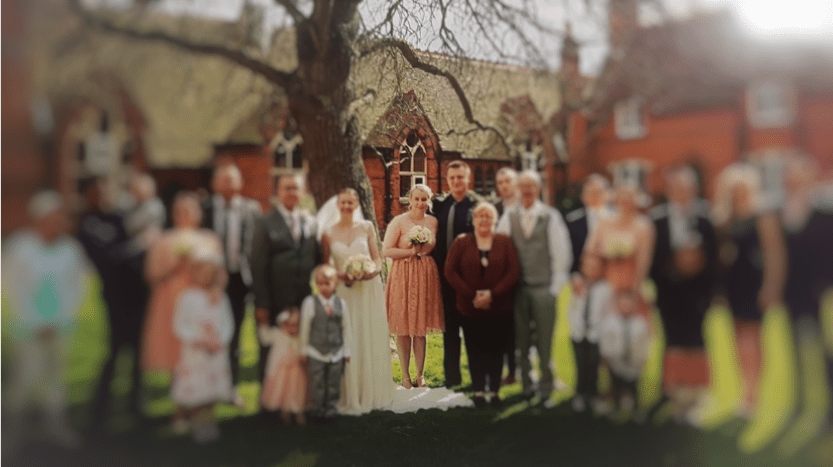
Big Families are unique, the current average family size is 2.4 (Office for National Statistics, 2017) which has declined but remained as such for the past decade. Being 1 of 8 Children is unique, it’s an interesting fact both myself and Haley (also a former graduate and also 1 of 8) both fall back on when you have those awful ice breakers and you have to think of something ‘special’ about yourself.
There is criminological research which identifies ‘large families’ as a characteristic for deviance in individuals (Farrington & Juby, 2001; Wilson, 1975). It’s argued alongside other family factors, such as single-parent households, which maybe more people are familiar with in those discussions. In fact, when looking for criminological research around big families, I didn’t find a great deal. Most of what I found was not looking at deviance but how it affects the children, with suggestions of how children in big families suffer because they get less attention from their parents (Hewitt et al. 2011). Which may be the reality for some families, but I also think it’s somewhat subjective to determine an amount of time for ‘attention’ rather than the ‘quality’ of time parents need to spend with children in order to both help fulfil emotional and cognitive needs. This certainly was not the case from both Haley’s and experience.
When I first thought about writing this piece and talking to Haley about her experiences. I did question myself on how relevant this was to criminology. The answer to that I suppose depends on how you perceive the vastness of criminology as an academic field. The family unit is something we discuss within criminology all the time, but family size is not always the focus of that discussion. Deviance itself by definition and to deviate from the norms of society, well I suppose myself and Haley do both come from ‘deviant’ families.
However, from speaking with Haley and reflecting on my own experience, it feels that the most unique thing about being part of a large family, is how others treat you. I would never think to ask anyone or make comments such as; “How much do your parents earn to look after you all?” or “Did they want a family that big or was it lots of accidents?” or even just make comments, about how we must be on benefits, be ‘Scroungers’ or even comments about my parents sexual relationship. Questions and comments that both I and Haley have and occasionally still experience. Regardless of intent behind them, you can’t help but feel like you have to explain or defend yourself. Even as a child when others would ask me about my family, I had always made a point of the fact that we are all ‘full siblings’ as if that could protect me from additional shame , shame that I had already witnessed in conversations and on TV, with statements such as “She’s got 5 kids all different dads”. Haley mentioned how her view of large families was presented to her as “Those on daytime television would criticise large families” and “A couple of people on our street would say that my parents should stop having kids as there are enough of us as it is.”
Haley and I grew up in different parts of the UK. Haley grew up in the Midlands and describes the particular area as disadvantaged. Due to this Haley says that it wasn’t really a problem of image that the family struggled financially, as in her area everyone did, so therefore it was normal. I grew up in a quite affluent area, but similar to Haley, we were not well-off financially. My childhood home was a council house, but it didn’t look like one, my mum has always been house proud and has worked to make it not look like a council house, which in itself has its own connotations of the ‘shame’ felt on being poor, which Haley also referenced to me. It was hard to even think of labeling us as ‘poor’, as similar to Haley, we had loads of presents at Christmas, we still had nice clothes and did not feel like we were necessarily different. Though it appears me and Haley were also similar in that both our dads worked all the hours possible, I remember my dad worked 3 jobs at one point. I asked my dad about what it was like, he said it was very hard, and he remembers that they were working so hard because if they went bankrupt, it would be in the newspaper and the neighbors would see. Which I didn’t even know was something that happened and has its own name and shame the poor issues for another post. Haley spoke of similar issues and the stress of ‘childcare and the temporary loss of hot water, electric and gas.’
The main points that came from both mine and Haley’s discussions were actually about how fun it is to have a large family, especially as we were growing up. It may not seem like it from my earlier points around finance, but while it was a factor in our lives, it also didn’t feel as important as actually just being a part of that loving family unit. Haley put it perfectly as “I loved being part of a large family as a child. My brothers and sisters were my best friends”. We spoke of the hilarity of simple things such as the complexities of dinner times and having to sit across multiple tables to have dinners in the evening. I had brothers and sisters to help me with my homework, my eldest sister even helped me with my reading every night while I was in primary school. Haley and I both seemed to share a love for den making, which when your parents are big into DIY (almost a necessity when in a big family) you could take tools and wood to the forest and make a den for hours on end. There is so much good about having a large family that I almost feel sorry for those who only believe the negatives. This post was simply to share a snippet of my findings, as well as mine and Haley’s experience. At the very least I hope it will allow others to think of large families in an alternative way and to realise the problems both me and Haley experienced, weren’t necessarily solely linked to our family size, but rather attitudes around social norms and financial status.
References:
Juby, H. and Farrington, D., 2001. Disentangling the Link between Disrupted Families and Delinquency: Sociodemography, Ethnicity and Risk Behaviours. The British Journal of Criminology, 41(1), pp.22-40.
Office for National Statistics. (2017). Families and households in the UK, Available at: https://www.ons.gov.uk/peoplepopulationandcommunity/birthsdeathsandmarriages/families/bulletins/familiesandhouseholds/2017 (Accessed: 5th June 2020).
Regoli, R., Hewitt, J. and DeLisi, M., 2011. Delinquency In Society. Boston: McGraw-Hill Higher Education.
Wilson, H., 1975. Juvenile Delinquency, Parental Criminality and Social Handicap. The British Journal of Criminology, 15(3), pp.241-250.
Share this:


Care Leavers, Criminal Justice and Higher Education

“These children are in our care; we, the state, are their parents- and what are we setting them up for…the dole, the streets, an early grave? I tell you: this shames our country and we will put it right.”
David Cameron MP, Prime Minister October 2015 at the Conservative Party Conference.
Well, I think it would be fair to say that politicians’ minds have not been exercised unduly over the fate of care leavers since David Cameron made the above promise in 2015. I worked with children in care and care leavers involved in the youth justice system for over thirty years and although his analysis of the outcomes for care leavers was simplistic and crude, tragically Cameron’s statement rings true for many of those leaving care.
With regard to the criminal justice system, Lord Laming’s independent review “In Care, Out of Trouble” http://www.prisonreformtrust.org.uk/Portals/0/Documents/In%20care%20out%20of%20trouble%20summary.pdf, notes that there is no reliable data on the numbers of looked after children in custody. However, based on data from a number of sources, the review came to the conclusion that around 400 looked after children are in custody at any one time. The total number of children in custody for July 2019 is 817. So, slightly less than half of those children in custody are looked after children according to the best estimates available, drawn from different sources. http://youthjusticeboard.newsweaver.co.uk/yots2/1g2x6m3h9q315chudc9elc?email=trueYJBulletin
Moving the spotlight, a huge 40% of care leavers are not engaged in Education, Training or Employment and only 6% of care leavers gain entry to university https://assets.publishing.service.gov.uk/government/uploads/system/uploads/attachment_data/file/464756/SFR34_2015_Text.pdf . This at a time when around 50% of children now have access to Higher Education and the opportunities that this can provide. Also, 20% of young people who are homeless have previously been in care.
Naturally, we have to be careful to provide a level of balance to the above rather desperate and shocking figures. Lord Laming’s review found that 94% of children in care did not get in trouble with the law. However, children in care are six times more likely to be cautioned, or convicted of an offence than children in the wider population. Furthermore, children in care who come to police attention are more likely to be prosecuted and convicted than cautioned when compared to the wider child population.
So, what has happened since 2015 when David Cameron declared his intention to “put it right”? In truth, there have been some steps forward and these need to be celebrated and built upon. The Care Leaver Covenant, a promise made by private, public or voluntary organisations to provide support for care leavers aged 16-25 has meant the availability of employment opportunities for young care leavers in the Civil Service, local authorities and a range of private sector organisations. Closer to home, here at the University of Northampton, we have launched a new package of support for care leavers who want to study with us. The package offers the possibility, from 2020, of a fully funded place in our Halls of Residence for the first academic year, a contract which extends their accommodation lease to include the summer vacation. A block for many care leavers entering Higher Education is the very real issue of where to live at the end of the academic year, so this tries to address this issue. Another block experienced is financial hardship; the offer provides a non-means tested financial award of up to £1,500 per year to help with course and living costs, and this alongside the local authority’s statutory responsibility to support access to higher education may also help. We also have a designated member of support staff to provide advice and guidance. All these demonstrate our commitment to widening participation and encouraging ambition.
Of course, this is only part of the picture. Arguably, our engagement with young people in care needs to start shortly after their transition to secondary school. The wider social structures which perpetuate disadvantage and poverty will continue to challenge those who are children in care and leaving care. The “adverse childhood experiences” – a rather unedifying term for physical, sexual, and emotional abuse perpetrated by carers or parents-will still have an impact for this group and potentially impair their ability or commitment to study.
If however, I learnt anything from my years working with children in care and children leaving care, it is that you should not underestimate their ability to overcome the obstacles placed in their way. With the right support and a child centred approach, education can provide the right framework for opportunities. Victor Hugo famously said that if you open a school door, you close a prison. Let’s kick open the door of Higher Education a little wider and increase the life chances of these children in OUR care.
As a footnote, I should say that my mum was in care from the age of four until she was fifteen when she was adopted. I would therefore be happy to acknowledge that this has some influence on my perspective and my interest in this group of young people.
Dave Palmer Lecturer in Criminal Justice Services
Share this:


How literature failed me as a black student

My name is Francine Bitalo, I am 21 years old and a Criminology undergraduate at the University of Northampton. Coming from a black African background I have always had a strong interest in the Criminal Justice System and its treatment towards different groups in society.
My dissertation was based on the impact of police practices such as stop and search on young black men and their families. Whilst statistics present the alarming racial disproportionately which exist in many areas in the criminal justice system, it fails to portray the long-lasting effects it has had on Black families. For example, the daily harassment and differential treatment subjected to young Black men has forced black families to reinvent themselves to conform to institutional racism. Coming from a Black family myself and having male family member, the findings in my dissertation quickly became personal to me, as I could constantly relate them to the structuring of my own family. For example, the fact that it would take my father longer to find a job due to institutional racism, making my mother the breadwinner, or when my mother is preparing my brothers for police harassment and discrimination, but not me and sisters.
While conducting my research I was quick to learn that what literature may describe as a phenomenon, for many of us is a reality. If I am honest the writing stage of my dissertation was difficult for me because it was a passionate topic. I experienced a lot of self-doubt regarding my positionality for example, being a Black woman and facing my own forms of discrimination and now having to talk about the experiences of young Black men. I think my dissertation tutor would agree with me on this as I remember emailing her after I submitted my work expressing how I felt like I didn’t effectively capture the effects and the voices of the young Black men I interviewed, despite that being my main goal. I mean who would blame me, as a student, if I am honest I felt like literature really let me down for instance, when writing my literature review I found that literature neglected the subject of racism solely from the perspectives of young Black men, despite statistics showing them to being the largest group to experience institutional racism. At this point I had to laugh at the criminal justice system and its propositions to improving police relations as well as re offending.
With that being said the information I did come across I couldn’t help but sense the notion of white privilege lingering in the perspective of some scholars. I understand this is a strong claim to make however I say this because not only did literature provide little of the work of Black scholars regarding the topic, yet it was evident that most white scholars did not see the issue with stop and search and its discriminate use. Arguments for this were discussed in my dissertation for example, some argued that the process of racial socialisation in Black households were ineffective to police relations and the functioning of their services, which creates the notion that the Black community should submit to discrimination and harassment in favour of procedures and compliance during police encounter. Some tried to justify the disproportionality in stop and search by claiming that young Black men should be harassed because they tend to be out more especially in certain urban areas or the disproportionate targeting of Black minors is due to parental criminality. I felt there was a lack of accountability from white scholar thus, little understanding in the issue of race which is natural because their experiences do not allow them to understand. Yet this led me to ask questions such as why shouldn’t Black mothers have the right to prepare their sons for police discrimination, does it matter what time and area should a person of colour be around for them to be targeted at?
After completing my dissertation and getting a First Class I felt extremely proud of myself, the fact that I did not shy away from the research topic despite it being limited in literature. As a result, it was satisfying to know that I was able to articulate the experiences of others to a First Class standard. I hope this can encourage others to trust in their abilities and put aside any doubts especially when choosing a research topic. As a student writing a dissertation or even an assignment, I believe we should explore the unexplored, open the unopened and always be willing to discover and learn. Do not be afraid of researching something that is limited or has never been done. Lastly as my dissertation was extremely passionate to me I have decided to turn it into a personal project and continue researching the topic
Share this:


Come Together

For much of the year, the campus is busy. Full of people, movement and voice. But now, it is quiet… the term is over, the marking almost complete and students and staff are taking much needed breaks. After next week’s graduations, it will be even quieter. For those still working and/or studying, the campus is a very different place.
This time of year is traditionally a time of reflection. Weighing up what went well, what could have gone better and what was a disaster. This year is no different, although the move to a new campus understandably features heavily. Some of the reflection is personal, some professional, some academic and in many ways, it is difficult to differentiate between the three. After all, each aspect is an intrinsic part of my identity.
Over the year I have met lots of new people, both inside and outside the university. I have spent many hours in classrooms discussing all sorts of different criminological ideas, social problems and potential solutions, trying always to keep an open mind, to encourage academic discourse and avoid closing down conversation. I have spent hour upon hour reading student submissions, thinking how best to write feedback in a way that makes sense to the reader, that is critical, constructive and encouraging, but couched in such a way that the recipient is not left crushed. I listened to individuals talking about their personal and academic worries, concerns and challenges. In addition, I have spent days dealing with suspected academic misconduct and disciplinary hearings.
In all of these different activities I constantly attempt to allow space for everyone’s view to be heard, always with a focus on the individual, their dignity, human rights and social justice. After more than a decade in academia (and even more decades on earth!) it is clear to me that as humans we don’t make life easy for ourselves or others. The intense individual and societal challenges many of us face on an ongoing basis are too often brushed aside as unimportant or irrelevant. In this way, profound issues such as mental and/or physical ill health, social deprivation, racism, misogyny, disablism, homophobia, ageism and many others, are simply swept aside, as inconsequential, to the matters at hand.
Despite long standing attempts by politicians, the media and other commentators to present these serious and damaging challenges as individual failings, it is evident that structural and institutional forces are at play. When social problems are continually presented as poor management and failure on the part of individuals, blame soon follows and people turn on each other. Here’s some examples:
Q. “You can’t get a job?”
A “You must be lazy?”
Q. “You’ve got a job but can’t afford to feed your family?
A. “You must be a poor parent who wastes money”
Q. “You’ve been excluded from school?”
A. “You need to learn how to behave?”
Q. “You can’t find a job or housing since you came out of prison?”
A. “You should have thought of that before you did the crime”
Each of these questions and answers sees individuals as the problem. There is no acknowledgement that in twenty-first century Britain, there is clear evidence that even those with jobs may struggle to pay their rent and feed their families. That those who are looking for work may struggle with the forces of racism, sexism, disablism and so on. That the reasons for criminality are complex and multi-faceted, but it is much easier to parrot the line “you’ve done the crime, now do the time” than try and resolve them.
This entry has been rather rambling, but my concluding thought is, if we want to make better society for all, then we have to work together on these immense social problems. Rather than focus on blame, time to focus on collective solutions.
Share this:


The Criminology Toolbox

Whilst sitting at my desk at work recently I realised just how much I took away with me in my toolbox from my time studying Criminology. I wanted this blog to be about exactly how this discipline has helped me in my personal and working life and the transferable skills I acquired without even realising I was using them.
In 2011 I came to University an 18 year old with a very closed and one sided mind set and this is something I will openly admit to! A memory that I feel will stick with me forever is from a Crime and Society seminar in the first year with @manosdaskalou. I remember openly saying to him that I felt prisoners should not be allowed to have televisions whilst in prison and that they were there to do their sentence and not watch this week’s Hollyoaks (@manosdaskalou you may remember that sour faced girl sat in front of you, although the sour face is still very much there!). I am sure those of you reading will be cursing BUT my self-righteous opinions did change and the more I attended various lectures and seminars, the more I became open to listening to and respecting the opinions of my peers and became further educated about the impact rehabilitation and second chances have on lives.
In my second year I volunteered for an organisation focusing primarily on helping individuals who had been in the Criminal Justice System with gaining employment and education. As soon as I walked through those doors I saw first-hand the positive impact this organisation had on the lives of those using the service.
I had an opportunity to assist on a healthy living course for individuals recovering from drug and alcohol addictions. Some of those attending the course had never taken an exam before or even been in an educational setting and others struggled with reading. I quickly realised the privileged position I was in to be able to even be at University and do things I feel we all take for granted sometimes such as reading. I also provided some advice to a young female who completely freaked out at the idea of taking a multiple choice test. I gave her some tips before that I had acquired from my own experiences. She was so very thankful to me and I will always remember her.
In terms of the other skills I now have in my toolbox, the thought of standing up and presenting in front of my peers at University terrified me, however in doing that I can now confidently stand up in front of my colleagues and bosses to present information and contribute in meetings. I can also provide evidence in court thanks to learning about the criminal process.
Having the opportunity to debate certain issues within the criminological world and society has taught me to have a voice and provide my point in a professional manner whilst listening to others. From the assignments set, to working within a timetable, it has all enabled me to build upon my time management and organisational skills. Working to tight deadlines also does not daunt me especially when I now have work to them daily.
I think we can all be truthful here and say we did groan a little bit when we were given extra reading to do at home and to critically analyse various pieces of text for the next seminar (heaven forbid!). However, being able to analyse a piece of text is a skill I use every day in my job with Northamptonshire Police especially when building court files and reading the fibs and fairy tales that some of our customers can provide. Criminology taught me to be critical of everything around me, take on board criticism and ask questions. I now ensure I stick my head above the parapet and often put the police officers in their place, as they do need it sometimes!
On the whole, I am thankful for the transferable skills I acquired from studying Criminology despite using them daily and not realising until my desk epiphany! I graduated in 2014 with a toolbox of skills ready for the big wide world and I will cherish them always. Who knows, it may even help me with becoming a parent in November!

 Thoughts from the criminology team