
Home » Pandemic (Page 3)
Category Archives: Pandemic

Taking a short break….back soon

The Covid-19 pandemic has taken its toll on everyone in a myriad of different ways. Nobody has escaped the impact of the last 16 months and we’re not out of the woods yet. Here at the Thoughts From the Criminology Team we’re no different. All of us are beginning to run out of steam and need a little break. Never fear, we’ll be back with lots of interesting entries from September. In the meantime, there’s plenty on the site to explore.
Enjoy your August whatever you are up to!
Share this:


Vaccine day
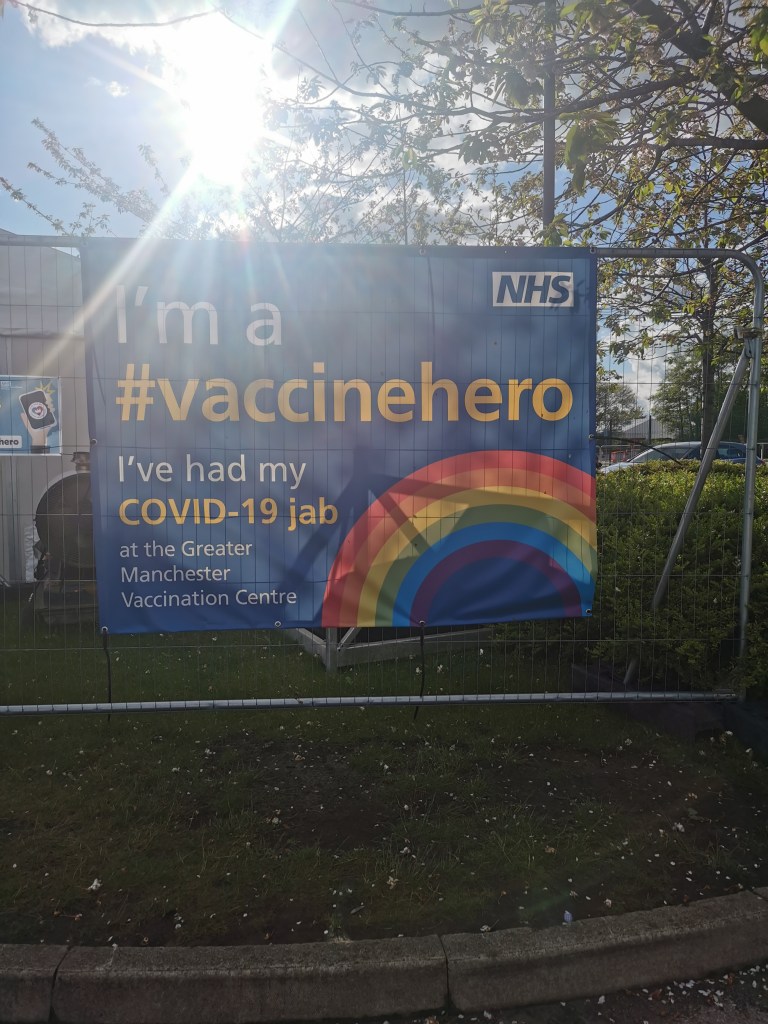
I had my first Covid-19 vaccine recently and the day was emotional, to say the least. I am 99% compliant with Covid-19 restrictions, partly because it is the law but primarily because I believe it is the right thing to do to protect others. In fact, there have been many times over the last 15 months where I have avoided the news for my own sanity so half the time, I do not exactly know what the latest rules are. I am guided by my own risk assessments and am probably more restrictive than the law in most scenarios. Up until vaccine day I thought that I wasn’t scared of contracting Covid-19, that I was complying as an act of altruism and that I would not be able to live with myself if I unwittingly passed the virus on to somebody vulnerable to severe illness and death.
Back in March 2020 when infections then the death toll started to rise, and the NHS became increasingly overwhelmed I would watch what my daughter and I called ‘the Boris show’ where the Prime Minister and the scientists would recall the daily death data, hospitalisations and cases. Each ‘next slide please’ bringing more bad news. Each day I would think about the families of every single one of those people who had died. It was quite overwhelming, and I eventually had to limit the information I ingested, living in both a physical and informational bubble. I recall the death toll announcements were met with responses from the covid-deniers, ‘but they’re old or ill anyway’, and ‘but they could have been hit by a bus and still counted as a covid death’. As a victimologist, this infuriated me. Who were these people to flippantly dismiss right to life based on age or health? It frustrated me that people with no knowledge of statistics, medicine or science were making assumptions based on anecdotal evidence from Bob on Facebook. But then again perhaps these are the tales people told themselves to get through. If they deny it, they have nothing to fear.
A few months later in June 2020, my somebody close to me contracted Covid-19. I was told they were doing well and seemed to be recovering from the virus. They died more than 28 days after having first being diagnosed with Covid-19, but it was Covid-19 that killed them. I know because I saw them to say goodbye a couple of hours before they died. This person who was always so full of life, love and who saw the good in everyone and everything, was now fading away. But what haunts me to this day was the sound of their lungs. The sound I’d heard people talk about on the news. Crisp packet lungs. And it was that sound that was like an earworm in my head on my way to the vaccination centre.
I’ve been looking forward to getting vaccinated since vaccines were on the horizon so I was excited when I received the text invitation. I booked to attend the Greater Manchester vaccination centre at the Etihad stadium, the home of Manchester City Football Club. It was well organised, despite the large numbers of people coming through. First, I was required to check in and was allocated the Moderna vaccine and a green sticker which ensured staff could direct me to the correct queue. Then I checked in at another desk where I was given some information, asked some health questions and, most importantly, I was asked, ‘do you want the vaccine?’. Those who have sat one of the research methods modules I have taught this year will have heard me discuss the importance of informed consent and this also applies to real life situations such as this. After this I joined another queue and finally reached the vaccination point, had the jab, waited for 15 minutes and left. Just like that. The whole thing took about an hour and given the volume of people being vaccinated (the site is a mass vaccination hub for a large area), I found it to be incredibly efficient. Every staff member I met was informative and did what they could to put people at ease.
From the moment I left home to go to the vaccination centre, to the moment my head hit the pillow that evening, I couldn’t help reflecting on the last 15 months. I felt a wave of emotions. I felt extreme sadness and sorrow at all the lives lost and all the families and friends left behind. It has been a traumatic time for so many of us. Getting the vaccine, I felt some sort of release from this, like it was nearly over. I have worked from home throughout and have had little social interaction, except when the gyms have been open or I have undertaken caring responsibilities for various friends and family. There were also a few weeks towards the end of lockdown 1 where my sister came to stay after returning from India. Overall, I have been alone with a teenager at a desk in my living room. It’s been awful. I’m tired and I need a break. I am well overdue a mum-cation. I felt some hope that sometime soon I might be able to get a parenting break and that my daughter can also get a break from me. I said earlier how I believed I had not feared contracting covid but having the vaccine and the relief I felt made me realise that I was more scared than I would care to admit. I am young(ish) and extremely healthy and I would probably be at low risk of developing serious symptoms but what if I was an unlucky one?
Aside from my personal experiences, I felt a collective relief. The global pandemic has created global trauma. There are still countries being ravished by the virus without the resources to operate mass vaccination of entire populations. I worry for the world and wonder what borders will look like after, if there ever is an after but I’ll ponder this further in another blog later. Getting vaccinated and being part of a mass vaccination programme made me feel cautiously optimistic. However, a few weeks on and we are now in a situation where the Delta variant is spreading like wildfire. Deaths have risen by 42.5% in the last week and hospital admissions by 44.7%. The numbers are still incredibly low in comparison to the first and second wave but every one of those deaths and hospitalisations matter. They are not a number on a presentation slide. They are people who have families and friends, who are cared for by the NHS. Every one of the deaths is a loss to these people, and has a butterfly effect in terms of the impact each death has.
Restrictions are set to lift imminently I believe (still avoiding the news) and it makes me feel uneasy to say the least. I’ve seen experts whom I trust argue on both sides of the fence. Some say this is dangerous, others suggest summer is the best opportunity to lift restrictions. It sometimes feels like we are living in some kind of twisted experiment. Regardless, I will continue to assess and manage the risk to myself and those around me. I’ll probably wear masks way after it is legal to do so and expect I will still be cautious about who I am physically close to and how I socialise. There’s things that I love and miss such as the theatre, cinema and the occasional gig but I don’t feel ready. I have a feeling this pandemic is far from over.
Share this:


A smorgasbord of thought (AKA a head full of magic)

Its been a few weeks since I’ve written a blog and whilst there are plenty of topics to pick from, I never quite got my head round writing about anything in depth. I’ve thought about a lot, I never stop thinking about a lot, some it meaningful and some of it not. I like to think that some of the stuff is quite profound but that’s just in my imagination, I think. Anyway, rather than trying to put together some deep and meaningful narrative about the state of the world I thought I’d provide a few highlights.
When I read Jes’ blog the other week about graffiti, I couldn’t help thinking that we do far too much to try to justify and somehow nullify the effects of criminality. For all our theorising and empathising as criminologists, we shouldn’t lose sight of the fact that crime results in victims and being a victim of crime is at best an unpleasant experience. So, I have to disagree with Jes on one point, grafitti is not art, its criminal damage, vandalism if you like. Very rarely have I ever gazed upon a graffiti covered bridge, wall, shop front, shutter, railway station siding or railway carriage and thought to myself, wow that’s nice. Let’s call it what it is.
I think it was the same week that I read a post on ‘LinkedIn’ about the silence surrounding the murder of Julia James, a 53-year-old Police Community Support Officer. The silence the author of the post was referring to was the contrast between the public response to Julia James’ death and that of Sarah Everard, a 33-year-old marketing executive. No vigil, no public outrage, no ‘claim the streets back’. I wondered what dictates the public response to such horrific events. Is it age, occupation, circumstance or just timing?
I watched the news this week somewhat bemused by the response of some industry chiefs and business owners. The airline industry is less than pleased with the government’s approach to relaxing of restrictions around travel and some business owners are apoplectic about the fact that the removal of restrictions might be delayed. It might be a bit simplistic to state this, but it seems that they value business more than lives.
As for those that went on holiday abroad, thinking they wouldn’t need to quarantine when they came back only to find that the rules changed, and they now have to. More fool you, maybe I’ve missed a trick here, but I don’t think the Covid virus and its mutations will wait for you to enjoy the rest of your holiday before spreading a little more. Don’t complain about quarantine nor the cost of testing, you put yourself in that position, now take some responsibility and suck it up instead of blaming someone else.
In a conversation, a friend of mine told me ‘the problem is people don’t like being told what to do’. This was said in the context of Covid and our discussion about the idiots that think any rules or guidance just doesn’t apply to them. The comment did however make me think about a paper I read some time ago by Storch (1975). When the new police were introduced into this country in 1829, there were few who looked upon them favourably. One of the main issues was simply that the populace did not like being restricted in their ‘immoral or illegal’ pastimes. We can have a debate about who makes the rules but it seems to me the most pressing point is that little has changed. Take off the rose-tinted glasses, there never was a golden era of policing, the police have never been liked and never will be. I wonder how the population would act if there were no police though?
I’m a little weary now, all of this thinking and writing has worn me out. Time for a lie down in a darkened room.
Share this:


The ‘Dangers’ of Travelling

This month, during the brief lull between the teaching and marking season, I had allocated myself a bit more free-time than usual. I have not been able to indulge in my hobby of travelling for a while, so instead of this, I have been watching travel related-television programmes with the hope that these will provide me with some kind of joy.
This attempt has been a partial success; an influx of comedy travel shows have worked wonders to uplift my spirits whilst simultaneously reminding me about the beauty of nature; animals, plants, sea, land…(and even humans).
Covid has taken over travel related news at the moment, but in ‘usual’ times it does not require much effort to come across travel documentaries or news reports that seem to encourage prejudice by depicting other countries and travelling as being strange or dangerous. I do worry that this type of coverage might discourage people from wanting to explore the world.
It is difficult to assess the extent to which the television influences our opinions, but when I was a bit younger and discussing my travel plans with others, sometimes I would be met with the following comments:
Response: I would love to travel but I can’t
Me: Why can’t you?
Response: It is dangerous!
Me: How do you know this?
Response: …It said so on the television
There are many genuine reasons that prevent people from travelling, such as, money, responsibilities, health, conflict, misogyny and racism etc. But I find the above reason to be such a shame.
I have encountered many myths over the years which seem to have been gained from watching the television. Here are some of my favorites:
Myth 1: If you see a [insert wild animal here], it will eat you alive
My experience: Take crocodiles for example, these are not as bad as they seem. Yes, arguably crocodiles are death machines but I have seen many in the wild and I am still alive.
Myth 2: The local ‘criminals’ are dangerous
My experience: On very rare occasions I have witnessed crime being committed whilst abroad. I once sat on a coach full of people who were attempting to smuggle cocaine to Brazil. I have also stumbled upon situations which the media described as ‘riots’ and I have also witnessed a few thefts. In these situations, the locals were not a danger to myself, but crime seemed to be a way of being able to afford to live or the result of the occasional angry outburst amongst crowds of protesters, motivated by frustrations with the state.
Myth 3: If you accept the hospitality of strangers you will be murdered in your sleep
My experience: The chances of this happening are very slim. Travelling tends to restore my faith in humanity, the people that I meet whilst travelling can be incredibly kind and helpful.
I found that whilst I was a student, I was able to travel to many places on relatively limited over-draft funds. I hope that the students that I teach are able to do the same, as travel really can broaden the mind. Although, maybe I am wrong for encouraging others to travel, as travelling also makes you very aware of the damage that has been caused to the world, and my own part with in it.
Share this:

Whose rights are they anyway?

I’m a great believer in human rights and when the topic comes up, I make it clear to my students that you either buy into human rights wholeheartedly or you don’t buy into it at all. There is no halfway house. You cannot pick and choose which bits you like, or decide that there is a time limited offer, a bit like a sale, on one month but not the next, and then on again. Nor can you decide that such rights only apply to some and not others (Home Office take note regarding refugees and asylum seekers). But the more I think about human rights the more I question how rights can work on an individual level without impacting on others’ rights.
A good example is the protests over the last year or so, particularly during ‘lockdown’. I ought to hasten to add before someone protests vociferously, that this blog is not about the validity of the subject matter being protested about. The blog is simply about how the exercise of rights that we hold so dear, can and do impact on other’s rights.
The government and its agents have a duty to ensure that human rights are facilitated as best as possible. Whilst there are some caveats, this duty extends to taking positive steps to ensure that we have a right to protest, a right to associate with whom we like, a right to express what we want to express and I would suggest above all else a right to life. I have prioritised the right to life but, in the arguments about the rights to protest, few if any question the impact that such protests have on that one fundamental right.
And I can hear the arguments now, what the people are protesting about is far bigger, too important not to be allowed to protest. The argument can even be extended to the fact that the protests are about the right to life, a valid argument. So, it is ironic that protesting about the right to life impacts on others’ right to life. If you don’t agree then please tell me what the purpose of ‘lockdown’ was if it wasn’t at least in part to save lives. The problem with protests, peaceful or not is that they do not suddenly happen in one place, people are not just beamed in. Would be protesters have to get to the venue thereby creating multiple opportunities for the spread of Covid. But even when we are not in ‘lockdown’, many protests have a detrimental impact on the rights of other members of the public through the disruption caused. In exercising fundamental rights, we trample on the rights of others. Whilst we may agree with the sentiments of the protests, it is and should not always be the case. Protests are not always about what we hold or ought to hold dear, in fact sometimes the opposite.#
I cannot say I am in favour of the new proposals to regulate protests, but I do understand the rationale, at least in part. I also understand the concern and the possible impact on our freedoms. But I find it somewhat bemusing that so many are quick to criticise and yet so few offer solutions. One day, when I am particularly annoyed about something and decide to join a protest, I wonder whether I will think about other people and the rights I am depriving them of?
Share this:


#CriminologyBookClub: The Reluctant Fundamentalist

As you know from our regular #CriminologyBookClub entries a small group of us decided the best way to thrive in lockdown was to seek solace in reading and talking about books. Building on on what has quickly become standard practice, we’ve decided to continue with all eight bloggers contributing! Our tenth book was chosen by @amycortvriend As can be seen from below, this text gave us plenty to think and talk about.
This was an interesting choice. Having lived through 2001, it was interesting to reflect on events almost two decades ago. I’ve read quite a lot of material around the area, so the content of The Reluctant Fundamentalist didn’t really have any surprises. The use of just one voice to tell the story was interesting and left you wondering what (if anything) the other person in the conversation was saying. I found the sex scenes with Erica rather disturbing, primarily recognising that this was a vulnerable women, regardless of Changez’ motivations. Overall an interesting read, with many unanswered questions left hanging. I know I’ve filled in the blanks, but equally I recognise that other members of the criminology book club may have very different answers….
@paulaabowles
Set in a Lahore café it is easy to imagine the scene and the changing scenery as day turns to night and a one-sided conversation takes place between the narrator and a stranger. In a story of the clash of two cultures and ideologies, the protagonist explains how he at first embraces the ‘American Dream’, soaking up the capitalist vision and the pathway to riches and success only to turn against these ideas as a result of some inner turmoil that he cannot fully explain. For the reader the explanation may become somewhat clearer as each page is turned but still you are left with the question, what is the purpose of this conversation? All becomes clear at the end or does it? A cleverly written plot that captivates from the start. The storyline takes the reader on a journey that is carefully narrated and beautifully descriptive. I really enjoyed the book and it took me back to some of the academic work around terrorism and fundamentalism. A good read that certainly makes you ponder some western values.
@5teveh
When I think back to The Reluctant Fundamentalist, I remember being swept up in the unique style of writing, the timely and thought-provoking themes and the somewhat questionable characters. I struggled to put it down and I think it navigates some themes well (I’ll be careful of spoilers). However, once I had finished the book I was left with a crucial question: ‘What is the ending?’. I struggled with the ‘love’ relationship depicted, even more so upon reflection. And was rooting for a love interest between the protagonist and his boss, Jim, but that was not to be. All in all, I could not put the book down and thoroughly enjoyed it, however as always when I take time for critical reflection: things become a little unstuck. However, excellent choice @amycortvriend!
@jesjames50
The book mostly consists of a person telling his life-story in a restaurant. For me, the storyteller’s life experiences were at times very sad, and when reflecting on scenes involving the women who he loved…maybe even a little strange. The book includes plenty of themes that are relevant to the field of criminology so I think it’s a book that criminology students would find interesting. I was intrigued by this book as I wanted to know more about the main character’s story, I also wanted to know why he was bothering to tell his story to a stranger in such detail in the first place. Overall, I thought the book was good, despite ambiguous ending!
@haleysread
I did not enjoy this book. I really struggled to get past the style in which it was written which I found at times irritating and at others uncomfortable. The descriptions of the narrator’s ‘relationship’ with Erica were particularly difficult to read. There were too many things left unknown to the reader which made it difficult to feel sympathetic to any of the characters involved and the ambiguous ending was more frustrating than intriguing.
@saffrongarside
The Reluctant Fundamentalist, is a novel that we as a society should read. This novel will not give you a manual on how to treat people, but it will hopefully get you to reflect on the implicit ignorance of society and the violence that is legitimised in the name of politics.
Although the backdrop of the novel is set during the 9/11 terror attacks, Mohsin Hamid, does not address the clichés of terrorism, or the morals of individuals. The focus of the novel rests on the problematic treatment and labels that society pushes onto ‘suspect’ communities, and the power that Western society holds over the rest of the world.
The main character of the story Changez, is not necessarily a likeable or loveable character, he is human, he is flawed he holds the qualities that all humans possess. But being a Pakistani national that is living in the U.S at such a volatile time, creates an atmosphere of angst that is exclusive to him and people that look like him. Throughout the novel I constantly wanted him to comply with the ideals of Western society so that he could fit in to win and be Othered less.
As an individual that is deemed different than the ‘norm’ and part of a suspect community, it is difficult to ignore how hard it is to be completely accepted and given access into a society that only gives you part membership. The blurred boundaries between fiction and nonfiction of this novel, allows for uncomfortable reflection of my own tireless navigation through society and the problematic narratives that has been thrust upon others.
This book will not solve the problems of the world, but it will allow us to reflect on who we are, how we treat each other and how we can do better as humans.
@svr2727
The Reluctant Fundamentalist was definitely a fascinating read. It leaves an impression to you. There is something unsettling about the way the story progresses, and you are always on edge about what is likely to happen next. The story is a constant narration as a one-way conversation. At first the novelty of the conversation is interesting and engaging, but in parts it is stretching it, feeling a bit exaggerated. The protagonist is unclear if they are a hero or a villain, friend or foe and this sustains that suspense even further. We are left wondering as we trace different parts of his story through a seemingly random recollection of events. The writing is good and engaging leaving you wanting to know more, but for those who like the certainty of what happens this may not be for you. After I finished the book, I wasn’t sure if I liked it or not, mainly because I wasn’t sure of how I felt about the characters. One thing is for sure the subject matter and the pace of writing will leave you guessing.
@manosdaskalou
Having read another of the author’s novels, I was looking forward to The Reluctant Fundamentalist and it did not disappoint. It took me a chapter or two to get used to the writing style which was almost a one-sided conversation which made you constantly wonder who the other person is, why they are there and what they are saying. Spoiler alert: we never find out. I like that the ending is open, leaving the reader to draw their own conclusions. I also enjoyed the journey of the protagonist from his desperation of wanting to succeed in his pursuit of the American dream to the realisation, triggered by 9/11, that he never truly would fit in, nor does he want to anymore.
@amycortvriend
Share this:


Finding focus in office exile

I have now passed a year of being exiled from my office, separated from people for most of the time. A couple of weeks before the first lockdown I was working in another university and we had just a day or two notice to switch to online teaching. As a doctoral candidate I valued the flexibility of being able to work from home, in the office, and in overpriced coffee shops in Manchester’s Northern Quarter. The weather helped with the first lockdown. I would have virtual office working sessions with my colleagues in the criminology department in my garden. I thought I was coping but the reality was I was masking any fear, sadness and the effects of having no human contact. I was training two or three times per day, counting every calorie I ate. I lost a few pounds, got stronger, fitter and felt physically amazing.
We got some respite in the summer when lockdown restrictions were lessened. However, I lost a family member to Covid-19 and still felt unsure and anxious about going out so I didn’t make the most of it. I did have a couple of work sessions in my local library which was a welcome change of scenery. This was short lived as I currently live in Manchester and we have been in either lockdown or tier 3 restrictions for most of the last year. My saving grace was my gym. We had outdoor sessions, new members joined, and I got to see real people, albeit in socially distanced marked off squares of territory on the gym floor. Life was much better then. I left the house most days.
By December’s lockdown I was starting to struggle. With dark mornings and nights there would be days when I wouldn’t leave the front door. I went from training daily to training once or twice per week and some days I wouldn’t get any more than 2,000 steps in. For my, training is my anti-depressant. It keeps me sane, it keeps be focussed and it keeps me connected to a community of people who value it too. For me, this was a worrying sign.
Fast-forward to today, a year on from lockdown 1. I sit here in front of my laptop day in, day out, trying to concentrate, trying to find the perfect playlist to make me concentrate, taking nootropic supplements (legal, not the drugs), brain vitamins and high caffeine supplements to make me concentrate. I sit here researching symptoms and self-diagnosing ADHD. But really, I just need my office. I need an over-priced lemon and ginger tea, I need a commute, I need people, I need to get out of my living room. But I don’t need it at a cost of losing more lives to Covid-19 so I’ll sit in my living room and wait.
For now, as difficult as it is to focus, I manage. I just have to work harder than ever at it. So for all of our students who are also struggling, I will finish with some of my top tips but bear in mind we all learn differently so find what works for you.

Amy’s top study from home tips:
- Host virtual study sessions with colleagues. I have at least 2 sessions per week with a colleague. We start the session by saying hi and having some human interaction before stating our goals. We keep each other accountable by asking if our goals are achievable within the 2 hour frame and suggesting more specific goals. We then mute and work, coming back at the end of the 2 hours to hold one another accountable and share how we have done. I cannot emphasise enough how much this has helped me!
- Write a to do list each day and week with SMART goals. You’re better off having smaller goals that are achievable than bigger goals that are not
- Use the Pomodoro technique. Ordinarily this is 25 mins work followed by a 5 or 10 minute break. There are online tools and apps or you can set a timer. One of my supervisors recently suggested to me to reduce the working session to 15 minutes to account for my reduced concentration span. This is helping!
- Don’t have the same expectations on yourself as you ordinarily would. These are not ordinary times
- Work with your own mind. My brain works well early in the morning so sometimes I have my laptop open at 5.30am. I have friends that work late in the night. I also know I read well in the afternoon and I do my best thinking when I am on a solitary walk in nature
- Set yourself little goals with rewards. Currently, if I finish editing 5 pages I get an episode of Grey’s Anatomy or a cookie (bad idea) or a 10 minute browse on Instagram
- Lean on the resources available to you. At UoN our students are lucky to have a tonne of informative resources on Skills Hub (see the section on ‘How to Study’), our Learning Development team to help with academic skills, a mental health team who can help support mental wellbeing, and a whole host of other services. Ask for help and accept it when it is offered (this I need to work on)
- Listen to a focus playlist. My go to Spotify playlists are here and here
Share this:


Let it be Light

You may have probably heard of the title before and you may or may not be able to place it. It is a quote from the bible! It is profoundly creationist proclaiming the world created in days; from the 1st for the light and the 6th for the people and animals. A seemingly busy week for an almighty being who needed a day of rest afterwards. The contribution of organised religion to everyday life, the realisation that people need rest and recuperation from the labours of work. This however is not the reason I chose this dive into scriptures. I am not a theologian so I will not examine the religious content.
Instead there are two different reasons I have chosen to start with this quote; the first is the positive affirming message it conveys, the second is its immediacy. What we have here is light and brightness that is instant gratification. This message feels like a piece of chocolate melting in your mouth, releasing sweet sensations, as a flooding of smooth cocoa disintegrates, releasing its sensual solids. Therefore, the command on creating light resonates; we rejoice because unlike reality we find pleasure in immediate gratification.
Would we care that light was not created but emerged after the Big Bang and took billions of years to form in the way we now recognise it as our sun? Does it matter that progress is long and arduous and not immediate as the command suggests? Our sense of time dwarfs in the time required for events to happen. It is astonishing that we still try to comprehend the vastness of time through human lifetime. The command is also palatable because it happens without virtually any real effort. It does not represent the labours, pains of creation and development. In short, evolution is painful, long but here is presented as something immediate and effortless. In that a series of commands completing complex processes seems preferable to the reality of evolution. Maybe it is pertinent to point out that the command reveals the “majestic totalitarianism” of the divine against the great equalizer of nature and progression.
In life however, big creations cannot happen by command. “Let it be Baby!” I wonder how many mothers would favour this one, or in our line of work “let it be knowledge” how many will choose this option. This is when we realise that this pleasant message is shielding us from the reality of the process and the nature of reality itself. We may want things to happen immediately, but this is not necessarily the best option. In parenting, if you could more forward into having a baby, why not move further past the terrible twos or even further into the dreadful adolescent years of having your authority challenged. Essentially have a child created fully functioning and obedient to parental will. Maybe because this is not parenting. The stories that remain are those of growing pains; without growth there is no parenting. Let’s explore it in knowledge; can we find shortcuts in the way we learn a trade, an education, a professional identity? Maybe skipping the first parts on getting to know how to write in the appropriate conventions; perhaps we can skip on the tedious referencing process that only anally retentive individuals apparently enjoy. What if instead of books and hours of reading different texts we got laminated sheets with terms and conditions and whenever we embark on writing we are told step by step what we write. Because this will not be knowledge. The slow and arduous process has an exceptional trait within it; insight! After reading my books, making notes on my articles, going over my notes and trying to make sense of what it the point I am trying to make; in a moment after hours and hours of studying, suddenly and unexpectedly, the “penny drops”! This moment of insight is like a lightbulb moment…and that is light! A light, not by magic or immediate gratification, but the sustained understanding that comes from knowledge. It has been a difficult year for all of us but please remember that light comes from inside and to quote a great teacher Goethe, “more light”.
Share this:


Thank F**k it’s Easter!

A number of years ago I wrote a blog entitled: ‘Thank F**k it’s Christmas!’. In it, I had a general moan (nothing new there) about how exhausted the staff and students were in the first term of the new academic year: Christmas break felt desperately needed. At the time, I was still an Associate Lecturer but had just begun my MSc at Leicester as well as supporting my partner on the weekends. I felt burned out, overwhelmed, and ridiculously grateful that the Christmas break had arrived. I also commented on the importance and need for work-life balance for both staff and students, something which many of us have still not managed to achieve and something which appeared increasingly challenging during the various Lockdowns. Yes; a number of us have worked/studied from home, but that has blurred what used to be clear working hours (in theory), and home life. I honestly do not know where one ends and the other begins. Therefore, I find myself back in a head space which is screaming: ‘Thank F**k it’s Easter!’.
This term has been challenging, term 2 always is. We have navigated another lockdown, assessments, lectures, workshops, all sorts. Now, throw into the mix a cyber attack on the University and ‘Thank F**k it’s Easter’ rings louder. Staff and students have persevered in the name of education and demonstrated resilience. Something I think we should all be proud off. But the anxiety, frustrations and exasperation which the lack of IT services has generated, feels like it might take some time to overcome. I am cautious to advise us to consider work-life balance as we go into the Easter Break, as I fear I will sound hypocritical. I advised the need to take time to ourselves before, and to organise some kind of work-life balance, and in all fairness that went straight out the window once we returned from Christmas break (maybe a week of two after, I am sure I attempted a balance to begin with).
Nevertheless, I do think it is important to recognise our strengths, our achievements and to take time to breathe! For many of us, we have been without our families and friends for months. Lockdown is easing, and I am naively hopeful that this will mean we can see those who are dear to us again soon: safely and sensibly. But until we reach that point, I am also exceptionally grateful that the Easter weekend is upon us. Whether we celebrate the bringing of chocolate by the Easter Bunny, or the death and resurrection of Christ: we should all celebrate that we have made it to the end of term 2. Celebrate our achievements no matter how big or small, timetable some time to yourselves: read, run, drink gin, watch films, cross-stitch, do whatever brings you some kind of peace and most importantly: breathe. The University is closed from Friday 2nd April and re-opens on Wednesday 7th April. Lets all take some time for ourselves and breathe. Happy Easter Everyone!
Share this:


Never Fear….Spring is almost here (part II)

A year ago, we left the campus and I wrote this blog entry, capturing my thoughts. The government had recently announced (what we now understand as the first) lockdown as a response to the growing global pandemic. Leading up to this date, most of us appeared to be unaware of the severity of the issue, despite increasing international news stories and an insightful blog from @drkukustr8talk describing the impact in Vietnam. In the days leading up to the lockdown life seemed to carry on as usual, @manosdaskalou and I had given a radio interview with the wonderful April Ventour-Griffiths for NLive, been presented with High Sheriff Awards for our prison module and had a wonderfully relaxing afternoon tea with Criminology colleagues. Even at the point of leaving campus, most of us thought it would be a matter of weeks, maybe a month, little did we know what was in store….At this stage, we are no closer to knowing what comes next, how do we return to our “normal lives” or should we be seeking a new normality.
When I look back on my writing on 20 March 2020, it is full of fear, worry and uncertainty. There was early recognition that privilege and disadvantage was being revealed and that attitudes toward the NHS, shop workers and other services were encouraging, demonstrating kindness and empathy. All of these have continued in varying degrees throughout the past year. We’ve recognised the disproportionate impact of coronavirus on different communities, occupations and age groups. We’ve seen pensioners undertaking physically exhausting tasks to raise money for the tax payer funded NHS, we’ve seen children fed, also with tax payer funding, but only because a young footballer became involved. We’ve seen people marching in support of Black Lives Matter and holding vigils for women’s rights. For those who previously professed ignorance of disadvantage, injustice, poverty, racism, sexism and all of the other social problems which plague our society, there is no longer any escape from knowledge. It is as if a lid has been lifted on British society, showing us what has always been there. Now this spotlight has been turned on, there really is no excuse for any of us not to do so much better.
Since the start of the pandemic over 125,000 people in the UK have been killed by Coronavirus, well over 4.3 million globally. There is quotation, I understand often misattributed to Stalin, that states ‘The death of one man: this is a catastrophe. Hundreds of thousands of deaths: that is a statistic!’ However, each of these lives lost leaves a permanent void, for lovers, grandparents, parents, children, friends, colleagues and acquaintances. Each human touches so many people lives, whether we recognise at the time or not and so does their death. These ripples continue to spread out for decades, if not longer.
My maternal great grandmother died during the Spanish flu pandemic of 1918, leaving behind very small children, including my 5 year old nan. My nan rarely talked about her mother, or what happened afterwards, although I know she ended up in a children’s home on the Isle of Wight for a period of time. I regret not asking more questions while I had the chance. For obvious reasons, I never knew my maternal great grandmother, but her life and death has left a mark on my family. Motherless children who went onto become mothers and grandmothers themselves are missing those important family narratives that give a shape to individual lives. From my nan, I know my maternal great grandmother was German born and her husband, French. Beyond that my family history is unknown.
On Tuesday 23 March 2021 the charity Marie Curie has called for a National Day of Reflection to mark the collective loss the UK and indeed, the world has suffered. As you’ll know from my previous entries, here and here, I have reservations about displays of remembrance, not least doorstep claps. For me, there is an internal rather than external process of remembrance, an individual rather than collective reflection, on what we have been, and continue to go, through. Despite the ongoing tragedy, it is important to remember that nothing can cancel hope, no matter what, Spring is almost here and we will remember those past and present, who make our lives much richer simply by being them.
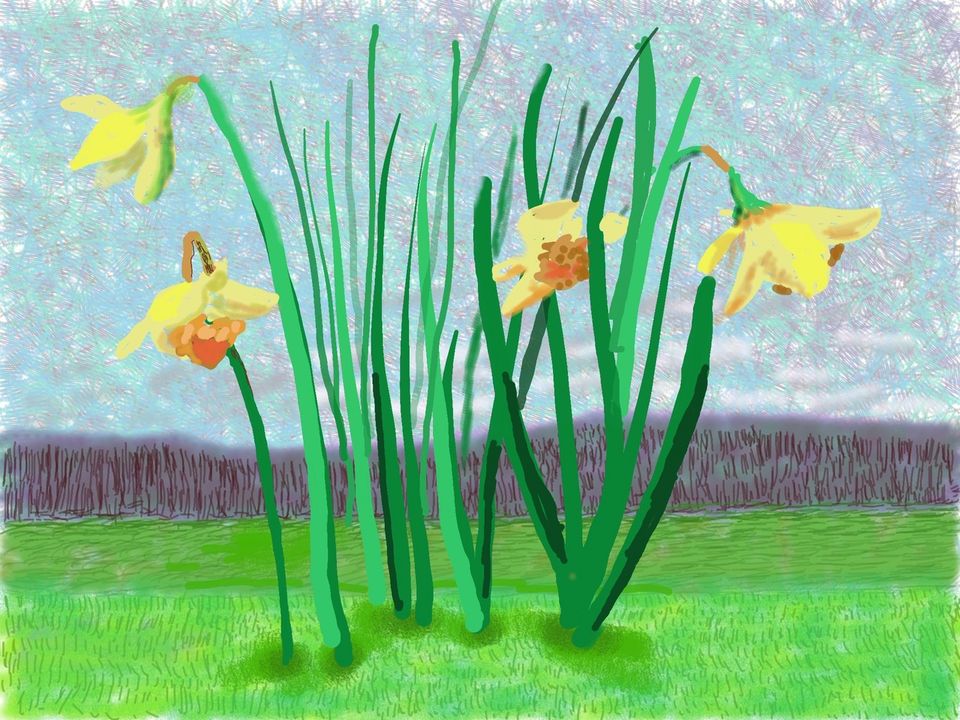
https://www.theartnewspaper.com/comment/a-message-from-david-hockney-do-remember-they-can-t-cancel-the-spring?fbclid=IwAR2iA8FWDHFu3fBQ067A7Hwm187IRfGVHcZf18p3hQzXJI8od_GGKQbUsQU

 Thoughts from the criminology team