
Home » Offenders
Category Archives: Offenders

The Journey of a University of Northampton Criminology Graduate

On this Jubilee year, I ponder and reflect on my 3 years as a joint honours Criminology student, and where my life journey has taken me since
In 2012-2015, I did joint honours Criminology and Education studies, and later did the LLM in International Criminal Law and Security at from 2015-2017.
My journey as a Criminology Student alumni has lead me to all sorts of unique pathways.
Having a background in notetaking and student support at different universities, I worked for 6 1/2 years as a Co-op Member Pioneer (8th January 2018-10th August 2024), where, in the community I served, I supported the local police with crime related issues, and mediated between them and the public on crime issues that mattered to them and helped to support the police, as blogged about here ‘As a Member Pioneer Supporting the Police’ . Whilst this role was about connecting communities, supporting charities, causes and local people, I saw the opportunity to help the police and the community on crime related issues.
From December 2019-June 2020, I worked for 6 months in an addiction recovery unit. Here, I learned about addiction on a more deeper and personal level. I was one of 2 members of staff who were not addicts, and so the experience was eye-opening! The staff who had ‘come clean’ from their addictions would talk about their lives before becoming clean, and how they would resort to crime to fund their addictions. It was a vicious cycle for them as they were fighting traumatic battles which lead them down the route of addiction, and could not find their way out.
I was trained on taking phone calls, and spoke with so many devasted individuals who had lost their sons, daughters, husbands and wives to addiction, and were desperate to get them the help they needed. Seeing families torn apart by addiction, and meeting with new clients who had come in to get help and learning about their stories revealed deep sufferings and traumas, some of which were life-changing events, and harrowing cries for help.
I audited medication on a daily basis, worked with the Addiction specialist doctor to make sure all new clients had been seen to, and prepared folders for each client which the support team used in their care plans. I would also create certificates for all clients who had completed their time at the unit, and celebrated in their success.
When COVID struck, I was put on furlough, and later made redundant – such is life XD – Onto my next adventure!
Where am I now?
Fast forward to March 2021; after completing a lengthy job application and job interview, I landed myself a job in the Civil Service working for the Ministry of Justice! I do casework, work with the Judges on progressing cases, I clerked a few hearings previously too. Everyday is different, and every case I work on is different.
I process new claims and with the support of the Legal Officers, issue directions to the parties if any other information is required. I oversee the progress of cases and ensure all correspondence is up to date, all orders have been issued, and the case is ready to be heard.
Each day is different, and I love everything that I do working for the justice system.
Share this:


#UONCriminologyClub: What should we do with an Offender? with Dr Paula Bowles

You will have seen from recent blog entries (including those from @manosdaskalou and @kayleighwillis21 that as part of Criminology 25th year at UON celebrations, the Criminology Team have been engaging with lots of different audiences. The most surprising of these is the creation of the #UONCriminologyClub for a group of home educated children aged between 10-15. The idea was first mooted by @saffrongarside (who students of CRI1009 Imagining Crime will remember as a guest speaker this year) who is a home educator. From that, #UONCriminologyClub was born.
As you know from last week’s entry @manosdaskalou provided the introductions and started our “crime busters” journey into Criminology. I picked up the next session where we started to explore offender motivations and society’s response to their criminal behaviour. To do so, we needed someone with lived experience of both crime and punishment to help focus our attention. Enter Feathers McGraw!!!
At first the “crime busters” came out with all the myths: “master criminal” and “evil mastermind” were just two of the epithets applied to our offender. Both of which fit well into populist discourse around crime, but neither is particularly helpful for criminological study, But slowly and surely, they began to consider what he had done (or rather attempted to do) and why he might be motivated to do such things (attempted theft of a precious jewel). Discussion was fast flowing, lots of ideas, lots of questions, lots of respectful disagreement, as well as some consensus. If you don’t believe me, have a look at what Atticus and had to say!
We had another excellent criminology session this week, this time with Dr Paula Bowles. I think we all had a lot of fun, I personally could have enjoyed double or triple the session time. Dr Bowles was engaging, fun and unpretentious, making Criminology accessible to us whilst still covering a lot of interesting and complex subjects. We discussed so many different aspects of serious crime and moral and ethical questions about punishment and the treatment of criminals. During the session, we went into some very deep topics and managed to cover many big ideas. It was great that everyone was involved and had a lot to say. You might not necessarily guess from what I’ve said so far, how we got talking about Criminology in this way. It was all through the new Aardman animations film Wallace and Gromit: Vengeance Most Fowl and the cheeky little penguin or is it just a chicken? Feathers McGraw. Whether he is a chicken or a penguin, he gave us a lot to discuss such as whether his trial was fair or not since he can’t talk, if the zoo could really be counted as a prison and, if so was he allowed to be sent there without a trial? Deep ethical questions around an animation. Just like last time it was a fun and engaging lesson that made me want to learn more and more and I can’t wait for next time. (Atticus, 14)
What emerged was a nuanced and empathetic understanding of some key criminological debates and questions, albeit without the jargon so beloved of social scientists: nature vs. nurture, coercion and manipulation of the vulnerable, the importance of human rights, the role of the criminal justice system, the part played by the media, the impetus to punish to name but a few. Additionally, a deep philosophical question arose as to whether or not Aardman’s portrayal of Feathers’ confinement in a zoo, meant that as a society we treat animals as though they are criminals, or criminals as though they are animals. We are all still pondering this particular question…. After deciding as group that the most important thing was for Feathers to stop his deviant behaviour, discussions inevitably moved on to deciding how this could be achieved. At this point, I will hand over to our “crime busters”!
What to do with Feathers McGraw?
At first, I thought that maybe we should make prison a better place so that he would feel the need to escape less. It wouldn’t have to be something massive but just maybe some better furniture or more entertainment. Also maybe make the security better so that it would be harder to break out. If we imagine the zoo as the prison, animals usually stay in the zoo for their life so they must have done some very bad stuff to deserve a life sentence! Is it safe to have dangerous animals so close to humans? Feathers McGraw might get influenced by the other prisoners and instead of getting better he might get more criminal ideas. I believe there should be a purpose-built prison for the more dangerous criminals, so they are kept away from the humans and the non-violent criminals. in this case is Feathers considered a violent or non-violent criminal? Even though he hasn’t killed anyone, he has abused them, tried to harm them, hacked into Wallace’s computer, vandalised gardens through the Norbots, and stole the jewel. So, I think we should get a restraining order against Feathers McGraw to stop him from seeing Wallace and Gromit. I also think we should invest in therapy for Feathers to help him realise that he doesn’t need to own the jewel to enjoy it, what would he even do with it?! Maybe socializing could also help to maybe take his mind of doing criminal things. He always seems alone and sad. I’m not sure whether he will be able to change his ways or not but I think we should do the best we can to. (Paisley, 10)
I think in order to stop Feathers McGraw’s criminal behaviour, he should go to prison but while he is there, he should have some lessons on how to be good, how to make friends, how to become a successful businessman (or penguin!), how to travel around on public transport, what the law includes and what the punishments there are for breaking it etc. I also think it’s important to make the prisons hospitable so that he feels like they do care about him because otherwise it might fuel anger and make him want to steal more diamonds. At the same time though, it should not be too nice so that he’ll think that stealing is great, because if you don’t get caught, then you keep whatever you stole and if you do get caught then it doesn’t matter because you will end up staying in a luxury cell with silky soft blankets.
After he is released from prison, I would suggest he would be held under house arrest for 2-3 months. He will live with Wallace and Gromit and he will receive a weekly allowance of £200. With this money, he will spend:
£100 – Feathers will pay Wallace and Gromit rent each week,
£15-he will pay for his own clothes,
£5-phone calls,
£10-public transport,
£35-food,
£5-education,
£15-hygiene,
£15- socialising and misc.
During this time, Feathers could also be home educated in the subjects of Maths, English etc. He should have a schedule so he will learn how to manage his time effectively and eventually should be able to manage his timewithouta schedule. The reason for this is because when Feathers was in prison, he was told what to do every day and at what time he would do it. He now needs to learn how to make those decisions by himself. This would mean when his house arrest is finished, he can go out into the real world and live happy life without breaking the law or stealing. (Linus, 13)
I think that once Feathers McGraw has been captured any money that he has on him will be taken away as well as any disguises that he has and if he still has any belongings left they will be checked to see whether he can have them. After that he should go to a proper prison and not a Zoo, then stay there for 3 months. Once a week, while he is in prison a group of ten penguins will be brought in so that he can be socialised and learn manners and good behaviour from them. However they will be supervised to make sure that they don’t come up with plans to escape. After that he will live with a police officer for 3 years and not leave the house unless a responsible and trustworthy adult accompanies him until he becomes trustworthy himself. He will be taught at the police officers house by a tutor because if he went to school he might run away. Feathers McGraw will have a weekly allowance of £460 that is funded by the government as he won’t have any money. Any money that was taken away from him will be given back in this time. Any money left over will be put into his savings account or used for something else if the money couldn’t quite cover it.
In one week he will give
£60 for fish and food
£10 for travel
£50 for clothing but it will be checked to make sure that it isn’t a disguise.
£80 for the police officer that looking after him
£15 for necessities (tooth brush, tooth paste, face cloth etc…)
£70 for his tutor
£55 for education supplies
£20 will be put in a savings account for when he lives by himself again.
And £100 for some therapy
After 1 year if the police officer looking after him thinks that he’s trustworthy enough then he can get a job and use £40 pounds a week (if he earns manages to earn that much.) as he likes and the rest of it will be put into his savings account. Feathers McGraw will only be allowed to do certain jobs for example, He couldn’t be a police officer in case he steals something that he’s guarding, He also couldn’t be a prison guard in case he helped someone escape etc… If at any point he commits another crime he will lose his freedom and his job and will be confined to the house and garden. When he lives by himself again he will have to do community service for 1 month. (Liv, 11).
Feathers McGraw has committed many crimes, some of which include attempted theft, abuse towards Wallace and Gromit, and prison break.
Here are some ideas of things that we can do to stop him from reoffending:
Immediate action:
A restraining order is to be put in place so he can’t come within 50m of Wallace and Gromit, for their protection both physical and mental. Penguins live for up to 20 years so seeing as he is portrayed as being an adult, my guess is he is around 10 years old. His sentence should be limited to 2 years in prison. Whilst serving his sentence he should be given a laptop (with settings so that he can’t use it to hack) so he can write, watch videos, play games and learn stuff.
Longer term solutions:
When Feathers gets out he will be banned from seeing the gem in museums so there will be less chance of him stelling it. He also will be given some job options to help him get started in his career. His first job won’t be front facing so Wallace and Gromit won’t have to be worried and they will get to say no to any job Feathers tries to get. If he reoffends, he will be taken to court where his sentence will be a minimum of 5 years in prison.
Rehabilitation:
I think Feathers should be given rehabilitation in several different forms, some sneakier than others! One of these forms is probation: penguins which are trained probation officers who will speak to him and try to say that crime is not cool. To him they will look like normal penguins, he won’t know that they have had training. He also should be offered job experience so he can earn a prison currency which he can use to buy upgrades for his cell (for example a better bed, bigger tv, headphones, an mp3 player and songs for said mp3 player) to give him a chance to get a job in the future. (Quinn, 12)
The “crime busters” comments above came after reflecting on our session, their input demonstrates their serious and earnest attempt to resolve an extremely complex issue, which many of the greatest minds in Criminology have battled with for the last two centuries. They may seem very young to deal with a discipline often perceived as dark, but they show us an essential truth about Criminology, it is always hopeful, always focused on what could be, instead of tolerating what we have.
Share this:


Just semantics?

This summer has seen the opening of the first secure school in England and Wales. The idea of secure schools was first introduced in 2016 in line with reforming the youth secure estate given a wide range of failings across institutions and harms experienced by children placed in there. The original proposed date for opening one of the schools was 2020; but what is a four-year delay? In 2022 the National Audit Office reported the refurbishment of Medway Secure Training Centre (closed down in March 2020 following the harrowing findings by Panorama), where the new secure school would be, was costing approximately £36.5 million (National Audit Office, 2022). But will this new secure school actually change something within the youth secure estate, or this is more of the same but with a new sparkly name?
Oasis Restore (the first secure school in England and Wales) opened this summer and can hold up to 49 children. It is registered jointly as a Secure Children’s Home (SCH) and a secure academy which has raised concerns by Ofsted due to difference in size of Oasis Restore in comparison to other SCHs. Education is central to the secure school (although haven’t we heard this before with Secure Training Centres), with comments from Youth Justice Board (YJB) Chief Executive Steph Roberts-Bibby comparing Oasis Restore with University accommodation (Youth Justice Board, 2024). Apparently, the new secure school is a far cry from the unsafe, violent, prisons which already exist in the youth secure estate (SCT and YOIs). On a tour of the secure school earlier in the year, the Chief Executive was very positive about the physical environment and philosophies underpinning Oasis Restore where ‘strong relationships between staff and children are at the heart of the Oasis model’ and the importance of ‘having a space promoting learning, togetherness and care’ as being essential in line with rehabilitation (Youth Justice Board, 2024). So far, so good. The right words are being uttered, changes appear to have been made, but… we have been here before. The same rhetoric of the child’s best interests being promoted and being seen as ‘children first’: which is good. But is this round of reform just more of the same with different semantics?
End Child Imprisonment (2024) demonstrates how child imprisonment, which Oasis Reform still is, is beyond reform. There are ample examples of how the Youth Secure Estate has historically, and remains, a harmful unsafe environment which does not address the needs of the children they come into contact with. Missing from the positive comments from the Chief Executive of the YJB is the highlighting that the children who come into contact with the YJS are incredibly vulnerable and have often experienced traumas before their incarceration. The language is still all wrong: the myriad of challenges these children have already faced and will face within the YJS remain overlooked. In 2023 the United Nations Committee on the Rights of the Child urged the UK to introduce legislation directly prohibiting the use of solitary confinement, due the continuing harms/findings of its use: but so far, no comment from the UK Government. Time and time again, we see reforms brought in but with little to no actual change or improvement. Will Oasis Restore be the face of change of just another failure in a long line of failing reforms?
Something which rings true: “A recurrent theme in the history of child imprisonment is that evidence of failure and maltreatment is met with promises of reform which too frequently involve semantic amendment rather than changes of substance” (End Child Imprisonment, 2024, p.28). And as John Rawls argues when thinking about justice, if an institution cannot be reformed then it should be abolished. Is it finally time to abolish the child prisons which exist within society?
References:
End Child Imprisonment (2024) Why child imprisonment is beyond reform: A review of the evidence August 2024. [online] Available at: https://article39.org.uk/wp-content/uploads/2024/08/Why-child-imprisonment-is-beyond-reform.-A-review-of-the-evidence-August-2024.pdf [Accessed 14th October 2024].
Monster Ztudio/Shutterstock (2017) Change. [Online] Available at: https://ziplinelogistics.com/blog/navigating-change/ [Accessed 21.10.24].
National Audit Office (2022) Children in custody: secure training centres and secure schools. [online] London: National Audit Office. Available at: https://www.nao.org.uk/wp-content/uploads/2022/04/Children-in-custody-secure-training-centres-and-secure-schools.pdf [Accessed 17.10.24].
Rawls, J. (1971/1999) A Theory of Justice. Oxford: Oxford University Press
Youth Justice Board (2024) Inside the Oasis Restore Secure School. GOV.UK [online]. Available at: https://www.gov.uk/government/news/inside-the-oasis-restore-secure-school [Accessed 17.10.24]
Share this:


What’s stopping us from rehabilitating mentally ill offenders?

I wanted to share with you some key takeaways from the findings of my dissertation; “Understanding Positive Risk-Taking and Barriers to Implementation in Forensic Mental Health.”
For context, positive risk taking is the process of supporting recovery and rehabilitation by actively and carefully engaging service users in decisions and activities that have previously posed a risk, in full acknowledgement of that risk, in the hope it has a positive outcome and builds new skills.
My thematic structure from 5 interviews with forensic healthcare professionals is below for reference.
| Theme | Subtheme |
| Engaging the Service User | – Offering, Accepting, Assessing – Staffing Safe Opportunities |
| Professional Development and Confidence in Practice | – Specialised Training and Professional Development – Confidence in Practice and Taking Responsibility – Challenging Anti-Progressive Attitudes |
| Navigating the Unique Needs of the Service User Group | – Acknowledging and Communicating Risk – Severe, Enduring and Fluctuating Conditions – Stuck in the System – The Juxtaposition of Justice |
Engaging the service user is around the safe engagement of the service user within this process:
- Service users are not being engaged in their own risk assessment which would allow them to build up skills in identifying and managing their own risk.
- Seclusion is being used for more ‘difficult’ to manage service users to compensate for low staffing which is detrimental to service user progress and a huge ethical problem.
Professional Development and Confidence in Practice discussed the complexities of training to work in forensic care and the fear around being responsible for decisions that could go very wrong.
- My participants expressed concerns that primarily clinical practitioners (i.e. clinical psychologists over forensic psychologists) may not be able to work as sufficiently with forensic clients as their training backgrounds and treatment models may favour either the judicial process or the therapeutic outcome, and whilst both are needed, it is unlikely to be available.
- Healthcare professionals also battle with colleagues who are not on board with the approach of offering positive risks, sometimes due to fear, others to not believing that the experience should positive due to the reasons a person is there.
Navigating the Unique Needs of the Service User Group discusses the nuances of forensics and what makes this service different to others.
- It is identified that some professionals find it more difficult to engage in and justify positive risks when it involves certain (overrepresented) conditions, such as psychosis, and certain offenses (sexual), particularly if there are vulnerable victims, which may impact treatment opportunities regardless of other ‘good’ factors.
- Information handed over from the criminal justice system to healthcare system is often dehumanising, reductionist and causes exaggerated risk levels which increases fear and safety behaviours from healthcare staff.
- Service users are subject to the conditions and restrictions of both the healthcare services and the criminal justice system which can present conflicting interests and outcomes from each institution. Additionally, the decisions made by the criminal justice system are often done so despite caseworkers never having met or worked directly with the service user, inhibiting healthcare professionals from using their professional judgement to offer positive risk-taking opportunities.
- Service users are very often ‘in the system’ for a long time, so much so that they may begin to fear life outside of an institution and may sabotage their own progress in order to stay within a familiar institution and possibly even to go back to prison.
Much more needs to be done, and needs to change to improve this increasingly prevalent service. It is my hope that more research within this area will help to support the recovery and rehabilitation of those who are cared for in forensic mental health settings and that my findings might inspire anyone who goes on to work with mentally ill offenders to make improvements to what they find in their workplace. Whilst my study was primarily within the secure healthcare space, much is transferrable to other areas of the criminal justice system.
Share this:


What cost justice? What crisis?
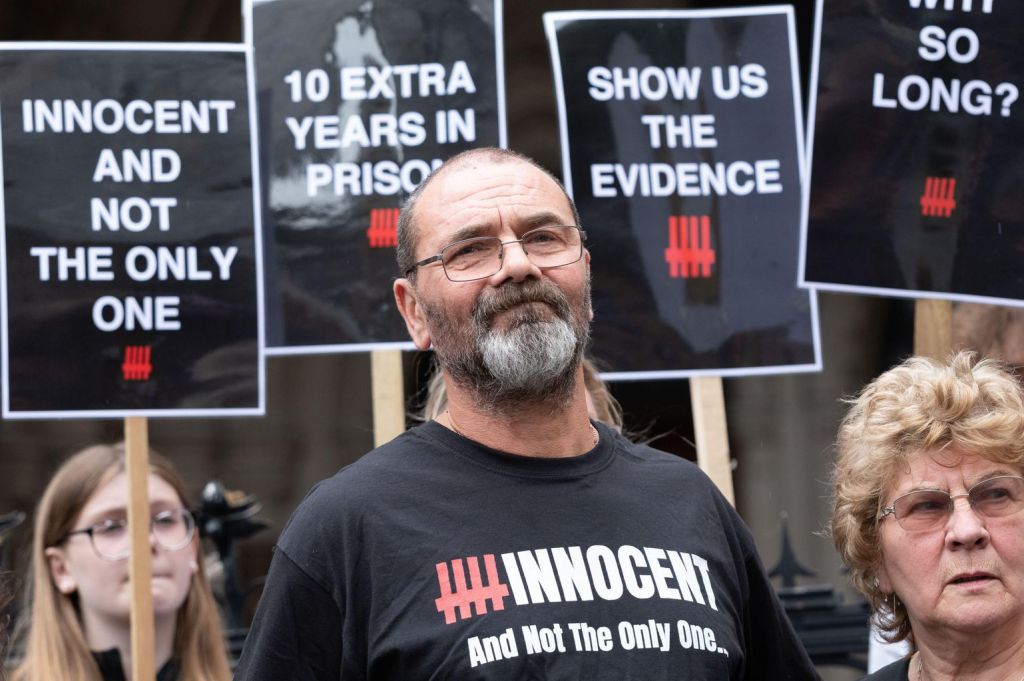
The case of Andrew Malkinson represents yet another in the long list of miscarriages of justice in the United Kingdom. Those that study criminology and those practitioners involved in the criminal justice system have a reasonable grasp of how such cases come about. More often than not it is a result of police malpractice, negligence, culture and error. Occasionally it is as a result of poor direction in court by the trial judge or failures by the CPS, the prosecution team or even the defence team. The tragic case of Stefan Kiszko is a good example of multiple failures by different bodies including the defence. Previous attempts at addressing the issues have seen the introduction of new laws such as the Police and Criminal Evidence Act 1984 and the Criminal Procedure and Investigations Act 1996. The former dealing in part with the treatment of suspects in custody and the latter with the disclosure of documents in criminal proceedings. Undoubtedly there have been significant improvements in the way suspects are dealt with and the way that cases are handled. Other interventions have been the introduction of the Crown Prosecution Service (CPS), removing in part, charging decisions from the police and the introduction of the Criminal Cases Review Commission (CCRC) to review cases where an appeal has been lost but fresh evidence or information has come to light.
And yet, despite better police training regarding interviews and the treatment of suspects, better training in investigations as a whole, new restrictive laws and procedures, the independence of the CPS, the court appeal system and oversight by a body such as the CCRC, miscarriages of justice still occur. What sets the Malkinson case aside from the others appears to be the failure of the CCRC to take action on new information. The suggestion being that the decision was a financial one, with little to do with justice. If the latter is proved to be true, we will of course have to wait for the results of the inquiry, then how can anyone have any confidence in the justice system?
Over the years we have already seen swingeing cuts in budgets in the criminal justice system such that the system is overloaded. Try to pop into the local police station to make a complaint of a crime, you won’t find a station open to the public. Should you have been unfortunate enough to have been caught for some minor misdemeanour and need to go to magistrates’ court for a hearing, you’ll be lucky if you don’t have to travel some considerable distance to get there, good luck with that if you rely on public transport. Should you be the victim of a more serious crime or indeed charged with a more serious offence, triable in crown court, then you’ll probably wait a couple of years before the trial. Unfortunate if you are the alleged offender and on remand, and if you are the victim, you could be forgiven for deciding that you’d rather put it all behind you and disengage with the system. But even to get to that stage, there has to be sufficient evidence to secure a prosecution and it has to be in the public interest to do so. Your day in court as a victim is likely to be hang on the vagaries of the CPS decision making process. A process that has one eye on the court backlog and another on performance targets. Little wonder the attrition rate in sex offences is so high. Gone are the days of letting a jury decide on occasions where the evidence hangs on little more than one person’s word against the other.
Andrew Malkinson and his legal representative have called for a judicial review, a review where witnesses can be compelled to attend to give evidence and documentary evidence can be demanded to be produced. Instead, the government has said there will be an independent inquiry. On a personal note, I have little faith in such inquiries. My experience is that they are rarely independent of government direction and wishes. Andrew Malkinson’s case is a travesty and the least that can be done is to have a proper inquiry. I suspect though that the Malkinson case might just be the tip of the iceberg. The Criminal Justice System is in crisis but budgetary restraint and political whim seem to be far more important than justice. We can look forward to more finger pointing and yet more reorganisation and regulation.
Share this:


The dance of the vampires

We value youth. There is greater currency in youth, far greater than wisdom, despite most people when they are looking back wishing they had more wisdom in life. Modernity brought us the era of the picture and since then we have become captivated with images. Pictures, first black and white, then replaced by moving images, and further replaced by colour became an antidote to a verbose society that now didn’t need to talk about it…it simply became a case of look and don’t talk!
The image became even more important when people turned the cameras on themselves. The selfie, originally a self-portrait of reclusive artists evolved into a statement, a visual signature for millions of people using it every day on social media. Enter youth! The engagement with social media is regarded the gift of computer scientists to the youth of today. I wonder how many people know that one of the first images sent as a jpeg was that of a Swedish Playboy playmate the ‘lady with the feathers’. This “captivating” image was the start of the virtual exchange of pictures that led to billions of downloads every day and social media storing an ever-expanding array of images.
The selfie, brought with it a series of challenges. How many times can you take a picture, even of the most beautiful person, before you become accustomed to it. Before you say, well yes that is nice, but I have seen it before. To resolve the continuous exposure the introduction of filters, backgrounds and themes seems to add a sense of variety. The selfie stick (banned from many museums the world over) became the equipment, along with the tripod, the lamp and the must have camera, with the better lens in the pursue of the better selfie. Vanity never had so many accessories!
The stick is an interesting tool. It tells the individual nature of the selfie. The voyage that youthful representation takes across social media is not easy, it is quite a solitary one. In the representation of the image, youth seem to prefer. The top “influencers” are young, who mostly like to pose and sometimes even offer some advice to their followers. Their followers, their contemporaries or even older individuals consume their images like their ‘daily (visual) bread’. This seems to be a continuous routine, where the influencer produces images, and the followers watch them and comment. What, if anything, is peculiar about that? Nothing! We live in a society build on consumption and the industry of youth is growing. So, this is a perfect marriage of supply and demand. Period!
Or is it? In the last 30 years in the UK alone the law on protecting children and their naivety from exploitation has been centre stage of several successive governments. Even when discussing civil partnerships for same sex couples, Baroness Young, argued against the proposed act, citing the protection of children. Youth became a precious age that needed protection and nurturing. The law created a layer of support for children, particularly those regarded vulnerable. and social services were drafted in to keep them safe and away from harm. In instances when the system failed, there has been public outrage only to reinforce the original notion that children and young people are to be protected in our society.
That is exactly the issue here! In the Criminology of the selfie! Governments introducing policies to generate a social insulation of moral righteousness that is predicated on individual – mostly parental – responsibility. The years of protective services and we do not seem to move passed them. In fact, their need is greater than ever. Are we creating bad parents through bad parenting or are people confronted with social forces that they cannot cope with? The reality is that youth is more exposed than ever before. The images produced, unlike the black and white photos of the past, will never fade away. Those who regret the image they posted, can delete it from their account, but the image is not gone. It shall hover over them for the eternity of the internet. There is little to console and even less to help. During the lockdown, I read the story of the social carer who left their job and opened an OnlyFans account. These are private images provided to those who are willing to pay. The reason this experience became a story, was the claim that the carer earned in one month of OnlyFans, more than their previous annual income. I saw the story being shared by many young people, tagging each other as if saying, look at this. The image that captures their youth that can become a trap to contain them in a circle of youth. Because in life, before the certainty of death there is another one, that of aging and in a society that values youth so much, can anyone be ready to age?
As for the declared care for the young, would a society that cares have been closing the doors to HE, to quality apprenticeships, a living wage and a place to live? The same society that stirs emotions about protection, wants young people to stay young so that they cannot ask for their share in their future. The social outrage about paedophiles is countered with high exposure to a particular genre in the movies and literature that promotes it. The vampire that has been fashioned as young adult literature is the proverbial story of an (considerably) older man who deflowers a young innocent girl until she becomes infatuated with him. The movies can be visually stunning because it involves the images of young beautiful people but there is hardly any mention of consent or care!
It is one of the greatest ironies to revive the vampire image in youth culture. A cultural representation of a male prototype that is manipulative, intruding into the lives of seemingly innocent young people who become his prey. There is something incredibly unsettling to explore the semiology of an immortal that is made through a blood ritual. A reverse Peter Pan who consumes the youth of his victims. The popularity of this Victorian literary character, originally conceived in the era of industrial advancement,at a time when modernity challenged tradition, resurfaces with other monsters at times of great uncertainty. The era of the picture has not made everyday life easier, and modernity did not improve quality of life to the degree it proclaimed. Instead, whilst people are becoming captivated by ephemera they are focused on the appearance and missing substance. An old experience man, dark, mysterious with white skin may be an appealing character in literature but in real life a someone who feeds on young people’s blood is hardly an exciting proposition.
The blood sacrifice demanded by a vampire is a metaphor of what our society requires for those who wish to retain youth and save their image into the ether of the cyberworld as a permanent Portrait of Dorian Gray. In this context, the vampire is not only a man in power, using his privilege to dominate, but a social representation of what a consumer society places as the highest value. It is life’s greatest irony that the devouring power of a vampire is becoming a representation of how little value we place on both youth and life! A society focused on appearance, ignoring the substance. Youth looking but not youth caring!
Share this:


Youth or Adult: can you tell?

This week’s blog begins with a game: youth or adult, secure estate in England and Wales. Below are some statements, and you simply need to guess (educated guesses please), whether the statement is about the youth, or adult secure estate. So, are the statements about children in custody (those under the age of 18 years old) or adults in custody (18+). When you’re ready…
- 70% decrease in custody in comparison to 10 years ago
- Segregation, A.K.A Solitary Confinement, used as a way of managing the most difficult individuals and those who pose a risk to themselves or others
- Racial disproportionality in relation to experiencing custody and being remanded to custody
- Self-harm is alarmingly high
- 1/3 have a known mental health disability
- Homelessness after release is a reality for a high proportion of individuals
- Over half of individuals released from custody reoffend, this number increases when looking at those sentenced to 6months of less
How many did you answer youth secure estate, and how many adult secure estate? Tally up! Did you find a 50/50 split? Did you find it difficult to answer? Should it be difficult to spot the differences between how children and adults are treated/experience custody?
All of the above relate specifically to children in custody. The House of Commons Committee (2021) have argued that the secure estate for children in England and Wales is STILL a violent, dangerous set of environments which do little to address the needs of children sentenced to custody or on remand. Across the academic literature, there is agreement that the youth estate houses some of the most vulnerable children within our society, yet very little is done to address these vulnerabilities. Ultimately we are failing children in custody! The Government said they would create Secure Schools as a custody option, where education and support would be the focus for the children sent here. These were supposed to be ready for 2020, and in all fairness, we have had a global pandemic to contend with, so the date was pushed to 2022: and yet where are they? Where is the press coverage on the positive impact a Secure School will make to the Youth estate? Does anyone really care? A number of Secure Training Centres (STCs) have closed down across the past 10 years, with an alarmingly high number of the institutions which house children in custody failing Ofsted inspections and HM Inspectorate of Prisons (2021) found violence and safety within these institutions STILL a major concern. Children experience bullying from staff, could not shower daily, experience physical restraint, 66% of children in custody experienced segregation which was an increase from the year prior (HM Inspectorate of Prisons, 2021). These experiences are not new, they are re-occurring, year-on-year, inspection after inspection: when will we learn?
The sad, angry, disgusting truth is you could have answered ‘adult secure estate’ to most of the statements above and still have been accurate. And this rings further alarm bells. In England and Wales, we are supposed to treat children as ‘children first, offenders second’. Yet if we look to the similarities between the youth and adult secure estate, what evidence is there that children are treated as children first? We treat all offenders the same, and we treat them appallingly. This is not a new argument, many have raised the same points and concerns for years, but we appear to be doing very little about it.
We are kidding ourselves if we think we have a separate system for dealing with children who commit crime, especially in relation to custody! It pains me to continue seeing, year on year, report after report, the same failings within the secure estate, and the same points made in relation to children being seen as children first in England and Wales: I just can’t see it in relation to custody- feel free to show me otherwise!
References:
House of Commons Committees (2021) Does the secure estate meet the needs of young people in custody? High levels of violence, use of force and self-harm suggest the youth secure estate is not fit for purpose [Online]. Available at: https://houseofcommons.shorthandstories.com/justice-youth-secure-estate/index.html. [Last accessed 4th April 2022].
HM Inspectorate of Prisons (2021) Children in Custody 2019-2020: An analysis of 12-18-year-old’s perceptions of their experiences in secure training centres and young offender institutions. London: Her Majesty’s Inspectorate of Prisons.
Share this:


Rule makers, rule breakers and the rest of us

There are plenty of theories about why rules are broken, arguments about who make the rules and about how we deal with rule breakers. We can discuss victimology and penology, navigating our way around these, decrying how victims and offenders are poorly treated within our criminal justice systems. We think about social justice, but it seems ignore the injustice perpetrated by some because we can somehow find an excuse for their rule breaking or point out some good deed somewhere along the line. And we lament at how some get away with rule breaking because of their status or power. But what is to be done about people that break the rules and in doing so cause or may cause considerable harm to others; to the rest of us?
Recently, Greece imposed a new penalty system upon those over 60 that are not vaccinated against Covid. Pensioners who have had real reductions in their pensions are now to be hit with a fine, a rolling fine at that, if they do not get vaccinated. This is against a backdrop of poor vaccination rates which seem to have improved significantly since the announcement of what many see as draconian measures by a right-wing government. There are those that argue that vaccination ought to be a choice, and this has been brought into focus by the requirements for health workers and those in the care profession to be vaccinated in this country. And we’ve heard arguments from industry against vaccination passports which would allow people to get into large venues and a consistent drip-drip effect of how damaging the covid rules are to the leisure industry and aviation, as well as the young people in society.
So, would it have been far more acceptable to have no rules at all around Covid? Should we have simply carried on and hoped that eventually herd immunity would kick in? Let’s not forget of course that the health service would have been so overwhelmed that many people will have died from illnesses other than Covid (they undoubtedly have to some extent anyway). The fittest will have survived and of course, the richest or most resourceful. Businesses will have been on their knees as workers failed to turn up for work, either because they were too ill or have moved on from this life and few customers will have thought about quaffing pints, clubbing, or venturing off to some faraway sunny place (not that they’d be particularly welcome there coming from plague island). It would have felt more like some Darwinian evolutionary experiment than civilised society.
It seems that making some rules for the good of society is necessary. Of course, there will be those that break the rules and as a society, we struggle to determine what is to be done with them. Fines are too harsh, inappropriate, draconian. Being caring, educating, works for some but let’s be honest, there are those that will break the rules regardless. Whilst we can argue about what should be done with those that break the rules, about the impact they have on society, about victims and crimes, perhaps the most pressing argument is about equality of justice. The rest of us, those that didn’t break the rules, might question how draconian the rules were (are) and we might question the punishments meted out to those that broke the rules. But what really hurts, where we really feel hard done by, let down, angry is to see that those that made the rules, broke the rules and for them we don’t get to consider whether the punishment is draconian or too soft. There are no consequences for the rule makers even when they are rule breakers. It seems a lamentable fact that we have a system of governance, be that situated in politics or business, that advocates a ‘do as I say’ rather than ‘do as I do’ mentality. The moral compass of those in power seems to be seriously misaligned. As the MP David Davis calls for the resignation of Boris Johnson and says that he has to go, he should look around and he might realise, they all need to go. This is not a case of one rotten apple, the whole crop is off, and it stinks to high heaven.
Share this:

Organisational reputation: A euphemism for institutional corruption and violence
The Independent Inquiry into Child Sexual Abuse published a damming report regarding child protection in religious organisations and settings. One of the findings was that ‘In many cases, concerns about external involvement are connected to a desire to protect the reputation of a religious organisation’. Of course, there are many other issues highlighted in the report, but I wanted to concentrate on this notion of protecting organisational reputation. When I hear the phrase ‘organisational reputation’ my blood generally runs cold because I know that behind these words lay a multitude of sins.
Companies and public sector bodies have policies that are designed, at least in part to protect organisational reputation. The rationale behind these policies often lacks transparency. It might be that the protection of the organisation’s reputation ensures it maintains its customer or client base, an enhanced reputation sees more customers or clients, a poor reputation might see this dwindle, to the detriment of the organisation and ultimately to the detriment of its employees and owners. It is difficult to recover from a poor reputation and in the case of business, this is sometimes catastrophic.
However, behind the notions of organisational reputation and policies lays a multi-layer of complex organisational and human behaviours which ultimately lead to institutional corruption and violence. Things will go wrong in organisations, whether that be as a result of human behaviour such as poor decision making or illegal activity or as a result of system failure, such as the failure of software or hardware. Any of these failures might harm the reputation of the organisation and herein lies the nub of the matter. When there are failures, because of organisational culture, which often finds its basis in finding someone to blame, there is a propensity to try to keep the issues ‘in house’, to protect the organisation. By doing so, managers and those in charge ensure that they are not scrutinised regarding the failure, be that individual failures, failures of policies or failures of systems and processes. So, the organisational reputation is not necessarily about protecting the organisation, it is more about avoiding scrutiny of those individuals in power. The mention of organisational reputation in policies and processes has another effect, it silences employees. Whistle blowing policies are subjugated to notions of organisational reputation and as a result silence is maintained for fear of some form of informal sanction. The maintenance of silence ensures organisational reputation, but this corruption also ensures continued institutional violence and corrupt practices. The longer it continues the more those in power have a vested interest in ensuring that the issues are not addressed, lest they are uncovered as offenders through their inaction. ‘We are all in this together’ takes on a new meaning. Thus, corrupt or criminal practices simply continue.
And if the wrongdoing is uncovered, becomes public, then the first reaction is to find a scapegoat thus avoiding the scrutiny of those in power. Rarely in these inquiries do we find that those put in the dock are the managing directors, the chief constables, the heads of children’s services, the archbishops or politicians. Rarely do we see those that caused the problem through inadequate or unworkable policies or strategies or working conditions are ever brought to book. Often its simply portrayed as one or two bad apples in the organisation. Thus, organisational reputation is maintained by further institutional violence perpetrated against the employee. That is not to say that in some cases, the employee should not be brought to book, but rarely should they be standing in the dock on their own.
For ‘organisational reputation, just read institutional corruption and violence.
Share this:


What price justice?

Having read a colleague’s blog Is justice fair?, I turned my mind to recent media coverage regarding the prosecution rates for rape in England and Wales. Just as a reminder, the coverage concerned the fact that the number of prosecutions is at an all-time low with a fall of 932 or 30.75% with the number of convictions having fallen by 25%. This is coupled with a falling number of cases charged when compared with the year 2015/16. The Victims’ Commissioner Dame Vera Baird somewhat ironically, was incensed by these figures and urged the Crown Prosecution Service to change its policy immediately.
I’m always sceptical about the use of statistics, they are just simple facts, manipulated in some way or another to tell a story. Useful to the media and politicians alike they rarely give us an explanation of underlying causes and issues. Dame Vera places the blame squarely on the Crown Prosecution Service (CPS) and its policy of only pursuing cases that are likely to succeed in court. Now this is the ironic part, as a former Labour member of parliament, a minister and Solicitor General for England and Wales, she would have been party to and indeed helped formalise and set CPS policy and guidelines. The former Labour Government’s propensity to introduce targets and performance indicators for the public services knew no bounds. If its predecessors, the Conservatives were instrumental in introducing and promulgating these management ideals, the Labour government took them to greater heights. Why would we be surprised then that the CPS continue in such a vein? Of course, add in another dimension, that of drastic budget cuts to public services since 2010, the judicial system included, and the pursuit of rationalisation of cases looks even more understandable and if we are less emotional and more clinical about it, absolutely sensible.
My first crown court case involved the theft of a two-bar electric fire. A landlady reported that a previous tenant had, when he moved out, taken the fire with him. As a young probationary constable in 1983, I tracked down the culprit, arrested him and duly charged him with the offence of theft. Some months later I found myself giving evidence at crown court. As was his right at the time, the defendant had elected trial by jury. The judicial system has moved a long way since then. Trial by jury is no longer allowed for such minor offences and of course the police no longer have much say in who is prosecuted and who isn’t certainly when comes to crown court cases. Many of the provisions that were in place at the time protected the rights of defendants and many of these have been diminished, for the most part, in pursuit of the ‘evil three Es’; economy, effectiveness and efficiency. Whilst the rights of defendants have been diminished, so too somewhat unnoticed, have the rights of victims. The lack of prosecution of rape cases is not a phenomenon that stands alone. Other serious cases are also not pursued or dropped in the name of economy or efficiency or effectiveness. If all the cases were pursued, then the courts would grind to a halt such have been the financial cuts over the years. Justice is expensive whichever way you look at it.
My colleague is right in questioning the fairness of a system that seems to favour the powerful, but I would add to it. The pursuit of economy is indicative that the executive is not bothered about justice. To borrow my colleague’s analogy, they want to show that there is an ice cream but the fact that it is cheap, and nasty is irrelevant.

 Thoughts from the criminology team