
Home » Nolan Principles
Category Archives: Nolan Principles
Corruption: A Very Noble Pastime

Only a couple of months ago there was a furore about the current prime minister Sir Keir Starmer receiving gifts from Lord Alli. He wasn’t the only one to benefit but it rather tainted the Labour Party’s victory in the election and made a mockery of promises to clean up politics. Let’s not get too hung up about political parties though, there is plenty of previous evidence of other parties dabbling in, let’s call them, immoral practices that benefit the individual.
I shouldn’t have been surprised then to hear about some research carried out by Tortoise that suggested a quarter of the members of the House of Lords do two thirds of the work in the upper chamber. They found that approximately 210 members of a total of 830 are actively involved in the business of the upper chamber and the rest well, your guess is as good as mine. So what you might ask, we have some rather lazy nobles, but they don’t get paid unless they turn up. Well true, but then if you read some other research, it becomes apparent that there are vast sums of money being paid for doing nothing. Turning up is one thing, working is quite something else.
‘Over the course of the last parliament, £400,000 has been paid to 15 peers who have claimed attendance for at least 80 per cent of days in at least one month without any discernible activity in that time. Some have made repeated claims of this kind over the parliament’ (Tortoise, 2024).
Up till now I’ve always had a begrudging respect for the upper chamber, particularly when they have knocked back poor, ill thought out or inappropriate legislation conjured up by the government. That’s not to say I haven’t questioned the manner in which the chamber is constituted but I have felt a sense of relief when government have had a hard task railroading through some of their legislation. But it doesn’t seem to matter which chamber it is in parliament, there are a significant number of individuals in both houses whose actions can only be described as corrupt. From the expenses scandal in 2009 to the latest failures to declare interests, it becomes clear that corruption is endemic.
It seems to me during an era of cuts in public services, the withholding of funds to the most vulnerable designed to help them keep warm, and job losses in sectors where past and present policies make organisations unsustainable, the disregard for proper financial management and constraint in government is immoral. I will leave the debate about whether we should have governance in its current format to others who probably know better than I do but there is clearly a need to abolish the policies and processes that allow for what can only be described as a corrupt noble gravy train.
The Nolan Principles setting out the standards that those involved in public life should adhere to are still in existence and expected to be complied with and yet I fail to see how so many members of our great institutions have even come close to adherence. In case you are unsure what those principles are, I have listed them below and I will leave you to judge whether the nobility stand up to scrutiny.
- Selflessness
- Integrity
- Objectivity
- Accountability
- Openness
- Honesty
- Leadership
References
BBC (2019) MPs’ expenses: The Legacy of a Scandal [online] Available at https://www.bbc.co.uk/news/uk-politics-48187096 Accessed: 22/11/2024.
BBC (2024) Keir Starmer received more clothes worth £16,000 [online] Available at https://www.bbc.co.uk/news/articles/cdd4z9vzdnno Accessed: 22/11/2024.
Information Commissioner’s Office (ND) MP’s expenses scandal [online] Available at https://ico.org.uk/for-the-public/ico-40/mp-expenses-scandal/ Accessed: 22/11/2024
Tortoise (2024a) Lording it: some peers claim £400,000 for little discernible work, [online] available at https://www.tortoisemedia.com/2024/11/20/lording-it-some-peers-claim-400000-for-little-discernible-work/, Accessed: 22/11/2024
Tortoise (2024b) The Lords’ work: Tortoise’s Peer Review [online] available at https://www.tortoisemedia.com/2024/11/20/the-lords-work-tortoises-peer-review/, Accessed: 22/11/2024.
UK Parliament (ND) Standards, [online] available at https://www.parliament.uk/about/mps-and-lords/members/standards/, Accessed: 22/11/2024.
Share this:


Doing the right thing
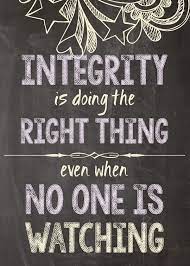
It seems that very often, the problem with politics in this country is that it gets in the way of doing the right thing. Despite the introduction of the The Seven Principles of Public Life known as the Nolan Principles, politicians (not all of them of course, but you will have seen ample examples) still seem to be hell bent on scoring political advantage, obfuscating on matters of principle and where possible avoiding real leadership when the country is crying out for it. Instead, they look to find someone, anyone, else to blame for failures that can only be described as laying clearly at the door of government and at times the wider institution of parliament.
One example you may recall was the complete farce in parliament where the speaker, Sir Lyndsay Hoyle, was berated for political interference and breaking the rules of the house prior to a debate about a ceasefire in Gaza. It became quite obvious to anyone on the outside that various political parties, Conservatives, Labour and the Scottish National Party were all in it to score points. The upshot, rather than the headlines being about a demand for a ceasefire in Gaza, the headlines were about political nonsense, even suggesting that the very core of our democracy was at stake. Somehow, they all lost sight of what was important, the crises, and it really is still a crisis, in Gaza. Doing the right thing was clearly not on their minds, morals and principles were lost along the way in the thrust for the best political posturing.
And then we come to the latest saga involving political parties, the WASPI women (Women Against State Pension Inequality) campaign. The report from the Parliamentary and Health Service Ombudsman has ruled that the Department for Work and Pensions (DWP) “failed to provide accurate, adequate and timely information” about changes to pension ages for women. The report makes interesting reading. In essence, it accuses the DWP of maladministration on several counts.
The Pensions Act 1995 changed the way in which women could draw their pensions in an effort to equalise the age with men. A timetable was drawn up raising the qualifying age for women from 60 to 65, with the change phased in between 2010 and 2020. However, under the Pensions Act 2011, the new qualifying age of 65 for women was brought forward to 2018. The report acknowledges that the DWP carried out campaigns from 1995 onwards but in 2004 received results of research that a considerable number of affected women still believed that their retiring age was 60. Unfortunately, through prevarication and for some quite inexplicable reasoning the women affected were not notified or were notified far too late. There was a calculation carried out that suggested some women were not told until 18 months before their intended retirement date. The matter was taken before the courts but the courts ruling did nothing to resolve the issue other than providing a ruling that the DWP were not required by law to notify the women.
You can read about the debacle anywhere on the Internet and the WASPI women have their own Facebook page. What seems astounding is that both the Government and the opposition have steadfastly avoided being drawn on the matter of compensation for these women. I should add that the maladministration has had serious detrimental impacts on many of them. Not even a sorry, we got it wrong. Instead we see articles written by right wing Conservatives suggesting the women had been provided with ample warning. If you read the report, it makes it clear that provisions under the Civil Service Code were not complied with. It is maladministration and it took place under a number of different governments.
Not getting it right in the first instance was compounded by not getting it right several times over later on. It seems that given the likely cost to the taxpayer, this maladministration is likely, like so many other cock ups by government and its agencies, to be kicked into the long grass. Doing the right thing is a very long, long way away in British politics. And lets not forget the Post Office scandal, the infected blood transfusion scandal and the Windrush scandal to name but a few. So little accountability, such cost to those impacted.
- The quotation in the image is often wrongly misattributed to C. S. Lewis. ↩︎

 Thoughts from the criminology team