
Home » Neurodiverse
Category Archives: Neurodiverse
Screen Time and Square Eyes
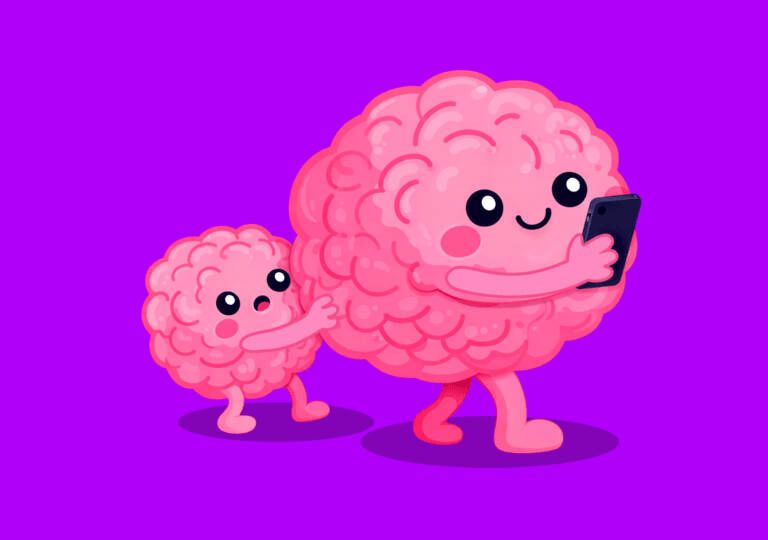
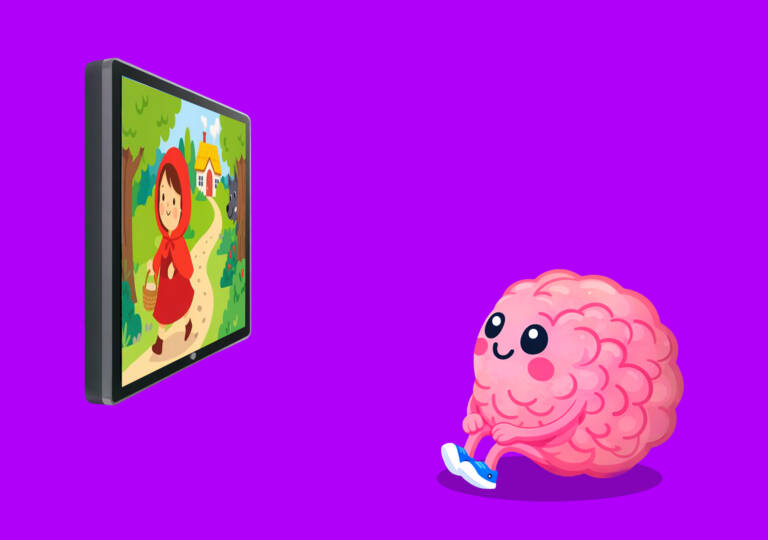
Whilst I was on maternity leave the government guidance on screen time, Screen time guidance for under 5s was published. This included the phrase: ‘Juggling family life and raising children in a digital world can be challenging. Find out more about how to support healthy screen habits for children under 5’. The key points from the guidance are that if your child is under 2 screen time should be mostly avoided and if your child is 2-5 years old you should try to ensure that they have no more than an hour of screen time per day. There is also some screen time guidance for parents, with the suggestion that you should ‘be mindful’ of your own screen usage when with your child/children.
The reasons cited for this and the images provided seem to suggest that too much screen time is bad for children’s brains. I think for some parents there is probably a sense of relief that their concerns with screen time and there attempts at trying to limit this are validated by the government. I am sure others are probably not aware of the guidance at all.
Yet, this is another lot of guidance that is focused on the parents and perhaps another justification for the judgment of ‘bad parenting’. Yet, parents are sold screens of many varieties, phones, T.Vs, laptops, ipads etc. Children may notice that the lives of parents can sometimes revolve around screens because of screen usage when working at home, when communicating with people or when paying bills and using email for a variety of reasons. There are screens specifically marketed for children, such as kids electronic tablets, plus we are inundated with content aimed at children. There are whole franchises (like Disney) which are aimed at entertaining children via screens. For example, a browse of Disney Plus shows me that each Disney film tends to have a duration that exceeds the daily 1 hour screen time limit recommended by this guidance.
There is some brief reference to SEN children within the guidance but screen usage might also depend on different families. I.e., screen time might be useful sometimes within families that are navigating disabilities, single parenthood or the work and childcare juggle. It might also be a bit more difficult to limit screen time if you do not have a garden or have less money to pay for days out or frequently buy toys, books and activities to keep children entertained. We also seem to have a terrible issue within our mainstream culture in that the spaces that we frequent are not very family or child friendly so a screen may be a filler for those missing spaces or missed opportunities to go to the park in the winter as there’s no shelter, toilets and breastfeeding spaces etc.
Whilst growing up in the 90s I remember people telling me that I should not stand to near to the television because I will get ‘square eyes’, it is clear that we have a long standing culture of screen usage. The issue presented leave me to wonder how realistic is it to stick to this blanket style of guidance within our given context. Surely changes that could be made are not just about providing parents with guidance but also creating a better society?
Share this:

Exercise: necessity, privilege or only for the privileged?
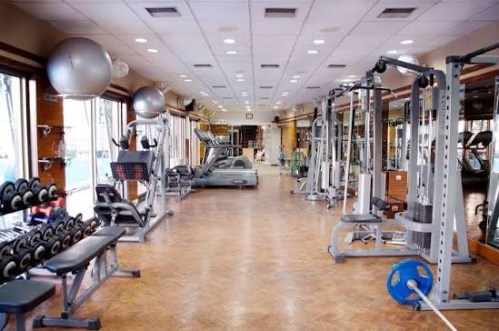
In a world where switching off is increasingly difficult and people’s mental health is consistently being battered, the opportunity to exercise and move the body is encouraged, and personally, welcomed! There remains a large push to BE healthy and to take care of your body (physically and mentally), and exercising remains a recommended avenue to pursue inner peace, tranquillity and good health. With the poorer weather just around the corner (I’m assuming: although if the sunny warm days continue you’ll get no complaints from me), being able to exercise outside will become slightly more restricted (walking and running). So for those with gym memberships, or who aren’t afraid of the dark, exercise could continue no matter the season. But for many, exercise which is presented as a necessity (Physical Education compulsory in mainstream education); is a privilege. It’s based on availability of time, money, and confidence. Yet via the great powers that be (Social Media) it feels like it is a privilege we are made to feel guilty for not achieving or prioritising.
I write this from the perspective of someone who has always been active; swimming, running, badminton, gym memberships- I am someone who struggled with body image, size and whose mental health very much hinges on caffeine and endorphins. I was introduced to playing badminton with my Pa and brother on a rainy Sunday afternoon back when I was around 10 years old. And it’s a physical hobby which has been a staple in all of our lives since (it’s also how I met my partner and 3 of my closest friends: Good call Pa)! But badminton costs money- silly money. You have to pay to use the court, pay to borrow equipment or purchase your own. Many would have to pay to get to the sports centre (public transport, cars, e-bikes/scooters). Lots and lots of costs. Costs which many individuals and families cannot afford. You also need to have someone to play with. So not a solo activity. Therefore, being able to say you have access to all of the above is surely someone (myself included) in a privileged position.
As an adult, I’ve been a member of various gyms since graduating from University (with a break during the pandemic). Some of the gyms I’ve been a member of have been quite intimidating spaces. There have been women only spaces and classes which were very much welcomed but the gym is like its own separate social sphere (if you know, you know). There is an etiquette that is, but then sometimes is not, followed (trying to read social cues is impossible in a dark, headphone filled, loud environment- and this is coming from some who is privileged enough to be able to pick up on social cues with relative success- or at least thinks they can)! It’s confusing and intimidating, and so so loud! Music, people, weights crashing down! It’s a LOUD space. The memberships themselves usually involve a peak option (before and after the engrained 9-5 which costs silly silly money) and off-peak (during the day and weekends when many people work, have childcare responsibilities but thankfully just costs silly money). All of this reinforces the privilege someone needs to be able to exercise and access a gym (confident in loud dark environments, not impacted by loud banging noises, disposable income to spend, individual time to prioritise themselves and the physical ability to exercise on machines aimed at people without disabilities).
So, in an increasingly challenging world: poverty, hate, war, misogyny, racism, transphobia, disablism, homophobia, suicide, homelessness and the ever-increasing list, why does thinking about exercise and gym memberships matter? It probably doesn’t. But sometimes it’s important to reflect on what we do have and to think about and be mindful of the barriers others face. Exercise is encouraged of many of us: it has serious physical and mental health benefits (yay endorphins), but it’s a privilege on so many levels. I think it’s important it’s framed as such rather than simply as something we should be doing. It’s something many many people simply do not have the privilege to be able to do. And this needs recognising.
Share this:


National Autism Awareness and Acceptance Month


This blog is about national autism acceptance month and comes in a timely manner at the beginning of the month.
Autism Spectrum Disorder (ASD) is a neurological difference that affects communication, social interactions, and behaviour. However, no two autistic individuals are the same. Some may have heightened sensory sensitivities, while others excel in specific skills like pattern recognition or problem-solving. The key is recognizing that autism is not a disability—it’s a different ability.
ASD is becoming more understood and talked about in contemporary society. This is a great start and months like these also bring ASD into discussion. There are a few things that I would like to talk about in this blog.
Firstly, I want to talk about an interaction that I had with an autistic student. The student was from a different department and came to ask me where a room was. It was at the beginning of term and this was clearly a new student trying to settle into university life. I explained where the room was and this then led onto her explaining that she felt quite overwhelmed being in the classroom, and was a little scared to go back. The lecturer had encouraged her to join but she was unsure as it was a lot of information to take in. I explained to the student that if she felt able, she should definitely try to return to the class to see if she could get something out of it. I also suggested she have a further conversation with the module lead to see if there was anything else that could be done to support her. During the conversation it was clear that the student was feeling overwhelmed in part with interacting with myself in general. I could see that she was trying to regulate herself and had started to stim (this generally consists of repetitive movements, sounds, or actions that help to regulate or soothe the individual but this is not an exhaustive list) by squeezing a stress ball and then tapping herself on the head with it. It is examples like this that really highlight how every day conversations, interactions and experiences can really be challenging for individuals on the autistic spectrum. I must say that I felt honoured she was able to confide in me and also explain that she had autism. Individuals should be able to explain how they process things in a different way in order to get further support, and they should not feel any shame or judgement in doing so. As a university, and as a society more broadly, it’s important to create the safe spaces where conversations can be had and support can be provided.
Another example I would like to provide came about after watching a short clip from Survivor that has recently gone viral. In this TV show, individuals compete with each other in order to walk away with a cash prize. It can involve deceit and selfish actions in order to walk away victorious. One contestant, Eva Erickson, felt able to disclose her autism to a trusted teammate, Joe Hunter. In return, he explained how glad he was that she felt safe enough to confide in him and vowed that he would support her through the rest of the competition. Later on there was a task where Eva was struggling to complete it; she became visibly frustrated and overwhelmed towards the end. Despite feeling this way, she managed to compose herself enough to complete the task ahead of the other individual. This shows immense courage, strength, and resilience to be able to do this despite being overloaded in terms of the environment she was in. The second part of the video that was powerful and moving showed the aftermath. After the task Eva began to cry uncontrollably and scream as a result of being completely overwhelmed by the task she had just completed. Joe, who she had confided in, now on a competing team, never took his eyes off her and you could see and feel how intensely he felt her struggle, and at the same time wanted to support her. The presenter at this point asked him if he wanted to go over and give her a hug and with no hesitation he agreed, went over to give her a hug and helped her to regulate. In her earlier discussions with him she had told him that when she gets overwhelmed and has episodes, she needs somebody to give her hands a squeeze and help to calm her down. This is exactly what he did and he helped to regulate her until she had regained composure and was able to carry on. It was such a powerful moment that demonstrates the importance of compassion, the importance of understanding others needs, and also the importance of being selfless sometimes when others are in need. Individuals within society can support those with autism in the same way. If you haven’t seen the clip already I urge you to watch it, the clip can be found here and here.
Lastly, it was great to see a large display of colourful umbrellas in central Milton Keynes in support and recognition of neurodiversity as well as stalls and events.
The take away message from this blog is the following:
- Become more aware about neurodiversity and autism;
- Become more aware of the ways in which you can support individuals with autism, creating a positive sensory space for them;
- Advocate for changes within society in order to create more support for those of autism whether that be in schools, in the workplace, healthcare, the criminal justice system and other aspects of society.
We can all do our bit, so use this month to become more aware of ASD and the ways in which some individuals experience the world. Find out what you can do and implement it throughout the year rather than just for the month.


