
Home » National Health Service
Category Archives: National Health Service

Will Keir Starmer’s plans to abolish NHS England, help to save the NHS?
In a land-mark event, British Prime Minister Keir Starmer has unveiled plans to abolish NHS England, to bring the NHS back into government control. Starmer justifies much of this change with streamlining operations and enhancing efficiency within the NHS, that in recent years has faced a backlash following long queues and an over-stretched staff pool. Moreover, this is part of Starmer’s plan to limit the power of control from bureaucratic systems.
NHS England was established in 2013 and has taken control and responsibility of the NHS’s daily operational priorities. Primarily, NHS England is invested in allocating regional funds to local health care systems and ensuring the smooth delivery of health care across the NHS. However, concerns, particularly in Parliament have been raised in relation to the merging of NHS England and the Department’s of Health and Social care that is alleged by critics to have brought inefficient services and an increase of administrative costs.
Considering this background, the plans to abolish NHS England, for Starmer come under two core priorities. The first is enhancing democratic accountability. This is to ensure that the expenditures of the NHS are contained within government control, thus it is alleged that this will improve efficiency and suitable allocation of spending. The second is to reduce the number of redundancies. This is backed by the idea that by streamlining essential services will allow for more money to be allocated to fund new Doctors and Nurses, who of course work on the front line.
This plan by Starmer has been met with mixed reviews. As some may say that it is necessary to bring the NHS under government control, to eliminate the risks of inefficient services. However, some may also question if taking the NHS under government control may necessarily result in stability and harmony. What must remain true to the core of this change is the high-quality delivery of health care to patients of the NHS. The answer to the effectiveness of this policy will ostensibly be made visible in due course. As readers in criminology, this policy change should be of interest to all of us… This policy will shape much of our public access to healthcare, thus contributing to ideas on health inequalities. From a social harm perspective, this policy is of interest, as we witness how modes of power and control play a huge role in instrumentally shaping people’s lives.
I am interested to hear any views on this proposal- feel free to email me and we can discuss more!
Share this:


Pregnancy and Lavender Fields

If being a women means that you will experience harm due to your socially constructed sex/gender, being pregnant and a mother certainly adds to this. The rose-tinted view of pregnancy implies that pregnancy is the most wonderful of experiences. There is imagery of the most privileged of mothers with their pregnancy ‘glow’, in fields of [insert flower here] holding their bumps with the largest of smiles. Outside of smiles and lavender field imagery, judgment is reserved for pregnant women who do not enjoy pregnancy. In a world of ‘equality gone mad’, it seems that whilst some pregnant women may have a variety of hurdles to face, it is presumed that they should carry on living in the exact same way as those who are not pregnant.
Maybe you lose your job upon becoming pregnant and your workplace does not provide you with sick pay when needed. Maybe it is harder for you to access healthcare and screenings due to racism and xenophobia. Perhaps it is a Covid-19 pandemic, your boss is a bit disgruntled that you are pregnant and despite the legal guidance stating that pregnant people should isolate you are told that you need to work anyway. Or perhaps you are quite ill during your pregnancy, you must try to cope and continue to work regardless, but must also hide this sickness from your customers and colleagues. Whilst at the same time it is unlikely that there are places for you to rest or be sick/ill in peace. If any time is taken off work you may then be considered as being work-shy by some. Despite it being well documented that some pregnancy related ill-health conditions, like hyperemesis, have serious consequences, such as the termination of pregnancy, death and mothers taking their own lives (with or without suitable interventions).
Before labour, if you go to the triage room screaming in pain, maybe you will need to wait some time at the reception for staff to assist you, and perhaps you may be asked to ‘be quiet’ so as to not disturb the equilibrium of the waiting room. Maybe your labour is incredibly painful but apparently you must ‘take it like a champ’ and pain relief medication may be withheld. Maybe you will receive a hefty bill from the NHS for their services due to your undocumented migrant status, refused asylum application or have no recourse to public funds. If experiencing pain post-labour, maybe your pain is disregarded, and you face life-threatening consequences due to this.
Once you become a mother maybe you are more exhausted than your partner, maybe your partner is a abusive, maybe they cannot push a pram, change nappies, calm a crying baby because of toxic masculinity. If your baby becomes upset (as they do sometimes) whilst out and about you may need a quite low sensory place to feed them, or for them to relax but there is nowhere suitable to go. If looking flustered or a bit dishevelled whilst out maybe you are treated as a shop-lifting suspect by security and shop assistants.
If you have the privilege of being able to return to work, ensure that you return within the optimum time frame as having too much or too little time off work is not viewed as desirable. Also, make sure you have some more babies but not too many as both would be deemed selfish. Whether you breastfeed or provide formula both options are apparently wrong, in different ways. If you do breastfeed and need to use a breast pump whilst returning to work you may find that there are no/or a limited amount of suitable rooms available on public transport, at transport hubs, in public venues and workplaces for using a breast pump. This, among with other factors, such as the state of the economy, the lack of/a poor amount of maternity pay, and childcare costs, make the ability to both maintain formal employment and be present as a healthy mother difficult. Notably, the differences, extent and severity of harmful experiences differ depending on power, your status and identity attributes, if your gender does not neatly fit into the white privileged/women/female/mother box you will face further challenges.
It seems that society, its institutions and people want babies to be produced but do not want to deal with the realities that come with pregnancy and motherhood.
Share this:


Reproductive Healthcare Ramblings
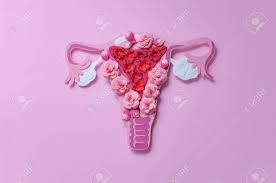
Reproductive health in England and Wales is a shambles: particularly for women and people who menstruate. The failings start early, where, as with most things, stereotypes and ‘norms’ are enforced upon children from GPs, schools, from parents/guardians who have experienced worse, or who do not know any different, which keep children from speaking up. These standards and stereotypes come from a male dominated health care system especially in relation to gynaecology, and our patriarchal society silences children without the children even realising they are being silenced. As a child, you are expected to go about your daily routine, sit your exams, look after your siblings, represent the school at the tournament of the week, and do all this while, for some, bleeding, cramping, being fatigued but not be expected to talk about it. After all, you are told time and time again: it’s normal.
Moving through life, women and people who menstruate face similar stigma, standards, assumptions during adulthood as they faced during childhood. There is more awareness now of endometriosis, adenomyosis, uterine fibroids, Polycystic Ovary Syndrome Condition (PCOS) to name but a few. But women and people who menstruate report feelings of being gaslighted by [male] gynaecologists, encouraged to have children in order to regulate their hormones (pregnancy and childbirth comes with a whole new set of healthcare problems and conditions), to take the contraceptive pill and deal with the migraines, mood swings, weight gain and depression which many women and girls report. Some of the above chronic illnesses impact fertility, so ‘try for a baby’ is not an easy, or even a wanted path. Diagnosis is also complex: for example a diagnosis for endometriosis takes on average 8 years (Endometriosisuk, 2023), and can only be confirmed with surgery. That relies on women and people who menstruate going to their GP, reporting their symptoms, listening to the ‘have you tried the pill’ or ‘having a baby will help manage your symptoms’: which relies on trust. Not everyone trusts the NHS, not everyone feels comfortable being dismissed by a nurse, or GP or then their gynaecologist. Especially when a number of these illnesses are framed and seen as a white-woman illness. Communities of women and people who menstruate remain hidden, dealing with the stigma and isolation that our reproductive health system carries in England and Wales. And this is not a new issue.
The reproductive healthcare for women and people who menstruate is dire. Just ask anyone who has experienced it. What then is it like for women in prison? The pains of imprisonment are well documented: deprivation of goods, loss of liberty, institutionalisation, no security, depreciation of mental health (Sykes, 1958; Carlen, 1983). The gendered pains, fears and harms less so, but we know women in prison are fearful about the deterioration of relationships (especially with children), lack of facilities to support new mothers, physical and sexual abuse, and poor mental and physical health support including reproductive health. The poor reproductive healthcare available to women and people who menstruate within society, is a grade above what is available in prisons. These women are quite literally isolated, alone and withdrawn from society (through the process of imprisonment), and for some, they will become further isolated and withdrawn via the pains of their chronic illness.
There isn’t really a point to this blog: more like a rambling of frustrations towards all the children who will journey through our subpar reproductive healthcare system, who will navigate the stigma and assumptions littered within society. To all the women and people who menstruate who are currently wading through this sh*t show, educating themselves, their family, their friends and in some cases their GPs, those people unable to speak out, not knowing how or simply not wanting to. And to those in the Secure Estate, grappling with the pains of imprisonment and having their reproductive healthcare needs ignored, overlooked or missed.
I haven’t even mentioned menopause…
References:
Carlen, P. (1983) Women’s Imprisonment, Abingdon: Routledge.
Corston, Baroness J. (2007) The Corston Report: A Review on Women with Particular Vulnerabilities in the Criminal Justice System, London: Home office.
Endometriosis UK (2023) Endometriosis Facts and Figures [online] Available at: https://www.endometriosis-uk.org/endometriosis-facts-and-figures#:~:text=Endometriosis%20affects%201.5%20million%20women,of%20those%20affected%20by%20diabetes.&text=On%20average%20it%20takes%208,symptoms%20to%20get%20a%20diagnosis. [Accessed 24th August 2023]
Sykes, G. (1958/2007) The Society of Captives: A Study of a Maximum Security Prison, Princeton: Princeton University Press.

Share this:


They think it’s all over…….

Probably the most famous quote in the history of English football was that made by Kenneth Wolstenholme at the end of the 1966 World Cup final where he stated as Geoff Hurst broke clear of the West German defence to score the 4th goal that “Some people are on the pitch…. they think it’s all over…….it is now”. I have been reminded of this quote as we reach April 1st, 2022 when all Coronavirus restrictions in England essentially come to an end. We are moving from a period of pandemic restrictions to one of “living with Covid”. Whilst the prevailing narrative has focussed on “it’s over” the national data sets would suggest it is most definitely not. We are currently experiencing another wave of infections driven by the Omicron BA-2 variant. Cases of Covid infection have been rising steadily over the past couple of weeks and we are now seeing hospital admissions and deaths rise too. This has led to an interesting tension between current politically driven and public health driven advice.
The overriding question then is why remove all restrictions now if infection rates are so high. The answer sits with science and the success of the vaccination programme, and the protection it affords, which to date has seen 86% of the eligible population have two jabs and 68% boosted with a third. Furthermore, we are now at the start of the Spring booster programme for the over 75s and the most vulnerable. The introduction of the vaccine has seen a dramatic fall in serious illness associated with infection and the UK government now believe that this is a virus we can live with and we should get on with our lives in a sensible and cautious way without the need for mandated restrictions. The advances gained in both the vaccination programme, anti-viral therapies and treatments have been enormous and underpin completely the current and future situation. So, the narrative shifts to one that emphasises learning to live with the virus and to that end the Government has provided us with guidance. The UK Government’s “Living with Covid Plan” COVID-19 Response – Living with COVID-19.docx (publishing.service.gov.uk) has four key principles at its heart:
- Removing domestic restrictions while encouraging safer behaviours through public health advice, in common with longstanding ways of managing most other respiratory illnesses;
- Protecting people most vulnerable to COVID-19: vaccination guided by Joint Committee on Vaccination and Immunisation (JCVI) advice, and deploying targeted testing;
- Maintaining resilience: ongoing surveillance, contingency planning and the ability to reintroduce key capabilities such as mass vaccination and testing in an emergency; and
- Securing innovations and opportunities from the COVID-19 response, including investment in life sciences.
So, in addition to the restrictions already removed from 1 April, the Government will:
- Remove the current guidance on voluntary COVID-status certification in domestic settings and no longer recommend that certain venues use the NHS COVID Pass.
- Update guidance setting out the ongoing steps that people with COVID-19 should take to minimise contact with other people. This will align with the changes to testing.
- No longer provide free universal symptomatic and asymptomatic testing for the general public in England.
- Consolidate guidance to the public and businesses, in line with public health advice.
- Remove the health and safety requirement for every employer to explicitly consider COVID-19 in their risk assessments.
- Replace the existing set of ‘Working Safely’ guidance with new public health guidance
My major concern with these changes is the massive scaling back of infection testing. In doing so we run the risk of creating a data vacuum. Being able to test and undertake scientific surveillance of the virus’s future development would help us identify any future threats from new variants; particularly those classified as being “of concern”. What we should have learned from the past two years is that the ability to understand the virus and rapidly scale up our response is critical.
What is also now abundantly clear from the current data is that this is far from over and it is going to take some time for us to adapt as a society. The ongoing consequences for the most vulnerable sections of our society are still incredibly challenging. It will not be a surprise to any health professional that the pandemic was keenest felt in communities already negatively impacted by health inequalities. This has been the case ever since the publication of the “Black Report” (DHSS 1980), which showed in detail the extent to which ill-health and death are unequally distributed among the population of the UK. Indeed, there is evidence that these inequalities have been widening rather than diminishing since the establishment of the National Health Service in 1948. It is generally accepted that those with underlying health issues and therefore most at risk will be disproportionately located in socially deprived communities. Consequently, there is a genuine concern that the most vulnerable to the virus could be left behind in isolation as the rest of society moves on. However, we are now at a new critical moment which most will celebrate. Regardless of whether you believe the rolling back of restrictions is right or not, this moment in time allows us an opportunity to reflect on the past two years and indeed look forward to what has changed and what could happen in terms of both Coronavirus and any other future pandemic.
Looking back, I have no doubt that the last two years have changed life considerably in several positive and negative ways. Of course, we tend to migrate to the negative first and the overall cost of life, levels of infection and the long-term consequences have been immense. The longer-term implications of Covid (Long Covid) is still something we need to take seriously and fully understand. What is not in doubt is the toll this has had on individuals, families, communities and the future burden it places on our NHS. The psychological impact of social isolation and restrictions has been enormous and especially so for our children, young people, the vulnerable and the elderly. The social and educational development of school children is of particular concern. The wider economic implications of the pandemic will take some time to recover. Yet, whilst the negative implications cause us grave concern many features of our lives have improved. Many have identified that this pandemic has helped them re-asses what is important in life, how important key workers are in ensuring society continues to operate smoothly and the critical role health and social services must play in times of health crisis. Changing perspectives on work, work life balance and alternative ways of conducting business have been embraced and many argue that the world of work will never be the same again.
On that final note it’s important that as a society we have learned from what I have previously described as the greatest public health crisis in my lifetime. Pandemic planning was shown to be woefully inadequate and we must get this better because there is no doubt there will be another pandemic of this magnitude at some point in the future. Proper support for health and social services are critical and the state of the NHS at the start of all this was telling. Yes, it rose to the challenge as it always does but health and social care systems were badly let down in the early stages of this pandemic with disastrous consequences. Proper investment in science and research is paramount, for let’s be honest it was science that came to our rescue and did so in record time. There will inevitably be a large public enquiry into all aspects of the pandemic, its management and outcomes. We can only hope that lessons have been learned and we are better prepared for both the ongoing management of this pandemic and inevitably the next one.
Dr Stephen O’Brien
FHES
Originally posted here
Share this:


Late: The word that defines the UK’s Coronavirus pandemic management

Picture the scene. We are in Downing Street and the news media are awaiting another coronavirus press conference. Professor Chris Whitty, the Chief Medical Officer for England is ready. Sir Patrick Vallance the Chief Scientific Advisor is ready. Where is the Prime Minister (PM)? Late again.
I have this vision of our PM frantically scurrying around like the White Rabbit in Alice in Wonderland humming “I’m late I’m late for very important date”. We might all smile at this vision but I’m afraid the analogy of being late is not a laughing matter when it is applied as the major theme for the UK governments management of what I described in a previous blog as the worst public health crisis in my lifetime. I also recall the PM famously using the phrase “A stitch in time saves nine” which is indeed true however in a pandemic being late or not sewing that stitch in time can and has cost thousands of lives.
In the week that has seen the UK pass 100,000 deaths it is right to reflect on the tragic loss of life. The call from government saying this is not the time to analyse why the UK has done so badly is in my view the wrong line to take. The government could learn a thing or two from the UK health care professions who for years have developed themselves as reflective practitioners. Donald Schon (1983) wrote extensively about reflection in terms of the creation of learning organisations who can both reflect in and on action. It is the former that has been sadly lacking in the UKs response to the coronavirus crisis. Reflection needs to be on the table throughout the pandemic and had it been, we may not have repeated the same mistakes. The management of pandemics is well documented in the medical literature. Professor Chris Whitty the Chief Medical Officer for England outlines how to manage a pandemic in this useful lecture at Gresham College.
Indeed it is also important to remind us of the words of Sir Patrick Vallance who when recommending the urgency of action in a pandemic implored that we “go earlier than you think you want to, go a bit harder than you think you want to and go broader than you think you want to in terms of restrictions.” My observation of the UK pandemic response leads me to conclude that we failed to do any of these. However, for this blog let’s focus on timing. Going early in terms of restrictions and other actions can have an enormous beneficial impact.
The last year has been to coin an overstated phrase “unprecedented” with many arguing that any government would have been overwhelmed and struggled to manage the crisis. Is this fair? One can look at other countries who have managed the situation better and as such have had better outcomes. New Zealand, Australia, Korea for example. Others will point to the differences between countries in terms of geography, population, culture, transport, relative poverty, healthcare systems, reporting mechanisms and living conditions which make comparisons inherently complex.
With the current death toll in the UK so high and continuing to rise, and many scientists telling us that things will inevitably get worse before they get better the question everyone is asking is : What has gone wrong? In this blog I’m going to argue that in large part our problems are based on a lack of urgency in acting. I’m arguing that we have not followed Sir Patrick Vallance’s recommendation and in particular we have been late to act throughout. Below I will set out the evidence for this and propose some tentative reasons as to why this has been the case.
Firstly, despite a pandemic being recognised as the largest threat to any country (it will always be top of any country’s risk register) the UK was slow to recognise the impending crisis and late to recognise the implications of a virus of this nature and how quickly it can spread globally. History informs us of how quickly Spanish flu spread in 1918. The UK was never going to be immune. Late recognition and poor pandemic preparedness meant we were late to get in place the critical infrastructure required to mount a response. Despite several warnings and meetings of the civil contingencies committee (COBR) the health secretary Matt Hancock was dismissive of the threat playing it down. Indeed, the PM failed to attend several early meetings giving the impression that the UK were not taking this as seriously as they should.
When faced with a looming medical/public health emergency it is important that the scientific advisors are in place early (which they were) and that their advice is acted upon. The evidence clearly points to a slow response to this advice which manifested itself in several critical late decisions early in the pandemic. The UK did not close its borders and implement quarantine measures allowing the virus to seed extensively in all parts of the community. Once community transmission had been established it was too late. It did not have in place a substantive testing regime, largely because we were unprepared. It very quickly became clear when we switched from community testing to testing only those in hospital with Covid symptoms that we lacked critical mass testing capacity and hence spent months trying to catch up. Evidence from previous outbreaks of SARS and MERS demonstrated how important mass testing was in controlling the spread, a position advocated by the World Health Organization (WHO). The UK saw case numbers grow rapidly and was slow to get the important public health messages out. Consequently, hospital admissions increased, and the death toll leapt. We were in serious danger of the NHS becoming overwhelmed with critically ill Covid patients.
Public health, medical and scientific experts suggested through their modelling exercises that the death toll, if we didn’t act quickly, could exceed 500,000; a situation socially and politically unpalatable. Therefore, in the absence of no known treatments and no vaccine we would have to resort to the tried and tested traditional methods for the suppression of a respiratory borne virus. Robust hand hygiene, respiratory/cough etiquette and maintaining social distance to reduce close social interaction. The logical conclusion was that to radically reduce social contacts we needed to lockdown. It is widely acknowledged now that the UK was at least a week late in introducing the first lockdown in March 2020.
In the meantime, the virus was sweeping through vulnerable elderly groups in care homes. We were again late to recognise this threat and late to protect them despite Hancock’s claims of throwing a ring of protection around them. The death toll continued to mount. At this stage both the Health (NHS) and care sectors were under enormous pressure and ill equipped to manage. The greatest worry at that stage was lack of adequate Personal Protective Equipment (PPE). Due to our ill preparedness we were late to provide appropriate PPE to both the NHS and the care home sector, exposing healthcare workers to undue risk. The death toll of healthcare workers in any pandemic is high and we were now starting to see this rise in the UK.
Another major criticism during the earlier months was how slow we were in ramping up testing capacity, tracking, tracing cases and ensuring isolation measures were in place. Indeed, concerns about test, trace and isolation continue today. However, lockdown and other public health measures did reduce the case numbers through the summer but inevitably the virus, which thrives in cold damp conditions started to cause further problems as we approached autumn and winter. Combined with this the UK saw a new variant of the virus emerge in the autumn with greater transmissibility. Cases started to rise again along with the inevitable hospital admissions and deaths. It appeared despite warnings from all scientists and health professionals that a second wave was highly possible we were late to recognise the emergence of a second wave of infections. The signs of which were there in September 2020. This led to a second lockdown in November when the advice from the scientific advisors was to lockdown in mid-October or earlier. This decision was compounded by a complex tiered restrictions arrangement to manage outbreaks locally aimed at the avoidance of unnecessary restrictions. Meanwhile the death toll continued to mount.
Notwithstanding the emergence of a new variant of the virus during the second lockdown everyone’s attention was switched to Christmas. The advice offered from government that restrictions would be relaxed for five days was met with incredulity by health professions who argued that this would simply allow the virus to be spread exponentially through greater household mixing. All the evidence at this stage pointed to household mixing as the primary source of transmission. As the situation worsened following the release of lockdown in early December it became obvious that the Christmas guidance had to change. To no ones surprise the advice was changed at the last-minute meaning everyone would have to rearrange their plans. The late change to the Xmas guidance probably meant more family mixing than would have happened had the advice been robust and communicated to the public earlier. Very quickly after Christmas we saw rapid changes to the tier management despite calls for a further lockdown. Cases rose rapidly, hospital admissions were now worse than in the first wave and scientists called for a lockdown. Consequently, we were late implementing Lockdown 3.
Throughout the pandemic the government has provided detailed guidance on restrictions, care homes, travel arrangements and education. It’s difficult to get this right all the time but the issuing of guidance was at times so late it became difficult to interpret the issues with clarity. Probably one the best examples of this relates to the advice provided to schools. Should they stay open or close? What should the Covid secure measures be? How do you construct bubbles of students to reduce social contact? Covid testing of pupils and staff? examinations and assessment guidance? However, the final straw was surely when schools opened in January after the Christmas break to only be told they had to close the very next day as we moved into Lockdown 3.

In conclusion it is said that to manage a pandemic you need a clear, robust strategic plan. The evidence presented here would suggest a lack of strategic planning with crisis decision making on the hoof. Some have argued that we have a PM who struggles to take the big decisions required, who procrastinates and inevitably is left with Hobson’s choice. If you couple this with a group of key ministers who appear to lack the competence to carry their portfolios we have the recipe for a disaster. The consequence of which means the UK has experienced a terrible outcome across a whole set of health, education and economic indicators.
References
Schon, D. (1983) The reflective practitioner: how professionals think in action Basic Books, New York
Whitty, C. (2018) How to Control an Epidemic https://www.youtube.com/watch?v=rn55z95L1h8
Share this:


The Lockdown Lowdown
I took this photo a few years ago on a solo visit to Copenhagen, I had just quit my job and was in the process of leaving where I called home, my PTSD was certainly at its worst and the future was entirely uncertain…
A cosy Sunday evening, the flat has been hoovered, the washing is out to dry, lunch has been prepped for the following day…yet despite all of this normality me and my partner sit here on our cosy Sunday armed with the knowledge that another national lockdown is imminent. So whats next for us?
Before I explore whats next I want to reflect on what has been, it was only this time last year that my mental health was at its worst since I was diagnosed with PTSD some years ago and it was during this month last year that I found out I was pregnant. After many difficult conversations I decided that that chapter of my life was not ready to begin, not just yet, and so the guilt consumed me and I relied on anti-depressants to help me through that difficult time. Eventually as time passed so did the guilt and my mental health became stronger, because I willed it so, and after a short stint I stopped using the anti-depressants because I knew within myself I didn’t have to rely on them…
…More time passed and I found that the strength of my mental health had started to peak, I set myself goals that only I knew about and only I could achieve, I started to be critical of the people I surround myself with to ensure that I was living as authentically true to who I am as possible. This was my attempt at self care, As I withdrew from these friendships I simultaneously removed my negative addictions and repeated behaviours (drugs, alcohol, time-wasting, self-depreciation), I realised that my actions allowed me to concentrate my full energy on the things that truly matter in my life (my studies, my family, my relationship)… and then lockdown happened.
And boy was I prepared for that, I wont deny that I grew a few stretch marks and after some self hate Ive learnt to accept and love them as a natural process of my body. I realised I didn’t do much exercise during lockdown and my appetite was unruly, with zoom quiz night’s came alcohol and snacks (lots of them). Despite my growing waist I was okay mentally and yes I wont deny that having my own apartment and living with my partner helps but also having dealt with a bit of a breakdown some months prior helped order my perspective on my life, how I want to live it and how I would tackle this challenging time. As a 2nd year student I lost all hope and focus for a while as the outstanding assignments were piling up and I was heavily relying on the august submission date, I felt like I wasn’t worthy of being a university student, that I was never going to graduate and self doubt quickly reappeared into my life, Its a strange thing really during lockdown I didn’t really do anything at all, but I also never found the time to study? And the strangest thing is that actually most students felt this way and when me and my peers communicated how we were feeling we were able to support each other more and eventually those assignments were submitted and here we are… 3rd years!
So 3 days to go before lockdown 2 and how can I get through this?… how can you get through this? Undoubtedly there are many people who have dealt with a world of pain since coronavirus first graced our planet and yet in my experience I found this year to be quite grounding and it has allowed me to focus my energy on me, who I am, what I want and who I want to be (without sounding narcissistic but rather rightfully selfish), because I have no control over external happenings neither do you and thats okay. what we can do is focus on our little world; ourselves and the people around us. heres a few quotes I find to be quite relevant to this train of thought.
“To what goal are you straining? The whole future lies in uncertainty; live immediately” – Seneca
“Just keep in mind the more we value things outside our control, the less control we have” – Epictetus
“Man conquers the world by conquering himself” – Zeno
So how can you, how can we, get through lockdown? granted it may not be as-long as the last one but we’ve had a taste of normality again and so this time round it may be harder, this time we have long winter days and a lack of vitamin D combined with the uncertainty of celebrating Christmas with family looming over us, so in consideration of Epictetus’ wise words lets focus on what we can control; 1. lets schedule consistent self care( for me that comes in the medium of being disciplined, in terms of uni work.. and diet), 2. Lets move our bodies! go for a walk outside and pick up litter? (later in this blog post you’ll find some of my suggestions for walks around Northamptonshire), 3. don’t pressure yourself into being consistently pro-active! 4. do drink hot chocolate. 5. And if your sad about missing out on getting your Christmas shopping in early then try to buy from local independant businesses, you might find many local stores posting available items onto their social media pages and offering contact-free deliveries! 6. Check up on your friends and family, be mindful of keeping communication going, you don’t know who just might be struggling! 7. Buy a homeless person a warm meal!
(TIP: when looking for businesses check out this new hashtag on instagram introduced by some local Northampton businesses to get people buying more locally)… #SHOPLOCALSAVECHRISTMAS
https://www.instagram.com/explore/tags/shoplocalsavechristmas/
Overall lets focus on our own self betterment and where possible our local communities betterment (and as always wear a mask!!)
And most importantly if you are struggling then reach out to someone and let them know, as always with my posts as the focus tends to be on mental health I will provide links to the university’s, the local communities and national charities mental health resources, so please take note and rely on them if you need to.
For my previous blogs/context have a read of the following:
Navigating Mental Health at University
Navigating your mental health whilst studying at university during a worldwide health pandemic
“Joy comes to us from those whom we love even when they are absent” – Seneca
“Never let the future disturb you. You will meet it, if you have to, with the same weapons of reason which today arm you against the present” – Marcus Aurelius
“Don’t hope that events will turn out the way you want, welcome events in whichever way they happen: this is the path to peace” – Epictetus
I could continue on with a great deal more of these philosophical quotes and if you are interested in them then I’d recommend reading up on the discipline of stoicism, but if you’d like to read on you’ll find a few suggestions of areas to walk in and around Northamptonshire in aid of keeping your body moving during this lockdown, (and if you can take a bag and pick up litter).
Exploring Northampton’s Parks and Reservoirs
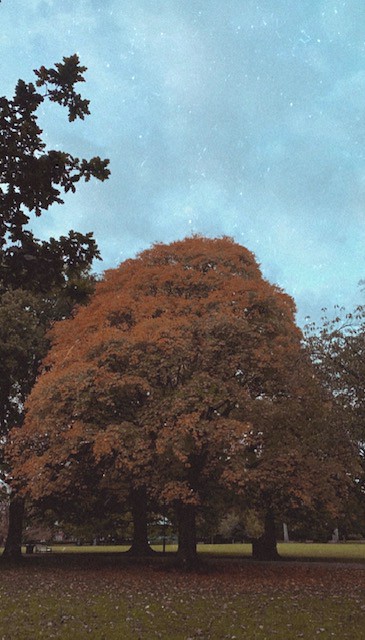
Abington Park; Located in the NN1 postcode a short distance from the town centre. The park has plenty of areas to explore with ponds, forestry areas and it offers some lovely autumnal photo opportunities, heres a particularly orangey-ember tree that caught my eye.
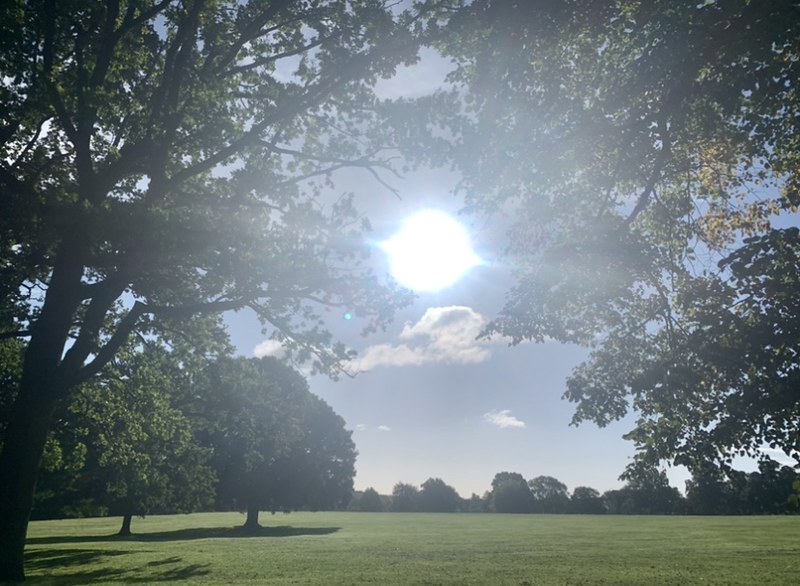

Sixfields lakes and reservoir; Unless you know of this lake you wouldn’t know it was there, Its situated a little down from the Sixfields football stadium, there is a small roundabout you can take to go up towards the cinema (Walter Tull Way), down Edgar Mobbs way, or join the A5076, and there is a fourth almost hidden turning that will take you down a road adjacent to Duston mill road, it is down this road that you will find this little gem.
There are two lakes to walk around, one being the main option where most people park up (there is parking on site) at a leisurely stroll the walk will take around an hour, you may see plenty of fishermen and lots of wildlife!
There is a second walk which I’ve only recently discovered myself, just down from the car park there is a small gate and it is through there you can explore to your hearts content!

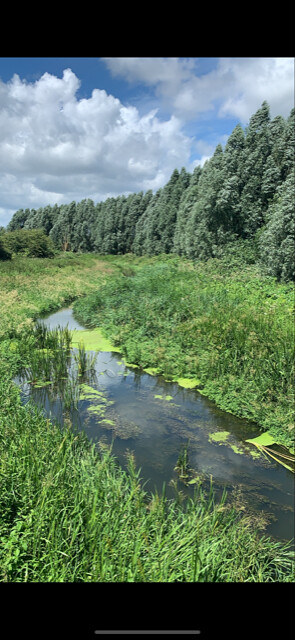
The Racecourse; I Imagine plenty of students and teachers alike will be aware of this location as it housed the university campus for many many years. As a budding criminologist I cant ignore the fact that the Racecourse has developed a rather unruly reputation for crime, I’ve personally never experienced anything and Ive lived in Northampton the majority of my life but thats not to say that it doesn’t happen, so as always be wise about your walk, perhaps avoid late night’s, let someone know where you are walking and stick to the street lights. The racecourse is a roughly 15 minute walk from the town centre and on good weather days offers views like this;

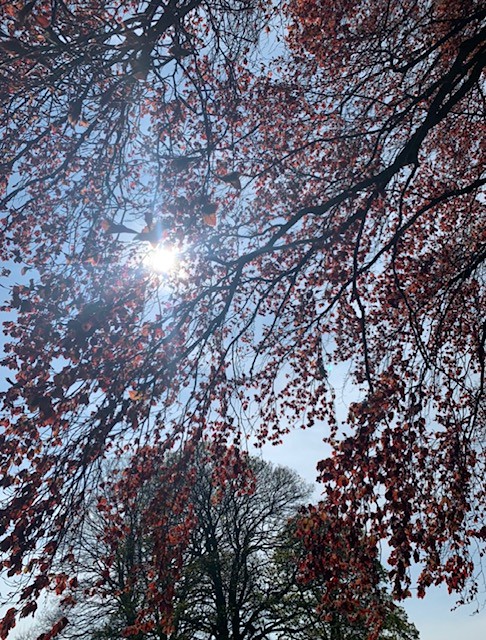
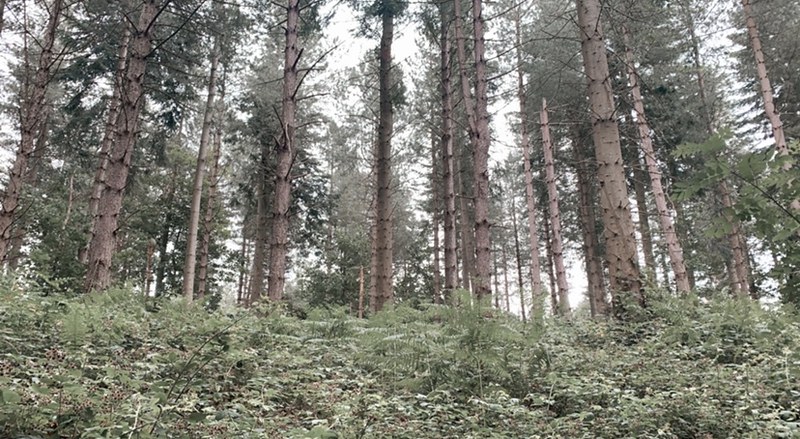
a-bit further afield: Harlestone Firs; I would recommend driving to this location if you can, there may be local busses that run in the area but I would recommend checking the COVID guidance with regard to bus routes. So Harlestone Firs is a fantastic location to get lost in the woods for a few hours, and I literally mean get lost… I have been there countless times and I still lose myself in there, but its a welcome loss. You’ll find endless amounts of huge ferns, fir trees, endless pathways and there is a working timber yard in amongst this location too. Wear boots for this spot I always choose my trusty Dr.Martens.
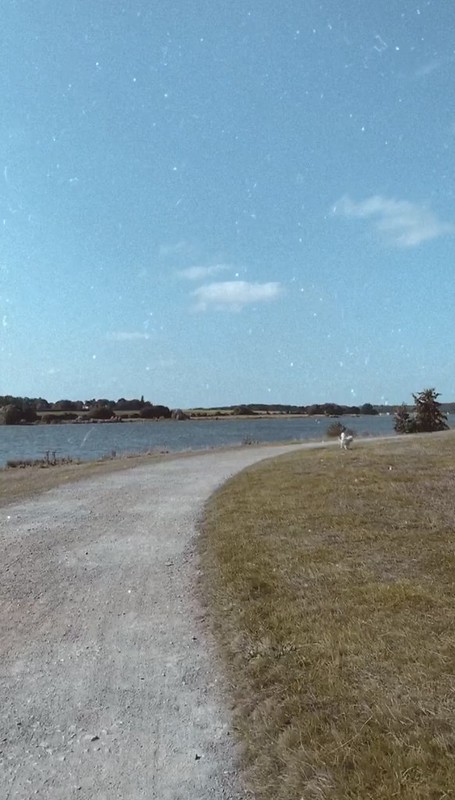
Brixworth Country Park/ Pitsford Reservoir; Another location you’ll likely need a vehicle to visit. This huge location offers a giant walk or a bike ride, you can of-course take your pooch with you too but keep them on a lead as theres plenty of cyclists at this location. I recently made the mistake of biking around here with the pooch on an extremely hot day and wow was that an interesting experience. There is paid parking on site or a little slip road you can park along. If you need to just take a few hours or even the whole day go and visit this location, take a packed lunch and sit and enjoy the view.
Here are some more locations that you may already know about and can explore during this lockdown, do make sure to check local COVID guidance, and even if you cant visit some locations now then make a note of them and visit them when you get a chance, Northamptonshire has such a vast amount of countryside to offer!
Becketts Park – Located just of the university campus offering a short distanced walk but plenty of wildlife and a nice view of the canals and lake.
Sywell Reservoir – You’ll likely need a vehicle to visit this location but you could also take the X46 bus (or X47?) Sywell takes around 2-3 hours to walk depending on pace, its one of my favourite spots as I grew up walking around this location.
Victoria Park and Dallington Park – Both are situated in St.James, and both are relatively small in comparison to the other locations but well worth incorporating into your daily exercise if you live within this location.
– Brackmills Country Park
– Delapre Park and Delapre Wood
– Earls Barton just of Doddington road, a pathway leading down to Summer Leys, here you can explore plenty of the river nene, beautiful views of the surrounding landscape and lots of horses!
– Rectory Farm fields; Here you can explore the fields (but be respectful of the farmers land) these fields stretch out to Overstone and Sywell, if you’d like to visit sywell reservoir and living within rectory farm then just take the fields route this route would take around 30 mins to walk to sywell reservoir and its well worth it.
So thats it for me, if you have any of your own suggestions not just in regard to walks around Northamptonshire but also how to keep your mind healthy during this next lockdown then please do comment any suggestions you might have, were all in this together!
If you’ve read this far then here’s one last quote to guide you into your day…
“The impediment to action advances action, what stands in the way becomes the way” – Marcus Aurelius
see below for references to guidance and advice.
- Counsellors – The Counsellors will listen to you and help you respond to the difficulties in your life, they will allow you to develop your abilities to address and resolve issues in your life. https://www.northampton.ac.uk/student-life/support/counselling-and-mental-health-team/counsellors@northampton.ac.uk
- Mental Health Advisors – The Mental Health Advisors will provide a private and comfortable space to discuss your mental health difficulties and work with you to develop coping strategies whilst studying. https://www.northampton.ac.uk/student-life/support/counselling-and-mental-health-team/
mha@northampton.ac.uk - Assist – Assist can give you advice and guidance for managing your disability whilst studying, for me they helped with a DSA application regarding my Anti-Depressant medication, the DSA application will give me the opportunity to have 6 appointments with the counselling team who can further help me work through my issues by providing me with a safe and comfortable space to talk. https://www.northampton.ac.uk/student-life/support/about-assist/ ASSIST@northampton.ac.uk
- Speak to your GP, they can refer you to the NHS Mental Health Services.
- https://www.nhs.uk/using-the-nhs/nhs-services/mental-health-services/how-to-access-mental-health-services/
- Other helpful support links (local and national)
- https://www.mind.org.uk/
- http://thelowdown.info/
- https://www.mentalhealth.org.uk/
Share this:


“I can’t breathe”

George Floyd’s words: “I can’t breathe”, have awaken almost every race and creed in relevance to the injustice of systematic racism faced by black people across the world. His brutal murder has echoed and been shared virtually on every social media platform – Floyd’s death has changed the world and showed that Black people are no longer standing alone in the fight against racism and racial profiling. The death of George Floyd has sparked action within both the white and black communities to demand comprehensive police reforms in regards to police brutality and the use of unjust force towards ethnic minorities.
There have been many cases of racism and racial profiling against black people in the United Kingdom, and even more so in the United State. Research has suggested that there have been issues with police officers stereotyping ethnic minorities, especially black people, which has resulted in a vicious cycle of the stopping and searching of those that display certain physical features. Other researchers have expounded that the conflict between the police and black people has no correlation with crime, rather it is about racism and racial profiling. Several videos circulating on social media platforms depict that the police force does harbour officers who hold prejudice views towards black people within its ranks.
Historically, black people have been deprived, excluded, oppressed, demonised and brutally killed because of the colour of their skin. As ex-military personnel in Her Majesty’s Armed Forces and currently working as a custody officer, I can say from experience that the use of force used during the physical restraint on George Floyd was neither necessary nor proportionate to the circumstances. In the video recorded by bystanders, George Floyd was choked in the neck whilst fighting for his life repeating the words “I can’t breathe”. Perhaps the world has now noticed how black people have not been able to breathe for centuries.
The world came to halt because of Covid-19; many patients have died because of breathing difficulties. Across the world we now know what it means if a loved one has breathing issues in connection with Covid-19 or other health challenges. But nothing was done by the other police officers to advise their colleague to place Floyd in the recovery position, in order to examine his breathing difficulties as outlined in many restraint guidelines.
Yet that police officer did not act professional, neither did he show any sign of empathy. Breath is not passive, but active, breathing is to be alive. Racial profiling is a human problem, systematic racism has destroyed the world and further caused psychological harm to its victims. Black people need racial justice. Perhaps the world will now listen and help black people breathe. George Floyd’s only crime was because he was born black. Black people have been brutally killed and have suffered in the hands of law enforcement, especially in the United States.
Many blacks have suffered institutional racism within the criminal justice system, education, housing, health care and employment. Black people like my own wife could not breathe at their workplaces due to unfair treatment and systematic subtle racial discrimination. Black people are facing unjust treatment in the workplace, specifically black Africans who are not given fair promotional opportunities, because of their deep African accent. It is so naïve to assume that the accent is a tool to measure one’s intelligence. It is not overt racism that is killing black people, rather the subtle racism in our society, schools, sports and workplace which is making it hard for many blacks to breathe.
We have a duty and responsibility to fight against racism and become role models to future generations. Maybe the brutal death of George Floyd has finally brought change against racism worldwide, just as the unprovoked racist killing of black teenager Stephen Lawrence had come to embody racial violence in the United Kingdom and led to changes in the law. I pray that the massive international protest by both black and other ethnicities’ will not be in vain. Rather than “I can’t breathe” reverberating worldwide, it should turn the wheel of police reforms and end systematic racism.
“Restricting someone’s breath to the point of suffocation is a violation of their Human Rights”.
Share this:


The pandemic and me – Lessons I’ve learnt from the #lockdown

This lockdown has certainly given us time to think and perhaps reflect on a variety of topics and situations. I’ve shared a few thoughts below and I wonder just how many are universal in some way.
I need to ensure I have a structure to my day and week. I think we all need some sort of structure to our lives and that structure is often given to us by work and perhaps other sociable events such as going to the gym or going to a coffee shop. It may be that the weekly shopping provides us with an anchor, Saturday may be a shopping day or religion might dictate a visit to a place of worship on a particular day. At times I’ve found myself getting confused about what day it is, Groundhog Day, I think. However, for the most part, I think I’ve got it sorted out. My wife and I discuss our schedule every morning over a cup of coffee. We have sorted out a routine of work, daily chores, fun bits and exercise.
My willpower is tested but I can be determined. I have never been a heavy drinker, the occasional binge, yes but then who hasn’t? It is however, quite easy to slip into the habit of having a glass or two of wine in the evening, every evening and perhaps a gin and tonic or two. I can’t go anywhere so thinking about having to drive the next day is not an issue. It’s not until you start totting up the consumption that you realise maybe you might have to reign this in. ‘School nights’ are back again, no drinking in the week. I make up for it at the weekend though.
I’m not risk adverse, I just like to think I’m logical. I don’t think it takes a rocket scientist or in fact any scientist to work out that the government (particularly a Conservative government) would not enforce the cessation of most business in the country without a very, very, very good reason. Stay in has been the mantra and of course we all know how difficult it is and we all know that as usual, the most vulnerable in society have been hit the hardest by this pandemic. Logic dictates, well at least to me, that going out to any store anywhere carries a risk. Some risks are necessary, for instance a trip to the chemist to pick up a prescription, but a trip to a DIY store, really? I’m sorry but given the risks, I think it’s a no brainer. Not only do I not want to catch the virus, but I would be distraught if I thought that through my own selfishness I had passed it onto someone else.
I never really thought about all those people that are truly special. We clap every week for the carers and the NHS and all those involved who are truly remarkable. I do ask myself though, would I want to turn up to work in a supermarket? Would I want to be out delivering parcels or the post? Would I be a NHS volunteer? Would I be happy working on public transport or emptying dust bins? There are so many people doing ordinary, even mundane jobs and volunteering roles that I now appreciate more than ever. And I would go far as to say I am humbled by what they do and continue to do despite the risks.
I appreciate the world around me. Not being able to go out and socialise in some way, be that work, or friends or family has provided more time for other activities. Our walks to the next village and back on roads devoid of most traffic has revealed an astonishing array of wildlife to be gazed upon and appreciated. That is of course if you’re not gasping for breath following a walk up a steep hill (well I call it steep but in a car its barely noticeable).
Some things don’t change. I’ve also noticed the gate to the footpath across the fields near our house has gone. A heavy wooden gate which, apparently has been stolen. On our walks we have noticed the increased number of cyclists whizzing along the road. Most give a wide birth, but some don’t seem to have a care for others, one nearly colliding with us as he flew around the corner. It seems with the reduction of cars; the idiotic driver has now given way to the idiotic cyclist.
What will a ‘new normal’ look like. At some stage we will get back to normal but its difficult to contemplate when that will be and what it will look like. Maybe getting back to the old normal is not what is needed. I’m trying to envisage how I will make changes in consideration of what I have learnt during this lockdown. What changes will you make?
Share this:


Ask the expert, if you can find one

It was around four years ago I discovered the title of ‘Doctor’ extended beyond medical staff. I’m not sure many people outside of the academic world fully understand or have any reason to know the order in which post nominal letters are awarded or titles are given. Gaining the title of ‘doctor’ at the very beginning of any academic journey, seems so distantly part of any future plan, its barely imaginable. Some career paths seem wildly ambitious. Wanting to be an ‘expert’ in your field for the humble student, feels much like aspiring to become an astronaut midway through a physics degree.
Once you enter the world of academia, the titles people hold seem to determine an awful lot of their credibility. It’s rare to find a university lecturer who isn’t working towards doctoral qualification, most already have one. The papers, books and research journals are filled with the knowledge of individuals who once were nothing more than students. I often wonder though, at what point someone becomes an expert? At what point, (if ever) do the most academically qualified individuals refer to themselves as experts within a narrow area of their field.
The government often talks about relying on ‘expert’ evidence. Watching the experts stand beside the PM discussing the current pandemic, they appear uneasy, particularly when questions are raised about a different expert having a contradicting opinion. One thing I feel quite sure of is that experts seem to rarely agree. As Bertrand Russell (1927/42) states, “even when all the experts agree, they may well be mistaken” . Maybe that’s because it’s questionable if anyone can ever truly know everything on a given subject area.
The scientific committee seems to be buzzing with accusations that the experts are not quite what they seem. The ‘data scientists’ advising government and sitting on SAGE are not all from a background which comfortably implies they are qualified to discuss virology or immunology. In the background lingers the fact with such a new virus, with so little known about it, expert knowledge in a narrow sense, is undoubtedly in its infancy and will probably require some degree of hindsight later on.
In the past week one of the UK’s leading experts has resigned from his job after breaking his own guidance. Meanwhile the public watched Matt Hancock ‘snap’ at an opposition MP in parliament. A woman who despite being no more of an ‘expert’ than himself, at least has experience as a qualified A&E doctor to base her opinions and views on. It seems last week’s experts and heroes are this week’s victims in the ongoing witch-hunt for someone to blame.
I’ve started to wonder if labelling someone an ‘expert’ is something other people do to install confidence that a piece of research being relied upon is credible, rather than the experts referring to themselves that way. There’s almost an assumption of arrogance for anyone who dares to protest that their knowledge should be recognised with a title, outside of the academic world anyway. Maybe people simply don’t understand what it took to reach that level of knowledge in the first place.
I’ve looked a lot at ‘labelling’ within the criminological context and it seems to me the labels that are attached to us, almost always seem to come from someone else. In an age of self-proclaimed ‘internet experts’ the real experts, it seems are hard to find.
Reference
Russell, Bertrand (1927/1942) cited in The Collected Papers of Bertrand Russell: A Fresh Look at Empiricism, 1927-42, edited by by John Slater and Assisted by Peter Köllner, (London: Routledge)
Share this:


Things I Miss: Small Pleasures – Helen

Small pleasures mean a lot, particularly at the moment when many normal pleasures are denied to us. If I can’t meet my friends, or go to restaurants, or engage in my hobbies at least I can enjoy a gin and tonic in the bath, or a nice dinner with an indulgent dessert (it is worrying how many such small pleasures involve food and alcohol!!). The lockdown hit halfway through Lent, when I was trying to exercise some self-discipline and lose a little weight, but having been forced to give up so much I could no longer do without chocolate and snacks! I am kept sane by daily walks around the village, appreciating (until today) the glorious spring weather and the emerging wild flowers and butterflies (six different species on our last long walk). And my husband and I distract ourselves with light-hearted TV. Friday Night Dinner and Britain’s Got Talent help to define the week and we’ve been working through old-favourite box sets of Phoenix Nights and I’m Alan Partridge.

In some ways the first couple of weeks were the hardest, when the rules kept changing. After a trying morning shopping for three households in a supermarket with bare shelves, at least I could reward myself with a cappuccino on the way home (I couldn’t sit down, or use a re-usable cup, but I could get a disposable take-away). But then all the coffee shops closed. On the evening of the day the schools closed, we went for a family walk in our local forest. At least we could enjoy that. We found a pond full of frogspawn and toad spawn and took pictures, planning a science project on reproduction in amphibians. We would go back every week and check on the progress of the tadpoles. But then they closed the forest. Each new lockdown was a fresh loss.

In the “Good Lives Model” (Ward, 2002) Tony Ward and colleagues propose that all people try to achieve a set of fundamental “primary goods”. These are: life; knowledge; excellence in work; excellence in play; agency; inner peace; relatedness; community; spirituality; pleasure; and creativity. In lockdown, many of our usual means of achieving these goods are no longer accessible. However, there is evidence all around of people striving towards these goods in novel ways. The primary good “life” refers to health and fitness. We may no longer be able to go to gyms or practise team sports, but country roads are full of cyclists and walkers, solitary or in family groups, and there has been an explosion in people exercising at home, with or without the assistance of Joe Wicks! My son, who is a junior sailor, is achieving his “excellence in play” through “Virtual Regatta”, a computer game which adheres to the principles of dinghy sailing and which has provided the platform through which competitions that should have taken place can continue after a fashion.

Our local vicar is in his element providing novel ways through which his flock can achieve “spirituality”: services live-streamed from his dining room; virtual coffee mornings; resources to use at home. I’ve outlined above some of the ways in which I am achieving “pleasure” in small ways. I’m sure the current shortages in flour are caused in some part by an increase in people achieving “creativity” through baking. My son alone has clocked up two different types of pastry, two different types of scone, two fruit crumbles, shortbread and a Simnel cake since the lockdown began! We achieve “relatedness” through Zoom and Skype and Facetime: I speak to my parents much more often than I did before the crisis and my husband replaces visits to the pub with his father and brother with a weekly “virtual pint night”. And we achieve “community” through standing together on our doorsteps every Thursday at 8pm to clap for the NHS.

The Good Lives Model was developed to understand and improve the rehabilitation of offenders. It proposes that offenders are trying to achieve the same primary goods as everyone else, but lack the skills, opportunities or resources to do so in pro-social ways. They therefore pursue their goods through methods which are illegal or harmful. Traditional approaches to working with offenders have been risk-focussed, analysing their past mistakes and telling them what they mustn’t do in the future. The Good Lives Model points us towards strengths-based and future-focussed interventions, whereby offenders identify new, prosocial ways of achieving their primary goods and are equipped with the skills to do so. The focus is on building a new “good life”, with the emphasis on what they can do rather than what they can’t.
It seems trite to compare life in lockdown to life in prison (although Jonathan Freedland in last Saturday’s Guardian references ex-prisoner Erwin James who believes the parallels are strong). There are, however, some similarities to life on probation supervision or parole licence. I can’t pretend to understand how it feels to live subject to licence conditions whereby even a minor breach could result in imprisonment. But in the current situation, I have a little insight into how it feels to live according to strict rules designed to minimise risk to myself and others; rules which are frustrating but for the common good; rules which tell me what I can’t do and where I can’t go; rules which sometimes change and goalposts which sometimes move. In this climate, as described above, small pleasures are important and it is essential to find new ways of achieving and maintaining primary goods. Lockdown has given me a fresh appreciation of Good Lives and, I hope, a deeper understanding of the impact of the decisions I make and the conditions I impose.
Helen Trinder
Associate Lecturer in Criminology at the University of Northampton and Psychologist Member of The Parole Board for England and Wales
References
Freedland, J. Adjust your clocks, lockdown is bending time completely out of shape. The Guardian, 25th April 2020.
Ward, T. (2002). The management of risk and the design of good lives. Australian Psychologist, 37, 172-179.

 Thoughts from the criminology team