
Home » Misery
Category Archives: Misery

Festive messages, a legendary truce, and some massacres: A Xmas story

Holidays come with context! They bring messages of stories that transcend tight religious or national confines. This is why despite Christmas being a Christian celebration it has universal messages about peace on earth, hope and love to all. Similar messages are shared at different celebrations from other religions which contain similar ecumenical meanings.
The first official Christmas took place on 336 AD when the first Christian Emperor declared an official celebration. At first, a rather small occasion but it soon became the festival of the winter which spread across the Roman empire. All through the centuries more and more customs were added to the celebration and as Europeans “carried” the holiday to other continents it became increasingly an international celebration. Of course, joy and happiness weren’t the only things that brought people together. As this is a Christmas message from a criminological perspective don’t expect it to be too cuddly!
As early as 390 AD, Christmas in Milan was marked with the act of public “repentance” from Emperor Theodosius, after the massacre of Thessalonica. When the emperor got mad they slaughtered the local population, in an act that caused even the repulson of Ambrose, Bishop of Milan to ban him from church until he repented! Considering the volume of people murdered this probably counts as one of those lighter sentences; but for people in power sentences tend to be light regardless of the historical context.
One of those Christmas celebrations that stand out through time, as a symbol of truce, was the 1914 Christmas in the midst of the Great War. The story of how the opposing troops exchanged Christmas messages, songs in some part of the trenches resonated, but has never been repeated. Ironically neither of the High Commands of the opposing sides liked the idea. Perhaps they became concerned that it would become more difficult to kill someone that you have humanised hours before. For example, a similar truce was not observed in World War 2 and in subsequent conflicts, High Commands tend to limit operations on the day, providing some additional access to messages from home, some light entertainment some festive meals, to remind people that there is life beyond war.
A different kind of Christmas was celebrated in Italy in the mid-80s. The Christmas massacre of 1984 Strage Di Natale dominated the news. It was a terrorist attack by the mafia against the judiciary who had tried to purge the organisation. Their response was brutal and a clear indication that they remained defiant. It will take decades before the organisation’s influence diminishes but, on that date, with the death of people they also achieved worldwide condemnation.
A decade later in the 90s there was the Christmas massacre or Masacre de Navidad in Bolivia. On this occasion the government troops decided to murder miners in a rural community, as the mine was sold off to foreign investors, who needed their investment protected. The community continue to carry the marks of these events, whilst the investors simply sold and moved on to their next profitable venture.
In 2008 there was the Christmas massacre in the Democratic Republic of Congo when the Lord’s Resistance Army entered Haut-Uele District. The exact number of those murdered remains unknown and it adds misery to this already beleaguered country with such a long history of suffering, including colonial ethnic cleansing and genocide. This country, like many countries in the world, are relegated into the small columns on the news and are mostly neglected by the international community.
So, why on a festive day that commemorates love, peace and goodwill does one talk about death and destruction? It is because of all those heartfelt notions that we need to look at what really happens. What is the point of saying peace on earth, when Gaza is levelled to the ground? Why offer season’s wishes when troops on either side of the Dnipro River are still fighting a war with no end? How hypocritical is it to say Merry Christmas to those who flee Nagorno Karabakh? What is the point of talking about love when children living in Yemen may never get to feel it? Why go to the trouble of setting up a festive dinner when people in Ethiopia experience famine yet again?
We say words that commemorate a festive season, but do we really mean them? If we did, a call for international truce, protection of the non-combatants, medical attention to the injured and the infirm should be the top priority. The advancement of civilization is not measured by smart phones, talking doorbells and clever televisions. It is measured by the ability of the international community to take a stand and rehabilitate humanity, thus putting people over profit. Sending a message for peace not as a wish but as an urgent action is our outmost priority.
The Criminology Team, wishes all of you personal and international peace!
Share this:


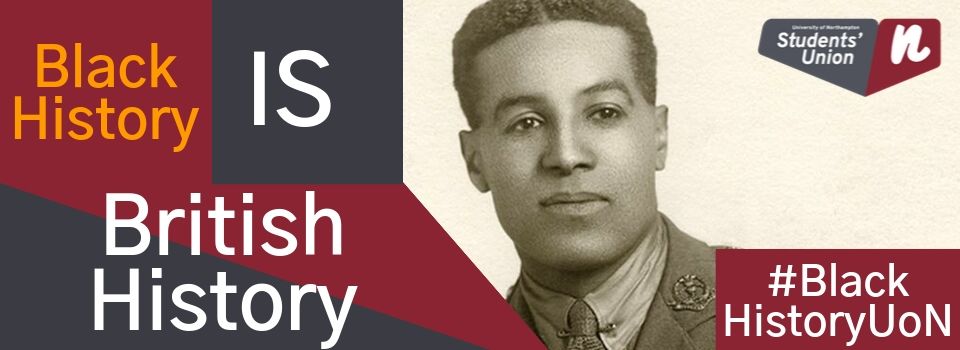
A month of Black history through the eyes of a white, privileged man… an open letter
Dear friends,
Over the years, in my line of work, there was a conviction, that logic as the prevailing force allows us to see social situations around (im)passionately, impartially and fairly. Principles most important especially for anyone who dwells in social sciences. We were “raised” on the ideologies that promote inclusivity, justice and solidarity. As a kid, I remember when we marched as a family against nuclear proliferation, and later as an adult I marched and protested for civil rights on the basis of sexuality, nationality and class. I took part in anti-war marches and protested and took part in strikes when fees were introduced in higher education.
All of these were based on one very strongly, deeply ingrained, view that whilst the world may be unfair, we can change it, rebel against injustices and make it better. A romantic view/vision of the world that rests on a very basic principle “we are all human” and our humanity is the home of our unity and strength. Take the environment for example, it is becoming obvious to most of us that this is a global issue that requires all of us to get involved. The opt-out option may not be feasible if the environment becomes too hostile and decreases the habitable parts of the planet to an ever-growing population.
As constant learners, according to Solon (Γηράσκω αεί διδασκόμενος)[1] it is important to introspect views such as those presented earlier and consider how successfully they are represented. Recently I was fortunate to meet one of my former students (@wadzanain7) who came to visit and talk about their current job. It is always welcome to see former students coming back, even more so when they come in a reflective mood at the same time as Black history month. Every year, this is becoming a staple in my professional diary, as it is an opportunity to be educated in the history that was not spoken or taught at school.
This year’s discussions and the former student’s reflections made it very clear to me that my idealism, however well intended, is part of an experience that is deeply steeped in white men’s privilege. It made me question what an appropriate response to a continuous injustice is. I was aware of the quote “all that is required for evil to triumph is for good men to do nothing” growing up, part of my family’s narrative of getting involved in the resistance, but am I true to its spirit? To understand there is a problem but do nothing about it, means that ultimately you become part of the same problem you identify. Perhaps in some regards a considered person is even worse because they see the problem, read the situation and can offer words of solace, but not discernible actions. A light touch liberalism, that is nice and inclusive, but sits quietly observing history written in the way as before, follow the same social discourses, but does nothing to change the problems. Suddenly it became clear how wrong I am. A great need to offer a profound apology for my inaction and implicit collaboration to the harm caused.
I was recently challenged in a discussion about whether people who do not have direct experience are entitled to a view. Do those who experience racism voice it? Of course, the answer is no; we can read it, stand against it, but if we have not experienced it, maybe, just maybe, we need to shut up and let other voices be heard and tell their stories. Black history month is the time to walk a mile in another person’s shoes.
Sincerely yours
M
[1] A very rough translation: I learn, whilst I grow, life-long learning.
Share this:


The struggle is real

© Jonathan McHugh
Stephanie is a BA Criminology graduate of 2019 and was motivated to write this blog through the experience of her own dissertation.
Last year was a very important time for me, during my second year of studying Criminology I began doing a work placement with Race Act 40, which was an oral history project to celebrate 40 years of the Race Relations Act 1974. The interviews that were conducted during my placement allowed me to get a variety of in-depth stories about racial inequalities of Afro-Caribbean migration settlers in the UK. During my time with the Race Act 40 project it became clear to me that the people who had volunteered their stories had witnessed a long line of injustices from not only individuals within society, but also institutions that makeup the ‘moral fabric’ within society. When exploring whether they have seen changes post and pre-Race Relations they insisted that although the individual within society treated them better and accepted them post-Race relations, to an extent there is a long way to go to improve the hostile relationships that has been formed with politicians and police.
The notion of hostility between politicians and the Afro-Caribbean community was reinforced, as the UK was going through the Windrush scandal which affected the core of every Afro-Caribbean household within the UK. This was extremely important for me as both paternal and maternal grandparents were first generation Windrush settlers. During the scandal my father became extremely anxious and the ramifications of the Windrush scandal hit home when some of his friends that came to the UK in 1961, the same time as he did, were detained and deported on the grounds of them being ‘illegals’. The UK Government used their ‘Hostile Environment’ policy to reintroduce Section 3 paragraph 8 of the Immigration Act 1971, which puts burden of proof on anyone that is challenged about their legal status in the UK’.
The UK government was ‘legally’ able to deport Caribbean settlers, as many of them did not have a British passport and could not prove their legal right to be in the UK and the Home Office could not help them prove their legal rights because all archival documents had been destroyed. This was a hard pill to swallow, as the United Kingdom documents and preserves all areas of history yet, overnight, the memory of my family’s journey to the UK was removed from the National Archives, without any explanation or reasoning. The anxiety that my father felt quickly spread over my whole family and while I wanted to scream and kick down doors demanding answers, I used my family’s history and the experiences of other Black people under British colonial rule as the basis for my dissertation. The hostility that they faced stepping off the Windrush echoed similar hostility they were facing in 2018, the fact that the British government had started deporting people who were invited into the country as commonwealth workers to build a country that had been torn apart as a corollary of war was a slap in the face.
Under Winston Churchill’s government, officials were employed to research Black communities to prove they were disproportionately criminal as a strategy to legally remove them from the UK and although they did not have any evidence to prove this notion the government did not apologize for the distasteful and racist treatment they demonstrated. It is hard to convince Black people in 2019 that they are not targets of poor similar treatment when they have been criminalised again and documents have been destroyed to exonerate them from criminality.
A final thought:
I have outlined the reasons why this topic has been important to me and my advice to any Criminology student who is going to be writing a dissertation is, to find a topic that is important and relevant to you, if you are passionate about a topic it will shine through in your research.
Share this:

How literature failed me as a black student

My name is Francine Bitalo, I am 21 years old and a Criminology undergraduate at the University of Northampton. Coming from a black African background I have always had a strong interest in the Criminal Justice System and its treatment towards different groups in society.
My dissertation was based on the impact of police practices such as stop and search on young black men and their families. Whilst statistics present the alarming racial disproportionately which exist in many areas in the criminal justice system, it fails to portray the long-lasting effects it has had on Black families. For example, the daily harassment and differential treatment subjected to young Black men has forced black families to reinvent themselves to conform to institutional racism. Coming from a Black family myself and having male family member, the findings in my dissertation quickly became personal to me, as I could constantly relate them to the structuring of my own family. For example, the fact that it would take my father longer to find a job due to institutional racism, making my mother the breadwinner, or when my mother is preparing my brothers for police harassment and discrimination, but not me and sisters.
While conducting my research I was quick to learn that what literature may describe as a phenomenon, for many of us is a reality. If I am honest the writing stage of my dissertation was difficult for me because it was a passionate topic. I experienced a lot of self-doubt regarding my positionality for example, being a Black woman and facing my own forms of discrimination and now having to talk about the experiences of young Black men. I think my dissertation tutor would agree with me on this as I remember emailing her after I submitted my work expressing how I felt like I didn’t effectively capture the effects and the voices of the young Black men I interviewed, despite that being my main goal. I mean who would blame me, as a student, if I am honest I felt like literature really let me down for instance, when writing my literature review I found that literature neglected the subject of racism solely from the perspectives of young Black men, despite statistics showing them to being the largest group to experience institutional racism. At this point I had to laugh at the criminal justice system and its propositions to improving police relations as well as re offending.
With that being said the information I did come across I couldn’t help but sense the notion of white privilege lingering in the perspective of some scholars. I understand this is a strong claim to make however I say this because not only did literature provide little of the work of Black scholars regarding the topic, yet it was evident that most white scholars did not see the issue with stop and search and its discriminate use. Arguments for this were discussed in my dissertation for example, some argued that the process of racial socialisation in Black households were ineffective to police relations and the functioning of their services, which creates the notion that the Black community should submit to discrimination and harassment in favour of procedures and compliance during police encounter. Some tried to justify the disproportionality in stop and search by claiming that young Black men should be harassed because they tend to be out more especially in certain urban areas or the disproportionate targeting of Black minors is due to parental criminality. I felt there was a lack of accountability from white scholar thus, little understanding in the issue of race which is natural because their experiences do not allow them to understand. Yet this led me to ask questions such as why shouldn’t Black mothers have the right to prepare their sons for police discrimination, does it matter what time and area should a person of colour be around for them to be targeted at?
After completing my dissertation and getting a First Class I felt extremely proud of myself, the fact that I did not shy away from the research topic despite it being limited in literature. As a result, it was satisfying to know that I was able to articulate the experiences of others to a First Class standard. I hope this can encourage others to trust in their abilities and put aside any doubts especially when choosing a research topic. As a student writing a dissertation or even an assignment, I believe we should explore the unexplored, open the unopened and always be willing to discover and learn. Do not be afraid of researching something that is limited or has never been done. Lastly as my dissertation was extremely passionate to me I have decided to turn it into a personal project and continue researching the topic
Share this:


Come Together
For much of the year, the campus is busy. Full of people, movement and voice. But now, it is quiet… the term is over, the marking almost complete and students and staff are taking much needed breaks. After next week’s graduations, it will be even quieter. For those still working and/or studying, the campus is a very different place.
This time of year is traditionally a time of reflection. Weighing up what went well, what could have gone better and what was a disaster. This year is no different, although the move to a new campus understandably features heavily. Some of the reflection is personal, some professional, some academic and in many ways, it is difficult to differentiate between the three. After all, each aspect is an intrinsic part of my identity.
Over the year I have met lots of new people, both inside and outside the university. I have spent many hours in classrooms discussing all sorts of different criminological ideas, social problems and potential solutions, trying always to keep an open mind, to encourage academic discourse and avoid closing down conversation. I have spent hour upon hour reading student submissions, thinking how best to write feedback in a way that makes sense to the reader, that is critical, constructive and encouraging, but couched in such a way that the recipient is not left crushed. I listened to individuals talking about their personal and academic worries, concerns and challenges. In addition, I have spent days dealing with suspected academic misconduct and disciplinary hearings.
In all of these different activities I constantly attempt to allow space for everyone’s view to be heard, always with a focus on the individual, their dignity, human rights and social justice. After more than a decade in academia (and even more decades on earth!) it is clear to me that as humans we don’t make life easy for ourselves or others. The intense individual and societal challenges many of us face on an ongoing basis are too often brushed aside as unimportant or irrelevant. In this way, profound issues such as mental and/or physical ill health, social deprivation, racism, misogyny, disablism, homophobia, ageism and many others, are simply swept aside, as inconsequential, to the matters at hand.
Despite long standing attempts by politicians, the media and other commentators to present these serious and damaging challenges as individual failings, it is evident that structural and institutional forces are at play. When social problems are continually presented as poor management and failure on the part of individuals, blame soon follows and people turn on each other. Here’s some examples:
Q. “You can’t get a job?”
A “You must be lazy?”
Q. “You’ve got a job but can’t afford to feed your family?
A. “You must be a poor parent who wastes money”
Q. “You’ve been excluded from school?”
A. “You need to learn how to behave?”
Q. “You can’t find a job or housing since you came out of prison?”
A. “You should have thought of that before you did the crime”
Each of these questions and answers sees individuals as the problem. There is no acknowledgement that in twenty-first century Britain, there is clear evidence that even those with jobs may struggle to pay their rent and feed their families. That those who are looking for work may struggle with the forces of racism, sexism, disablism and so on. That the reasons for criminality are complex and multi-faceted, but it is much easier to parrot the line “you’ve done the crime, now do the time” than try and resolve them.
This entry has been rather rambling, but my concluding thought is, if we want to make better society for all, then we have to work together on these immense social problems. Rather than focus on blame, time to focus on collective solutions.
Share this:


Criminology: in the business of creating misery?
I’ve been thinking about Criminology a great deal this summer! Nothing new you might say, given that my career revolves around the discipline. However, my thoughts and reading have focused on the term ‘criminology’ rather than individual studies around crime, criminals, criminal justice and victims. The history of the word itself, is complex, with attempts to identify etymology and attribute ownership, contested (cf. Wilson, 2015). This challenge, however, pales into insignificance, once you wander into the debates about what Criminology is and, by default, what criminology isn’t (cf. Cohen, 1988, Bosworth and Hoyle, 2011, Carlen, 2011, Daly, 2011).
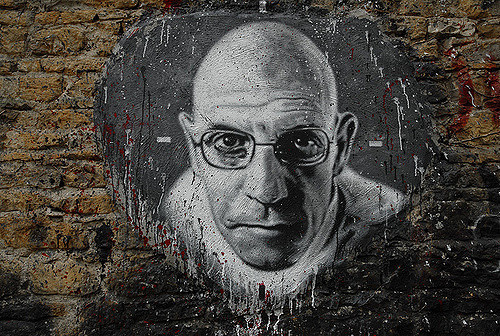
Foucault (1977) infamously described criminology as the embodiment of utilitarianism, suggesting that the discipline both enabled and perpetuated discipline and punishment. That, rather than critical and empathetic, criminology was only ever concerned with finding increasingly sophisticated ways of recording transgression and creating more efficient mechanisms for punishment and control. For a long time, I have resisted and tried to dismiss this description, from my understanding of criminology, perpetually searching for alternative and disruptive narratives, showing that the discipline can be far greater in its search for knowledge, than Foucault (1977) claimed.
However, it is becoming increasingly evident that Foucault (1977) was right; which begs the question how do we move away from this fixation with discipline and punishment? As a consequence, we could then focus on what criminology could be? From my perspective, criminology should be outspoken around what appears to be a culture of misery and suspicion. Instead of focusing on improving fraud detection for peddlers of misery (see the recent collapse of Wonga), or creating ever increasing bureaucracy to enable border control to jostle British citizens from the UK (see the recent Windrush scandal), or ways in which to excuse barbaric and violent processes against passive resistance (see case of Assistant Professor Duff), criminology should demand and inspire something far more profound. A discipline with social justice, civil liberties and human rights at its heart, would see these injustices for what they are, the creation of misery. It would identify, the increasing disproportionality of wealth in the UK and elsewhere and would see food banks, period poverty and homelessness as clearly criminal in intent and symptomatic of an unjust society.
Unless we can move past these law and order narratives and seek a criminology that is focused on making the world a better place, Foucault’s (1977) criticism must stand.
References
Bosworth, May and Hoyle, Carolyn, (2010), ‘What is Criminology? An Introduction’ in Mary Bosworth and Carolyn Hoyle, (2011), (eds), What is Criminology?, (Oxford: Oxford University Press): 1-12
Carlen, Pat, (2011), ‘Against Evangelism in Academic Criminology: For Criminology as a Scientific Art’ in Mary Bosworth and Carolyn Hoyle, (eds), What is Criminology?, (Oxford: Oxford University Press): 95-110
Cohen, Stanley, (1988), Against Criminology, (Oxford: Transaction Books)
Daly, Kathleen, (2011), ‘Shake It Up Baby: Practising Rock ‘n’ Roll Criminology’ in Mary Bosworth and Carolyn Hoyle, (eds), What is Criminology?, (Oxford: Oxford University Press): 111-24
Foucault, Michel, (1977), Discipline and Punish: The Birth of the Prison, tr. from the French by Alan Sheridan, (London: Penguin Books)
Wilson, Jeffrey R., (2015), ‘The Word Criminology: A Philology and a Definition,’ Criminology, Criminal Justice Law, & Society, 16, 3: 61-82

 Thoughts from the criminology team