
Home » Mental health (Page 5)
Category Archives: Mental health

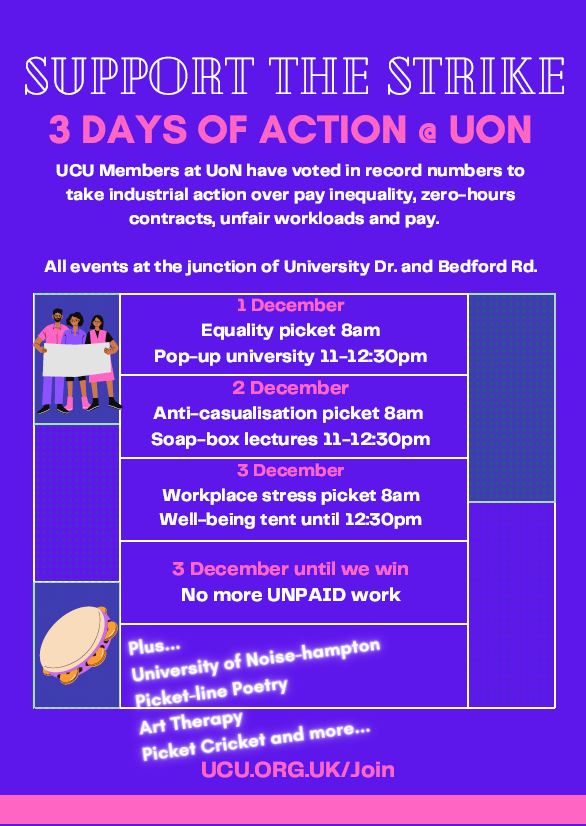
UCU Strike 21-22 January 2022

More information around the University and College University [UCU] and the Four Fights Dispute can be found here.
Information about the Northampton branch of UCU can be found here and here.
You can also find out why striking is a criminological issue here: https://thoughtsfromthecriminologyteam.blog/2021/12/10/striking-is-a-criminological-matter/ and here: https://thoughtsfromthecriminologyteam.blog/2022/02/18/united-nations-un-world-day-of-social-justice/
Share this:


Striking is a criminological matter

You may have noticed that the University and College Union [UCU] recently voted for industrial action. A strike was called from 1-3 December, to be followed by Action Short of a Strike [ASOS], in essence a call for university workers to down tools for 3 days, followed by a strict working to contract. For many outside of academia, it is surprising to find how many hours academics actually work. People often assume that the only work undertaken by academics is in the classroom and that they spend great chunks of the year, when students are on breaks, doing very little. This is far from the lived experience, academics undertake a wide range of activities, including reading, writing, researching, preparing for classes, supervising dissertation students, attending meetings, answering emails (to name but a few) and of course, teaching.
UCU’s industrial action is focused on the “Four Fights“: Pay, Workload, Equality and Casualisation and this campaign holds a special place in many academic hearts. The campaign is not just about improving conditions for academics but also for students and perhaps more importantly, those who follow us all in the future. What kind of academia will we leave in our wake? Will we have done our best to ensure that academia is a safe and welcoming space for all who want to occupy it?
In Criminology we spend a great deal of time imagining what a society based on fairness, equity and social justice might look like. We read, we study, we research, we think, and we write about inequality, racism, misogyny, disablism, homophobia, Islamophobia and all of the other blights evident in our society. We know that these cause harm to individuals, families, communities and our society, impacting on every aspect of living and well-being. We consider the roles of individuals, institutions and government in perpetuating inequality and disadvantage. As a theoretical discipline, this runs the risk of viewing the world in abstract terms, distancing ourselves from what is going on around us. Thus it is really important to bring our theoretical perspectives to bear on real world problems. After all there would be little point in studying criminology, if it is only to see what has happened in the past.

Criminology is a critique, a question not only of what is but might be, what could be, what ought to be. Individuals’ behaviours, motivations and reactions and institutional and societal responses and actions, combine to provide a holistic overview of crime from all perspectives. It involves passion and an intense desire to make the world a little better. Therefore it follows that striking must be a criminological matter. It would be crass hypocrisy to teach social justice, whilst not also striving to achieve such in our professional and personal lives. History tells us that when people stand up for themselves and others, their rights and their future, things can change, things can improve. It might be annoying or inconvenient to be impacted by industrial action, it certainly is chilly on the picket line in December, but in the grand scheme of things, this is a short period of time and holds the promise of better times to come.
Share this:



Vaccine day
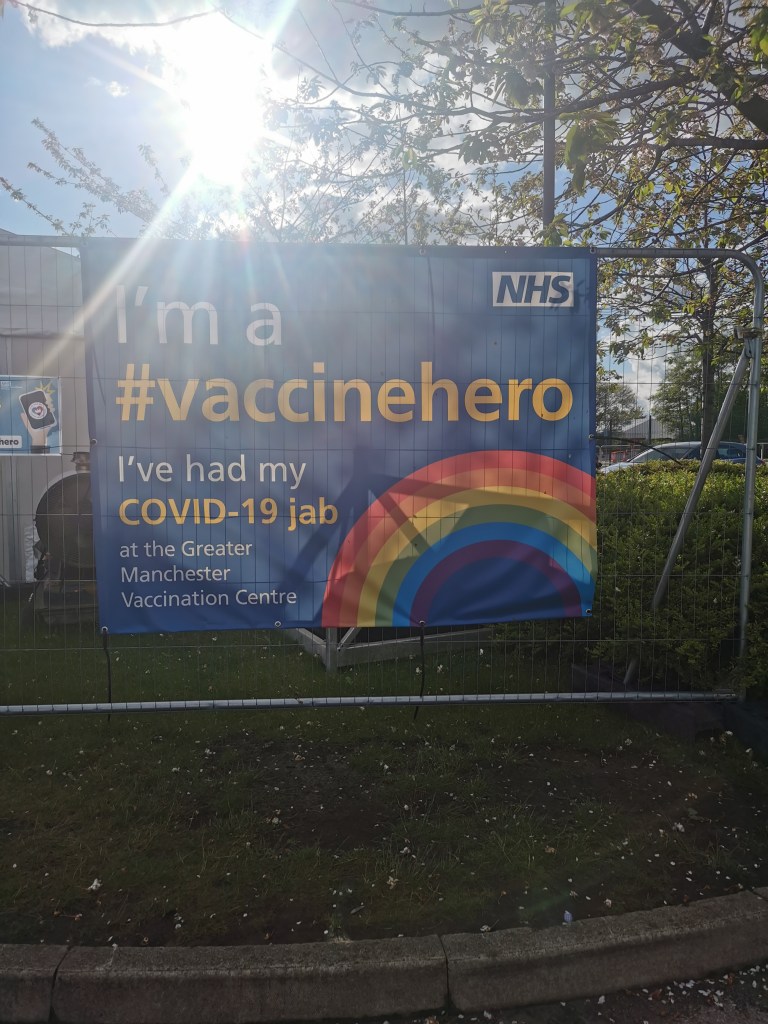
I had my first Covid-19 vaccine recently and the day was emotional, to say the least. I am 99% compliant with Covid-19 restrictions, partly because it is the law but primarily because I believe it is the right thing to do to protect others. In fact, there have been many times over the last 15 months where I have avoided the news for my own sanity so half the time, I do not exactly know what the latest rules are. I am guided by my own risk assessments and am probably more restrictive than the law in most scenarios. Up until vaccine day I thought that I wasn’t scared of contracting Covid-19, that I was complying as an act of altruism and that I would not be able to live with myself if I unwittingly passed the virus on to somebody vulnerable to severe illness and death.
Back in March 2020 when infections then the death toll started to rise, and the NHS became increasingly overwhelmed I would watch what my daughter and I called ‘the Boris show’ where the Prime Minister and the scientists would recall the daily death data, hospitalisations and cases. Each ‘next slide please’ bringing more bad news. Each day I would think about the families of every single one of those people who had died. It was quite overwhelming, and I eventually had to limit the information I ingested, living in both a physical and informational bubble. I recall the death toll announcements were met with responses from the covid-deniers, ‘but they’re old or ill anyway’, and ‘but they could have been hit by a bus and still counted as a covid death’. As a victimologist, this infuriated me. Who were these people to flippantly dismiss right to life based on age or health? It frustrated me that people with no knowledge of statistics, medicine or science were making assumptions based on anecdotal evidence from Bob on Facebook. But then again perhaps these are the tales people told themselves to get through. If they deny it, they have nothing to fear.
A few months later in June 2020, my somebody close to me contracted Covid-19. I was told they were doing well and seemed to be recovering from the virus. They died more than 28 days after having first being diagnosed with Covid-19, but it was Covid-19 that killed them. I know because I saw them to say goodbye a couple of hours before they died. This person who was always so full of life, love and who saw the good in everyone and everything, was now fading away. But what haunts me to this day was the sound of their lungs. The sound I’d heard people talk about on the news. Crisp packet lungs. And it was that sound that was like an earworm in my head on my way to the vaccination centre.
I’ve been looking forward to getting vaccinated since vaccines were on the horizon so I was excited when I received the text invitation. I booked to attend the Greater Manchester vaccination centre at the Etihad stadium, the home of Manchester City Football Club. It was well organised, despite the large numbers of people coming through. First, I was required to check in and was allocated the Moderna vaccine and a green sticker which ensured staff could direct me to the correct queue. Then I checked in at another desk where I was given some information, asked some health questions and, most importantly, I was asked, ‘do you want the vaccine?’. Those who have sat one of the research methods modules I have taught this year will have heard me discuss the importance of informed consent and this also applies to real life situations such as this. After this I joined another queue and finally reached the vaccination point, had the jab, waited for 15 minutes and left. Just like that. The whole thing took about an hour and given the volume of people being vaccinated (the site is a mass vaccination hub for a large area), I found it to be incredibly efficient. Every staff member I met was informative and did what they could to put people at ease.
From the moment I left home to go to the vaccination centre, to the moment my head hit the pillow that evening, I couldn’t help reflecting on the last 15 months. I felt a wave of emotions. I felt extreme sadness and sorrow at all the lives lost and all the families and friends left behind. It has been a traumatic time for so many of us. Getting the vaccine, I felt some sort of release from this, like it was nearly over. I have worked from home throughout and have had little social interaction, except when the gyms have been open or I have undertaken caring responsibilities for various friends and family. There were also a few weeks towards the end of lockdown 1 where my sister came to stay after returning from India. Overall, I have been alone with a teenager at a desk in my living room. It’s been awful. I’m tired and I need a break. I am well overdue a mum-cation. I felt some hope that sometime soon I might be able to get a parenting break and that my daughter can also get a break from me. I said earlier how I believed I had not feared contracting covid but having the vaccine and the relief I felt made me realise that I was more scared than I would care to admit. I am young(ish) and extremely healthy and I would probably be at low risk of developing serious symptoms but what if I was an unlucky one?
Aside from my personal experiences, I felt a collective relief. The global pandemic has created global trauma. There are still countries being ravished by the virus without the resources to operate mass vaccination of entire populations. I worry for the world and wonder what borders will look like after, if there ever is an after but I’ll ponder this further in another blog later. Getting vaccinated and being part of a mass vaccination programme made me feel cautiously optimistic. However, a few weeks on and we are now in a situation where the Delta variant is spreading like wildfire. Deaths have risen by 42.5% in the last week and hospital admissions by 44.7%. The numbers are still incredibly low in comparison to the first and second wave but every one of those deaths and hospitalisations matter. They are not a number on a presentation slide. They are people who have families and friends, who are cared for by the NHS. Every one of the deaths is a loss to these people, and has a butterfly effect in terms of the impact each death has.
Restrictions are set to lift imminently I believe (still avoiding the news) and it makes me feel uneasy to say the least. I’ve seen experts whom I trust argue on both sides of the fence. Some say this is dangerous, others suggest summer is the best opportunity to lift restrictions. It sometimes feels like we are living in some kind of twisted experiment. Regardless, I will continue to assess and manage the risk to myself and those around me. I’ll probably wear masks way after it is legal to do so and expect I will still be cautious about who I am physically close to and how I socialise. There’s things that I love and miss such as the theatre, cinema and the occasional gig but I don’t feel ready. I have a feeling this pandemic is far from over.
Share this:


We are not the same…respectfully
Disclaimer: whilst I can appreciate that it’s Women’s History Month and it would be appropriate that we all come together in support of one another, especially in the notion of us vs them (men). However, I am undoubtedly compelled to talk about race in this matter, in all matters in that sense. I can only speak on the influence of the women who are around me and of women who look like me. Black women. So, to the lovely white girl on twitter who felt the need to express under my thread how disheartened she was by the racial separation of womanhood in feminism … from the bottom of my heart, I am not sorry.
Sometime last year I stumbled across a book called They Were Her Property: White Women as Slave Owners in the American South by the marvellous Stephanie Jones Rogers. The book protested against the belief that white women were delicate and passive bystanders to the slave economy due to masculine power in the 18th century. Instead, it explores the white supremacy of white women and the high level of protection they had which, which often led to the lynching and killing of many Black men and boys (Emmett Till, 1955). The book also looks at the role of enslaved wet nurses, as many white women perceived breastfeeding to be uncultured and therefore avoided it. However, while enslaved children were flourishing and healthy, many of the white babies were dying. As a result, Black mothers were forced to separate from their babies and dedicate their milk and attention to the babies of their mistresses.
Consequently, this led to the high rise of neglect and death of black babies as cow’s milk and dirty water was used as a substitute (Jones-Rogers, 2019). Furthermore, Rogers goes on to explain how the rape of Black women was used to ensure the supply of enslaved wet nurses. As you can imagine the book definitely does not sugar coat anything and I am struggling to finish it due to my own positionality in the subject. One thing for sure is that after learning about the book I was pretty much convinced that general feminism was not for me.
When I think about the capitalisation and intersectional exploitation that black women endured. I lightly emphasise the term ‘history’ when I say women’s history, because for Black women, it is timeless. It is ongoing. We see the same game play out in different forms. For example, the perception that white women are often the victims (Foley, et al., 1995) and therefore treated delicately, while Black women receive harsher/ longer sentences (Sharp, 2000). The high demand of Black women in human trafficking due to sexual stereotypes (Chong, 2014), the injustice in birth where Black women are five times more likely to die from pregnancy and childbirth than white women in the UK (University of Oxford, 2019) and the historical false narrative that Black women feel less pain than white women (Sartin, 2004, Hoffman et al, 2016).
So again, we are not the same…. Respectfully.
It is important for me to make clear that we are not the same, because we are viewed and treated differently than white women. We are not the same, because history tells us so. We are not the same, because the criminal justice system shows us so. We are not the same, because the welfare system and housing institutions show us so. We are not the same, because of racism.
This year’s women’s history month was more so about me learning and appreciating the Black women before me and around me. As I get older, it represents a subtle reminder that our fight is separate to much of the world. There is nothing wrong in acknowledging that, without having to feel like I am dismissing the fight of white women or the sole purpose of feminism in general. I am a Black feminist and to the many more lovely white women who may feel it’s unnecessary or who are disheartened by the racial separation of womanhood in feminism, I am truly, truly not sorry.
P.s to Nicole Thea, Sandra Bland, Toyin Salau, Blessing Olusegun, Belly Mujinga and Mary Agyeiwaa Agyapong. I am so sorry the system let down and even though you are not talked about enough, you will never be forgotten.
References:
Chong, N.G., (2014). Human trafficking and sex industry: Does ethnicity and race matter?. Journal of Intercultural Studies, 35(2), pp.196-213.
Foley, L.A., Evancic, C., Karnik, K., King, J. and Parks, A. (1995) Date rape: Effects of race of assailant and victim and gender of subjects on perceptions. Journal of Black Psychology, 21(1), pp.6-18.
Hoffman, K.M., Trawalter, S., Axt, J.R. and Oliver, M.N. (2016) Racial bias in pain assessment and treatment recommendations, and false beliefs about biological differences between blacks and whites. Proceedings of the National Academy of Sciences, 113(16), pp.4296-4301.
Jones-Rogers, S.E.(2019). They were her property: White women as slave owners in the American South. Yale University Press.
Sartin, J.S. (2004) J. Marion Sims, the father of gynecology: Hero or villain?. Southern medical journal, 97(5), pp.500-506.
Sharp, S.F., Braley, A. and Marcus-Mendoza, S. (2000) Focal concerns, race & sentencing of female drug offenders. Free Inquiry in Creative Sociology, 28(2), pp.3-16.
University of Oxford. (2019) NPEU News: Black women are five times more likely to die in childbirth than white women. Why? {Online}. Available from:https://www.npeu.ox.ac.uk/mbrrace-uk/news/1834-npeu-news-black-women-are-five-times-more-likely-to-die-in-childbirth-than-white-women-why {Accessed 29th March 2021}
Share this:


Lockdown and Locked In

The COVID-19 pandemic has caused a whole range of issues for so many people. Everything from job losses, businesses closing down, people being unable to leave the house, people panic buying and stock piling. There has also been a sharp increase in mental health issues, loneliness, isolation, and fears about what the future holds.
However, one thing that has been reported on, is the increase in domestic violence that has occurred across the country. In April 2020, phone calls to the charity Refuge were up by 49%, (1) and people accessing their website seeking help had increased by 417% (2). As more people are working from home, abusers are at home too, making it harder for survivors of domestic abuse to get away from their partners.
In an effort to combat domestic abuse, and to provide confidential help to survivors, the government launched the ‘Ask for ANI‘ codeword scheme (Action Needed Immediately) whereby a survivor of abuse can go to their local pharmacy and get private and confidential help. Survivors can ask if they want to get help from a domestic violence refuge, or to get the police involved. Everything will be led by the survivor who will be in the private consultation room with the pharmacist helping the survivor (3)
References
(1) Home Office (2021) ‘Domestic Abuse and Risks of Harm Within the Home’ Available online at: https://publications.parliament.uk/pa/cm5801/cmselect/cmhaff/321/32105.htm#_idTextAnchor000 Accessed on 19/02/2021
(2) House of Commons (2020) ‘Home Affairs Committee’ Available online at: https://publications.parliament.uk/pa/cm5801/cmselect/cmhaff/correspondence/HASC-transcript-15-April.pdf – page 24. Accessed on 19/02/2021
(3) HM Government (2020) ‘Guidance for Pharmacies Implementing the Ask for ANI Domestic Abuse Codeword Scheme’ Available online at: https://assets.publishing.service.gov.uk/government/uploads/system/uploads/attachment_data/file/940379/Training_information_-_Ask_for_ANI.pdf Accessed on 19/02/2021
Other Sources
Unlisted (2020) ‘Domestic Abuse Codeword Pharmacy Training Video’ Available online at: https://www.youtube.com/watch?v=OOs3awxx5YU&feature=youtu.be Accessed on 19/02/2021
Share this:


Keep Calm and Forget the Pandemic or What to do in a pandemic? Take advantage of the situation
Eleven months now and there is a new spectre haunting Europe; a plague that has taken hold of our lives and altered our lifestyles. Lockdowns, the r rate, viral transmission, mutations are new terms that common people use as if we are experienced epidemiologists. Masks, made of cloth or the surgical ones, gloves and little bottles of antiseptic have become new fashion accessories. Many people report mental fatigue and others a state of confinement inside their own homes. Some people have started complaining that there is no light in this long tunnel, in country after country face with overwhelmed medical staff and system.
The optimist in me is unequivocal. We can make it through. Life is far more powerful than a disease and it always finds a way to continue, even in the most hostile of conditions. In my view however this is not going to be a feat of a great person; this is not going to be resolved by one solution. The answer is in us as a collective. Humanity thrived when it gets together and the ability to form meaningful bonds that is the backbone of our success to survival.
Imagine our ancestors making their first communities; people that had no speed like the felines, no strength like the great apes and no defensive shell to protect them. Coming out of Africa thousands of years ago, this blood creature had no offensive nor defensive structures to prevail. Our ancestors’ survival must have been on the brink. Who could imagine that some thousands of years ago, we were the endangered species? Our endurance lies on the ability to form a group that worked together and understood each other, carried logic, used tools and communicated with each other.
The current situation is a great reminder of the importance of society and its true purpose. People form societies to protect each other and advance their opportunity for success. We may have forgotten that and understandably so, since we have had people who claimed that there is no such thing as a society, only the individual. The prevailing economic system focuses on individual success, values individual recognition and prioritises individual issues. In short, why worry about others, miles away, feet away, steps away from us if we are doing well.
It is interesting to try to imagine a society as a random collection of indifferent individuals, but more people begin to value the importance of the other. After years of austerity and the promotion of individualism, more people live alone, make relationships through social networking and mostly continue to live a solitary life even when they live with others. Communities, as an ex-prime minister claimed as broken and so people waste no time with them. We take from our communities, the things we need, and we discard the rest. Since the start of the pandemic, deliveries, and online companies have been thriving. Whilst physical shops are facing closure, online ones can hardly cope with the demand. As a system, capitalism is flexible enough to retune the way wealth is made. Of course, when you live alone, there are things you cannot have delivered; intimacy, closeness, intercourse. People can fulfil their basic needs apart from the one that makes them people; their socialisation. We will have to address it and perhaps talk about the need to be a community again.
In the meantime, what happens at the top? In the Bible there was the story of the pool of Siloam. This miraculous pond blessed by an angel offered the opportunity for clemency for those who swam in the waters. Wipe the slate clean and start again. So, what do governments do? Interestingly not as much. Right now, as people try to come to terms with loss, isolation and pain, different governments try to address other political issues. One country is rocked by the revelations that its head of state has created a palace to live in. Another one, has finished construction of his summer palace. In another country they are bringing legislation to end abortions, in another they propose the introduction of police on campuses. Others are restricting the right to protest, and in a country famed for its civil rights, legislation is being introduced not to take pictures of police officers in public, even if they may be regarded in violation of duties. It seems that it is open season for the curtail of civil liberties through the back door. In an island kingdom the system has ordered and moves forward with the construction of more and bigger prisons. A sign that they anticipate public upheaval. Maybe; whatever the reason this opportunity to supress the masses may be tantalising, but it is wrong. When ever we come out of this we need to reconnect as a community. If this becomes an opportunity for some, under the suppression of civic rights, things will become problematic. For starters, people will want to see their patience and perseverance rewarded. My advice to those who rule, listen to your base.
Share this:


Late: The word that defines the UK’s Coronavirus pandemic management

Picture the scene. We are in Downing Street and the news media are awaiting another coronavirus press conference. Professor Chris Whitty, the Chief Medical Officer for England is ready. Sir Patrick Vallance the Chief Scientific Advisor is ready. Where is the Prime Minister (PM)? Late again.
I have this vision of our PM frantically scurrying around like the White Rabbit in Alice in Wonderland humming “I’m late I’m late for very important date”. We might all smile at this vision but I’m afraid the analogy of being late is not a laughing matter when it is applied as the major theme for the UK governments management of what I described in a previous blog as the worst public health crisis in my lifetime. I also recall the PM famously using the phrase “A stitch in time saves nine” which is indeed true however in a pandemic being late or not sewing that stitch in time can and has cost thousands of lives.
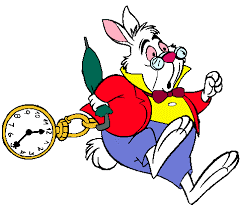
In the week that has seen the UK pass 100,000 deaths it is right to reflect on the tragic loss of life. The call from government saying this is not the time to analyse why the UK has done so badly is in my view the wrong line to take. The government could learn a thing or two from the UK health care professions who for years have developed themselves as reflective practitioners. Donald Schon (1983) wrote extensively about reflection in terms of the creation of learning organisations who can both reflect in and on action. It is the former that has been sadly lacking in the UKs response to the coronavirus crisis. Reflection needs to be on the table throughout the pandemic and had it been, we may not have repeated the same mistakes. The management of pandemics is well documented in the medical literature. Professor Chris Whitty the Chief Medical Officer for England outlines how to manage a pandemic in this useful lecture at Gresham College.
Indeed it is also important to remind us of the words of Sir Patrick Vallance who when recommending the urgency of action in a pandemic implored that we “go earlier than you think you want to, go a bit harder than you think you want to and go broader than you think you want to in terms of restrictions.” My observation of the UK pandemic response leads me to conclude that we failed to do any of these. However, for this blog let’s focus on timing. Going early in terms of restrictions and other actions can have an enormous beneficial impact.
The last year has been to coin an overstated phrase “unprecedented” with many arguing that any government would have been overwhelmed and struggled to manage the crisis. Is this fair? One can look at other countries who have managed the situation better and as such have had better outcomes. New Zealand, Australia, Korea for example. Others will point to the differences between countries in terms of geography, population, culture, transport, relative poverty, healthcare systems, reporting mechanisms and living conditions which make comparisons inherently complex.
With the current death toll in the UK so high and continuing to rise, and many scientists telling us that things will inevitably get worse before they get better the question everyone is asking is : What has gone wrong? In this blog I’m going to argue that in large part our problems are based on a lack of urgency in acting. I’m arguing that we have not followed Sir Patrick Vallance’s recommendation and in particular we have been late to act throughout. Below I will set out the evidence for this and propose some tentative reasons as to why this has been the case.
Firstly, despite a pandemic being recognised as the largest threat to any country (it will always be top of any country’s risk register) the UK was slow to recognise the impending crisis and late to recognise the implications of a virus of this nature and how quickly it can spread globally. History informs us of how quickly Spanish flu spread in 1918. The UK was never going to be immune. Late recognition and poor pandemic preparedness meant we were late to get in place the critical infrastructure required to mount a response. Despite several warnings and meetings of the civil contingencies committee (COBR) the health secretary Matt Hancock was dismissive of the threat playing it down. Indeed, the PM failed to attend several early meetings giving the impression that the UK were not taking this as seriously as they should.
When faced with a looming medical/public health emergency it is important that the scientific advisors are in place early (which they were) and that their advice is acted upon. The evidence clearly points to a slow response to this advice which manifested itself in several critical late decisions early in the pandemic. The UK did not close its borders and implement quarantine measures allowing the virus to seed extensively in all parts of the community. Once community transmission had been established it was too late. It did not have in place a substantive testing regime, largely because we were unprepared. It very quickly became clear when we switched from community testing to testing only those in hospital with Covid symptoms that we lacked critical mass testing capacity and hence spent months trying to catch up. Evidence from previous outbreaks of SARS and MERS demonstrated how important mass testing was in controlling the spread, a position advocated by the World Health Organization (WHO). The UK saw case numbers grow rapidly and was slow to get the important public health messages out. Consequently, hospital admissions increased, and the death toll leapt. We were in serious danger of the NHS becoming overwhelmed with critically ill Covid patients.
Public health, medical and scientific experts suggested through their modelling exercises that the death toll, if we didn’t act quickly, could exceed 500,000; a situation socially and politically unpalatable. Therefore, in the absence of no known treatments and no vaccine we would have to resort to the tried and tested traditional methods for the suppression of a respiratory borne virus. Robust hand hygiene, respiratory/cough etiquette and maintaining social distance to reduce close social interaction. The logical conclusion was that to radically reduce social contacts we needed to lockdown. It is widely acknowledged now that the UK was at least a week late in introducing the first lockdown in March 2020.
In the meantime, the virus was sweeping through vulnerable elderly groups in care homes. We were again late to recognise this threat and late to protect them despite Hancock’s claims of throwing a ring of protection around them. The death toll continued to mount. At this stage both the Health (NHS) and care sectors were under enormous pressure and ill equipped to manage. The greatest worry at that stage was lack of adequate Personal Protective Equipment (PPE). Due to our ill preparedness we were late to provide appropriate PPE to both the NHS and the care home sector, exposing healthcare workers to undue risk. The death toll of healthcare workers in any pandemic is high and we were now starting to see this rise in the UK.
Another major criticism during the earlier months was how slow we were in ramping up testing capacity, tracking, tracing cases and ensuring isolation measures were in place. Indeed, concerns about test, trace and isolation continue today. However, lockdown and other public health measures did reduce the case numbers through the summer but inevitably the virus, which thrives in cold damp conditions started to cause further problems as we approached autumn and winter. Combined with this the UK saw a new variant of the virus emerge in the autumn with greater transmissibility. Cases started to rise again along with the inevitable hospital admissions and deaths. It appeared despite warnings from all scientists and health professionals that a second wave was highly possible we were late to recognise the emergence of a second wave of infections. The signs of which were there in September 2020. This led to a second lockdown in November when the advice from the scientific advisors was to lockdown in mid-October or earlier. This decision was compounded by a complex tiered restrictions arrangement to manage outbreaks locally aimed at the avoidance of unnecessary restrictions. Meanwhile the death toll continued to mount.
Notwithstanding the emergence of a new variant of the virus during the second lockdown everyone’s attention was switched to Christmas. The advice offered from government that restrictions would be relaxed for five days was met with incredulity by health professions who argued that this would simply allow the virus to be spread exponentially through greater household mixing. All the evidence at this stage pointed to household mixing as the primary source of transmission. As the situation worsened following the release of lockdown in early December it became obvious that the Christmas guidance had to change. To no ones surprise the advice was changed at the last-minute meaning everyone would have to rearrange their plans. The late change to the Xmas guidance probably meant more family mixing than would have happened had the advice been robust and communicated to the public earlier. Very quickly after Christmas we saw rapid changes to the tier management despite calls for a further lockdown. Cases rose rapidly, hospital admissions were now worse than in the first wave and scientists called for a lockdown. Consequently, we were late implementing Lockdown 3.
Throughout the pandemic the government has provided detailed guidance on restrictions, care homes, travel arrangements and education. It’s difficult to get this right all the time but the issuing of guidance was at times so late it became difficult to interpret the issues with clarity. Probably one the best examples of this relates to the advice provided to schools. Should they stay open or close? What should the Covid secure measures be? How do you construct bubbles of students to reduce social contact? Covid testing of pupils and staff? examinations and assessment guidance? However, the final straw was surely when schools opened in January after the Christmas break to only be told they had to close the very next day as we moved into Lockdown 3.

In conclusion it is said that to manage a pandemic you need a clear, robust strategic plan. The evidence presented here would suggest a lack of strategic planning with crisis decision making on the hoof. Some have argued that we have a PM who struggles to take the big decisions required, who procrastinates and inevitably is left with Hobson’s choice. If you couple this with a group of key ministers who appear to lack the competence to carry their portfolios we have the recipe for a disaster. The consequence of which means the UK has experienced a terrible outcome across a whole set of health, education and economic indicators.
References
Schon, D. (1983) The reflective practitioner: how professionals think in action Basic Books, New York
Whitty, C. (2018) How to Control an Epidemic https://www.youtube.com/watch?v=rn55z95L1h8
Share this:


A Lockdown Moan
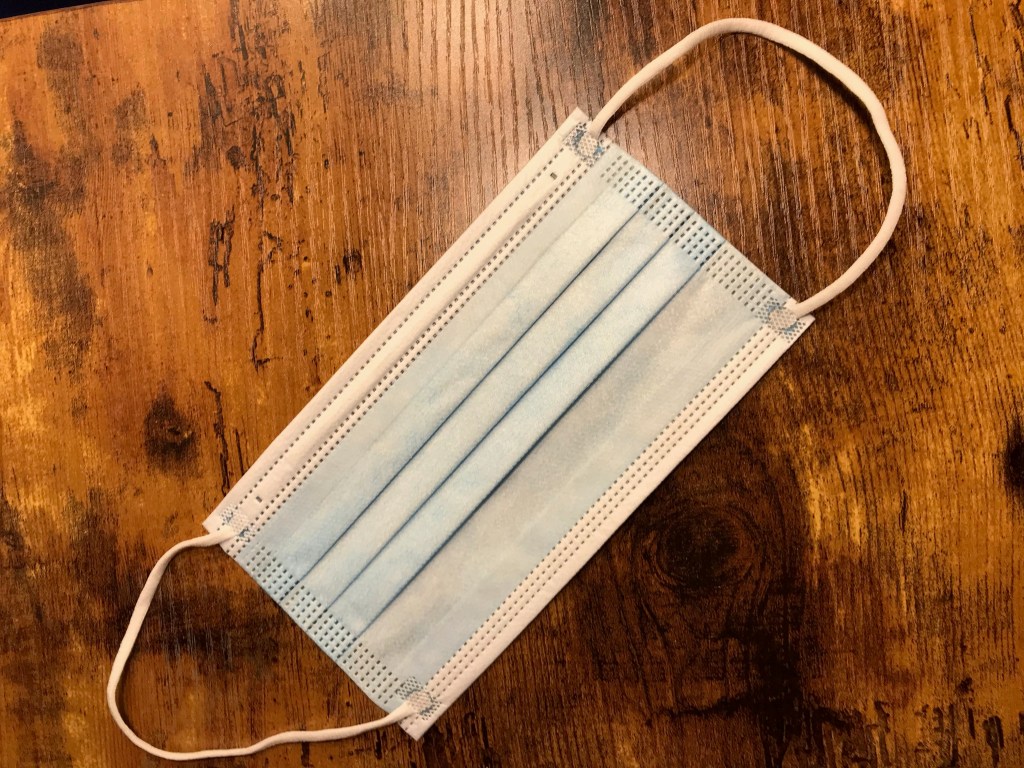
As the second lockdown has come to an end, I find myself reflecting on my own lockdown experiences quite a lot. My overall sense is that of gratitude, in that I have been fortunate enough to maintain and be offered new employment during this difficult time.
During the first lockdown I was a key worker and travelled to and from work on public transport whilst everyone else was ordered to ‘stay safe, and stay at home’. At times this was frustrating, and although I generally had faith in humanity my views on this were tested. During, lockdown 1.0 I witnessed people being much more aggressive to key workers. I worked in a place where I did not expect people to be nice to me, but even on my route to and from work I found that I was subjected to the odd remark.
One morning at 6am whilst in the city center I was even called ‘a rapist’ because I did not have any change to give to a homeless person, he then sort of offered to fight me. Of course, I wouldn’t ever fight anyone, and he would have been completely unaware that I had just finished a night shift so I would not prove to be a worthy opponent in any sense. I also remember sitting on the bus one night whilst a man, who appeared mentally unwell, persisted to cough all over me (mask free) before exiting at his stop.
I didn’t take any of these experiences personally, and thankfully I didn’t get Covid. It was clear that these people had many of their own problems – many of which may have been exacerbated due to Covid. The lack of understanding of Covid for some people also highlights a key issue i.e., that mainstream concerns are not being communicated to wider population within our society.
I did find myself frustrated by the general population who in my experience, did not appear as positive and kind as the media seemed to suggest. I experienced many incidents of people being selfish, such as people snapping and venting their frustrations at others who are simply just trying to do their jobs (with shocking pay and poor contracts might I add). On top of this was the notion of visiting a supermarket after a 12 hour night shift whilst people scramble for the last scraps of essentials whilst you are walking around like a zombie. With bare shelves, rude people and long queues….what more could key workers ask for? For Christ sake, someone even tried to steal a tin of beans out of my shopping trolley on one occasion!
During lockdown 2.0 I have been very privileged indeed, as I am able to work from home. Staying in this bubble of mine has also made me feel much less frustrated. But I do still wonder, why is it that we feel that those who provide a ‘service’ to us are not people themselves? People with their own problems, thoughts and feelings. Do we think that people are robots? Is this why some people think that it is ok to vent their frustrations at others? I am sure that other people have had more positive experiences than this, but I can’t understand why people aren’t being more kind and understanding of each other. There is a difference between being a service provider and being a servant…people seem to forget this sometimes.
Share this:


Meet the team – Amy Cortvriend, Lecturer in Criminology
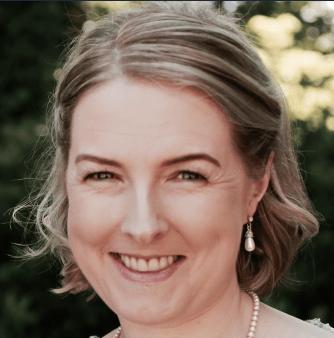
I am one of the new members of the criminology team at UoN and have joined from the University of Manchester where I have been a teaching assistant (probably the equivalent of associate lecturer at UoN) for the last couple of years while I’ve been working on my PhD. I’m looking forward to my new role as lecturer in criminology and hopefully at some point meeting students in real life, face to face. It’s a bit strange starting a new job in a new town when I’m still sat in my living room in Manchester, but the rest of the team have made me feel welcome regardless.
My journey into criminology is a funny one. I did life the opposite to many people, having my first child at 16. When my second child went to school I decided to return to education and as I didn’t have A-levels I has to undertake an Access diploma to get into university. I was required to choose three subjects and at first, I opted for English literature because I love(d) reading (I’m sure I still love reading but I’ve not read anything non-work related for a long time). I picked sociology because it sounded interesting and the same with history. At the last minute I swapped history to criminology and never looked back. From my first lesson I knew this was my future, although at that point I wasn’t sure how.
I always had imposter syndrome and never thought my work was good enough (still do today but we’ll save that for another blog post), but my Access tutor believed in me and suggested I apply to the University of Manchester. As I was a mature student, I had to attend an interview with two of the lecturers. I was super nervous, but I got a place and never left. The undergraduate degree was difficult at times because there were only a couple of mature students and they eventually dropped out. I wasn’t in halls and had kids at home, so I didn’t have the same student experience as many of my cohort, however I made some great friends particularly those who stayed to undertake our MRes.
I finished my undergraduate degree with a first and was awarded a scholarship for my research Masters’ then luckily got another studentship for my PhD which is near completion and here I am. Since I’m teaching research methods modules this year my students will be pleased to know that my BA (Hons) and MRes were heavily focussed on research methods and my PhD has given me three years of real-life research experience. My dissertations and thesis have all followed my research interests in the psychology of victimisation and border criminology. My PhD thesis explores the victimisation of refugees and how they cope. That’s all I will say about my research right now, but I will write another blog about it at some point. Probably when I’ve finished writing it and the hard work is a distant memory.
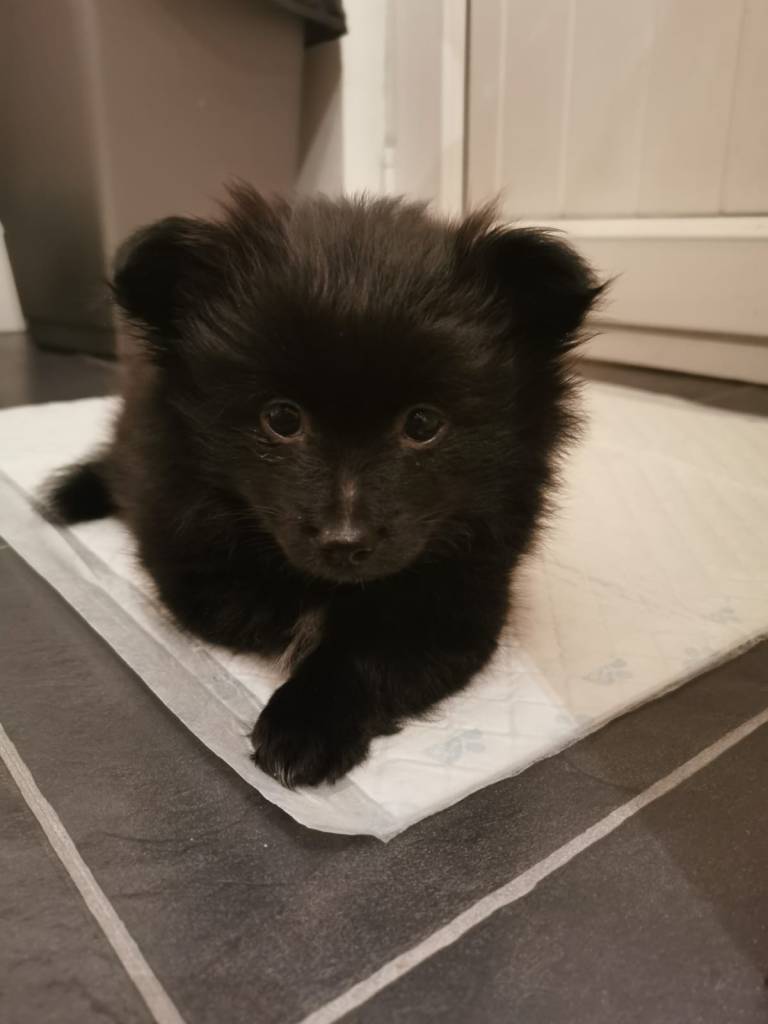
On a personal note, the daughter I had at 16 is now grown up and lives on her own and my youngest is a sassy 14-year-old girl. We have also just got our Pomeranian puppy Prince. In my free time I’m usually doing something active. I’m a Crossfitter and many of my closest friends are gym friends so the gym is both my mental health crutch and my social life. When I do eventually sit down, I love a good box set. I’m currently watching The Morning Show with Jennifer Aniston and Reese Witherspoon. Recommendations via email are welcome.
Now you know a little bit about me. I’ll look forward to getting to know all the criminology students soon, either virtually or face to face. Hopefully some of you will put your cameras on at least for a day so that when we eventually meet, I’ll know who you are.

 Thoughts from the criminology team