
Home » Media (Page 3)
Category Archives: Media

Who’s to blame, Jimmy Carr or the system that feeds him?

NB: The term ‘white’ in this blog is being used to describe those racialised as white within the dominant culture of the UK, and those that benefit the most from white privilege. Though Gypsy Roma Traveller [GRT] communities may in cases be racialised as white, their culture sits juxtaposed to the dominant thus ‘not white enough’, so may not always be seen as white by white British people (see Bhopal, 2018: 29-47).
“Extending the gaze to whiteness enables us to observe the many shades of difference that lie within this category – that some people are ‘whiter’ than others, some are not white enough and many are inescapably cast beneath the shadow of whiteness” (Nayak, 2007).
Following Haley’s excellent blog on the Jimmy Carr debacle, I would like to bring another perspective. For those of us racialised outside of whiteness, I know I do not need to describe the litany of examples where those racialised as white portray racist hatred as humour on and off social media. Haley continues in writing, “Jimmy Carr’s [His] Dark Material stand-up comedy is the latest in a long line of everyday racism that has been subjected to a trial by Twitter.” When we challenge these “jokes”, at least in my experience I was told iterations of “stop being so sensitive”; “it’s just a joke”; “lighten up” and so on …
In her long-essay What White People Can Do Next: From Allyship to Coalition, Irish author-academic Emma Dabiri (2021) writes:
“I grew up in a culture of bantering and, ngl, I love a caustic riposte. And while in certain ways I resent the current policing of language, there is a distinction. I hate to break it to you, but a “joke” in which the gag is that the person is black isn’t a joke, it’s just racism disguised as humor. A joke told to a white audience where the punch line is a racist stereotype isn’t a joke, again it’s just racism; if there is only one black person present, it’s also cowardly and it’s bullying. Jokes of this nature probably aren’t funny for black people.”
Emma Dabiri (2021: 98)

Whilst in my time writing for Thoughts I have engaged with many issues, one I have not yet written on is the ‘canteen culture’ of bantering I grew up in amid the English private school system. So, I am quite familiar with the culture of private schools having gone to them myself (aged 5-16) where racism (specifically anti-Blackness) against me was passed off as “a ‘joke’ in which the gag is … just racism disguised as humour”(Dabiri, 2021: 98). As a boy, Carr went to sixth form at Royal Grammar School, a selective boys’ school in High Wycombe in the image of a posh state school famous for projecting its boys into Oxbridge. Thus Jimmy Carr passed into Gonville and Caius College, Cambridge.
If there was to be a culture of ‘banter’ where Carr learned such behaviours, these selective schools and universities are a good place to start. For people not racialised as white, these places can be a new-kind of hell very much in the image of colonial-style racism. At school, in my experience there existed a toxic human concotion of racism (as banter) which infected not only the students but also the staff. It’s this sort of thing that may sit under the thinking behind Carr’s “joke”, and why he thought it was okay to make it in the first place. However, as much as I would like make this about him, this isn’t really about him at all.
Carr has had a very successful career of punching down on the marginalised and historically excluded, profiting from their suffering. For me, this is more about how large institutions like Netflix give platforms to people they know are bad news and let them espouse hatred anyway. Professor Sunny Singh tweeted how it is a “reminder that Jimmy Carr’s joke went through a whole production process in order to appear on @netflix.” When we consider how any piece of media goes through a rigorous editing / production process, the fact nobody questioned a Holocaust “joke” about Roma and Sinti people is a stark reminder of how white supremacy functions in media.
Here a white man makes a “joke” to an audience of mostly white people backed by a production team (largely white, let’s be honest) at a white institution Netflix … with ‘institutional whiteness’ hardening (Ahmed 2006; 2007; 2012; 2014; Hunter, 2015; 2019; White Spaces). Simply affirming what the late Charles Mills (2004) wrote where “… white supremacy implies the existence of a system that not only privileges whites but is run by whites, for white benefit” (p31).
The uproar to Jimmy Carr’s “joke” follows #ClanchyGate where author-schoolteacher Kate Clanchy was criticised for perpetuating racism and ableism in her 2019 memoir Some Kids I Taught and What They Taught Me. She used descriptions like “chocolate-coloured skin” and “almond-shaped eyes.”Moreover, she referred to autistic children as “unselfconsciously odd” and “probably more than an hour a week” around them “would irriate me, too, but for that hour I like them very much.”
Like Netflix, her publisher Picador did not spot these in the editing process. Or they did spot them, and said nothing … reiterating the ableism, racism, and white supremacy that exists in publishing where rather than hold Kate Clanchy accountable, her colleagues like Philip Pullman berated women of colour who challenged her taking to Twitter and comparing them to the Taliban. The same three women of colour who have been erased from this discourse. The issue with Picador is a reminder of how predominantly white artists (not always … like Dave Chappelle in his Netflix special The Closer) with power are then platformed with no accountability when they cause harm (intended or not). Kate Clanchy has since gone on to find another publisher for her book after she was required to rewrite!!
Jimmy Carr follows Chapelle, Clanchy as well as Joe Rogan and his racist rhetoric. Not only is Carr’s just horrific, but it also reinforces the the discrimination Gypsy, Roma, and Traveller [GRT] people face in Britain where their cultures will be erased should the government’s crime, policing and sentencing bill reach fruition. The conversation around Carr’s “joke” reminds me how general opinion is still comfortable with racism so long as it is wrapped in ‘humour’. With the ‘free speech’ champions following behind. It’s also showing me the number of people that think racism only happens to those racialised as Black or Brown.
It is not so simple. The way we define racism is worthy of further discussion and analysis when we consider the racism that happens because of cultural belongings. As Emma Dabiri writes:
“The myth of a unified white ‘race’ makes white people, from what are in truth distinct groups, better able to identify common ground with each other and to imagine kinship and solidarity with others racialized as ‘white’, while at the same time withholding the humanity of racialized others. The ability of whiteness to create fictive kinships where differences might outweigh similarities, or where one ‘white’ group thrives and prospers through the exploitation of another ‘white’ group, all united under the rubric of whiteness constructs at the same time a zone of exclusion for racialized ‘others’, where in fact less expected affinities and even cultural resonances might reside.
In truth, this is the work of whiteness, who invention was to serve that function. Saying that all “white” people are the same irrespective of say, culture, nationality, locatioin, and class literally does the work of whiteness for it. But despite the continuities of whiteness – the sense of superiority that is embedded in its existence – we cannot disregard the differences that exist. This demands a truthful reckoning with the fact that the particulars of whiteness, as well as the nature of the relationship between black and white, will show up differently in different countries and require the crafting of different responses.”
(Dabiri, 2021: 45-46)
Emma Dabiri’s What White People Can Do Next (2021) follows David Roediger’s Wages of Whiteness (1991), Noel Ignatiev’s How the Irish Became White (1995), Matthew Jacobson’s Whiteness of a Different Color (1998) and Nell Irvin Painter’s The History of White People (2010), all of which in some way show how different white groups have modifiers attached when talking about “white people.” This must be discussed interlocking with other factors including culture, place/geography, and class. Through Roediger, Ignatiev, Jacobson, Painter, Dabiri, and other scholars, we can see how whiteness splits and mutates to serve its purpose of divide and rule, and really how white supremacy may also negatively impact against those read as white and ‘not white enough’ in different ways.

The late archbishop Desmond Tutu believed that our quest for liberating the oppressed must also come with liberating the oppressor too. He saw how white South Africans during Apartheid had become bitter and hateful as a result of the racism that pervaded through their lives on a daily basis. Visiting Israel as well, he saw the same thing in the Israeli state’s dehumanisation of the Palestinian people. As Tutu himself states:
“Part of my own concern for what is happening there [Israel] is in fact not what is happening to the Palestinians, but is what the Israelis are doing to themselves. When you go to those checkpoints and you see these young soldiers behaving abominably badly, they are not aware when you carry out dehumanising policies, whether you like it or not those policies dehumanise the perpetrator.”
Demond Tutu
That ‘dehumanisation of the Other’ is central to any system of oppression, and we see this again in Britain with the police’s treatment of Black people going all the way back to 1919. However, we also see it in the state’s treatment of GRT people, compounded by the policing and sentencing bill. On a local level, the dehumanisation of GRT communities can be seen again when we observe the comments sections of local news. The comments of everyday people reflect the racist policymaking of politicians. In the continuous persecution of racialised minorities more generally in Britain, we must also consider what racism does to the perpetrators and what this ‘dehumanisation of the Other’ has done to the cultural majority. Even scarier, what has this dehumanisation done to the people that do not even realise they are racist?
When that ‘dehumanising’ appears on big public platforms like stand-up “comedy” shows, we have a problem – essentially giving racism the green light underpinned by violent policymaking in government. So, the discussions around Jimmy Carr not only show me that there needs to be more conversation about how whiteness impacts those read as Black or Brown, but also how whiteness impacts those read as white or not white enough (GRT, Eastern Europeans and so forth). We have work to do and lots of it.
Share this:

And still the message is the same…
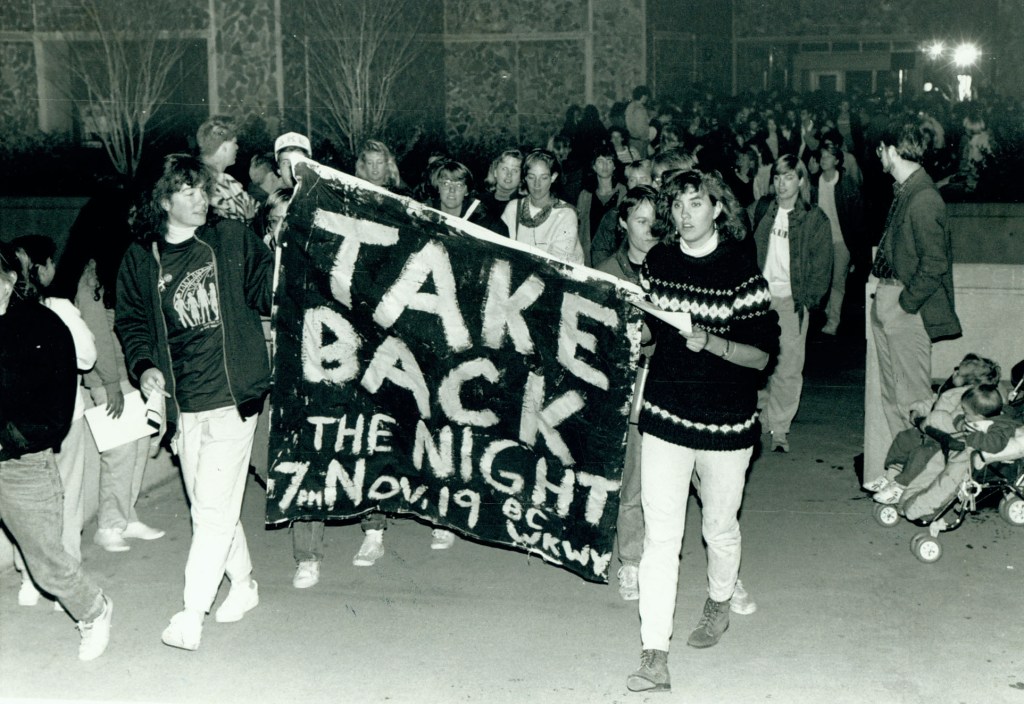
Following on from last week’s blog entry from @5teveh, @jesjames50 explores further dimensions of Sarah Everard’s murder.
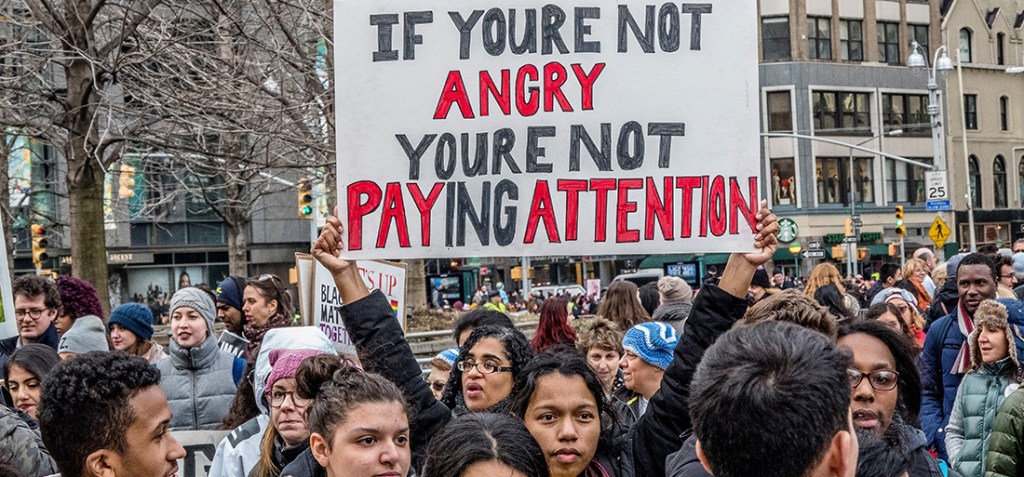
Recently we saw the sentencing of Sarah Everard’s kidnapper, rapist and murderer. He has received a whole life sentence. As a woman within society I welcome this sentence. As a criminologist I am at a loss. There is a lot to unpick here in terms of ‘justice’ and whether this has been served. It is pertinent to question the use of a whole life order on a violent, misogynistic, kidnapper, rapist and murderer; who cooperated after arrest, who pleaded guilty and expected the full force of the law. But I shall leave that to another day, as the media’s portrayal of the sentencing and aftermath is what is currently fuelling my anger. The message remains the same, women can and should do more to prevent their victimisation.
The sentence given is at odds with the coverage which has followed. Handing down the most severe sentence available in England and Wales represents the seriousness of the offence, and the damage it has caused to those directly involved and those further afield. The possibility that the offender was in a position of trust, has violated this trust and committed abhorrent acts appears to justify the whole life order. The comparison to terrorism, something which violence against women has been linked to before within academia, is also very telling. But what is the focus? The focus is on how women can go about feeling safe in society and make lines of inquiry if they have doubts about a police officer’s conduct! Here the onus is on women acting in a manner of keeping themselves safe. The message remains the same: women should prevent their victimisation. Excellent I’ll add this nugget of information to my bag of ‘top tips for walking alone at night’.
Why aren’t the media building on this platform to challenge misogynist attitudes? Why are they not raising awareness of violence against women? Sarah’s kidnapping, rape and murder is horrific: but what about the women who undergo daily violence at the hands of their partners, family, friends? These individuals are also in a position of trust and abuse this position to cause harm to women! Here the media could raise awareness about how deep-rooted the issue of violence against women is, but instead they reinforce the idea that women can prevent their victimisation, and that violence occurs at night, by a stranger, and will have the offender brought to justice. This is not the reality for the vast majority of women. It is an extreme and exceptional case (no doubt something True Crime will encapsulate in years to come) and this is further reinforced by the sentence given. Yet violence against women is not exceptional, or rare: it is an everyday reality! Something the media has failed to draw attention to. And by failing to cement Sarah’s kidnapping, rape and murder in the wider context of violence against women, it raises the potential to set a standard of violence against women. Those everyday cases which do not fit the same circumstances are not considered an issue.
My intentions are in no way to take away from the abhorrent crimes committed against Sarah. The crimes sit in the context of violence against women which is still a fundament issue overlooked within society, and has been overlooked once again. And the rhetoric which has followed, yet again, is around how women can protect themselves in the future. The message remains the same…
Share this:


Vaccine day
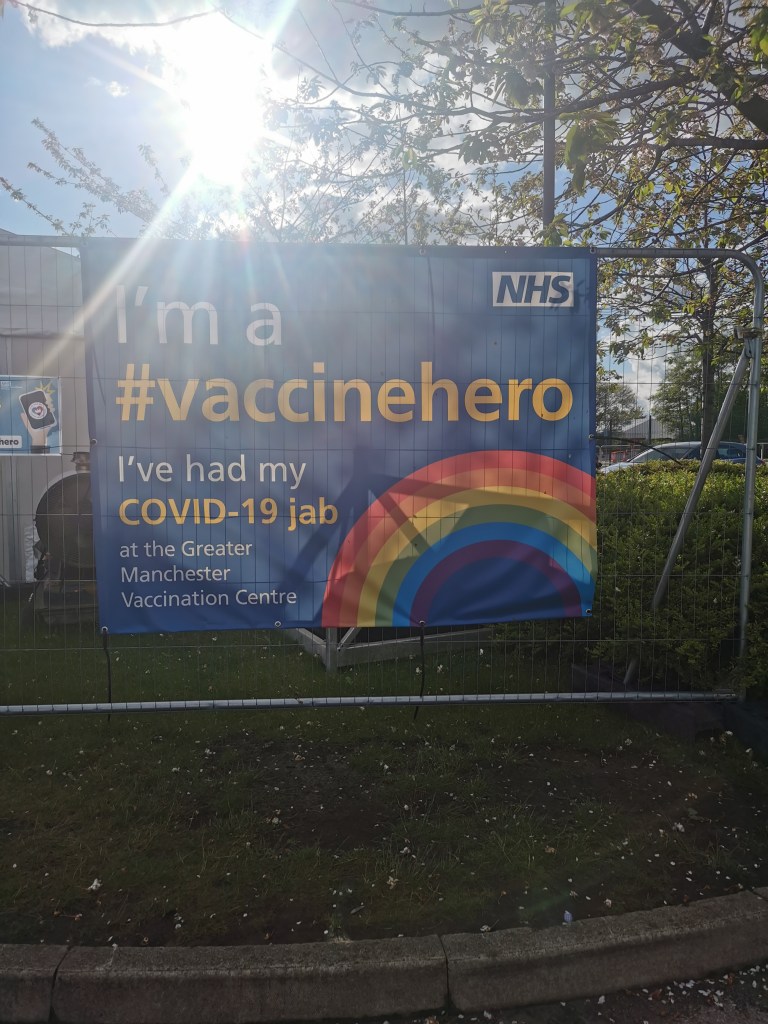
I had my first Covid-19 vaccine recently and the day was emotional, to say the least. I am 99% compliant with Covid-19 restrictions, partly because it is the law but primarily because I believe it is the right thing to do to protect others. In fact, there have been many times over the last 15 months where I have avoided the news for my own sanity so half the time, I do not exactly know what the latest rules are. I am guided by my own risk assessments and am probably more restrictive than the law in most scenarios. Up until vaccine day I thought that I wasn’t scared of contracting Covid-19, that I was complying as an act of altruism and that I would not be able to live with myself if I unwittingly passed the virus on to somebody vulnerable to severe illness and death.
Back in March 2020 when infections then the death toll started to rise, and the NHS became increasingly overwhelmed I would watch what my daughter and I called ‘the Boris show’ where the Prime Minister and the scientists would recall the daily death data, hospitalisations and cases. Each ‘next slide please’ bringing more bad news. Each day I would think about the families of every single one of those people who had died. It was quite overwhelming, and I eventually had to limit the information I ingested, living in both a physical and informational bubble. I recall the death toll announcements were met with responses from the covid-deniers, ‘but they’re old or ill anyway’, and ‘but they could have been hit by a bus and still counted as a covid death’. As a victimologist, this infuriated me. Who were these people to flippantly dismiss right to life based on age or health? It frustrated me that people with no knowledge of statistics, medicine or science were making assumptions based on anecdotal evidence from Bob on Facebook. But then again perhaps these are the tales people told themselves to get through. If they deny it, they have nothing to fear.
A few months later in June 2020, my somebody close to me contracted Covid-19. I was told they were doing well and seemed to be recovering from the virus. They died more than 28 days after having first being diagnosed with Covid-19, but it was Covid-19 that killed them. I know because I saw them to say goodbye a couple of hours before they died. This person who was always so full of life, love and who saw the good in everyone and everything, was now fading away. But what haunts me to this day was the sound of their lungs. The sound I’d heard people talk about on the news. Crisp packet lungs. And it was that sound that was like an earworm in my head on my way to the vaccination centre.
I’ve been looking forward to getting vaccinated since vaccines were on the horizon so I was excited when I received the text invitation. I booked to attend the Greater Manchester vaccination centre at the Etihad stadium, the home of Manchester City Football Club. It was well organised, despite the large numbers of people coming through. First, I was required to check in and was allocated the Moderna vaccine and a green sticker which ensured staff could direct me to the correct queue. Then I checked in at another desk where I was given some information, asked some health questions and, most importantly, I was asked, ‘do you want the vaccine?’. Those who have sat one of the research methods modules I have taught this year will have heard me discuss the importance of informed consent and this also applies to real life situations such as this. After this I joined another queue and finally reached the vaccination point, had the jab, waited for 15 minutes and left. Just like that. The whole thing took about an hour and given the volume of people being vaccinated (the site is a mass vaccination hub for a large area), I found it to be incredibly efficient. Every staff member I met was informative and did what they could to put people at ease.
From the moment I left home to go to the vaccination centre, to the moment my head hit the pillow that evening, I couldn’t help reflecting on the last 15 months. I felt a wave of emotions. I felt extreme sadness and sorrow at all the lives lost and all the families and friends left behind. It has been a traumatic time for so many of us. Getting the vaccine, I felt some sort of release from this, like it was nearly over. I have worked from home throughout and have had little social interaction, except when the gyms have been open or I have undertaken caring responsibilities for various friends and family. There were also a few weeks towards the end of lockdown 1 where my sister came to stay after returning from India. Overall, I have been alone with a teenager at a desk in my living room. It’s been awful. I’m tired and I need a break. I am well overdue a mum-cation. I felt some hope that sometime soon I might be able to get a parenting break and that my daughter can also get a break from me. I said earlier how I believed I had not feared contracting covid but having the vaccine and the relief I felt made me realise that I was more scared than I would care to admit. I am young(ish) and extremely healthy and I would probably be at low risk of developing serious symptoms but what if I was an unlucky one?
Aside from my personal experiences, I felt a collective relief. The global pandemic has created global trauma. There are still countries being ravished by the virus without the resources to operate mass vaccination of entire populations. I worry for the world and wonder what borders will look like after, if there ever is an after but I’ll ponder this further in another blog later. Getting vaccinated and being part of a mass vaccination programme made me feel cautiously optimistic. However, a few weeks on and we are now in a situation where the Delta variant is spreading like wildfire. Deaths have risen by 42.5% in the last week and hospital admissions by 44.7%. The numbers are still incredibly low in comparison to the first and second wave but every one of those deaths and hospitalisations matter. They are not a number on a presentation slide. They are people who have families and friends, who are cared for by the NHS. Every one of the deaths is a loss to these people, and has a butterfly effect in terms of the impact each death has.
Restrictions are set to lift imminently I believe (still avoiding the news) and it makes me feel uneasy to say the least. I’ve seen experts whom I trust argue on both sides of the fence. Some say this is dangerous, others suggest summer is the best opportunity to lift restrictions. It sometimes feels like we are living in some kind of twisted experiment. Regardless, I will continue to assess and manage the risk to myself and those around me. I’ll probably wear masks way after it is legal to do so and expect I will still be cautious about who I am physically close to and how I socialise. There’s things that I love and miss such as the theatre, cinema and the occasional gig but I don’t feel ready. I have a feeling this pandemic is far from over.
Share this:


Gypsy, Roma, Traveller History Month: #MakeSomeSpace

When I reflect upon my childhood, I recall the fondness that I have towards the Romany culture. I am reminded of the wonderful bond that my family had with horses, of good people, of the older generations of my family telling stories and singing Romany songs around tables at parties, of a strong sense of tight-knit togetherness and resilience when times got tough. I remember being educated about life from a young age and being taught the skills needed to be able to earn a living when it became difficult to do so. I am also reminded of the generosity involved in giving all that you can to your family and friends despite not having much. I especially think of this generosity in relation to the Irish Travellers that welcomed my brothers into their homes and provided for them when they were in times of need.
My instant thoughts about Gypsy, Romany Travellers (GRT) is that of fondness, but living in our society I have learnt that this is not the typical thoughts of the dominant public, media or government. When considering dominant media, public and government attitudes towards travellers, I am reminded of the GRTs that live in a society where people are prejudice because of long-standing stereotypes that have been created about their culture. I am also reminded of the lack of understanding and/or empathy that others have about the disproportionate amounts of social harm that those within the GRT families will encounter.
Since the recent Black Lives Matter protests there has been an explosion of anti-racist efforts, which I am hopeful of, yet, even some of those who are passionately ‘anti-racist’ continue to either project prejudice towards GRT people or deny that prejudice towards GRT is a problem. Adding to this, anti-racist messages communicated via the media do not seem to apply to GRT. A recent example of this is Dispatches: The Truth About Traveller Crime which is like a thorn in my side. This documentary discusses GRT as though they are a group of ‘dangerous criminals’. With an ‘expert’ criminologist present within the documentary it becomes difficult for the public to understand the stereotypes and lack of understanding that the documentary includes.
This year I have been able to incorporate GRT into the modules that I teach. I am pleased that some students have been able to navigate themselves to information about GRT from organisations like Traveller Movement and Friends Families and Travellers as these provide me with some hope in terms of GRT awareness and inclusion. However, it seems that these organisations will continue to have many pressing concerns to deal with, especially as the recent government proposals included within the Police, Crime, Sentencing and Courts Bill seem to be nothing more than another attack on the more traditional way GRT of life.

There is a worry for some GRT that upon moving into housing these cultures will decline. In terms of my own family my Nan was my idol, she was born in the 1920s in a traditional horse drawn wagon. Since moving into housing my Nan remained proud of her Romany heritage and she instilled this within my Dad’s upbringing. I only ever practiced aspects of the Romany culture in a marginal sense, and the decline of this part of my own heritage is connected to the social harm that my own family have experienced.
With GRT month I hope that more people question the prejudices that they have about others, I hope that people also question the media, government and supposed ‘experts’. You could begin by attempting to put yourself in the shoes of others, try to imagine how you would feel if society collectively judged yourself or your family despite knowing little to nothing about who you/they are. After all, this kind of overt prejudice that GRT encounter would not be acceptable in many situations if this was aimed at other groups, so why should it be acceptable when aimed at GRT?
Share this:

Chauvin’s Guilty Charges #BlackAsiaWithLove
Charge 1: Killing unintentionally while committing a felony.
Charge 2: Perpetrating an imminently dangerous act with no regard for human life.
Charge 3: Negligent and culpable of creating an unreasonable risk.
Guilty on all three charges.
Today, there’s some hope to speak of. If we go by the book, all the prosecution’s witnesses were correct. Former police officer Chauvin’s actions killed George Floyd. By extension, the other two officers/overseers are guilty, too, of negligence and gross disregard for life. They taunted and threatened onlookers when they weren’t helping Chauvin kneel on Floyd. Kneeling on a person’s neck and shoulders until they die is nowhere written in any police training manual. The jury agreed, and swiftly took Chauvin into custody . Yet, contrary to the testimonials of the police trainers who testified against Chauvin’s actions, this is exactly what policing has been and continues to be for Black people in America.
They approached Floyd as guilty and acted as if they were there to deliver justice. No officer rendered aid. Although several prosecution witnesses detailed how they are all trained in such due diligence, yet witnesses and videos confirm not a bit of aid was rendered. In fact, the overseers hindered a few passing-by off-duty professionals from intervening to save Floyd’s life, despite their persistent pleas. They acted as arbiters of death, like a cult. The officers all acted in character.
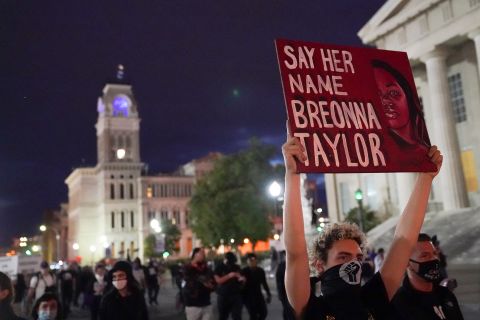
Teenager Darnella Frazier wept on the witness stand as she explained how she was drowning in guilt sinceshe’d recorded the video of Chauvin murdering Mr. Floyd. She couldn’t sleep because she deeply regrated not having done more to save him, and further worried for the lives many of her relatives – Black men like George Floyd, whom she felt were just as vulnerable. When recording the video, Ms. Frazier had her nine-year-old niece with her. “The ambulance had to push him off of him,” the child recounts on the witness stand. No one can un-see this incident.
History shows that her video is the most vital piece of evidence. We know there would not have even been a trial given the official blue line (lie). There would not have been such global outcry if Corona hadn’t given the world the time to watch. Plus, the pandemic itself is a dramatic reminder that “what was over there, is over here.” Indeed, we are all interconnected.
Nine minutes and twenty seconds of praying for time.
Since her video went viral last May, we’d seen footage of 8 minutes and 46 seconds of Chauvin shoving himself on top of ‘the suspect’. Now: During the trial, we got to see additional footage from police body-cameras and nearby surveillance, showing Chauvin on top of Mr. Floyd for nine minutes and twenty seconds. Through this, Dr. Martin Tobin, a pulmonary critical care physician, was able to walk the jury through each exact moment that Floyd uttered his last words, took his last breath, and pumped his last heartbeat. Using freeze-frames from Chauvin’s own body cam, Dr. Tobin showed when Mr. Floyd was “literally trying to breathe with his fingers and knuckles.” This was Mr. Floyd’s only way to try to free his remaining, functioning lung, he explained.
Nine minutes and twenty seconds. Could you breathe with three big, angry grown men kneeling on top of you, wrangling to restrain you, shouting and demeaning you, pressing all of their weight down against you?
Even after Mr. Floyd begged for his momma, even after the man was unresponsive, and even still minutes after Floyd had lost a pulse, officer Chauvin knelt on his neck and shoulders. Chauvin knelt on the man’s neck even after paramedics had arrived and requested he make way. They had to pull the officer off of Floyd’s neck. The police initially called Mr. Floyd’s death “a medical incident during police interaction.” Yes, dear George, “it’s hard to love, there’s so much to hate.” Today, at least, there’s some hope to speak of.

Share this:

I Wish We Had Twitter Back in the Day. #BlackenAsiaWithLove
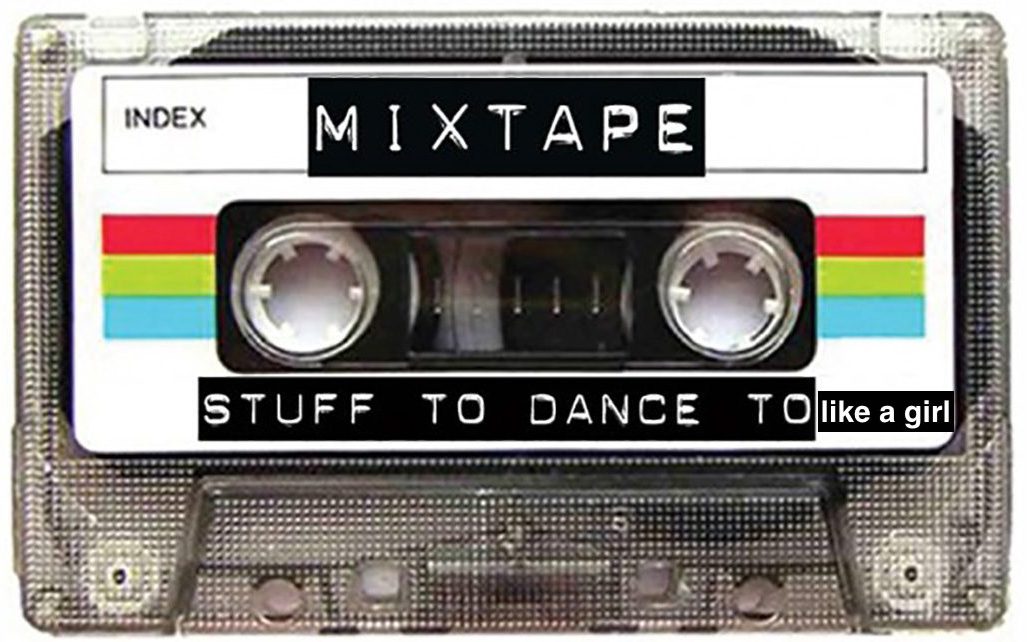
I wish we had Twitter back in the day. When I was a kid, I would sometimes spend playtime alone in my room, singing to the radio. Between the pop station and WLOU – the Black station which cut off around five or six in the evening – I could’ve tweeted the mix-tapes I made. I’d take momma or my grandparents’ radio alarm-clock, and put it face-to-face with my tape recorder to record songs from the radio. I even got pretty good at cutting the recording off before the radio DJ started talking over the end of the song. That’s why the Black station was better for recording because they always played the adlibbed outro/coda, the sweetest part of the song where the story and storyteller reached a resolution. The songs were always resolved, despite the dilemma at the start, especially love songs – either falling in or out of love. I had to play the record to listen to the full song.
Even though no singer sang about the love I knew I had inside of me, I could identify with others feelings – human feelings. My aunt Shirley still laments about the times we’d be riding in her car, listening to the radio, and “your song would come on.” She says I loved Dionne Warwick’s I’ll Never Love This Way Again, such adult themes, too, she adds. Or: “Reunited… and it feels so good.” Shirley says I sang as if this were my love affair. “And you was still small’nough to stand up in the back seat of the car.” Billboard ranks that Peaches and Herb’s jam as fifth out of the hundred hottest songs of ’79 – amid all the Disco greats I loved. I must have been four. Shirley often tells me about my precocious empathy as a child. I kept a diary from an early age, but by the time I was a teen, I was ready to share with the world the things I knew needed to change.
I’d tweet about all the singers and songs that meant so much to me – how their lyrics and artistry changed me. I’d make videos of me practicing combinations we’d learned in dance class, or choreographing my own music videos. “Video killed the radio star,” had no good dance moves yet was the very first video to play on MTV when the channel debuted in ’81. That that format quickly came to dominate how music was consumed and promoted. Otherwise, I was just alone in my artistic world, thinking I was the only boy who danced like a girl.
At home, it wasn’t ever taboo to talk about Jim Crow. Prince and Michael Jackson had to dress a bit femme to disarm the wider/whiter masses; as did Jackie Wilson back in the day. I could see Motown was a white-washed version of the hymns my grandaddy sang from his book at home. This is what these artists did to crossover to the pop ‘genre’ and earn consequent pop radio circulation, pop sales, pop accolades and pop cash! Even now, Beyonce still gets over-nominated only in the Black categories. People tweet about that sort of stuff now, but I didn’t even have those words at that age; still I sensed something was off about cultural appropriation and its economic consequences for all involved. I also knew that I was doing was taboo. Back in the day, I’d suppress any femme in me in order to crossover. I’d have tweeted about that.
Tweeting ole dirty work.
I wish we had Twitter back in the day. Imagine Nat Turner proselytizing and organizing through Black Twitter. They’d still have had to use coded language, just like they used Negro Spirituals to encode messages of freedom: ‘Follow the drinking gourde’ would probably still fool folks now, just as much as today a murderous police officer’s defense attorney can claim that bodycam shows George Floyd saying, “I ate too many drugs,” when he actually said “I ain’t do no drugs.” Who eats drugs? Not in any Black English I know, and thanks to Black twitter, there’s an ivy-league sociolinguist who’s published a research paper on this very matter while we watch the overseer’s trial like we used to watch Video Soul. Ole uncle Nat would’ve gotten pretty far on his rebellion had he had Twitter back in the day. Tweet tweet, MF! We’ve got Twitter today, so: “Let’s get in-formation.”
Share this:


Criminology is everywhere!
When I think back to thinking about choosing a degree, way back when, I remember thinking Criminology would be a good choice because it is specific in terms of a field: mainly the Criminal Justice System (CJS). I remember, naively, thinking once I achieved my degree I could go into the Police (a view I quickly abandoned after my first year of studies), then I thought I could be involved in the Youth Justice System in some capacity (again a position abandoned but this time after year 2). And in third year I remember talking to my partner about the possibility of working in prisons: Crime and Punishment, and Violence: from domestic to institutional (both year 3 modules) kicked that idea to the curb! I remember originally thinking Criminology was quite narrow and specific in terms of its focus and range: and oh my was I wrong!
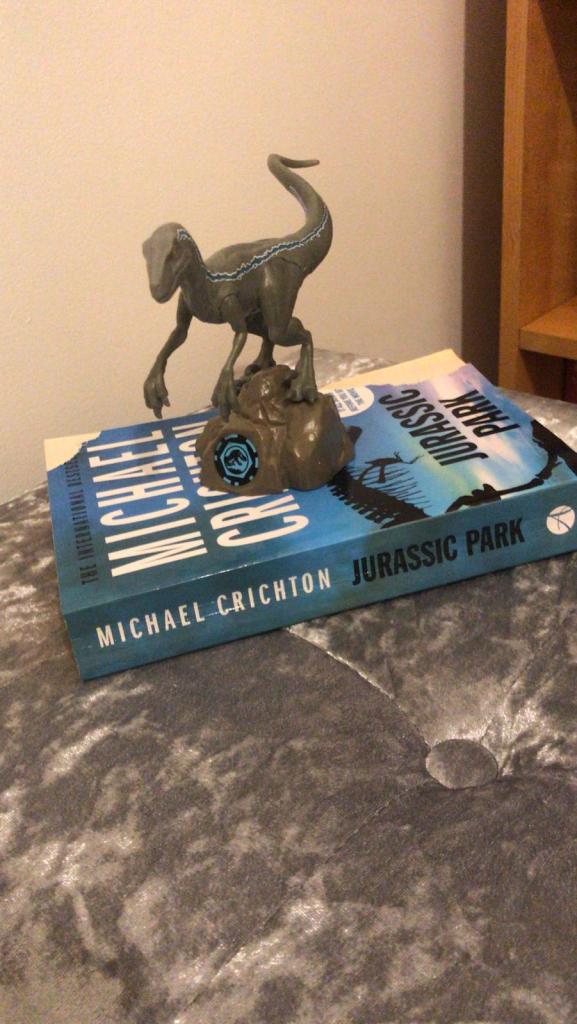
Whilst the skills acquired through any degree transcend to a number of career paths, what I find most satisfying about Criminology, is how it infiltrates everything! A recent example to prove my point which on the outside may have nothing to do with Criminology, when in actual fact it could be argued it has criminological concepts and ideas at its heart is the 2015 film: Jurassic World. It is no secret that I am a huge lover of Crichton novels but also dinosaurs. But what I hope to illustrate is how this film is excellent, not just in relation to dinosaur content: but also in relation to one of my interests in Criminology.
Jurassic World, for those of you who have not had the pleasure of viewing, focuses on the re-creation of a Jurassic Park, sporting new attractions, rides and dinosaurs in line with the 21st century. The Indominus Rex is a genetically modified hybrid which is ‘cooked-up’ in the lab, and is the focus of this film. Long story short, she escapes, hunts dinosaurs and people for sport, and is finally killed by a joint effort from the Tyrannosaurus, Blue the Velociraptor and the Mosasaurus: YAY! But what is particularly Criminological, in my humble opinion, is the focus and issues associated with the Indominus Rex being raised in isolation with no companionship in a steeled cage. Realistically, she lives her whole life in solitary confinement, and the rangers, scientists and management are then shocked that she has 0 social skills, and goes on a hunting spree. She is portrayed in the film as a villain of sorts, but is she really?
Recently in Violence: from domestic to institutional, we looked at the dangers and harms of placing individuals in solitary confinement or segregation. Jurassic World demonstrates this: albeit with a hybrid dinosaur which is fictitious. The dangers, and behaviours associated with the Indominus Rex are symbolic to the harms caused when we place individuals in prison. The space is too small, there is no interaction, empathy or relationships formed with the dinosaur apart from with the machine that feeds it. The same issues exist when we look at the prison system and it raises questions around why society is shocked when individuals re-offend. The Indominus Rex is a product of her surroundings and lack of relationships: there are some problematic genes thrown in there too but we shall leave that to one side for now.
There are a number of criminological issues evident in Jurassic World, (have a watch and see) and all of the Jurassic Park movies. Criminology is everywhere: in obvious forms and not so obvious forms. The issues with the prison system, segregation specifically, transcend to schools and hospitals, society in general and to dinosaurs in a fictional movie. Criminology, and with it critical thinking, is everywhere: even in the Lego Movie where everything is awesome! Conformity and deviance wrapped up in colourful bricks and catchy tunes: have a watch and see…
Share this:


A pit and no pendulum
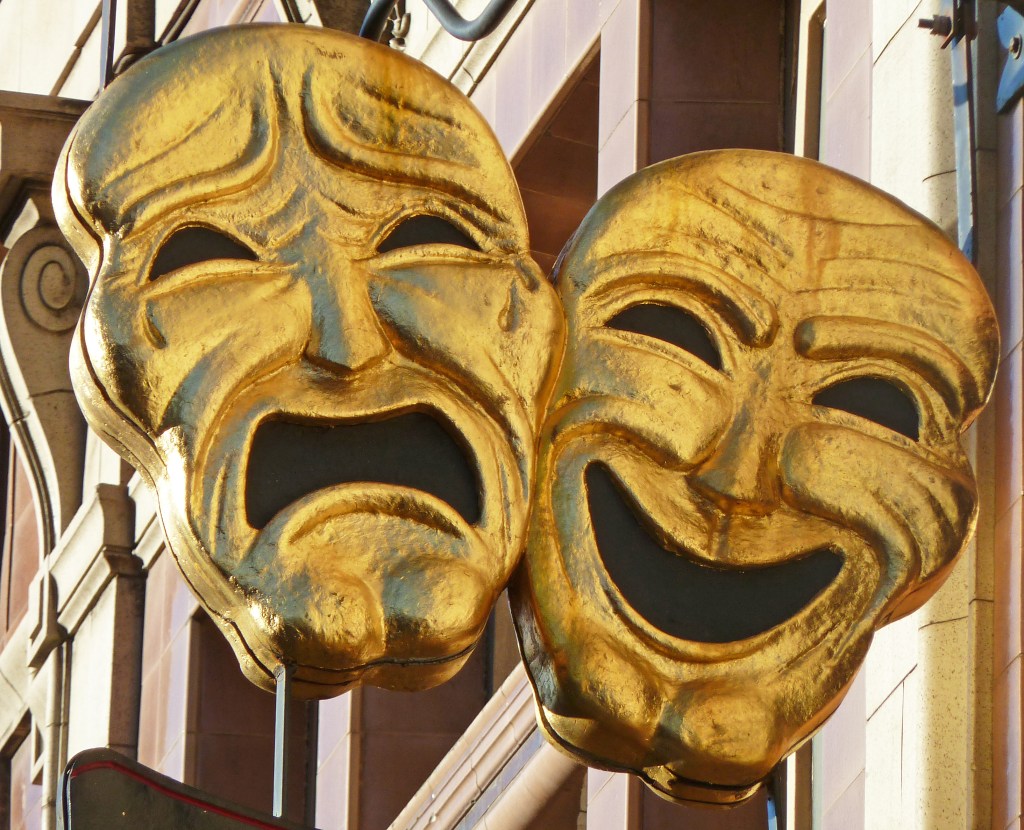
Laughter is a great healer; it makes us forget miserable situations, fill us with endorphins, decreases our stress and make us feel better. Laughter is good and we like people that make us laugh. Comedians are like ugly rock-stars bringing their version of satire to everyday situations. Some people enjoy situational comedy, with a little bit of slapstick, others like jokes, others enjoy parodies on familiar situations. Hard to find a person across the planet that does not enjoy a form of comedy. In recent years entertainment opened more venues for comedy, programmes on television and shows on the theatres becoming quite popular among so many of us.
In comedy, political satire plays an important part to control authority and question the power held by those in government. People like to laugh at people in power, as a mechanism of distancing themselves from the control, they are under. The corrosive property of power is so potent that even the wisest leaders in power are likely to lose control or become more authoritarian. Against that, satire offers some much needed relief on cases of everyday political aggression. To some people, politics have become so toxic that they can only follow the every day events through the lens of a comedian to make it bearable.
People lose their work, homes and even their right to stay in a country on political decisions made about them. Against these situations, comedy has been an antidote to the immense pain they face. Some politicians are becoming aware of the power comedy has and employ it, whilst others embrace the parody they receive. It was well known that a US president that accepted parody well was Ronald Reagan. On the other end, Boris Johnson embraced comedy, joining the panel of comedy programmes, as he was building his political profile. Tony Blair and David Cameron participated in comedy programmes for charity “taking the piss” out of themselves. These actions endear the leaders to the public who accept the self-deprecating attitude as an acknowledgment of their fallibility.
The ability to humanise leaders is not new, but mass media, including social media, make it more possible now. There is nothing wrong with that, but it is something that, like smoking, should come with some health warnings. The politicians are human, but their politics can sometimes be unfair, unjust or outright inhuman. A person in power can make the decision to send people to war and ultimately lead numerous people to death. A politician can take the “sensible option” to cut funding to public spending directed at people who may suffer consequently. A leader can decide on people’s future and their impact will be long lasting. The most important consequence of power is the devastation that it can cause as the unanticipated consequence of actions. A leader makes the decision to move people back into agriculture and moves millions to farms. The consequence; famine. A leader makes the decision not to accept the results of an election; a militia emerges to defend that leader. The political system is trying to defend itself, but the unexpected consequences will emerge in the future.
What is to do then? To laugh at those in power is important, because it controls the volume of power, but to simply laugh at politicians as if they were comedians, is wrong. They are not equivalent and most importantly we can “take the piss” at their demeanour, mannerisms or political ideology, but we need to observe and take their actions seriously. A bad comedian can simply ruin your night, a bad politician can ruin your life.
Share this:

The power of the written word: fact, fiction and reality
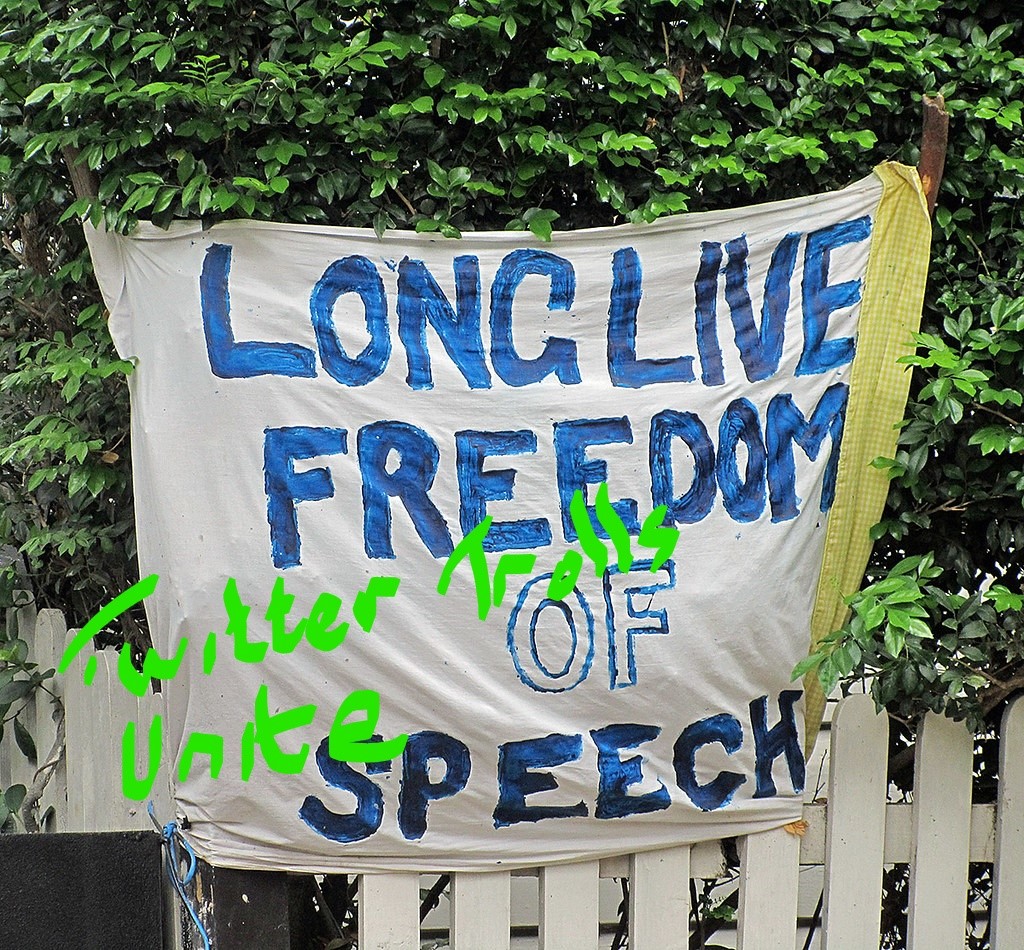
The written word is so powerful, crucial to our understanding and yet so easily abused. So often what gets written is unregulated, even when written in the newspapers. Whilst the press is supposedly regulated independently, we have to question how much regulation actually occurs. Freedom of the press is extremely important, so is free speech but I do wonder where we draw the line. Is freedom of speech more important than regulating damaging vitriolic hyperbole and rhetoric? Is freedom of speech more important than truth?
We only have to read some of the sensationalist headlines in some newspapers to realise that the truth is less important than the story. What we read in papers is about what sells not about reality. The stories probably tell us more about the writer and the editor than anything else. We more often than not know nothing about the circumstances or individuals that are being written about. Stories are told from the viewpoint of others that purport to be there, or are an ‘expert’ in a particular field. The stories are just that, stories, they may represent one person’s reality but not another’s. Juicy parts are highlighted, the dull and boring downplayed. Whilst this can be aimed at newspapers, can the same not be said about other forms of media?
A few weeks ago, I was paging through LinkedIn on my phone catching up with the updates I had missed. Why I have LinkedIn I don’t really know. I think its because a long time ago when I was about to go job hunting someone told me it was a good idea. Anyway, I digress, what caught my eye was a number of people congratulating Rachel Swann on becoming the next Chief Constable of Derbyshire. I recognised her from the news, remember the story when the dam was about to burst?
It wasn’t the fact that she’d been promoted that caught my eye, it was the fact that someone had written that she should ignore the trolls on Twitter. I had a quick look to see what they were on about. To say they were vitriolic is an understatement. But all of the comments based her ability to do the job on her looks and her sexuality. I thought to myself at the time, how do you get away with this? I doubt that any of those people that wrote those comments have any idea about her capabilities. Unkind, rude and I dare say hurtful comments, made that are totally unregulated. The comments say more about the writers than they do about Rachel Swann. You don’t get to the position of Assistant Chief Constable let alone Chief Constable without having displayed extraordinary qualities.
And then I think about Twitter and the nonsense that people are allowed to write on this medium. President Trump is a prime example. There isn’t a day that goes by without him writing some vitriolic nonsense about someone or some nation. Barack Obama used to be in his sights and now it’s Joe Biden. I know nothing about any of them, but if I follow the Trump twit feed, they are incompetent fools and disaster looms if Biden is elected as president. As I said before, sometimes what is written says more about the writer than anyone else.
I’m conscious that I’m writing this for a blog and many that read it don’t know me. Blogs are no different to other media outlets. If I am to criticise others for what they have written, then I ought to be careful about what I write and how. I have strong views and passionately believe in free speech, but I do not believe that the privilege I have been given allows me to be hurtful to others. My views are my views and sometimes I think readers get a little glimpse of the real me, the chances are they have a better idea about me than what I am writing about. I write with a purpose and often from the heart, but I try not to be unkind nor stretch the truth or tell outright lies. I value my credibility and if I believe that people know more about me than the story, I owe it to myself to try to be true to my values. I just wish sometimes that when people write for the newspapers, post comments on Twitter or write blogs that they thought about what they are writing and indulged in a bit of self-reflection. Maybe they don’t because they wont like what they see.
Share this:


Is fake news a crime?

Perhaps this entry needs to start with a declaration; there is no novelty in the term fake news. In fact, fake news is not a term but a description. Odd to start with something as obvious as this but given the boastful claims for those inventing the (non) terms is only logical to start with that. It is true that in news, the term that usually relates to deliberate dissemination of information, is propaganda. It aims at misinformation and as it is reproduced over and over it can even become part of indoctrination.
The 20th century introduced the world to speed. Mass consumption, marketing and two world wars that devastated countries and populations. In the century of speed, mass media and the availability of information became a reality. The world heard, on the radio first and on the television later, world leaders making statements in what seemed to be the spectacle of politics. Interestingly some countries, political parties and professionals realised the value of controlling news, managing information. The representation of positions became an integral part of modern politics. Information became a commodity and the management of the news became big business with social implications.
When we talk deliberate misinformation, we are probably reminded of the Third Reich and the “ministry of public enlightenment and propaganda”. Even now media analysts consider the Nuremberg Rally a clear example of media manipulation and deliberate misinformation. This however was only one of many ministries around the world set up for that purpose. In some countries even censorship laws and restrictions emanate from a relevant ministry or department. The protection of the public was the main justification even when the stories promoted were wrong or even fictitious.
The need to set up some standards on journalism became apparent and awards like the Pulitzer Prize became ways of awarding those who hold journalistic values high. National broadcasting corporations became the voice of their nation and many adopted the voice of neutrality. Post war the crimes of the Nazi regime became apparent and the work of the propaganda machine in contract demonstrated how easy it was to misinform whilst committing atrocities. The United Nations even took a resolution on the issue “Condemns all forms of propaganda, in whatsoever country conducted, which is either designed or likely to provoke or encourage any threat to the peace, breach of the peace, or act of aggression” General Assembly, November 3 1947.
Unfortunately, this resolution remains mostly a paper exercise as the ideological split of the founding members led to a war of attrition of who tells the truth and who is using propaganda. Since then mass media became part of everyday life and an inseparable part of modern living. News became evidence and programmes presented decisive information in the court of public opinion. Documentaries claimed honest realism and news programmes set the tone of political and social dialogue.
In 1988 Chomsky and Herman in Manufacturing Consent: the political economy of mass media, proclaim that propaganda is not the reserve of a totalitarian state but of all states in their attempt to maintain order imposed by the establishment. Under this guise misinformation is part of the mass media’s raison d’etre. It can partly explain why the UN resolutions were not followed up further. So far, we are considering the sociological dimensions of news and information. Nothing thus far is clearly criminological or making the case for criminalising the deliberate misinformation in the news. (interestingly, the deliberate misinformation of a consumer is a criminal offence, well established).
One can ask rhetorically if it is so bad to misinform, spread fake news and manipulate the news through a systematic propaganda process. We presume that most citizens can find a variety of forums to be informed and the internet has democratised media even further. The reality however is quite different. People rely on specific sources even when they go online, finding voices that speak to them. In some ways this kind of behaviour is expected. Nothing wrong with that, is there? Back in the 1990s a radio station in Rwanda was talking about cockroaches and snakes; this led into a modern-day genocide, a crime that the UN aimed to extinguish. In the early 2000s the western world went into war on reports and news about weapons of mass destruction that did not exist, leaving thousands dead and millions displaced. In the mid-2010s a series of populist politicians got into office making claims on news, fake news, utilising their propaganda machine against anyone who tried to take them to account. More recently people, having felt deceived by mainstream media, do not believe anything, even the pandemic. The difficulty in critically evaluating information is obvious but it is also obvious how destructive it can be. In short, yes fake news should be a crime, because they cause lives in so many ways. Question is: Can we differentiate the truth from the fake or is it too late?


