
Home » Mature student
Category Archives: Mature student

To be a keeper of these stories. A collector of trust.

I think this will be somewhat of a poem; I guess.

About all the tears I’ve held space for lately.

There has been quite a lot. Is it any surprise?

Big ones, small ones. Happy and sad ones. Not really sure why ones.

‘cept it’s the happy ones I want to share today.

They’ve got me thinking. Reflecting.

A proper headshake, actually.
It’s not the best space for sensitive conversations but it’s what we’ve got.

I wait and I wait. Sometimes a flurry. Sometimes not.

The enthusiasm is sometimes hard to muster.

If I’m really being honest.

But wait I do. And wait I shall.

Oftentimes it’s a woman, who needs another.

It’s a gift I’ve got, I suppose.

“I’ve never seen her sit and talk with someone like this”

An aura, someone once said.

Lures people in and their story they are compelled to tell.

I’ve tried to teach it. We give and we take from every interaction.

You just have to be aware enough to see it.

There’s been some big ones just lately.

And what a pleasure it’s been.
She’s a ‘do it all’ Black mother.

A woman of incredible resilience.

We’ve been speaking for months now. Bit of this. Bit of that.

A call from the school one day, her son has self-harmed.

What do I say, she asks.

Everything is money. Money I don’t have.

She checks her sugars. Low again.

I can’t afford this canteen food.

Have to make a poster. Sustainable practice or something like that.

All this technology she says, I’m too slow.

I do what I can. Build her up. See her again.

I do what I can. Build her up. See her again.

There’s a little bit more brightness every time I do.

It’s Friday before last, how was your session I ask.

I was in a room with women doctors she says.

Little old me. I could never. Right at the start…and I don’t think I’m going to make it.

Can you believe it? she says. Women…with PhDs. Not me.

“Back home women get no such thing.” No no. Daren’t even dream.

Days roll on until a week's gone by.

She prances across the library. Beaming.

She’s come to share her joy with me.

A 60 she says. A 60!

My boys are so proud of me. Maybe I’ll make it after all.
Another. Working, studying, working, studying.

Mum needs the money. Physio for the cancer in her bones, she says.

She’s avoiding my questions about rest and nourishment.

Surviving on Mum’s joy receiving another ‘Look what I’ve done.’

This is just a flying visit though. Easy fix, I thought.

We’ve been here a while. Lingering.

I think I’ve said something wrong. She’s welling up again.

No. I’m so grateful to be here she says...with all you kind people.

I ask what she needs. Its courage, she says.

I write it out. A post-it note. Just the trick.

What would my most courageous self do?

Stick it to the fridge I say.

Mine is bravery. I share.

An inspiration! she cries. An inspiration? I cry.

I’m going to make it across that stage one day, she says. Yes, I am.
Her story. Quite overwhelming actually.

Though not easily shaken. I’m taken aback.

Intimate partner violence a divorce did not remedy.

A home of her own, apparently not to be.

In the hospital every other week.

The victim of a scam I realise as we speak.

Held up at every angle.

Yet she shows up. She shows up. She shows up.

It’s what we do, isn’t it?

It’s too much. Quitting. she says. Though I can’t say I believe it.

We’re here for 90 minutes. It’s all out on the table.

I hardly say a word really. I’m all ears, kind eyes and the occasional shoulder pat.

A breakthrough.

Look at me here laughing with you now.

What a relief. To be heard.  Maybe I’ll be able to sleep tonight.
Its all stuck with me, a sort of niggle.

I thought I knew what I was doing. I thought I was grateful for it all.

But to be a keeper of these stories. A collector of trust. I realise I was nothing of the sort.

So, on my own journey, I start anew, and that’s thanks to all of you.
This healing thing. Tricky business, really.
Reader, if you find yourself saying I HAVE TO this week.

That meeting, That essay. That commute.

Consider I GET TO

Because not everyone does and some that do give more than we can imagine, even just to be in the room with us.
Share this:


A Love Letter to Criminology at UON


In 2002, I realised I was bored, I was a full-time wife and parent with a long-standing part-time job in a supermarket. I first started the job at 15, left at 18 to take up a job at the Magistrates’ court and rejoined the supermarket shortly after my daughter was born. My world was comfortable, stable and dependable. I loved my family but it was definitely lacking challenge. My daughter was becoming increasingly more independent, I was increasing my hours and moving into retail management and I asked myself, is this it? Once my daughter had flown the nest, could I see myself working in a supermarket for the rest of my life? None of this is to knock those those that work in retail, it is probably the best training for criminology and indeed life, that anyone could ask for! I got to meet so many people, from all backgrounds, ethnicities, ages, religions and classes. It taught me that human beings are bloody awkward, including myself. But was it enough for me and if it wasn’t, what did I want?
At school, the careers adviser suggested I could work in Woolworths, or if I tried really hard at my studies and went to college, I might be able to work for the Midland Bank (neither organisation exists today, so probably good I didn’t take the advice!). In the 1980s, nobody was advocating the benefits of university education, at least not to working-class children like me. The Equal Pay Act might have been passed in 1970 but even today we’re a long way from equality in the workplace for women. In the 1980s there was still the unwritten expectation (particularly for working class children from low socio economic backgrounds) that women would get married, have children and perhaps have a part-time job but not really a career….I was a textbook example! I had no idea about universities, knew nobody that had been and assumed they were for other people, people very different from me.
That changed in 2002, I had read something in a newspaper about a Criminology course and I was fascinated. I did not know you could study something like that and I had so many questions that I wanted to answer. As regular readers of the blog will know I’m a long-standing fan of Agatha Christie whose fiction regularly touches upon criminological ideas. Having been born and raised in North London, I was very familiar with HMP Holloway’s buildings, both old and new, which raised lots of questions for a curious child, around who lived there, how did they get in and out and what did they do to the women held inside. Reading suffragette narratives had presented some very graphic images which further fed the imagination. Let’s just say I had been thinking about criminology, without even knowing such a discipline existed.
Once I was aware of the discipline, I needed to find a way to get over my prejudices around who university was for and find a way of getting in! To cut a long story short, I went to an Open Day and was told, go and get yourself an access course. At the time, it felt very blunt and reinforced my view that universities weren’t for the likes of me! Looking back it was excellent advice, without the access course, I would never have coped, let alone thrived, after years out of education.
In 2004 I started reading BA Criminology, with reading being the operant word. I had been an avid reader since early childhood (the subject of an earlier blog) and suddenly I was presented with a license to read whatever and whenever I wanted and as much as I could devour! For the first time in my life, people could no longer insist that I was wasting time with my head always in a book, I had “official” permission to read and read, I did! I got the chance to read, discuss, write and present throughout the degree. I wrote essays and reports, presented posters and talked about my criminological passions. I got the chance to undertake research, both empirical and theoretical, and lawks did I revel in all this opportunity. Of course, by looking back and reflecting, I forget all the stresses and strains, the anxieties around meeting so many new people, the terror of standing up in front of people, of submitting my first assessment, of waiting for grades….but these all pale into insignificance at the end and three years goes so very quickly….
In the summer of 2007, I had a lovely shiny degree in Criminology from the University of Northampton, but what next? By this point, I had the studying bug, and despite my anticipation that university would provide all the answers, I had a whole new set of questions! These were perhaps more nuanced and sophisticated than before but still driving me to seek answers. As I said earlier, human beings are awkward and at this point I decided, despite my earlier passion, I didn’t want to be put in a box labelled “Criminology“. I felt that I had finally cracked my fear of universities and decided to embark on a MA History of Medicine at Oxford Brookes. I wanted to know why Criminology textbooks and courses still included the racist, sexist, disablist (and plenty more) “theories” of Cesare Lombroso, a man whose ideas of the “born criminal” had been discredited soon after they were published.
But again the old fears returned….what did I know about history or medicine? What if the Criminology degree at Northampton hadn’t been very good, what if they just passed everyone, what if I was kidding myself? Everything at Brookes felt very different to Northampton, everyone on the course had studied BA History there. Their research interests were firmly centred on the past and on medicine, nursing, doctoring, hospitals and clinics and there was me, with my ideas around 20th century eugenics, a quasi-scientific attempt to rationalise prejudice and injustice. Along with studying the discipline, I learnt a lot about how different institutions work, I compared both universities on a regular basis. What did I like about each, what did I dislike. i thought about how academics operate and started to think about how I would be in that profession.
I successfully completed the MA and began to think maybe Northampton hadn’t given me good grades out of our pity or some other misplaced emotion, but that I had actually earnt them. I was very fortunate, I had maintained connection with Criminology at UON, and had the opportunity to tip my toe in the water of academia. I was appointed as an Associate Lecturer (for those not familiar with the title, it is somebody who is hourly paid and contribute as little or as much as the department requires) and had my first foray into university teaching. To put it bluntly, I was scared shitless! But, I loved every second in the classroom, I began to find my feet, slowly but surely, and university which had been so daunting began to seep into my very being.
Fast forward to 2025, I have been involved with UON for almost 22 years, first as a student, then as an academic, achieving my PhD in the process It is worth saying that the transition is not easy, but then nothing worth having ever is. I have gained so much from my studies, my relationship with two universities and the experiences I have had along the way. It is fair to say that I have shed many tears when studying, but also had some of my very highest highs, learning is painful, just watch a small child learning to read or write.
Hopefully, over the past decades I have repaid some of the debt I owe to the academics that have taught me, coached me, mentored me and supported me (special mention must go to @manosdaskalou who has been part of my journey since day 1). My life looks very different to 2002 and it is thanks to so many people, so many opportunities, the two universities that have provided me with a home from home and all of the students I have had the privilege to engage with.
I am so delighted to have been part of Criminology at UON’s 25 years of learning and teaching. To my colleagues, old and new, students, graduates and everyone I have met along the way, I raise my glass. Together we have built something very special, a community of people committed to exploring criminological ideas and making the world an equitable place.
Share this:


Meet the FBL Student Experience Assistant Team – Kayleigh
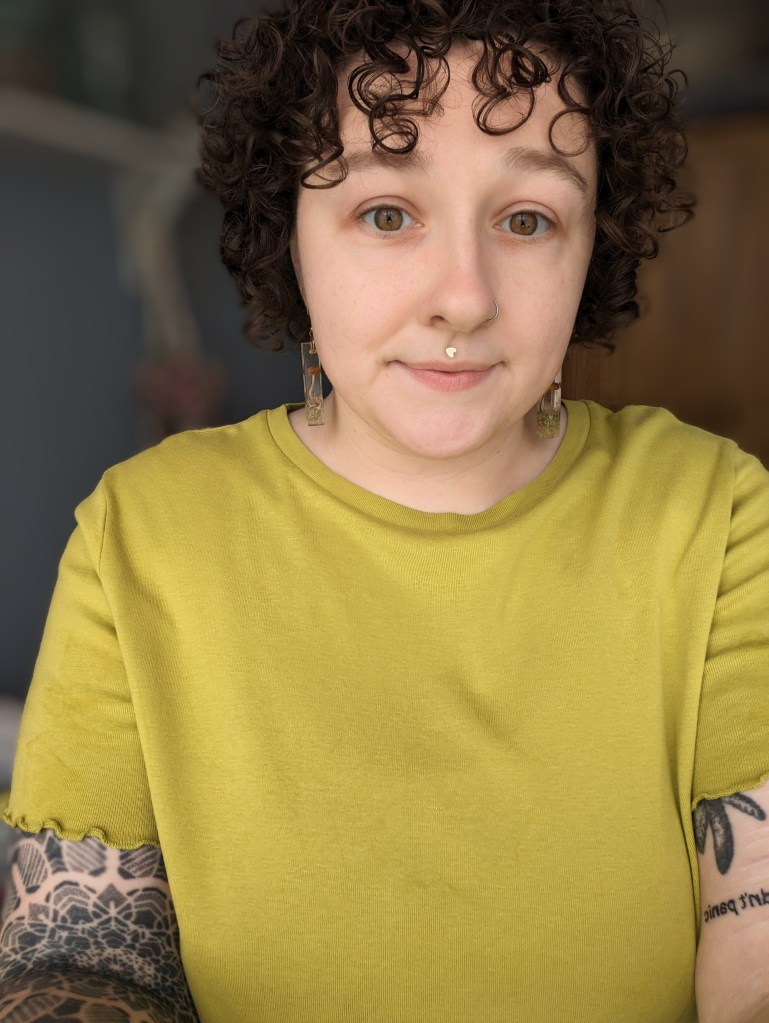
My name is Kayleigh, and I am one of the Student Experience Assistants (SEAs) for the Faculty of Business and Law at UON.
I graduated from UON in 2024 with a BA in Psychology with Criminology, and alongside this role I have just started a Master of Research degree. I also work in mental health for the NHS at the weekends. My academic and professional interests are largely around peer support, diversity and inclusion; particularly around the value of lived and living experience, forensic mental health, and neuroscience.
I came to UON in 2021 as a mature student having worked and volunteered within various forensic mental health settings, and I assumed this would be the area I went back into when I finished my degree, but now I’m not so sure… Despite a lot of adversity, university was overall a hugely positive and pivotal experience for me and so I am currently exploring a more academic path. I have a lot of experience to call upon and to share and I’m hopeful that I can support you so that your time at university is positive too.
I am here to support both students and staff in the Faculty of Business and Law by meeting with teams to identify their needs and ensuring students get the right help. As a recent UON graduate, I understand the challenges you might be facing and can offer guidance, connect you with the right people, or just have an informal chat. I have been assigned to support Criminal Justice Studies and Strategy & International Business teams, but support to students is not necessarily limited to these subjects. You can reach out to any of the SEAs for help.
Contact the team at fblseat@northampton.ac.uk, or me directly at kayleigh.willis@northampton.ac.uk. We also hold a drop-in outside LH201, Monday to Friday, 10am-4pm, no booking needed.
Share this:


Exams and Chronic Illness.

As we approach the exam period, I’ve been anxiously thinking about what exams are like for those, like me, with chronic illnesses.
You work the whole semester through, battling your mind and body, doing your best, doing it from your bed, through tears, winning some and losing some, and the apex of what you have managed to achieve boils down to one single day.
There is absolutely no guarantee that single day is going to be a good one.
Perhaps you have a chronic mental health condition, which is only exacerbated by the pressures of an exam. Maybe you had another panic attack on the way in and you can’t take your medication and be coherent enough to sit or be safe to drive home again afterward. It’s the first day of your period and you’ve got endometriosis so just standing to shower is agony. Maybe you have IBS and you’ve stumbled on yet another trigger food with terrible timing, maybe it’s chronic fatigue, the throes of menopause, PCOS, Epilepsy, Crohn’s, Cerebral Palsy, Asthma, Diabetes; a non-exhaustive list of course. Whatever it is, it isn’t going anywhere fast, and you know it, you spend your days waiting and worrying for the next flare up and hoping it isn’t on the morning of that exam.
In my second year, I sat a Time Constrained Assessment the day after being discharged from psychiatric hospital. I had to leave halfway through my cognitive psychology exam because symptoms of my illnesses were too much; forgoing the chance to show what I’d learned and worked on and earn the credit for it.
Of course, as I was, you will be advised to use Mitigating Circumstances, (which is totally ok if that’s what you feel is best) but with chronic illness you know that your symptoms aren’t going to be gone in a week like a bug you picked up, it will persist and the next time might be just as bad or even worse, and you don’t get another go. So inevitably, when you do sit down to take the exam, on a rough day, you sit knowing the whole way through that this is not your best work, this does not reflect the insurmountable effort you’ve put in the rest of the year, but right now it is all that you have.
I don’t know that I have much more of a point other than exams are hard for everyone, and that maybe their application needs a rethink, but it’s that bit more so for those with chronic conditions.
In any case, if you see yourself in this situation, remember that all you can do is what you can, with what you have at the time, or if you know of others, know that they are giving their all.
Take care.
Share this:


The Importance of Lived Experience in Making Change

***There is a content warning for this post as it briefly mentions self-harm***
I am a mature student entering the 3rd year of my degree, joint honours psychology and criminology. My choice in academic study (and hopeful career path) is largely informed by my own life experiences which have and will continue to be one of my biggest strengths. I have been in mental health services as a patient since my pre-teens and I have worked in a variety of mental health settings including inpatient forensic mental health and rehabilitation. My criminological interest was piqued after being a victim to violent crimes as an adult. All of this, as well as some conversations I have had with lecturers and peers over the last 2 years, has me thinking about the influence and importance of lived experiences in our academic and career choices, and the opportunities that lived experiences create for making change and battling adversity.
When we experience anything in life, big or small, positive or negative, we can gain incredible insight about ourselves and the world around us in a way that we would never have done if we didn’t have those experiences. It can change or set the trajectory of our lives. When we are in the correct place in our lives, our recovery, our minds to be able to pour from a cup that isn’t empty, we can find ourselves in an amazing place where we can help others and inspire change for those who have experienced or are likely to experience what we have. Perhaps even the ones who never have and never will. All equally as important.
Every system, service, or organisation needs to have the input from those who have experienced it from the other side. We need to know how the work is being perceived at the other end. It can be really difficult to collate feedback, especially the positive stuff, or see end-to-end results and we find that if no-one speaks up, what will be done is the easy thing, the cheap thing, or the well-intentioned but mismatched thing. Of course, we may be able to go beyond advice and become a part of a service or a voice ourselves and ‘be the change.’ We can inspire change by instilling more trust in others that we truly understand their predicament and that we have moved or are moving through it, showing them that it is possible or that they’re not alone. It can be refreshing and a huge learning experience for others in the service, as a user or provider, who may be stuck, going through the motions unequipped with knowledge of how to make change for the better, especially in sectors that can be particularly challenging day-to-day.
If I may give a personal example from when I worked on a psychiatric ward for forensic rehabilitation. I worked with many patients who felt as though it was staff vs patients, that we couldn’t possibly know what it was like for them, that we were only there because we were paid, and because they were detained against their will, we had to keep them there. I didn’t hide my personal experiences, my real reasons for being there, but no one really asked so I didn’t shout about them either. When the COVID-19 pandemic hit, for reasons of infection control, I had no choice but to obey a rule, ‘‘bare-below-the-elbow.’’ That meant I had to wear short sleeves on the ward. It meant revealing to my patients the scars I bear from self-harm. This prompted lots of questions, some less awkward than others, but it opened up so many wonderful conversations and breakthroughs. I spoke with my patients about knowing how that feels, that I’ve been on the medication they’re struggling with, and I’ve done the therapy they’re reluctant to try. It connected me to my patients and my work in such a wonderful way and meant my patients trusted me more, trusted the process more and engaged in ways they haven’t before. It meant that when decisions were made about patient care or ward processes, I could advocate from a place of empathy and understanding and in cases where people have their rights reduced or taken away, detained against their will, are vulnerable, are disadvantaged, we can’t do it enough.
Being loud about our experiences means raising awareness, breaking down stigma and stereotypes to create more inclusive and accepting societies, building supportive communities, and helping people along their path. It can serve as inspiration for people who may never have even given a thought to their experiences, things they witness or people who experience hardship and keep it under wraps.
Perhaps this even serves as a little nudge to be open to the experiences of others, to recognise and challenge your own biases, the things you may or may not understand. If you find yourself in a position to decide who to hire, interact with, which project to run; find the lived experience, consider the people who just need a little more support and feel like a little risk, because you never know what it could do. We can apply this to healthcare, criminology, charity, or anything that feels like it is our calling.
It can be such a tough and slow process, it won’t always be welcomed, it might not always work out. There may be people, services and societal norms or stigma that have an agenda or goals that don’t align with yours, not everybody likes change or will be willing to put in the effort. We may not always get the answers we are looking for because of the complex world we live in. But that doesn’t mean we shouldn’t try, right?
Share this:


Welcome to class. What’s your name?
Often when I ask my newest students to introduce themselves in class – to say and hear their names called out loud – I am reminded that this part of the classroom experience is a fresh opening-up of the classroom as a learning space. I share my full name and invite students to address me as they please. First-year university students often arrive with the weight of their own names – and identities – from their school days. There are often unseen wounds, perhaps unknown. They often arrive in “our” classrooms primed to refashion their own professional personae. A great introduction is their most important networking tool.
On the first day of second grade at my new school, our teacher said my name was so complicated that she nicknamed me by my initials, D.K., which I was called until I decided otherwise. That happened precisely, and abruptly, in the summer between middle and high school, culminating in September 1989. I remember begging my aunt to take me to the music store so I could buy the new Rhythm Nation 1814 cassette.
By then, most of us had attended this same, small school the whole time, so we all knew one another well. I decided to return as a high schooler, and asked folks to call me Diepiriye, no longer D.K. All did, seamlessly.
What’s more, when we’d have a substitute teacher, several of my classmates would yell out my name when they stumbled in taking the roster. They’d always stumble. I’d memorised the roster early on in elementary school; I knew I came between J. King and M. Love. I’d wait.
Caldwell, Cannon, Cummings, Dunbar, Eubanks, Friedman, Gage, Howard (getting closer). While waiting for my name, I’d even write sentences in my mind’s eye using the last names of the kids sandwiching mine – King, Kuku, Love. I could see our names lined-up on the printed page, put together in this order – for years – by the hands of fate. I’d manoeuvre the words around in space, hear how they fit together differently, or in phrases. Stevie Wonder would have a field day with these three words.
I wouldn’t understand this until decades later, but this is one of the typical sorts of imagination that comes along with dyslexia. It’s not just that we mix-up letters and words, rather, our imaginations are less fixed to any simple meaning like in neurotypical people’s minds. Love, King Kuku could have many deeper endings than last names, depending on how you see it. I’m depending on you to use your imagination, here, too. Depending on how you see it, the ship is free, or it is sinking.
McConnell, McGimsey, Montgomery, O’Neil, Palma, Palmer…Todd, Trimmer… Watkins, Welsch, Williams.
It seemed like all but I and one of my classmates’ last names were not English (or Anglicised). Not only that, both our two dads were actually from Nigeria, and our were mothers were best friends from college. Not only that, both our parents grew up on the east and west sides of their respective communities/countries. While I have a funny African name – according to kids – my friend had a Christian first name, and his last name is recognisably Yoruba.
Of course, there was never any civil war between the east and west ends of Louisville, Kentucky – both had black ghettos. Also, both our mothers had ‘desegregated’ every classroom they’d ever entered since elementary in that era’s culture wars. Kids were placed on the frontlines of that war, as author Toni Morrison was quick to remind us.
Both our dads had ended up in America on government scholarships at the University of Louisville, in the aftermath of the chaos of the Nigerian Civil War, albeit through radically differing paths. My dad was a Biafran child soldier. His mother rescued him from a camp, and whisked him out of the country. She named me.
Now, as an educator, I hold the roster. Today, in the UK, roster power is even tied to enforcing national borders. Also of critical value, students’ names will be called many times in class: Called upon to read or respond to text; comment on images; offer perspective or analysis; share lived experience; and crucially, pose critical questions to instructors and peers. The classroom is a busy place.
Call me by my Name.
Too often, in the business of running the classroom, we may overlook simply honouring one another by name, to make the effort to call, recall, and call upon one another in the learning space. As educators, we are called upon to continually demonstrate good practice, shows of good faith.
Everyone uses nicknames in the American South, and uniquely at my school, we called our teachers by their first names. This was one of many ways our ‘liberal’ school broke away from traditional power hierarchies. My second-grade teacher gave me a nickname as a way to shield myself, so I could enter and participate in the learning community untethered. I used this shield until I was strong enough to fly in my own right/light.
University students are in the unique position of fashioning their authentic professional selves. Our students need space to practice calling their names as they wish to be called, professionally. We can share our own curiosity with the stories of all our names, yes, even when we have to be reminded a million times. Yes, even when they have funny African names like Doctor Kuku. Yes, it’s also the proverbial ‘you’re a name not a number’. Sharing is the ethos of community… and crucially, learning. Call me by my Name.
It’s not just my ‘magination, but, we’ve all seen someone respond to an unfamiliar name with the ugly, squished-up face. No one should have their name responded to with what looks like disgust, let alone a child…let alone any student, at any level, in any learning community.
Calling students by name is an important first step in building trust. “Trust,” bell hooks reminds us in Conflict, the 15th the 32 short chapters of her Engaged Pedagogy guide, Teaching Critical Thinking, “must be cultivated in the classroom if there is to be open dialectical exchange and positive dissent.” Trust provides space for students to allow themselves to be known.
Trust also reifies mutual respect. In turn, mutual respect forms the needed basis for the rigorous inquiry, discussion, and crucially, dissent and debate which enlivens and enriches each collective learning experience.
As Badu says: I think y’ betta call Tyrone. Call him! And tell him c’mon … let his voice be heard in class. Call Keisha, Tasha, Joanne, Sian, and Jo, Joey, Joachim, Jane, Paul, Precious, Jean-Paul, Ali, Aliyah, Amadou, Kalliah and Khalil … all of “they and them,” too. And, teachers, let students know stories of your name, too. For example, I wasn’t born Dr. Kuku, but now you can certainly call me by my name!

Pictured here during my first year at college. A high school classmate & I honouring Lyman T. Johnson, a civil rights leader/educator we’d interviewed for our 12th grade oral history project.
Share this:


Navigating Clearing: What’s next?

Today marks the second day of clearing at our prestigious University of Northampton. Firstly, I’d like to congratulate those who have secured a place in the university to study their dream course, and to other applicants that are currently navigating their way through clearing, I wish you the best of luck.
Clearing may seem quite overwhelming – many of us have been there – but as you may know, it provides an alternative route for first-time applicants, those who may have missed out on offers, and those that may have missed their required grades or other reasons. For those at this stage, this blog is to provide some tips on how you can make the most of clearing:
- First, try not to panic if you have not met the grade threshold. Panic will only cause more anxiety – so relax. Remember, clearing offers plenty of opportunities – so when you make that call – ask as many questions as possible. Remember the saying, closed mouths don’t get fed. Ask for your options, think it through before you decide, and ensure a plan B.
- Make sure to have done your research about the course you are applying for. Demonstrate enthusiasm, passion, and motivation for the course during your interview (if any). Look at the university websites and academic staff profiles to see what they offer and where graduate testimonies are.
- I’m sure this is no news to you – but remember that popular courses like Criminology, Psychology, Law and others fill up fast through clearing. Wake up early, get on the call queue and maximise your choices. The admissions team at the University of Northampton is one of the quickest when it comes to processing applicants’ offers. These emails are sent within an hour after you have made your call – so ensure to set up email alerts so you don’t miss communications.
- You may find it beneficial to keep an open mind about other courses. This is so because you don’t get disappointed if you don’t get a place on your desired course or if what you are looking for is not for you after speaking to an academic. Again, ask questions.
- As I pointed out earlier, the university website should be your first call, where you will find all the necessary information regarding clearing. On the website, there is lots of support available – so make the most out of it.
- Generally, clearing often turns into a great university experience. Focus on the opportunity ahead; your effort will pay off with time, and don’t give up if your first plans don’t work out. Remain optimistic, be thorough, and embrace this next step towards your future.
Remember that the transition into higher education takes time and adjustment. Overcoming obstacles will build resilience. Progress may feel slow, but your growth is constant. Embrace uncertainty, connect with others, and take chances. By doing so, you will gain skills, knowledge, memories, and relationships to last a lifetime. Your adventure begins now – enjoy it!
Share this:

Meet the team – Amy Cortvriend, Lecturer in Criminology
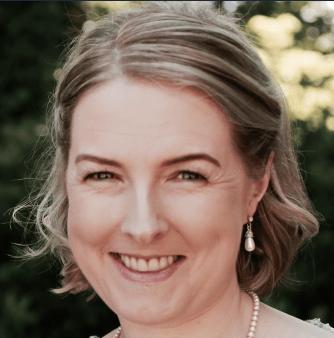
I am one of the new members of the criminology team at UoN and have joined from the University of Manchester where I have been a teaching assistant (probably the equivalent of associate lecturer at UoN) for the last couple of years while I’ve been working on my PhD. I’m looking forward to my new role as lecturer in criminology and hopefully at some point meeting students in real life, face to face. It’s a bit strange starting a new job in a new town when I’m still sat in my living room in Manchester, but the rest of the team have made me feel welcome regardless.
My journey into criminology is a funny one. I did life the opposite to many people, having my first child at 16. When my second child went to school I decided to return to education and as I didn’t have A-levels I has to undertake an Access diploma to get into university. I was required to choose three subjects and at first, I opted for English literature because I love(d) reading (I’m sure I still love reading but I’ve not read anything non-work related for a long time). I picked sociology because it sounded interesting and the same with history. At the last minute I swapped history to criminology and never looked back. From my first lesson I knew this was my future, although at that point I wasn’t sure how.
I always had imposter syndrome and never thought my work was good enough (still do today but we’ll save that for another blog post), but my Access tutor believed in me and suggested I apply to the University of Manchester. As I was a mature student, I had to attend an interview with two of the lecturers. I was super nervous, but I got a place and never left. The undergraduate degree was difficult at times because there were only a couple of mature students and they eventually dropped out. I wasn’t in halls and had kids at home, so I didn’t have the same student experience as many of my cohort, however I made some great friends particularly those who stayed to undertake our MRes.
I finished my undergraduate degree with a first and was awarded a scholarship for my research Masters’ then luckily got another studentship for my PhD which is near completion and here I am. Since I’m teaching research methods modules this year my students will be pleased to know that my BA (Hons) and MRes were heavily focussed on research methods and my PhD has given me three years of real-life research experience. My dissertations and thesis have all followed my research interests in the psychology of victimisation and border criminology. My PhD thesis explores the victimisation of refugees and how they cope. That’s all I will say about my research right now, but I will write another blog about it at some point. Probably when I’ve finished writing it and the hard work is a distant memory.
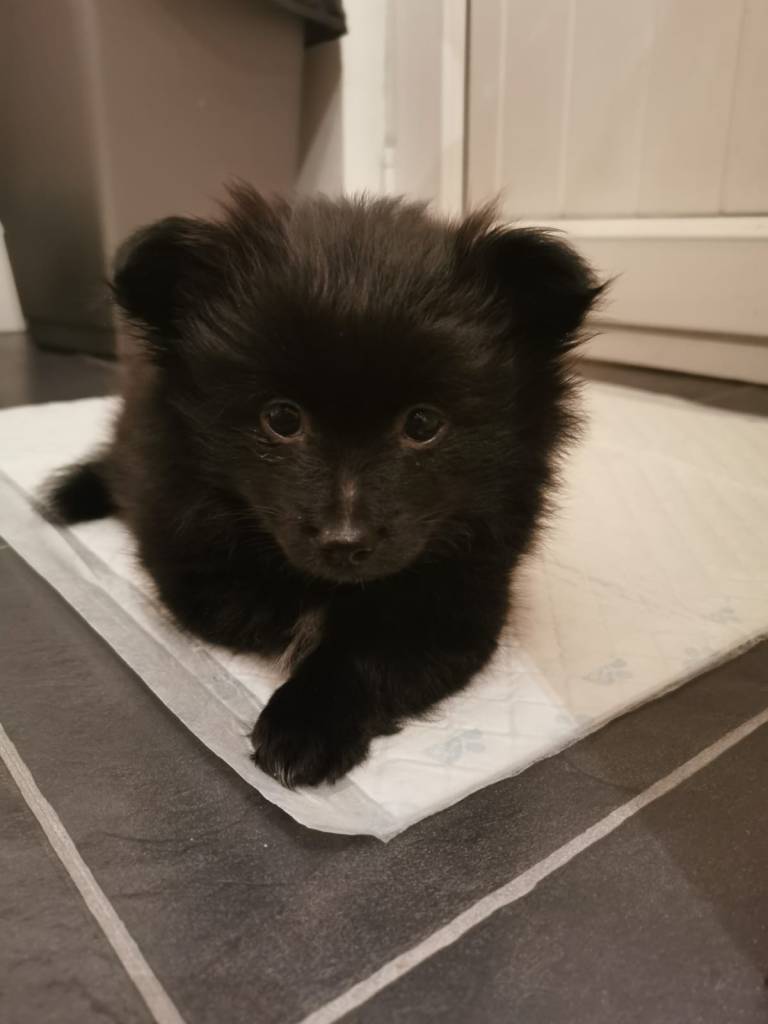
On a personal note, the daughter I had at 16 is now grown up and lives on her own and my youngest is a sassy 14-year-old girl. We have also just got our Pomeranian puppy Prince. In my free time I’m usually doing something active. I’m a Crossfitter and many of my closest friends are gym friends so the gym is both my mental health crutch and my social life. When I do eventually sit down, I love a good box set. I’m currently watching The Morning Show with Jennifer Aniston and Reese Witherspoon. Recommendations via email are welcome.
Now you know a little bit about me. I’ll look forward to getting to know all the criminology students soon, either virtually or face to face. Hopefully some of you will put your cameras on at least for a day so that when we eventually meet, I’ll know who you are.
Share this:


Time to hear from our students

As part of their commitment to provide an inclusive space to explore a diversity of subjects, from a diverse range of standpoints, the Thoughts from the Criminology team have decided to introduce a new initiative.
From tomorrow (Sunday 21 June) all weekend posts will come from our students. We know that all of our students have plenty to say, they are smart, articulate and have both academic and experiential knowledge on which to draw. We know our readers will be as impressed as we are, by their passion and their criminological imagination.
Over to you, Criminology Students!
Share this:


“My Favourite Things”: madams1965

My favourite TV show - So many to chose from! Recently finished Narcos and Narcos Mexico. Currently watching Better Call Saul and The Crown

My favourite place to go - Lyme Regis in Dorset. My parents retired there almost 20 years ago & we go down every Easter to enjoy bracing walks along The Cobb, leisurely lunches in village pubs, and fish and chips on the seafront. It’s the first place we’re going once Lockdown is over!

My favourite city - I have two: New York and Rome. I love the energy of New York, the friendliness of the people, the restaurants, theatres and bars – it just has something indescribable. In contrast, Rome is so laid back and chilled. I could sit outside a café in the Piazza della Rotonda, across from the Pantheon all day, just drinking coffee and watching the world go by, and the occasional street entertainers, before they are moved on by the Carabinieri.

And Heidelberg! Sorry I’m just being greedy now, but that is probably one of the most beautiful cities. And nothing beats a lazy cruise down The Necker River in the sun surrounded by all that lush green German countryside

My favourite thing to do in my free time - Read, read, read! Or watch Netflix! Or travel

My favourite athlete/sports personality - Not a sports fan I’m afraid

My favourite actor - Tom Hardy or Gary Oldman

My favourite author - I’ll read anything by anyone, but Jane Austen stands out from the crowd. I also love biographies

My favourite drink - Edinburgh Gin Rhubarb and Ginger Liqueur with ice and lemonade is beautifully refreshing in summer. In the winter I love a coffee flavoured Baileys with a shot of brandy. And all year round it’s red wine. Anyone will do, I’m not fussy!

My favourite food - As you can tell, I love all food!

My favourite place to eat - At home when my husband cooks his signature lamb pasanda

I like people who - don’t judge others, who are respectful and kind, and who make me laugh.

I don’t like it when people - dominate conversations, interrupt or are dismissive of others. And I don’t like bullies

My favourite book - So many I don’t know where to begin. A few of the best books I’ve read would have to include The Five by Hallie Rubenhold, Fanny and Stella by Neil McKenna, and The Fact of a Body by Alexandria Marzano-Lesnevich. I am currently reading The Poisonwood Bible by Barbara Kingsolver, and before that I read The End of the Affair by Graeme Greene, and One Flew Over the Cuckoo’s Nest by Ken Kesey

My favourite book character - At the moment (because I’m reading it) it’s Rachel from The Poisonwood Bible. She’s the eldest daughter of a bible thumping missionary who took his family to The Congo in the 1960s. Rachel is sassy and funny and thinks she’s worldly-wise at the age of 17 but mispronounces her big grown-up words and is completely oblivious to the danger around her!

My favourite film - There are so many brilliant films that I watch over and over, but my all-time favourite has to be Brokeback Mountain. Apart from the fact that the cinematography and music score are amazing, it’s just a story about such pure love and heartbreak, I cry more each time I watch it

My favourite poem - W. D. Auden’s Funeral Blues

My favourite artist/band - Showing my age here – Johnny Cash, U2, Queen, Elton John, but also Florence and The Machine, Coldplay and Mumford and Sons

My favourite song - Coldplay’s Fix You

My favourite art - I don’t have a favourite but like all sorts from Banksy to Lowry to Monet

My favourite person from history - Jane Austen


 Thoughts from the criminology team