
Home » Love
Category Archives: Love

Grief through art and privilege

Recently, I find myself constantly listening to Cat Burns’ (2025) new album ‘How to be Human’. An incredibly catchy, moving and soulful album. Lyrically, it navigates two types of grief; the death of a loved one (father and grandfather) and the end of a relationship. The lyrics are poignant and the melodies peaceful yet emotional. For somebody who has had this album hit too close too home, it is very much a ‘box of tissues at the ready’ type of album with some ‘get up and dance’ tracks included too.
Engaging with art (music, literature, print) which embodies and navigates grief can assist some in the healing process. Different people frame different emotions which hit in a whole new way. Music, art, literature are a necessity for human kind: but they are also a privilege. A privilege for those who can create, access and afford. Space, money, creativity are needed to create but also arguably to consume art as well. Is this fair given the unfortunate reality that we all will/have been bed fellows with grief, and these resources could help people process/address/feel?
This got me thinking about the broader collective which is grief: grieving for a previous version of yourself, grieving people, grieving a home, grieving something you want but cannot have, the ending of a relationship, loss of income. When I think about it, we grieve all sorts, yet these types of grief are not ‘mainstream’, or at least I hadn’t perceived them as such. And as I thought about grief, it made me think of those within the Secure Estate (children and adults), grieving the loss of loved ones, of relationships, of possibilities and of their liberties. Are they afforded the space to grieve? They are viewed as criminally responsible, and therefore deserving of punishment, and part of this punishment is loss but how do they process this? Do they view this loss of liberty in terms of grief? Are they afforded this privilege? I highly doubt it, and I wonder if this framing of grief and loss is something which needs deeper consideration when looking at rehabilitation. How can you rebuild and move forward if you haven’t processed, or at least begun to process, the loss. The loss of who you were, the loss of time, the loss of relationships, skills, knowledge etc.
In my humble opinion the album is beautiful and has made me deal with a new wave of feelings: but I think this is a good thing. As Burns (2025) identifies in ‘All this love’: it’s just part of the process. A process, given my positionality, I am privileged to be navigating with music, literature, family and friends. A privilege not afforded to all, or for all forms of grief. I think this should change. Grief can be all consuming, even on days when you think you’re on your feet, suddenly the rug is pulled from beneath you. And the tools you have, the space to be and to feel, are essential. So why then do we only afford them to some?
Bibliography:
Burns, C. (2025) ‘How to Be Human’. Available at Amazon Music (Accessed 31st October 2025)
Rosen, M. (2004) Sad Book. Somerville, MA: Candlewick Press
Savage, M. (2025) ‘Cat Burns’ new album shows a softer side to the Traitors star’, BBC, 31st October. Available at: https://www.bbc.co.uk/news/articles/cx2pxz14ypro (Accessed 11th November 2025)
Share this:


It’s all about perspective…

Within criminology, and other social science disciplines, the understanding that knowledge is socially constructed and meaning is given to things from people and their interactions is particularly pertinent: especially for researchers involved with people. And ‘perspective’ can be challenging to navigate, challenging to be critical of and challenging to recognise within and outside of a research context. Thinking about the public, the understanding of the nature of knowledge is often taken at face value and not viewed critically; perhaps a skill or requirement which should be part of mainstream education, then again maybe not. Consider the below example, your thoughts and attitudes towards the actors, actions and outcomes… consider your perspective.
A boy begins testing boundaries with his father, he deliberately disobeys him around where he can go and what he can do. He even encourages a friend to join him on his adventures: ducking away from the adult eyes that are watching over them. The boy is told off for putting himself and friend in a dangerous situation, and he appears sincere for his mistakes. Alas, he finds himself in trouble again; this time with dire consequences. The boy’s father dies trying to get him out of trouble. The boy runs away to a place where his past is unknown, and joins a group of outcasts. He grows up into a young man on the fringes of society. He is persuaded to return home, whereby he is involved in a violent fight, which almost results in his death. Luckily, he overcomes his opposition; finding himself with a only a few cuts and bruises. His opponent is forced to flee. He is triumphant, but at what cost?
This is one perspective and overview: from an outsider looking in. There are other ways to describe the example below (which we will come on to), but firstly: what are your thoughts on the young boy and his behaviour? What outcomes are required, if any, and at what stages of this boy’s life? Is this something which requires support, love and care or surveillance, control and discipline?
Another way of looking at the above scenario is to watch the Lion King (1994).1 The young boy in question is Simba. Maybe you already spotted that, maybe you aren’t familiar with the story or perspectives the film is told by. Perspectives matter….
- For those less familiar with Disney animations, the themes are also apparent within Shakespeare’s Hamlet (c. 1600). ↩︎
Share this:


Justice or Just Another One?

Luckily I’ve never been one for romantic movies. I always preferred a horror movie. I just didn’t know that my love life would become the worst horror movie I could ever encounter. I was only 18 when I met the monster who presented as a half decent human being. I didn’t know the world very well at that point and he made sure that he became my world. The control and coercion, at the time, seemed like romantic gestures. It’s only with hind sight that I can look back and realise every “kind” and “loving” gesture came from a menacing place of control and selfishness. I was fully under his spell. But anyway, I won’t get into every detail ever. I guess I just wanted to preface this with the fact that abuse doesn’t just start with abuse. It starts with manipulation that is often disguised as love and romance in a twisted way.
This man went on to break me down into a shell of myself before the physical abuse started. Even then, him getting that angry was somehow always my fault. I caused that reaction in his sick, twisted mind and I started to believe it was my fault too. The final incident took place and the last thing I can clearly recall is hearing how he was going to cave my head in before I felt this horrendous pressure on my neck with his other hand keeping me from making any noise that would expose him.
By chance, I managed to get free and RUN to my family. Immediately took photos of my injuries too because even in my state, I know how the Criminal Justice System would not be on my side without evidence they deemed suitable.
Anyway, my case ended up going to trial. Further trauma. Great. I had to relive the entire relationship by having every part of my character questioned on the stand like I was the criminal in this instance. I even got told by his defence that I had “Histrionic Personality Disorder”. Something I have never been diagnosed with, or even been assessed for. Just another way the CJS likes to pathologise women’s trauma. Worst of all, turns out ‘Doctor Defence’ ended up dropping my abuser as he was professionally embarrassed when he realised he knew my mother who was also a witness. Wonderful. This meant I got to go through the process of being criminalised, questioned, diagnosed with disorders I hadn’t heard of at the time, hear the messages, see the photos ALL over again.
Although “justice” prevailed in as much as he was found guilty. All for the sake of a suspended sentence. Perfect. The man who made me feel like he was my world then also tried to end my life was still going to be free enough to see me. The law wasn’t enough to stop him from harming me, why would it be enough to stop him now?
Fortunately for me, it stopped him harming me. However, it did not stop him harming his next victim. For the sake of her, I won’t share any details of her story as it is not mine to share. Yet, this man is now behind bars for a pretty short period of time as he has once again harmed a woman. Evidently, I was right. The law was not enough to stop him. Which leads me to the point of this post, at what stage does the CJS actually start to take women’s pleas to feel safe seriously? Does this man have to go as far to take away a woman’s life entirely before someone finally deems him as dangerous? Why was my harm not enough? Would the CJS have suddenly seen me as a victim, rather than making me feel like a criminal in court, if I was eternally silenced? Why do women have to keep dying at the hands of men because the CJS protects domestic abusers?”
Share this:


2024: the year for community and kindness?


The year 2023 was full of pain, loss, suffering, hatred and harm. When looking locally, homelessness and poverty remain very much part of the social fabric in England and Wales, when looking globally, genocide, terror attacks and dictatorships are evident. Politics appear to have lost what little, if any, composure and respect it had: and all in all, the year leaves a somewhat bitter taste in the mouth.
Nevertheless, 2023 was also full of joy, happiness, hope and love. New lives have been welcomed into the world, achievements made, milestones met, communities standing together to march for a ceasefire and to protest against genocide, war, animal rights, global warming and violence against women to name but a few. It is this collective identity I hope punches its way into 2024, because I fear as time moves forward this strength in community, this sense of belonging, appears to be slowly peeling away.
When I recollect my grandparents and parents talking about ‘back in the day’ what stands out most to me is the community identity: the banding together during hard times. The taking an interest, providing a shoulder should it be required. Today, and even if I think back critically over the pandemic, the narrative is very singular: you must stay inside. You must be accountable, you must be responsible, you must get by and manage. There is no narrative of leaning on your neighbours, leaning on your community to the extent that, I’m under the impression, existed before. We have seen and felt this shift very much so within the sphere of criminal justice: it is the individual’s responsibility for their actions, their circumstances and their ‘lot in life’. And the Criminologists amongst you will be uttering expletives at this point. I think what I am attempting to get at, is that for 2024 I would like to see a shared identity as humankind come front and central. For inclusivity, kindness and hope to take flight and not because it benefits us as singular entities, but because it fosters our shared sense of, and commitment to, community.
But ‘community’ exists in so much more than just actions, it is also about our thoughts and beliefs. My worry: whilst kindness and support exist in the world, is that these features only exist if it does not disadvantage (or be perceived to disadvantage) the individual. An example: a person asks me for a sanitary product, and having many of them on me the vast majority of the time, means I am able and happy to accommodate. But what if I only had one left and the likelihood of me needing the last one is pretty high? Do I put myself at a later disadvantage for this person? This person is a stranger: for a friend I wouldn’t even think, I would give it to them. I know I would, and have given out my last sanitary product to strangers who have asked on a number of occasions. And if everyone did this, then once I need a product I can have faith that someone else will be able to support me when required. The issue, in this convoluted way of getting there, is for most of us (including me as evidenced) there is an initial reaction to centralise ‘us’ as an individual rather than focus on the community aspect of it. How will, or even could, this impact me?
Now, I appreciate this is overly generalised, and for those that foster community to all (not just those in their community and are generally very selfless) I apologise. But in 2024, I would like to see people, myself included, act and believe in this sense of community rather than the individualised self. I want people to belong, to support and to generally be kind and not through thinking about how it impacts them to do so. We do not have to be friends with everyone, but just a general level of kindness, understanding and a shared want for a better, inclusive, and safe future would be great!
So Happy New Year to everyone! I hope our 2024 is full of peace, prosperity, community, safety and kindness!

Share this:


Festive messages, a legendary truce, and some massacres: A Xmas story

Holidays come with context! They bring messages of stories that transcend tight religious or national confines. This is why despite Christmas being a Christian celebration it has universal messages about peace on earth, hope and love to all. Similar messages are shared at different celebrations from other religions which contain similar ecumenical meanings.
The first official Christmas took place on 336 AD when the first Christian Emperor declared an official celebration. At first, a rather small occasion but it soon became the festival of the winter which spread across the Roman empire. All through the centuries more and more customs were added to the celebration and as Europeans “carried” the holiday to other continents it became increasingly an international celebration. Of course, joy and happiness weren’t the only things that brought people together. As this is a Christmas message from a criminological perspective don’t expect it to be too cuddly!
As early as 390 AD, Christmas in Milan was marked with the act of public “repentance” from Emperor Theodosius, after the massacre of Thessalonica. When the emperor got mad they slaughtered the local population, in an act that caused even the repulson of Ambrose, Bishop of Milan to ban him from church until he repented! Considering the volume of people murdered this probably counts as one of those lighter sentences; but for people in power sentences tend to be light regardless of the historical context.
One of those Christmas celebrations that stand out through time, as a symbol of truce, was the 1914 Christmas in the midst of the Great War. The story of how the opposing troops exchanged Christmas messages, songs in some part of the trenches resonated, but has never been repeated. Ironically neither of the High Commands of the opposing sides liked the idea. Perhaps they became concerned that it would become more difficult to kill someone that you have humanised hours before. For example, a similar truce was not observed in World War 2 and in subsequent conflicts, High Commands tend to limit operations on the day, providing some additional access to messages from home, some light entertainment some festive meals, to remind people that there is life beyond war.
A different kind of Christmas was celebrated in Italy in the mid-80s. The Christmas massacre of 1984 Strage Di Natale dominated the news. It was a terrorist attack by the mafia against the judiciary who had tried to purge the organisation. Their response was brutal and a clear indication that they remained defiant. It will take decades before the organisation’s influence diminishes but, on that date, with the death of people they also achieved worldwide condemnation.
A decade later in the 90s there was the Christmas massacre or Masacre de Navidad in Bolivia. On this occasion the government troops decided to murder miners in a rural community, as the mine was sold off to foreign investors, who needed their investment protected. The community continue to carry the marks of these events, whilst the investors simply sold and moved on to their next profitable venture.
In 2008 there was the Christmas massacre in the Democratic Republic of Congo when the Lord’s Resistance Army entered Haut-Uele District. The exact number of those murdered remains unknown and it adds misery to this already beleaguered country with such a long history of suffering, including colonial ethnic cleansing and genocide. This country, like many countries in the world, are relegated into the small columns on the news and are mostly neglected by the international community.
So, why on a festive day that commemorates love, peace and goodwill does one talk about death and destruction? It is because of all those heartfelt notions that we need to look at what really happens. What is the point of saying peace on earth, when Gaza is levelled to the ground? Why offer season’s wishes when troops on either side of the Dnipro River are still fighting a war with no end? How hypocritical is it to say Merry Christmas to those who flee Nagorno Karabakh? What is the point of talking about love when children living in Yemen may never get to feel it? Why go to the trouble of setting up a festive dinner when people in Ethiopia experience famine yet again?
We say words that commemorate a festive season, but do we really mean them? If we did, a call for international truce, protection of the non-combatants, medical attention to the injured and the infirm should be the top priority. The advancement of civilization is not measured by smart phones, talking doorbells and clever televisions. It is measured by the ability of the international community to take a stand and rehabilitate humanity, thus putting people over profit. Sending a message for peace not as a wish but as an urgent action is our outmost priority.
The Criminology Team, wishes all of you personal and international peace!
Share this:


Vaccine day
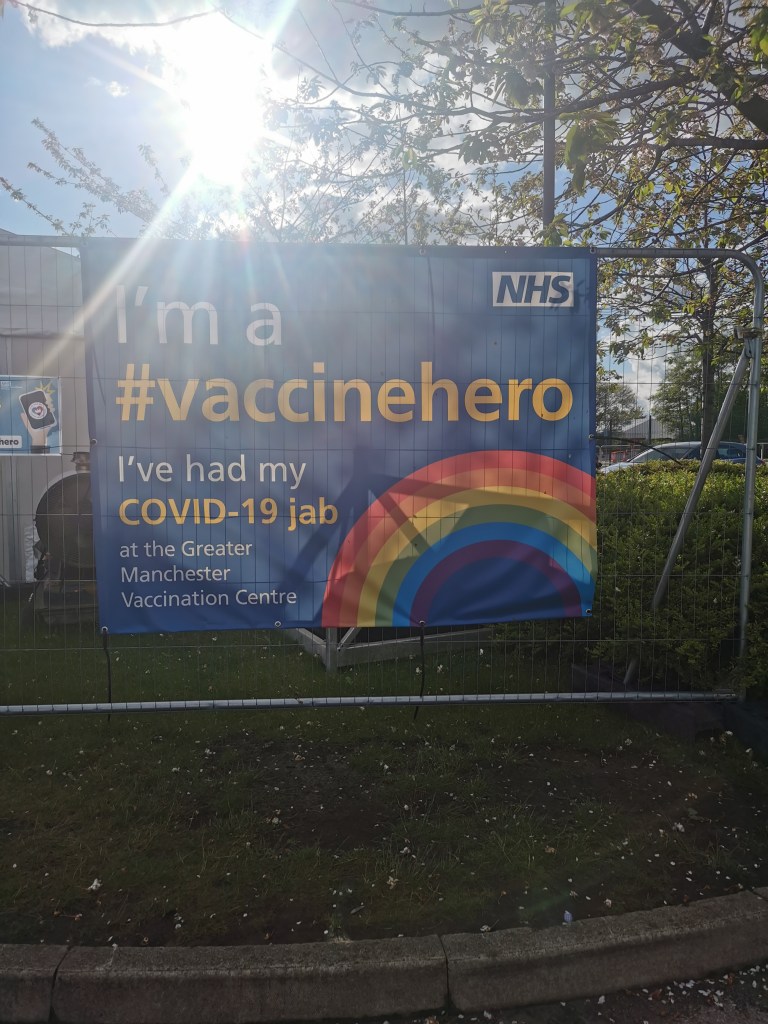
I had my first Covid-19 vaccine recently and the day was emotional, to say the least. I am 99% compliant with Covid-19 restrictions, partly because it is the law but primarily because I believe it is the right thing to do to protect others. In fact, there have been many times over the last 15 months where I have avoided the news for my own sanity so half the time, I do not exactly know what the latest rules are. I am guided by my own risk assessments and am probably more restrictive than the law in most scenarios. Up until vaccine day I thought that I wasn’t scared of contracting Covid-19, that I was complying as an act of altruism and that I would not be able to live with myself if I unwittingly passed the virus on to somebody vulnerable to severe illness and death.
Back in March 2020 when infections then the death toll started to rise, and the NHS became increasingly overwhelmed I would watch what my daughter and I called ‘the Boris show’ where the Prime Minister and the scientists would recall the daily death data, hospitalisations and cases. Each ‘next slide please’ bringing more bad news. Each day I would think about the families of every single one of those people who had died. It was quite overwhelming, and I eventually had to limit the information I ingested, living in both a physical and informational bubble. I recall the death toll announcements were met with responses from the covid-deniers, ‘but they’re old or ill anyway’, and ‘but they could have been hit by a bus and still counted as a covid death’. As a victimologist, this infuriated me. Who were these people to flippantly dismiss right to life based on age or health? It frustrated me that people with no knowledge of statistics, medicine or science were making assumptions based on anecdotal evidence from Bob on Facebook. But then again perhaps these are the tales people told themselves to get through. If they deny it, they have nothing to fear.
A few months later in June 2020, my somebody close to me contracted Covid-19. I was told they were doing well and seemed to be recovering from the virus. They died more than 28 days after having first being diagnosed with Covid-19, but it was Covid-19 that killed them. I know because I saw them to say goodbye a couple of hours before they died. This person who was always so full of life, love and who saw the good in everyone and everything, was now fading away. But what haunts me to this day was the sound of their lungs. The sound I’d heard people talk about on the news. Crisp packet lungs. And it was that sound that was like an earworm in my head on my way to the vaccination centre.
I’ve been looking forward to getting vaccinated since vaccines were on the horizon so I was excited when I received the text invitation. I booked to attend the Greater Manchester vaccination centre at the Etihad stadium, the home of Manchester City Football Club. It was well organised, despite the large numbers of people coming through. First, I was required to check in and was allocated the Moderna vaccine and a green sticker which ensured staff could direct me to the correct queue. Then I checked in at another desk where I was given some information, asked some health questions and, most importantly, I was asked, ‘do you want the vaccine?’. Those who have sat one of the research methods modules I have taught this year will have heard me discuss the importance of informed consent and this also applies to real life situations such as this. After this I joined another queue and finally reached the vaccination point, had the jab, waited for 15 minutes and left. Just like that. The whole thing took about an hour and given the volume of people being vaccinated (the site is a mass vaccination hub for a large area), I found it to be incredibly efficient. Every staff member I met was informative and did what they could to put people at ease.
From the moment I left home to go to the vaccination centre, to the moment my head hit the pillow that evening, I couldn’t help reflecting on the last 15 months. I felt a wave of emotions. I felt extreme sadness and sorrow at all the lives lost and all the families and friends left behind. It has been a traumatic time for so many of us. Getting the vaccine, I felt some sort of release from this, like it was nearly over. I have worked from home throughout and have had little social interaction, except when the gyms have been open or I have undertaken caring responsibilities for various friends and family. There were also a few weeks towards the end of lockdown 1 where my sister came to stay after returning from India. Overall, I have been alone with a teenager at a desk in my living room. It’s been awful. I’m tired and I need a break. I am well overdue a mum-cation. I felt some hope that sometime soon I might be able to get a parenting break and that my daughter can also get a break from me. I said earlier how I believed I had not feared contracting covid but having the vaccine and the relief I felt made me realise that I was more scared than I would care to admit. I am young(ish) and extremely healthy and I would probably be at low risk of developing serious symptoms but what if I was an unlucky one?
Aside from my personal experiences, I felt a collective relief. The global pandemic has created global trauma. There are still countries being ravished by the virus without the resources to operate mass vaccination of entire populations. I worry for the world and wonder what borders will look like after, if there ever is an after but I’ll ponder this further in another blog later. Getting vaccinated and being part of a mass vaccination programme made me feel cautiously optimistic. However, a few weeks on and we are now in a situation where the Delta variant is spreading like wildfire. Deaths have risen by 42.5% in the last week and hospital admissions by 44.7%. The numbers are still incredibly low in comparison to the first and second wave but every one of those deaths and hospitalisations matter. They are not a number on a presentation slide. They are people who have families and friends, who are cared for by the NHS. Every one of the deaths is a loss to these people, and has a butterfly effect in terms of the impact each death has.
Restrictions are set to lift imminently I believe (still avoiding the news) and it makes me feel uneasy to say the least. I’ve seen experts whom I trust argue on both sides of the fence. Some say this is dangerous, others suggest summer is the best opportunity to lift restrictions. It sometimes feels like we are living in some kind of twisted experiment. Regardless, I will continue to assess and manage the risk to myself and those around me. I’ll probably wear masks way after it is legal to do so and expect I will still be cautious about who I am physically close to and how I socialise. There’s things that I love and miss such as the theatre, cinema and the occasional gig but I don’t feel ready. I have a feeling this pandemic is far from over.
Share this:


I smell flowers. #BlackenAsiaWithLove
There’s a pile of garbage I pass every day on the way to work. It stinks, and often I see folks hurling a bag of crap into the overflowing dumpster. Which usually rolls off and spills onto the walkway. It sucks! It’s one of the reasons we were wearing masks here long before Covit. Yet, I see this scene, and also see, the old women who make their rounds on bicycles throughout the day, going from dumpster to dumpster, separating and gathering the recyclables, re-usables, up-cyclables, and genuinely turning this trash into an income stream. To protect from the sun and elements, they wear coverings from head-to-toe: masks, gloves and those cone-shaped, bamboo/palm-leaf hats traditionally worn on farms.
Tucked in the corner about six meters away, I pass a woman who has a tea stand under a large umbrella, under a giant tree. Hanoi is full of such vibrant trees; at least three people can comfortably sit across the diameter. I am in awe each time I pass. Like the other ladies dotted around our lake, she sells snacks, cigarettes, and small glass cups of ice-cold green ice tea. You can see piles of used tea leaves on her end of the dumpster. I’ve noticed that mostly motorcycle taxi drivers take refuge there, monitoring the App for a nearby ping.
Later that night, I can hear and see a garbage truck come by and hoist the dumpster up and empty it into its bowels. Hanoi has many narrow streets and alleyways – narrower than these trucks – so luckily collection is often done at night. This certainly helps keep the traffic flow during busier times. Worse still, if not for these dumpsters folks would burn even more rubbish along the streets than is already customarily tolerated. In addition to these toxic fumes, consider the ritual imitation money that many local families burn twice monthly as an offering to their ancestors. Toxic fumes are another reason many ‘stay’ wearing a mask in Hanoi. I look at all the plastic dumped in the dumpster, and am relieved that it won’t be burned here. I see all this, too, as I walk by each day.
What’s more, I’ve been out late nights and seen plenty of these trucks totally teamed by women. This overflowing heap of hot, disgusting mess reminds me that I am in a society where women participate in everyday ways I hadn’t even ever dreamed. This heap will be gone soon, and replenished for all these women and their work. This makes me smile as I pass the heap. Using mindfulness, I can no longer smell the stench, it smells like flowers. Today, roses.

Late-night rubbish collection in Hanoi. All female team.
Share this:


8 Kids and Judging
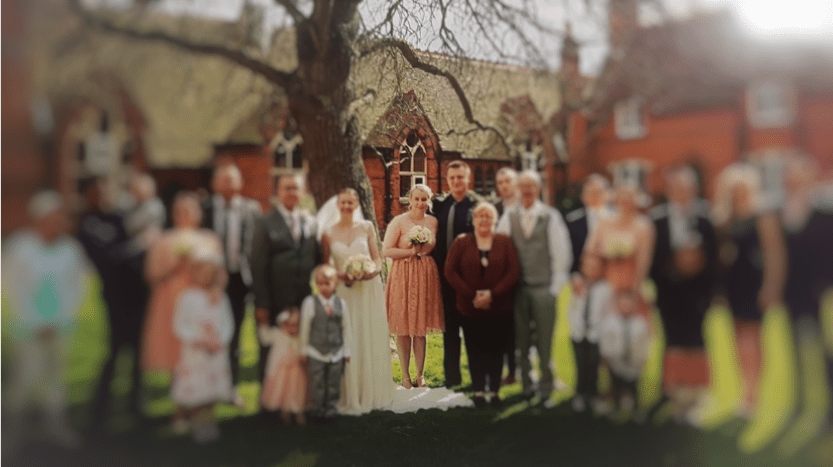
Written by @bethanyrdavies with contributions from @haleysread
Big Families are unique, the current average family size is 2.4 (Office for National Statistics, 2017) which has declined but remained as such for the past decade. Being 1 of 8 Children is unique, it’s an interesting fact both myself and Haley (also a former graduate and also 1 of 8) both fall back on when you have those awful ice breakers and you have to think of something ‘special’ about yourself.
There is criminological research which identifies ‘large families’ as a characteristic for deviance in individuals (Farrington & Juby, 2001; Wilson, 1975). It’s argued alongside other family factors, such as single-parent households, which maybe more people are familiar with in those discussions. In fact, when looking for criminological research around big families, I didn’t find a great deal. Most of what I found was not looking at deviance but how it affects the children, with suggestions of how children in big families suffer because they get less attention from their parents (Hewitt et al. 2011). Which may be the reality for some families, but I also think it’s somewhat subjective to determine an amount of time for ‘attention’ rather than the ‘quality’ of time parents need to spend with children in order to both help fulfil emotional and cognitive needs. This certainly was not the case from both Haley’s and experience.
When I first thought about writing this piece and talking to Haley about her experiences. I did question myself on how relevant this was to criminology. The answer to that I suppose depends on how you perceive the vastness of criminology as an academic field. The family unit is something we discuss within criminology all the time, but family size is not always the focus of that discussion. Deviance itself by definition and to deviate from the norms of society, well I suppose myself and Haley do both come from ‘deviant’ families.
However, from speaking with Haley and reflecting on my own experience, it feels that the most unique thing about being part of a large family, is how others treat you. I would never think to ask anyone or make comments such as; “How much do your parents earn to look after you all?” or “Did they want a family that big or was it lots of accidents?” or even just make comments, about how we must be on benefits, be ‘Scroungers’ or even comments about my parents sexual relationship. Questions and comments that both I and Haley have and occasionally still experience. Regardless of intent behind them, you can’t help but feel like you have to explain or defend yourself. Even as a child when others would ask me about my family, I had always made a point of the fact that we are all ‘full siblings’ as if that could protect me from additional shame , shame that I had already witnessed in conversations and on TV, with statements such as “She’s got 5 kids all different dads”. Haley mentioned how her view of large families was presented to her as “Those on daytime television would criticise large families” and “A couple of people on our street would say that my parents should stop having kids as there are enough of us as it is.”
Haley and I grew up in different parts of the UK. Haley grew up in the Midlands and describes the particular area as disadvantaged. Due to this Haley says that it wasn’t really a problem of image that the family struggled financially, as in her area everyone did, so therefore it was normal. I grew up in a quite affluent area, but similar to Haley, we were not well-off financially. My childhood home was a council house, but it didn’t look like one, my mum has always been house proud and has worked to make it not look like a council house, which in itself has its own connotations of the ‘shame’ felt on being poor, which Haley also referenced to me. It was hard to even think of labeling us as ‘poor’, as similar to Haley, we had loads of presents at Christmas, we still had nice clothes and did not feel like we were necessarily different. Though it appears me and Haley were also similar in that both our dads worked all the hours possible, I remember my dad worked 3 jobs at one point. I asked my dad about what it was like, he said it was very hard, and he remembers that they were working so hard because if they went bankrupt, it would be in the newspaper and the neighbors would see. Which I didn’t even know was something that happened and has its own name and shame the poor issues for another post. Haley spoke of similar issues and the stress of ‘childcare and the temporary loss of hot water, electric and gas.’
The main points that came from both mine and Haley’s discussions were actually about how fun it is to have a large family, especially as we were growing up. It may not seem like it from my earlier points around finance, but while it was a factor in our lives, it also didn’t feel as important as actually just being a part of that loving family unit. Haley put it perfectly as “I loved being part of a large family as a child. My brothers and sisters were my best friends”. We spoke of the hilarity of simple things such as the complexities of dinner times and having to sit across multiple tables to have dinners in the evening. I had brothers and sisters to help me with my homework, my eldest sister even helped me with my reading every night while I was in primary school. Haley and I both seemed to share a love for den making, which when your parents are big into DIY (almost a necessity when in a big family) you could take tools and wood to the forest and make a den for hours on end. There is so much good about having a large family that I almost feel sorry for those who only believe the negatives. This post was simply to share a snippet of my findings, as well as mine and Haley’s experience. At the very least I hope it will allow others to think of large families in an alternative way and to realise the problems both me and Haley experienced, weren’t necessarily solely linked to our family size, but rather attitudes around social norms and financial status.
References:
Juby, H. and Farrington, D., 2001. Disentangling the Link between Disrupted Families and Delinquency: Sociodemography, Ethnicity and Risk Behaviours. The British Journal of Criminology, 41(1), pp.22-40.
Office for National Statistics. (2017). Families and households in the UK, Available at: https://www.ons.gov.uk/peoplepopulationandcommunity/birthsdeathsandmarriages/families/bulletins/familiesandhouseholds/2017 (Accessed: 5th June 2020).
Regoli, R., Hewitt, J. and DeLisi, M., 2011. Delinquency In Society. Boston: McGraw-Hill Higher Education.
Wilson, H., 1975. Juvenile Delinquency, Parental Criminality and Social Handicap. The British Journal of Criminology, 15(3), pp.241-250.
Share this:


Home educating in a pandemic
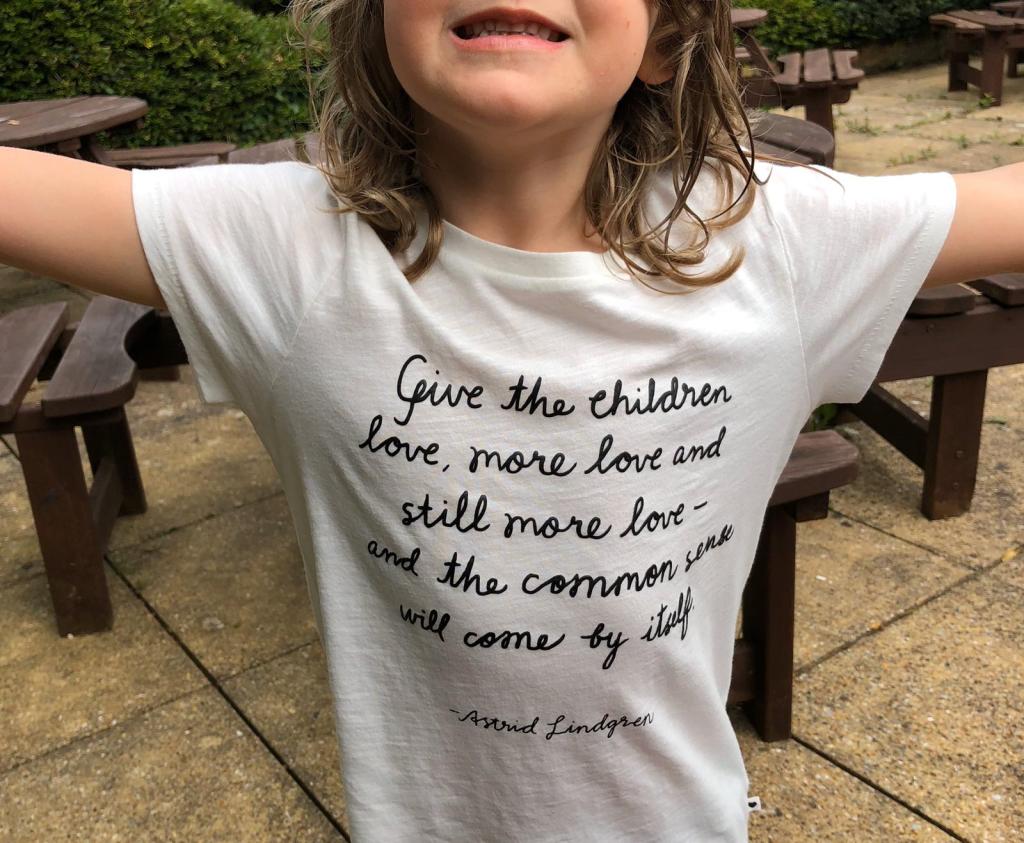
“Give the children love, more love and still more love - and the common sense will come by itself” - Astrid Lindgren
My children are aged 5 and 7 and they have never been to school. We home educate and though ‘home’ is in the title, we are rarely there. Our days are usually filled with visits to museums and galleries, meet-ups with friends, workshops in lego, drama and science and endless hours at the park. We’ve never done a maths lesson: sometimes they will do workbooks, but mostly they like to count their money, follow a recipe, add up scores in a game, share out sweets… I am not their teacher but an enthusiastic facilitator – I provide interesting ideas and materials and see what meaning they can take and make from them. Children know their own minds and learning is what they are built for.
If there was ever a time to throw away the rulebook it’s when the rules have all changed. Put ‘home’ at the centre of your homeschooling efforts. Make it a safe and happy place to be. Fill it with soft, warm and beautiful things. Take your time.
All this to say that what children need most is your love and attention. This is so far from an ideal situation for anyone – so cut yourselves some slack and enjoy your time together. You don’t need to model your home like a school. Share stories and poems, cuddle, build dens, howl at the moon, play games, look for shapes in clouds and stars, do experiments round your kitchen table, bake cakes, make art, explore your gardens and outside spaces and look for nature everywhere. This is the stuff that memories are made of.
As adults we don’t continue to categorise our learning by subjects – we see the way things are interconnected across disciplines, sometimes finding parallels in unlikely places. When we allow children to pursue their own interests we give them the tools and the freedom to make their own connections.
What’s important is their happiness, their kindness, their ability to love and be loved in return. They are curious, they are ready made learning machines and they seek out the knowledge they need when they need it.
It’s an interesting time to be a home educator – more children than ever are currently out of school and the spotlight is on ‘homeschooling’. I prefer the term ‘home educator’ because for me and my family it isn’t about replicating the school environment at home and perhaps it shouldn’t be for you either.
Treat it as an extended holiday and do fun stuff together but also let them be bored.

 Thoughts from the criminology team
