
Home » Language
Category Archives: Language

Changing the Narrative around Violence Against Women and Girls

For Criminology at UON’s 25th Birthday, in partnership with the Northampton Fire, Police and Crime Commissioner, the event “Changing the Narrative: Violence Against Women and Girls” convened on the 2nd April. Bringing together a professional panel, individuals with lived experience and practitioners from charity and other sectors, to create a dialogue and champion new ways of thinking. The first in a series, this event focused on language.
All of the discussions, notes and presentations were incredibly insightful, and I hope this thematic collation does it all justice.
“A convenient but not useful term.”
Firstly an overwhelming reflection on the term itself; ‘Violence Against Women and Girls’ – does it do justice to all of the behaviour under it’s umbrella? We considered this as reductionist, dehumanising, and often only prompts thinking and action to physical acts of violence, but perhaps neglects many other harms such as emotional abuse, coercion and financial abuse which may not be seen as, or felt as ‘severe enough’ to report. It may also predominantly suggest intimate partner or domestic abuse which may too exclude other harms towards women and girls such as (grand)parent/child abuse or that which happens outside of the home. All of which are too often undetected or minimised, potentially due to this use of language. Another poignant reflection is that we may not currently be able to consider ‘women and girls’ as one group, given that girls under 16 may not be able to seek help for domestic abuse, in the same way that women may be able to. We also must consider the impact of this term on those whose gender identity is not what they were assigned at birth, or those that identify outside of the gender binary. Where do they fit into this?
To change the narrative, we must first identify what we are talking about. Explicitly. Changing the narrative starts here.
“I do not think I have survived.”
We considered the importance of lived experience in our narratives and reflected on the way we use it, and what that means for individuals, and our response.
Firstly, the terms ‘victim’ and ‘survivor’ – which we may use without thought, use as fact, particularly as descriptors within our professions, but actually these are incredibly personal labels that only individuals with such experience can give to themselves. This may be reflective of where they are in their journey surrounding their experiences and have a huge impact on their experience of being supported. It was courageously expressed that we also must recognise that individuals may not identify with either of those terms, and that much more of that person still exists outside of that experience or label. We also took a moment to remember that some victims, will never be survivors.
Lived experience is making its way into our narratives more and more, but there is still much room for improvement. We champion that if we are to create a more supportive, inclusive, practical and effective narrative, we must reflect the language of individuals with lived experience and we must use it to create a narrative free from tick boxes, from the lens of organisational goals and societal pressure.
Lived experience must be valued for what it is, not in spite of what it is.
“In some cases, we allow content – which would otherwise go against our standards – if its newsworthy.”
A further theme was a reflection on language which appears to be causing an erosion of moral boundaries. For example, the term ‘misogyny’ – was considered to be used flippantly, as an excuse, and as a scapegoat for behaviour which is not just ‘misogynistic’ but unacceptable, abhorrent, inexcusable behaviour – meaning the extent of the harms caused by this behaviour are swept away under a ‘normalised’ state of prejudice.
This is one of many terms that along with things like ‘trauma bond’ and ‘narcissist’ which have become popular on social media without any rigour as to the correct use of the term – further normalises harmful behaviour, and prevents women and girls from seeking support for these very not normal experiences. In the same vein it was expressed that sexual violence is often seen as part of ‘the university experience.’
This use of language and its presence on social media endangers and miseducates, particularly young people, especially with new posting policies around the freedom of expression. Firstly, in that many restrictions can be bypassed by the use of different text, characters and emoji so that posts are not flagged for certain words or language. Additionally, guidelines from Meta were shared and highlighted as problematic as certain content which would, and should, normally be restricted – can be shared – as long as is deemed ‘newsworthy.’
Within the media as a whole, we pressed the importance of using language which accurately describes the actions and experience that has happened, showing the impact on the individual and showing the extent of the societal problem we face… not just what makes the best headline.
“We took action overnight for the pandemic.”
Language within our response to these crimes was reflected upon, in particular around the term ‘non-emergency’ which rape, as a crime, has become catalogued as. We considered the profound impact of this language for those experiencing/have experienced this crime and the effect it has on the resources made available to respond to it.
Simultaneously, in other arenas, violence toward women and girls is considered to be a crisis… an emergency. This not only does not align with the views of law enforcement but suggests that this is a new, emerging crisis, when in fact it is long standing societal problem, and has faced significant barriers in getting a sufficient response. As reflected by one attendee – “we took action overnight for the pandemic.”
“I’ve worked with women who didn’t report rape because they were aroused – they thought they must have wanted it.”
Education was another widely considered theme, with most talk tables initially considering the need for early education and coming to the conclusion that everyone needs more education; young and old – everything in between; male, female and everything in between and outside of the gender binary. No-one is exempt.
We need all people to have the education and language to pass on to their children, friends, colleagues, to make educated choices. If we as adults don’t have the education to pass on to children, how will they get it? The phrase ‘sex education’ was reflected upon, within the context of schools, and was suggested to require change due to how it triggers an uproar from parents, often believing their children will only be taught about intercourse and that they’re too young to know. It was expressed that age appropriate education, giving children the language to identify harms, know their own body, speak up and speak out is only beneficial and this must happen to help break the cycle of generational violence. We cannot protect young people if we teach them ignorance.
Education for all was pressed particularly around education of our bodies, and our bodily experiences. In particular of female bodies, which have for so long been seen as an extension of male bodies. No-one knows enough about female bodies. This perpetuates issues around consent, uneducated choices and creates misplaced and unnecessary guilt, shame and confusion for females when subjected to these harms.
“Just because you are not part of the problem, does not mean you are part of the solution.“
Finally, though we have no intention or illusion of resolution with just one talk, or even a series of them – we moved to consider some ways forward. A very clear message was that this requires action – and this action should not fall on women and girls to protect themselves, but for perpetrators for be stopped. We need allies, of all backgrounds, but in particular, we need male allies. We need male allies who have the education, and the words necessary to identify and call out the behaviour of their peers, their friends, their colleagues, of strangers on the bus. We asked – would being challenged by a ‘peer’ have more impact? Simply not being a perpetrator, is not enough.
Share this:


I am not your “ally” (or am I?)

Today’s blog entry is a stream of consciousness rather than a finished entry with an introduction, middle and conclusion. It’s something that has been puzzling me for sometime, trying to work out why the term “ally” discomforts me and yet, not really coming to a firm conclusion. So I thought I’d explore it through a blog entry and would welcome anyone’s input to help me clarify and refine my own thinking and either embrace or reject the term.
Anyone that knows me, knows I love reading and of course, I love words. I love to play with them, say them, write them, discover new ones and trace the etymology as far as I can. Equally, I do not hide the fact that I try to understand the world through both pacifism and feminism. This makes me rather susceptible to interrogating and challenging the things that I see around me, including the written and spoken word.
The most obvious place to start when exploring words, is a dictionary, and this blog entry does similar. According to the Cambridge English Dictionary the term “ally” has three distinct definitions:
“a country that has agreed officially to give help and support to another one, especially during a war”
“someone who helps and supports someone else”
“someone who helps and supports other people who are part of a group that is treated badly or unfairly, although they are not themselves a member of this group”
Now for obvious reasons, I find the first definition problematic, put simply for me, war is a crime. The act of waging war includes multiple violences, some individual, some institutional, some structural and all incredibly harmful decades, or even centuries later. Definitions which have roots in the military and warfare leave me cold and I hate the way in which they infiltrate civilian discourse. For example “the war on drugs”, “the war on poverty”, “officer to the meeting” and the reshaping of the term “ally” for the twenty-first century” I definitely don’t want to be the “ally” described in that definition.
Definition two is also problematic, albeit for different reasons. This definition seems far too broad, if I hold the door open for you, is that me being an ally? If I help you carry your heavy bags, can I say I’m your ally? This seems a nonsensical way to talk about everyday actions which would be better described as common civility, helping each other along the way.Should I say “thank you kind ally” every time, someone moves out of my way, or offers their seat on the bus? It seems evident that this definition does not help me explore my reservations.
The third definition appears to come closest to modern usage of the term “ally”. This term can be applied to many different groups (as can be seen from the badges below and these are just some of the many examples). “whilst I identify as cisgender, I’m a trans ally”, whilst currently heterosexual, I’m a LGBTQ+ ally”, despite being white, I’m a BLM ally” and so on. On the surface this is very positive, moving society away from the nonsense of people describing themselves as “colour-blind”, “gender-blind” or such trite phrases as “we all bleed the same”, ignoring the lack of equity in society and pretending that everyone has the same lived experience, the same opportunities, the same health, wealth and happiness. Buying into the hackneyed idea that if only you work hard enough, you will succeed, that we live in a classless society and the only thing holding anyone back is their own inertia.

However, maybe my problem isn’t with the word “ally” but the word “I”, and the fact that the two words seem inseparable, After all who decides who is an ally or who is not, is there a organisation somewhere that checks your eligibility to be an ally? I’m pretty sure there’s not which means that that “ally” is a description you apply to yourself. After all you can buy the badge, the t-shirt, the mug etc etc, capitalism is on your side, provided the tills are ringing, there’s every reason to sign up. Maybe a tiny percentage of your purchases goes to financially benefit the people you aim to support, for example the heavily criticised Skittles Pride campaign which donated only 2p to LGBTQ+ charities (and stands accused of white supremacy and racism). Of course, once you have bought the paraphernalia, there is no need to do anything else, beyond carrying/wearing/eating your “ally” goods with pride.
All of the above seems to marketise and weaponise behaviour that should be standard practice, good manners if you like, in a society. Do we need a special word for this kind of behaviour or should we strive to make sure we make space for everyone in our society? If individuals or groups gain civil rights, I don’t lose anything, I gain a growing confidence that the society in which I live is improving, that there is some movement (however small) toward equity for all. Societies should not make life more difficult for the people who live in them, regardless of religious or spiritual belief, we have one opportunity to make a good life for ourselves and others and that’s right now, so why seek to dehumanise and disadvantage other humans who are on the same journey as we are.
Ultimately, my main concern with the use of term of “ally” is that it obscures incredibly challenging social harms, with colour and symbols hiding inaction and apathy. Accept the label of “ally”, wear the badge, if you think it has meaning, but if you do nothing else, this is meaningless. if you see inequality and you do not call it out, take action to remedy the situation, the word “ally” means nothing other than an opportunity to make yourself central to the discussion, taking up, rather than making, room for those focused on making a more just society.
I still remain uncomfortable with the term “ally” and I doubt it will ever appear in my lexicon, but it’s worth remembering that an antonym of ally is enemy and nobody needs those.
Share this:

‘Guilty’ of Coming Out Daily – Abroad. #BlackenAsiaWithLove
I am annoyed that our apartment-building manager told my husband that a two-bedroom had recently become available, and that we should move in because we would be “more comfortable.” My husband always takes such statements at face value, then performs his own cost/benefits analysis. Did the manager offer a discount, I asked? I mean, if he’s genuinely concerned about our comfort, shouldn’t he put his money where his mouth is? That’s probably just the American in me talking: He was either upselling the property or probing us to see what the deal was – not at all concerned about our comfort. I speak code, too.
The most homophobic thing that anyone has ever said to me is not any slur, but that gay people should not “flaunt it.” As if concealing our identities would magically erase homophobia. This reveals that the speaker either doesn’t know – or doesn’t care to know – how readily people everywhere speak about our personal lives. There are random people I have met in every single part of the world, that ask my marital status. It comes shortly after asking my name and where I’m from. The words used are revealing – just ask any divorced person who has engaged with any society’s traditions. Is it deceptive to say that they are “single,” instead? What’s more, regardless of language, preferred terms like “unmarried” reveal the value conferred upon this status. You’re not a whole person until you’re married, and a parent. It is only then that one is genuinely conferred what we sociologists call ‘personhood’. Also, are married lesbians called two Mrs.?
Come out, come out wherever you are.
In many parts of the world, being ‘out’ carries the death penalty, including parts of my father’s homeland, Nigeria. I’ve literally avoided visiting Nigeria because of the media-fueled fear of coming out. I hate the distance it’s wedged between my people, our culture and I. There was a time when coming out was literally the hardest thing I ever had to do. Now, l must come out daily.
Back in the UK, many educators would like to believe that they don’t discuss their personal lives with students. But who hasn’t been casually asked how one spent the weekend? Do I not say “My husband and I…” just as anyone else might? Abroad, do I correct co-workers when they refer to us as ‘friends’? Yesterday, I attended an academic conference. All the usual small talk. I came out a dozen times by lunch.
In teaching English here in Asia, isn’t it unfair for me to conceal from my students the gender of my “life-partner,” which is actually our formal legal status? Am I politicising my classroom by simply teaching gender-neutral terms like ‘spouse’ or ‘partner’? Or, do I simply use the term ‘husband’ and skim over their baffled faces as they try to figure out if they have understood me properly? Am I denying them the opportunity to prepare for the sought-after life in the west? Further, what about the inevitability of that one ‘questioning’ student in my classroom searching for signs of their existence!
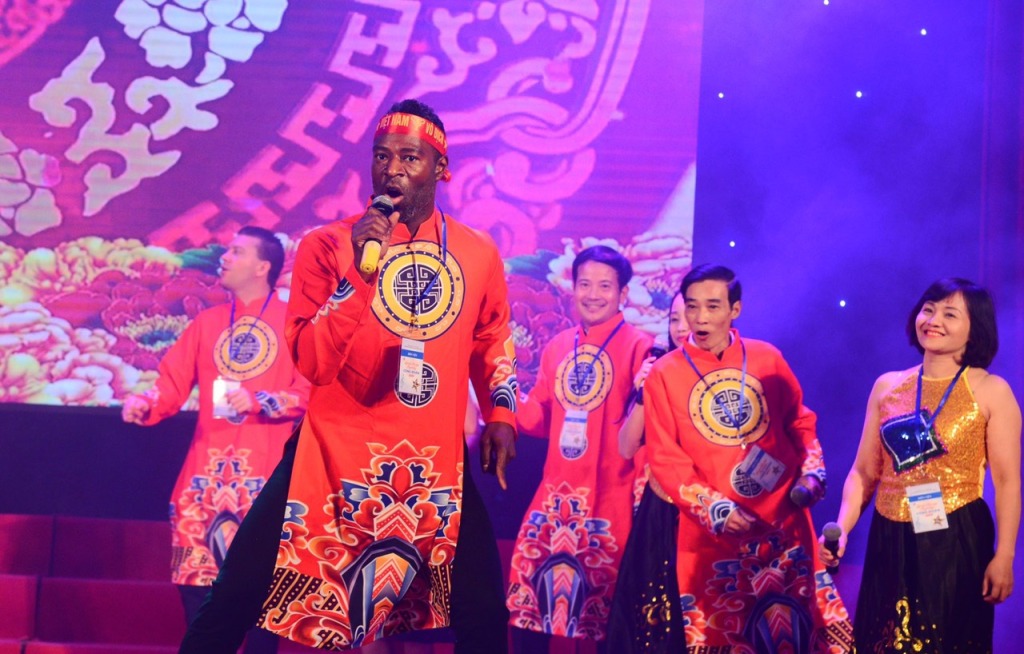
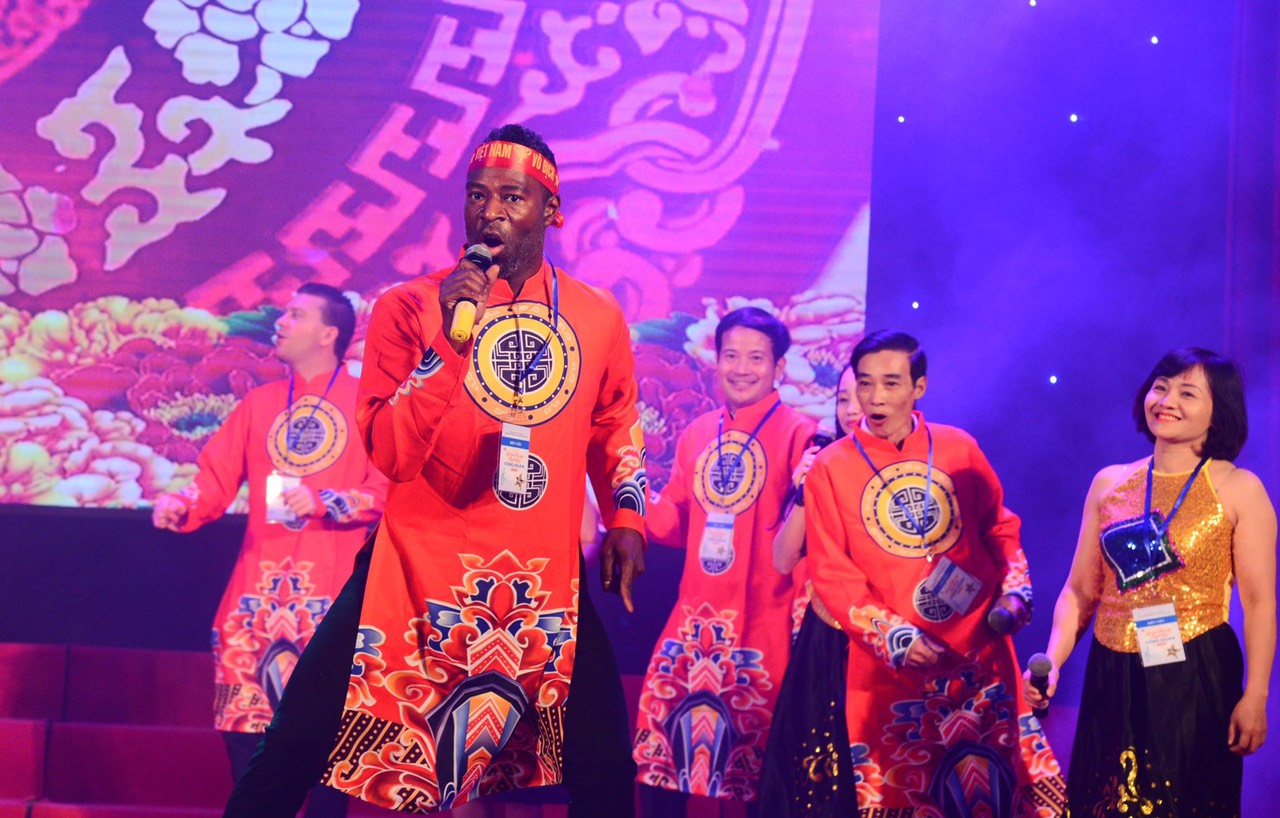
I was recently cornered in the hallway by the choreographer hired by our department to support our contribution to the university’s staff talent competition (see picture below*). She spoke with me in German, explaining that she’d lived several years in the former GDR. There are many Vietnamese who’d been ‘repatriated’ from the GDR upon reunification. So, given the historical ties to Communism, it’s commonplace to meet German (and Russian) speakers here. Naturally, folks ask how/why I speak (basic) German. My spouse of seventeen years is German, so it’d be weird if I hadn’t picked up any of the language. It’s really deceptive to conceal gender in German, which has three. I speak German almost every day here in Hanoi.
The word is ‘out’.
In Delhi, we lived in the same 2-bedroom flat for over 7 years. It became clear to our landlady very early on that we slept in one bedroom. Neighbours, we’re told, also noticed that we only ever had one vehicle between us and went most places together. Neither the landlady nor any neighbour ever confronted us, so we never had to formally come out. Yet, the chatter always got back to us.
As a Peace Corps volunteer in rural Mali in the late 90’s, I learned to speak Bambara. Bambara greetings are quite intimate: One normally asks about spouses, parents and/or children, just as Black-Americans traditionally would say “How yo’ momma doin?’” In Mali, village people make it their business to get single folks hitched. Between the Americans, then, it became commonplace to fake a spouse, just so one would be left in peace. Some women wore wedding bands for added protection, as a single woman living alone was unconscionable. The official advice for gays was to stay closeted L. While I pretended to be the husband of several volunteers, I could never really get the gist of it in my village. Besides, at 23 years old, being a single man wasn’t as damning as it is for women. I only needed excuses to reject the young women villagers presented to me. Anyhow, as soon as city migrants poured back to the village for Ramadan, I quickly discovered that there are plenty of LGBTQ+ folks in Mali! This was decades before Grindr.
Here in Hanoi, guys regularly, casually make gestures serving up females, as if to say: ‘Look, she’s available, have her’. I’ve never bothered to learn the expected response, nor paid enough attention to how straight men handle such scenarios. Recently, as we left a local beer hall with another (gay) couple, one waiter rather cheekily made such gestures at a hostess. In response, I made the same gestures towards him; he then served himself up as if to say ‘OK’. That’s what’s different about NOW as opposed to any earlier period: Millennials everywhere are aware of gay people.
A group of lads I sat with recently at a local tea stall made the same gestures to the one girl in their group. After coming out, the main instigator seamlessly gestured towards the most handsome in his clique. When I press Nigerian youth about the issue, the response is often the same: We don’t have a problem with gay people, we know gay people, it’s the old folk’s problem. Our building manager may be such a relic.
*Picture from The 2019 Traditional Arts Festival at Hanoi University of Science and Technology (HUST)
Share this:

“Political Drillin”
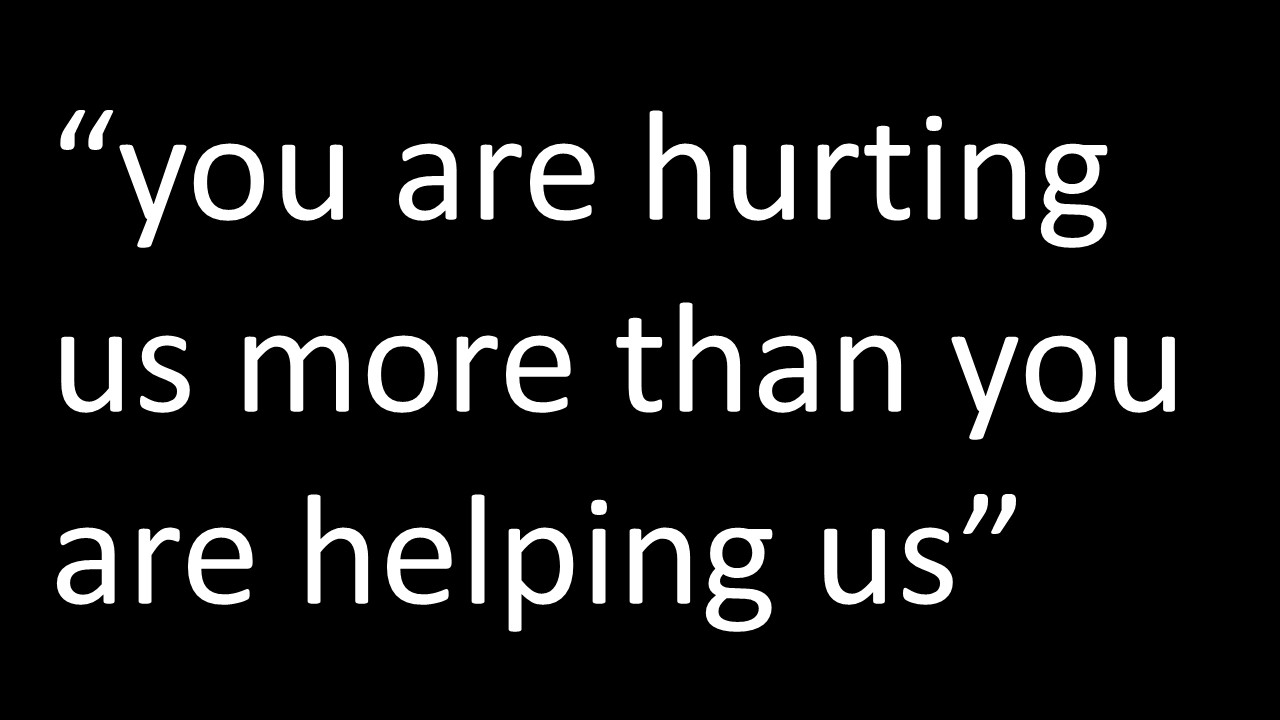
A recent track that has come to light which incorporates Drill Music is that called ‘Political Drillin’. On the track the artist manages to incorporate quotes from politicians; which proves he is highly deserving of his title ‘DrillMinister’.
What was particularly shocking to me was how easy it was for the governmental quotes to actually fit in with what he was initially rapping about, considering how frowned upon the genre is by these same figures.
It becomes very obvious that the slurs deemed as “violent” are ones that much of us are accustomed to hearing on a daily basis. In my interpretation, the artist seems to be bringing this to light. When young people use similar racial, derogatory terms towards one another it is seen to be violent and makes headlines, but politicians seem to throw these around in parliament without being reprimanded for their actions. Why is this continuously tolerated?
The fact that these comments are known to all and no action is taken against them demonstrates that there is a certain calibre of people that can be deemed as criminal and those who will not. Once again shedding light on the class, age and racial division that is hanging over society.
So once again I put the question out…is drill music a cause of violent crime, or are we simply a criminal society? If the DrillMinister can be labelled violent, surely politicians should be too?
*The image contains a quote from Jess Phillips MP utilised as a lyric by DrillMinister:
https://www.youtube.com/watch?v=spJoRLpDLLM

 Thoughts from the criminology team