
Home » Knowledge (Page 4)
Category Archives: Knowledge

Three Tips for Uni:

There are lots of blogs, articles, and Youtube videos which offer some useful tips for going to university, yet it always appears as though students haven’t watched/read them or in the excitement of coming to university they have forgotten what they were. So in the hope that new and existing students might read this, here are my 3 tips for studying at university, and they apply to all levels:
1) READ!!!
At various stages throughout your degree you will be told that you are reading for a degree, and that is the truth. Now reading may not be everybody’s cup of tea, however it is vital to attaining a degree. Lecturers will provide reading lists for your modules, and readings for seminars, however it is vital you go beyond these lists. In first year everything is new, and the likelihood of you being experienced in reading academic journals and textbooks is pretty slim, and therefore there is a good chance you’ll be reading things that don’t appear to make much sense. That is how I remember most of my first year at undergrad! However, perseverance is key: if you didn’t understand it the first time round, take a break and read it again! Still not making sense, then read it again. Variety in source selection and reading is also key, do not feel like you have to read everything off the reading lists, or that those are the only sources you should be engaging with: get creative, mix it up! To change a phrase from a certain, loveable but forgetful blue fish: ‘Just keep reading, just keep reading, just keep reading reading reading, what do we do, we read, read…’.
2) TALK!!
University is a new experience and it is very different from school! There are no teachers who will give you the answers, but rather lecturers who will help you harness the tools in order to pursue answers. Even returning students who are familiar with the university format of being vocal in seminars still feel uncomfortable the first few weeks back as they find their rhythm. Reading is key to acquire knowledge, but so is talking. Share your ideas and understandings with your friends, colleagues and lecturers. Answer the questions put to you by others. Ask questions when you are unsure or curious. Challenge views. Seminars run much smoother for everyone when discussion takes place, and discussion cannot happen without first reading and second talking. It can be uncomfortable and unnerving, even at MSc level when you’ve had 3 years of undergrad experience of talking in front of others and sharing ideas. It is not easy, and there is always fear of being wrong or sounding silly, but that is how we learn. I’m not saying you should go around talking to everyone and anyone about anything and everything, because I most certainly would not do that. But in seminars and lectures where knowledge is the goal, talking is key.
3) ENGAGE WITH FEEDBACK!
Finally, part of university life is assessments. Now if you are successful with reading and talking, then the assessment part of university should be less scary and more positive than if you otherwise have not read or asked questions/shared ideas. A large part of assessment is writing style, and there are various resources provided by the university at your disposal to help improve your writing, and to tailor your writing depending on the assessment. But a really crucial and essential tool is the feedback given to you by your lecturers. Whilst the feedback given to you on a piece of assessment is specific to that assessment in terms of content covered, it can also be applied to future assignments and therefore should be engaged with. We spend a large amount of time constructing feedback for students, in order to help improve their work and ultimately to help them succeed but very few students engage with it. If we have said you need to engage with more sources, the likelihood is that this needs to be done for all your assessments, similarly if there is a referencing issue or writing style concern. Engaging with your feedback is one of the quickest ways to improve your work, and if you do not understand the feedback, TALK to your lecturer about it.
Studying any level at university is very different to A-levels and college: it is ultimately independent learning where the lecturers will guide you and help you attain the skills required to complete your degree. It is an exciting and challenging time regardless of which stage you are at in your academic journey, and ultimately when you look back it should be something you are proud of. So to new students, welcome, to returning students, welcome back, and to you all: GOOD LUCK! 😊
Share this:


How to prepare for a year in University

In our society consumerism seems to rain supreme. We can buy stuff to make us feel better and we can buy more stuff to express our feeling to others and mark almost most events around us. Retail and especially all the shops have long been aware of this and so they have developed their seasonal material. These seasonal promotions may have become consumer events now although they do signify something incredibly important to culture and our collective consciousness. There is time for Christmas decorations and festive foods, Easter time and chocolate eggs, mother’s day and nauseating cards father’s day for equally grinchworthy cards. There is valentine’s day to say I love you in full fat chocolates, Halloween to give little kids rotten teeth and a red poppy to remember some of our dead. To those add the summer season with the disposable BBQs and of course the back to school season!
The back to school is one of the interesting ones. Geared to prepare pupils and parents for going back to school and plan ahead. From ordering the uniforms to getting all the stationery and books required. I remember this time of the year with some rather mixed emotions. It was the end of my summer holidays, but it was also the time to get back to school. Until one day I finished school and I went to university. Education is seen as part of a continuous process that we are actively involved from the first day at school to the last day in high school and more recently for more people also involve the first day of going to university. Every year is more challenging than the next, but we move up and continue. For those of us who enjoy education we continue the journey further to further or high education.
There is something to said about the preparation process coming to University; it is interesting seeing advertisements on education this time of the year on the tv and social media promoting stuff for this transition; from the got to have smartphone to the best laptop, the fastest printer scanner all in one thingy to the greatest sound system and many more stuff that would get you ready for the year ahead. Do they really help us out and if not, what do we got to do to prepare for coming to university?
Unfortunately, there is no standard formula here but there is a reason for that. Higher education is adult education. This is the first time in our educational journey that we are sitting firmly on the driving seat. We choose to study (or ought to) what we wish to study. It is an incredibly liberating process to have choice. This however is only the beginning. We make plans of our time. In higher education the bulk of the time required is independent study, and as such we got to negotiate how we will plan our time. We got to decide which reading we are going to do first which notes to read what seminar we shall prepare and what assignment we will make a draft of.
There will be days spent in the library looking for a book, days in a coffee shop talking to fellow students about the seminar reading, days in the learning hub working on an assignment. There are highs, lows and everything in between. But regardless of the emotion at every stage thee will be a sense of ownership of knowledge.
In the first couple of sessions, the bulk of the students keep quiet expecting the correct answer to be given. One interpretation or one truth that describes all. It takes a few times before the realisation emerges that the way we analyse, and project knowledge can be different provided we go through the same processes of scrutiny and analysis. Then conversation emerges and the more reading the better the quality of the ideas that shall emerge.
The first year at University is definitely a declaration of independence and the realisation that we all have a voice. Getting on to the road on empowerment. This is a long journey, and on occasions arduous but incredibly rewarding because it leads to an insight greater than before that removes ignorance and lifts the veil of the unfamiliar.
To our newest students – Welcome to the University and to our returning 2 and 3 years – Welcome back!
Share this:


Thinking “outside the box”
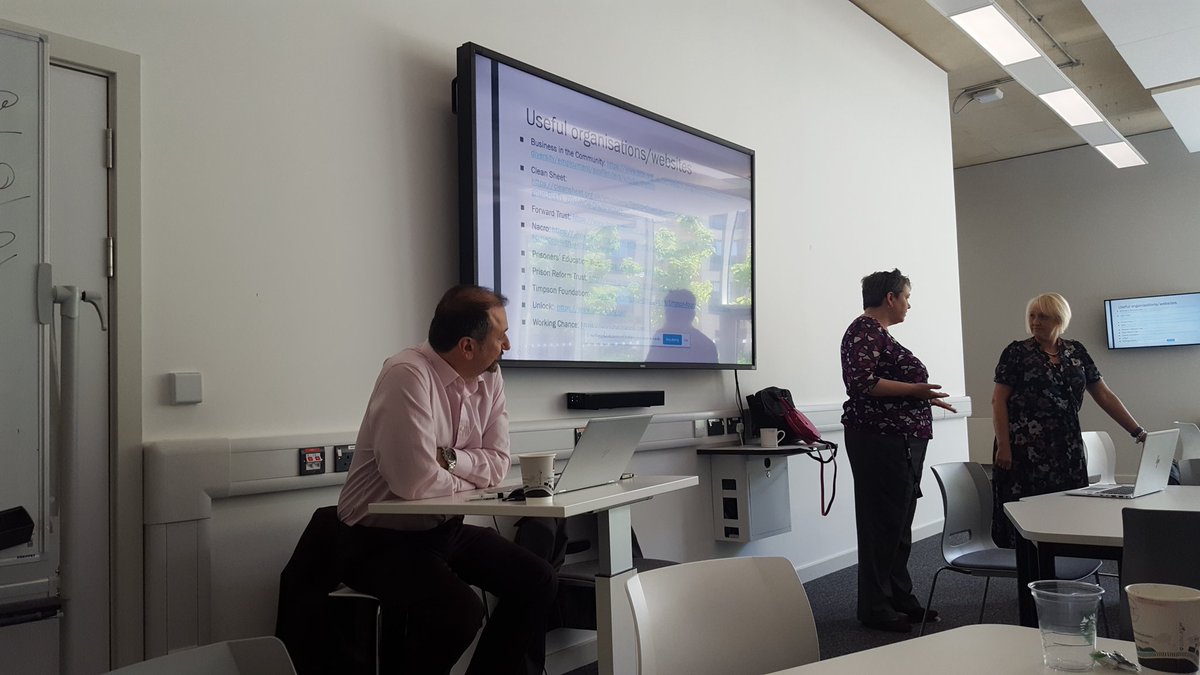
Having recently done a session on criminal records with @paulaabowles to a group of voluntary, 3rd sector and other practitioners I started thinking of the wider implications of taking knowledge out of the traditional classroom and introducing it to an audience, that is not necessarily academic. When we prepare for class the usual concern is the levelness of the material used and the way we pitch the information. In anything we do as part of consultancy or outside of the standard educational framework we have a different challenge. That of presenting information that corresponds to expertise in a language and tone that is neither exclusive nor condescending to the participants.
In the designing stages we considered the information we had to include, and the session started by introducing criminology. Audience participation was encouraged, and group discussion became a tool to promote the flow of information. Once that process started and people became more able to exchange information then we started moving from information to knowledge exchange. This is a more profound interaction that allows the audience to engage with information that they may not be familiar with and it is designed to achieve one of the prime quests of any social science, to challenge established views.
The process itself indicates the level of skill involved in academic reasoning and the complexity associated with presenting people with new knowledge in an understandable form. It is that apparent simplicity that allows participants to scaffold their understanding, taking different elements from the same content. It is easy to say to any audience for example that “every person has an opinion on crime” however to be able to accept this statement indicates a level of proficiency on receiving views of the other and then accommodating it to your own understanding. This is the basis of the philosophy of knowledge, and it happens to all engaged in academia whatever level, albeit consciously or unconsciously.
As per usual the session overran, testament that people do have opinions on crime and how society should respond to them. The intriguing part of this session was the ability of participants to negotiate different roles and identities, whilst offering an explanation or interpretation of a situation. When this was pointed out they were surprised by the level of knowledge they possessed and its complexity. The role of the academic is not simply to advance knowledge, which is clearly expected, but also to take subjects and contextualise them. In recent weeks, colleagues from our University, were able to discuss issues relating to health, psychology, work, human rights and consumer rights to national and local media, informing the public on the issues concerned.
This is what got me thinking about our role in society more generally. We are not merely providing education for adults who wish to acquire knowledge and become part of the professional classes, but we are also engaging in a continuous dialogue with our local community, sharing knowledge beyond the classroom and expanding education beyond the campus. These are reasons which make a University, as an institution, an invaluable link to society that governments need to nurture and support. The success of the University is not in the students within but also on the reach it has to the people around.
At the end of the session we talked about a number of campaigns to help ex-offenders to get forward with work and education by “banning the box”. This was a fitting end to a session where we all thought “outside the box”.
Share this:


Who cares what I think?

Erzsébet Korb (1923) Girl’s Portrait (Thinker; Contemplation)
The other week, I went for a meal with a friend. The food was lovely, the staff and environment welcoming and friendly and company, fabulous. A couple of days later I was thinking about that evening and I wondered why I had not felt the need to write some positive feedback on google, or similar. The answer was because I felt that I and my dining companion, had expressed our pleasure both in word and deed (the plates were clean!). Thus, the relationship between diners and restaurant staff had been overwhelmingly positive and this had been expressed by both.
However, wherever we go nowadays, we are regularly confronted by requests for feedback; “how is my driving?”, “did you enjoy your meal?” “would you recommend our services to others”? Often these questions are accompanied by Likert scales, so we can record our opinion on almost everything. Sometimes we might take some time to consider the options, other times we might just tick random boxes, more usually (if I’m anything to go by) I just don’t engage with such requests. Despite their often-jolly appearance, these questions are not harmless, they have an impact, most usually to measure individuals’ performances.
Whether we engage with such requests or not, we do not question whether we are well-placed to judge. So, for instance, as a driver of probably one of the smallest cars on the market (that’s me!), I’m expected to be able to mark the driver of a lorry. Or someone, who has the cooking know-how of a small child (I speak for myself again!) is expected to form an opinion on a dish prepared by a trained chef, these questions are hardly fair. More importantly, my answers are meaningless; whilst I might respond “the lorry appeared to take the corner a bit wide”, I have neither knowledge or understanding of the turning circle of a 32-tonne lorry. Similarly, my thoughts about the heat of a Bangladeshi biryani or the sweetness of a mille-feuille is neither here nor there. Given I can neither drive a lorry nor cook these wonderful dishes, who am I to voice an opinion?
Of course, there are times when it is necessary to voice an opinion, the lorry driver is behaving in a dangerous manner liable to cause an accident, or the restaurant is serving rancid or rotten food; both scenarios likely to involve serious harm. However, these concerns would need to be raised immediately, either by alerting the police (in the case of the lorry) or the management of the restaurant. In the case of the latter, you may also feel it necessary to contact environmental health if you felt that your complaint had not been addressed or you had concerns about the hygiene of the restaurant in general. However, these types of problems are largely outside the feedback requested.
In many of the scenarios/environments we are asked to comment on, we are in a relationship with the other party. Take the restaurant; if I am friendly and polite to the staff, I can expect a reciprocal relationship. If I am rude and aggressive, is it any wonder staff behave in a different way. They are constrained by their professions to focus on customer service, but this should not lay them open to abuse. Whilst the old adage “the customer is always right” might be an excellent baseline, it is not possible for this always to be the case. As someone who has spent a previous lifetime working in retail, sometimes the customer can be obtuse, rude or even downright, ignorant and abusive. Adherence to such an adage, at all costs, can only open the way for abuse.
But what about those feedback forms? On a bad day, in a rash moment, or because I’m bored, I decide to complete one of these forms. The waiter kept me waiting, the food was too spicy, I didn’t like the feedback I was given on my job application, my essay was critiqued, my teeth haven’t been flossed regularly, I didn’t like the book recommended to me by the librarian or the book seller, I can’t believe my line manager has turned down my application for annual leave. I can easily demonstrate my unhappiness with the situation with a few judiciously placed ticks, circles or smiley/sad faces. Can I say the waiter, the chef, the HR professional, the lecturer, the dentist, the librarian, the book seller and my line manager are performing poorly? Can I say they are unprofessional, unprepared, untrained, lacking in knowledge or skills or just plain wrong? And if I do, is that fair or just? Furthermore, am I happy to be subject to the same judgement from people who do not share my experiences; professional or otherwise? Remember too much of this bad feedback, however flippant and lacking in evidence it may be, may lead to disciplinary action, including dismissal.
There is an oft-cited, albeit crude, truth: “Opinions are like arseholes; everyone has one”! Ultimately, whether we choose to share (either) in public is up to us! Think carefully before ticking those boxes and encourage others to do the same. Who knows, someone may well be ticking boxes about you!
Share this:


Should reading be a punishment?

Gillian is an Academic Librarian at the University of Northampton, supporting the students and staff in the Faculty of Health and Society.
I was inspired to write this blog post by an article from the BBC news website that my friend sent me (BBC, 2019). A reading list was used as a punishment for teenagers who were convicted of daubing graffiti across a historically significant building in the state of Virginia, USA. Normally such an offence would earn a community service order. In this case, due to the nature of the crime – using racially charged symbols and words, the Prosecutor and Deputy Commonwealth Attorney Alejandra Rueda decided education may be the cure. She provided the five teenagers with a reading list that they had to read, and write assignments on, over the course of their 12-month sentence.
“Ignorance is not an excuse” is a principle expressed regularly throughout society, yet are we doing anything to address or dispel this ignorance? Rueda realised that books may help these teenagers to understand the impact of what they’d done and the symbols and language they had used in the graffiti. She chose books that would help educate them about racism, anti-Semitism, apartheid and slavery, to name just a few of the topics covered in the reading list. These were the books that helped her understand the wider world, as she grew up. Rueda’s approach indicated that punishment without an understanding of the impact of their crime, would not help these teenagers to engage with the world around them. These books would take them to worlds far outside their own and introduce them to experiences that were barely covered in their High School history lessons.
It’s not the only time an ignorance of history has been highlighted in the news recently. A premiere league football player was investigated for apparently making a Nazi salute. Although he was found not guilty, the FA investigation found him to be appallingly ignorant of Fascism and Hitler’s impact on millions of people across the globe (Church, 2019). Whilst the FA lamented his ignorance, I’m unsure they have done anything to help him address it. Would he be willing to read about the Holocaust and impact of Fascism in Europe? Would being forced to read about the lives of people over 70 years ago, help him understand how a chance photograph can affect people?
Should reading be a punishment, would it help people understand the impact of their actions? As a Librarian, people often assume that all I do all day is read. For me, reading is a luxury I indulge in daily, when I’m at home. I find a distinct difference between reading by choice, for escapism, and reading because you have to. I remember studying English Literature at school and finding any books I was forced to read, quickly lost their charm and became a chore rather than a pleasure. I’m not sure reading should be a punishment; it could disengage people from the joy and escapism of a good book. However, I understand the value of reading in helping people to explore topics and ideas that may be well outside their own world.
There is a growing body of literature that reflects on bibliotherapy and how reading can help people in varying stages of their life (Hilhorst et al., 2018; Brewster et al., 2013). A recent report by Hilhorst et al., (2018) advocates reading to transform British society, address isolation and improve social mobility. I believe reading can help improve our quality of life, helping us improve literacy, understand complex social issues and offer escapism from the everyday. However, I hesitate to view reading as a magical solution to society’s problems. Some people advocate the literary classics, the numerous lists you can find online that extort the virtues of reading the finest of the literary canon – but how much of it is just to conform to the social snobbery around reading ‘good literature’, a tick list? We should encourage reading, not force it upon people (McCrum, 2003; Penguin Books Ltd, 2019; Sherman, 2019).
Reading can help expand horizons and can have a tremendous impact on your world view, but it shouldn’t be a punishment. What Rueda did in Virginia, is illustrate how an education can help us address the ignorance in our society. We should encourage people to explore beyond their community to understand the world around us. Reading books can offer an insight and allow us to explore these ideas, hopefully helping us to avoid repeating or perpetuating the mistakes of the past.
References:
BBC (2019) Graffiti punished by reading – ‘It worked!’ says prosecutor, BBC News [Online]. Available from: https://www.bbc.co.uk/news/stories-47936071 [Accessed 18/04/19].
Brewster, L., Sen, B. and Cox, A. (2013) ‘Mind the Gap: Do Librarians Understand Service User Perspectives on Bibliotherapy?’, Library Trends, 61(3), pp. 569–586. doi: 10.1353/lib.2013.0001.
Church, B. (2019) Wayne Hennessey: EPL player showed ‘lamentable’ ignorance of Fascism, CNN [Online]. Available from: https://edition.cnn.com/2019/04/16/football/wayne-hennessey-fa-nazi-salute-english-premier-league-crystal-palace-spt-intl/index.html [Accessed 18/04/19].
Hilhorst, S., Lockey, A. and Speight, T. (2018) “It’s no exaggeration to say that reading can transform British society…”: A Society of Readers, DEMOS [online] Available from: http://giveabook.org.uk/wp-content/uploads/2018/11/A_Society_of_Readers_-_Formatted__3_.pdf [Accessed 15/04/19]
McCrum, R. (2003) The 100 greatest novels of all time: The list, The Guardian [Online]. Available from: https://www.theguardian.com/books/2003/oct/12/features.fiction [Accessed 18/04/19].
Penguin Books Ltd (2019) 100 must-read classic books, as chosen by our readers, Penguin [Online]. Available from: https://www.penguin.co.uk/articles/2018/100-must-read-classic-books/ [Accessed 18/04/19].
Sherman, S. (2019) The Greatest Books, The Greatest Books [Online]. Available from: https://thegreatestbooks.org/ [Accessed 18/04/19].
Share this:


Which mindset are you? This may depend on the sort of week you are having…..

This blog is inspired by an article posted on our Facebook group by my colleague @paulaabowles, from the work of Dweck (2016), suggesting mindsets can be categorised as either growth or fixed. It is interesting to consider how such a mindset can shape the way your life goes, but for me, any psychological analysis is always just part of the picture. That said, Dweck’s work is interesting and made me reflect on my life up until this week. This is a week where I seem to be waiting patiently (mostly) for acceptance of PhD corrections and to exchange contracts on my new house. Both of these processes are out of my control, require continued patience and a need to accept there is nothing I can do but wait.
For a lot of reasons, I immediately identified with the ‘growth’ mindset, being open to challenges, seeing intelligence as something to be nurtured and developed, worth the effort, understanding the need to learn from mistakes and being inspired by others. The other seems to me a life of stagnation, dismissal of anything new and creating a world which may be low risk, but ultimately unfulfilling. The fixed mindset also presents intelligence and success as something you are born with and therefore little effort is required to fulfil potential – almost as if life is mapped out for you, but it also belies a sense of entitlement, and inability to deal with failure as a challenge to move on from. However, if you are not somehow ‘blessed’ with the tools necessary for success, you must accept your fate. There are obvious social and cultural influences which can reinforce these messages, so perhaps, a fixed mindset leading to a life of success aligns with a life of privilege, but a life without this success identifies someone who cannot see a way to improve, blames others for their misfortune and doesn’t value their own ability to change. My parents always taught me the value of education (well, a lecturer and a teacher – of course they would!), and I never felt any limits were placed on me. But a big part of this must be attributed to me not facing the limits placed on individuals facing poverty, loss, psychological trauma or physical disabilities – my life, so far has largely been the outcomes of my decisions, and I count myself lucky to be able to say that.
That’s not to say I haven’t doubted my abilities, suffered ‘impostor syndrome’ and come up against challenges which have tested my resolve. It seems having a ‘growth’ mindset perhaps enables individuals to strive despite what life throws at you, and also despite how others may perceive you.
So, back to my week of waiting patiently and trying not to let anxieties come to the fore. Being able to call myself Dr Atherton and having my own house in the town I also work in is something I am really looking forward to, for obvious reasons. Years of work on the thesis and years of commuting from Birmingham to various parts of the Midlands (I know the M6 far too well) are about to lead to significant rewards. However, it also occurred to me none of this would be happening if I had given up on the PhD, stayed in a job which was not right for me, decided to carry on commuting and not made this decision to buy a house. It also occurred to me perhaps having a fixed mindset would be less stressful – you have to admit, my timing is spot on – but I don’t think that is the case. I chose the PhD and new job path because I was not happy, I chose to buy a house as M6 commuting is just not something I want to do anymore, and I want to feel more settled in my new post. As for the PhD, I knew I needed time away from a full-time job to complete it, and while it was risky to leave a permanent post, it seems my mindset pushed me to strive for something which was a better fit for me. My mindset helped me believe this was all possible, crucially it was down to me to do this and also, support from friends, family, ex and current colleagues have helped get me here. But, my social and economic circumstances also enabled all of this – we cannot just assume that psychological tools can overcome disadvantage, discrimination and a lack of opportunity.
Dweck suggests that these mindsets are a ‘view you adopt for yourself’. Fixed mindsets can impede development and the belief in change, and they also seem to create people whose concerns about others’ perceptions of them can be all-consuming, and no doubt lead to them avoiding situations where they will be judged. Those with the growth mindset see their traits as a starting point, from which anything can happen and they value the unknowable – the opportunities ahead, the hurdles and rewards. The fixed mindset creates a different kind of stress, a constant need for affirmation of beliefs, disregard of the need to adapt to changing circumstances, and god forbid, simply go with the flow. As much as I identify with the growth mindset, I can empathise with those who simply are unable to take risks, accept failure and manage the unknowable – there are times I have wanted to give up, take the easy path and feel more in control.
A day after starting this blog, the clouds parted and the sun shone down as the much-awaited email from the De Montfort University Doctoral College came to confirm my PhD corrections were accepted and I was to be awarded my doctorate. Suddenly after weeks of anxiety, the reward was certainly worth the wait. There will be plenty of days ahead to bask in the glory and enjoy this moment, and just for now, it is making me worry less about the house exchange, it will happen, I will be settled in my new home soon and enjoy a short drive to work for the first time in years. So, I will continue to strive, develop and take risks – not doing this may have meant a less anxious time this week, but they also lead to great rewards, and hopefully, even better things to come.
Dr. Susie Atherton
Senior Lecturer in Criminology
Share this:


Reflection: From student to professional

I graduated in July 2017 with a Criminology BA from the University of Northampton with a 2:2. In university I did two research placements at youth offending services and from there realised that this is what I wanted a career in.
I applied for a job in the Youth Offending Service with little belief that I could get the job. However I was offered the job and started working from September. As it nears to my first year being completed I have reflected on the transition from student to professional.
The past year has been a rollercoaster and I have a steep learning curve through this. University life especially all the deadlines and time management required only scratched the surface for what awaited me in the world of work.
One thing I wasn’t fully prepared for was the difficulties faced as a young professional. particularly when you’re the youngest member of staff by around 8 years. Many people do not take you seriously when you first start and it takes a while to ‘prove yourself’ as a professional to colleagues, other agencies and to the service users. I have even been mistaken for a young person when out on reparation (like community service) so it has been hard overcoming these barriers.
A positive is working with young people and I am enjoying this immensely. My job role means I work with low level offenders and prevention work with young people and this seems to be successful for most young people to avoid the criminal justice system. However I support those on higher orders as well as assisting on Reparation; so doing things like gardening, painting and decorating, to indirectly repair the harm caused. It’s great fun!
Restorative justice, something I learnt about at university, is something that as a youth offending service we try to incorporate with every young person we work with. Restorative justice is not at the forefront of all professionals however I’ve seen the benefits it can bring to both offender, victim and those indirectly affected by this.
I think the main points I’ve learnt over this past year is even after university you are constantly learning and that education doesn’t finish once you graduate. Alongside this is to go for it… no matter whether you think you will achieve it or not, we all have to start somewhere.
Share this:


“Στον πατέρα μου χρωστώ το ζην, στον δάσκαλό μου το ευ ζειν” To my father I owe living, to my teacher I owe my wellbeing (Alexander the Great)
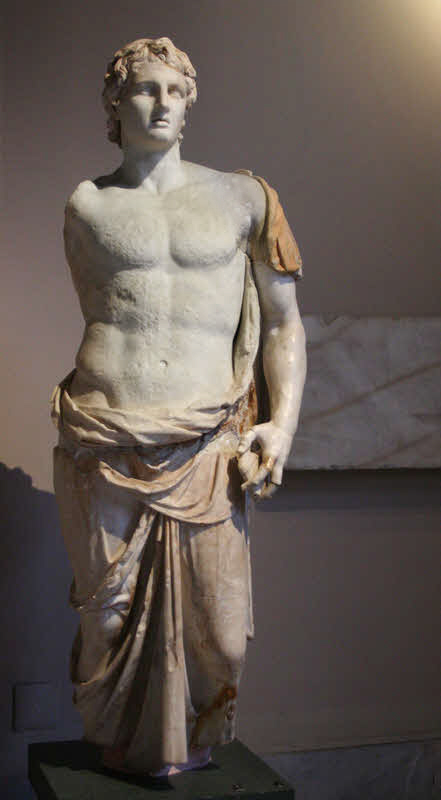
I remember this phrase from school, among with other ones about the importance of education in life. Since then there have been several years but education is something that we carry with us and as such we take little memories of knowledge like pieces of a gigantic jigsaw that is our lives and put them together. Experience is that glue that makes each piece of knowledge to stick at the right time whenever you want to find the words or feelings to express the world around us. Education plays such an immense part in this process because it give us these words that explain our world a little more clearly, precisely, deeply
This phrase had great resonance with me as I have never known my father and therefore I had no obvious person to relate this to or to have a way to express gratitude for living to anyone (obviously from my paternal family branch). So for a very long time, I immerse myself in education. Teachers in and out of the classroom, living or dead, have left a trail of knowledge with me that defined me, shaped my thoughts and forge some intense memories that is now is my turn to share with my students.
Education has been my refuge, my friend and a place of great discovery. Knowledge has that power to subvert injustice and challenge ignorance. Arguably education comes in different guises and a formal school curriculum sometimes restricts the student into normatives of performance that relegates knowledge into bitesize information, easily digestible and reproduced. The question, of a fellow student of mine who asked, “sir, why do I need algebra?” could have only be met from the bemused teacher’s response…”for your education”! Maybe I am romanticizing my own education and potentially forget that formal compulsory education is always challenging and challenged because of the purpose it is called to play.
Maybe this is why, what I consider of value in education, I have always attributed to my own journey, things that I read without being in any curriculum, or discussions I had with my teachers that took us away from the strict requirements of a lesson plan. The greatest journey in education can start with one of the most basic of observations, situations, words that lead to an entire discussion on many complex ideas, theories and perspectives. These journeys were and are the most rewarding because you realise that behind a question is the accumulated human curiosity spanning the entire history of life.
One of the greatest places for anyone to quench this thirst for learning is the University. In and out of the classroom knowledge is there, ready to become part of a learners’ experience. It is not bestowed in the latest gadget or the most recent software and other gimmicky apparatus but in the willingness to dwell into knowledge, whether it is reading late in the library or having a conversation with fellow students or a tutor (under a tree as one of my students, once professed). Perhaps my trust in education is hyperbolic even obstinate but as I see it, those of us who have the choice, can choose to live or to live well. For the first, we can carry on existing, but for the latter the journey of knowledge is neither a short one nor one that comes easy but at least it will be rewarding.
Share this:


Autism: Police discretion and decision making in an uncertain environment

A question that always strikes when discussing my dissertation topic is why did I chose that particular area to research – is it a topic that I was passionate about, or was it my personal life experience that lead me into that field? The answer to these questions is quite simply, no. In fact, it was a topic I accidentally fell into after reading existing research on the area for one of my other modules in second year. Intellectual disabilities within the Criminal Justice System are quite often misunderstood, and as with all academics, the more I read the more questions I had. Taking this topic at face value, the field is extremely vast, therefore after taking some time to digest many angles of research I narrowed my topic down into two areas. Firstly, an institution that I have always been interested in, policing, and one intellectual disability in particular, autism (ASD).
To give you a brief background; the examination of the relationship between criminal offending and intellectual impairments is proved as complex and problematic. This is due to the issues associated with the definition of intellectual disability, as well as the contribution of unreported crime which means researchers can only examine individuals who are currently involved in the criminal justice process (Talbot, 2007). From a policing perspective, these complexities and concerns increase in terms of conflicting procedures and relevant training which can later impact levels of service and effective results (Mercier, 2011). Amongst academic literature, it is evident that contemporary policing institutions are subject to increasing budget cuts which means that police staff must exercise discretion in processing large amounts of work with inadequate resources, in which shortcuts and simplifications are made (Lipsky 2010; Loftus 2012). This is highly problematic as policies have a tendency to occupy a one size fits all approach. In effect, this becomes increasingly difficult when dealing with individuals with autism, as increased support and time is needed to sufficiently deal with vulnerable groups.
In terms of Autistic Spectrum Disorder (ASD), this is a common form of learning impairment which can affect patterns of behaviour within a social setting. Autism is characterised by a triad of impairments, which includes difficulties in social interactions, communication and repetitiveness in daily activities (Roth, 2010, p.6). The varying expression and severity of these characteristics means that autism is recognised into sub-types, and therefore, is also considered as a spectrum disorder (King and Murphy, 2014).
On the occasions that an individual with ASD comes into contact with the police and wider criminal justice services, it is normally a result of their social and communication skills being misunderstood which means that they are not given the appropriate support (Cockram, 2005; Tucker et al, 2008). Research suggests that autistic individuals are likely to become extremely distressed in unfamiliar, confusing and loud situations whereby their actions and behaviour can be easily misinterpreted and subsequent actions could escalate the situation (Hayes, 2007). Complimented by the current implications previously discussed that are faced by the police and wider services, it is no surprise that there are issues and concerns surrounding police responses and decision-making processes towards the ASD community. After personally interviewing police constables and custody officers from Northamptonshire Police to investigate the initial responses when dealing with such individuals; the realities of such dilemmas were highlighted.
After now completing my studies with First Class Honours, I am now fortunate enough to work for The Appropriate Adult Service (TAAS) where such theoretical standpoints are often presented to me in a practical environment. From a personal judgement, Appropriate Adults can be easily dismissed, but just being a friendly face who can help and support a vulnerable person within a custody setting is far more rewarding than meets the eye. In fact, it is my dissertation itself that has lead me into this career and has now also given me a thirst for further study in my chosen research area.
References
Lipsky, M. (2010) Street- Level Bureaucracy: Dilemmas of the Individual in Public Services. New York: Russell Sage Foundation.
Loftus, B. (2012) Police culture in a changing world. Oxford: Oxford University Press.
Mercier, C. (2011) The first critical steps through the criminal justice system for persons with intellectual disabilities. British Journal of Learning Disabilities. 39(2), pp.130-138.
Roth, L. (2010) Autism: an evolving concept. In: Roth, L. (ed.) The Autism Spectrum in the 21st Century: Exploring Psychology, Biology and Practice. 1st ed. London: Jessica Kingsley Publishers, pp.1-29.

 Thoughts from the criminology team