
Home » Justice (Page 2)
Category Archives: Justice

Christmas Toys

In CRI3002 we reflected on the toxic masculine practices which are enacted in everyday life. Hegemonic masculinity promotes the ideology that the most respectable way of being ‘a man’ is to engage in masculine practices that maintain the White elite’s domination of marginalised people and nations. What is interesting is that in a world that continues to be incredibly violent, the toxicity of state-inflicted hegemonic masculinity is rarely mentioned.
The militaristic use of State violence in the form of the brutal destruction of people in the name of apparent ‘just’ conflicts is incredibly masculine. To illustrate, when it is perceived and constructed that a privileged position and nation is under threat, hegemonic masculinity would ensure that violent measures are used to combat this threat.
For some, life is so precious yet for others, life is so easily taken away. Whilst some have engaged in Christmas traditions of spending time with the family, opening presents and eating luxurious foods, some are experiencing horrors that should only ever be read in a dystopian novel.
Through privileged Christmas play-time with new toys like soldiers and weapons, masculine violence continues to be normalised. Whilst for some children, soldiers and weapons have caused them to be victims of wars with the most catastrophic consequences.
Even through children’s play-time the privileged have managed to promote everyday militarism for their own interests of power, money and domination. Those in the Global North are lead to believe that we should be proud of the army and how it protects ‘us’ by dominating ‘them’ (i.e., ‘others/lesser humans and nations’).
Still in 2023 children play with symbolically violent toys whilst not being socialised to question this. The militaristic toys are marketed to be fun and exciting – perhaps promoting apathy rather than empathy. If promoting apathy, how will the world ever change? Surely the privileged should be raising their children to be ashamed of the use of violence rather than be proud of it?
Share this:


Festive messages, a legendary truce, and some massacres: A Xmas story

Holidays come with context! They bring messages of stories that transcend tight religious or national confines. This is why despite Christmas being a Christian celebration it has universal messages about peace on earth, hope and love to all. Similar messages are shared at different celebrations from other religions which contain similar ecumenical meanings.
The first official Christmas took place on 336 AD when the first Christian Emperor declared an official celebration. At first, a rather small occasion but it soon became the festival of the winter which spread across the Roman empire. All through the centuries more and more customs were added to the celebration and as Europeans “carried” the holiday to other continents it became increasingly an international celebration. Of course, joy and happiness weren’t the only things that brought people together. As this is a Christmas message from a criminological perspective don’t expect it to be too cuddly!
As early as 390 AD, Christmas in Milan was marked with the act of public “repentance” from Emperor Theodosius, after the massacre of Thessalonica. When the emperor got mad they slaughtered the local population, in an act that caused even the repulson of Ambrose, Bishop of Milan to ban him from church until he repented! Considering the volume of people murdered this probably counts as one of those lighter sentences; but for people in power sentences tend to be light regardless of the historical context.
One of those Christmas celebrations that stand out through time, as a symbol of truce, was the 1914 Christmas in the midst of the Great War. The story of how the opposing troops exchanged Christmas messages, songs in some part of the trenches resonated, but has never been repeated. Ironically neither of the High Commands of the opposing sides liked the idea. Perhaps they became concerned that it would become more difficult to kill someone that you have humanised hours before. For example, a similar truce was not observed in World War 2 and in subsequent conflicts, High Commands tend to limit operations on the day, providing some additional access to messages from home, some light entertainment some festive meals, to remind people that there is life beyond war.
A different kind of Christmas was celebrated in Italy in the mid-80s. The Christmas massacre of 1984 Strage Di Natale dominated the news. It was a terrorist attack by the mafia against the judiciary who had tried to purge the organisation. Their response was brutal and a clear indication that they remained defiant. It will take decades before the organisation’s influence diminishes but, on that date, with the death of people they also achieved worldwide condemnation.
A decade later in the 90s there was the Christmas massacre or Masacre de Navidad in Bolivia. On this occasion the government troops decided to murder miners in a rural community, as the mine was sold off to foreign investors, who needed their investment protected. The community continue to carry the marks of these events, whilst the investors simply sold and moved on to their next profitable venture.
In 2008 there was the Christmas massacre in the Democratic Republic of Congo when the Lord’s Resistance Army entered Haut-Uele District. The exact number of those murdered remains unknown and it adds misery to this already beleaguered country with such a long history of suffering, including colonial ethnic cleansing and genocide. This country, like many countries in the world, are relegated into the small columns on the news and are mostly neglected by the international community.
So, why on a festive day that commemorates love, peace and goodwill does one talk about death and destruction? It is because of all those heartfelt notions that we need to look at what really happens. What is the point of saying peace on earth, when Gaza is levelled to the ground? Why offer season’s wishes when troops on either side of the Dnipro River are still fighting a war with no end? How hypocritical is it to say Merry Christmas to those who flee Nagorno Karabakh? What is the point of talking about love when children living in Yemen may never get to feel it? Why go to the trouble of setting up a festive dinner when people in Ethiopia experience famine yet again?
We say words that commemorate a festive season, but do we really mean them? If we did, a call for international truce, protection of the non-combatants, medical attention to the injured and the infirm should be the top priority. The advancement of civilization is not measured by smart phones, talking doorbells and clever televisions. It is measured by the ability of the international community to take a stand and rehabilitate humanity, thus putting people over profit. Sending a message for peace not as a wish but as an urgent action is our outmost priority.
The Criminology Team, wishes all of you personal and international peace!
Share this:


Saluting Our Sisters: A Reflection on the Living Ghost of the Past
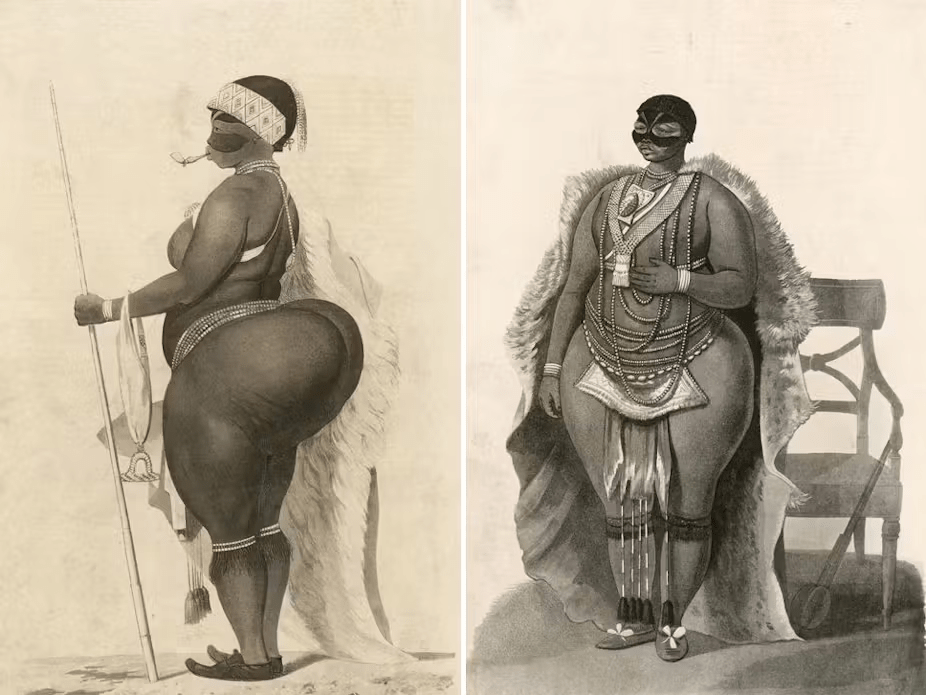
Sarah Baartman. Image source: https://shorturl.at/avLO4
In the 20th century, many groups of people who had been overpowered, subdued, and suppressed by imperialist expansionist movements under arbitrary boundaries began challenging their subjugation. These emancipation struggles resulted in the emergence of quasi-independent, self-governed African nation-states. However, avaricious socio-economic opportunists were aided into political leadership and have continued to perpetuate imperial interests while crippling their own emerging nations. Decades later, it has become clear that these ‘new states’ have become shackled under the grips of strong and powerful men who lead a backward and dysfunctional system with the majority of people impoverished while they enervate justice and political institutions.
Prior to this, the numerous nation states now recognised as African states had developed their distinct social, political, and economic systems which emerged from and reflected their distinctive norms and cultural values. Barring communal disputes and conflicts, robust inter-communal associations, interaction, and commerce subsisted amongst the nations, and paced socio-economic developments were occurring until external incursions under different guises began. Notably, the tripartite monsters of transatlantic slave trade, pillage of natural resources, and colonisation which not only lasted for centuries, disrupted the steady pace and development of these nations. It destroyed all existing social fabric and capital of the people, and forcefully installed a religious, socio-political, and economic systems that are alien to the people.
Ironically, while the transatlantic slave trade and colonialism were perpetuated under the guise of a “civilizing mission,” it took over three centuries for the “civilised” to realise that these abhorrent incursions were far from being civilising, and that they themselves required the civilisation they purported to be administering. However, while one might imagine that this awareness would lead to remorse and guilt-tripped sincere repentance for the pillage, pain, and atrocities, the abolition and relinquishing of political power to natives, the following events symbolized the contrary. Neo-colonialism was born, and international systems and conglomerates have continued the pillage on different fronts as aided by the greedy political class. Thus, it is unsurprising that yet again, strong, and powerful men are revolting against and deposing the self-perpetuating, avaricious socio-economic opportunists who wield political power against the interests of their nations in series of military coup d’état.
It is clear that the legacy of exploitation and subjugation has brought about a new set of challenges. Leaders entrusted with the responsibility of fostering prosperity in their nations often succumbed to personal gain, perpetuating a cycle of exploitation reminiscent of the imperialist era. This grim reality creates a stark contrast: while the majority of citizens are trapped in poverty, a powerful minority wields disproportionate influence, eroding the foundations of justice, economic prosperity, and political stability. As a result, for the vulnerable, seeking safety, economic freedom, and escaping from dysfunctional systems through deadly and illegal migration to other parts of the world becomes the only viable option. However, unbeknownst to many, the lands they risk everything to reach are grappling with their own challenges, including issues of acceptance and association with once labelled ‘uncivilized’ peoples.
Black History Month sheds light on these challenges faced by the black community and other marginalized ethnic groups globally. This year, the theme ‘Saluting our Sisters’ invites us to reflect on the contributions of Black women to society and the challenges they continue to face. It is also important to reflect deeply on how we consciously or unconsciously perpetuate rather than disprove, discourage, and distance ourselves from sustaining and growing the living ghost of the past. As Chimamanda urges, perhaps considering a feminist perspective in our actions, practices, and behaviour can be a powerful step toward recognizing and acknowledging how we perpetuate these problems. Dear Sister, I admire and salute you for your resilience and tenacity in making the world a better place.
Share this:


What cost justice? What crisis?
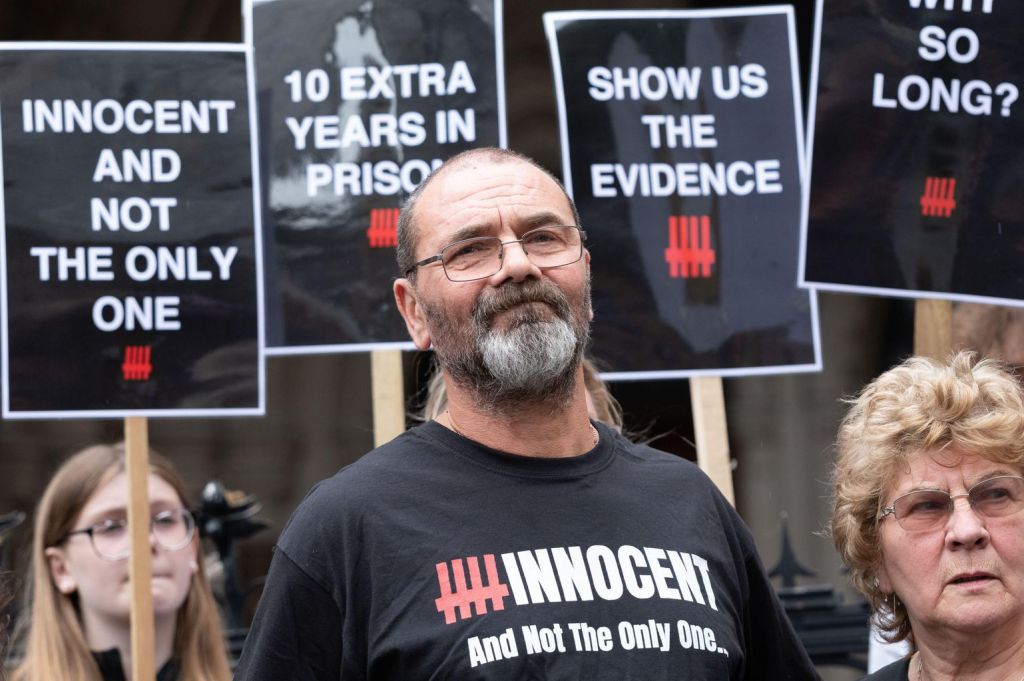
The case of Andrew Malkinson represents yet another in the long list of miscarriages of justice in the United Kingdom. Those that study criminology and those practitioners involved in the criminal justice system have a reasonable grasp of how such cases come about. More often than not it is a result of police malpractice, negligence, culture and error. Occasionally it is as a result of poor direction in court by the trial judge or failures by the CPS, the prosecution team or even the defence team. The tragic case of Stefan Kiszko is a good example of multiple failures by different bodies including the defence. Previous attempts at addressing the issues have seen the introduction of new laws such as the Police and Criminal Evidence Act 1984 and the Criminal Procedure and Investigations Act 1996. The former dealing in part with the treatment of suspects in custody and the latter with the disclosure of documents in criminal proceedings. Undoubtedly there have been significant improvements in the way suspects are dealt with and the way that cases are handled. Other interventions have been the introduction of the Crown Prosecution Service (CPS), removing in part, charging decisions from the police and the introduction of the Criminal Cases Review Commission (CCRC) to review cases where an appeal has been lost but fresh evidence or information has come to light.
And yet, despite better police training regarding interviews and the treatment of suspects, better training in investigations as a whole, new restrictive laws and procedures, the independence of the CPS, the court appeal system and oversight by a body such as the CCRC, miscarriages of justice still occur. What sets the Malkinson case aside from the others appears to be the failure of the CCRC to take action on new information. The suggestion being that the decision was a financial one, with little to do with justice. If the latter is proved to be true, we will of course have to wait for the results of the inquiry, then how can anyone have any confidence in the justice system?
Over the years we have already seen swingeing cuts in budgets in the criminal justice system such that the system is overloaded. Try to pop into the local police station to make a complaint of a crime, you won’t find a station open to the public. Should you have been unfortunate enough to have been caught for some minor misdemeanour and need to go to magistrates’ court for a hearing, you’ll be lucky if you don’t have to travel some considerable distance to get there, good luck with that if you rely on public transport. Should you be the victim of a more serious crime or indeed charged with a more serious offence, triable in crown court, then you’ll probably wait a couple of years before the trial. Unfortunate if you are the alleged offender and on remand, and if you are the victim, you could be forgiven for deciding that you’d rather put it all behind you and disengage with the system. But even to get to that stage, there has to be sufficient evidence to secure a prosecution and it has to be in the public interest to do so. Your day in court as a victim is likely to be hang on the vagaries of the CPS decision making process. A process that has one eye on the court backlog and another on performance targets. Little wonder the attrition rate in sex offences is so high. Gone are the days of letting a jury decide on occasions where the evidence hangs on little more than one person’s word against the other.
Andrew Malkinson and his legal representative have called for a judicial review, a review where witnesses can be compelled to attend to give evidence and documentary evidence can be demanded to be produced. Instead, the government has said there will be an independent inquiry. On a personal note, I have little faith in such inquiries. My experience is that they are rarely independent of government direction and wishes. Andrew Malkinson’s case is a travesty and the least that can be done is to have a proper inquiry. I suspect though that the Malkinson case might just be the tip of the iceberg. The Criminal Justice System is in crisis but budgetary restraint and political whim seem to be far more important than justice. We can look forward to more finger pointing and yet more reorganisation and regulation.
Share this:


Tyre Nichols’ last bird’s eye view.
[Spoken Word/Read aloud]

After my death, the New York Times reported that you all gave me “at least 71 commands.”
“Many were contradictory or impossible,” the Times tweeted.
In a mob frenzy throughout the whole ordeal, y’all kept shouting at me over each other.
When I couldn’t comply – and even when I did manage to obey– you…(SMH)
“Responded with escalating force.”
Hmph!
NYT’s tweet is cleverly crafted, with a photo – a bird’s eye view of us from the street camera.
There we see 4 of you hunched down on me, pressing my whole body against the ground.
The 5th thug is lunging toward me with a weapon.
After my death, I wonder how y’all will explain this footage –
Knowing the nature of these viral tweets?
I’ve personally reposted too many posts of Black bodies in my exact position to count.
I know I didn’t have to do anything to get here,
Knowing this brings me no comfort in this moment.
All of your commands ignore my humanity.
I am powerless and yet you persist.
In the many video angles of your fatal attack, we all see that…
Each of you had so many chances to just stop!
I’ve always tried to make sense of such lethal violence.
I try to understand the who, what and why of your attack that led to my death.
You had me pinned and pressed to the ground when you kept barking:
“Get on the ground.”
When you kept yelling, one after the other, “Give me your hands,”
Two or three of you were already bending my arms backward and forward with force.
I contort myself and try to comply, yet
You keep screaming “Stop resisting,” meanwhile,
At the same time, two or three of you are manhandling some part of me, at all times.
At the end when you leaned my beaten-up, bleeding, limp body against your car,
One of you snaps-n-shares pictures of me with colleagues and friends.
He’s proud and reaching out to folks who’ll pat him on the back for his latest accomplishment.
During the whole attack, I notice this is the only time he’s cool. He smiles.
He’s clearly used to this exact same rush, this exact same thrill.
I’m more disappointed than angered by his grin.
Mine is an all-American honor killing –
Most just get shot, but many have been tortured just like me.
We see this is how too many of his brethren defend their shield.
Where was I to go?
Appeal to the other officers on the scene whose negligence is pristine?
I tried to run, you captured me, which provoked more torture; nowhere feels safe.
Why was I being terrorized?
And by you, who’ve pledged to protect us from (this) terrorism and (this) thug behavior.
What was I to do?
Flight, freeze or fight.
I am tiny compared to any one of you, y’alls combat training and y’alls five big bodies built-up for battle.
I am a fly; you act like lords.
“Bruh,” you call me, but there is no evidence of brotherliness here.
Or, does your fraternity honor and practice such sadomasochistic rituals?
I like skateboarding and photography, another magazine writes, trying to digest my senseless murder.
Yet the videos of me captured for the world to see are
“…absent all beauty and sterilized of hope.”
When would this end?
Would I have to die for you to stop.
How had I possibly provoked this attack?
Who was I to obey?
You? You’re no good, like Linda Ronstadt said:
You’re no good. You’re no good. Baby, you’re no gooooooood…..
You’re no good.
Or perhaps good in your god’s eyes?
Or, are you God?
No.
You’re not anybody’s God, but…
You play one out here on these streets.
Now, you’re playing my God… my life is keenly in your fists.
Yes! These unceasing murders that I’ve seen – not just mine now–
Is what makes this place hell on Earth in the here and now.
So perhaps y’all’re just agents of the devil,
A force unleashed from the depths upon these streets.
“Momma,” I cry out as loud as I can, and you continue to holler obscenities at me.
Momma used to say all people are fundamentally good,
But lately, I’ve felt fundamentally unsure, and now I’m convinced.
“I didn’t do anything,” I plea, rolling on the ground with my hands behind my back.
Y’all kick me.
“Mom,” I cry out again.
I will die here alone.
No mother should lose her child like this.
The agony inside now, as I call out to my momma, is not for her help,
But because I can already feel her pain once she hears how I’m dying.
Since momma fought for the public release of the videos of my attack,
My name is a hashtag and we have been written about a plenty.
“Every Black mother knows she is a split second,” one newspaper writes,
“… a quirk of chance, from joining a lineage of suffering that stretches back through Mamie Elizabeth Till-Mobley…”
When she saw y’all in court for my kidnapping, assault, oppression, and murder,
Momma said you didn’t even have the courage to look her in the face.
Cowards.
Momma said you’re gonna see her each time you are called to see the judge.
-END-
Photo:
NPR OBITUARIES: “Tyre Nichols loved skateboarding. That’s how his friends say they’ll remember him.”
Share this:

A world without prisons follow-up. A student/staff reflection piece
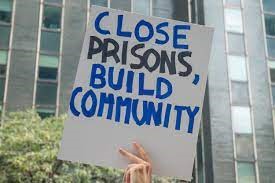
As a department Criminology has pushed the envelope in promoting discussions around the key disciplinary debates. @franbitalo and myself co-ordinated a conversation where the main focus was to imagine “a world without prisons”. The conversation was very interesting, and we decided to post parts of it as a legacy of the social debates we engage in. The discussion is captured as a series of comments made by the students with some prompts in bold.
The original question stands, can you imagine a world without prisons? First thing first, there is a feeling that prisons will always exist as mechanisms to control our society. Mainly because our society is too punitive and focused on punishment rather than rehabilitation. We live in a society that ideologically sees the prison as the representation of being hard on crime. Further to this point we may never be able to abolish the prison, so it can always remain as the last resort of what to do with those who have harm others. Especially for those in our society who deserve to be punished because of what they did. Perhaps we could reform it or extend the use of the probation service dealing with crime.
In an ideal world prisons should not exist especially because the system seems to target particular groups, namely minorities and people from specific background. It important to note that it does stop people seeking or taking justice into their hands and deflecting any need for vengeance “eye for an eye”. Prison is a punishment done in the name of society, but it does carry political overtones. There are parts of political ideology that support the idea that punishment is meant to make an example of those breaking the law. This approach is deeply rooted, and is impervious to reform or change. Which can become one of the biggest issues regarding prisons.
Then there is the public’s view on prisons. When people hear that prisons will go they will be very unhappy and even frightened. They will feel that without prisons people will go crazy and commit crimes without any consequences. Society, people feel, will go into a state of anarchy where vigilantism will become the acceptable course of action. This approach becomes more urgent when considering particular types of criminals, like sex offenders and in particular, paedophiles. Regardless of the intention of the act, these types of crime cause serious harm that the victim carries for the rest of their lives. The violation of trust and the lack of consent makes these crimes particularly repulsive and prison worthy. How about child abduction? Not sure if we should make prison crime specific. That will not serve its purpose, instead it will make it the dumping ground for some crime categories, sending a message that only some people will go to prison.
Will that be the only crime category worthy of prison? In an ideal world, those who commit serious financial crimes should be going to prison, if such a prison existed. Again, here if we are considering harm as the reason to keep prisons open these types of crime cause maximum harm. The implication of white-collar crime, serious fraud and tax evasion deprive our society of taxes and income that is desperately needed in social infrastructure, services and social support. Financial crime flaunts the social contract and weakens society. Perhaps those involved should be made to contribute reparations. The prison question raises another issue to consider especially with all the things said before! Who “deserves” to go to prison. Who gets to go and who is given an alternative sentence is based on established views on crime. There are a lot of concerns on the way crime is prioritised and understood because these prioritisations do not reflect the reality of social disorder. Prison is an institution that scapegoats the working classes. Systematically the system imprisons the poor because class is an imprisonable factor; the others being gender and race.
If we keep only certain serious crimes on the books, we are looking at a massive reduction in prison numbers. Is that the way to abolitionism? The prison plays too much of a role in the Criminal Justice System to be discounted. The Industrial Prison Complex as a criminological concept indicates the strengths of an institution that despite its failings, hasn’t lost its prominence. On the side of the State, the establishment is a barrier to any reform or changes to this institution. Changes are not only needed for prison, but also for the way the system responds to the victims of crime as well. Victims are going through a process of re-victimisation and re-harming them. This is because the system is using the victims as part of the process, in giving evidence. If there is concern for those harmed by crime, that is not demonstrated by the strictness of the prison.
As a society currently we may not be able to abolish prisons but we ought to reduce the harm punishment has onto people. In order to abolish prisons, the system will have to be ready to allow for the change to happen. In the meantime, alternative justice systems have not delivered anything different from what we currently have. One of the reasons is that as a society we have the need to see justice being served. A change so drastic as this will definitely require a change in politics, a change in ideology and a change in the way we view crime as a society in order to succeed. The conversation continues…
Thank you to all the participating students: Katja, Aimee, Alice, Zoe, Laura, Amanda, Kayleigh, Chrissy, Meg, and Ellie also thank you to my “partner in crime” @franbitalo.
Share this:


The Good Doctor has me thinking…

Recently I have begun watching ABC’s The Good Doctor, which is a medical drama based in the fictional, yet prestigious, San Jose St Bonaventure Hospital and follows the professional and personal journeys of a number of characters. The show is based on a South Korean tv medical drama called Good Doctor and is produced by Daniel Dae Kim and developed by David Shore (creator of House). The main character is Dr Shaun Murphy who has Autism. He is a surgical resident in the early seasons and the show focuses on how Dr Murphy navigates his professional and personal life, as well as how the hospital and other doctors, surgeons, nurses and patients navigate Dr Murphy’s style of communication and respond to him. As a medical drama, in my humble opinion, it is highly entertaining with the usual mix of interesting medical cases and personal drama required. The characters are also relatable in a number of different areas. As a springboard for a platform to talk about equality, equity and fairness, it is accessible and thought-provoking.
A key focus of the programme is the difficulty Dr Murphy has with communication. Well, I say difficulty in communicating, but in actuality I would say he communicates differently to what is recognised as an ‘accepted’ or ‘normal’ form of communication. Dr Murphy struggles to express emotions and becomes overwhelmed when things change and are not within his controlled environment. A number of his colleagues adapt their responses and ways of interacting with him in order to support and include him, whereas others do not and argue that despite his medical brilliance, and first-rate surgical skills, he should not be treated differently to the other surgical residents, as this is deemed unfair.
Whilst watching, the claims of treating all surgical residents equally, and ensuring the hospital higher-ups are being fair; notions of John Rawls’ writing scream out at me. Students who have studied Crime and Justice should be familiar with Rawls’ veil of ignorance, liberty principles and difference principle, in particular with its reference to ‘justice’. But the difference principle weighs heavily when looking at how Dr Murphy functions within the hospital institution with its rules, procedures and power dynamics which clearly benefit and align with some people more so than others. Under the veil of ignorance, maybe an empathetic doctor or surgeon is not required, but a competent and successful one is? Maybe being empathetic is a personal circumstance rather than an objective trait? For Rawls, it is important that the opportunity to prosper is equal for all: and this might mean the way this opportunity is presented is different for different individuals. Rawls asks us to consider a parallel universe and what could be (a popular stance to take within the philosophical realm): why can’t people with autism be given the chance to save lives and perform surgeries just because they cannot communicate in a way deemed ‘the norm’ when dealing with patients.
It is possible that I am over-thinking this. And when I ask my partner about it, they raise questions about why Dr Murphy should be given different opportunities to the other residents and the harm Dr Murphy’s communication barriers could and do cause within the series. But I feel they are missing the point: it is not about different opportunities, its about different methods to ensure they all have the same opportunity to succeed as surgeons. It is not about treating everyone the same, which might on the surface appear to be fair, it is about recognising that equal treatment involves taking account for the differences. Why should Dr Murphy be measured against norms and values from an institution which is historically white, non-disabled, male, and cis-gendered? This might appear to be a lot of thought for a fictional medical drama, but to reiterate it’s an excellent programme with plenty to think about…
Bibliography:
Rawls, J. (1971) A Theory of Justice. Oxford: Oxford University Press.
Ryan, A. (1993) Justice. Oxford: Oxford University Press.
Share this:


No ways tired: Miss Lillie, arrested with Mrs. Parks.
12 September 2021
Visit to the Equal Justice Initiative Museum, From Enslavement to Mass Incarceration.
Near the end of the EJI’s newly expanded museum, there is a wall of slightly larger than life-size mugshots of folks arrested alongside Mrs. Rosa Parks in just another local act of civil disobedience. I’ve rarely seen a more earnest collection of everyday people, not unlike the folks around me as I get to know Montgomery today.
Mugshots.
Men in suits, ladies sporting pretty hats in their Sunday best.
Farmers in overalls and working women in neat dresses.
Learned-looking men with glasses, and fancy tiepins.
Young men in sleek fedoras and two or three older men in derbies.
Another man wears a skullcap.
Meaningful women and men of age, of reconstruction age, whom we imagine had by then seen every intimate and public side of Jim and Jane Crows’ wickedness.
They were representin’.
The only thing they seem to have in common is their determination.
(Sigh).
I found myself face-to-face and fixated with
Miss Lillie Bell Robinson.
She sat,
Framed,
With her arms,
Crossed.
Double-crossed.
With her head,
Tilted,
With her expression, tired, but
Also, a particular squint in her eye – or perhaps a gleam – that betrays her obvious fatigue,
As if saying: “No ways tired.”
I moan in tune, and
This somehow keeps my knees from buckling under the weight of it all, since
The preceding exhibits have already taken us along a long timeline where
Every glimpse of justice gets trampled upon –
Again, and again.
I sigh and see why they are tired.
On that day, did Miss Lillie know that much more violence, much more real intensified violence was yet to come?
This was the mid-50’s, and
Could Miss Lillie have imagined that:
Just 5-6 years later,
Freedom Riders from the north would arrive around the corner,
Riding federally desegregated, public coaches, and
The same local sheriffs would stand by, and
Let them get beaten, assaulted, brutally, and
Battered by white-hot mobs –
Only to arrest the so-called outside agitators?
Probably all of you, Miss Lillie, were battered by many of the same hands, and
Abandoned by many of the same actors of local justice.
I estimate Miss Lillie to be my grandparents’ age, and
By that day, they’d already fled and made their way to Kentucky.
I am wondering where Miss Lillie is now – right now?
(I take a deep sigh and realize that I’ve not yet reached the mass incarceration part of the museum, and ultimately just skimmed on by.
Graciously, the final exhibit is a “Recovery room,” a hall of walls of portraits,
which we might also call “mugshots,”
As each face had all, actively, over centuries,
Activated against oppression.
I recognized writers, musicians, poets, painters, politicians, preachers, teachers, activists of all flavors, and
After the weight of the truth shown in each timeframe, this left me feeling full of joy.
And, I moaned along with the tunes, there, too.
That day,
She’d had had enough, and
Though reluctant before,
Somehow now,
Miss Lillie could no longer stand by, and
Just wait for justice, and
Just go on about her own merry way, and
Pretend like this is ok, and
Adjust to the insanity of segregation, and
The very look on her face said this is “why we can’t wait.”
Her face calm, but
Twisted.
The mug shot ID, hanging around her neck like a shackle: #7010.
Business as usual, and for sure somebody’s gettin’ paid.
So, she not knowing.
She, not knowing if this all will work.
If getting arrested today mattered.
If any of this is worth it.
If this time change is coming,
having nothing left but Faith…
in herself, in others, and
Somehow faith in her nation… to do the right thing,
Despite this day, and
In spite of the many apparent setbacks, and
A million everyday,
Tiny little cuts.
We rise.
That day, Miss Lillie rose to the occasion.
She and all these others stepped up so we could step out, and
Step in here now,
Free to learn about each step along our legacy of peace.
I’m now in awe of Miss Lillie, and
Take a step back and
Smile at her, and
Take in the glory of this sensation.
Hats off to you, Miss Lillie.

Share this:


Meet the Team: Paul Famosaya, Lecturer in Criminology

Hi all! My name is Dr Paul Famosaya and I have just joined UoN as a Lecturer in criminology. Prior to joining UoN, I have taught as a Lecturer in criminology and policing at the University of Cumbria – where I contributed to the development and running of modules at both Undergraduate and Masters level. In addition, I have taught criminology at Middlesex University, London as an HP Lecturer (during my PhD days). So, over the years really, I have developed and taught a variety of modules around the theories of crime, the crimes of the powerful, global dimensions of crime, policing, new ideas in criminology, crimes & deviance, social exclusion, criminological frameworks etc. I also serve as a reviewer of a few international reputable journals.
In terms of my academic background, I completed my undergraduate degree in Nigeria, 2010 and then went straight on to complete my Masters in Criminology at Middlesex University, London. I then dived straight in to my PhD, which I completed also at Middlesex in 2019 – with my thesis focusing on police experiences, actions and practices.
I came into the world of Criminology simply for my interest in understanding the logic of corruption and the network of greed. I realised that these two components are largely the foundational problems of my home country Nigeria, and many other countries. So, the plight to unravel these dynamics from both institutional and personal level triggered my interest in the discipline. To a large extent, this interest has continued to strengthen my area of specialisation which concentrates largely on the areas of Critical and Theoretical criminology, Police culture, Social harms and Injustice. Criminology is something I’ve really enjoyed doing and while I have taught it for many years, I still consider myself to be a student of Criminology really.
I am currently completing another article on pandemics and criminology – so it’ll be cool to chat with colleagues looking at similar area(s). Looking forward to meeting everyone soon!
Share this:


Rule makers, rule breakers and the rest of us
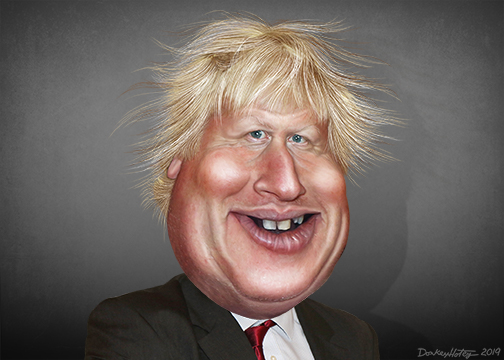
There are plenty of theories about why rules are broken, arguments about who make the rules and about how we deal with rule breakers. We can discuss victimology and penology, navigating our way around these, decrying how victims and offenders are poorly treated within our criminal justice systems. We think about social justice, but it seems ignore the injustice perpetrated by some because we can somehow find an excuse for their rule breaking or point out some good deed somewhere along the line. And we lament at how some get away with rule breaking because of their status or power. But what is to be done about people that break the rules and in doing so cause or may cause considerable harm to others; to the rest of us?
Recently, Greece imposed a new penalty system upon those over 60 that are not vaccinated against Covid. Pensioners who have had real reductions in their pensions are now to be hit with a fine, a rolling fine at that, if they do not get vaccinated. This is against a backdrop of poor vaccination rates which seem to have improved significantly since the announcement of what many see as draconian measures by a right-wing government. There are those that argue that vaccination ought to be a choice, and this has been brought into focus by the requirements for health workers and those in the care profession to be vaccinated in this country. And we’ve heard arguments from industry against vaccination passports which would allow people to get into large venues and a consistent drip-drip effect of how damaging the covid rules are to the leisure industry and aviation, as well as the young people in society.
So, would it have been far more acceptable to have no rules at all around Covid? Should we have simply carried on and hoped that eventually herd immunity would kick in? Let’s not forget of course that the health service would have been so overwhelmed that many people will have died from illnesses other than Covid (they undoubtedly have to some extent anyway). The fittest will have survived and of course, the richest or most resourceful. Businesses will have been on their knees as workers failed to turn up for work, either because they were too ill or have moved on from this life and few customers will have thought about quaffing pints, clubbing, or venturing off to some faraway sunny place (not that they’d be particularly welcome there coming from plague island). It would have felt more like some Darwinian evolutionary experiment than civilised society.
It seems that making some rules for the good of society is necessary. Of course, there will be those that break the rules and as a society, we struggle to determine what is to be done with them. Fines are too harsh, inappropriate, draconian. Being caring, educating, works for some but let’s be honest, there are those that will break the rules regardless. Whilst we can argue about what should be done with those that break the rules, about the impact they have on society, about victims and crimes, perhaps the most pressing argument is about equality of justice. The rest of us, those that didn’t break the rules, might question how draconian the rules were (are) and we might question the punishments meted out to those that broke the rules. But what really hurts, where we really feel hard done by, let down, angry is to see that those that made the rules, broke the rules and for them we don’t get to consider whether the punishment is draconian or too soft. There are no consequences for the rule makers even when they are rule breakers. It seems a lamentable fact that we have a system of governance, be that situated in politics or business, that advocates a ‘do as I say’ rather than ‘do as I do’ mentality. The moral compass of those in power seems to be seriously misaligned. As the MP David Davis calls for the resignation of Boris Johnson and says that he has to go, he should look around and he might realise, they all need to go. This is not a case of one rotten apple, the whole crop is off, and it stinks to high heaven.

 Thoughts from the criminology team