
Home » Judiciary
Category Archives: Judiciary

Exploring the National Museum of Justice: A Journey Through History and Justice

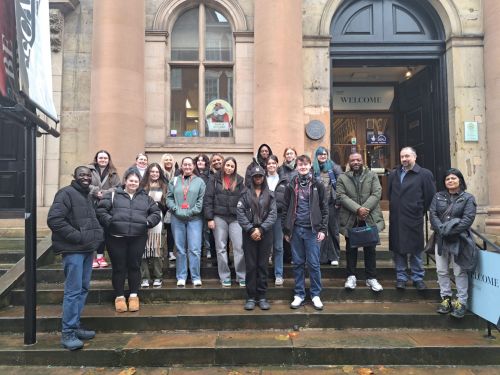
As Programme Leader for BA Law with Criminology, I was excited to be offered the opportunity to attend the National Museum of Justice trip with the Criminology Team which took place at the back end of last year. I imagine, that when most of us think about justice, the first thing that springs to mind are courthouses filled with judges, lawyers, and juries deliberating the fates of those before them. However, the fact is that the concept of justice stretches far beyond the courtroom, encompassing a rich tapestry of history, culture, and education. One such embodiment of this multifaceted theme is the National Museum of Justice, a unique and thought-provoking attraction located in Nottingham. This blog takes you on a journey through its historical significance, exhibits, and the essential lessons it imparts and reinforces about justice and society.
A Historical Overview
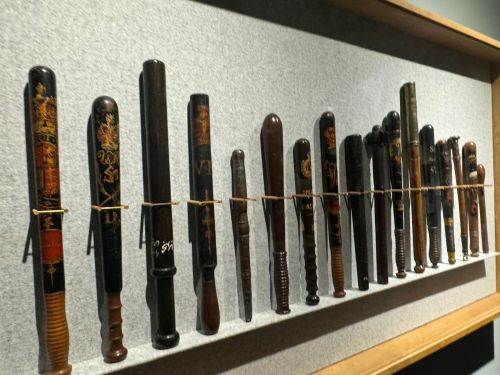
The National Museum of Justice is housed in the Old Crown Court and the former Nottinghamshire County Gaol, which date back to the 18th century. This venue has witnessed a myriad of legal proceedings, from the trials of infamous criminals to the day-to-day workings of the justice system. For instance, it has seen trials of notable criminals, including the infamous Nottinghamshire smuggler, and it played a role during the turbulent times of the 19th century when debates around prison reform gained momentum. You can read about Richard Thomas Parker, the last man to be publicly executed and who was hanged outside the building here. The building itself is steeped in decade upon decade of history, with its architecture reflecting the evolution of legal practices over the centuries. For example, High Pavement and the spot where the gallows once stood.
By visiting the museum, it is possible to trace the origins of the British legal system, exploring how societal values and norms have shaped the laws we live by today. The National Museum of Justice serves as a reminder that justice is not a static concept; it evolves as society changes, adapting to new challenges and perspectives. For example, one of my favourite exhibits was the bench from Bow Street Magistrates Court. The same bench where defendants like Oscar Wilde, Mick Jagger and the Suffragettes would have sat on during each of their famous trials. This bench has witnessed everything from defendants being accused of hacking into USA Government computers (Gary McKinnon), Gross Indecency (Oscar Wilde), Libel (Jeffrey Archer), Inciting a Riot (Emmeline Pankhurst) as well as Assaulting a Police Officer (Miss Dynamite).
Understanding this rich history invites visitors to contextualize the legal system and appreciate the ongoing struggle for a just society.
Engaging Exhibits
The National Museum of Justice is more than just a museum; it is an interactive experience that invites visitors to engage with the past. The exhibits are thoughtfully curated to provide a comprehensive understanding of the legal system and its historical context. Among the highlights are:



1. The Criminal Courtroom: Step into the courtroom where real trials were once held. Here, visitors can learn about the roles of various courtroom participants, such as the judge, jury, and barristers. This is the same room that the Criminology staff and students gathered in at the end of the day to share our reflections on what we had learned from our trip. Most students admitted that it had reinforced their belief that our system of justice had not really changed over the centuries in that marginalised communities still were not dealt with fairly.
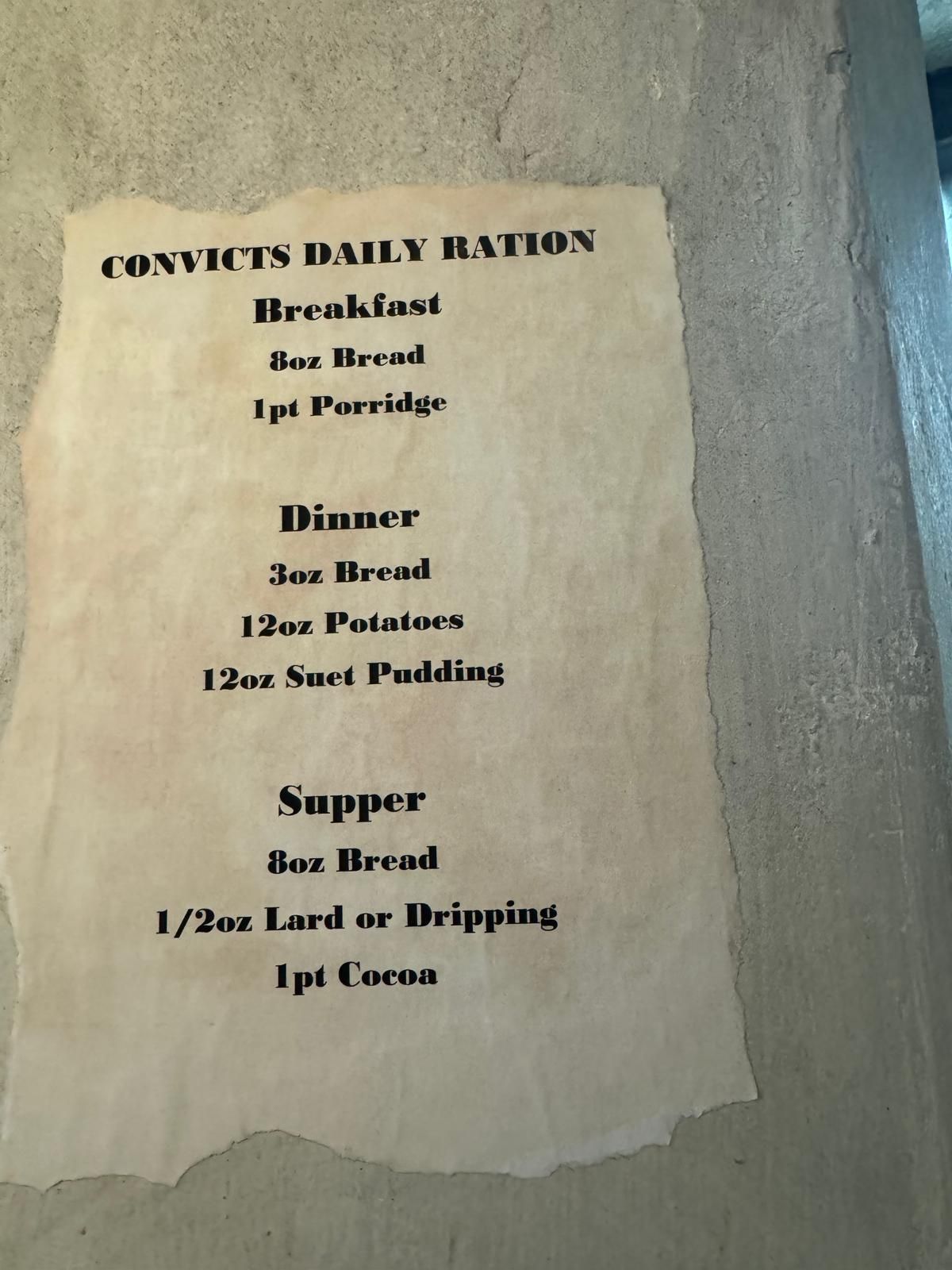
2. The Gaol: We delved into the grim reality of life in prison during the Georgian and Victorian eras. The gaol section of the gallery offers a sobering look at the conditions inmates faced, emphasizing the societal implications of punishment and rehabilitation. For example, every prisoner had to pay for his/ her own food and once their sentence was up, they would not be allowed to leave the prison unless all payments were up to date. The stark conditions depicted in this exhibit encourage reflections on the evolution of prison systems and the ongoing debates surrounding rehabilitation versus punishment. Eventually, in prisons, women were taught skills such as sewing and reading which it was hoped may better their chances of a successful life in society post release. This was an evolution within the prison system and a step towards rehabilitation of offenders rather than punishment.
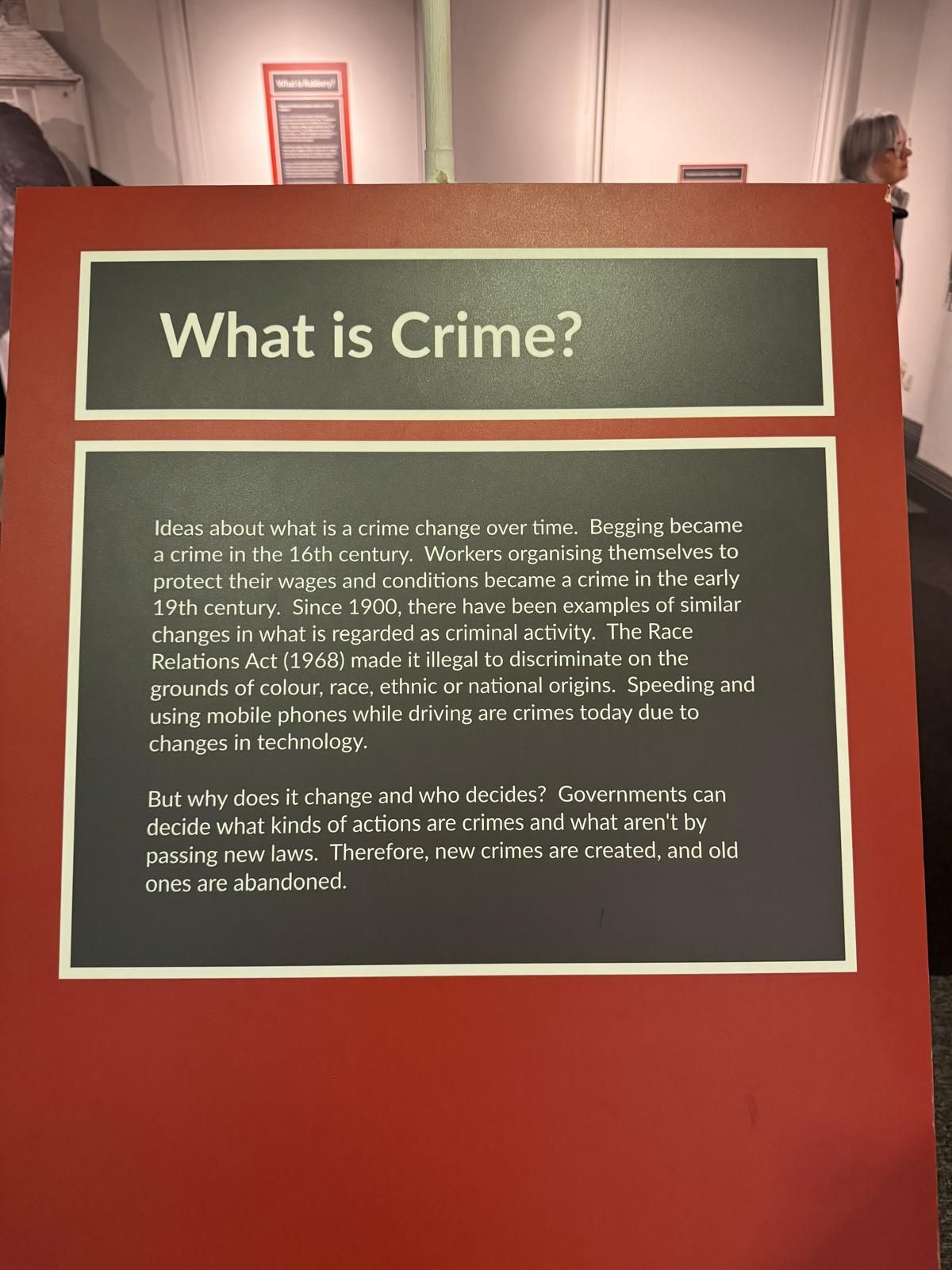
3. The Crime and Punishment Exhibit: This exhibit examines the relationship between crime and society, showcasing the changing perceptions of criminal behaviour over time. For example, one famous Criminologist of the day Cesare Lombroso, once believed that it was possible to spot a criminal based on their physical appearance such as high cheekbones, small ears, big ears or indeed even unequal ears. Since I was not familiar with Lombroso or his work, I enquired with the Criminology department as to studies that he used to reach the above conclusions. Although I believe he did carry out some ‘chaotic’ studies, it really reminded me that it is possible to make statistics say whatever it is you want them to say. This is the same point in relation to the law generally. As a lawyer I can make the law essentially say whatever I want it to say in the way I construct my arguments and the sources I include. Overall, The Inclusions of such exhibits raises and attempts to tackle difficult questions about personal and societal morality, justice, and the impact of societal norms on individual actions. By examining such leading theories of the time and their societal reactions, the exhibit encourages visitors to consider the broader implications of crime and the necessity of reform within the justice system. Do you think that today, deciding whether someone is a criminal based on their physical appearance would be acceptable? Do we in fact still do this? If we do, then we have not learned the lessons from history or really moved on from Cesare Lombroso.

Lessons on Justice and Society
The National Museum of Justice is not merely a historical site; it also serves as a platform for discussions about contemporary issues related to justice. Through its exhibits and programs, our group was invited to reflect on essentially- The Evolution of Justice: Understanding how laws have changed (or not!) over time helps us appreciate the progress (or not!) made in human rights and justice and with particular reference to women. It also encourages us to consider what changes may still be needed. For example, we were incredibly privileged to be able to access the archives at the museum and handle real primary source materials. We, through official records followed the journey of some women and girls who had been sent to reform schools and prisons. Some were given extremely long sentences for perhaps stealing a loaf of bread or reel of cotton. It seemed to me that just like today, there it was- the huge link between poverty and crime. Yet, what have we done about this in over two or three hundred years? This focus on historical cases illustrates the importance of learning from the past to inform present and future legal practices.
– The Importance of Fair Trials: The gallery emphasizes the significance of due process and the presumption of innocence, reminding us that justice must be impartial and equitable. In a world where public opinion can often sway perceptions of guilt or innocence, this reminder is particularly pertinent. The National Museum of Justice underscores the critical role that fair trials play in maintaining the integrity of the legal system. For example, if you were identified as a potential criminal by Cesare Lombroso (who I referred to above) then you were probably not going to get a fair trial versus an individual who had none of the characteristics referred to by his studies.
– Societal Responsibility: The exhibits prompt discussions about the role of society in shaping laws and the collective responsibility we all share in creating a just environment. The National Museum of Justice encourages visitors to think about their own roles in advocating for justice, equality, and reform. It highlights that justice is not solely the responsibility of legal professionals but also of the community at large.
– Ethics and Morality: The museum offers a platform to explore ethical dilemmas and moral questions surrounding justice. Engaging with historical cases can lead to discussions about right and wrong, prompting visitors to consider their own beliefs and biases regarding justice.
Conclusion
The National Museum of Justice in Nottingham is a remarkable destination that beautifully intertwines history, education, and advocacy for justice. By exploring its rich exhibits and engaging with its thought-provoking themes, visitors gain a deeper understanding of the complexities surrounding justice and its vital role in society. Whether you are a history buff, a legal enthusiast, a Criminologist or simply curious about the workings of justice, the National Museum of Justice offers a captivating journey that will leave you enlightened and inspired.
As we navigate the complexities of the modern world, it is essential to remember the lessons of the past and continue striving for a fair and just society for all. The National Museum of Justice stands as a powerful testament to the ongoing quest for justice, inviting us all to be active participants in that journey. In doing so, we honour the legacy of those who have fought for justice throughout history and commit ourselves to ensuring that the principles of fairness and equity remain at the forefront of our society. Sitting on that same bench that Emmeline Pankhurst once sat really reminded me of why I initially studied law.
The main thought that I was left with as I left the museum was that justice is not just a concept; it is a lived experience that we all contribute to shaping.

Share this:


What price justice?

Having read a colleague’s blog Is justice fair?, I turned my mind to recent media coverage regarding the prosecution rates for rape in England and Wales. Just as a reminder, the coverage concerned the fact that the number of prosecutions is at an all-time low with a fall of 932 or 30.75% with the number of convictions having fallen by 25%. This is coupled with a falling number of cases charged when compared with the year 2015/16. The Victims’ Commissioner Dame Vera Baird somewhat ironically, was incensed by these figures and urged the Crown Prosecution Service to change its policy immediately.
I’m always sceptical about the use of statistics, they are just simple facts, manipulated in some way or another to tell a story. Useful to the media and politicians alike they rarely give us an explanation of underlying causes and issues. Dame Vera places the blame squarely on the Crown Prosecution Service (CPS) and its policy of only pursuing cases that are likely to succeed in court. Now this is the ironic part, as a former Labour member of parliament, a minister and Solicitor General for England and Wales, she would have been party to and indeed helped formalise and set CPS policy and guidelines. The former Labour Government’s propensity to introduce targets and performance indicators for the public services knew no bounds. If its predecessors, the Conservatives were instrumental in introducing and promulgating these management ideals, the Labour government took them to greater heights. Why would we be surprised then that the CPS continue in such a vein? Of course, add in another dimension, that of drastic budget cuts to public services since 2010, the judicial system included, and the pursuit of rationalisation of cases looks even more understandable and if we are less emotional and more clinical about it, absolutely sensible.
My first crown court case involved the theft of a two-bar electric fire. A landlady reported that a previous tenant had, when he moved out, taken the fire with him. As a young probationary constable in 1983, I tracked down the culprit, arrested him and duly charged him with the offence of theft. Some months later I found myself giving evidence at crown court. As was his right at the time, the defendant had elected trial by jury. The judicial system has moved a long way since then. Trial by jury is no longer allowed for such minor offences and of course the police no longer have much say in who is prosecuted and who isn’t certainly when comes to crown court cases. Many of the provisions that were in place at the time protected the rights of defendants and many of these have been diminished, for the most part, in pursuit of the ‘evil three Es’; economy, effectiveness and efficiency. Whilst the rights of defendants have been diminished, so too somewhat unnoticed, have the rights of victims. The lack of prosecution of rape cases is not a phenomenon that stands alone. Other serious cases are also not pursued or dropped in the name of economy or efficiency or effectiveness. If all the cases were pursued, then the courts would grind to a halt such have been the financial cuts over the years. Justice is expensive whichever way you look at it.
My colleague is right in questioning the fairness of a system that seems to favour the powerful, but I would add to it. The pursuit of economy is indicative that the executive is not bothered about justice. To borrow my colleague’s analogy, they want to show that there is an ice cream but the fact that it is cheap, and nasty is irrelevant.
Share this:

Constitutional Crisis? What Crisis
Dr Stephen O’Brien is the Dean for the Faculty of Health, Education and Society at the University of Northampton
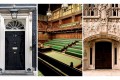
Over the past few weeks our political lexicon has been further developed. We have all learned a new word. The word in question is prorogation. Hands up who had heard of this term before recent events in parliament? I see very few hands up. What we all now know is that this is the term that defines the discontinuation of a session of a parliament or other legislative assembly without dissolving it. It means parliament’s sitting is suspended and it ends all current legislation under discussion. It is usual for this to happen every autumn. The current prorogation is for five weeks and includes a three-week period that would typically be recess anyway, during which the Liberal Democrat, Labour and Conservative party conferences are held, but is nevertheless longer than usual. However, there are several highly irregular factors at play here. For prorogation to last more than a month is unprecedented in recent times. For example, since the 1980s prorogation has typically lasted less than a week. So, what is going on and why is this prorogation proving to be so contentious?
The heart of the matter is the issue that has dominated UK politics for the past three years, namely Brexit. Despite a vote to leave the European Union (EU) back in June 2016 we currently remain part of the EU with the deal negotiated under the previous prime minister Theresa May culminating in a withdrawal agreement that was soundly rejected by parliament on several occasions. This has set up tensions between the people and parliament. How do we enact the will of the people and honour the referendum result within a parliamentary democracy where there is no majority for any Leave deal on the table?
The new prime minister Boris Johnson and his cabinet are resolved to break the political impasse by leaving come what may “do or die” by October 31st, 2019. So, with the country rapidly approaching the deadline for leaving the EU, Parliament has been working to pass a law that would prevent the UK crashing out without a deal, regardless of the fact that Boris Johnson has promised to leave on that date. With no deal currently agreed and no law allowing a no deal exit the Government would be obliged to ask the EU for another extension. There are suggestions from some quarters that the Government might ignore any law requiring them to agree an extension with the EU. Given this situation some politicians have been dismayed that parliament will not be sitting while the situation remains unresolved. Hence the view that this prorogation is stifling parliamentary debate on the most crucial political issue in a generation.
The act of prorogation took place in the early hours of Tuesday September 10th with a ceremony involving a message from the Queen being read in the House of Lords and then Black Rod summoning MPs from the Commons. A list of all the bills passed by the parliament was read, followed by a speech on behalf of the Queen announcing what has been achieved by the government before MPs were sent home. Johnson intends for parliament to return on 14 October with a Queen’s speech, which he says will “bring forward an ambitious new legislative programme for MPs’ approval”. He will then almost immediately have to head to Europe for the vital EU council, which is the last chance for him to obtain a new Brexit deal or to ask for an extension of article 50.
The situation has been deemed a constitutional crisis by some and the fact that parliament is not sitting at this critical time is being seen by some as undemocratic, indeed unlawful. Indeed, the act of prorogation has been subject to judicial review for the past couple of weeks. Scottish appeal court judges declared Boris Johnson’s decision to suspend parliament in the run-up to the October Brexit deadline unlawful. The three judges, chaired by Lord Carloway, Scotland’s most senior judge, overturned an earlier ruling that the courts did not have the power to interfere in the prime minister’s political decision to prorogue parliament. The key issue in question being whether the act was in breach of the constitution, as it was designed to stifle parliamentary debate and action on Brexit.
Regardless of the legal arguments which ended up being played out in three dramatic days this week in the Supreme Court the Brexit process and endgame has pointed up a range of tensions at the intersections of our constitution. The old political landscape is being swept away and being replaced by a much more complex set of political indicators. Left versus Right which had been making a comeback after years of centrist neo-liberalism has been replaced by Leave versus Remain which pervades across the old battle lines. Furthermore, other tensions are apparent as set out below.
- People versus Parliament (How to deliver the referendum result in a parliamentary democracy)
- Executive (Government) versus Parliament (especially when the executive has no overall voting majority)
- The Executive versus the Judiciary
- The position of the Judiciary as related to Constitution
- Politics versus The Law
- The roles and power relationships of the Executive, Parliament and the Judiciary as related to The Constitution.
What the overall Brexit process has created is a new socio-political landscape in the UK, with distinct differences in each of the four countries. It also illustrates how complex the nature of our constitution is given there is no written version and we depend on precedent and convention. The intersections are thrown into sharp relief by the current “crisis”.
Whilst all of this may be concerning as the old order shifts the really concerning question is whether the Executive will abide by the law. Given the outcomes of Parliament in terms of blocking “no deal” regardless of the Supreme Court Judgement on the legality of the prorogation. So, will we leave EU on October 31st? Utilising classic political phraseology, I’d say there is still all to play for, it’s too close to call and all bets are off.
Dr Stephen O’Brien
Share this:


White and Male: the diversity of the judiciary
My name is Anita and I graduated with a Criminology degree in 2016. I did have a great time at the University of Northampton. The course was challenging and intense however this meant that it provided me with the opportunity to overcome my barriers and develop myself both academically and personally. I miss going to lectures and seminars, revising for exams and even writing the dissertation. If you are reading this and you are in your third year, you are probably thinking that I am mad but I do miss it. I can’t help it! I can honestly say that going to University was the best decision I ever made and I would love to go back and do a postgraduate course. My advice to all students is enjoy it because time goes by so fast.
Before we start, please stop and think…… What percentage of court judges would you guess are women? How many members of the judiciary are from ethnic minorities?
If your guess is that we have a substancial amount of women and members from ethnic minorities in the judiciary, then this blog post might dissapoint you.
Let’s define the judiciary before we progress any further. The judiciary can be defined as ‘the judges of a country or a state, when they are considered as a group’ (Hornby, 2000, p.700).
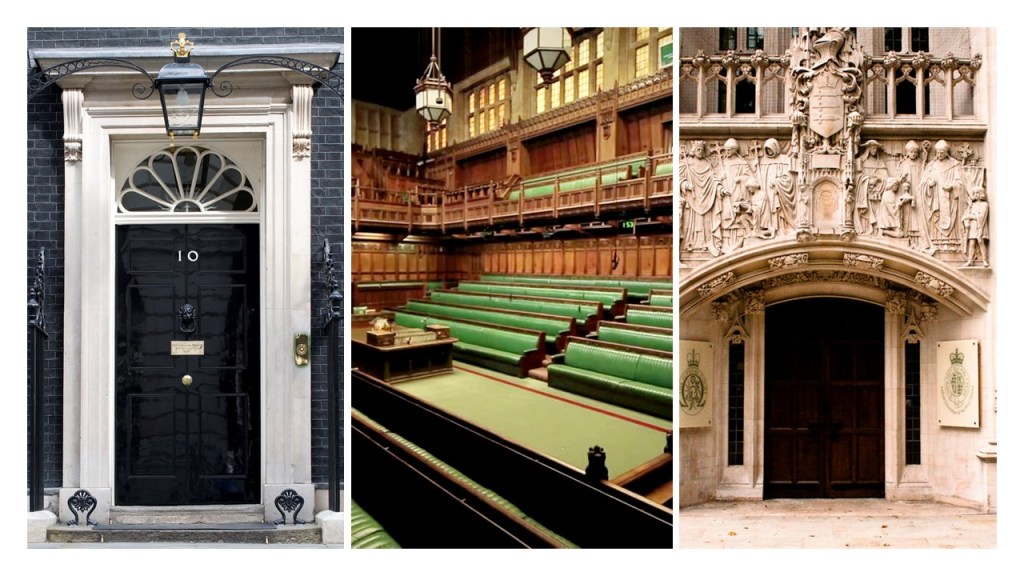
The judiciary in the UK is dominated by Oxbridge educated white middle-class men. It is estimated that three quarters of all judges in England and Wales are male and 95% are white (Lieven, 2017). The gender imbalance can be well illustrated by looking at the Supreme Court. There is only one woman among the 12 Justices on the Supreme Court. Lady Hale is the only woman ever to serve on the Court and all of the judges are and have always been white. Only Armenia and Azerbaijan have lower proportions of women in their judiciary than the UK (Lieven, 2017). This is unacceptable in 2018, changes must be made to address this gender imbalance.
In terms of race, as at 1 April 2017, only 7% of court judges were Black, Asian or Minority Ethnic (BAME). Of these Asian and Asian British accounted for 3% and the remaining three groups, Black and Black British, Mixed Ethnicity and Other Ethnic Group at around 1% each (Ministry of Justice, 2017).
This shows that judges are not reflective of wider society. This is a significant problem because the public should be confident that the judiciary delivers justice fairly. The lack of diversity means that concerns about the legitimacy and objectivity of judgements may be raised.
There are three main explanations for the continuing lack of diversity. The first explanation is that there are not enough women, BAME people and people from less privileged backgrounds who would be suitable for appointment. However, I would question the validity of this argument. This explanation seems to suggest that women or BAME people might be lacking lacking adequate knowledge or experience. There is no evidence to support this argument.
The second explanation given is that women and BAME candidates do not apply for appointment. However, it could be argued that the issue is more complicated than simply failing to apply. For example, Allen (2009) found that when BAME candidates and solicitors do apply for appointment they are significantly less likely to be successful than white candidates or barristers. This shows that the issue is not the lack of applications received from women or BAME candidates but perhaps the discriminatory recruitment process.
The third explanation is that the key principle governing our appointments to judicial office is merit. Unfortunately, the term ‘merit’ is not defined, but the implication is that achieving merit and diversity are at odds.
In conclusion, the lack of diversity in the judicial system is very concerning and should be addressed as soon as possible. This needs to be done to ensure that our justice system is fair, accessible and efficient. It is in our interest to produce a judiciary of the highest quality that reflects the make-up of our nation. Difference should be valued and not feared.
References
Allen, A (2009) Barriers to Application for Judicial Appointment Research. London: Judicial Appointments Commission.
Hornby, A.S (2000) Oxford Advanced Learner’s Dictionary. 6th ed. Oxford: Oxford University Press.
Lieven, N (2017) Increasing judicial diversity. London: Justice.
The Ministry of Justice (2017) Judicial Diversity Statistics 2017. London: MOJ.

 Thoughts from the criminology team