
Home » International students
Category Archives: International students

Ain’t Nobody Never Muted No Gadget BEFORE No Class!
The cyber-lure and lull in class.
The solutions are simple, though the problem is grand and manifests in many micro ways; it’s so common that it’s difficult to see. Digital distraction looms over classrooms like a heavy fog.
You see them ensnared by invisible threads, blocking hallways and doorways, halted as they stand, transfixed and feverishly glued to their phones. Many arrive with restless fingers tapping away on these small screens. Others make a beeline for the nearest socket upon entering the classroom, clutching chargers and cables like lifelines. Some arrive engrossed in video calls – often on speakers – their faces illuminated by the glow of their screens. Still, others refuse to dislodge and stash their earbuds; perhaps they are simply unaware or incapable? Few arrive untethered from the grasp of cyberspace, their connection to reality tenuous at best. Throughout the session, the anxious behaviours rarely subside, as I witness them struggling to break free from the digital embrace clearly holding them captive.
Upon arrival, most students sit and place their phone right on the desk in front of them, ready to escape into cyberspace at a moment’s notice. Then, come the laptops and tablets. Most have two gadgets or more – including smartwatches – anything to shield them from being here, and anchor them there in cyberspace. A larger part of the educator’s role now is to reach: S T R E T C H into cyberspace and teach students how to anchor themselves here IRL.
Ain’t nobody never muted no gadget BEFORE no class!
Arriving in class, they are poised and prepped by social media for distraction, and entertainingly so. Through hours of rehearsal, they get to pay attention to whatever they want with a mere swipe. This applies to messaging, social media and news, dating family and group chats, spam emails and university announcements. The F2F classroom environment is competing with all this lure of the cyberworld. In spite of this daily evidence, folks still feel we’re in charge of the focus of our own attention, according to psychologist Prof Sherry Turkle. Worse, all this constant craving and distraction is diminishing our capacity for empathy.
Once distracted, UNESCO reports that “it can take students up to 20 minutes to refocus on what they were learning” according to one study. Subsequent studies have confirmed the attention lull, as have bans on phones in schools. A 2018 study found “More frequent use of digital media may be associated with development of ADHD symptoms.” When students arrive at university classrooms, it’s a blur.
Despite our initial hopes, the pull of the wholistic virtual environment has ultimately pushed away F2F dialogue. What’s more, the passive attention paid to social media creates a deficit in our conversation skills. We easily get caught up in the loop of reporting and responding to ‘what google said.’ In Teaching Critical Thinking, bell hooks says smashingly: “we are living in a culture in which many people lack the basic skills of communication because they spend most of their time being passive consumers of information” (44). Like a group of friends out for a night using google reviews to dictate every step, too often conversation in the classroom is reduced to trading ‘what google said’. Little attention is given to who said what and, why. Or, less so, what one thinks.
A low tech class.
While there are endless Apps, and gadgets to get students involved in learning, the few hours spent in any face-to-face session can be a respite from such hyper-cyber-immersion.
Share this:


Navigating Clearing: What’s next?

Today marks the second day of clearing at our prestigious University of Northampton. Firstly, I’d like to congratulate those who have secured a place in the university to study their dream course, and to other applicants that are currently navigating their way through clearing, I wish you the best of luck.
Clearing may seem quite overwhelming – many of us have been there – but as you may know, it provides an alternative route for first-time applicants, those who may have missed out on offers, and those that may have missed their required grades or other reasons. For those at this stage, this blog is to provide some tips on how you can make the most of clearing:
- First, try not to panic if you have not met the grade threshold. Panic will only cause more anxiety – so relax. Remember, clearing offers plenty of opportunities – so when you make that call – ask as many questions as possible. Remember the saying, closed mouths don’t get fed. Ask for your options, think it through before you decide, and ensure a plan B.
- Make sure to have done your research about the course you are applying for. Demonstrate enthusiasm, passion, and motivation for the course during your interview (if any). Look at the university websites and academic staff profiles to see what they offer and where graduate testimonies are.
- I’m sure this is no news to you – but remember that popular courses like Criminology, Psychology, Law and others fill up fast through clearing. Wake up early, get on the call queue and maximise your choices. The admissions team at the University of Northampton is one of the quickest when it comes to processing applicants’ offers. These emails are sent within an hour after you have made your call – so ensure to set up email alerts so you don’t miss communications.
- You may find it beneficial to keep an open mind about other courses. This is so because you don’t get disappointed if you don’t get a place on your desired course or if what you are looking for is not for you after speaking to an academic. Again, ask questions.
- As I pointed out earlier, the university website should be your first call, where you will find all the necessary information regarding clearing. On the website, there is lots of support available – so make the most out of it.
- Generally, clearing often turns into a great university experience. Focus on the opportunity ahead; your effort will pay off with time, and don’t give up if your first plans don’t work out. Remain optimistic, be thorough, and embrace this next step towards your future.
Remember that the transition into higher education takes time and adjustment. Overcoming obstacles will build resilience. Progress may feel slow, but your growth is constant. Embrace uncertainty, connect with others, and take chances. By doing so, you will gain skills, knowledge, memories, and relationships to last a lifetime. Your adventure begins now – enjoy it!
Share this:


Time to hear from our students

As part of their commitment to provide an inclusive space to explore a diversity of subjects, from a diverse range of standpoints, the Thoughts from the Criminology team have decided to introduce a new initiative.
From tomorrow (Sunday 21 June) all weekend posts will come from our students. We know that all of our students have plenty to say, they are smart, articulate and have both academic and experiential knowledge on which to draw. We know our readers will be as impressed as we are, by their passion and their criminological imagination.
Over to you, Criminology Students!
Share this:


Surviving Corona. #BlackenAsiaWithLove
In my Sabbatical year spent here in Vietnam, it would be disingenuous NOT to speak about the Coronavirus. Without being hyperbolic, this is a crisis of every proportion. Here are a few of my observations.
Today it was reported that the Whistle-blower, Dr. Li Wenliang, died of the virus. At the epicentre, Chinese health officials initially claimed the virus would peak and subside within a week’s time. There are claims that those predictions were made due to reticence to pass bad news up the political chain. Undoubtedly, we will celebrate him as a hero, for his efforts to alert the world while Corona was just an epidemic. For context: This same week, one of my state’s senators outed the whistle-blower who originally brought to light the massive corruption of the current White House occupant who was just acquitted. At the same time, in the middle of the (illegal) trade war between these two nations, Chinese health officials reference American health standards to legitimize their efforts to control this pandemic on the international stage – not the W.H.O. If my head weren’t spinning from all this news, then certainly even I am suspicious of my every cough or sneeze to the level of paranoia. Or, perhaps this pseudo-medical mask I am wearing is just rather annoyingly pinching my ears.
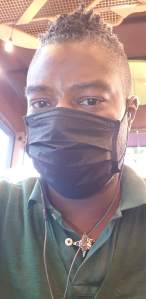
M-m-m-my Corona!
Sitting on the ground, people are handling it reasonably well. That is to say, no one is running around screaming or losing their heads. Logistically, the virus could hardly have come at a better time. The city was already emptied out by those who had returned home to celebrate the Lunar New year, known in Vietnam as Tet. The weekend folks were set to return, orders came from on high to close all educational institutions, due to the obvious fact that classrooms huddle groups of people into close, closed quarters – infection heaven. Heck, classrooms are built as fertile grounds! Morally, it’s the exact opposite: What an unsettling ending to the region’s most festive season!
Worse still, there is a travel ban from China, while estimating that “Chinese visitors comprised almost 30 percent of the approximate 15.5 million international travelers who arrived in either Hanoi or Ho Chi Minh City last year and translated into $30 billion from both the domestic and international market.” Who really can imagine the wider economic impact!?!
On my sabbatical, I am working in the language centre of a partner institution of my home university in the UK, which I got to know in my role as Senior Lecturer in International Business. Here, my desk is merely 15 feet away from the customer service desks where students come to register from the language classes, or any one of the ESL tests they must pass to graduate. Basically, at some point, every student at this university must come into this office. Additionally, we are a regional German-language testing centre, garnishing many folks from China (recall that travel ban!). While there are usually 6-7 ladies manning the kiosks, only two to three were called in the first few days to address students’ needs. Now, each day there is only one. Yesterday afternoon, it was announced again that all educational institutions would be closed for yet another week. Since I know that only a few of my colleagues are from Hanoi and are here with their parents, I suppose most of these ladies are home looking after their kids. I cannot imagine how other parents without grandparents nearby are dealing with this crisis.
A colleague told me last week that universities always reserve time within the term for such contingencies, but I imagine two full weeks of cancelled classes is a stretch. Certainly, my concerns have shifted towards the graduating seniors this term. Then, there are also the hourly-paid language teachers our/any centre hires. What about their labour? What’s more, our university is huge and sits next to at least 3 more universities, not to mention the 3 pre-schools I pass on my walk home. Again, all primary, secondary and tertiary schools are all closed for a second week after Tet. There are over 30,000 students, lecturers and staff. My husband has a similar gig down the road which boasts many, many more.
There are entire food and transportation economies woven around all these campuses. Most visibly, there are a host of corporate café chains, as well as typically Hanoian tea-stalls and street-food kiosks selling fast-food ranging from variations of noodle soups, to anything that can be deep-fried, steamed or cooked over a charcoal fire. Naturally, this Kentuckian spends way too much time at the grilled chicken lady. She does feet, as well as drumsticks and wings which she stretches out onto skewers and serves with hot sauce (so there’s no need to carry any in my bag). Most of these food outlets closed for Tet, but many simply have not re-opened since. The few that are open are virtually empty, save for the few pedestrians and commuters passing by, or the motorbike taxis that station themselves around each entrance to the campus alongside the tea-stalls. At least apparently, their persistence offers moral support, though it is possible that economically, there ain’t enough business between them. Enough?
Since the outbreak, I’ve regularly received text messages from the Ministry of Health, as has been widely reported in global media. The messages are in Vietnamese, which Google translates in 1-click just by copying the text. This is all –perhaps strangely- reassuring. No, it is very reassuring. The same messages are also sent straight to my phone via regionally popular chat programs such as Zalo. ‘Google Translate’ is integrated into that programme, too, like a virus. There, MoH’s chat messages include links to extended articles, especially details on how individuals can protect themselves, plus further info such as: “All hospitaliszation costs, medications, and testing costs for nCOV-positive patients are free.” There are layers of ways of spreading knowledge about the impact of potential outbreaks of disease, especially since SARS. It’s refreshing to see social media used so purposefully.
The streets are vacuous and quiet. Ordinarily, Hanoi is a loud, crowded, motorbike ridden city, so this peace is…(sigh)…morbid. Again, there are no visible signs of panic on the streets. It’s lunchtime here in the office. While I was engulfed in writing this blog-post, everyone else has quietly slipped away. This is the first time that I find myself alone in this building. All I hear are birds chirping outside, and a few horns blowing in the distance. The parking lot is empty. I’m going home.

For the courage of Dr. Li Wenliang (Photo from TheGuardian.com). May his family and friends at least know that his courage to speak truth to power has saved lives. May he Rest in Power.
Share this:

Your Name Is Not BAME
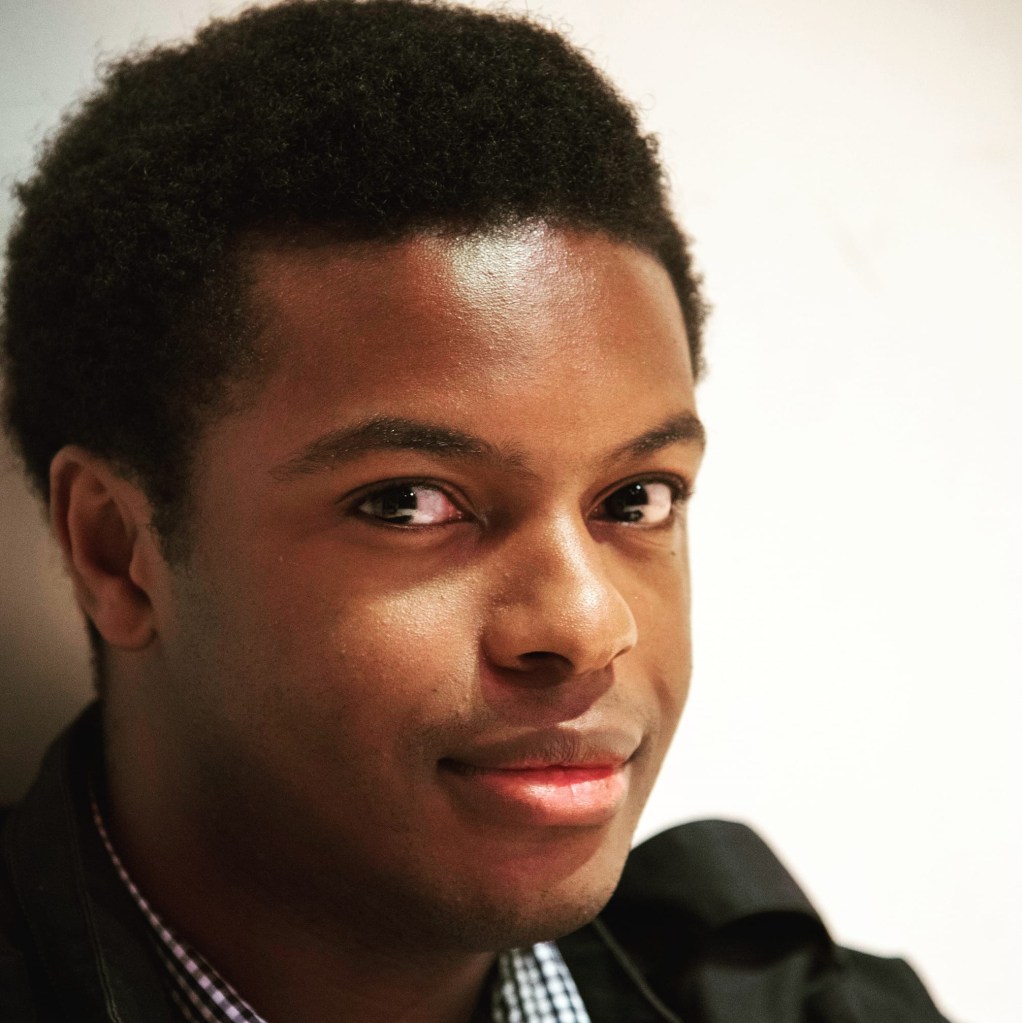
My name is Tré Ventour and I am the Students’ Union’s Vice President BME Sabbatical Officer. When I’ve asked students what BME stands for, most have been clueless – Black Minority Ethnic. The same could be said for BAME – Black Asian Minority Ethnic. I was elected to represent ethnic minority students. But I’ve been asking myself how much longer will this 47% be an ethnic minority? At Northampton, they will soon be the majority. This 14,000-student university in which nearly 7000 fit into this BME box.

Pigeon-holed. To be put into a box. I don’t like to think in boxes. I try not to think in labels but in this world, it’s naive to be colourblind. In the education sector, in this day and age, especially at Northampton, to not see race is to ignore the experiences of nearly 7,000 students – nearly 7,000 stories about potential hate crimes, and what about BAME members of staff? We must see race. We must see sex, class, and gender (all genders).
To be colourblind is to live life high on privilege – to exist without the consequences of hate crime. Some people live with racism, sexism and / or homophobia all their lives.
Many say “there’s one race, the human race.” That may be true but how comfortable must you be in your existence to come to that notion? And then push that notion on those who experience racism on a daily basis.
When I’ve spoken to students about BAME or ethnic minority, they say “Just call me by my name.” Students are flesh and bone, more than acronyms. And I do what they tell me to do (in a manner of speaking / within reason). I’m not Vice President, I’m not Mr Ventour; I am Tré and I am here to help students, to represent students (of colour) – more so Black students that look at White authority and see invader. Who I have heard compare university to apartheid South Africa – one in, one out – to a Zimbabwe under British rule – De Beers, Rhodes and racism. Fear and exclusion.
Call them minorities, call them BME, call them BAME. Yet, this acronym just seems like coded language for Black. And at Northampton, when people say BME or BAME, they mean Black students, so just say what you mean, “Black.”
And if these labels, if these pigeon-hole terms help Higher Education solve issues like attainment perhaps it’s worth it. But what I can say is that not all Black experiences are the same. To be a Black British student is not the same as to be a Black international from Africa, the EU or elsewhere.

But to be a person of colour in this country is to be immigrant, British or otherwise. To be overly polite. To be overly grateful or gracious. To be a good immigrant.
Share this:


That Fat-Tuition: International Students’ Career Prospects

Sallek is a graduate from the MSc Criminology. He is currently undertaking doctoral studies at Stellenbosch University, South Africa.
As an international student studying for my doctorate in South Africa, I have been pushed and compelled to think more and more about life after studies. This push does not often come from the most caring hearts. It would seem some South Africans have been wired to ask every ‘foreign national’ they meet, ‘would you go back to your country when you are done studying?’ The motive for asking this question is not as important for me as the reality packed in the question. This reality is that of the post-PhD blues, a time of unsettling emotions, and transitioning from studying to a career or post-doctoral study. Experience shows that the waiting period stirs emotions of rejection after interviews or for just not being shortlisted and when the value of one’s research and academic competency is questioned. For some the experience is short, others simply return to their former employment, while for many others, it could take a year or two, or even more.
Recently, the thought of graduating and life after the ‘PhD’ has been in my mind, and sometimes, it encroaches into my active study hours. However, this entry does not depict the reality of life after PhD alone. I had this moment after my bachelor degree and even more after my Criminology degree at UoN when I had to consider the thought of returning to my home country. I am certain some international students would relate with this. I have had numerous conversations and have heard the opinions of many on this. However, given that graduation is not only an end, but a new beginning as Helen rightly notes, careful thought out plans, perseverance and patience has helped me navigate these periods.
As the labour market has become more competitive, the need for perseverance, thought-through plans and sometimes, ingenuity has become even more important after studying and receiving beautiful grades. Statistics indicates that a significant percentage of faculty positions are non-permanent appointments and this makes the academic career prospect of young and aspiring researchers unpromising. Outside of the academia, not only is the labour market competitive, but applicants are stifled with years of experience requirements and these issues brings me to the crux of this entry.
Beyond doubt, the cost of studying for international students in most countries is comparably higher than those of ‘home’ students. I do not refer to the economic costs in terms of higher tuition, international registration fee requirements, and other sundry maintenance requirements only. Added to this is the immense social cost such as the loss of personal relationship with family, friends and one’s social network. For some, studying in Europe or the West generally attracts certain prestige and a huge pressure from social-expectation that one will return to begin a lucrative work. But, the reality is far from this. Africa has an existential youthful unemployment crisis, serious insecurity challenges and several countries lack basic infrastructures and social amenities. Hence, after studying, some elect to never return, even if it means keeping that beautiful certificate away, picking a menial job or staying back illegally. After all, besides selling all their possession or borrowing to pay the huge tuition, they have nothing to return to and have to eke out a living. These factors undermines and affects the career prospects of international students.

 Thoughts from the criminology team