Home » Institutional Violence (Page 5)
Category Archives: Institutional Violence

The Color Purple, The Musical: What in the Misogynoir?!

TW: mentions of rape, child rape, racism, and misogynoir.
Alice Walker’s novel The Color Purple is a story loved around the world. So, when I saw that it was adapted to stage and touring the UK, my interest was peaked just enough to consider a visit to my local theatre the Royal & Derngate in Northampton. A Curve and Birmingham Hippodrome co-production, it came to Northampton in the first week of October. Largely, audiences that frequent my local theatre are overwhelmingly white – thus, watching The Color Purple it was a joy to my heart to hear Black people in my community engaging with the arts, because the last time I heard so many Black people attended, was for Our Lady of Kibeho as part of the R&D’s Made in Northampton season. This dates back to 2019, a production I reviewed for The Nenequirer showing that Northampton(shire) arts has work to do.
Social media platforms like Twitter and Instagram showed me the pretty unanimous positive praise for the Leicester-Birmingham co-production, while local critics also enjoyed it – including reviews from The Chronicle & Echo and The Nenequirer as well as further reviews by The Real Chris Sparkle and Northampton Town Centre BID. However, there were elements of the show that caused me great distress, no less than the perpetuation of misogynoir and racist stereotypes against Black men. It was deeply triggering, showing how historical trauma and vicarious trauma are ever present, including when white organisations have not done the work of protecting Black mental health when producing “Black-centred media.”
At the head of this cast, Me’sha Bryan gives a knockout performance as Celie (previous played by Whoopi Goldberg in the film) accompanied by Aaliya Zhané as Nettie, with Bree Smith as Shug Avery, and brilliant musical numbers grounded in the traditions of blues music that finds its origins in the trauma of enslaved Africans in the American South. They sang when “they got the blues” … and as far as performance and the commitment from the cast, I couldn’t ask for better.
However, whilst I have praised the musical numbers above, I did not believe it fitted with the tones of The Color Purple curating a rift between what the actors were saying and doing on stage, and the intonations of the music – as well as the lighting design. And despite the directorial position deciding the rape of a child wasn’t musical material (rightly so), the choice to have it as a passing detail with no further discussion, I found particularly off-key. This is one of the moments that highlights that The Color Purple may not have been musical material and better considered as a serious drama. I did not walk away feeling that bleak, much ado with contradictory lighting choices to character moods. The characters were feeling one away and lights did something else. By the by, rather than skip over the rape to maintain “the musicalness”, it may have been more effective to have done this story as a stage drama (with musical elements, if at all). The horrors depicted at the beginning of the novel are pretty nonexistent in musical.
So, this recent adaptation was a disappointment. Not from an acting point of view but behind-the-scenes pre-production elements like direction. The start of story includes a fourteen year-old who births two children after being raped by her father. So, the amount of trauma that exists around child sexual abuse and rape appear unconsidered when they glossed over these parts of the story. Furthermore, I do question if they consulted with any survivors when doing research for this adaptation. A ‘sensitivity consultant’ would not have gone amiss either, further to considerations of intersectionality and how cultural nuances in global, but still different Black communities, will be interpreted by white people, especially in provincial Little England.
Blown away by the musical abilities of the cast, stage productions (like much art) are often labelled as “escapist” so is not afforded the same criticality as for example – policing, education, sport and so on – we are all guilty of this and we can do better. This may be art; there were no redeeming Black characters, and Black men calling Black women “ugly” (written into the script) in full face of a white audience is cultural violence. In Northampton, the large white audience laughed at this example of ableist misogynoir, and in many ways this production felt to be played up for white audiences. Lots of white people are not used to seeing Black people as full human beings, and I do feel the play draws out our humanity. And by proxy centres white comfort with a Black aesthetic reinforced by white supremacy in media.
Disability justice activist Talia Lewis has released definitions of ableism every year since 2019. In January 2022, she discussed ableism as a violent social discourse that values people’s bodies and minds according to societally constructed ideas of “normalcy, productivity, desirability, intelligence, excellence and fitness …” Lewis (2022) states that these ideas are embedded in other violent discourses such as eugenics, capitalism, misogyny and white supremacy. The adaptation of these characters is only part of this debate, where another part may want to consider how this play has informed everpresent white superemacism pervasive across Northamptonnshire. It may impact how local white audiences may view Black people when they perceive that in this cultural text – ‘this is how Black people talk and act around each other.’
“This systemic oppression leads to people and society determining people’s value based on their culture, age, language, appearance, religion, birth or living place, “health/wellness”, and/or their ability to satisfactory re/produce, “excel” and “behave.” You do not have to be disabled to experience ableism.”
Talia Lewis (2022)
In Homegrown (hooks and Mesa-Bains, 2017), bell hooks tell us “We have to constantly critique imperialist white supremacist patriarchal culture because it is so normalized by mass media and rendered unproblematic. The products of mass media offer the tools of the new pedagogy.” Theatre is no different to films, literature or television programmes. Watching the musical, it struck me how the numbers of people who haven’t done the work of unlearning their own white supremacy would be impacted by such an adaptation (yes, as we know all humans can reproduce these isms but in a global western context, however, white supremacy has put white people on the top of that racial hierarchy).
One instance of misogynoir and ableism was underpinned by the three Black women singers (their character names escape me) who were written as Sassy Black Women inherently “comedifying” Black womanhood. Brilliant singers, but were written lazily reinforcing a damaging cultural media narrative that diminishes the three-dimensional personhoods of Black women. This was offered with no alternative. The Hypersexual Jezebel (named after the “sinful” Biblical character) appears in numbers of characters while Sofia was written as the Strong Black Woman. Black men were then written as violent, comedic relief, illiterate, and other harmful stereotypes, and domestic abuser Mr Albert is redeemed to the sound of musical harmonies and joyful lighting.
At a Northampton level, the critics from local media revisited a culture of uncritically discussing art. Stories aren’t just stories but a product of the society that created them, and we are a society that finds it easier to challenge the criminal justice system than it does liberal arts institutions, in spite of both having a say in how Black people are viewed and treated. Despite “Black theatre” not being genre, we need more shows at the Derngate that centre Blackness in Britain. And whilst commissioning and hosting shows about ‘Black issues’ is not evidence of an anti-racist commitment, it would be nice to see more shows locally about Black people in the UK by Black people.
When we do get “Black stories”, they so often centre the US, most recently The Color Purple (Oct, 2022) and Two Trains Running (Sept, 2019) – denying local audiences a context for Blackness within the United Kingdom, while recentring American Blacknesses is gaslighting through art. In November, Dreamgirls centring American Blackness is coming to the Derngate. A co-production between The Curve and the Birmingham Hippodrome, this adaptation of The Color Purple was deeply problematic on many levels that local white critics may not have picked up on because of their whiteness – drawn in by a spectacle of a “Black show”, viewed through a white gaze that is unused to talking about white supremacy as a political structure.
The white audience for these misogynoir tropes specifically – largely one of laughter – reminded me of the white gaze, with white laughter as eased white supremacy. Whiteness continues to pervade through ‘acceptable racism’ where serious digs made at Black people in-text laughed at by white people may show how white people may think about Black people in designated white spaces. A Black man seriously calling a Black woman ugly and a white audience laughing at that is incredibly revealing – a comfortableness in spaces coded as white … and how white people may act when thinking and talking about Black people in private (i.e in spaces coded as culturally white and desgined to their comfort).
“I grew up in a culture of bantering and, ngl, I love a caustic riposte. And while in certain ways I resent the current policing of language, there is a distinction. I hate to break it to you, but a “joke” in which the gag is that the person is black isn’t a joke, it’s just racism disguised as humor. A joke told to a white audience where the punch line is a racist stereotype isn’t a joke, again it’s just racism; if there is only one black person present, it’s also cowardly and it’s bullying. Jokes of this nature probably aren’t funny for black people.”
Emma Dabiri (2021: 98)
Art imitating life is one thing, but when life imitates art is another. White laughter at Black people in cultural media texts goes back to the days when blackface was on the BBC (until 1978). To see this platformed by a local arts institution then profiting from it, is revealing of how whiteness is performed and profited from, when white people think they’re not being watched. Creatives have a responsibility and so do those institutions that platform them.
Myself and fellow blogger @haleysread discuss this further in our prior entries about the scandal surrounding Jimmy Carr and Netflix. On that October evening, being one of the few Black people in the audience, it was incredibly uncomfortable. To consider art uncritically is to be entertained from a vantage point of privilege (or ignorance). Attending with my friend, to see unanimous positive feedback from the public made us feel a way, no less than from many Black people. We must always be critical; being critical is not the same as criticising, and those who are critical only take the time to be so because we care.
It is not about individual actors but about the lack of critique of institutional platforming in producing “art” that goes on to cause harm. Another fellow blogger Stephanie @svr2727 talked about misogynoir and the media in her recent webinar with the Criminology Team and Black Criminology Network. Violent mistakes in arts productions show a need not for more historical consultants, but sensitivity readers and empathy viewers. One cannot teach empathy, you either have it or you do not. Extending this gaze to screen media texts as well like Bridgerton and others, it is a further reminder that social scientists are needed at the very top of media … especially those of us that research about race, racism, and other forms of violence.
These cultural texts are rehearsed, edited, and considered by multiple hands before any public audience sees them. So, why are we still having to challenge? Simple: misogynoir, ableism, and whiteness are institutionalised and normalised socially and culturally into our day-to-day practice. No less than in “liberal” arts institutions.
“Nothing but a circus, with clowns and all.” – Malcolm X
Share this:


The Origins of Criminology

The knife was raised for the first time, and it went down plunging into naked flesh; a spring of blood flowed cascading and covering all in red. The motion was repeated several times. Abel fell to his death and according to scriptures this was the first crime. Cain who wielded the knife roamed the earth until his demise. The fratricide that was committed was the first recorded murder and the very first crime. A colleague tried to be smart and pointed that the first crime is Eve’s violation in the garden with the apple, but I did point out that according to Helena Kennedy QC, she was framed! In the least Eve’s was a case of entrapment which is criminological but leaves the first crime vacant. So, murder it is! A crime of violence that separates aggressor and victim.
The response to this crime is retribution. In the scriptures a condemnation to insanity. In later years this crime formed the basis of the Mosaic Law inclusive of the 10 commandments and death as the indicative punishment. In the Ancien Régime the punishment became a spectacle on deterrence whilst the crowds denounced the evildoer as they were wheeled into the square! In modern times this criminality incorporated rehabilitation to offer the opportunity for the criminal to repent and make amends.
‘The first man who having enclosed a piece of ground bethought himself of saying “This is mine”’! This is an alternative interpretation of the first crime, according to Jean-Jacques Rousseau (1762/1993: 192). In The Social Contract he identifies the first crime very differently from the scriptures. In this case the crime is not directed at a person but the wider community. The usurping of land or good in any manner that violates the rights of others is crime because it places individualism ahead of the common good. As in this crime there is no violence against the person, the way in which we respond to it is different. Imperialism as a historical mechanism accepts the infringement of property, rights, and human rights as a necessity in human interactions. The law here is primarily protected for the one who claims the land rather than those who have been left homeless. In this case, crime is associated with all those mechanisms that protect privilege and property. Soon after titles of land emerged and thereafter titles of people owning other people follow. The land becomes an empire, and the empire allows a man and his regime to set the laws to protect him and his interests. Traditionally empires change from territories of land to centres of government and control of people. The land of the English, the land of the Finnish, the land of the Zulu. In this instance the King become a figure and custom law subverts natural law to accommodate authority and power.
These two “original” crimes represent the diversity in which criminology can be seen; one end is the interpersonal psychological rendition of criminality based on the brutality of violence whilst on the other end is an exploration of wider structural issues and the institutional violence they incorporate. The spectrum of variety criminology offers is a curse and a blessing in one. From one end, it makes the discipline difficult to specify, but it also allows colleagues to explore so many different issues. Regardless of the type of crime category for any person attracted to the discipline there is a criminology for all.
Between these two polar apart approaches, it is interesting to note their interaction. In that it can be seen the interaction of the social and historical priorities of crime given at any given time. This historical positivism of identifying milestones of progression is an important source of understanding the evolution of social progression and movements. Let’s face it, crime is a social construct and as such regardless of the perspective is indicative of the way society prioritises perceptions of deviance.
Arguably the crimes described previously denote different schools of thought and of course the many different perspectives of criminology. A perfectly contorted discipline that not only adapts following the evolution of crime but also theorises criminality in our society. When you are asked to describe criminology, numerous associations come to mind, “the study of crime and criminality” the “discipline of criminal behaviours” “the social construction of crime” “the historical and philosophical understanding of crime in society across time” “the representation of criminals, victims, and agents in society”. These are just a few ways to explain criminology. In this entry we explore the origins of two perspectives; theology and sociology; image that the discipline is influenced by many other perspectives; so consider their “origin” story. How different the first crime can be from say a psychological or a biological perspective. The origins of criminology is an ongoing tale of fascinating specialisms.
Rousseau, Jean-Jacques, (1762/1993), The Social Contract and Discourses, tr. from the French by G.D.H. Cole, (London: Everyman’s Library)
Share this:


‘Now is the winter of our discontent’
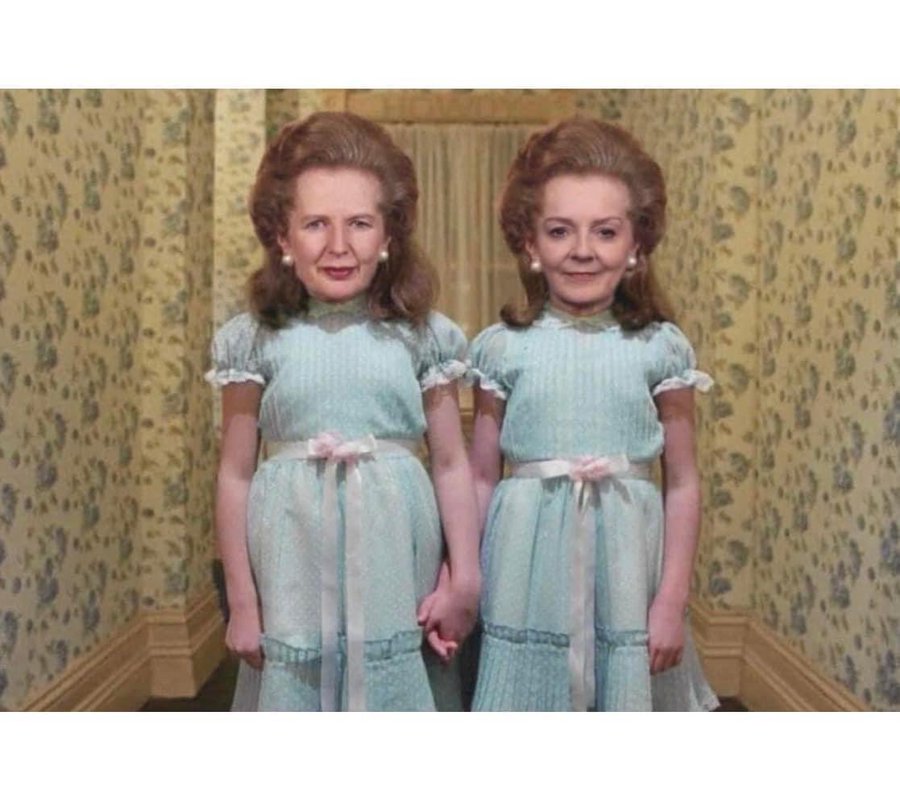
As I write this blog, we await the detail of what on earth government are going to do to prevent millions of our nations’ populations plummeting headlong into poverty. It is our nations in the plural because as it stands, we are a union of nations under the banner Great Britain; except that it doesn’t feel that great, does it?
As autumn begins and we move into winter we are seeing momentum gaining for mass strikes across various sectors somewhat reminiscent of the ‘winter of discontent’ in 1979. A few of us are old enough to remember the seventies with electricity blackouts and constant strikes and soaring inflation. Enter Margaret Thatcher with a landslide election victory in 1979. People had had enough of strikes, believing the rhetoric that the unions had brought the downfall of the nation. Few could have foreseen the misery and social discord the Thatcher government and subsequent governments were about to sow. Those governments sought to ensure that the unions would never be strong again, to ensure that working class people couldn’t rise up against their business masters and demand better working conditions and better pay. And so, in some bizarre ironic twist, we have a new prime minister who styles herself on Thatcher just as we enter a period of huge inflationary pressures on families many of whom are already on the breadline. It is no surprise that workers are voting to go on strike across a significant number of sectors, the wages just don’t pay the bills. Perhaps most surprising is the strike by barristers, those we wouldn’t consider working class. Jock Young was right, the middle classes are staring into the abyss. Not only that but their fears are now rapidly being realised.
I listened to a young Conservative member on the radio the other day extolling the virtues of Liz Truss and agreeing with the view that tax cuts were the way forward. Trickle down economics will make us all better off. It seems though that no matter what government is in power, I have yet to see very much trickle down to the poorer sectors of society or for that matter, anyone. The blame for the current economic state and the forthcoming recession it seems rests fairly on the shoulders of Vladimir Putin. Now I have no doubt that the invasion of Ukraine has unbalanced the world economic order but let’s be honest here, social care, the NHS, housing, and the criminal justice system, to name but a few, were all failing and in crisis long before any Russian set foot in the Ukraine.
That young Conservative also spoke about liberal values, the need for government to step back and to interfere in peoples lives as little as possible. Well previous governments have certainly done that. They’ve created or at least allowed for the creation of the mess we are now in by supporting, through act or omission, unscrupulous businesses to take advantage of people through scurrilous working practices and inadequate wages whilst lining the pockets of the wealthy. Except of course government have been quick to threaten action when people attempt to stand up for their rights through strike action. Maybe being a libertarian allows you to pick and choose which values you favour at any given time, a bit of this and a bit of that. It’s a bit like this country’s adherence to ideals around human rights.
I wondered as I started writing this whether we were heading back to a winter of discontent. I fear that in reality that this is not a seasonal thing, it is a constant. Our nations have been bedevilled with inadequate government that have lacked the wherewithal to see what has been developing before their very eyes. Either that or they were too busy feathering their own nests in the cesspit they call politics. Either way government has failed us, and I don’t think the new incumbent, judging on her past record, is likely to do anything different. I suppose there is a light at the end of the tunnel, we have pork markets somewhere or other.
Share this:


The Good Doctor has me thinking…

Recently I have begun watching ABC’s The Good Doctor, which is a medical drama based in the fictional, yet prestigious, San Jose St Bonaventure Hospital and follows the professional and personal journeys of a number of characters. The show is based on a South Korean tv medical drama called Good Doctor and is produced by Daniel Dae Kim and developed by David Shore (creator of House). The main character is Dr Shaun Murphy who has Autism. He is a surgical resident in the early seasons and the show focuses on how Dr Murphy navigates his professional and personal life, as well as how the hospital and other doctors, surgeons, nurses and patients navigate Dr Murphy’s style of communication and respond to him. As a medical drama, in my humble opinion, it is highly entertaining with the usual mix of interesting medical cases and personal drama required. The characters are also relatable in a number of different areas. As a springboard for a platform to talk about equality, equity and fairness, it is accessible and thought-provoking.
A key focus of the programme is the difficulty Dr Murphy has with communication. Well, I say difficulty in communicating, but in actuality I would say he communicates differently to what is recognised as an ‘accepted’ or ‘normal’ form of communication. Dr Murphy struggles to express emotions and becomes overwhelmed when things change and are not within his controlled environment. A number of his colleagues adapt their responses and ways of interacting with him in order to support and include him, whereas others do not and argue that despite his medical brilliance, and first-rate surgical skills, he should not be treated differently to the other surgical residents, as this is deemed unfair.
Whilst watching, the claims of treating all surgical residents equally, and ensuring the hospital higher-ups are being fair; notions of John Rawls’ writing scream out at me. Students who have studied Crime and Justice should be familiar with Rawls’ veil of ignorance, liberty principles and difference principle, in particular with its reference to ‘justice’. But the difference principle weighs heavily when looking at how Dr Murphy functions within the hospital institution with its rules, procedures and power dynamics which clearly benefit and align with some people more so than others. Under the veil of ignorance, maybe an empathetic doctor or surgeon is not required, but a competent and successful one is? Maybe being empathetic is a personal circumstance rather than an objective trait? For Rawls, it is important that the opportunity to prosper is equal for all: and this might mean the way this opportunity is presented is different for different individuals. Rawls asks us to consider a parallel universe and what could be (a popular stance to take within the philosophical realm): why can’t people with autism be given the chance to save lives and perform surgeries just because they cannot communicate in a way deemed ‘the norm’ when dealing with patients.
It is possible that I am over-thinking this. And when I ask my partner about it, they raise questions about why Dr Murphy should be given different opportunities to the other residents and the harm Dr Murphy’s communication barriers could and do cause within the series. But I feel they are missing the point: it is not about different opportunities, its about different methods to ensure they all have the same opportunity to succeed as surgeons. It is not about treating everyone the same, which might on the surface appear to be fair, it is about recognising that equal treatment involves taking account for the differences. Why should Dr Murphy be measured against norms and values from an institution which is historically white, non-disabled, male, and cis-gendered? This might appear to be a lot of thought for a fictional medical drama, but to reiterate it’s an excellent programme with plenty to think about…
Bibliography:
Rawls, J. (1971) A Theory of Justice. Oxford: Oxford University Press.
Ryan, A. (1993) Justice. Oxford: Oxford University Press.
Share this:


Food Banks: The Deserving vs Undeserving

A term that has been grating on me recently is ‘hard work’. I have had a recent bout of watching lots of television. From my observations it appears that more commentators within the media have grasped the idea that the continued need for Food Banks in the United Kingdom is awful. Yet commentators still continue with the same old deserving/undeserving tripe which has existed for centuries (which CRI2002 students are well-aware of). That being, that we should be concerned about food banks… ‘because now even hard-working people are using them!’, aka those within formal (preferably full-time) employment.
What is it that is not being said by such a statement? That being unable to survive off benefits is perfectly fine for people who are unemployed as they do not deserve to eat? If that is the case perhaps a reconsideration of the life experiences of many unemployed people is needed.
To provide some examples, a person might claim unemployment benefits because they are feeling mentally unwell or harmful to themselves but a variety of concerns have prevented them from seeking additional support and claiming sickness benefits, in this situation working hard on survival might be prioritised over formal employment. Another person might sacrifice their work life to work hard to unofficially care for relatives who have slipped through cracks and are unknown to social services, whilst not reaching out for support due to fear/a lack of trust social services – they have good reasons to be concerned. Some people might have dropped out of formal employment due to experiencing a traumatic life event(/s) which means that they now need to work hard on their own well-being. Or, shock-horror, people may be claiming unemployment benefits because they are working hard post-pandemic to find a job which pays enough for them to survive.

Let’s not forget that many of those who access Food Banks are on sickness benefits because they cannot work due to experiencing a physical and/or mental health disability. The underserving/deserving divide appears to be further blurred these days as those who claim sickness benefits are frequently accused of being benefits cheats and therefore undeserving of benefits and Food Bank usage. Even so, the acknowledgement of disability and Food Bank usage within the media is rare.
Is it really ok to perceive that the quality of a person’s life and deserved access to necessities should depend on their formal employment status?
There is twisted logic in the recent conservative government discourse about hard work. There is the claim that if we all work hard we will reap the rewards, yet in the same breath ‘deserving hard workers’ are living from payslip to payslip due to the cost of living crisis, poor quality pay and employment. Hence the need to use Food Banks.
The conservatives hard working mantra that all people can easily gain employment is certainly a prejudiced assumption. With oppressive, profit seeking, exploitative and poor quality employment there is little room allowed for humans to deal with their personal, family life pains and struggles which makes job retention very difficult. Perhaps the media commentators need a re-phrase: It is awful that any person needs to use a Food Bank!
Share this:


Chaos in Colombo: things fall apart

Following the mutiny that we witnessed in Downing street after members of the Johnson’s cabinet successfully forced him to resign over accusations of incompetency and the culture of inappropriate conducts in his cabinet, the people of Sri Lanka have also succeeded in chasing out their President, G. Rajapaksa, out of office over his contributions to the collapse of the country’s economy. This blog is a brief commentary on some of the latest events in Sri Lanka.
Since assuming office in 2019, the government of Rajapaksa has always been indicted of excessive borrowing, mismanagement of the country’s economy, and applying for international loans that are often difficult to pay back. With the country’s debt currently standing at $51bn, some of these loans, is claimed to have been spent on unnecessary infrastructural developments as well as other ‘Chinese-backed projects’, (see also; the Financial Times, 2022). Jayamaha (2022; 236) indicated that ‘Sri Lanka had $7.6 billion in foreign currency reserves at the end of 2019. However, by March 2020, it had exhausted its reserves to just $1.93 billion.’ One of Rajapaksa’s campaign promises was to cut taxes, which he did upon assuming office. His critics faulted this move, claiming it was unnecessary at that particular time. His ban on fertilizers, in a bid for the country to go organic (even though later reversed), had its own effect on local farmers. Rice production for example, fell by 20% following the ban – a move that eventually forced the government to opt for rice importation which was in itself expensive (see also; Nordhaus & Shah 2022). Critics warned that his investments and projects have no substantial and direct impact on the lives of the common people, and that what is the essence of building roads when the common people cannot afford to buy a car to ride on those roads? The fact that people have to queue for petrol for 5 days and only having to work for 1 day or where families cannot afford to feed their children simply shows how the government of Rajapaksa seem to have mismanaged the economy of the country. Of course, the problem of insecurity and the pandemic cannot be left out as crucial factors that have also impacted tourism levels and the economy of the country.
Foreign reserves have depleted, the importation of food is becoming difficult to actualise, living expenses have risen to high levels, the country is struggling with its international loan repayments, the value of Rupees has depreciated, there is inflation in the land, including shortages of food supplies and scarcity of fuel. Those who are familiar with the Sri Lanka’s system will not be particularly surprised at the nationwide protests that have been taking place in different parts of the country since May, because the Rajapaksa’s regime was only sitting on a keg of gun powder, ready to explode.
In an unprecedented fashion on July 9, several footages and images began to emerge online showing how protesters had successfully overpowered the police and had broken into the residence of the President. Their goal was to occupy the presidential palace and chase the president out of his residence. In fact, there are video footages online allegedly showing the motorcade of the president fleeing from his residence as the wave of protest rocked the capital.
Upon gaining entry into the innermost chambers of the president’s dwelling, protesters started touring and taking selfies in euphoria, some of them had quickly jumped into the presidential shower, others helped themselves to some relaxation on the president’s bed after days of protests, some were engaged in a mock presidential meeting in the president’s cabinet office, some preferred to swim in the president’s private pool while others helped themselves to some booze.
Indeed, these extraordinary scenes should not be taken for granted for they again reaffirm WB Yeats classic idea of anarchy (in ‘the second coming’ poem), being the only option to be exercised when the centre can no longer hold.
Of course, some may ask that now that they have invaded the presidential villa, what next? In my view, the people of Sri Lanka seem to be on the right direction as President Rajapaska has eventually bowed to pressure and agreed to resign. The next phase now is for the country to carefully elect a new leader who will revive the sinking ship, amend the economic policies, foster an effective democratic political culture which (hopefully) should bring about a sustainable economic plan and growth reforms.
Importantly, this is a big lesson not just for the political class of Sri Lanka, but for other wasteful leaders who continue to destroy their economies with reckless and disastrous policies. It is a lesson of the falcon and the falconer – for when the falcon can no longer hear the falconer, scenes like these may continue to be reproduced in other locations of the world.
Indeed, things fell apart in Colombo, but it is hoped that the centre will hold again as the country prepare to elect its new leaders.
Here is wishing the people of Colombo, and the entire Sri Lankans all the best in their struggle.
References
Financial Times (2022) [Twitter] 20 July. Available at: https://mobile.twitter.com/FinancialTimes/status/1549554792766361603
Jayamaha, J. (2022) “The demise of Democracy in Sri Lanka: A study of the political and economic crisis in Sri Lanka (Based on the incident of the Rambukkana shooting)”, Sprin Journal of Arts, Humanities and Social Sciences, 1(05), pp. 236–240. doi: 10.55559/sjahss.v1i05.22.
Nordhaus, T & Shah S, (2022) In Sri Lanka, Organic Farming Went Catastrophically Wrong, March 5, FP. Available at: https://foreignpolicy.com/2022/03/05/sri-lanka-organic-farming-crisis/
Share this:

‘By order of the Peaky Blinders’: GRT History Matters
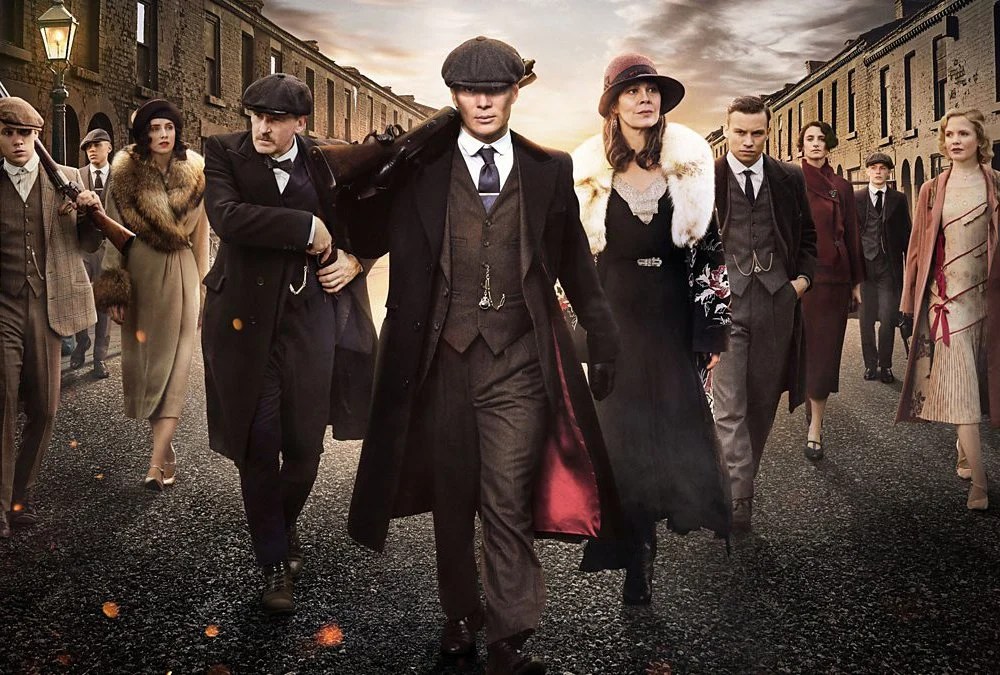
Once Gypsy Roma and Traveller (GRT) history month commences Gypsy and Traveller histories are largely ignored. This is on par with the the erasure of GRT history and contemporary culture within mainstream Britain. Given this, I was surprised that the very popular Peaky Blinders starred Birmingham based main characters and their families who appear to be Brummies, of Romany, Gypsy and Irish Traveller heritage.
In many ways representation within Peaky Blinders is problematic, it is typical that once GRT people appear as main characters their lifestyles are associated with gangs, sex and violence. But there are a lot of positives, the episodes are filled with fabulous costumes, interesting characters, plots, settings and music. There is certainly a lot of pride that comes with the representation of Birmingham based lives of mixed heritage Gypsy and Traveller families on screen.
Peaky Blinders is set in a time era which is just after WWI and appears to end in the 1930s. Whilst the series is fictional, there are many parallels that can be drawn between the lives of the fictional main character Tommy Shelby and his family and the real-life lived histories of Gypsy and Traveller people.
Peaky Blinders does well to de-mythisise the assumption that Gypsy and Traveller people do not mix with gorgers and do not participate within mainstream society. To illustrate, Tommy and his brother’s fought in WWI and experienced the damaging aftereffects of war participation. In reality, despite previously being subjected to British colonial practices and being treated with distain by the State many British Gypsy and Traveller people would have had no choice but to fight in this war due to conscription. Many would have lost their lives because of this.
Note that Tommy’s family mostly lived within housing and were working within mainstream industrial society. In reality, in industrial cities like Birmimgham many nomadic Gypsy and Traveller lifestyles would have been under threat due to land purchases made by gorgers for the purpose of building factories and housing (Green, 2009). Upon purchase of this land nomadic groups would be evicted from it, this would have left many homeless, with the increased the pressure to assimilate. This would result in work life changes, hence, Gypsy and Traveller people worked alongside gorgers in factories, where the pay and conditions would have been poor (Green, 2009).
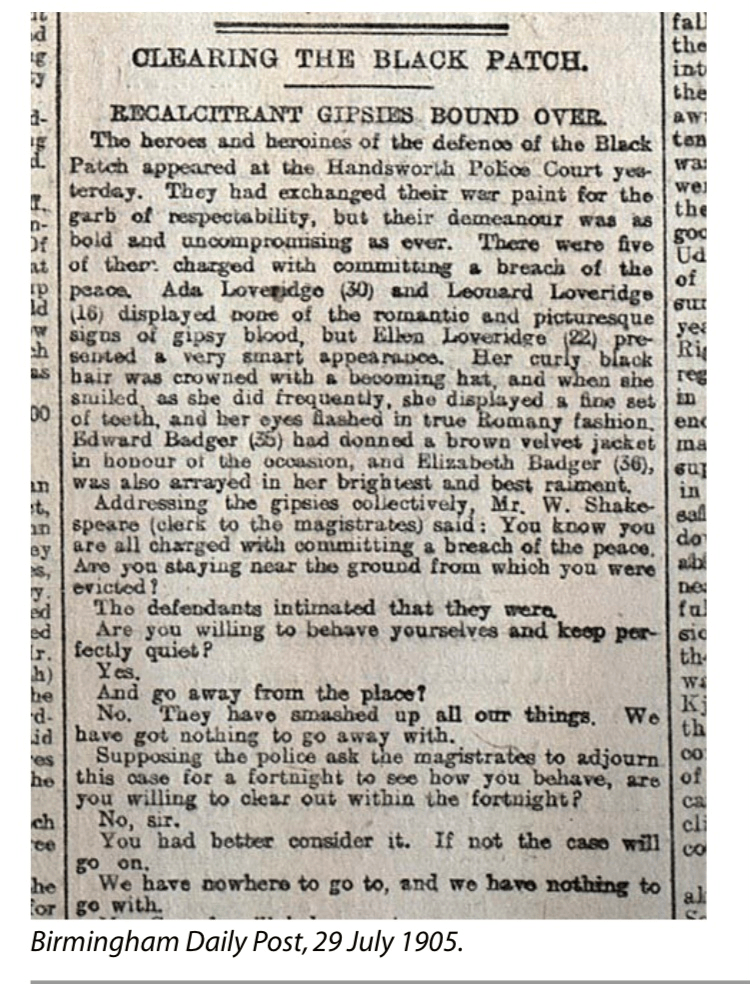

Just like prejudice in reality, even when living within housing Tommy and his family experience prejudice from within and outside of their own community. Tommy is referred to as a ‘dirty didicoi’ seemingly due to the perception of his mixed heritage and not being of ‘full-blooded’ Gypsy stock. In response to an anti-gypsy slur Tommy mocks stereotypes by stating that as well as his day job he ‘also sells pegs and tells fortunes’.
Towards the end of Peaky Blinders the promotion of fascism by elite figures is central to the storyline. Just as in reality, there was the development of the British Union of Fascists political party. Prejudice and fascist ideas contributed to categorising Gypsys as an inferior race. Whilst Peaky Blinders ends before WWII it is harrowing to know that these ideas influenced the extermination of Roma and Gypsies during the Nazi regime. Many British Gypsy and Traveller soldiers lives would have also been lost in fighting the Nazi’s in WWII due to this.
It is unfortunate that the women have less screen time in Peaky Blinders, but their personalities did shine. Ada’s character and response to prejudice is ace, whether this is responding to street hecklers, an elite eugenicist women’s ethnic cleansing ideas, or her son’s prejudice towards his sister. When her son refers to his sister as a ‘thing’ and states that she would ‘get them killed’ as she was a Black-mixed race child she responds by stating, ‘where will they send you Karl?’ whilst making him aware that he could also be subjected to persecution due to having a Jewish father and a Gypsy mother.
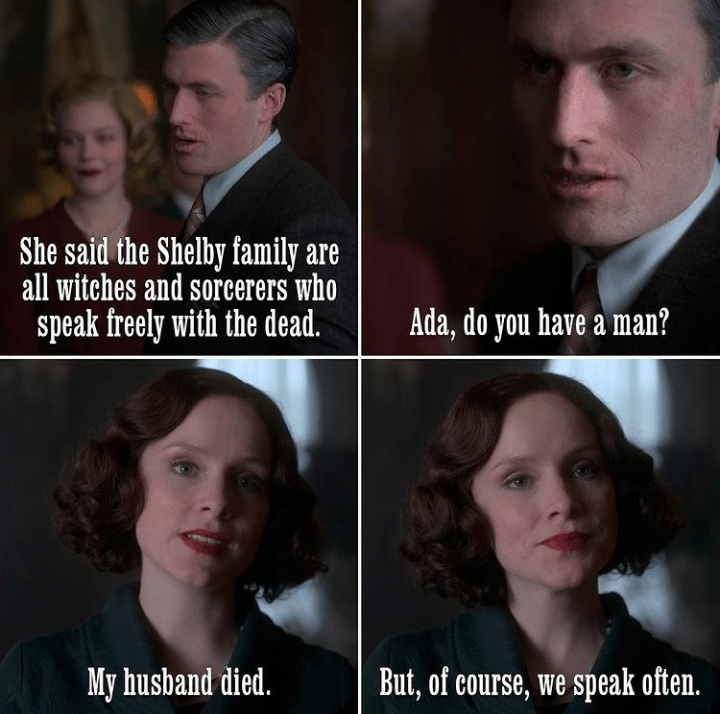
This year marks the end of Peaky Blinder’s episodes, the last episode is great. Tommy returns to his roots – choosing to end his days with his horse, wagon and photographs of his family. But he then wins against all the odds! Unfortunately, whilst Peaky Blinders has been celebrated there is less celebration of Gypsy and Traveller ethnicities, these were completely ignored within the documentary The Real Peaky Blinders.
Through whitewashing Gypsy and Traveller peoples histories are frequently denied. To adapt David Olusoga’s words, ‘[Gypsy and Traveller] history is British history’. An awareness of Roma Gypsy and Traveller history should not only reside with Gypsies and Travellers alone, or exist at the margins, as these are connected to all of us. As Taylor and Hinks (2021) indicate, if there is increased awareness that past and present themes of percecution this might enable increased support for Gypsy, Roma and Traveller rights – this is vital.
References:
Olusoga, D. (2016) Black and British: A forgotten History, BBC [online].
Taylor, B. and Hinks, J., (2021). What field? Where? Bringing Gypsy, Roma and Traveller History into View. Cultural and social history, 18(5), pp.629–650.
Share this:


What’s happened to the Pandora papers?

Sometime last week, I was amid a group of friends when the argument about the Pandora papers suddenly came up. In brief, the key questions raised were how come no one is talking about the Pandora papers again? What has happened to the investigations, and how come the story has now been relegated to the back seat within the media space? Although, we didn’t have enough time to debate the issues, I promised that I would be sharing my thoughts on this blog. So, I hope they are reading.
We can all agree that for many years, the issues of financial delinquencies and malfeasants have remained one of the major problems facing many societies. We have seen situations where Kleptocratic rulers and their associates loot and siphon state resources, and then stack them up in secret havens. Some of these Kleptocrats prefer to collect luxury Italian wines and French arts with their ill-gotten wealth, while others prefer to purchase luxury properties and 5-star apartments in Dubai, London and elsewhere. We find military generals participating in financial black operations, and we hear about law makers manipulating the gaps in the same laws they have created. In fact, in some spheres, we find ‘business tycoons’ exploiting violence-torn regions to smuggle gold, while in other spheres, some appointed public officers refuse to declare their assets because of fear of the future. Two years ago, we read about the two socialist presidents of the southern Spanish region and how they were found guilty of misuse of public funds. Totaling about €680m, you can imagine the good that could have been achieved in that region. We should also not forget the case of Ferdinand Marcos and his wife, both of whom (we are told) amassed over $10 billion during their reign in the Philippines. As we can see below that from the offshore leak of 2013 to the Panama papers of 2016 and then the 2017 Paradise papers, data leaks have continued to skyrocket. This simply demonstrates the level to which politicians and other official state representatives are taking to invest in this booming industry.

These stories are nothing new, we have always read about them – but then they fade away quicker than we expect. It is important to note that while some countries are swift in conducting investigation when issues like these arise, very little is known about others. So, in this blog, I will simply be highlighting some of the reasons why I think news relating to these issues have a short life span.
To start with, the system of financial corruption is often controlled and executed by those holding on to power very firmly. The firepower of their legal defence team is usually unmatchable, and the way they utilise their wealth and connections often make it incredibly difficult to tackle. For example, when leaks like these appear, some journalists are usually mindful of making certain remarks about the situation for the avoidance of being sued for libel and defamation of character. Secondly, financial crimes are always complex to investigate, and prosecution often takes forever. The problem of plurality in jurisdiction is also important in this analysis as it sometimes slows down the processes of investigation and prosecution. In some countries, there is something called ‘the immunity clause’, where certain state representatives are protected from being arraigned while in office. This issue has continued to raise concerns about the position of truth, power, and political will of governments to fight corruption. Another issue to consider is the issue of confidentiality clause, or what many call corporate secrecy in offshore firms. These policies make it very difficult to know who owns what or who is purchasing what. So, for as long as these clauses remain, news relating to these issues may continue to fade out faster than we imagine. Perhaps Young (2012) was right in her analysis of illicit practices in banking & other offshore financial centres when she insisted that ‘offshore financial centers such as the Cayman Islands, often labelled secrecy jurisdictions, frustrate attempts to recover criminal wealth because they provide strong confidentiality in international finance to legitimate clients as well as to the crooks and criminals who wish to hide information – thereby attracting a large and varied client base with their own and varied reasons for wanting an offshore account’, (Young 2012, 136). This idea has also been raised by our leader, Nikos Passas who believe that effective transparency is an essential component of unscrambling the illicit partnerships in these structures.
While all these dirty behaviours have continued to damage our social systems, they yet again remind us how the network of greed remains at the core centre of human injustice. I found the animalist commandant of the pigs in the novel Animal Farm, by George Orwell to be quite relevant in this circumstance. The decree spells: all animals are equal, but some animals are more equal than others. This idea rightly describes the hypocrisy that we find in modern democracies; where citizens are made to believe that everyone is equal before the law but when in fact the law, (and in many instances more privileges) are often tilted in favour of the elites.
I agree with the prescription given by President Obama who once said that strengthening democracy entails building strong institutions over strong men. This is true because the absence of strong institutions will only continue to pave way for powerful groups to explore the limits of democracy. This also means that there must be strong political will to sanction these powerful groups engaging in this ‘thievocracy’. I know that political will is often used too loosely these days, but what I am inferring here is genuine determination to prosecute powerful criminals with transparency. This also suggests the need for better stability and stronger coordination of law across jurisdictions. Transparency should not only be limited to governments in societies, but also in those havens. It is also important to note that tackling financial crimes of the powerful should not be the duty of the state alone, but of all. Simply, it should be a collective effort of all, and it must require a joint action. By joint action I mean that civil societies and other private sectors must come together to advocate for stronger sanctions. We must seek collective participation in social movements because such actions can bring about social change – particularly when the democratic processes are proving unable to tackle such issues. Research institutes and academics must do their best by engaging in research to understand the depth of these problems as well as proffering possible solutions. Illicit financial delinquencies, we know, thrive when societies trivialize the extent and depth of its problem. Therefore, the media must continue to do their best in identifying these problems, just as we have consistently seen with the works of the International Consortium of Investigative Journalists and a few others. So, in a nutshell and to answer my friends, part of the reasons why issues like this often fade away quicker than expected has to do with some of the issues that I have pointed out. It is hoped however that those engaged in this incessant accretion of wealth will be confronted rather than conferred with national honors by their friends.
References
BBC (2021) Pandora Papers: A simple guide to the Pandora Papers leak. Available at: https://www.bbc.co.uk/news/world-58780561 (Accessed: 26 May 2022)
Young, M.A., 2012. Banking secrecy and offshore financial centres: money laundering and offshore banking, Routledge
Share this:


Youth or Adult: can you tell?
This week’s blog begins with a game: youth or adult, secure estate in England and Wales. Below are some statements, and you simply need to guess (educated guesses please), whether the statement is about the youth, or adult secure estate. So, are the statements about children in custody (those under the age of 18 years old) or adults in custody (18+). When you’re ready…
- 70% decrease in custody in comparison to 10 years ago
- Segregation, A.K.A Solitary Confinement, used as a way of managing the most difficult individuals and those who pose a risk to themselves or others
- Racial disproportionality in relation to experiencing custody and being remanded to custody
- Self-harm is alarmingly high
- 1/3 have a known mental health disability
- Homelessness after release is a reality for a high proportion of individuals
- Over half of individuals released from custody reoffend, this number increases when looking at those sentenced to 6months of less
How many did you answer youth secure estate, and how many adult secure estate? Tally up! Did you find a 50/50 split? Did you find it difficult to answer? Should it be difficult to spot the differences between how children and adults are treated/experience custody?
All of the above relate specifically to children in custody. The House of Commons Committee (2021) have argued that the secure estate for children in England and Wales is STILL a violent, dangerous set of environments which do little to address the needs of children sentenced to custody or on remand. Across the academic literature, there is agreement that the youth estate houses some of the most vulnerable children within our society, yet very little is done to address these vulnerabilities. Ultimately we are failing children in custody! The Government said they would create Secure Schools as a custody option, where education and support would be the focus for the children sent here. These were supposed to be ready for 2020, and in all fairness, we have had a global pandemic to contend with, so the date was pushed to 2022: and yet where are they? Where is the press coverage on the positive impact a Secure School will make to the Youth estate? Does anyone really care? A number of Secure Training Centres (STCs) have closed down across the past 10 years, with an alarmingly high number of the institutions which house children in custody failing Ofsted inspections and HM Inspectorate of Prisons (2021) found violence and safety within these institutions STILL a major concern. Children experience bullying from staff, could not shower daily, experience physical restraint, 66% of children in custody experienced segregation which was an increase from the year prior (HM Inspectorate of Prisons, 2021). These experiences are not new, they are re-occurring, year-on-year, inspection after inspection: when will we learn?
The sad, angry, disgusting truth is you could have answered ‘adult secure estate’ to most of the statements above and still have been accurate. And this rings further alarm bells. In England and Wales, we are supposed to treat children as ‘children first, offenders second’. Yet if we look to the similarities between the youth and adult secure estate, what evidence is there that children are treated as children first? We treat all offenders the same, and we treat them appallingly. This is not a new argument, many have raised the same points and concerns for years, but we appear to be doing very little about it.
We are kidding ourselves if we think we have a separate system for dealing with children who commit crime, especially in relation to custody! It pains me to continue seeing, year on year, report after report, the same failings within the secure estate, and the same points made in relation to children being seen as children first in England and Wales: I just can’t see it in relation to custody- feel free to show me otherwise!
References:
House of Commons Committees (2021) Does the secure estate meet the needs of young people in custody? High levels of violence, use of force and self-harm suggest the youth secure estate is not fit for purpose [Online]. Available at: https://houseofcommons.shorthandstories.com/justice-youth-secure-estate/index.html. [Last accessed 4th April 2022].
HM Inspectorate of Prisons (2021) Children in Custody 2019-2020: An analysis of 12-18-year-old’s perceptions of their experiences in secure training centres and young offender institutions. London: Her Majesty’s Inspectorate of Prisons.
Share this:

No April Fools
The first of April has consisted of a steep 54% rise in what energy company’s can charge customers for using energy, with further rises set to occur in October. This coincides with rises to other bills such as council tax, national insurance and water within a climate of inflation. Previous to this many were struggling to make ends meet…what are these people supposed to do now?
Russia’s atrocities and Covid-19 have been blamed for the steep price increases and inflation. I suspect that employers will be using this as a reason to not increase the persistent low rises in wages that workers are receiving, all whilst their bosses are becoming richer and richer. Of course, both Russia and Covid will have a significant impact on the economy, however, it does not take a genius to be aware that people have been struggling to survive well before this, hence terms like, food poverty, period poverty and fuel poverty predate these issues. Also, so do the persistent low rises in wages for workers.
Apparently, MPs are due a £2,200 pay rise which whilst it seems low (2.7%) compared to inflation, a few MPs themselves (such as Zarah Sultana) have stated that they do not need this pay rise as they already receive a high paying wage.
Oh, and let us not forget that the increasing energy prices will ensure that privatised fuel companies such as Shell and BP continue to profit, with a predicted profit of £40 BILLION for this year.
Meanwhile benefits for those who are not formally employed and spend a higher proportion of money on household bills and rent are set to increase by 3.1% – a rise which will not cover these price increases.
How is it that employers and the State cannot afford to pay people more – but can ensure high wages for the already rich, privileged and powerful?
It is not surprising that the government’s measures to deal with the problem, such as one-off payments and energy loans, have been heavily criticised as inadequate and significantly failing to support the lowest income homes. The government employs a group of elites and many are completely out of touch with reality. Apparently the man presiding over these measures, millionaire Rishi Sunak and his billionaire wife, often donate to charitable causes, such as donating £100,000 to Rishi’s former elitist private school. Because a private school in need is a pressing cause…yeah right!

The opposition parties have rightly criticised the Conservatives take on this but listening to Keir Starmer’s bumbling take on what Labour would do to solve these issues is also worrying. During an interview he stated that windfall tax could be a solution ‘for right now’ with no feasible long term plan. My usual vote for Labour in May will be damage control against more Tory time in power.
A long term TAX on THE RICH to use this money to support those that need it is not even that simple, given that the government accepts donations from the super-rich it is unlikely that decisions would be made to genuinely reduce inequality between the rich and poor. The world will never be a better place if those in power continue to focus on their own interests and huge profits in place of looking after people. The rise in energy prices on the first of this month was no April Fools’ joke…I really wish that it was.