
Home » Institutional Violence (Page 2)
Category Archives: Institutional Violence

25 years of Criminology

When the world was bracing for a technological winter thanks to the “millennium bug” the University of Northampton was setting up a degree in Criminology. Twenty-five years later and we are reflecting on a quarter of a century. Since then, there have been changes in the discipline, socio-economic changes and wider changes in education and academia.
The world at the beginning of the 21st century in the Western hemisphere was a hopeful one. There were financial targets that indicated a raising level of income at the time and a general feeling of a new golden age. This, of course, was just before a new international chapter with the “war on terror”. Whilst the US and its allies declared the “war on terror” decreeing the “axis of evil”, in Criminology we offered the module “Transnational Crime” talking about the challenges of international justice and victor’s law.
Early in the 21st century it became apparent that individual rights would take centre stage. The political establishment in the UK was leaving behind discussions on class and class struggles and instead focusing on the way people self-identify. This ideological process meant that more Western hemisphere countries started to introduce legal and social mechanisms of equality. In 2004 the UK voted for civil partnerships and in Criminology we were discussing group rights and the criminalisation of otherness in “Outsiders”.
During that time there was a burgeoning of academic and disciplinary reflection on the way people relate to different identities. This started out as a wider debate on uniqueness and social identities. Criminology’s first cousin Sociology has long focused on matters of race and gender in social discourse and of course, Criminology has long explored these social constructions in relation to crime, victimisation and social precipitation. As a way of exploring race and gender and age we offered modules such as “Crime: Perspectives of Race and Gender” and “Youth, Crime and the Media”. Since then we have embraced Kimberlé Crenshaw’s concept of intersectionality and embarked on a long journey for Criminology to adopt the term and explore crime trends through an increasingly intersectional lens. Increasingly our modules have included an intersectional perspective, allowing students to consider identities more widely.
The world’s confidence fell apart when in 2008 in the US and the UK financial institutions like banks and other financial companies started collapsing. The boom years were replaced by the bust of the international markets, bringing upheaval, instability and a lot of uncertainty. Austerity became an issue that concerned the world of Criminology. In previous times of financial uncertainty crime spiked and there was an expectation that this will be the same once again. Colleagues like Stephen Box in the past explored the correlation of unemployment to crime. A view that has been contested since. Despite the statistical information about declining crime trends, colleagues like Justin Kotzé question the validity of such decline. Such debates demonstrate the importance of research methods, data and critical analysis as keys to formulating and contextualising a discipline like Criminology. The development of “Applied Criminological Research” and “Doing Research in Criminology” became modular vehicles for those studying Criminology to make the most of it.
During the recession, the reduction of social services and social support, including financial aid to economically vulnerable groups began “to bite”! Criminological discourse started conceptualising the lack of social support as a mechanism for understanding institutional and structural violence. In Criminology modules we started exploring this and other forms of violence. Increasingly we turned our focus to understanding institutional violence and our students began to explore very different forms of criminality which previously they may not have considered. Violence as a mechanism of oppression became part of our curriculum adding to the way Criminology explores social conditions as a driver for criminality and victimisation.
While the world was watching the unfolding of the “Arab Spring” in 2011, people started questioning the way we see and read and interpret news stories. Round about that time in Criminology we wanted to break the “myths on crime” and explore the way we tell crime stories. This is when we introduced “True Crimes and Other Fictions”, as a way of allowing students and staff to explore current affairs through a criminological lens.
Obviously, the way that the uprising in the Arab world took charge made the entire planet participants, whether active or passive, with everyone experiencing a global “bystander effect”. From the comfort of our homes, we observed regimes coming to an end, communities being torn apart and waves of refugees fleeing. These issues made our team to reflect further on the need to address these social conditions. Increasingly, modules became aware of the social commentary which provides up-to-date examples as mechanism for exploring Criminology.
In 2019 announcements began to filter, originally from China, about a new virus that forced people to stay home. A few months later and the entire planet went into lockdown. As the world went into isolation the Criminology team was making plans of virtual delivery and trying to find ways to allow students to conduct research online. The pandemic rendered visible the substantial inequalities present in our everyday lives, in a way that had not been seen before. It also made staff and students reflect upon their own vulnerabilities and the need to create online communities. The dissertation and placement modules also forced us to think about research outside the classroom and more importantly outside the box!
More recently, wars in Europe, the Middle East, Africa and Asia have brought to the forefront many long posed questions about peace and the state of international community. The divides between different geopolitical camps brought back memories of conflicts from the 20th century. Noting that the language used is so old, but continues to evoke familiar divisions of the past, bringing them into the future. In Criminology we continue to explore the skills required to re-imagine the world and to consider how the discipline is going to shape our understanding about crime.
It is interesting to reflect that 25 years ago the world was terrified about technology. A quarter of a century later, the world, whilst embracing the internet, is worriedly debating the emergence of AI, the ethics of using information and the difference between knowledge and communication exchanges. Social media have shifted the focus on traditional news outlets, and increasingly “fake news” is becoming a concern. Criminology as a discipline, has also changed and matured. More focus on intersectional criminological perspectives, race, gender, sexuality mean that cultural differences and social transitions are still significant perspectives in the discipline. Criminology is also exploring new challenges and social concerns that are currently emerging around people’s movements, the future of institutions and the nature of society in a global world.
Whatever the direction taken, Criminology still shines a light on complex social issues and helps to promote very important discussions that are really needed. I can be simply celebratory and raise a glass in celebration of the 25 years and in anticipation of the next 25, but I am going to be more creative and say…
To our students, you are part of a discipline that has a lot to say about the world; to our alumni you are an integral part of the history of this journey. To those who will be joining us in the future, be prepared to explore some interesting content and go on an academic journey that will challenge your perceptions and perspectives. Radical Criminology as a concept emerged post-civil rights movements at the second part of the 20th century. People in the Western hemisphere were embracing social movements trying to challenge the established views and change the world. This is when Criminology went through its adolescence and entered adulthood, setting a tone that is both clear and distinct in the Social Sciences. The embrace of being a critical friend to these institutions sitting on crime and justice, law and order has increasingly become fractious with established institutions of oppression (think of appeals to defund the police and prison abolition, both staples within criminological discourse. The rigour of the discipline has not ceased since, and these radical thoughts have led the way to new forms of critical Criminology which still permeate the disciplinary appeal. In recent discourse we have been talking about radicalisation (which despite what the media may have you believe, can often be a positive impetus for change), so here’s to 25 more years of radical criminological thinking! As a discipline, Criminology is becoming incredibly important in setting the ethical and professional boundaries of the future. And don’t forget in Criminology everyone is welcome!

Share this:

Corruption: A Very Noble Pastime

Only a couple of months ago there was a furore about the current prime minister Sir Keir Starmer receiving gifts from Lord Alli. He wasn’t the only one to benefit but it rather tainted the Labour Party’s victory in the election and made a mockery of promises to clean up politics. Let’s not get too hung up about political parties though, there is plenty of previous evidence of other parties dabbling in, let’s call them, immoral practices that benefit the individual.
I shouldn’t have been surprised then to hear about some research carried out by Tortoise that suggested a quarter of the members of the House of Lords do two thirds of the work in the upper chamber. They found that approximately 210 members of a total of 830 are actively involved in the business of the upper chamber and the rest well, your guess is as good as mine. So what you might ask, we have some rather lazy nobles, but they don’t get paid unless they turn up. Well true, but then if you read some other research, it becomes apparent that there are vast sums of money being paid for doing nothing. Turning up is one thing, working is quite something else.
‘Over the course of the last parliament, £400,000 has been paid to 15 peers who have claimed attendance for at least 80 per cent of days in at least one month without any discernible activity in that time. Some have made repeated claims of this kind over the parliament’ (Tortoise, 2024).
Up till now I’ve always had a begrudging respect for the upper chamber, particularly when they have knocked back poor, ill thought out or inappropriate legislation conjured up by the government. That’s not to say I haven’t questioned the manner in which the chamber is constituted but I have felt a sense of relief when government have had a hard task railroading through some of their legislation. But it doesn’t seem to matter which chamber it is in parliament, there are a significant number of individuals in both houses whose actions can only be described as corrupt. From the expenses scandal in 2009 to the latest failures to declare interests, it becomes clear that corruption is endemic.
It seems to me during an era of cuts in public services, the withholding of funds to the most vulnerable designed to help them keep warm, and job losses in sectors where past and present policies make organisations unsustainable, the disregard for proper financial management and constraint in government is immoral. I will leave the debate about whether we should have governance in its current format to others who probably know better than I do but there is clearly a need to abolish the policies and processes that allow for what can only be described as a corrupt noble gravy train.
The Nolan Principles setting out the standards that those involved in public life should adhere to are still in existence and expected to be complied with and yet I fail to see how so many members of our great institutions have even come close to adherence. In case you are unsure what those principles are, I have listed them below and I will leave you to judge whether the nobility stand up to scrutiny.
- Selflessness
- Integrity
- Objectivity
- Accountability
- Openness
- Honesty
- Leadership
References
BBC (2019) MPs’ expenses: The Legacy of a Scandal [online] Available at https://www.bbc.co.uk/news/uk-politics-48187096 Accessed: 22/11/2024.
BBC (2024) Keir Starmer received more clothes worth £16,000 [online] Available at https://www.bbc.co.uk/news/articles/cdd4z9vzdnno Accessed: 22/11/2024.
Information Commissioner’s Office (ND) MP’s expenses scandal [online] Available at https://ico.org.uk/for-the-public/ico-40/mp-expenses-scandal/ Accessed: 22/11/2024
Tortoise (2024a) Lording it: some peers claim £400,000 for little discernible work, [online] available at https://www.tortoisemedia.com/2024/11/20/lording-it-some-peers-claim-400000-for-little-discernible-work/, Accessed: 22/11/2024
Tortoise (2024b) The Lords’ work: Tortoise’s Peer Review [online] available at https://www.tortoisemedia.com/2024/11/20/the-lords-work-tortoises-peer-review/, Accessed: 22/11/2024.
UK Parliament (ND) Standards, [online] available at https://www.parliament.uk/about/mps-and-lords/members/standards/, Accessed: 22/11/2024.
Share this:


Uncertainties…
Sallek Yaks Musa

Who could have imagined that, after finishing in the top three, James Cleverly – a frontrunner with considerable support – would be eliminated from the Conservative Party’s leadership race? Or that a global pandemic would emerge, profoundly impacting the course of human history? Indeed, one constant in our ever-changing world is the element of uncertainty.
Image credit: Getty images

The COVID-19 pandemic, which emerged in late 2019, serves as a stark reminder of our world’s interconnectedness and the fragility of its systems. When the virus first appeared, few could have foreseen its devastating global impact. In a matter of months, it had spread across continents, paralyzing economies, overwhelming healthcare systems, and transforming daily life for billions. The following 18 months were marked by unprecedented global disruption. Lockdowns, travel restrictions, and social distancing became the new norms, forcing us to rethink how we live, work, and interact.
The economic fallout was equally staggering. Supply chains crumbled, unemployment surged, and entire industries teetered on the brink of collapse. Education was upended as schools and universities hastily shifted online, exposing the limitations of existing digital infrastructure. Yet, amid the chaos, communities displayed remarkable resilience and adaptability, demonstrating the need for flexibility in the face of uncertainty.
Beyond health crises, the ongoing climate and environmental emergencies continue to fuel global instability. Floods, droughts, erratic weather patterns, and hurricanes such as Helene and Milton not only disrupt daily life but also serve as reminders that, despite advances in meteorology, no amount of preparedness can fully shield us from the overwhelming forces of nature.
For millions, however, uncertainty isn’t just a concept; it’s a constant reality. The freedom to choose, the right to live peacefully, and the ability to build a future are luxuries for those living under the perpetual threat of violence and conflict. Whether in the Middle East, Ukraine, or regions of Africa, where state and non-state actors perpetuate violence, people are forced to live day by day, confronted with life-threatening uncertainties.
On a more optimistic note, some argue that uncertainty fosters innovation, creativity, and opportunity. However, for those facing existential crises, innovation is a distant luxury. While uncertainty may present opportunities for some, for others, it can be a path to destruction. Life often leaves little room for choice, but when faced with uncertainty, we must make decisions – some minor, others, life-altering. Nonetheless, I am encouraged that while we may not control the future, we must navigate it as best we can, and lead our lives with the thought and awareness that, no one knows tomorrow.
Share this:


Victims of Domestic Violence Repeatedly Failed by UK Police Forces

On the last day of August 2024 I was invited to an event focused on “Victims of Domestic Violence Repeatedly Failed by UK Police Forces” held at Fenny Compton Village Hall. The choice of venue was deliberate, it was the same venue where Alan Bates brought together for the first time, just some of the many post-masters/mistresses impacted by, what we now recognise as, Britain’s largest miscarriage of justice. This meeting demonstrated that rather than one or two isolated incidents, this was widespread impacting 100s of people. Additionally, the bringing of people together led to the creation of the Justice for Sub-Postmasters Alliance [JFSA], a collective able to campaign more effectively, showing clearly that there is both strength and purpose in numbers.
Thus the choice of venue implicitly encouraged attendees to take strength in collectivity. Organised by three women who had lost daughters and a niece who instinctively knew that they weren’t the only ones. Furthermore, each had faced barrier after barrier when trying to find out what had happened to their loved ones leading up to and during their deaths. What they experienced individually in different areas of the country, shared far more commonality than difference. By comparing their experiences, it became clear that their losses were not unique, that across the country and indeed, the world, women were being subjected to violence, dying, grieving and being subjected to organisational indifference, apathy, if not downright institutional violence.
At the event, woman after woman, spoke of different women, very much loved, some had died, some had fled their violent partners (permanently, one hopes) and others who were still trapped in a living hell. Some spoke with confidence, others with trepidation or nerves, all filled with anguish, passion and each determined to raise their voices. Again and again they detailed their heartbreaking testimony, which again showed far more commonality than difference:
- Women being told that their reporting of domestic abuse incidents may make things much worse for them
- Evidence lost or disposed of by police officers
- Corrupted or deleted body worn camera footage
- Inability or unwillingness to recognise that domestic abuse, particularly coercive behaviour escalates, these are not separate incidents and cannot be viewed in isolation
- Police often dismissing women’s reports as examples of “minor” or “borderline” domestic abuse, when as detailed above, individual incidents in isolation do not reflect the lived experience
- History of domestic abuse ignored/disregarded whether or not recorded by the police
- Victims of domestic abuse being asked for forensic levels of detail when trying to report
- Victims of domestic abuse being incorrectly refused access by the police to access to information covered by Clare’s Law (Domestic Violence Disclosure Scheme)
- The Domestic Abuse, Stalking and Honour Based Violence [DASH} forms treated as tick box exercise, often done over harried phone calls
- Victims of domestic violence, criminalised when trying to protect themselves and their children from violent partners
- When escaping from violent relationships women are placed in refuges, often far from their support networks, children move schools losing their friendship circles and breaking trusted relationships with teachers
- Suicide not investigated according to College of Policing own guidance: Assume Nothing, Believe nobody, Challenge everything!
- Police failing to inform the parents of women who have died
- Dead women’s phones and laptops handed over to the men who have subjected them to violence (under the guise of next-of-kin)
- The police overreliance on testimony of men (who have subjected them to violence previously) in relation to their deaths
- Challenges in accessing Legal Aid, particularly when the woman and children remain in the family home
- The lack of joined up support, lots of people and charities trying to help on limited resources but reacting on an ad hoc basis
- The police would rather use valuable resources to fight victims, survivors and their families’ complaints against them
The above is by no means an exhaustive list, but these issues came up again and again, showing clearly, that none of the women’s experiences are unique but are instead repeated again and again over time and place. It doesn’t matter what year, what police force, what area the victim lived in, their education, their profession, their class, marital status, or whether or not they were mothers. It is evident from the day’s testimony that women are being failed not only by the police, but also the wider Criminal Justice System.
Whilst the women have been failed, the criminologist in me, says we should consider whether the police are actually “failing” or whether they are simply doing what they were set up to do, and women are simply collateral damage. Don’t forget the police as an institution are not yet 200 years. They were set up to protect the rich and powerful and maintain control of the streets. Historically, we have seen the police used against the population, for example policing the Miners’ Strikes, particularly at Orgreave. More recently the response to those involved in violent protest/riots demonstrates explicitly that the police and the criminal justice system can act swiftly, when it suits. But consider what it is trying to protect, individuals or businesses or institutions or the State?
The police have long been faced by accusations of institutional racism, homophobia and misogyny. It predominantly remains a institution comprised of white, straight, (nominally) Christian, working class, men, despite frequent promises to encourage those who do not fit into these five classifications to enlist in the force. Until the police (and the wider CJS) are prepared to create a less hostile environment, any attempt at diversifying the workforce will fail. If it continues with its current policies and practices without input from those subjected to them, both inside and outside the institution, any attempt at diversifying the institution will fail. But again we come back to that word ‘failure’, is it failing if the institution continues to maintain the status quo, to protect the rich and powerful and maintain control of the streets?
But does the problem lie solely with the police and the wider criminal justice system, or are we continually failing as a society to support, nurture and protect women? Take for example Hearn’s astute recognition that ‘[f]or much too long men have been considered the taken-for-granted norm against which women have been judged to be different’ offers an alternative rationale (1998: 3).Many scholars have explored language in relation to women and race, identifying that in many cases the default is understood to be a white male (cf. de Beauvoir, 1949/2010, Lakoff, 1973, Spender, 1980, Eichler, 1988/1991, Penelope, 1990, Homans, 1997). As de Beauvoir evocatively writes, ‘humanity is male and man defines woman not in herself, she is not regarded as an autonomous being […] He is the Subject; he is the Absolute. She is the Other’ (de Beauvoir, 1949/2010: 26). Lakoff (1973) also notes that the way in which language is used both about them and by them, disguises and enables marginalisation and disempowerment. Furthermore, it enables the erasure of women’s experience. The image below illustrates this well, with its headline figure relating to men. Whilst not meaning to dismiss any violence, when women’s victimisation far outweighs that faced by men, this makes no logical sense.

Nevertheless, we should not forget men as Whitehead dolefully concludes:
‘to recognize the extent and range of men’s violences is to face the depressing and disturbing realization that men’s propensity for cruelty and violence is probably the biggest cause of misery in the world (2002: 36).’
Certainly numerous authors have identified the centrality of men (and by default masculinity) to any discussion of violence. These range from Hearn’s powerful assertion that it is ‘men [who] dominate the business of violence, and who specialize in violence’ (1998: 36) to Mullins (2006) suggestion that women act as both stimulation for men’s violence (e.g. protection) and as a limiter. Certainly, Solnit perceptively argues that armed with the knowledge that men are responsible for far more violence, it should be possible to ‘theorise where violence comes from and what we can do about it a lot more profoundly’ (2014: 25).
All of the challenges and barriers identified on the day and above make it incredibly difficult, even for educated well-connected women to deal with, this is compounded when English is not your first language, or you have a visa dependant on your violent partner/husband, or hold refugee status. As various speakers, including the spokeswoman for Sikh Women’s Aid made clear, heritage and culture can add further layers of complexity when it comes to domestic abuse.
Ultimately, the event showed the resilience and determination of those involved. It identified some of the main challenges, paid tribute to both victims and survivors and opened a new space for dialogue and collective action. If you would like to keep up with their campaign, they use the hashtag #policefailingsuk and can be contacted via email: policefailings.uk@yahoo.com
References
de Beauvoir, Simone, (1949/2010), The Second Sex, tr. from the French by Constance Borde and Sheila Malovany Chevalier, (New York: Vintage Books)
Eicler, Margrit, (1988/1991), Nonsexist Research Methods, (London: Routledge) (Kindle Version)
Hearn, Jeff, (1998), The Violences of Men, (London, Sage Publications Ltd)
Homans, Margaret, (1997), ‘“Racial Composition”: Metaphor and the Body in the Writing of Race’ in Elizabeth Abel, Barbara Christian and Helene Moglen, (Eds), Female Subjects in Black and White, (London: University of California Press): 77-101
Lakoff, Robin, (1973), ‘Language and Woman’s Place,’ Language in Society, 2, 1: 45-80
Mullins, Christopher W., (2006), Holding Your Square: Masculinities, Streetlife and Violence, (Cullompton: Willan Publishing)
National Centre for Domestic Violence, (2023), ‘Domestic Abuse Statistics UK,’ National Centre for Domestic Violence, [online]. Available from: https://www.ncdv.org.uk/domestic-abuse-statistics-uk/ [Last accessed 31 August 2024]
Penelope, Julia, (1990), Speaking Freely: Unlearning the Lies of the Fathers’ Tongues, (New York: Pergamon Press)
Solnit, Rebecca, (2014), Men Explain Things to Me, (London: Granta Publications)
Spender, Dale, (1980), Man Made Language, (London: Routledge and Kegan Paul)
Whitehead, Stephen M., (2002), Men and Masculinities, (Cambridge: Polity Press)
Share this:


Labour’s Winter Fuel Allowance Cut: Austerity 2.0 and the need for De-commodification?

Last week, the Government voted as an overwhelming majority to scrap the winter fuel allowance. This has been met with fierce backlash from critics, particularly Labour MP Zara Sultana who stated her removal of taking part in ‘Austerity 2.0’. Meanwhile, in Prime Minister Questions, Kier Starmer defended the decision by referring to the ’22-billion-pound black hole’ that was left by the former Conservative Government (See Amos, 2024). This policy decision will mean that pensioners and vulnerable social groups across the UK will face a loss of financial support to pay for the ever-rising energy costs, particularly over the coming winter months. The health implications and fears onto those who will be affected were reported widely by critics. For example, Labour MP Rosie Duffield represented her constituents, some of whom were cancer patients who were severely worried about keeping warm this coming winter and relied on the winter fuel allowance as a reliable source of financial support (Lavelle, 2024).
This latest move initiated by Starmer’s Labour Government is primarily justified through the need for temporary acts of austerity, to balance the books and reduce the national debt and deficit which according to Starmer’s speech at the latest Prime Minister’s Questions now sits at over twenty billion.
A fundamental question here is not of the need for action to reduce the national deficit…. rather the question is- who should foot the bill? Latest figures show that within the same time as when the country scraps the winter fuel allowance, According to Race and Jack (2024), major energy companies such as British Gas announced its profits for 2023 has increased ten-fold to £750 million with the profits forecast to soar higher at the end of this year. There are calls by some politicians, including Zara Sultana to introduce a windfall tax that will put a cap on the gross profits gained by energy companies and large-scale businesses, through which these taxes can be put into public infrastructure, services, and spending. A common counterargument here however is how these businesses and corporations will remove themselves from the UK and situate themselves in alternative global markets, that through globalisation and free-market economy principles has become easier.
The scrapping of the winter fuel allowance demonstrates how under economic crisis, it is communities who foot the bill and suffer the consequences of government failure to protect public infrastructure and avoid generating a deficit and national debt. This policy also represents a balancing act between keeping corporations and businesses active players in the free-market economy versus protecting the countries most vulnerable and providing sufficient public infrastructure and utilities. Perhaps there is an alternative way between preserving the markets and re-orienting their purpose back to a public good…
Capitalist markets are led by profiteering… however, through the process of de-commodification, these markets are brought back under state(s) control and are re-oriented to serve a greater public good and social need (Soron & Laxer, 2006; Hilary, 2013). De-commodification turns the modes of production and consumption towards serving a greater public need. Whilst there is profit opportunities for those on the supply side, this is met with serving a greater public need. Essentially, de-commodification removes acts of disempowerment and the dependency of people from the markets and restores the power, much of which is placed back into state control. Perhaps, the model of de-commodification might not work in all contexts, particularly when one considers the intensification of globalisation and geopolitical insecurity, however there should be discussions on de-commodification…. As otherwise, the markets will continue to over-rule the state and communities will continue to pay the price…
References
Amos, O (2024) Starmer and Sunak clash on winter fuel payments at PMQs. BBC News. 11th September. Available at https://www.bbc.co.uk/news/live/c303gm7qz3pt {Accessed 13th September 2024}.
Hilary, J (2013) The Poverty of Capitalism: Economic Meltdown and the struggle for what comes next. London: Pluto Press.
Lavelle, D (2024) Winter fuel pay decision ‘brutal’ and could lead to deaths, says Labour MP. The Guardian, 7th September. Available at https://www.theguardian.com/politics/article/2024/sep/07/winter-fuel-pay-decision-brutal-labour-mp-rosie-duffield {Accessed 13th September 2024}.
Race, M., and Jack, S (2024) British Gas sees profits increase ten-fold. BBC News. 15th February. Available at https://www.bbc.co.uk/news/business-68303647#:~:text=British%20Gas%20has%20announced%20its,of%20Russia’s%20invasion%20of%20Ukraine {Accessed 13th September 2024}.
Soron, D., and Laxer, G (2006) De-commodifying Public Life. Peterborough: Broadview Press.
Share this:


Everyone loves a man in uniform: The Rise and Fall of Nick Adderley

Some of our local readers will be familiar with the case of former Chief Constable Nick Adderley who was recently dismissed from Northamptonshire Police. The full Regulation 43 report can be found here and it provides an interesting, and at times, comical, narrative of the life and times of the now disgraced police officer.
The Regulation 43 report describes Adderley’s creation of a “false legend” of military service, whereby this supposed naval man fought bravely to protect the Falkland Islands (despite only being 15 when the conflict ended), rescued helicopters and ships in the height of battle, commanded men, was a military negotiator during the Anti-Duvalier protest movement in Haiti. In short, an all round real-life Naval action man! It’s pity for Adderley, that the Regulation 43 panel found none of this was true, instead a ‘Walter Mitty‘ like trail of lies were revealed throughout the investigation.
Nevertheless, not content with his brave military career, our intrepid hero decided he would take his considerable (in his estimation at least) skills into policing. First applying to Greater Manchester Police [GMP] (who turned him down on the grounds that there were ‘better candidates’) and then Cheshire Police. From Cheshire Police, he went to GMP and then to Staffordshire Police, finally arriving in Northamptonshire in the summer of 2018. Despite all of these different forces, all of the different application and promotion forms that our brave hero completed, not one person bothered to check that he was telling the truth. To check that this man, responsible for upholding law and order, was a fit candidate for the role. instead, I suspect, like so many it seems, we are so in love with our military and all its trappings, that we lose any sense of criticality when it comes to uniforms. After all who would dare to question a Chief Constable, whether a police officer, civilian worker or member of the public? Easier to keep parroting the mantra of “our brave boys”, than to think critically about institutions and their members, as the cartoon below demonstrates all too well.
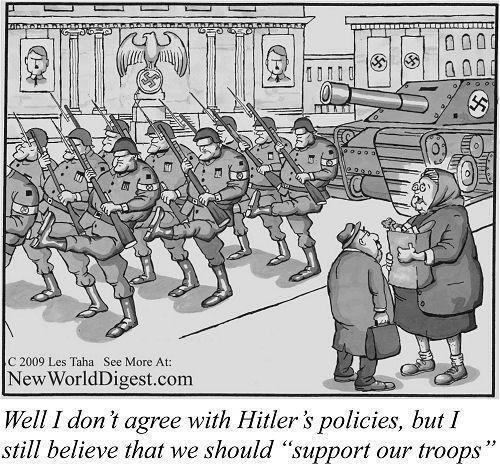
At this point Adderley has been dismissed from Northamptonshire Police and banned from policing. In 2024 the Angiolini Inquiry published its report, which in part focused on police vetting and there is no doubt, post-Adderley the police as an institution, will undertake more soul searching. Additionally, some commentators have begun a campaign to have Adderley’s police pension reduced/removed. These matters will continue to rumble along for some time. But, in short, Adderley has been punished and publicly outed as a liar, but that does not begin to undo the immense harm his behaviour has inflicted on the community.
During his time at Chief Constable of Northamptonshire, Adderley called upon his supposed military history and experience to support his arguments and the decisions he made. For instance, the 2019 arming of Northamptonshire’s police with tasers or the 2020 launch of eight interceptors, described by Adderley as “a new fleet of crime-busting cars” or the 2021 purchase of “eight Yamaha WR450F enduro bikes“. To me, all of these developments scream the militarisation of policing. Since the very foundation of the Metropolitan Police in 1829, serving officers and the public have continually been opposed to arming the police, yet Adderley, with his military service, seemingly knew best. But what use is a taser, fast car or motorbike in everyday community policing, how do they help when responding to domestic abuse, sexual violence, or the very many mental health crises to which officers are regularly called? How do these expensive military “toys” ensure that all members of society feel protected and not just some communities? How can we ensure that tasers don’t do lasting harm to those subjected to their violence? Instead all of these developments scream a fantasy of both military and policing, one in which the hero is always on the side of the righteous, devoting his life to taking down the “baddies” by whatever means necessary.
Ultimately for the people of Northamptonshire we have to decide, can we view Adderley’s police leadership as the best use of taxpayers’ money, a response to evidence based policing or just a military fantasy of the man who lied? More importantly, the county and its police force will struggle to untangle Adderley’s web of lies and the harm inflicted on the people of Northamptonshire, making it likely that this entirely unevidenced push to militarise the police will continue unchecked.
Share this:


Zemiological Perspective: Educational Experiences of Black Students at the University of Northampton

As a young Black female who has faced many challenges within the education system, particularly related to behavioral issues, I noticed how the system can unintentionally harm black students. I observed that Black children’s experiences in the education system are not always viewed from a deviant perspective, because they are not inherently deviant. The institutional harm faced by Black students is not always a ‘crime’ nor is it illegal, yet it is profoundly damaging.
This realisation prompted me to adopt a zemiological perspective, drawing upon the work of Hillyard et al. (2004) to highlight the subtle yet impactful harms faced by Black students in the educational system. My primary objective was to uncover the challenges these students face, as outlined in my initial research question: ‘To what extent can the experiences of Black students in higher education be understood as a form of social harm?’ To achieve this, I analysed the educational experiences of Black students at the University of Northampton. This involved reviewing the university’s access and participation plans, which detail the performance, access, and progression of various demographics within the institution, with a particular focus on BAME students.
Critical race theory (CRT) was the guiding theoretical framework for this research study. CRT recognises the multifaceted nature of racism, encompassing both blatant acts of racial discrimination and subtler, systemic forms of oppression that negatively impact minority ethnic groups (Gillborn, 2006). This theoretical approach is directly correlated to my research and was strongly relevant. This allowed me to gain insight into the underlying reasons behind the disparities faced by Black students in higher education. As well as enabling me to unpack the complexities of racism and discrimination, providing a comprehensive understanding of how these issues manifest and persist within the educational landscape.
Through conducting content analysis on the UON Access and Participation Plan document and comparing it to sector averages in higher education, four major findings came to light:

Access and Recruitment: The University of Northampton has made impressive progress in improving access and recruitment for BAME students, fostering diversity and inclusivity in higher education, and surpassing sector standards. Yet, while advancements are apparent, there remains a need for more comprehensive approaches to tackle systemic barriers and facilitate academic success across the broader sector.
Non-Continuation: Alarmingly, non-continuation rates among BAME students at the University of Northampton have surpassed the sector average, indicating persistent systemic obstacles within the education system. High non-continuation rates perpetuate cycles of disadvantage and limit opportunities for personal and professional growth.
Attainment Gap: Disparities in academic attainment between White and BAME students have persisted and continue to persist, reflecting systemic inequalities and biases within the academic landscape. UON is significantly behind the sector average when it comes to attainment gaps between BAME students and their white counterparts. Addressing the attainment gap requires comprehensive approaches that tackle systemic difficulties and provide targeted support to BAME students.
Progression to Employment or Further Study: UON is also behind the sector average in BAME students progression in education or further study. BAME students face substantial disparities in progression to employment or further study, highlighting the need for collaborative efforts to promote diversity and inclusivity within industries and professions. Addressing entrenched biases in recruitment processes is essential to fostering equitable opportunities for BAME students.
Contributions to Research: This research deepens understanding of obstacles within the educational system, highlighting the effectiveness of a zemiological perspective in studying social inequalities in education. By applying Critical Race Theory, the study offers insights that can inform policies aimed at fostering equity and inclusion for Black students.
The findings hold practical implications for policy and practice, informing the development of interventions to address disparities and create a more supportive educational environment. This research significantly contributes to our understanding of the experiences of Black students in higher education and provides valuable guidance for future research and practice in the field.
Aside from other limitations in my dissertation, the main limitation was the frequent use of the term ‘BAME.’ This term is problematic as it fails to recognise the distinct experiences, challenges, and identities of individual ethnic communities, leading to generalisation and overlooking specific issues faced by Black students (Milner and Jumbe, 2020). While ‘BAME’ is used for its wide recognition in delineating systemic marginalisation (UUK 2016 cited in McDuff et al., 2018), it may conceal the unique challenges Black students face when grouped with other minority ethnic groups. The term was only used throughout this dissertation as the document being analysed also used the term ‘BAME’.
This dissertation was a very challenging but interesting experience for me, engaging with literature was honestly challenging but the content in said literature did keep me intrigued. Moving forward, i would love Black students experiences to continue to be brought to light and i would love necessary policies, institutional practises and research to allow change for these students. I do wish i was more critical of the education system as the harm does more so stem from institutional practices. I also wish i used necessary literature to highlight how covid-19 has impacted the experiences of black students, which was also feedback highlighted by my supervisor Dr Paula Bowles.
I am proud of myself and my work, and i do hope it can also be used to pave the way for action to be taken by universities and across the education system. Drawing upon the works of scholars like Coard, Gillborn, Arday and many others i am happy to have contributed to this field of research pertaining to black students experiences in academia. Collective efforts can pave the way for a more promising and fairer future for Black students in education.
References
Gillborn, D. (2006). Critical Race Theory and Education: Racism and anti-racism in educational theory and praxis. Discourse: Studies in the Cultural Politics of Education, 27 (1), 11–32. [Accessed 21 April 2024]
Hillyard, P., Pantazis, C., Tombs, S. and Gordon, D., (Eds), (2004). Beyond Criminology: Taking Harm Seriously, London: Pluto Press.
Milner, A. and Jumbe, S., (2020). Using the right words to address racial disparities in COVID-19. The Lancet Public Health, 5(8), pp. e419-e420
Mcduff, N., Tatam, J., Beacock, O. and Ross, F., (2018). Closing the attainment gap for students from Black and minority ethnic backgrounds through institutional change. Widening Participation and Lifelong Learning, 20(1), pp.79-101.
Share this:


Birth Trauma

I recently passed through Rugby Motorway Services with my family and I was amazed by what was on offer. It consisted of a free internal and external play area and the most baby friendly changing rooms that I have ever encountered. This visit to the Rugby services made me think;
Isn’t it a shame that the same amount of family friendly consideration is not found elsewhere.
Even more so;
Isn’t it a shame that many babies, mothers and birthing parents are treated with such a common and serious violence during the birth
The Birth Trauma Inquiry has been published this week, I am sure that CRI3003 students would be able to critique this Inquiry but in terms of the responses from mothers who have experienced birth trauma it makes for an incredibly harrowing read.
In the words of one mother;
‘Animals were treated better than the way we were treated in hospital’ (p.26).
Yet, none of these accounts of violence are surprising; casual conversations with friends, family, relatives resemble many of the key themes highlighted within the inquiry. The inquiry includes accounts of mothers before, during and after birth being ‘humiliated’ (p.20) and bullied, experiencing extreme amounts of pain, financial ruin, life limiting physical and mental health problems, due to institutional issues raised such as: negligence, poor professional practice, mistakes, mix ups, lack of consent, inhumane treatment, lack of pain relief and compassion. With the most serious consequences being baby and or mother loss.
The report also makes reference to at least a couple of incidents involving mobile phone usage. This did remind me of a conversation that I was having with a fellow criminologist quite recently. Aside from issues that have existed for a long time, it seems that the use of phones may impact on our ability to work in a safe and compassionate manner. I am sure that some staff scroll on phones when victims of crime report to the police station, or scroll whilst ‘caring’ for someone who is either mentally or physically unwell. How such small technological devices seem to have such huge impact on human interaction amazes me.
A quote from the inquiry states: ‘the baby is the candy, the mum is the wrapper, and once the baby is out of the wrapper, we cast it aside’ (p.20), how awful is that?
All-Party Parliamentary Group. Listen to Mums: Ending the Postcode Lottery on Perinatal Care (2024). Available at: https://www.theo-clarke.org.uk/sites/www.theo-clarke.org.uk/files/2024-05/Birth%20Trauma%20Inquiry%20Report%20for%20Publication_May13_2024.pdf [Accessed 16/05/24].
Share this:


Liberalism, Capitalism and Broken Promises

With international conflict rife, imperialism alive and well and global and domestic inequalities broadening, where are the benefits that the international liberal order promised?
As part of my masters, I am reading through an interesting textbook named Theories of International Relations (Burchill, 2013). Soon, I’ll have a lecture speaking about liberalism within the realm of international relations (IR). The textbook mentions liberal thought concerning the achievement of peace through processes of democracy and free trade, supposedly, through these mechanisms, humankind can reach a place of ‘perpetual peace’, as suggested by Kant.
Capitalism supposedly has the power to distribute scarce resources to citizens, while liberalist free trade should break down artificial barriers between nations, uniting them towards a common goal of sharing commodities and mitigating tensions by bringing states into the free trade ‘community’. With this, in theory, should bring universal and democratic peace, bought about by the presence of shared interest.
Liberal capitalism has had a long time to prove its worth, with the ideology being adopted by the majority of the west, and often imposed on countries in the global south through coercive trade deals, political interference and the establishment of dependant economies. Evidence of the positives of liberal capitalism, in my opinion are yet to be seen. In fact, the evidence points towards a global and local environment entirely contrary to the claims of liberal capitalism.
The international institutions, constructed to mitigate against the anarchic system we live under become increasingly fragile and powerless. The guarantee of global community and peace seems further and further away. The pledge that liberalism will result in the spread of resources, resulting in the ultimate equalisation is unrealised.
Despite all of this, the global liberal order seems to still be supported by the majority of the elite and by voters alike. Because with the outlined claims comes the promise that one day, with some persistence, patience and hard work, you too could reap the rewards of capitalism just like the few in society do.
Share this:

By whose standards?
This blog post takes inspiration from the recent work of Jason Warr, titled ‘Whitening Black Men: Narrative Labour and the Scriptural Economics of Risk and Rehabilitation,’ published in September 2023. In this article, Warr sheds light on the experiences of young Black men incarcerated in prisons and their navigation through the criminal justice system’s agencies. He makes a compelling argument that the evaluation and judgment of these young Black individuals are filtered through a lens of “Whiteness,” and an unfair system that perceives Black ideations as somewhat negative.

In his careful analysis, Warr contends that Black men in prisons are expected to conform to rules and norms that he characterises as representing a ‘White space.’ This expectation of adherence to predominantly White cultural standards not only impacts the effectiveness of rehabilitation programmes but also fails to consider the distinct cultural nuances of Blackness. With eloquence, Warr (2023, p. 1094) reminds us that ‘there is an inherent ‘whiteness’ in behavioural expectations interwoven with conceptions of rehabilitation built into ‘treatment programmes’ delivered in prisons in the West’.
Of course, the expectation of adhering to predominantly White cultural norms transcends the prison system and permeates numerous other societal institutions. I recall a former colleague who conducted doctoral research in social care, asserting that Black parents are often expected to raise and discipline their children through a ‘White’ lens that fails to resonate with their lived experiences. Similarly, in the realm of music, prior to the mainstream acceptance of hip-hop, Black rappers frequently voiced their struggles for recognition and validation within the industry due similar reasons. This phenomenon extends to award ceremonies for Black actors and entertainers as well. In fact, the enduring attainment gap among Black students is a manifestation of this issue, where some students find themselves unfairly judged for not innately meeting standards set by a select few individuals. Consequently, the significant contributions of Black communities across various domains – including fashion, science and technology, workplaces, education, arts, etc – are sometimes dismissed as substandard or lacking in quality.
The standards I’m questioning in this blog are not solely those shaped by a ‘White’ cultural lens but also those determined by small groups within society. Across various spheres of life, whether in broader society or professional settings, we frequently encounter phrases like “industry best practices,” “societal norms,” or “professional standards” used to dictate how things should be done.
However, it’s crucial to pause and ask:
By whose standards are these determined?
And are they truly representative of the most inclusive and equitable practices?
This is not to say we should discard all concepts of cultural traditions or ‘best practices’. But we need to critically examine the forces that establish standards that we are sometimes forced to follow. Not only do we need to examine them, we must also be willing to evolve them when necessary to be more equitable and inclusive of our full societal diversity.
Minority groups (by minority groups here, I include minorities in race, class, and gender) face unreasonably high barriers to success and recognition – where standards are determined only by a small group – inevitably representing their own identity, beliefs and values.
So in my opinion, rather than defaulting to de facto norms and standards set by a privileged few, we should proactively construct standards that blend the best wisdom from all groups and uplift underrepresented voices – and I mean standards that truly work for everyone.
References
Warr, J. (2023). Whitening Black Men: Narrative Labour and the Scriptural Economics of Risk and Rehabilitation, The British Journal of Criminology, Volume 63, Issue 5, Pages 1091–1107, https://doi.org/10.1093/bjc/azac066

 Thoughts from the criminology team