
Home » Inequality (Page 3)
Category Archives: Inequality

Festive messages, a legendary truce, and some massacres: A Xmas story

Holidays come with context! They bring messages of stories that transcend tight religious or national confines. This is why despite Christmas being a Christian celebration it has universal messages about peace on earth, hope and love to all. Similar messages are shared at different celebrations from other religions which contain similar ecumenical meanings.
The first official Christmas took place on 336 AD when the first Christian Emperor declared an official celebration. At first, a rather small occasion but it soon became the festival of the winter which spread across the Roman empire. All through the centuries more and more customs were added to the celebration and as Europeans “carried” the holiday to other continents it became increasingly an international celebration. Of course, joy and happiness weren’t the only things that brought people together. As this is a Christmas message from a criminological perspective don’t expect it to be too cuddly!
As early as 390 AD, Christmas in Milan was marked with the act of public “repentance” from Emperor Theodosius, after the massacre of Thessalonica. When the emperor got mad they slaughtered the local population, in an act that caused even the repulson of Ambrose, Bishop of Milan to ban him from church until he repented! Considering the volume of people murdered this probably counts as one of those lighter sentences; but for people in power sentences tend to be light regardless of the historical context.
One of those Christmas celebrations that stand out through time, as a symbol of truce, was the 1914 Christmas in the midst of the Great War. The story of how the opposing troops exchanged Christmas messages, songs in some part of the trenches resonated, but has never been repeated. Ironically neither of the High Commands of the opposing sides liked the idea. Perhaps they became concerned that it would become more difficult to kill someone that you have humanised hours before. For example, a similar truce was not observed in World War 2 and in subsequent conflicts, High Commands tend to limit operations on the day, providing some additional access to messages from home, some light entertainment some festive meals, to remind people that there is life beyond war.
A different kind of Christmas was celebrated in Italy in the mid-80s. The Christmas massacre of 1984 Strage Di Natale dominated the news. It was a terrorist attack by the mafia against the judiciary who had tried to purge the organisation. Their response was brutal and a clear indication that they remained defiant. It will take decades before the organisation’s influence diminishes but, on that date, with the death of people they also achieved worldwide condemnation.
A decade later in the 90s there was the Christmas massacre or Masacre de Navidad in Bolivia. On this occasion the government troops decided to murder miners in a rural community, as the mine was sold off to foreign investors, who needed their investment protected. The community continue to carry the marks of these events, whilst the investors simply sold and moved on to their next profitable venture.
In 2008 there was the Christmas massacre in the Democratic Republic of Congo when the Lord’s Resistance Army entered Haut-Uele District. The exact number of those murdered remains unknown and it adds misery to this already beleaguered country with such a long history of suffering, including colonial ethnic cleansing and genocide. This country, like many countries in the world, are relegated into the small columns on the news and are mostly neglected by the international community.
So, why on a festive day that commemorates love, peace and goodwill does one talk about death and destruction? It is because of all those heartfelt notions that we need to look at what really happens. What is the point of saying peace on earth, when Gaza is levelled to the ground? Why offer season’s wishes when troops on either side of the Dnipro River are still fighting a war with no end? How hypocritical is it to say Merry Christmas to those who flee Nagorno Karabakh? What is the point of talking about love when children living in Yemen may never get to feel it? Why go to the trouble of setting up a festive dinner when people in Ethiopia experience famine yet again?
We say words that commemorate a festive season, but do we really mean them? If we did, a call for international truce, protection of the non-combatants, medical attention to the injured and the infirm should be the top priority. The advancement of civilization is not measured by smart phones, talking doorbells and clever televisions. It is measured by the ability of the international community to take a stand and rehabilitate humanity, thus putting people over profit. Sending a message for peace not as a wish but as an urgent action is our outmost priority.
The Criminology Team, wishes all of you personal and international peace!
Share this:


Pregnancy and Lavender Fields

If being a women means that you will experience harm due to your socially constructed sex/gender, being pregnant and a mother certainly adds to this. The rose-tinted view of pregnancy implies that pregnancy is the most wonderful of experiences. There is imagery of the most privileged of mothers with their pregnancy ‘glow’, in fields of [insert flower here] holding their bumps with the largest of smiles. Outside of smiles and lavender field imagery, judgment is reserved for pregnant women who do not enjoy pregnancy. In a world of ‘equality gone mad’, it seems that whilst some pregnant women may have a variety of hurdles to face, it is presumed that they should carry on living in the exact same way as those who are not pregnant.
Maybe you lose your job upon becoming pregnant and your workplace does not provide you with sick pay when needed. Maybe it is harder for you to access healthcare and screenings due to racism and xenophobia. Perhaps it is a Covid-19 pandemic, your boss is a bit disgruntled that you are pregnant and despite the legal guidance stating that pregnant people should isolate you are told that you need to work anyway. Or perhaps you are quite ill during your pregnancy, you must try to cope and continue to work regardless, but must also hide this sickness from your customers and colleagues. Whilst at the same time it is unlikely that there are places for you to rest or be sick/ill in peace. If any time is taken off work you may then be considered as being work-shy by some. Despite it being well documented that some pregnancy related ill-health conditions, like hyperemesis, have serious consequences, such as the termination of pregnancy, death and mothers taking their own lives (with or without suitable interventions).
Before labour, if you go to the triage room screaming in pain, maybe you will need to wait some time at the reception for staff to assist you, and perhaps you may be asked to ‘be quiet’ so as to not disturb the equilibrium of the waiting room. Maybe your labour is incredibly painful but apparently you must ‘take it like a champ’ and pain relief medication may be withheld. Maybe you will receive a hefty bill from the NHS for their services due to your undocumented migrant status, refused asylum application or have no recourse to public funds. If experiencing pain post-labour, maybe your pain is disregarded, and you face life-threatening consequences due to this.
Once you become a mother maybe you are more exhausted than your partner, maybe your partner is a abusive, maybe they cannot push a pram, change nappies, calm a crying baby because of toxic masculinity. If your baby becomes upset (as they do sometimes) whilst out and about you may need a quite low sensory place to feed them, or for them to relax but there is nowhere suitable to go. If looking flustered or a bit dishevelled whilst out maybe you are treated as a shop-lifting suspect by security and shop assistants.
If you have the privilege of being able to return to work, ensure that you return within the optimum time frame as having too much or too little time off work is not viewed as desirable. Also, make sure you have some more babies but not too many as both would be deemed selfish. Whether you breastfeed or provide formula both options are apparently wrong, in different ways. If you do breastfeed and need to use a breast pump whilst returning to work you may find that there are no/or a limited amount of suitable rooms available on public transport, at transport hubs, in public venues and workplaces for using a breast pump. This, among with other factors, such as the state of the economy, the lack of/a poor amount of maternity pay, and childcare costs, make the ability to both maintain formal employment and be present as a healthy mother difficult. Notably, the differences, extent and severity of harmful experiences differ depending on power, your status and identity attributes, if your gender does not neatly fit into the white privileged/women/female/mother box you will face further challenges.
It seems that society, its institutions and people want babies to be produced but do not want to deal with the realities that come with pregnancy and motherhood.
Share this:


Welcome to class. What’s your name?
Often when I ask my newest students to introduce themselves in class – to say and hear their names called out loud – I am reminded that this part of the classroom experience is a fresh opening-up of the classroom as a learning space. I share my full name and invite students to address me as they please. First-year university students often arrive with the weight of their own names – and identities – from their school days. There are often unseen wounds, perhaps unknown. They often arrive in “our” classrooms primed to refashion their own professional personae. A great introduction is their most important networking tool.
On the first day of second grade at my new school, our teacher said my name was so complicated that she nicknamed me by my initials, D.K., which I was called until I decided otherwise. That happened precisely, and abruptly, in the summer between middle and high school, culminating in September 1989. I remember begging my aunt to take me to the music store so I could buy the new Rhythm Nation 1814 cassette.
By then, most of us had attended this same, small school the whole time, so we all knew one another well. I decided to return as a high schooler, and asked folks to call me Diepiriye, no longer D.K. All did, seamlessly.
What’s more, when we’d have a substitute teacher, several of my classmates would yell out my name when they stumbled in taking the roster. They’d always stumble. I’d memorised the roster early on in elementary school; I knew I came between J. King and M. Love. I’d wait.
Caldwell, Cannon, Cummings, Dunbar, Eubanks, Friedman, Gage, Howard (getting closer). While waiting for my name, I’d even write sentences in my mind’s eye using the last names of the kids sandwiching mine – King, Kuku, Love. I could see our names lined-up on the printed page, put together in this order – for years – by the hands of fate. I’d manoeuvre the words around in space, hear how they fit together differently, or in phrases. Stevie Wonder would have a field day with these three words.
I wouldn’t understand this until decades later, but this is one of the typical sorts of imagination that comes along with dyslexia. It’s not just that we mix-up letters and words, rather, our imaginations are less fixed to any simple meaning like in neurotypical people’s minds. Love, King Kuku could have many deeper endings than last names, depending on how you see it. I’m depending on you to use your imagination, here, too. Depending on how you see it, the ship is free, or it is sinking.
McConnell, McGimsey, Montgomery, O’Neil, Palma, Palmer…Todd, Trimmer… Watkins, Welsch, Williams.
It seemed like all but I and one of my classmates’ last names were not English (or Anglicised). Not only that, both our two dads were actually from Nigeria, and our were mothers were best friends from college. Not only that, both our parents grew up on the east and west sides of their respective communities/countries. While I have a funny African name – according to kids – my friend had a Christian first name, and his last name is recognisably Yoruba.
Of course, there was never any civil war between the east and west ends of Louisville, Kentucky – both had black ghettos. Also, both our mothers had ‘desegregated’ every classroom they’d ever entered since elementary in that era’s culture wars. Kids were placed on the frontlines of that war, as author Toni Morrison was quick to remind us.
Both our dads had ended up in America on government scholarships at the University of Louisville, in the aftermath of the chaos of the Nigerian Civil War, albeit through radically differing paths. My dad was a Biafran child soldier. His mother rescued him from a camp, and whisked him out of the country. She named me.
Now, as an educator, I hold the roster. Today, in the UK, roster power is even tied to enforcing national borders. Also of critical value, students’ names will be called many times in class: Called upon to read or respond to text; comment on images; offer perspective or analysis; share lived experience; and crucially, pose critical questions to instructors and peers. The classroom is a busy place.
Call me by my Name.
Too often, in the business of running the classroom, we may overlook simply honouring one another by name, to make the effort to call, recall, and call upon one another in the learning space. As educators, we are called upon to continually demonstrate good practice, shows of good faith.
Everyone uses nicknames in the American South, and uniquely at my school, we called our teachers by their first names. This was one of many ways our ‘liberal’ school broke away from traditional power hierarchies. My second-grade teacher gave me a nickname as a way to shield myself, so I could enter and participate in the learning community untethered. I used this shield until I was strong enough to fly in my own right/light.
University students are in the unique position of fashioning their authentic professional selves. Our students need space to practice calling their names as they wish to be called, professionally. We can share our own curiosity with the stories of all our names, yes, even when we have to be reminded a million times. Yes, even when they have funny African names like Doctor Kuku. Yes, it’s also the proverbial ‘you’re a name not a number’. Sharing is the ethos of community… and crucially, learning. Call me by my Name.
It’s not just my ‘magination, but, we’ve all seen someone respond to an unfamiliar name with the ugly, squished-up face. No one should have their name responded to with what looks like disgust, let alone a child…let alone any student, at any level, in any learning community.
Calling students by name is an important first step in building trust. “Trust,” bell hooks reminds us in Conflict, the 15th the 32 short chapters of her Engaged Pedagogy guide, Teaching Critical Thinking, “must be cultivated in the classroom if there is to be open dialectical exchange and positive dissent.” Trust provides space for students to allow themselves to be known.
Trust also reifies mutual respect. In turn, mutual respect forms the needed basis for the rigorous inquiry, discussion, and crucially, dissent and debate which enlivens and enriches each collective learning experience.
As Badu says: I think y’ betta call Tyrone. Call him! And tell him c’mon … let his voice be heard in class. Call Keisha, Tasha, Joanne, Sian, and Jo, Joey, Joachim, Jane, Paul, Precious, Jean-Paul, Ali, Aliyah, Amadou, Kalliah and Khalil … all of “they and them,” too. And, teachers, let students know stories of your name, too. For example, I wasn’t born Dr. Kuku, but now you can certainly call me by my name!

Pictured here during my first year at college. A high school classmate & I honouring Lyman T. Johnson, a civil rights leader/educator we’d interviewed for our 12th grade oral history project.
Share this:


The Problem is Bigger than Tate
While there are many things that have got under my skin lately, it seems that every time I go on social media, turn on the television, or happen to have a conversation, the name Andrew Tate is uttered. His mere existence is like a virus, attacking not only my brain and soul but it seems a large population of the world. His popularity stems from his platform followed by thousands of men and young boys (it’s known as the ‘Real World’).
His platform ‘educating’ men on working smarter not harder has created a ‘brotherhood’ within the manosphere that celebrates success and wealth. Tate is framed as a man’s man, physically strong, rich and he even has a cigar attached to his hand (I wonder if he puts it down when he goes to the bathroom). It seems many of his aspiring followers want to mimic his fast rich lifestyle.
This seems to be welcomed, especially now when the price of bread has significantly risen (many of his followers would sell the closest women in their life for a whiff of his cigar, and of course to be deemed to have an Insta-desirable lifestyle). While this ideology has gained hype and mass traction in recent years (under the Tate trademark) it seems that his narcissistic, problematic image and what he stands for has only just been deemed a problem … due to his recent indiscretions.
There is now outrage in UK schools over the number of young boys following Tate and his misogynistic ideology. But I cannot help but ask … why was this not an issue before? I am aware of rape culture, victim blaming, sexual harassment, and systems of silence at every level of the UK education establishment. The launch of ‘Everyone’s Invited’ shone a light on the problematic discourse, so why are we only seeing that there is a problem now?
There are many reasons why there’s a delayed outrage, and I would be here all day highlighting all the problems. So, I will give you a couple of reasons. The first is the Guyland ideology: many Tate supporters who fall into the cultural assumption of masculinity expect to be rewarded for their support, in ways of power and material possession (this includes power over women and others deemed less powerful). If one does not receive what they believe they are owed or expected, they will take what they believe they are owed (by all means necessary).
There is also a system of silence within their peer group which is reinforced by parents, female friends, the media, and those that are in administrative power. The protection of toxic behavior has been continuously put under the umbrella of ‘boys will be boys’ or the idea that the toxic behavior is outside the character of the individual or not reflective of who they truly are.
I will go one step further and apply this to the internalised patriarchy/misogyny of the many women that came out and supported Jeremy Clarkson when he callously attacked Meghan. While many of the women have their individual blight with Meghan for reasons I do not really care to explore, by supporting the rhetoric spewed by Clarkson, they are upholding systemic violence against women.
The third point is that capitalism overthrows humanity and empathy in many ways. All you need to do is to look at a history books, it seems that lessons will never be learned. The temptation of material possessions has overthrown morality. The media gives Tate a platform and in turn Tate utters damaging ideology. This brings more traffic to the platforms that he is on and thus more money and influence….after all he is one of the most googled people in the world.
The awareness of the problematic behaviour and the total disregard for protecting women and girls from monsters like Tate shows, how the outrage displayed by the media about harms against victims such as Sabina Nessa and Sarah Everard is performative. The news coverage and the discussion that centred on the victimisation of these two women have easily been forgotten. If the outrage is real then why are we still at a point where we are accepting excuses and championing misogyny under the guise of freedom of speech, without challenging the harm it really does.
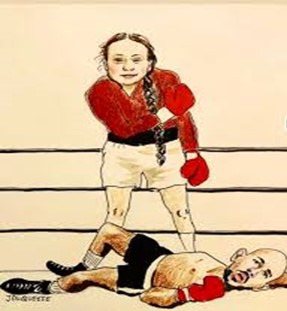
It seems that society is at a point of total desensitization where there is more interest in Tate losing an argument with Greta Thunberg, posing with a cigar on an exotic beach for likes, than really acknowledging the bigger picture. Andrew Tate has been accused of rape and human trafficking. The worst thing is, this is not the first time that he has been accused of horrific crimes – and with the audio evidence that was released to the press recently, he should be in prison. But with the issues that permeate the Met police there is no surprise as to why he has been given the green light to continue his violent behaviour. But this is not just a UK issue. There has been a large amount of support overseas with young men and boys marching in masses in support of Tate, so I cannot be surprised that he was able to and continues to build a platform that celebrates and promotes horrendous treatment of women.
For many the progression of a fair and equal society is an aspiration, but for the supporters of the Tate’s in the world they tend to lean on the notion that they are entitled to more, and to acquire what they think they are owed, and will behave to the extreme of toxicity. While it is easy to fixate on a pantomimic villain like Tate to discuss his problematic use of language and how this translates in schools, the bigger picture of institutionalised patriarchy is always being missed.
It is important to unpick the toxic nature of our society, to understand the contributing factors that have allowed Andrew Tate and others like him to be such influential figures.
Share this:


An alternative Christmas message

Sometime in October stores start putting out Christmas decorations, in November they slowly begin to play festive music and by December people organise office parties and exchange festive cards. For the best part of the last few decades these festive conventions seem to play a pivotal role in the lead up to Christmas. There are jumpers with messages, boxes of chocolates and sweets all designed to spread some festivity around. For those working, studying, or both, their December calendar is also a reminder of the first real break for some since summer.
The lead up to Christmas with the music, stories and wishes continues all the way to the New Year when people seem to share their goodwill around. Families have all sorts of traditions, putting up the Xmas tree on this day, ordering food from the grocers on that day, sending cards to friends and family by that day. An arrangement of dates and activities. On average every person starts in early December recounting their festive schedule. Lunch at mum’s, dinner at my brother’s, nan on Boxing Day with the doilies on the plates, New Years Eve at the Smiths where Mr Smith gets hilariously drunk and starts telling inappropriate jokes and New Year’s at the in-laws with their sour-faced neighbour.
People arrange festivities to please people around them; families reunite, friends are invited, meaningful gifts are bought for significant others and of course buy we gifts for children. Oh, the children love Christmas! The lights, the festive arrangements, the delightful activities, and the gifts! The newest trends, the must have toys, all shiny and new, wrapped up in beautiful papers with ribbons and bows. In the festive season, we must not forget the kind words we exchange, the messages send by local communities, politicians and even royalty. Words full of warmth, well-meaning, perspective and reflection. Almost magical the sights and sounds wrapped around us for over a month to make us feel festive.
It is all too beautiful, so you can be forgiven to hardly notice the lumbering shadow, at the door of an abandoned shop. Homelessness is not a lifestyle as despicably declared by a Conservative councillor/newspapers decades ago. It is the human casualty of those who have been priced out in the war of life. Even since the world went into a deep freeze due to the recession over a decade ago and the world is still in the clutches of that freeze. More people read about Christmas stories in books and in movies, because an even increasing number of people do not share the experience. Homelessness is the result of years of criminal indifference and social neglect that leads more people to live and experience poverty. A spectre is haunting Europe, the spectre of homelessness. There is no goodwill at the inn whilst the sins of the “father” are now returning in the continent! Centuries of colonial oppression across the world lead to a wave of refugees fleeing exploitation, persecution, and crippling poverty. Unlike the inn-keeper and his daughter, the roads are closed, and the passages are blocked. Clearly, they don’t fit with the atmosphere… nor do the homeless. Come to think of it, neither do the old people who live alone in their cold homes. None of these fit with the festive narrative.
As I walked down a street I passed a homeless guy is curled up in a shop door. A combination of cardboard, sleeping bag and newspapers all jumbled together. Next to him a dog on the cardboard and around them fairy lights. This man I do not know, his face I have not seen, his identity I ignore; but I imagine that when he was born, there was someone who congratulated his mother for having a healthy boy. Now he is alone, fortunate to have a canine companion, as so many do not have anyone. What stands out is that this person, who our festive plans had excluded, is there with his fairy lights, maybe the most festive of all people, without a burgundy coat, I hear some people like these days.
It is so difficult to say Merry Christmas this year. In a previous entry the world cup and its aftermath left a bitter taste in those who believe in making a better world. The economic gap between whose who have and those who do not, increases; the social inequalities deepen but I feel that we can be like that man with the fairy lights, fight back, rise up and end the party for those who like to wear burgundy, or those who like to speak for world events, at a price.
Merry Christmas, my dear criminologists, the world can change, when we become the agents of change.
Share this:


Mundial: Why I won’t be watching the World Cup this time

It has been called the beautiful game; in the past even during war the opposing sides played a game; it has made some of its players stars and household names, football or soccer has a global appeal. From the townships in South Africa, to the Brazilian Favelas, the makeshift pitches the world over to the highly pristine pitches in academies, kids the world over learn to kick a ball, and play the game that requires speed, agility, and dexterity in the feet. Kids who just play for fun in an after-school club or to bond with friends. The appeal of this game has been intertemporal.
Generations of kids, begged their parents to stay longer out to play with their friends, asked for another ball, shoes or shorts and each family responded according to their means. After all, football is/was a working-class game. The relative low cost makes it accessible; it allows plenty of kids to play together and build relationships. Football was an equaliser that did not care who you are or where you come from.
I remember as a kid, year after year playing in the summer with the same kids in teams between Greek and Yugoslavians. We were keeping score and the losing side was buying the other side ice-creams. Not quite the golden ornate cup but a wager worth playing 10 games across the summer. We called each other’s teams with the name of the country we came from. My lasting memory was the last time we played together before the civil war in Yugoslavia erupted. The Yugoslavians won and they were chanting “Yugoslavia, Yugoslavia”. Those kids did not come the following summer. In the next summer, the same kids would be carrying the flag and arms of one of the opposing sides armed to kill each other. When football is not the game, disputes are resolved in brutality.
In the past decades, football’s appeal made it the game to watch. The transition to professional football made the game lucrative, some clubs acquired big budgets and of course attracted a finer audience. The pundits, as a former footballer put it, started eating “prawn sandwiches” an indication of their more expensive tastes. Still people stick with the sport because of their own memories and experiences. My first ever game was with my grandfather. We went to the stadium of the club that was to become the team I support for life. The atmosphere, the emotional roller coaster and most importantly a shared experience with someone very dear, that even when they are gone, you carry the sounds, the emotions with you forever.
Some footballers started earning enormous fees for playing the game; the club colours became trademarked and charged over the odds for a simple scarf or a top. The rights to the games sold to private companies requiring people to pay subscriptions to watch a simple game. People objected but continued still to support, although some people were priced out of the game altogether. The game endures because it still resonates with people’s experiences.
In particular, the national games have kept some of their original appeal of playing for your country, playing for your colours! Football is an unpredictable sport and in international events you can have an outsider taking the cup against the odds! Like Greece winning the UEFA Euro in 2004! The games in international tournaments leads to knock out games, with the drama of extra time and of course the penalty shootout. Nail biting moments shared with family and friends. These magical moments of personal and collective elevation, as if you were there with the players, part of their effort, part of their victory.
When the host country was announced some years ago that will be hosting this year’s world cup there were already calls for investigation into the voting process raising concerns. Since then, there have been concerns about the safety of those who work on the infrastructure. Thousands of migrant workers, many of whom are/were undocumented have worked in building the stadiums that the games will be played in. There are accusations of numerous deaths of migrant workers (an estimate from The Guardian comes to a staggering 6,500 deaths). This has raised a significant question about priorities in our world. It is unthinkable to put a game above human life. This was later followed by “the guidelines” to teams and visitors that alternative sexualities will not be tolerated. Calls about respecting the host’s culture adding to the numbers of people calling for a boycott. So why I won’t be watching this time around?
We have been talking for years about inclusivity and tolerance. Women’s rights, LGBTQ+, immigrant rights, worker rights and all of them being trampled for the sake of a competition. Those who have been asked about the issues from the football federation, former footballers and even governments have played down all these concerns. In some cases, they opted for a tokenistic move like rainbow-coloured planes or include the rainbow on national team logo. Others will be issuing rainbow bracelets and some saying that they will raise issues if/when given the opportunity. This sounds too little considering what has happened so far especially all the fatalities caused building all the constructions. If we are not to uphold civil rights and if we are not ready to act on them, why talk about them?
I remember the game for being inclusive and serving to get people together; this competition is setting an incredibly horrible precedent that human life is cheap and expendable; that people’s rights are negotiable and that you can stop being who you are momentarily, because the game matters more than any of the above. It does not! Without rights, without respect, without life there is no game, there is nothing, because there is no humanity. These games do not bother me, they offend me as a human being. If people died to build this stadium then this space is not fit for games; it’s a monument to vanity and greed; hardly sportsmanlike qualities.
Share this:


ASUU vs The Federal Government

It will be 8 months in October since University Lecturers in Nigeria have embarked on a nationwide strike without adequate intervention from the government. It is quite shocking that a government will sit in power and cease to reasonably address a serious dispute such as this at such a crucial time in the country.
As we have seen over the years, strike actions in Nigerian Universities constitute an age-long problem and its recurring nature unmasks, quite simply, how the political class has refused to prioritise the knowledge-based economy.
In February 2022, the Academic Staff Union of Universities (ASUU) leadership
(which is the national union body that represents Nigerian University Lecturers during disputes) issued a 4-week warning strike to the Nigerian government due to issues of funding of the public Universities. Currently, the striking University Lecturers are accusing the government of failing to revitalise the dilapidated state of Nigerian Universities, they claim that the government has refused to implement an accountability system called UTAS and that representatives of the government have continued to backtrack on their agreement to adequately fund the Universities.
The government on the other hand is claiming that they have tried their best in negotiating with the striking lecturers – but that the lecturers are simply being unnecessarily difficult. Since 2017, several committees have been established to scrutinize the demands and negotiate with ASUU, but the inability of these committees to resolve these issues has led to this 8-month-long closure of Nigerian Universities. While this strike has generated multiple reactions from different quarters, the question to be asked is – who is to be blamed? Should the striking lecturers be blamed for demanding a viable environment for the students or should we be blaming the government for the failure of efforts to resolve this national embarrassment?
Of course, we can all understand that one of the reasons why the political class is often slow to react to these strike actions is because their children and families do not attend these schools. You either find them in private Universities in Nigeria or Universities abroad – just the same way they end up traveling abroad for medical check-ups. In fact, the problems being faced in the educational sector are quite similar to those found within the Nigerian health sector – where many doctors are already emigrating from the country to countries that appreciate the importance of medical practitioners and practice. So, what we find invariably is a situation where the children of the rich continue to enjoy uninterrupted education, while the children of the underprivileged end up spending 7 years on a full-time 4-year program, due to the failure of efforts to preserve the educational standards of Nigerian institutions.
In times like these, I remember the popular saying that when two elephants fight, it’s the grass that suffers. The elephants in this context are both the federal government and the striking lecturers, while those suffering the consequences of the power contest are the students. The striking lecturers have not been paid their salaries for more than 5 months, and they are refusing to back down. On the other hand, the government seems to be suggesting that when they are “tired”, they will call off the strike. I am not sure that strike actions of the UK UCU will last this long before some sort of agreement would have been arranged. Again, my heart goes out to the Nigerian students during these hard times – because it is just unimaginable what they will be going through during these moments of idleness. And we must never forget that if care is not taken, the idle hand will eventually become the devil’s workshop!
Having said this, Nigerian Universities must learn from this event and adopt approaches through which they can generate their income. I am not inferring that they do not, but they just need to do more. This could be through ensuring large-scale investment programs, testing local/peculiar practices at the international level, tapping into research grant schemes, remodeling the system of tuition fees, and demonstrating a stronger presence within the African markets. As a general principle, any institution that wishes to reap the dividends of the knowledge-based economy must ensure that self-generated revenues should be higher than the government’s grants – and not the other way. So, Universities in Nigeria must strive to be autonomous in their engagements and their organisational structure – while maintaining an apolitical stance at all times.
While I agree that all of these can be difficult to achieve (considering the socio-political dynamics of Nigeria), Universities must remember that the continuous dependence on the government for funds will only continue to subject them to such embarrassments rather than being seen as respected intellectuals in the society. Again, Nigerian Universities need a total disruption; there is a need for a total overhaul of the system and a complete reform of the organisational structure and policies.
Share this:


World Mental Health Day 2022

Monday marked World Mental Health day, that one day of the year when corporations and establishments which act like corporations tell us how much mental health matters to them, how their worker’s wellbeing matters to them. Given many sectors are affected by industrial action, or balloting for industrial action, this seems like a contradiction. Could it be possible that these industries and government are causing mental ill health, while paying lip service as a PR tool? Could it be that capitalism and inequalities associated with it are both the cause of mental health conditions and the very thing that prevents recovery from it?
Capitalism, I argue, is the root of a lot of society’s problems. The climate crisis is largely caused by consumerism and our innate need for stuff. The cost of living crisis is more like a greed crisis, since the rich are getting richer and the corporations are making phenomenal profits while small business struggle to make ends meet and what used to be the middle class are relying on food banks, getting second jobs and wondering whether they can afford to put the heating on. No wonder swathes of us are suffering with anxiety, depression and other mental health conditions. Of course, I cannot argue that capitalism is to blame for all manner of mental health conditions as that is simply not the case. There are many causes of mental health conditions which simply cannot be blamed on the environment. The mental health conditions I discuss here are the depression and anxiety that so many of us suffer as a result of environmental stressors, namely capitalist embedded society.
The mental health epidemic did not start with the current ‘crises’[1] though. Yes, the COVID-19 pandemic contributes and exacerbates already existing inequalities and the UK saw an increase in adults reporting psychological distress during the first two years of the pandemic, yet fewer were being diagnosed, perhaps due to inaccessibility of GPs during this time. Even before all these things which have exacerbated mental health conditions, prevalence of common mental disorders has been increasing since the 1990s. At the same time, we have seen in the UK, neoliberal ideology and austerity politics privatise parts of the NHS and decimate funding to services which support those with needs relating to their mental health.
I am not a psychologist but I know a problem when I see or experience one. Several months ago, I was feeling a bit low and anxious so I sought help from the local NHS talking therapies service. The service was still in restrictions and I was offered a series of six DBT-based telephone appointments. After the first appointment, I realised that this was not going to help. It was suggested to have a structure in my life. I have a job, doctoral studies, dog, home educated teenager, and I go to the gym. Scheduling and structure was already an essential part of my life. Next, I was taught coping skills. ‘Get some exercise’, ‘go for a walk’. Ditto previous session – I’m gym obsessed, with a dog I walk every day, mostly in green spaces. My coping skills were not the problem either. What I realised was that I didn’t need psychological help, I needed my environment to change. I needed my workload to be reduced, my PhD to finally end, my teenage daughter not to have any teenage problems, my dog to behave, for someone to pay my mortgage off, and a DIY fairy to fix the house I don’t have time to fix. No amount of therapy could ever change these things. I realised that it wasn’t me that was the problem – it was the world around me.
I am not alone. The Mental Health Foundation have published some disturbing statistics:
- In the past year, 74% of people (in a YouGov survey of 4,619) have felt so stressed they have been overwhelmed or unable to cope.
- Of those who reported feeling stressed in the past year, 22% cited debt as a stressor.
- Housing worries are a key source of stress for younger people (32% of 18-24-year-olds cited it as a source of stress in the past year). This is less so for older people (22% for 45-54-year-olds and just 7% for over 55s).
The data show not only the magnitude of the problem, but they also indicate some of the prevalent stressors in these respondents’ lives. Over 1 in 5 people cited debt as a stressor, and this survey was undertaken long before the cost of greed crisis. It is deeply concerning, particularly considering the anticipated increase in interest rates and the cost of energy bills at the moment.
The survey also showed that young people are concerned about housing, and this will have a disproportionate impact on care leavers who may not have family to support them and working class young people who cannot afford housing.
The causes of both these issues are predominantly fat cat employers who can afford to pay sufficient and fair wages, fat cat landlords buying up property in droves to rent them out at a huge profit, not to mention the fat cat energy suppliers making billions when half the country is now in fuel poverty. All the while, our capitalism loving government plays the game, shorting the pound to raise profits for their pals while the rest of us struggle to pay our mortgages after the Bank of England raised interest rates. No wonder we’re so stressed!
For work-related stress, anxiety and depression, the Labour Force Survey finds levels at the highest in this century, with 822,000 suffering from such mental health conditions. The Health and Safety Executive show that education and human, health and social work are the industries with the highest prevalence of stress, anxiety and depression. It is yet another symptom of neoliberalism which applies corporate values to education and public services, where students are the cash cow, and workers are exploited; and health and social work being under funded for years. Is it any wonder then that both nurses and lecturers are balloting for industrial action right now?
Despite all this, when World Mental Health Day arrives, it becomes the perfect PR exercise to pay lip service to staff wellbeing. The rail industry are in a period of industrial action, yet I have seen posts on rail companies’ social media promoting World Mental Health Day. Does the promotion of mental health initiatives include fair pay and conditions for staff? I think not.
Something needs to give, but what?
As a union member and representative, I argue for the need for employers to pay staff appropriately for the work they do, and to treat them fairly. This would at least address work and finance related stressors. Sanah Ahsan argues for a universal basic income, for safe and affordable housing and for radical change in the structural inequalities in the UK. Perhaps we could start with addressing structural inequalities. Gender, race and class all impact on mental health, with women more likely to be diagnosed with depression, Black women at an increased risk of common mental health disorders and the poor all more likely to suffer mental health conditions yet less likely to receive adequate and culturally appropriate support. In my research with women seeking asylum, there is a high prevalence of PTSD, yet therapy is difficult to access, in part due to language difficulties but also due to cultural differences. Structural inequalities then not only contribute to harm to marginalised people’s mental health, but also form a barrier to support.
I do not have a realistic solution, but I have the feeling society needs a radical social change. We need an end to structural inequalities, and we need to ensure those most impacted by inequalities get adequate and appropriate support. When I look to see who is in charge, and who could be in charge if the tides were to turn, and I don’t see this happening anytime soon.
[1] I’m hesitant to call them crises. As Canning (2017:9) explains in relation to the refugee ‘crisis’, a crisis is unforesessable and unavoidable. The climate crisis has been foreseen for decades, and the cost of living crisis is avoidable if you compare other European countries such as France where the impact has been mitigated by the government. The mental health crisis has also been growing for a long time and the extent to which we say today could be both foreseen and avoided.
Share this:


The Good Doctor has me thinking…

Recently I have begun watching ABC’s The Good Doctor, which is a medical drama based in the fictional, yet prestigious, San Jose St Bonaventure Hospital and follows the professional and personal journeys of a number of characters. The show is based on a South Korean tv medical drama called Good Doctor and is produced by Daniel Dae Kim and developed by David Shore (creator of House). The main character is Dr Shaun Murphy who has Autism. He is a surgical resident in the early seasons and the show focuses on how Dr Murphy navigates his professional and personal life, as well as how the hospital and other doctors, surgeons, nurses and patients navigate Dr Murphy’s style of communication and respond to him. As a medical drama, in my humble opinion, it is highly entertaining with the usual mix of interesting medical cases and personal drama required. The characters are also relatable in a number of different areas. As a springboard for a platform to talk about equality, equity and fairness, it is accessible and thought-provoking.
A key focus of the programme is the difficulty Dr Murphy has with communication. Well, I say difficulty in communicating, but in actuality I would say he communicates differently to what is recognised as an ‘accepted’ or ‘normal’ form of communication. Dr Murphy struggles to express emotions and becomes overwhelmed when things change and are not within his controlled environment. A number of his colleagues adapt their responses and ways of interacting with him in order to support and include him, whereas others do not and argue that despite his medical brilliance, and first-rate surgical skills, he should not be treated differently to the other surgical residents, as this is deemed unfair.
Whilst watching, the claims of treating all surgical residents equally, and ensuring the hospital higher-ups are being fair; notions of John Rawls’ writing scream out at me. Students who have studied Crime and Justice should be familiar with Rawls’ veil of ignorance, liberty principles and difference principle, in particular with its reference to ‘justice’. But the difference principle weighs heavily when looking at how Dr Murphy functions within the hospital institution with its rules, procedures and power dynamics which clearly benefit and align with some people more so than others. Under the veil of ignorance, maybe an empathetic doctor or surgeon is not required, but a competent and successful one is? Maybe being empathetic is a personal circumstance rather than an objective trait? For Rawls, it is important that the opportunity to prosper is equal for all: and this might mean the way this opportunity is presented is different for different individuals. Rawls asks us to consider a parallel universe and what could be (a popular stance to take within the philosophical realm): why can’t people with autism be given the chance to save lives and perform surgeries just because they cannot communicate in a way deemed ‘the norm’ when dealing with patients.
It is possible that I am over-thinking this. And when I ask my partner about it, they raise questions about why Dr Murphy should be given different opportunities to the other residents and the harm Dr Murphy’s communication barriers could and do cause within the series. But I feel they are missing the point: it is not about different opportunities, its about different methods to ensure they all have the same opportunity to succeed as surgeons. It is not about treating everyone the same, which might on the surface appear to be fair, it is about recognising that equal treatment involves taking account for the differences. Why should Dr Murphy be measured against norms and values from an institution which is historically white, non-disabled, male, and cis-gendered? This might appear to be a lot of thought for a fictional medical drama, but to reiterate it’s an excellent programme with plenty to think about…
Bibliography:
Rawls, J. (1971) A Theory of Justice. Oxford: Oxford University Press.
Ryan, A. (1993) Justice. Oxford: Oxford University Press.
Share this:


What’s happened to the Pandora papers?

Sometime last week, I was amid a group of friends when the argument about the Pandora papers suddenly came up. In brief, the key questions raised were how come no one is talking about the Pandora papers again? What has happened to the investigations, and how come the story has now been relegated to the back seat within the media space? Although, we didn’t have enough time to debate the issues, I promised that I would be sharing my thoughts on this blog. So, I hope they are reading.
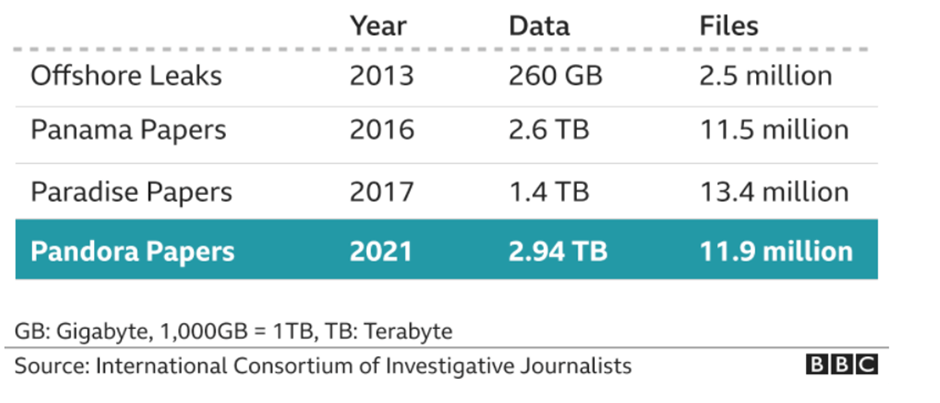
We can all agree that for many years, the issues of financial delinquencies and malfeasants have remained one of the major problems facing many societies. We have seen situations where Kleptocratic rulers and their associates loot and siphon state resources, and then stack them up in secret havens. Some of these Kleptocrats prefer to collect luxury Italian wines and French arts with their ill-gotten wealth, while others prefer to purchase luxury properties and 5-star apartments in Dubai, London and elsewhere. We find military generals participating in financial black operations, and we hear about law makers manipulating the gaps in the same laws they have created. In fact, in some spheres, we find ‘business tycoons’ exploiting violence-torn regions to smuggle gold, while in other spheres, some appointed public officers refuse to declare their assets because of fear of the future. Two years ago, we read about the two socialist presidents of the southern Spanish region and how they were found guilty of misuse of public funds. Totaling about €680m, you can imagine the good that could have been achieved in that region. We should also not forget the case of Ferdinand Marcos and his wife, both of whom (we are told) amassed over $10 billion during their reign in the Philippines. As we can see below that from the offshore leak of 2013 to the Panama papers of 2016 and then the 2017 Paradise papers, data leaks have continued to skyrocket. This simply demonstrates the level to which politicians and other official state representatives are taking to invest in this booming industry.
These stories are nothing new, we have always read about them – but then they fade away quicker than we expect. It is important to note that while some countries are swift in conducting investigation when issues like these arise, very little is known about others. So, in this blog, I will simply be highlighting some of the reasons why I think news relating to these issues have a short life span.
To start with, the system of financial corruption is often controlled and executed by those holding on to power very firmly. The firepower of their legal defence team is usually unmatchable, and the way they utilise their wealth and connections often make it incredibly difficult to tackle. For example, when leaks like these appear, some journalists are usually mindful of making certain remarks about the situation for the avoidance of being sued for libel and defamation of character. Secondly, financial crimes are always complex to investigate, and prosecution often takes forever. The problem of plurality in jurisdiction is also important in this analysis as it sometimes slows down the processes of investigation and prosecution. In some countries, there is something called ‘the immunity clause’, where certain state representatives are protected from being arraigned while in office. This issue has continued to raise concerns about the position of truth, power, and political will of governments to fight corruption. Another issue to consider is the issue of confidentiality clause, or what many call corporate secrecy in offshore firms. These policies make it very difficult to know who owns what or who is purchasing what. So, for as long as these clauses remain, news relating to these issues may continue to fade out faster than we imagine. Perhaps Young (2012) was right in her analysis of illicit practices in banking & other offshore financial centres when she insisted that ‘offshore financial centers such as the Cayman Islands, often labelled secrecy jurisdictions, frustrate attempts to recover criminal wealth because they provide strong confidentiality in international finance to legitimate clients as well as to the crooks and criminals who wish to hide information – thereby attracting a large and varied client base with their own and varied reasons for wanting an offshore account’, (Young 2012, 136). This idea has also been raised by our leader, Nikos Passas who believe that effective transparency is an essential component of unscrambling the illicit partnerships in these structures.
While all these dirty behaviours have continued to damage our social systems, they yet again remind us how the network of greed remains at the core centre of human injustice. I found the animalist commandant of the pigs in the novel Animal Farm, by George Orwell to be quite relevant in this circumstance. The decree spells: all animals are equal, but some animals are more equal than others. This idea rightly describes the hypocrisy that we find in modern democracies; where citizens are made to believe that everyone is equal before the law but when in fact the law, (and in many instances more privileges) are often tilted in favour of the elites.
I agree with the prescription given by President Obama who once said that strengthening democracy entails building strong institutions over strong men. This is true because the absence of strong institutions will only continue to pave way for powerful groups to explore the limits of democracy. This also means that there must be strong political will to sanction these powerful groups engaging in this ‘thievocracy’. I know that political will is often used too loosely these days, but what I am inferring here is genuine determination to prosecute powerful criminals with transparency. This also suggests the need for better stability and stronger coordination of law across jurisdictions. Transparency should not only be limited to governments in societies, but also in those havens. It is also important to note that tackling financial crimes of the powerful should not be the duty of the state alone, but of all. Simply, it should be a collective effort of all, and it must require a joint action. By joint action I mean that civil societies and other private sectors must come together to advocate for stronger sanctions. We must seek collective participation in social movements because such actions can bring about social change – particularly when the democratic processes are proving unable to tackle such issues. Research institutes and academics must do their best by engaging in research to understand the depth of these problems as well as proffering possible solutions. Illicit financial delinquencies, we know, thrive when societies trivialize the extent and depth of its problem. Therefore, the media must continue to do their best in identifying these problems, just as we have consistently seen with the works of the International Consortium of Investigative Journalists and a few others. So, in a nutshell and to answer my friends, part of the reasons why issues like this often fade away quicker than expected has to do with some of the issues that I have pointed out. It is hoped however that those engaged in this incessant accretion of wealth will be confronted rather than conferred with national honors by their friends.
References
BBC (2021) Pandora Papers: A simple guide to the Pandora Papers leak. Available at: https://www.bbc.co.uk/news/world-58780561 (Accessed: 26 May 2022)
Young, M.A., 2012. Banking secrecy and offshore financial centres: money laundering and offshore banking, Routledge

 Thoughts from the criminology team