
Home » Independent learning (Page 5)
Category Archives: Independent learning

“Things you need to know about criminology”: A student perspective – Natalie Humphrey, 1st Year student

We are all living in very strange times, not sure when life will return to normal...but if you're thinking about studying criminology, here is some advice from those best placed to know!

The most important module to my understanding of criminology is: At the beginning of the year I believed the True Crime module to be the most important in understanding why crimes are caused. However, I quickly learned that these are not always the best source of information! The Science module is the basis of Criminology in the first year, laying down where it emerged, with Lombroso and Bertillon. I believe these figures are important to understand to grasp criminology.


The academic criminology book you must read:
The SAGE dictionary of Criminology has helped me with the basics of the subject. If there was something I became stuck on, this book would usually have an explanation for it. It also has examples which make it much easier to apply

The academic journal article you must read:
Attitudes towards the use of Racial/Ethical Profiling to Prevent Crime and Terrorism, by Johnson, D et al.(2011)
I came across this article when researching my Independant Project on racial stereotyping. It goes into the systematic racism that black people face and how disproportionate racism truly is. With more recently, the George Floyd case, this is still a very prominent article that is true to date

The criminology documentary you must watch:
I am a lover of many true crime documentaries and am always first to watch the new one that has been added to Netflix! The famous ones, such as Ted Bundy’s confession tapes, are fascinating to me, Bundy especially. However, there are many injustices that need to be addressed, not just the notorious serial killers. Jeffrey Epstein’s new documentary is very important in understanding sexual abuse that happened to over 200 underage girls. Athlete A also shows the sexual abuse of underage girls who were part of USA gymnastics.

The most important criminologist you must read:
Becker stood out to me this year as a very important figure. Understanding how young people are so heavily influenced by the labels people and society give, so much so it can shape their lives. Even older people can be easily labelled. This was quite surprising to me at the beginning of my studies.

Something criminological that fascinates me:
DNA and fingerprinting are fascinating to me. I find the science behind the discovery of what occurred at a crime scene and how they unpick it very interesting. This is definitely something I would like to study further.

The most surprising thing I know about criminology is:
It is a much wider subject than I first thought, it involves so much more than you could imagine. It questions everything in society.

The most important thing I've learnt from studying criminology is:
I have learned how unjust our criminal justice system is and how much, we as individuals, stereotype every person we meet. I’ve become more aware of this and have a better understanding of what needs to change.

The most pressing criminological problem facing society is:
Racism is a massive problem today. The racism black people face, especially in the US, is hard to understand as a white woman, but difficult to even contemplate people are treated in such ways. George Floyd, as I mentioned before, was killed because of his race. Problems like this would not happen to a white male, especially when his alleged crime was not violent. Young black men are labelled by the media to be seen as a thug and dangerous, causing many to be assumed of acts they just would not commit. Jane Elliott’s experiment on racism and eye colour from the 1970s is still a lesson that needs to be learned today!

When family and friends ask, I tell them criminology is:
Its more than it seems. Most just think it's about crime, which yes it is, but there is so much more to it. It is not one subject, it is so many put together. Science, psychology, sociology for example.

Share this:


Some lessons from the lockdown
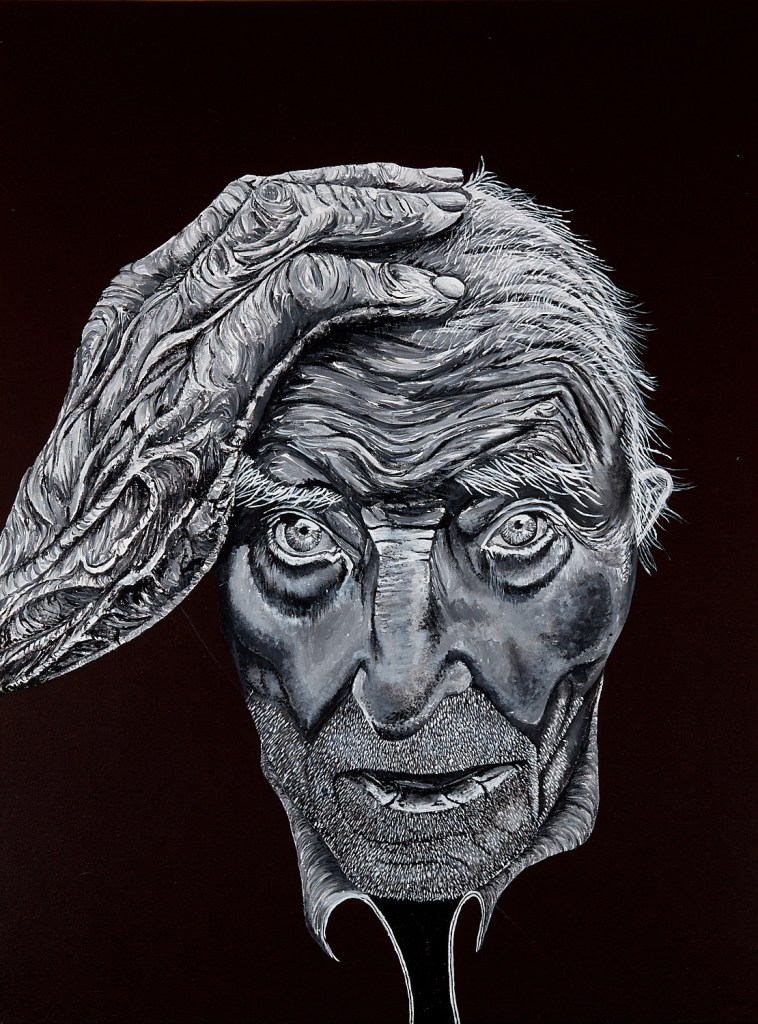
Koestler Arts (2019), Another Me: The Redwoods Centre (secure mental health unit), James Wood QC Silver Award for Portrait, 2019
In March 23, 2020, the UK went into lockdown. The advice given, albeit conflicting in parts, was clear. Do not leave your home unless absolutely necessary, banning all travel and social interactions. This unprecedented move forced people to isolate at home for a period, that for some people will come to an end, when the WHO announces the end of the pandemic. For the rest of us, the use of a face mask, sanitiser and even plastic gloves have become modern day accessories. The way the lockdown was imposed and the threat of a fine, police arrest if found outside one’s home sparked some people to liken the experience with that of detention and even imprisonment.
There was definite social isolation during the pandemic and there is some future work there to be done to uncover the impact it has had on mental health. Social distancing was a term added to our social lexicon and we discovered online meetings and working from home. Schools closed and parents/guardians became de facto teachers. In a previous blog entry, we talked about the issues with home schooling but suffice to say many of our friends and colleagues discovered the joys of teaching! On top of that a number of jobs that in the past were seeing as menial. Suddenly some of these jobs emerge as “key professions”
The first lesson therefore is:
Our renewed appreciation for those professions, that we assumed just did a job, that was easy or straightforward. As we shall be coming back eventually to a new normality, it is worth noting how easy it will be to assign any job as trivial or casual.
As online meetings became a new reality and working from home, the office space and the use of massive buildings with large communal areas seemed to remain closed. This is likely to have a future impact on the way business conduct themselves in the future.
Second lesson:
Given how many things had to be done now, does this mean that the multi occupancy office space will become redundant, pushing more work to be done from home. This will alter the way we divide space and work time.
During the early stages of the lockdown, some people asked for some reflection of the situation in relation to people’s experiences in prisons. The lockdown revealed the inequality of space. The reality is that for some families, space indicated how easy is to absorb the new social condition, whilst other families struggled. There is anecdotal information about an increase on mental health and stress caused from the intensive cohabitation. Several organisations raised the alarm that since the start of the lockdown there has been a surge in incidents of domestic violence and child abuse. The actual picture will become clearer of the impact the lockdown had on domestic violence in future years when comparisons can be drawn. None the less it reveals an important issue.
Third lesson:
The home is not always the safest place when dealing with a global pandemic. The inequality of space and the inequality in relationships revealed what need to be done in the future in order to safeguard. It also exposed the challenges working from home for those that have no space or infostructure to support it.
In the leading up to the lockdown many households of vulnerable people struggled to cope with family members shielding from the virus. These families revealed weaknesses in the welfare system and the support they needed in order to remain in lockdown. Originally the lack of support was the main issue, but as the lockdown continued more complex issues emerged, including the financial difficulties and the poverty as real factors putting families at risk.
Fourth lesson:
Risk is a wider concern that goes beyond personal and family issues. The lockdown exposed social inequality, poverty, housing as factors that increase the vulnerability of people. The current data on Covid-19 fatalities reveal a racial dimension which cannot longer be ignored.
During the lockdown, the world celebrated Easter and commemorated Mayday, with very little interaction whilst observing social distancing. At the end of May the world watched a man gasping for breath that died in police custody. This was one of the many times the term police brutality has related to the dead of another black life. People took to the streets, protested and toppled a couple of statues of racists and opened a conversation about race relations.
Fifth lesson:
People may be in lockdown, but they can still express how they feel.
So, whilst the lockdown restrictions are easing and despite having some measures for the time being, we are stepping into a new social reality. On the positive side, a community spirit came to the surface, with many showing solidarity to those next to them, taking social issues to heart and more people talked of being allies to their fellow man. It seems that the state was successful to impose measures that forced people indoors that borderline in totalitarianism, but people did accept them, only as a gesture of goodwill. This is the greatest lesson of them all in lockdown; maybe people are out of sight, appear to be compliant in general but they are still watching, taking note and think of what is happening. What will happen next is everyone’s guess.
Share this:


“Things you need to know about criminology”: A student perspective – Mary Adams, recent Graduate and mature student.
We are all living in very strange times, not sure when life will return to normal...but if you're thinking about studying criminology, here is some advice from those best placed to know!

The most important module to my understanding of criminology is: I would have to say they are all equally important for understanding different aspects of Criminology. In first year I loved The Science of Crime which showed how things have evolved over time, and that what we now see as funny was actually cutting edge in its day. True Crime also makes you look beyond the sensational headlines and separate fact from fiction. In second year Crime & Justice gave a brilliant grounding in the inner workings, and failings, of the criminal justice system. And in third year, the Violence module explores personal and institutional violence, which is especially relevant in current times

The academic criminology book you must read: Becker’s Outsiders and Cohen’s Folk Devils and Moral Panics are a must. I also found Hopkins-Burke’s An Introduction to Criminological Theory and Newburn’s Criminology essential reading for first year as well as Finch & Fafinski’s Criminological Skills. For second year I recommend Davies, Croall & Tyrer’s Criminal Justice. If you choose the Violence module in third year you will be grateful for Curtin & Litke’s Institutional Violence. And don’t forget Foucault’s Discipline & Punish!

The academic journal article you must read:
There are so many excellent journal articles out there, it’s difficult to choose! Some of my favourites have been:
'Alphonse Bertillon & the measure of man' by Farebrother & Champkin;
'Bad Boys, Good Mothers & the ‘’Miracle’’ of Ritalin by Ilina Singh';
'Detainee Abuse & the Ethics of Psychology' by Kathryn French;
'Attachment, Masculinity & Self-control' by Hayslett-McCall & Bernard;
'Grenfell, Austerity & Institutional Violence' by Cooper & Whyte;
'The Phenomenology of Paid Killing' by Laurie Calhoun;
'A Utilitarian Argument Against Torture Interrogation of Terrorists' by J. Arrigo.

The criminology documentary you must watch:
Without a doubt, a must-see is the Panorama documentary London Tower Fire: Britain’s Shame. I would also highly recommend the movie The Stanford Prison Experiment

The most important criminologist you must read:
Of course you must read Lombroso, Beccaria & Bentham. I also enjoyed reading work by feminist criminologists like Pat Carlen, Carol Smart & Sandra Walklate. And of course, Angela Davis is a must!

Something criminological that fascinates me:
What fascinates me is how the powers that be, and a good proportion of the public, cannot seem to realise that social injustice is one of the major factors behind why people commit crime. And the fact that putting more & more people in prison is seen as a ‘good’ thing is mind-boggling!

The most surprising thing I know about criminology is:
The fact that it is such a diverse subject & incorporates so many other disciplines

The most important thing I've learnt from studying criminology is:
Question everything! Don’t take anything at face-value. Try to look beyond the attention grabbing headlines to find out the real story. Read, read, read!

The most pressing criminological problem facing society is:
Unfortunately I think there are many pressing problems facing society today, the main ones being social injustice & inequality, systemic racism, institutional violence, and mass incarceration


When family and friends ask, I tell them criminology is:
Some people joke that I’m learning how to be a criminal! Others think it’s all about locking people up! I tell them it’s all about looking at the mechanisms in-built in our society that disadvantage & discriminate against whole groups of people, and that, unless we are part of the rich & powerful elite, any one of us could find ourselves in the ‘out’ group at any time. I also tell them to stop reading The Daily Mail, vote Labour, and question everything!!
Share this:


“Things you need to know about criminology”: A student perspective: ej213
We are all living in very strange times, not sure when life will return to normal...but if you're thinking about studying criminology, here is some advice from those best placed to know!

The most important module to my understanding of criminology is: True Crime - this module highlights the fact that cases you have seen in the media and in films may not be accurate due to the true crime genre exaggerating facts for entertainment. Whilst, this module does not cover quite as much theory as others, it gives the chance to explore cases and discover the truth underneath the exaggeration. Love this module.

The academic criminology book you must read:
The Oxford Handbook of Criminology (sixth edition) - I was recommended this book at an open day and there was rarely an assessment I couldn't find some background knowledge for in this book. It is a great tool.

The academic journal article you must read:
Testosterone and masculinity

The criminology documentary you must watch:
FBI: Cold Cases - it is a Netflix original I think but it shows how crimes committed 20 or 30 years ago can be solved due to modern technology. Really interesting especially if you have an interest in forensics.

The most important criminologist you must read:
Either Lombroso or Marx.

Something criminological that fascinates me:
The fact that crime is defined by the wealthy meaning that the prisons are mostly filled with the lower classes due to the upper classes' crimes being seen as victimless

The most surprising thing I know about criminology is:
That criminology is a relatively recent study

The most important thing I've learnt from studying criminology is:
There is rarely one answer so long as you can support your argument

The most pressing criminological problem facing society is:
This could be an essay in itself. I guess I would have to say poverty because 14 million people (2019/20) still live in poverty and these people are not going to have the same advantages or prospects in education or the workplace meaning they are more likely to commit crime in order to survive

When family and friends ask, I tell them criminology is:
Amazing and the most interesting course I have chosen to study because it never had a definite answer which I guess can make it complex however, the debates within the course are great to participate in because it is interesting to hear another's perspective but also voice my own. It is also very inclusive in its module content which is great

Share this:


“Things you need to know about criminology”: A student perspective – Bonnie Middleton (2017-2020)
We are all living in very strange times, not sure when life will return to normal...but if you're thinking about studying criminology, here is some advice from those best placed to know!

The most important module to my understanding of criminology is: All of them! Every module contributes to your understanding of Criminology and all are different and enjoyable. Personally, my favourite module was Violence: From Domestic to Institutional in Year 3; this module ties together everything you know about Criminology; the reasons why we are subjective as criminologists and our ability to look beyond the scope of what we know.

The academic criminology book you must read:
Outsiders: Studies in the sociology of deviance (1963) by Howard Becker. Albeit a dated book, its ideas are relevant and relate to many criminological such as; how and why criminals are labelled and stigmatised; why are the youth demonised; why people reject the norms and values of society and become criminals in doing so.

The academic journal article you must read:
This is a hard one. Articles are great for discovering new ideas and methodologically testing theories. I would recommend reading: Arrigo, J. (2004). A Utilitarian Argument Against Torture, Interrogation of Terrorists. Science and Engineering Ethics. 10(3), pp. 543-572. This article poses many questions for a criminologist which enlightens you to think subjectively and challenge your own views; which is what Criminology is all about. From reading this article you will learn to think critically when faced with a challenging dilemma; the rights of a terrorist and how can the law can be tailored to fit the crime.

The criminology documentary you must watch:
Where do I begin? Louis Theroux and Stacey Dooley are both great journalists and documentary makers. If I had to pick one, I would recommend watching the BBC’s documentary on Grenfell If you watch this documentary you must consider; the government’s response; who is accountable; why are the residents of Grenfell still in temporary accommodation. These are the sorts of questions you should be asking as someone studying Criminology.

The most important criminologist you must read:
Familiarise yourself with the ideas of Lombroso, this will aid your understanding on how criminological theory and ideas have developed overtime through biological, psychological and sociological standpoints.

Something criminological that fascinates me:
Domestic abuse. I had done my dissertation on this as I have a great interest in male dominance and power over women, especially in intimate relationships. Gender plays a key role in this which when examined in depth, will change your view on gender paradigms.

The most surprising thing I know about criminology is: Criminality was believed by Lombroso to be inherited and that criminals possessed physical defects, criminality would be measured by the size and shape of particular body parts; this was later discredited. I can remember learning this in first year and it fascinated me.

The most important thing I've learnt from studying criminology is:
To not judge a book by its cover and to not take everything at face value. Do not be afraid to challenge other’s standpoints and beliefs. Thinking critically is the most important skill to have, search deeper into issues and apply your own thoughts and experiences.

The most pressing criminological problem facing society is:
Mass incarceration and reoffending rates. The UK is yet to move away from the ‘tough on crime’ approach favouring law and order and punishment. The penal system needs to be reformed to ensure offenders are rehabilitated to break the cycle of criminality; definitely educate yourself on political party’s manifesto’s and what they say about crime and justice before voting.

When family and friends ask, I tell them criminology is: I tell family and friends that criminology is such a broad field of study; we look at law, psychology, science, sociology, politics, penal systems, criminal justice organisations, media and much more. From this, you attain the ability to think critically and reflect, it can help you in many situations not just criminological issues. It is an incredibly insightful and enlightening field to study; it opens up many opportunities.
Share this:


Ask the expert, if you can find one

It was around four years ago I discovered the title of ‘Doctor’ extended beyond medical staff. I’m not sure many people outside of the academic world fully understand or have any reason to know the order in which post nominal letters are awarded or titles are given. Gaining the title of ‘doctor’ at the very beginning of any academic journey, seems so distantly part of any future plan, its barely imaginable. Some career paths seem wildly ambitious. Wanting to be an ‘expert’ in your field for the humble student, feels much like aspiring to become an astronaut midway through a physics degree.
Once you enter the world of academia, the titles people hold seem to determine an awful lot of their credibility. It’s rare to find a university lecturer who isn’t working towards doctoral qualification, most already have one. The papers, books and research journals are filled with the knowledge of individuals who once were nothing more than students. I often wonder though, at what point someone becomes an expert? At what point, (if ever) do the most academically qualified individuals refer to themselves as experts within a narrow area of their field.
The government often talks about relying on ‘expert’ evidence. Watching the experts stand beside the PM discussing the current pandemic, they appear uneasy, particularly when questions are raised about a different expert having a contradicting opinion. One thing I feel quite sure of is that experts seem to rarely agree. As Bertrand Russell (1927/42) states, “even when all the experts agree, they may well be mistaken” . Maybe that’s because it’s questionable if anyone can ever truly know everything on a given subject area.
The scientific committee seems to be buzzing with accusations that the experts are not quite what they seem. The ‘data scientists’ advising government and sitting on SAGE are not all from a background which comfortably implies they are qualified to discuss virology or immunology. In the background lingers the fact with such a new virus, with so little known about it, expert knowledge in a narrow sense, is undoubtedly in its infancy and will probably require some degree of hindsight later on.
In the past week one of the UK’s leading experts has resigned from his job after breaking his own guidance. Meanwhile the public watched Matt Hancock ‘snap’ at an opposition MP in parliament. A woman who despite being no more of an ‘expert’ than himself, at least has experience as a qualified A&E doctor to base her opinions and views on. It seems last week’s experts and heroes are this week’s victims in the ongoing witch-hunt for someone to blame.
I’ve started to wonder if labelling someone an ‘expert’ is something other people do to install confidence that a piece of research being relied upon is credible, rather than the experts referring to themselves that way. There’s almost an assumption of arrogance for anyone who dares to protest that their knowledge should be recognised with a title, outside of the academic world anyway. Maybe people simply don’t understand what it took to reach that level of knowledge in the first place.
I’ve looked a lot at ‘labelling’ within the criminological context and it seems to me the labels that are attached to us, almost always seem to come from someone else. In an age of self-proclaimed ‘internet experts’ the real experts, it seems are hard to find.
Reference
Russell, Bertrand (1927/1942) cited in The Collected Papers of Bertrand Russell: A Fresh Look at Empiricism, 1927-42, edited by by John Slater and Assisted by Peter Köllner, (London: Routledge)
Share this:


On being a University Student with Asperger Syndrome
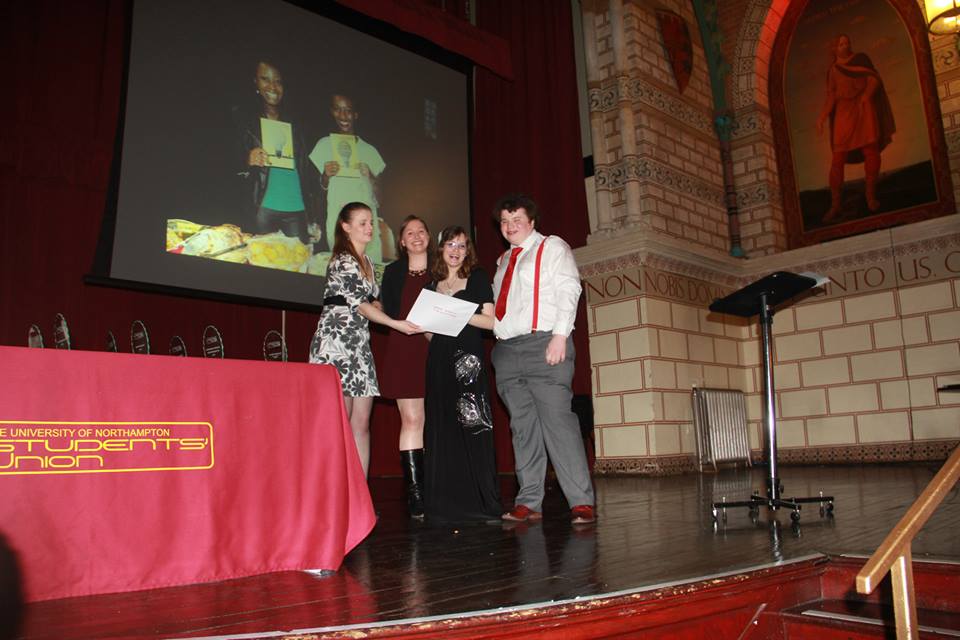
To all new students starting university who are on the autism spectrum and Asperger Syndrome – YOU CAN DO IT! YOU WILL THRIVE!
As a child I was different.
I preferred spending time on my own, did not care much about what others were doing, and kept myself to myself. In primary school I was a daydreamer, and always lived in a world of my own. I was always very happy and had a smile on my face. The early years of my life were cheerful and full of happiness. I loved painting and drawing and being outdoors. When I started secondary school, I faced a variety of challenges.
I struggled socially, especially as I went to a mainstream school, and generally disliked being around other people. I loved studying and learning, and was always very ambitious when I was in my teenage years. I dreamed of being an author and a lawyer among many things, and always aimed high. Due to being different I was left out, but didn’t care much. I struggled with my senses at times, and became overwhelmed when there was lots of loud noises. My memory was unusual – I could remember silly little details, facts and useless information. I loved learning new things, reading and filling my head with knowledge. In my family, I was the oddball – I had specific interests, displayed intense focus, and displayed signs of phalilalia (repeating myself). [1]
My mum suspected that I was ‘different’, and she wanted me to be properly seen by a medical doctor. One morning, after a number of referrals, it happened; Friday 2nd February, 2010, 9:35am 42 seconds within the minute, I received my diagnosis: High Functioning Autism/Asperger Syndrome. This diagnosis explained so much about me.
Fast forward 3 years, on Saturday 15th September 2012, after an hour long drive away from home, I was settled into my new flat at the University of Northampton. My family left and I was with my new flatmates. The start of a new chapter in my life. My time at university enabled me to flourish and blossom in ways I never knew I could! At this point, I knew that I could not stay in my shell and isolate myself, I pushed myself out of my comfort zone, tried new things, and challenged myself. I wanted to be able to integrate and enjoy myself as much as I possibly could.
Aware of how my Aspergers affected me; from sensory difficulties, challenges in reading people (which I’m much better at now), to social awareness (knowing how to behave in different social situations), but I was determined to learn and grow. I overcame them all by going out, meeting and learning from new people, and enjoying myself! First year at university was one of the happiest years of my adult life! I remember smiling so much that my cheeks hurt. I fully immersed myself into university life, and loved every single minute of it! I got myself a job, did some volunteering, and loved studying. Being away from home helped me to really grow, and was the best decision I ever made!
I’m somewhat of a chameleon; meaning that I have learned to blend in and ‘mask’ my Aspergic traits. My social skills were very good already, so, to the majority of people I met, no-one could pick up on my Aspergers. I have an unusual memory for detail, am very focused, driven and energetic. There were times where I would interpret things differently, or misunderstand. That’s ok. I just asked more questions and for clarification, so that I could understand.
After getting my DSA (Disabled Students Allowance) approved, I was given specialist equipment and software’s to help meet my academic needs. These were so useful and handy! I had never recieved so much support for studying before! I was given all the training and guidance I needed to help get to grips with everything.
On my assignments, I had an extra front sheet, informing my lecturers of my Aspergers, so that they were aware and could take it into consideration when reviewing my work.
Students with disabilities can also get a mentor, note-taking support, and other support in accordance with their needs.
When I was in my first year, I founded the Auto-Circle Spectrum Society; the first society of its kind in the country, supporting students with autism, Asperger Syndrome and other learning disabilities. Upon seeing that there was no group in the Student’s Union to represent this demographic of students, I wanted to help others.
The second and third year flew by very quickly; I found myself starting each year with excitement and enthusiasm. I loved studying too. I remember collecting several books, finding my corner in the library and reading for hours, noting each reference as I went, putting together bodies of information for my assignments.
Auto-Circle Spectrum also grew over the 3 years, and I met so many incredible individuals who brought their own sense of uniqueness, fabulouslness and eccentricity to the group! I became increasingly aware of the challenges other students with autism face, particularly, transitions and dealing with change. After a parent got in touch with me, concerned for her son who was to start university. Wanting to further my help for students on the spectrum, I undertook the Change Maker Certificate, guided by the incredible Tim Curtis; which, after numerous meetings, resulted in a, Autism Spectrum Condition Taster Day, which was a huge success!
Today, I am the first person from both sides of my family to go to university, and the only one to have a masters degree. Do NOT let others tell you what you can and can’t do. You can overcome all odds if you put your mind to it and let yourself grow. The more you put into university life, the more you get out, and the more memorable it will be. YOU CAN DO IT!
Links to info about Aspergers/Autism
[1] National Autistic Society ‘Obsessions, Repetitive Behavior and Routines’ Available online at: https://www.autism.org.uk/about/behaviour/obsessions-repetitive-routines.aspx
Share this:


How to prepare for a year in University

In our society consumerism seems to rain supreme. We can buy stuff to make us feel better and we can buy more stuff to express our feeling to others and mark almost most events around us. Retail and especially all the shops have long been aware of this and so they have developed their seasonal material. These seasonal promotions may have become consumer events now although they do signify something incredibly important to culture and our collective consciousness. There is time for Christmas decorations and festive foods, Easter time and chocolate eggs, mother’s day and nauseating cards father’s day for equally grinchworthy cards. There is valentine’s day to say I love you in full fat chocolates, Halloween to give little kids rotten teeth and a red poppy to remember some of our dead. To those add the summer season with the disposable BBQs and of course the back to school season!
The back to school is one of the interesting ones. Geared to prepare pupils and parents for going back to school and plan ahead. From ordering the uniforms to getting all the stationery and books required. I remember this time of the year with some rather mixed emotions. It was the end of my summer holidays, but it was also the time to get back to school. Until one day I finished school and I went to university. Education is seen as part of a continuous process that we are actively involved from the first day at school to the last day in high school and more recently for more people also involve the first day of going to university. Every year is more challenging than the next, but we move up and continue. For those of us who enjoy education we continue the journey further to further or high education.
There is something to said about the preparation process coming to University; it is interesting seeing advertisements on education this time of the year on the tv and social media promoting stuff for this transition; from the got to have smartphone to the best laptop, the fastest printer scanner all in one thingy to the greatest sound system and many more stuff that would get you ready for the year ahead. Do they really help us out and if not, what do we got to do to prepare for coming to university?
Unfortunately, there is no standard formula here but there is a reason for that. Higher education is adult education. This is the first time in our educational journey that we are sitting firmly on the driving seat. We choose to study (or ought to) what we wish to study. It is an incredibly liberating process to have choice. This however is only the beginning. We make plans of our time. In higher education the bulk of the time required is independent study, and as such we got to negotiate how we will plan our time. We got to decide which reading we are going to do first which notes to read what seminar we shall prepare and what assignment we will make a draft of.
There will be days spent in the library looking for a book, days in a coffee shop talking to fellow students about the seminar reading, days in the learning hub working on an assignment. There are highs, lows and everything in between. But regardless of the emotion at every stage thee will be a sense of ownership of knowledge.
In the first couple of sessions, the bulk of the students keep quiet expecting the correct answer to be given. One interpretation or one truth that describes all. It takes a few times before the realisation emerges that the way we analyse, and project knowledge can be different provided we go through the same processes of scrutiny and analysis. Then conversation emerges and the more reading the better the quality of the ideas that shall emerge.
The first year at University is definitely a declaration of independence and the realisation that we all have a voice. Getting on to the road on empowerment. This is a long journey, and on occasions arduous but incredibly rewarding because it leads to an insight greater than before that removes ignorance and lifts the veil of the unfamiliar.
To our newest students – Welcome to the University and to our returning 2 and 3 years – Welcome back!
Share this:


The struggle is real

© Jonathan McHugh
Stephanie is a BA Criminology graduate of 2019 and was motivated to write this blog through the experience of her own dissertation.
Last year was a very important time for me, during my second year of studying Criminology I began doing a work placement with Race Act 40, which was an oral history project to celebrate 40 years of the Race Relations Act 1974. The interviews that were conducted during my placement allowed me to get a variety of in-depth stories about racial inequalities of Afro-Caribbean migration settlers in the UK. During my time with the Race Act 40 project it became clear to me that the people who had volunteered their stories had witnessed a long line of injustices from not only individuals within society, but also institutions that makeup the ‘moral fabric’ within society. When exploring whether they have seen changes post and pre-Race Relations they insisted that although the individual within society treated them better and accepted them post-Race relations, to an extent there is a long way to go to improve the hostile relationships that has been formed with politicians and police.
The notion of hostility between politicians and the Afro-Caribbean community was reinforced, as the UK was going through the Windrush scandal which affected the core of every Afro-Caribbean household within the UK. This was extremely important for me as both paternal and maternal grandparents were first generation Windrush settlers. During the scandal my father became extremely anxious and the ramifications of the Windrush scandal hit home when some of his friends that came to the UK in 1961, the same time as he did, were detained and deported on the grounds of them being ‘illegals’. The UK Government used their ‘Hostile Environment’ policy to reintroduce Section 3 paragraph 8 of the Immigration Act 1971, which puts burden of proof on anyone that is challenged about their legal status in the UK’.
The UK government was ‘legally’ able to deport Caribbean settlers, as many of them did not have a British passport and could not prove their legal right to be in the UK and the Home Office could not help them prove their legal rights because all archival documents had been destroyed. This was a hard pill to swallow, as the United Kingdom documents and preserves all areas of history yet, overnight, the memory of my family’s journey to the UK was removed from the National Archives, without any explanation or reasoning. The anxiety that my father felt quickly spread over my whole family and while I wanted to scream and kick down doors demanding answers, I used my family’s history and the experiences of other Black people under British colonial rule as the basis for my dissertation. The hostility that they faced stepping off the Windrush echoed similar hostility they were facing in 2018, the fact that the British government had started deporting people who were invited into the country as commonwealth workers to build a country that had been torn apart as a corollary of war was a slap in the face.
Under Winston Churchill’s government, officials were employed to research Black communities to prove they were disproportionately criminal as a strategy to legally remove them from the UK and although they did not have any evidence to prove this notion the government did not apologize for the distasteful and racist treatment they demonstrated. It is hard to convince Black people in 2019 that they are not targets of poor similar treatment when they have been criminalised again and documents have been destroyed to exonerate them from criminality.
A final thought:
I have outlined the reasons why this topic has been important to me and my advice to any Criminology student who is going to be writing a dissertation is, to find a topic that is important and relevant to you, if you are passionate about a topic it will shine through in your research.
Share this:

The Unbreakable Bond of Criminology

Every student has a different experience in their studies, be it through what they have studied, who they studied with or even where they studied. “Team Cops and Robbers” studied the same degree, the same modules at UON, yet we had different experiences. However what we share (and are all very fond of) is how positive the experience was, tackling the stresses (and joys) of the degree as a trio. We each offer a brief overview of our experience as a member of “Team Cops and Robbers”, who graduated in 2015 and still remain very involved in each other’s lives…
Jes: I was a late comer to Team Cops and Robbers, as Emma and Leona had already bonded without me (rude I know!). We were thrown together in Drew’s 2nd year History module, where there were only a few Crim students – so they didn’t get much of a choice with regards to me joining, the then, duo. And the rest as they say is history! What stemmed from there is quite remarkable; we all had own our strengths when it came to Crim. My recollection is Emma knew everything about everything, Leona kept us all motivated and on top of our seminar preparation and I kept us glued to the library and bossed us around -especially with group work (my car Geoffrey was an unofficial member of the gang taking us to and from Park campus). Although we took the same modules, due to our differing interests, we all did different assignment questions and had very different ways of writing and tackling assessments. In my third year, I distinctly remember Emma and Leona reminding me to take time to myself and to not live 24/7 in the library; and had they not been there to encourage me to breathe, it is likely I would have burned out! They were not afraid to question my views, or understanding, or challenge my bossy attitude when it came to group work, for which I am very grateful! And still today, even though we are no longer studying together, they keep me motivated with the MSc, sending me motivational gifts as a reminder that even though they are not studying with me, I am not alone! My academic journey would have been very different had it not been for our trio, and likely would not have been as successful.
Leona: Sometimes being in class with friends can be detrimental as you end up spending so much time having fun, you end up forgetting the work side of uni. However when you meet friends who are so determined to do well and hard-working, it can really motivate you to push yourself. Myself, Jes and Emma became a power trio; encouraging each other, motivating each other and always making sure we were working together for group projects. We are all completely different when it comes to learning but I think these differences really helped us. Learning from them really helped me to improve my own standard of work, and having the girls’ input and guidance throughout, really encouraged me and helped me gain confidence in my own voice. Plus it made doing all the studying we did much more bearable. I’m sure sometimes it took us longer to get through everything as we would be half working, half chatting, but as a trio it meant we could help each other if we got stuck or go for coffee breaks if we were bored or unmotivated. Having Jes and Emma there with me meant there was always someone there to go through notes with, always someone to explain something in a different way if I didn’t fully understand something, always someone to motivate me when I was exhausted and didn’t feel like working any more. It meant that my viewpoint expanded as I learned from their experiences and that once we had all finished writing our essays we could share them with each other to check, critique and make suggestions for improvement. But more than all that, it meant there was always someone there to help you balance the workload, someone to tell you when to take a break, and to “day drink” in the SU, explore winter wonderland, or have a Disney film day. During my time at uni these girls inspired me to work harder, and to really challenge myself to improve on everything I was doing. Without them there to encourage me and spur me on, I don’t think I would have come out with the grade I did, and I am certain that my uni experience wouldn’t have been half as memorable.
Emma: Meeting Jes and Leona was one of the best things about university. Not just because they are now two very dear friends of mine, but because we were vital to each other’s sanity at uni. I met Leona first in welcome week with a very interesting exchange asking if I was at the right seminar and proceeding to tell her my name, that I was from the south west and that I liked reading about serial killers. Leona reciprocated with the main difference being that she was from the north and from there our friendship blossomed. Jes was some girl who sat with another group of people. It wasn’t until 2nd year that Jes really came into our friendship group and “Cops and Robbers” was formed. We all had strengths and weaknesses that helped us when it came to group work. Jes was always super, super organised, having her essays completed with weeks to go. Leona was always bubbly and would follow Jes with completing her essay with time to spare. Me… I would research and collect quotes and references and then write my essays with 48-24hrs to go, as I liked the time pressure. This changed in my 3rd year though as being around Leona and Jes, they moulded me and proof read my concepts and challenged me back on things. Any time we had group work, I knew we would do well because as a trio we kicked ass! We did not always have the same views in our seminars and would often debate but we would always leave as friends. Best advice for getting through university sane, is to find people who are fun, you get on with and drive you to be the best.
Hopefully what is clear from each of our perspectives is how important we were to keeping each other (relatively) sane! Your friendship groups during your studies are essential to keeping you happy, but also keeping you motivated! Whilst it is independent studies, and at the end of the day is YOUR degree; the input from friends and family will shape your own ability and attitude. If you find the right group, hopefully you will find that they push you, support you and challenge you!


