
Home » Immigration
Category Archives: Immigration

Reform: The New Opposition, or an Uncomfortable Hiccup in British Politics

British politics is particularly interesting at the moment, as no one is really sure if we are witnesses to a radical change or if Reform will fizzle out and be a distant memory within 10 years or so (here’s hoping). I’m here to bounce some ideas around, think about the current political climate and just put out some comments about what’s going on. I’m hoping to keep at least light, and possibly short.
It’s structured as starting off with some points that are to Reform’s advantage, including the national political climate. It continues to some things working against Reform, including its sustainability. Considering how Reform has managed to gain such support is kind of weaved into the middle and briefly mentioned at the end.
The Political Climate: Inside the UK
Populism is on the rise, restriction of human rights is increasing and people seem to be getting angrier and more frustrated about politics. On a national level, there is a plethora of individuals who are disillusioned with modern day politics and seeking simple answers to big issues quickly and, unfortunately, right wing populism fills this gap perfectly.
Immigration problems? Ban them and deport them.
Crime problems? Give longer and harsher sentences.
Have a problem with the elite? Let Nigel speak up for the British People and let common sense prevail.
They’re easily digestible, easily understandable solutions to big societal issues and that definitely appeals to people.

We can easily dismiss supporters of any right wing populist party as incorrect, immoral and uneducated. But it is really not as simple as that. When an attractive left wing party is not there to foster a society which is genuinely has the interests of the working class at it’s heart, we open the door for right wing populism to scoop up the working class electorate. Indeed, we can’t totally blame the current ‘Labour’ government for the increase in Reform UK voters, as we can see trends of right wing populism globally, but we can definitely think about whether these UK voters would have gone to Reform UK if Labour was offering a better solution. A solution which had working class people front and centre, providing meaningful change such as education reform, anti-poverty initiatives, workers rights focuses, renationalisation policies and council house stock rebuilding. What we are possibly seeing here are voters with no party to call home, frustrated and without answers, so they seek these things in easily digestible populist parties.
Sustainability: Party Identity and Hypocrisy
Perhaps Reform UK’s biggest stumbling block, in my opinion, is its internal contradictions and its lack of preestablished identity as a party.
The internal contradictions are simple and obvious. Reform UK prides itself on being anti- elitist and anti-establishment but the party is lead by a millionaire bankrolled by aristocrats with a private education. Right wing populist parties are simply an extension of the elite and the establishment; an obvious conclusion if you dig even slightly under the surface. Surely this hypocrisy will be called out soon and listened to?
A slightly more long winded pitfall in the Reform Party (among many others) is its lack of party identity. Labour and even the Tories can rely at least slightly on their voters who vote for them because they always have, because of nostalgia for what the party used to be, because they’re a traditional party. Reform don’t have this. And not only this, but they don’t really have any developed policies; the Conservatives have the idea of low taxes, competitive markets, low regulation. Traditional Labour have higher taxes, redistribution of wealth, working class empowerment, nationalisation. and Reform have…? Immigration freezes, law and order and ‘taking the country back’. I’m not sure if their party identity and policies will keep their momentum moving to the next general election.
However, I do think that if they are able to maintain their momentum and get to the election they may go far, and may possibly overtake the Tories. But I think it rests on two things 1) momentum going into the next election and 2) No proper left wing alternatives emerging between now and then. Unfortunately I think number two is already certain.
The title of this blog, is a sort of tongue in cheek title. I do understand how dire this could be should Reform become positioned as the official opposition. For many people around the UK the effects of pandering to right wing populist racist rhetoric has already been experienced, and it will only get worse if Reform continue to gain popularity. Remember to vote, be politically engaged and speak up, we as young people have a huge role to play as our turn out is generally so low.
Images from https://www.reformparty.uk/ and https://tribunemag.co.uk/2024/07/the-anti-elite-elites-reform-far-right
Share this:


What society do we want to live in?

Recently after using a service, I received an email to provide some online feedback. The questionnaire was asking about the services I received and to offer any suggestions on anything that could be done to improve services. This seems to become common practice across the board regarding all types of services and commercial interactions. This got me thinking…we are asked to provide feedback on a recent purchase, but we are not asked about issues that cut through the way we live our lives. In short, there is value in my opinion on a product that I bought, where is the value in my views of how I would want my community to be. Who’s going to ask me what society I want to live in!
Consumerism may be the reason we get asked questions about products but surely before and above being consumers, aren’t we all citizens? I can make helpful suggestions on what I would like to see in services/products but not on government. We profess democratic rule but the application of vote every now and then is not a true reflection on democracy. As we can offer online surveys for virtually everything, we have ways of measuring trends and reactions, why not use these to engage in a wider public discourse on the way to organise our communities, discuss social matters and engage in a public dialogue about our society.
Our political system is constructed to represent parties of different ideologies and practices offering realistic alternatives to governance. An alternative vision about society that people can come behind and support. This ideological diversion is essential for the existence of a “healthy political democratic process”. This ideological difference seems to be less prevalent in public dialogue with the main political parties focusing their rhetoric on matters that do not necessarily affect society.
Activism, a mechanism to bring about social change is becoming a term that sparks controversy whilst special interest groups maintain and even exert their influence on political parties. This allows private special interests to take the “ear of the government” on matters that matter to them, whilst the general public participate in social discourses that never reach the seat of power.
Asking citizens to be part of the social discussion, unlike customer service, is much more significant; it allows us to be part of the process. Those who have no other way of participating in any part of the system will be castigated to cast their vote and may participate in some party political activities. This leaves a whole heap of everyday issues unaddressed. In recent years the cost of living crisis pushed more people into poverty, food, housing and transport became issues that needed attention, not to mention health, post-covid-19.
These and many more social issues have been left either neglected only to be given the overhead title of crisis but with no action plan of how to resolve them. People affected are voiceless, having to pick up the injustices they suffer without any regard to the long term effects. Ironically the only plausible explanation given now that “Brussels’ rule” and “EU bureaucracy” are out of the picture, has become that of the immigrants. The answer to various complex problems became the people on the boats!
This is a simplification in the way social problems happen and most importantly can be resolved. Lack of social discourse has left the explanation and problem solving of said problems to an old rhetoric founded on xenophobia and discrimination. Simple explanations on social problems where the answer is a sentence tend to be very clear and precise, but very rarely can count the complexity of the problems they try to explain. There is a great disservice to our communities to oversimplify causes because the public cannot understand.
Cynically someone may point out that feedback from companies is not routed in an honest request to understand customer satisfaction but a veiled lip-service about company targets and metrics. So the customer’s response becomes a tradable figure of the company’s objectives. This is very likely the case and this is why the process has become so focused on particular parts of the consumer process. Nonetheless and here is the irony; a private company has some knowledge of a customer’s views on their recent purchase, as opposed to the government and people’s views and expectations on many social issues.
Maybe the fault lies with all of us. The presumption of democratic rule, especially in parliamentary democracies, a citizen is represented by a person they elect every four years. This representation detaches the citizen from their own responsibilities and obligations to the process. The State is happy to have citizens that engage only during elections, something that can be underscored by the way in recent years that protests on key social issues have been curtailed.
That does not sound right! I can provide an opinion over the quality of a chocolate bar or a piece of soap but I cannot express my views as a citizen over war, climate, genocide, immigration, human rights or justice? If we value opinion then as society we ought to make space for opinion to be heard, to be articulated and even expressed. In the much published “British Values” the right to protest stands high whilst comes in conflict with new measures to stop any protests. We are at a crossroads and ultimately we will have to decide what kind of society we live in. If we stop protests and we ban venues for people to express themselves, what shall we do next to curtail further the voices of dissent? It is a hackneyed phrase that we are stepping into a “slippery slope” and despite the fact that I do not like the language, there is a danger that we are indeed descending rapidly down that slope.
The social problems our society faces at any given time are real and people try to understand them and come to terms with them. Unlike before, we live in a world that is not just visual, it relies on moving images. Our communities are global and many of the problems we face are international and their impact is likely to affect us all as people, irrespective of background or national/personal identity. At times like this, it is best to increase the public discourse, engage with the voices of descent. Maybe instead of banning protests, open the community to those who are willing to discuss. The fear that certain disruptive people will lead these debates are unfounded. We have been there before and we have seen that people whose agenda is not to engage, but simply to disrupt, soon lose their relevance. We have numerous examples of people that their peers have rejected and history left them behind as a footnote of embarrassment.
Feedback on society, even if negative, is a good place to start when/if anyone wants to consider, what kind of society I want and my family to live in. Giving space to numerous people who have been vastly neglected by the political systems boosts inclusivity and gives everyone the opportunity to be part of our continuous democratic conversation. Political representation in a democracy should give a voice to all especially to those whose voice has long been ignored. Let’s not forget, representation is not a privilege but a necessity in a democracy and we ensure we are making space for others. A democracy can only thrive if we embrace otherness; so when there are loud voices that ask higher level of control and suppression, we got to rise above it and defend the weakest people in our community. Only in solidarity and support of each other is how communities thrive.
Share this:

By whose standards?
This blog post takes inspiration from the recent work of Jason Warr, titled ‘Whitening Black Men: Narrative Labour and the Scriptural Economics of Risk and Rehabilitation,’ published in September 2023. In this article, Warr sheds light on the experiences of young Black men incarcerated in prisons and their navigation through the criminal justice system’s agencies. He makes a compelling argument that the evaluation and judgment of these young Black individuals are filtered through a lens of “Whiteness,” and an unfair system that perceives Black ideations as somewhat negative.

In his careful analysis, Warr contends that Black men in prisons are expected to conform to rules and norms that he characterises as representing a ‘White space.’ This expectation of adherence to predominantly White cultural standards not only impacts the effectiveness of rehabilitation programmes but also fails to consider the distinct cultural nuances of Blackness. With eloquence, Warr (2023, p. 1094) reminds us that ‘there is an inherent ‘whiteness’ in behavioural expectations interwoven with conceptions of rehabilitation built into ‘treatment programmes’ delivered in prisons in the West’.
Of course, the expectation of adhering to predominantly White cultural norms transcends the prison system and permeates numerous other societal institutions. I recall a former colleague who conducted doctoral research in social care, asserting that Black parents are often expected to raise and discipline their children through a ‘White’ lens that fails to resonate with their lived experiences. Similarly, in the realm of music, prior to the mainstream acceptance of hip-hop, Black rappers frequently voiced their struggles for recognition and validation within the industry due similar reasons. This phenomenon extends to award ceremonies for Black actors and entertainers as well. In fact, the enduring attainment gap among Black students is a manifestation of this issue, where some students find themselves unfairly judged for not innately meeting standards set by a select few individuals. Consequently, the significant contributions of Black communities across various domains – including fashion, science and technology, workplaces, education, arts, etc – are sometimes dismissed as substandard or lacking in quality.
The standards I’m questioning in this blog are not solely those shaped by a ‘White’ cultural lens but also those determined by small groups within society. Across various spheres of life, whether in broader society or professional settings, we frequently encounter phrases like “industry best practices,” “societal norms,” or “professional standards” used to dictate how things should be done.
However, it’s crucial to pause and ask:
By whose standards are these determined?
And are they truly representative of the most inclusive and equitable practices?
This is not to say we should discard all concepts of cultural traditions or ‘best practices’. But we need to critically examine the forces that establish standards that we are sometimes forced to follow. Not only do we need to examine them, we must also be willing to evolve them when necessary to be more equitable and inclusive of our full societal diversity.
Minority groups (by minority groups here, I include minorities in race, class, and gender) face unreasonably high barriers to success and recognition – where standards are determined only by a small group – inevitably representing their own identity, beliefs and values.
So in my opinion, rather than defaulting to de facto norms and standards set by a privileged few, we should proactively construct standards that blend the best wisdom from all groups and uplift underrepresented voices – and I mean standards that truly work for everyone.
References
Warr, J. (2023). Whitening Black Men: Narrative Labour and the Scriptural Economics of Risk and Rehabilitation, The British Journal of Criminology, Volume 63, Issue 5, Pages 1091–1107, https://doi.org/10.1093/bjc/azac066
Share this:


Stop the boats, Stop the visas, Meet the thresholds and You are in!

The Tory party has witnessed a number of challenges in recent years and with the appointment of Rishi Sunak, a brief sense of stability was felt amidst the chaos. As different parties look to the upcoming elections, each party have begun to move pieces on its chess board. While campaigns have unofficially begun, some commentators have argued that Sunak’s recent policy on migration could be one of his game plans.
Let’s take a closer look into this recent migration policy. Attention seemed to have slowly shifted away from the plan of redirecting boats to Rwanda to the need to suppress legal migration. To restrict LEGAL migration, Sunak’s government instituted policies limiting opportunities on student visas, banning dependents on care visas, increasing the minimum income threshold for skilled worker and family visas, and revising rules around shortage occupation lists.
Starting with the skilled worker visas, the government imposed a £38,700 minimum salary requirement to gain entry into the UK. Simply put, if you are coming to work in the UK, you must search for a job that pays nothing less than £38,700 in annual income, or else you will not qualify. For me, I think some clarification is needed here for what the government considers as skilled jobs exactly. I say this because junior doctors, nurses and train operators would be considered as being part of a skilled workforce. However, these skilled work force have undertaken multiple strike action over dispute on wages in the last few months. This leads me to another question – how many ‘skilled job’ workers earn a salary of £38,700 in the current day economy? Although the government implied that the reason for this is to force organisations to look to British citizens first rather than relying on legal migrants – which could be thought as quite commendable however, a number of UK workers earn less than the new threshold annually anyway. So this logic needs further clarity in my view.
In terms of curbing student’s visas, UK higher education has long attracted international students, yet these new policies outrightly banning postgraduate dependents and targeting post-study work visas seem quite harsh, especially given the exorbitant £13,000 to £18,000 yearly tuition fees already paid by these students. If the aim is transforming education into a type of transitory/knowledge based tourism, this should be transparent so aspiring international scholars are not misled into believing they are wanted for anything beyond their hefty bank balances.
On family visas and so forth, it is without a doubt that these new rules will tear apart families because it also imposes a £38,700 minimum income threshold on family visas from £18,600. The technicality around this is that legal migrants will not be the only ones to be affected by these new rules, British citizens will also be affected. Let us consider this scenario. Consider Linda, a British citizen working part-time in retail earning £33,000 annually. She aims to marry her long-term boyfriend from Sri Lanka next summer, but both of them fall short of the minimum income threshold. Under the current rule, Linda now faces a dilemma. It’s either she increases her earnings above the threshold by the next spring or uproot her British life to reunite with her partner abroad. Contrast her plight with Kelvin, a non British citizen who has recently secured a Band 7 physiotherapy role in the NHS. He is entering the UK from Mozambique and has managed to negotiate a £47,000 pay deal with his trust. Kevin has the right to move his family freely over to the UK without any disruption. This seems more like double standards because for the less affluent, it seems the right to create a family across borders will become an exclusive privilege reserved only for the rich under this new policy.
The clock may be running out for advocacy groups hoping to see a repeal of these new regulations by the House of Lords and it seems doubtful there is enough procedural means in the Commons to withdraw the policies.
Share this:


What value life in a far-off land?

Watching the BBC news and for that matter any other news broadcast has become almost unbearable. Over the last three weeks or so the television screen has been filled with images of violence, grief, and suffering. Images of innocent men, women and children killed or maimed or kidnapped. Images of grieving relatives, images of people with little or no hope. And as I watch I am consumed by overwhelming sadness and as I write this blog, I cannot avoid the tears welling up. And I am angry, angry at those that could perpetuate such crimes against humanity. I will not take sides as I know that I understand so little about the conflict in Israel, Gaza, and the surrounding area, but I do feel the need to comment. It seems to me that there is shared blame across the countries involved, the region, and the rest of the world.
As I watch the news, I see reports of protest across many countries, and I see a worrying development of Islamophobia and Antisemitism. The conflict is only adding fuel to the actions of those driven by hatred and it provides plenty of scope for politicians in the West and other countries, to pontificate, and partake in political wrangling and manoeuvring before showing their abject disregard for morality and humanity. The fact that Hamas, as we are constantly reminded by the BBC, is a proscribed terrorist organisation, proscribed by most countries in the west, including the United Kingdom, seems to give carte blanche to western politicians to support crimes against humanity, to support murder and terrorism. How else can we describe what is going on?
The actions of Hamas should and quite rightly are to be condemned, any action that sees the killing of innocent lives is wrong. To have carried out their recent attacks in Israel in such a manner was horrendous and is a reminder of the dangers that the Israeli people face daily. But the declaration by Israel that it wants to remove Hamas from the face of the earth would, and could, only lead to one outcome, that being played out before our very eyes. The approach seems to be one of vengeance, regardless of the human cost and regardless of any rules of war or conflict or human dignity. How else can the bombing and shelling of a whole country be explained? How else can the blockading of a country to bring it to the brink of disaster be justified? How do we explain the forced migration of innocent people from one part of a country to another only to find that the edict to move led them into as dangerous a place as that they moved from? There seems to be a very sad irony in this, given the historical perspectives of the Israeli nation and its people.
We don’t know what efforts are going on behind the scenes to attempt to bring about peace but the outrageous comments and actions or omissions by some western politicians beggar belief. From Joe Biden’s declaration ‘now is not the time for a ceasefire’ to our government’s and the opposition’s policy that a pause in the conflict should occur, but not a ceasefire, only demonstrates a complete lack of empathy for the plight of Palestinian people. If not now, at what time would it be appropriate for a ceasefire to occur? It seems to me, as a colleague suggested, politicians and many others seem to be more concerned about accusations of antisemitism than they are about humanity. Operating in a moral vacuum seems to be par for the government in the UK and unfortunately that seems to extend to the other side of the house. Just as condemning the killing of innocent people is not Antisemitic nor too are the protests about those killings a hate crime. Our home secretary seems to have nailed her colours to the mast on that one but I’m not sure if its xenophobia, power lust or something else being displayed. Populism and a looming general election seems to be far more important than innocent children’s lives in a far off land.
The following quote seems so apt:
‘…. politicians must shoulder their share of the blame. And individuals too. Those ordinary citizens who allowed themselves to be incited into hatred and religious xenophobia, who set aside decades, sometimes centuries of friendship, who took up sword and flame to terrorise their neighbours and compatriots, to murder men, women, and children in a frenzy of bloodlust that even now is difficult to comprehend (Khan, 2021: 323).’[1]
If you are not angry, you should be, if you do not cry, then I ask why not? This is not the way that humanity should behave, this is humanity at its worst. Just because it is somewhere else, because it involves people of a different race, colour or creed doesn’t make it any less horrendous.

Khan, V. (2021) Midnight at Malabar House, Hodder and Stoughton: London.
[1] Vaseem Khan was discussing Partition on the Indian subcontinent, but it doesn’t seem to matter where the conflict is or what goes on, the reasons for it are so hard to comprehend.
Share this:


Pregnancy and Lavender Fields

If being a women means that you will experience harm due to your socially constructed sex/gender, being pregnant and a mother certainly adds to this. The rose-tinted view of pregnancy implies that pregnancy is the most wonderful of experiences. There is imagery of the most privileged of mothers with their pregnancy ‘glow’, in fields of [insert flower here] holding their bumps with the largest of smiles. Outside of smiles and lavender field imagery, judgment is reserved for pregnant women who do not enjoy pregnancy. In a world of ‘equality gone mad’, it seems that whilst some pregnant women may have a variety of hurdles to face, it is presumed that they should carry on living in the exact same way as those who are not pregnant.
Maybe you lose your job upon becoming pregnant and your workplace does not provide you with sick pay when needed. Maybe it is harder for you to access healthcare and screenings due to racism and xenophobia. Perhaps it is a Covid-19 pandemic, your boss is a bit disgruntled that you are pregnant and despite the legal guidance stating that pregnant people should isolate you are told that you need to work anyway. Or perhaps you are quite ill during your pregnancy, you must try to cope and continue to work regardless, but must also hide this sickness from your customers and colleagues. Whilst at the same time it is unlikely that there are places for you to rest or be sick/ill in peace. If any time is taken off work you may then be considered as being work-shy by some. Despite it being well documented that some pregnancy related ill-health conditions, like hyperemesis, have serious consequences, such as the termination of pregnancy, death and mothers taking their own lives (with or without suitable interventions).
Before labour, if you go to the triage room screaming in pain, maybe you will need to wait some time at the reception for staff to assist you, and perhaps you may be asked to ‘be quiet’ so as to not disturb the equilibrium of the waiting room. Maybe your labour is incredibly painful but apparently you must ‘take it like a champ’ and pain relief medication may be withheld. Maybe you will receive a hefty bill from the NHS for their services due to your undocumented migrant status, refused asylum application or have no recourse to public funds. If experiencing pain post-labour, maybe your pain is disregarded, and you face life-threatening consequences due to this.
Once you become a mother maybe you are more exhausted than your partner, maybe your partner is a abusive, maybe they cannot push a pram, change nappies, calm a crying baby because of toxic masculinity. If your baby becomes upset (as they do sometimes) whilst out and about you may need a quite low sensory place to feed them, or for them to relax but there is nowhere suitable to go. If looking flustered or a bit dishevelled whilst out maybe you are treated as a shop-lifting suspect by security and shop assistants.
If you have the privilege of being able to return to work, ensure that you return within the optimum time frame as having too much or too little time off work is not viewed as desirable. Also, make sure you have some more babies but not too many as both would be deemed selfish. Whether you breastfeed or provide formula both options are apparently wrong, in different ways. If you do breastfeed and need to use a breast pump whilst returning to work you may find that there are no/or a limited amount of suitable rooms available on public transport, at transport hubs, in public venues and workplaces for using a breast pump. This, among with other factors, such as the state of the economy, the lack of/a poor amount of maternity pay, and childcare costs, make the ability to both maintain formal employment and be present as a healthy mother difficult. Notably, the differences, extent and severity of harmful experiences differ depending on power, your status and identity attributes, if your gender does not neatly fit into the white privileged/women/female/mother box you will face further challenges.
It seems that society, its institutions and people want babies to be produced but do not want to deal with the realities that come with pregnancy and motherhood.
Share this:


Can Barbie ever be Feminist?

Barbie certainly has people talking, the commentary surrounding the film takes a variety of angles. A quick google search shows that Barbie’s ironic take on the patriarchy appears to have ruffled the fragility feathers with some viewers describing it as ‘man-hating’. I could not help but chuckle at a YouTube video titled; Barbie Bombs Innocent Families with Feminist Propaganda…because apparently, equality is such a bad idea.
There have been some superficial and tokenistic attempts to ‘diversify’ the brand. Yet, at its core the imagery of Barbie still appears to be an obvious symbol of oppressive white feminism. The Barbie doll could be seen to project the white feminine beauty ideal, and the main character within the film, Margot Robbie, appears to embody this ideal. I.e., the appearance of a white, cis-gender, heterosexual women with the wealth to be able to afford all sorts of powdery pink capitalist goods and a body type which is impossible to achieve.
In the contemporary era this ideal continues to be damaging. Even for the most privileged of women, it promotes the spending of much more of women’s income than men on items such as beauty, food and lifestyles, and encourages restrictive dieting practices, which can be damaging to physical and mental health (Naomi Wolf, 1990). For marginalised women there is damage caused due to living in a world which promotes the white privileged as normative. Some examples include, the advertising and selling of skin bleaching products to achieve this white or ‘light’ beauty ideal, to schools excluding Black and Brown school children for having afro textured hair (Emma Dabiri, 2019 and Ibram X. Kendi, 2019).
Whilst the Barbie film apparently has a dig at capitalism, the film and the merchandise sold will produce huge profits by selling this particular brand of feminism. So those interested can buy into feminism and make the capitalists happy rather than being political or radical.
Apparently, the film depicts a comedic take on the patriarchy, with Ken’s toxicity and Barbie having to deal with microaggressions when entering the ‘real world’. How far does the film go with illustrating patriarchal oppression? Is the intersectional oppression experienced by the most marginalised of women present? Does Barbie and Co have issues with femicide, police brutality, poverty, mental ill health, rape, incarceration, immigration detention, homelessness or drowning whilst in a boat whilst trying to seek refuge? Or is the patriarchy in film only palatable and profitable if it presents itself in the form of privileged women experiencing comedic microagressions?
Maybe Barbie will lead to some (probably white and privileged) people thinking more critically or feeling empowered but it doesn’t seem to be a type of feminism ‘for all people’, so perhaps it’s not feminism at all (bell hooks, 1982).
I wonder what will happen to the profits made from the film…
Note* I have not watched the Barbie film so apologies for the vague analysis and sketchy details*
References:
Dabiri, Emma. (2020) Don’t touch my hair. United Kingdom: Penguin Books.
hooks, bell. (1982) Ain’t I a Woman : Black women and feminism. London: Pluto.
Kendi, Ibram. X. (2019) How to be an antiracist. London: The Bodley Head.
Wolf, Naomi. (1991) The Beauty Myth : How images of beauty are used against women. New York: William Morrow and Company.
Share this:

Freedom From Torture

Two weeks ago, we marked Refugee Week. The Freedom From Torture Northampton local group put on a showing of Matar, and a short documentary about making the film. Whilst the attendance was small, the showings were powerful and there was some heartful discussion around the importance of raising awareness, compassion and understanding around refugees and asylum seekers. And the importance of giving space to those voices who have lived these realities rather than being spoken for, and often over. The importance of space and empowerment is something all Criminologists and Criminology students will be familiar with.
One week ago we were witness to the Court of Appeal ruling that it was not safe to send asylum seekers to Rwanda, despite Suella Braverman’s ‘dream’ for the Conservative Party to ‘stop the boats’ via this unethical and inhumane migration bill. And whilst a huge sigh of relief leaves my body, I can’t help but feel anxious and angry at what is to come next. These people (the Government) have come from positions of power, comfort, security, wealth, and education- all their lives. They have no lived experience regarding why people flee from their home countries, the desperate need to run from unlawful prosecution, to want a safer life for themselves and their loved ones. So how are they best placed to decide on what response, (if there should be one), the country takes to immigration? There is also a racial element in relation to this: refugees from Ukraine were not met with the hostility and hate from this country, unlike asylum seekers and refugees from Syria or Afghanistan. Why is that? Well, for one thing the structural inequalities around ‘Whiteness’ is a place to start. The Government seems to have forgotten that people are running from harm, torture, and death. Running for their lives for the hope of a kinder, safer life.
Three weeks ago I signed up to run the Royal Parks’ Half Marathon on 8th October 2023. I am fundraising for Freedom From Torture which, whilst specific to fundraising, supporting and providing treatment for torture survivors, also work to campaign against the hatred and harmful policies being spouted by the Government against refugees and asylum seekers. I usually run 2-3 times a week, providing my body is playing ball which frustratingly appears to be less and less the case, but never more than 10km. A half marathon is just over 21km! So I’ve got a long way to go. But this distance is nothing compared to the miles and miles people fleeing harm, unlawful prosecution and/or torture have to endure. All support, be it financial or sharing blog posts and raising awareness on social media is highly appreciated. The link to my JustGiving Page can be found at the bottom of the blog alongside a very pink picture of me after a 5.58km ‘recovery run’.
Fair warning: my social media and blog posts will be dedicated to how I’m getting on in relation to the training, distance, blisters and will be accompanied by unflattering pictures of myself after various runs! But it’s important to remember WHY I’m running and WHO I’m running for.
Thanks for the support: I’ll keep you posted! JustGiving Link.

Share this:

Refugee Week 2023

Monday 19th June commences the 2023 Refugee Week and this year’s theme is compassion, a quality we have seen little of in Fortress Europe policy and practice this year. As many of you will know, Jessica James and I founded the Northampton Freedom From Torture local supporter’s group earlier this year. Part of the reason for setting up the group was to help foster compassion towards people seeking safety in our local area. Admittedly, we’ve been pretty quiet so far (workloads, life etc. – we welcome volunteers to help organise events) but for Refugee Week we have organised a film screening of MATAR and The First Drop of Rain: Making MATAR.
MATAR is a WaterBear Original following the story of an asylum seeker in England who, when confronted with the hostile immigration system in the UK, is forced to live on the fringes of society and rely on his bike to survive.
A powerful and poignant story of resilience and perseverance, based on the lived experience of co-writer Ayman Alhussein. MATAR stars actor Ahmed Malek (The Swimmers) in the titular role, with BAFTA-nominated actor Youssef Kerkour (Home) and Elmi Rashid Elmi (The Swimmers). This docu-fiction short film is directed by BAFTA-winning Hassan Akkad and produced by Deadbeat Studios in association with Choose Love.
The event will be hosted on Wednesday 21st June 2023 from 5.30pm in the Morley Room at the University of Northampton. Tickets are free and can be booked here but we welcome donations and sponsorship for @jesjames50’s forthcoming half marathon.
In October, Jes will be running the Royal Parks Half Marathon to fundraise for Freedom From Torture. Running is one of Jes’ favourite hobbies and is enjoyed by millions across the globe as a popular pastime and fitness activity. However, running in this capacity is a privilege. For some it is forced upon them to flee harm, torture and unlawful prosecution. Freedom For Torture is a charity which is dedicated to helping, healing and protecting people who have survived torture. The half marathon is 13.1miles and has raised nearly £60million for over 1000 charity partners since 2008, and in 2023 we are aiming to contribute to this! Watch this space for more details about the upcoming fundraising activities and sponsoring Jes take on her longest run ever for survivors of torture. You can find Jes’ Just Giving page here.

Now we have the promotion out of the way, let’s talk about why compassion matters. The UK government is intent on ‘stopping the boats’, yet the policies they propose to achieve this do not include opening safe and legal routes to those seeking safety here. Instead, governments throughout much of Europe opt for deterrent measures, the results of which mean border deaths as we have seen in the tragedy off the coast of Greece this week. The omission of opening safe routes contributes to the structural violence of immigration policy and practice in Europe and means that deaths at the border are, as Shahram Khosravi argues, an acceptable consequence of border practices. There exists a gaping chasm where the compassion should be.
Meanwhile, those who do show compassion such as those volunteering to help refugees, protesters and even refugees themselves risk criminal prosecution. Sara Mardini is among a group of volunteers who faced prosecution in Greece earlier this year for a number of charges relating to their voluntary work with refugees. Although acquitted of a number of charges, some of the volunteers still face investigation for people smuggling and other offences. Meanwhile in the UK protesters are routinely arrested for protesting inhumane deportation and the Nationality and Borders Act 2022 allows maximum sentences of life imprisonment for those piloting small boats to smuggle migrants into the UK, not considering that many of these people will be refugees themselves who have paid smugglers and been forced to pilot boats, or who have agreed to pilot a boat in return for their passage. The stakes are high for acts of compassion.
As a border criminologist and activist, the refugee ‘crisis’, political, media and public responses to people seeking safety can feel overwhelming at times. It is difficult to comprehend what one person can do, yet there is power where lots of individuals stand up against injustice. Just over a year ago, I was at a protest outside an immigration removal centre on the day the first flight to Rwanda was due to take place. There were others there and at various locations around the country, and even more mobilised on social media. Campaign groups, charities and lawyers worked together to bring a court case against the UK government. While the war is ongoing, we won the battle that day and the plane was not allowed to leave.
We can all do something to spread compassion towards people seeking safety. Actions could be as simple as learning about refugees by watching a film or reading a book. It could mean sharing your thoughts in conversations and viA social media platforms. You could write to your MP and ask them to show some compassion or volunteer with a group like our Freedom From Torture local group or participate in a protest.
Share this:


When This is Over: Reflections on an Unequal Pandemic
This week a book was released which I both co-edited and contributed to and which has been two years in the making. When This is Over: Reflections on an Unequal Pandemic is a volume combining a range of accounts from artists to poets, practitioners to academics. Our initial aim of the book was borne out of a need for commemoration but we cannot begin to address this without considering inequalities throughout the pandemic.
Each of the four editors had both personal and professional reasons for starting the project. I – like many – was (and still is) deeply affected by the COVID-19 pandemic. When we first went into lockdown, we were shown the data every day, telling us the numbers of people who had the virus and of those who had died with COVID-19. Behind these numbers, I saw each and every person. I thought about their loved ones left behind, how many of them died alone without being able to say goodbye other than through a video screen. I thought about what happened to the bodies afterwards, how death rites would be impacted and how the bereaved would cope without hugs and face to face social support. Then my grandmother died. She had overcome COVID-19 in the way that she was testing negative. But I heard her lungs on the day she died. I know. And so, I became even more consumed with questions of the COVID-19 dead, with/of debates. I was angry at the narratives surrounding the disposability of people’s lives, at people telling me ‘she had a good innings’. It was personal now.
I now understood the impact of not being able to hug my grandpa at my grandmother’s funeral, and how ‘normal’ cultural practices surrounding death were disturbed. My grandmother loved singing in choirs and one of the traumatic parts of our bereavement was not being able to sing at her funeral as she would have wanted and how we wanted to remember her. Lucy Easthope, a disaster planner and one of my co-authors speaks of her frustrations in this regard:
“we’ve done something incredibly traumatising to the families that is potentially bigger than the bereavement itself. In any disaster you should still allow people to see the dead. It is a gross inhumanity of bad planning that people couldn’t’t visit the sick, view the deceased’s bodies, or attend funerals. Had we had a more liberal PPE stockpile we could have done this. PPE is about accessing your loved ones and dead ones, it is not just about medical professionals.”
The book is divided into five parts, each addressing a different theme all of which I argue are relevant to criminologists and each part including personal, professional, and artistic reflections of the themes. Part 1 considered racialised, classed, and gendered identities which impacted on inequality throughout the pandemic, asking if we really are in this together? In this section former children’s laureate Michael Rosen draws from his experience of having COVID-19 and being hospitalised in intensive care for 48 days. He writes about disposability and eugenics-style narratives of herd immunity, highlighting the contrast between such discourse and the way he was treated in the NHS: with great care and like any other patient.
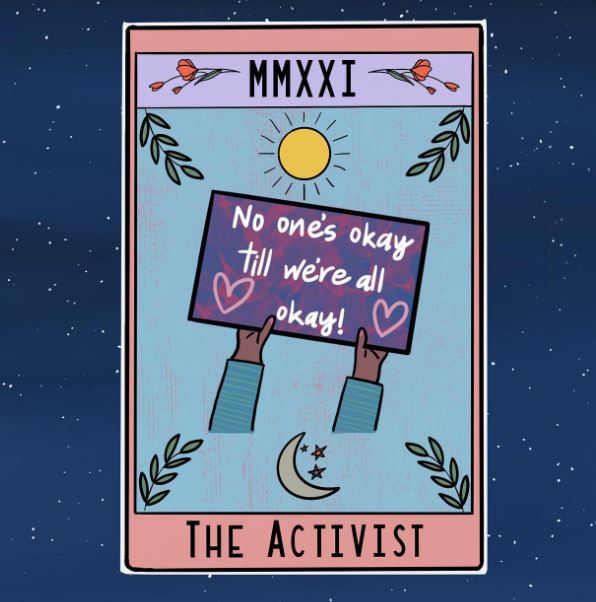
The second part of the book considers how already existing inequalities have been intensified throughout the pandemic in policing, law and immigration. Our very own @paulsquaredd contributed a chapter on the policing of protests during the pandemic, drawing on race in the Black Lives Matter protests and gender in relation to Sarah Everard. As my colleagues and students might expect, I wrote about the treatment of asylum seekers during the initial lockdown periods with a focus on the shift from secure and safe self-contained housing to accommodating people seeking safety in hotels.
Part three considers what happens to the dead in a pandemic and draws heavily on the experiences of crematoria and funerary workers and how they cared for the dead in such difficult circumstances. This part of the book sheds light on some of the forgotten essential workers during the pandemic. During lockdown, we clapped for NHS workers, empathised with supermarket workers and applauded other visible workers but there were many less visible people doing valuable unseen work such as caring for the dead. When it comes to death society often thinks of those who cared for them when they were alive and the bereaved who were left to the exclusion of those who look after the body. The section provides some insight into these experiences.
Moving through the journey of life and death in a pandemic, the fourth section focusses on questions of commemoration, a process which is both personal and political. At the heart of commemorating the COVID-19 dead in the UK is the National COVID Memorial Wall, situated facing parliament and sat below St Thomas’ hospital. In a poignant and political physical space, the unofficial wall cared for by bereaved family members such as Fran Hall recognises and remembers the COVID dead. If you haven’t visited the wall yet, there will be a candlelit vigil walk next Wednesday, 29th March at 7pm and those readers who live further afield can digitally walk the wall here, listening to the stories of bereaved family members as you navigate the 150,837 painted hearts.

The final part of the book both reflects on the mistakes made and looks forward to what comes next. Can we do better in the next pandemic? Emergency planner Matt Hogan presents a critical view on the handling of the pandemic, returning to the refrain, ‘emergency planning is dead. Long live emergency planning’. Lucy Easthope is equally critical, developing what she has discussed in her book When the Dust Settles to consider how and what lessons we can learn from the management of the pandemic. Lucy calls out for activism, concluding with calls to ‘Give them hell’ and ‘to shout a little louder’.
Concluding in his afterword, Gary Younge suggests this is ‘teachable moment’, but will we learn?
When This is Over: Reflections on an Unequal Pandemic is published by Policy Press, an imprint of Bristol University Press. The book can be purchased directly from the publisher who offer a 25% discount when subscribing. It can also be purchased from all good book shops and Amazon.

 Thoughts from the criminology team