
Home » Homophobia
Category Archives: Homophobia

Realtopia?

I have recently been reading and re-reading about all things utopic, dystopic and “real[life]topic” for new module preparations; Imagining Crime. Dystopic societies are absolutely terrifying and whilst utopic ideas can envision perfect-like societies these utopic worlds can also become terrifying. These ‘imagined nowhere’ places can also reflect our lived realities, take Nazism for an example.
In CRI1009 Imagining Crime, students have already began to provide some insightful criticism of the modern social world. Questions which have been considered relate to the increasing use of the World Wide Web and new technologies. Whilst these may be promoted as being utopic, i.e., incredibly advanced and innovative, these utopic technological ideas also make me dystopic[ly] worry about the impact on human relations.
In the documentary America’s New Female Right there are examples of families who are also shown to be using technology to further a far right utopic agenda. An example includes a parent that is offended because their child’s two favourite teachers were (described as being) ‘homosexuals’, the parents response to this appeared to be taking the child out of school to home school the child instead, but also to give their child an iPad/tablet screen to use as a replacement for the teachers. Another example consisted of a teen using social media to spread far right propaganda and organise a transphobic rally. In the UK quite recently the far right riots were organised and encouraged via online platforms.
I would not advise watching the documentary, aside from being terrifying, the report and their team did very little to challenge these ideas. I did get the sense that the documentary was made to satisfy voyeuristic tendencies, and as well as this, it seems to add to the mythical idea that far right ideology and actions only exists within self identified far right extremist groups when this is not the case.
Mills (1959) suggests that people feel troubled if the society in which they live in has wide scale social problems. So might the unquestioning and increased use of technologies add to troubles due to the spreading of hate and division? And might this have an impact on our ability to speak to and challenge each other? Or to learn about lives different to our own? This reminds me of Benjamin Zephaniah’s children’s book titled People Need People (2022), maybe technologies and use of the internet are both connecting yet removing us from people in some way.
References
Mills, C. W. (2000) The Sociological Imagination. Fortieth anniversary edition. Oxford: Oxford University Press.
Zephaniah, B. (2022) People Need People. (London: Orchard Books)
Share this:


Victims of Domestic Violence Repeatedly Failed by UK Police Forces

On the last day of August 2024 I was invited to an event focused on “Victims of Domestic Violence Repeatedly Failed by UK Police Forces” held at Fenny Compton Village Hall. The choice of venue was deliberate, it was the same venue where Alan Bates brought together for the first time, just some of the many post-masters/mistresses impacted by, what we now recognise as, Britain’s largest miscarriage of justice. This meeting demonstrated that rather than one or two isolated incidents, this was widespread impacting 100s of people. Additionally, the bringing of people together led to the creation of the Justice for Sub-Postmasters Alliance [JFSA], a collective able to campaign more effectively, showing clearly that there is both strength and purpose in numbers.
Thus the choice of venue implicitly encouraged attendees to take strength in collectivity. Organised by three women who had lost daughters and a niece who instinctively knew that they weren’t the only ones. Furthermore, each had faced barrier after barrier when trying to find out what had happened to their loved ones leading up to and during their deaths. What they experienced individually in different areas of the country, shared far more commonality than difference. By comparing their experiences, it became clear that their losses were not unique, that across the country and indeed, the world, women were being subjected to violence, dying, grieving and being subjected to organisational indifference, apathy, if not downright institutional violence.
At the event, woman after woman, spoke of different women, very much loved, some had died, some had fled their violent partners (permanently, one hopes) and others who were still trapped in a living hell. Some spoke with confidence, others with trepidation or nerves, all filled with anguish, passion and each determined to raise their voices. Again and again they detailed their heartbreaking testimony, which again showed far more commonality than difference:
- Women being told that their reporting of domestic abuse incidents may make things much worse for them
- Evidence lost or disposed of by police officers
- Corrupted or deleted body worn camera footage
- Inability or unwillingness to recognise that domestic abuse, particularly coercive behaviour escalates, these are not separate incidents and cannot be viewed in isolation
- Police often dismissing women’s reports as examples of “minor” or “borderline” domestic abuse, when as detailed above, individual incidents in isolation do not reflect the lived experience
- History of domestic abuse ignored/disregarded whether or not recorded by the police
- Victims of domestic abuse being asked for forensic levels of detail when trying to report
- Victims of domestic abuse being incorrectly refused access by the police to access to information covered by Clare’s Law (Domestic Violence Disclosure Scheme)
- The Domestic Abuse, Stalking and Honour Based Violence [DASH} forms treated as tick box exercise, often done over harried phone calls
- Victims of domestic violence, criminalised when trying to protect themselves and their children from violent partners
- When escaping from violent relationships women are placed in refuges, often far from their support networks, children move schools losing their friendship circles and breaking trusted relationships with teachers
- Suicide not investigated according to College of Policing own guidance: Assume Nothing, Believe nobody, Challenge everything!
- Police failing to inform the parents of women who have died
- Dead women’s phones and laptops handed over to the men who have subjected them to violence (under the guise of next-of-kin)
- The police overreliance on testimony of men (who have subjected them to violence previously) in relation to their deaths
- Challenges in accessing Legal Aid, particularly when the woman and children remain in the family home
- The lack of joined up support, lots of people and charities trying to help on limited resources but reacting on an ad hoc basis
- The police would rather use valuable resources to fight victims, survivors and their families’ complaints against them
The above is by no means an exhaustive list, but these issues came up again and again, showing clearly, that none of the women’s experiences are unique but are instead repeated again and again over time and place. It doesn’t matter what year, what police force, what area the victim lived in, their education, their profession, their class, marital status, or whether or not they were mothers. It is evident from the day’s testimony that women are being failed not only by the police, but also the wider Criminal Justice System.
Whilst the women have been failed, the criminologist in me, says we should consider whether the police are actually “failing” or whether they are simply doing what they were set up to do, and women are simply collateral damage. Don’t forget the police as an institution are not yet 200 years. They were set up to protect the rich and powerful and maintain control of the streets. Historically, we have seen the police used against the population, for example policing the Miners’ Strikes, particularly at Orgreave. More recently the response to those involved in violent protest/riots demonstrates explicitly that the police and the criminal justice system can act swiftly, when it suits. But consider what it is trying to protect, individuals or businesses or institutions or the State?
The police have long been faced by accusations of institutional racism, homophobia and misogyny. It predominantly remains a institution comprised of white, straight, (nominally) Christian, working class, men, despite frequent promises to encourage those who do not fit into these five classifications to enlist in the force. Until the police (and the wider CJS) are prepared to create a less hostile environment, any attempt at diversifying the workforce will fail. If it continues with its current policies and practices without input from those subjected to them, both inside and outside the institution, any attempt at diversifying the institution will fail. But again we come back to that word ‘failure’, is it failing if the institution continues to maintain the status quo, to protect the rich and powerful and maintain control of the streets?
But does the problem lie solely with the police and the wider criminal justice system, or are we continually failing as a society to support, nurture and protect women? Take for example Hearn’s astute recognition that ‘[f]or much too long men have been considered the taken-for-granted norm against which women have been judged to be different’ offers an alternative rationale (1998: 3).Many scholars have explored language in relation to women and race, identifying that in many cases the default is understood to be a white male (cf. de Beauvoir, 1949/2010, Lakoff, 1973, Spender, 1980, Eichler, 1988/1991, Penelope, 1990, Homans, 1997). As de Beauvoir evocatively writes, ‘humanity is male and man defines woman not in herself, she is not regarded as an autonomous being […] He is the Subject; he is the Absolute. She is the Other’ (de Beauvoir, 1949/2010: 26). Lakoff (1973) also notes that the way in which language is used both about them and by them, disguises and enables marginalisation and disempowerment. Furthermore, it enables the erasure of women’s experience. The image below illustrates this well, with its headline figure relating to men. Whilst not meaning to dismiss any violence, when women’s victimisation far outweighs that faced by men, this makes no logical sense.

Nevertheless, we should not forget men as Whitehead dolefully concludes:
‘to recognize the extent and range of men’s violences is to face the depressing and disturbing realization that men’s propensity for cruelty and violence is probably the biggest cause of misery in the world (2002: 36).’
Certainly numerous authors have identified the centrality of men (and by default masculinity) to any discussion of violence. These range from Hearn’s powerful assertion that it is ‘men [who] dominate the business of violence, and who specialize in violence’ (1998: 36) to Mullins (2006) suggestion that women act as both stimulation for men’s violence (e.g. protection) and as a limiter. Certainly, Solnit perceptively argues that armed with the knowledge that men are responsible for far more violence, it should be possible to ‘theorise where violence comes from and what we can do about it a lot more profoundly’ (2014: 25).
All of the challenges and barriers identified on the day and above make it incredibly difficult, even for educated well-connected women to deal with, this is compounded when English is not your first language, or you have a visa dependant on your violent partner/husband, or hold refugee status. As various speakers, including the spokeswoman for Sikh Women’s Aid made clear, heritage and culture can add further layers of complexity when it comes to domestic abuse.
Ultimately, the event showed the resilience and determination of those involved. It identified some of the main challenges, paid tribute to both victims and survivors and opened a new space for dialogue and collective action. If you would like to keep up with their campaign, they use the hashtag #policefailingsuk and can be contacted via email: policefailings.uk@yahoo.com
References
de Beauvoir, Simone, (1949/2010), The Second Sex, tr. from the French by Constance Borde and Sheila Malovany Chevalier, (New York: Vintage Books)
Eicler, Margrit, (1988/1991), Nonsexist Research Methods, (London: Routledge) (Kindle Version)
Hearn, Jeff, (1998), The Violences of Men, (London, Sage Publications Ltd)
Homans, Margaret, (1997), ‘“Racial Composition”: Metaphor and the Body in the Writing of Race’ in Elizabeth Abel, Barbara Christian and Helene Moglen, (Eds), Female Subjects in Black and White, (London: University of California Press): 77-101
Lakoff, Robin, (1973), ‘Language and Woman’s Place,’ Language in Society, 2, 1: 45-80
Mullins, Christopher W., (2006), Holding Your Square: Masculinities, Streetlife and Violence, (Cullompton: Willan Publishing)
National Centre for Domestic Violence, (2023), ‘Domestic Abuse Statistics UK,’ National Centre for Domestic Violence, [online]. Available from: https://www.ncdv.org.uk/domestic-abuse-statistics-uk/ [Last accessed 31 August 2024]
Penelope, Julia, (1990), Speaking Freely: Unlearning the Lies of the Fathers’ Tongues, (New York: Pergamon Press)
Solnit, Rebecca, (2014), Men Explain Things to Me, (London: Granta Publications)
Spender, Dale, (1980), Man Made Language, (London: Routledge and Kegan Paul)
Whitehead, Stephen M., (2002), Men and Masculinities, (Cambridge: Polity Press)
Share this:

For years I’ve participated in my own oppression
I’d shout out against hate in public, but in private spaces I sat silent as homophobic slights and slurs came at me from people who said they cared for me.
I grinned and accepted the kindness of colleagues when they have said that their faith does not condone my “lifestyle,” telling myself kindness was a lifestyle as much as hypocrisy.
I tolerated students who sat in my office accepting my extra time and unpaid assistance,
Even when they’ve said, “hate the sin, love the sinner,” to my face.
I’ve been patient and listened deeply to my own students – beyond the call of duty –
Even when the very same folks used anti-gay slurs in my presence because their faith said so.
I remained silent even when I’ve seen those folks sin like nobody’s business.
I’ve waltzed quietly past openly anti-gay church groups passing out fliers of their flock, when I know plenty-o-gay folks who’ve barely survived growing up inside those hate cults.
I’ve walked by entire groups of people who look like me, holding my head high and pretending not to hear their snide comments about my lack of gender conformity.
I’ve been the only openly queer person in crowds of Black people, and
One of few Black people in entire crowds of queer folks, and
Accepted mere tolerance in place of respect, and
Refused to speak up against stereotypes about people like me in all these spaces, and
Acted like it didn’t matter.
It mattered.
It mattered each and every time, but
I covered my wounds, and
I learned to heal quickly, and
I kept moving so quickly that
Folks couldn’t see my feet shifting, and
I kept telling myself “It’ll be ok,” just because it gets better.
Life has gotten better, and
Allyship is real, and
Folks have stood by me in dark and in light, and
Friends have held my hand in my times of despair, so
Still I rise.
But even then, I’ve starred in my very own version of imitation of life.
I pretended that words didn’t hurt because I’m an adult, and
A role model to the youth I serve.
I’ve acted like I didn’t hear youth laugh and snicker as soon as I entered the room.
I heard.
I’ve acted like I didn’t see their parents side-eye me as I walked by.
I saw.
I acted like I didn’t care as some kid called me a sissy as I walked into the mall.
I cared.
When a 12-year-old kid called me a homophobic slur in class,
I facilitated an age-appropriate discussion about bullying, and
Pushed the shame he caused to the back of my mind.
I didn’t want to embarrass my colleagues by bringing it up.
Words from 12-year-old kids aren’t supposed to penetrate adults’ souls.
When the latest daily news repeatedly targets people like me for exclusion,
I’ve pretended like our lives didn’t matter.
We matter.
Words aren’t supposed to hurt, and
Stares aren’t supposed to mean much, and
I’m supposed to have it all together.
Let hate “roll off of you like water off a duck’s back” would roll off my tongue as easily as I could bump-n-grind to Cardi B.
But there comes a point when silence suffocates.
One reaches a point when staying quiet is untenable.
My inaudible screams of terror only turned inwards and tore my own heart out.
Silence equals death.
For years, I’ve participated in my own oppression.
Share this:


Mundial: Why I won’t be watching the World Cup this time

It has been called the beautiful game; in the past even during war the opposing sides played a game; it has made some of its players stars and household names, football or soccer has a global appeal. From the townships in South Africa, to the Brazilian Favelas, the makeshift pitches the world over to the highly pristine pitches in academies, kids the world over learn to kick a ball, and play the game that requires speed, agility, and dexterity in the feet. Kids who just play for fun in an after-school club or to bond with friends. The appeal of this game has been intertemporal.
Generations of kids, begged their parents to stay longer out to play with their friends, asked for another ball, shoes or shorts and each family responded according to their means. After all, football is/was a working-class game. The relative low cost makes it accessible; it allows plenty of kids to play together and build relationships. Football was an equaliser that did not care who you are or where you come from.
I remember as a kid, year after year playing in the summer with the same kids in teams between Greek and Yugoslavians. We were keeping score and the losing side was buying the other side ice-creams. Not quite the golden ornate cup but a wager worth playing 10 games across the summer. We called each other’s teams with the name of the country we came from. My lasting memory was the last time we played together before the civil war in Yugoslavia erupted. The Yugoslavians won and they were chanting “Yugoslavia, Yugoslavia”. Those kids did not come the following summer. In the next summer, the same kids would be carrying the flag and arms of one of the opposing sides armed to kill each other. When football is not the game, disputes are resolved in brutality.
In the past decades, football’s appeal made it the game to watch. The transition to professional football made the game lucrative, some clubs acquired big budgets and of course attracted a finer audience. The pundits, as a former footballer put it, started eating “prawn sandwiches” an indication of their more expensive tastes. Still people stick with the sport because of their own memories and experiences. My first ever game was with my grandfather. We went to the stadium of the club that was to become the team I support for life. The atmosphere, the emotional roller coaster and most importantly a shared experience with someone very dear, that even when they are gone, you carry the sounds, the emotions with you forever.
Some footballers started earning enormous fees for playing the game; the club colours became trademarked and charged over the odds for a simple scarf or a top. The rights to the games sold to private companies requiring people to pay subscriptions to watch a simple game. People objected but continued still to support, although some people were priced out of the game altogether. The game endures because it still resonates with people’s experiences.
In particular, the national games have kept some of their original appeal of playing for your country, playing for your colours! Football is an unpredictable sport and in international events you can have an outsider taking the cup against the odds! Like Greece winning the UEFA Euro in 2004! The games in international tournaments leads to knock out games, with the drama of extra time and of course the penalty shootout. Nail biting moments shared with family and friends. These magical moments of personal and collective elevation, as if you were there with the players, part of their effort, part of their victory.
When the host country was announced some years ago that will be hosting this year’s world cup there were already calls for investigation into the voting process raising concerns. Since then, there have been concerns about the safety of those who work on the infrastructure. Thousands of migrant workers, many of whom are/were undocumented have worked in building the stadiums that the games will be played in. There are accusations of numerous deaths of migrant workers (an estimate from The Guardian comes to a staggering 6,500 deaths). This has raised a significant question about priorities in our world. It is unthinkable to put a game above human life. This was later followed by “the guidelines” to teams and visitors that alternative sexualities will not be tolerated. Calls about respecting the host’s culture adding to the numbers of people calling for a boycott. So why I won’t be watching this time around?
We have been talking for years about inclusivity and tolerance. Women’s rights, LGBTQ+, immigrant rights, worker rights and all of them being trampled for the sake of a competition. Those who have been asked about the issues from the football federation, former footballers and even governments have played down all these concerns. In some cases, they opted for a tokenistic move like rainbow-coloured planes or include the rainbow on national team logo. Others will be issuing rainbow bracelets and some saying that they will raise issues if/when given the opportunity. This sounds too little considering what has happened so far especially all the fatalities caused building all the constructions. If we are not to uphold civil rights and if we are not ready to act on them, why talk about them?
I remember the game for being inclusive and serving to get people together; this competition is setting an incredibly horrible precedent that human life is cheap and expendable; that people’s rights are negotiable and that you can stop being who you are momentarily, because the game matters more than any of the above. It does not! Without rights, without respect, without life there is no game, there is nothing, because there is no humanity. These games do not bother me, they offend me as a human being. If people died to build this stadium then this space is not fit for games; it’s a monument to vanity and greed; hardly sportsmanlike qualities.
Share this:


Jimmy Carr and Acceptable Racism
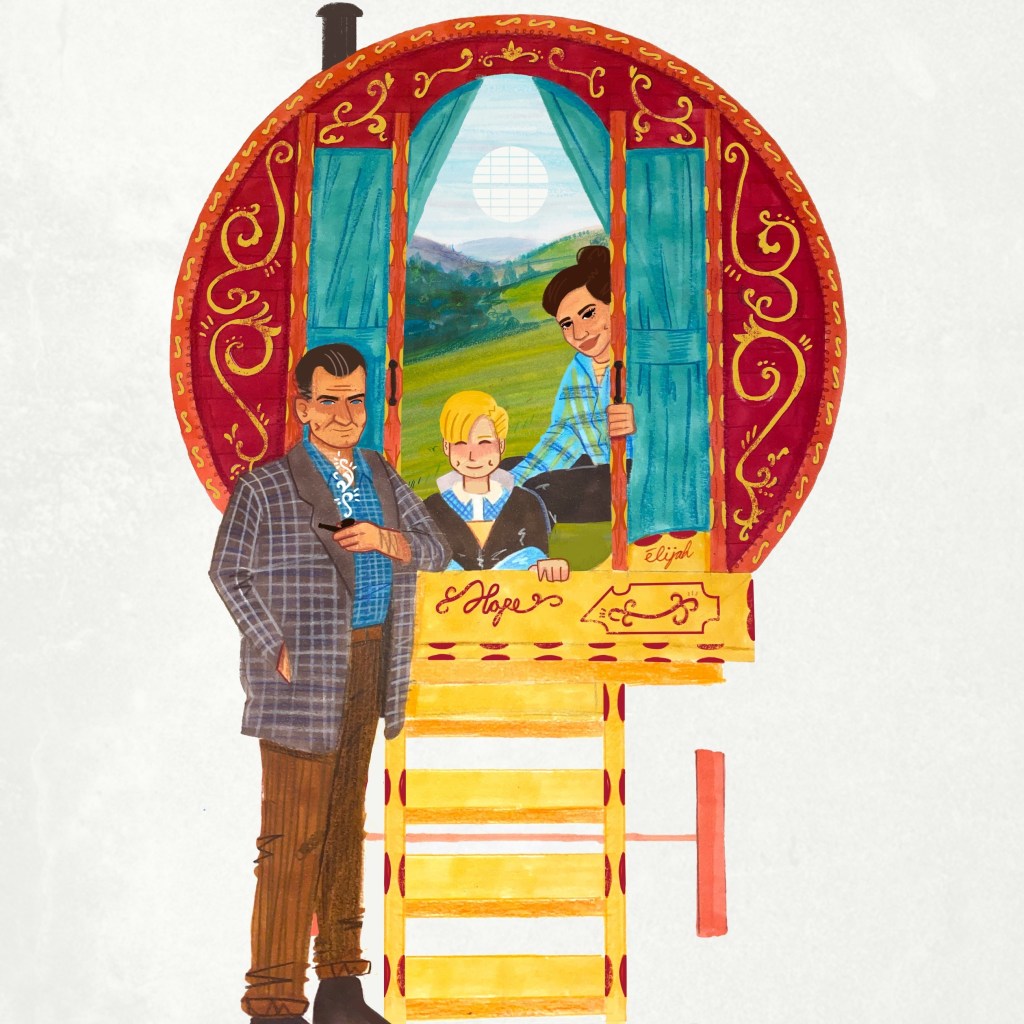
Jimmy Carr’s Dark Material stand-up comedy is the latest in a long line of everyday racism that has been subjected to a trial by Twitter. The context in which the joke is told is as follows:
A wealthy white gorger man mocks Roma and Sinti people because of who they are. His mostly white gorger audience than laughs and finds this hilarious. This man’s stand-up is so successful that it is endorsed by Netflix, of which the CEO appears to be a rich white gorger man. Both Jimmy Carr and Netflix profit from dehumanising a marginalised group of people.
If the joke had been delivered to audiences which were predominantly Gypsy Roma and Traveller people this would not have been viewed as funny. To adapt Emma Dabiri’s (2021, p. 98) work, ‘a ‘joke’ in which the gag is that the person is [a Gypsy, Roma or Traveller] isn’t a joke, it’s just racism disguised as humour’ (2021, p. 98).
Carr’s joke should not be surprising as he prides himself on his use of homophobic, racist and misogynistic ‘career ending’ jokes and these jokes are enjoyed by many.
The anti-racist Twitter reactions to this joke could provide some hope that many people are becoming more willing to challenge racism. Some Tweets were aimed at increasing the awareness and calling-out racism. Many Tweets were kind, and others were asking for Jimmy to provide a genuine apology. Although, Carr’s words (plus the support of the audience and Netflix) are a symptom of a racist society, so does the focus on Carr’s interpersonal actions mean that people are being distracted from the broader structural issues of racism and white supremacy?
After scrolling though Twitter there was a clear divide between those claiming to be ‘anti-racist’ and those claiming that ‘the freedom of speech’ is more important than combating racism. This left me thinking,
How do we get to a point where people are willing to recognise that oppressive systems impact us all, but differently, in some way shape or form?
And;
How could people be encouraged to fight against unequal and damaging systems in a way that encourages social change and forgiveness rather than hate and division?
It seems that online activism might be useful for raising awareness and giving voices to those pushed out of mainstream media. However, if focused on just ‘calling out’ individual acts of racism whilst online there is a danger of being caught up in an online culture war and not actually doing much to change structural issues in the offline world.
Whilst the Jimmy Carr Twitter debates continue, the Police, Crime, Sentencing and Courts Bill which could further damage Gypsy Roma and Traveller lives is in the final stages of Bill passage. As well as this, inequality and misery is set to become further entrenched with the impending surge in energy bills. All of this is thanks to a government which is a mess, corrupt and devoid of any sense of morality. Even so, maybe Jimmy Carr should stick to making jokes about his own experiences of upper class tax avoidance next time.
Note: Thank you to Emma Dabiri’s What White People Can Do Next (2021) for helping me to articulte my frustrations with online Twitter debates.
Share this:


How should we honour “Our sheroes and heroes”?*

The British, so it seems, love a statue. Over the last few months we’ve seen Edward Colston’s toppled, Winston Churchill’s protected and Robert Baden-Powell’s moved to a place of safety. Much of the narrative around these particular statues (and others) has recently been contextualised in relation to the Black Lives Matter movement, as though nobody had ever criticised the subjects before. Colston, one time resident of Bristol and slave-trader was deemed worthy of commemoration some 174 years after his death and 62 years after the abolition of slavery. Likewise, one-time military man, accused of war crimes, homophobe and support for Nazism, Baden-Powell suddenly needed to be memorialised in 2008, almost 70 years after the second world world (and his death) and over 40 years since the passing of the Sexual Offences Act 1967. For both of these men profound problems were clear before the statues went up. Churchill, seen as a “hero” by many for his leadership in World War II has a very unsavoury history which is not difficult to locate in his own writings. His rehabilitation also ignores that his status for many of his contemporaries was as a warmonger. His passion for eugenics and his role in decisions to bomb Dresden, Hiroshima and Nagasaki can be wilfully swept under the carpet. Hero-worship is a dangerous game, it is also anti-intellectual. Churchill, like all of us, was a complex human, thus his legacy needs to be explored deeply and contextualised and only then can we decide what his place in his history should be. His statues and soundbites from speeches on repeat, do not allow for this.
Perhaps the most interesting part of this debate is to witness the inflamed defence of individuals who have a clearly documented history as slave owners, or as enthusiastic proclaimers of eugenic ideology, racism, homophobia and so on. As long as they have been ascribed “hero” status, we can ignore the rest of the seedy detail. We are told we need these statues, these heroic men, to remind us of our history….strangely Germany is able to reflect on its history, without statues of Hitler.

It seems as a nation we far prefer these individuals, responsible for so much misery, harm and violence in their lifetimes, than to present Black Britons and British Asians on a plinth. When we are reliant on South African President, Nelson Mandela to take up two of those London plinths, it is evident we have a serious racial imbalance in those “we” choose to commemorate.
Furthermore, the British appear to love an argument about statues, for instance, the criticism levelled at the artist Maggi Hambling’s statue to “Mother of Feminism” Mary Wollstencraft and Martin Jenning’s artistic tribute to Nurse Mary Seacole. For Wollstencroft, much of the furore has been directed at the artist, rather than the subject. There appears to be no irony in women attacking other women, in this case, Hambling, all in the name of supposed defence of The feminism. In the case of Mary Seacole, racially infused arguments from The Nightingale Society have suggested that this statue should not be in sight of that of Florence Nightingale. It seems that even when all important parties are long dead, it is deemed appropriate to use barely disguised racism to protect the stone image of your heroine. Important to remember that patriarchy has no gender. It is evident that criticism revolves around women’s representation in statuary, as well as women’s involvement in sculpture. When statues of men are said to outnumber those of women by around 16 to 1 (and that’s only when Queen Victoria is counted) it is evident we have a serious gender imbalance in those “we” choose to commemorate.
If there’s one thing the British love more than statues, it’s war commemorations. Think of the Cenotaph, standing proud in Whitehall, a memorial to ‘The Glorious Dead’ of firstly, World War I and latterly, British and Commonwealth military personnel have died in all conflicts.

Close by in Park Lane, we even have the imagination to create a memorial to Animals in War. We love to worship at these altars to untold misery and suffering, as if we could learn something important from them. Unfortunately, the most important message of “Never Again” is lost as we continue to thrust our military personnel and their deadly arsenal all over the world.
There is a strong argument for commemorating the war dead of all nations in the two World Wars. All sides, both central powers/axis and allies were comprised in the main of conscripted personnel. These were men and women that did not join the armed forces voluntarily, but were compelled by legislation to take up arms. With little time to consider or prepare, these people, all over the world, were thrust into life-threatening situations, with little or no choice. The Cenotaph and other war memorials mark this sacrifice and to some degree, acknowledge the experiences of those who served in a uniform that they did not consent to, without the compulsion of legislation. Unfortunately, civilians don’t feature so heavily in memorialisation, yet we know they experienced life-changing events which have repercussions even today. From children who were evacuated, to families who experienced fathers and husbands with short fuses, to those whose fear of hunger has never really left them, those experiences leave a mark.
To me, as a nation it appears that we don’t want to engage seriously with our history, preferring instead a white-washed, heteronormative, male-dominated, war-infused, saccharine sweet, version of events. But British people, both historically and contemporaneously, are a diverse and disparate group, good, bad and indifferent, so surely our statues should reflect this?
I recognise the violence which runs throughout British history, I learnt it, not through statues, but through books and oral testimony, through documentary and discussion. I also recognise that I have only begun to explore a history that silences so very many, making any historical narrative, partial, poignant and heavy with the missing voices. I recognise the heavy burden left by slavery, discrimination, war and other myriad violences, understanding the desire to commemorate and celebrate and tear down and replace.
What we need is a statue that recognises all of us, in all shapes and sizes, warts and all? We are living in a global pandemic, the death toll is currently standing at over 2.5 million. In the UK alone, the death toll stands at close to 100,000. Why not have a memorial with all those names; men, women, children, Black, white, Asian, mixed heritage, Muslim, Catholic, Buddhist, Christian, atheists, gay, straight, trans, lesbian, young, old and all those in between. People that have been coerced, through financial impetus, caring responsibility, career or vocation into dangerous spaces, who have not chosen to sacrifice their lives on the altar of bad decisions taken by governments and institutions (reminiscent of the world wars). Such a commemoration would be a way to recognise the profound impact on all of our lives, as drastic as any world war. It will recognise that you don’t have to wear a uniform or conform to a particular ideal to be of value to Britain and every person counts.
* Title borrowed from ‘Our sheroes and heroes’ (Maya Angelou ; interviewed by Susan Anderson in 1976)
Share this:


“A small case of injustice”

Pride as a movement in the UK but also across the world signals a history of struggles for LGBTQ+ community and their recognition of their civil rights. A long journey fraught with difficulties from decriminalisation to legalisation and the eventual acceptance of equal civil rights. The movement is generational, and in its long history revealed the way social reactions mark our relationship to morality, prejudice, criminalisation and the recognition of individual rights. In the midst of this struggle, which is ongoing, some people lost their lives, others fell compelled to end theirs whilst others suffer social humiliation, given one of the many colourful pejoratives the English language reserved for whose accused or suspected for being homosexuals.
This blog will focus on one of the elements that demonstrates the relationship between the group of people identified homosexual and the law. In sociological terms, marginalised groups, has a meaning and signals how social exclusion operates against some groups of people, in these case homosexuals but it does apply to any group. These groups face a “sharper end” of the law, that presumably is equal to all. This is the fallacy of the law; that there are no inherent unfairness or injustice in laws. The contention for marginalised groups is that there are presumptions in the law on purported normality that disallows them to engage fully with the wider community in some cases forced to live a life that leads all the way to segregation.
Take for example “entrapment”. Originally the practice was used by law enforcement officers to identify counterfeit money, later to investigate the sales of untaxed tobacco or the use of unlicensed taxis. The investigation in law allows for the protection of the public, non uniform officers to pose as customers in order to reveal criminalities that occur in the dark corners of society. The focus predominantly was to protect consumers and the treasury from unpaid tax. So, from that how did the law enforcement officers use it to arrest homosexuals? It is interesting to note we can separate the letter of the law as opposed to the spirit of the law. This distinction is an important one criminologically whilst for the law enforcement agencies evidently there is no such distinction.
The most recent celebrity case led to the arrest of George Michael in Los Angeles, US; the operation led to the outing of the artist and his conviction. As a practice across many years, entrapment played a significant part in the way numerous homosexuals found themselves arrested given a criminal record, loss of employment and in some cases ending up in prison. It is important to note that prior to the Sexual Offences Act of 1967, the biggest sexual crime in England and Wales was that of homosexuality (recorded as indecency or buggery). It took decades for that statistic to change, although historically remains still the highest category.
The practice of entrapment employed by the police demonstrates the uphill struggle the LGBTQ+ community faced. Not only they had to deal with social repulsion of the wider community that detested, both their practices and their existence, but also with public officials who used entrapment to criminalise them. This was happening whilst the professionals were divided about the origins of homosexual “anomaly” and how to deal with it, the practice of entrapment added new convictions and supplied more humiliation to those arrested. For the record, the criminological community was split along theoretical lines on this; the classicists such as Bentham argued for the decriminalisation of sodomy whilst the positivists namely Lombroso considered homosexuals to be in the class of moral criminals (one of the worst because they are undeterred) .
The issue however is neither theoretical, nor conceptual; for those who were aware of their sexuality it was real and pressing. During the post WWII civil rights movement, people started taking note of individual differences and how these should be protected by privacy laws allowing those who do not meet the prescribed “normal” lifestyles to be allowed to live. It emerged that people who were successful in their professional lives, like Alan Turing, John Forbes Nash Jr, John Gielgud etc etc, found themselves facing criminal procedures, following string operations from the police. This injustice became more and more evident raising the profile of the change in the law but also in the social attitudes.
In 2001 Lord Nicholls of Birkenhead addressed the issue of entrapment head on. In his judgement in Regina v Looseley:
“It is simply not acceptable that the state through its agents should lure its citizens into committing acts forbidden by the law and then seek to prosecute them for doing so. That would be entrapment. That would be a misuse of state power, and an abuse of the process of the courts. The unattractive consequences, frightening and sinister in extreme cases, which state conduct of this nature could have are obvious. The role of the courts is to stand between the state and its citizens and make sure this does not happen.”
This was the most damming condemnation of the practice of entrapment and a vindication for all those who faced prosecution as the unintended consequence of the practise. For the record, in 2017 under the Policing and Crime Act, included the “Alan Turing law” that pardoned men who were cautioned or convicted for historical homosexual acts. The amnesty received mixed reviews and some of those who could apply for denied doing so because that would require admission of wrongdoing. The struggle continues…
Regina v Looseley, 2001 https://publications.parliament.uk/pa/ld200102/ldjudgmt/jd011025/loose-1.htm
Share this:


Mourning Travel. #BlackenAsiaWithLove
Mourning Travel.
One of the first casualties of Corona was travel. Nations immediately began controlling the flow of people in and out of ever-broader borders. First neighborhoods, then cities, regions, and countries all closed. As fear of the virus spreading spread, different parts of the world became associated with Corona, though bullheaded public figures even continued to call it “Chinese”
A few years ago, I got a 10 -year visa to China through work and had planned to travel there much more than time has allowed. Now, I am fearful of ever traveling there before my visa expires. I am unable to accept the many invitations to connect with my previous students who’ve returned to China and know of my interest in the region’s cultures. I have been to southern China on several study trips with students. We finally ventured to Beijing and its wonders on a later trip. Naturally, I did my happy dance when I reached a peak on the Great Wall just a few years ago. I am now on sabbatical in Hanoi, just released from lockdown.
It was a lifelong dream to visit China, I was raised on my godmother’s stories about growing up in Hong Kong, savoring the flavors of her homeland in her kitchen in Kentucky. I knew I had to see for myself. As a kid, she and I would go on shopping day-trips to Chicago’s Chinatown, a 7-hour drive each way. For those few hours in Chi-town, we’d be transported to a world where finally she was the insider. She spoke for hours in several dialects with all the people around that I didn’t understand, and we even browsed restaurants that resembled what she’d told me home was like. We’d go in and eat not from the tourist but from the Chinese menus – foods that were not nearly available in Kentucky.
Kentucky is pretty black and white, but there, in the heart of Chinatown, in the heartland of America, smack in the middle of the 80’s, I got to experience my godmother being in the majority. Growing up close to my godmother confirmed I could experience more freedom through travel. This was a key insight into the world for a gay kid growing up in the Bible Belt; I could just go away. Travel has always exposed me to new ways of being in the world.

Pride, Nehru Park, New Delhi 2008
“You’ve got to go to the city/They’re going to find you there…” -Flawless, George Michael
Travel is essential for the development of a healthy self-identity as a queer person. ‘Travel’ is, in fact, inseparable from the notion of a gay community. This is exemplified by having to leave our homes and communities to commune with others queers, and certainly the richness of gay tourism. One might also consider how gay identity uniquely depends on the very idea of gayness traveling far and wide to enter the minds of gays isolated everywhere.
Knowing gay people is a primal impetus for me to travel. Rather than just seeking to know ‘different’ people, places and cultures, I crave knowing how people like me thrive in those places. We’re everywhere.
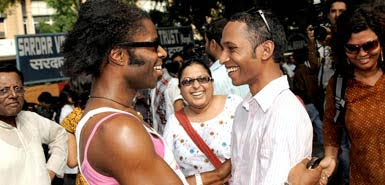
Celebrating India’s decriminalization!
It has always struck me that as queer people of color, we too often must venture outside our ethno-cultural communities to meet gay people. I came out at 16 and by then only knew gays within my age-group. Fortunately, in that era of grand community building, a local charity had organized a gay youth group. There, in addition to comradery, the adult facilitation and guest speakers provided mentorship and what we now understand as inter-generational knowledge. They also alerted me to queer writers: Through Sister Outsider, I’d traveled around the world with Audre Lorde long before I stepped foot outside of north-America. This is a powerful glue that can sustain solidarity within any community.
By attempting to transport certain functions of the gay club scene into the virtual world, we have certainly lost a core opportunity for inter-generational bonding. The ominous gay club also functions as a platform for the exchange of knowledge and experience. This phenomenon is sustained by travel, particularly tourism, migration, immigration. Or, how long did it take for nations to consider asylum for queers fleeing in deadly homophobic regimes? Flawless:
Don’t you know, you’ve got to go to the city
You’ve got to reach the other side of the glass
I think you’ll make it in the city baby
I think you know that you are more than just
Some F-ed up piece of ass
Pride – both metaphorically and literally – has circulated the globe, first and foremost through travel and tourism, then through globalizing the fight against AIDS. By the mid-90’s, the attention of gay rights advocates had widened to confronting homophobia. If health was a human right, then surely freedom from stigma is, too. Mind you, this same argument fueled the successful campaign in India to decriminalize same-sex sex, which was based on colonial legislation. Rights advocates in India had successfully used case law to articulate access to healthcare as a civil right, showing how stigma impeded this for queers.
Sadly, the exact same Victoria-era law has been strengthened and extended in many African nations, legitimizing jungle justice! For many, travel is a lifeline, including asylum. For queers in the African Diaspora, this is yet another form of exile – banishment from the motherland.
Under the bridge downtown…
If there were ever a community consumed with travel, it would be LGBTQ+ folk. Our folk knowledge is transmitted in myth and music, for example, lyrics urging gays to head to the shelter of the city. Whether chants about finding a YMCA, or told to Go West to be “together” in the sanctuary, mythical San Francisco, for gays to achieve self-realization, we needed to ‘know’ urban life to counter traditional values in the homestead. “I think you’ll make it in the city, baby.” There -away- we’re promised a new beginning with freedom. I’m very proud to have seen this through.
Gay civil rights have advanced globally far faster than those of any other recognized minority group, and certainly, one factor is… (drumroll) …we’re everywhere, even where there’s no Pride! Like ether, our pride travels through the stratosphere.
Share this:


A song for Terry. #BlackenAsiaWithLove
A song for Terry.
Terry was just six when he died.
Not a long time spent on this Earth,
But enough to make himself known to the universe.
There were many obstacles in life waiting for boys like Terry.
If life is a vast ocean, then he only sailed a meager ferry.
Terry was born in a place, in a time and
In a body that didn’t count much –
A poor, southern Black boy and such.
He was loved, for sure,
I’d see his grandmother kiss him every morning,
As she sent Terry off to school.
Like mine,
Terry’s household didn’t look like those on TV.
None of ours did.
There weren’t any of those Cosby kids.
But Terry was like my brother, my dear friend.
I looked forward to walking to school with Terry each day.
He always had something interesting to say.
Terry and I were in the same class.
He lived across the street,
And our school was just a few blocks away.
There and back,
I wanted to be by his side.
Sometimes I would walk to my grandparents’ after school,
And momma would pick me up after work.
No sooner did we get home and settled did I ask to go outside and play,
With Terry.
Our story was short-lived.
Two kids on the block,
On the poor side of town,
We lived cocooned in a world of luxury:
We were cared for and we were safe.
Everyone on the block looked out for all the kids;
There were no strangers around home base.
But, we also lived
In a time and place of misery,
Where things like poverty,
Would determine your destiny,
And all the dreams we would dream,
Would have to fight the sun to live.
A handsome little brown boy,
And a finely picked mini ‘Fro.
An easy smile,
And an easy-going way about him.
Terry was a nice guy.
And did I mention he was loved?
He was not the most popular kid in class –
Naw, everybody feared that guy!
Terry was the one everyone liked.

For Valentine’s day,
The whole class exchanged heart-shaped candies and notes with one another-
All in pink, my favorite color.
My one time of year to shine!
I was so excited to choose one especially for Terry, my brother:
Will you be my Valentine?
Even the teacher got along with him.
Terry never got in trouble.
He got sad-eyed when any of us got marched off to get paddled.
At lunch, I’d always sit with Terry.
Terry got free lunch, and
Peanut butter and jelly is what I got when momma packed mine!
We’d hurry to the front of the line,
And finish our food quickly,
So we could go to the play area the rest of the time.
I didn’t like milk, but Terry did.
And he didn’t care for apple sauce, but I did.
Sometimes we’d split:
Half a piece of pizza for half my sandwich.
We’d trade.
We didn’t keep score, but
We were always even.
There, right in the middle of the cafeteria,
Smack in the middle of the school,
Was a large, carpeted recreational area.
There, we’d play and everything was cool.
After lunch, but also before and after school,
We could climb and crawl,
Spin and jump,
Run and hide,
Seek and find,
And holler as loud as we’d want.
Teachers would monitor from nearby, but
They left us alone and took their break-time.
Our teachers would even rotate who had this monitoring job to do.
We weren’t a rowdy bunch,
So, there were no fights to break-up.
There were neither hoops nor balls to tussle over.
No nets, no bats –
No competition and all that.
Just a space…
Where us kids could be free.
We were free.
Terry died in the middle of first grade.
We had found out from our teacher that Terry was sick,
We’d all heard of sickle cell, many in our own families, like mine.
But none of us knew what it means.
We knew Terry was not always sturdy.
One time he’d had a bad bout with asthma.
Our teacher helped him take his inhaler,
That she’d showed us where it was kept in her desk drawer.
Now, she was telling us that Terry was just spending a few days in the hospital.
The whole class avidly awaited Terry’s return.
She didn’t know more than that,
I needed to know when Terry’d be back.
I knocked on his door, one day
On the way home from school,
To tell his grandmother I hoped Terry’d be ok.
I knew my grandmother would be heartbroken if anything like that happened to one of us.
Kids that little aren’t supposed to die.
Not here, and not of diseases we can’t even see.
Even at that age, I knew this just shouldn’t be.
And yet turn on the TV,
Every day we see signs and symptoms of little Black boys’ morbidity.
Whether from war or starvation in distant lands, or
Dilapidation and disease on these burning sands.
Just like what was happening to Terry:
A casualty of a neglectful society.
I didn’t get to mourn Terry,
Didn’t have some cathartic corral with our classmates about
The fun times we had or how much we missed him.
There was no school counselor coming to our class –
No one explaining the cycle of life, nor
Asking us about our feelings.
I knew how I felt.
I loved Terry, and knew the way I loved him was seen as peculiar;
I couldn’t let anyone know about this one-sided affair.
I was sad, and all this was unfair.
What would I say?
We were only 6 years old, and
Terry was the first boy I ever loved.
—
 In memory of Muhammed Ali, another Black boy who survived those same streets and corridors.
Share this:

The ‘other’ BBC worldservice. #BlackenAsianWithLove
The ‘other’ BBC worldservice.
If you google “BBC+Mandingo,” please be aware that it is NSFW. Use your imagination. Now, imagine an auction block. Imagine a slave standing there. Breeding slaves underpinned the ‘white supremacist, capitalist, patriarchal’ system that placed their bodies upon that auction block. Hyper-sexualisation of Black bodies began right there. It is bell hooks’ Intersectionality lens that’s necessary for a holistic gaze upon consumer commodification.
Now, imagine that one Black boy in class, vying for attention just as any other adolescent, yet he’s got an entire multitude of hyper-sexualised images filling the heads of virtually everyone in the room. By the time they hit the locker-room, everyone is expecting to see this kid’s BBC. I’ve had many (non-Black) adults say that to me explicitly, inexplicably in any given situation where one might not otherwise imagine penis size would surface so casually in conversation. Hence, we can all imagine that with the crudeness of adolescent male vernacular: Your kid is asking my kid why his penis isn’t what all the rappers rap about. 
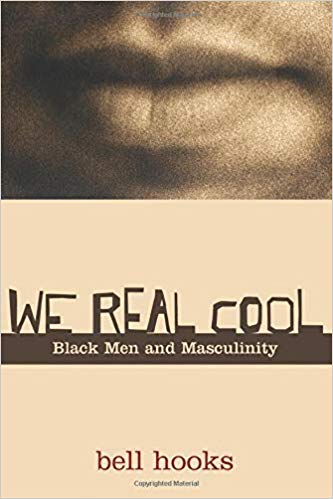
Why are so many commercially successful rappers’ fantasies reduced to “patriarchal f*cking?” Reading Michael Kimmel’s essay “Fuel for Fantasy: The Ideological Construction of Male Lust,” in her seminal book We Real Cool: Black Masculinity, bell hooks clarifies: “In the iconography of black male sexuality, compulsive-obsessive fucking is represented as a form of power when in actuality it is an indication of extreme powerlessness” (hooks: 67-8).
It’s auto-asphyxiation, a kind of nihilistic sadomasochism that says, if the world thinks of me as a beast, then a beast I shall be. Plenty of kids work this out by the time they hit the playground. “Patriarchy, as manifest in hip-hop, is where we can have our version of power within this very oppressive society,” explains writer/activist Kevin Powell (qtd. in hooks: 56). Ironically, Powell came to fame in the 90’s on MTV through the original reality show aptly entitled “The Real World.”
Plantation Politics 101
Since at least 2017, commercial rap has been the most widely sold musical genre; it’s pop. Beyond roughly 700,000 sales, Black people are not the primary purchasers of commercialised rap, as explained in the documentary Hip-Hop: Beyond Beats and Rhymes. It takes millions to earn ‘multi-platinum’ status. Yet, while created by and for Black and brown people in ghettoized communities, it has morphed into a transnational commodity having little to do with the realities of its originators, save for the S&M fantasies of wealth beyond imagination. And what do they boast of doing with that power, read as wealth? Liberating the masses from poverty? Intervening on the Prison Industrial Complex? Competing with the “nightmare” racist landlords like Donald Trump’s dad Fred? No! They mimic the very gangsters they pretend to be. Once Italian-Americans held hard that stereotype, but now it’s us. It’s always about power. Truly, ‘it’s bigger than Hip-Hop’.
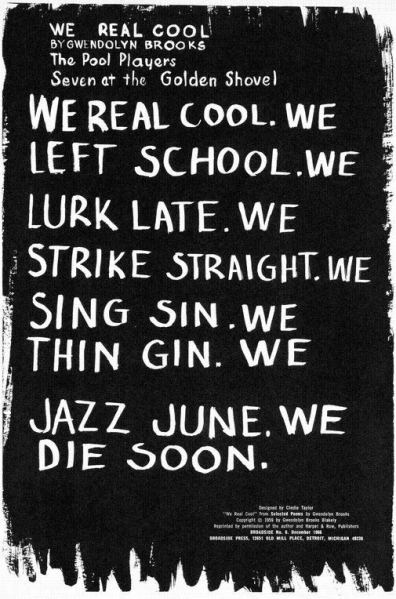 The more painful question few bother asking is why commercial rap music focuses so keenly on pimps, thugs, b*tches and whores? Like other commodities, commercial rap is tailored to the primary consumer base, which isn’t (fellow) Black people, but white youth. What is it about contemporary white youth that craves images of salacious, monstrous, licentious and violent Black people boasting about killing and maiming one another? Describing this mass commercial “Misogynistic rap music,” hooks states: “It is the plantation economy, where black males labor in the field of gender and come out ready to defend their patriarchal manhood by all manner of violence against women and men whom they perceive to be weak and like women” (hooks: 57-8). Plainly, the root of commercial rap’s global prominence is the reenactment of “sadomasochistic rituals of domination, of power and play” (hooks: 65).
Hyper-sexualisation is a form of projection onto Black people a mass white anxiety about our shared “history of their brutal torture, rape, and enslavement of black bodies” (hooks: 63). She goes on to explain: “If white men had an unusual obsession with black male genitalia it was because they had to understand the sexual primitive, the demonic beast in their midst. And if during lynchings they touched burnt flesh, exposed private parts, and cut off bits and pieces of black male bodies, white folks saw this ritualistic sacrifice as in no way a commentary on their obsession with black bodies, naked flesh, sexuality” (ibid). Hence the BBC obsession finds a consumer home safely in pop music!
“I am ashamed of my small penis,” a stranger recently mentioned to me in a grilled wing joint I happened upon here in Hanoi. The confession came from nowhere, having nothing to do with anything happening between us at the time. Is this the locker-room banter I always hear about? Are straight men really so obsessed with their penises? Given his broken English and my non-existent Vietnamese, I tried comforting him by explaining in the simplest terms the saying: “It’s not the size of the wave but the motion of the ocean.” Colloquialisms never translate easily, but I did at least deflect the subject away from ethno-sexual myths spread worldwide through contemporary consumer culture.
We’ve got to talk about ethno-sexual myths with openness, honesty and integrity. Silence is the master’s tool; silence = death! Further, echoing ‘black, lesbian, mother, warrior, poet’ Audre Lorde, ‘The master’s tools will never dismantle the master’s house”. I am Black in Asia, and there are perhaps no two groups of men at polar opposites of ethno-sexual myths. Like the hyper-sexualisation of women of colour, these myths reveal that neither Blackness nor Asianess is at the centre of these globally circulated myths. Hyper-sexual in comparison to who or what? Hegemonic heteronormative whiteness. Say it with me: Duh!
To get In-formation:
hooks, b. (2004) We Real Cool: Black Men and Masculinity. New York: Routledge.
Lorde, A. (1984) Sister Outsider: Essays and Speeches. Berkeley: Crossing Press.

 Thoughts from the criminology team