
Home » Homelessness
Category Archives: Homelessness

SUPREME COURT VISIT WITH MY CRIMINOLOGY SQUAD!

Author: Dr Paul Famosaya
This week, I’m excited to share my recent visit to the Supreme Court in London – a place that never fails to inspire me with its magnificent architecture and rich legal heritage. On Wednesday, I accompanied our final year criminology students along with my colleagues Jes, Liam, and our department head, Manos, on what proved to be a fascinating educational visit. For those unfamiliar with its role, the Supreme Court of the United Kingdom stands at the apex of our legal system. It was established in 2009, and serves as the final court for all civil cases in the UK and criminal cases from England, Wales, and Northern Ireland. From a criminological perspective, this institution is particularly significant as it shapes the interpretation and application of criminal law through precedent-setting judgments that influence every level of our criminal justice system

7:45 AM: Made it to campus just in the nick of time to join the team. Nothing starts a Supreme Court visit quite like a dash through Abington’s morning traffic!

8:00 AM: Our coach is set to whisk us away to London!
Okay, real talk – whoever designed these coach air conditioning systems clearly has a vendetta against warm-blooded academics like me! 🥶 Here I am, all excited about the visit, and the temperature is giving me an impromptu lesson in ‘cry’ogenics. But hey, nothing can hold us down!.

Picture: Inside the coach where you can spot the perfect mix of university life – some students chatting about the visit, while others are already practising their courtroom napping skills 😴
There’s our department Head of Departmen Manos, diligently doing probably his fifth headcount 😂. Big boss is channelling his inner primary school teacher right now, armed with his attendance sheet and pen and all. And yes, there’s someone there in row 5 I think, who’s already dozed off 🤦🏽♀️ Honestly, can’t blame them, it’s criminally early!
9:05 AM The dreaded M1 traffic
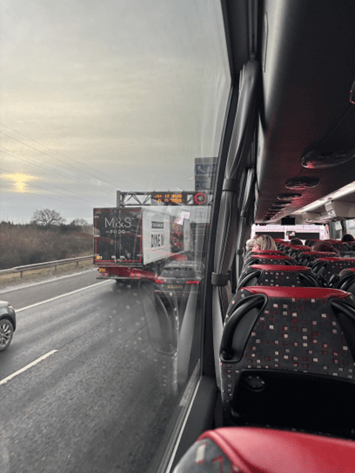
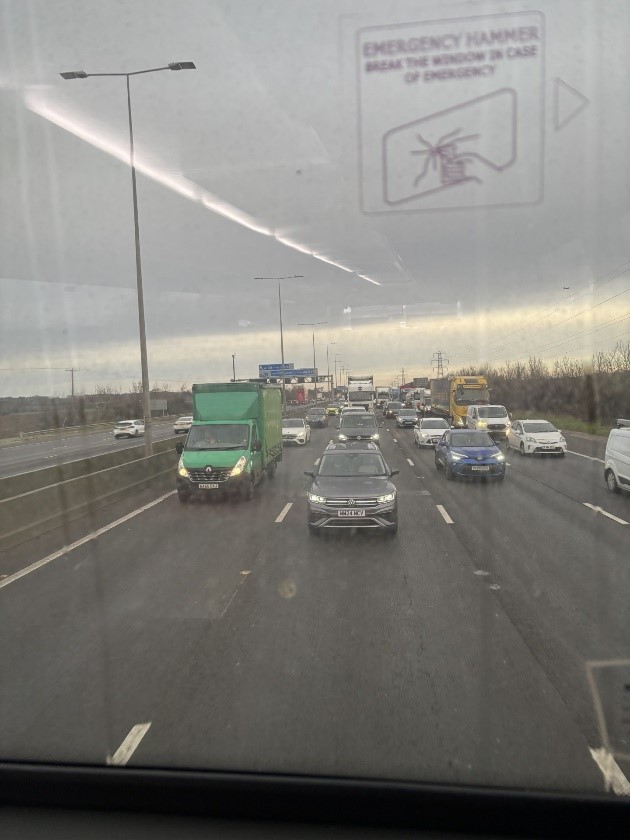
Sometimes these slow moments give us the best opportunities to reflect. While we’re crawling through, my mind wanders to some of the landmark cases we’ll be discussing today. The Supreme Court’s role in shaping our most complex moral and legal debates is fascinating – take the assisted dying cases for instance. These aren’t just legal arguments; they’re profound questions about human dignity, autonomy, and the limits of state intervention in deeply personal decisions. It’s also interesting to think about how the evolution of our highest court reflects (or sometimes doesn’t reflect) the society it serves. When we discuss access to justice in our criminology lectures, we often talk about how diverse perspectives and lived experiences shape legal interpretation and decision-making. These thoughts feel particularly relevant as we approach the very institution where these crucial decisions are made.

The traffic might be testing our patience, but at least it’s giving us time to really think about these issues.
10:07 AM – Arriving London – The stark reality of London’s inequality hits you right here, just steps from Hyde Park.
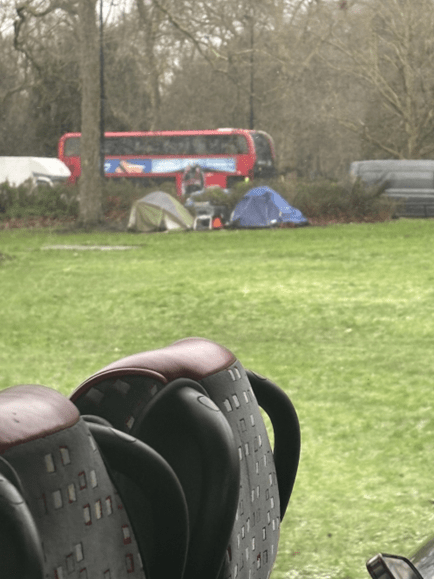
Honestly, this is a scene that perfectly summarises the deep social divisions in our society – luxury cars pulling up to the Dorchester where rooms cost more per night than many people earn in a month, while just meters away, our fellow citizens are forced to make their beds on cold pavements. As a criminologist, these scenes raise critical questions about structural violence and social harms. When we discuss crime and justice in our lectures, we often talk about root causes. Here they are, laid bare on London’s streets – the direct consequences of austerity policies, inadequate mental health support, and a housing crisis that continues to push more people into precarity. But as we say in the Nigerian dictionary of life lessons – WE MOVE!! 🚀
10:31 AM Supreme Court security check time
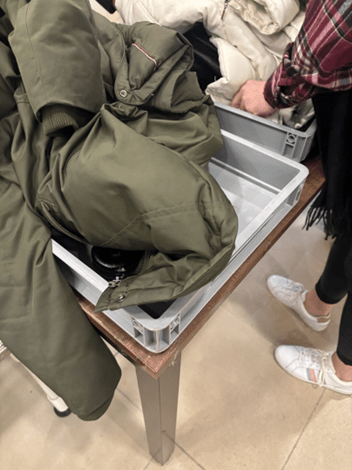
Security check time, and LISTEN to how they’re checking our students’ water bottles! The way they’re examining those drinks is giving: Nah this looks suspicious 🤔

So there I am, breezing through security like a pro (years of academic conferences finally paying off!). Our students follow suit, all very professional and courtroom-ready. But wait for it… who’s that getting the extra-special security attention? None other than our beloved department head Manos! 😂

The security guard’s face is priceless as he looks through his bags back and forth. Jes whispers to me ‘is Manos trying to sneak in something into the supreme court?’ 😂 Maybe they mistook his collection of snacks for contraband? Or perhaps his stack of risk assessment forms looked suspicious? 😂 There he is, explaining himself, while the rest of us try (and fail) to suppress our giggles. He is a free man after all.
10: 44AM Right so first stop, – Court Room 1.


Our tour guide provided an overview of this institution, established in 2009 when it took over from the House of Lords as the UK’s highest court. The transformation from being part of the legislature to becoming a physically separate supreme court marked a crucial step in the separation of powers in the country’s legislation. There’s something powerful about standing in this room where the Justices (though they usually sit in panels of 5 or 7) make decisions. Each case mentioned had our criminology students leaning in closer, seeing how theoretical concepts from their modules materialise in this very room.
10:59 AM Moving into Court 2, the more modern one!


After exploring Courtroom 1, we moved into Court Room 2, and yep, I also saw the contrast! And apparently, our guide revealed, this is the judges’ favourite spot to dispense justice – can’t blame them, the leather chairs felt lush tbh!
Speaking of judges, give it up for our very own Joseph Buswell who absolutely nailed it when the guide asked about Supreme Court proceedings! 👏🏾 As he correctly pointed out, while we have 12 Supreme Court Justices in total, they don’t all pile in for every case. Instead, they work in panels of 3 or 5 (always keeping it odd to avoid those awkward tie situations). 👏🏾 And what makes Court Room 2 particularly significant for public access to justice the cameras and modern AV equipment which allow for those constitutional and legal debates to be broadcast to the nation. Spot that sneaky camera right at the top? Transparency level: 100% I guess!

The exhibition area

The exhibition space was packed with rich historical moments from the Supreme Court’s journey. Among the displays, I found myself pausing at the wall of Justice portraits. Let’s just say it offered quite the visual commentary on our judiciary’s journey towards representation…

Beyond the portraits, the exhibition showcased crucial stories of landmark judgments that have shaped our legal landscape. Each case display reminded us how crucial diverse perspectives are in the interpretation and application of law in our multicultural society.

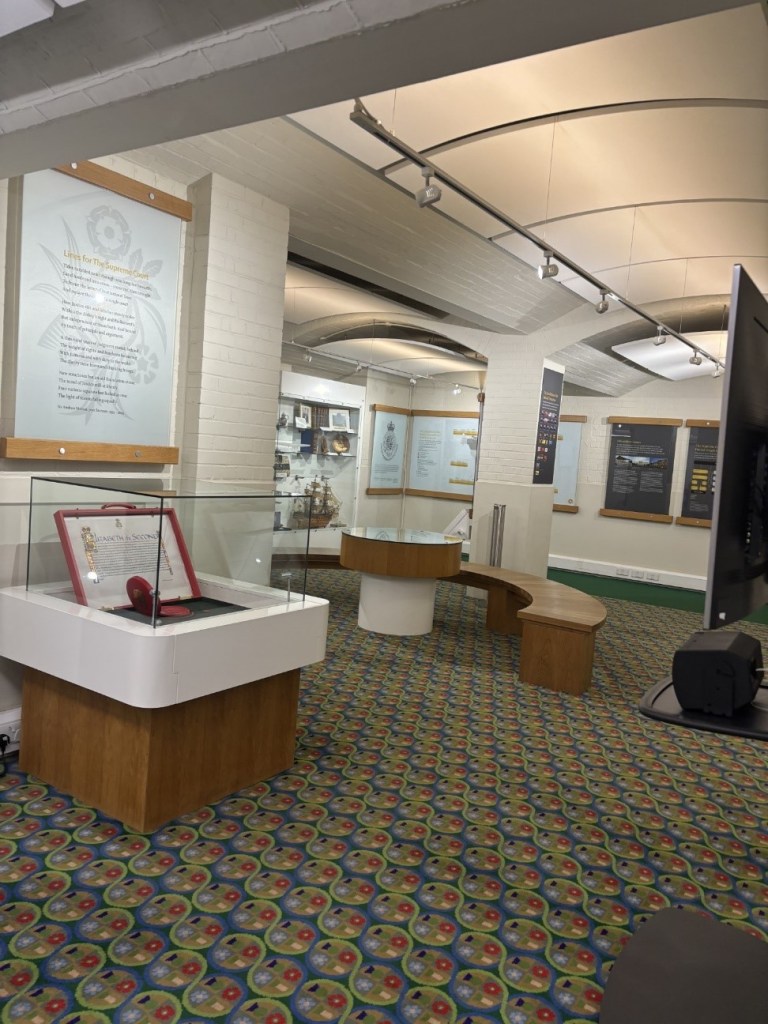

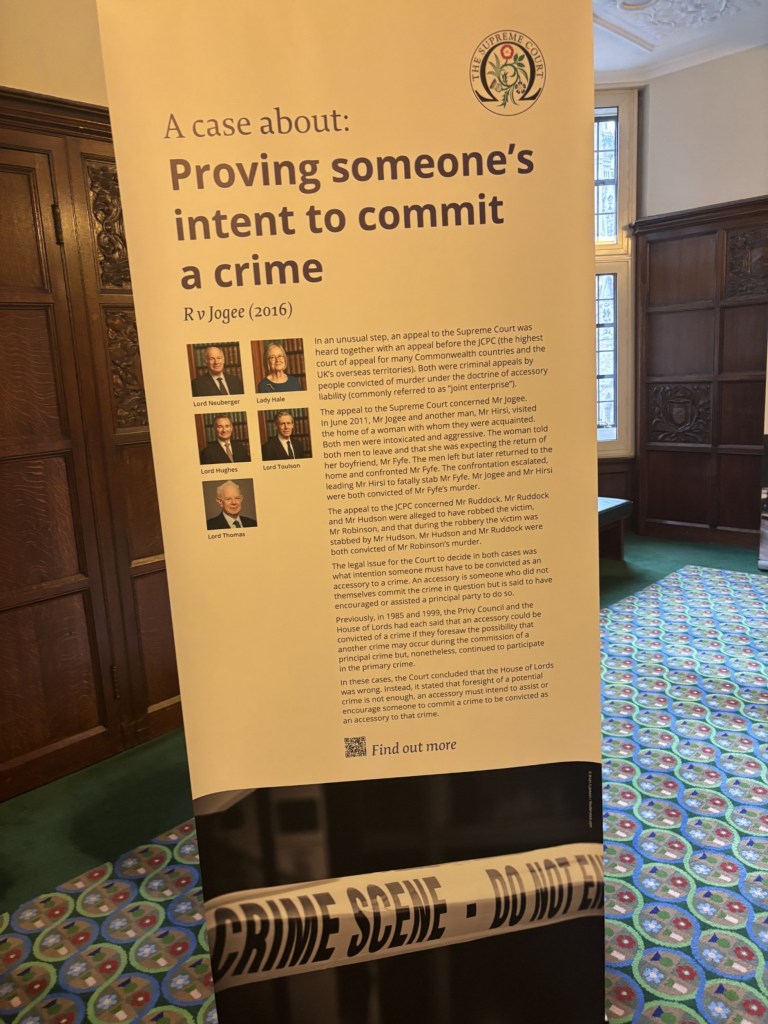
11: 21AM Moving into Court 3, home of the Judicial Committee of the Privy Council (JCPC)

The sight of those Commonwealth flags tells a powerful story about the evolution of colonial legal systems and modern voluntary jurisdiction. Our guide explained how the JCPC continues to serve as the highest court of appeal for various independent Commonwealth countries. The relationship between local courts in these jurisdictions and the JCPC raises critical questions about legal sovereignty and judicial independence and the students were particularly intrigued by how different legal systems interact within this framework – with each country maintaining its own laws and legal traditions, yet looks to London for final decisions.

Breaktime!!!!
While the group headed out in search of food, Jes and I were bringing up the rear, catching up after the holiday and literally SCREAMING about last year’s Winter Wonderland burger and hot dog prices (“£7.50 for entry too? In this Keir Starmer economy?!😱”). Anyway, half our students had scattered – some in search of sustenance, others answering the siren call of Zara (because obviously, a Supreme Court visit requires a side of retail therapy 😉).


But here’s the moment that had us STUNNED – right there on the street, who should come power-walking past but Sir Chris Whitty himself! 😱 England’s Chief Medical Officer was on a mission, absolutely zooming past us like he had an urgent SAGE meeting to get to 🏃♂️. That man moves with PURPOSE! I barely had time to nudge Jes before he’d disappeared. One second he was there, the next – gone! Clearly, those years of walking to press briefings during the pandemic have given him some serious speed-walking skills! 👀
3:30 PM – Group Photo!
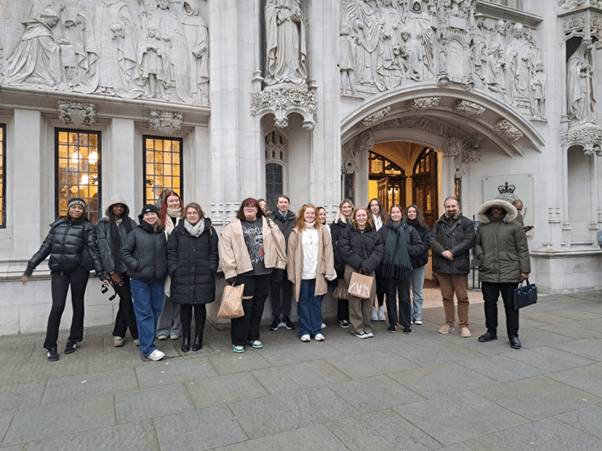
Looking at these final year criminology students in our group photo though! Even with that criminal early morning start (pun intended 😅), they made it through the whole Supreme Court experience! Big shout out to all of them 👏🏾👏🏾👏🏾👏🏾👏🏾👏🏾 Can you spot me? I’m the one on the far right looking like I’m ready for Arctic exploration (as Paula mentioned yesterday), not London weather! 🥶 Listen, my ancestral thermometer was not calibrated for this kind cold today o! Had to wrap up in my hoodie like I was jollof rice in banana leaves – and you know we don’t play with our jollof! 😤
4:55 PM Heading Back To NN

On the journey back to NN, while some students dozed off (can’t blame them – legal learning is exhausting!), I found myself reflecting on everything we’d learned. From the workings of the highest court in our land to the stark realities of social inequality we witnessed near Hyde Park, today brought our theoretical classroom discussions into sharp focus. Sitting here, watching London fade into the distance, I’m reminded of why these field trips are so crucial for our students’ understanding of justice, law, and society.
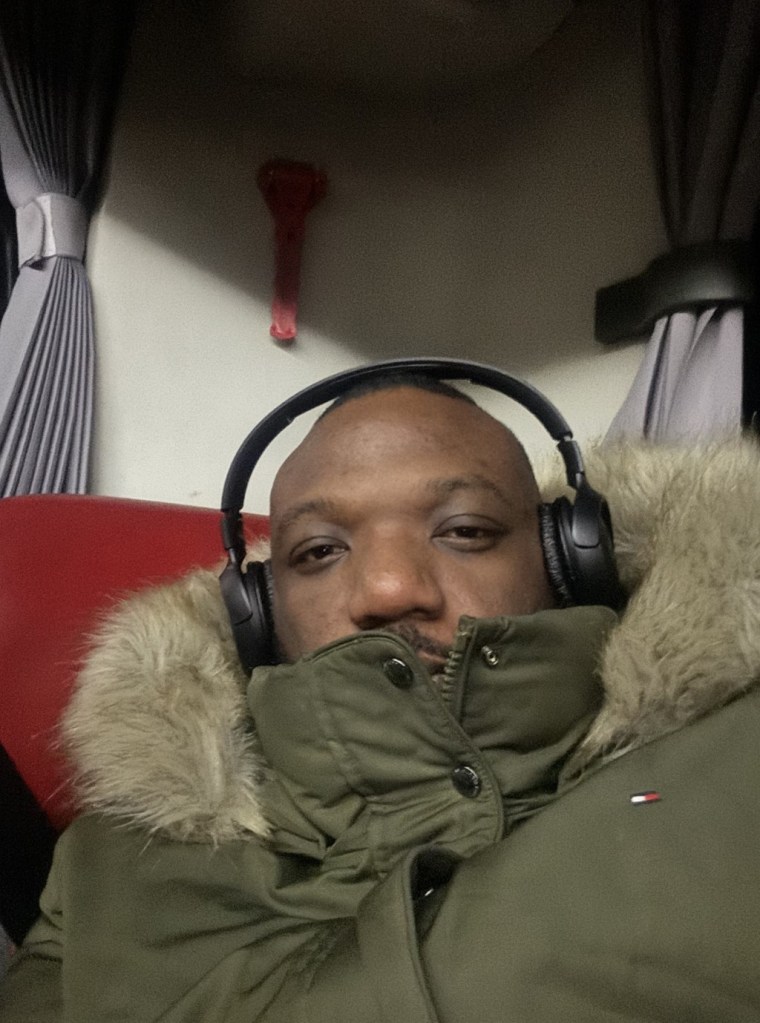

Listen, can we take a moment to appreciate our driver though?! Navigating that M1 traffic like a BOSS, and getting us back safe and sound! The real MVP of the day! 👏🏾👏🏾👏🏾👏🏾👏🏾👏🏾
And just like that, our Supreme Court trip comes to an end. From early morning rush to security check shenanigans, from spotting Chief Medical Officer on the streets to freezing our way through legal history – what a DAY!
To my amazing final years who made this trip extra special – y’all really showed why you’re the future of criminology! 👏🏾 Special shoutout to Manos (who can finally put down his attendance sheet 😂), Jes, and Liam for being the dream team! And to London… boyyyy, next time PLEASE turn up the heat! 🥶
As we all head our separate ways, some students were still chatting about the cases we learned about (while others were already dreaming about their beds 😴), In all, I can’t help but smile – because days like these? This is what university life is all about!
Until our next adventure… your frozen but fulfilled criminology lecturer, signing off! 🙌
Share this:


Homelessness: Outsiders and Surviving on the Street: A snapshot of my undergraduate dissertation.

As the wait until graduation dissipates, I thought I may outline my dissertation and share some of the interesting notions I discovered and the events I experienced throughout the process of creating potentially the most extensive research project each of us has conquered so far.
What was my research about?
As we all know, the issue of homelessness is rife throughout the streets of Northampton and across the UK. I wanted to explore two main areas of homelessness that I understood to be important: the Victimisation of the homeless and the Criminalisation of the homeless. Prior research suggested that the homeless were victimised more frequently than the general public; they are more invisible victims, ignored and abused. There is a lack of reporting of the victimisation they face, partially explained by the lack of trust and lack of embracing victim identity, therefore, a lack of understanding of the victimisation this group faces. They are treated as outsiders, so they act as outsiders, the out-group whose behaviour is deemed ‘deviant,’ resulting in exclusionary tactics such as Hostile Architecture and legislation to hinder their ability to survive. Statistics do suggest that a large number of the homeless population have previously engaged in criminal activity, but the reasonings behind the criminality are distinct. There is an understanding that the criminal behaviour engaged in by the homeless population is survival in nature and only conducted to sustain themselves on the street. The crimes they commit may be due to the ‘criminogenic’ situation they find themselves in where they have to conduct these behaviours due to the environment, society and the economy.
What did I do?
My research was conducted in The Hope Centre, a homeless and hardship charity located in Northampton. Within the centre, I conversed with 7 service users about their experiences living on the street, engagement with criminal activity and the events they have faced. I based my research around an interpretivist lens to capture their experiences and ensure they are subjective and connected to that individual.
What did I find?
The conversations produced a multitude of different reoccurring themes, but the three I believe to be the most stand-out and important are Survival, Cynicism and Labelling, and Outsiders.
Within the survival theme, numerous individuals spoke of the criminality that they have engaged in whilst being on the street, from shoplifting to drug dealing. Still, there was a variety of different justifications used to rationalise their behaviour. Some individuals explained that the crime was to be able to sustain themselves, eat, sleep, etc. For some, the criminality was rationalised by softening the victim’s stance by suggesting they were faceless or victimless if they targeted large corporations. For some, the rationale was to purchase drugs, which, although deemed a commodity and a luxury by some, is also a necessity by others, needing a particular substance to be able to live through the night.
Within the Cyclicism theme, a common topic was that of the society that these individuals reside in; the homeless that have sometimes been released from prison are let out into a society with a lack of job opportunities (due to criminal records) and a drug culture that forces them into other money-making ventures such as criminality, resulting in a total loop back into the prison system. Some participants were under the assumption that the prison system was designed this way to create money by pushing them back into it.
One final theme was that of labelling and outsiders, this is the situation whereby individuals the participants were perceived negatively regardless of what they did and how they acted. They suggested that they were seen as ‘dirty’ even if they had showered. Due to this, they were excluded from society for being an outlier and seen as different to the ‘in-group’ with no control over changing that. This led to some participants attempting to change their behaviour and look to fit in with societal norms. There is also a perception from the homeless about other homeless individuals, specifically the divide between those who beg and those who do not. Some believe that those who beg, harass people and give the entire community a ‘bad rep.’
My dissertation did not aim to drive a specific conclusion due to the individual nature of the conversations. However, it is my hope and aim to potentially change the perceptions and actions of each individual who has read my dissertation regarding this neglected group in society.
Share this:


A response to the Government’s plans to address ‘Mickey-mouse degrees’.

The Government’s latest plans to scrap university courses that are being considered as ‘under-achieving’ through poor graduate outcomes and progression should deeply concern all of us who work in and who have a passion for the Social Sciences, Arts and Humanities across Higher Education. It is no secret that Rishi Sunak and his Government have traditionally favoured apprentices in replacement of graduates. It is a truth that university and higher education is not for everyone, so whilst the value of undertaking an apprentice should be unequivocally un-challenged, this moment of rupture and insecurity for the Higher Education Sector should provoke us to think about how the culture of Higher Education has changed, and why people come to university in the first place. Engaging in these perspectives will put us in a stronger position to contribute to these debates occurring across the chambers of Parliament and at dinner tables across the country. So too should we as academics be actively challenging these attacks on the disciplines that we have passion for.
Before the awakening of neoliberalism, higher education was a vocation and a pursuit for those seeking to climb the ladder of ‘social mobility’. It is without question, that UK universities, particularly in the inter-war and the early post-war period were filled with young people with pre-existing economic fortune and privilege. Universities were not spaces for the working classes, nor for individuals achieving low grades outcomes. However, we can acknowledge that the class-based, gender and racial barriers into Higher Education have improved, yet we still have progress to make moving forward. Since the 2008 Global Financial Crash and the series of events that have followed, the motivations for coming to university have largely changed. Seemingly, it is predicated on a mode of response to economic re-structuring, particularly when the opportunities in the labour markets erode and become increasingly competitive, university seems for some as a suitable option to both buy time and up-skill to ‘stand out’. A sad truth remains however that these gravitations to university have contributed to degree inflation that has changed the way we see and value a degree. These changes have partially allowed the Government to play loose and fast with degrees that they consider ‘worthless’. However, those of us who actively teach and research in the social sciences will know that these degrees are invaluable…. Invaluable through teaching students to critically think about the seemingly ‘normal world’ around them- to question the logic of everyday practices, attitudes, norms and values that are engrained into our social fabric. To work with communities and organisations to identify and respond to issues of criminal and social injustice…. Be that austerity, homelessness, poverty, miscarriages of justice, and inequality. With this in mind, as educators in the social sciences, arts and humanities, we have a duty to show-case the momentous impact of our disciplines. To show-case movements of activism, government lobbying and social change. This emphasises the importance of research, knowledge exchange and adopting pedagogies enabling students to develop these works. Only then, can we put forward cases for impacts that at a government level could challenge these narratives. So too can we utilise these cases to infuse a passion for the discipline that with luck would enable a student to make a choice of coming to university that is right for them.
As a sector, we have numerous challenges facing us…. we need to think like and be activists…. We need to embody what we teach and speak out against those who reduce our work as a ‘worthless’ or ‘Mickey-Mouse’ degree. We may not change the Government’s approach but at least if departments do get shut down…. We went with a fight.
Share this:


2024: the year for community and kindness?



The year 2023 was full of pain, loss, suffering, hatred and harm. When looking locally, homelessness and poverty remain very much part of the social fabric in England and Wales, when looking globally, genocide, terror attacks and dictatorships are evident. Politics appear to have lost what little, if any, composure and respect it had: and all in all, the year leaves a somewhat bitter taste in the mouth.
Nevertheless, 2023 was also full of joy, happiness, hope and love. New lives have been welcomed into the world, achievements made, milestones met, communities standing together to march for a ceasefire and to protest against genocide, war, animal rights, global warming and violence against women to name but a few. It is this collective identity I hope punches its way into 2024, because I fear as time moves forward this strength in community, this sense of belonging, appears to be slowly peeling away.
When I recollect my grandparents and parents talking about ‘back in the day’ what stands out most to me is the community identity: the banding together during hard times. The taking an interest, providing a shoulder should it be required. Today, and even if I think back critically over the pandemic, the narrative is very singular: you must stay inside. You must be accountable, you must be responsible, you must get by and manage. There is no narrative of leaning on your neighbours, leaning on your community to the extent that, I’m under the impression, existed before. We have seen and felt this shift very much so within the sphere of criminal justice: it is the individual’s responsibility for their actions, their circumstances and their ‘lot in life’. And the Criminologists amongst you will be uttering expletives at this point. I think what I am attempting to get at, is that for 2024 I would like to see a shared identity as humankind come front and central. For inclusivity, kindness and hope to take flight and not because it benefits us as singular entities, but because it fosters our shared sense of, and commitment to, community.
But ‘community’ exists in so much more than just actions, it is also about our thoughts and beliefs. My worry: whilst kindness and support exist in the world, is that these features only exist if it does not disadvantage (or be perceived to disadvantage) the individual. An example: a person asks me for a sanitary product, and having many of them on me the vast majority of the time, means I am able and happy to accommodate. But what if I only had one left and the likelihood of me needing the last one is pretty high? Do I put myself at a later disadvantage for this person? This person is a stranger: for a friend I wouldn’t even think, I would give it to them. I know I would, and have given out my last sanitary product to strangers who have asked on a number of occasions. And if everyone did this, then once I need a product I can have faith that someone else will be able to support me when required. The issue, in this convoluted way of getting there, is for most of us (including me as evidenced) there is an initial reaction to centralise ‘us’ as an individual rather than focus on the community aspect of it. How will, or even could, this impact me?
Now, I appreciate this is overly generalised, and for those that foster community to all (not just those in their community and are generally very selfless) I apologise. But in 2024, I would like to see people, myself included, act and believe in this sense of community rather than the individualised self. I want people to belong, to support and to generally be kind and not through thinking about how it impacts them to do so. We do not have to be friends with everyone, but just a general level of kindness, understanding and a shared want for a better, inclusive, and safe future would be great!
So Happy New Year to everyone! I hope our 2024 is full of peace, prosperity, community, safety and kindness!

Share this:


Can Barbie ever be Feminist?
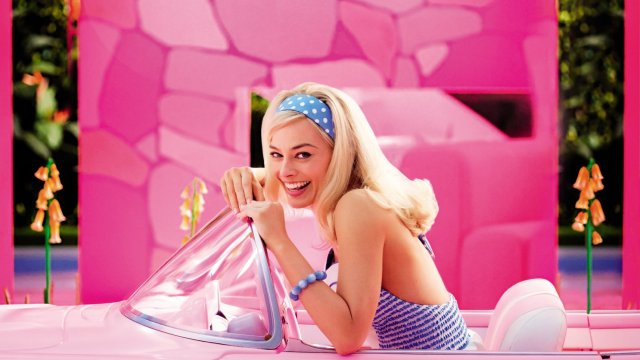
Barbie certainly has people talking, the commentary surrounding the film takes a variety of angles. A quick google search shows that Barbie’s ironic take on the patriarchy appears to have ruffled the fragility feathers with some viewers describing it as ‘man-hating’. I could not help but chuckle at a YouTube video titled; Barbie Bombs Innocent Families with Feminist Propaganda…because apparently, equality is such a bad idea.
There have been some superficial and tokenistic attempts to ‘diversify’ the brand. Yet, at its core the imagery of Barbie still appears to be an obvious symbol of oppressive white feminism. The Barbie doll could be seen to project the white feminine beauty ideal, and the main character within the film, Margot Robbie, appears to embody this ideal. I.e., the appearance of a white, cis-gender, heterosexual women with the wealth to be able to afford all sorts of powdery pink capitalist goods and a body type which is impossible to achieve.
In the contemporary era this ideal continues to be damaging. Even for the most privileged of women, it promotes the spending of much more of women’s income than men on items such as beauty, food and lifestyles, and encourages restrictive dieting practices, which can be damaging to physical and mental health (Naomi Wolf, 1990). For marginalised women there is damage caused due to living in a world which promotes the white privileged as normative. Some examples include, the advertising and selling of skin bleaching products to achieve this white or ‘light’ beauty ideal, to schools excluding Black and Brown school children for having afro textured hair (Emma Dabiri, 2019 and Ibram X. Kendi, 2019).
Whilst the Barbie film apparently has a dig at capitalism, the film and the merchandise sold will produce huge profits by selling this particular brand of feminism. So those interested can buy into feminism and make the capitalists happy rather than being political or radical.
Apparently, the film depicts a comedic take on the patriarchy, with Ken’s toxicity and Barbie having to deal with microaggressions when entering the ‘real world’. How far does the film go with illustrating patriarchal oppression? Is the intersectional oppression experienced by the most marginalised of women present? Does Barbie and Co have issues with femicide, police brutality, poverty, mental ill health, rape, incarceration, immigration detention, homelessness or drowning whilst in a boat whilst trying to seek refuge? Or is the patriarchy in film only palatable and profitable if it presents itself in the form of privileged women experiencing comedic microagressions?
Maybe Barbie will lead to some (probably white and privileged) people thinking more critically or feeling empowered but it doesn’t seem to be a type of feminism ‘for all people’, so perhaps it’s not feminism at all (bell hooks, 1982).
I wonder what will happen to the profits made from the film…
Note* I have not watched the Barbie film so apologies for the vague analysis and sketchy details*
References:
Dabiri, Emma. (2020) Don’t touch my hair. United Kingdom: Penguin Books.
hooks, bell. (1982) Ain’t I a Woman : Black women and feminism. London: Pluto.
Kendi, Ibram. X. (2019) How to be an antiracist. London: The Bodley Head.
Wolf, Naomi. (1991) The Beauty Myth : How images of beauty are used against women. New York: William Morrow and Company.
Share this:


An alternative Christmas message

Sometime in October stores start putting out Christmas decorations, in November they slowly begin to play festive music and by December people organise office parties and exchange festive cards. For the best part of the last few decades these festive conventions seem to play a pivotal role in the lead up to Christmas. There are jumpers with messages, boxes of chocolates and sweets all designed to spread some festivity around. For those working, studying, or both, their December calendar is also a reminder of the first real break for some since summer.
The lead up to Christmas with the music, stories and wishes continues all the way to the New Year when people seem to share their goodwill around. Families have all sorts of traditions, putting up the Xmas tree on this day, ordering food from the grocers on that day, sending cards to friends and family by that day. An arrangement of dates and activities. On average every person starts in early December recounting their festive schedule. Lunch at mum’s, dinner at my brother’s, nan on Boxing Day with the doilies on the plates, New Years Eve at the Smiths where Mr Smith gets hilariously drunk and starts telling inappropriate jokes and New Year’s at the in-laws with their sour-faced neighbour.
People arrange festivities to please people around them; families reunite, friends are invited, meaningful gifts are bought for significant others and of course buy we gifts for children. Oh, the children love Christmas! The lights, the festive arrangements, the delightful activities, and the gifts! The newest trends, the must have toys, all shiny and new, wrapped up in beautiful papers with ribbons and bows. In the festive season, we must not forget the kind words we exchange, the messages send by local communities, politicians and even royalty. Words full of warmth, well-meaning, perspective and reflection. Almost magical the sights and sounds wrapped around us for over a month to make us feel festive.
It is all too beautiful, so you can be forgiven to hardly notice the lumbering shadow, at the door of an abandoned shop. Homelessness is not a lifestyle as despicably declared by a Conservative councillor/newspapers decades ago. It is the human casualty of those who have been priced out in the war of life. Even since the world went into a deep freeze due to the recession over a decade ago and the world is still in the clutches of that freeze. More people read about Christmas stories in books and in movies, because an even increasing number of people do not share the experience. Homelessness is the result of years of criminal indifference and social neglect that leads more people to live and experience poverty. A spectre is haunting Europe, the spectre of homelessness. There is no goodwill at the inn whilst the sins of the “father” are now returning in the continent! Centuries of colonial oppression across the world lead to a wave of refugees fleeing exploitation, persecution, and crippling poverty. Unlike the inn-keeper and his daughter, the roads are closed, and the passages are blocked. Clearly, they don’t fit with the atmosphere… nor do the homeless. Come to think of it, neither do the old people who live alone in their cold homes. None of these fit with the festive narrative.
As I walked down a street I passed a homeless guy is curled up in a shop door. A combination of cardboard, sleeping bag and newspapers all jumbled together. Next to him a dog on the cardboard and around them fairy lights. This man I do not know, his face I have not seen, his identity I ignore; but I imagine that when he was born, there was someone who congratulated his mother for having a healthy boy. Now he is alone, fortunate to have a canine companion, as so many do not have anyone. What stands out is that this person, who our festive plans had excluded, is there with his fairy lights, maybe the most festive of all people, without a burgundy coat, I hear some people like these days.
It is so difficult to say Merry Christmas this year. In a previous entry the world cup and its aftermath left a bitter taste in those who believe in making a better world. The economic gap between whose who have and those who do not, increases; the social inequalities deepen but I feel that we can be like that man with the fairy lights, fight back, rise up and end the party for those who like to wear burgundy, or those who like to speak for world events, at a price.
Merry Christmas, my dear criminologists, the world can change, when we become the agents of change.
Share this:


Youth or Adult: can you tell?
This week’s blog begins with a game: youth or adult, secure estate in England and Wales. Below are some statements, and you simply need to guess (educated guesses please), whether the statement is about the youth, or adult secure estate. So, are the statements about children in custody (those under the age of 18 years old) or adults in custody (18+). When you’re ready…
- 70% decrease in custody in comparison to 10 years ago
- Segregation, A.K.A Solitary Confinement, used as a way of managing the most difficult individuals and those who pose a risk to themselves or others
- Racial disproportionality in relation to experiencing custody and being remanded to custody
- Self-harm is alarmingly high
- 1/3 have a known mental health disability
- Homelessness after release is a reality for a high proportion of individuals
- Over half of individuals released from custody reoffend, this number increases when looking at those sentenced to 6months of less
How many did you answer youth secure estate, and how many adult secure estate? Tally up! Did you find a 50/50 split? Did you find it difficult to answer? Should it be difficult to spot the differences between how children and adults are treated/experience custody?
All of the above relate specifically to children in custody. The House of Commons Committee (2021) have argued that the secure estate for children in England and Wales is STILL a violent, dangerous set of environments which do little to address the needs of children sentenced to custody or on remand. Across the academic literature, there is agreement that the youth estate houses some of the most vulnerable children within our society, yet very little is done to address these vulnerabilities. Ultimately we are failing children in custody! The Government said they would create Secure Schools as a custody option, where education and support would be the focus for the children sent here. These were supposed to be ready for 2020, and in all fairness, we have had a global pandemic to contend with, so the date was pushed to 2022: and yet where are they? Where is the press coverage on the positive impact a Secure School will make to the Youth estate? Does anyone really care? A number of Secure Training Centres (STCs) have closed down across the past 10 years, with an alarmingly high number of the institutions which house children in custody failing Ofsted inspections and HM Inspectorate of Prisons (2021) found violence and safety within these institutions STILL a major concern. Children experience bullying from staff, could not shower daily, experience physical restraint, 66% of children in custody experienced segregation which was an increase from the year prior (HM Inspectorate of Prisons, 2021). These experiences are not new, they are re-occurring, year-on-year, inspection after inspection: when will we learn?
The sad, angry, disgusting truth is you could have answered ‘adult secure estate’ to most of the statements above and still have been accurate. And this rings further alarm bells. In England and Wales, we are supposed to treat children as ‘children first, offenders second’. Yet if we look to the similarities between the youth and adult secure estate, what evidence is there that children are treated as children first? We treat all offenders the same, and we treat them appallingly. This is not a new argument, many have raised the same points and concerns for years, but we appear to be doing very little about it.
We are kidding ourselves if we think we have a separate system for dealing with children who commit crime, especially in relation to custody! It pains me to continue seeing, year on year, report after report, the same failings within the secure estate, and the same points made in relation to children being seen as children first in England and Wales: I just can’t see it in relation to custody- feel free to show me otherwise!
References:
House of Commons Committees (2021) Does the secure estate meet the needs of young people in custody? High levels of violence, use of force and self-harm suggest the youth secure estate is not fit for purpose [Online]. Available at: https://houseofcommons.shorthandstories.com/justice-youth-secure-estate/index.html. [Last accessed 4th April 2022].
HM Inspectorate of Prisons (2021) Children in Custody 2019-2020: An analysis of 12-18-year-old’s perceptions of their experiences in secure training centres and young offender institutions. London: Her Majesty’s Inspectorate of Prisons.
Share this:


Merry Christmas
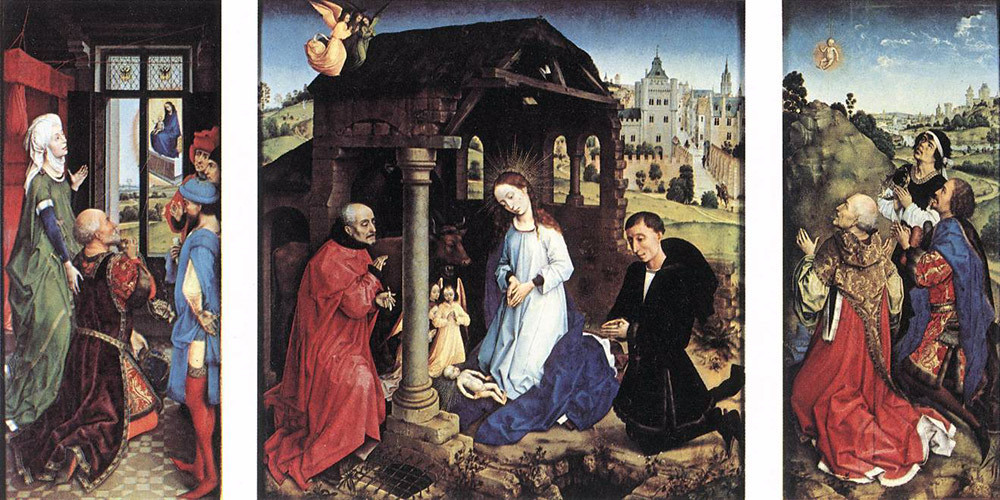
“Merry Christmas”, a seasonal greeting dating back in 1534 when Bishop John Fisher was the first on record to write it. Since then across the English-speaking world, Merry Christmas became the festive greeting to mark the winter festive season. Although it marks a single day, the greeting relates to an entire season from Christmas Eve to the 12th night (eve of the epiphany). The season simulates the process of leading to the birth, circumcision and the baptism of Jesus. Like all births, there is an essential joy in the process, which is why in the middle of it there is the calendar change of the year, to mark more clearly the need for renewal. At the darkest time of the year, for the Northern hemisphere the anticipation of life and lights to come soon. Baby Jesus becomes an image of piety immortalised in numerous mangers in cities around the world.
The meaning is primarily religious dating back to when faith was the main compass of moral judgment. In fact, the celebrations were the last remnants of the old religion before the Romans established Christianity as the main faith. The new religion brought some changes, but it retained the role of moral authority. What is right and wrong, fair and unfair, true and false, all these questions were identified by men of faith who guided people across life’s dilemmas. There is some simplicity in life that very difficult decisions can be referred to a superior authority, especially when people question their way of living and the social injustice they experience. A good, faithful person need not to worry about these things, as the greater the suffering in this life, the greater the happiness in the afterlife. Marx in his introduction to Hegel’s philosophy regarding religion said, “Die Religion ist das Opium des Volkes”, or religion is the opium of the people. His statement was taken out of context and massively misquoted when the main thrust of his point was how religion could absorb social discontent and provide some contentment.
Faith has a level of sternness and glumness as the requirement to maintain a righteous life is difficult. Life is limited by its own existence, and religion, in recognition of the sacrifices required, offers occasional moments for people to indulge and embrace a little bit of happiness. When religious doctrine forgot happiness, people became demoralised and rebellious. A lesson learned by those dour looking puritans who banned dancing and singing at their own peril! Ironically the need to maintain a virtuous life was reserved primarily for those who were oppressed, the enslaved, the poor, the women, many others deemed to have no hope in this life. The ones who lived a privileged life had to respond to a different set of lesser moral rules.
People, of course, know that they live in an unjust society regardless of the time; whether it is an absolute monarchy or a representative republic. Regardless of the regime, religion was there to offer people solace in despair and destitution with the hope of a better afterlife. Even in prisons the charitable wealthy will offer a few ounces of meat and grain for the prisoners to have at least a festive meal on Christmas Day. Traditionally, employers will offer a festive bonus so that employees can get a goose for the festive meal, leaving those who didn’t to be visited by the ghosts of their own greed, as Dickens tells us in a Christmas carol. At that point, Dickens concerned with dire working conditions and the oppression of the working classes subverts the message to a social one.
By the time we move to the age of discovery, we witness the way knowledge conflicts with faith and starts to question the existence of afterlife…but still we say Merry Christmas! There is a recognition that the message now is more humanist, social and even family focused rather than a reaffirmation of faith. So, the greeting may have remained the same, but it could symbolise something quite different. If that is the case, then our greeting today should mean, the need to embrace humanity to accept those around us unconditionally, work and live in the world fighting injustices around. “Merry Christmas” and Speak up to injustices. Rulers and managers come and go; their oppression, madness and tyranny are temporary but people’s convictions, collectivity and fortitude remain resolute.
Christmas is meant to be a happy time full of joy, wonder and gifts. Lights in the streets, cheerful music in the shops, a lot of good food and plenty of gifts. This is at least the “official” view; which has grown to become such an oppressive event for those who do not share this experience. There are people who this festive season live alone, and their social isolation will become even greater. There are those who live in abusive relationships. There are children who instead of gifts will receive abuse. There are people locked up feeling despair; traditionally in prisons suicide rates go rocket high at the festive season. There are those who live in such conditions that even a meal is a luxury that they cannot afford every day. There are who live without a shelter in cold and inhuman conditions. These are people to whom festivities come as a slap in the face, in some cases even literal, to underline the continuous unfairness of their situation.
Most of us may have read “the little match girl” as kids. A story that let us know of the complete desperation of those people living in poverty. A child, like the more than a million children every year that die hoping until the very end. The irony is that for many millions of people around the world conditions have not changed since the original publication of the story back in mid-19th century. During this Christmas, there will be a child in a hospital bed, a child with a family of refugees crossing at sea, or a child working in the most inhuman conditions. Millions of children whose only wish is not a gift but life. The unfairness of these conditions makes it clear that “Merry Christmas” is not enough of a greeting. So, either we need to rebrand the wish or change its meaning!
The Criminology Team would like to wish “Social Justice” for all; our colleagues who fight for the future, our students who hope for a better life, our community that wishes for a better tomorrow, our world who deals with the challenges of the environment and the pandemic. Diogenes the Cynic used to carry a lantern around in search of humans; we hope that this winter you have the opportunity (unlike Diogenes) to find another person and spend some pleasant moments together.
Share this:


#CriminologyBookClub: Dying in Brighton
As you know by now, a small group of us decided the best way to thrive in lockdown was to seek solace in reading and talking about books. Hence the creation of #CriminologyBookClub! Building on on what has quickly become standard practice, we’ve decided to continue with all eight bloggers contributing! This title was the second chosen by @manosdaskalou and is our 14th book. Read on to find out what we thought….
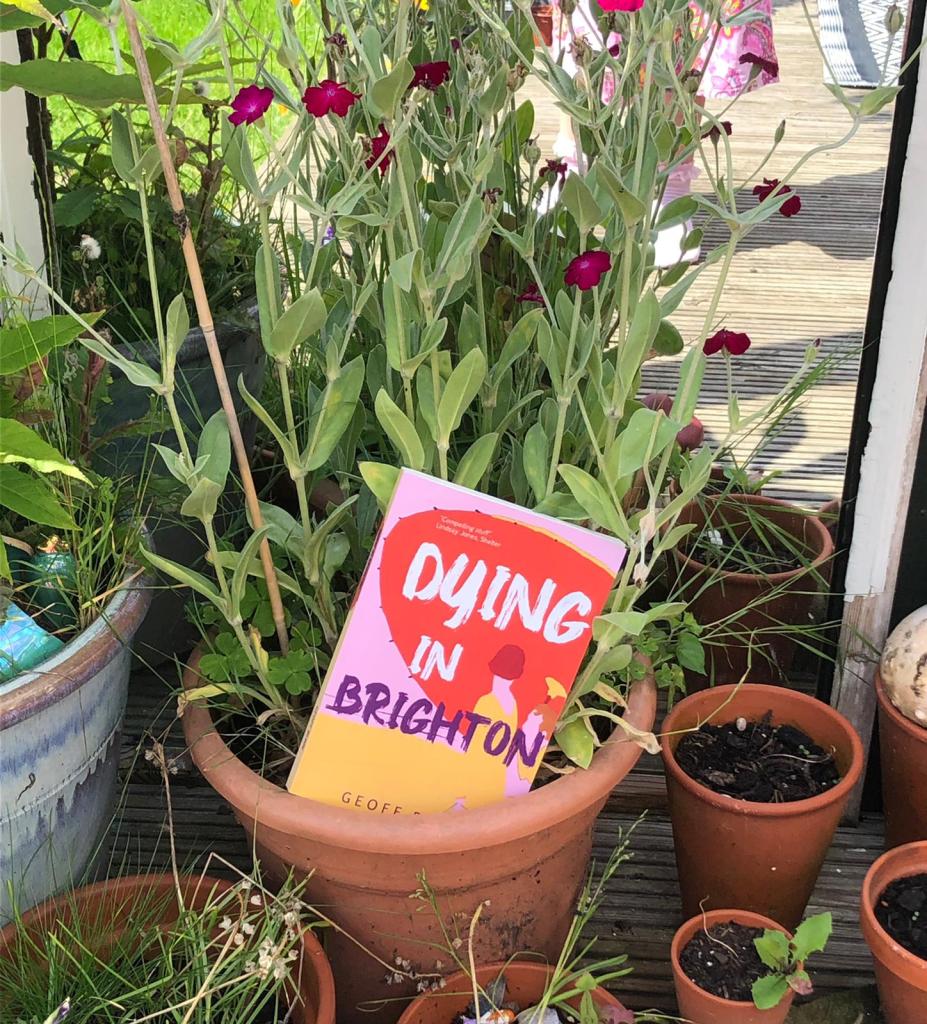
I have no profound objection to self-published books but have read only one other. The rationale for reading the first one was to proof-read/copy edit for the author. That can’t really be called reading, because you miss the story by studying the text so closely. However, I digress. The blurb for this book sounded fascinating, individual narratives heading toward one place: Brighton. Unfortunately, whilst the idea for the book was clever, the writing was overly descriptive and at times, turgid. There is no space for the reader to imagine the characters or the places, everything is told in minute detail. There is a clear attempt to be inclusive with the choice of characters, but they are largely one-dimensional and lack authenticity. The final character talks about his supposed lack of representation as a white man in Brighton (with a white population of 90%) and at that point, I lost what little interest remained. In feminist circles, the question “what would a mediocre white man do?” is prevalent, a possible response could be; write this book. The only positive I have to offer is the support offered by sales to Shelter.
@paulaabowles
The format and style of the book was unlike anything I had read before: and I really liked it. The characters were full of life: a life riddled with inequalities, harm and pain. Unlike other reads where I have failed to feel anything for the characters (or anything other than a serious dislike), Dying in Brighton evoked a number of emotions from myself towards the people in the book. However these emotions were left in a sort of vacuum, with myself feeling very ‘meh’ at the end of the book. I was disappointed with the final chapter. Whilst I can appreciate the ending and the manner in which it is told, I did not like it. I wanted to know more about how Akeem, Nicola, Wasim, Lori and Paul got to the end they got to. Considering the ‘end result’ and my emotions from the previous chapters, I feel I should have had a more powerful response to the end: but I did not. The short snippets were not enough for me: and I feel that the last chapter does not do their stories or their lives justice. Despite this, I would recommend!
@jesjames50
The title Dying in Brighton does not leave much to the imagination. I am glad that the purchase of this book supports a charity. Unfortunately, I found this book to be problematic. I did not understand his selection of characters or how their stories linked. The book reads as though a heterosexual white man who is not disabled is congratulating the white men characters within the book for being friends with people who are migrants or LGBT. There is even a point where a character feels ‘underrepresented’ as a white man…I skimmed the book as I am sick of hearing similar to this in reality.
@haleysread
This is a book that definitely divided the book club and I have to say the comments were by far more negative than positive. For my part, I found the narrative interesting in a strange sort of way. I didn’t find myself labouring on the description and attributes of the characters but rather took in an overall sense of ordinary people that were troubled and in trouble for some reason or another and therefore found themselves gravitating to Brighton; in fairness they could have gone anywhere. The book didn’t take long to read, and the narrative ends rather abruptly but I think that is probably the point. The book left me with a sense of sadness, and it reminded me that homeless people are real people with real lives and yet are very often invisible in our society. Would I read something from the same author again, probably not? Would I recommend the book, probably not, but it did hit a mark somewhere along the line?
@5teveh
This book was a very quick read. Each chapter presented a very stereotypical view of a member of every marginalised group you can think of – a refugee, a trans woman, a troubled teenage girl. The book ended with a chapter about a rich white man with houses all over the world, finding himself feeling like he wasn’t represented. It turns out – spoiler alert – that all the marginalised people went to Brighton, became homeless and died. At the end a woman was selling craftwork with each of the dead, marginalised homeless person’s face. Now I can see how, to a critical criminologist, all this is problematic to say the least. However, the book carried a message that homeless people are invisible. People walk past them every day without a second glance. The author also donated profits of the book to Shelter so it was for a good cause. So, although the book was heavily criticised during our discussion, for people in many walks of life I’d like to think the book would quite literally open their eyes and say hello to a person living on the streets.
@amycortvriend
This book centres around 5 different characters and their life experiences and choices that lead them to Brighton. When I first read the blurb, I assumed this book would take me on a thought-provoking journey about individuals that could be seen as outsiders within society, and how their stories are interwoven. What was thought provoking for me was how the representation of individuals can be so wrong. Throughout the book I was distracted by the problematic ways in which the characters were portrayed. I didn’t like the hyper sexualisation of Lori, I felt like this was an attempt to explore transgender issues without any understanding of transgender issues… it was tasteless and done from a male gaze. I also didn’t like the lack of context and understanding of refugees, this exploration was very tone deaf and seemed informed by how the ‘Western world’ views refugees. Usually when reading a book I have some emotion to the characters, however I felt far removed from all the characters and their stories. At the end of the book I also felt like the stories of the five individuals were rushed, there was no back story to why or how they had died in Brighton just that they were dead. I don’t know what angle the author was going for but for me the ending fell flat.
@svr2727
This book sounded very promising and I usually really enjoy short stories about very different characters and their experiences and how they converge but this book was disappointing in so many ways. Obviously being self-published meant that it wasn’t as polished as it could’ve been and I find little mistakes to spelling and punctuation really distracting from a story. I wish this was my only complaint! The characters were badly written caricatures – you got the sense that the author had never spent any time with anyone from those backgrounds and that perhaps he wasn’t the right person to be telling these stories. The most authentic chapter of the book was the final one where the narrator (a successful white man) feels that he isn’t represented! Easily the worst book I’ve ever read.
@saffrongarside
This is an anthology of different stories of people in very adverse circumstances all of whom are heading to Brighton. In most cases it is not clear why they are heading that way and what they hope from their move there. The short stories are independent from each other and there is no obvious connection between them. Each story explores a different character faced with different issues from abuse, sexuality and substance use. It sends out a signal of some of the social vulnerabilities people are exposed; this however is done as a matter of fact not exploring the social dimensions of the situation. The end brings the stories together but for me this was unsatisfactory. This book has a great idea, an interesting layout but its execution does not meet the goal. The stories are interesting but some of them feel a bit rushed; more character development would have allowed the reader to get closer to the situation and the social issues the author wants to alert people to. As I read it, I thought that some of the stories read more like vignettes that we use in exercises or training for making people aware of certain problems. In terms of literary merit, these are not quite there.
@manosdaskalou

Share this:


My new year nightmare: finance, political imperatives and a lack of strategy

The new year is here. At its last knockings, the previous year offered hope of some sort of return to normality. The second new vaccine was on its way, far easier to store and distribute, it offered hope. Unfortunately, the joy of the new year has been somewhat muted as we have witnessed Covid-19 cases rise to new heights. Talks of stricter measures have turned into our new reality, as one minute the government insisted on schools opening then the next a partial U-turn before a forced full-scale retreat. But as we watch all of this unfold, I am reminded of a comment I heard from a radio presenter on the lead up to Christmas. Her view was that there was much to be happy about, we know more about the virus now than we ever did and scientists have developed a vaccine, several vaccines, in record time. Over the Christmas and new year period I reflected on last year and tried to think about what we have learnt.
Brexit has just proved to be a complete farce. Promises of a good deal turn out to be not so good, ‘no deal is better than a bad deal’ the politicians said. And then in desperation, realising that any deal was better than no deal and that the best deal was the one where we were in the European Union they settled on something and thanked the gods that there was far more pressing bad news to hide their incompetence. So, we are now a ‘sovereign’ nation but poorer to boot and whilst we think we have regained control over our borders, it is only limited to bureaucratic, time consuming form filling, as we beg people to come here to work in our care homes and on the farms for a pittance. Perhaps the refugees that we have reluctantly accepted might help us out here. Brexit has been delivered but at what cost? No wonder Stanley wants to take up his opportunity for a French passport.
We are all equal its just that some are far more equal than others. We saw the rise of the Black Lives Matter movement and I have a feeling that I wouldn’t be able to do that discussion justice; I’ll leave that to others that are far more capable. It did have a profound impact on me though as a former serving police officer, I would like to think it had an impact on others both retired and serving, but I’m not so sure. I think that quite often the police are simply a reflection of our society and I’m not willing to bet much on that changing rapidly. I remember Michael Holding, a former West Indian cricketer, turned commentator, talking about ‘white privilege’ and he provided what I thought at the time was a good example. Now I’m not so sure, this so called ‘white privilege’, isn’t privilege at all, it’s rights. It’s the rights that white people avail themselves of everyday in a democratic society (well that’s what we are supposed to be in anyway) without a second thought. The problem isn’t that white people have those rights, it’s that Black and ethnic minority individuals don’t, or where they do, the rights are somehow conditional. I might be wrong in my thinking, but I know one thing, without some very clear leadership from government, institutions and general societal attitudes are unlikely to change sufficiently. Although footballers and staff take a knee before every match, I fear that the momentum is likely to be lost. By the way, I’m not holding out much hope on the leadership gambit.
Sticking to the we are all equal theme; the pandemic has shone a spotlight on poverty in this country. Yes, Mr high and mighty Reece-Mogg, there really are very poor people in this country and they do need a helping hand. The fact that food banks are even required is shameful. The fact that foodbanks rely on charity is an even more shameful indictment of our government. The fact that a senior politician can stand up in the house of commons and accuse a charity of political motives when distributing aid beggar’s belief. I find it extraordinary that pre pandemic, homeless people were left to their own devices on the streets, reliant on charity and handouts and yet as soon as we went into lockdown, the government found money from somewhere to house them. What changed? My worry is that when the pandemic is over, the government are going to be more concerned about balancing the books than they are about the pervasive poverty endemic in our nation.
Children returning to school has been a huge issue for government and they rely on evidence that suggests that the best place for children is at school. A headmaster reminded us in an interview on the radio that this ‘online learning’ phrase that trips off the tongue is far easier to talk about than to achieve. What hits home is the huge disparity in opportunity for children to avail themselves of online learning. Poorer families cannot provide the technology required. Poorer families are likely to live in cramped conditions making it impossible for children to concentrate on work as siblings run around trying to keep themselves amused. And let’s not forget the plight of the parents who are more likely to be in jobs that require them to be at work, not home. Then of course there are those children that are vulnerable where school is a safe haven from abuse, whether that’s physical or mental or simply because school is where they will be fed. So, in a sense for many, school is a better place than home, but we really ought to be asking why that is. What does that say about our society? If I were to hazard an educated guess, I’d say its broken. The return of children to school had wider implications. What about the teachers and staff? It seems to me that government have different standards of risk depending on what suits. I’ll come back to this in time but I think the closure of schools owes itself more to the action of teachers in their refusal to turn up to work in an unsafe environment than it does any sensible government strategy.
Sticking to the education theme, the pandemic shone a rather harsh spotlight on higher education too. What became increasingly obvious was that the return of students to campus was purely financially driven. At least one vice chancellor put his head above the parapet and stated as much. His university would fail if he did not fill the halls of residence. So here we had a situation where scientific advisors were stating it was folly to open universities and yet universities did so with the backing of government. The reason, we can’t put education on hold and yet how many students take a gap year, before going to university? Putting education on hold doesn’t appear to be that damaging to the individual, but it is very damaging to a morally corrupt educational business model that needs halls of residence to be filled to prop up the system. To make matters worse, students flocked to university only to find that face to face teaching was patchy, the university experience was not what they were promised or envisaged it would be, and more time was spent in isolation and lock down than was healthy. If education was supposed to be good for their mental health, it had the opposite effect for many. I don’t think it required a rocket scientist to work out that online teaching was really going to be a default position, so either management and government were very naïve and reckless, or they were somewhat economical with the truth. Time to revisit higher education, I think.
Talking about government advisors, what’s the point in having them? Everything I read suggests that government advisors say one thing and government does something else or dillies and dallies its way into a dead end where it finally admits the advisors are in some way right, hence another eleventh hour lock down. The advisor’s said universities should not go back, they did and is it coincidence it coincided with a rise in Covid-19 cases? Advisors were saying schools shouldn’t go back but the government insisted they should and many did for just one day. There is a saying about tactics and strategy. Strategy is unlikely to be achieved without tactics but tactics without a strategy are useless. I have yet to understand what the government strategy is, there is however a plethora of disparate (or is that desperate?) tactics . The result though, anguish and suffering to more than is necessary. Some of the tactics seem to be based on decision regarding who is most at risk. We hear that term an awful lot. I watched the prime minister at lunch time, the man who promised us a fantastic Brexit deal, as he explained how important it was that children went back to school. Children are at very little risk going to school he said and then added, and teachers are not at very much risk or at least at no more risk than they would be normally. He bumbled and blustered over the latter part; I wonder why? A few hours later he told us schools would be closed until at least the 15th February. What happened to ‘no risk’? When we talk about risk, there are a number of ways of viewing it. There is the risk of death, easily understood and most definitely to be avoided, but what seems to be neglected is the risk of serious illness or the risk of ‘long Covid’. By ordering schools to be opened or that universities resume face to face teaching, the policy seems to have been that as long as you are not at a high risk of death then it is an acceptable risk. Time for a bit of honesty here. Does the government and do managers in these organisations really think that a group of people in a room for a number of hours with inadequate ventilation is not a serious risk to the spreading of the disease? Maybe some of the managers could reassure us by doing most of the face to face teaching when we prematurely come out of lock down again.
It seems to me that much is being made, on the news in particular, about the effect a lock down has on mental health, especially children. And I do understand the mental health issues, I can’t help but think though that whilst this is a very valid argument there is the elephant in the room that is either ignored or conveniently understated. The elephant; the fear engendered by the virus, the fear and anguish of those that have had to face the loss of a loved one. Just to put that in perspective that’s over 70,000 people whose families and friends have had to go through firstly the fear and anxiety of a loved one being ill and then the additional fear and anxiety of having lost them. Add to this the fear and anxiety of those that have caught the virus and ended up in hospital coupled with the fear and anxiety of their loved ones. Now add to this the fear and anxiety of those who have to work in conditions where they are at serious risk of catching Covid and the fear and anxiety of their loved ones. And then of course there is the fear and anxiety caused to the general population as the virus spins out of control. Somehow I think a little perspective on mental health during lock down might be needed. Is it any wonder teachers decided that what they were being asked to do was unsafe and unnecessary?
And then I think about all of those parties and gatherings despite restrictions. The shopping trips from tier 4 areas into tier two areas to snap up bargains in the sales. The Christmas and New years eve parties that defy any logic other than pure self-indulgence. Just as we see all of those selfless people that work in organisations that care for others or keep the country running in some capacity, we see a significant number of selfish people who really don’t care about the harm they are causing and seem to be driven by hedonism and a lack of social values. Unfortunately, that accusation can also be aimed at some of the very people that should be setting an example, politicians.
We should of course be happy and full of hope. We have a new vaccine (that’s providing it still works on the mutated virus) and normality is around the corner, give or take a few months and a half decent vaccination strategy (that’s us done for). A vaccine that was found in an extraordinary time period. I wonder why a vaccine for Ebola wasn’t found so quickly? I agree with my colleague @paulaabowles when she says we all must do better but more importantly I think its about time we held government to account, they really must do better. After the second world war this country saw the birth of the NHS and the welfare state. What we need now is a return to the fundamental values that prompted the birth of those provisions. There are so many pressing needs and we really mustn’t allow them to be forgotten. A strategy to tackle poverty might just ameliorate a raft of other ills in our society and the cost of tackling it might easily be mitigated by a reduction in demand in the NHS and many other public services. I can but dream, but my reality envisages a nightmare world driven by finance, political imperatives and a lack of strategy.

 Thoughts from the criminology team