
Home » Holidays
Category Archives: Holidays
Festive Frights

The festive season is almost upon us, and for many of us this means a well-deserved break! As the calendar wraps up and the holidays beckon, why not give your criminological mind a holiday, too? It’s the perfect opportunity to let your imagination soar and dive headfirst into the thrilling world of paranormal fiction.
Taking a temporary step away from cold, hard facts allows us to explore narratives that defy easy explanation, using different parts of our investigative minds. This shift from reality to the realm of the supernatural can be a refreshing break and a wonderful way to recharge before heading into a new year.
This year, something spooky happened! The core mission of the Kids’ Criminology Club, which focuses on expanding knowledge, logic, deduction, and evidence, was temporarily suspended. For a one-off Halloween-esque special, the club transformed into the Kids Paranormal Club.
I am a senior lecturer in Law with a keen interest in the paranormal, and I took our young investigators on a journey into the inexplicable. Together, we explored theories such as the Stone Tape Theory and shared accounts of supernatural phenomena. Following our fascinating session, I challenged the kids to channel their inner storytellers and enter a paranormal story writing competition, with a strict limit of no more than 500 words. The results were chilling, creative, and certainly a departure from Criminology and the Law! All entries, including the winning entry, can be found below.
As you settle in for your holiday break, we hope you’ll find inspiration in these young authors’ terrifying tales. Whether you’re investigating a fictional haunting or simply enjoying a peaceful evening, remember to let your mind wander beyond the police tape and evidence markers. Enjoy the comfort and quiet, and maybe keep an ear out for any strange sounds in your own home…
And finally, while you’re enjoying the comfort and safety of the season and your well-earned break from reality, spare a thought for those who may be facing their own real-life terrors, or simply without the security, warmth, company and peace we often take for granted at Christmas time.
🏆 The Winning Stories
Here are those standout entries that captured our imaginations and sent shivers down our spines.
🥇 Winner: The Radio in Number 13 by Paisley G., age 10
9th October 1967 11:00 pm I have been prompted to start this journal because of an experience I have had in which I don’t feel safe, so I am creating this just in case. My first experience was at night. I was listening to the radio like I always do before bed, there was some show on, I wasn’t really listening; I never really listen, it was just something to do, I suppose. I’m sitting at my desk when I hear footsteps. I live alone and don’t have any pets, that’s when I realised the voices had stopped with a shocking realisation. I knew that the footsteps were coming from the radio. It sounded like heavy boots on stone. I live in a large house with a stone road leading up to the front door. There was a static noise and then the voices were back. I was unsettled but didn’t think much about it. My wife had died only a couple of weeks ago, and I had an odd feeling that they were connected somehow. She was a lovely woman,n and she used to always wear a pair of big black boots.
10th October 1967 11:00 pm Slept uneasy last night – I had a nagging feeling of not being alone. I went about my usual business as normal and had the same experience again: same time, same show, same footsteps.
11th October 1967 11:00 pm Uneasy sleeping again. In the morning, when I left my house, I saw my neighbour Lucy. She is usually a lovely old lady, but when I walked past he house, she ran outside and grabbed me by the hands, looked right into my eyes and said ‘Don’t do it! Don’t open the door! They’re coming!’ Then she ran back inside. It was unsettling, but again didn’t think much of it. The noises were different tonight, footsteps and again they stopped, and I thought the talking would start again, but no, not yet there was the sound of knocking on a door, then it cut back to the show.
12th October 1967 11:00 pm Decided to test it tonight I don’t know what made me do it, but I left the front door open, brought the radio down and sat on a chair by the door. The old lady’s words were ringing in my head, but I had a weird feeling of wanting to prove her wrong. I turned on the radio there was more knocking th-
3:41 am I woke up in my bed, confused about what happened. I ran downstairs to check the door, but it was closed, the chair back in its place, the radio on my desk, as if it had never happened.
13th October 1967 I just turned on the radio the footsteps were going upstairs. They stopped, then the sound of a door rattling my my my door is being shaken help help please pleas ple-
Note from the doctor: The subject had no apparent injuries; they just… died.
Note from the builder: The walls have a trace of a type of mould that could lead to possible madness.
Ghost Mary by Riddhi P., age 11
Fourteen-year-old Isabel Smith and her best friend Anna Hazel live in Riverbend town. Isabel’s twin sister Mary had died two years ago from mysterious reasons, but when Isabel and Anna begin getting chilling messages from her, they find out, she had been taken by wicked blood ghosts that can only take souls on the Day of the Dead! The girls discover a book that says they may be able to bring Mary back by going to the ghost underworld. Desperate, the girls decide to do a ritual that can teleport them to the ghost world! They lit one hundred candles in a perfect circle,e and they both sat in the middle and whispered the forbidden words. When Isabel opened her eyes, she wasn’t in her room anymore; she was in a dark, gloomy place that looked like a graveyard. Fog pressed her skin, whispering, never lifting. Isabel and Anna looked around when Isabel froze. Her heart stopped! Mary was standing just a couple of feet away from them! Mary’s face looked white, her eyes were a pit of black, her clothes were torn and filthy, a black mist surrounded her body. Mary opened her mouth to say something, but before she could, the girls grabbed her hand and pulled her in the circle of candles. “We have to chant the forbidden words backwards fifteen times,” they told her. They began chanting the words once, twice, three times…. “Wait! We have to get the book and burn it, or the blood ghosts will be able to take me and many others again,” cried Mary. Anna dashed to grab the book, but in the shadows, she saw something terrifying – the blood ghosts! Their hollow eyes oozing blood staring at her, their skeleton hands reaching out trying to catch her. Anna grabbed the book and ran towards the circle where Isabel’s voice trembled as she started to chant the words for the tenth time. “Quick, burn the book!” yelled Mary. Just then, the blood ghosts lunged at them and grabbed Mary’s arm. Mary screamed; they were pulling her away from them! Isabel quickly grabbed Mary and dragged her back into the circle. As soon as she did, Anna threw the book in the flames. There was a gust of wind, a ball of energy cloaked the circle of candles like a shield, and the blood ghosts screamed in agony, fading to dust. Isabel finished chanting, the world flippe,d and they were back in Isabel’s room. “What just happened?” Whispered Mary. “It’s over. We’re home!” answered Isabel. They hugged. No more blood ghosts, underworlds or magic words. They were safe. Or were they?.
The Towers of Terror by Quinn G., age 12
Welcome to the Towers of Terror annual story release. Ok, I’m hoping you know what the stone tape theory is. If not, here is a quick rundown: basically, it is the theory that buildings or places have a memory and can replay it, hence ghosts. But what happens at sea? Well, I can tell you that they go to the nearest lighthouse house which then replays them through its beam, and it’s my job to tell the world the stories of wrecked ships, crashed planes and fallen sailors.
Southwold Lighthouse, Norfolk 31/10/2020 Keeper John 12:30 am I’m in for a night tonight with it being Halloween and all. 6:00 pm, just some light activity, a couple of fishing boats, S.S.Mary, an unnamed skipper, a rowboat and a cliff jumper who didn’t want to come to the surface. 7:00 pm, it’s weird that the projections have just stopped. 7:30 pm still nothing. Wait! It is back. No. It’s me, I’m on shore – wait – I’m crumpling to the ground, there is a figure behi-
That’s where his lighthouse log ends, when his colleague went up to take over and found him dead with his pen still clutched in his hand. It is not unusual for things to creep out of the projections. That is why he was there in the first place, to monitor the lighthouse. Even though it is not in operation for ships, you can’t have all those stories building up in such a small space because they will find a way out. But what happened that night was different. Never before has one of the projections interacted with the world outside the projections. There are several other accounts that all go the same way: projections stop, they start again, you see yourself crumble to the floor, and … dead, so we can’t just have people dropping like flies, someone will notice! But if we leave them unattended, they will cause more destruction. So, what would you do? Well, I will tell you what I did/am doing. Finding what came out and how to stop it from coming out again.
That was 5 years ago, and now I can bring you up to date: The entity that was coming out of the projections is now known as the Siren Reaper of the drowned and lost and cannot be explained away. Believe me, I’ve tried, but to no avail. Now to get on to the solution: the one thing that connects the deaths of those keepers was that they had all had a connection with the se, old captains, anglers, sea goers and other jobs that are to do with the sea. After years of contemplation, I have a theory. I think that the Reaper has killed these people because it thinks that they have escaped from it. The solution is to make the keepers not connected with the sea, because then the Reaper will have no business with them. But this does not explain why the projections just stop beforehand, or why the Reaper shows them their death….
Share this:


Season’s Greetings

The Thoughts from the Criminology Team would like to wish all our readers and writers happy holidays. We’d also like to extend our thanks to everyone for your contributions, without you there would not be a blog and they are very much appreciated.
Wherever you are in the world and whether or not you celebrate Christmas, we extend our good wishes to you and wish you and yours a peaceful end to 2024. We’ll be back in 2025 with lots more criminological content, until then stay safe and well.
Share this:


Festive messages, a legendary truce, and some massacres: A Xmas story

Holidays come with context! They bring messages of stories that transcend tight religious or national confines. This is why despite Christmas being a Christian celebration it has universal messages about peace on earth, hope and love to all. Similar messages are shared at different celebrations from other religions which contain similar ecumenical meanings.
The first official Christmas took place on 336 AD when the first Christian Emperor declared an official celebration. At first, a rather small occasion but it soon became the festival of the winter which spread across the Roman empire. All through the centuries more and more customs were added to the celebration and as Europeans “carried” the holiday to other continents it became increasingly an international celebration. Of course, joy and happiness weren’t the only things that brought people together. As this is a Christmas message from a criminological perspective don’t expect it to be too cuddly!
As early as 390 AD, Christmas in Milan was marked with the act of public “repentance” from Emperor Theodosius, after the massacre of Thessalonica. When the emperor got mad they slaughtered the local population, in an act that caused even the repulson of Ambrose, Bishop of Milan to ban him from church until he repented! Considering the volume of people murdered this probably counts as one of those lighter sentences; but for people in power sentences tend to be light regardless of the historical context.
One of those Christmas celebrations that stand out through time, as a symbol of truce, was the 1914 Christmas in the midst of the Great War. The story of how the opposing troops exchanged Christmas messages, songs in some part of the trenches resonated, but has never been repeated. Ironically neither of the High Commands of the opposing sides liked the idea. Perhaps they became concerned that it would become more difficult to kill someone that you have humanised hours before. For example, a similar truce was not observed in World War 2 and in subsequent conflicts, High Commands tend to limit operations on the day, providing some additional access to messages from home, some light entertainment some festive meals, to remind people that there is life beyond war.
A different kind of Christmas was celebrated in Italy in the mid-80s. The Christmas massacre of 1984 Strage Di Natale dominated the news. It was a terrorist attack by the mafia against the judiciary who had tried to purge the organisation. Their response was brutal and a clear indication that they remained defiant. It will take decades before the organisation’s influence diminishes but, on that date, with the death of people they also achieved worldwide condemnation.
A decade later in the 90s there was the Christmas massacre or Masacre de Navidad in Bolivia. On this occasion the government troops decided to murder miners in a rural community, as the mine was sold off to foreign investors, who needed their investment protected. The community continue to carry the marks of these events, whilst the investors simply sold and moved on to their next profitable venture.
In 2008 there was the Christmas massacre in the Democratic Republic of Congo when the Lord’s Resistance Army entered Haut-Uele District. The exact number of those murdered remains unknown and it adds misery to this already beleaguered country with such a long history of suffering, including colonial ethnic cleansing and genocide. This country, like many countries in the world, are relegated into the small columns on the news and are mostly neglected by the international community.
So, why on a festive day that commemorates love, peace and goodwill does one talk about death and destruction? It is because of all those heartfelt notions that we need to look at what really happens. What is the point of saying peace on earth, when Gaza is levelled to the ground? Why offer season’s wishes when troops on either side of the Dnipro River are still fighting a war with no end? How hypocritical is it to say Merry Christmas to those who flee Nagorno Karabakh? What is the point of talking about love when children living in Yemen may never get to feel it? Why go to the trouble of setting up a festive dinner when people in Ethiopia experience famine yet again?
We say words that commemorate a festive season, but do we really mean them? If we did, a call for international truce, protection of the non-combatants, medical attention to the injured and the infirm should be the top priority. The advancement of civilization is not measured by smart phones, talking doorbells and clever televisions. It is measured by the ability of the international community to take a stand and rehabilitate humanity, thus putting people over profit. Sending a message for peace not as a wish but as an urgent action is our outmost priority.
The Criminology Team, wishes all of you personal and international peace!
Share this:


Capitalism and tourism: an ethical conundrum

After a two-year delay in our holiday booking due to the Covid pandemic, my wife and I were fortunate enough to spend a two-week holiday in Cape Verde (Cabo Verde) on the island of Sal. We’ve been lucky enough to visit the islands several times over the last ten years. Our first visit was to Boa Vista but since the hotel that we liked no longer seemed to be available through our tour operators, we ended up going to Sal. When we first visited Boa Vista, there was little to be found outside of the hotel other than deserted beaches and the crashing of the Atlantic waves on the seashore. There was a very large hotel on the other side of the island and a smattering of smaller hotels dotted around, but that was it. After several visits we began to notice that other hotels were popping up along the seashore and there was a definite sense of development to cater for the holiday trade. The same can be said of Sal. The first hotel we visited had only just been built and there were the foundations of other buildings creeping up alongside but in the main, it seemed pretty deserted. Now though there are hotels everywhere and a fairly new very large one not that far away from where we stayed.
The first thing you notice as a visitor to the islands is that this is not an affluent country, far from it. Take a short trip into the town centre and you very rapidly see and sense the pervading poverty. This is a former Portuguese colony, and it comes as no surprise that it played a strategic role in the slave trade until the late nineteenth century whereupon it saw a rapid economic decline. Tourism has boosted the economy and plays a significant role in the country’s population, and this became even more evident during our latest visit. The country is only just recovering from the pandemic and several of the hotels were still mothballed as were the various businesses along the sea front. I’m not sure what the situation was or is in the country with regards to welfare, but I wouldn’t mind betting that they’d never heard of the word furlough, let alone implemented any such scheme. Quite simply no tourism means no work and no work means no wages, such as they are. In conversation with a number of the staff at the hotel, it became obvious that they were not only pleased we were there, but that they wanted us to return again. We were often asked if we would come back and one person, I spoke to pleadingly asked us to return as ‘we need the job’. Of course, it’s not just us that need to return, it’s all the tourists. Tourism supports so many aspects of the economy, not just jobs in hotels but local businesses as well. I think the fact that we keep going back there says something about the lovely people that we’ve been privileged to meet.
But then as I sat one night contently sipping a gin and tonic, debating whether I should have another before dinner, I began to think about whether all of this was ethical. The hotel we stayed in was part of a large international chain. Nearly all the hotels are part of large multinational corporations servicing their shareholders. Whilst my relaxation and enjoyment is great for me, it is on the back of the exploitative nature of the service industry. A business that probably doesn’t pay high wages, those working in the service industry in this country can probably attest to that, so goodness knows what it’s like in an impoverished place such as Cape Verde. My enjoyment therefore promotes exploitation and yet vis-a- vie enables people to have much needed work and pay. Of course, I may have this all wrong and the companies are pouring millions into the country to improve living standards for the inhabitants, and they may pay wages that are very reasonable. But somehow, because of the nature of business, and the eye on profit margins, I very much doubt it. When businesses consider business ethics, I wonder how far they cast the ethical net? As for me, it’s a bit of Catch 22, damned if you do and damned if you don’t. But then so much of life seems to be like that.
Share this:


Visiting the Zoo: a staple of privilege
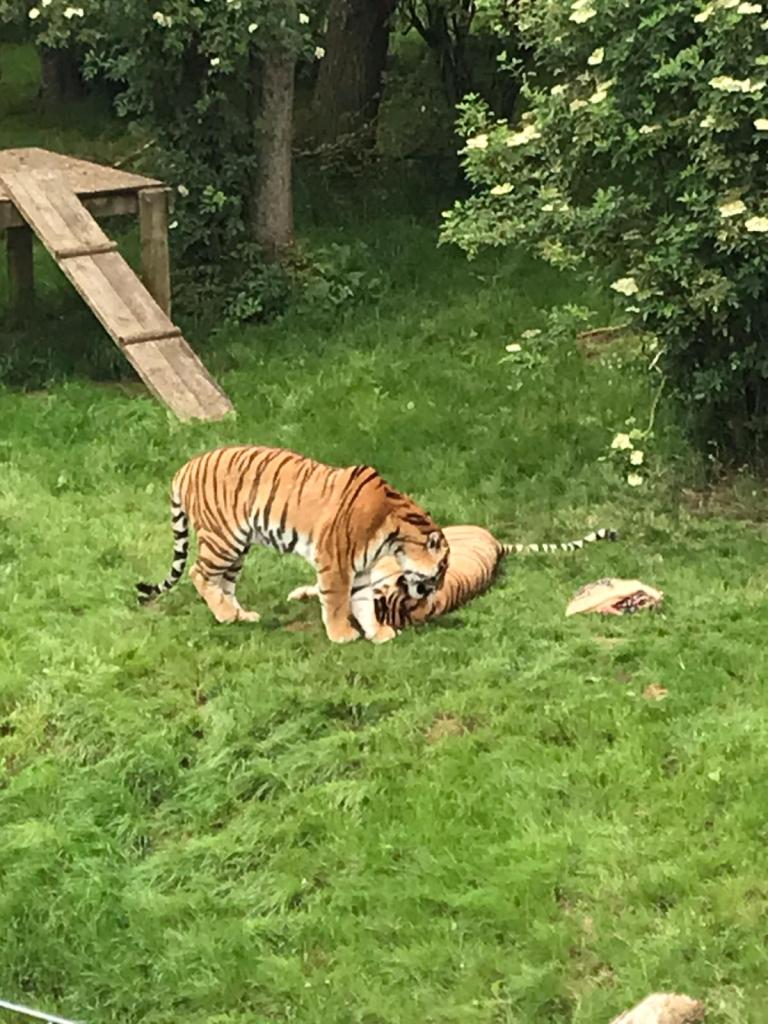
Whilst the current weather may not imply it, we are into the summer months! At this time of year staff and students begin to take a much needed and well-deserved rest after the challenging academic year we have all faced. With this time, holidays, day trips, meals out, picnics, walks and many more joyful pastimes begin to fill up the calendar, although many of us find ourselves quite restricted due to the ongoing pandemic. Nevertheless, we should all make the most of the time off to re-charge and spend time with our loved ones. For myself and my partner, this meant a day trip to Whipsnade Zoo!
Whilst the weather app assured us it would not rain, we spent a fairly windy and wet day walking around Whipsnade Zoo viewing the animals and all in all having a fabulous day. The schools are not out yet, therefore most visitors were adults on annual leave, individuals who I assume are retired, or parents with small children. We had plenty of space and time throughout the day to see the animals, read the information plaques and enjoy a wet but scrummy picnic. I dread to think what it would have been like in the height of the summer holidays!
But where am I going with this other than to brag about my fabulous day at the Zoo and what has this got to do with checking our privilege? Well, it begins with the cost to entire said Zoo. I have not been to a Zoo since I was in my school years. We used to visit Colchester Zoo most summer holidays with the Tesco Clubcard vouchers, which in a nutshell meant you could exchange Clubcard points for vouchers/tickets which included the Zoo. Therefore a trip to the Zoo when we were younger cost petrol money and a picnic (which was always done on the cheap). This is an affordable day out, but we were only a family of 3 (1 adult and 2 children), so not that many Clubcard points required, and quite a minimal picnic. Also we were fortunate enough to have a car which is not the case for all families. So even with the vouchers and picnic I cannot help but reflect and think how privileged we were to be able to visit the Zoo.
The Zoo trip this week cost just short of £50 for a student admission and an adult admission. I did think this was quite a lot. I think about what the cost would be for 2 adults and a child (or multiple children). Already this is gearing up to be an expensive day out. The Zoo has lots of interactive parts for children to engage with and learn from, and of course they have animals. But is the Zoo really aimed at educating all children or is it only those children whose families can afford it (E.I children belonging of a certain socio-economic status)? Once we arrived at the Zoo and looked around the carpark we couldn’t see a Bustop. What about the families who cannot afford a car? The food outlets were extortionate: £4 for a coffee!! Its cheaper in the West End! The same statement although different prices applies to ice-cream. I feel good that we have taken our makeshift picnic and flasks with us: but what about those who cannot?
The long-winded and verbose point I am trying to make is that even everyday things require us to check our privilege. I spoke to my partner on the drive home about the beauty and wonder of the Zoo and how we are fortunate to be able to go and how I was fortunate to go most summers as a child. But once the Clubcard vouchers stopped, so did the trips to the Zoo. There are many who are unable to enjoy the Zoo, to gain from the educational experience of learning about the animals, what they eat, where they live etc. And I can’t help but reflect and wonder is this establishment really inclusive to all? Is there something society can do to break down the class barriers which appear to be present when planning a trip to the Zoo?
Share this:


A smorgasbord of thought (AKA a head full of magic)

Its been a few weeks since I’ve written a blog and whilst there are plenty of topics to pick from, I never quite got my head round writing about anything in depth. I’ve thought about a lot, I never stop thinking about a lot, some it meaningful and some of it not. I like to think that some of the stuff is quite profound but that’s just in my imagination, I think. Anyway, rather than trying to put together some deep and meaningful narrative about the state of the world I thought I’d provide a few highlights.
When I read Jes’ blog the other week about graffiti, I couldn’t help thinking that we do far too much to try to justify and somehow nullify the effects of criminality. For all our theorising and empathising as criminologists, we shouldn’t lose sight of the fact that crime results in victims and being a victim of crime is at best an unpleasant experience. So, I have to disagree with Jes on one point, grafitti is not art, its criminal damage, vandalism if you like. Very rarely have I ever gazed upon a graffiti covered bridge, wall, shop front, shutter, railway station siding or railway carriage and thought to myself, wow that’s nice. Let’s call it what it is.
I think it was the same week that I read a post on ‘LinkedIn’ about the silence surrounding the murder of Julia James, a 53-year-old Police Community Support Officer. The silence the author of the post was referring to was the contrast between the public response to Julia James’ death and that of Sarah Everard, a 33-year-old marketing executive. No vigil, no public outrage, no ‘claim the streets back’. I wondered what dictates the public response to such horrific events. Is it age, occupation, circumstance or just timing?
I watched the news this week somewhat bemused by the response of some industry chiefs and business owners. The airline industry is less than pleased with the government’s approach to relaxing of restrictions around travel and some business owners are apoplectic about the fact that the removal of restrictions might be delayed. It might be a bit simplistic to state this, but it seems that they value business more than lives.
As for those that went on holiday abroad, thinking they wouldn’t need to quarantine when they came back only to find that the rules changed, and they now have to. More fool you, maybe I’ve missed a trick here, but I don’t think the Covid virus and its mutations will wait for you to enjoy the rest of your holiday before spreading a little more. Don’t complain about quarantine nor the cost of testing, you put yourself in that position, now take some responsibility and suck it up instead of blaming someone else.
In a conversation, a friend of mine told me ‘the problem is people don’t like being told what to do’. This was said in the context of Covid and our discussion about the idiots that think any rules or guidance just doesn’t apply to them. The comment did however make me think about a paper I read some time ago by Storch (1975). When the new police were introduced into this country in 1829, there were few who looked upon them favourably. One of the main issues was simply that the populace did not like being restricted in their ‘immoral or illegal’ pastimes. We can have a debate about who makes the rules but it seems to me the most pressing point is that little has changed. Take off the rose-tinted glasses, there never was a golden era of policing, the police have never been liked and never will be. I wonder how the population would act if there were no police though?
I’m a little weary now, all of this thinking and writing has worn me out. Time for a lie down in a darkened room.
Share this:


How to prepare for a year in University

In our society consumerism seems to rain supreme. We can buy stuff to make us feel better and we can buy more stuff to express our feeling to others and mark almost most events around us. Retail and especially all the shops have long been aware of this and so they have developed their seasonal material. These seasonal promotions may have become consumer events now although they do signify something incredibly important to culture and our collective consciousness. There is time for Christmas decorations and festive foods, Easter time and chocolate eggs, mother’s day and nauseating cards father’s day for equally grinchworthy cards. There is valentine’s day to say I love you in full fat chocolates, Halloween to give little kids rotten teeth and a red poppy to remember some of our dead. To those add the summer season with the disposable BBQs and of course the back to school season!
The back to school is one of the interesting ones. Geared to prepare pupils and parents for going back to school and plan ahead. From ordering the uniforms to getting all the stationery and books required. I remember this time of the year with some rather mixed emotions. It was the end of my summer holidays, but it was also the time to get back to school. Until one day I finished school and I went to university. Education is seen as part of a continuous process that we are actively involved from the first day at school to the last day in high school and more recently for more people also involve the first day of going to university. Every year is more challenging than the next, but we move up and continue. For those of us who enjoy education we continue the journey further to further or high education.
There is something to said about the preparation process coming to University; it is interesting seeing advertisements on education this time of the year on the tv and social media promoting stuff for this transition; from the got to have smartphone to the best laptop, the fastest printer scanner all in one thingy to the greatest sound system and many more stuff that would get you ready for the year ahead. Do they really help us out and if not, what do we got to do to prepare for coming to university?
Unfortunately, there is no standard formula here but there is a reason for that. Higher education is adult education. This is the first time in our educational journey that we are sitting firmly on the driving seat. We choose to study (or ought to) what we wish to study. It is an incredibly liberating process to have choice. This however is only the beginning. We make plans of our time. In higher education the bulk of the time required is independent study, and as such we got to negotiate how we will plan our time. We got to decide which reading we are going to do first which notes to read what seminar we shall prepare and what assignment we will make a draft of.
There will be days spent in the library looking for a book, days in a coffee shop talking to fellow students about the seminar reading, days in the learning hub working on an assignment. There are highs, lows and everything in between. But regardless of the emotion at every stage thee will be a sense of ownership of knowledge.
In the first couple of sessions, the bulk of the students keep quiet expecting the correct answer to be given. One interpretation or one truth that describes all. It takes a few times before the realisation emerges that the way we analyse, and project knowledge can be different provided we go through the same processes of scrutiny and analysis. Then conversation emerges and the more reading the better the quality of the ideas that shall emerge.
The first year at University is definitely a declaration of independence and the realisation that we all have a voice. Getting on to the road on empowerment. This is a long journey, and on occasions arduous but incredibly rewarding because it leads to an insight greater than before that removes ignorance and lifts the veil of the unfamiliar.
To our newest students – Welcome to the University and to our returning 2 and 3 years – Welcome back!
Share this:


The Crime of Tourism
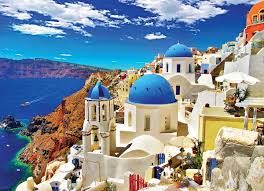
Every year millions of people will visit a number of countries for their summer vocations. European, American and Asian, mainly tourists will pack their bags and seek sea, sun and long beaches to relax, in a number of countries. In Greece for example, tourism is big business. The country’s history, natural beauty, large unspoiled countryside and of course, climate make it an ideal destination for those who wish to put some distance between the worries of work and their annual leave. There is something for everyone, for the culture seeker, to the sun lounger, to the all-inclusive resident. For the next however long you are on Greek time.
Last year the country was visited by approximately 30 million tourists, 3 million of whom come from the UK. This is not simply a pleasure trip; it is a multi-billion dollar industry, involving tour operators, airlines, hotels, catering, tour-guides, car rentals and so many more industries. They all try to acquire the tourist dollar in the pursuit of happiness; in Greece alone the tourist contributions last year came somewhere near to 14 billion euros and provide 17% of the country’s jobs.
In this context, tourism is a wonderful social activity that allows people from different cultures to come together, try new things and perspectives. Most importantly to get some tan, so people in the office know we were away, get some tacky t-shirts and a bottle of suspiciously strong local drink which tasted like ambrosia whilst on holiday. Some of us will learn to pronounce (badly) places we have never heard of, while others will
be reading questionable novels about romance, mystery or drama. Others will bag a romance, maybe a venereal disease, heartbreak (especially if the previous is confirmed) or even the love of their life. All these and many more will happen this summer and every summer since the wave of mass tourism began.
During this season and every season, countless people will prepare meals, clean rooms, and serve cold drinks on the sinking sand, paid minimum wage and rely heavily on the few tips left behind. The work hours are excruciatingly long, over 8 hours in the baking sun in some cases, without a hat, protection or even a break. If this was a mine it would have been the one I read about in Herodotus, where the Athenians were sent to as slaves. In the back of the house an army of trainee cooks, warehouse staff and cleaners will slave away without tips or recognition. In their ranks, there is a number of unrecorded migrants that work under exploitative conditions out of fear of deportation or worst.
In the midst of the worker’s exploitation we have the odd cultural clashes between tourists as to who gets the sun lounger closest to the pool and who can push pass the queue to get first to the place of interest you were told by someone in the office you must go to. Of course there are those who have famously complained before, because on their way to their exclusive resort were confronted by sad looking refugees. Not a real advertisement on tolerance and co-existence, quite the opposite. Of course, in this blog I have left completely out the carbon footprint we leave whenever we do these summer escapes, but that shall be the subject for another post.
Tourism is a great thing but when Eurostat claims that one in two Greeks cannot afford a weeks’ vacation in Greece, then something maybe wrong with the world. Holidays are great and we want the places to be clean, we want to travel in comfort and we want quality in what we will consume. I wonder if we have the same concerns about those people who enter Europe in shaky boats, the back of lorries or on foot, crossing borders without shoes.
Share this:


Is Easter a criminological issue?

Spring is the time that many Christians relate with the celebration of Easter. For many the sacrament of Easter seals their faith; as in the end of torment and suffering, there is the resurrection of the head of the faith. All these are issues to consider in a religious studies blog and perhaps consider the existential implications in a philosophical discourse. How about criminology?
In criminology it provides great penological and criminological lessons. The nature of Jesus’s apprehension, by what is described as a mob, relates to ideas of vigilantism and the old non-professional watchmen who existed in many different countries around the world. The torture, suffered is not too dissimilar from the investigative interrogation unfortunately practiced even today around the world (overtly or covertly). His move from court to court, relates to the way we apply for judicial jurisdiction depending on the severity of the case and the nature of the crime. The subsequent trial; short and very purposefully focused to find Jesus guilty, is so reminiscent of what we now call a “kangaroo court” with a dose of penal appeasement and penal populism for good measure. The final part of this judicial drama, is played with the execution. The man on the cross. Thousands of men (it is not clear how many) were executed in this method.
For a historian the exploration of past is key, for a legal professional the study of black letter law principles and for a criminal justice practitioner the way methods of criminal processes altered in time. What about a reader in criminology? For a criminologist there are wider meanings to ascertain and to relate them to our fundamental understanding of justice in the depth of time. The events which unfolded two millennia back, relate to very current issues we read in the news and study in our curriculum. Consider arrest procedures including the very contested stop and search practice. The racial inequalities in court and the ongoing debates on jury nullification as a strategy to combat them. Our constant opposition as a discipline to the use of torture at any point of the justice system including the use of death penalty. In criminology we do not simply study criminal justice, but equally important, that of social justice. In a recent talk in response to a student’s question I said that that at heart of each criminologist is an abolitionist. So, despite our relationship and work with the prison service, we remain hopeful for a world where the prison does not become an inevitable sentence but an ultimate one, and one that we shall rarely use. Perhaps if we were to focus more on social justice and the inequalities we may have far less need for criminal justice
Evidently Easter has plenty to offer for a criminologist. As a social discipline, it allows us to take stock and notice the world around us, break down relationships and even evaluate complex relationships defying world belief systems. Apparently after the crucifixion there was also a resurrection; for more information about that, search a theological blog. Interestingly in his Urbi et Orbi this year the Pope spoke for the need for world leaders to focus on social justice.
Share this:


Thank f**k it’s Christmas!

Jessica is an Associate Lecturer teaching modules in the first year.
We have arrived at that time of the year once again: CHRISTMAS! ‘Tis’ the season to celebrate, party, give and receive gifts, catch up with friends and family, and most importantly… catch up on some much needed sleep. We have arrived at the end of the first term of the academic year, and all I can think is: Thank f**k it’s Christmas. The first term always feels the longest: whether you are first years beginning your academic journey, second and third years re-gathering yourselves after the long summer, or staff getting back into the swing of things and trying to locate and remember all the new and old names. But now is the time to kick back, relax and enjoy the festive season: ready to return to academic life fresh faced and eager come the New Year, ready to start it all over again. Well not quite…
According to Haar et al., (2014) work-life balance is something which is essential to all individuals, in order to ensure job satisfaction, life satisfaction and positive mental health. If Christmas is as needed as it feels; perhaps we are not managing a good work-life balance, and perhaps this is something we can use the Christmas break to re-consider. Work-life balance is subjective and relies on individual acceptance of the ‘balance’ between the commitments in our lives (Kossek et al., 2014). Therefore, over the Christmas break, perhaps it would be appropriate to re-address our time management skills, in order to ensure that Easter Break doesn’t feel as desperately needed as Christmas currently does.
Alongside an attempt to re-organise our time and work load, it is important that we remember to put ourselves first; whether this be through furthering our knowledge and understanding with our academic endeavours, or whether it is spending an extra 15 minutes a day with a novel in order to unwind. Work-life balance is something we are (potentially) all guilty of undermining, at the risk of our mental health (Carlson, et al., 2009). I am not suggesting that we all ignore our academic responsibilities and say ‘yes’ to every movie night, or night out that is offered our way. What I am suggesting, and the Christmas break seems like a good place to start, is that we put the effort in with ourselves to unwind, in order to ensure that we do not burn out.
Marking, reading, writing and planning all need to be done over the Christmas break; therefore it is illogical to suggest taking our feet off the pedals and leaving academia aside in order to have the well needed break we are craving. What I am suggesting, is that we put ourselves in neutral and coast through Christmas, without burning out: engaging with our assignments, marking and reading, therefore still moving forward. BUT, and it is a big but, we remember to breathe, have a lie in, go out and socialise with friends and family, and celebrate completing the first term of this academic year. And with this in mind, try to consider ways, come the new term, where you can maintain a satisfying work-life balance, so that when Easter comes, it doesn’t feel so desperately needed.
However, it is highly likely that this will still be the case: welcome to the joys and stresses of academia.
Merry Christmas everyone!
References:
Carlson, D.S., Grzywacz, J.G. and Zivnuska, S. (2009) ‘Is work family balance more than conflict and enrichment?’ Human Relations. 62(10): 1459-1486.
Haar, J.M., Russo, M., Sune, A. and Ollier- Malaterre, A. (2014) ‘Outcomes of work-life balance on job satisfaction, life satisfaction and mental health: A study across seven cultures’. Journal of Vocational Behaviour. 85: 361-373.
Kossek, E.E., Valcour, M. and Kirio, P. (2014) ‘The sustainable workforce: Organizational strategies for promoting work-life balance and well-being’. In: Cooper, C. and Chen, P. (Eds) Work and Well-being. Oxford: Wiley-Blackwell. Pp:295-318.
Bibliography:
Ashurst, A. (2014) ‘How to… Manage time and resources effectively’. Nursing and Residential Care. 16(5): 296-297.
Kuhnel, J., Zacher, H., De Bloom, J and Bledow, R. (2017) ‘Take a Break! Benefits of sleep and short breaks for daily work engagement’. European Journal of Work and Organization Psychology. 26(4): 481-491.
Logan, J., Hughes, T. and Logan, B. (2016) ‘Overworked? An Observation of the relationship Between Student Employment and Academic Performance’. Journal of College Student Retention: Research, Theory and Practice. 18(3): 250-262.
Lyness, K.S. and Judiesch, M.K. (2014) ‘Gender egalitarianism and work-life balance for managers: Multisource perspectives in 36 countries’. Applied Psychology. 63(1): 96-129.
Mona, S. (2017) ‘Work-life Balance: Slow down, move and think’. Journal of Psychological Nursing and Mental Health Services. 55(3):13-14.

 Thoughts from the criminology team