
Home » History of crime and punishment
Category Archives: History of crime and punishment

Exploring the National Museum of Justice: A Journey Through History and Justice

As Programme Leader for BA Law with Criminology, I was excited to be offered the opportunity to attend the National Museum of Justice trip with the Criminology Team which took place at the back end of last year. I imagine, that when most of us think about justice, the first thing that springs to mind are courthouses filled with judges, lawyers, and juries deliberating the fates of those before them. However, the fact is that the concept of justice stretches far beyond the courtroom, encompassing a rich tapestry of history, culture, and education. One such embodiment of this multifaceted theme is the National Museum of Justice, a unique and thought-provoking attraction located in Nottingham. This blog takes you on a journey through its historical significance, exhibits, and the essential lessons it imparts and reinforces about justice and society.
A Historical Overview
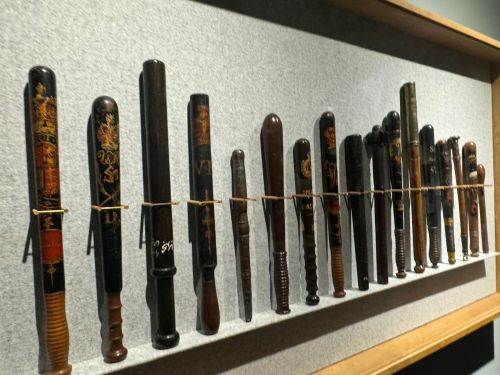
The National Museum of Justice is housed in the Old Crown Court and the former Nottinghamshire County Gaol, which date back to the 18th century. This venue has witnessed a myriad of legal proceedings, from the trials of infamous criminals to the day-to-day workings of the justice system. For instance, it has seen trials of notable criminals, including the infamous Nottinghamshire smuggler, and it played a role during the turbulent times of the 19th century when debates around prison reform gained momentum. You can read about Richard Thomas Parker, the last man to be publicly executed and who was hanged outside the building here. The building itself is steeped in decade upon decade of history, with its architecture reflecting the evolution of legal practices over the centuries. For example, High Pavement and the spot where the gallows once stood.
By visiting the museum, it is possible to trace the origins of the British legal system, exploring how societal values and norms have shaped the laws we live by today. The National Museum of Justice serves as a reminder that justice is not a static concept; it evolves as society changes, adapting to new challenges and perspectives. For example, one of my favourite exhibits was the bench from Bow Street Magistrates Court. The same bench where defendants like Oscar Wilde, Mick Jagger and the Suffragettes would have sat on during each of their famous trials. This bench has witnessed everything from defendants being accused of hacking into USA Government computers (Gary McKinnon), Gross Indecency (Oscar Wilde), Libel (Jeffrey Archer), Inciting a Riot (Emmeline Pankhurst) as well as Assaulting a Police Officer (Miss Dynamite).
Understanding this rich history invites visitors to contextualize the legal system and appreciate the ongoing struggle for a just society.
Engaging Exhibits
The National Museum of Justice is more than just a museum; it is an interactive experience that invites visitors to engage with the past. The exhibits are thoughtfully curated to provide a comprehensive understanding of the legal system and its historical context. Among the highlights are:



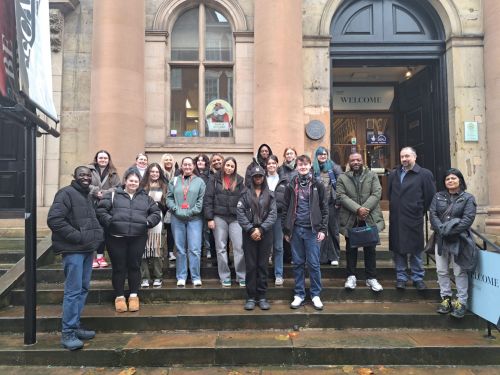
1. The Criminal Courtroom: Step into the courtroom where real trials were once held. Here, visitors can learn about the roles of various courtroom participants, such as the judge, jury, and barristers. This is the same room that the Criminology staff and students gathered in at the end of the day to share our reflections on what we had learned from our trip. Most students admitted that it had reinforced their belief that our system of justice had not really changed over the centuries in that marginalised communities still were not dealt with fairly.
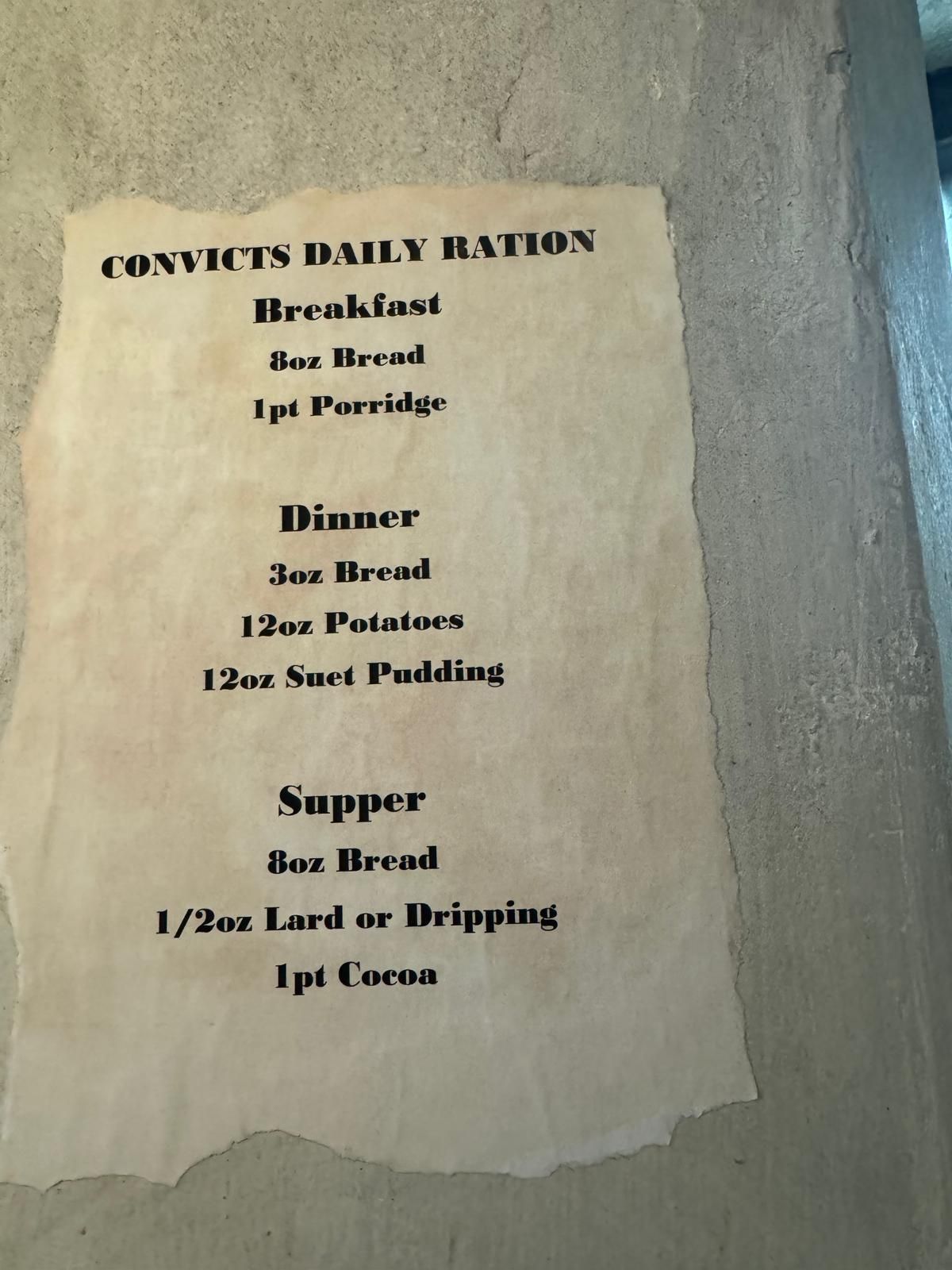
2. The Gaol: We delved into the grim reality of life in prison during the Georgian and Victorian eras. The gaol section of the gallery offers a sobering look at the conditions inmates faced, emphasizing the societal implications of punishment and rehabilitation. For example, every prisoner had to pay for his/ her own food and once their sentence was up, they would not be allowed to leave the prison unless all payments were up to date. The stark conditions depicted in this exhibit encourage reflections on the evolution of prison systems and the ongoing debates surrounding rehabilitation versus punishment. Eventually, in prisons, women were taught skills such as sewing and reading which it was hoped may better their chances of a successful life in society post release. This was an evolution within the prison system and a step towards rehabilitation of offenders rather than punishment.
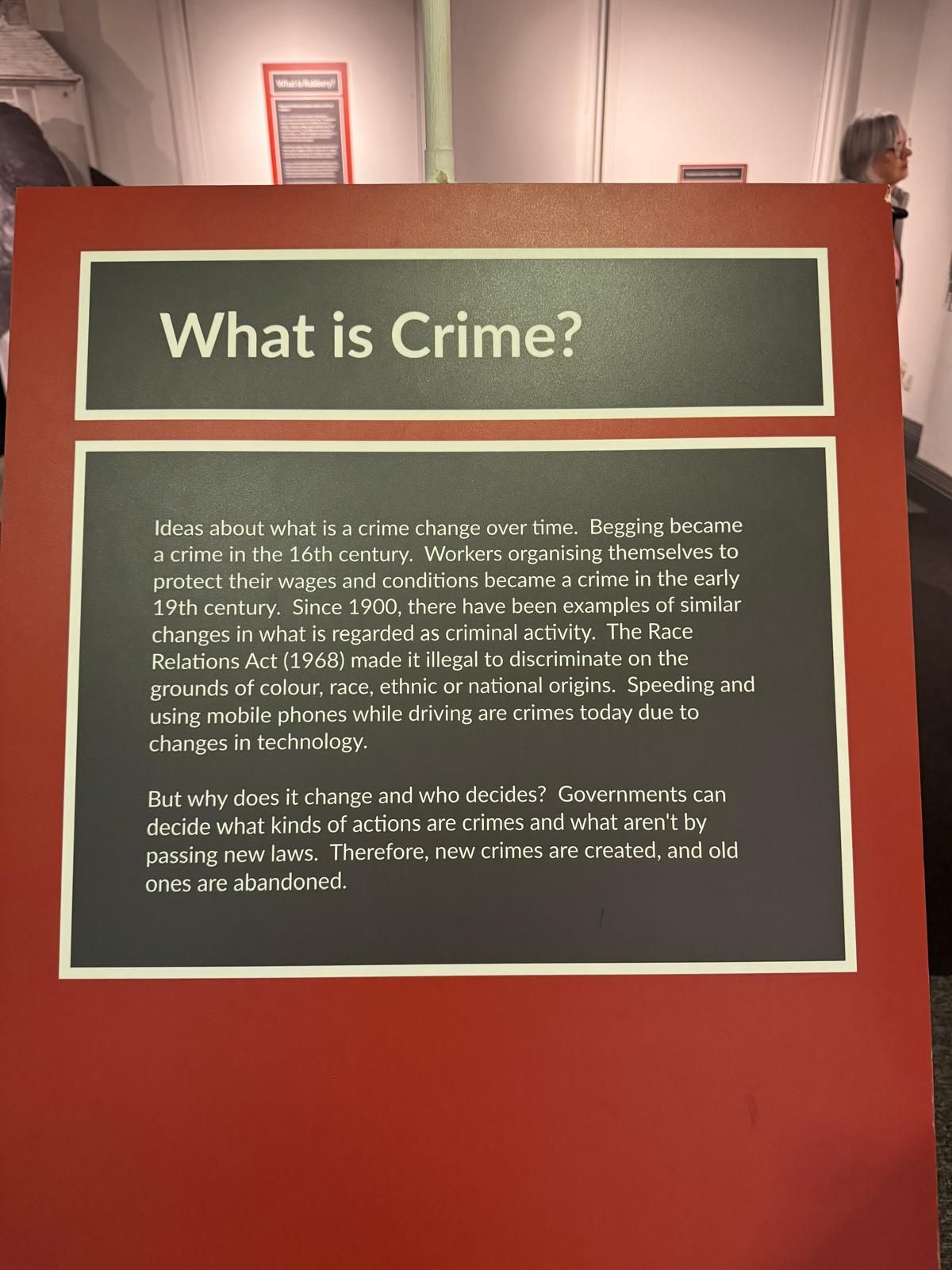
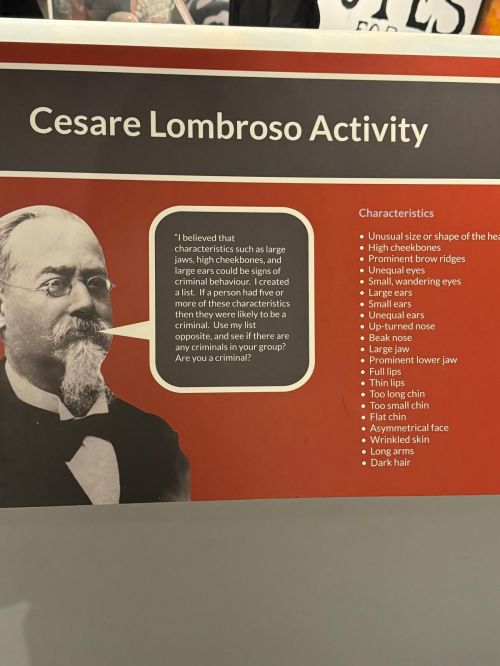
3. The Crime and Punishment Exhibit: This exhibit examines the relationship between crime and society, showcasing the changing perceptions of criminal behaviour over time. For example, one famous Criminologist of the day Cesare Lombroso, once believed that it was possible to spot a criminal based on their physical appearance such as high cheekbones, small ears, big ears or indeed even unequal ears. Since I was not familiar with Lombroso or his work, I enquired with the Criminology department as to studies that he used to reach the above conclusions. Although I believe he did carry out some ‘chaotic’ studies, it really reminded me that it is possible to make statistics say whatever it is you want them to say. This is the same point in relation to the law generally. As a lawyer I can make the law essentially say whatever I want it to say in the way I construct my arguments and the sources I include. Overall, The Inclusions of such exhibits raises and attempts to tackle difficult questions about personal and societal morality, justice, and the impact of societal norms on individual actions. By examining such leading theories of the time and their societal reactions, the exhibit encourages visitors to consider the broader implications of crime and the necessity of reform within the justice system. Do you think that today, deciding whether someone is a criminal based on their physical appearance would be acceptable? Do we in fact still do this? If we do, then we have not learned the lessons from history or really moved on from Cesare Lombroso.
Lessons on Justice and Society
The National Museum of Justice is not merely a historical site; it also serves as a platform for discussions about contemporary issues related to justice. Through its exhibits and programs, our group was invited to reflect on essentially- The Evolution of Justice: Understanding how laws have changed (or not!) over time helps us appreciate the progress (or not!) made in human rights and justice and with particular reference to women. It also encourages us to consider what changes may still be needed. For example, we were incredibly privileged to be able to access the archives at the museum and handle real primary source materials. We, through official records followed the journey of some women and girls who had been sent to reform schools and prisons. Some were given extremely long sentences for perhaps stealing a loaf of bread or reel of cotton. It seemed to me that just like today, there it was- the huge link between poverty and crime. Yet, what have we done about this in over two or three hundred years? This focus on historical cases illustrates the importance of learning from the past to inform present and future legal practices.
– The Importance of Fair Trials: The gallery emphasizes the significance of due process and the presumption of innocence, reminding us that justice must be impartial and equitable. In a world where public opinion can often sway perceptions of guilt or innocence, this reminder is particularly pertinent. The National Museum of Justice underscores the critical role that fair trials play in maintaining the integrity of the legal system. For example, if you were identified as a potential criminal by Cesare Lombroso (who I referred to above) then you were probably not going to get a fair trial versus an individual who had none of the characteristics referred to by his studies.
– Societal Responsibility: The exhibits prompt discussions about the role of society in shaping laws and the collective responsibility we all share in creating a just environment. The National Museum of Justice encourages visitors to think about their own roles in advocating for justice, equality, and reform. It highlights that justice is not solely the responsibility of legal professionals but also of the community at large.
– Ethics and Morality: The museum offers a platform to explore ethical dilemmas and moral questions surrounding justice. Engaging with historical cases can lead to discussions about right and wrong, prompting visitors to consider their own beliefs and biases regarding justice.
Conclusion
The National Museum of Justice in Nottingham is a remarkable destination that beautifully intertwines history, education, and advocacy for justice. By exploring its rich exhibits and engaging with its thought-provoking themes, visitors gain a deeper understanding of the complexities surrounding justice and its vital role in society. Whether you are a history buff, a legal enthusiast, a Criminologist or simply curious about the workings of justice, the National Museum of Justice offers a captivating journey that will leave you enlightened and inspired.
As we navigate the complexities of the modern world, it is essential to remember the lessons of the past and continue striving for a fair and just society for all. The National Museum of Justice stands as a powerful testament to the ongoing quest for justice, inviting us all to be active participants in that journey. In doing so, we honour the legacy of those who have fought for justice throughout history and commit ourselves to ensuring that the principles of fairness and equity remain at the forefront of our society. Sitting on that same bench that Emmeline Pankhurst once sat really reminded me of why I initially studied law.
The main thought that I was left with as I left the museum was that justice is not just a concept; it is a lived experience that we all contribute to shaping.

Share this:


SUPREME COURT VISIT WITH MY CRIMINOLOGY SQUAD!

Author: Dr Paul Famosaya
This week, I’m excited to share my recent visit to the Supreme Court in London – a place that never fails to inspire me with its magnificent architecture and rich legal heritage. On Wednesday, I accompanied our final year criminology students along with my colleagues Jes, Liam, and our department head, Manos, on what proved to be a fascinating educational visit. For those unfamiliar with its role, the Supreme Court of the United Kingdom stands at the apex of our legal system. It was established in 2009, and serves as the final court for all civil cases in the UK and criminal cases from England, Wales, and Northern Ireland. From a criminological perspective, this institution is particularly significant as it shapes the interpretation and application of criminal law through precedent-setting judgments that influence every level of our criminal justice system

7:45 AM: Made it to campus just in the nick of time to join the team. Nothing starts a Supreme Court visit quite like a dash through Abington’s morning traffic!

8:00 AM: Our coach is set to whisk us away to London!
Okay, real talk – whoever designed these coach air conditioning systems clearly has a vendetta against warm-blooded academics like me! 🥶 Here I am, all excited about the visit, and the temperature is giving me an impromptu lesson in ‘cry’ogenics. But hey, nothing can hold us down!.

Picture: Inside the coach where you can spot the perfect mix of university life – some students chatting about the visit, while others are already practising their courtroom napping skills 😴
There’s our department Head of Departmen Manos, diligently doing probably his fifth headcount 😂. Big boss is channelling his inner primary school teacher right now, armed with his attendance sheet and pen and all. And yes, there’s someone there in row 5 I think, who’s already dozed off 🤦🏽♀️ Honestly, can’t blame them, it’s criminally early!
9:05 AM The dreaded M1 traffic

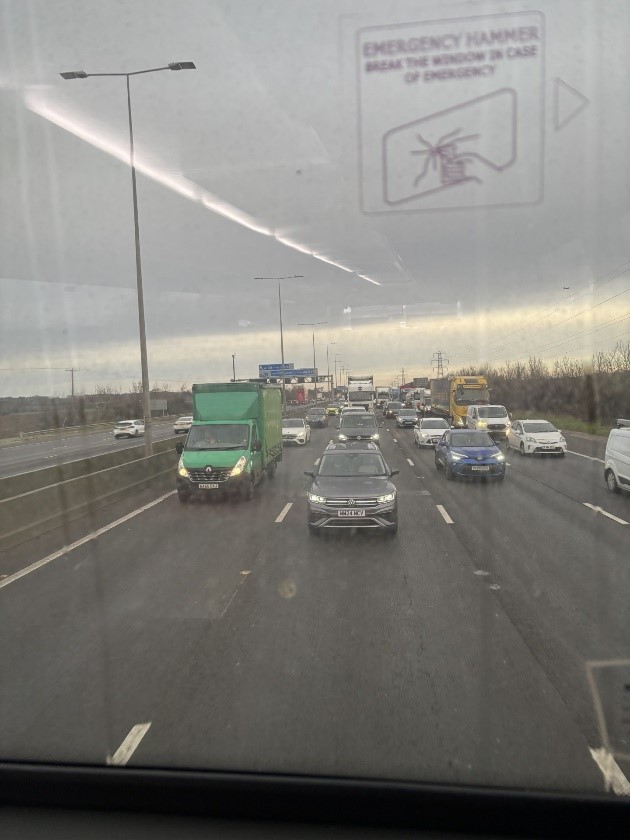
Sometimes these slow moments give us the best opportunities to reflect. While we’re crawling through, my mind wanders to some of the landmark cases we’ll be discussing today. The Supreme Court’s role in shaping our most complex moral and legal debates is fascinating – take the assisted dying cases for instance. These aren’t just legal arguments; they’re profound questions about human dignity, autonomy, and the limits of state intervention in deeply personal decisions. It’s also interesting to think about how the evolution of our highest court reflects (or sometimes doesn’t reflect) the society it serves. When we discuss access to justice in our criminology lectures, we often talk about how diverse perspectives and lived experiences shape legal interpretation and decision-making. These thoughts feel particularly relevant as we approach the very institution where these crucial decisions are made.

The traffic might be testing our patience, but at least it’s giving us time to really think about these issues.
10:07 AM – Arriving London – The stark reality of London’s inequality hits you right here, just steps from Hyde Park.
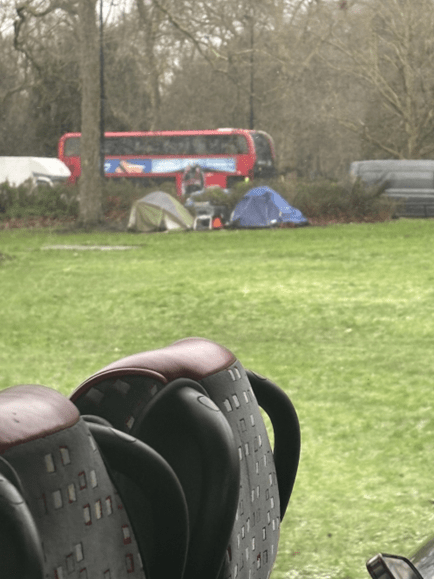
Honestly, this is a scene that perfectly summarises the deep social divisions in our society – luxury cars pulling up to the Dorchester where rooms cost more per night than many people earn in a month, while just meters away, our fellow citizens are forced to make their beds on cold pavements. As a criminologist, these scenes raise critical questions about structural violence and social harms. When we discuss crime and justice in our lectures, we often talk about root causes. Here they are, laid bare on London’s streets – the direct consequences of austerity policies, inadequate mental health support, and a housing crisis that continues to push more people into precarity. But as we say in the Nigerian dictionary of life lessons – WE MOVE!! 🚀
10:31 AM Supreme Court security check time

Security check time, and LISTEN to how they’re checking our students’ water bottles! The way they’re examining those drinks is giving: Nah this looks suspicious 🤔

So there I am, breezing through security like a pro (years of academic conferences finally paying off!). Our students follow suit, all very professional and courtroom-ready. But wait for it… who’s that getting the extra-special security attention? None other than our beloved department head Manos! 😂

The security guard’s face is priceless as he looks through his bags back and forth. Jes whispers to me ‘is Manos trying to sneak in something into the supreme court?’ 😂 Maybe they mistook his collection of snacks for contraband? Or perhaps his stack of risk assessment forms looked suspicious? 😂 There he is, explaining himself, while the rest of us try (and fail) to suppress our giggles. He is a free man after all.
10: 44AM Right so first stop, – Court Room 1.


Our tour guide provided an overview of this institution, established in 2009 when it took over from the House of Lords as the UK’s highest court. The transformation from being part of the legislature to becoming a physically separate supreme court marked a crucial step in the separation of powers in the country’s legislation. There’s something powerful about standing in this room where the Justices (though they usually sit in panels of 5 or 7) make decisions. Each case mentioned had our criminology students leaning in closer, seeing how theoretical concepts from their modules materialise in this very room.
10:59 AM Moving into Court 2, the more modern one!


After exploring Courtroom 1, we moved into Court Room 2, and yep, I also saw the contrast! And apparently, our guide revealed, this is the judges’ favourite spot to dispense justice – can’t blame them, the leather chairs felt lush tbh!
Speaking of judges, give it up for our very own Joseph Buswell who absolutely nailed it when the guide asked about Supreme Court proceedings! 👏🏾 As he correctly pointed out, while we have 12 Supreme Court Justices in total, they don’t all pile in for every case. Instead, they work in panels of 3 or 5 (always keeping it odd to avoid those awkward tie situations). 👏🏾 And what makes Court Room 2 particularly significant for public access to justice the cameras and modern AV equipment which allow for those constitutional and legal debates to be broadcast to the nation. Spot that sneaky camera right at the top? Transparency level: 100% I guess!

The exhibition area

The exhibition space was packed with rich historical moments from the Supreme Court’s journey. Among the displays, I found myself pausing at the wall of Justice portraits. Let’s just say it offered quite the visual commentary on our judiciary’s journey towards representation…

Beyond the portraits, the exhibition showcased crucial stories of landmark judgments that have shaped our legal landscape. Each case display reminded us how crucial diverse perspectives are in the interpretation and application of law in our multicultural society.

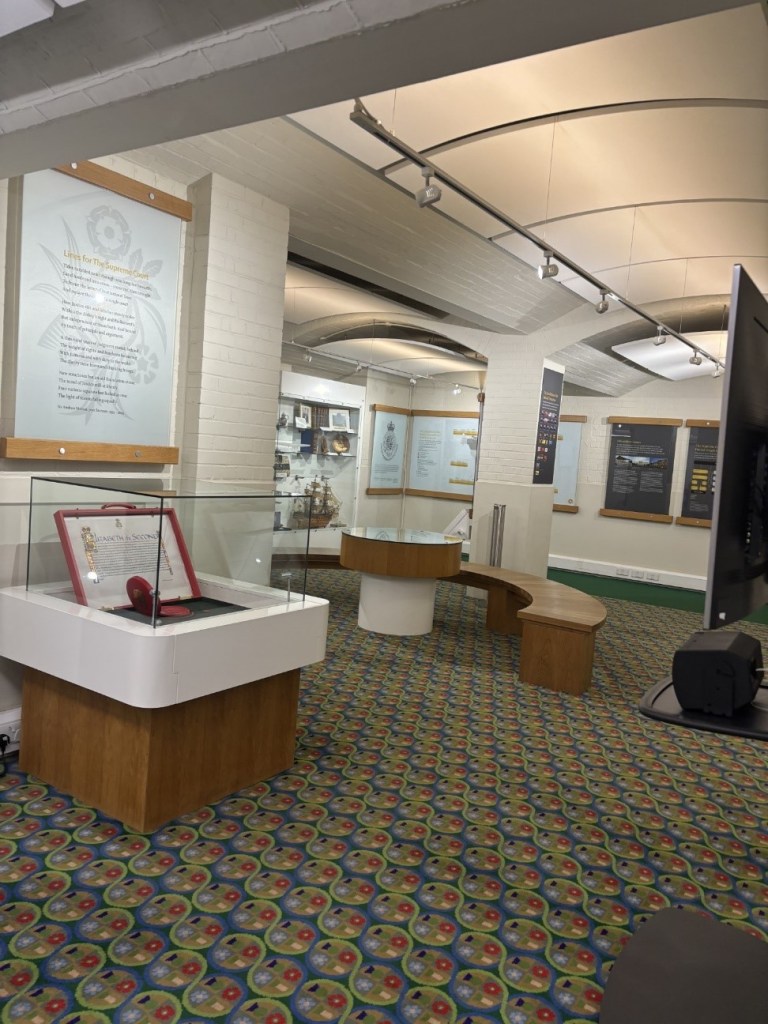

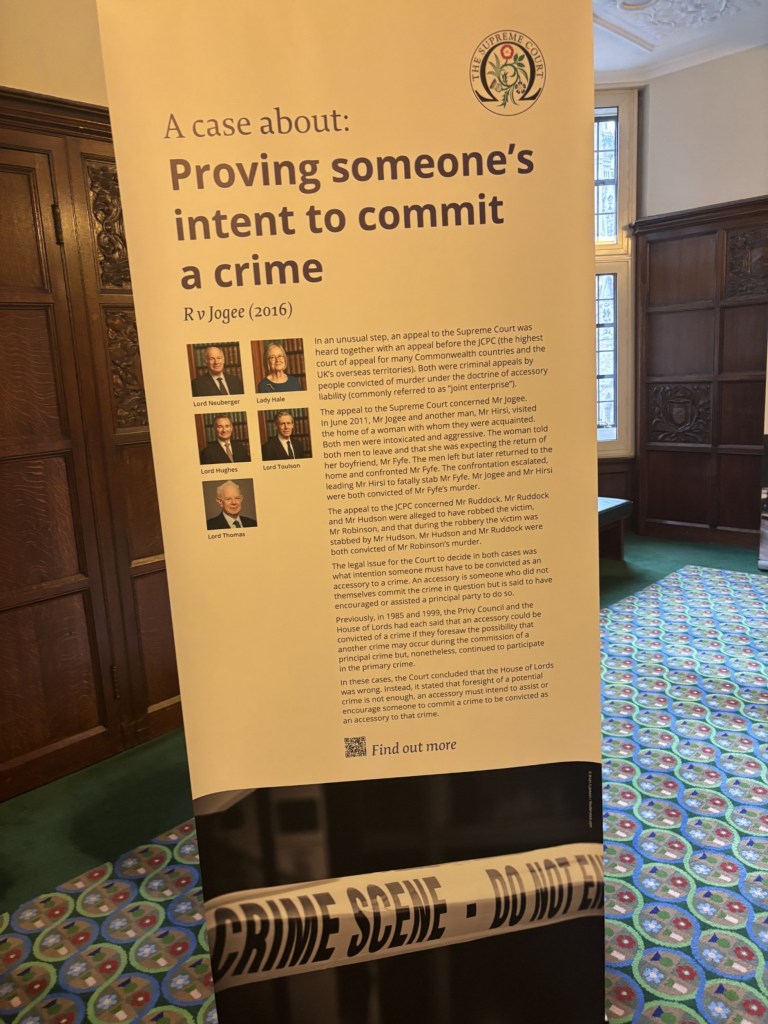
11: 21AM Moving into Court 3, home of the Judicial Committee of the Privy Council (JCPC)

The sight of those Commonwealth flags tells a powerful story about the evolution of colonial legal systems and modern voluntary jurisdiction. Our guide explained how the JCPC continues to serve as the highest court of appeal for various independent Commonwealth countries. The relationship between local courts in these jurisdictions and the JCPC raises critical questions about legal sovereignty and judicial independence and the students were particularly intrigued by how different legal systems interact within this framework – with each country maintaining its own laws and legal traditions, yet looks to London for final decisions.

Breaktime!!!!
While the group headed out in search of food, Jes and I were bringing up the rear, catching up after the holiday and literally SCREAMING about last year’s Winter Wonderland burger and hot dog prices (“£7.50 for entry too? In this Keir Starmer economy?!😱”). Anyway, half our students had scattered – some in search of sustenance, others answering the siren call of Zara (because obviously, a Supreme Court visit requires a side of retail therapy 😉).


But here’s the moment that had us STUNNED – right there on the street, who should come power-walking past but Sir Chris Whitty himself! 😱 England’s Chief Medical Officer was on a mission, absolutely zooming past us like he had an urgent SAGE meeting to get to 🏃♂️. That man moves with PURPOSE! I barely had time to nudge Jes before he’d disappeared. One second he was there, the next – gone! Clearly, those years of walking to press briefings during the pandemic have given him some serious speed-walking skills! 👀
3:30 PM – Group Photo!
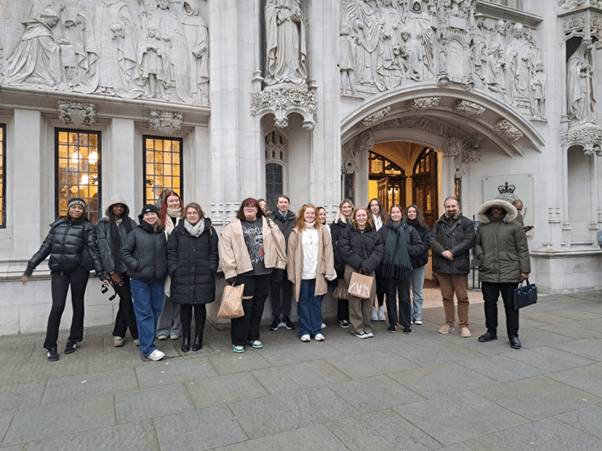
Looking at these final year criminology students in our group photo though! Even with that criminal early morning start (pun intended 😅), they made it through the whole Supreme Court experience! Big shout out to all of them 👏🏾👏🏾👏🏾👏🏾👏🏾👏🏾 Can you spot me? I’m the one on the far right looking like I’m ready for Arctic exploration (as Paula mentioned yesterday), not London weather! 🥶 Listen, my ancestral thermometer was not calibrated for this kind cold today o! Had to wrap up in my hoodie like I was jollof rice in banana leaves – and you know we don’t play with our jollof! 😤
4:55 PM Heading Back To NN

On the journey back to NN, while some students dozed off (can’t blame them – legal learning is exhausting!), I found myself reflecting on everything we’d learned. From the workings of the highest court in our land to the stark realities of social inequality we witnessed near Hyde Park, today brought our theoretical classroom discussions into sharp focus. Sitting here, watching London fade into the distance, I’m reminded of why these field trips are so crucial for our students’ understanding of justice, law, and society.


Listen, can we take a moment to appreciate our driver though?! Navigating that M1 traffic like a BOSS, and getting us back safe and sound! The real MVP of the day! 👏🏾👏🏾👏🏾👏🏾👏🏾👏🏾
And just like that, our Supreme Court trip comes to an end. From early morning rush to security check shenanigans, from spotting Chief Medical Officer on the streets to freezing our way through legal history – what a DAY!
To my amazing final years who made this trip extra special – y’all really showed why you’re the future of criminology! 👏🏾 Special shoutout to Manos (who can finally put down his attendance sheet 😂), Jes, and Liam for being the dream team! And to London… boyyyy, next time PLEASE turn up the heat! 🥶
As we all head our separate ways, some students were still chatting about the cases we learned about (while others were already dreaming about their beds 😴), In all, I can’t help but smile – because days like these? This is what university life is all about!
Until our next adventure… your frozen but fulfilled criminology lecturer, signing off! 🙌
Share this:


Just semantics?

This summer has seen the opening of the first secure school in England and Wales. The idea of secure schools was first introduced in 2016 in line with reforming the youth secure estate given a wide range of failings across institutions and harms experienced by children placed in there. The original proposed date for opening one of the schools was 2020; but what is a four-year delay? In 2022 the National Audit Office reported the refurbishment of Medway Secure Training Centre (closed down in March 2020 following the harrowing findings by Panorama), where the new secure school would be, was costing approximately £36.5 million (National Audit Office, 2022). But will this new secure school actually change something within the youth secure estate, or this is more of the same but with a new sparkly name?
Oasis Restore (the first secure school in England and Wales) opened this summer and can hold up to 49 children. It is registered jointly as a Secure Children’s Home (SCH) and a secure academy which has raised concerns by Ofsted due to difference in size of Oasis Restore in comparison to other SCHs. Education is central to the secure school (although haven’t we heard this before with Secure Training Centres), with comments from Youth Justice Board (YJB) Chief Executive Steph Roberts-Bibby comparing Oasis Restore with University accommodation (Youth Justice Board, 2024). Apparently, the new secure school is a far cry from the unsafe, violent, prisons which already exist in the youth secure estate (SCT and YOIs). On a tour of the secure school earlier in the year, the Chief Executive was very positive about the physical environment and philosophies underpinning Oasis Restore where ‘strong relationships between staff and children are at the heart of the Oasis model’ and the importance of ‘having a space promoting learning, togetherness and care’ as being essential in line with rehabilitation (Youth Justice Board, 2024). So far, so good. The right words are being uttered, changes appear to have been made, but… we have been here before. The same rhetoric of the child’s best interests being promoted and being seen as ‘children first’: which is good. But is this round of reform just more of the same with different semantics?
End Child Imprisonment (2024) demonstrates how child imprisonment, which Oasis Reform still is, is beyond reform. There are ample examples of how the Youth Secure Estate has historically, and remains, a harmful unsafe environment which does not address the needs of the children they come into contact with. Missing from the positive comments from the Chief Executive of the YJB is the highlighting that the children who come into contact with the YJS are incredibly vulnerable and have often experienced traumas before their incarceration. The language is still all wrong: the myriad of challenges these children have already faced and will face within the YJS remain overlooked. In 2023 the United Nations Committee on the Rights of the Child urged the UK to introduce legislation directly prohibiting the use of solitary confinement, due the continuing harms/findings of its use: but so far, no comment from the UK Government. Time and time again, we see reforms brought in but with little to no actual change or improvement. Will Oasis Restore be the face of change of just another failure in a long line of failing reforms?
Something which rings true: “A recurrent theme in the history of child imprisonment is that evidence of failure and maltreatment is met with promises of reform which too frequently involve semantic amendment rather than changes of substance” (End Child Imprisonment, 2024, p.28). And as John Rawls argues when thinking about justice, if an institution cannot be reformed then it should be abolished. Is it finally time to abolish the child prisons which exist within society?
References:
End Child Imprisonment (2024) Why child imprisonment is beyond reform: A review of the evidence August 2024. [online] Available at: https://article39.org.uk/wp-content/uploads/2024/08/Why-child-imprisonment-is-beyond-reform.-A-review-of-the-evidence-August-2024.pdf [Accessed 14th October 2024].
Monster Ztudio/Shutterstock (2017) Change. [Online] Available at: https://ziplinelogistics.com/blog/navigating-change/ [Accessed 21.10.24].
National Audit Office (2022) Children in custody: secure training centres and secure schools. [online] London: National Audit Office. Available at: https://www.nao.org.uk/wp-content/uploads/2022/04/Children-in-custody-secure-training-centres-and-secure-schools.pdf [Accessed 17.10.24].
Rawls, J. (1971/1999) A Theory of Justice. Oxford: Oxford University Press
Youth Justice Board (2024) Inside the Oasis Restore Secure School. GOV.UK [online]. Available at: https://www.gov.uk/government/news/inside-the-oasis-restore-secure-school [Accessed 17.10.24]
Share this:


A visual walk around a panopticon prison in the city of “Brotherly Love”
Conferences…people even within academia have views on them. This year the American Society of Criminology hosted its annual meeting in Philadelphia. In the conference we had the opportunity to talk about course development and the pedagogies in criminology. Outside the conference we visited Eastern State Penitentiary one of the original panopticon prisons…now a decaying museum on penal philosophy and policy.

The bleak corridors of a panopticon prison

the walls are closing in and there is only light from above

these cells smell of decay; they were the last residence of those condemned to death

the old greenhouse; now a glass/concrete structure…then a place to plant flowers. Even in the darkest places life finds a way to persevere

isolation: a torture within an institution of violence. The people coming out will be forever scared as time leaves the harshest wounds
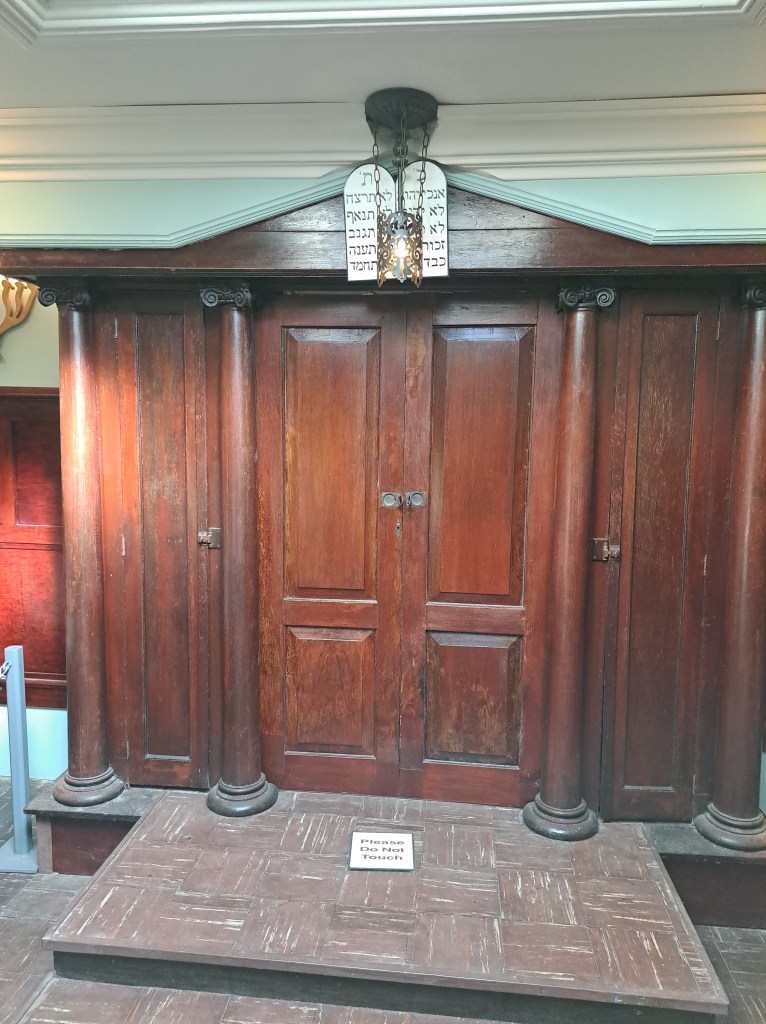
a place of worship: for some the only companion to abject desperation; for those who did not lose their minds or try to end their lives; faith kept them at least alive.

the yard is monitored by the guards at the core; the chained prisoners will walk outside or get some exercise but only if they behave. To be outside in here is a privilege

the corridors look identical; you become disoriented and disillusioned

everything here conjures images of pain

an ostentatious building, build back in the 19th century to lock in criminals. It housed a new principled idea, a new system on penal reform. the first penitentiary of its kind. Nonetheless it never stopped being an institution of oppression…it closed in 1970.
The role of the criminologist (among others) is to explain, analyse and discuss our responses to crime, the systems we use and the strategies employed. So before a friendly neighbour tells you that sending people to an island or arming the police with guns or giving juveniles harsher penalties, they better talk to a criminologist first.
As a final thought, I leave you with this…there are people who left the prison broken but there are those who died in this prison. Eleven people tried to escape but were recaptured. Once you are sent down, the prison owns you.
Share this:


The Origins of Criminology

The knife was raised for the first time, and it went down plunging into naked flesh; a spring of blood flowed cascading and covering all in red. The motion was repeated several times. Abel fell to his death and according to scriptures this was the first crime. Cain who wielded the knife roamed the earth until his demise. The fratricide that was committed was the first recorded murder and the very first crime. A colleague tried to be smart and pointed that the first crime is Eve’s violation in the garden with the apple, but I did point out that according to Helena Kennedy QC, she was framed! In the least Eve’s was a case of entrapment which is criminological but leaves the first crime vacant. So, murder it is! A crime of violence that separates aggressor and victim.
The response to this crime is retribution. In the scriptures a condemnation to insanity. In later years this crime formed the basis of the Mosaic Law inclusive of the 10 commandments and death as the indicative punishment. In the Ancien Régime the punishment became a spectacle on deterrence whilst the crowds denounced the evildoer as they were wheeled into the square! In modern times this criminality incorporated rehabilitation to offer the opportunity for the criminal to repent and make amends.
‘The first man who having enclosed a piece of ground bethought himself of saying “This is mine”’! This is an alternative interpretation of the first crime, according to Jean-Jacques Rousseau (1762/1993: 192). In The Social Contract he identifies the first crime very differently from the scriptures. In this case the crime is not directed at a person but the wider community. The usurping of land or good in any manner that violates the rights of others is crime because it places individualism ahead of the common good. As in this crime there is no violence against the person, the way in which we respond to it is different. Imperialism as a historical mechanism accepts the infringement of property, rights, and human rights as a necessity in human interactions. The law here is primarily protected for the one who claims the land rather than those who have been left homeless. In this case, crime is associated with all those mechanisms that protect privilege and property. Soon after titles of land emerged and thereafter titles of people owning other people follow. The land becomes an empire, and the empire allows a man and his regime to set the laws to protect him and his interests. Traditionally empires change from territories of land to centres of government and control of people. The land of the English, the land of the Finnish, the land of the Zulu. In this instance the King become a figure and custom law subverts natural law to accommodate authority and power.
These two “original” crimes represent the diversity in which criminology can be seen; one end is the interpersonal psychological rendition of criminality based on the brutality of violence whilst on the other end is an exploration of wider structural issues and the institutional violence they incorporate. The spectrum of variety criminology offers is a curse and a blessing in one. From one end, it makes the discipline difficult to specify, but it also allows colleagues to explore so many different issues. Regardless of the type of crime category for any person attracted to the discipline there is a criminology for all.
Between these two polar apart approaches, it is interesting to note their interaction. In that it can be seen the interaction of the social and historical priorities of crime given at any given time. This historical positivism of identifying milestones of progression is an important source of understanding the evolution of social progression and movements. Let’s face it, crime is a social construct and as such regardless of the perspective is indicative of the way society prioritises perceptions of deviance.
Arguably the crimes described previously denote different schools of thought and of course the many different perspectives of criminology. A perfectly contorted discipline that not only adapts following the evolution of crime but also theorises criminality in our society. When you are asked to describe criminology, numerous associations come to mind, “the study of crime and criminality” the “discipline of criminal behaviours” “the social construction of crime” “the historical and philosophical understanding of crime in society across time” “the representation of criminals, victims, and agents in society”. These are just a few ways to explain criminology. In this entry we explore the origins of two perspectives; theology and sociology; image that the discipline is influenced by many other perspectives; so consider their “origin” story. How different the first crime can be from say a psychological or a biological perspective. The origins of criminology is an ongoing tale of fascinating specialisms.
Rousseau, Jean-Jacques, (1762/1993), The Social Contract and Discourses, tr. from the French by G.D.H. Cole, (London: Everyman’s Library)
Share this:


Do You Remember the Time? At the Lynching Memorial
On September 11, 2021 I visited the Lynching Memorial, which is near the newly expanded Equal Justice Initiative Museum, From Enslavement to Mass Incarceration.
At the heart of the “National Memorial for Peace and Justice” (Lynching memorial) is a vast collection of giant, rusty metal, rectangular pillars, hanging tightly together like a neatly planned and well-looked-after orchard.
Etched in each are the names of (known) lynching victims by date.
We can see that, at times, entire families were lynched.

The pillars are hung so cleverly that one has to experience this artistic installation in person.
Nonetheless, the subject of white terrorism in the deep south is heavy,
Which is perhaps why Guests are invited to visit the nearby museum before the Memorial.
One needs time to prepare.
Naturally, sandwiched between enslavement and mass incarceration exhibits,
The museum also has an array of material on lynching.
This included a giant mural of jars surrounded by videos, infographic murals, maps and
An interactive register of every known lynching by county, date, state, and name.
I’m still stuck on the mural of snapshots of actual lynching advertisements, and
Pictures of actual news reports of victims’ final words.
These were the actual final words of folks etched forever in these hanging, rusty pillars.
Ostensibly, written by war correspondents.
Standing in awe of the museum’s wall of jars, I chatted with a tall Black man about my age.
He’d traveled here from a neighboring state with his teen son to, as he said,
“See how this stuff we go through today ain’t new.”
I recounted to him what a young man at the EJI memorial had showed me a few years ago:
A man’s name who’d been lynched early last century for selling loose cigarettes –
Just like Eric Garner!
Yet, even since then,
We’ve gotten the police murders of George Floyd and Breonna Taylor,
Or even Michael Brown, Walter Scott and Philando Castile.
Amadou Diallo was shot 19 times in 1999, standing on his own stoop
And while Jayland Walker got 46 bullets this year while fleeing on foot.
Tamir Rice!
Tamir Rice was a little boy.
A little boy playing in the park. But his mere presence terrified a white man.
So he called 9-1-1 and the police showed up and shot Tamir within seconds!
We can watch the tape.
All of these martyrs are included in the museum’s growing timelines (sigh).
After their own legal work in representing the wrongfully imprisoned for damn near life,
EJI began collecting jars of dirt near every known lynching, and
If invited by local officials, EJI would offer a memorial plaque and ceremony commemorating that community’s recognition of historic injustice(s).
An open field sits next to the suspended pillars, filled with a duplicate of each pillar.
These duplicates sit, having yet to be collected and properly dedicated by each county.
These communities are denied healing, and we know wounds fester.
The field of lame duplicates effectively memorializes the festering denial in our body politic.
There are far too many unrecorded victims and versions of white mob violence, and intimidation, not just barbarous torture and heinous murder.
Outside of these few sorts of memorials,
We do have to wonder how else this rich history has stayed in our collective memories.
Too many Black families were too traumatized to talk and didn’t want to pass it to their kids.
We know many fled after any minor incursion,
Just as someone had advised Emmet Till to do,
And there’s no accounting for them and the victims’ families who fled and
Even hid or discarded any news clippings they’d seen of the events.
Yet, whites must have kept record.
Did whites collect the newspaper ads or reports of a lynching they’d attended or hoped to?
They made and sold lynching postcards, curios, and other odd lynching souvenirs.
Where are the avid collectors?
Plus, apparently, terrorists don’t just kidnap and hang someone to death,
So what did they do with all the ears, noses, fingers, and genitals they cut off?
Or eyes they plucked out?
Or scalps they shaved?
Many victims pass out from the immense pain of being tortured and burned alive, but still
I doubt all those pieces and parts got thrown in the fire, because, of course,
Plenty of pictures show entire white families there to celebrate the lynching like (a) V-day.
And in many ways, it was, and
The whites looked as if they would’ve wanted to remember.
Looks can be deceiving, but the ways whites were also bullied into compliance is real.
Still, my mother swears that some white families’ heirlooms must include
Prized, preserved pieces of Nat Turner.
Ooh, wouldn’t that be a treasure that would be.
Plus, given the spate and state of anti-Black policing and violence,
Our democracy, nay, our Constitution itself, is as rusty as these pillars.
The pillars resting in the field remind us not only the work left to do, but also, it’s urgency.
How many more pillars may we still need?
How many amendments did will freedom take?
It goes to show how great thou art now!
See: Slave Ads at the EJI Museum
Share this:


Youth or Adult: can you tell?
This week’s blog begins with a game: youth or adult, secure estate in England and Wales. Below are some statements, and you simply need to guess (educated guesses please), whether the statement is about the youth, or adult secure estate. So, are the statements about children in custody (those under the age of 18 years old) or adults in custody (18+). When you’re ready…
- 70% decrease in custody in comparison to 10 years ago
- Segregation, A.K.A Solitary Confinement, used as a way of managing the most difficult individuals and those who pose a risk to themselves or others
- Racial disproportionality in relation to experiencing custody and being remanded to custody
- Self-harm is alarmingly high
- 1/3 have a known mental health disability
- Homelessness after release is a reality for a high proportion of individuals
- Over half of individuals released from custody reoffend, this number increases when looking at those sentenced to 6months of less
How many did you answer youth secure estate, and how many adult secure estate? Tally up! Did you find a 50/50 split? Did you find it difficult to answer? Should it be difficult to spot the differences between how children and adults are treated/experience custody?
All of the above relate specifically to children in custody. The House of Commons Committee (2021) have argued that the secure estate for children in England and Wales is STILL a violent, dangerous set of environments which do little to address the needs of children sentenced to custody or on remand. Across the academic literature, there is agreement that the youth estate houses some of the most vulnerable children within our society, yet very little is done to address these vulnerabilities. Ultimately we are failing children in custody! The Government said they would create Secure Schools as a custody option, where education and support would be the focus for the children sent here. These were supposed to be ready for 2020, and in all fairness, we have had a global pandemic to contend with, so the date was pushed to 2022: and yet where are they? Where is the press coverage on the positive impact a Secure School will make to the Youth estate? Does anyone really care? A number of Secure Training Centres (STCs) have closed down across the past 10 years, with an alarmingly high number of the institutions which house children in custody failing Ofsted inspections and HM Inspectorate of Prisons (2021) found violence and safety within these institutions STILL a major concern. Children experience bullying from staff, could not shower daily, experience physical restraint, 66% of children in custody experienced segregation which was an increase from the year prior (HM Inspectorate of Prisons, 2021). These experiences are not new, they are re-occurring, year-on-year, inspection after inspection: when will we learn?
The sad, angry, disgusting truth is you could have answered ‘adult secure estate’ to most of the statements above and still have been accurate. And this rings further alarm bells. In England and Wales, we are supposed to treat children as ‘children first, offenders second’. Yet if we look to the similarities between the youth and adult secure estate, what evidence is there that children are treated as children first? We treat all offenders the same, and we treat them appallingly. This is not a new argument, many have raised the same points and concerns for years, but we appear to be doing very little about it.
We are kidding ourselves if we think we have a separate system for dealing with children who commit crime, especially in relation to custody! It pains me to continue seeing, year on year, report after report, the same failings within the secure estate, and the same points made in relation to children being seen as children first in England and Wales: I just can’t see it in relation to custody- feel free to show me otherwise!
References:
House of Commons Committees (2021) Does the secure estate meet the needs of young people in custody? High levels of violence, use of force and self-harm suggest the youth secure estate is not fit for purpose [Online]. Available at: https://houseofcommons.shorthandstories.com/justice-youth-secure-estate/index.html. [Last accessed 4th April 2022].
HM Inspectorate of Prisons (2021) Children in Custody 2019-2020: An analysis of 12-18-year-old’s perceptions of their experiences in secure training centres and young offender institutions. London: Her Majesty’s Inspectorate of Prisons.
Share this:


A smorgasbord of thought (AKA a head full of magic)

Its been a few weeks since I’ve written a blog and whilst there are plenty of topics to pick from, I never quite got my head round writing about anything in depth. I’ve thought about a lot, I never stop thinking about a lot, some it meaningful and some of it not. I like to think that some of the stuff is quite profound but that’s just in my imagination, I think. Anyway, rather than trying to put together some deep and meaningful narrative about the state of the world I thought I’d provide a few highlights.
When I read Jes’ blog the other week about graffiti, I couldn’t help thinking that we do far too much to try to justify and somehow nullify the effects of criminality. For all our theorising and empathising as criminologists, we shouldn’t lose sight of the fact that crime results in victims and being a victim of crime is at best an unpleasant experience. So, I have to disagree with Jes on one point, grafitti is not art, its criminal damage, vandalism if you like. Very rarely have I ever gazed upon a graffiti covered bridge, wall, shop front, shutter, railway station siding or railway carriage and thought to myself, wow that’s nice. Let’s call it what it is.
I think it was the same week that I read a post on ‘LinkedIn’ about the silence surrounding the murder of Julia James, a 53-year-old Police Community Support Officer. The silence the author of the post was referring to was the contrast between the public response to Julia James’ death and that of Sarah Everard, a 33-year-old marketing executive. No vigil, no public outrage, no ‘claim the streets back’. I wondered what dictates the public response to such horrific events. Is it age, occupation, circumstance or just timing?
I watched the news this week somewhat bemused by the response of some industry chiefs and business owners. The airline industry is less than pleased with the government’s approach to relaxing of restrictions around travel and some business owners are apoplectic about the fact that the removal of restrictions might be delayed. It might be a bit simplistic to state this, but it seems that they value business more than lives.
As for those that went on holiday abroad, thinking they wouldn’t need to quarantine when they came back only to find that the rules changed, and they now have to. More fool you, maybe I’ve missed a trick here, but I don’t think the Covid virus and its mutations will wait for you to enjoy the rest of your holiday before spreading a little more. Don’t complain about quarantine nor the cost of testing, you put yourself in that position, now take some responsibility and suck it up instead of blaming someone else.
In a conversation, a friend of mine told me ‘the problem is people don’t like being told what to do’. This was said in the context of Covid and our discussion about the idiots that think any rules or guidance just doesn’t apply to them. The comment did however make me think about a paper I read some time ago by Storch (1975). When the new police were introduced into this country in 1829, there were few who looked upon them favourably. One of the main issues was simply that the populace did not like being restricted in their ‘immoral or illegal’ pastimes. We can have a debate about who makes the rules but it seems to me the most pressing point is that little has changed. Take off the rose-tinted glasses, there never was a golden era of policing, the police have never been liked and never will be. I wonder how the population would act if there were no police though?
I’m a little weary now, all of this thinking and writing has worn me out. Time for a lie down in a darkened room.
Share this:


The Case of Mr Frederick Park and Mr Ernest Boulton

As a twenty-first century cis woman, I cannot directly identify with the people detailed below. However, I feel it important to mark LGBT+ History Month, recognising that so much history has been lost. This is detrimental to society’s understanding and hides the contribution that so many individuals have made to British and indeed, world history. What follows was the basis of a lecture I first delivered in the module CRI1006 True Crimes and Other Fictions but its roots are little longer
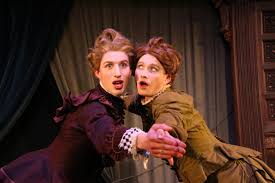
Some years ago I bought a very dear friend tickets for us to go and see a play in London (after almost a year of lockdowns, it seems very strange to write about the theatre).. I’d read a review of the play in The Guardian and both the production and the setting sounded very interesting. As a fan of Oscar Wilde’s writing, particularly The Ballad of Reading Gaol and De Profundis (both particularly suited to criminological tastes) and a long held fascination with Polari, the play sounded appealing. Nothing particularly unusual on the surface, but the experience, the play and the actors we watched that evening, were extraordinary. The play is entitled Fanny and Stella: The SHOCKING True Story and the theatre, Above the Stag in Vauxhall, London. Self-described as The UK’s LGBTQIA+ theatre, Above the Stag is often described as an intimate setting. Little did we know how intimate the setting would be. It’s a beautiful, tiny space, where the actors are close enough to just reach out and touch. All of the action (and the singing) happen right before your eyes. Believe me, with songs like Sodomy on the Strand and Where Has My Fanny Gone there is plenty to enjoy. If you ever get the opportunity to go to this theatre, for this play, or any other, grab the opportunity.

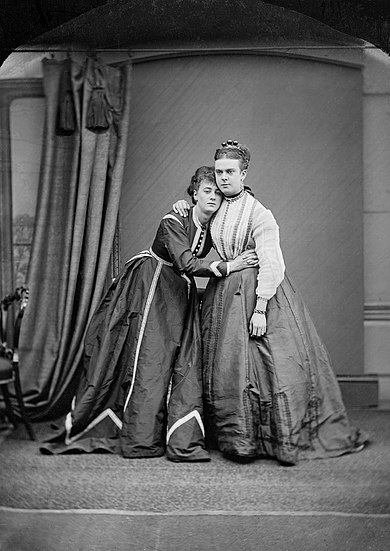
So who were Fanny and Stella? Christened Frederick Park (1848-1881) and Ernest Boulton (1848-1901), their early lives are largely undocumented beyond the very basics. Park’s father was a judge, Boulton, the son of a stockbroker. As perhaps was usual for the time, both sons followed their respective fathers into similar trades, Park training as an articled clerk, Boulton, working as a trainee bank clerk. In addition, both were employed to act within music halls and theatres. So far nothing extraordinary….
But on the 29 April 1870 as Fanny and Stella left the Strand Theatre they were accosted by undercover police officers;
‘“I’m a police officer from Bow Street […] and I have every reason to believe that you are men in female attire and you will have to come to Bow Street with me now”’
(no reference, cited in McKenna, 2013: 7)
Upon arrest, both Fanny and Stella told the police officers that they were men and at the police station they provided their full names and addresses. They were then stripped naked, making it obvious to the onlooking officers that both Fanny and Stella were (physically typical) males. By now, the police had all the evidence they needed to support the claims made at the point of arrest. However, they were not satisfied and proceeded to submit the men to a physically violent examination designed to identify if the men had engaged in anal sex. This was in order to charge both Fanny and Stella with the offence of buggery (also known as sodomy). The charges when they came, were as follows:
‘they did with each and one another feloniously commit the abominable crime of buggery’
‘they did unlawfully conspire together , and with divers other persons, feloniously, to commit the said crimes’
‘they did unlawfully conspire together , and with divers other persons, to induce and incite other persons, feloniously, to commit the said crimes’
‘they being men, did unlawfully conspire together, and with divers others, to disguise themselves as women and to frequent places of public resort, so disguised, and to thereby openly and scandalously outrage public decency and corrupt public morals’
Trial transcript cited in McKenna (2013: 35)
It is worth noting that until 1861 the penalty for being found guilty of buggery was death. After 1861 the penalty changed to penal servitude with hard labour for life.
You’ll be delighted to know, I am not going to give any spoilers, you need to read the book or even better, see the play. But I think it is important to consider the many complex facets of telling stories from the past, including public/private lives, the ethics of writing about the dead, the importance of doing justice to the narrative, whilst also shining a light on to hidden communities, social histories and “ordinary” people. Fanny and Stella’s lives were firmly set in the 19th century, a time when photography was a very expensive and stylised art, when social media was not even a twinkle in the eye. Thus their lives, like so many others throughout history, were primarily expected to be private, notwithstanding their theatrical performances. Furthermore, sexual activity, even today, is generally a private matter and there (thankfully) seems to be no evidence of a Victorian equivalent of the “dick pic”! Sexual activity, sexual thoughts, sexuality and so on are generally private and even when shared, kept between a select group of people.
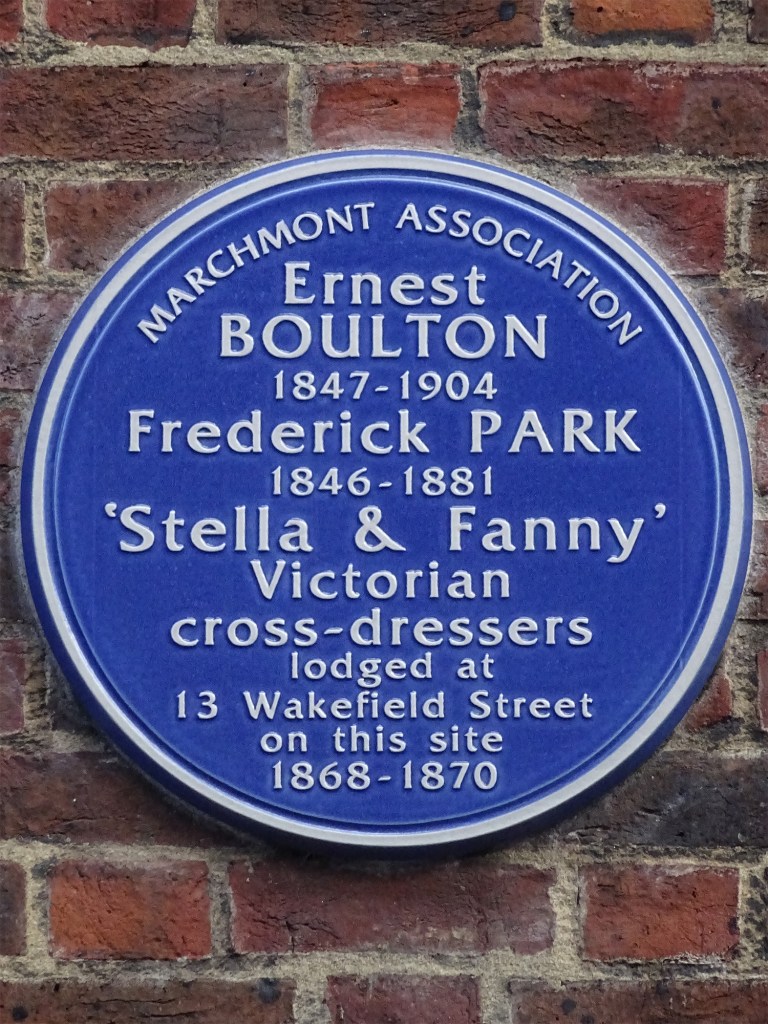
This means that authors working on historical sexual cases, such as that of Fanny and Stella, are left with very partial evidence. Furthermore, the evidence which exists is institutionally acquired, that is we only know their story through the ignominy of their criminal justice records. We know nothing of their private thoughts, we have no idea of their sexual preferences or fantasies. Certainly, the term ‘homosexual’ did not emerge until the late 1860s in Germany, so it is unlikely they would have used that language to describe themselves. Likewise, the terms transvestite, transsexual and transgender did not appear until 1910s, 1940s and 1960s respectively so Fanny and Stella could not use any of these as descriptors. Despite the blue plaque above, we have no evidence to suggest that they ever described themselves as ‘cross-dressers’ In short, we have no idea how either Fanny or Stella perceived of themselves or how they constructed their individual life stories. Instead, authors such as Neil McKenna, close the gaps in order to create a seamless narrative.
McKenna calls upon an excellent range of different archival material for his book (upon which the play is based). These include:
- National Archives in Kew
- British Library/British Newspaper Library, London
- Metropolitan Police Service Archive, London
- Wellcome Institute, London
- Parliamentary Archives, London
- Libraries of the Royal Colleges of Surgeons, London and Edinburgh
- National Archives of Scotland
Nevertheless, these archives do not contain the level of personal detail, required to tell a fascinating story. Instead the author draws upon his own knowledge and understanding to bring these characters to life. Of course, no author writes in a vacuum and we all have a standpoint which impacts on the way in which we understand the world. So whilst, we know the institutional version of some part of Fanny and Stella’s life, we can never know their inner most thoughts or how they thought of themselves and each other. Any decision to include content which is not supported by evidence is fraught with difficulty and runs the risk of exaggeration or misinterpretation. A constant reminder that the two at the centre of the case are dead and justice needs to be done to a narrative where there is no right of response.
It is clear that both the book and the play contain elements that we cannot be certain are reflective of Fanny and Stella’s lives or the world they moved in. The alternative is to allow their story to be left unknown or only told through police and court records. Both would be a huge shame. As long as we remember that their story is one of fragile human beings, with many strengths and frailties, narratives such as this allow us a brief glimpse into a hidden community and two, not so ordinary people. But we also need to bear in mind that in this case, as with Oscar Wilde, the focus is on the flamboyantly illicit and tells us little about the lived experience of some many others whose voices and experiences are lost in time..
References
McKenna, Neil, (2013), Fanny and Stella: The Young Men Who Shocked Victorian England, (London: Faber and Faber Ltd.) Norton, Rictor, (2005), ‘Recovering Gay History from the Old Bailey,’ The London Journal, 30, 1: 39-54 Old Bailey Online, (2003-2018), ‘The Proceedings of the Old Bailey,’ The Old Baily Online, [online]. Available from: https://www.oldbaileyonline.org/ [Last accessed 25 February 2021]
Share this:


More Grotesque Black Death #BlackenAsiaWithLove
Each time I turn on the news I see more black death.
It’s grotesque. In my country, ‘Merika, there are peaceful protestors all around the country combatting police violence. Initially, when George Floyd was murdered, these peaceful protests spread across the world, as folks rose in solidarity for peace against white supremacy in America. Many more Black bodies have died in dubious police circumstances since. In the popular rhetoric, sadly, the peaceful protestors are held to account for the violence sweeping our streets. One of Dr. King’s major battles was to convince a people who’d been born into a nation of violence, how to be peaceful; we are a nation born of violence. Dr. King believed and taught that “non-violent resistance… [is] a courageous confrontation of evil by the power of love” (King, Stride, 80). That was just to boycott the local busses in the 1950’s. Working people choosing to spend their hard-earned money as they pleased, and still Jim and Jane Crow showed up to verbally and physically harass each one of them. By the 60’s Black university students worked in solidarity with students of all colors to teach, preach and practice non-violent civil disobedience.

It’s in bad faith to focus on the rioters and overlook those attempting to exercise their first amendment rights. I say “attempting,” because even the lone Black woman in Kentucky house of representatives, Attica Scott, can be arrested in our hometown for peacefully protesting #JusticeForBreonnaTaylor, #AtticaScott4Ky. Without the 1st amendment, there’s no second. And let’s not forget all those anti-mask protestors that showed up at city and state halls around the country – in 2020 – armed to the teeth, so-called peacefully protesting any ordinance to protect ‘us’ from the spread of CoVit. How peacefully will the po-po resolve this conflict instigated by their own violence? The white supremacist way, of course. Look at 45, head hood and chief of their klan. “’Cause God’s stopped keeping score,” as George Michael sang.
Back then leading the cause of segregation, we had white supremacists like 4-term Alabama governor George Wallace, and Birmingham public safety commissioner, Bull Connor, (in)famous for sending in fire hoses and attack dogs against children peacefully protesting. Right now, there are all kinds of icons named after ole George. Just a few years ago, I went to my little cousin’s high school basketball game in Tallassee, Alabama, and the public high school gym was named after good ole George’s wife, who’d held onto his governorship for a bit because law forbade him from serving consecutive terms. It’s as if only a few strong survivors believe us when we speak about how white supremacy has its hooves on our necks. It tuns out 8 minutes and 46 seconds changed that.

Read, will you, what good ole George said in a 1986 interview about sending in troops to squash the peaceful protests in Birmingham, after those four little girls got bombed in the 16th Street Baptist Church, on a Sunday in September 1963. As you’d expect, no one was held to account. The good governor says:
“I sent Colonel Lingo there because they were, there was some trouble there, we tried to maintain law and order, we’re not trying to maintain segregation there, it was a matter of law and order, and uh, as I recall that nobody got hurt in any of the things, in the demonstrations, uh, except that whoever those evil mean, minded men were who had something to do with the blowing up of that church.”

Sound familiar? Sounds like 45. Like then, today’s protestors are regularly intimidated and assaulted by the police and troops. This too often seals the cycle of violence instigated by the police, who are further instigated by the commanders and their chief.
It’s grotesque, and understandably, even more grotesque to look at, if you’ve rarely looked at it before, tucked it away, and not thought about it because it did not impact your daily life. “It’s hard to love, there’s so much to hate,” and you sang along. You knew it was happening, but your eyes betrayed you, and because you didn’t see it in your neighborhood, in your schools and streets, you let your faith in humanity go.
You let yourself believe that we, Black people, did something to deserve to be the nightly feature on the news: Weather, sports, celebrities, national headlines, and the local Black criminal; that’s literally fed into our homes each night on the news. And if you’ve been spending your time with Fox and ilk, then certainly you’ve been trained in a language that pits them against us, and posits losers and sinners against the righteous folks like you who are just trying to make it in this world. How could the Blacks live such a radically different existence? You lie to yourself and say that they can’t, that all the opportunities they lose are theirs alone. It’s all down to individual decisions, just like you. We each chose our own fates, right? There’s no system, and certainly no systemic oppression. F #MeToo, too, you say… at home with only the family and kids to hear. The kids repeat it at school, grow up and vote like that. They cycle repeats, whiteness is rendered, effectively, invisible. Only the Blacks are not acting right.


 Thoughts from the criminology team