
Home » Higher Education (Page 5)
Category Archives: Higher Education

A month of Black history through the eyes of a white, privileged man… an open letter

Dear friends,
Over the years, in my line of work, there was a conviction, that logic as the prevailing force allows us to see social situations around (im)passionately, impartially and fairly. Principles most important especially for anyone who dwells in social sciences. We were “raised” on the ideologies that promote inclusivity, justice and solidarity. As a kid, I remember when we marched as a family against nuclear proliferation, and later as an adult I marched and protested for civil rights on the basis of sexuality, nationality and class. I took part in anti-war marches and protested and took part in strikes when fees were introduced in higher education.
All of these were based on one very strongly, deeply ingrained, view that whilst the world may be unfair, we can change it, rebel against injustices and make it better. A romantic view/vision of the world that rests on a very basic principle “we are all human” and our humanity is the home of our unity and strength. Take the environment for example, it is becoming obvious to most of us that this is a global issue that requires all of us to get involved. The opt-out option may not be feasible if the environment becomes too hostile and decreases the habitable parts of the planet to an ever-growing population.
As constant learners, according to Solon (Γηράσκω αεί διδασκόμενος)[1] it is important to introspect views such as those presented earlier and consider how successfully they are represented. Recently I was fortunate to meet one of my former students (@wadzanain7) who came to visit and talk about their current job. It is always welcome to see former students coming back, even more so when they come in a reflective mood at the same time as Black history month. Every year, this is becoming a staple in my professional diary, as it is an opportunity to be educated in the history that was not spoken or taught at school.
This year’s discussions and the former student’s reflections made it very clear to me that my idealism, however well intended, is part of an experience that is deeply steeped in white men’s privilege. It made me question what an appropriate response to a continuous injustice is. I was aware of the quote “all that is required for evil to triumph is for good men to do nothing” growing up, part of my family’s narrative of getting involved in the resistance, but am I true to its spirit? To understand there is a problem but do nothing about it, means that ultimately you become part of the same problem you identify. Perhaps in some regards a considered person is even worse because they see the problem, read the situation and can offer words of solace, but not discernible actions. A light touch liberalism, that is nice and inclusive, but sits quietly observing history written in the way as before, follow the same social discourses, but does nothing to change the problems. Suddenly it became clear how wrong I am. A great need to offer a profound apology for my inaction and implicit collaboration to the harm caused.
I was recently challenged in a discussion about whether people who do not have direct experience are entitled to a view. Do those who experience racism voice it? Of course, the answer is no; we can read it, stand against it, but if we have not experienced it, maybe, just maybe, we need to shut up and let other voices be heard and tell their stories. Black history month is the time to walk a mile in another person’s shoes.
Sincerely yours
M
[1] A very rough translation: I learn, whilst I grow, life-long learning.
Share this:


You can’t tell me what to do….
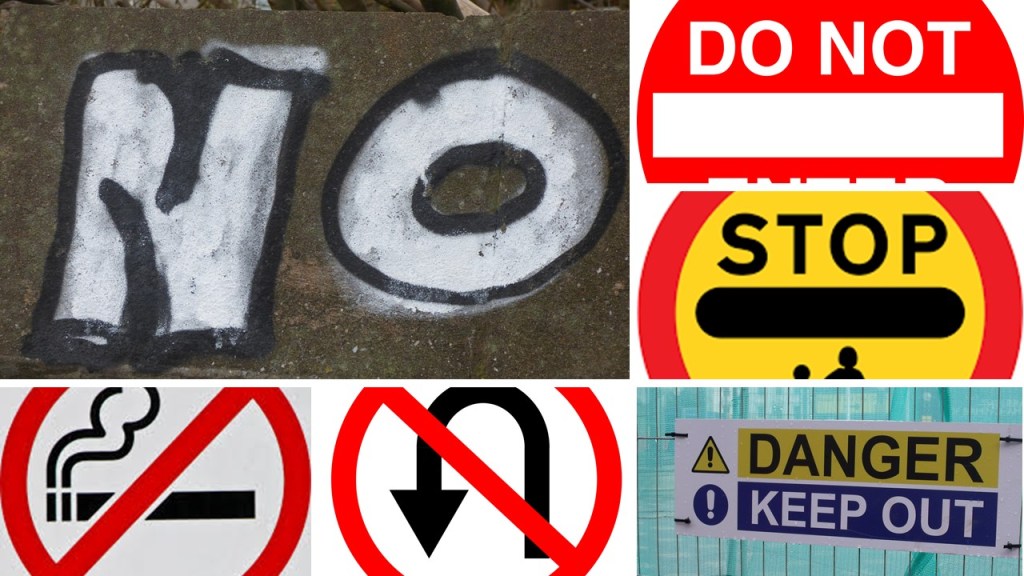
It seems that much criminological discussion centres on motivation. This ranges from focusing on the motivation to commit crime, the motivation to report victimisation, the motivation to work within the criminal justice system, all the way though to the motivation for punishment. In each of these circumstances, much is taken for granted, assumed and reacted to as if there were a consensus.
However, how much do we really know about motivation? To be sure, there are plenty of criminological theories focusing on individual explanations for criminality and deviance, particularly around psychopathy, personality and biology. Others, such as Classical theory assume that we are all the same, rational creatures motivated by the same factors. But take a moment and consider what motivates you? Are those factors positive or negative?
Let’s take the prison for example. According to some politicians, the media and other commentators, incarceration can punish and rehabilitate, frighten people out of crime whilst also empowering them to move away from crime. It offers an opportunity to desist from drug taking, whilst simultaneously enabling prisoners to develop a drug habit. Prison can offer a haven from social problems on the outside, whilst also creating a dangerous environment on the inside and these are just a few of the many pronouncements on the prison. Although oppositional, these differing narratives all indicate the prison as a place of change; transformation, the only difference is whether this is positive or negative, in essence does prison make people better or worse?
Considering much of the blog’s readership is focused on education, it might be useful to apply the prison experience to our own personal motivations. Would it be helpful to have someone constantly telling you what to do? Escorting you to and from the toilet, the classroom, the workplace? Controlling your every move? Deciding when and what you eat? Determining if you can access a shower, the library, the gym and so on? Passing judgement on who can visit you and when they can come? Would these “motivational” factors inspire you to study more? What if you were locked in a very small room (think student accommodation) for hour upon end, would your essays be any better?
For me personally, all of the above, would not motivate; they might frighten or even terrify me. They would allow me to feel resentful, bitter, alienated, perhaps even aggressive. Maybe I would become depressed, self-harm, or turn to drugs for consolation. Maybe, I could retreat into studying as release from an oppressive regime, but is that motivation? or escapism? or even institutionalisation?
I wonder, surely there must be far better, less harmful ways of tapping into motivation? By looking at our own experiences and considering what has motivated us in a positive way previously, we can begin to consider how we might motivate ourselves and others. Some of the motivational factors I can identify from my own life include, people who are prepared to listen to my ideas (good and bad) without interrupting, to guide (but not tell, never tell!) me to finding solutions to problems and to treat me with dignity and respect. Other examples, include introducing me to important literature, but not batting an eyelid when I excitedly tell them all about the content. Being there for me as a fellow human regardless of status (perceived or otherwise), when everything is a challenge, and I just want to vent and celebrating all successes (however tiny). These are just a few, personal reflections, but what they have in common, is the focus on another human who matters to you, who is cheering you on from the side-lines and is able to empathise and encourage. The other commonality, of course, is that these factors are not entrenched within the prison or the wider criminal justice system.[1]
Have a think for yourself and see if you can find anything currently within the prison or CJS that would motivate you! If it doesn’t, you need to question what it is the prison is actually trying to achieve.
[1] This does not preclude individual positive interpersonal relationships within the prison or CJS, but it is not a primary function of either.
Share this:


Are you faking it? : Impostor Syndrome in Academia

Bethany Davies is an Associate Lecturer teaching modules in the first year.
I really enjoyed my time at university but for me it felt almost like I’d got in by some whim of luck, I worked hard to get there but I still felt as though I had got in by chance. Which meant by I had even started; I feared others would think that too and I would become exposed. I’d picture that in class everyone would know something about a really important event in history that I was ignorant to not have heard of. I remember wishing there was a documentary I could watch or a book I could read that gave a brief summary of everything that was meant to be important so I could at least have a basic knowledge of everything and maybe I could fake the rest.
Impostor syndrome doesn’t go away, it evolves and alters and that doesn’t mean it necessarily grows or decreases in time. But rather it just seems like an annoying person sat in the back of hall that occasionally shouts loud enough that you can hear it.
I think it’s important to talk about it, I’m not even sure what it could be regarded as, I don’t believe it be a disease or a form of anxiety but rather something just in its own class that to a degree I like to think everybody has. It doesn’t have to ruin your university experience, it didn’t ruin mine, but it was certainly a part of it, almost like a step in the process; go to lectures, deal with the feeling that I’m pretending I belong there, go home, revise.
I had really only became aware of it properly further in my studies and it continues when working in academia. The labels of what degree you have or what level you are and how many certificates you have can give you the confidence you need to overcome this, but it can also feed it.
There will be students starting University in the next few weeks who already feel like this, asking questions of themselves or even dreading having to talk in lectures in case they reveal what they most fear – that they are a fake and do not actually know what they think they should know by now. There will be others submitting essays or dissertations who think they have got to where they are by pure luck and chance and that this is the time where it might be made public that they are not worthy of their previous grades. There are individuals who are considered as ‘Experts’ on a particular subject by everyone but themselves as they feel the area is so vast that even they are at the basics of the subject.
Even when I received high grades, or was given positive feedback, it didn’t silence the thoughts that I somehow didn’t earn them. From graduation to working in academia, I thought that would be it, I would prove to myself that I knew enough and that I wasn’t an impostor. To an extent, it did help, mainly because I didn’t have to prove myself in an essay or a test anymore. But I still think it’s there, because I know there is always another step when you are in academia, you can keep going forever and you’ll never truly be done.
If that sounds familiar, it is something you can take some comfort in the number of others with the same feelings. It should give you comfort because it shows the inaccuracy in those intrusive thoughts, as surely, we can’t all be faking it and impostors in our academic journeys? And if we are… then there isn’t really a problem either.
I’m not a psychologist nor would I be so impostorous to claim to be (do you like what I did there?) but I think we all know that the negative things we say about ourselves are not true, but they are a way to stop ourselves from doing something out of our comfort zone, which in itself is subjective – but that’s starting a philosophical ramble.
This blog post isn’t to make you overly aware of your fears nor do you have to address them right now. But rather, my intention is letting students know you are not alone, it doesn’t go away but it can get better if you separate how you think you feel about yourself from the reality of what you are achieving whether that be good feedback or even achieving a degree. The same way as receiving negative feedback, should not reaffirm your fears. Learn to accept that you will never know everything and that it’s okay to not know something even if everyone makes you feel like you should. Be kind to yourself in your studies, otherwise you might forget to enjoy the process of learning.
Share this:


On being a University Student with Asperger Syndrome
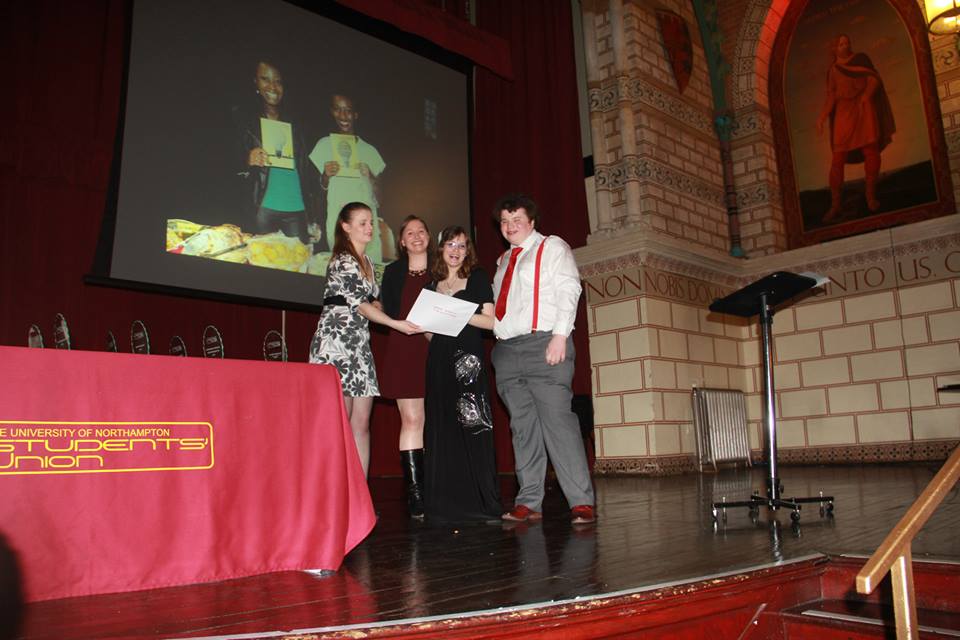
To all new students starting university who are on the autism spectrum and Asperger Syndrome – YOU CAN DO IT! YOU WILL THRIVE!
As a child I was different.
I preferred spending time on my own, did not care much about what others were doing, and kept myself to myself. In primary school I was a daydreamer, and always lived in a world of my own. I was always very happy and had a smile on my face. The early years of my life were cheerful and full of happiness. I loved painting and drawing and being outdoors. When I started secondary school, I faced a variety of challenges.
I struggled socially, especially as I went to a mainstream school, and generally disliked being around other people. I loved studying and learning, and was always very ambitious when I was in my teenage years. I dreamed of being an author and a lawyer among many things, and always aimed high. Due to being different I was left out, but didn’t care much. I struggled with my senses at times, and became overwhelmed when there was lots of loud noises. My memory was unusual – I could remember silly little details, facts and useless information. I loved learning new things, reading and filling my head with knowledge. In my family, I was the oddball – I had specific interests, displayed intense focus, and displayed signs of phalilalia (repeating myself). [1]
My mum suspected that I was ‘different’, and she wanted me to be properly seen by a medical doctor. One morning, after a number of referrals, it happened; Friday 2nd February, 2010, 9:35am 42 seconds within the minute, I received my diagnosis: High Functioning Autism/Asperger Syndrome. This diagnosis explained so much about me.
Fast forward 3 years, on Saturday 15th September 2012, after an hour long drive away from home, I was settled into my new flat at the University of Northampton. My family left and I was with my new flatmates. The start of a new chapter in my life. My time at university enabled me to flourish and blossom in ways I never knew I could! At this point, I knew that I could not stay in my shell and isolate myself, I pushed myself out of my comfort zone, tried new things, and challenged myself. I wanted to be able to integrate and enjoy myself as much as I possibly could.
Aware of how my Aspergers affected me; from sensory difficulties, challenges in reading people (which I’m much better at now), to social awareness (knowing how to behave in different social situations), but I was determined to learn and grow. I overcame them all by going out, meeting and learning from new people, and enjoying myself! First year at university was one of the happiest years of my adult life! I remember smiling so much that my cheeks hurt. I fully immersed myself into university life, and loved every single minute of it! I got myself a job, did some volunteering, and loved studying. Being away from home helped me to really grow, and was the best decision I ever made!
I’m somewhat of a chameleon; meaning that I have learned to blend in and ‘mask’ my Aspergic traits. My social skills were very good already, so, to the majority of people I met, no-one could pick up on my Aspergers. I have an unusual memory for detail, am very focused, driven and energetic. There were times where I would interpret things differently, or misunderstand. That’s ok. I just asked more questions and for clarification, so that I could understand.
After getting my DSA (Disabled Students Allowance) approved, I was given specialist equipment and software’s to help meet my academic needs. These were so useful and handy! I had never recieved so much support for studying before! I was given all the training and guidance I needed to help get to grips with everything.
On my assignments, I had an extra front sheet, informing my lecturers of my Aspergers, so that they were aware and could take it into consideration when reviewing my work.
Students with disabilities can also get a mentor, note-taking support, and other support in accordance with their needs.
When I was in my first year, I founded the Auto-Circle Spectrum Society; the first society of its kind in the country, supporting students with autism, Asperger Syndrome and other learning disabilities. Upon seeing that there was no group in the Student’s Union to represent this demographic of students, I wanted to help others.
The second and third year flew by very quickly; I found myself starting each year with excitement and enthusiasm. I loved studying too. I remember collecting several books, finding my corner in the library and reading for hours, noting each reference as I went, putting together bodies of information for my assignments.
Auto-Circle Spectrum also grew over the 3 years, and I met so many incredible individuals who brought their own sense of uniqueness, fabulouslness and eccentricity to the group! I became increasingly aware of the challenges other students with autism face, particularly, transitions and dealing with change. After a parent got in touch with me, concerned for her son who was to start university. Wanting to further my help for students on the spectrum, I undertook the Change Maker Certificate, guided by the incredible Tim Curtis; which, after numerous meetings, resulted in a, Autism Spectrum Condition Taster Day, which was a huge success!
Today, I am the first person from both sides of my family to go to university, and the only one to have a masters degree. Do NOT let others tell you what you can and can’t do. You can overcome all odds if you put your mind to it and let yourself grow. The more you put into university life, the more you get out, and the more memorable it will be. YOU CAN DO IT!
Links to info about Aspergers/Autism
[1] National Autistic Society ‘Obsessions, Repetitive Behavior and Routines’ Available online at: https://www.autism.org.uk/about/behaviour/obsessions-repetitive-routines.aspx
Share this:


Is unconscious bias a many-headed monster?
When I was fourteen, I was stopped and searched in broad daylight. I was wearing my immaculate (private) school uniform – tie, blazer, shoes… the works. The idea I went to private school shouldn’t matter, but with that label comes an element of “social class.” But racial profiling doesn’t see class. And I remember being one of those students who was very proud of his uniform. And in cricket matches, we were all dressed well. I remember there being a school pride to adhere to and when we played away, we were representing the school and its reputation that had taken years to build. And within those walls of these private schools, there was a house pride.

Yet when I was stopped, it smeared a dark mark against the pride I had. I was a child. Innocent. If it can happen to me – as a child – unthreatening – it can really happen to anyone and there’s nothing they can to stop it. Here I saw unconscious bias rear its ugly head, like a hydra – a many-headed monster (you have to admire the Greeks, you’re never stuck for a metaphor!)
If we’re to talk about unconscious bias, we must say that it only sees the surface level. It doesn’t see my BA Creative Writing nor would it see that I work at a university. But unconscious bias does see Black men in hoodies as “trouble” and it labels Black women expressing themselves as “angry.”
Unconscious bias forces people of colour to censor their dress code – to not wear Nike or Adidas in public out of fear that it increases your chances of being racially profiled. Unconscious bias pushes Black and Asians to code-switch. If a White person speaks slang, it’s cool. When we do it, it’s ghetto. That’s how I grew up and when I speak well, I’ve had responses such as “What good English you speak.” Doomed if you do, doomed if you don’t.
How you speak, what you wear – all these things are scrutinised more when you don’t have White Privilege. And being educated doesn’t shield non-White people (British people of colour included) from racist and xenophobic attacks, as author Reni Eddo-Lodge says in her book:
“Children of immigrants are often assured by well-meaning parents that educational access to the middle classes can absolve them from racism. We are told to work hard, go to a good university, and get a good job.”
The police can stop and question you at any time. The search comes into play, depending on the scenario. But when I was growing up, my parents gave me The Talk – on how Black people can get hassled by police. For me, I remember my parents sitting me down at ten years old. That at some point, you could be stopped and searched at any time – from aimlessly standing on a street corner, to playing in the park. Because you are Black, you are self-analysing your every move. Every footstep, every breath.
And to be stopped and searched is to have your dignity discarded in minutes. When it happened, the officer called me Boy – like Boy was my name – hello Mr Jim Crow – like he was an overseer and I was a slave – hands blistering in cotton fields – in the thick of southern summertime heat. Call me Boy. Call me Thug. No, Call me Target. No, slave. Yes master, no master, whatever you say master. This was not Mississippi, Selma or Spanish Town – this was Northamptonshire in the 2000s and my name is Tré.

Yes, Northamptonshire. And here in 2019, the statistics are damning. Depending on which Black background you look at, you are between six and thirteen times more likely to be stop and searched if you are Black than if you are White (British). And reading these statistics is an indication of conversations we need to be having – that there is a difference between a Black encounter with the police and a White encounter. And should we be discussing the relationship between White Privilege and unconscious bias?
Are these two things an overspill of colonialism? Are they tied up in race politics and how we think about race?
Whilst these statistics are for Northamptonshire, it wouldn’t be controversial to say that stop and search is a universal narrative for Black people in Europe and the Americas. Whether we’re talking about being stopped by police on the street or being pressed for papers in 1780s Georgia. Just to live out your existence; for many its tiring – same story, different era.
You are between six and thirteen times more likely to be stopped if you are Black than if you are White (British) – but you know… let’s give Northamptonshire police tasers and see what happens. Ahem.
Bibliography
Eddo-Lodge, Reni. Why I’m No Longer Talking to White People About Race. London: Bloomsbury Publishing, 2018. Print
Share this:

Your Name Is Not BAME
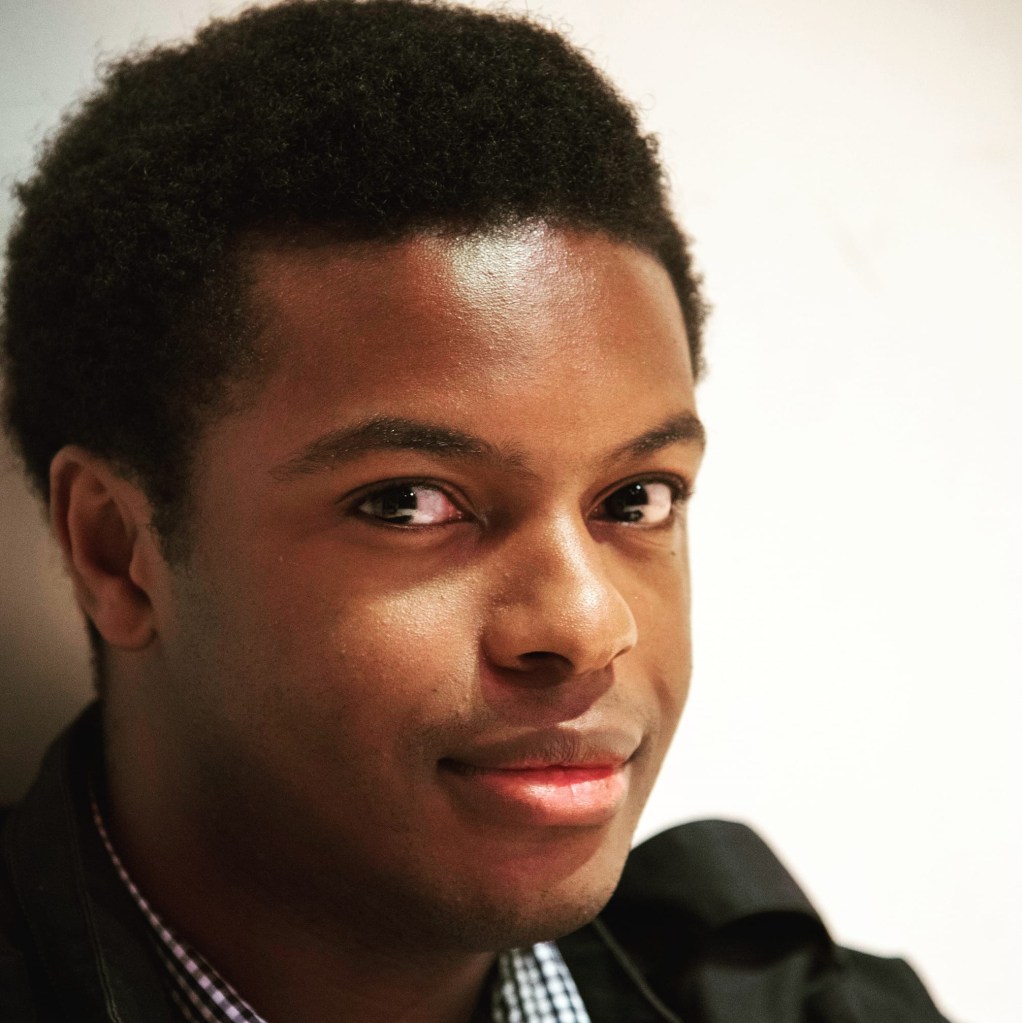
My name is Tré Ventour and I am the Students’ Union’s Vice President BME Sabbatical Officer. When I’ve asked students what BME stands for, most have been clueless – Black Minority Ethnic. The same could be said for BAME – Black Asian Minority Ethnic. I was elected to represent ethnic minority students. But I’ve been asking myself how much longer will this 47% be an ethnic minority? At Northampton, they will soon be the majority. This 14,000-student university in which nearly 7000 fit into this BME box.

Pigeon-holed. To be put into a box. I don’t like to think in boxes. I try not to think in labels but in this world, it’s naive to be colourblind. In the education sector, in this day and age, especially at Northampton, to not see race is to ignore the experiences of nearly 7,000 students – nearly 7,000 stories about potential hate crimes, and what about BAME members of staff? We must see race. We must see sex, class, and gender (all genders).
To be colourblind is to live life high on privilege – to exist without the consequences of hate crime. Some people live with racism, sexism and / or homophobia all their lives.
Many say “there’s one race, the human race.” That may be true but how comfortable must you be in your existence to come to that notion? And then push that notion on those who experience racism on a daily basis.
When I’ve spoken to students about BAME or ethnic minority, they say “Just call me by my name.” Students are flesh and bone, more than acronyms. And I do what they tell me to do (in a manner of speaking / within reason). I’m not Vice President, I’m not Mr Ventour; I am Tré and I am here to help students, to represent students (of colour) – more so Black students that look at White authority and see invader. Who I have heard compare university to apartheid South Africa – one in, one out – to a Zimbabwe under British rule – De Beers, Rhodes and racism. Fear and exclusion.
Call them minorities, call them BME, call them BAME. Yet, this acronym just seems like coded language for Black. And at Northampton, when people say BME or BAME, they mean Black students, so just say what you mean, “Black.”
And if these labels, if these pigeon-hole terms help Higher Education solve issues like attainment perhaps it’s worth it. But what I can say is that not all Black experiences are the same. To be a Black British student is not the same as to be a Black international from Africa, the EU or elsewhere.

But to be a person of colour in this country is to be immigrant, British or otherwise. To be overly polite. To be overly grateful or gracious. To be a good immigrant.
Share this:


How to prepare for a year in University

In our society consumerism seems to rain supreme. We can buy stuff to make us feel better and we can buy more stuff to express our feeling to others and mark almost most events around us. Retail and especially all the shops have long been aware of this and so they have developed their seasonal material. These seasonal promotions may have become consumer events now although they do signify something incredibly important to culture and our collective consciousness. There is time for Christmas decorations and festive foods, Easter time and chocolate eggs, mother’s day and nauseating cards father’s day for equally grinchworthy cards. There is valentine’s day to say I love you in full fat chocolates, Halloween to give little kids rotten teeth and a red poppy to remember some of our dead. To those add the summer season with the disposable BBQs and of course the back to school season!
The back to school is one of the interesting ones. Geared to prepare pupils and parents for going back to school and plan ahead. From ordering the uniforms to getting all the stationery and books required. I remember this time of the year with some rather mixed emotions. It was the end of my summer holidays, but it was also the time to get back to school. Until one day I finished school and I went to university. Education is seen as part of a continuous process that we are actively involved from the first day at school to the last day in high school and more recently for more people also involve the first day of going to university. Every year is more challenging than the next, but we move up and continue. For those of us who enjoy education we continue the journey further to further or high education.
There is something to said about the preparation process coming to University; it is interesting seeing advertisements on education this time of the year on the tv and social media promoting stuff for this transition; from the got to have smartphone to the best laptop, the fastest printer scanner all in one thingy to the greatest sound system and many more stuff that would get you ready for the year ahead. Do they really help us out and if not, what do we got to do to prepare for coming to university?
Unfortunately, there is no standard formula here but there is a reason for that. Higher education is adult education. This is the first time in our educational journey that we are sitting firmly on the driving seat. We choose to study (or ought to) what we wish to study. It is an incredibly liberating process to have choice. This however is only the beginning. We make plans of our time. In higher education the bulk of the time required is independent study, and as such we got to negotiate how we will plan our time. We got to decide which reading we are going to do first which notes to read what seminar we shall prepare and what assignment we will make a draft of.
There will be days spent in the library looking for a book, days in a coffee shop talking to fellow students about the seminar reading, days in the learning hub working on an assignment. There are highs, lows and everything in between. But regardless of the emotion at every stage thee will be a sense of ownership of knowledge.
In the first couple of sessions, the bulk of the students keep quiet expecting the correct answer to be given. One interpretation or one truth that describes all. It takes a few times before the realisation emerges that the way we analyse, and project knowledge can be different provided we go through the same processes of scrutiny and analysis. Then conversation emerges and the more reading the better the quality of the ideas that shall emerge.
The first year at University is definitely a declaration of independence and the realisation that we all have a voice. Getting on to the road on empowerment. This is a long journey, and on occasions arduous but incredibly rewarding because it leads to an insight greater than before that removes ignorance and lifts the veil of the unfamiliar.
To our newest students – Welcome to the University and to our returning 2 and 3 years – Welcome back!
Share this:


The tyranny of populism

Himmler (1943)
So, we have a new prime minister Boris Johnson. Donald Trump has given his endorsement, hardly surprising, and yet rather than having a feeling of optimism that Boris in his inaugural speech in the House of Commons wished to engender amongst the population, his appointment fills me with dread. Judging from reactions around the country, I’m not the only one, but people voted for him just the same as people voted for Donald Trump and Volodymyr Zelensky, the recently elected Ukrainian president.
The reasons for their success lie not in a proven ability to do the job but in notions of popularity reinforced by predominantly right-wing rhetoric. Of real concern, is this rise of right wing populism across Europe and in the United States. References to ‘letter boxes’ (Johnson, 2018), degrading Muslim women or tweeting ethnic minority political opponents to ‘go back to where they came from’ (Lucas, 2019) seems to cause nothing more than a ripple amongst the general population and such rhetoric is slowly but surely becoming the lingua franca of the new face of politics. My dread is how long before we hear similar chants to ‘Alle Juden Raus!’ (1990), familiar in 1930s Nazi Germany?
It seems that such politics relies on the ability to appeal to public sentiment around nationalism and public fears around the ‘other’. The ‘other’ is the unknown in the shadows, people who we do not know but are in some way different. It is not the doctors and nurses, the care workers, those that work in the hospitality industry or that deliver my Amazon orders. These are people that are different by virtue of race or colour or creed or language or nationality and, yet we are familiar with them. It is not those, it is not the ‘decent Jew’ (Himmler, 1943), it is the people like that, it is the rest of them, it is the ‘other’ that we need to fear.
The problems with such popular rhetoric is that it does not deal with the real issues, it is not what the country needs. John Stuart Mill (1863) was very careful to point out the dangers that lie within the tyranny of the majority. The now former prime minister Theresa May made a point of stating that she was acting in the national Interest (New Statesman, 2019). But what is the national interest, how is it best served? As with my university students, it is not always about what people want but what they need. I could be very popular by giving my students what they want. The answers to the exam paper, the perfect plan for their essay, providing a verbal precis of a journal article or book chapter, constantly reminding them when assignments are due, turning a blind eye to plagiarism and collusion*. This may be what they want, but what they need is to learn to be independent, revise for an exam, plan their own essays, read their own journal articles and books, plan their own assignment hand in dates, and understand and acknowledge that cheating has consequences. What students want has not been thought through, what students need, has. What students want leads them nowhere, hopefully what students need provides them with the skills and mindset to be successful in life.
What the population wants has not been thought through, the ‘other’ never really exists and ‘empire’ has long gone. What the country needs should be well thought out and considered, but being popular seems to be more important than delivering. Being liked requires little substance, doing the job is a whole different matter.
*I am of course generalising and recognise that the more discerning students recognise what they need, albeit that sometimes they may want an easier route through their studies.
Alle Juden Raus (1990) ‘All Jews Out’, Directed by Emanuel Rund. IMDB
Himmler, H. (1943) Speech made at Posen on October 4, 1943, U.S. National Archives, [online] available at http://www.historyplace.com/worldwar2/holocaust/h-posen.htm [accessed 26 July 2019].
Johnson, B. (2018) Denmark has got it wrong. Yes, the burka is oppressive and ridiculous – but that’s still no reason to ban it, The Telegraph, 5th August 2018.
Lucas, A. (2019) Trump tells progressive congresswomen to ‘go back’ to where they came from, CNBC 14 July 2019 [online] available at https://www.cnbc.com/2019/07/14/trump-tells-progressive-congresswomen-to-go-back-to-where-they-came-from.html [accessed 26 July 2019]
Mill, J. S. (1863) On Liberty, [online] London: Tickner and Fields, Available from https://play.google.com/store/books [accessed 26 July 2019]
New Statesman (2019) Why those who say they are acting in “the national interest” often aren’t, [online] Available at https://www.newstatesman.com/politics/uk/2019/01/why-those-who-say-they-are-acting-national-interest-often-arent [accessed 26 July 2019]
Share this:


Come Together

For much of the year, the campus is busy. Full of people, movement and voice. But now, it is quiet… the term is over, the marking almost complete and students and staff are taking much needed breaks. After next week’s graduations, it will be even quieter. For those still working and/or studying, the campus is a very different place.
This time of year is traditionally a time of reflection. Weighing up what went well, what could have gone better and what was a disaster. This year is no different, although the move to a new campus understandably features heavily. Some of the reflection is personal, some professional, some academic and in many ways, it is difficult to differentiate between the three. After all, each aspect is an intrinsic part of my identity.
Over the year I have met lots of new people, both inside and outside the university. I have spent many hours in classrooms discussing all sorts of different criminological ideas, social problems and potential solutions, trying always to keep an open mind, to encourage academic discourse and avoid closing down conversation. I have spent hour upon hour reading student submissions, thinking how best to write feedback in a way that makes sense to the reader, that is critical, constructive and encouraging, but couched in such a way that the recipient is not left crushed. I listened to individuals talking about their personal and academic worries, concerns and challenges. In addition, I have spent days dealing with suspected academic misconduct and disciplinary hearings.
In all of these different activities I constantly attempt to allow space for everyone’s view to be heard, always with a focus on the individual, their dignity, human rights and social justice. After more than a decade in academia (and even more decades on earth!) it is clear to me that as humans we don’t make life easy for ourselves or others. The intense individual and societal challenges many of us face on an ongoing basis are too often brushed aside as unimportant or irrelevant. In this way, profound issues such as mental and/or physical ill health, social deprivation, racism, misogyny, disablism, homophobia, ageism and many others, are simply swept aside, as inconsequential, to the matters at hand.
Despite long standing attempts by politicians, the media and other commentators to present these serious and damaging challenges as individual failings, it is evident that structural and institutional forces are at play. When social problems are continually presented as poor management and failure on the part of individuals, blame soon follows and people turn on each other. Here’s some examples:
Q. “You can’t get a job?”
A “You must be lazy?”
Q. “You’ve got a job but can’t afford to feed your family?
A. “You must be a poor parent who wastes money”
Q. “You’ve been excluded from school?”
A. “You need to learn how to behave?”
Q. “You can’t find a job or housing since you came out of prison?”
A. “You should have thought of that before you did the crime”
Each of these questions and answers sees individuals as the problem. There is no acknowledgement that in twenty-first century Britain, there is clear evidence that even those with jobs may struggle to pay their rent and feed their families. That those who are looking for work may struggle with the forces of racism, sexism, disablism and so on. That the reasons for criminality are complex and multi-faceted, but it is much easier to parrot the line “you’ve done the crime, now do the time” than try and resolve them.
This entry has been rather rambling, but my concluding thought is, if we want to make better society for all, then we have to work together on these immense social problems. Rather than focus on blame, time to focus on collective solutions.
Share this:


Reflections on teaching ‘justice’

In the midst of the marking mountain (currently at Everest base camp), it is nice to reflect on another aspect of my role as a lecturer in criminology – teaching. In between marking I was thinking about putting together a seminar to focus on the meaning of justice and how this relates to broader structural inequalities, human rights and the need for reform. This is to contribute to my new module on ‘community justice’, as it is a place where I want to examine these terms as separate concepts, and also as a term which encompasses punishment delivered outside the prison walls, in spaces where people live, work and interact with others.
I always think it is important for students to critically examine accepted definitions and in this case, the many social constructions of justice. The article I came across, ‘Discussing Alternatives to Justice’ (edited by Allison and McMahon, 2015) very nicely presents a series of debates, discussions and poses important questions which require us to re-examine the criminal justice system and our society. It is presented as a series academics presenting radical changes they would make to shift us away from a punitive, ineffective and socially harmful system.
Professor Steve Tombs starts off the debates asking for an ‘alternative to the corporation’ – describing is as an ‘amoral, essentially destructive entity which causes far more physical, social and economic harm than the incivilities upon which criminal justice systems overwhelmingly concentrate’ (Tombs, 2015: 3). There is a clear need to reconsider our notion of what is criminal when we examine those events which lead to extensive social harms, but also the social structures and policies which enable these harms to occur and accept a muted response from our justice system. One theme of Tomb’s article is the need to shift the ownership and governance of services from the private sector to the public sector, to improve compliance and adherence to regulations and safety concerns. He also demands a need to challenge claims of efficiency and effectiveness – anyone seeing recent developments in probation and the consequences of the Transforming Rehabilitation agenda should also be asking some pertinent questions about such claims. This requires a radical shift from our acceptance of remaining a consumerist society, and placing trust in corporations to understand there are many other ways to structure economics and the distribution of capital, such as social and employee owned enterprises and co-operatives. Bell (2015) continues this theme with a rallying call to shift from neoliberal politics which have ‘fuelled the current penal crisis, characterised by mass incarceration and the criminalisation of social problems’ (p.4). For me, these two articles already present different ideas, debates and reinforce the need for students to consider crime and justice in the context of social, political and economic systems. This would then also enable a more critical examination of justice – especially a criminal justice system which is harmful, punitive and ineffective. Bell (ibid) aptly critiques neoliberalist claim of freedom of choice as misrepresentations which actually enable corporations to use the Earth’s resources without consideration for the harms caused to consumers, who accept this risk in favour of cheap goods and services and the promise of more to come. She advocates a participatory democracy in all forms of life, including penology, to allow offenders to be part of the discussion on ways they can redress harms and shift the notion of justice from being predominantly punitive, to restorative and reparative.
Pike, (2015) then provides a more focused policy idea change – to build more schools and fewer prisons. This echoes the theme of this edited collection, to pose radical changes, and reinforces the need to understand crime as a reflection of an unequal society. There is a clear focus on prevention, not punishment, a need to rethink justice as a reactive force, to a more stabilising force (Rawls, 1971). Education is presented as vital to creating a more fair society and to stop the discrimination against the disadvantaged who are disproportionately present in our victimisation figures and our justice system.
In a discussion close to my own interests, Drake and Samota (2014) discuss the need for collective capacity in policy making, to understand the impact of the apathy which has allowed a rhetoric of being tough on crime to dominate, and indeed to be overtaken by the language of war and conflict as the only adequate response. This collective needs to comprise academic criminologists, practitioners, volunteers – those understanding crime and justice from a range of perspectives to come together and share expertise, engage the public in these debates and stimulate discussion on viable alternatives. This would be a firmer foundation for policy making, compared to the knee jerk reactions of ministers attempt to appease public outrage, fuelled by media misrepresentations. Drake and Samota (ibid) also refer to the misunderstanding of justice among the public and the need for collective hubs to counteract the misleading news and spin which feeds populist punitiveness and the assumptions that justice must be retributive and deterrent, and little else.
It may seem at first glance these are complex ideas for undergraduates to grapple with, but with guided discussion, debate and using examples to illustrate what is meant by social harms, injustices, ineffectiveness, I think they could form an important foundation for learning about the criminal justice system, and what we understand as criminal. It is with these ideas in mind, that students can then perhaps understand the need to critically examine what they then learn in their studies, and they also chime with younger generations broader concerns about inequalities, social justice and social harms. It may well be the case with the rising engagement in politics, concerns about the environment and the impact of consumerist lifestyles, that these ideas are not so complex or radical as they might at first seem.
Allison, C and McMahon, W. (2015) Discussing Alternatives to Criminal Justice, Centre for Crime and Justice Studies, London.
Rawls, J. (1971) A Theory of Justice, Harvard University.

 Thoughts from the criminology team