
Home » Higher Education
Category Archives: Higher Education

Leading with Integrity: Standing Firm Against the Echo Chamber

Sallek Yaks Musa
Truth hurts. Few appreciate it, and even fewer defend it when it threatens comfort or convention. My understanding of this reality came through personal experience, an early lesson in leadership that continues to shape how I view authority and the dangerous allure of sycophancy.
Two decades ago, my journey into education began in an unusual way. For five years, my father had spoken passionately about his dream to establish a nursery, primary, and secondary school that would help transform the state of education in our city. In 2004, we finally decided to bring that dream to life. What followed was both the beginning of my passion for education and my first encounter with the complexity of leading people and institutions.
The process of establishing the school was neither smooth nor simple. I remember every detail – the struggle to develop infrastructure that met required standards and equip it, the endless paperwork, the defence of proposals before career bureaucrats, and the scrutiny of regulatory inspections. Each stage tested our patience and resolve, yet the experience became invaluable. It offered me lessons no textbook could teach and laid the solid foundation of my leadership philosophy.
By the time we received approval to open in September 2005, I led over a hundred interviews to staff the school. That period sharpened my ability to read people and situations intuitively, a skill I have trusted ever since. The school went on to succeed beyond expectation: self-sustaining, thriving, and impacting tens of thousands of young lives. Yet, behind this success lay one central principle – truth.
My commitment to truth shaped the school’s ethos. Every decision, from recruitment to remuneration, from board meetings to relationships with parents and staff, was guided by sincerity. My academic training would later frame this conviction in philosophical terms. With leadership, I align with Auguste Comte’s positivist epistemology, rooted in the belief that truth is objective, concrete, and independent of social interpretation. This, I discovered, is easier preached than practised.
In practice, truth is disruptive. It offends vanity, challenges comfort, and exposes deception. My insistence on it often placed me in direct opposition to others on the Board, including my father. He later confided that while my defiance was difficult to bear, it forced him to confront realities he had overlooked. I further learned that the defender of truth often stands alone. My father eventually recognised what I had resisted all along: the quiet but corrosive power of flattery.
Sycophancy, though rarely discussed openly, remains one of the greatest dangers to leadership. It thrives where authority is unquestioned, and dissent discouraged. Flattery seduces leaders into believing they are infallible. It builds an echo chamber that filters information, reinforcing biases and creating an illusion of competence. Over time, this isolation from reality becomes costly as decisions are made on false premises, honest critics are sidelined, and mediocrity is rewarded over merit. But this is not a modern affliction.
The 16th-century political theorist Niccolò Machiavelli, in The Prince, warned rulers of this very danger. He cautioned that the wise Prince must deliberately surround himself with people courageous enough to speak the truth, for flatterers ‘take away the liberty of judgment.’ Centuries later, the philosopher Hannah Arendt would echo this concern, arguing that the loss of truth in public life leads to moral decay and political collapse. The persistence of these warnings shows how deeply entrenched sycophancy remains in systems of power.
The psychology behind flattery is deceptively simple. It feeds the ego, providing comfort that masquerades as respect and support. Leaders, craving affirmation, often mistake it for loyalty. But as Daniel Kahneman and other cognitive theorists have shown, human judgment is easily distorted by bias and praise. Flattery, therefore, becomes not merely a social nicety but a psychological trap, one that blinds decision-makers to inconvenient truths.
For those newly stepping into student’s course representative roles, these lessons carry special relevance. Academic leadership is often less about authority and more about stewardship, the quiet work of creating conditions where ideas can flourish, student’s voices are heard, and students can contribute honestly. Resist the temptation to surround yourself with agreeable voices. Encourage critique, invite dissent, and create a culture where questioning is not perceived as confrontation but as commitment to excellence. The strength of representation lies not in the leader’s popularity but in their willingness to confront complexity, admit limits, and make decisions grounded in truth rather than convenience.
As the once “baby school” turned twenty this year, its anniversary passed in my absence. My father’s message of appreciation reached me nonetheless, and his words reminded me why truth, though often costly, remains indispensable to authentic leadership. He wrote:
Remember, son, true leadership lies in listening attentively, sieving facts from noise, embracing unpopular voices, acting on truth, and valuing others above yourself.
That reflection closed a circle that began two decades ago. It reminded me that leadership rooted in truth is not about being right but about being realistic. It is about creating space where honesty thrives, even when it unsettles.
Flattery may offer short-term peace, but truth builds long-term strength and relationships. The leader who welcomes honesty, however uncomfortable, not only guards against failure but also nurtures a culture of integrity that outlives their term.
Twenty years after that first bold step into education, leading teams and managing academic programmes in education, I remain convinced that truth is not a luxury in leadership – it is its lifeline. Legacies are not defined by applause or position, but by the integrity to lead with sincerity, listen without fear, and act with unwavering commitment to what is right. People are ultimately remembered not for simply opposing flattery, but for the truth they championed and the courage they demonstrated to stand firm in their convictions when it mattered most.
Share this:

‘Do or do not, there is no try’

The Red Roses are playing in the rugby union world cup final on Saturday and I, amongst thousands, will be watching it on television with a heady mixture of anticipation, trepidation, excitement, fear and expectation. The England Women’s rugby union team is made up of some very talented individuals that come together as a team to produce some of the most electrifying displays of rugby, that is both mystical and awesome to watch. I won’t just be watching, I’ll be dodging every lunge, wincing at every tackle made, running like the wind, dotting down the ball and willing every kick over, I’ll be totally engrossed.
I will be watching elite athletes at the top of their game, and I know, not one of them got there by chance. To be an elite athlete requires hours of training, a strict dietary regime, and dedication. It requires mental agility, physical strength, sacrifice and focus. To get to the pinnacle of their chosen profession, requires total commitment, ‘Do or do not, there is no try’ (Yoda – The Empire Strikes Back).
We can’t all be elite athletes, for a variety for reasons, but what they demonstrate is that achievement is not chance. My life experience, like that of many others, has shown me that there is no such thing as a free lunch. Success, whatever that looks like, requires hard work, sacrifice and commitment. In any walk of life, people that are successful in what they do, have had to put in a lot of effort and make sacrifices. That effort and those sacrifices often started with study. Whether that’s study at school, further education or higher education, or study outside of the educational environment they have been committed to their learning and achieving the best they could. Some may have better opportunities than others but nonetheless, doing nothing, achieving nothing, rarely qualifies an individual to be a top executive in a company, a top lawyer, surgeon, politician, lecturer, sports person or anything else. Top footballers in both the men’s and women’s games don’t just turn up on a Saturday for a kick around. None of them allow themselves to be distracted from what they want to achieve. Some people may not be academically gifted but their success is predicated on hard work and dedication.
This week we welcome new students to the university and next week we will see familiar faces returning. To all our students I would urge you to remember why you are here, what it is you want to achieve? Education is a right but look around the world and you will see that not many can avail themselves of that right. You are privileged and whilst you may not be able to match the commitment shown by the Red Roses, few of us could, it is worth remembering that no one achieves anything without some commitment and sacrifice. Set your sights high and go for it, we are all willing you on. And like the Red Roses we want to rejoice in your success.
Share this:


School’s out!

The end of the academic year comes in many forms and guises. The end of the examination period, the submission of a final piece of work, the release of the grades and many more ways you can say that’s the end of this year! Unlike the calendar year, the end of the academic year comes in the summer as a natural end to work. It is like the school year that was shaped centuries ago! The reason for the summer break was the need for the kids to work in the harvest, a tradition that has remained past the agrarian society.
So, what does the end of an academic year signifies? For the students, there is a sense of accomplishment as they have completed their course or level of study. All the hard work, coming to class, long hours of making notes to complete THAT assignment, and all the heartache preparing the exams finally paid off and they can see their labours paying off. It is also a natural intellectual boundary that takes them a step up in the way they see the world through the lens of their subject. For colleagues the end of an academic year is slightly different…the next academic year’s preparation is upon them, the paper that needed writing is now facing a fast-approaching deadline and the resetting of all these priorities as set by management.
Since joining academia, the process of end of summer, has changed significantly from the working on research and scholarly output to administrative tasks! For those interested in a career in academia, on top of working with others, enjoying a discipline and being involved in education a wider question on how well they can handle paperwork, albeit virtual, is part of the job description. That comes as part of the job, always did, it is that it feels more intertwined with what we do.
There is undoubtedly a change in the role education plays in peoples lives especially Higher Education. This is a sector that in the 1970s recruited less than half a million to now being near the three million mark. This massive rise on student number has changed the way we see high education and the role it plays in our society. This is not the education of the elite but the opportunity for all to embrace opportunities and explore areas of interest that will allow them to find themselves, employment, build a career and ultimately a life! Whilst HE is still expanding the job market is becoming increasingly competitive and the cost of living is forcing people to adjust in how they plan the future.
So, what will the future hold for the end of year hiatus? Financially HE is facing challenges, culturally it is under attack, and socially it is being critiqued around whether it offers what it was set up to do. All these are short- and long-term challenges and they are not going away. Some will affect in future, access to HE, others will question the content and the basis of academic freedom and finally with the onset of Ai, the scope of HE itself. Despite all, I am still hopeful that HE is not a degree nor a job opportunity but a moment in any person’s life that takes a step up. It is a very important human need to fulfil curiosity and to embrace a path that wasn’t clear at the beginning of the journey. The first academia was founded in an agora under a tree and maybe we get back to that, but in the end human intellect will need stimulation and that is where, despite all challenges, HE prevails.
Perhaps the future of higher education won’t be defined by buildings or systems, but by the enduring human need to learn, to question, and to grow. Whether under a tree in an agora or through the lens of AI, the pursuit of knowledge remains a profoundly human act—and that is where higher education will always find its purpose.
Share this:


Welcome to the University: How can I help you?

In recent years, and to be more specific, ever since universities were forced to introduce fees, a wider discussion emerged regarding what the Universities are for. The fees changed the nature of education and from a right, it became a privilege. The choice of going to Higher Education [HE] to improve oneself was combined with what the universities can offer to make their education “value for money”! This of course had to be done in line with consumer policy and practice. That led to a shift from educational principles to commercial concerns. Changing the process from what universities do, to what they can offer for their prospective students. Talking consumer law and setting thing up to align with what we can offer, not what students can achieve. This led to a fierce competition in the sector about which university offers the greatest value for money.
“Come to our university, we have nice buildings”, “come to us we have nicer laptops”, “no, come to us we have fabulous sports facilities” “no please come to us we will take you away on great trips”. Although telling students what to expect and how this is offered is great, it does miss the fundamental principle of what a university is! Universities evolved from philosophical academies that posed questions about the world. The participants engaged in dialogue that challenged their perspectives and viewpoints. Out of their works our collective understanding on nature and the world, was and is still, being shaped.
A university is an annex of learning. It covers a wide variety of disciplines and provides opportunities for advancing education locally, nationally and internationally. Academics who teach are experts in their field, having undergone a long educational process themselves. The people who come to the university to learn, are adults, the majority still young adults, who wish to develop their skills and advance their education to the highest level. The last point is the most poignant when it comes to Higher Education. It builds up learning experience together with hard and soft skills on academic writing and articulation, advancing disciplinary knowledge and a profound understanding of self; “a know thyself” moment.
The services offered pale into comparison with what students can really acquire from a university education. No amount of consumer products can replace the insight and of course the transformative nature of Higher Education. A number of helpful services are a great addition to the educational experience, and I am forever grateful to the hard work to all of our colleagues in students’ services and other administrative services that makes our lives, and the lives of the students so much better, but they are not the main reason why so many come through the doors of HE. The university has its place in education and what it does is already clear. It gives people the opportunity for employment and personal advancement, and that is great, but what it really does is to be transformative. People get time to consider things they may have never thought before and discuss them with people who have spent a considerable time in studying them.
As this week marks the start of the academic year and we are all happy welcoming our students, I would like to remind everyone that Higher Education is not a passive process but an active one that allows each participant to interact with and to interrogate the materials and ideas they are presented with. Whilst some students influenced by a consumer mentality may be asking what I am getting, this may not be a satisfactory question because each person wants different things, but we all aspire to improve ourselves in the process. So to paraphrase a US president: “Ask not what your University can do for you – ask what you can do for your University studies”.
Share this:


The power of collaboration in Higher Education

In today’s rapidly evolving landscape of higher education, interdepartmental collaboration and knowledge sharing are becoming increasingly vital. By rapid evolution, I mean the pressing challenges we face, including rising costs and finances, issues in student engagement and attendance, digital transformation and rise of new technologies, growing concerns about student wellbeing, and most importantly, the critical need to ensure a strong, positive student experience in the face of these challenges. While the idea of interdepartmental collaboration and knowledge sharing isn’t entirely new, its importance in addressing these complex issues cannot be overemphasised.
At my university, our faculty, the Faculty of Business and Law recently celebrated its ‘Faculty Best Practice Day’ on Wednesday, September 4th. This event, led by our deanery, was an opportunity for departments within the faculty to showcase their hard work, innovations, and fresh ideas across various areas – from teaching and research to employability and beyond. Personally, I view this day as an opportunity to connect with colleagues from different departments – not just ‘catch-up’ but to gain insight into their current activities, exchange updates and share ideas on developments within our sector and disciplines.
This event is particularly intriguing to me for three distinct reasons. Firstly, the ability for department representatives to present their activities to faculty members is invaluable. Departmental reps showcase their growth strategies, techniques for strengthening student engagement, and the support they provide for students after graduating. Some present their research and future directions for the faculty. Others present their external partnership growth, evidence-based teaching pedagogy, and other innovative approaches for enhancing student experiences. Also, these presentations often highlight advancements in technology integration and initiatives aimed at encouraging diversity and inclusion within the HE. All these presentations are not just impressive – they’re incredibly informative and inspiring. Secondly, the event regularly reinforces the need for collaboration between departments – a cornerstone of academia. After all, no single person or department is an island of knowledge. So the ability to collaborate with other faculty members is crucial as it provides opportunities for synergy and innovation, showcases our strengths. Thirdly, and on a personal level, the event fosters the need to learn best practices from others, and this is an aspect that has been tremendously helpful for my career. Such interactions provide opportunity for stronger collegiality, including insights into different approaches and methods that I can adapt and apply in my own work in ways that I can contribute to my professional growth and effectiveness.
In the most recent event, I attended a session on cultural literacy and awareness. Despite my years in higher education, I was particularly surprised to learn new things about cultural awareness that pertain not only to international students but to home students as well. This was an excellent session that also offered the opportunity to connect with colleagues from other departments whom you only know through email exchanges, but rarely see in person.
In sum, I strongly encourage everyone in academia to attend such events or create one if you can. Contribute to and engage with these events – for they equip us to break down traditional barriers between disciplines and provides us with an opportunity to learn from each other with an open mind. This is something I will continue to advocate for because fostering interdepartmental collaboration isn’t just beneficial – it’s essential. It is through these collaborative efforts that we can truly innovate, improve, and excel in our mission to educate and inspire the next generation.
Share this:


Zemiological Perspective: Educational Experiences of Black Students at the University of Northampton

As a young Black female who has faced many challenges within the education system, particularly related to behavioral issues, I noticed how the system can unintentionally harm black students. I observed that Black children’s experiences in the education system are not always viewed from a deviant perspective, because they are not inherently deviant. The institutional harm faced by Black students is not always a ‘crime’ nor is it illegal, yet it is profoundly damaging.
This realisation prompted me to adopt a zemiological perspective, drawing upon the work of Hillyard et al. (2004) to highlight the subtle yet impactful harms faced by Black students in the educational system. My primary objective was to uncover the challenges these students face, as outlined in my initial research question: ‘To what extent can the experiences of Black students in higher education be understood as a form of social harm?’ To achieve this, I analysed the educational experiences of Black students at the University of Northampton. This involved reviewing the university’s access and participation plans, which detail the performance, access, and progression of various demographics within the institution, with a particular focus on BAME students.
Critical race theory (CRT) was the guiding theoretical framework for this research study. CRT recognises the multifaceted nature of racism, encompassing both blatant acts of racial discrimination and subtler, systemic forms of oppression that negatively impact minority ethnic groups (Gillborn, 2006). This theoretical approach is directly correlated to my research and was strongly relevant. This allowed me to gain insight into the underlying reasons behind the disparities faced by Black students in higher education. As well as enabling me to unpack the complexities of racism and discrimination, providing a comprehensive understanding of how these issues manifest and persist within the educational landscape.
Through conducting content analysis on the UON Access and Participation Plan document and comparing it to sector averages in higher education, four major findings came to light:

Access and Recruitment: The University of Northampton has made impressive progress in improving access and recruitment for BAME students, fostering diversity and inclusivity in higher education, and surpassing sector standards. Yet, while advancements are apparent, there remains a need for more comprehensive approaches to tackle systemic barriers and facilitate academic success across the broader sector.
Non-Continuation: Alarmingly, non-continuation rates among BAME students at the University of Northampton have surpassed the sector average, indicating persistent systemic obstacles within the education system. High non-continuation rates perpetuate cycles of disadvantage and limit opportunities for personal and professional growth.
Attainment Gap: Disparities in academic attainment between White and BAME students have persisted and continue to persist, reflecting systemic inequalities and biases within the academic landscape. UON is significantly behind the sector average when it comes to attainment gaps between BAME students and their white counterparts. Addressing the attainment gap requires comprehensive approaches that tackle systemic difficulties and provide targeted support to BAME students.
Progression to Employment or Further Study: UON is also behind the sector average in BAME students progression in education or further study. BAME students face substantial disparities in progression to employment or further study, highlighting the need for collaborative efforts to promote diversity and inclusivity within industries and professions. Addressing entrenched biases in recruitment processes is essential to fostering equitable opportunities for BAME students.
Contributions to Research: This research deepens understanding of obstacles within the educational system, highlighting the effectiveness of a zemiological perspective in studying social inequalities in education. By applying Critical Race Theory, the study offers insights that can inform policies aimed at fostering equity and inclusion for Black students.
The findings hold practical implications for policy and practice, informing the development of interventions to address disparities and create a more supportive educational environment. This research significantly contributes to our understanding of the experiences of Black students in higher education and provides valuable guidance for future research and practice in the field.
Aside from other limitations in my dissertation, the main limitation was the frequent use of the term ‘BAME.’ This term is problematic as it fails to recognise the distinct experiences, challenges, and identities of individual ethnic communities, leading to generalisation and overlooking specific issues faced by Black students (Milner and Jumbe, 2020). While ‘BAME’ is used for its wide recognition in delineating systemic marginalisation (UUK 2016 cited in McDuff et al., 2018), it may conceal the unique challenges Black students face when grouped with other minority ethnic groups. The term was only used throughout this dissertation as the document being analysed also used the term ‘BAME’.
This dissertation was a very challenging but interesting experience for me, engaging with literature was honestly challenging but the content in said literature did keep me intrigued. Moving forward, i would love Black students experiences to continue to be brought to light and i would love necessary policies, institutional practises and research to allow change for these students. I do wish i was more critical of the education system as the harm does more so stem from institutional practices. I also wish i used necessary literature to highlight how covid-19 has impacted the experiences of black students, which was also feedback highlighted by my supervisor Dr Paula Bowles.
I am proud of myself and my work, and i do hope it can also be used to pave the way for action to be taken by universities and across the education system. Drawing upon the works of scholars like Coard, Gillborn, Arday and many others i am happy to have contributed to this field of research pertaining to black students experiences in academia. Collective efforts can pave the way for a more promising and fairer future for Black students in education.
References
Gillborn, D. (2006). Critical Race Theory and Education: Racism and anti-racism in educational theory and praxis. Discourse: Studies in the Cultural Politics of Education, 27 (1), 11–32. [Accessed 21 April 2024]
Hillyard, P., Pantazis, C., Tombs, S. and Gordon, D., (Eds), (2004). Beyond Criminology: Taking Harm Seriously, London: Pluto Press.
Milner, A. and Jumbe, S., (2020). Using the right words to address racial disparities in COVID-19. The Lancet Public Health, 5(8), pp. e419-e420
Mcduff, N., Tatam, J., Beacock, O. and Ross, F., (2018). Closing the attainment gap for students from Black and minority ethnic backgrounds through institutional change. Widening Participation and Lifelong Learning, 20(1), pp.79-101.
Share this:


HE and the curse of generative AI

A good part of the last academic year was spent debating the use of AI in Higher Education. Well, that’s what it felt like in our department. It became clear early on that some of our students had taken to using AI to generate their essays. Whilst we, as academics, debated its use, a number of issues became apparent. First and foremost was that of detecting its use in summative work. Despite the university guidelines about using AI and the need to reference its use, indicating where and how it had been used, students were producing work and passing it off as their own. Some of my colleagues were bothered about how its use could be detected, whereas others promoted its use and advocated teaching students how to use it. The arguments abound about how it might be used, not just to generate ideas but also to help improve grammar, for example. There are arguments about how it can help provide a literature review, saving time and effort. There are arguments about how it can help with essay structure and can help with that writer’s block, so many of us suffer from.
Whilst I understand its uses and understand my own limitations in knowledge and understanding about its many uses, I cannot but help thinking that somehow those that advocate its use have been blinded by the allure of something shiny and new. They will say they are just keeping up with technology, in the meantime, the tech giants are making a fortune and leading us further and further into a toxic dependency on technology which they in turn generate to quench our insatiable appetite. For those of you that remember, what was wrong with ‘Word 6’?
My stance seems to be somewhat simplistic on the matter, that is my stance on using generative AI in Higher Education to produce summative work in our field. It seems to me that the use of generative AI to produce summative work, bypasses all that Higher Education seeks to achieve. The British Society of Criminology provides a comprehensive menu of knowledge and skills that a student studying criminology should be able to boast at the end of their degree programme. We do our best to provide the building blocks for that achievement and test, using a variety of methods, whether the students have that knowledge and skills to the requisite standard. At the end of their studies, the students receive a certificate and a classification which indicate the level of skills and knowledge.
How then can we say that a student has the requisite knowledge and skills if they are allowed to use generative AI to produce their work? If a key skill is the ability to analyse and synthesise, how does an AI generated literature review assist with that skill? How will an AI generated essay format help the student navigate the vagaries of report writing and formatting in the workplace (different formats according to audience and needs)? How does a grammar check help the student learn if the words produced by the AI tool are not understood by the student; they won’t even know if it’s the correct word or tense or grammar that has been used. Often the mistake made by those advocating the use of AI is that they forget about how we learn. Having something produced for you is not learning, nowhere near it.
Even if a student acknowledges the use of AI in their work, what does that bit of work demonstrate about the student? Would we credit a student that had simply copied a large chunk from a book, or would we say that they needed to demonstrate how they can summarise that work and combine it with other pieces of work? In other words, would we want the student to produce something that is theirs?
There are tools for detecting the use of AI, just as there are tools for detecting plagiarism, the problem is that the former are not that reliable and are likely to produce a significant number of false positives. The consequence of the worries around the use of AI by students is that some of my colleagues, both at the university and the wider community are advocating that we return to exams and the like. I think that would be a retrograde step. We need students to be able to read, explore, and write so that they can demonstrate some quite critical skills. Skills that employers want.
Whilst it seems right that we show students how to use AI, we need to be clear about its limitations. More importantly we need to be clear that its use can be debilitating as much as it is useful. Not everything that is shiny and new is what it purports to be, good honest graft has far more value. There are no shortcuts to learning. If graduates are unable to demonstrate the requisite skills for a job, then their degree holds little value. I fear that many will be cursing the day they ever discovered generative AI.
Share this:


Embracing Technology in Education: Prof. Ejikeme’s Enduring Influence
Sallek Yaks Musa, PhD, FHEA
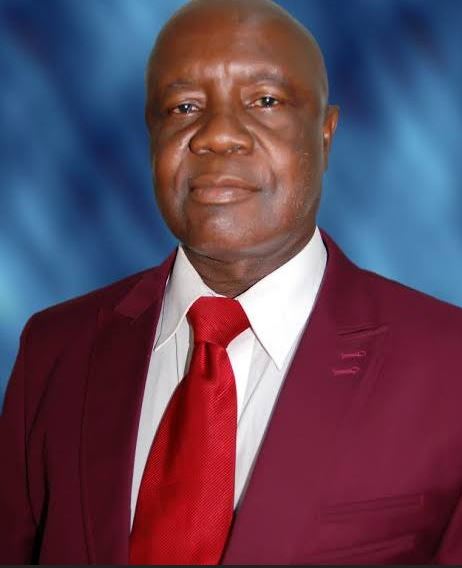
When I heard about the sudden demise of one of my professors, I was once again reminded of the briefness and vanity of life —a topic the professor would often highlight during his lectures. Last Saturday, Prof. Gray Goziem Ejikeme was laid to rest amidst tributes, sadness, and gratitude for his life and impact. He was not only an academic and scholar but also a father and leader whose work profoundly influenced many.
I have read numerous tributes to Prof. Ejikeme, each recognizing his passion, dedication, and relentless pursuit of excellence, exemplified by his progression in academia. From lecturer to numerous administrative roles, including Head of Department, Faculty Dean, Deputy Vice Chancellor, and Acting Vice Chancellor, his career was marked by significant achievements. This blog is a personal reflection on Prof. Ejikeme’s life and my encounters with him, first as his student and later as an academic colleague when I joined the University of Jos as a lecturer.
Across social media, in our graduating class group, and on other platforms, I have seen many tributes recognizing Prof. Ejikeme as a professional lecturer who motivated and encouraged students. During my undergraduate studies, in a context where students had limited voice compared to the ‘West,’ I once received a ‘D’ grade in a social psychology module led by Prof. Dissatisfied, I mustered the courage to meet him and discuss my case. The complaint was treated fairly, and the error rectified, reflecting his willingness to support students even when it wasn’t the norm. Although the grade didn’t change to what I initially hoped for, it improved significantly, teaching me the importance of listening to and supporting learners.
Prof. Ejikeme’s classes were always engaging and encouraging. His feedback and responses to students were exemplary, a sentiment echoed in numerous tributes from his students. One tribute by Salamat Abu stood out to me: “Rest well, Sir. My supervisor extraordinaire. His comment on my first draft of chapter one boosts my morale whenever I feel inadequate.”
My interaction with Prof. Ejikeme significantly shaped my teaching philosophy to be student-centered and supportive. Reflecting on his demise, I reaffirmed my commitment to being the kind of lecturer and supervisor who is approachable and supportive, both within and beyond the classroom and university environment.
Prof. Ejikeme made teaching enjoyable and was never shy about embracing technology in learning. At a time when smartphones were becoming more prevalent, he encouraged students to invest in laptops and the internet for educational purposes. Unlike other lecturers who found laptop use during lectures distracting, he actively promoted it, believing in its potential to enhance learning. His forward-thinking approach greatly benefited me and many others.
Building on Prof. Ejikeme’s vision, today’s educators can leverage advancements in technology, particularly Artificial Intelligence (AI), to further enhance educational experiences. AI can personalize learning by adapting to each student’s pace and style, providing tailored feedback and resources. It can also automate administrative tasks, allowing educators to focus more on teaching and student interaction. For instance, AI-driven tools can analyse student performance data to identify learning gaps, recommend personalized learning paths, and predict future performance, helping educators intervene proactively.
Moreover, AI can support academics in research by automating data analysis, generating insights from large datasets, and even assisting in literature reviews by quickly identifying relevant papers. By embracing AI, academics can not only improve their teaching practices but also enhance their research capabilities, ultimately contributing to a more efficient and effective educational environment.
Prof. Ejikeme’s willingness to embrace new technologies was ahead of his time, and it set a precedent for leveraging innovative tools to support and improve learning outcomes. His legacy continues as we incorporate AI and other advanced technologies into education, following his example of using technology to create a more engaging and supportive learning experience.
Over the past six months, I have dedicated significant time to reflecting on my teaching practices, positionality, and the influence of my role as an academic on learners. Prof. Ejikeme introduced me to several behavioural theories in social psychology, including role theory. I find role theory particularly crucial in developing into a supportive academic. To succeed, one must balance and ensure compatible role performance. For me, the golden rule is to ensure that our personal skills, privileges, dispositions, experiences from previous roles, motivations, and external factors do not undermine or negatively impact our role or overshadow our decisions.
So long, Professor GG Ejikeme. Your legacy lives on in the countless lives you touched.
Disclaimer: AI may have been used in this blog.
Share this:


A response to the Government’s plans to address ‘Mickey-mouse degrees’.

The Government’s latest plans to scrap university courses that are being considered as ‘under-achieving’ through poor graduate outcomes and progression should deeply concern all of us who work in and who have a passion for the Social Sciences, Arts and Humanities across Higher Education. It is no secret that Rishi Sunak and his Government have traditionally favoured apprentices in replacement of graduates. It is a truth that university and higher education is not for everyone, so whilst the value of undertaking an apprentice should be unequivocally un-challenged, this moment of rupture and insecurity for the Higher Education Sector should provoke us to think about how the culture of Higher Education has changed, and why people come to university in the first place. Engaging in these perspectives will put us in a stronger position to contribute to these debates occurring across the chambers of Parliament and at dinner tables across the country. So too should we as academics be actively challenging these attacks on the disciplines that we have passion for.
Before the awakening of neoliberalism, higher education was a vocation and a pursuit for those seeking to climb the ladder of ‘social mobility’. It is without question, that UK universities, particularly in the inter-war and the early post-war period were filled with young people with pre-existing economic fortune and privilege. Universities were not spaces for the working classes, nor for individuals achieving low grades outcomes. However, we can acknowledge that the class-based, gender and racial barriers into Higher Education have improved, yet we still have progress to make moving forward. Since the 2008 Global Financial Crash and the series of events that have followed, the motivations for coming to university have largely changed. Seemingly, it is predicated on a mode of response to economic re-structuring, particularly when the opportunities in the labour markets erode and become increasingly competitive, university seems for some as a suitable option to both buy time and up-skill to ‘stand out’. A sad truth remains however that these gravitations to university have contributed to degree inflation that has changed the way we see and value a degree. These changes have partially allowed the Government to play loose and fast with degrees that they consider ‘worthless’. However, those of us who actively teach and research in the social sciences will know that these degrees are invaluable…. Invaluable through teaching students to critically think about the seemingly ‘normal world’ around them- to question the logic of everyday practices, attitudes, norms and values that are engrained into our social fabric. To work with communities and organisations to identify and respond to issues of criminal and social injustice…. Be that austerity, homelessness, poverty, miscarriages of justice, and inequality. With this in mind, as educators in the social sciences, arts and humanities, we have a duty to show-case the momentous impact of our disciplines. To show-case movements of activism, government lobbying and social change. This emphasises the importance of research, knowledge exchange and adopting pedagogies enabling students to develop these works. Only then, can we put forward cases for impacts that at a government level could challenge these narratives. So too can we utilise these cases to infuse a passion for the discipline that with luck would enable a student to make a choice of coming to university that is right for them.
As a sector, we have numerous challenges facing us…. we need to think like and be activists…. We need to embody what we teach and speak out against those who reduce our work as a ‘worthless’ or ‘Mickey-Mouse’ degree. We may not change the Government’s approach but at least if departments do get shut down…. We went with a fight.
Share this:

By whose standards?
This blog post takes inspiration from the recent work of Jason Warr, titled ‘Whitening Black Men: Narrative Labour and the Scriptural Economics of Risk and Rehabilitation,’ published in September 2023. In this article, Warr sheds light on the experiences of young Black men incarcerated in prisons and their navigation through the criminal justice system’s agencies. He makes a compelling argument that the evaluation and judgment of these young Black individuals are filtered through a lens of “Whiteness,” and an unfair system that perceives Black ideations as somewhat negative.

In his careful analysis, Warr contends that Black men in prisons are expected to conform to rules and norms that he characterises as representing a ‘White space.’ This expectation of adherence to predominantly White cultural standards not only impacts the effectiveness of rehabilitation programmes but also fails to consider the distinct cultural nuances of Blackness. With eloquence, Warr (2023, p. 1094) reminds us that ‘there is an inherent ‘whiteness’ in behavioural expectations interwoven with conceptions of rehabilitation built into ‘treatment programmes’ delivered in prisons in the West’.
Of course, the expectation of adhering to predominantly White cultural norms transcends the prison system and permeates numerous other societal institutions. I recall a former colleague who conducted doctoral research in social care, asserting that Black parents are often expected to raise and discipline their children through a ‘White’ lens that fails to resonate with their lived experiences. Similarly, in the realm of music, prior to the mainstream acceptance of hip-hop, Black rappers frequently voiced their struggles for recognition and validation within the industry due similar reasons. This phenomenon extends to award ceremonies for Black actors and entertainers as well. In fact, the enduring attainment gap among Black students is a manifestation of this issue, where some students find themselves unfairly judged for not innately meeting standards set by a select few individuals. Consequently, the significant contributions of Black communities across various domains – including fashion, science and technology, workplaces, education, arts, etc – are sometimes dismissed as substandard or lacking in quality.
The standards I’m questioning in this blog are not solely those shaped by a ‘White’ cultural lens but also those determined by small groups within society. Across various spheres of life, whether in broader society or professional settings, we frequently encounter phrases like “industry best practices,” “societal norms,” or “professional standards” used to dictate how things should be done.
However, it’s crucial to pause and ask:
By whose standards are these determined?
And are they truly representative of the most inclusive and equitable practices?
This is not to say we should discard all concepts of cultural traditions or ‘best practices’. But we need to critically examine the forces that establish standards that we are sometimes forced to follow. Not only do we need to examine them, we must also be willing to evolve them when necessary to be more equitable and inclusive of our full societal diversity.
Minority groups (by minority groups here, I include minorities in race, class, and gender) face unreasonably high barriers to success and recognition – where standards are determined only by a small group – inevitably representing their own identity, beliefs and values.
So in my opinion, rather than defaulting to de facto norms and standards set by a privileged few, we should proactively construct standards that blend the best wisdom from all groups and uplift underrepresented voices – and I mean standards that truly work for everyone.
References
Warr, J. (2023). Whitening Black Men: Narrative Labour and the Scriptural Economics of Risk and Rehabilitation, The British Journal of Criminology, Volume 63, Issue 5, Pages 1091–1107, https://doi.org/10.1093/bjc/azac066

 Thoughts from the criminology team