
Home » Hate
Category Archives: Hate

Exercise: necessity, privilege or only for the privileged?
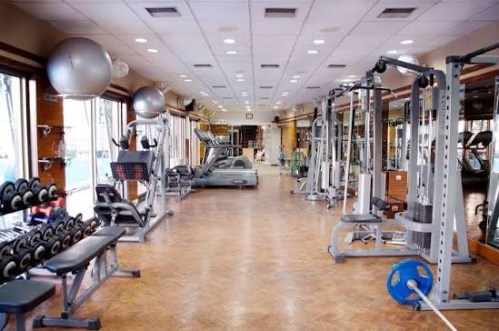
In a world where switching off is increasingly difficult and people’s mental health is consistently being battered, the opportunity to exercise and move the body is encouraged, and personally, welcomed! There remains a large push to BE healthy and to take care of your body (physically and mentally), and exercising remains a recommended avenue to pursue inner peace, tranquillity and good health. With the poorer weather just around the corner (I’m assuming: although if the sunny warm days continue you’ll get no complaints from me), being able to exercise outside will become slightly more restricted (walking and running). So for those with gym memberships, or who aren’t afraid of the dark, exercise could continue no matter the season. But for many, exercise which is presented as a necessity (Physical Education compulsory in mainstream education); is a privilege. It’s based on availability of time, money, and confidence. Yet via the great powers that be (Social Media) it feels like it is a privilege we are made to feel guilty for not achieving or prioritising.
I write this from the perspective of someone who has always been active; swimming, running, badminton, gym memberships- I am someone who struggled with body image, size and whose mental health very much hinges on caffeine and endorphins. I was introduced to playing badminton with my Pa and brother on a rainy Sunday afternoon back when I was around 10 years old. And it’s a physical hobby which has been a staple in all of our lives since (it’s also how I met my partner and 3 of my closest friends: Good call Pa)! But badminton costs money- silly money. You have to pay to use the court, pay to borrow equipment or purchase your own. Many would have to pay to get to the sports centre (public transport, cars, e-bikes/scooters). Lots and lots of costs. Costs which many individuals and families cannot afford. You also need to have someone to play with. So not a solo activity. Therefore, being able to say you have access to all of the above is surely someone (myself included) in a privileged position.
As an adult, I’ve been a member of various gyms since graduating from University (with a break during the pandemic). Some of the gyms I’ve been a member of have been quite intimidating spaces. There have been women only spaces and classes which were very much welcomed but the gym is like its own separate social sphere (if you know, you know). There is an etiquette that is, but then sometimes is not, followed (trying to read social cues is impossible in a dark, headphone filled, loud environment- and this is coming from some who is privileged enough to be able to pick up on social cues with relative success- or at least thinks they can)! It’s confusing and intimidating, and so so loud! Music, people, weights crashing down! It’s a LOUD space. The memberships themselves usually involve a peak option (before and after the engrained 9-5 which costs silly silly money) and off-peak (during the day and weekends when many people work, have childcare responsibilities but thankfully just costs silly money). All of this reinforces the privilege someone needs to be able to exercise and access a gym (confident in loud dark environments, not impacted by loud banging noises, disposable income to spend, individual time to prioritise themselves and the physical ability to exercise on machines aimed at people without disabilities).
So, in an increasingly challenging world: poverty, hate, war, misogyny, racism, transphobia, disablism, homophobia, suicide, homelessness and the ever-increasing list, why does thinking about exercise and gym memberships matter? It probably doesn’t. But sometimes it’s important to reflect on what we do have and to think about and be mindful of the barriers others face. Exercise is encouraged of many of us: it has serious physical and mental health benefits (yay endorphins), but it’s a privilege on so many levels. I think it’s important it’s framed as such rather than simply as something we should be doing. It’s something many many people simply do not have the privilege to be able to do. And this needs recognising.
Share this:


The schizophrenia of hate: An illogical logic
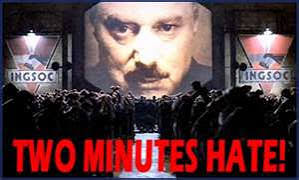
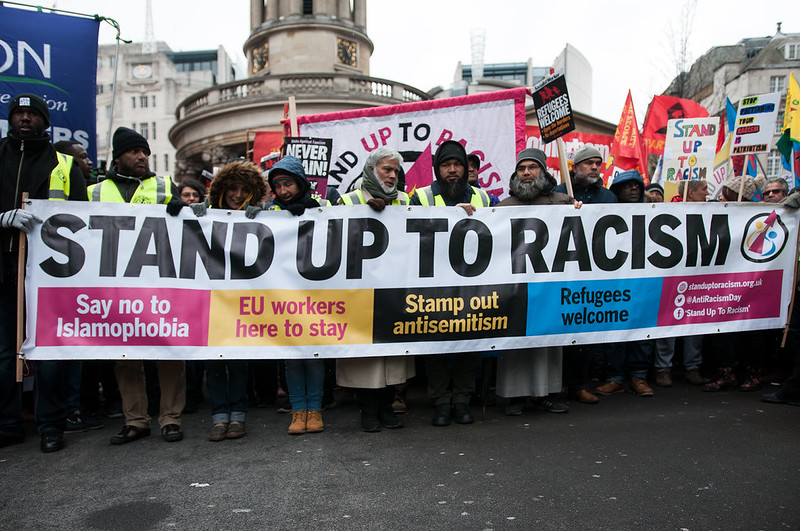
The latest news regarding the online racist abuse aimed at certain Netherlands players, following the team’s premature exit from the world cup, probably comes as no surprise to most and feels like it is no longer all that extraordinary. Sadly, it is almost normalised. We’ve seen this online abuse multiple times before aimed at different players, be they Black or women or any other section of society that fits the perverse pervading ideology of the time. Social media seems to have given bigots of all persuasions a voice. What was restricted to being voiced within groups, perhaps in pubs or other such settings, is now not only being voiced, but in a controlled and targeted way, a way designed to cause hurt and harm, a vindictive, personalised way targeting individuals, whilst also having a far wider reach. As with most crimes the causes and motives behind such hatred are often unclear. There is however a perceived logic behind the hatred. The Black footballers failed the nation the rest just didn’t do very well. The logic of hatred isn’t just aimed at sports stars; it is a cancer in every walk of life. The Israeli actions in the middle east fuelling hatred of Jews. The actions of individuals within the Asian community in parts of the UK involved in the grooming of children fuelling islamophobia and hatred of Asians. The actions of some of the travelling community involved in unauthorised encampments and crime fuelling the hatred of Travellers and Gypsies. The actions of Black asylum seekers involved in sexual offences fuelling the hatred of Black people and immigrants (a double hit there). And so, the list goes on, historical and contemporary evidence for why we should hate. There is a logic to the hatred, there is evidence that can be pointed to, and there are politicians, here and abroad, and the news media, that happily point to and provide that evidence, seeing the fruitfulness of stirring up the so-called indigenous masses to their advantage. Further evidence when those in authority tell us how it is. Of course, the hatred of these groups of people is not new, it can be seen in generations before us across the world, in some guise or another. But that hatred, is reinforced by the contemporary evidence selectively presented and voiced by institutions that have a vested interest in doing so. That’s the so-called logic of hatred.
And yet the people that display this hatred would happily support their football club/ nation if it is successful. The hatred is held in obeyance as the Black footballer thumps the ball into the opponent’s net. The same people that hate might happily, without thought, accept medical treatment from the Jewish doctor, the Muslim dental surgeon, the Black Immigrant nurse. They are the first in the queue at the kebab shop buying a donner kebab from the settled asylum seeker originating from the Middle East. Happy to consume an Indian or Chinese (food that is, not the person) served up by someone from Asia. They eat the vegetables and fruit picked by foreign labourers; nothing is shunned if it is to their personal advantage. That’s the illogical schizophrenia. There is for some an inbuilt underlying hatred of others, which defies logic. There is for many a convenient scapegoat for the ills that may have befallen them. It is the fault of the ‘other’, the Black, the Jew, the Muslim, the asylum seeker, not decades of social decline or governmental policy failure. The failure that has led to low living standards, or the housing crisis or the collapse of NHS or social care or manufacturing or unemployment or education. It is the fault of the ‘other’ and where else can that frustration be vented. There is some perverse logic in hating the ‘other’ albeit that logic is somewhat illogical.
Images
L-R George Orwell’s ‘Two Minute Hate’ and the Stand Up To Racism March in London on 17/03/2018
Share this:


Why I refuse to join the hate train

In a world drowning in outrage, where every headline screams division and every scroll brings fresh fury, it’s easy to forget something fundamental: there’s still beauty everywhere.
Turn on the news and you’re bombarded with it all—bans, blame, and bitter arguments about who’s ruining what. Immigrants, the wealthy, the homeless, the young, the benefits claimants—everyone’s apparently the problem. It’s a relentless tide of negativity and moaning that can sweep you under if you’re not careful.
But what if we chose differently?
Here are a few things I noticed in the last couple of weeks:
I came across a book that someone left on a park bench with a note: “Free to a good home.” On another late night, a man saw a mother struggling—baby in one arm, shopping bags in the other—and didn’t hesitate to help her to her car. And if you’re thinking “why didn’t she use a trolley?” then you’re part of the problem I’m talking about, because there were no trolleys in that shop.
In another moment, a homeless person was offering water to a runner who’d collapsed in the heat, providing comfort when it mattered most.
Elsewhere, a teacher stayed late for his “troubled” student preparing for exams. When I asked why, he said: “Everyone calls him destructive. I refuse to lose hope. He’s just a slower learner, and I’ll support him as long as it takes.”
In another event, teenagers on bikes formed a protective barrier around an elderly woman crossing the road.
Small acts. Quiet kindness. The stuff that never makes headlines, doesn't trend on social media, and doesn't fuel debates.
The truth is, these things happen everywhere, all the time. While we’re busy arguing about who’s destroying society, society is quietly rebuilding itself through a million small kindnesses. The coffee lady in the Learning Hub who remembers your order. The elderly doorman at Milton Keyens Costco who draws smiley faces on reciepts and hands them to children on their way out, just to see them smile. The neighbour who randomly helps pick up litter in the neighbourhood with her girls every Sunday afternoon. The friend who texts to check in with the simple words “how are you?”
The truth is simple: for every voice spreading hate, there are countless others spreading hope. For every person tearing down, there are builders, healers, and helpers working in the quiet spaces between the noise.
Yes, problems exist. Yes, challenges are real. But so is the grandfather teaching his grandson about dignity and respect. So is the aunty teaching her niece how to bake. So is the library volunteer reading to the shelter dogs. So is the community garden where strangers become neighbours.
Today, I’m choosing to notice the nice. Not because I’m naive, but because I refuse to let the moaning and the loudest voices drown out the most important ones. The ones that remind us we’re more alike than different. The ones that choose connection over division.
Your turn: What nice thing will you notice today? Free your mind, pay attention—you'll see one.
Because in a sea of anger, being gentle isn’t weak or naive—it’s revolutionary.


