
Home » Hate crime
Category Archives: Hate crime

Why I refuse to join the hate train

In a world drowning in outrage, where every headline screams division and every scroll brings fresh fury, it’s easy to forget something fundamental: there’s still beauty everywhere.
Turn on the news and you’re bombarded with it all—bans, blame, and bitter arguments about who’s ruining what. Immigrants, the wealthy, the homeless, the young, the benefits claimants—everyone’s apparently the problem. It’s a relentless tide of negativity and moaning that can sweep you under if you’re not careful.
But what if we chose differently?
Here are a few things I noticed in the last couple of weeks:
I came across a book that someone left on a park bench with a note: “Free to a good home.” On another late night, a man saw a mother struggling—baby in one arm, shopping bags in the other—and didn’t hesitate to help her to her car. And if you’re thinking “why didn’t she use a trolley?” then you’re part of the problem I’m talking about, because there were no trolleys in that shop.
In another moment, a homeless person was offering water to a runner who’d collapsed in the heat, providing comfort when it mattered most.
Elsewhere, a teacher stayed late for his “troubled” student preparing for exams. When I asked why, he said: “Everyone calls him destructive. I refuse to lose hope. He’s just a slower learner, and I’ll support him as long as it takes.”
In another event, teenagers on bikes formed a protective barrier around an elderly woman crossing the road.
Small acts. Quiet kindness. The stuff that never makes headlines, doesn't trend on social media, and doesn't fuel debates.
The truth is, these things happen everywhere, all the time. While we’re busy arguing about who’s destroying society, society is quietly rebuilding itself through a million small kindnesses. The coffee lady in the Learning Hub who remembers your order. The elderly doorman at Milton Keyens Costco who draws smiley faces on reciepts and hands them to children on their way out, just to see them smile. The neighbour who randomly helps pick up litter in the neighbourhood with her girls every Sunday afternoon. The friend who texts to check in with the simple words “how are you?”
The truth is simple: for every voice spreading hate, there are countless others spreading hope. For every person tearing down, there are builders, healers, and helpers working in the quiet spaces between the noise.
Yes, problems exist. Yes, challenges are real. But so is the grandfather teaching his grandson about dignity and respect. So is the aunty teaching her niece how to bake. So is the library volunteer reading to the shelter dogs. So is the community garden where strangers become neighbours.
Today, I’m choosing to notice the nice. Not because I’m naive, but because I refuse to let the moaning and the loudest voices drown out the most important ones. The ones that remind us we’re more alike than different. The ones that choose connection over division.
Your turn: What nice thing will you notice today? Free your mind, pay attention—you'll see one.
Because in a sea of anger, being gentle isn’t weak or naive—it’s revolutionary.
Share this:


Does compassion have a place in Criminology or is this a forgotten element in Justice?
In recent months, I’ve been thinking about the idea of compassion and its diminishing presence in societies. Let me start by saying this blog wasn’t prompted by any specific event, but rather by observing the increasing prevalence of hate speech in media and public discourse. More and more, we are seeing this troubling pattern manifesting across all levels of society – from world leaders mocking marginalised populations, citizens spreading hate speech online, media outlets amplifying divisive rhetoric in the name of balanced reporting, workplaces failing their employees on many grounds, public institutions are becoming more and more intolerant of the ‘other’ – extending into criminal justice systems where overcrowded prisons, harsh sentencing guidelines, limited rehabilitation programmes, and the stigmatisation of former offenders all continue to reflect this absence of compassion.
Against this backdrop of increasing hostility, the teachings of Pope Francis (1936 – 2025) offer a powerful counterpoint that resonates beyond religious boundaries. He consistently championed respect, dignity, and compassion towards all people. You don’t have to be religious to recognise the universal truth in his words: “A little bit of mercy makes the world less cold and more just.” This intersection of justice and mercy naturally leads us to examine criminology through that very compassionate lens, because the moment we strip compassion from our criminal justice systems, the consequences become counterproductive. By this, I mean rehabilitation becomes secondary to punishment, criminogenic factors become ignored, recidivism rates become affected as former offenders encounter insurmountable barriers to reintegration and so forth.
The question I want you to ponder over this sunny weekend is: What defines us when compassion vanishes from our interactions? When hatred becomes our default response? Personally, I believe compassionate approaches to criminology do not weaken justice – they strengthen it by addressing root causes while maintaining accountability. I won’t elaborate further here, but if you’re interested in exploring these concepts more deeply, consider enrolling in my new module launching this September on global perspectives of crime, where a comparative approach to understanding and responding to crime will also be explored.
Have a lovely sunny weekend!
Share this:


For Tyre’s last Five badges. (spoken word)
The badges you wear were betrayed the very instant you flashed your sights on me.
You had nothing good in mind from the start.
I was doomed from the beginning.
By the time the brutality started,
The senselessness of it all kept my body numb to the assault.
“What did I do,” I keep asking, as
Your brutal blows, strongholds and punches bend my body into painful pretzels.
While y’all’ve got me firmly pressed against the pavement, y’all yell:
“Get on the ground.”
Pressed on the ground, I say disarmingly:
“You guys are really doing a lot right now.”
My calmness stands out against all your unwavering aggressions.
Yet, you continue to play the same game: “Get on the ground.”
Beneath the ground there is only hell, and yet
My face pressed against the gravel by your hooves feels like hell, right here, right now.
‘Watching the world wake up from history.’
As if wielding your fists and batons, tasers and bullets don’t threaten me enough,
There are five of you, and
Each of you is massive.
Each of you …highly trained, experienced, and tremendously pumped up.
I am a little weasel sized up against any one of you, and
You are a mob of five.
Too weak to lift my own self, two officers hoisted me up by my limp arms, blood streaming from my head and outta ev’ry orifice, voice too weak to shout. I’m beaten badly, and yet you continue to brutalise me.
Manhandled.
I stumble up, firmly in your grasp, and all I do is plead, which gave enough time for another officer to grab a baton.
He quickly came back with the baton, screaming “give us your hands,” while the two officers still restrained me by these very same hands.
You continually scream “Stop resisting,” while
At least two if not three of you all strangling some part of my body.
The agony is immense.
You’re a pack on the hunt.
You chase me down, and
Torture and kick me more feverishly for running away.
I am in a battle for my life, you…
You are in a battle for your manhood.
“Bruh, you say, and words like these are the same words used to connect us to one another.
The words you use to abuse me could be endearing in another context.
Yet you have the nerve to call me “bruh,” and beat your brother to death.
‘I was alive and I waited, waited’
Waited for your humanity to show up,
Waited for justice to be served to me equally.
‘I was alive and I waited, waited,’ waited three days in the hospital…and
Neither justice nor your humanity ever showed up.

Share this:


Don’t I know you from somewhere? Online trolls and other fairytales

Recently there has been a discussion if the owner of one of the social media platforms will be changing its logo. The “iconic” image is to be replaced with something new; undoubtedly this will also change in due course for as long as the medium is still relevant. Whilst people feel strong about brand representation that is something peripheral to what social media represent in recent years. Social media for a long time have been accused of harboring the worst of human interaction, tolerating intolerable actions from hate speech to incitement to violence. Is this however a fair representation of social media?
We build/cultivate and imagine in social media. They are the key to our online identity and in some ways will explain our conduct with others. Some link different media together, so that you can check Facebook to get an idea of who they are, can check their LinkedIn on education and work experience, you can read their tweets/retweets, you can follow their conversations on yammer, you can get updates of their lives on Snapchat, check their Instagram to see their photos and for the more active ones TikTok where communication is encapsulated within small video fragments. If you were to combine these social media together you can get a very good idea about a person without ever knowing them in person. Social media have ushered the era of virtual representation and people becoming clearer of how this representation works. Clearly there are those who thrive in these and others who struggle.
The ones who manage to use social media effectively can develop a personal brand and even become “social influencers”. A person that has influence over others to promote goods and services…to do so they have to build a reputation and social media works towards establishing just that. Connecting different parts of social media works to their advantage as their profile works towards their credibility of being a “real” person. The people who make it become the protagonists assuming the role of a hero, a modern-day prince/princess with a back story that is endearing. Whilst they drip feed their story of adversity with personal details of some private aspects of their lives, they also provide their followers with the commodities that they promote. I lost someone important to me, had a terrible experience at school, faced health problems but look at my stylish hat. These are the cargo trousers I left an abusive relationship in, and my cropped t-shirt is a strong statement to being environmentally
sensitive. Obviously, I deliberately exaggerate the statements here and in fairness no one will be (at least I hope) so deliberate in their product placement. What is very clear is that our social media influencers spend a significant amount of time building content and by devoting more time to that they need the necessary financial support. The top influencers have millions of people following them, a reach that
very few people have ever had before. Never before, a young person offering make-up tips, a reality star or a dancer had so many people interested in their lives. The very top of them have more than 500 million followers and we are close to the point that some of them will be reaching over a billion! What started as a personal (cottage) industry of one topic issue, has evolved into an all-consuming enterprise. The more the followers, the greater the demand for additional information. The more information, the more exposed the influencer becomes. Then marketing follows as the reward. The heroes of social media have to find ways to make an income and endorsing products seems to be the main way to do so.
The kingdom of social media doesn’t only contain heroes; there are also villains in the story. The people whose profile is not personal, doesn’t include any private details and who seem to have as their main focus to attack others. The term troll appeared in the early 90s when online identities seemed to be separate from our social ones. It was expected in a new domain that people will assume roles and whilst some went for the hero of the community others took a different turn. The early trolls under the protection of cyber identities hid their frustrations and brought to the community something we have in the real world, bullying. The evolution of social media that requires a different presence and the rules the internet community tried to deal with them meant that some of the original forms of trolling started disappearing, but were never extinguished. In fact, they became an equally useful commodity, almost equal to the influencers. Our heroes play the part of the product promoter; they look good and provide us with goodwill stories; on occasion when the appeal of the hero wanes, and people try to use social media to mobilise on social issues or promote alternative stories that’s when the trolls come in!
Out of their caves they come, trying to shut down conversations, mislead people and even intimidate people into silencing them.
This brings me to the main point of this blog; originally the internet seemed to be a worldwide phenomenon that was all inclusive and slightly anarchical. People found on the internet a companion, an ally, an adversary. It became a foundation for a virtual ecumenical community. Well, that was until big business moved in and brought in their usual tactics. The cyber world became more like our physical world and the cyber identities were quickly replaced by professional ones. At this point the internet is much more regulated and monitored than ever before. Which begs the question; how come there are so many accusations of misinformation, and intimidation now? How come such a regulated medium allows bullying and intimidation to continue? I am astounded even now to see on social media reactions on social medial about stories that do not simply lack social sensitivity they are intentionally inflammatory to coax reactions and offend people. I am still astounded to see the political alliances of the troll army and their reactions to open conversations. Therefore, it is not surprising that several minority groups have accused social media of doing very little to protect them from attacks and the use of pejorative language that has its place in a history of shame. Maybe because social media provides a fairytale with princesses and trolls, they do not have the space for those who do not promote a marketed lifestyle. Life is surprisingly diverse, and marketing is only one side of it. Ignoring some of the bigger social issues, using
trolls to shut down the conversations our global community needs, will not do. In academia the sign of a good debate lies in the ability to bring in evidence and support all claims with accurate and relevant information. Some of our colleagues are trying to take some of their knowledge outside the classroom into social media; I salute them, as we have been trying to engage as much as we can, but I also worry that the actual model that social media is built upon also at fault. Maybe it needs some rethink; there is no question that we are all equal, but we do not all have the same knowledge.

Share this:


Do You Remember the Time? At the Lynching Memorial
On September 11, 2021 I visited the Lynching Memorial, which is near the newly expanded Equal Justice Initiative Museum, From Enslavement to Mass Incarceration.
At the heart of the “National Memorial for Peace and Justice” (Lynching memorial) is a vast collection of giant, rusty metal, rectangular pillars, hanging tightly together like a neatly planned and well-looked-after orchard.
Etched in each are the names of (known) lynching victims by date.
We can see that, at times, entire families were lynched.

The pillars are hung so cleverly that one has to experience this artistic installation in person.
Nonetheless, the subject of white terrorism in the deep south is heavy,
Which is perhaps why Guests are invited to visit the nearby museum before the Memorial.
One needs time to prepare.
Naturally, sandwiched between enslavement and mass incarceration exhibits,
The museum also has an array of material on lynching.
This included a giant mural of jars surrounded by videos, infographic murals, maps and
An interactive register of every known lynching by county, date, state, and name.
I’m still stuck on the mural of snapshots of actual lynching advertisements, and
Pictures of actual news reports of victims’ final words.
These were the actual final words of folks etched forever in these hanging, rusty pillars.
Ostensibly, written by war correspondents.
Standing in awe of the museum’s wall of jars, I chatted with a tall Black man about my age.
He’d traveled here from a neighboring state with his teen son to, as he said,
“See how this stuff we go through today ain’t new.”
I recounted to him what a young man at the EJI memorial had showed me a few years ago:
A man’s name who’d been lynched early last century for selling loose cigarettes –
Just like Eric Garner!
Yet, even since then,
We’ve gotten the police murders of George Floyd and Breonna Taylor,
Or even Michael Brown, Walter Scott and Philando Castile.
Amadou Diallo was shot 19 times in 1999, standing on his own stoop
And while Jayland Walker got 46 bullets this year while fleeing on foot.
Tamir Rice!
Tamir Rice was a little boy.
A little boy playing in the park. But his mere presence terrified a white man.
So he called 9-1-1 and the police showed up and shot Tamir within seconds!
We can watch the tape.
All of these martyrs are included in the museum’s growing timelines (sigh).
After their own legal work in representing the wrongfully imprisoned for damn near life,
EJI began collecting jars of dirt near every known lynching, and
If invited by local officials, EJI would offer a memorial plaque and ceremony commemorating that community’s recognition of historic injustice(s).
An open field sits next to the suspended pillars, filled with a duplicate of each pillar.
These duplicates sit, having yet to be collected and properly dedicated by each county.
These communities are denied healing, and we know wounds fester.
The field of lame duplicates effectively memorializes the festering denial in our body politic.
There are far too many unrecorded victims and versions of white mob violence, and intimidation, not just barbarous torture and heinous murder.
Outside of these few sorts of memorials,
We do have to wonder how else this rich history has stayed in our collective memories.
Too many Black families were too traumatized to talk and didn’t want to pass it to their kids.
We know many fled after any minor incursion,
Just as someone had advised Emmet Till to do,
And there’s no accounting for them and the victims’ families who fled and
Even hid or discarded any news clippings they’d seen of the events.
Yet, whites must have kept record.
Did whites collect the newspaper ads or reports of a lynching they’d attended or hoped to?
They made and sold lynching postcards, curios, and other odd lynching souvenirs.
Where are the avid collectors?
Plus, apparently, terrorists don’t just kidnap and hang someone to death,
So what did they do with all the ears, noses, fingers, and genitals they cut off?
Or eyes they plucked out?
Or scalps they shaved?
Many victims pass out from the immense pain of being tortured and burned alive, but still
I doubt all those pieces and parts got thrown in the fire, because, of course,
Plenty of pictures show entire white families there to celebrate the lynching like (a) V-day.
And in many ways, it was, and
The whites looked as if they would’ve wanted to remember.
Looks can be deceiving, but the ways whites were also bullied into compliance is real.
Still, my mother swears that some white families’ heirlooms must include
Prized, preserved pieces of Nat Turner.
Ooh, wouldn’t that be a treasure that would be.
Plus, given the spate and state of anti-Black policing and violence,
Our democracy, nay, our Constitution itself, is as rusty as these pillars.
The pillars resting in the field remind us not only the work left to do, but also, it’s urgency.
How many more pillars may we still need?
How many amendments did will freedom take?
It goes to show how great thou art now!
See: Slave Ads at the EJI Museum
Share this:


A Punky Reggae Party

In June 1977, 45 years ago, I saw the Queen, albeit fleetingly, being driven past Piccadilly Circus en-route to Buckingham Palace for the culmination of the Silver Jubilee celebrations. I wasn’t there for the party. I was making my way to Camden Town and the rehearsal studios used by the Punk-inspired band Subway Sect, who my friend from school had joined as their drummer. The studio, part of a crumbling yard of railway buildings, some still bombed out from the War, would soon begin its transformation into trendy Camden Market.
Punk shared an interesting crossover with Black music culture, in particular reggae. As teenagers, most of us growing up in the 70s were familiar with Blues and Tamala Motown, but reggae was new to me, especially the Heavy Dub style popular in the Jamaican community. The man largely responsible for my education was Don Letts, the House DJ at The Roxy in Neil St, Covent Garden. Originally a fruit and veg warehouse, between 1976 and 1978 the Club shot to fame/notoriety as the top Punk venue in London. The problem for the promoters was that in 1977 the scene was so embryonic there were as yet no home-grown punk records to play. So, in the gaps between live bands, Don played what he wanted, namely reggae, which went down well with the mostly white crowd. To quote from his website: “he came to notoriety in the late 70s as the DJ that single handedly turned a whole generation of punks onto reggae”. In fact, the combination became so popular that Bob Marley’s Punky-Reggae Party released in 1977 as a 12 inch (Jamaica only) and as the B-side to Jamming, reached number 9 in the UK singles charts. Don’s choice of tracks from his Roxy days are captured in the critically acclaimed compilation Dread Meets The Punk Rockers Uptown (Heavenly Records).
Scroll forward a couple of years and I’m working as assistant van driver to my boss Morris, a Jamaican-born reggae fan. He was involved in the local music scene and sometimes I would help him set up a Sound System for private house parties, in and around Brixton. We would use the work van, a sackable offence given the prestige brand name of our West End employer, but worth the risk. Think Small Axe: Lovers Rock, but with more sound gear and ganja-smoking Rastas, and you’ve got the picture. While sometimes out of my comfort zone, it was uplifting to witness first-hand a community at one with its own identity while lobbying for change in wider society that remained indifferent at best.
It was also a time in London when the Metropolitan Police stop and search “SUS” law reigned high. I witnessed several occasions where Morris was subject to blatant racial harassment. Once I was on a delivery to an exclusive residential part of Town. On these visits we played a game, coined by Morris, as Dropsy or Tipsy – would we be offered a Dropsy (cup of tea/coffee) or a cash tip for the delivery, typically a sofa or expensive Persian rug? The winner was the one who made the right call in advance. We parked in the street and as we got out several police officers on foot suddenly approached Morris and demanded to know what he was doing, despite the rather obvious fact he was at work. When they saw me, the situation cooled off, but the aggressive tone of the questioning was clear and present intimidation of a black man, whose only ‘offence’, while going about his legitimate business, was to be in a white, rich area. I wish I could say this was a one-off. Unfortunately, we all know that’s not the case. Another time relates to the shocking mistreatment he got crossing a picket line. The work van was kept in a British Road Services Depot at Elephant and Castle. We both turned up on the day a lightning strike had been called by the Transport and General Workers Union. I understand emotions can run high in these situations, but there was no excuse for the barrage of racial abuse he took from sections of the crowd. He brushed it off with characteristic good humour, but the episode tainted my view of trade unions ever since.
As this is a criminology blog I should probably throw in an example of real-life criminality. It happened mid-morning one Friday following a drop-off in busy Bishopsgate. Returning to the van I noticed a castor wheel on the pavement. “Looks like it’s come from one of our sofas” I remarked. It had. When we pulled back the shutter, the van was empty. Everything we’d loaded up an hour ago was gone. Sofas, walnut dressers, rugs, porcelain table lamps, all cleaned out. The castor was all that was left! Robbed in broad daylight, next to a bus stop. In panicked disbelief we asked those in the queue if they’d seen anything but we were wasting our breath. It was left to Mr Farooqui, the long-suffering Despatch floor manager, to take the heat from angry customers as he rang round to tell them the good news. Needless to say, management weren’t impressed and dished out first and final written warnings. Soon after we went our separate ways.
Meanwhile, the overlap between black and white youth culture in London was being fostered in creative ways. Rock Against Racism (RAR), founded in 1976 along with the Anti-Nazi League (ANL), a year later, were both set up to combat a surge in far-right extremism. Music, especially the cross-over between various genres including punk and reggae, was an important enabler in that it found common ground from which more overtly political discussions could take place. I was one of the many thousands who, in April 1978, joined The Clash, Steele Pulse and others at Victoria Park, Hackney, in what was RAR’s finest hour. Also in the audience that day was Gerry Gable, the veteran anti-fascist campaigner and founder of Searchlight magazine, whose archive is hosted here at the University. I spoke to Gerry about this and he has very fond memories of the day and his role in helping it come about through his associations with both RAR and the ANL.
So, in the year of the Platinum Jubilee, has popular music culture continued as a positive force for race integration since the punky-reggae days of 77? It’s probably a PhD project or two (dozen), but Bob Marley sums it up for me nicely:
What did you say?
Rejected by society
Treated with impunity
Protected by my dignity
I search for reality
If by the search for reality we mean certainty, then how certain are we things have changed for the better? My experience is that, on average, they have, and that music has played its precious role in bring people closer together. The key here is “on average”. If by reality we mean a search for legitimacy, there is evidence to the contrary. Differences of course remain, and there is no room for complacency. The one pledge we must agree on though is to never stop searching – for melody, for rhythm, for harmony.

Share this:


Refugee Week 2022

Next week (20th-26th June) is Refugee Week, coming at a moment in time days after the first deportation flight of asylum seekers to Rwanda was scheduled. Luckily the government’s best efforts were thwarted by the ECHR this time. Each year Refugee Week has a theme and this year’s focus is healing. People fleeing conflict and persecution have a lot to heal from and I am pessimistic about whether healing is possible in the UK. My own research examines the trajectories of victimisation among people seeking safety. I trace experiences of victimisation starting from the context from which people fled, during their journeys and after arrival in the UK. It is particularly disturbing as someone who researches people seeking safety that once they arrive in a place they perceived to be safe, they continue to be victimised in a number of ways. People seeking safety in the UK encounter the structurally violent asylum ‘system’ and discriminatory attitudes of swathes of the public, sections of the media and last not certainly not least, political discourse. Even after being granted leave to remain, refugees face a struggle to find accommodation, employment, convert education certificates and discrimination and hate crime is ongoing.
Over the years I have supported refugees who suffered breakdowns after having their asylum claim awarded. They are faced with the understanding of the trauma they suffered pre-migration, compounded by the asylum system and the move-on period following claims being awarded. Yet this is no time to heal. In the wake of the Nationality and Borders Act 2022, no migrant nor British citizen with a claim to citizenship elsewhere is safe. There is no safety here and therefore there can be no healing, not meaningful healing anyway.

Despite my negative outlook on the state of immigration policy in the UK, there are some positive signs of healing for some people seeking safety. These experiences are often facilitated by peer support, grassroots organisations and charities. I recall one woman who had fled Iraq coming into a charity I was undertaking research in. When we met for the first time, she was tiny and looked much older than she was. She would pull her veil tightly around her head, almost like it was protecting her. This woman did not speak a word of English and the only volunteer Kurdish Sorani interpreter did not attend the group every week. The womens’ group I attended conducted activities which overcame language barriers and at the time we were working with tiles and mosaics on a project which lasted a few weeks. During this time I could visibly see this woman start to heal. She started to stand up straight, making her appear taller. Her face softened and she appeared younger. She started smiling and her veil loosened. She was relaxing among us. In my experience, I’ve noticed that the healing comes in ebbs and flows. Relief of being ‘safe’, compounding stress of asylum, making friends, waiting, waiting, waiting for a negative decision, being supported by NGOs, letters threatening deportation, having a ‘safe’ place to live, having a firework posted through your letterbox.
For me this week is about celebrating those fleeting moments of healing, since I spend so much of my time discussing and researching the negative. The University of Northampton is co-hosting a number of events to mark Refugee Week 2022, starting with a service being held to remember all those seeking sanctuary both past and present. The event will be held on Monday 20th June at 1pm at Memorial Garden, Nunn Mills Road, Northampton, NN1 5PA (parking available at Midsummer Meadow car park).
Monday will end with an ‘in conversation with’ event with University of Northampton doctoral candidate Amir Darwish. Amir is Kurdish-Syrian and arrived in the UK as an asylum seeker in 2003. He is now an internationally published poet and writer. This event will be run in conjunction woth Northampton Town of Sanctuary and will be hosted at Delapre Abbey at 7pm. You can find further details and book tickets here.
On Wednesday the University of Northampton and Northampton Town of Sanctuary will be hosting an online seminar at 3pm with Professor Peter Hopkins, whose recent research examined the exacerbation of existing inequlaities for asylum seekers during the pandemic. I’ve just written a book chapter on this for a forthcoming volume reflecting on the unequal pandemic and it was staggering – but unsurprising – to see the impact on asylum seekers. This seminar can be accessed online here.
The week’s events will conclude with a Refugee Support Showcase which does what it says on the tin. This event will be an opportunity for organisations working with refugees in the local area to show the community the valuable work they do. This event will take place on Thursday 23rd June 4-6pm at the Guildhall, St. Giles Square, Northampton.
This year the University has worked with a number of organisations to produce a well-rounded series of events. Starting with reflection and thought of those who have sought, and continue to seek sanctuary and celebrating the achievements of someone who has lived experiences of the asylum system. Wednesday contibutes to the understanding of inequalities for people seeking safety and we end Friday on a positive note with the work of those who facilitate healing.
Share this:


Auschwitz – secrets of the ground
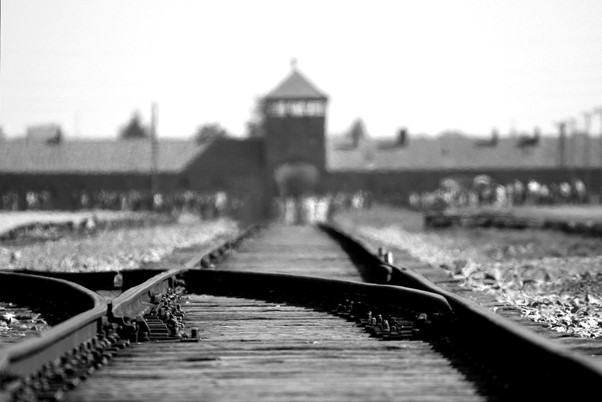
Indifference is not a beginning; it is an end. And, therefore, indifference is always a friend to the enemy, for it benefits the aggressor – never his victim
Elie Wiesel
I have been fortunate enough in my life to have been able to live and travel abroad, a luxury you should never take for granted. Having traveled in every continent there are plenty of things I will never forget, mostly good but one thing that will stay with me will be Auschwitz. It is hard to get excited about visiting Auschwitz, but it is also hard to not get excited about visiting Auschwitz. The day I visited Auschwitz, on the journey there a flurry of strange thoughts went through my head, perhaps ones you would only have when attending a funeral where you are supposed to be in grief. What do you wear, should I smile, what do you talk about, essentially you are creating a rule book inside your head of how not to be offensive. It’s a strange thought process and perhaps completely irrational, one of which I will probably never go through again. If I had to describe Auschwitz in one word, that word would be haunting and I could write for hours about Auschwitz without ever being able to get across the feeling of visiting it, but instead, I am going to share with you a poem I wrote on the journey back from Auschwitz, this poem has never seen the light of day and has been in my diary for over a decade, until now, but it feels like a perfect time to finally share, it’s called secrets of the ground.
Dark skies and tearful eyes,
only God knows the secrets this ground hides.
The flowers mask the crimes of old,
the walls are chipped by bullet holes.
Haunting sounds drowned out by hymns,
the shoes of children too scared to blink.
A cold wind howls in these Polish fields,
one million people how can this be real.
A train stands alone on the blackened track,
barb wire fences to hold them back.
The secrets out, the grounds have spoken,
we must never forget the lives that were taken.
Share this:


Holocaust Memorial Day: 27th January
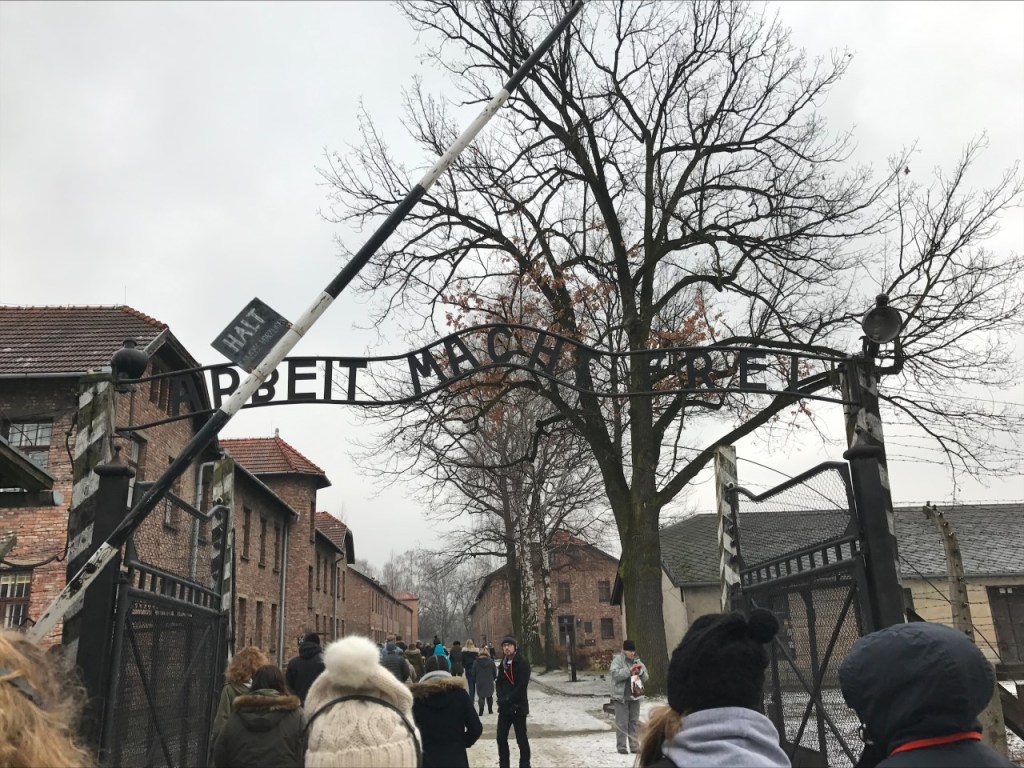
The 27th January marks an important event, Holocaust Memorial Day. This is a day to remember those who were murdered by the cruel Nazi regime, including 6 million Jews. These people were subject to the worst treatment that the modern world has ever seen. The Holocaust reminds us of how dangerous humankind can be to one another. These Nazi men went to work each morning knowing what they were doing and going home to their family at the end of their day of murders. This is something that I cannot comprehend, people that were so truly evil to degrade a whole group of people just because of who they are.
As someone who has had the opportunity to visit Auschwitz on an education trip while at school, I can say that the place is like nothing I could have ever imagined. The vast size and scale of both camps was inconceivable. To be in a place where so many people suffered their worst pains and lost their lives, it was a harrowing experience. From the hair to the scratch marks on the gas chamber walls, the place felt like no other. There was an uncomfortable feeling when you enter the gates of Arbeit macht frei, meaning, work will set you free. To know that so many walked under these gates not knowing what their fate held. And all of this for the Jews was because of their religion and the threat Hitler perceived them to have on Germany.
This is a topic that has always interested me, questioning why the Jewish community? My dissertation research so far has shown how the Jews were scapegoated by the Nazis for their successful businesses in and around Germany. Many Jewish families owned banks, jewellers and local businesses. The Nazis used this peaceful group of people and turned them into the enemy of the Nazi regime. The Jewish community was seen as a financial threat to the Nazis and needed to be eradicated for Nazi German to be successful. The hatred of the Jews developed, bringing in more dated views of the Jewish community. Within Nazi Germany, they were treated like filth and seen as subhuman because of their ‘impure’ genetics. Anyone seen to be from Jewish decent was seen as dirty and an unwanted member of society.
The stereotypes that the Jews are rich continued even after the war and still to this day, along with the stereotypes that Jews are the evil of society. Since March 2020, there have been conspiracy theories circulating on social media that the Jewish community was behind the COVID 19 pandemic. Many are suggesting that the Jewish people are trying to gain financially from the pandemic and destroy the economy. This is not something that is new, the Jewish community has faced these prejudices for as long as time.
My dissertation incorporates a study on social media and archival research. This project has taken me to the Searchlight Archives, located at the University of Northampton. The information held here shows how Britain’s far right movements carried on their anti-Semitic hate after the end of WWII. It’s very interesting to find that antisemitism never went away and still has not. Recently, the Texas Synagogue hostage crisis has show how much anti-Semitic hate is still in society. Three days after the Texas crisis, there was no longer headline news about it and those tweeting about it were part of the Jewish community.
Does this suggest that social media is anti-Semitic? Or is anti-Semitic hate not shared on social media because it is not of interest to people? Either way, Jews are still treated horribly in society and seen as a subhuman by many. This is the sad truth of antisemitism today, and this needs to change.
Share this:


The 7 shots of Isaiah Brown (April, post-George Floyd murder case) #BlackenAsiaWithLove
Isaiah Brown was shot by the policeman who’d given him a ride home less than an hour earlier, after his car had broken down at a gas station. He was shot 3 minutes into his 9-1-1 call. The cop mistook the cordless phone Isaiah was holding for a gun. This was the very phone he’d mentioned to the 9-11 dispatcher, using the very same cordless phone from his home. On the 9-1-1 call, Isaiah is explicitly asked, and confirms that he is unarmed, also that he was walking down the street on the phone, escaping a volatile situation.
On the call, it’s clear that Isaiah was reaching out for a lifeline – calling out from hell in sheer crisis. It wasn’t that he was in danger, he had the emotional maturity to call for help when he felt himself at risk of endangering another. “I’m about to kill my brother,” he calmly tells the dispatcher, who by now can start to hear him panting from walking.
“Do you understand that you just threatened to kill your brother on a recorded line on 9-1-1,” she asks calmly. “Mmm Hmm,” he confirms casually. He was calling her for help, and by now it’s clear that she’s attempting to keep him talking, i.e. redirect his attention from his crisis by having him describe the crisis. She’s helping Isaiah to look at his situation objectively, and it’s working. This is a classic de-escalation tool that anyone who has ever taken care of a toddler knows. Isaiah calmly and rationally confirmed that he knew the implications of his words, and he kept pleading for help.
This was a call about a domestic dispute and there was talk of a gun, which never materialized, neither did the caller nor his brother in the background suggest the actual presence of a gun. Isaiah can be heard twice ushering someone out with him, and by his tone it seemed that he was speaking to a child, using a Black girl’s name. None of Isaiah’s ushering is noted in the transcript. In hearing so many keystrokes, one wonders which parts of this is being taken down. Again, she asked him to confirm that he was unarmed. In fact, she seemed bewildered that he was using a house phone, yet still able to walk down the street, again, evidently attempting to de-escalate the situation. How many times have you told some to “take a walk!”
“How are you walking down the road with the house phone,” she asks. “because I can,” he says, and leaves it at that.
In the background of the call, we hear police sirens approaching. “You need to hold your hands up,” she says. “Huh,” he asks. “Hold your hands up,” she says sharply, as if anticipating the coming agitation. It’s interesting to note here that we, too, know that despite the casual nature of this distress call, despite all clear and explicit confirmation that the gentleman was unarmed, and regardless of the fact that the dispatcher knew that Isaiah would be in the street when officers approached, the raising in alarm in her voice betrayed the fact that she knew the officer would escalate the situation.
“Why would you want to do something like that,” she calmly asks, he calmly answers. She engages him in this topic for a while, and we can hear the background become quieter. His explanations are patchy and make little sense, yet he remains calm. By now, it’s clear that the caller is of danger to no one else but his brother, and that he’d managed to create some physical distance between the two. So far, nothing suggests anyone is about to die. Yet, the officer arrives, and within 30 seconds, 7 shots are fired, Isaiah is down.
After the 7 shots are fired, you can hear someone moaning in pain, and you can’t exactly tell if it’s Isaiah or the dispatcher; the dispatcher’s recording continues. After the shots are fired, and it’s clear from the audio that the victim is moaning in pain, the cop continues to bark out orders: “Drop the gun” and so forth. He’s just 7 times, we hear a fallen man, and the cop is still barking in anger and anguish. Is he saying “drop the gun” to Isaiah, or performing for the record, as Black twitter has suggested? Confusingly, moments later the officer is heard playing Florence Nightingale, complete with gentle bedside manner. We hope Isaiah survives; issuing aid at this moment is life-saving.
“He just shot ‘em, the dispatcher says to someone off call, who can now be heard on another dispatch call regarding the incident. “I got you man” the policeman says to Isaiah moments after shooting him, then mercifully: “I’m here for you, ok.”
Now, in the distance, we hear the familiar voice of Isaiah’s brother calling out, “Hey, what’s going on, bro?” “It’s ok” the officer calls out quickly. He never says what’s just happened. Then, “Go to my car, grab the medical kit,” he calls out to the brother. “You shot ‘em,” the brother asks. The cop says nothing.
The previous news report on the network nightly news was about Merrick Garland launching a civil rights investigation into my hometown’s police force, just over a year after the police murdered Breonna Taylor on my mother’s birthday. “It’s necessary because, police reform quite honestly, is needed, in nearly every agency across the country” says Louisville Metro Police Chief, Erika Shields. On that area’s local news website reporting this story, the next news story bleeds reads: “ Black gun ownership on the rise,” on no one should wonder why. But, this is America, so the headline finishes with: “But Black gun store owners are rare.” The all-American solution – more peace-makers!
Please stop ignoring our distress, or minimizing our pain with your calls to “go slow.” How slow did Isaiah have to move to avoid getting shot 7 times by a cop who’d just shown him an act of kindness and mercy!?! #BLM #BlackLivesMatter #Seriously #Nokidding

 Thoughts from the criminology team