
Home » Harm (Page 3)
Category Archives: Harm

Thinking “outside the box”
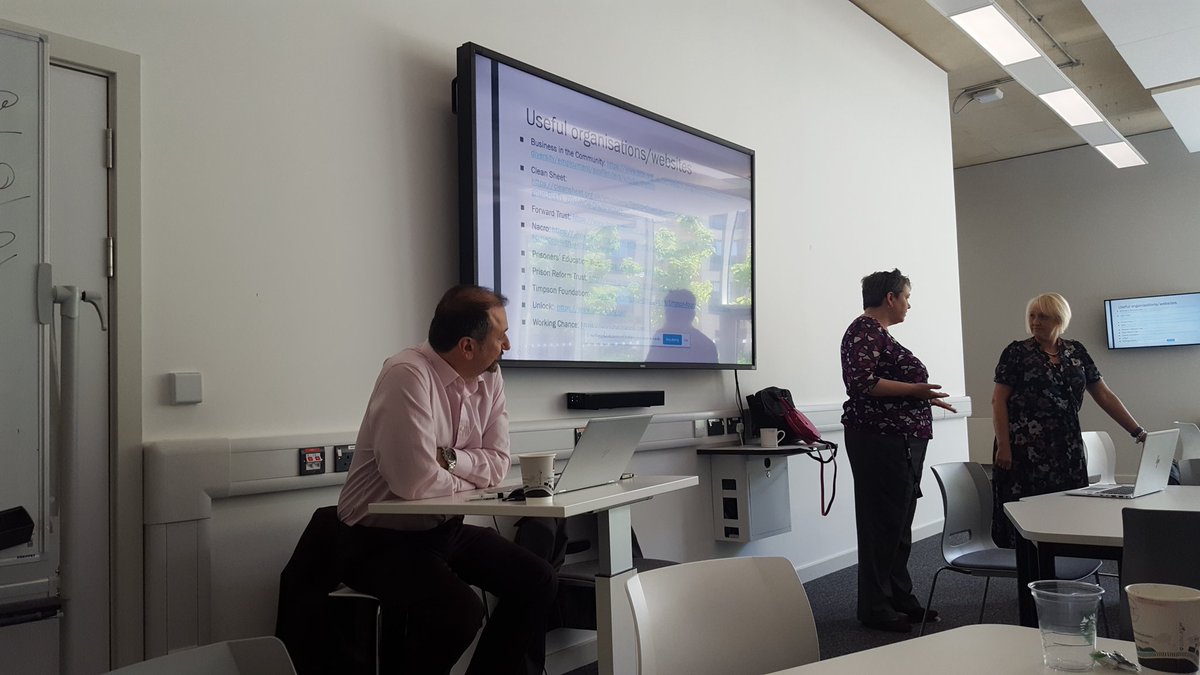
Having recently done a session on criminal records with @paulaabowles to a group of voluntary, 3rd sector and other practitioners I started thinking of the wider implications of taking knowledge out of the traditional classroom and introducing it to an audience, that is not necessarily academic. When we prepare for class the usual concern is the levelness of the material used and the way we pitch the information. In anything we do as part of consultancy or outside of the standard educational framework we have a different challenge. That of presenting information that corresponds to expertise in a language and tone that is neither exclusive nor condescending to the participants.
In the designing stages we considered the information we had to include, and the session started by introducing criminology. Audience participation was encouraged, and group discussion became a tool to promote the flow of information. Once that process started and people became more able to exchange information then we started moving from information to knowledge exchange. This is a more profound interaction that allows the audience to engage with information that they may not be familiar with and it is designed to achieve one of the prime quests of any social science, to challenge established views.
The process itself indicates the level of skill involved in academic reasoning and the complexity associated with presenting people with new knowledge in an understandable form. It is that apparent simplicity that allows participants to scaffold their understanding, taking different elements from the same content. It is easy to say to any audience for example that “every person has an opinion on crime” however to be able to accept this statement indicates a level of proficiency on receiving views of the other and then accommodating it to your own understanding. This is the basis of the philosophy of knowledge, and it happens to all engaged in academia whatever level, albeit consciously or unconsciously.
As per usual the session overran, testament that people do have opinions on crime and how society should respond to them. The intriguing part of this session was the ability of participants to negotiate different roles and identities, whilst offering an explanation or interpretation of a situation. When this was pointed out they were surprised by the level of knowledge they possessed and its complexity. The role of the academic is not simply to advance knowledge, which is clearly expected, but also to take subjects and contextualise them. In recent weeks, colleagues from our University, were able to discuss issues relating to health, psychology, work, human rights and consumer rights to national and local media, informing the public on the issues concerned.
This is what got me thinking about our role in society more generally. We are not merely providing education for adults who wish to acquire knowledge and become part of the professional classes, but we are also engaging in a continuous dialogue with our local community, sharing knowledge beyond the classroom and expanding education beyond the campus. These are reasons which make a University, as an institution, an invaluable link to society that governments need to nurture and support. The success of the University is not in the students within but also on the reach it has to the people around.
At the end of the session we talked about a number of campaigns to help ex-offenders to get forward with work and education by “banning the box”. This was a fitting end to a session where we all thought “outside the box”.
Share this:

Documenting inequality: how much evidence is needed to change things?
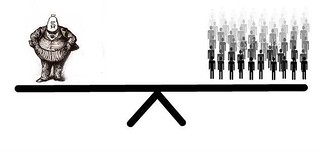
In our society, there is a focus on documenting inequality and injustice. In the discipline of criminology (as with other social sciences) we question and read and take notes and count and read and take more notes. We then come to an evidence based conclusion; yes, there is definite evidence of disproportionality and inequality within our society. Excellent, we have identified and quantified a social problem. We can talk and write, inside and outside of that social problem, exploring it from all possible angles. We can approach social problems from different viewpoints, different perspectives using a diverse range of theoretical standpoints and research methodologies. But what happens next? I would argue that in many cases, absolutely nothing! Or at least, nothing that changes these ingrained social problems and inequalities.
Even the most cursory examination reveals discrimination, inequality, injustice (often on the grounds of gender, race, disability, sexuality, belief, age, health…the list goes on), often articulated, the subject of heated debate and argument within all strata of society, but remaining resolutely insoluble. It is as if discrimination, inequality and injustice were part and parcel of living in the twenty-first century in a supposedly wealthy nation. If you don’t agree with my claims, look at some specific examples; poverty, gender inequality in the workplace, disproportionality in police stop and search and the rise of hate crime.
- Three years before the end of World War 2, Beveridge claimed that through a minor redistribution of wealth (through welfare schemes including child support) poverty ‘could have been abolished in Britain‘ prior to the war (Beveridge, 1942: 8, n. 14)
- Yet here we are in 2019 talking about children growing up in poverty with claims indicating ‘4.1 million children living in poverty in the UK’. In addition, 1.6 million parcels have been distributed by food banks to individuals and families facing hunger
- There is legal impetus for companies and organisations to publish data relating to their employees. From these reports, it appears that 8 out of 10 of these organisations pay women less than men. In addition, claims that 37% of female managers find their workplace to be sexist are noted
- Disproportionality in stop and search has long been identified and quantified, particularly in relation to young black males. As David Lammy’s (2017) Review made clear this is a problem that is not going away, instead there is plenty of evidence to indicate that this inequality is expanding rather than contracting
- Post-referendum, concerns were raised in many areas about an increase in hate crime. Most attention has focused on issues of race and religion but there are other targets of violence and intolerance
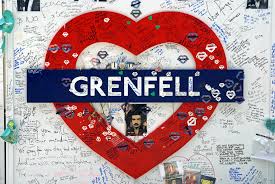
These are just some examples of inequality and injustice. Despite the ever-increasing data, where is the evidence to show that society is learning, is responding to these issues with more than just platitudes? Even when, as a society, we are faced with the horror of Grenfell Tower, exposing all manner of social inequalities and injustices no longer hidden but in plain sight, there is no meaningful response. Instead, there are arguments about who is to blame, who should pay, with the lives of those individuals and families (both living and dead) tossed around as if they were insignificant, in all of these discussions.
As the writer Pearl S. Buck made explicit
‘our society must make it right and possible for old people not to fear the young or be deserted by them, for the test of a civilization is in the way that it cares for its helpless members’ (1954: 337).
If society seriously wants to make a difference the evidence is all around us…stop counting and start doing. Start knocking down the barriers faced by so many and remove inequality and injustice from the world. Only then can we have a society which we all truly want to belong to.
Selected bibliography
Beveridge, William, (1942), Report of the Inter-Departmental Committee on Social Insurance and Allied Services, (HMSO: London)
Buck, Pearl S. (1954), My Several Worlds: A Personal Record, (London: Methuen)
Lammy, David, (2017), The Lammy Review: An Independent Review into the Treatment of, and Outcomes for, Black, Asian and Minority Ethnic Individuals in the Criminal Justice System, (London: Ministry of Justice)
Share this:


A little case of murder

In recent weeks a man serving in the military was arrested by the police accused of the murder of 5 women and 2 children. At this stage this is an open investigation and the police has left the possibility that there may be more victims added to the list.
So, what do we know so far? A man using dating apps approached women using the alias “Orestes[1]” allegedly for a relationship or something serious. The alleged date was when they were murdered never to be seen or heard of. In two of the cases the women had children which he also murdered, in order as he testified to the police, to cover his tracks. It took the local community by storm and caused the usual true crimes sensation which in no doubt will continue as more of the story’s dimensions unfold.
The investigation will be followed by the media in order to explain the kind of mind that led a seemingly “normal functioning” individual to do such a thing. Murder is a crime committed with “malice aforethought”. For the purposes of an open investigation that is the correct procedure; we explore a murderer’s motives, whereabouts, social and personal habits until we find enough evidence that allow the investigative team to connect the dots and make a compelling case that will be sent to court.
Professionally however when we are asked to comment on cases such as this one, our perspective is quite different. In my case, I begin asking the question of harm caused and how this happened. Seven people went missing. How? All women involved so far worked as domestic help and all were migrants. At this point I shall refrain from offering more information or analysis on the women as that unfortunate psychologist who went on the media talking about the submissive nature of the Philippine women that made me sick! One of the victims so far is from Romania so what’s what happens when experts say whatever comes to mind!
In years to come other experts will interview the murderer and ask him all sorts and test him on everything possible to ascertain what made him do it. I shall stand on what we know. He was a soldier, ranked officer, trained in interrogation techniques. He was also an accomplished photographer who approached several women with the intent to photograph them for their portfolio, those who wanted a modelling career. A person of contradictions that will fill the true crime libraries with more gruesome tales. Of course, for one more time we shall wonder if it is necessary to train people to kill without considering the implication of such training may have in their welfare and interpersonal relations.
What about the wider picture? To put the whole case in some perspective. The volume of victims (still ongoing) some of the victims have been missing for over a year, indicates an impunity that only comes from a society that fails to register those people missing. In this case migrant women, working in low paid jobs, that the justice system failed because their disappearance did not raise any alarms. A collective failing to ask the most basic question; where this person gone? In previous similar cases, we have been confronted with the same issue. The biggest accomplisher to murder is social apathy. The murder is a crude reminder that there are groups of people in any society we care very little of. Whether those are hire help, homeless or streetworkers. The murderer usually produces a story that tries to justify why he chose his victims, but the painful reality is that his focus is on people or groups of people that have become invisible. In an interesting research Dr Lasana Harris, identified that we perceptually censor our perception of homeless to stop us empathising. In social sciences we have been aware of the social construction of dehumanising effects but now we can see that these processes can affect our own physiology. The murderer may be caught, and the details of his deeds may scandalize some as we have since Jack the Ripper, but his accomplishes are still out there and it is all of us who become incredibly tribal in an ever-expanding global society.
After all that talk of murder, I feel like having a cup of my favourite tea and a marron glace to take the bitterness away.
Harris LT,
Fiske ST (2018), Dehumanizing the lowest of the low: Neuroimaging responses to
extreme out-groups, in Fiske S, Social Cognition; selected works of Susan
Fiske, London, Routledge.
[1] A cautionary tale…Orestes was the mythological character who murdered his mother and her lover; what’s in a name!
Share this:


Hillsborough 30 years on. A case study in liberating the truth

Dr Stephen O’Brien is the Dean for the Faculty of Health and Society at the University of Northampton
Before I start this blog, it is important to declare my personal position. I am a lifelong supporter of Liverpool Football Club (LFC) and had I not been at a friend’s wedding on that fatal Saturday in April 1989, I may well have been in the Leppings Lane end of the Hillsborough stadium in Sheffield. I have followed the unfolding Hillsborough phenomenon for 30 years now and like the football club itself, it is an integral part of my life. To all caught up in the horrific events of Hillsborough, I echo a phrase synonymous with LFC and say; “You’ll Never Walk Alone”.
On April 15th, 1989 ninety-six men, women and children, supporters of Liverpool Football Club, died in a severe crush at an FA Cup semi-final at the Hillsborough Stadium, Sheffield. Hundreds were injured, and thousands traumatised. Within hours, the causes and circumstances of the disaster were being contested. While an initial judicial inquiry found serious institutional failures in the policing and management of the capacity crowd, no criminal prosecutions resulted, and the inquests returned ‘accidental death’ verdicts. Immediately, the authorities claimed that drunken, violent fans had caused the fatal crush. In the days and weeks following the disaster, police fed false stories to the press suggesting that hooliganism and drunkenness by Liverpool supporters were the root causes of the disaster. The media briefing was most significantly demonstrated in the headline “THE TRUTH” which appeared in The Sun newspaper immediately after the event devoting its front page to the story and reporting that: ‘Some fans picked pockets of victims; Some fans urinated on the brave cops; Some fans beat up PC giving life kiss’. What of course we appreciate now is that this headline was far from truth, however the blame narrative was already being set. For example, Chief Superintendent David Duckenfield, the match commander on the day, misinformed senior officials from the Football Association that fans had forced entry causing an inrush into already packed stadium pens. Yet it was Duckenfield who had ordered the opening of the gates to relieve the crush at the turnstiles. Within minutes the lie was broadcast internationally.
Blaming of Liverpool fans persisted even after the Taylor Report of 1990, which found that the main cause of the disaster was a profound failure in police control. While directing its most damning conclusions towards the South Yorkshire Police, it also criticised Sheffield Wednesday Football Club, its safety engineers and Sheffield City Council. However, following the Taylor Report, the Director of Public Prosecutions (DPP) ruled there was no evidence to justify prosecution of any individuals or institutions. On a more positive note, the disaster did lead to safety improvements in the largest English football grounds, notably the elimination of fenced terraces in favour of all seated stadiums.With the media allegations unchallenged and in the absence of any imminent prosecutions the families of the 96 hugely supported by the people of the City of Liverpool and it’s two football clubs began an exerted and prolonged campaign for truth and justice. In late June 1997, soon after the election of the Labour Government and following a concerted campaign by families, the Home Secretary Jack Straw proposed an unprecedented judicial scrutiny of any new evidence and appointed senior appeal court judge and former MI6 Commissioner Lord Justice Stuart-Smith to review further material that interested parties wished to submit. A large volume of new material was presented. However, Stuart-Smith rejected the new evidence concluding that there was no basis for a further public inquiry or new material of interest to the DPP or police disciplinary authorities. Undeterred by such a devastating outcome the families undertook a series of private prosecutions again to no avail.
It is important to note that public inquiries, convened in the aftermath of major incidents such as Hillsborough or to address alleged irregularities or failures in the administration of justice, should not be considered a panacea but provide an opportunity to speedily ensure that management failings are exposed to public scrutiny. They are popularly perceived to be objective and politically independent. On the other hand, they also have the potential to act as a convenient mechanism of legitimation for the state. It appeared to the families that the various inquiries that followed Hillsborough were incapable of surfacing the truth as the cards were stacked in favour of the state.
Roll forward to 2009. On the 20th anniversary, invited by the Hillsborough Family Support Group, Minister for Health Andy Burnham MP addressed over 30,000 people attending the annual memorial service at Liverpool FC’s Anfield stadium. Whilst acknowledging the dignity, resolve and courage they had exhibited in all the events of the previous 20 years he offered support and hope that their struggle would be further supported by the MPs in Liverpool as a whole. The cries of “Justice for the 96” that rang out that day heralded a turning point. Consequently, in December 2009, following the families unrelenting campaign, the Bishop of Liverpool, James Jones, was appointed to chair the Hillsborough Independent Panel. It was given unfettered access to all the documentation that had been generated in all the enquiries and investigations to date. The outcomes of their deliberations were presented in closed session to the bereaved families at Liverpool’s Anglican Cathedral on 12 September 2012, the report concluded that there was no evidence among the vast documentation to support or verify the serious allegations of exceptional levels of drunkenness, fans with no tickets or violence. The bereaved families and survivors were overwhelmed by the unqualified exoneration of those who died and survived. Shortly after, the Prime Minister David Cameron responded in detail to a packed House of Commons. He made a proper apology to the families of the 96 for all they have suffered over the past 23 years. In April 2016, a special Coroner’s Court ruled that the Hillsborough dead had been unlawfully killed and a campaign for justice that had run for well over two decades was concluded.
This year will be the 30th anniversary of that tragic event and I believe it is fair to say that the ensuing years have provided us with a troubling case study with features of institutional cover up, the power of the state, the Establishment, the resilience of the victim’s families, community and a social movement which Scraton (1999, 2013) refers to as an alternative method for liberating truth, securing acknowledgement and pursuing justice. Scraton has written extensively on the disaster and the subsequent events. He draws on human rights discourse to show how ‘regimes of truth’ operate to protect and sustain the interests of the ‘powerful’. He examined in detail the formal legal processes and their outcomes regarding Hillsborough and demonstrated how they were manipulated to degrade the truth and deny justice to the bereaved. He exposed the procedural and structural inadequacies of these processes and raised fundamental questions about the legal and political accountability of the instruments of authority. The broader socio/legal policy question that emerges from Hillsborough is whether ‘truth’ can ever be acknowledged and institutionalized injustices reconciled in a timely fashion when the force of the state apparatus works to differing ends. Time will only tell. In 2019 there are many other tragic examples where we could replace Hillsborough with Orgreave, Lawrence, Windrush, Grenfell. Let’s hope that it doesn’t take 30 years for truth and justice to emerge in the future.
References
Scraton P., (1999) Policing with Contempt: The Degrading of Truth and Denial of Justice in the Aftermath of the Hillsborough Disaster. Journal of Law and Society 26, 3, p273-297
Scraton P., (2013) The Legacy of Hillsborough: liberating truth, challenging power Race and Class, 55, 2, p1-27
Share this:


Everyday harms: Policing in an age of austerity

On recently seeing a news story is about a police officer being diagnosed with PTSD, I wanted to reflect on the broader contexts which led to this. The officer was assaulted during a single crew shift, and inevitably, found himself dealing with a dangerous situation, with no back up, leading to being injured. It struck me that this impact on physical and mental health is a form of social harm, which can all to easily be disregarded as ‘part of the job’, and a risk all police officers must expect, as action-oriented risk-takers, keen to do what is necessary to protect and serve. The link to social harm came to me from having recently taught students about this in relation to gambling as a form of deviant leisure (see Smith and Raymen, 2017), who cited the impact of gambling addiction affecting personal relationships, physical and mental health. We discussed the wider implications of this, and the need to acknowledge social harms which cause injury, violate rights and lead to ill health, but which stem from accepted behaviours and working conditions. There is also a wide body of literature which analyses structural harms resulting in discrimination, poverty and neglect of considerations for citizens’ safety (Pemberton, 2016). The perpetrators of such harms are not criminals as many people understand them, but corporations, states and politicians who could act to prevent harm and choose not to, or act with the full knowledge of the risks they are creating.
The study of social harm, zemiology, has much more to say on this perspective than this blog allows, but PC Johnson’s story, to me, reflected a society and a government who are implementing policies they know will cause harm, neglecting their responsibilities when downplaying the harms caused and who insist on placing blame on individuals or other organisations when incidences occur. It is clear there are there are various factors which created this situation for this officer, including the reduction of police officer numbers in the name of austerity. We do not know the details behind the perpetrator’s behaviour enough to attribute causes or contributory factors, but from this short story we can easily see the harms being caused, to those who wish to protect and serve citizens, resulting from an officer being out on a single crew shift. PC Mick Johnson is very clear that staff shortages led to him operating on his own on the day he was stabbed, a problem echoed by 90% of 18,000 officers of all ranks who reported to a Police Federation of England and Wales survey that they are understaffed. The health impact of this understaffing was also reported, in that 79% reported feelings of stress and anxiety in the past 12 months and 61.7% reported suffering at least one traumatic experience in the past 12 months.
A key rationale behind double crewing is to avoid having officers alone in vulnerable situations with no back up, a situation which single crewing creates, and which is described by the Police Federation as ‘unacceptable’, in a service feeling the ‘brunt of issues around resilience’ (Police Federation, 2017). Work pattern analysis shows many having to work overtime, routinely on 10 hour shifts and having rest days cancelled, and being unable to take break entitlements. The survey also shows a 14% fall in police officer numbers from 2009 to 2016, and is described as having ‘significant repercussions’. This is manifest in officers mental and physical well-being and it is having an impact on family life, childcare and officers’ skills development as they cannot spare the time for additional training. PC Johnson’s story clearly reflects these issues, as he reported that his assault led to symptoms of mood swings, lack of sleep and reported that the incident ‘utterly changed him as a person’. His unit has shrunk from 20 officers in 2009, to 10, and he expressed the frustration at not being able to do the job he once loved; that the conditions of his employment now meant he was counting down the days until retirement.
The motivation for becoming a police officer and staying in the job has been widely attributed to police culture characteristics which attract and are reinforced through a process of socialisation and acceptance of this culture; key characteristics which represent positive aspects of this are being action oriented, risk takers and pragmatic (Reiner, 1992). While there are negative connotations associated with police culture as impediments to reform and change (Loftus, 2009), it is difficult to imagine how cutting numbers will help with this in anyway, and in fact, to add to the stress on officers, could arguably bring out the worse aspects of police culture in the form of prejudices and discrimination, borne out of frustrations with the job and every day stress. The demonstration of personal and social harms caused by austerity cuts, stagnating wages and fewer staff are clearly demonstrated by PC Johnson’s final quote, and raise some serious questions for those responsible for keeping communities and citizens safe, and for those tasked with managing this service:
“We are all devastated, as we joined to protect our communities and to serve the public, we didn’t expect to have to sacrifice our families and our physical and mental health.” (PC Mick Johnson, BBC News, 2019).
References
BBC News (2019) Police shortages: ‘Working alone left me with PTSD, Ian Westbrook, available from https://www.bbc.co.uk/news/uk-47212662.
Loftus, B. (2009) Police Culture in a Changing World, Oxford University Press: Oxford.
Pemberton, S. (2016) Harmful Societies: Understanding social harm, Policy Press: Bristol.
Police Federation (2017) Three quarters of officers ‘often or always’ single-crewed, available from http://www.polfed.org/newsroom/4094.aspx
Reiner, R. (1992) The Politics of the Police, Oxford University Press: Oxford.
Smith, O. and Raymen, T. (2017) Lifestyle gambling, indebtedness and
anxiety: A deviant leisure perspective, Journal of Consumer Culture, 0(0) 1–19.
Share this:


#EveryCanHelps? Why are we normalising foodbanks and poverty?
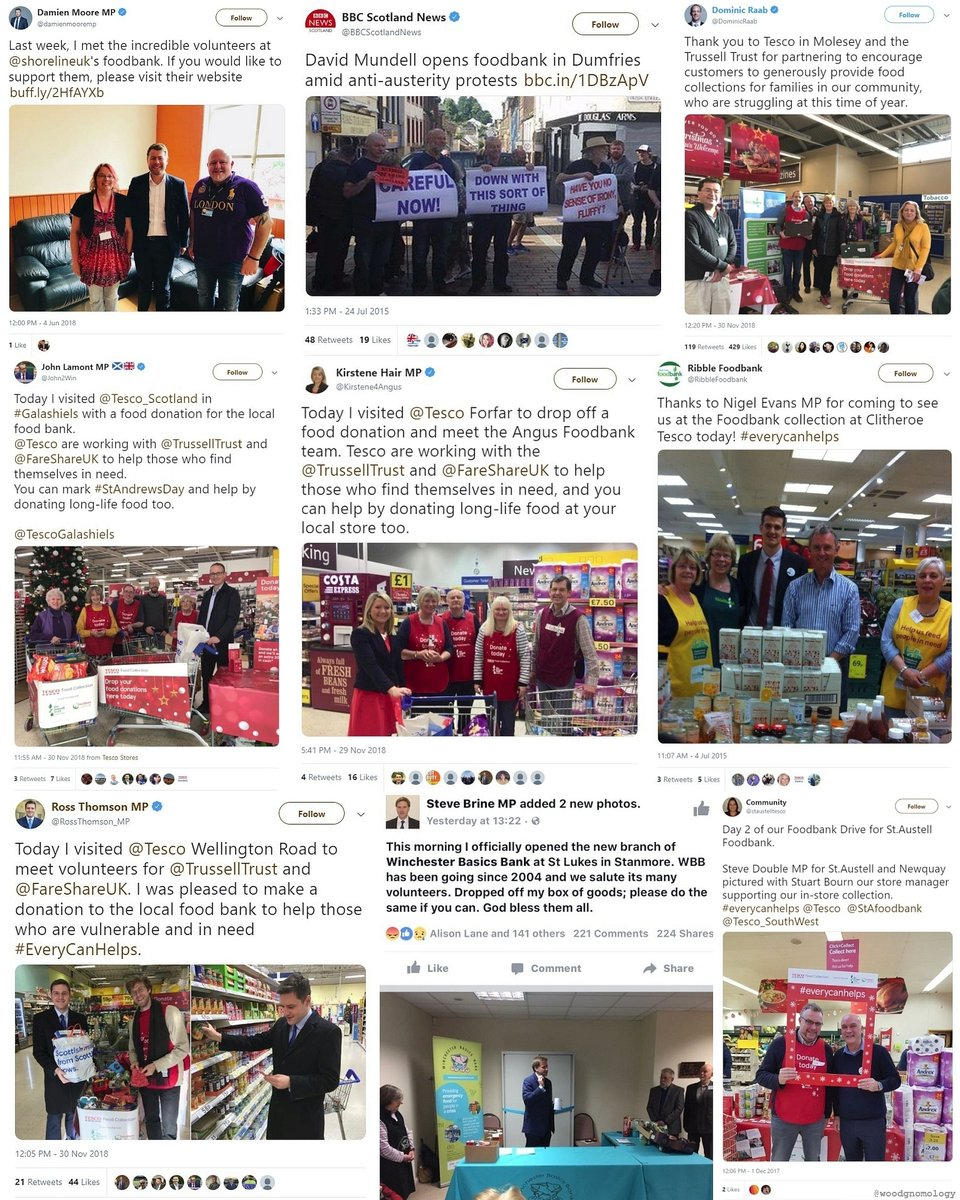
Over the last two weeks, twitter was littered with Conservative MPs posing at foodbanks, thanking the public for donations and showing their support for this vital service. On seeing the first one I thought this was a strange way to show compassion for those in need, given how the increased use of foodbanks is directly linked to austerity policies, the rollout of universal credit and is one of the issues raised by a recent report on the impact of poverty in the UK (Equality and Human Rights Commission, 2018). The report states that spending cuts from austerity led policies have put Britain in breach of its human rights obligations and highlights discriminatory issues, as these cuts have adversely affected low income and lone parent families, ethnic minorities and the disabled. It recommends more investment in health, social care, education and housing, and a rethink of Universal Credit. In addition, a report by the United Nations has described current government policies as ‘punitive, mean-spirited and often callous’ in their impact on the most vulnerable, more alarming given we are still one of the richest countries in the world (UN, 2018).
The responses on twitter articulated what I was feeling, ranging from incredulity, to anger and shock. It is a strange state of affairs when politicians see this as a cause for celebration, but then, there is little else to choose from, in relation to policies introduced in the last two years. The cognitive dissonance between thinking this presents them as compassionate and caring about problems they have created is quite an achievement. But then, I also know I really should not be surprised – I never believed Conservatives could be considered compassionate and anything but concerned with their own interests and dismissive of those in need. When Conservative MPs received the memo to pose at foodbanks, I wonder how many refused? Or how many believed this would be accepted as an example of celebrating charity, because even at Christmas, we all too easily normalise this level of deprivation, and rationalise it as due to individual circumstances, and not structural inequalities.
The wording of the UN report is clear in its condemnation and recognition that in Britain, the government lack the political will to help those most in need, given that tax cuts signalling the ‘end of austerity’ have once again benefitted the rich, under the auspices of this wealth trickling down in the form of jobs and increased wages. However, the EHRC and UN reports have emphasised how these policies are disproportionately affecting those who cannot work, or can only do part time work, or who face discrimination and disadvantage, including employment opportunities and prospects. When foodbanks were first set up, I honestly believed this was a temporary fix, never did I think still in 2018 they would be still be needed and indeed, be increasingly used. I also never would have imagined they would be held up as an example of the good work of charities adopted as a PR stunt by the very people who have created the inequalities and harm we see today.
The small glimmer of hope is the protest in one of these pictures, and the responses via twitter which reflected how I felt. There was a clear backlash in Scotland, where it was reported that a record number of supplies were needed as Universal Credit was rolled out, and where there were calls to foodbanks and supermarkets to refuse to pose with Conservative MPs. Alas, my fear is beyond the twittersphere, most people can rationalise this as acceptable. After all, should we not celebrate charity and helping those in need at this time of year? Is this just an example of good will and thinking of others? Well, yes of course, and if these photos were simply asking people to donate without the MPs responsible being there, I would think most of us would perhaps be reminded we can do our bit to help, and we should. The presence of the MPs and acceptance of this as good PR is what really worries me, that people will still vote for a party which has been described as cruel and punitive and believes this sort of promotion makes them look good. The irony that our current Prime Minister once herself warned that the Conservatives were becoming the ‘nasty party’ is staggering. For what she now resides over are policies which are internationally condemned as harmful, discriminatory and callous.
The other slight glimmer of hope is some commentators suggest this stunt reflects rumours of a general election on the horizon, as while Theresa May celebrated the ‘success’ of negotiating a deal with the European Union, it seems this was short-lived once parliament began to debate the deal and may trigger an election. The UN report suggested that Brexit has been so much of a distraction for MPs and the public that we are not seeing domestic problems as a priority. I think for many there is a sense that once this deal is done, we can get on with resolving other issues. But for this government, I don’t think that is the case. I think for Conservatives, these negotiations and now parliamentary debates are a welcome distraction and a narrative which fits their lack of will to actually address the harms caused by austerity. A general election may bring about change and force MPs to confront where we are today as a result of political choices, but this depends on how we all really feel about poverty, homelessness, discrimination and disadvantage. I wonder if too many feel these are insurmountable problems, inevitable and therefore, beyond the abilities of government to address. But the UN and EHRC reports clearly tell us this is not the case. I hope we do get an opportunity to hold this government to account sooner rather than later. But most of all, I hope that more of us actually take up this opportunity and not allow what we see today to continue.
Susie Atherton
Senior Lecturer in Criminology
Equality and Human Rights Commission (2018) The cumulative impact on living standards of public spending changes, available from https://www.equalityhumanrights.com/en/publication-download/cumulative-impact-living-standards-public-spending-changes
United Nations (2018) Statement on Visit to the United Kingdom, by Professor Philip Alston, United Nations Special Rapporteur on extreme poverty and human rights, see https://www.ohchr.org/EN/NewsEvents/Pages/DisplayNews.aspx?NewsID=23881&LangID=E
Share this:


Halloween Prison Tourism

Haley Read is an Associate Lecturer teaching modules in the first and third years.
Yes, that spooky time of the year is upon us! Excited at the prospect of being free to do something at Halloween but deterred by the considerable amount of effort required to create an average-looking carved pumpkin face, I Google, ‘Things to do for Halloween in the Midlands’.
I find that ‘prison (and cell) ghost tours’ are being advertised for tourists who can spend the night where (in)famous offenders once resided and the ‘condemned souls’ of unusual and dangerous inmates still ‘haunt’ the prison walls today. I do a bit more searching and find that more reputable prison museums are also advertising similar events, which promise a ‘fun’ and ‘action packed’ family days out where gift shops and restaurants are available for all to enjoy.
Of course, the lives of inmates who suffered from harsh and brutal prison regimes are commodified in all prison museums, and not just at Halloween related events. What appears concerning is that these commercial and profit-based events seem to attract visitors through promotional techniques which promise to entertain, reinforce common sensical, and at times fabricated (see Barton and Brown, 2015 for examples) understandings of history, crime and punishment. These also present sensationalistic a-political accounts of the past in order to appeal to popular fascinations with prison-related gore and horror; all of which aim to attract customers.
The fascination with attending places of punishment is nothing new. Barton and Brown (2015) illustrates this with historical accounts of visitors engaging in the theatrics of public executions and of others who would visit punishment-based institutions out of curiosity or to amuse themselves. And I suppose modern commercial prison tourism could be viewed as an updated way to satisfy morbid curiosities surrounding punishment and the prison.
The reason that this concerns me is that despite having the potential to educate others and challenge prison stereotypes that are reinforced through the media and True Crime books, commercialised prison events aim to entertain as well as inform. This then has the danger of cementing popular and at times fictional views on the prison that could be seen as being historically inaccurate. Barton and Brown (2015) exemplify this idea by noting that prison museums present inmates as being unusual, harsh historical punishments as being necessary and the contemporary prison system as being progressive and less punitive. However, opposing views suggest that offenders are more ordinary than unusual, that historical punishments are brutal rather than necessary and that many contemporary prisons are viewed as being newer versions of punitive discipline rather than progressive.
Perhaps it could be that presenting a simplified, uncritical and stereotyped version of the past as entertainment prevents prison tourists from understanding the true pains experienced by those who have been incarcerated within the prison (see Barton and Brown, 2015, Sim, 2009). Truer prison museum promotions could inform visitors of staff corruption, the detrimental social and psychological effects of the prison, and that inmates (throughout history) are more likely to be those who are poor, disempowered, previously victimised and at risk of violence and self-harm upon entering prison. But perhaps this would attract less visitors/profit…And so for another year I will stick to carving pumpkins.
Photo by Markus Spiske temporausch.com on Pexels.com
Barton, A and Brown, A. (2015) Show me the Prison! The Development of Prison Tourism in the UK. Crime Media and Culture. 11(3), pp.237-258. Doi: 10.1177/1741659015592455.
Sim, J. (2009) Punishment and Prisons: Power and the Carceral State. London: Sage.
Share this:


The Other Side of Intelligence

After I graduated I had a bit of tunnel vision of what I wanted to do. I wanted to either work with young offenders or work with restorative justice. Many opportunities actually came up for me to do several different things, but nothing really worked out and nothing felt right.
I carried on working in retail till February 2018; I was honestly starting to lose hope that I would find something that I would enjoy. I started working for a security company that does many things; from employment vetting to gaining intelligence of various kinds. Although the role is not focused on the criminality side entirely, the theme is very much apparent. I find myself thinking about all the different concepts of criminology and how it ties in to what I am doing.
A big part of my role is intelligence and at first, I didn’t think I would enjoy it because I remember in third year in the module, Violence: Institutional Perspectives*; we looked at the inquiry Stockwell 1; an inquiry into the metropolitan police force following the death of Jean Charles de Menezes. Jean Charles was mistaken by intelligence officers for Hussain Osman, one of the terrorists responsible for the failed bomb attacks in London. This particular inquiry frustrated me a lot, because I just felt like, how is it possible for the police to mistake an individual for an innocent person. I just couldn’t accept when we were going through this case how trained officers were able to fail to identify the correct person, regardless of all the other factors that pointed to Jean Charles being the culprit. However, now being in a similar position I understand more how difficult it actually is to identify an individual and being 100% sure. There have been times in my line of work that I have had to question myself 2, 3, even 8 times if the person I found was really who I was looking for.
I do think I question it a lot more because I know how much my job can affect a person’s life and/or future. I do think criminology has been one of the best decisions I made. I know that I view things differently from other people I work with, even my family. Just little things that people tend not to notice I see myself. Thinking, but could it be because of this, or could it be because of that. Criminology really is part of everyday life, it is everywhere, and knowing everything I know today I wouldn’t have it any other way.
*Now CRI3003 – Violence: From Domestic To Institutional
Share this:


(In)Human Rights in the “Compliant Environment”

In the aftermath of the Windrush generation debacle being brought into the light, Amber Rudd resigned, and a new Home Secretary was appointed. This was hailed by the government as a turning point, an opportunity to draw a line in the sand. Certainly, within hours of his appointment, Sajid Javid announced that he ‘would do right by the Windrush generation’. Furthermore, he insisted that he did not ‘like the phrase hostile’, adding that ‘the terminology is incorrect’ and that the term itself, was ‘unhelpful’. In its place, Javid offered a new term, that of; ‘a compliant environment’. At first glance, the language appears neutral and far less threatening, however, you do not need to dig too deep to read the threat contained within.
According to the Oxford Dictionary (2018) the definition of compliant indicates a disposition ‘to agree with others or obey rules, especially to an excessive degree; acquiescent’. Compliance implies obeying orders, keeping your mouth shut and tolerating whatever follows. It offers, no space for discussion, debate or dissent and is far more reflective of the military environment, than civilian life. Furthermore, how does a narrative of compliance fit in with a twenty-first century (supposedly) democratic society?
The Windrush shambles demonstrates quite clearly a blatant disregard for British citizens and implicit, if not, downright aggression. Government ministers, civil servants, immigration officers, NHS workers, as well as those in education and other organisations/industries, all complying with rules and regulations, together with pressures to exceed targets, meant that any semblance of humanity is left behind. The strategy of creating a hostile environment could only ever result in misery for those subjected to the State’s machinations. Whilst, there may be concerns around people living in the country without the official right to stay, these people are fully aware of their uncertain status and are thus unlikely to be highly visible. As we’ve seen many times within the CJS, where there are targets that “must” be met, individuals and agencies will tend to go for the low-hanging fruit. In the case of immigration, this made the Windrush generation incredibly vulnerable; whether they wanted to travel to their country of origin to visit ill or dying relatives, change employment or if they needed to call on the services of the NHS. Although attention has now been drawn to the plight of many of the Windrush generation facing varying levels of discrimination, we can never really know for sure how many individuals and families have been impacted. The only narratives we will hear are those who are able to make their voices heard either independently or through the support of MPs (such as David Lammy) and the media. Hopefully, these voices will continue to be raised and new ones added, in order that all may receive justice; rather than an off-the-cuff apology.
However, what of Javid’s new ‘compliant environment’? I would argue that even in this new, supposedly less aggressive environment, individuals such as Sonia Williams, Glenda Caesar and Michael Braithwaite would still be faced with the same impossible situation. By speaking out, these British women and man, as well as countless others, demonstrate anything but compliance and that can only be a positive for a humane and empathetic society.
Share this:


‘I read the news today, oh boy’
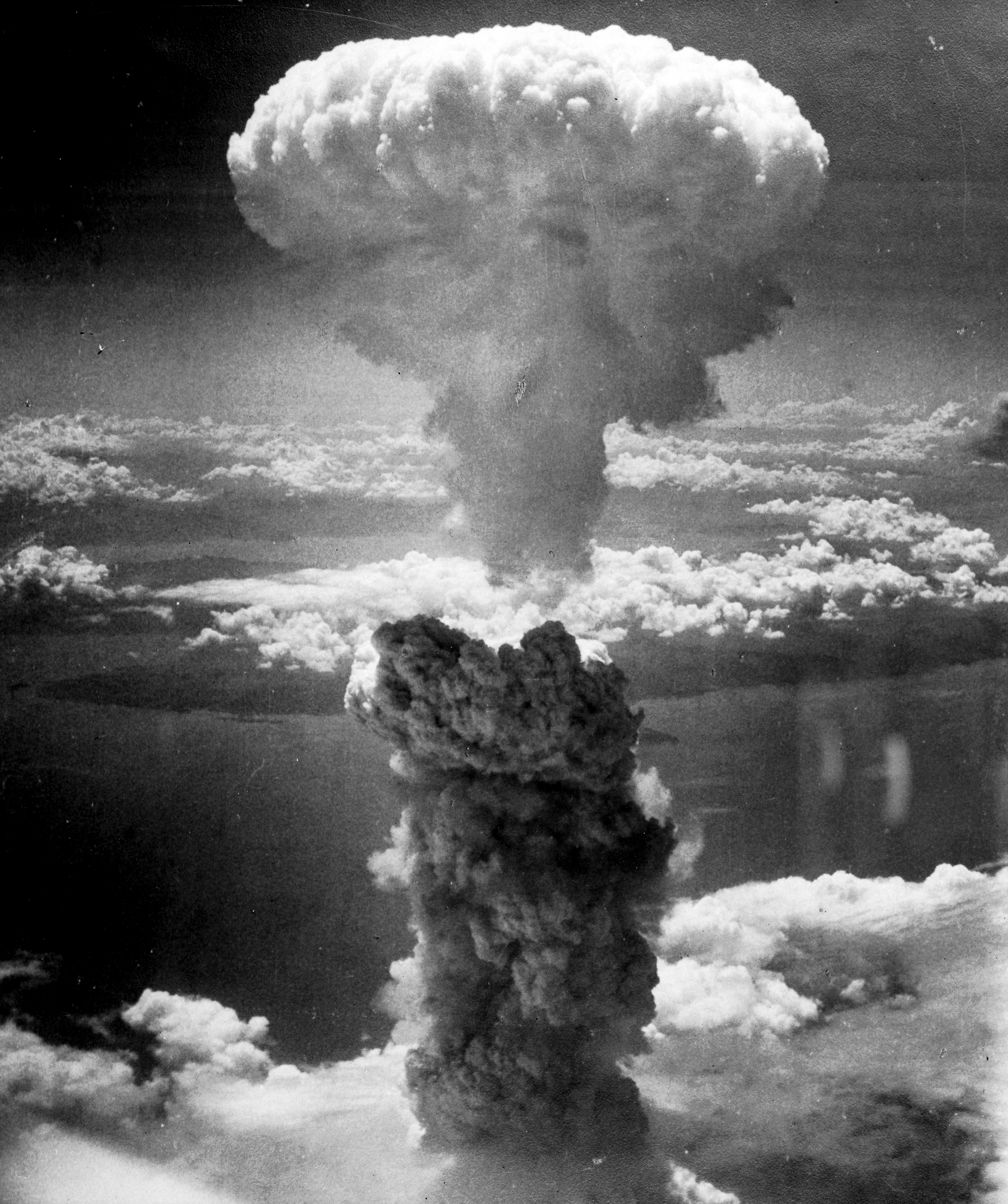 The English army had just won the war
A crowd of people turned away
But I just had to look
Having read the book
(Lennon and McCartney, 1967),
The news these days, without fail, is terrible. Wherever you look you are confronted by misery, death, destruction and terror. Regular news channels and social media bombard us with increasingly horrific tales of people living and dying under tremendous pressure, both here in the UK and elsewhere in the world. Below are just a couple of examples drawn from the mainstream media over the space of a few days, each one an example of individual or collective misery. None of them are unique and they all made the headlines in the UK.
‘Deaths of UK homeless people more than double in five years’
‘Syria: 500 Douma patients had chemical attack symptoms, reports say’
‘London 2018 BLOODBATH: Capital on a knife edge as killings SOAR to 56 in three months’
So how do we make sense of these tumultuous times? Do we turn our backs and pretend it has nothing to do with us? Can we, as Criminologists, ignore such events and say they are for other people to think about, discuss and resolve?
At the beginning of the twenty-first century, Stanley Cohen, posed a similar question; ‘How will we react to the atrocities and suffering that lie ahead?’ (2001: 287). Certainly his text States Of Denial: Knowing about Atrocities and Suffering makes clear that each of us has a part to play, firstly by ‘knowing’ that these things happen; in essence, bearing witness and acknowledging the harm inherent in such atrocities. But is this enough?
Cohen, persuasively argues, that our understanding has fundamentally changed:
The political changes of the last decade have radically altered how these issues are framed. The cold-war is over, ordinary “war” does not mean what it used to mean, nor do the terms “nationalism”, “socialism”, “welfare state”, “public order”, “security”, “victim”, “peace-keeping” and “intervention” (2001: 287).
With this in mind, shouldn’t our responses as a society, also have changed, adapted to these new discourses? I would argue, that there is very little evidence to show that this has happened; whilst problems are seemingly framed in different ways, society’s response continues to be overtly punitive. Certainly, the following responses are well rehearsed;
- “move the homeless on”
- “bomb Syria into submission”
- “increase stop and search”
- “longer/harsher prison sentences”
- “it’s your own fault for not having the correct papers?”
Of course, none of the above are new “solutions”. It is well documented throughout much of history, that moving social problems (or as we should acknowledge, people) along, just ensures that the situation continues, after all everyone needs somewhere just to be. Likewise, we have the recent experiences of invading Iraq and Afghanistan to show us (if we didn’t already know from Britain’s experiences during WWII) that you cannot bomb either people or states into submission. As criminologists, we know, only too well, the horrific impact of stop and search, incarceration and banishment and exile, on individuals, families and communities, but it seems, as a society, we do not learn from these experiences.
Yet if we were to imagine, those particular social problems in our own relationships, friendship groups, neighbourhoods and communities, would our responses be the same? Wouldn’t responses be more conciliatory, more empathetic, more helpful, more hopeful and more focused on solving problems, rather than exacerbating the situation?
Next time you read one of these news stories, ask yourself, if it was me or someone important to me that this was happening to, what would I do, how would I resolve the situation, would I be quite so punitive? Until then….
Whoever fights monsters should see to it that in the process he does not become a monster. And when you look long into an abyss, the abyss also looks into you (Nietzsche, 1886/2003: 146)
References:
Cohen, Stanley, (2001), States Of Denial: Knowing about Atrocities and Suffering, (Cambridge: Polity Press)
Lennon, John and McCartney, Paul, (1967), A Day in the Life, [LP]. Recorded by The Beatles in Sgt Pepper’s Lonely Hearts Club Band, EMI Studios: Parlaphone
Nietzsche, Friedrich, (1886/2003), Beyond Good and Evil: Prelude to a Philosophy of the Future, tr. from the German by R. J. Hollingdale, (London: Penguin Books)

 Thoughts from the criminology team