
Home » Harm
Category Archives: Harm

The future of criminology

If you have an alert on your phone then a new story may come with a bing! the headline news a combination of arid politics and crime stories. Sometimes some spicy celebrity news and maybe why not a scandal or two. We are alerted to stories that bing in our phone to keep ourselves informed. Only these are not stories, they are just headlines! We read a series of headlines and form a quick opinion of anything from foreign affairs, transnational crime, war, financial affairs to death. We are informed and move on.
There is a distinction, that we tend not to make whenever we are getting our headline alerts; we get fragments of information, in a sea of constant news, that lose their significance once the new headline appears. We get some information, but never the knowledge of what really happened. We hear of war but we hardly know the reasons for the war. We read on financial crisis but never capture the reason for the crisis. We hear about death, usually in crime stories, and take notice of the headcount as if that matters. If life matters then a single loss of life should have an impact that it deserves irrespective of origin.
After a year that forced me to reflect deeply about the past and the future, I often questioned if the way we consume information will alter the way we register social phenomena and more importantly we understand society and ourselves in it. After all crime stories tend to be featured heavily in the headlines. Last time I was imagining the “criminology of the future” it was terrorism and the use of any object to cause harm. That was then and now some years later we still see cars being used as weapons, fear of crime is growing according to the headlines that even the official stats have paused surveying since 2017! Maybe because in the other side of the Atlantic the measurement of fear was revealed to be so great that 70% of those surveyed admitted being afraid of crime, some of whom to the extent that changes their everyday life.
We are afraid of crime, because we read the headlines. If knowledge is power, then the fragmented information is the source of ambiguity. The emergence of information, the reproduction of news, in some cases aided by AI have not provided any great insight or understanding of what is happening around us. A difference between information and knowledge is the way we establish them but more importantly how we support them. In a world of 24/7 news updates, we have no ideological appreciation of what is happening. Violence is presented as a phenomenon that emerges under the layers of the dark human nature. That makes is unpredictable and scary. Understandably so…
This a representation of violence devoid of ideology and theory. What is violence in our society does not simply happens but it is produced and managed through the way it is consumed and promoted. We sell violence, package it for patriotic fervour. We make defence contracts, selling weapons, promoting war. In society different social groups are separated and pitted against each other. Territory becomes important and it can be protected only through violence. These mechanisms that support and manage violence in our society are usually omitted. A dear colleague quite recently reminded me that the role of criminology is to remind people that the origins of crime are well rooted in our society in the volume of harm it inflicts.
There is no singular way that criminology can develop. So far it appears like this resilient discipline that manages to incorporates into its own body areas of work that fiercely criticised it. It is quite ironic for the typical criminology student to read Foucault, when he considered criminology “a utilitarian discipline”! Criminology had the last laugh as his work on discipline and punishment became an essential read. The discipline seems to have staying power but will it survive the era of information? Most likely; crime data originally criticised by most, if not all criminologists are now becoming a staple of criminological research methods. Maybe criminology manages to achieve what sociology was doing in the late 20th century or maybe not! Whatever direction the future of criminology takes it will be because we have taken it there! We are those who ought to take the discipline further so it would be relevant in years to come. After all when people in the future asked you what did you do…you better have a good answer!
Share this:


Extortionate Concert Tickets and the Cost of Access

In the realm of live music, few things can compare to the amazing feeling of a packed venue, a beloved band, and the shared energy of thousands of fans singing in unison. But for many, especially those from lower socio-economic backgrounds, this dream remains frustratingly out of reach not due to lack of passion, but because of skyrocketing ticket prices driven by monopolized ticketing systems. Using the example of the band Oasis and their upcoming tour.
The recent announcement of Oasis’ long-awaited reunion concerts sent shockwaves through the music world; particularly for fans who have waited over a decade to hear some of their classic songs sung live again. The excitement was quickly tempered by the reality of ticket prices and the process of getting tickets. Standard Oasis tickets before any premium charges were reportedly being resold for upwards of £300, with official prices starting around £75. For a band rooted in working-class Manchester, the irony is stark: the people who Oasis originally resonated with most are now priced out of seeing them live. Oasis is just an example of this, this can be seen with many different artists globally, and it raises a question of should something be done, and if so, who needs to make the first step and what should that first step be?
At the heart of this issue are ticketing giants who dominate the live event landscape. These companies often employ dynamic pricing models similar to airline pricing where ticket prices fluctuate based on demand. In theory, this aims to reflect market value. In practice, it frequently drives up costs to exploit fan enthusiasm, creating a system that prioritizes profit over accessibility. Worse still, these companies allow and often profit from reselling schemes that further inflate prices. It is only recently where some sites have now put procedures in place for tickets to be resold at the same value to which they were purchased. Additionally, there is the issue of bots buying hundreds of tickets during presales then relisting them on other sites for extortionate prices.
Now to put it into perspective, are there more pressing issues globally that need to be addressed, the answer is yes. However, in the world of criminology where we are constantly thinking about harm, what should be a crime or criminalised, it poses an interesting question and debate. The consequences are significant, particularly for lower-income individuals. Live music, once a unifying and accessible cultural experience, has become a luxury. For a working-class fan, spending £300 on a single concert excluding travel, accommodation, and other costs is unlikely. Add to this the current economic constraints they may be facing elsewhere, and it makes it even more unlikely.
In a world where there are so many pressures, restrictions, worries and concerns, music can be a form of escape and enjoyment. So, should ticket companies be held more accountable? Should there be stronger regulations to prevent price gouging and limit resale abuses? Governments could enforce price caps, mandate transparent pricing structures, or require a certain percentage of tickets to be sold at accessible prices. Additionally, artists themselves may have a role to play; by partnering with ethical ticket vendors or pushing for more equitable ticket distribution. I managed to get tickets at face value price after trying for the third time recently, this was through a process of receiving a unique code via email as a result of being identified as one of the many who had failed on previous occasions. In this sense, I may be classed as one of the lucky ones.
Oasis, a band that once embodied the voice of working-class Britain, now symbolizes a broader issue: the commercialisation of joy. Music should transcend economic boundaries rather than reinforcing them.
Share this:


Global perspectives of crime, state aggression and conflict resolutions

As I prepare for the new academic module “CRI3011 – Global Perspectives of Crime” launching this September, my attention is drawn to the ongoing conflicts in Africa, West Asia and Eastern European nations. Personally, I think these situations provide a compelling case study for examining how power dynamics, territorial aggression, and international law intersect in ways that challenge traditional understandings of crime.
When examining conflicts like those in major Eastern European nations, one begins to see how geopolitical actors strategically frame narratives of aggression and defence. This ongoing conflict represents more than just a territorial dispute in my view, but I think it allows us to see new ways of sovereignty violations, invasions, state misconduct and how ‘humanitarian’ efforts are operationalised. Vincenzo Ruggiero, the renowned Italian criminologist, along with other scholars of international conflict including von Clausewitz, have contributed extensively to this ideology of hostility and aggression perpetrated by state actors, and the need for the criminalisation of wars.
While some media outlets obsess over linguistic choices or the appearance of war leaders not wearing suits, our attention must very much consider micro-aggressions preceding conflicts, the economy of war, the justification of armed interventions (which frequently conceals the intimidation of weaker states), and the precise definition of aggression vs the legal obligation to protect. Of course, I do recognise that some of these characteristics don’t necessarily violate existing laws of armed conflict in obvious ways, however, their impacts on civilian populations must be recognised as one fracturing lives and communities beyond repair.
Currently, as European states are demonstrating solidarity, other regions are engaging in indirect economic hostilities through imposition of tariffs – a form of bloodless yet devastating economic warfare. We are also witnessing a coordinated disinformation campaigns fuelling cross-border animosities, with some states demanding mineral exchange from war-torn nations as preconditions for peace negotiations. The normalisation of domination techniques and a shift toward the hegemony of capital is also becoming more evident – seen in the intimidating behaviours of some government officials and hateful rhetoric on social media platforms – all working together to maintain unequal power imbalance in societies. In fact, fighting parties are now justifying their actions through claims of protecting territorial sovereignty and preventing security threats, interests continue to complicate peace efforts, while lives are being lost. It’s something like ‘my war is more righteous than yours’.
For students entering the global perspectives of crime module, these conflicts offer some lessons about the nature of crime – particularly state crimes. Students might be fascinated to discover how aggression operates on the international stage – how it’s justified, executed, and sometimes evades consequences despite clear violations of human rights and international law. They will learn to question the various ways through which the state can become a perpetrator of the very crimes it claims to prevent and how state criminality often operates in contexts where culpability is contested and consequences are unevenly applied based on power, rather than principle and ethics.
Share this:


Christmas Toys

In CRI3002 we reflected on the toxic masculine practices which are enacted in everyday life. Hegemonic masculinity promotes the ideology that the most respectable way of being ‘a man’ is to engage in masculine practices that maintain the White elite’s domination of marginalised people and nations. What is interesting is that in a world that continues to be incredibly violent, the toxicity of state-inflicted hegemonic masculinity is rarely mentioned.
The militaristic use of State violence in the form of the brutal destruction of people in the name of apparent ‘just’ conflicts is incredibly masculine. To illustrate, when it is perceived and constructed that a privileged position and nation is under threat, hegemonic masculinity would ensure that violent measures are used to combat this threat.
For some, life is so precious yet for others, life is so easily taken away. Whilst some have engaged in Christmas traditions of spending time with the family, opening presents and eating luxurious foods, some are experiencing horrors that should only ever be read in a dystopian novel.
Through privileged Christmas play-time with new toys like soldiers and weapons, masculine violence continues to be normalised. Whilst for some children, soldiers and weapons have caused them to be victims of wars with the most catastrophic consequences.
Even through children’s play-time the privileged have managed to promote everyday militarism for their own interests of power, money and domination. Those in the Global North are lead to believe that we should be proud of the army and how it protects ‘us’ by dominating ‘them’ (i.e., ‘others/lesser humans and nations’).
Still in 2023 children play with symbolically violent toys whilst not being socialised to question this. The militaristic toys are marketed to be fun and exciting – perhaps promoting apathy rather than empathy. If promoting apathy, how will the world ever change? Surely the privileged should be raising their children to be ashamed of the use of violence rather than be proud of it?
Share this:


Navigating the Realm of Harm Reduction in the Midst of Chaos
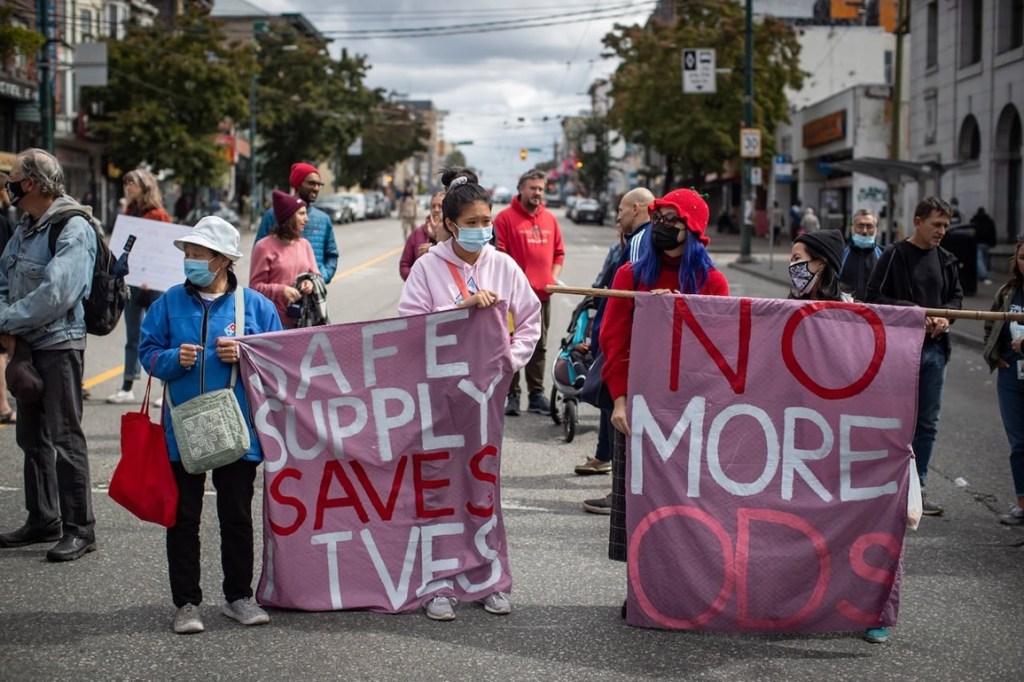
In recent years, Canada has emerged as a trailblazer in progressive drug policy by embracing a bold approach to decriminalization. This paradigm shift represents a departure from the traditional punitive stance toward drug offenses, instead prioritizing harm reduction strategies. As the nation navigates the complex terrain of drug policy reform, it becomes evident that this move holds the promise of addressing public health issues more effectively.
The decriminalization of drugs in Canada is rooted in a recognition of the failure of punitive measures to curb substance abuse. Rather than treating drug addiction as a criminal issue, the emphasis is now on approaching it as a public health concern. By lifting criminal penalties for possession of small amounts of drugs, the Canadian government aims to break the cycle of imprisonment and provide individuals struggling with addiction access to the help they need.
At the core harm reduction is a guiding principle in Canada’s evolving drug policy. Instead of focusing solely on preventing drug use, the emphasis has shifted to minimizing the negative consequences associated with it. This approach includes the distribution of clean needles, supervised injection sites, and access to overdose-reversing medications. By adopting harm reduction strategies, Canada aims to protect the well-being of both individuals using drugs and the broader community.
The decision to decriminalize drugs draws inspiration from the success of Portugal’s approach. In 2001, Portugal decriminalized the possession and use of all drugs, opting for a health-focused model. Over the years, Portugal has witnessed a decline in drug-related deaths, HIV infections, and problematic drug use. Canadian policymakers are eager to replicate these positive outcomes and shift the narrative around drug use from punishment to rehabilitation.
Despite the potential benefits, the decriminalization of drugs in Canada has sparked debates and concerns. Many people have argued that lenient drug policies may contribute to increased drug use, while others worry about the potential strain on public resources for addiction treatment. Furthermore, investigative reporter Tyler Oliveira has demonstrated the damaging effects of drug misuse and homelessness in Vancouver. From watching his investigation, I wonder whether the Canadian government could better use their resources to tackle issues pertaining to homelessness, rather than creating a wider problem of social ills. While there are calls to treat people with issues of addiction more humanely in Canada, Oliveira’s documentary is shocking and, in many ways, frightful. With images of large amounts of methamphetamine users unable to walk and becoming extremely violent to healthcare workers and the general public I wonder if this more towards progressive policy has gone too far (I don’t know how I would feel inhaling meth fumes on my way to my local shop).
Striking a balance between personal freedom and public welfare remains a challenge, but advocates believe that the emphasis on harm reduction will ultimately lead to better outcomes for everyone….
Decriminalization opens the door for more community involvement in addressing drug-related issues. Local initiatives, grassroots organizations, and community outreach programs gain significance as they become crucial players in the broader strategy of harm reduction. By empowering communities, Canada aims to foster a collaborative and compassionate approach to tackling the complex issue of drug addiction.
Canada’s journey toward the decriminalization of drugs represents a paradigm shift in the global war on drugs. By embracing harm reduction as a cornerstone of its strategy, the nation aims to prioritize the health and well-being of its citizens over punitive measures. The lessons learned from Portugal and other progressive models underpin the potential for positive change. As Canada continues to navigate the complexities of drug policy reform, the emphasis on harm reduction holds the promise of transforming the narrative around drug use and addiction. Only time will tell if this bold approach will lead to a healthier, more compassionate society.
Share this:


No April Fools
The first of April has consisted of a steep 54% rise in what energy company’s can charge customers for using energy, with further rises set to occur in October. This coincides with rises to other bills such as council tax, national insurance and water within a climate of inflation. Previous to this many were struggling to make ends meet…what are these people supposed to do now?
Russia’s atrocities and Covid-19 have been blamed for the steep price increases and inflation. I suspect that employers will be using this as a reason to not increase the persistent low rises in wages that workers are receiving, all whilst their bosses are becoming richer and richer. Of course, both Russia and Covid will have a significant impact on the economy, however, it does not take a genius to be aware that people have been struggling to survive well before this, hence terms like, food poverty, period poverty and fuel poverty predate these issues. Also, so do the persistent low rises in wages for workers.
Apparently, MPs are due a £2,200 pay rise which whilst it seems low (2.7%) compared to inflation, a few MPs themselves (such as Zarah Sultana) have stated that they do not need this pay rise as they already receive a high paying wage.
Oh, and let us not forget that the increasing energy prices will ensure that privatised fuel companies such as Shell and BP continue to profit, with a predicted profit of £40 BILLION for this year.
Meanwhile benefits for those who are not formally employed and spend a higher proportion of money on household bills and rent are set to increase by 3.1% – a rise which will not cover these price increases.
How is it that employers and the State cannot afford to pay people more – but can ensure high wages for the already rich, privileged and powerful?
It is not surprising that the government’s measures to deal with the problem, such as one-off payments and energy loans, have been heavily criticised as inadequate and significantly failing to support the lowest income homes. The government employs a group of elites and many are completely out of touch with reality. Apparently the man presiding over these measures, millionaire Rishi Sunak and his billionaire wife, often donate to charitable causes, such as donating £100,000 to Rishi’s former elitist private school. Because a private school in need is a pressing cause…yeah right!

The opposition parties have rightly criticised the Conservatives take on this but listening to Keir Starmer’s bumbling take on what Labour would do to solve these issues is also worrying. During an interview he stated that windfall tax could be a solution ‘for right now’ with no feasible long term plan. My usual vote for Labour in May will be damage control against more Tory time in power.
A long term TAX on THE RICH to use this money to support those that need it is not even that simple, given that the government accepts donations from the super-rich it is unlikely that decisions would be made to genuinely reduce inequality between the rich and poor. The world will never be a better place if those in power continue to focus on their own interests and huge profits in place of looking after people. The rise in energy prices on the first of this month was no April Fools’ joke…I really wish that it was.
Share this:


Meet the Team: Paul Famosaya, Lecturer in Criminology

Hi all! My name is Dr Paul Famosaya and I have just joined UoN as a Lecturer in criminology. Prior to joining UoN, I have taught as a Lecturer in criminology and policing at the University of Cumbria – where I contributed to the development and running of modules at both Undergraduate and Masters level. In addition, I have taught criminology at Middlesex University, London as an HP Lecturer (during my PhD days). So, over the years really, I have developed and taught a variety of modules around the theories of crime, the crimes of the powerful, global dimensions of crime, policing, new ideas in criminology, crimes & deviance, social exclusion, criminological frameworks etc. I also serve as a reviewer of a few international reputable journals.
In terms of my academic background, I completed my undergraduate degree in Nigeria, 2010 and then went straight on to complete my Masters in Criminology at Middlesex University, London. I then dived straight in to my PhD, which I completed also at Middlesex in 2019 – with my thesis focusing on police experiences, actions and practices.
I came into the world of Criminology simply for my interest in understanding the logic of corruption and the network of greed. I realised that these two components are largely the foundational problems of my home country Nigeria, and many other countries. So, the plight to unravel these dynamics from both institutional and personal level triggered my interest in the discipline. To a large extent, this interest has continued to strengthen my area of specialisation which concentrates largely on the areas of Critical and Theoretical criminology, Police culture, Social harms and Injustice. Criminology is something I’ve really enjoyed doing and while I have taught it for many years, I still consider myself to be a student of Criminology really.
I am currently completing another article on pandemics and criminology – so it’ll be cool to chat with colleagues looking at similar area(s). Looking forward to meeting everyone soon!
Share this:


Lines of soldiers snaked around the airport departure area…
In the middle of the so-called Iraq war, I remember encountering a group of soldiers headed to the battlefield from the Atlanta airport. I was heading back to my cushy, comfy apartment in New Delhi, to continue my doctoral fieldwork. I had visited my family in Alabama and Georgia for as long as I wanted, and so was comfortably heading back to my normal life. Lines of soldiers in uniform snaked all around the airport.
They were everywhere. From check-in, through security, to the lounges, especially where they pacify our waiting times with crowds of sofas. No matter where we went, no matter what we did – waiting, wandering, shaving or brushing our teeth in the bathroom, loitering, or just tax-free window shopping – we were surrounded by America’s finest, cleanest, most highly trained youth. What’s more, one easily noticed that they were far more black and brown people amongst the soldiers than the civilians hovering around. More still, it was clear from the news that these soldiers were only there – armed and ready – because ‘we’ were sending them directly to the battlefield. The same shield on their uniforms was the very same shield on the passport I was using to effortlessly cross all these borders; supposedly they were defending me, too.
“Baby come back! Any kind of fool can see…” -Player, 1977.
I love landing in the Atlanta airport when coming home from abroad. Atlanta is a chocolate city, and one sees that right from the opening of the airplane doors. There are all sorts of regular Black people doing every sort of job, and so I get the Black-head-nod at least twenty times before I reach my luggage. I’m always feeling myself in the ATL.
Of course, like any day at any airport around the world, there are tons of screens floating from the ceilings, muted with subtitles, positioned conveniently around the masses of sofas meant to pacify the masses of passengers’ long waits. The screens show every news channel, and every news channel steadily feeds us a minute-by-minute update of the war. So of course, as a passenger headed east from America to India, I would inevitably have a layover either in Europe or the Middle East, again comfortably cruising past the battlefield.
Only a few years earlier, I had visited my cousins in Germany who were military medics receiving soldiers from the battlefield, making their way home. I knew that everywhere I was going, every nation over which we flew, was entangled in the battle these young people standing before me were about to face.
“Kein Blut für Öl” (no blood for oil!)
In true Southern charm, I had to say something. You just don’t spend that much time physically near other people and not acknowledge their presence. It’s rude to ignore people, which I only point out because I realize this is not the case everywhere, even in our own country. Acknowledging strangers may therefore seem strange to you, dear reader. Besides, how rude would it be to avert one’s eyes from this reality. Bon voyage!
There were soldiers in long lines snaking around the whole airport. So, by the time you’ve reached your gate, you’ve had a long time to ponder the youths’ circumstances, one by one. Waiting there, they see you. You see them, too, and you want them to know that they are seen, not averted or ignored simply because this was all very uncomfortable.
What could I say to any of them, that would not reveal my heartbreak, which is certainly something these people did not need to see. Nor did I need to share my complete dissent from the dominant WMD narrative being spun by the very government sending them into battle. As many marches and protests as I had taken part of in the buildup to this war, I may have even had an anti-war sticker plastered across my backpack. It’s a shame, and THAT war is filled with war crimes.
So: “Y’all take care,” and, “Y’all come back,” were all I could mutter behind my grin-n-tears, what Fela called suff’rin’ and smilin’. War is not the answer.
Share this:


Gypsy, Roma, Traveller History Month: #MakeSomeSpace

When I reflect upon my childhood, I recall the fondness that I have towards the Romany culture. I am reminded of the wonderful bond that my family had with horses, of good people, of the older generations of my family telling stories and singing Romany songs around tables at parties, of a strong sense of tight-knit togetherness and resilience when times got tough. I remember being educated about life from a young age and being taught the skills needed to be able to earn a living when it became difficult to do so. I am also reminded of the generosity involved in giving all that you can to your family and friends despite not having much. I especially think of this generosity in relation to the Irish Travellers that welcomed my brothers into their homes and provided for them when they were in times of need.
My instant thoughts about Gypsy, Romany Travellers (GRT) is that of fondness, but living in our society I have learnt that this is not the typical thoughts of the dominant public, media or government. When considering dominant media, public and government attitudes towards travellers, I am reminded of the GRTs that live in a society where people are prejudice because of long-standing stereotypes that have been created about their culture. I am also reminded of the lack of understanding and/or empathy that others have about the disproportionate amounts of social harm that those within the GRT families will encounter.
Since the recent Black Lives Matter protests there has been an explosion of anti-racist efforts, which I am hopeful of, yet, even some of those who are passionately ‘anti-racist’ continue to either project prejudice towards GRT people or deny that prejudice towards GRT is a problem. Adding to this, anti-racist messages communicated via the media do not seem to apply to GRT. A recent example of this is Dispatches: The Truth About Traveller Crime which is like a thorn in my side. This documentary discusses GRT as though they are a group of ‘dangerous criminals’. With an ‘expert’ criminologist present within the documentary it becomes difficult for the public to understand the stereotypes and lack of understanding that the documentary includes.
This year I have been able to incorporate GRT into the modules that I teach. I am pleased that some students have been able to navigate themselves to information about GRT from organisations like Traveller Movement and Friends Families and Travellers as these provide me with some hope in terms of GRT awareness and inclusion. However, it seems that these organisations will continue to have many pressing concerns to deal with, especially as the recent government proposals included within the Police, Crime, Sentencing and Courts Bill seem to be nothing more than another attack on the more traditional way GRT of life.

There is a worry for some GRT that upon moving into housing these cultures will decline. In terms of my own family my Nan was my idol, she was born in the 1920s in a traditional horse drawn wagon. Since moving into housing my Nan remained proud of her Romany heritage and she instilled this within my Dad’s upbringing. I only ever practiced aspects of the Romany culture in a marginal sense, and the decline of this part of my own heritage is connected to the social harm that my own family have experienced.
With GRT month I hope that more people question the prejudices that they have about others, I hope that people also question the media, government and supposed ‘experts’. You could begin by attempting to put yourself in the shoes of others, try to imagine how you would feel if society collectively judged yourself or your family despite knowing little to nothing about who you/they are. After all, this kind of overt prejudice that GRT encounter would not be acceptable in many situations if this was aimed at other groups, so why should it be acceptable when aimed at GRT?
Share this:


Thinking Criminologically: Engaging with darkness

Often when you mention the word criminology to lay people outside of the academy, the initial response is “ooh that’s interesting” or “that sounds exciting”. The next step in the conversation usually reverts to the most extreme forms of interpersonal violence, murderers, serial killers and so on. For many, criminology appears to be the home of “whodunnits”. People talk of Ted Bundy, Ian Brady and Myra Hindley, Fred and Rose West and want to know why they did what they did. For decades, the unsolved case of Jack the Ripper has been pored over by authors, television makers and the general public. For those who choose to engage, we have seen the female victims of this unknown man, eviscerated, degraded and ultimately slain, again and again for the reader/viewers’ delectation. This is not criminology.
Criminology recognises there are no winners in crime, only people left shattered, those devastated by their actions or those impacted by criminality. People are left bloody, bowed and bereaved through victimisation by individuals, institutions and the State. Yet just look on a bookshops ‘Crime’ shelves or flick through the programme schedules and you will find no sign of this. As a society we revel in this darkness and package it as entertainment. This is not criminology.
On the news we see discussions around crime and criminals. What should we do? Shall we give the police yet more powers? Shall we give those oh so lenient judges less leeway for discretion? Should we lock the offenders up and throw away the key? Should we bring back National Service? What about a boot camp? Should we consider bringing back the death penalty? How can we teach these people a lesson they won’t forget? Notice that all of these suggestions are designed to be more and more punitive, no discussions are focused around purely rehabilitative programmes, defunding the police or penal abolition. This is not criminology.
The problem with all of the ideas contained within the preceding paragraphs, is they are entirely negative. Criminology despite its focus on crime, criminality and criminalisation, has a positive focus, motivated by empathy and non-violence, if not pacifism. It is about trying to understand complexity and nuance in human and institutional behaviour. It is not interested in simplistic, quick fire, off the cuff answers for crime. It is forward looking, unconcerned with the status quo and more focused on what ought or might be. It intrinsically has social justice at its heart, an overwhelming desire for fairness for everyone, not just some. This is criminology.
This month is Gypsy, Romany, Traveller History Month, this week is also Refugee Week. Both are groups rarely treated fairly, they are criminalised and subjected to victimisation by individuals, institutions and the State. Their narratives have profound importance to our society. These experiences are far more central to Criminology than who Jack the Ripper might have been. This is criminology.
Also the beginning of this week marked the fourth anniversary of the disaster at Grenfell Tower. The graffiti above (I know, @5teveh and @jesjames50!) seems to capture the feelings of many when we consider this horrific tragedy. I taught for the first time on Grenfell in 2020/2021 and again this year. Both times I have been wracked with huge concerns around whether it was appropriate (many of our students are intimately connected), whether it was too soon and whether I could teach around the disaster with sensitivity. Running counter to this was a strong belief that criminology had a duty to acknowledge the disaster and enable our students to also make sense of such horror. In classes we have utilised poetry, music, graffiti and testimony in sessions to give us all space to consider how we can respond as a society. The biggest question of all, is what would justice look like for the bereaved, the survivors, friends, families and neighbours, the first responders? Some of that discussion is focused on the Grenfell Inquiry but far more is on how we can support those involved, what kind of advocacy can we engage with and how we can all raise our voices. As a society we cannot bring the dead back to life, but we can insist that the survivors and their families get meaningful answers. We can also insist that we make room for these individuals and families to have their voices heard. We can demand that fundamental changes are made so that disasters like these do not happen again. That we learn valuable lessons. This is criminology.
Unfortunately, experience tells us that previous victims of similarly horrible disasters do not receive anything that approximates justice, consider the events at Hillsborough in 1989. Likewise, as a society we do not seem able to learn lessons from inquiries, think about the deaths of Victoria Climbié and Peter Connelly. Nevertheless, as humans we have huge capacity for change, we do not need to keep repeating the same behaviours ad nauseum. As scholars of criminology we are well placed to argue for this change, to understand holistically, the complexities of crime and deviance, to empathise and to make space for marginalised voices to be heard. In addition we must be prepared to challenge and advocate for change. Some of us may be pacifist in orientation, but we must never be passive! This is Criminology.

 Thoughts from the criminology team