
Home » Government (Page 9)
Category Archives: Government

(In)Human Rights in the “Compliant Environment”
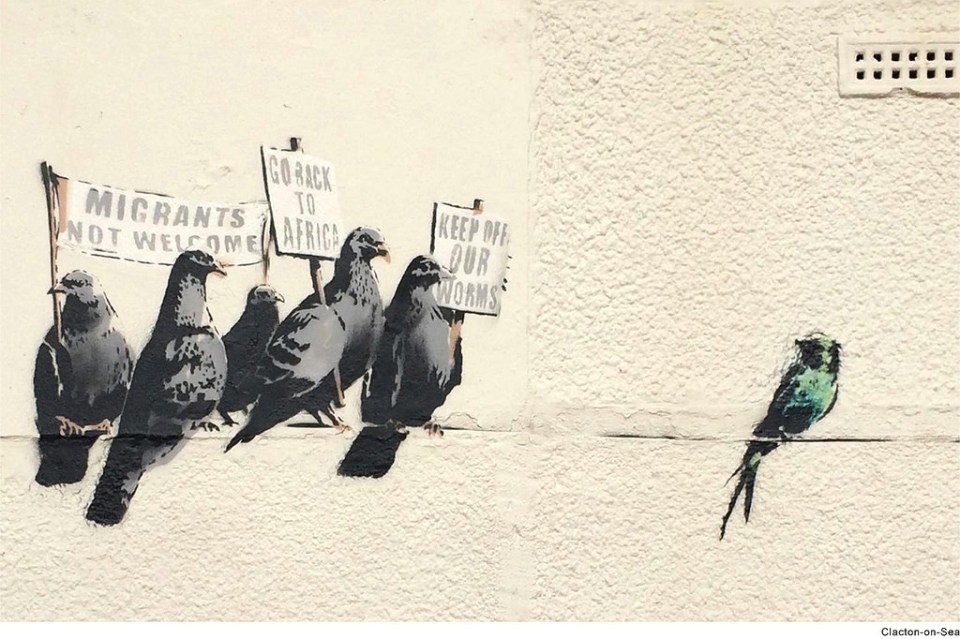
In the aftermath of the Windrush generation debacle being brought into the light, Amber Rudd resigned, and a new Home Secretary was appointed. This was hailed by the government as a turning point, an opportunity to draw a line in the sand. Certainly, within hours of his appointment, Sajid Javid announced that he ‘would do right by the Windrush generation’. Furthermore, he insisted that he did not ‘like the phrase hostile’, adding that ‘the terminology is incorrect’ and that the term itself, was ‘unhelpful’. In its place, Javid offered a new term, that of; ‘a compliant environment’. At first glance, the language appears neutral and far less threatening, however, you do not need to dig too deep to read the threat contained within.
According to the Oxford Dictionary (2018) the definition of compliant indicates a disposition ‘to agree with others or obey rules, especially to an excessive degree; acquiescent’. Compliance implies obeying orders, keeping your mouth shut and tolerating whatever follows. It offers, no space for discussion, debate or dissent and is far more reflective of the military environment, than civilian life. Furthermore, how does a narrative of compliance fit in with a twenty-first century (supposedly) democratic society?
The Windrush shambles demonstrates quite clearly a blatant disregard for British citizens and implicit, if not, downright aggression. Government ministers, civil servants, immigration officers, NHS workers, as well as those in education and other organisations/industries, all complying with rules and regulations, together with pressures to exceed targets, meant that any semblance of humanity is left behind. The strategy of creating a hostile environment could only ever result in misery for those subjected to the State’s machinations. Whilst, there may be concerns around people living in the country without the official right to stay, these people are fully aware of their uncertain status and are thus unlikely to be highly visible. As we’ve seen many times within the CJS, where there are targets that “must” be met, individuals and agencies will tend to go for the low-hanging fruit. In the case of immigration, this made the Windrush generation incredibly vulnerable; whether they wanted to travel to their country of origin to visit ill or dying relatives, change employment or if they needed to call on the services of the NHS. Although attention has now been drawn to the plight of many of the Windrush generation facing varying levels of discrimination, we can never really know for sure how many individuals and families have been impacted. The only narratives we will hear are those who are able to make their voices heard either independently or through the support of MPs (such as David Lammy) and the media. Hopefully, these voices will continue to be raised and new ones added, in order that all may receive justice; rather than an off-the-cuff apology.
However, what of Javid’s new ‘compliant environment’? I would argue that even in this new, supposedly less aggressive environment, individuals such as Sonia Williams, Glenda Caesar and Michael Braithwaite would still be faced with the same impossible situation. By speaking out, these British women and man, as well as countless others, demonstrate anything but compliance and that can only be a positive for a humane and empathetic society.
Share this:


Oh, just f*** off.

A strange title to give to a blog but, one that expresses my feelings every time I turn the television and watch politicians procrastinating about a major issue. How else do I try and express my utter contempt for the leaders of this country that cause chaos and misery and yet take no responsibility for what they have done.
I watch Donald Trump on television and I’m simply given to thinking ‘You’re an idiot’, I appreciate that others may have stronger words, particularly some immigrants, legal or illegal, in the United States. I will draw parallels with his approach later, how could I not, given the Empire Windrush disgrace.
A week or so ago a significant topic on the news was the gender pay gap. The Prime Minister Theresa May was all over this one, after all it is the fault of corporations and businesses the pay gap exists. No responsibility there then but votes to be had.
Within the same news bulletin, there was an interview with a teacher who explained how teachers were regularly taking children’s clothes home to wash them as the family couldn’t afford to do so. Children were appearing at school and the only meal they might have for the day was the school meal. Now that might seem terrible in a third world country but he wasn’t talking about a third world country he was talking about England. Surprisingly, the prime minister was not all over that one, no votes to be had.
Within the same time frame there were more deaths in London due to gang crime. The Prime Minister and the Home Secretary Amber Rudd were all over that one, well of sorts, but then it is a political hot potato. The police and the community need to do more, an action plan is produced.
Then we have the Windrush debacle, tragedy and disgrace. The Home Secretary eventually said she was sorry and blamed the civil servants in the Home Office. They had become inhuman, clearly not her fault. The Prime Minister said sorry, it was under her watch at the Home Office that the first seeds of this disaster were plotted and then hatched, clearly though not her fault either. Got the right wing votes but seem to have lost a few others along the way.
What ties all of these things together; class structure, inequality and poverty and an unwillingness in government to address these, not really a vote winner. The gender pay gap is someone else’s fault and even if addressed, won’t deal with the inequalities at the bottom of the pay structure. Those women on zero hour contracts and minimum wages won’t see the benefit, only those in middle or higher ranking jobs. Votes from some but not from others, a gain rather than any loss.
The fact that children exist in such poverty in this country that teachers have to intervene and take on welfare responsibilities is conveniently ignored. As is the fact that much of the violence that plagues the inner city streets happens to occur in poor neighbourhoods where social and economic deprivation is rife. The Windrush issue is just another example of right wing rhetoric leading to right wing action that impacts most on the vulnerable.
When the gender pay gap hit the news there was a senior figure from a company that appeared in the news. He said that addressing the gender pay gap by having more women in higher positions in his company was good for the company, good for the country, and good for the economy.
Judging from the example given by the country’s senior management, I have to say I am far from convinced. And yes as far as I’m concerned, when they open their mouths and pontificate, they can just f*** off.
Share this:


‘I read the news today, oh boy’
 The English army had just won the war
A crowd of people turned away
But I just had to look
Having read the book
(Lennon and McCartney, 1967),
The news these days, without fail, is terrible. Wherever you look you are confronted by misery, death, destruction and terror. Regular news channels and social media bombard us with increasingly horrific tales of people living and dying under tremendous pressure, both here in the UK and elsewhere in the world. Below are just a couple of examples drawn from the mainstream media over the space of a few days, each one an example of individual or collective misery. None of them are unique and they all made the headlines in the UK.
‘Deaths of UK homeless people more than double in five years’
‘Syria: 500 Douma patients had chemical attack symptoms, reports say’
‘London 2018 BLOODBATH: Capital on a knife edge as killings SOAR to 56 in three months’
So how do we make sense of these tumultuous times? Do we turn our backs and pretend it has nothing to do with us? Can we, as Criminologists, ignore such events and say they are for other people to think about, discuss and resolve?
At the beginning of the twenty-first century, Stanley Cohen, posed a similar question; ‘How will we react to the atrocities and suffering that lie ahead?’ (2001: 287). Certainly his text States Of Denial: Knowing about Atrocities and Suffering makes clear that each of us has a part to play, firstly by ‘knowing’ that these things happen; in essence, bearing witness and acknowledging the harm inherent in such atrocities. But is this enough?
Cohen, persuasively argues, that our understanding has fundamentally changed:
The political changes of the last decade have radically altered how these issues are framed. The cold-war is over, ordinary “war” does not mean what it used to mean, nor do the terms “nationalism”, “socialism”, “welfare state”, “public order”, “security”, “victim”, “peace-keeping” and “intervention” (2001: 287).
With this in mind, shouldn’t our responses as a society, also have changed, adapted to these new discourses? I would argue, that there is very little evidence to show that this has happened; whilst problems are seemingly framed in different ways, society’s response continues to be overtly punitive. Certainly, the following responses are well rehearsed;
- “move the homeless on”
- “bomb Syria into submission”
- “increase stop and search”
- “longer/harsher prison sentences”
- “it’s your own fault for not having the correct papers?”
Of course, none of the above are new “solutions”. It is well documented throughout much of history, that moving social problems (or as we should acknowledge, people) along, just ensures that the situation continues, after all everyone needs somewhere just to be. Likewise, we have the recent experiences of invading Iraq and Afghanistan to show us (if we didn’t already know from Britain’s experiences during WWII) that you cannot bomb either people or states into submission. As criminologists, we know, only too well, the horrific impact of stop and search, incarceration and banishment and exile, on individuals, families and communities, but it seems, as a society, we do not learn from these experiences.
Yet if we were to imagine, those particular social problems in our own relationships, friendship groups, neighbourhoods and communities, would our responses be the same? Wouldn’t responses be more conciliatory, more empathetic, more helpful, more hopeful and more focused on solving problems, rather than exacerbating the situation?
Next time you read one of these news stories, ask yourself, if it was me or someone important to me that this was happening to, what would I do, how would I resolve the situation, would I be quite so punitive? Until then….
Whoever fights monsters should see to it that in the process he does not become a monster. And when you look long into an abyss, the abyss also looks into you (Nietzsche, 1886/2003: 146)
References:
Cohen, Stanley, (2001), States Of Denial: Knowing about Atrocities and Suffering, (Cambridge: Polity Press)
Lennon, John and McCartney, Paul, (1967), A Day in the Life, [LP]. Recorded by The Beatles in Sgt Pepper’s Lonely Hearts Club Band, EMI Studios: Parlaphone
Nietzsche, Friedrich, (1886/2003), Beyond Good and Evil: Prelude to a Philosophy of the Future, tr. from the German by R. J. Hollingdale, (London: Penguin Books)
Share this:


The trials of Theresa May

Not long after starting my new post at the University of Northampton, I one day remarked ‘you know, I do feel a bit sorry for Theresa May’, or words to that effect. Well, my colleagues were shocked and stunned, clearly I had touched a nerve. But you know what, they were absolutely right to feel this way. Let me first explain myself. I was reflecting on the challenges she has faced as Prime Minister overseeing our exit from the European Union and the seemingly constant questions over her legitimacy and capability as a leader. She had faced a humiliating election result on top of everything else and was criticised for holding Donald Trump’s hand as a symbol of her courting favour with someone many find…..distasteful. So, I thought, she must be feeling attacked from all sides. Also, I did definitely say I was feeling ‘a bit’ sorry for her. However, my colleagues’ reaction did make me think about this view. They pointed out her decisions had led to this and, as it turns out, they also reveal a pattern of behaviour which reinforce their views, not mine. When you examine this from her time as Home Secretary and as Prime Minister, there are numerous examples which show her limitations as a leader.
Let us start with Theresa May, Home Secretary. In 2010, the Conservative-Liberal Democrat coalition promised to tackle the budget deficit and through the ‘Big Society’ initiative, reclaim communities for the ‘law abiding majority’. Theresa’s speech to the Police Federation struck a triumphant tone, and presented a plea to accept her deal to cut spending, to allow the police more autonomy, less bureaucracy and less focus on targets. She celebrated the police as heroes, the front line in the fight to fix the ‘broken society’ and deal with the criminals we were all living in fear of. The slogan of the Conservative Party campaign was reiterated, to tell the police that ‘we’re all in this together’. She promised to always back the police, always fight for them and support them.
Her 2015 speech was less conciliatory and did not celebrate the work of the police. In her announcement to the Police Federation in May 2015, she accused the police service and management of scaremongering as they presented evidence on the impact of cuts, especially on neighbourhood policing functions. Perhaps bolstered by the recent Conservative party election win, she went in all guns blazing. Neighbourhood policing was described as an ‘endangered species’ by serving officers, and they also took this opportunity to plead with her to listen and not resort to her usual position of dismissing their concerns (BBC News, 20 May 2015). For the police service, preserving neighbourhood policing was clearly important. It offers safety, reassurance, a visible police presence and a conduit between the police and public to uphold their legitimacy and consent (Johnston, 2001; Rowe, 2008). Reduced budgets are bound to impact these services not deemed a priority, even though they can help to prevent crime and enable productive partnerships between the police and the citizens they serve (Thurman et al, 2001). For Theresa however, the falling crime rate was proof positive to justify cuts to spending, and that ‘angry and demoralised’ officers with their claims of putting the public in danger were ‘crying wolf’ (BBC News, 20 May, 2015).
It is not surprising then that at the end of Theresa May’s speech, polite applause was all that could be offered. The process of reflection and consideration of the premise that one can be wrong that I undertook, is something Theresa May seems unable to grasp. Her performance at Police Federation conference has further demoralised the police and embedded a sense of hopelessness that anything would change under her leadership. The need for the police to plead with her to listen to them is also a real concern – good leaders should not need to be flattered or cajoled into listening to those who deliver front line services such as policing.
So, as we now seem to be hurtling towards an exit from the EU which means we leave the Custom’s Union, despite the concerns about the impact this will have on the economy and Northern Ireland, Theresa remains resolute, and firmly aligned with the belief that hard Brexit is the way to go. This is presented as appeasing the hard Brexiteers in the Conservative party, who are ready to pounce should she not deliver what they want. However, her speech at Lancaster House presented Brexit as the promise of a new ‘global’ Britain, taking advantage of the opportunities outside the EU, while also offering the hand of friendship with platitudes about our European partners, that we will remain ‘reliable partners, willing allies and close friends.’ Also, she voted remain. She campaigned to keep Britain in the EU in the interests of business and jobs, to maintain security and protections against terrorism and crime, for trade access – and I quote ‘it is in the national interest to remain a member of the European Union.’ I am an ardent remainer, so on this, the Theresa May campaigning in 2016 and I agree. But now we are poles apart.
This is where I have seen the error of my ways to feel sorry for her. Her stance in 2010, celebrating the work of the police when she was new in post, was clearly to cement her status as Home Secretary, so she asked nicely for them to accept the reductions in spending. In 2015, she made a clear shift, to tell the police to stop whining, that there is no more money and she made no reference to the heroic efforts of the police at all. In fact, to her, they were making things worse. The same pattern of shifting loyalties to preserve her position seems to occur on a weekly basis, as we lurch back and forth from soft Brexit to hard Brexit (remember, at one point it was a red, white and blue Brexit?).
So, my problem is not just that we disagree, it is that she does not make decisions based on evidence and what is best for the country. She certainly does not offer leadership in which we can feel reassured about our future. She seems to bend to the will of mysterious others, editors of right wing press, hard Brexiteers and then, occasionally, softens her stance after meetings in Brussels. Or, what I like to call, a reality check. But I no longer think she is struggling to deal with tensions between her belief in a Hard Brexit and the evidence presented to her from her negotiations with the EU. She is also seemingly ignoring concerns raised by MPs, business sectors, universities, and the many who voice their concerns about the legitimacy and consequences of this goal of a hard Brexit. Her leadership style is reflected in the frustration of the press and public when she repeats meaningless platitudes. Remember, ‘strong and stable’, the classic ‘Brexit means Brexit’, prefixing everything with ‘let me be clear’, and then being anything but this. Good leadership is meant to empower others, and in policy making is defined as an approach to generate collective responsibility as found in Belbin’s (1993) ‘team leader’ approach. This is a form of leadership is distinct from role of managers, as they must act to seek new opportunities, transform activities of a group, to be a visionary, to be clear on their goals. The divisions in the Conservative party do not reflect this. It seems that the Maybot’s leadership programming setting has defaulted to her true self and her goal of self-preservation. Therefore, it is not merely a misjudgment to feel even a ‘bit’ of sympathy for her, it is an act of delusion.
Susie Atherton
Senior Lecturer in Criminology
University of Northampton
References
BELBIN, R.M. (1993). Team Roles at Work. Oxford: Butterworth-Heinemann
BBC NEWS (2010) Police Federation crying wolf over cuts, says Theresa May, (see http://www.bbc.co.uk/news/uk-32806520)
JOHNSTON, L. (2001) ‘Crime, fear and civil policing’, Urban Studies, 38(5/6), 959–77.
PRIME MINISTER’S OFFICE (2017) The government’s negotiating objectives for exiting the EU: PM speech (see https://www.gov.uk/government/speeches/the-governments-negotiating-objectives-for-exiting-the-eu-pm-speech)
ROWE, M. (2008) Introduction to Policing. London: Sage.
THURMAN, Q., ZHAO, J. and GIACOMAZZI, A. (2001) Community Policing in a Community Era: An Introduction and Exploration California: Roxbury Publishing Company
Share this:


Justice on Trial
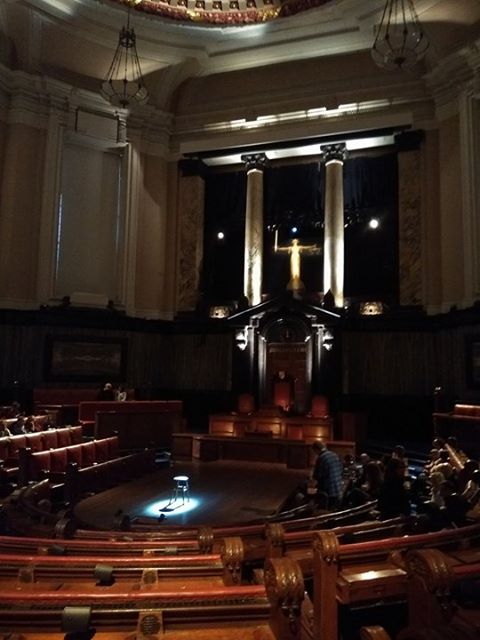
Last weekend I was fortunate enough to be treated to theatre tickets for Agatha Christie’s Witness for the Prosecution. The setting – London’s County Hall – was exquisite, the play sublime and the actors fabulous. An afternoon of sheer escapism, even for a die hard Christie fan like myself. Having read the short story/play many times is no replacement for seeing this on the stage. The theatre offers the opportunity to see the action from all perspectives; you can put yourself in the shoes of the defendant, the court actors and of course, the witnesses. Such a perspective vividly demonstrates the immense power of the State, not only through physical violence (although this is also evident) but through verbal dexterity. To see the defendant – Leonard Vole – on trial; so small and defenceless against the majesty of the courtroom, is thought provoking. Furthermore, this environment is staffed by legal professionals, who unlike him, understand the world in which they operate. The cut and thrust of legalistic argument performed in the play (and in modern day courts daily) conceals the sheer ferocity of authority’s attack on the individual. Remember at the time the play was written, the death penalty was still in force, and Leonard Vole is on trial for the capital crime of murder. In essence, he is openly fighting for his very life, but subjected to the machinations and mediation of professionals who openly profess to be seeking justice. When he tries to speak, to argue, to cajole, he is silenced. There is no place for the defendant’s perspective unless it is expressed via the mandated professional who speaks on his (or her) behalf.
In the twenty-first century (and indeed, for the latter part of the twentieth century), capital punishment in the UK has not been a sentencing option. Whilst defendants may not be faced with a possible date with the hangman, the finality of sentencing and punishment is no laughing matter. Whilst there is no doubt that dramatic denouements have their place in the theatre, in the serious business of the criminal courts such antics seem out of place. If we look at the criminal court as a theatrical scene, we start to observe all manner of incongruity (cf. Carlen, 1976). For starters; the language used and the costumes worn. For anyone that has ever grappled to understand the works of Shakespeare or the Brontë’s, such reading requires patience and perseverance to understand the beauty of such writing. In 2018, we would not request that our surgeons operate on us without the benefit of anaesthesia, neither would we want to be treated with procedures such as bloodletting or trepanning. Similarly, we don’t expect soldiers to carry muskets or form into schiltrons just because that’s how it used to be. Yet we accept and arguably, expect our courts to run as if they were stuck in time. What chance does the individual defendant have in this archaic, theatrical setting? After all, they are the star of the show, yet they have neither costume, nor the opportunity to learn their lines. It is hard to argue, that such practices are conducive to the pursuit of justice.
On the surface, going to the theatre appears to offer a pleasurable break from academia, yet the reality is it offers the opportunity to consider criminology from a novel perspective. Reading (and you all know how keen I am on reading!!) is only part of Criminology; talking, listening, thinking and exploring away from the classroom are equally important. My advice; get out, explore – the arts; theatre, cinema, literature, museums – and add this experiential knowledge to your academic studies. See things from a different perspective and unleash your Criminological Imagination (Young, 2011).
References:
Carlen, Pat, (1976), ‘The Staging of Magistrates’ Justice,’ The British Journal of Criminology, 16, 1: 48–55
Christie, Agatha, (2018), Witness for the Prosecution, Directed by Lucy Bailey. London County Hall, [11 February 2018]
Young, Jock, (2011), The Criminological Imagination, (London: Polity)
Share this:


Homelessness: Shedding an unfavourable light on a beautiful town!

Let me start by apologising for the tone of this blog and emphasis that what follows is rant based on my own opinion and not that of the university or co-authors of the blog. On 3 January I was incensed by a story in the Guardian outlining comments made by Simon Dudley, the Royal Borough of Windsor and Maidenhead’s Conservative leader, regarding homelessness and the impact (visually) that this could have on the forthcoming royal wedding. Mr Dudley commented that having homeless people on the streets at the time of the wedding would present “a beautiful town in a sadly unfavourable light” and that “Windsor is different and requires a more robust approach to begging” (Dudley, cited in Sherwood, 2018, online). Unfortunately, I am no longer shocked by such comments and have come to expect nothing less of Conservative leaders. I am however profoundly saddened that such a deep rooted social issue is brought back into the spot light, not because it reflects wider issues of inequality, disadvantage, poverty, or social exclusion that need addressing but because of a class based narrative driven by a royal wedding. Is Windsor really in need of special treatment? Is their experience of homelessness really worse than every other city in the UK? Or is simply that in an area with such wealth, and social connection, showing the world that we have a problem with homelessness is taking it a step too far. Whatever the reason, Shelter’s[1] (2017) tweet on the 29 December reminds us that homelessness is ‘…a crisis we are not handling as a country’.
As we approached the Christmas period it was estimated that children experiencing homelessness had reached a 10 year high with headlines like ‘Nearly 130,000 children to wake up homeless this Christmas’ (Bulman, 2017) marking our approach to the festive season. Similarly, Shelter warned of a Christmas homeless crisis and as the temperatures dropped emergency shelters were opened across London, contrary to the policy of only opening after three consecutive days of freezing temperatures (TBIF, 2017). Yet the significance of these headlines and the vast body of research into the homelessness crisis appears lost on Mr Dudley whose comments only add to an elitist narrative that if we can’t see it, it isn’t a problem. My issue is not with Mr Dudley’s suggestion that action is needed against aggressive begging and intimidation but with his choice of language. Firstly, to suggest that homelessness is a ‘sad’ thing is a significant understatement made worse by the fact that the focus of this sadness is not on homelessness itself but the fact that it undermines the tone of an affluent area. Secondly, the suggestion that the police should clear the homeless from the streets along with their ‘bags and detritus’ (Dudley, cited in Sherwood, 2018) is symbolic of much of the UK’s approach to difficult social issues; sticking a band aid on a fatal wound and hoping it works. Thirdly, and more deeply disturbing for me is the blame culture evident in his suggestion that homelessness is a choice that those begging in Windsor are ‘…not in fact homeless, and if they are homeless they are choosing to reject all support services…it is a voluntary choice’ (Dudley, cited in Sherwood, 2018). Homelessness is complex and often interlinked with other deeply rooted problems, therefore this blame attitude is not just short sighted but highly ignorant of the difficulties facing a growing proportion of the population.
Shelter. (2017) A safe, secure home is a fundamental right for everyone. It’s a crisis we are not handling as a country [Online]. Twitter. 29 December. Available from: https://twitter.com/shelter?lang=en [Accessed 4 January 2018].
Sherwood, H., (2018) Windsor council leader calls for removal of homeless before royal wedding. The Guardian [online]. Available from: https://www.theguardian.com/society/2018/jan/03/windsor-council-calls-removal-homeless-people-before-royal-wedding [Accessed 04 January 2018].
The Big Issue Foundation. (2017) TBIF joins the Mayor of London’s Coalition to tackle rough sleeping [Online]. The Big Issue Website. Available from: https://www.bigissue.org.uk/news [Accessed 4 January 2018].
[1] a charity offering advice and support to those facing or experiencing homelessness
Share this:


“A Christmas Carol” for the twenty-first century

The build up to Christmas appears more frenetic every year, but there comes a point where you call it a day. This hiatus between preparation and the festivities lends itself to contemplation; reflection on Christmases gone by and a review of the year (both good and bad). Some of this is introspective and personal, some familiar or local and some more philosophical and global.
Following from @manosdaskalou’ recent contemplation on “The True Message of Christmas”, I thought I might follow up his fine example and explore another, familiar, depiction of the festive period. While @manosdaskalou focused on wider European and global concerns, particularly the crisis faced by many thousands of refugees, my entry takes a more domestic view, one that perhaps would be recognised by Charles Dickens (1812- 1870) despite being dead for nearly 150 years.

One of the most distressing news stories this year was the horrific fire at Grenfell Tower where 71 people lost their lives. [1] Whilst Dickens, might not recognise the physicality of a tower block, the narratives which followed the disaster, would be all too familiar to him. His keen eye for social injustice and inequality is reflected in many of his books; A Christmas Carol certainly contains descriptions of gut wrenching, terrifying poverty, without which, Scrooge’s volte-face would have little impact.
In the immediacy of the Grenfell Tower disaster tragic updates about individuals and families believed missing or killed in the fire filled the news channels. Simultaneously, stories of bravery; such as the successful endeavours of Luca Branislav to rescue his neighbour and of course, the sheer professionalism and steadfast determination of the firefighters who battled extremely challenging conditions also began to emerge. Subsequently we read/watched examples of enormous resilience; for example, teenager Ines Alves who sat her GCSE’s in the immediate aftermath. In the aftermath, people clamoured to do whatever they could for survivors bringing food, clothes, toys and anything else that might help to restore some normality to individual life’s. Similarly, people came together for a variety of different celebrity and grassroots events such as Game4Grenfell, A Night of Comedy and West London Stand Tall designed to raise as much money as possible for survivors. All of these different narratives are to expected in the wake of a tragedy; the juxtaposition of tragedy, bravery and resilience help people to make sense of traumatic events.
Ultimately, what Grenfell showed us, was what we already knew, and had known for centuries. It threw a horrific spotlight on social injustice, inequality, poverty, not to mention a distinct lack of national interest In individual and collective human rights. Whilst Scrooge was “encouraged” to see the error of his ways, in the twenty-first century society appears to be increasingly resistant to such insight. While we are prepared to stand by and watch the growth in food banks, the increase in hunger, homelessness and poverty, the decline in children and adult physical and mental health with all that entails, we are far worse than Scrooge. After all, once confronted with reality, Scrooge did his best to make amends and to make things a little better. While the Grenfell Tower Inquiry might offer some insight in due course, the terms of reference are limited and previous experiences, such as Hillsborough demonstrate that such official investigations may obfuscate rather than address concerns. It would seem that rather than wait for official reports, with all their inherent problems, we, as a society we need to start thinking, and more, importantly addressing these fundamental problems and thus create a fairer, safer and more just future for everyone.
In the words of Scrooge:
“A merry Christmas to everybody! A happy New Year to all the world!” (Dickens, 1843/1915: 138)
[1] The final official figure of 71 includes a stillborn baby born just hours after his parents had escaped the fire.
Dickens, Charles, (1843/1915), A Christmas Carol, (Philadelphia: J. B. Lippincott Co.)
Share this:


“Letters from America”: II

Having only visited Philadelphia once before (and even then it was strictly a visit to Eastern State Penitentiary with a quick “Philly sandwich” afterwards) the city is new to me. As with any new environment there is plenty to take in and absorb, made slightly more straightforward by the traditional grid layout so beloved of cities in the USA.
Particularly striking in Philadelphia are the many signs detailing the city’s history. These cover a wide range of topics; (for instance Mothers’ Day originates in the city, the creation of Walnut Street Gaol and commemoration of the great and the good) and allow visitors to get a feel for the city.
Unfortunately, these signs tell only part of the city’s story. Like many great historical cities Philadelphia shares horrific historical problems, that of poverty and homelessness. Wherever you look there are people lying in the street, suffering in a state of suspension somewhere between living and dying, in essence existing. The city is already feeling the chill winds of winter and there is far worse to come. Many of these people appear unable to even ask for help, whether because they have lost the will or because there are just too many knock backs. For an onlooker/bystander there is a profound sense of helplessness; is there anything I can do?, what should I do?, can I help or do I make things even worse?
The last time I physically observed this level of homelessness was in Liverpool but the situation appeared different. People were existing (as opposed to living) on the street but passers by acknowledged them, gave money, hot drinks, bottles of water and perhaps more importantly talked to them. Of course, we need to take care, drawing parallels and conclusions across time and place is always fraught with difficulty, particularly when relying on observation alone. But here it seems starkly different; two entirely different worlds – the destitute, homeless on the one hand and the busy Thanksgiving/Christmas shopper on the other. Worse still it seems despite their proximity ne’er the twain shall meet.
This horrible juxtaposition was brought into sharp focus last night when @manosdaskalou and I went out for an evening meal. We chose a beautiful Greek restaurant and thought we might treat ourselves for a change. We ordered a starter and a main each, forgetting momentarily, that we were in the land of super sized portions. When the food arrived there was easily enough for a family of 4 to (struggle to) eat. This provides a glaringly obvious demonstration of the dichotomy of (what can only really be described as) greed versus grinding poverty and deprivation, within the space of a few yards.
I don’t know what the answer is , but I find it hard to accept that in the twenty-first century society we appear to be giving up on trying seriously to solve these traumatic social problems. Until we can address these repetitive humanitarian crisis it is hard to view society as anything other than callous and cruel and that view is equally difficult to accept.
Share this:


“Letters from America”: I

This weekend @manosdaskalou and I flew from London to the USA and thus had the opportunity of experiencing two different airports. Travelling is always an insightful – if sometimes physically draining – experience and even more so when crossing continents. It is striking that one of the very first things that you confront upon arriving at your destination (no matter whether home or abroad) is generally a very long queue. There are queues to check in, queues to drop bags, queues for security, queues to get on the plane and to get off the other end. These are followed by yet more queues to enter the country and a wait to collect your bags. All of this is par for the course and perhaps to be expected given the volume of people travelling. What is perhaps more unexpected is the overall patience demonstrated by those in the seemingly endless queues.
I find the airport an interesting no-man’s land where individuals appear to become simply part of a giant machine. Once inside the airport you become subject to the whims and vagaries of the machinery. “Take off your shoes”, “take off your coats, jackets, scarves”, “laptops here”, “bags there’ ,”show your clear plastic bag containing approved liquids”, the list goes on and that’s before you’ve even let the country. If we want to fly we accept these rituals as a price worth paying. However, it is worth considering if many would tolerate such rituals away from this setting?
All of these processes are predicated on an ethos of security and the protection of life and limb. However, we do not insist on such protocols when we use other forms of transport; buses, trains, trams or the tube where similar conditions prevail (i.e.lots of people, baggage etc. moving from place to place. The tactics used in the airport are far more reminiscent of the police station or the prison than they are of travel yet we simply grit our teeth and bear the incongruity and indignity of the situation.
Whilst not suggesting that security is unimportant, it is worth considering that we focus far greater attention on flying than we do on other modes of transport. Of course, for those who fly infrequently this can be absorbed as a part of their travelling experience as predictable as a trip to the duty free shop. On a daily basis, as part of the 9-5 commute, such tactics would bring the world to a grinding halt…
Share this:


Do you consent to read on?

The more eagle-eyed amongst you may have spotted that @manosdaskalou and I are due to present during ‘I Heart Consent’ Week (still plenty of time to book a space!). The topic – ‘Consent in the Classroom’ is one that is close to our hearts and something we have discussed in different environments with different people. In this week’s entry I want to consider why the subject of consent is particularly important for criminologists.
An obvious area to start is research; ethics are fundamental to all of the projects we do from undergraduate all the way through to seasoned academic. Discussions around ensuring participants are able to fully engage in the process of gaining informed consent are imperative. At times this may be viewed as procedural; simply going through the motions but given the sensitivity of much criminological research it has a primacy and an urgency necessary to avoid harm.
The last few weeks have seen a flurry of accusations directed at Hollywood’s “finest” (cf. Harvey Weinstein, Kevin Spacey, Ed Westwick et al.) and government ministers and MPs (cf. Michael Fallon, Stephen Crabb, Kelvin Hopkins et al.). These often, light on factual evidence and heavy on prurient judgement, throw the spotlight once more on the issue of sexual consent. These cases are concerning on many levels and it is apparent from much of the discussion which often ensues whether on television, radio, in the newspapers or on social media, that many people are confused around the very nature of consent. Attempts have been made to counteract these lack of knowledge, often in creative ways; for example ‘Consent: It’s as simple as tea’ but looking at many of the comments, there is still a great deal of work to do. There are also wider issues in relation to consent; the absence of the victims’ consent to have their information paraded to feed the public’s desire for detail Likewise, the nature of summary justice being dispensed (e.g. expulsion from organisations, cancellation of contracts and resignations) deprives suspects of their right to defend themselves in court; there is no option for those suspected to opt for a trial by media.
Notwithstanding, the imperative to understand sexual consent, for Criminology, there is a further complication. When much, if not all crime, criminality and criminal justice, is predicated on the absence of consent, the issue becomes even more tenacious. If we consider that victims don’t consent, offenders may not consent to what ensues; certainly the criminal justice system’s [CJS] apparatus deliberately and meticulously removes consent throughout the process. Even when it comes to the professionals who work within the CJS, they may not consent, rather they are obeying guidance/policy/instructions/orders (delete as appropriate). After all, it cannot be consent if derived at the barrel of a gun, or in a police interview suite or a prison cell or when the economic situation is so bleak you are terrified of losing your job. When there is no room for manoeuvre, there can be no consent. Institutions and individuals may decide that this is a necessary price to pay in respect of crime and punishment, but that decision should never be taken without reflection.
All of the above shows the importance of consent, not only between the sheets, but in all aspects of criminology. Whatever side of criminal justice you might find yourself on, an understanding of consent is essential.


