
Home » Government (Page 2)
Category Archives: Government

Doing the right thing
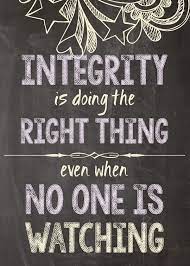
It seems that very often, the problem with politics in this country is that it gets in the way of doing the right thing. Despite the introduction of the The Seven Principles of Public Life known as the Nolan Principles, politicians (not all of them of course, but you will have seen ample examples) still seem to be hell bent on scoring political advantage, obfuscating on matters of principle and where possible avoiding real leadership when the country is crying out for it. Instead, they look to find someone, anyone, else to blame for failures that can only be described as laying clearly at the door of government and at times the wider institution of parliament.
One example you may recall was the complete farce in parliament where the speaker, Sir Lyndsay Hoyle, was berated for political interference and breaking the rules of the house prior to a debate about a ceasefire in Gaza. It became quite obvious to anyone on the outside that various political parties, Conservatives, Labour and the Scottish National Party were all in it to score points. The upshot, rather than the headlines being about a demand for a ceasefire in Gaza, the headlines were about political nonsense, even suggesting that the very core of our democracy was at stake. Somehow, they all lost sight of what was important, the crises, and it really is still a crisis, in Gaza. Doing the right thing was clearly not on their minds, morals and principles were lost along the way in the thrust for the best political posturing.
And then we come to the latest saga involving political parties, the WASPI women (Women Against State Pension Inequality) campaign. The report from the Parliamentary and Health Service Ombudsman has ruled that the Department for Work and Pensions (DWP) “failed to provide accurate, adequate and timely information” about changes to pension ages for women. The report makes interesting reading. In essence, it accuses the DWP of maladministration on several counts.
The Pensions Act 1995 changed the way in which women could draw their pensions in an effort to equalise the age with men. A timetable was drawn up raising the qualifying age for women from 60 to 65, with the change phased in between 2010 and 2020. However, under the Pensions Act 2011, the new qualifying age of 65 for women was brought forward to 2018. The report acknowledges that the DWP carried out campaigns from 1995 onwards but in 2004 received results of research that a considerable number of affected women still believed that their retiring age was 60. Unfortunately, through prevarication and for some quite inexplicable reasoning the women affected were not notified or were notified far too late. There was a calculation carried out that suggested some women were not told until 18 months before their intended retirement date. The matter was taken before the courts but the courts ruling did nothing to resolve the issue other than providing a ruling that the DWP were not required by law to notify the women.
You can read about the debacle anywhere on the Internet and the WASPI women have their own Facebook page. What seems astounding is that both the Government and the opposition have steadfastly avoided being drawn on the matter of compensation for these women. I should add that the maladministration has had serious detrimental impacts on many of them. Not even a sorry, we got it wrong. Instead we see articles written by right wing Conservatives suggesting the women had been provided with ample warning. If you read the report, it makes it clear that provisions under the Civil Service Code were not complied with. It is maladministration and it took place under a number of different governments.
Not getting it right in the first instance was compounded by not getting it right several times over later on. It seems that given the likely cost to the taxpayer, this maladministration is likely, like so many other cock ups by government and its agencies, to be kicked into the long grass. Doing the right thing is a very long, long way away in British politics. And lets not forget the Post Office scandal, the infected blood transfusion scandal and the Windrush scandal to name but a few. So little accountability, such cost to those impacted.
- The quotation in the image is often wrongly misattributed to C. S. Lewis. ↩︎
Share this:


‘A de-construction of the term ‘Cost of Living Crisis’ in recognition of globalism’

The term ‘Cost of Living Crisis’ gets thrown around a lot within everyday discussion, often with little reference to what it means to live under a Cost-of-Living Crisis and how such a crisis is constituted and compares with crises globally. In this blog, I will unpack these questions.
The 2008 Global Financial Crash served as a moment of rupture caused and exacerbated by a series of mini events that unfolded on the world stage…. This partly led to the rise in an annual deficit impacting national growth and debt recovery. Then we entered 2010 when the Coalition Government led by David Cameron and Nick Clegg in the Conservative and Liberal Democrat parties implemented a Big Society Agenda, underpinned by an anti-statist ideology and Austerity politics. The legacies of austerity have extensively been highlighted in my own research as communities faced severed cutbacks to social infrastructure and resources, many of whom utilised these resources as a lifeline. Moving forward to the present day in 2024, austerity continues to be alive and well and the national debt has continued to rise…. Events including the Corona Virus Pandemic that started in 2019, Brexit and Russia’s invasion of Ukraine have amongst other events served as precipitators to an already existing economic downturn. The rise of interest rates and inflation have been partly led by disruptions to global supply chains, particularly essential and often taken for granted food resources such as wheat and grains. So too has political instability hindering opportunities to invest and grow the local economy contributed towards this economic downturn.
As inflation and interest rates rose, so too did the average cost of living in terms of expenditure and disposable income for both the Working and Middle-Classes. At this point, one can begin to see the emergence of the cost-of-living crisis as being constituted as an issue affecting social class.
The cost-of-living crisis is inherently a term deployed by the Middle Classes as some faced an increase of interest rates on their mortgages in addition to rising costs in the supermarkets. These are valid concerns and the reality and hardship produced under these conditions is not being contested. However, we must not lose sight of the fact that economic downturn and the reality of poverty is nothing new for many working-class communities, who have suffered from disinvestment and austerity, long before the term Cost of Living Crisis came into being.
Equally, we can understand the Cost-of-Living Crisis as being a construction led by Western states, as part of a wider Global North. The separation between the Global North and Global South is bound by geography, but economic growth and its globally recognised position as an emerged or emerging economy. Note that such constructions within themselves are applied by the Global North. Similarly, the Cost-of-Living Crisis is nothing new for these states. The reality of living below a breadline is faced by many of these countries in the Global South and should be understood as a wider systemic and global issue that members of the International Community have a moral obligation to address.
So, when applying terms such as the Cost-of-Living Crisis under every-day discussion, it is necessary to contemplate the historicisms behind such an experience and how life under poverty and hardship is experienced globally and indeed across our own communities. This will enable us to think more critically about this term Cost of Living Crisis, which as it is widely used, faces threat of oversight as to the prevalence and effects of global and local inequalities.
Share this:


State Crime

A year ago, on this day a terrible accident took place. Two trains collided head on: a passenger and a cargo train. The crash was ferocious, following a massive bright explosion, that was heard for miles. The official count of fatalities are 57 dead and over 100 injured, some of whom very seriously, one of whom at least on a medically-induced coma. The term accident implies something that happened unintentionally and unexpectedly. As the story emerged, different elements came to the surface which indicated that what happened, was not unexpected. The people who worked in the train service raised the alarm months, if not years in advance, sending official statements to the relevant departments and the minister for transport. There were several accidents months before the disaster and there were calls to correct the infrastructure, including the signalling system. Several politically motivated appointments in key positions also meant that the people in the organisation at certain levels lacked the expertise and knowledge to work with the complexities of the railways. The employees’ protests were largely ignored as they never received an official response. So, was it an accident, a disaster, or a crime?
I have left the details, names and even the country of the disaster out, for one reason only. This tragedy can happen in any place at any time and for any kind of people. The aftermath leaves people wondering why it happened and if it was preventable. The pain of those who lost loved ones transcends borders, race, and origin. The question posed earlier remains. Worldwide we have seen similar disasters some of which have permanently marked the local and international community. It is the way we deal with the aftermath that will partially answer the question of what this tragedy was. A disaster goes in deep highlighting questions such as; what do people pay taxes for, what is the role of the State and how important is human life?
People in position of power were warned about it beforehand. There were similar incidents that should have signalled that something wasn’t right. There was underfunding and lack of staffing. All of these may have happened separately, but considered together, they cannot support this being an accidental event. It was a disaster waiting to happen. Then the question is whether this event is a crime or not. Crime is usually seen as a social construction of individual behaviour in conflict with social conventions. This focuses crime onto an action by an individual and therefore the motivations and intent focus on the usual gains, opportunity and other personal rewards. This approach largely ignores an entire section of criminology that deals with harm and social injustices. A crime of this magnitude has individual actors who for their own motivations contributed to the disaster. Nonetheless this is something bigger; it encompasses, services, organisations, departments, and ministries. This is a State crime. Different parts of the State contributed to the disaster and once it happened, they tried to provide a harried response on an individual’s fault…human error.
Years ago, in another place the toxic gases of a plant killed and blinded thousands of people; a nuclear cloud was released in another incident and people were made to evacuate their homes for ever. Some years ago, a fault in a type of plane grounded an entire fleet after a couple of crashes. A terrible earthquake which revealed errors in construction and design. Boats full of people sinking and no one seems to take any notice. A similar picture in most disasters: people looking for their loved ones, feeling powerless in front of a State that took decisions to ignore the risk and the calls of the experts. So, what does this train disaster, the plane crashes, the boat sinkings and the earthquake destruction have in common? They are all State crimes. In modern literature we have learnt to recognise them, identify the commonalities, and explain what a State crime is. What we haven’t done as effectively is to find a way to punish those responsible. Each State, like in this train disaster, recoils into providing all necessary information and changing its mechanisms; maybe because for some countries profit is above people, providing of the main intentions behind State crime. Whilst the State delays, the dead await justice.
In memoriam to the 57 and to the millions of victims of state crimes.
Share this:


2024: the year for community and kindness?



The year 2023 was full of pain, loss, suffering, hatred and harm. When looking locally, homelessness and poverty remain very much part of the social fabric in England and Wales, when looking globally, genocide, terror attacks and dictatorships are evident. Politics appear to have lost what little, if any, composure and respect it had: and all in all, the year leaves a somewhat bitter taste in the mouth.
Nevertheless, 2023 was also full of joy, happiness, hope and love. New lives have been welcomed into the world, achievements made, milestones met, communities standing together to march for a ceasefire and to protest against genocide, war, animal rights, global warming and violence against women to name but a few. It is this collective identity I hope punches its way into 2024, because I fear as time moves forward this strength in community, this sense of belonging, appears to be slowly peeling away.
When I recollect my grandparents and parents talking about ‘back in the day’ what stands out most to me is the community identity: the banding together during hard times. The taking an interest, providing a shoulder should it be required. Today, and even if I think back critically over the pandemic, the narrative is very singular: you must stay inside. You must be accountable, you must be responsible, you must get by and manage. There is no narrative of leaning on your neighbours, leaning on your community to the extent that, I’m under the impression, existed before. We have seen and felt this shift very much so within the sphere of criminal justice: it is the individual’s responsibility for their actions, their circumstances and their ‘lot in life’. And the Criminologists amongst you will be uttering expletives at this point. I think what I am attempting to get at, is that for 2024 I would like to see a shared identity as humankind come front and central. For inclusivity, kindness and hope to take flight and not because it benefits us as singular entities, but because it fosters our shared sense of, and commitment to, community.
But ‘community’ exists in so much more than just actions, it is also about our thoughts and beliefs. My worry: whilst kindness and support exist in the world, is that these features only exist if it does not disadvantage (or be perceived to disadvantage) the individual. An example: a person asks me for a sanitary product, and having many of them on me the vast majority of the time, means I am able and happy to accommodate. But what if I only had one left and the likelihood of me needing the last one is pretty high? Do I put myself at a later disadvantage for this person? This person is a stranger: for a friend I wouldn’t even think, I would give it to them. I know I would, and have given out my last sanitary product to strangers who have asked on a number of occasions. And if everyone did this, then once I need a product I can have faith that someone else will be able to support me when required. The issue, in this convoluted way of getting there, is for most of us (including me as evidenced) there is an initial reaction to centralise ‘us’ as an individual rather than focus on the community aspect of it. How will, or even could, this impact me?
Now, I appreciate this is overly generalised, and for those that foster community to all (not just those in their community and are generally very selfless) I apologise. But in 2024, I would like to see people, myself included, act and believe in this sense of community rather than the individualised self. I want people to belong, to support and to generally be kind and not through thinking about how it impacts them to do so. We do not have to be friends with everyone, but just a general level of kindness, understanding and a shared want for a better, inclusive, and safe future would be great!
So Happy New Year to everyone! I hope our 2024 is full of peace, prosperity, community, safety and kindness!

Share this:


Christmas Toys

In CRI3002 we reflected on the toxic masculine practices which are enacted in everyday life. Hegemonic masculinity promotes the ideology that the most respectable way of being ‘a man’ is to engage in masculine practices that maintain the White elite’s domination of marginalised people and nations. What is interesting is that in a world that continues to be incredibly violent, the toxicity of state-inflicted hegemonic masculinity is rarely mentioned.
The militaristic use of State violence in the form of the brutal destruction of people in the name of apparent ‘just’ conflicts is incredibly masculine. To illustrate, when it is perceived and constructed that a privileged position and nation is under threat, hegemonic masculinity would ensure that violent measures are used to combat this threat.
For some, life is so precious yet for others, life is so easily taken away. Whilst some have engaged in Christmas traditions of spending time with the family, opening presents and eating luxurious foods, some are experiencing horrors that should only ever be read in a dystopian novel.
Through privileged Christmas play-time with new toys like soldiers and weapons, masculine violence continues to be normalised. Whilst for some children, soldiers and weapons have caused them to be victims of wars with the most catastrophic consequences.
Even through children’s play-time the privileged have managed to promote everyday militarism for their own interests of power, money and domination. Those in the Global North are lead to believe that we should be proud of the army and how it protects ‘us’ by dominating ‘them’ (i.e., ‘others/lesser humans and nations’).
Still in 2023 children play with symbolically violent toys whilst not being socialised to question this. The militaristic toys are marketed to be fun and exciting – perhaps promoting apathy rather than empathy. If promoting apathy, how will the world ever change? Surely the privileged should be raising their children to be ashamed of the use of violence rather than be proud of it?
Share this:


Festive messages, a legendary truce, and some massacres: A Xmas story

Holidays come with context! They bring messages of stories that transcend tight religious or national confines. This is why despite Christmas being a Christian celebration it has universal messages about peace on earth, hope and love to all. Similar messages are shared at different celebrations from other religions which contain similar ecumenical meanings.
The first official Christmas took place on 336 AD when the first Christian Emperor declared an official celebration. At first, a rather small occasion but it soon became the festival of the winter which spread across the Roman empire. All through the centuries more and more customs were added to the celebration and as Europeans “carried” the holiday to other continents it became increasingly an international celebration. Of course, joy and happiness weren’t the only things that brought people together. As this is a Christmas message from a criminological perspective don’t expect it to be too cuddly!
As early as 390 AD, Christmas in Milan was marked with the act of public “repentance” from Emperor Theodosius, after the massacre of Thessalonica. When the emperor got mad they slaughtered the local population, in an act that caused even the repulson of Ambrose, Bishop of Milan to ban him from church until he repented! Considering the volume of people murdered this probably counts as one of those lighter sentences; but for people in power sentences tend to be light regardless of the historical context.
One of those Christmas celebrations that stand out through time, as a symbol of truce, was the 1914 Christmas in the midst of the Great War. The story of how the opposing troops exchanged Christmas messages, songs in some part of the trenches resonated, but has never been repeated. Ironically neither of the High Commands of the opposing sides liked the idea. Perhaps they became concerned that it would become more difficult to kill someone that you have humanised hours before. For example, a similar truce was not observed in World War 2 and in subsequent conflicts, High Commands tend to limit operations on the day, providing some additional access to messages from home, some light entertainment some festive meals, to remind people that there is life beyond war.
A different kind of Christmas was celebrated in Italy in the mid-80s. The Christmas massacre of 1984 Strage Di Natale dominated the news. It was a terrorist attack by the mafia against the judiciary who had tried to purge the organisation. Their response was brutal and a clear indication that they remained defiant. It will take decades before the organisation’s influence diminishes but, on that date, with the death of people they also achieved worldwide condemnation.
A decade later in the 90s there was the Christmas massacre or Masacre de Navidad in Bolivia. On this occasion the government troops decided to murder miners in a rural community, as the mine was sold off to foreign investors, who needed their investment protected. The community continue to carry the marks of these events, whilst the investors simply sold and moved on to their next profitable venture.
In 2008 there was the Christmas massacre in the Democratic Republic of Congo when the Lord’s Resistance Army entered Haut-Uele District. The exact number of those murdered remains unknown and it adds misery to this already beleaguered country with such a long history of suffering, including colonial ethnic cleansing and genocide. This country, like many countries in the world, are relegated into the small columns on the news and are mostly neglected by the international community.
So, why on a festive day that commemorates love, peace and goodwill does one talk about death and destruction? It is because of all those heartfelt notions that we need to look at what really happens. What is the point of saying peace on earth, when Gaza is levelled to the ground? Why offer season’s wishes when troops on either side of the Dnipro River are still fighting a war with no end? How hypocritical is it to say Merry Christmas to those who flee Nagorno Karabakh? What is the point of talking about love when children living in Yemen may never get to feel it? Why go to the trouble of setting up a festive dinner when people in Ethiopia experience famine yet again?
We say words that commemorate a festive season, but do we really mean them? If we did, a call for international truce, protection of the non-combatants, medical attention to the injured and the infirm should be the top priority. The advancement of civilization is not measured by smart phones, talking doorbells and clever televisions. It is measured by the ability of the international community to take a stand and rehabilitate humanity, thus putting people over profit. Sending a message for peace not as a wish but as an urgent action is our outmost priority.
The Criminology Team, wishes all of you personal and international peace!
Share this:


Stop the boats, Stop the visas, Meet the thresholds and You are in!
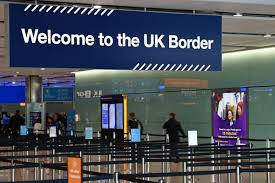
The Tory party has witnessed a number of challenges in recent years and with the appointment of Rishi Sunak, a brief sense of stability was felt amidst the chaos. As different parties look to the upcoming elections, each party have begun to move pieces on its chess board. While campaigns have unofficially begun, some commentators have argued that Sunak’s recent policy on migration could be one of his game plans.
Let’s take a closer look into this recent migration policy. Attention seemed to have slowly shifted away from the plan of redirecting boats to Rwanda to the need to suppress legal migration. To restrict LEGAL migration, Sunak’s government instituted policies limiting opportunities on student visas, banning dependents on care visas, increasing the minimum income threshold for skilled worker and family visas, and revising rules around shortage occupation lists.
Starting with the skilled worker visas, the government imposed a £38,700 minimum salary requirement to gain entry into the UK. Simply put, if you are coming to work in the UK, you must search for a job that pays nothing less than £38,700 in annual income, or else you will not qualify. For me, I think some clarification is needed here for what the government considers as skilled jobs exactly. I say this because junior doctors, nurses and train operators would be considered as being part of a skilled workforce. However, these skilled work force have undertaken multiple strike action over dispute on wages in the last few months. This leads me to another question – how many ‘skilled job’ workers earn a salary of £38,700 in the current day economy? Although the government implied that the reason for this is to force organisations to look to British citizens first rather than relying on legal migrants – which could be thought as quite commendable however, a number of UK workers earn less than the new threshold annually anyway. So this logic needs further clarity in my view.
In terms of curbing student’s visas, UK higher education has long attracted international students, yet these new policies outrightly banning postgraduate dependents and targeting post-study work visas seem quite harsh, especially given the exorbitant £13,000 to £18,000 yearly tuition fees already paid by these students. If the aim is transforming education into a type of transitory/knowledge based tourism, this should be transparent so aspiring international scholars are not misled into believing they are wanted for anything beyond their hefty bank balances.
On family visas and so forth, it is without a doubt that these new rules will tear apart families because it also imposes a £38,700 minimum income threshold on family visas from £18,600. The technicality around this is that legal migrants will not be the only ones to be affected by these new rules, British citizens will also be affected. Let us consider this scenario. Consider Linda, a British citizen working part-time in retail earning £33,000 annually. She aims to marry her long-term boyfriend from Sri Lanka next summer, but both of them fall short of the minimum income threshold. Under the current rule, Linda now faces a dilemma. It’s either she increases her earnings above the threshold by the next spring or uproot her British life to reunite with her partner abroad. Contrast her plight with Kelvin, a non British citizen who has recently secured a Band 7 physiotherapy role in the NHS. He is entering the UK from Mozambique and has managed to negotiate a £47,000 pay deal with his trust. Kevin has the right to move his family freely over to the UK without any disruption. This seems more like double standards because for the less affluent, it seems the right to create a family across borders will become an exclusive privilege reserved only for the rich under this new policy.
The clock may be running out for advocacy groups hoping to see a repeal of these new regulations by the House of Lords and it seems doubtful there is enough procedural means in the Commons to withdraw the policies.
Share this:


Media Madness

Unless you have been living under a rock or on a remote island with no media access, you would have been made aware of the controversy of Russell Brand and his alleged ‘historic’ problematic behaviour. If we think about Russell Brand in the early 2000s he displayed provocative and eccentric behaviour, which contributed to his rise to fame as a comedian, actor, and television presenter. During this period, he gained popularity for his unique style, which combined sharp wit, a proclivity for wordplay, and a rebellious, countercultural persona.
Brand’s stand-up comedy routines was very much intertwined with his personality, which was littered with controversy, something that was welcomed by the general public and bosses at big media corporations. Hence his never-ending media opportunities, book deals and sell out shows.
In recent years Brand has reinvented (or evolved) himself and his public image which has seen a move towards introspectivity, spirituality and sobriety. Brand has collected millions of followers that praise him for his activist work, he has been vocal on mental health issues, and he encourages his followers to hold government and big corporations to an account.
The media’s cancellation of Russell Brand without any criminal charges being brought against him raises important questions about the boundaries of cancel culture and the presumption of innocence. Brand, a controversial and outspoken comedian, has faced severe backlash for his provocative statements and unconventional views on various topics. While his comments have undoubtedly sparked controversy and debate, the absence of any criminal charges against him highlights the growing trend of public figures being held to account in the court of public opinion, often without a legal basis.
This situation underscores the importance of distinguishing between free speech and harmful behaviour. Cancel culture can sometimes blur these lines, leading to consequences that may seem disproportionate to the alleged transgressions. The case of Russell Brand serves as a reminder of the need for nuanced discussions around cancel culture, ensuring that individuals are held accountable for their actions while also upholding the principle of innocent until proven guilty in a court of law. It raises questions about how society should navigate the complex intersection of free expression, public accountability, and the potential consequences for individuals in the public eye.
There is also an important topic that seems to be forgotten in this web of madness……..what about the alleged victims. There seems to be a theme that continuously needs to be highlighted when criminality and victimisation is presented. There is little discussion or coverage on the alleged victims. The lack of media sensitivity and lay discussion on this topic either dehumanises the alleged victims by using lines such as ‘Brand is another victim of MeToo’ and comparing him to Cliff Richard and Kevin Spacey, two celebrities that were accused of sexual crimes and were later found not guilty, which in essence creates a narrative that does not challenge Brand’s conduct, on the basis of previous cases that have no connection to one another.
We also need to be mindful on the medias framing of the alleged witch hunt against Russell Brand and the problematic involvement that the UK government. The letter penned by Dame Dinenage sent to social media platforms in an attempt to demonetize Brand’s content should also be highlighted. While I support Brand being held accountable for any proven crimes he has committed, I feel these actions by UK government are hasty, and problematic considering there have been many opportunities for the government to step in on serious allegations about media personalities on the BBC and other news stations and they have not chosen to act. The step made by Dame Dinenage has contributed to the media madness and contributes to the out of hand and in many ways, nasty discussion around freedom of speech. The government’s involvement has deflected the importance of the victimisation and criminality. Instead, it has replaced the discussion around the governments overarching punitive control over society.
Brand has become a beacon of understanding to is 6.6 million followers during Covid 19 lockdowns, mask mandates and vaccinations. This was at a time when many people questioned government intentions and challenged the mainstream narratives around autonomy. Because Brand has been propped up as a hero to his ‘awakened’ followers the shift around his conduct and alleged crimes have been erased from conversation and debates around BIG BROTHER and CONTROL continue to shape the media narrative………
Share this:


Unravelling the Niger Coup: Shifting Dynamics, Colonial Legacies, and Geopolitical Implications

On July 26, the National Council for Safeguarding the Homeland (CNSP) staged a bloodless coup d’état in Niger, ousting the civilian elected government. This is the sixth successful military intervention in Africa since August 2020, and the fifth in the Sahel region. Of the six core Sahelian countries, only Mauritania has a civilian government. In 2019, it marked its first successful civilian transition of power since the 2008 military intervention, which saw the junta transitioning to power in 2009 as the civilian president.
Military intervention in politics is not a new phenomenon in Africa. Over 90% of African countries have experienced military interventions in politics with over 200 successful and failed coups since 1960 – 1, (the year of independence). To date, the motivation of these interventions revolves around insecurity, wasteful and poor management of state resources, corruption, and poor and weak social governance. Sadly, the current situation in many African countries shows these indicators are in no short supply, hence the adoption of coup proofing measures to overcome supposed coup traps.
The literature evidences adopting ethnic coup proofing dynamics and colonial military practices and decolonisation as possible coup-proofing measures. However, the recent waves of coups in the Sahel defer this logic, and are tilting towards severing ties with the living-past neocolonial presence and domination. The Nigerien coup orchestrated by the CNSP has sent shockwaves throughout the region and internationally over this reason. Before the coup, Mali and France had a diplomatic row. The Malian junta demanded that France and its Western allies withdraw their troops from Mali immediately. These troops were part of Operation Barkhane and Taskforce Takuba. A wave of anti-French sentiments and protests resulted over the eroding credibility of France and accusation of been an occupying force. Mohamed Bazoum, the deposed Nigerien president, accepted the withdrawn French troops and its Western allies in Niger. This was frowned at by the Nigerien military, and as evidenced by the bloodless coup, similar anti-French sentiments resulted in Bazoum’s deposition.
The ousting of President Bazoum resulted in numerous reactions, including a decision by the Economic Community of West African States (ECOWAS), of which Niger is a member and is currently chaired by Nigerian President Bola Ahmed Tinubu. ECOWAS demanded the release and reinstatement of President Bazoum, imposed economic sanctions, and threatened military intervention with a one-week ultimatum. Some argued that the military intervention is unlikely, and some member states pledged support to the junta. At the end of the ultimatum, ECOWAS activated the deployment of its regional standby force but it remains unclear when it will intervene and what the rules of engagement will be. Nonetheless, the junta considers any such act as an aggression, and in addition to closing its airspace, it is understood to have sought support from Wagner, the Russian mercenary.
Amongst the citizenry, while some oppose the military intervention, there is popular support for both the intervention and the military with thousands rallying support for the junta. On 6 August, about 30,000 supporters filled the Niamey stadium chanting and applauding the military junta as they parade the crowd-filled stadium. Anti-French sentiments including a protest that led to an attack on the French embassy in Niger followed the declaration of the coup action. In the civil-military relations literature, when a military assumes high political roles yet has high support from society over such actions, it is considered as a popular praetorian military (Sarigil, 2011, p.268). While this is not a professional military attribute (Musa and Heinecken, 2022), it is nonetheless supported by the citizenry.
In my doctoral thesis, I argued that in situations where the population is discontent and dissatisfied with the policies of the political leadership, a civil-military relations crisis could result. I argued that “as citizens are aware that the military is neither predatory nor self-serving, they are happy trusting and supporting the military to restore political stability in the state. It is possible that in situations where political instability becomes intense, large sections of the citizenry could encourage the military to intervene in politics” (Musa, 2018, p.71). The recent waves of military intervention in Africa, together with anti-colonial sentiments evidences this, and further supports my argument on the role of the citizenry in civil-military relations. For many Nigeriens including Maïkol Zodi who leads an anti-foreign troops movement in Niger, the coup symbolises the political independence and stability that Francophone Africa has long desired.
Thus, as the events continue to unfold, I would like to end this blog with some questions that I have been thinking about as I try to make sense of this rather complex military intervention. The intervention is affecting international relations and has the potential to destabilise the current power balance between the major powers. It could also lead to a military conflict in Africa, which would be a disaster for the continent.
- How have recent coups in the Sahel region signalled a shift away from colonial legacies, and how are these sentiments reshaping political dynamics?
- What is the significance of the diplomatic tensions between Mali and France, and how might they have influenced the ousting of President Bazoum and the reactions to it?
- Given the surge in military interventions in politics across the Sahel region, how does this trend reflect evolving dynamics within the affected countries, and does this has the potential to spur similar interventions in other African States?
- What lessons can be drawn from Mauritania’s successful transition from military to civilian rule in 2019, and how might these insights contribute to diplomatic discussions around possible transition to civilian rule in Niger?
- Are the decisions of ECOWAS influenced by external pressures, how effective is ECOWAS’s approach to addressing coups within member states, and how does the Niger coup test the regional organization’s capacity for conflict resolution?
- To what extent do insecurity, mismanagement of resources, corruption, and poor governance collectively contribute to the susceptibility of African nations to military interventions?
- How can African governments strike a balance between improving the quality of life and coup-proofing measures, and which is most effective for preventing or mitigating the risk of military interventions?
- What are the potential ramifications of the coup on the geopolitical landscape, especially in terms of altering power dynamics among major players?
- What are the implications of the coup for regional stability, and how might it contribute to the potential outbreak of conflict and could it destabilize ongoing counterterrorism efforts and impact cooperation among countries in addressing common security threats?
- Why do widespread demonstrations of support for the junta underscore the sentiments of political independence and stability that resonate across Francophone Africa?
- Given the complexities of the situation, what measures can be taken to ensure long-term stability, governance improvement, and democratic progress in Niger?
- Ultimately, is the western midwifed democracy in Africa serving its purpose, and given the poor living conditions of the vast populace in African countries as measured against all indices, can these democracies serve Africans?
Navigating these questions is essential for comprehending the implications of the coup and the potential outcomes for Niger and its neighbours. In an era where regional stability and international relations are at stake, a nuanced understanding of these multifaceted issues is imperative for shaping informed responses and sustainable solutions.
References
Musa, S.Y. (2018) Military Internal Security Operations in Plateau State, North Central Nigeria: Ameliorating or Exacerbating Insecurity? PhD, Stellenbosch University. Available from: https://scholar.sun.ac.za/handle/10019.1/104931. [Accessed 7 March 2019].
Musa, S.Y., Heinecken, L. (2022) The Effect of Military (Un)Professionalism on Civil-Military Relations and Security in Nigeria. African Security Review. 31(2), 157–173.
Sarigil, Z. (2011) Civil-Military Relations Beyond Dichotomy: With Special Reference to Turkey. Turkish Studies. 12(2), 265–278.
Share this:


Freedom From Torture

Two weeks ago, we marked Refugee Week. The Freedom From Torture Northampton local group put on a showing of Matar, and a short documentary about making the film. Whilst the attendance was small, the showings were powerful and there was some heartful discussion around the importance of raising awareness, compassion and understanding around refugees and asylum seekers. And the importance of giving space to those voices who have lived these realities rather than being spoken for, and often over. The importance of space and empowerment is something all Criminologists and Criminology students will be familiar with.
One week ago we were witness to the Court of Appeal ruling that it was not safe to send asylum seekers to Rwanda, despite Suella Braverman’s ‘dream’ for the Conservative Party to ‘stop the boats’ via this unethical and inhumane migration bill. And whilst a huge sigh of relief leaves my body, I can’t help but feel anxious and angry at what is to come next. These people (the Government) have come from positions of power, comfort, security, wealth, and education- all their lives. They have no lived experience regarding why people flee from their home countries, the desperate need to run from unlawful prosecution, to want a safer life for themselves and their loved ones. So how are they best placed to decide on what response, (if there should be one), the country takes to immigration? There is also a racial element in relation to this: refugees from Ukraine were not met with the hostility and hate from this country, unlike asylum seekers and refugees from Syria or Afghanistan. Why is that? Well, for one thing the structural inequalities around ‘Whiteness’ is a place to start. The Government seems to have forgotten that people are running from harm, torture, and death. Running for their lives for the hope of a kinder, safer life.
Three weeks ago I signed up to run the Royal Parks’ Half Marathon on 8th October 2023. I am fundraising for Freedom From Torture which, whilst specific to fundraising, supporting and providing treatment for torture survivors, also work to campaign against the hatred and harmful policies being spouted by the Government against refugees and asylum seekers. I usually run 2-3 times a week, providing my body is playing ball which frustratingly appears to be less and less the case, but never more than 10km. A half marathon is just over 21km! So I’ve got a long way to go. But this distance is nothing compared to the miles and miles people fleeing harm, unlawful prosecution and/or torture have to endure. All support, be it financial or sharing blog posts and raising awareness on social media is highly appreciated. The link to my JustGiving Page can be found at the bottom of the blog alongside a very pink picture of me after a 5.58km ‘recovery run’.
Fair warning: my social media and blog posts will be dedicated to how I’m getting on in relation to the training, distance, blisters and will be accompanied by unflattering pictures of myself after various runs! But it’s important to remember WHY I’m running and WHO I’m running for.
Thanks for the support: I’ll keep you posted! JustGiving Link.


 Thoughts from the criminology team