
Home » Government
Category Archives: Government

A new model for policing: same old rhetoric, same old politics, same old reality

The Home Secretary’s White Paper ‘From Local to National: A New Model for Policing’ promises a complete revamp of policing in England and Wales. The Northamptonshire Police Federation website provides a fairly good synopsis of what the white paper contains. Although one does hope that they didn’t resort to the use of AI to produce it otherwise they may find themselves going the same way as the beleaguered former chief constable of the West Midlands Police.
When listening to the Home Secretary Shabana Mahmood’ address to parliament regarding these reforms, I am reminded of a timeless quote from Robert Reiner regarding a former Home Secretary, Michael Howard’s address to parliament regarding another Home Office police reform White Paper back in the early 1990s. Michael Howard had stated that ‘the job of the police was to catch criminals’ and Robert Reiner, if I remember the quote correctly, stated that this statement was ‘breathtaking in its audacious simple mindedness’.
My bookshelf used to be full of Home Office White papers regarding police reform. If I went through every one of them, I would find almost all the suggestions, in one form or another, being put forward by this Home Secretary. It is like revisiting my former reality, change for change’s sake to detract from a poor performing government. Although no one could have guessed that Lord Mandelson would quickly hog the news and railroad the political landscape.
The police don’t do themselves any favours, you’ve only got to look at the headlines over the decades to know that. But of course, policing is not easy and sometimes hitting the headlines for the wrong reasons is inevitable. Rarely do the police hit the headlines for the right reasons, not because there aren’t plenty of right reasons, they simply aren’t newsworthy. However, every failure or perceived failure is ammunition for the ambitious politician and police reform is always a headline grabbing option and a distraction from other politically difficult and damning matters.
Let’s be clear, policing doesn’t happen in a vacuum. Policing relies on the public; it relies on other institutions within the criminal justice system and outside of it and it relies on good governance. If the police are underfunded, then the service they deliver to the public is substandard and this then dents confidence in the police which in turn impacts public co-operation. If the other institutions within the criminal justice system are poorly funded such as the courts, then it doesn’t matter what the police do, cases do not get to court in a timely manner, the public withdraw their support and cases collapse. If prisons are overcrowded due to lack of funding and other issues, the courts can’t function correctly and the public lose confidence. As an aside remember the furore around the wrong prisoners being released and the number of prisoners wrongly released over a year. Funny how that seems to have disappeared from the news.
But the problems for policing and the rest of the judicial system pale into insignificance when compared to the issues with underfunding in areas of social services, welfare, the NHS, education and so much more. It is easy to point to policing when the key areas that impact the public the most are decimated. People don’t just commit crime because they are greedy, they don’t resort to violence for absolutely no reason. And it doesn’t take a rocket scientist to work out that if you stop supporting young people, stop giving them hope for a future, stop keeping them engaged in meaningful activities when they are out of school then you will see crime and anti-social behaviour spiral out of control. And of course, its not just young people that feel the impact. Not so long ago there was a movement towards defunding the police. The ideas behind the movement were sound but I think perhaps a little naïve. But what was right was the idea of pouring more money into welfare and youth services. Crime is so much more than just policing, and the police have very little control over it, despite all the rhetoric.
As for policing, the white paper is just a rehash of the same old ideas and another way of wasting public money, not dissimilar to that in 2006 when another Home Secretary decided on police mergers which saw millions spent before the idea was shelved as too expensive. The police have adapted to issues identified by HMIC prior to the proposed mergers in 2006. Collaboration between forces works well, saves money and enables smaller forces to deal with large scale issues. There is no evidence anywhere that big is better. In fact there is plenty of evidence to suggest that it may not be.
If the police have retracted from neighbourhood policing it is because of underfunding. Austerity measures introduced in 2010/11 decimated police forces and their ability to deliver both neighbourhood and response policing. Neighbourhood policing became a luxury and coincidentally was also the area where instant savings could be made. Police Community Support Officers could be shed because unlike police officers, they can be made redundant. As for vetting, something that has grabbed the headlines, well what did you expect? Cut the budgets and those important but less immediate functions are also decimated. Add to this the political pressure to recruit 20,000 officers in a short space of time and you have a recipe for disaster.
I do wonder whether those chief officers that support the latest police reform agenda do so because they really understand policing and its history or because they are naïve or ambitious or perhaps a bit of both. To return to Robert Reiner, the reforms are quite simply ‘breathtaking in their audacious simple mindedness’ and the sooner they are shelved the better.
Share this:


What price justice?

It was reported in the news a couple of days ago that a super complaint has been lodged against the police in England and Wales in respect of their handling of sexual offence cases (The Guardian 15.12). Not long before that article was published, another gave us the news that prisoners have erroneously been released from prison (BBC 5.11). These stories sandwiched another, that concerning the abolition of trial by jury for offences attracting anything less than three years imprisonment (BBC 02.12). The rationale behind these proposals is the reduction of the appalling backlog of court cases awaiting trial.
These stories beg the very simple question what an earth is going on with the criminal justice system? To say it is in crises would be an understatement. The system is broken, and it is hard to see how it can be fixed but perhaps it isn’t difficult to see how it got into its present state.
The justice process is complex and above all else, for it to work effectively, it is costly and by its very nature, it is inefficient. And this has presented problems for successive governments over decades. The conundrum, how to deliver a cost effective, efficient criminal justice system. Put simply the mantra seems to have been how do you achieve cheap justice?
The various components of the criminal justice system are interdependent, when one part fails, it has a knock-on effect to the others. Each part of the criminal justice system has seen so called efficiency and economy drives over the decades, and the consequence has been a cut in service across the board.
How many times do we hear complaints that the police just don’t turn up when a crime is reported or that they are disinterested? But have a look at the sustained cuts in budgets, the burgeoning costs of policing as the social and technological worlds change around us and the constant reprioritising of policing efforts and, it is little wonder that there is no one to turn up or that the crime you are reporting just isn’t important enough. Or maybe the people that do the policing are simply just worn out, disenchanted and frustrated by a system that fails their efforts at every turn. They even conspire to fail themselves.
And what of the Crown Prosecution Service (CPS)? Understaffed and under crude directions to enforce tests and codes to minimise court cases as best they can. With a little bit of research, you can find complaints against the CPS relating to the changing of the threshold in relation to sexual offences. To some extent CPS lawyers act as judge and jury before a defendant is even charged. Economic perhaps, effective, no. This has a knock-on effect to the police who then pre-empt that decision making. No point in sending a file to the CPS just to see it knocked back. The CPS must of course also have a mind to the backlog in the courts, no point sending a case there if it won’t be heard for months, if not years on end. And then the courts. The consistent closure of courts, both magistrates and crown over the years beggars belief. There is no local justice now, if you are defendant, witness or victim, you will be travelling miles to get to the allotted court. And if you do make it, the chance of your case being heard on that day is a lottery. As for legal aid, a pipe dream. Defendants in court trying to defend themselves and having to be assisted by the court clerk because quite frankly, they do not have a clue. But then who would? All of this presupposes the case gets to court in a timely fashion. You try remembering what happened 3 years ago when cross examined by a solicitor or barrister.
And prisons, well, overcrowded, understaffed and failing to provide anything but the basics, if that. Many a report suggests a crumbling prison estate and inhumane conditions within prisons. There has to be something fundamentally wrong with a system that allows prisoners to walk out the gates and then sees vast sums of money and resource poured into trying to find them. Efficient, or effective, not really. As for rehabilitation, don’t even bother thinking about it.
And what of you and I, the public? What faith do you have in the criminal justice system? Is it little wonder that victims will not report crimes, and if they do, they quickly lose interest in supporting a prosecution. If the police rely on the public to help them investigate cases, what hope have they got if the public have no faith in them or the rest of the system?
The problem with successive governments is that they have been too keen to cut costs without understanding or caring about the impact. And they are too quick to judge when things go wrong, pointing the finger anywhere but at themselves. They fail to see the system as a whole; they just seem to fail to see.
Justice costs money. Cutting cases that can go to trial by jury simply displays a lack of interest in justice or incompetence in governing or perhaps both. A government that fails to deliver justice for its citizens is failing in its fundamental duty as a government. The problem is, it’s not only this government that has failed us; the failures go a long way back and any attempt to fix the issues requires a fundamental shift in policy and a significant injection of public money that is just not available. Well, that’s what they will have us believe anyway.
Share this:


School’s out!

The end of the academic year comes in many forms and guises. The end of the examination period, the submission of a final piece of work, the release of the grades and many more ways you can say that’s the end of this year! Unlike the calendar year, the end of the academic year comes in the summer as a natural end to work. It is like the school year that was shaped centuries ago! The reason for the summer break was the need for the kids to work in the harvest, a tradition that has remained past the agrarian society.
So, what does the end of an academic year signifies? For the students, there is a sense of accomplishment as they have completed their course or level of study. All the hard work, coming to class, long hours of making notes to complete THAT assignment, and all the heartache preparing the exams finally paid off and they can see their labours paying off. It is also a natural intellectual boundary that takes them a step up in the way they see the world through the lens of their subject. For colleagues the end of an academic year is slightly different…the next academic year’s preparation is upon them, the paper that needed writing is now facing a fast-approaching deadline and the resetting of all these priorities as set by management.
Since joining academia, the process of end of summer, has changed significantly from the working on research and scholarly output to administrative tasks! For those interested in a career in academia, on top of working with others, enjoying a discipline and being involved in education a wider question on how well they can handle paperwork, albeit virtual, is part of the job description. That comes as part of the job, always did, it is that it feels more intertwined with what we do.
There is undoubtedly a change in the role education plays in peoples lives especially Higher Education. This is a sector that in the 1970s recruited less than half a million to now being near the three million mark. This massive rise on student number has changed the way we see high education and the role it plays in our society. This is not the education of the elite but the opportunity for all to embrace opportunities and explore areas of interest that will allow them to find themselves, employment, build a career and ultimately a life! Whilst HE is still expanding the job market is becoming increasingly competitive and the cost of living is forcing people to adjust in how they plan the future.
So, what will the future hold for the end of year hiatus? Financially HE is facing challenges, culturally it is under attack, and socially it is being critiqued around whether it offers what it was set up to do. All these are short- and long-term challenges and they are not going away. Some will affect in future, access to HE, others will question the content and the basis of academic freedom and finally with the onset of Ai, the scope of HE itself. Despite all, I am still hopeful that HE is not a degree nor a job opportunity but a moment in any person’s life that takes a step up. It is a very important human need to fulfil curiosity and to embrace a path that wasn’t clear at the beginning of the journey. The first academia was founded in an agora under a tree and maybe we get back to that, but in the end human intellect will need stimulation and that is where, despite all challenges, HE prevails.
Perhaps the future of higher education won’t be defined by buildings or systems, but by the enduring human need to learn, to question, and to grow. Whether under a tree in an agora or through the lens of AI, the pursuit of knowledge remains a profoundly human act—and that is where higher education will always find its purpose.
Share this:


Reflecting on Adolescence

This short series from Netflix has proven to be a national hit, as it rose to be the #1 most streamed programme on the platform in the UK. It has become a popular talking point amongst many viewers, with the programme even reaching into parliament and having praise from the government. After watching it, I can say that it is deserving of its mass popularity, with many aspects welcoming it to my interests.
It is not meant to be an overly dramatised show as we see from other programmes on Netflix. Whilst it fits in the genre of “Drama” it mainly serves itself as a message and portrayal of how toxic masculinity takes form at a young age. One episode was an hour long interrogation that became difficult to watch as it felt as if I was in the room myself, seeing a young boy turn from being vulnerable and scared to intimidating, aggressive and manipulative. As a programme, it does its job of engagement, but its message was displayed even better. Our society has a huge problem with perceptions of masculinity and how young men are growing up in a world that normalises misogyny. The microcosm that Adolescence shows encapsulates this problem well and highlights the problem of the “manosphere” that many young men and even children are turning to as they become radicalised online.
Commentators such as Andrew Tate have become a huge idol to his followers, which are often labelled as “incels”. Sine his rise in popularity in past years, an epidemic of these so called manosphere followers perpetuate misogyny in every corner of their lives, following and believing tales like the “80-20 rule” in which 80% of women are attracted to 20% of men. This kind of mindset is extremely dangerous and, as displayed in Jamie’s behaviour, leads to a feeling of necessity in regard to women liking them. This behaviour isn’t exactly new; it is a form of misogyny that has plagued society for as long as society has been around, however it has been perpetuated further by the “Commentaters”, as I call them.
As a fan of the Silent Hill series, I have always enjoyed stories that dive deep into the psyche and explore wider themes in ways that make the audience uncomfortable, yet willing, to confront. Adolescence does this in the form of a show not so disguised as an overarching message. I feel like it has done its job of making people reflect and critically think about what is wrong with society, and exposing those who do not think about the wider messages and only care about entertainment. I mean, people sit and question whether or not Jamie did the crime and argue that he is not guilty, when the show explicitly shows and tells you what happens through Jamie’s character, demeanour and interactions in the interrogations.
Misogyny and the forces that uphold it are not new concepts and nor will it be an ancient concept any time soon with the way contemporary society functions. Even as society may become more tolerant, there will always be a way for women to be disadvantaged. However, stories like Adolescence may provide a glimmer of hope in dissecting and being a piece of the puzzle that pieces together the wider branches of misogyny and allow for more people to explore its underpinnings.
Share this:


Will Keir Starmer’s plans to abolish NHS England, help to save the NHS?

In a land-mark event, British Prime Minister Keir Starmer has unveiled plans to abolish NHS England, to bring the NHS back into government control. Starmer justifies much of this change with streamlining operations and enhancing efficiency within the NHS, that in recent years has faced a backlash following long queues and an over-stretched staff pool. Moreover, this is part of Starmer’s plan to limit the power of control from bureaucratic systems.
NHS England was established in 2013 and has taken control and responsibility of the NHS’s daily operational priorities. Primarily, NHS England is invested in allocating regional funds to local health care systems and ensuring the smooth delivery of health care across the NHS. However, concerns, particularly in Parliament have been raised in relation to the merging of NHS England and the Department’s of Health and Social care that is alleged by critics to have brought inefficient services and an increase of administrative costs.
Considering this background, the plans to abolish NHS England, for Starmer come under two core priorities. The first is enhancing democratic accountability. This is to ensure that the expenditures of the NHS are contained within government control, thus it is alleged that this will improve efficiency and suitable allocation of spending. The second is to reduce the number of redundancies. This is backed by the idea that by streamlining essential services will allow for more money to be allocated to fund new Doctors and Nurses, who of course work on the front line.
This plan by Starmer has been met with mixed reviews. As some may say that it is necessary to bring the NHS under government control, to eliminate the risks of inefficient services. However, some may also question if taking the NHS under government control may necessarily result in stability and harmony. What must remain true to the core of this change is the high-quality delivery of health care to patients of the NHS. The answer to the effectiveness of this policy will ostensibly be made visible in due course. As readers in criminology, this policy change should be of interest to all of us… This policy will shape much of our public access to healthcare, thus contributing to ideas on health inequalities. From a social harm perspective, this policy is of interest, as we witness how modes of power and control play a huge role in instrumentally shaping people’s lives.
I am interested to hear any views on this proposal- feel free to email me and we can discuss more!
Share this:


Britain’s new relationship with America…Some thoughts

Within the coming weeks, Keir Starmer is due to meet Donald Trump and in doing so has offered an interesting view into the complexities of managing diplomacy in the modern age. Whilst the UK and US work collaboratively through bi-lateral trade agreements, and national security collaborations, the change in power structures within the UK and USA marks significant ideological difference that can arguably present a myriad of implications for both countries and for those countries who are implicated by these relations between Britain and America. In this blog, I will outline some of the factors that ought to be considered as we fast-approach this new age of international relations.
It can be understood that Starmer meeting Trump, despite some ideological difference is rooted in a pragmatic diplomacy approach and for what some might say is for the greater good. In an age of continual risk and uncertainty, allyship across nations has seldom been more necessary nor consolidated. On addressing issues including climate change, national security, trade agreements within a post-Brexit adversity, the relationship between America and Britain I sense is being foregrounded by Starmer’s Labour Government.
Moreover, I consider that Starmer should tread carefully and not appear globally as though he is too strongly aligned with Trump’s policies, especially on foreign policy. This mistake was once made by Tony Blair, following the New Beginnings movement after 9/11. It is essential that whilst we maintain good relations with America, this does not come at a cost to our own sovereignty and influence on global issues. I see here an opportunity for Starmer to re-build Britain’s place on the global stage. Despite this as what some strategists might call a ‘bigger picture’, it goes without saying that Starmer may face backlash from his peers based on his willingness to enter a liaison with Trump’s Government. For many inside and outside of the Labour Party, the politics of Trump are considered dangerous, regressive, and ideologically dumbfounded. I happen to agree with much of these sentiments, and I think there is a risk for Starmer… that will later develop into a dilemma. This dilemma will be between appeasing the party majority and those who hold traditional Labour values in place of moving further into the clutches of the far right, emboldened by neoliberalism. It is no secret however that the Labour party has entered a dangerous liaison with neoliberalism and has alienated many traditional Labour voters and has offered no real political alternative.
Considering this, I sense an apprehension is in the air regarding Starmer’s relationship building with America and Donald Trump, that some might argue might be more counter-productive than good. Starmer must demonstrate political pragmatism and arguably the impact of this government and the governments to come will weigh on these relations… Albeit time will tell in determining how these future relations are mapped out.
Share this:

Corruption: A Very Noble Pastime

Only a couple of months ago there was a furore about the current prime minister Sir Keir Starmer receiving gifts from Lord Alli. He wasn’t the only one to benefit but it rather tainted the Labour Party’s victory in the election and made a mockery of promises to clean up politics. Let’s not get too hung up about political parties though, there is plenty of previous evidence of other parties dabbling in, let’s call them, immoral practices that benefit the individual.
I shouldn’t have been surprised then to hear about some research carried out by Tortoise that suggested a quarter of the members of the House of Lords do two thirds of the work in the upper chamber. They found that approximately 210 members of a total of 830 are actively involved in the business of the upper chamber and the rest well, your guess is as good as mine. So what you might ask, we have some rather lazy nobles, but they don’t get paid unless they turn up. Well true, but then if you read some other research, it becomes apparent that there are vast sums of money being paid for doing nothing. Turning up is one thing, working is quite something else.
‘Over the course of the last parliament, £400,000 has been paid to 15 peers who have claimed attendance for at least 80 per cent of days in at least one month without any discernible activity in that time. Some have made repeated claims of this kind over the parliament’ (Tortoise, 2024).
Up till now I’ve always had a begrudging respect for the upper chamber, particularly when they have knocked back poor, ill thought out or inappropriate legislation conjured up by the government. That’s not to say I haven’t questioned the manner in which the chamber is constituted but I have felt a sense of relief when government have had a hard task railroading through some of their legislation. But it doesn’t seem to matter which chamber it is in parliament, there are a significant number of individuals in both houses whose actions can only be described as corrupt. From the expenses scandal in 2009 to the latest failures to declare interests, it becomes clear that corruption is endemic.
It seems to me during an era of cuts in public services, the withholding of funds to the most vulnerable designed to help them keep warm, and job losses in sectors where past and present policies make organisations unsustainable, the disregard for proper financial management and constraint in government is immoral. I will leave the debate about whether we should have governance in its current format to others who probably know better than I do but there is clearly a need to abolish the policies and processes that allow for what can only be described as a corrupt noble gravy train.
The Nolan Principles setting out the standards that those involved in public life should adhere to are still in existence and expected to be complied with and yet I fail to see how so many members of our great institutions have even come close to adherence. In case you are unsure what those principles are, I have listed them below and I will leave you to judge whether the nobility stand up to scrutiny.
- Selflessness
- Integrity
- Objectivity
- Accountability
- Openness
- Honesty
- Leadership
References
BBC (2019) MPs’ expenses: The Legacy of a Scandal [online] Available at https://www.bbc.co.uk/news/uk-politics-48187096 Accessed: 22/11/2024.
BBC (2024) Keir Starmer received more clothes worth £16,000 [online] Available at https://www.bbc.co.uk/news/articles/cdd4z9vzdnno Accessed: 22/11/2024.
Information Commissioner’s Office (ND) MP’s expenses scandal [online] Available at https://ico.org.uk/for-the-public/ico-40/mp-expenses-scandal/ Accessed: 22/11/2024
Tortoise (2024a) Lording it: some peers claim £400,000 for little discernible work, [online] available at https://www.tortoisemedia.com/2024/11/20/lording-it-some-peers-claim-400000-for-little-discernible-work/, Accessed: 22/11/2024
Tortoise (2024b) The Lords’ work: Tortoise’s Peer Review [online] available at https://www.tortoisemedia.com/2024/11/20/the-lords-work-tortoises-peer-review/, Accessed: 22/11/2024.
UK Parliament (ND) Standards, [online] available at https://www.parliament.uk/about/mps-and-lords/members/standards/, Accessed: 22/11/2024.
Share this:


Labour’s Winter Fuel Allowance Cut: Austerity 2.0 and the need for De-commodification?

Last week, the Government voted as an overwhelming majority to scrap the winter fuel allowance. This has been met with fierce backlash from critics, particularly Labour MP Zara Sultana who stated her removal of taking part in ‘Austerity 2.0’. Meanwhile, in Prime Minister Questions, Kier Starmer defended the decision by referring to the ’22-billion-pound black hole’ that was left by the former Conservative Government (See Amos, 2024). This policy decision will mean that pensioners and vulnerable social groups across the UK will face a loss of financial support to pay for the ever-rising energy costs, particularly over the coming winter months. The health implications and fears onto those who will be affected were reported widely by critics. For example, Labour MP Rosie Duffield represented her constituents, some of whom were cancer patients who were severely worried about keeping warm this coming winter and relied on the winter fuel allowance as a reliable source of financial support (Lavelle, 2024).
This latest move initiated by Starmer’s Labour Government is primarily justified through the need for temporary acts of austerity, to balance the books and reduce the national debt and deficit which according to Starmer’s speech at the latest Prime Minister’s Questions now sits at over twenty billion.
A fundamental question here is not of the need for action to reduce the national deficit…. rather the question is- who should foot the bill? Latest figures show that within the same time as when the country scraps the winter fuel allowance, According to Race and Jack (2024), major energy companies such as British Gas announced its profits for 2023 has increased ten-fold to £750 million with the profits forecast to soar higher at the end of this year. There are calls by some politicians, including Zara Sultana to introduce a windfall tax that will put a cap on the gross profits gained by energy companies and large-scale businesses, through which these taxes can be put into public infrastructure, services, and spending. A common counterargument here however is how these businesses and corporations will remove themselves from the UK and situate themselves in alternative global markets, that through globalisation and free-market economy principles has become easier.
The scrapping of the winter fuel allowance demonstrates how under economic crisis, it is communities who foot the bill and suffer the consequences of government failure to protect public infrastructure and avoid generating a deficit and national debt. This policy also represents a balancing act between keeping corporations and businesses active players in the free-market economy versus protecting the countries most vulnerable and providing sufficient public infrastructure and utilities. Perhaps there is an alternative way between preserving the markets and re-orienting their purpose back to a public good…
Capitalist markets are led by profiteering… however, through the process of de-commodification, these markets are brought back under state(s) control and are re-oriented to serve a greater public good and social need (Soron & Laxer, 2006; Hilary, 2013). De-commodification turns the modes of production and consumption towards serving a greater public need. Whilst there is profit opportunities for those on the supply side, this is met with serving a greater public need. Essentially, de-commodification removes acts of disempowerment and the dependency of people from the markets and restores the power, much of which is placed back into state control. Perhaps, the model of de-commodification might not work in all contexts, particularly when one considers the intensification of globalisation and geopolitical insecurity, however there should be discussions on de-commodification…. As otherwise, the markets will continue to over-rule the state and communities will continue to pay the price…
References
Amos, O (2024) Starmer and Sunak clash on winter fuel payments at PMQs. BBC News. 11th September. Available at https://www.bbc.co.uk/news/live/c303gm7qz3pt {Accessed 13th September 2024}.
Hilary, J (2013) The Poverty of Capitalism: Economic Meltdown and the struggle for what comes next. London: Pluto Press.
Lavelle, D (2024) Winter fuel pay decision ‘brutal’ and could lead to deaths, says Labour MP. The Guardian, 7th September. Available at https://www.theguardian.com/politics/article/2024/sep/07/winter-fuel-pay-decision-brutal-labour-mp-rosie-duffield {Accessed 13th September 2024}.
Race, M., and Jack, S (2024) British Gas sees profits increase ten-fold. BBC News. 15th February. Available at https://www.bbc.co.uk/news/business-68303647#:~:text=British%20Gas%20has%20announced%20its,of%20Russia’s%20invasion%20of%20Ukraine {Accessed 13th September 2024}.
Soron, D., and Laxer, G (2006) De-commodifying Public Life. Peterborough: Broadview Press.
Share this:


A response to the Government’s plans to address ‘Mickey-mouse degrees’.

The Government’s latest plans to scrap university courses that are being considered as ‘under-achieving’ through poor graduate outcomes and progression should deeply concern all of us who work in and who have a passion for the Social Sciences, Arts and Humanities across Higher Education. It is no secret that Rishi Sunak and his Government have traditionally favoured apprentices in replacement of graduates. It is a truth that university and higher education is not for everyone, so whilst the value of undertaking an apprentice should be unequivocally un-challenged, this moment of rupture and insecurity for the Higher Education Sector should provoke us to think about how the culture of Higher Education has changed, and why people come to university in the first place. Engaging in these perspectives will put us in a stronger position to contribute to these debates occurring across the chambers of Parliament and at dinner tables across the country. So too should we as academics be actively challenging these attacks on the disciplines that we have passion for.
Before the awakening of neoliberalism, higher education was a vocation and a pursuit for those seeking to climb the ladder of ‘social mobility’. It is without question, that UK universities, particularly in the inter-war and the early post-war period were filled with young people with pre-existing economic fortune and privilege. Universities were not spaces for the working classes, nor for individuals achieving low grades outcomes. However, we can acknowledge that the class-based, gender and racial barriers into Higher Education have improved, yet we still have progress to make moving forward. Since the 2008 Global Financial Crash and the series of events that have followed, the motivations for coming to university have largely changed. Seemingly, it is predicated on a mode of response to economic re-structuring, particularly when the opportunities in the labour markets erode and become increasingly competitive, university seems for some as a suitable option to both buy time and up-skill to ‘stand out’. A sad truth remains however that these gravitations to university have contributed to degree inflation that has changed the way we see and value a degree. These changes have partially allowed the Government to play loose and fast with degrees that they consider ‘worthless’. However, those of us who actively teach and research in the social sciences will know that these degrees are invaluable…. Invaluable through teaching students to critically think about the seemingly ‘normal world’ around them- to question the logic of everyday practices, attitudes, norms and values that are engrained into our social fabric. To work with communities and organisations to identify and respond to issues of criminal and social injustice…. Be that austerity, homelessness, poverty, miscarriages of justice, and inequality. With this in mind, as educators in the social sciences, arts and humanities, we have a duty to show-case the momentous impact of our disciplines. To show-case movements of activism, government lobbying and social change. This emphasises the importance of research, knowledge exchange and adopting pedagogies enabling students to develop these works. Only then, can we put forward cases for impacts that at a government level could challenge these narratives. So too can we utilise these cases to infuse a passion for the discipline that with luck would enable a student to make a choice of coming to university that is right for them.
As a sector, we have numerous challenges facing us…. we need to think like and be activists…. We need to embody what we teach and speak out against those who reduce our work as a ‘worthless’ or ‘Mickey-Mouse’ degree. We may not change the Government’s approach but at least if departments do get shut down…. We went with a fight.
Share this:


Civilian Suffering Beyond the Headlines
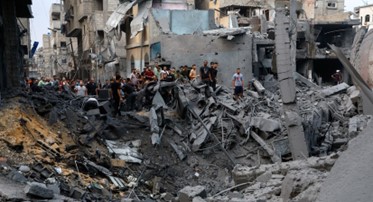
In the cacophony of war, amidst the geopolitical chess moves and strategic considerations, it’s all too easy to lose sight of the human faces caught in its relentless grip. The civilians, the innocents, the ordinary people whose lives are shattered by the violence they never asked for. Yet, as history often reminds us, their stories are the ones that linger long after the guns fall silent. In this exploration, we delve into the forgotten narratives of civilian suffering, from the tragic events of Bloody Sunday to the plight of refugees and aid workers in conflict zones like Palestine.
On January 30, 1972, the world watched in horror as British soldiers opened fire on unarmed civil rights demonstrators in Northern Ireland, in what would become known as Bloody Sunday. Fourteen innocent civilians lost their lives that day, and many more were injured physically and emotionally. Yet, as the decades passed, the memory of Bloody Sunday faded from public consciousness, overshadowed by other conflicts and crises. But for those who lost loved ones, the pain and trauma endure, a reminder of the human cost of political turmoil and sectarian strife.
Fast forward to the present day, and we find a world still grappling with the consequences of war and displacement. In the Middle East, millions of Palestinians endure the daily hardships of life under occupation, their voices drowned out by the rhetoric of politicians and the roar of military jets. Yet amid the rubble and despair, there are those who refuse to be silenced, who risk their lives to provide aid and assistance to those in need. These unsung heroes, whether they be doctors treating the wounded or volunteers distributing food and supplies, embody the spirit of solidarity and compassion that transcends borders and boundaries.

But even as we celebrate their courage and resilience, we must also confront our own complicity in perpetuating the cycles of violence and injustice that afflict so many around the world. For every bomb that falls and every bullet that is fired, there are countless civilians who pay the price, their lives forever altered by forces beyond their control. And yet, all too often, their suffering is relegated to the footnotes of history, overshadowed by the grand narratives of power and politics.
So how do we break free from this cycle of forgetting? How do we ensure that the voices of the marginalized and the oppressed are heard, even in the midst of chaos and conflict? Perhaps the answer lies in bearing witness, in refusing to turn away from the harsh realities of war and its aftermath. It requires us to listen to the stories of those who have been silenced, to amplify their voices and demand justice on their behalf.
Moreover, it necessitates a revaluation of our own priorities and prejudices, a recognition that the struggle for peace and justice is not confined to distant shores but is woven into the fabric of our own communities. Whether it’s challenging the narratives of militarism and nationalism or supporting grassroots movements for social change, each of us has a role to play in building a more just and compassionate world.
The forgotten faces of war remind us of the urgent need to confront our collective amnesia and remember the human cost of conflict. From the victims of Bloody Sunday to the refugees fleeing violence and persecution, their stories demand to be heard and their suffering acknowledged. Only then can we hope to break free from the cycle of violence and build a future were peace and justice reigns supreme.

 Thoughts from the criminology team
