
Home » Gender
Category Archives: Gender

What should criminologists talk about?

Recently, Criminology with Psychology graduate, now PhD student @zo3conneely wrote an entry focused on the rise of the Reform Party in British politics, which you can find here. In response, we received a comment via social media, asking what this entry had to do with Criminology. As we always say in Criminology, all questions are welcome and valid, after all, for many of us our mantra is ‘question everything’! From a lay perspective, the question indicates a particular understanding of academic disciplines, it presupposes that Criminology has a very narrow focus. In this view, criminologists should stay in their own lane and focus purely and simply on what is commonly understood as crime, i.e. actions which are against the law.
But hang on, doesn’t that fall under the purview of those who study or practice criminal law, something neither I not Zoe have undertaken? Alternatively, is it the business of those who work in the field of criminal justice, investigating and processing those believed to have been involved in law-breaking? Again, not something either Zoe or I have experience of. If my colleagues in law and criminal justice are the experts in actions against the law, where does Criminology fit in and why include a discussion on political parties such as Reform in a blog dedicated to the discipline?
However, the answer is more complex than the original question would indicate. The answer is also much longer than the question. Criminology has been described as a rendezvous or umbrella discipline, a space where everyone can gather to discuss crime from all perspectives. This includes disciplines as diverse as Drama, History, Literature, Philosophy, Psychology as well as many others, including Politics. It is therefore, expected that those who write for a Criminology blog will be drawn from a diverse range of academic backgrounds, for instance, whilst I have a BA and a PhD in Criminology, my MA is in the History of Medicine. For my fellow bloggers, their academic journeys will also be reflective of their curiosity and their developing academic knowledge and skills. It is therefore anticipated that each academic brings their own unique academic knowledge and personal experiences to the discussion table. It is this which enables Criminology to take a holistic approach, we don’t and should not seek consensus, but incorporate as many diverse views as is possible. Only then can we gain a real understanding of the phenomena we call crime, criminality, victimisation, and of course, the responses to such.
But what of crime itself? Do we all have a shared understanding of what ‘crime’ is? After all, much of the time we don’t see crime, only potentially some evidence that is has occurred. Furthermore, it depends very much on time and space. If we were living in 1960’s Britain, suicide, abortion and homosexuality would all feature heavily in our list of crimes. However, suicide was decriminalised in 1961, and abortion and homosexuality were partially decriminalised in 1967, with the latter further decriminalised in 2003. Likewise, if we were to look further afield we would crimes listed in statute books that we do not have here, for example adultery is a crime in Iran, Pakistan, Saudi Arabia, Somalia and was only repealed in Taiwan in 2020. Thus it is quickly evident that crime is not static, it can change drastically through time and place. We also have to recognise that crime can be decriminalised and recriminalised, for example the overturning of Roe vs Wade in the USA, removes the constitutional right for those pregnant to access abortions. If it taught us nothing else, the Covid-19 pandemic showed us rights can be granted and rights can be taken away, which means that criminologists need to keep a very careful eye on both the past and the present.
Whilst my colleagues in law have as their focus current legislation and how it is practised, and my colleagues in criminal justice seek to ensure that the law is enacted and used to the letter of that law, criminology is much freer. After all, we need to know who is making those laws and why. Whilst we can answer quite simply parliamentarians, this does not tell us very much. We also need to know who, for example only 14% of the current parliament belong to the Global Ethnic Majority, a smaller percentage than the population proportionately. Of these 90, 66 are drawn from the Labour Party, 15 Conservative and 5 Liberal Democrats. Likewise, at the 2024 election 40% of MPs are women, despite women making up over 50% of the UK’s population. Let’s not even get started on the disproportionate number of privately educated MPs, or the lack of visibility of disability, sexuality and so on…. Needless to say, the UK parliament does not look like the vast majority of the British public. Yet these are the people make our laws, and if we don’t understand that as a criminological issue, we will soon come unstuck.
We all need to understand what is happening once those laws have been passed, who is delivering justice for the UK? Whether we look at Judges, Barristers, Solicitors, we find a predominance of white men, only when we look at the magistracy we begin to find some real diversity. But don’t forget magistrates are unpaid, lay members of the judiciary, so it is perhaps unsurprising that women make up 57% of this particular field. So what about criminal justice practitioners? If we look at the police for England and Wales, over 91% are white, 65% are men. In relation to His Majesty’s Prison and Probation Service [HMPPS], over 54% are female, yet these are predominantly based within probation, not the prison service. So we begin to see that the people making, enacting and facilitation legislation and criminal justice do not look very much like the country’s population. Criminologically, this matters, how can we hope to tackle serious social harms like Violence Against Women and Girls [VAWG], homelessness, poverty etc when people have neither knowledge nor experience? Can we really talk achieve just outcomes if the people responsible do not look, sound like us, have very different, often privileged backgrounds which mean we have little shared experience?
Hopefully, this entry has gone a little way towards explaining why the discipline of Criminology (and of course, this blog) maintains an careful eye on politics, among a huge range of other interests. Don’t forget, Criminology is a positive discipline, focused on what could be, what ought to be, a fairer society for all of us.
Share this:


Reflecting on Adolescence

This short series from Netflix has proven to be a national hit, as it rose to be the #1 most streamed programme on the platform in the UK. It has become a popular talking point amongst many viewers, with the programme even reaching into parliament and having praise from the government. After watching it, I can say that it is deserving of its mass popularity, with many aspects welcoming it to my interests.
It is not meant to be an overly dramatised show as we see from other programmes on Netflix. Whilst it fits in the genre of “Drama” it mainly serves itself as a message and portrayal of how toxic masculinity takes form at a young age. One episode was an hour long interrogation that became difficult to watch as it felt as if I was in the room myself, seeing a young boy turn from being vulnerable and scared to intimidating, aggressive and manipulative. As a programme, it does its job of engagement, but its message was displayed even better. Our society has a huge problem with perceptions of masculinity and how young men are growing up in a world that normalises misogyny. The microcosm that Adolescence shows encapsulates this problem well and highlights the problem of the “manosphere” that many young men and even children are turning to as they become radicalised online.
Commentators such as Andrew Tate have become a huge idol to his followers, which are often labelled as “incels”. Sine his rise in popularity in past years, an epidemic of these so called manosphere followers perpetuate misogyny in every corner of their lives, following and believing tales like the “80-20 rule” in which 80% of women are attracted to 20% of men. This kind of mindset is extremely dangerous and, as displayed in Jamie’s behaviour, leads to a feeling of necessity in regard to women liking them. This behaviour isn’t exactly new; it is a form of misogyny that has plagued society for as long as society has been around, however it has been perpetuated further by the “Commentaters”, as I call them.
As a fan of the Silent Hill series, I have always enjoyed stories that dive deep into the psyche and explore wider themes in ways that make the audience uncomfortable, yet willing, to confront. Adolescence does this in the form of a show not so disguised as an overarching message. I feel like it has done its job of making people reflect and critically think about what is wrong with society, and exposing those who do not think about the wider messages and only care about entertainment. I mean, people sit and question whether or not Jamie did the crime and argue that he is not guilty, when the show explicitly shows and tells you what happens through Jamie’s character, demeanour and interactions in the interrogations.
Misogyny and the forces that uphold it are not new concepts and nor will it be an ancient concept any time soon with the way contemporary society functions. Even as society may become more tolerant, there will always be a way for women to be disadvantaged. However, stories like Adolescence may provide a glimmer of hope in dissecting and being a piece of the puzzle that pieces together the wider branches of misogyny and allow for more people to explore its underpinnings.
Share this:


25 years of Criminology

When the world was bracing for a technological winter thanks to the “millennium bug” the University of Northampton was setting up a degree in Criminology. Twenty-five years later and we are reflecting on a quarter of a century. Since then, there have been changes in the discipline, socio-economic changes and wider changes in education and academia.
The world at the beginning of the 21st century in the Western hemisphere was a hopeful one. There were financial targets that indicated a raising level of income at the time and a general feeling of a new golden age. This, of course, was just before a new international chapter with the “war on terror”. Whilst the US and its allies declared the “war on terror” decreeing the “axis of evil”, in Criminology we offered the module “Transnational Crime” talking about the challenges of international justice and victor’s law.
Early in the 21st century it became apparent that individual rights would take centre stage. The political establishment in the UK was leaving behind discussions on class and class struggles and instead focusing on the way people self-identify. This ideological process meant that more Western hemisphere countries started to introduce legal and social mechanisms of equality. In 2004 the UK voted for civil partnerships and in Criminology we were discussing group rights and the criminalisation of otherness in “Outsiders”.
During that time there was a burgeoning of academic and disciplinary reflection on the way people relate to different identities. This started out as a wider debate on uniqueness and social identities. Criminology’s first cousin Sociology has long focused on matters of race and gender in social discourse and of course, Criminology has long explored these social constructions in relation to crime, victimisation and social precipitation. As a way of exploring race and gender and age we offered modules such as “Crime: Perspectives of Race and Gender” and “Youth, Crime and the Media”. Since then we have embraced Kimberlé Crenshaw’s concept of intersectionality and embarked on a long journey for Criminology to adopt the term and explore crime trends through an increasingly intersectional lens. Increasingly our modules have included an intersectional perspective, allowing students to consider identities more widely.
The world’s confidence fell apart when in 2008 in the US and the UK financial institutions like banks and other financial companies started collapsing. The boom years were replaced by the bust of the international markets, bringing upheaval, instability and a lot of uncertainty. Austerity became an issue that concerned the world of Criminology. In previous times of financial uncertainty crime spiked and there was an expectation that this will be the same once again. Colleagues like Stephen Box in the past explored the correlation of unemployment to crime. A view that has been contested since. Despite the statistical information about declining crime trends, colleagues like Justin Kotzé question the validity of such decline. Such debates demonstrate the importance of research methods, data and critical analysis as keys to formulating and contextualising a discipline like Criminology. The development of “Applied Criminological Research” and “Doing Research in Criminology” became modular vehicles for those studying Criminology to make the most of it.
During the recession, the reduction of social services and social support, including financial aid to economically vulnerable groups began “to bite”! Criminological discourse started conceptualising the lack of social support as a mechanism for understanding institutional and structural violence. In Criminology modules we started exploring this and other forms of violence. Increasingly we turned our focus to understanding institutional violence and our students began to explore very different forms of criminality which previously they may not have considered. Violence as a mechanism of oppression became part of our curriculum adding to the way Criminology explores social conditions as a driver for criminality and victimisation.
While the world was watching the unfolding of the “Arab Spring” in 2011, people started questioning the way we see and read and interpret news stories. Round about that time in Criminology we wanted to break the “myths on crime” and explore the way we tell crime stories. This is when we introduced “True Crimes and Other Fictions”, as a way of allowing students and staff to explore current affairs through a criminological lens.
Obviously, the way that the uprising in the Arab world took charge made the entire planet participants, whether active or passive, with everyone experiencing a global “bystander effect”. From the comfort of our homes, we observed regimes coming to an end, communities being torn apart and waves of refugees fleeing. These issues made our team to reflect further on the need to address these social conditions. Increasingly, modules became aware of the social commentary which provides up-to-date examples as mechanism for exploring Criminology.
In 2019 announcements began to filter, originally from China, about a new virus that forced people to stay home. A few months later and the entire planet went into lockdown. As the world went into isolation the Criminology team was making plans of virtual delivery and trying to find ways to allow students to conduct research online. The pandemic rendered visible the substantial inequalities present in our everyday lives, in a way that had not been seen before. It also made staff and students reflect upon their own vulnerabilities and the need to create online communities. The dissertation and placement modules also forced us to think about research outside the classroom and more importantly outside the box!
More recently, wars in Europe, the Middle East, Africa and Asia have brought to the forefront many long posed questions about peace and the state of international community. The divides between different geopolitical camps brought back memories of conflicts from the 20th century. Noting that the language used is so old, but continues to evoke familiar divisions of the past, bringing them into the future. In Criminology we continue to explore the skills required to re-imagine the world and to consider how the discipline is going to shape our understanding about crime.
It is interesting to reflect that 25 years ago the world was terrified about technology. A quarter of a century later, the world, whilst embracing the internet, is worriedly debating the emergence of AI, the ethics of using information and the difference between knowledge and communication exchanges. Social media have shifted the focus on traditional news outlets, and increasingly “fake news” is becoming a concern. Criminology as a discipline, has also changed and matured. More focus on intersectional criminological perspectives, race, gender, sexuality mean that cultural differences and social transitions are still significant perspectives in the discipline. Criminology is also exploring new challenges and social concerns that are currently emerging around people’s movements, the future of institutions and the nature of society in a global world.
Whatever the direction taken, Criminology still shines a light on complex social issues and helps to promote very important discussions that are really needed. I can be simply celebratory and raise a glass in celebration of the 25 years and in anticipation of the next 25, but I am going to be more creative and say…
To our students, you are part of a discipline that has a lot to say about the world; to our alumni you are an integral part of the history of this journey. To those who will be joining us in the future, be prepared to explore some interesting content and go on an academic journey that will challenge your perceptions and perspectives. Radical Criminology as a concept emerged post-civil rights movements at the second part of the 20th century. People in the Western hemisphere were embracing social movements trying to challenge the established views and change the world. This is when Criminology went through its adolescence and entered adulthood, setting a tone that is both clear and distinct in the Social Sciences. The embrace of being a critical friend to these institutions sitting on crime and justice, law and order has increasingly become fractious with established institutions of oppression (think of appeals to defund the police and prison abolition, both staples within criminological discourse. The rigour of the discipline has not ceased since, and these radical thoughts have led the way to new forms of critical Criminology which still permeate the disciplinary appeal. In recent discourse we have been talking about radicalisation (which despite what the media may have you believe, can often be a positive impetus for change), so here’s to 25 more years of radical criminological thinking! As a discipline, Criminology is becoming incredibly important in setting the ethical and professional boundaries of the future. And don’t forget in Criminology everyone is welcome!

Share this:


A Love Letter: in praise of board games
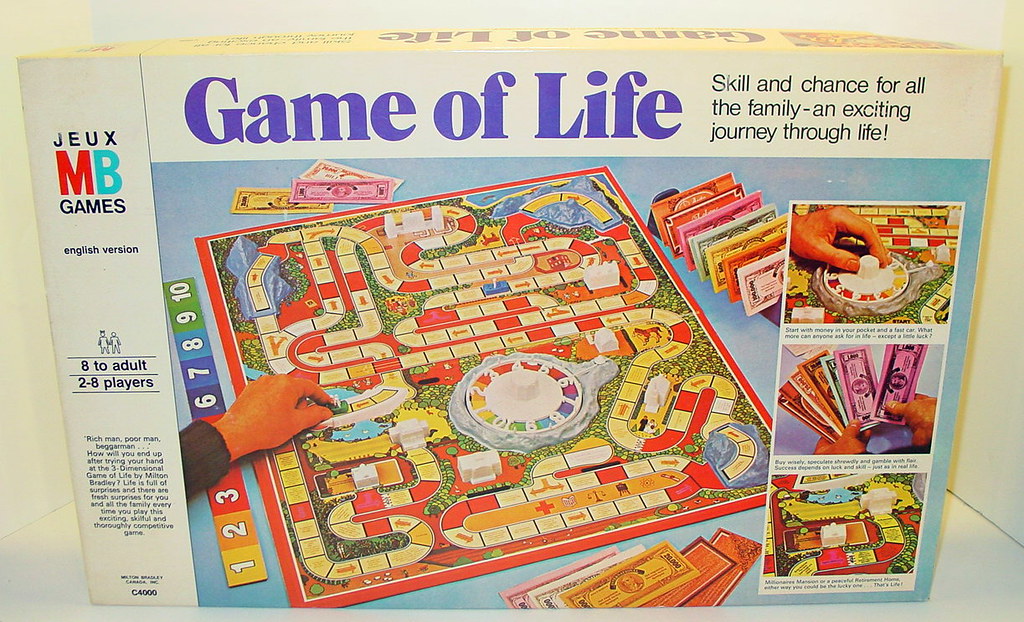
This my fifth love letter, previously I have written in praise of poetry, art, Agatha Christie and the Thoughts from the Criminology Team blog. Since early childhood, I have loved playing games and today’s entry is dedicated to this form of media. In the early years, the focus on fun is paramount, after all who wants to play a dull game? Equally important, the educational aim of games is sometimes explicit, other times less so. Nevertheless, they help us learn to match and sort colours and shapes, to develop our counting skills in an applied setting and improve our memory recall, as well as spelling. Games likes Snap, Happy Families, Hungry Hippos, Snakes and Ladders, Guess Who, Junior Scrabble offer a variety of different ways for children to learn important skills whilst playing. These games enable even very small children to share space, develop important interpersonal skills like taking turns and learn to deal with winning, and of course, losing. Often the latter is a very slow and painful lesson to learn….and one that isn’t always remembered into adulthood!
Of course, one of the most explicit part of playing games is learning the rules of the game, and of course, what happens when we deviate from those rules. It might lead to the loss of a turn or even forfeiture of the entire game. People interpret rules in different ways and families often develop their own “house” rules, but nevertheless there is always an agreed upon set of rules and a way of policing and punishing those who break them.
But once these lessons have been learned, what do games have to teach us as adults? I would say plenty! On a surface level, they offer an opportunity to relax and do something outside of our humdrum lives. Once the games have been purchased, they generally cost nothing to play unlike other forms of leisure time.1 Some can be played alone, others require competitors or even teams. They can aid our thinking, concentration and develop skills of strategy and tactics. They also have the general benefit of not being all consuming (unless at competition level), allowing for conversation to flow. The latter, conversing whilst doing something else, can often be useful for difficult emotional conversations, allowing people to open up without pressure (known colloquially as “health by stealth”).
But do board games have anything to offer to Criminology? Again, I would argue yes! Most games involve chance or luck, will you get the numbers you need, will you have the right pieces/cards in your hand, will the other person play their game in a way that benefits you? It is easy to recognise the role that luck or chance plays in games, but are we equally aware of their role in our lives. More importantly, as criminologists do we fully understand and acknowledge the role played by both in relation to criminality and victimisation?
We have no choice about whether we are born or not, when and where we arrive on the earth, who our parents are. These are all down to forces outside our individual and collective control. Our upbringing, our education, our employment opportunities are largely constrained by geography, money and influence. Compare the opportunities available to a baby born today in Sudan, with one born in the UK, another born in Palestine, and another born in Finland. Compare again, thinking about race, sex, class, disability, sexuality and so on. Very quickly you begin to understand the role played by chance and luck.
So if all of the above are imponderables, how much of a role does luck play in relation to criminality and victimisation? The regular publication of data relating to crime in postcodes, towns/cities and globally show huge diversity in the chance of victimisation. Lucky you, if you were born and live in the ‘Nordic countries of Europe (Norway, Sweden, Denmark, Iceland, and Finland) who rank among the 25 safest globally, most of them also being among the top 10 happiest nations worldwide’. Less fortunate, if you were born in Haiti, Ukraine, Palestine, Sudan or Iraq identified as some of the most dangerous places on earth currently. It is not very difficult to imagine the difference in opportunities in fundamental human rights; food, shelter, healthcare, education and so on. In war ridden nations it is incredibly difficult to separate different typologies of victimisation and for the individuals living under these conditions, it makes no meaningful difference who is/are the perpetrators.
Even if you are living in a “peaceful” state2 such as the UK, there are vast differences in the opportunities available. If you have money you can buy a car to get to work in your evening/night job, if you don’t, maybe you can take a bus, failing that you can walk. Each of those journeys carries its own risks. Your sex, your race, your ethnicity, your sexuality, your abilities/disabilities, your age add the aggravating/mitigating factors and see your risk increase/decrease. All a matter of chance and luck
What about criminality, is this, as the Classical School of Criminology would have us accept, a matter of free will, weighing up the pros and cons and making a deliberate and calculating choice to commit crime? Or can we also identify the same issues of luck and chance as shown above? If your family is loving, everyone has good health, housing is secure, food is plentiful and there are plenty of educational and employment opportunities in your area, would you still choose a life of crime? If there is violence at home, poverty impacts health, housing and regular meals, making it challenging to study or work, would you perceive crime to be a choice?
And what of those board game rules and consequences, real life has its own rules, some written in the forms of laws, others engrained via family, friends, institutions; the norms of our society. In the board game, these rules apply equally (aside from luck and chance) but in real life, not so much. Consider racial and ethnic disproportionality and the treatment of vulnerable women in the CJS, as just two examples. We may all be playing in the same “Game of Life”, but luck, chance and the rules we are subjected to are very different when it comes to criminality and victimisation.
- I appreciate that there are some very expensive board games out there, as well as expansion packs to enhance play. ↩︎
- There are lots of academic arguments around what constitutes a peaceful state, most agree that it more than just the absence of war. Whilst the UK has not seen active warfare on its shores for decades, its military has been involved in conflict throughout the world for more than a century. ↩︎
Share this:


Black History Month 2024
We have entered Black History Month (BHM), and whilst to some it is clear that Black history isn’t and shouldn’t be confined to one month a year, it would be unwise not to take advantage of this month to educate, raise awareness and celebrate Blackness, Black culture.
This year the Criminology department is planning a few events designed to be fun, informative and interesting.
One event the department will hold is a BHM quiz, designed to be fun and test your knowledge. Work individually or in groups, the choice is yours. The quiz will be held on the 17th October in The Hide (4th floor) in the Learning Hub from 4.30-6pm.
The second event will draw on the theme of this year’s BHM which is all about reclaiming narratives. In the exhibition area (ground floor of the Learning Hub) we will be presenting a number of visual narratives. I will be displaying a series of identity trees from Black women that I interviewed as part of my PhD research on Black women in English prisons. With a focus on race and gender, these identity trees represent a snapshot of the lives and lived experiences of these women prior to imprisonment. The trees also highlight the hopes and resilience of these women. This event will be held on the 31st October between 4.30-6pm. Please do walk through and have a look at the trees and ask questions. The event is designed for you to spend as little or as much time as you would like, whether it is a brief look or a longer discussion your presence is much welcomed!
If you would like to be part of this event, whether that is sharing your own research (staff and students), or if you would like to use the space to share your own narrative as a Black individual please get in contact by the 21st October by emailing angela.charles@northampton.ac.uk or criminology@northampton.ac.uk
Lastly, I would like to put a spotlight on a few academics to maybe read up on this month and beyond:
A few suggestions for important discussions on Black feminism and intersectionality:
A few academics with powerful and interesting research that proved very important in my PhD research:
- Maria Adams
- Angela Davis
- Beth Richie
- Corretta Phillips
- Ruth Chigwada-Bailey
- Jason Warr
- Julia Chinyere-Oparah (previously Julia Sudbury)
Share this:


Reflecting on my viva experience
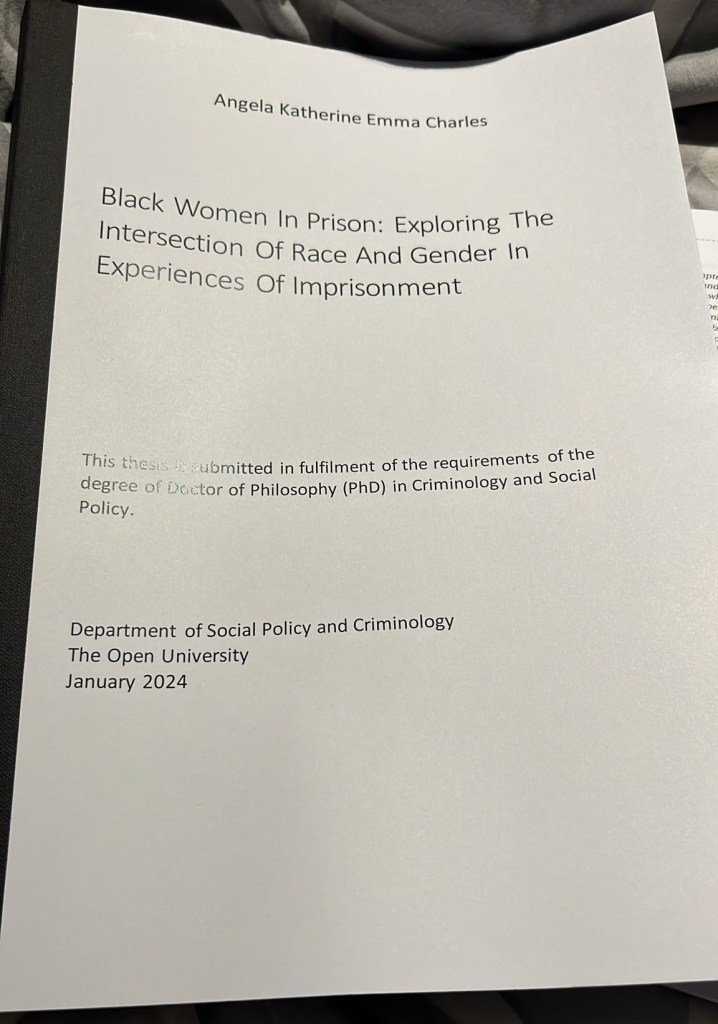
I reflect one week after one of the most important examinations in academia, the viva. Like any examination you never know what is going to come up and therefore you have to be prepared for anything. This makes preparation tricky, uncertain and at times perplexing. There were areas I thought might come up, and in those cases I had a response ready.
On the day, despite all the preparation there were questions that required pause, thought, navigation and discussion. Upon reflection, there were times where I would have liked to provide a more polished and articulate answer, but I am not a robot and therefore my answers are human, with stutters and pauses, passion and dedication; they are unpolished and there is a beauty to that.
What made the difference was having two very supportive examiners that were approachable, interested in my research and wanting me to fulfil my potential. Their additional years in the field/academia over mine were not used to demonstrate their superiority, but instead to guide me in the final process of completing my thesis.
The process acted as a reminder to me that how you approach a situation is so important. In academia, whilst we may be trying to highlight the flaws in a potential project or correcting errors or misconceptions in student’s writing so they can improve, we also ought to put the effort into seeing the good in someone’s work where possible. Think about whether your approach is constructive, how can that individual be supported to the finish line. It pays to maybe think back to the time when your work was being dissected, analysed, with the outcome affecting your academic career in front of you, what type of examiner would you have wanted, maybe that is the one you need to strive to be to others.
I passed with minor corrections that they stressed would only take a few days work. I hope this is acts a testament to what is possible. As a first-generation Black woman that tentatively stepped into academia, achieved a first-class honours degree, navigated a masters at Oxford University, was successful in achieving a funded PhD to then pass with minor corrections, challenge yourself and dare to dream!
Share this:

Gen Z’s gender divide
How can we help bridge Gen Z’s global gender divide as they negotiate for their futures? Unique to Gen Z, according to a recent study, women and men aged 16 to 29 diverge greatly on how they perceive existing inequality as well as assess their futures. That’s according to a widely-reported King’s College study, ‘Emerging tensions? How younger generations are dividing on masculinity and gender equality’, which also found:
- Men are around twice as likely as women to say doing housework and caring for family members are things that apply to both genders equally, despite evidence showing that in reality women do more of both on average. (See also: the Mental Load)
- A higher proportion of men also think there is no gender difference in likelihood of being a senior manager or earning a high income, yet research suggests these characteristics apply to men more than women in the UK. (See also: the UK government’s Gender Pay Gap index, and the Economist)
Family and parental leave – is just one way home and work lives overlap in policy, practice and legislation, acknowledging the importance of unpaid (domestic) labour. BBC news reports on one study that found, “men who take paternity leave do more childcare later.” How might these ‘emerging tensions’ impact the gender inequality in parental leave laws, policies, and practices?
One trend is for companies to create equal and pro-social family policies far beyond laws, not least of which is hybrid working. Flexible/hybrid work has been a lobbying target long before Covid by the Fawcett Society, which champions the Equal Pay Day campaign, and consults the government on the Gender Pay Gap. In 2023 their data highlighted that: “77% of women agreed that they would be more likely to apply for a job that advertises flexible working options.”
Other parental leave policies are gender-neutral, include IVF, adoptive and LGBTQAI+ parents, incentivise paternity leave, and host gendered employee networks. How else will these ‘emerging tensions’ show up in the workplace? One wonders how are other policies and practices promoting a fairer workplace and a healthier work/life balance?
It’s hard out here for…
Notably, all sorts of business news outlets have been reporting about this issue, and more recently about King’s College study, including Forbes, which found it curious that: “for those aged between 16 and 29…some 68% of women said that it was harder to be a woman, while only 35% of men agreed with that statement.” This article shines light on a gap and leaves it at that.
The Guardian has produced a series of articles and podcasts about the growing number of studies and polls reflecting this same cross-gender cultural rift: Here are a few headlines from just this past February:
1/2/24: Gen Z boys and men more likely than baby boomers to believe feminism harmful, says poll.
2/2/24: Friday briefing: Why the politics of young men and women are drifting further and further apart.
7/2/24: Why is generation Z so divided on gender? [Podcast]
Reporting on the study, The Independent headlines: “Of course Gen Z boys believe feminism is harmful – they’ve learnt it from the internet.” Indeed, the author reminds us that social media is quite apt at seeding and feeding division. “Algorithms often operate on extremes: because people tend to click on and engage with the most sensational, hyperbolic content, this is what the algorithm serves up.” Subsequently, young men and women grew up in two very different virtual worlds.

Feminism, the new F-word
According to the King’s College study: 42% of the public say, “equal rights … have had a positive impact on today’s young men.” This is acknowledged in the 2019 Government Equalities Office report, Changing Gender Norms: Engaging with Men and Boys, regarding the Advertising Standards Authority’s guidance on toxic masculine images, stating: “stereotypes implying that men should be physically strong, unemotional and family breadwinners are limiting and potentially damaging.”
Ironically, my career began in international development, which has long since addressed the role of boys and men in gender equality and masculinities, especially through the lens of sexual and reproductive health. In parallel, the work to decriminalise LGBTQAI+ communities simultaneously made alternative masculinities more visible to the wider society which lead even more to question, well frankly, patriarchy.
Still, in America, the majority, “whether they identify as feminists or not – say it is very important for women to have equal rights with men.” Could this be cognitive dissonance?
As these changes grow in wider society, we see organisations responding externally, e.g. virtue-signalling, diversity training, and rainbow advertising. How will organizations shift internally, e.g. in recruitment, retention, leadership, and reward?
Share this:


Meet the Team: Angela Charles, Senior Lecturer in Criminology

I would like to take this opportunity to say a warm hello to my colleagues and to the students at the University of Northampton.
I am Angela Charles, a senior lecturer in criminology. I have a passion and deep interest in this discipline for a number of reasons. Firstly, criminology is such a fascinating and thought-provoking subject that is constantly evolving and expanding. Secondly, criminology is a subject where I believe social justice can be fought for and in many cases achieved, through researching and gaining evidence to push for change, and through perseverance. Thirdly, criminology requires us to discuss, debate, analyse and build on what has been previously argued and discussed; thereby strengthening, tweaking or dismantling and rebuilding previous theoretical knowledge and criminological concepts.
My research interests are within prisons and penology, and race and gender. My most recent research explored and analysed the experiences of Black women in English prisons, paying particular attention to the intersections of race, class and gender. Black women are at the margins of society and face multiple intersecting oppressions. The prison is arguably a microcosm of society and perpetuates the same oppressive structural inequalities. It is often these racialised and gendered pains of imprisonment that are rarely discussed or mentioned both within scholarly literature and the public realm more widely. I hope to disseminate my research in the coming years and amplify some of the voices of Black women in UK prisons.
I’m also keen to explore research methods that arguably move away from traditional research methods and instead aim to decolonise research methods. Criminologists need to adapt the methods they use to suit the differing backgrounds and cultures of the participants that we research, and we need to incorporate different cultural aspects into the research process. I believe this not only will create richer data, but will also increase participant engagement as they become co-producers of knowledge.
Lastly, I look forward to working closely with my colleagues to learn about their research interests, passions and to collaborate on ensuring that studying criminology is enjoyable, rewarding and insightful at the University of Northampton!

Share this:


Pregnancy and Lavender Fields

If being a women means that you will experience harm due to your socially constructed sex/gender, being pregnant and a mother certainly adds to this. The rose-tinted view of pregnancy implies that pregnancy is the most wonderful of experiences. There is imagery of the most privileged of mothers with their pregnancy ‘glow’, in fields of [insert flower here] holding their bumps with the largest of smiles. Outside of smiles and lavender field imagery, judgment is reserved for pregnant women who do not enjoy pregnancy. In a world of ‘equality gone mad’, it seems that whilst some pregnant women may have a variety of hurdles to face, it is presumed that they should carry on living in the exact same way as those who are not pregnant.
Maybe you lose your job upon becoming pregnant and your workplace does not provide you with sick pay when needed. Maybe it is harder for you to access healthcare and screenings due to racism and xenophobia. Perhaps it is a Covid-19 pandemic, your boss is a bit disgruntled that you are pregnant and despite the legal guidance stating that pregnant people should isolate you are told that you need to work anyway. Or perhaps you are quite ill during your pregnancy, you must try to cope and continue to work regardless, but must also hide this sickness from your customers and colleagues. Whilst at the same time it is unlikely that there are places for you to rest or be sick/ill in peace. If any time is taken off work you may then be considered as being work-shy by some. Despite it being well documented that some pregnancy related ill-health conditions, like hyperemesis, have serious consequences, such as the termination of pregnancy, death and mothers taking their own lives (with or without suitable interventions).
Before labour, if you go to the triage room screaming in pain, maybe you will need to wait some time at the reception for staff to assist you, and perhaps you may be asked to ‘be quiet’ so as to not disturb the equilibrium of the waiting room. Maybe your labour is incredibly painful but apparently you must ‘take it like a champ’ and pain relief medication may be withheld. Maybe you will receive a hefty bill from the NHS for their services due to your undocumented migrant status, refused asylum application or have no recourse to public funds. If experiencing pain post-labour, maybe your pain is disregarded, and you face life-threatening consequences due to this.
Once you become a mother maybe you are more exhausted than your partner, maybe your partner is a abusive, maybe they cannot push a pram, change nappies, calm a crying baby because of toxic masculinity. If your baby becomes upset (as they do sometimes) whilst out and about you may need a quite low sensory place to feed them, or for them to relax but there is nowhere suitable to go. If looking flustered or a bit dishevelled whilst out maybe you are treated as a shop-lifting suspect by security and shop assistants.
If you have the privilege of being able to return to work, ensure that you return within the optimum time frame as having too much or too little time off work is not viewed as desirable. Also, make sure you have some more babies but not too many as both would be deemed selfish. Whether you breastfeed or provide formula both options are apparently wrong, in different ways. If you do breastfeed and need to use a breast pump whilst returning to work you may find that there are no/or a limited amount of suitable rooms available on public transport, at transport hubs, in public venues and workplaces for using a breast pump. This, among with other factors, such as the state of the economy, the lack of/a poor amount of maternity pay, and childcare costs, make the ability to both maintain formal employment and be present as a healthy mother difficult. Notably, the differences, extent and severity of harmful experiences differ depending on power, your status and identity attributes, if your gender does not neatly fit into the white privileged/women/female/mother box you will face further challenges.
It seems that society, its institutions and people want babies to be produced but do not want to deal with the realities that come with pregnancy and motherhood.
Share this:


Reproductive Healthcare Ramblings

Reproductive health in England and Wales is a shambles: particularly for women and people who menstruate. The failings start early, where, as with most things, stereotypes and ‘norms’ are enforced upon children from GPs, schools, from parents/guardians who have experienced worse, or who do not know any different, which keep children from speaking up. These standards and stereotypes come from a male dominated health care system especially in relation to gynaecology, and our patriarchal society silences children without the children even realising they are being silenced. As a child, you are expected to go about your daily routine, sit your exams, look after your siblings, represent the school at the tournament of the week, and do all this while, for some, bleeding, cramping, being fatigued but not be expected to talk about it. After all, you are told time and time again: it’s normal.
Moving through life, women and people who menstruate face similar stigma, standards, assumptions during adulthood as they faced during childhood. There is more awareness now of endometriosis, adenomyosis, uterine fibroids, Polycystic Ovary Syndrome Condition (PCOS) to name but a few. But women and people who menstruate report feelings of being gaslighted by [male] gynaecologists, encouraged to have children in order to regulate their hormones (pregnancy and childbirth comes with a whole new set of healthcare problems and conditions), to take the contraceptive pill and deal with the migraines, mood swings, weight gain and depression which many women and girls report. Some of the above chronic illnesses impact fertility, so ‘try for a baby’ is not an easy, or even a wanted path. Diagnosis is also complex: for example a diagnosis for endometriosis takes on average 8 years (Endometriosisuk, 2023), and can only be confirmed with surgery. That relies on women and people who menstruate going to their GP, reporting their symptoms, listening to the ‘have you tried the pill’ or ‘having a baby will help manage your symptoms’: which relies on trust. Not everyone trusts the NHS, not everyone feels comfortable being dismissed by a nurse, or GP or then their gynaecologist. Especially when a number of these illnesses are framed and seen as a white-woman illness. Communities of women and people who menstruate remain hidden, dealing with the stigma and isolation that our reproductive health system carries in England and Wales. And this is not a new issue.
The reproductive healthcare for women and people who menstruate is dire. Just ask anyone who has experienced it. What then is it like for women in prison? The pains of imprisonment are well documented: deprivation of goods, loss of liberty, institutionalisation, no security, depreciation of mental health (Sykes, 1958; Carlen, 1983). The gendered pains, fears and harms less so, but we know women in prison are fearful about the deterioration of relationships (especially with children), lack of facilities to support new mothers, physical and sexual abuse, and poor mental and physical health support including reproductive health. The poor reproductive healthcare available to women and people who menstruate within society, is a grade above what is available in prisons. These women are quite literally isolated, alone and withdrawn from society (through the process of imprisonment), and for some, they will become further isolated and withdrawn via the pains of their chronic illness.
There isn’t really a point to this blog: more like a rambling of frustrations towards all the children who will journey through our subpar reproductive healthcare system, who will navigate the stigma and assumptions littered within society. To all the women and people who menstruate who are currently wading through this sh*t show, educating themselves, their family, their friends and in some cases their GPs, those people unable to speak out, not knowing how or simply not wanting to. And to those in the Secure Estate, grappling with the pains of imprisonment and having their reproductive healthcare needs ignored, overlooked or missed.
I haven’t even mentioned menopause…
References:
Carlen, P. (1983) Women’s Imprisonment, Abingdon: Routledge.
Corston, Baroness J. (2007) The Corston Report: A Review on Women with Particular Vulnerabilities in the Criminal Justice System, London: Home office.
Endometriosis UK (2023) Endometriosis Facts and Figures [online] Available at: https://www.endometriosis-uk.org/endometriosis-facts-and-figures#:~:text=Endometriosis%20affects%201.5%20million%20women,of%20those%20affected%20by%20diabetes.&text=On%20average%20it%20takes%208,symptoms%20to%20get%20a%20diagnosis. [Accessed 24th August 2023]
Sykes, G. (1958/2007) The Society of Captives: A Study of a Maximum Security Prison, Princeton: Princeton University Press.


 Thoughts from the criminology team