
Home » Friends
Category Archives: Friends

Grief through art and privilege

Recently, I find myself constantly listening to Cat Burns’ (2025) new album ‘How to be Human’. An incredibly catchy, moving and soulful album. Lyrically, it navigates two types of grief; the death of a loved one (father and grandfather) and the end of a relationship. The lyrics are poignant and the melodies peaceful yet emotional. For somebody who has had this album hit too close too home, it is very much a ‘box of tissues at the ready’ type of album with some ‘get up and dance’ tracks included too.
Engaging with art (music, literature, print) which embodies and navigates grief can assist some in the healing process. Different people frame different emotions which hit in a whole new way. Music, art, literature are a necessity for human kind: but they are also a privilege. A privilege for those who can create, access and afford. Space, money, creativity are needed to create but also arguably to consume art as well. Is this fair given the unfortunate reality that we all will/have been bed fellows with grief, and these resources could help people process/address/feel?
This got me thinking about the broader collective which is grief: grieving for a previous version of yourself, grieving people, grieving a home, grieving something you want but cannot have, the ending of a relationship, loss of income. When I think about it, we grieve all sorts, yet these types of grief are not ‘mainstream’, or at least I hadn’t perceived them as such. And as I thought about grief, it made me think of those within the Secure Estate (children and adults), grieving the loss of loved ones, of relationships, of possibilities and of their liberties. Are they afforded the space to grieve? They are viewed as criminally responsible, and therefore deserving of punishment, and part of this punishment is loss but how do they process this? Do they view this loss of liberty in terms of grief? Are they afforded this privilege? I highly doubt it, and I wonder if this framing of grief and loss is something which needs deeper consideration when looking at rehabilitation. How can you rebuild and move forward if you haven’t processed, or at least begun to process, the loss. The loss of who you were, the loss of time, the loss of relationships, skills, knowledge etc.
In my humble opinion the album is beautiful and has made me deal with a new wave of feelings: but I think this is a good thing. As Burns (2025) identifies in ‘All this love’: it’s just part of the process. A process, given my positionality, I am privileged to be navigating with music, literature, family and friends. A privilege not afforded to all, or for all forms of grief. I think this should change. Grief can be all consuming, even on days when you think you’re on your feet, suddenly the rug is pulled from beneath you. And the tools you have, the space to be and to feel, are essential. So why then do we only afford them to some?
Bibliography:
Burns, C. (2025) ‘How to Be Human’. Available at Amazon Music (Accessed 31st October 2025)
Rosen, M. (2004) Sad Book. Somerville, MA: Candlewick Press
Savage, M. (2025) ‘Cat Burns’ new album shows a softer side to the Traitors star’, BBC, 31st October. Available at: https://www.bbc.co.uk/news/articles/cx2pxz14ypro (Accessed 11th November 2025)
Share this:


The coffee shop that’s worth more than its profit margin

Every morning follows the same rhythm. Finish my gym session, towel off, and head straight to the M&S café for my coffee. It’s not just about the caffeine – though God knows I need it. It’s about the ladies behind the counter who greet me with genuine warmth, who remember my order, who take pride in their work. In a world that often feels rushed and impersonal, their kindness has become my daily reset button.

But this isn’t really a story about my coffee ritual. It’s about what I’ve witnessed in that café—something far more important than any morning black americano.

The tables are always dotted with elderly faces. At first, I didn’t think much of it. But over time, as I’ve chatted with them, “I come here every Tuesday and Thursday,” one gentleman told me in the queue, staring at his menu. “Meet up with whoever’s about. Talk football, moan about the weather.” He smiled. “Beats sitting at home staring at the four walls, doesn’t it?” It’s beautiful, really. Watching strangers become friends over scones, toasties and crosswords. Seeing lonely people find their people, even if just for an hour.

The gentle hum of conversation about politics, memories, grandchildren, postwar Britain, the price of everything these days. This is what community looks like – unscripted, unglamorous, essential. I’ve become friends with some of them myself. They’ve told me about children who live too far away, partners they’ve lost, days that feel too long and too empty. For many, this café visit is their main activity. Their reason to get dressed. Their connection to the outside world.

A couple of days ago, I was at the gym when I overheard a conversation that stopped me mid-rep. They’re closing the café. The M&S café. Our café. I asked one of the staff members – one of those lovely ladies who makes this place what it is. She confirmed it quietly, almost apologetically, but couldn’t (or wouldn’t) share the details. The rumour mill says it’s about profit margins. The official line from M&S is that they’re repurposing spaces to create room for more popular products. More popular products!. And I felt something crack inside me.
If this is truly about profits, then we need to have a serious conversation about what we value as a society. Yes, businesses need to be viable. Yes, companies have shareholders and bottom lines and quarterly targets. I understand economics, I used to work in the financial services – a Bank to be precise, so I understand numbers. But when did we collectively decide that every single square foot of commercial space must justify its existence purely through revenue? This café might not be their most profitable location. But what’s the cost of closing it? Where exactly do we expect these elderly people to go?
“Just go to another café,” someone might say. But you’re missing the point entirely. This isn’t about coffee. It’s about familiarity. It’s about the staff who know your name. It’s about the community that’s been built, brick by brick, conversation by conversation, over months and years. You can’t just transplant that somewhere else. Community doesn’t work like that.
My elderly friends at the café (many of them in their 80s) represent a growing crisis we’d rather not acknowledge. Let me give you some numbers. According to a recent report on Age and loneliness in the UK, nearly 940,000 older people in the UK are often lonely – that’s one in fourteen people over 65 (Age UK 2024). And here’s the truly heartbreaking bit: 270,000 older people go an entire week without speaking to a single friend or family member.
Do you know how crazy that sounds? Not speaking to a single friend or family member!! A whole week!!
And loneliness doesn’t just make people sad—it kills. It increases the risk of depression, heart disease, stroke, dementia etc. This isn’t just about comfort or quality of life. This is a public health crisis. And yet, we’re closing the very spaces where people find connection. Where will they go? Costa? Starbucks? Even if they could afford the higher prices, those chains don’t foster the same sense of belonging. They’re designed for laptop workers and quick takeaways, not for lingering conversation and community building.
Councils cut funding for community centers – libraries operate on skeleton hours, now commercial spaces that accidentally became social lifelines are vanishing too.
I’m not naive. I know M&S isn’t a charity. I’m also aware they do good work by partnering with food banks and donating surplus food to people who need it. They clearly have a social conscience. But they brand themselves on quality, trust, and British values. Well, here’s a British value: looking after our elderly. Not abandoning them.
M&S, you have an opportunity here. An opportunity to position yourselves as a company that doesn’t just talk about community values but actually lives them. You could be the retailer that says, “We’re keeping our cafés open because we recognise they’re tackling one of the biggest health crises facing our aging population.” Imagine the goodwill. Imagine the respect. Imagine being the company that genuinely helps combat loneliness alongside all the good work you’re already doing – that’s how you truly stand tall amongst your peers.
There’s such thing as enough profit. There’s such a thing as being a responsible corporate citizen. There’s such a thing as recognising that some things – like providing a warm, safe space for lonely pensioners to find friendship – might be worth preserving even if it means slightly less room for those “more popular products.”
Our very own café will probably close. The space will be repurposed – maybe more retail shelving, maybe nothing at all. The decision-makers will never meet the people affected. They’ll never know about the Tuesday regular who’ll now have nowhere to go, or the widow who found a reason to leave the house, or the gentleman who finally made friends after his kids relocated to another country. And my morning ritual? I’ll find another coffee shop. I’ll survive.
But what about the people for whom this was so much more than coffee? What about the 270,000 older people who might go another week without speaking to anyone? What about your chance to be part of the solution instead of part of the problem?#
This is what the world is turning into: a place where community is a nice-to-have but never a must-have. Have we forgotten that sometimes the most valuable things can’t be measured on a balance sheet. We can do better than this.
What do you think? Are there spaces in your community facing similar threats? I’d genuinely love to hear your thoughts.
Reference list
Age UK (2024) Age UK’s new report shows ‘you are not alone in feeling lonely’. Available at: https://www.ageuk.org.uk/latest-press/articles/age-uks-new-report-shows-you-are-not-alone-in-feeling-lonely/ (Accessed: 27 October 2025)
Share this:


Highlights and Hindsight: Reflections from a Final Year Student
Whilst I hope to continue writing beyond graduation, for my last blog post as a UON student, I’d like to share, for those at the beginning or early stages of their degree, some of the things I’m glad I did, and the things I wish I had done, maybe something will resonate with you.
I’m glad I…
Found opportunities to prove myself: Although I worked before doing my degree, being course representative, student voice as well as a research assistant have helped me build confidence and skills and given me so much more to talk about when I’m selling myself in both professional and academic applications.
Maintained my routine: I’ve never pulled an all-nighter or found myself regularly submitting at 11:58pm (just one exception!) I knew I couldn’t give my best when stressfully counting down the minutes to midnight and being sleep deprived. I tried different ways and routines of studying and found something that was sustainable. As far as possible I maintained boundaries so as not to put myself in a position where sacrificing sleep was a necessity.
Didn’t compare myself (often!): It’s easy to see other people getting higher grades, doing more things, doing ‘harder’ topics, and to feel inferior. We’re all on our own journeys, have our own interests, our own barriers and limitations and that’s ok. I never have been and probably never will be a ‘straight A’ student, but I’ve worked incredibly hard for the grades I have got. And truly, in all the interviews I’ve done in the last 4 months (lots), they’ve been more interested my grit and compassion than everything else!
I wish I had…
Connected more: I wish I’d pushed a little harder to make some friends or some more familiar faces. University can be really lonely, for so many reasons, and I think lots of students feel this way! Perhaps pushing through that fear of the unknown, and the social anxiety to talk to people on my course, having joined a society or attended more events might have alleviated some of this.
Taken what I needed: I spent years one and two determined not to use extensions, mitigating circumstances or office hours, anything that I perceived to be a setback or a silly question. This resulted in me running out of an exam before finishing, and completing a timed assignment the day after discharge from psychiatric hospital. I turned this around in year three and used what I needed, used extensions, booked in to office hours even if it was just for reassurance and actually felt like I had given my work my best (and this reflected in higher grades!)
Last Nuggets of Advice
Pay attention to what you enjoy: It’s easy to see it all as just hard work, rush to get it done and then feel lost in the end. I’ve now started on a masters degree towards a career path I never thought I’d pursue, focussing on something that isn’t even my strongest skill, but I’ve decided its worth the challenge for something I’m going to enjoy.
Reflect, reflect, reflect: I’ve learned so much by taking the time to reflect on what I’m experiencing or learning, how it makes me feel and why, why I do or don’t want to do it, where my thoughts are coming from. I wholeheartedly recommend regularly thinking about these things (or writing about them!) The ability to be reflective is assessed more than you might think, and you never know what it might reveal to you.
You are more than this: No matter what grades you get, how you handle uni life, if you make friends or not, do ‘extra’ stuff or not, do a masters, or not. You’re still… you, with so many good qualities, values and goals that are not tied to your achievements, it may or may not always be the life changing experience you hoped it would be. This is an important time, sure, but it’s not more important than your health, your values, your sense of self.
Remember, you can only do what you can, with what you have at the time. Take care.
Share this:


Are my interests childish or are you missing the bigger picture?
In semester 2, the level 4 BA Criminology students have been navigating different forms of socialisation for children, and thinking critically about where standards, assumptions and pressures on our children come from. Its been an interesting few weeks full of discussions building on personal experiences, documentaries and the wider academic literature. Now, whilst I could write a detailed reflection on the classroom discussions, what instead I want to, shockingly, moan about in the blog this week are the labels applied to young adults and adults implying being ‘childish’ is something to be ashamed of.
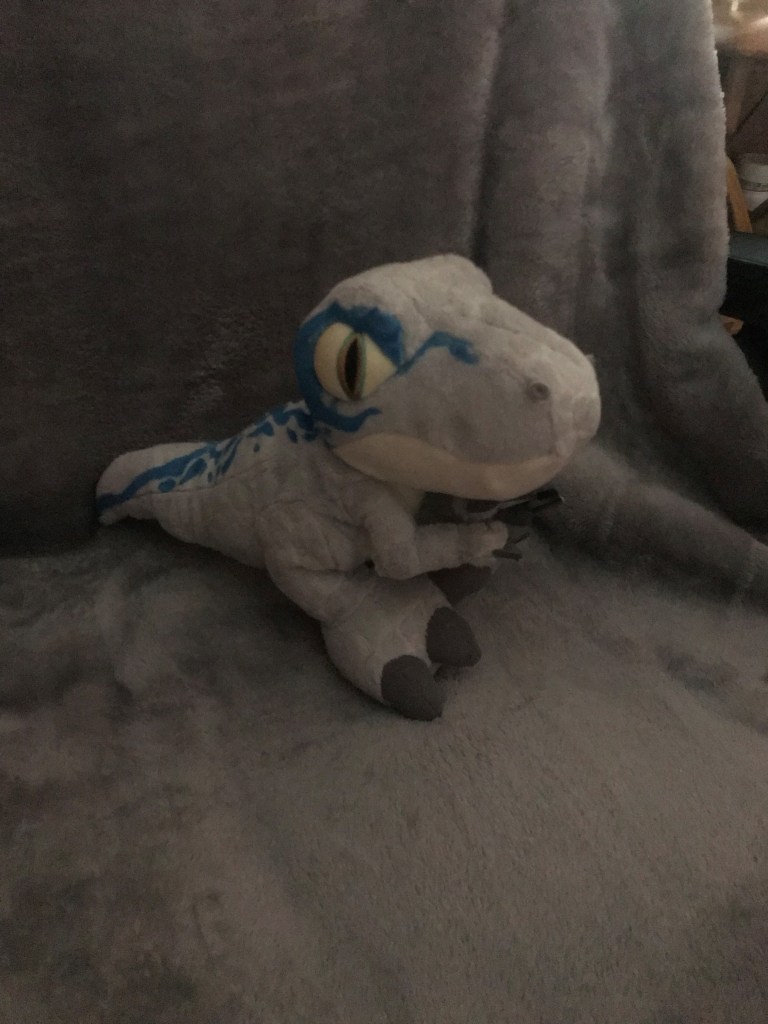
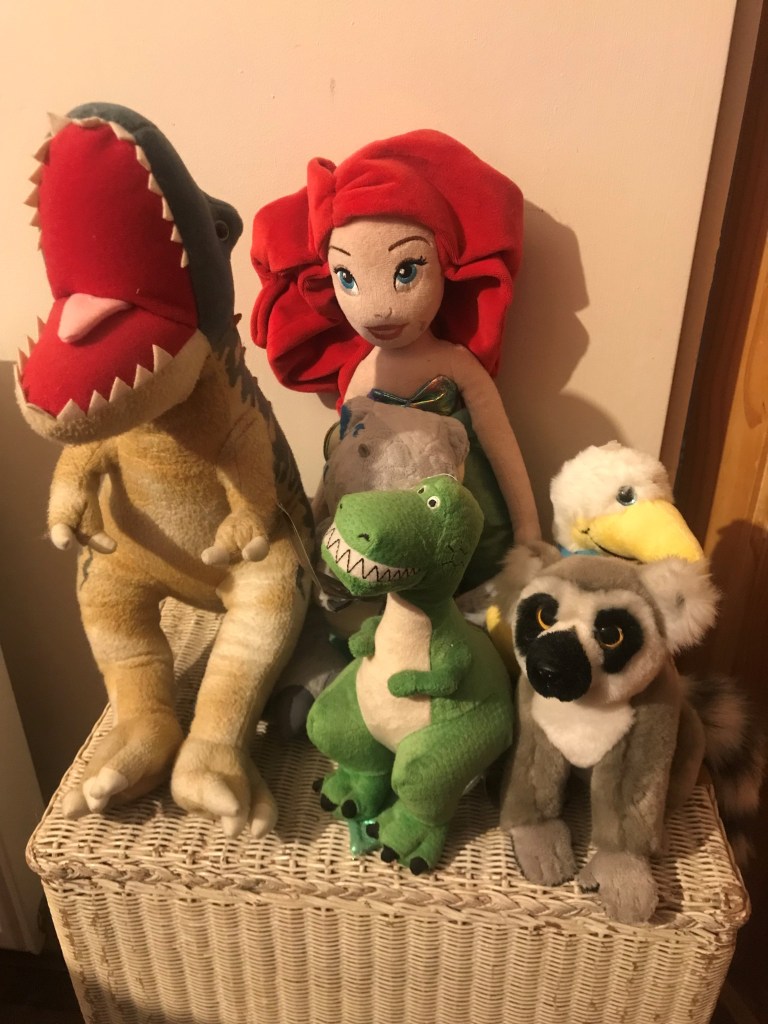
Many who know me will be aware I am a huge Disney fan, particularly Disney and Disney Pixar animations, which includes watching, gaming, clothing and accessories which all match my love for these films. I am also a big, big, big fan of dinosaurs, although if I’m being honest, its more so the Jurassic Park/World franchise. Again, books, films, toys, stuffed dinosaurs (shout out to my Beta stuffed toy – pictured above) from the Natural History Museum) and also a tattoo. These things bring me joy and also peace. Many a times when I’m overwhelmed, the go to is a Disney animation or Jurassic Park (much to my partner’s pain) for familiarity, comfort and relaxation. Yet despite the comfort and joy it brings me, often I am met with commentary about my ‘childish’ interests and questions around ‘when will I grow up’.
Now for clarity, most of these comments (but not all) are from friends and loved-ones who are saying so (I presume) in jest. There is no malice behind the comments, but still it has given me food for thought. Lots of people of all ages share the same joys as myself (social media fan pages are many), but is there any harm in pressing people to justify and commenting on their pastimes? Possibly. I am in a fortunate position to be able to afford various Disney-themed items of clothing (huge shout out to Primark and their Stitch section), Jurassic Park official merchandise, POP! Figures, clothes, posters etc whereas when I was younger, this was not something we could afford. Being in a privileged position and having a disposable income means I get to explore interests from my childhood, and have them develop into passions. Something which wasn’t available to me as a child, or even as a young adult at University. Being older and engaging with interests from childhood also uncovers new ways of appreciating the messages, artwork, and stories.
The presumption that my interests are ‘childish’ is not clearly explained by those who comment. What is meant by ‘childish’ and why is it presumed to be negative is not clear. But there appears to be some stigma around it. There is a push, as we are slowly uncovering in classroom discussions, for everyone to ‘grow-up’, but is this what is best for the individual? Or does this serve some greater purpose for society? I’m not sure what the point of the above ramblings are for, other than it might be best to keep opinions to yourself if you do not share the same interest. In a word that is full of harm and disadvantage, especially for children, let people enjoy their interests and passions, commentary free, if they aren’t harming you!
Share this:


2024: the year for community and kindness?



The year 2023 was full of pain, loss, suffering, hatred and harm. When looking locally, homelessness and poverty remain very much part of the social fabric in England and Wales, when looking globally, genocide, terror attacks and dictatorships are evident. Politics appear to have lost what little, if any, composure and respect it had: and all in all, the year leaves a somewhat bitter taste in the mouth.
Nevertheless, 2023 was also full of joy, happiness, hope and love. New lives have been welcomed into the world, achievements made, milestones met, communities standing together to march for a ceasefire and to protest against genocide, war, animal rights, global warming and violence against women to name but a few. It is this collective identity I hope punches its way into 2024, because I fear as time moves forward this strength in community, this sense of belonging, appears to be slowly peeling away.
When I recollect my grandparents and parents talking about ‘back in the day’ what stands out most to me is the community identity: the banding together during hard times. The taking an interest, providing a shoulder should it be required. Today, and even if I think back critically over the pandemic, the narrative is very singular: you must stay inside. You must be accountable, you must be responsible, you must get by and manage. There is no narrative of leaning on your neighbours, leaning on your community to the extent that, I’m under the impression, existed before. We have seen and felt this shift very much so within the sphere of criminal justice: it is the individual’s responsibility for their actions, their circumstances and their ‘lot in life’. And the Criminologists amongst you will be uttering expletives at this point. I think what I am attempting to get at, is that for 2024 I would like to see a shared identity as humankind come front and central. For inclusivity, kindness and hope to take flight and not because it benefits us as singular entities, but because it fosters our shared sense of, and commitment to, community.
But ‘community’ exists in so much more than just actions, it is also about our thoughts and beliefs. My worry: whilst kindness and support exist in the world, is that these features only exist if it does not disadvantage (or be perceived to disadvantage) the individual. An example: a person asks me for a sanitary product, and having many of them on me the vast majority of the time, means I am able and happy to accommodate. But what if I only had one left and the likelihood of me needing the last one is pretty high? Do I put myself at a later disadvantage for this person? This person is a stranger: for a friend I wouldn’t even think, I would give it to them. I know I would, and have given out my last sanitary product to strangers who have asked on a number of occasions. And if everyone did this, then once I need a product I can have faith that someone else will be able to support me when required. The issue, in this convoluted way of getting there, is for most of us (including me as evidenced) there is an initial reaction to centralise ‘us’ as an individual rather than focus on the community aspect of it. How will, or even could, this impact me?
Now, I appreciate this is overly generalised, and for those that foster community to all (not just those in their community and are generally very selfless) I apologise. But in 2024, I would like to see people, myself included, act and believe in this sense of community rather than the individualised self. I want people to belong, to support and to generally be kind and not through thinking about how it impacts them to do so. We do not have to be friends with everyone, but just a general level of kindness, understanding and a shared want for a better, inclusive, and safe future would be great!
So Happy New Year to everyone! I hope our 2024 is full of peace, prosperity, community, safety and kindness!

Share this:


Navigating Clearing: What’s next?

Today marks the second day of clearing at our prestigious University of Northampton. Firstly, I’d like to congratulate those who have secured a place in the university to study their dream course, and to other applicants that are currently navigating their way through clearing, I wish you the best of luck.
Clearing may seem quite overwhelming – many of us have been there – but as you may know, it provides an alternative route for first-time applicants, those who may have missed out on offers, and those that may have missed their required grades or other reasons. For those at this stage, this blog is to provide some tips on how you can make the most of clearing:
- First, try not to panic if you have not met the grade threshold. Panic will only cause more anxiety – so relax. Remember, clearing offers plenty of opportunities – so when you make that call – ask as many questions as possible. Remember the saying, closed mouths don’t get fed. Ask for your options, think it through before you decide, and ensure a plan B.
- Make sure to have done your research about the course you are applying for. Demonstrate enthusiasm, passion, and motivation for the course during your interview (if any). Look at the university websites and academic staff profiles to see what they offer and where graduate testimonies are.
- I’m sure this is no news to you – but remember that popular courses like Criminology, Psychology, Law and others fill up fast through clearing. Wake up early, get on the call queue and maximise your choices. The admissions team at the University of Northampton is one of the quickest when it comes to processing applicants’ offers. These emails are sent within an hour after you have made your call – so ensure to set up email alerts so you don’t miss communications.
- You may find it beneficial to keep an open mind about other courses. This is so because you don’t get disappointed if you don’t get a place on your desired course or if what you are looking for is not for you after speaking to an academic. Again, ask questions.
- As I pointed out earlier, the university website should be your first call, where you will find all the necessary information regarding clearing. On the website, there is lots of support available – so make the most out of it.
- Generally, clearing often turns into a great university experience. Focus on the opportunity ahead; your effort will pay off with time, and don’t give up if your first plans don’t work out. Remain optimistic, be thorough, and embrace this next step towards your future.
Remember that the transition into higher education takes time and adjustment. Overcoming obstacles will build resilience. Progress may feel slow, but your growth is constant. Embrace uncertainty, connect with others, and take chances. By doing so, you will gain skills, knowledge, memories, and relationships to last a lifetime. Your adventure begins now – enjoy it!
Share this:


Don’t I know you from somewhere? Online trolls and other fairytales

Recently there has been a discussion if the owner of one of the social media platforms will be changing its logo. The “iconic” image is to be replaced with something new; undoubtedly this will also change in due course for as long as the medium is still relevant. Whilst people feel strong about brand representation that is something peripheral to what social media represent in recent years. Social media for a long time have been accused of harboring the worst of human interaction, tolerating intolerable actions from hate speech to incitement to violence. Is this however a fair representation of social media?
We build/cultivate and imagine in social media. They are the key to our online identity and in some ways will explain our conduct with others. Some link different media together, so that you can check Facebook to get an idea of who they are, can check their LinkedIn on education and work experience, you can read their tweets/retweets, you can follow their conversations on yammer, you can get updates of their lives on Snapchat, check their Instagram to see their photos and for the more active ones TikTok where communication is encapsulated within small video fragments. If you were to combine these social media together you can get a very good idea about a person without ever knowing them in person. Social media have ushered the era of virtual representation and people becoming clearer of how this representation works. Clearly there are those who thrive in these and others who struggle.
The ones who manage to use social media effectively can develop a personal brand and even become “social influencers”. A person that has influence over others to promote goods and services…to do so they have to build a reputation and social media works towards establishing just that. Connecting different parts of social media works to their advantage as their profile works towards their credibility of being a “real” person. The people who make it become the protagonists assuming the role of a hero, a modern-day prince/princess with a back story that is endearing. Whilst they drip feed their story of adversity with personal details of some private aspects of their lives, they also provide their followers with the commodities that they promote. I lost someone important to me, had a terrible experience at school, faced health problems but look at my stylish hat. These are the cargo trousers I left an abusive relationship in, and my cropped t-shirt is a strong statement to being environmentally
sensitive. Obviously, I deliberately exaggerate the statements here and in fairness no one will be (at least I hope) so deliberate in their product placement. What is very clear is that our social media influencers spend a significant amount of time building content and by devoting more time to that they need the necessary financial support. The top influencers have millions of people following them, a reach that
very few people have ever had before. Never before, a young person offering make-up tips, a reality star or a dancer had so many people interested in their lives. The very top of them have more than 500 million followers and we are close to the point that some of them will be reaching over a billion! What started as a personal (cottage) industry of one topic issue, has evolved into an all-consuming enterprise. The more the followers, the greater the demand for additional information. The more information, the more exposed the influencer becomes. Then marketing follows as the reward. The heroes of social media have to find ways to make an income and endorsing products seems to be the main way to do so.
The kingdom of social media doesn’t only contain heroes; there are also villains in the story. The people whose profile is not personal, doesn’t include any private details and who seem to have as their main focus to attack others. The term troll appeared in the early 90s when online identities seemed to be separate from our social ones. It was expected in a new domain that people will assume roles and whilst some went for the hero of the community others took a different turn. The early trolls under the protection of cyber identities hid their frustrations and brought to the community something we have in the real world, bullying. The evolution of social media that requires a different presence and the rules the internet community tried to deal with them meant that some of the original forms of trolling started disappearing, but were never extinguished. In fact, they became an equally useful commodity, almost equal to the influencers. Our heroes play the part of the product promoter; they look good and provide us with goodwill stories; on occasion when the appeal of the hero wanes, and people try to use social media to mobilise on social issues or promote alternative stories that’s when the trolls come in!
Out of their caves they come, trying to shut down conversations, mislead people and even intimidate people into silencing them.
This brings me to the main point of this blog; originally the internet seemed to be a worldwide phenomenon that was all inclusive and slightly anarchical. People found on the internet a companion, an ally, an adversary. It became a foundation for a virtual ecumenical community. Well, that was until big business moved in and brought in their usual tactics. The cyber world became more like our physical world and the cyber identities were quickly replaced by professional ones. At this point the internet is much more regulated and monitored than ever before. Which begs the question; how come there are so many accusations of misinformation, and intimidation now? How come such a regulated medium allows bullying and intimidation to continue? I am astounded even now to see on social media reactions on social medial about stories that do not simply lack social sensitivity they are intentionally inflammatory to coax reactions and offend people. I am still astounded to see the political alliances of the troll army and their reactions to open conversations. Therefore, it is not surprising that several minority groups have accused social media of doing very little to protect them from attacks and the use of pejorative language that has its place in a history of shame. Maybe because social media provides a fairytale with princesses and trolls, they do not have the space for those who do not promote a marketed lifestyle. Life is surprisingly diverse, and marketing is only one side of it. Ignoring some of the bigger social issues, using
trolls to shut down the conversations our global community needs, will not do. In academia the sign of a good debate lies in the ability to bring in evidence and support all claims with accurate and relevant information. Some of our colleagues are trying to take some of their knowledge outside the classroom into social media; I salute them, as we have been trying to engage as much as we can, but I also worry that the actual model that social media is built upon also at fault. Maybe it needs some rethink; there is no question that we are all equal, but we do not all have the same knowledge.

Share this:


Mental Health Awareness Week…Should Be Every Week

When I began my A-Levels, I was an overly confident, happy female, looking forward to studying my chosen topics. By the end, I was holding on by a thread after many chats of dropping out, praying to pass, and wanted to stay inside and never go out again. I went from loving my friends, to finding it a chore to be with them. I would come home, lock myself in my room, and not come out unless I had to. Why was I feeling like this? I always felt I had been fortunate with a privileged upbringing, my family are financially stable, we live in a nice area, I have great friends, so what reason did I have to feel so bad about life?
This is mental health. It does not matter who you are or where you come from; it can affect anyone. After months of brushing it off, it was a shock to the system when I was told that I suffered from Depression and a GAD. But once you acknowledge that there is a problem, you are already one step ahead of the game. However, it is also important to talk to those around you too. Not one of my friends or family knew what I was going through, how could the confident happy girl, be anxious and depressed? It did not match. I could not tell them I was struggling; I would look like a failure. Why did I think like this?
Mental health, although getting better, has become a taboo subject, due to stereotypes being attached to those who suffer. You become dangerous, socially unacceptable, shameful, embarrassing. However, mental health does not come with a label attached; it does not look the same. Your favourite lecturer who is always happy may have PTSD, that chatty boy in class who you envy may be depressed, and that quiet ‘weird’ girl may suffer from social anxiety; we are all too quick to conclude these assumptions about people.
What is not spoken about, is how much studying in university can affect your mental health. The stress about assessments and exams, the anxiety about being behind or waiting for a grade to be released, or the worry about speaking up in class in case someone disagrees with your point. It can all get too much. This is something which is hidden from potential university students.
After coming off of anti-depressants, gaining a love for exercise, and meeting the most supportive friends, I can finally say, I am good. I have my wobbles, like we all do, but I am so proud of the progress I have made. If you are suffering from mental health, you are not alone. The World Health Organization recognises that 1 in every 8 people in the world live with a mental disorder. Let’s start talking about our experiences, normalise mental health chats and empower those who feel hesitant to speak out. From experience, I can promise you it will be worth it.
Share this:


Sometimes it is very hard to find the words

This week our learning community lost one of our members; Kwabena Osei-Poku (known to his nearest and dearest as Alfred) who was killed on Sunday 23 April 2023. At such times, it is very difficult to find the right words, but to say nothing, would do a grave disservice.
The Thoughts from the Criminology Team would like to express our deepest condolences to the family, friends, and communities for whom Kwabena Osei-Poku (Alfred) was such an important person. We wish you time, space and peace to come together to mourn your terrible loss.
Share this:


Mundial: Why I won’t be watching the World Cup this time

It has been called the beautiful game; in the past even during war the opposing sides played a game; it has made some of its players stars and household names, football or soccer has a global appeal. From the townships in South Africa, to the Brazilian Favelas, the makeshift pitches the world over to the highly pristine pitches in academies, kids the world over learn to kick a ball, and play the game that requires speed, agility, and dexterity in the feet. Kids who just play for fun in an after-school club or to bond with friends. The appeal of this game has been intertemporal.
Generations of kids, begged their parents to stay longer out to play with their friends, asked for another ball, shoes or shorts and each family responded according to their means. After all, football is/was a working-class game. The relative low cost makes it accessible; it allows plenty of kids to play together and build relationships. Football was an equaliser that did not care who you are or where you come from.
I remember as a kid, year after year playing in the summer with the same kids in teams between Greek and Yugoslavians. We were keeping score and the losing side was buying the other side ice-creams. Not quite the golden ornate cup but a wager worth playing 10 games across the summer. We called each other’s teams with the name of the country we came from. My lasting memory was the last time we played together before the civil war in Yugoslavia erupted. The Yugoslavians won and they were chanting “Yugoslavia, Yugoslavia”. Those kids did not come the following summer. In the next summer, the same kids would be carrying the flag and arms of one of the opposing sides armed to kill each other. When football is not the game, disputes are resolved in brutality.
In the past decades, football’s appeal made it the game to watch. The transition to professional football made the game lucrative, some clubs acquired big budgets and of course attracted a finer audience. The pundits, as a former footballer put it, started eating “prawn sandwiches” an indication of their more expensive tastes. Still people stick with the sport because of their own memories and experiences. My first ever game was with my grandfather. We went to the stadium of the club that was to become the team I support for life. The atmosphere, the emotional roller coaster and most importantly a shared experience with someone very dear, that even when they are gone, you carry the sounds, the emotions with you forever.
Some footballers started earning enormous fees for playing the game; the club colours became trademarked and charged over the odds for a simple scarf or a top. The rights to the games sold to private companies requiring people to pay subscriptions to watch a simple game. People objected but continued still to support, although some people were priced out of the game altogether. The game endures because it still resonates with people’s experiences.
In particular, the national games have kept some of their original appeal of playing for your country, playing for your colours! Football is an unpredictable sport and in international events you can have an outsider taking the cup against the odds! Like Greece winning the UEFA Euro in 2004! The games in international tournaments leads to knock out games, with the drama of extra time and of course the penalty shootout. Nail biting moments shared with family and friends. These magical moments of personal and collective elevation, as if you were there with the players, part of their effort, part of their victory.
When the host country was announced some years ago that will be hosting this year’s world cup there were already calls for investigation into the voting process raising concerns. Since then, there have been concerns about the safety of those who work on the infrastructure. Thousands of migrant workers, many of whom are/were undocumented have worked in building the stadiums that the games will be played in. There are accusations of numerous deaths of migrant workers (an estimate from The Guardian comes to a staggering 6,500 deaths). This has raised a significant question about priorities in our world. It is unthinkable to put a game above human life. This was later followed by “the guidelines” to teams and visitors that alternative sexualities will not be tolerated. Calls about respecting the host’s culture adding to the numbers of people calling for a boycott. So why I won’t be watching this time around?
We have been talking for years about inclusivity and tolerance. Women’s rights, LGBTQ+, immigrant rights, worker rights and all of them being trampled for the sake of a competition. Those who have been asked about the issues from the football federation, former footballers and even governments have played down all these concerns. In some cases, they opted for a tokenistic move like rainbow-coloured planes or include the rainbow on national team logo. Others will be issuing rainbow bracelets and some saying that they will raise issues if/when given the opportunity. This sounds too little considering what has happened so far especially all the fatalities caused building all the constructions. If we are not to uphold civil rights and if we are not ready to act on them, why talk about them?
I remember the game for being inclusive and serving to get people together; this competition is setting an incredibly horrible precedent that human life is cheap and expendable; that people’s rights are negotiable and that you can stop being who you are momentarily, because the game matters more than any of the above. It does not! Without rights, without respect, without life there is no game, there is nothing, because there is no humanity. These games do not bother me, they offend me as a human being. If people died to build this stadium then this space is not fit for games; it’s a monument to vanity and greed; hardly sportsmanlike qualities.

 Thoughts from the criminology team
