
Home » First Class Dissertation
Category Archives: First Class Dissertation

Homelessness: Outsiders and Surviving on the Street: A snapshot of my undergraduate dissertation.

As the wait until graduation dissipates, I thought I may outline my dissertation and share some of the interesting notions I discovered and the events I experienced throughout the process of creating potentially the most extensive research project each of us has conquered so far.
What was my research about?
As we all know, the issue of homelessness is rife throughout the streets of Northampton and across the UK. I wanted to explore two main areas of homelessness that I understood to be important: the Victimisation of the homeless and the Criminalisation of the homeless. Prior research suggested that the homeless were victimised more frequently than the general public; they are more invisible victims, ignored and abused. There is a lack of reporting of the victimisation they face, partially explained by the lack of trust and lack of embracing victim identity, therefore, a lack of understanding of the victimisation this group faces. They are treated as outsiders, so they act as outsiders, the out-group whose behaviour is deemed ‘deviant,’ resulting in exclusionary tactics such as Hostile Architecture and legislation to hinder their ability to survive. Statistics do suggest that a large number of the homeless population have previously engaged in criminal activity, but the reasonings behind the criminality are distinct. There is an understanding that the criminal behaviour engaged in by the homeless population is survival in nature and only conducted to sustain themselves on the street. The crimes they commit may be due to the ‘criminogenic’ situation they find themselves in where they have to conduct these behaviours due to the environment, society and the economy.
What did I do?
My research was conducted in The Hope Centre, a homeless and hardship charity located in Northampton. Within the centre, I conversed with 7 service users about their experiences living on the street, engagement with criminal activity and the events they have faced. I based my research around an interpretivist lens to capture their experiences and ensure they are subjective and connected to that individual.
What did I find?
The conversations produced a multitude of different reoccurring themes, but the three I believe to be the most stand-out and important are Survival, Cynicism and Labelling, and Outsiders.
Within the survival theme, numerous individuals spoke of the criminality that they have engaged in whilst being on the street, from shoplifting to drug dealing. Still, there was a variety of different justifications used to rationalise their behaviour. Some individuals explained that the crime was to be able to sustain themselves, eat, sleep, etc. For some, the criminality was rationalised by softening the victim’s stance by suggesting they were faceless or victimless if they targeted large corporations. For some, the rationale was to purchase drugs, which, although deemed a commodity and a luxury by some, is also a necessity by others, needing a particular substance to be able to live through the night.
Within the Cyclicism theme, a common topic was that of the society that these individuals reside in; the homeless that have sometimes been released from prison are let out into a society with a lack of job opportunities (due to criminal records) and a drug culture that forces them into other money-making ventures such as criminality, resulting in a total loop back into the prison system. Some participants were under the assumption that the prison system was designed this way to create money by pushing them back into it.
One final theme was that of labelling and outsiders, this is the situation whereby individuals the participants were perceived negatively regardless of what they did and how they acted. They suggested that they were seen as ‘dirty’ even if they had showered. Due to this, they were excluded from society for being an outlier and seen as different to the ‘in-group’ with no control over changing that. This led to some participants attempting to change their behaviour and look to fit in with societal norms. There is also a perception from the homeless about other homeless individuals, specifically the divide between those who beg and those who do not. Some believe that those who beg, harass people and give the entire community a ‘bad rep.’
My dissertation did not aim to drive a specific conclusion due to the individual nature of the conversations. However, it is my hope and aim to potentially change the perceptions and actions of each individual who has read my dissertation regarding this neglected group in society.
Share this:


A Snapshot of My Dissertation: Portuguese Drug Decriminalisation and Some Other Things
I submitted my dissertation back in April, and now the dust has settled I thought it would be good to share the most interesting parts of my research, think of this blog post as an abridged version of my dissertation. Towards the end I’ve also included some tips for completing a dissertation, along with some reading you might like to do if you found this interesting.
What Was my Research About?
My research was about two main areas; Firstly, I wanted to assess the effects of Portugal’s 2001 drug policy whereby all illicit drugs were decriminalised, meaning drug offences relating to personal possession result in a civil punishment rather than a criminal punishment. I assessed key indicators within Portuguese society, gathering data from international, European and national databases which measured public health trends, criminal justice trends and economic trends. Some fields of data I looked at included prices of drugs at market level, drug seizure data, HIV/ AIDS rates among people who inject drugs and the Portuguese prison population.
The second part of my research involved understanding whether a drug decriminalisation policy similar to Portugal’s could currently happen in the UK. I researched this by performing a discourse analysis on drug related House of Commons debate occurring between the years 1970- 2023, selecting roughly one debate every two years. By doing this, I was able to analysis common themes across the years, understanding the political barriers which may mean drug decriminalisation is not a feasible policy idea at the moment given the political attitude and climate within the House of Commons when it comes to illicit drug policy.
What Did I Find Out?
Look through the slideshow below to view summaries of my findings.

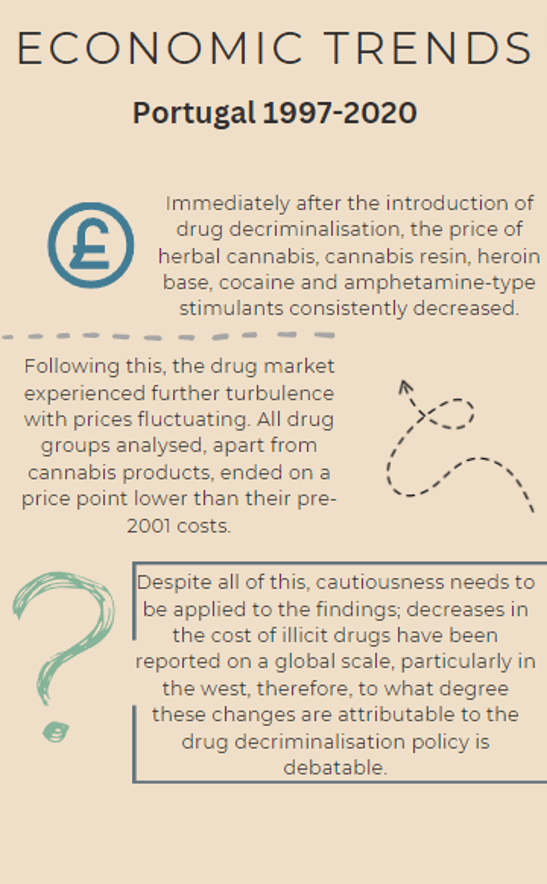


Some Final Comments and Conclusions:
Generally, my research found that Portuguese drug decriminalisation correlated with effects that can be seen as positives. Of course, my research needs to be looked at critically, I don’t claim that all of the societal indicators are directly attributable to the drug decriminalisation policy, however, the correlations that were found are promising. Policy is always a really complex, multi-faceted topic and it would be simplistic to suggest otherwise.
So is a drug decriminalisation policy likely to happen in the UK? The short answer is probably not very likely at all. My discourse analysis pointed towards five decades of debate which was hyper focused on a law and order approach to drug use, a fixation on low level cannabis use and an insistence on the idea that deterrence measures and the war on drugs is actually working. The debates felt stagnant, with new and progressive approaches being hindered by penal populism and ‘tough on crime’ stances.
During my research I found some really interesting reads and different points of view that I hadn’t considered before. I’ve listed some of my favourite pieces below if you’d like to have a read further into this subject.
- Cebral T.S. (2017) “The 15th anniversary of the Portuguese Drug Policy: Its history, its success and its future,” Drug Science, Policy and Law, 3. https://doi.org/10.1177/2050324516683640
- Eastwood, N., Fox, E. and Rosmarin, A. (2016) “Portugal,” in A quiet revolution: Drug decriminalisation across the Globe. London, UK: Release drugs the law and human rights. https://www.release.org.uk/sites/default/files/pdf/publications/A%20Quiet%20Revolution%20-%20Decriminalisation%20Across%20the%20Globe.pdf
- Goldstein, P.J. (1985) “The drugs/violence nexus: A Tripartite Conceptual Framework,” Journal of Drug Issues, 15(4). https://doi.org/10.1177/002204268501500406
- Jacques, S. and Allen, A. (2015) “Drug market violence: Virtual anarchy, police pressure, predation, and retaliation,” Criminal Justice Review, 40(1). https://doi.org/10.1177/0734016814553266
All of the data used is available from The Hansard Archives, European Monitoring Centre for Drugs and Drug Addiction, European Centre for Disease Prevention and Control and The World Prison Brief. Also, I used Taguette to analyse my qualitative data, it’s totally free and it was so useful.

Share this:


Domestic Abuse Misinterpreted: Beyond the Scope of Violence
Background
The framework behind my dissertation arose from a lifelong unanswered question in my mind: “why is psychological and emotional abuse often overlooked in domestic abuse scenarios?” This question had formed in my precocious mind as a child, this was due to experiencing domestic abuse in the family home for many years and in many forms.
Early Stages of the Dissertation
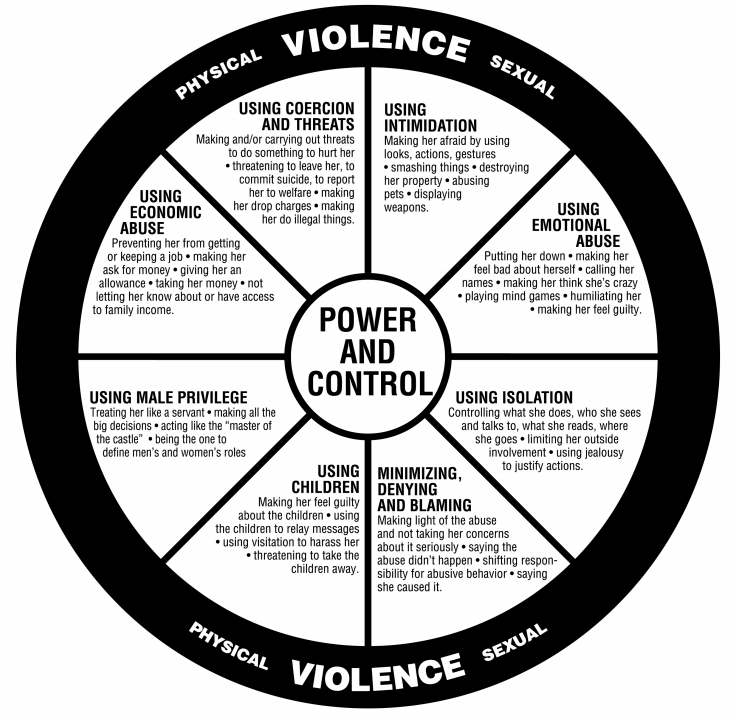
It was only when I began studying criminology at university that I unearthed many underlying questions relating to the abuse I suffered as a child and from watching my mother be psychically and mentally abused. I was understanding my experiences from an academic standpoint, as well as my peers’ experience of domestic abuse too. As a child, I had recognised that the verbal and psychological abuse was increasingly more detrimental on the victim’s mental wellbeing than the physical violence; the physical violence is a tactic used by abusers to install fear in the victim. In the early stages of my dissertation, I was gathering literature to aid my understanding on domestic abuse. I came across two essential books, one book was recommended by @paulaabowles, my dissertation supervisor: Scream Quietly or the Neighbours Will Hear (1979) by Erin Pizzey. This book provided great insight to the many aspects of domestic abuse from the memoires of Erin Pizzey who founded the first domestic abuse refugee in London 1971 known as, Chiswick Women’s Aid. The second book was: Education Groups for Men Who Batter: The Duluth Model (1993) by Pence and Paymar. This book aided my knowledge on the management of male abusers and how their abusive behaviour is explained by the using the visual theoretical framework known as, the Duluth Model; the Power and Control Wheel. I gathered more literature on domestic abuse and formed the backbone for my dissertation, it was time to self-reflect and establish my standpoint so that I could conduct my research as effectively and ethically.
The Research
This was the most important aspect of the dissertation; the most influential too. In my second-year studies, we were required to conduct research in a criminal justice agency to form a placement report; I chose a charitable organisation based in Northampton that provided support to female victims and offenders in the criminal justice system. For my dissertation, I chose to go back to the facility to conduct further research, this time my focus was on the detrimental effects experienced by female victims of domestic abuse.
Using a feminist standpoint alongside an autoethnographic method/ methodology, I was able to conduct primary research together with the participants of the study. I chose feminism as my standpoint due to the fundamental theoretical question centred in the social phenomenon of domestic abuse: gender inequality. I believe the feminist perspective was the most compatible and reliable standpoint to tackle my research with, it allowed room for self-reflection to identify my own biases and to recognise societal influences on how I interpret experiences and emotions. The standpoint’s counterpart – autoethnography – was employed so that I could actively insert myself into the research; this was supported by my research tool of observation participation and by recording qualitative data in a research diary. Over the course of nine weeks, I had formed trustworthy and respectful relationships with the participants, I had also encountered epiphanies and clarities regarding my own experiences of domestic abuse. Through using the research method observation participation, I was able to observe the body language and facial expressions of the participants alongside witnessing their emotions and participating in conversation. Collectively, my research methods enabled me to gather in-depth, first-hand accounts of the women’s experiences of domestic abuse. When writing the conclusion for my dissertation, I was able to establish that psychological and emotional abuse can be more detrimental to the victim than the physical violence itself. Interestingly, I had identified patterns and trends in the abuser’s behaviour and how it impacts the victim’s response; the victims tend to mimic their abusive partners traits e.g. anger and guilt.
I was able to conclude my dissertation with supporting evidence to credit my original question, through using personal experience and the experience of the wonderful women that participated in my research. Many of the women’s experiences highlighted in my dissertation research corresponded with the Duluth Model thesis embedded in my literature review. I was able to demonstrate how the elements of power and control in the abusive partner behaviour can adversely affect the victim; consequences of mental health issues, substance misuse and changes in victim’s lifestyle and behaviour. Overall, the experience was incredibly insightful and provided me with transferable interpersonal and analytical skills.
Share this:


Take a leap…it might just be worth it!
When I was asked to write a blog about doing research for my dissertation, I immediately went to https://thoughtsfromthecriminologyteam.blog/category/first-class-dissertation/ to read what others had written before me. Previous entries covered race and discrimination, homelessness, hate crime, and working with sex offenders, among other things; all good meaty stuff that is highly relevant to the study of criminology, and to society.
I knew I was taking a risk when I decided to mix it up and write a criminology dissertation that was based on historical crime and punishment, as there was the chance that it fell into neither camp. From a historian’s perspective, I wasn’t researching a primary source, per se, and from a criminologist’s perspective, would it have enough relevant criminological theory?
I just knew I wanted to do something to do with historical crime and punishment, but I didn’t know where to start. Eventually I came across two quotes that I thought were relevant to my subject area: ‘the rulers of eighteenth-century England cherished the death sentence’ (Hay, 1975:17), and; ‘a quasi-judicial role such as [the royal pardon] is not a suitable function for the executive’ (Travis, 2009:9). From these, my idea was firstly to examine who received the death penalty and why, and why some were pardoned while others were not. Secondly, when it came to pardoning, who had the power to pardon and what were the criteria used? I was also particularly interested in the political aspect of this.
What soon became obvious was that even 200 plus years ago, it was the same people committing crime as it is today: the working-class poor, the marginalised and the desperate. And just as today, when those with money, power and connections commit crime, it was not considered crime in the same way, and therefore, the punishment was not the same. I could see then, that I would be able to apply relevant criminological theory. I also needed to incorporate a fair bit of law and constitutional changes to the criminal justice system. As we were always being reminded that criminology is a ‘rendezvous’ subject that encompasses many other disciplines, this gave me the confidence to forge ahead!
I actually really enjoyed researching my dissertation, especially the case studies. After doing lots of research on the Old Bailey Online, I found 3 cases from 1789 which highlighted 3 different outcomes for the same crime, as a way of showing the criteria used for deciding who was pardoned and who was left to hang. I also examined several more recent death penalty cases from the 20th and 21st centuries, to show that the royal pardon is still an essential part of the criminal justice system, despite modernisations designed to replace it, like the introduction of the Criminal Cases Review Commission.
My advice to students in year 2 is: start thinking about your dissertation early! It took me a long, long time to decide what I wanted to research, and I researched a lot of stuff that I didn’t end up using. At one point I was so worried that I even talked to @paulaabowles about deferring my dissertation until next year! But I’m so glad I didn’t do that. I won’t lie to you, it is hard work and requires a lot of time and dedication, which is why it’s so important to pick something that interests you. In the end, though I still worried that it would be too ‘in the middle’ to please either camp, I thoroughly enjoyed doing this piece of work, and was quite sad when it was finished. To be rewarded with a First was beyond anything I could have hoped for, and I’d like to think that was due not only to my hard work, but also to the passion I had for the subject matter.
References:
Hay, D. (1975). Property, Authority and the Criminal Law. In: Hay, D., Linebaugh, J., Rule, J., Thompson, E. and Winslow, C. (Eds). Albion’s Fatal Tree: Crime and Society in Eighteenth-Century England. London: Verso. Pp. 17-63.
Travis, A. (2009). National: Royal Pardon: Legal Reform: I shouldn’t be able to make these decisions, says Straw (Guardian Homepages). The Guardian (London, England). P.9.
Share this:


The struggle is real

© Jonathan McHugh
Stephanie is a BA Criminology graduate of 2019 and was motivated to write this blog through the experience of her own dissertation.
Last year was a very important time for me, during my second year of studying Criminology I began doing a work placement with Race Act 40, which was an oral history project to celebrate 40 years of the Race Relations Act 1974. The interviews that were conducted during my placement allowed me to get a variety of in-depth stories about racial inequalities of Afro-Caribbean migration settlers in the UK. During my time with the Race Act 40 project it became clear to me that the people who had volunteered their stories had witnessed a long line of injustices from not only individuals within society, but also institutions that makeup the ‘moral fabric’ within society. When exploring whether they have seen changes post and pre-Race Relations they insisted that although the individual within society treated them better and accepted them post-Race relations, to an extent there is a long way to go to improve the hostile relationships that has been formed with politicians and police.
The notion of hostility between politicians and the Afro-Caribbean community was reinforced, as the UK was going through the Windrush scandal which affected the core of every Afro-Caribbean household within the UK. This was extremely important for me as both paternal and maternal grandparents were first generation Windrush settlers. During the scandal my father became extremely anxious and the ramifications of the Windrush scandal hit home when some of his friends that came to the UK in 1961, the same time as he did, were detained and deported on the grounds of them being ‘illegals’. The UK Government used their ‘Hostile Environment’ policy to reintroduce Section 3 paragraph 8 of the Immigration Act 1971, which puts burden of proof on anyone that is challenged about their legal status in the UK’.
The UK government was ‘legally’ able to deport Caribbean settlers, as many of them did not have a British passport and could not prove their legal right to be in the UK and the Home Office could not help them prove their legal rights because all archival documents had been destroyed. This was a hard pill to swallow, as the United Kingdom documents and preserves all areas of history yet, overnight, the memory of my family’s journey to the UK was removed from the National Archives, without any explanation or reasoning. The anxiety that my father felt quickly spread over my whole family and while I wanted to scream and kick down doors demanding answers, I used my family’s history and the experiences of other Black people under British colonial rule as the basis for my dissertation. The hostility that they faced stepping off the Windrush echoed similar hostility they were facing in 2018, the fact that the British government had started deporting people who were invited into the country as commonwealth workers to build a country that had been torn apart as a corollary of war was a slap in the face.
Under Winston Churchill’s government, officials were employed to research Black communities to prove they were disproportionately criminal as a strategy to legally remove them from the UK and although they did not have any evidence to prove this notion the government did not apologize for the distasteful and racist treatment they demonstrated. It is hard to convince Black people in 2019 that they are not targets of poor similar treatment when they have been criminalised again and documents have been destroyed to exonerate them from criminality.
A final thought:
I have outlined the reasons why this topic has been important to me and my advice to any Criminology student who is going to be writing a dissertation is, to find a topic that is important and relevant to you, if you are passionate about a topic it will shine through in your research.
Share this:

How literature failed me as a black student

My name is Francine Bitalo, I am 21 years old and a Criminology undergraduate at the University of Northampton. Coming from a black African background I have always had a strong interest in the Criminal Justice System and its treatment towards different groups in society.
My dissertation was based on the impact of police practices such as stop and search on young black men and their families. Whilst statistics present the alarming racial disproportionately which exist in many areas in the criminal justice system, it fails to portray the long-lasting effects it has had on Black families. For example, the daily harassment and differential treatment subjected to young Black men has forced black families to reinvent themselves to conform to institutional racism. Coming from a Black family myself and having male family member, the findings in my dissertation quickly became personal to me, as I could constantly relate them to the structuring of my own family. For example, the fact that it would take my father longer to find a job due to institutional racism, making my mother the breadwinner, or when my mother is preparing my brothers for police harassment and discrimination, but not me and sisters.
While conducting my research I was quick to learn that what literature may describe as a phenomenon, for many of us is a reality. If I am honest the writing stage of my dissertation was difficult for me because it was a passionate topic. I experienced a lot of self-doubt regarding my positionality for example, being a Black woman and facing my own forms of discrimination and now having to talk about the experiences of young Black men. I think my dissertation tutor would agree with me on this as I remember emailing her after I submitted my work expressing how I felt like I didn’t effectively capture the effects and the voices of the young Black men I interviewed, despite that being my main goal. I mean who would blame me, as a student, if I am honest I felt like literature really let me down for instance, when writing my literature review I found that literature neglected the subject of racism solely from the perspectives of young Black men, despite statistics showing them to being the largest group to experience institutional racism. At this point I had to laugh at the criminal justice system and its propositions to improving police relations as well as re offending.
With that being said the information I did come across I couldn’t help but sense the notion of white privilege lingering in the perspective of some scholars. I understand this is a strong claim to make however I say this because not only did literature provide little of the work of Black scholars regarding the topic, yet it was evident that most white scholars did not see the issue with stop and search and its discriminate use. Arguments for this were discussed in my dissertation for example, some argued that the process of racial socialisation in Black households were ineffective to police relations and the functioning of their services, which creates the notion that the Black community should submit to discrimination and harassment in favour of procedures and compliance during police encounter. Some tried to justify the disproportionality in stop and search by claiming that young Black men should be harassed because they tend to be out more especially in certain urban areas or the disproportionate targeting of Black minors is due to parental criminality. I felt there was a lack of accountability from white scholar thus, little understanding in the issue of race which is natural because their experiences do not allow them to understand. Yet this led me to ask questions such as why shouldn’t Black mothers have the right to prepare their sons for police discrimination, does it matter what time and area should a person of colour be around for them to be targeted at?
After completing my dissertation and getting a First Class I felt extremely proud of myself, the fact that I did not shy away from the research topic despite it being limited in literature. As a result, it was satisfying to know that I was able to articulate the experiences of others to a First Class standard. I hope this can encourage others to trust in their abilities and put aside any doubts especially when choosing a research topic. As a student writing a dissertation or even an assignment, I believe we should explore the unexplored, open the unopened and always be willing to discover and learn. Do not be afraid of researching something that is limited or has never been done. Lastly as my dissertation was extremely passionate to me I have decided to turn it into a personal project and continue researching the topic
Share this:


Interview with a sex offender

Bethany Davies is an Associate Lecturer teaching modules in the first year.
“Was this your first arrest?”
“Yes I’ve been in trouble with the police before, but just like cautions, like some old man called the police because we played football on the grass near his house. That was literally only about a couple months before i got arrested… for rape.”
I had just turned 20 years old when I conducted my first interview with a sex offender. I was prepping for my dissertation in the summer before my final year, conducting research in a probation office I volunteered at. I was allowed to observe, teach and in the final week I would be able to interview 3 males I had been observing. I interviewed the first two males who both I had taught some very basic numeracy skills to, they were both as they were in my observations, very calm and just trying to get through each day without breaching their probation orders. My final interview was with a young male who I had been helping prepare to apply for a construction worker card, which would allow him to apply for building work. In my months of observing and teaching him I felt like he was no different to males I went to school with or anyone you would pass on the street. I did not want to know what his crime was, as a probation mentor that was never my focus, nor my business to know.
Ethically speaking, I was challenged by the idea that I was conducting an interview and research with the consent of an individual who in my eyes did not understand the concept of consent. That may seem like a harmful way to view this man and the outlook of his time in probation as ultimately it was about reform and reintegration after his time in prison. I have progressed a lot since this day and I no longer view this person so hopelessly in my memory, then again, I am unsure of what he is doing now.
Each time I remember the interview and my experience there, I have different thoughts and different feelings, which I suppose is human nature. I also get annoyed at myself that I cannot seem to understand or rather pinpoint my own thoughts on it, I go between thinking what I did (teaching) was a good thing and it may have helped him, to thinking what I did was waste my time on someone who probably didn’t deserve it in many people’s eyes.
I had always felt I was very understanding of those labelled ‘ex-offenders’ and the cycle they can become trapped in. But before this experience, I had always worked with those whose crimes seemed relatively minor comparatively. Sexual violence is not something to me that is as simple to categorise or try to understand. I remember getting home a few hours later and sobbing for a victim I knew nothing about other than her perpetrator.
The experience has always stuck with me and made me appreciate the complexity of not only sexual offences but also the role of reform with sexual offences. It has led me to explore research around sexual violence and I have recently been exploring the work of Elizabeth Stanko and also revisiting my books by Susan Brownmiller. Both examine the role of the victim of sexual violence and raise questions about how historically sexual violence has been viewed.
This is a personal experience and not something I think everyone will relate to, but from experiences shared, there are lessons to be learnt.
Share this:

The Voice Behind the Music

Marginalised voices were the focal point of my dissertation.
My dissertation explored social issues through the musical genres of Rap and Hip-Hop. During the time period of writing my dissertation there was the rising debate surrounding the association of a new genre, Drill music, being linked to the rise in violent crimes by young people in England (London specifically). The following link to an article from the Guardian newspaper will provide a greater insight to the subject matter:
The idea of music having a direct correlation with criminality sweeps issues such as poverty, social deprivation, class and race all under the rug; when in reality these are just a few of the definitive issues that these marginalised groups face. We see prior examples of this in the late 80s, with rap group N.W.A with their song “F*** the police”. The song surrounded the topic of police brutality and brought light to the disgust and outrage of the wider community to this issue. Simultaneously to this, the N.W.A were refused from running concerts as they were accused of starting revolts. The song was made as a response to their environment, but why is freedom of speech limited to certain sectors of society?
In the present day, we see young people having lower prospects of being homeowners, high rates of unemployment, and the cost of living increasing. In essence the rich are getting richer and the poor continue to struggle; the violence of austerity at its finest. Grenfell Tower is the perfect example of this, for the sake of a cheaper cost lives were lost. Simply because these individuals were not in a position to greatly impact the design of their housing. Monetary status SHOULD NOT determine your right to life, but unfortunately in those circumstances it did.
The alienation of young people was also a topic that was highlighted within my research into my dissertation. In London specifically, youth clubs are being closed down and money is being directed heavily towards pensions. An idea would be to invest in young people as this would potentially provide an incentive and subsequently decrease the prospect of getting involved in negative activities.
In no means, was the aim to condone the violence but instead to simply shed light on the issues that young people face. There is a cry for help but the issue is only looked at from the surface as a musical problem. If only it were that simple, maybe considering the voice behind the music would lead to the solution of the problem.
Share this:

Autism: Police discretion and decision making in an uncertain environment

A question that always strikes when discussing my dissertation topic is why did I chose that particular area to research – is it a topic that I was passionate about, or was it my personal life experience that lead me into that field? The answer to these questions is quite simply, no. In fact, it was a topic I accidentally fell into after reading existing research on the area for one of my other modules in second year. Intellectual disabilities within the Criminal Justice System are quite often misunderstood, and as with all academics, the more I read the more questions I had. Taking this topic at face value, the field is extremely vast, therefore after taking some time to digest many angles of research I narrowed my topic down into two areas. Firstly, an institution that I have always been interested in, policing, and one intellectual disability in particular, autism (ASD).
To give you a brief background; the examination of the relationship between criminal offending and intellectual impairments is proved as complex and problematic. This is due to the issues associated with the definition of intellectual disability, as well as the contribution of unreported crime which means researchers can only examine individuals who are currently involved in the criminal justice process (Talbot, 2007). From a policing perspective, these complexities and concerns increase in terms of conflicting procedures and relevant training which can later impact levels of service and effective results (Mercier, 2011). Amongst academic literature, it is evident that contemporary policing institutions are subject to increasing budget cuts which means that police staff must exercise discretion in processing large amounts of work with inadequate resources, in which shortcuts and simplifications are made (Lipsky 2010; Loftus 2012). This is highly problematic as policies have a tendency to occupy a one size fits all approach. In effect, this becomes increasingly difficult when dealing with individuals with autism, as increased support and time is needed to sufficiently deal with vulnerable groups.
In terms of Autistic Spectrum Disorder (ASD), this is a common form of learning impairment which can affect patterns of behaviour within a social setting. Autism is characterised by a triad of impairments, which includes difficulties in social interactions, communication and repetitiveness in daily activities (Roth, 2010, p.6). The varying expression and severity of these characteristics means that autism is recognised into sub-types, and therefore, is also considered as a spectrum disorder (King and Murphy, 2014).
On the occasions that an individual with ASD comes into contact with the police and wider criminal justice services, it is normally a result of their social and communication skills being misunderstood which means that they are not given the appropriate support (Cockram, 2005; Tucker et al, 2008). Research suggests that autistic individuals are likely to become extremely distressed in unfamiliar, confusing and loud situations whereby their actions and behaviour can be easily misinterpreted and subsequent actions could escalate the situation (Hayes, 2007). Complimented by the current implications previously discussed that are faced by the police and wider services, it is no surprise that there are issues and concerns surrounding police responses and decision-making processes towards the ASD community. After personally interviewing police constables and custody officers from Northamptonshire Police to investigate the initial responses when dealing with such individuals; the realities of such dilemmas were highlighted.
After now completing my studies with First Class Honours, I am now fortunate enough to work for The Appropriate Adult Service (TAAS) where such theoretical standpoints are often presented to me in a practical environment. From a personal judgement, Appropriate Adults can be easily dismissed, but just being a friendly face who can help and support a vulnerable person within a custody setting is far more rewarding than meets the eye. In fact, it is my dissertation itself that has lead me into this career and has now also given me a thirst for further study in my chosen research area.
References
Lipsky, M. (2010) Street- Level Bureaucracy: Dilemmas of the Individual in Public Services. New York: Russell Sage Foundation.
Loftus, B. (2012) Police culture in a changing world. Oxford: Oxford University Press.
Mercier, C. (2011) The first critical steps through the criminal justice system for persons with intellectual disabilities. British Journal of Learning Disabilities. 39(2), pp.130-138.
Roth, L. (2010) Autism: an evolving concept. In: Roth, L. (ed.) The Autism Spectrum in the 21st Century: Exploring Psychology, Biology and Practice. 1st ed. London: Jessica Kingsley Publishers, pp.1-29.
Share this:

Life in the UK: Nigerians migrating from the other side
Damilola is a 2017 graduate having read BA Criminology with Sociology. Her blog entry reflects on the way in which personal experience can inform and be informed by research. Her dissertation is entitled Life in the UK: The individual narratives of Nigerians living in the United Kingdom and the different problems they faced during their integration into the UK
During my research on the topic of migration and integration, it was important to me, to make the individuals the focal point. This is because the majority of research in this area, depicts a holistic perspective. Therefore, understanding each individual story was vital during my research. It enabled an insight into the different coping mechanisms the Nigerian migrants used, to compensate for the sense of othering they often felt.
One of the most eye opening stories was that of a woman who had bleached her skin to become lighter. She felt this would encourage others to accept her and also, make her more appealing to prospective employers in the UK. Nigerian women bleaching their skin is not a new phenomena. According to the World Health Organisation, Nigerian women are the largest consumers of bleaching creams. This was a very important aspect because it highlighted that, Nigerian women both home and abroad often feel inferior because of the colour of their skin. These bleaching creams can cause serious damages to the skin, however these women and others alike are still willing to compromise their health because, they believe it will increase their likelihood of success.
Here is a blog post that goes into further details about the side effects of bleaching:
When migration is spoken about, it is almost always portrayed as an ‘issue’, something negative that needs to be dealt with. This is particularly evident with the campaigns during BREXIT of 2016. A lot of times, this encourages a negative stigma of migrants, both internationally and those from neighbouring European countries. This is not only damaging to the potential relationship between countries, it also creates a divide, a sense of ‘us against them’. Amidst of it all, are the most sensitive victims, the children of these migrants. A Participant during my research mentioned her children learning slangs such as “init” to fit in with the other kids at school. She also made mention of shortening the names of her children to accommodate the English tongue of their peers and teachers. For her the mental wellbeing of her children was more important, than a proper vocabulary or the right pronunciation of their names.
Moreover this also leads to another misconception about migrants. The common viewpoint proposed by earlier research is that the lack of understanding of the English language is the barrier that most migrants face. However the results from my research propose a different argument. I found that, it was the foreign African accent that most participants felt others had an issue with. For most participants their accent was the most difficult thing to loose. This often proved to be a problem. This is because it made them stand out and, was a universal stamp that highlighted “I AM NOT FROM HERE” in a country that encourages everyone to blend in.
Once again, this illustrates the real issue with migration, for many migrants the sense of belonging is never present. As a participant pointed out “even after getting my British passport, I am still not like them. I will always be Nigerian, I know that now”.
In relation to the interviewing of the participants, this proved to be the most difficult part of my research. This is because the women often drifted away from questions being asked and told tales of people who had similar experiences to them. Nonetheless it was also the most rewarding experience because these different tales were embedded with deeper meanings. The meanings that would later encourage a better understanding, of the way the women coped with integrating into a new country. Moreover, as a migrant myself it was interesting to see the changes that had occurred over time and, also a lot of what has remained the same. This is because despite coming to the country at a young age, I was able to relate to some of the coping mechanisms, such as the shortening of my name to accommodate the English tongue.
As a recent criminology graduate, my dissertation on migration and integration was one of the most eyeopening experiences of my life. I have learnt so much through this process, not only about the topic but also about myself. I am grateful for this experience because it has prepared me for what to expect for my postgraduate degree. A friendly advice from me, to anyone writing their dissertation would be to START EARLY!! It may seem impossible to start with but it will all be worth it in the end.
GOOD LUCK !!

 Thoughts from the criminology team