
Home » Fiction
Category Archives: Fiction
Festive Frights

The festive season is almost upon us, and for many of us this means a well-deserved break! As the calendar wraps up and the holidays beckon, why not give your criminological mind a holiday, too? It’s the perfect opportunity to let your imagination soar and dive headfirst into the thrilling world of paranormal fiction.
Taking a temporary step away from cold, hard facts allows us to explore narratives that defy easy explanation, using different parts of our investigative minds. This shift from reality to the realm of the supernatural can be a refreshing break and a wonderful way to recharge before heading into a new year.
This year, something spooky happened! The core mission of the Kids’ Criminology Club, which focuses on expanding knowledge, logic, deduction, and evidence, was temporarily suspended. For a one-off Halloween-esque special, the club transformed into the Kids Paranormal Club.
I am a senior lecturer in Law with a keen interest in the paranormal, and I took our young investigators on a journey into the inexplicable. Together, we explored theories such as the Stone Tape Theory and shared accounts of supernatural phenomena. Following our fascinating session, I challenged the kids to channel their inner storytellers and enter a paranormal story writing competition, with a strict limit of no more than 500 words. The results were chilling, creative, and certainly a departure from Criminology and the Law! All entries, including the winning entry, can be found below.
As you settle in for your holiday break, we hope you’ll find inspiration in these young authors’ terrifying tales. Whether you’re investigating a fictional haunting or simply enjoying a peaceful evening, remember to let your mind wander beyond the police tape and evidence markers. Enjoy the comfort and quiet, and maybe keep an ear out for any strange sounds in your own home…
And finally, while you’re enjoying the comfort and safety of the season and your well-earned break from reality, spare a thought for those who may be facing their own real-life terrors, or simply without the security, warmth, company and peace we often take for granted at Christmas time.
🏆 The Winning Stories
Here are those standout entries that captured our imaginations and sent shivers down our spines.
🥇 Winner: The Radio in Number 13 by Paisley G., age 10
9th October 1967 11:00 pm I have been prompted to start this journal because of an experience I have had in which I don’t feel safe, so I am creating this just in case. My first experience was at night. I was listening to the radio like I always do before bed, there was some show on, I wasn’t really listening; I never really listen, it was just something to do, I suppose. I’m sitting at my desk when I hear footsteps. I live alone and don’t have any pets, that’s when I realised the voices had stopped with a shocking realisation. I knew that the footsteps were coming from the radio. It sounded like heavy boots on stone. I live in a large house with a stone road leading up to the front door. There was a static noise and then the voices were back. I was unsettled but didn’t think much about it. My wife had died only a couple of weeks ago, and I had an odd feeling that they were connected somehow. She was a lovely woman,n and she used to always wear a pair of big black boots.
10th October 1967 11:00 pm Slept uneasy last night – I had a nagging feeling of not being alone. I went about my usual business as normal and had the same experience again: same time, same show, same footsteps.
11th October 1967 11:00 pm Uneasy sleeping again. In the morning, when I left my house, I saw my neighbour Lucy. She is usually a lovely old lady, but when I walked past he house, she ran outside and grabbed me by the hands, looked right into my eyes and said ‘Don’t do it! Don’t open the door! They’re coming!’ Then she ran back inside. It was unsettling, but again didn’t think much of it. The noises were different tonight, footsteps and again they stopped, and I thought the talking would start again, but no, not yet there was the sound of knocking on a door, then it cut back to the show.
12th October 1967 11:00 pm Decided to test it tonight I don’t know what made me do it, but I left the front door open, brought the radio down and sat on a chair by the door. The old lady’s words were ringing in my head, but I had a weird feeling of wanting to prove her wrong. I turned on the radio there was more knocking th-
3:41 am I woke up in my bed, confused about what happened. I ran downstairs to check the door, but it was closed, the chair back in its place, the radio on my desk, as if it had never happened.
13th October 1967 I just turned on the radio the footsteps were going upstairs. They stopped, then the sound of a door rattling my my my door is being shaken help help please pleas ple-
Note from the doctor: The subject had no apparent injuries; they just… died.
Note from the builder: The walls have a trace of a type of mould that could lead to possible madness.
Ghost Mary by Riddhi P., age 11
Fourteen-year-old Isabel Smith and her best friend Anna Hazel live in Riverbend town. Isabel’s twin sister Mary had died two years ago from mysterious reasons, but when Isabel and Anna begin getting chilling messages from her, they find out, she had been taken by wicked blood ghosts that can only take souls on the Day of the Dead! The girls discover a book that says they may be able to bring Mary back by going to the ghost underworld. Desperate, the girls decide to do a ritual that can teleport them to the ghost world! They lit one hundred candles in a perfect circle,e and they both sat in the middle and whispered the forbidden words. When Isabel opened her eyes, she wasn’t in her room anymore; she was in a dark, gloomy place that looked like a graveyard. Fog pressed her skin, whispering, never lifting. Isabel and Anna looked around when Isabel froze. Her heart stopped! Mary was standing just a couple of feet away from them! Mary’s face looked white, her eyes were a pit of black, her clothes were torn and filthy, a black mist surrounded her body. Mary opened her mouth to say something, but before she could, the girls grabbed her hand and pulled her in the circle of candles. “We have to chant the forbidden words backwards fifteen times,” they told her. They began chanting the words once, twice, three times…. “Wait! We have to get the book and burn it, or the blood ghosts will be able to take me and many others again,” cried Mary. Anna dashed to grab the book, but in the shadows, she saw something terrifying – the blood ghosts! Their hollow eyes oozing blood staring at her, their skeleton hands reaching out trying to catch her. Anna grabbed the book and ran towards the circle where Isabel’s voice trembled as she started to chant the words for the tenth time. “Quick, burn the book!” yelled Mary. Just then, the blood ghosts lunged at them and grabbed Mary’s arm. Mary screamed; they were pulling her away from them! Isabel quickly grabbed Mary and dragged her back into the circle. As soon as she did, Anna threw the book in the flames. There was a gust of wind, a ball of energy cloaked the circle of candles like a shield, and the blood ghosts screamed in agony, fading to dust. Isabel finished chanting, the world flippe,d and they were back in Isabel’s room. “What just happened?” Whispered Mary. “It’s over. We’re home!” answered Isabel. They hugged. No more blood ghosts, underworlds or magic words. They were safe. Or were they?.
The Towers of Terror by Quinn G., age 12
Welcome to the Towers of Terror annual story release. Ok, I’m hoping you know what the stone tape theory is. If not, here is a quick rundown: basically, it is the theory that buildings or places have a memory and can replay it, hence ghosts. But what happens at sea? Well, I can tell you that they go to the nearest lighthouse house which then replays them through its beam, and it’s my job to tell the world the stories of wrecked ships, crashed planes and fallen sailors.
Southwold Lighthouse, Norfolk 31/10/2020 Keeper John 12:30 am I’m in for a night tonight with it being Halloween and all. 6:00 pm, just some light activity, a couple of fishing boats, S.S.Mary, an unnamed skipper, a rowboat and a cliff jumper who didn’t want to come to the surface. 7:00 pm, it’s weird that the projections have just stopped. 7:30 pm still nothing. Wait! It is back. No. It’s me, I’m on shore – wait – I’m crumpling to the ground, there is a figure behi-
That’s where his lighthouse log ends, when his colleague went up to take over and found him dead with his pen still clutched in his hand. It is not unusual for things to creep out of the projections. That is why he was there in the first place, to monitor the lighthouse. Even though it is not in operation for ships, you can’t have all those stories building up in such a small space because they will find a way out. But what happened that night was different. Never before has one of the projections interacted with the world outside the projections. There are several other accounts that all go the same way: projections stop, they start again, you see yourself crumble to the floor, and … dead, so we can’t just have people dropping like flies, someone will notice! But if we leave them unattended, they will cause more destruction. So, what would you do? Well, I will tell you what I did/am doing. Finding what came out and how to stop it from coming out again.
That was 5 years ago, and now I can bring you up to date: The entity that was coming out of the projections is now known as the Siren Reaper of the drowned and lost and cannot be explained away. Believe me, I’ve tried, but to no avail. Now to get on to the solution: the one thing that connects the deaths of those keepers was that they had all had a connection with the se, old captains, anglers, sea goers and other jobs that are to do with the sea. After years of contemplation, I have a theory. I think that the Reaper has killed these people because it thinks that they have escaped from it. The solution is to make the keepers not connected with the sea, because then the Reaper will have no business with them. But this does not explain why the projections just stop beforehand, or why the Reaper shows them their death….
Share this:


The True Crime Genre and Me

I have always enjoyed the true crime genre, I enjoyed the who dunnit aspect that the genre feeds into, I also enjoyed “learning” about these crimes, and why people committed them. I grew up with an avid interest in homicide, and the genre as a result. So, studying criminology felt like it was the best path for me. Throughout the three years, this interest has stayed with me, resulting in me writing my dissertation on how the true crime genre presents homicide cases, and how this presentation influences people’s engagement with the genre and homicides in general.
With this being my main interest within the field of criminology, it was natural that True Crime and Other Fictions (CRI1006) module in first year caught my attention. This module showed me that my interest can be applied to the wider study of criminology, and that the genre does extend into different areas of media and has been around for many years. Although this module only lasted the year, and not many other modules- at least of the ones that I took- allowed me to continue exploring this area, the other modules taught me the skills I would need to explore the true crime genre by myself. Something- in hindsight- I much prefer.
I continued to engage with the wider true crime genre in a different way than I did before studying criminology- using the new skills I had learnt. Watching inaccurate and insensitive true crime dramas on Netflix, watching YouTubers doing their makeup whilst talking about the torture of a young girl, podcasts about a tragic loss a family suffered intercut with cheery adverts. This acts as a small snapshot of what the genre is really like, whereas when I originally engaged with it, it was simple retellings of a range of cases, each portrayed in slightly different ways- but each as entertaining as the next. To me, I think this is where the genre begins to fall apart, when the creators see what they are producing as entertainment, with characters, rather than retellings of real-life events, that affects real people.
Having spent so much time engaging with the genre and having the skills and outlook that comes with studying criminology, you can’t help but to be critical of the genre, and what you are watching. You begin to look at the reasoning behind why the creators of this content choose to present it in such ways, why they skip out on key pieces of information. It all makes a bit more sense. Its just entertainment. A sensationalist retelling of tragic events.
Although studying criminology may have ruined how I enjoy my favourite genre of media, it also taught me so many skills, and allowed me to develop my understating in an area I’ve always been interested in. These skills can be applied in any area, and I think that is the biggest take away from my degree. Considering I now work as the Vice President of Welfare at the Students Union– and getting some odd looks when I say what my degree was- I have no regrets. Even if I walk away from my time at university and never use the knowledge I gained from my studies, I can walk away and know that my time was not wasted, as the skills I have learnt can be applied to whatever I do moving forward.
Share this:


Witches and warlocks
Time and time again we revisit previous times of our lives, especially when trying to come to terms with unprecedented realities. Society works with precedent and continuity that allows people to negotiate their own individual identities. We live in a society that fostered the culture of the one, and played down the importance of the collective, especially when people in positions of power declared that they can do more with less.
One pandemic later, and we clapped at the heroes those we regarded as needy money-grabbers previously, those we acknowledge now, that we previously cast aside as low skilled workers. One pandemic later, and social movements came to prominence, asking big questions about the criminal justice system and the way it interacts with those numerous people, that are not perceived as “mainstream”. Across Western countries, people are registering the way the system is operating to maintain social order, through social injustice. Each case that appears in the news is not an individual story as before, but are becoming evidence of something wider, systemic and institutional.
Covid-19 affects people, and so we must maintain social distancing, cover our faces and clean our hands. Clear advice from WHO about the pandemic, but people also die when they drown as refugees crossing troubled waters. People also die when someone puts a knee on their throat (who knew?), people die when they have to deal with abject poverty and have no means to cover their basic subsistence. People die, and we record their deaths but officially some of those are normalised to the point that they become expected. Every year I pose the question about good and evil to a group of young adults who seem uncertain about the answer.
I was recently reminded of a statement made a long time ago by Manos Xatzidakis in relation to the normalisation of evil: “If you are not afraid of the face of evil it means that you have become accustomed to it. Then you accept the horror and you are frightened by beauty”. When we are expecting death for seemingly preventable causes, we have crossed that Rubicon according to Xatzidakis.
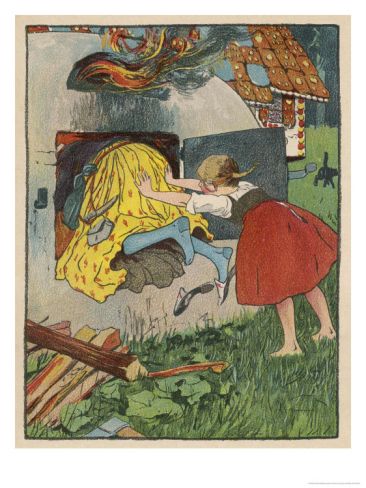
As a kid, one of my favourite stories was Hansel and Gretel. Like all fairy-tales it has a moral signature and is a cautionary lesson. In my mind it contracted the first image of evil, that of a witch. The illustration made it very real, but also quite specific. An oversized, badly dressed witch, with an unsatisfiable taste for children’s flesh. It was the embodiment of true evil. In later years, reading The Witches by Roald Dahl exacerbated the fear of this creature, seemingly normal but with layers of ugly under their skin. The evil that was on the face of the beholder, their intentions clear and their behaviour manipulative but clear on their objectives. This, I learn as an adult, is an evil that only exists in stories.
This kind of witch, is a demonstration of the social vilification of women and especially those who actively try to challenge the status quo, but not the evil that runs in our societies. The construction of social demons is a convenient invention to evoke fears and maintain order; well that is something a sceptic may say…but social scientists ought to question everything and be a bit of a sceptic. In my version of the fairytale the wicked witch is pushed into the oven by Hansel and Gretel, the image of her oversized bottom sticking out, whilst the rest of her body is consumed by the flames.
Admittedly, I was too old to get into the Harry Potter genre and read the books but the image of his opposition made it to popular culture. The “He who cannot be named” became another convenient, albeit complex, evil capable of unspeakable evils. An icon in its own right of the corruptive nature of evil.
The reality of course is slightly different. The big evils do not get extinguished with flames or other means. They do not cease and there is not necessarily happy ever after; social injustice and unfairness is continuous and so is the struggle to fight them. The victories are not complete, but gradual and small. If the pandemic shows us something other than death and heartache, it is the brittleness of life and the need to ask for more in a society that is geared to prime individualism over social solidarity. It is perhaps a good time, for those who never did, to engage with social movements, for those who left them to return and all find their passion of sharing human experience, that is predicated on equality and fairness.
Fairytales, are interesting insomuch of giving us some moral direction but they do not help us to understand the wider social issues and the actions people have to take. The witches out there may not carry brooms and mix spells in cauldrons but evil carries indifference, apathy and lack of empathy. As Edmund Burke said “The only thing necessary for the triumph of evil is for good men to do nothing”, now that is true evil. After all, is there such a thing called evil or are we content with finding easy answers?
Share this:


Betty Broderick

I’m sure many of you are aware of the Dirty John series two, Betty Broderick. Although it has not had as much coverage as I’d have hoped. Now true crime documentaries are not always the best way to find out the truth, after delving deep into the history of this case, I found it does represent it well. If you haven’t given it a watch, I would definitely recommend it and would love to know your thoughts on the case.
Betty was married to Daniel Broderick, having 4 children and helping him become a doctor and then through law school. Of course, it all ended in 1989 when Betty had finally had enough of the torturous years with her husband’s affair with Linda Kolkena, killing them both. Not that I am condoning what she did at all, it was wrong for her to end his and Linda’s life. Although I do understand why she did do it and believe others in her situation could be led to this end too. After she kept them afloat with money while he went through law school, having his children and being the perfect housewife, he decided she was too old and needed a young wife to suit his new high class life-style.
This is not to say that Daniel was the sole person to blame, Betty was in the wrong too. However, taking a woman’s children away from her and brainwashing them tipped her over the edge, as it would do with many women. Betty brought the children up alone, with Daniel always too busy with his company to care about them. It seems Daniel did love Betty to begin with, but to me, it seems it became easy and stayed with her to do everything for him.
Daniel began socialising with his new girlfriend, rubbing his success in Betty’s face. This really does make me sad for Betty, she had no money because all her time was invested in her husband’s career. When it came to the divorce, it became a game for Daniel, trying to leave her with next to nothing and only supervised visits with her own children. He really did drive her to the point of destruction.
This woman is now 72 and has been in prison since 1989. I may be too generous, but I believe that this woman should be let to live her final years as a free woman. Free from having to fight for her children, fight for money to live and fight for her sanity. Daniel took all these away from her. And, although he did not get to live, Betty merely existed in the years of their divorce. She lost her spark and became depressed.
What do you believe?
Share this:

#CriminologyBookClub: My Sister, the Serial Killer

The latest book to grace the Criminology book club was My Sister, the Serial Killer by Oyinkan Braithwaite, and after some excellent choices by @5teveh and @manosdaskalou, and a meh choice from @paulaabowles, the pressure was on for my choice. Unfortunately, it received mixed reviews, but I think I speak for all members of the book club when I say: It’s definitely better than The Yellow Room (sorry @paulaabowles)!
The negatives of the book, as expressed by the uneducated and picky members of the club (I promise I’m not bitter-HA), include the unlikableness of the characters: all morally repulsive, selfish and uninspiring. Whilst the book is set in Nigeria, there isn’t much description to transport you there, something the other books have done well, so this was disappointing. And there is a lot left unanswered. At times the book drops some hints into the characters’ past, hinting at why the sisters are the way they are (basically why one of them is a serial killer of her ex-boyfriends and the other mops up the mess), which is gripping and exciting, until it is left unanswered. The ‘older’ members of the club who weren’t overly keen on the book, felt it had potential but it wasn’t their cup of tea… and in all fairness the factors which they raised as being disappointing, were disappointing. BUT, it was still an excellent read! Myself (@jesjames50), @saffrongarside and @haleysread enjoyed the book, and below we have shared our views:
It is fast past, written in what feels like snippets, dangling possibilities and explanations in each chapter, throwing it back to their childhood, alluding at the dangers they faced together, fighting over the same man who isn’t great so that is slightly confusing: c’mon, have better choices in life partners, or even just dates! So many questions raised and so many left unanswered, but this is part of the book’s charm. It’s a story, an experience, a gripping account of a sister’s devotion to her strange, ex-boyfriend stabbing, sister. How far will she go? Why does she go to these lengths? What happens when the sister becomes too much of a loose cannon? You’ll have to read and not find out! But that’s what makes it an excellent read, by an excellent writer!
@jesjames50
My Sister, the Serial Killer is unlike any other book I have read before. I loved the fast pace and the creeping sense of dread that builds as you read on. The book is like a snapshot in time of the lives of two sisters – there are no right answers, no resolutions and no sense of justice served. Although I felt little affection for the characters, I was invested in their relationships, the story and how it would play out. I think it would work well as a TV or film adaptation and I look forward to reading other books by Oyinkan Braithwaite in the future
@saffrongarside
In an odd sort of way this book reminds me of my relationship with my younger siblings. I’m sure that many older siblings will agree that there is an unwritten obligation to support and protect younger siblings in many situations. In Kerode’s case… she takes this obligation to the extremes! I enjoyed this book as a thriller, but as with the last thriller we endured for book club I did not like any of the amoral characters. I also desired a bit more depth to the story line, the characters and location background – but maybe this is what makes thrillers so successful? Who knows?
@haleysread
So overall, not quite as successful as the Baby Ganesha Detective Agency novels, but I mean come on, its competing with a Cadbury chocolate eating baby elephant! But it’s a book that’s modern, well written, gripping and possess twists and turns. It’s short, sharp and snappy! I am proud and satisfied with my choice, as is Saffron and Haley. The others are in agreement that they struggled to put it down, it was intriguing! But alas not all literature is for everyone (albeit I think they are just being fussy)! On to @saffrongarside’s choice next, wonder what the club will think of The Tokyo Zodiac Murders by Soji Shimada? Stay tuned…

Share this:


#Criminology Book Club: The Silent Patient
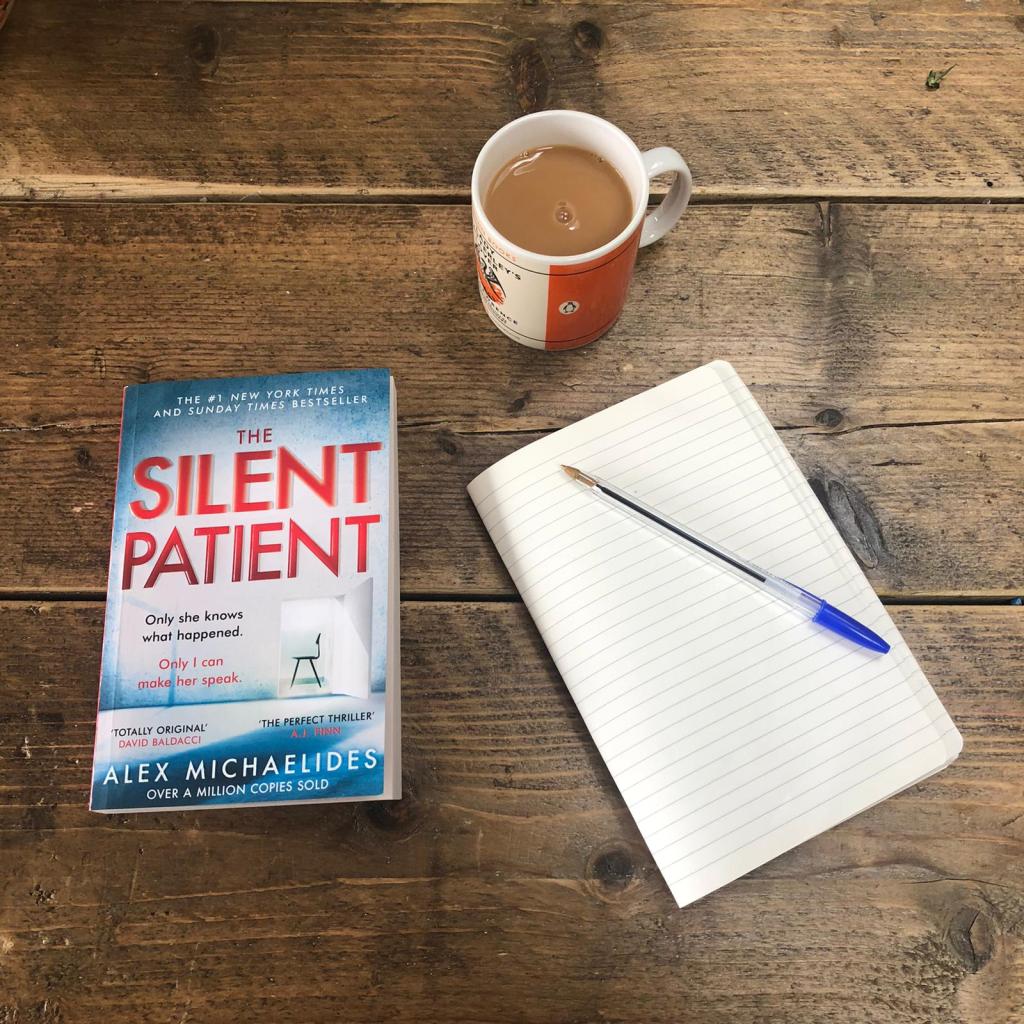
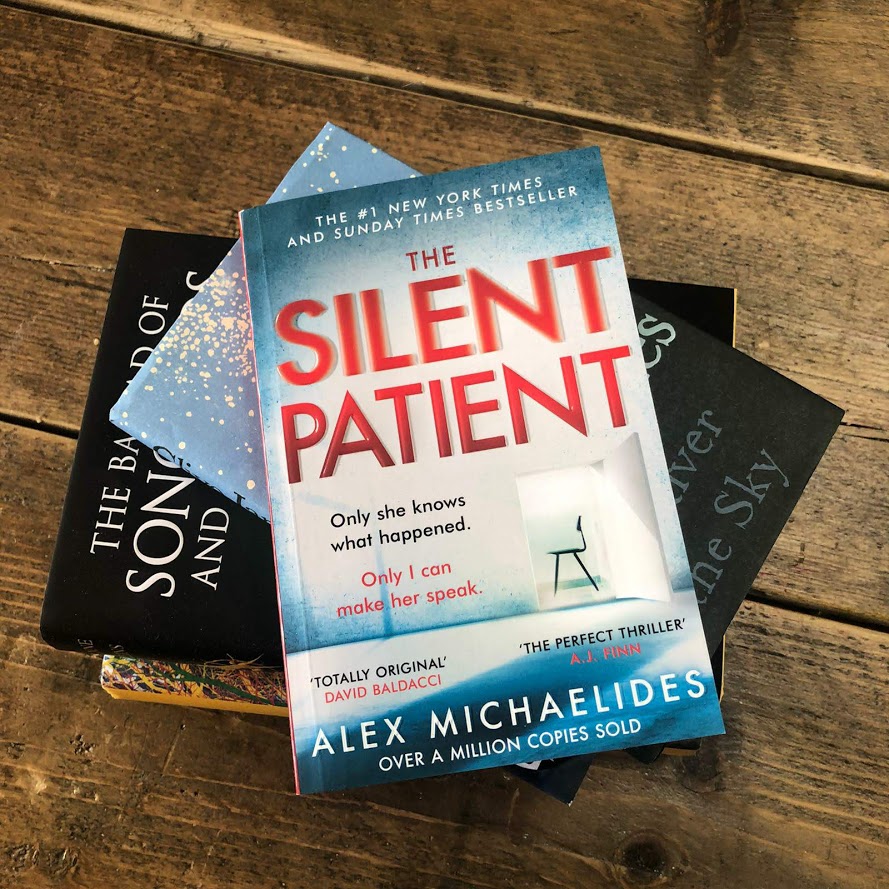
As you know from our last #CriminologyBookClub entry a small group of us decided the best way to thrive in lockdown was to seek solace in reading and talking about books. Building on the success of the last blog entry, we’ve decided to continue with all seven bloggers contributing! Our third book was chosen by @5teveh and it’s got us all talking! Without more ado, let’s see what everyone thought:
I enjoyed reading The Silent Patient – it was a quick and gripping read that kept me guessing (and second guessing!) throughout. I found it almost impossible to put down and could have happily read it in one sitting if time allowed. I didn’t empathise with many of the characters however, and found a couple of the plot points frustrating. I’d still recommend it though!
@saffrongarside

This is a psychological thriller that embraces Greek drama and pathos. From the references to Alcestis by Euripides and the terrible myth of death swapping to the dutiful Dr Diomedes, the characters are lined up as they are preparing from their dramatic solo. The doctor is trying to become a comforting influence in the fast pace of the story only to achieve the exact opposite. In the end he leaves in a puff of smoke from one of his cigars. The background of this story is played in a psychiatric facility, that is both unusual and conducive to amplify the flaws of the characters. This is very reminiscent of all Greek tragedies where the hero/heroine is to meet their retribution for their hubris. Once punishment comes the balance of the story is restored. This norm seems to be followed here.
@manosdaskalou
Well done to @Steve for selecting the anxiety inducing book that is The Silent Patient. I found it difficult to put this book down, as it was easy to read and a definite page turner. Once I started reading, I desperately wanted to find out what had actually happened. If Alicia had a perfect life then why would she shoot her husband FIVE TIMES in the head? It’s difficult to say much about this book without giving the plot away. I did feel for Alicia as she was surrounded by a sea of creepy and unlikable characters. Some might find the portrayal of mental health and Alicia (as the main female character) slightly insulting. Although, as we discussed in the book club, perhaps we should see this book for the thriller that it- and not try to criminologically analyse it?! As far as thrillers go, I think the book is a very good read.
@haleysread
The Silent Patient is 339 pages of suspense-filled, gripping fiction which leaves the reader with their jaw wide open. As a novel it is brilliant. Binge-worthy, unbelievable and yet somehow believable: that is until you have finished the book, and you sit back and start to pull the novel apart. DO NOT DO THIS! Get lost in the story of Theo and Alicia, be gripped and seated on the edge of your seat. It is worthy of the hype (in my humble opinion)!
@jesjames50
The Silent Patient is without a doubt a page turner! From start to finish the mystery of Alicia Berenson’s silence keeps you guessing. It is important for me to warn perspective readers that, when you start reading, it is difficult to put down, so clear your schedule. Throughout the novel you are guided through the complex life of psychotherapist Theo Faber and his mission to understand and connect with his patient that has ‘refused’ to talk, after she is found guilty of killing her husband. Alicia Berenson is admitted to a mental health hospital. This is the backdrop to disturbing yet intriguing story of how Alicia’s seemingly perfect life comes crashing down. With quirky characters, shocking revelations and suspense throughout The Silent Patient is a must read. Don’t take the story at face value, as there is a brilliant twist at the end.
As is only right and proper, we’ll leave the final word to @5teveh, after all he did choose the book 🙂
@svr2727
Not the normal sort of book I’d read, I was drawn in by the comments on the cover. It is impossible to warm to any character in The Silent Patient. The book is quite fast paced, and the writing makes it a real page turner. If you think you’ve got it, you are probably wrong. This is not a usual ‘who done it’ narrative. There are twists and turns that lead the reader through a small maze of sub plots involving characters in a tight setting. If you are looking for a hero or heroine and a happy ending, this is not the book for you. An enjoyable read in a sadistic sort of way.
@5teveh
Share this:


#CriminologyBookClub: The Yellow Room

In times of crisis it is beneficial to occupy yourself with things to do. This helps us to cope with boredom, and to distract us from the bleakness of reality. What better way to help with this than to start a book club? That’s right, whilst some of us were sitting at home twiddling our thumbs, @paulaabowles had sent us all a book that we were to read and discuss in virtual book club meetings. Little did we know that this book club was to be our very own ray of sunshine during such an unprecedented time.
Our first book is The Yellow Room by Mary Robert Rinehart (dubbed the American Agatha Christie by the blurb, which is generous). Set in Maine (USA) during WWII, this is a classic whodunit crime novel. With the wealthy Spencer family finding themselves tangled in a web of evidence that instigates their involvement with a dead woman that is found in the closet of their holiday home. The book is filled with intrigue and the plot thickens with each chapter, with more and more clues being thrown into the mix. Until too much is thrown in, and what is left of the book is quite simply… a mess.
The book consists of 30 chapters, and we think the club is in agreeance that the first 20-24 chapters are pretty great. Rinehart throws a number of spanners in the works, with near misses, burning hillsides, death by frights, illegitimate children and secret marriages. We all had our theories, some boarding on plagiarism (they know who they are!). However as it turns out a few of us were half right, and then so were some of the others. We will not give away any spoilers, but the ending, the answer we were all waiting for was disappointing and quite frankly we are still not 100% sure who did it, and what was actually done. The leading lady of the book Carol Spencer, dubbed drippy Carol by the club, because she is, well… DRIPPY, does nothing but smoke and drink coffee, whilst surrounded by crime and uncertainty. But, alas, when all is righted, she finds herself in the arms of an arrogant moody man, all happily engaged! Possibly a romance (although a bad one) or possible a classic whodunit (a half decent one), who can tell?
Overall the book was a success: it inspired intrigue and discussion! The virtual book club even more so! A bunch of misfits, gathered together (20minutes after the allotted time because one member of the group is late- @manosdaskalou), discussing the book, thinking about the social context, the characters, and how it is received today. It is a fantastic virtual club consisting of familiar suspects: the princess, the athlete, the criminal, the brain, the basket case, the parent and the “carol” (representations may not be literal or accurate). What will the misfits think of the next book? Will they all agree? Will one read ahead and sit silently and sheepishly, without the others knowing? Stay tuned…
@jesjames50 and @haleysread – founding members of the #CriminologyBookClub

 Thoughts from the criminology team