
Home » Feminism
Category Archives: Feminism

Sabrina Carpenter and Feminist Utopia
I have recently been introduced to Sabrina Carpenter via online media commentary about the image of her new album cover Man’s Best Friend. Whilst some claim the image is playing with satire, the image appears to have been interpreted by others as being hyper-sexual and pandering to the male gaze.

I am not sure why this specific album cover and artist has attracted so much attention given that the hyper-sexual depiction of women is well-represented within the music industry and society more generally. However, because Sabrina’s main audience base is apparently young women under 30 it did leave me thinking about the module CRI1009 and feminist utopia, as it left me with questions that I would want to ask the students like: In a feminist utopia should the hyper-sexualized imagery of women exist?
Some might be quick to point out that this imagery should not exist as it could be seen to contribute towards the misogynistic sexualisation of women and the danger of this, as illustrated with Glasgow Women’s Aid comments about Sabrina’s album cover via Instagram (2025)
‘Sabrina Carpenter’s new album cover isn’t edgy, it’s regressive.
Picturing herself on all fours, with a man pulling her hair and calling it “Man’s Best Friend” isn’t subversion. 😐
It’s a throwback to tired tropes that reduce women to pets, props, and possessions and promote an element of violence and control. 🚩
We’ve fought too hard for this. ✊🏻
We get Sabrina’s brand is packaged up retro glam but we really don’t need to go back to the tired stereotypes of women. ✨
Sabrina is pandering to the male gaze and promoting misogynistic stereotypes, which is ironic given the majority of her fans are young women!
Come on Sabrina! You can do better! 💖’
However, thinking about utopia is always complicated as Sabrina’s brand appears to some a ‘sex-positive feminism’ by apparently allowing women to be free to represent themselves and ‘feel sexy’ rather than being controlled by the rules and expectations of other people. For some this idea of sexual freedom aka ‘sex-positive feminism’ branded via an inequitable capitalistic male dominated industry and represented by an incredibly rich white woman would be a bit of a mythical representation. As while this idea of sexy feminism is promoted by the privileged few this occurs in a societal context where many feel that women’s rights are being/at risk of being eroded and women are being subjected to sexual violence on a daily basis.
I am not sure what a workshop discussion with CRI1009 students would conclude about this, but certainly there would need to be a circling back to more never- ending foundational questions about utopia: what else would exist in this feminist utopia? Whose feminist utopic vision should get priority? Would anyone be damaged in a utopic society that does promote this hyper-sexualization? If so, should this utopia prioritise individual expression or have collective responsibility? In a society without hyper-sexualisation of women would there be rule breakers, and if so, what do you do with them?
Share this:


Witches, Broomsticks and Libraries
My son has been gifted and collected many delightful children’s books since his recent birth. A book which stands out to me on Women’s History Month is: Room on the Broom (2001) by writer Julia Donaldson and Illustrator Axel Scheffler.
Aside from the fabulous use of words and illustrations, the main character of the story is a lovely witch who makes room on her broom for her cat, a dog, bird and frog. The latter part of the story consists of the broom snapping, presumably due to the extra weight of these passengers, then the witch risks being eaten by a dragon. But eventually all is well as the witch creates a new super broomstick with;
seats for the witch
and the cat and the dog,
a nest for the bird and
a shower for the frog.

This book’s depiction of the witch as a morally good character is wonderful but this is not usual. In popular culture, such as fiction, television and film witches seem to have flawed character traits, are morally bad cackling devious women who fly about casting spells on poor and (un/)suspecting folk.
The negative connotations of witches today reflect a long dreadful real-life history of outsiders being accused of being witches – with some being tortured and murdered due to this. The outsiders aka witches tended to be women, women who were providing a service for other women, such as support during childbirth or healing practices, or those that practice spiritualisms that differ to dominant religions. If re-born today some of these women may have been celebrated as midwifes and nurses, although their wages and workloads would still illustrate that predominantly women centered roles tend to be under appreciated.
On International Women’s Day I finished reading Disobedient Bodies (2023) by Emma Dabiri. Disobedient Bodies reminds me about how in a white capitalist cis male world bodies categorised as female and women are constructed as deviant. Proof of being a witch was apparently not just found in practices but on the bodies of women. Emma Dabiri adds to the discussion on witches that I did not consider; that groups of women aka groups of deviant witches were considered to be the most threatening to witch hunters. For a long time women have been pitted against each other, the historical nature of women meeting in groups to support each other as a threat to patriarchal capitalist white systems has added to this.
My son is very privileged to have so many book at the age of 1. Unfortunately I am writing during a time where there are threats to close 25 libraries in Birmingham. Notably, the libraries that me and my son frequent consist of mostly women staff (both paid and volunteers). In addition to the potential for job losses, if this happens there will be babies, children and adults without access to books, artistic classes, warm and safe spaces. To quote my friend and colleague, “soon there will be nothing left”.
Share this:


Feminism, Security and Conflict
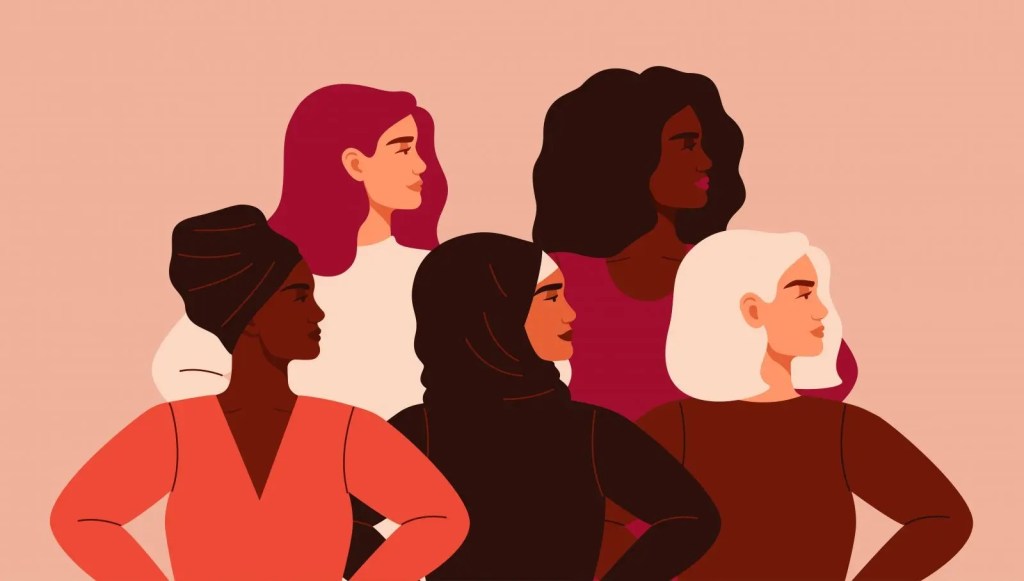
Content warning: this blog post mentions feminist theory in relation to issues of rape, genocide and war.
Recently I had the opportunity to do a deep dive into feminist contributions to the field of international relations, a discipline which of course has many parallels and connections to criminology. Feminism as a broad concept often is viewed from a human rights perspective, which makes sense as this is probably the area that is most visible to most people through progressions in the field of political participation, reproductive and sexual rights and working rights. A lesser known contribution is feminist theory to international relations (IR), specifically, its practical and theoretical contribution to security and conflict. This blog post will give a whistle stop tour through the exploration I conducted concerning the themes of security, conflict and feminism. Hopefully I can write this in a way everyone finds interesting as it’s a fairly heavy topic at times!
Security
Within IR, security has usually been defined on a more state-centric level. If a state can defend itself and its sovereign borders and has adequate (or more than adequate) military power, it is seen to be in a condition of security according to realist theory (think Hobbes and Machiavelli). Realism has taken centre stage in IR, suggesting that the state is the most important unit of analysis therefore meaning security has generally taken a state-centric definition.
Feminism has offered a radical rejuvenation of not only security studies, but also the ontological principles of IR itself. While the state is preoccupied with providing military security, often pooling resources towards this sector during times of international fragility, welfare sectors are usually plunged into a state of underfunding- even more so than they usually are. This means that individuals who depend on such sectors are often left in a state of financial and/or social insecurity. Feminism focuses on this issue, suggesting women are often the recipients of various welfare based services. The impact of wartime fiscal policy would not have been uncovered without feminism paying attention to the women typically side-lined and ignored in international politics. So while the state is experiencing a sense of security, its citizens (quite often women) are in a feeling of insecurity.
This individualisation of security also challenges the merit of using such a narrow, state-centric definition of security, ultimately questioning the validity of the dominant, state-focused theory of realism which in IR, is pretty ground-breaking.
Conflict
I’d say that in nearly all social science disciplines, including politics, economics, sociology, IR and criminology, conflict and war is something that is conceptualised as inherently ‘masculine’. Feminist theory was one of the first schools to document this and problematise it through scholarship which interrogated hegemonic masculinity, ‘masculine’ institutions and the manifestations of these things in war zones.
Wartime/ genocidal rape is unfortunately not a rare behaviour to come across in the global arena. The aftermath of the Yugoslav wars and the Rwandan genocide is probably some of the most reported cases in academic literature, and this is thanks to feminist theory shining a light on the phenomena. Feminism articulates wartime/ genocidal rape as constitutive of the dangerous aspects of culturally imbedded conceptions of masculinity being underscored by power and domination and being legitimised by the institutions which champion dangerous elements of masculinity.
Practically, this new perspective provided by feminism has altered the way sexual violence is viewed by the mainstream; once a firmly domestic problem, sexual violence has been brought into foreign policy and recognised as a tactic of war. This articulation by feminist theory is absolutely ground breaking in the social science world as it shifts the onto-epistemological focus that other more conventional schools have been unable to look past.
Share this:


Justice or Just Another One?

Luckily I’ve never been one for romantic movies. I always preferred a horror movie. I just didn’t know that my love life would become the worst horror movie I could ever encounter. I was only 18 when I met the monster who presented as a half decent human being. I didn’t know the world very well at that point and he made sure that he became my world. The control and coercion, at the time, seemed like romantic gestures. It’s only with hind sight that I can look back and realise every “kind” and “loving” gesture came from a menacing place of control and selfishness. I was fully under his spell. But anyway, I won’t get into every detail ever. I guess I just wanted to preface this with the fact that abuse doesn’t just start with abuse. It starts with manipulation that is often disguised as love and romance in a twisted way.
This man went on to break me down into a shell of myself before the physical abuse started. Even then, him getting that angry was somehow always my fault. I caused that reaction in his sick, twisted mind and I started to believe it was my fault too. The final incident took place and the last thing I can clearly recall is hearing how he was going to cave my head in before I felt this horrendous pressure on my neck with his other hand keeping me from making any noise that would expose him.
By chance, I managed to get free and RUN to my family. Immediately took photos of my injuries too because even in my state, I know how the Criminal Justice System would not be on my side without evidence they deemed suitable.
Anyway, my case ended up going to trial. Further trauma. Great. I had to relive the entire relationship by having every part of my character questioned on the stand like I was the criminal in this instance. I even got told by his defence that I had “Histrionic Personality Disorder”. Something I have never been diagnosed with, or even been assessed for. Just another way the CJS likes to pathologise women’s trauma. Worst of all, turns out ‘Doctor Defence’ ended up dropping my abuser as he was professionally embarrassed when he realised he knew my mother who was also a witness. Wonderful. This meant I got to go through the process of being criminalised, questioned, diagnosed with disorders I hadn’t heard of at the time, hear the messages, see the photos ALL over again.
Although “justice” prevailed in as much as he was found guilty. All for the sake of a suspended sentence. Perfect. The man who made me feel like he was my world then also tried to end my life was still going to be free enough to see me. The law wasn’t enough to stop him from harming me, why would it be enough to stop him now?
Fortunately for me, it stopped him harming me. However, it did not stop him harming his next victim. For the sake of her, I won’t share any details of her story as it is not mine to share. Yet, this man is now behind bars for a pretty short period of time as he has once again harmed a woman. Evidently, I was right. The law was not enough to stop him. Which leads me to the point of this post, at what stage does the CJS actually start to take women’s pleas to feel safe seriously? Does this man have to go as far to take away a woman’s life entirely before someone finally deems him as dangerous? Why was my harm not enough? Would the CJS have suddenly seen me as a victim, rather than making me feel like a criminal in court, if I was eternally silenced? Why do women have to keep dying at the hands of men because the CJS protects domestic abusers?”
Share this:


Can Barbie ever be Feminist?
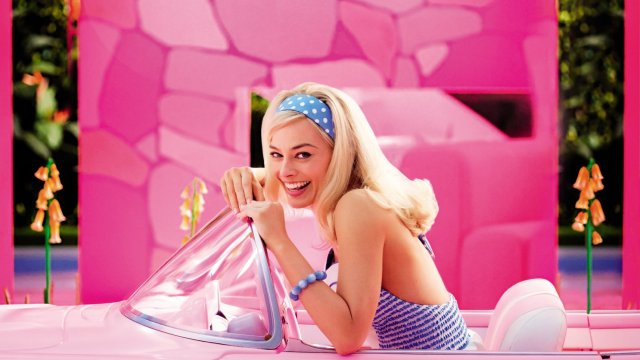
Barbie certainly has people talking, the commentary surrounding the film takes a variety of angles. A quick google search shows that Barbie’s ironic take on the patriarchy appears to have ruffled the fragility feathers with some viewers describing it as ‘man-hating’. I could not help but chuckle at a YouTube video titled; Barbie Bombs Innocent Families with Feminist Propaganda…because apparently, equality is such a bad idea.
There have been some superficial and tokenistic attempts to ‘diversify’ the brand. Yet, at its core the imagery of Barbie still appears to be an obvious symbol of oppressive white feminism. The Barbie doll could be seen to project the white feminine beauty ideal, and the main character within the film, Margot Robbie, appears to embody this ideal. I.e., the appearance of a white, cis-gender, heterosexual women with the wealth to be able to afford all sorts of powdery pink capitalist goods and a body type which is impossible to achieve.
In the contemporary era this ideal continues to be damaging. Even for the most privileged of women, it promotes the spending of much more of women’s income than men on items such as beauty, food and lifestyles, and encourages restrictive dieting practices, which can be damaging to physical and mental health (Naomi Wolf, 1990). For marginalised women there is damage caused due to living in a world which promotes the white privileged as normative. Some examples include, the advertising and selling of skin bleaching products to achieve this white or ‘light’ beauty ideal, to schools excluding Black and Brown school children for having afro textured hair (Emma Dabiri, 2019 and Ibram X. Kendi, 2019).
Whilst the Barbie film apparently has a dig at capitalism, the film and the merchandise sold will produce huge profits by selling this particular brand of feminism. So those interested can buy into feminism and make the capitalists happy rather than being political or radical.
Apparently, the film depicts a comedic take on the patriarchy, with Ken’s toxicity and Barbie having to deal with microaggressions when entering the ‘real world’. How far does the film go with illustrating patriarchal oppression? Is the intersectional oppression experienced by the most marginalised of women present? Does Barbie and Co have issues with femicide, police brutality, poverty, mental ill health, rape, incarceration, immigration detention, homelessness or drowning whilst in a boat whilst trying to seek refuge? Or is the patriarchy in film only palatable and profitable if it presents itself in the form of privileged women experiencing comedic microagressions?
Maybe Barbie will lead to some (probably white and privileged) people thinking more critically or feeling empowered but it doesn’t seem to be a type of feminism ‘for all people’, so perhaps it’s not feminism at all (bell hooks, 1982).
I wonder what will happen to the profits made from the film…
Note* I have not watched the Barbie film so apologies for the vague analysis and sketchy details*
References:
Dabiri, Emma. (2020) Don’t touch my hair. United Kingdom: Penguin Books.
hooks, bell. (1982) Ain’t I a Woman : Black women and feminism. London: Pluto.
Kendi, Ibram. X. (2019) How to be an antiracist. London: The Bodley Head.
Wolf, Naomi. (1991) The Beauty Myth : How images of beauty are used against women. New York: William Morrow and Company.
Share this:

Watch Out: Inspirational Women Coming Through

In my blog post about My favourite Things I mentioned that Jane Eyre was somebody who inspires me. Upon reflection, she is somebody who inspired me a lot when I was younger, and still today, but not with the same force. Over the past 9 years there have been 4 women who at various points over these years have inspired me in one way or another and remain inspirational to this very day. These four wise, wonderful women have had a humongous impact on my life and in my character development. This blog post is a sort of thank you letter to these fabulous women, as well as an outline of how and why they inspire me. They will remain unnamed to protect myself against certain death!
The first woman I have known the longest, and whilst I would class them as a close friend now, we did not start out as such. Neither did we dislike each other (I HOPE)! This person has had a direct impact on my identity as a criminologist but also as a feminist: something I will always be grateful for. They inspire me daily to be more understanding, empathetic and kind to myself. To challenge the status quo and to think critically at all times! For me they represent whom I want to be in the future. They are hard-working, generous, morally impeccable and a fan of Toy Story (massive plus points in my book). They have overcome a number of academic obstacles and inspire me to persevere with academia and its frustrations on the toughest of days. If I turn out to be half the woman they are; I feel like I will have succeeded in life.
The second woman is one of my closest friends. They are the perfect combination of weird and wonderful. We have had similar journeys in academia, but arguably they went first, and seeing them succeed inspired me to do similar! This woman has the patience of an actual real-life saint (although it has been tested on occasion-possibly by myself)! They inspire me to let the little things go and to recognise and check my own privilege. When I feel myself wobble, I think to this person and know that we can do this together! They might not know this: but I am continuously looking up to them.
The third woman has had a very recent inspirational impact on my life. I’ve known them for a number of years, but the last few years has changed the dynamic of our relationship to a beautiful friendship: one where they kick my backside at the Switch, but share my love for cheeseboards! This woman, other than keeping me sane, has inspired me to stand up for my own self-worth and to generate a backbone (metaphorically speaking). Our challenging discussions around race and gender, her open-mindedness and critical thinking all encourage me to follow suit. Life has thrown a number of obstacles her way, and whilst she may get a little knocked, she brushes it off and continues to smash her goals! All of this leaves me in awe: not to mention their stamina when it comes to shopping!
The final, and by no means least, woman is the most recent addition to the inspirational gang of fabulous women, who bless my life and keep me grounded. They keep me motivated in things I am passionate about outside of academia, are always there as a sounding board for me to air out my frustrations, and totally gets my need for doughnuts! They balance a ridiculous work-life balance as a single parent, and do so with flare, generosity and hard-work! Her non-traditional route into academia serves as inspiration to all, that if you are passionate about something; pursue it!
All four of these women manage ridiculous work/life/study loads, are empathetic, caring and always make time for me. All of them inspire me to be a better academic, friend and human being. They have had an impact on me as a student (Undergraduate and Postgraduate) as an academic (Associate Lecturer and Lecturer) and most importantly as a person. I cannot thank them enough. But if they are reading this, which they should be as I’ll be sharing it on social media; THANK YOU WISE, WONDERFUL WOMEN!
Share this:


Calling All Dads: Girls Girls Girls wanted. #SpokenWord
Calling all dads.
Reward for the first hundred daughters!
Calling all dads, Magic City Club is recruiting!
Magic city is the most elite strip joint in the world,
Any dad should be proud to have his daughter work for us!
We value our customers and want to give YOU the chance to shape Magic City Club’s future.
So we’re recruiting.
PLEASE send your daughters in right away.

We need your girls, girls, girls.
The most beautiful daughters in the world, we ask all dads to send them now.
You’re our valued-customers so you know MCC is about quality!
Send them in to Magic City Club, by express, in a rush, by plane or by bus!
Hurry, hurry, hurry we need girls – quick – these polls aren’t going to oil them selves.
We don’t care how you get these girls here we need strippers now!
Now we know this is a difficult task,
So we are offering a reward for the first hundred daughters!
The first hundred days to send in their daughters will get a lifetime ticket!
A lifetime supply of girls swinging on poles, every dad’s dream.
So send in your daughters, and the first hundred new donors receive a lifetime supply of free entry to any of our prestigious establishments around the world for you and a party of 10 men.
Imagine how your career will explore when you bring your colleagues on an annual, all-expense-paid trip to Magic city, and enjoy some other men’s daughters swinging from the polls. Swish. Slide. Spin, Twirl. And flap, flat on the ground, she’s in a split!
Dads, you will not be missed on any neighbor’s Christmas list when you invite the dads from your hood right on down to Magic City.
Don’t miss Father’s Day. Each year, Luxury Life Liquors sponsors our special Father’s Day event and fills pool on stage with whiskey. Watch these girls swim like mermaids. After the show, you know MC doesn’t waste good liquor.
Magic City.

It’s magic.
And somebody’s daughter has got to do it, has got to swing from these polls!
Act now, send in yours! Send in your daughters right away.
As our valued customer, you know Magic City Club has a ‘don’t ask don’t tell’ policy for the backrooms, so: Employer shall be not liable for sexual harassment, STD’s, or in any way held responsible for unwanted pregnancies.
We provide the costumes; daughters must provide their own contraception.
Yours truly,
The management
*P.S. Magic City Club is not affiliated with that MC strip joint all the rappers rap about.
Share this:

And still the message is the same…
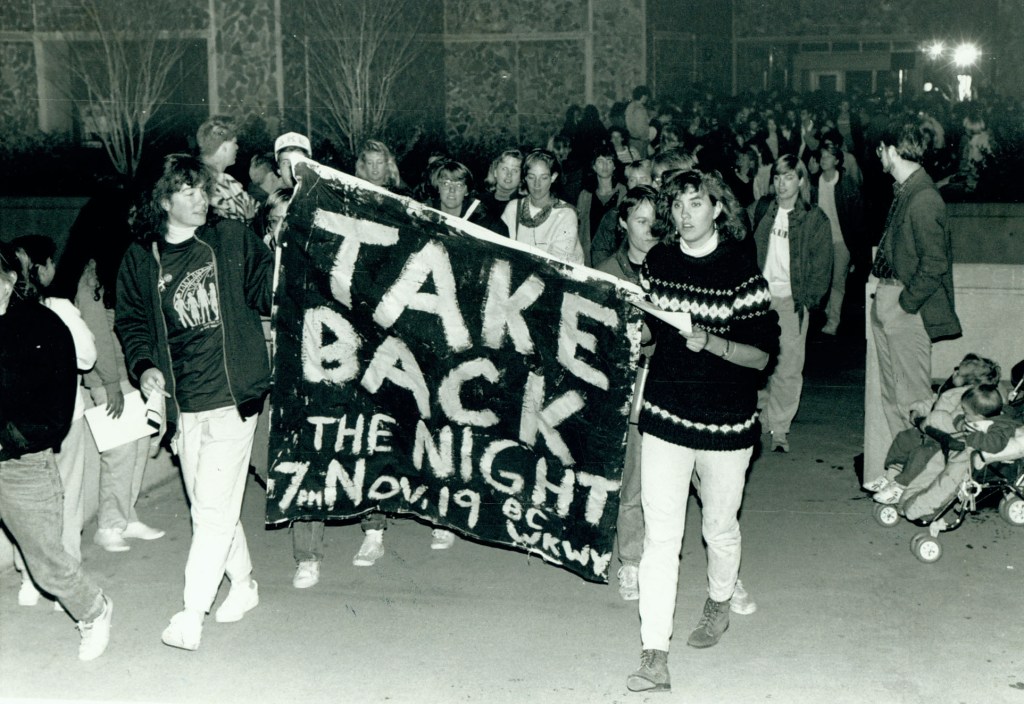
Following on from last week’s blog entry from @5teveh, @jesjames50 explores further dimensions of Sarah Everard’s murder.
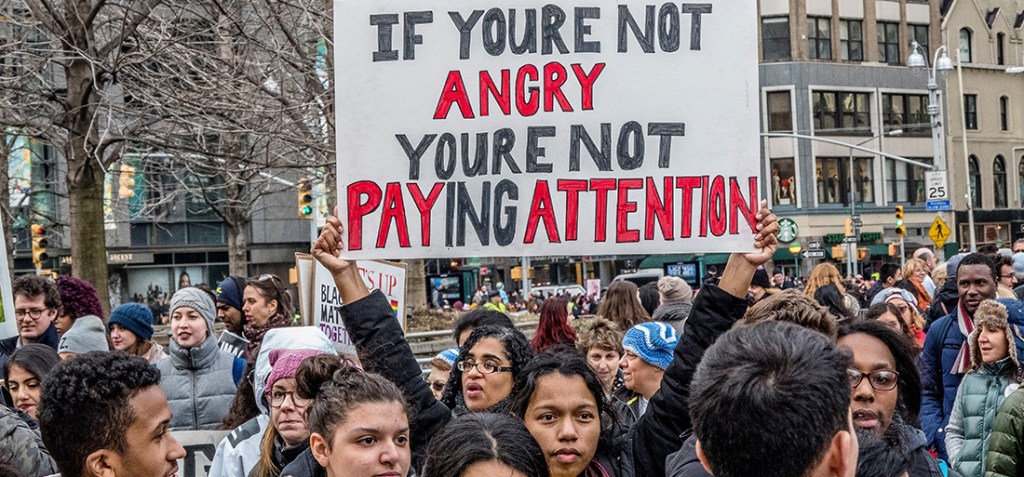
Recently we saw the sentencing of Sarah Everard’s kidnapper, rapist and murderer. He has received a whole life sentence. As a woman within society I welcome this sentence. As a criminologist I am at a loss. There is a lot to unpick here in terms of ‘justice’ and whether this has been served. It is pertinent to question the use of a whole life order on a violent, misogynistic, kidnapper, rapist and murderer; who cooperated after arrest, who pleaded guilty and expected the full force of the law. But I shall leave that to another day, as the media’s portrayal of the sentencing and aftermath is what is currently fuelling my anger. The message remains the same, women can and should do more to prevent their victimisation.
The sentence given is at odds with the coverage which has followed. Handing down the most severe sentence available in England and Wales represents the seriousness of the offence, and the damage it has caused to those directly involved and those further afield. The possibility that the offender was in a position of trust, has violated this trust and committed abhorrent acts appears to justify the whole life order. The comparison to terrorism, something which violence against women has been linked to before within academia, is also very telling. But what is the focus? The focus is on how women can go about feeling safe in society and make lines of inquiry if they have doubts about a police officer’s conduct! Here the onus is on women acting in a manner of keeping themselves safe. The message remains the same: women should prevent their victimisation. Excellent I’ll add this nugget of information to my bag of ‘top tips for walking alone at night’.
Why aren’t the media building on this platform to challenge misogynist attitudes? Why are they not raising awareness of violence against women? Sarah’s kidnapping, rape and murder is horrific: but what about the women who undergo daily violence at the hands of their partners, family, friends? These individuals are also in a position of trust and abuse this position to cause harm to women! Here the media could raise awareness about how deep-rooted the issue of violence against women is, but instead they reinforce the idea that women can prevent their victimisation, and that violence occurs at night, by a stranger, and will have the offender brought to justice. This is not the reality for the vast majority of women. It is an extreme and exceptional case (no doubt something True Crime will encapsulate in years to come) and this is further reinforced by the sentence given. Yet violence against women is not exceptional, or rare: it is an everyday reality! Something the media has failed to draw attention to. And by failing to cement Sarah’s kidnapping, rape and murder in the wider context of violence against women, it raises the potential to set a standard of violence against women. Those everyday cases which do not fit the same circumstances are not considered an issue.
My intentions are in no way to take away from the abhorrent crimes committed against Sarah. The crimes sit in the context of violence against women which is still a fundament issue overlooked within society, and has been overlooked once again. And the rhetoric which has followed, yet again, is around how women can protect themselves in the future. The message remains the same…
Share this:


Looking in all the wrong places and finding no answers
Recently we saw the killer of Sarah Everard receive a whole life sentence for her murder and with the sentence came the usual rhetoric from the politicians and media alike. I could tell you how I feel as a former police officer, but I just don’t think that really matters, others have said it but what they say, undoubtedly with conviction, seems rather hollow. What matters is that another life has been taken as a result of male violence, not just violence, male violence. I don’t disagree with those that want to make the streets safe for women, reclaim the streets, I don’t disagree with the ‘me too movement’, but somehow, I feel that the fundamental issue is being missed. Somehow, I think that all the rhetoric and calls for action concentrate too much on women as victims and looking for someone or some organisation to blame. There seems to be a sense created that this is a problem for women and in doing so concentrates on the symptoms rather than the cause. This is a problem for men and our society. Let’s not dress it up, pretend it could be something else, use terms like ‘not all men’, it is a fact nearly all violence, whether that be against women or men is perpetrated by … you guessed it, men.
I was watching a tv programme the other day about migraines and as it transpires there are millions of migraine sufferers around the world, most are women. It seems as a man I’m in the minority. One of the interviewees, a professor was asked why so little had been done in terms of research and finding a cure. He was frank, if it had been a male problem then there would have been more done. I’m not sure I totally subscribe to that because there are lots of other factors, after all prostate cancer a major cause of male deaths seems to have received comparatively little coverage until recently. But he made me think, if men, particularly those of influence accepted there was a problem would they be inclined to act? We call for more females in policing, we call for more females in the boardroom, predominately because we want to make things look a little fairer, a bit more even. We still have a massive gender pay gap in so many businesses and the public sector, we still have accusations and proven cases of sexual harassment. We still have archaic attitudes to women in so many walks of life, including religion. Words are great, useless but great. If you own the problem, you find solutions, men don’t own the problem and that is a problem.
So, it seems to me, that we are looking in the wrong place. Removing Cressida Dick as the head of the Metropolitan Police service isn’t going to change things. Blaming the police as an organisation isn’t going to change things. Look around you, look at all the scandals, all the sexual offences against women, against children. Look at where the perpetrators are placed in society, in positions of trust, as members of a variety of organisations, organisations that traditionally we thought we could turn to in our need. And look at the gender of those that commit those crimes, almost always men.
The solution to all of this is beyond me. As a criminologist I know of so many theories about why people commit crime or are victims of crime. Some are a little ridiculous but are a product of their time, others fit quite nicely into different circumstances, but none fully explain why. There are no real certainties and predicting who and where is almost impossible. Somehow, we need our leaders, predominately men, to grasp the mettle, to accept this a problem for men. If we owned the problem, we might start to tackle the causes of male violence, whatever they might be. Maybe then we might start to address the symptoms, society will be a safer place, and nobody will need to reclaim the streets.
https://www.theloquitur.com/get-educated-and-be-aware-sexual-assault-will-affect-your-life/
Share this:


We are not the same…respectfully
Disclaimer: whilst I can appreciate that it’s Women’s History Month and it would be appropriate that we all come together in support of one another, especially in the notion of us vs them (men). However, I am undoubtedly compelled to talk about race in this matter, in all matters in that sense. I can only speak on the influence of the women who are around me and of women who look like me. Black women. So, to the lovely white girl on twitter who felt the need to express under my thread how disheartened she was by the racial separation of womanhood in feminism … from the bottom of my heart, I am not sorry.
Sometime last year I stumbled across a book called They Were Her Property: White Women as Slave Owners in the American South by the marvellous Stephanie Jones Rogers. The book protested against the belief that white women were delicate and passive bystanders to the slave economy due to masculine power in the 18th century. Instead, it explores the white supremacy of white women and the high level of protection they had which, which often led to the lynching and killing of many Black men and boys (Emmett Till, 1955). The book also looks at the role of enslaved wet nurses, as many white women perceived breastfeeding to be uncultured and therefore avoided it. However, while enslaved children were flourishing and healthy, many of the white babies were dying. As a result, Black mothers were forced to separate from their babies and dedicate their milk and attention to the babies of their mistresses.
Consequently, this led to the high rise of neglect and death of black babies as cow’s milk and dirty water was used as a substitute (Jones-Rogers, 2019). Furthermore, Rogers goes on to explain how the rape of Black women was used to ensure the supply of enslaved wet nurses. As you can imagine the book definitely does not sugar coat anything and I am struggling to finish it due to my own positionality in the subject. One thing for sure is that after learning about the book I was pretty much convinced that general feminism was not for me.
When I think about the capitalisation and intersectional exploitation that black women endured. I lightly emphasise the term ‘history’ when I say women’s history, because for Black women, it is timeless. It is ongoing. We see the same game play out in different forms. For example, the perception that white women are often the victims (Foley, et al., 1995) and therefore treated delicately, while Black women receive harsher/ longer sentences (Sharp, 2000). The high demand of Black women in human trafficking due to sexual stereotypes (Chong, 2014), the injustice in birth where Black women are five times more likely to die from pregnancy and childbirth than white women in the UK (University of Oxford, 2019) and the historical false narrative that Black women feel less pain than white women (Sartin, 2004, Hoffman et al, 2016).
So again, we are not the same…. Respectfully.
It is important for me to make clear that we are not the same, because we are viewed and treated differently than white women. We are not the same, because history tells us so. We are not the same, because the criminal justice system shows us so. We are not the same, because the welfare system and housing institutions show us so. We are not the same, because of racism.
This year’s women’s history month was more so about me learning and appreciating the Black women before me and around me. As I get older, it represents a subtle reminder that our fight is separate to much of the world. There is nothing wrong in acknowledging that, without having to feel like I am dismissing the fight of white women or the sole purpose of feminism in general. I am a Black feminist and to the many more lovely white women who may feel it’s unnecessary or who are disheartened by the racial separation of womanhood in feminism, I am truly, truly not sorry.
P.s to Nicole Thea, Sandra Bland, Toyin Salau, Blessing Olusegun, Belly Mujinga and Mary Agyeiwaa Agyapong. I am so sorry the system let down and even though you are not talked about enough, you will never be forgotten.
References:
Chong, N.G., (2014). Human trafficking and sex industry: Does ethnicity and race matter?. Journal of Intercultural Studies, 35(2), pp.196-213.
Foley, L.A., Evancic, C., Karnik, K., King, J. and Parks, A. (1995) Date rape: Effects of race of assailant and victim and gender of subjects on perceptions. Journal of Black Psychology, 21(1), pp.6-18.
Hoffman, K.M., Trawalter, S., Axt, J.R. and Oliver, M.N. (2016) Racial bias in pain assessment and treatment recommendations, and false beliefs about biological differences between blacks and whites. Proceedings of the National Academy of Sciences, 113(16), pp.4296-4301.
Jones-Rogers, S.E.(2019). They were her property: White women as slave owners in the American South. Yale University Press.
Sartin, J.S. (2004) J. Marion Sims, the father of gynecology: Hero or villain?. Southern medical journal, 97(5), pp.500-506.
Sharp, S.F., Braley, A. and Marcus-Mendoza, S. (2000) Focal concerns, race & sentencing of female drug offenders. Free Inquiry in Creative Sociology, 28(2), pp.3-16.
University of Oxford. (2019) NPEU News: Black women are five times more likely to die in childbirth than white women. Why? {Online}. Available from:https://www.npeu.ox.ac.uk/mbrrace-uk/news/1834-npeu-news-black-women-are-five-times-more-likely-to-die-in-childbirth-than-white-women-why {Accessed 29th March 2021}

 Thoughts from the criminology team