
Home » Exploitation
Category Archives: Exploitation

Festive messages, a legendary truce, and some massacres: A Xmas story

Holidays come with context! They bring messages of stories that transcend tight religious or national confines. This is why despite Christmas being a Christian celebration it has universal messages about peace on earth, hope and love to all. Similar messages are shared at different celebrations from other religions which contain similar ecumenical meanings.
The first official Christmas took place on 336 AD when the first Christian Emperor declared an official celebration. At first, a rather small occasion but it soon became the festival of the winter which spread across the Roman empire. All through the centuries more and more customs were added to the celebration and as Europeans “carried” the holiday to other continents it became increasingly an international celebration. Of course, joy and happiness weren’t the only things that brought people together. As this is a Christmas message from a criminological perspective don’t expect it to be too cuddly!
As early as 390 AD, Christmas in Milan was marked with the act of public “repentance” from Emperor Theodosius, after the massacre of Thessalonica. When the emperor got mad they slaughtered the local population, in an act that caused even the repulson of Ambrose, Bishop of Milan to ban him from church until he repented! Considering the volume of people murdered this probably counts as one of those lighter sentences; but for people in power sentences tend to be light regardless of the historical context.
One of those Christmas celebrations that stand out through time, as a symbol of truce, was the 1914 Christmas in the midst of the Great War. The story of how the opposing troops exchanged Christmas messages, songs in some part of the trenches resonated, but has never been repeated. Ironically neither of the High Commands of the opposing sides liked the idea. Perhaps they became concerned that it would become more difficult to kill someone that you have humanised hours before. For example, a similar truce was not observed in World War 2 and in subsequent conflicts, High Commands tend to limit operations on the day, providing some additional access to messages from home, some light entertainment some festive meals, to remind people that there is life beyond war.
A different kind of Christmas was celebrated in Italy in the mid-80s. The Christmas massacre of 1984 Strage Di Natale dominated the news. It was a terrorist attack by the mafia against the judiciary who had tried to purge the organisation. Their response was brutal and a clear indication that they remained defiant. It will take decades before the organisation’s influence diminishes but, on that date, with the death of people they also achieved worldwide condemnation.
A decade later in the 90s there was the Christmas massacre or Masacre de Navidad in Bolivia. On this occasion the government troops decided to murder miners in a rural community, as the mine was sold off to foreign investors, who needed their investment protected. The community continue to carry the marks of these events, whilst the investors simply sold and moved on to their next profitable venture.
In 2008 there was the Christmas massacre in the Democratic Republic of Congo when the Lord’s Resistance Army entered Haut-Uele District. The exact number of those murdered remains unknown and it adds misery to this already beleaguered country with such a long history of suffering, including colonial ethnic cleansing and genocide. This country, like many countries in the world, are relegated into the small columns on the news and are mostly neglected by the international community.
So, why on a festive day that commemorates love, peace and goodwill does one talk about death and destruction? It is because of all those heartfelt notions that we need to look at what really happens. What is the point of saying peace on earth, when Gaza is levelled to the ground? Why offer season’s wishes when troops on either side of the Dnipro River are still fighting a war with no end? How hypocritical is it to say Merry Christmas to those who flee Nagorno Karabakh? What is the point of talking about love when children living in Yemen may never get to feel it? Why go to the trouble of setting up a festive dinner when people in Ethiopia experience famine yet again?
We say words that commemorate a festive season, but do we really mean them? If we did, a call for international truce, protection of the non-combatants, medical attention to the injured and the infirm should be the top priority. The advancement of civilization is not measured by smart phones, talking doorbells and clever televisions. It is measured by the ability of the international community to take a stand and rehabilitate humanity, thus putting people over profit. Sending a message for peace not as a wish but as an urgent action is our outmost priority.
The Criminology Team, wishes all of you personal and international peace!
Share this:


Saluting Our Sisters: A Reflection on the Living Ghost of the Past
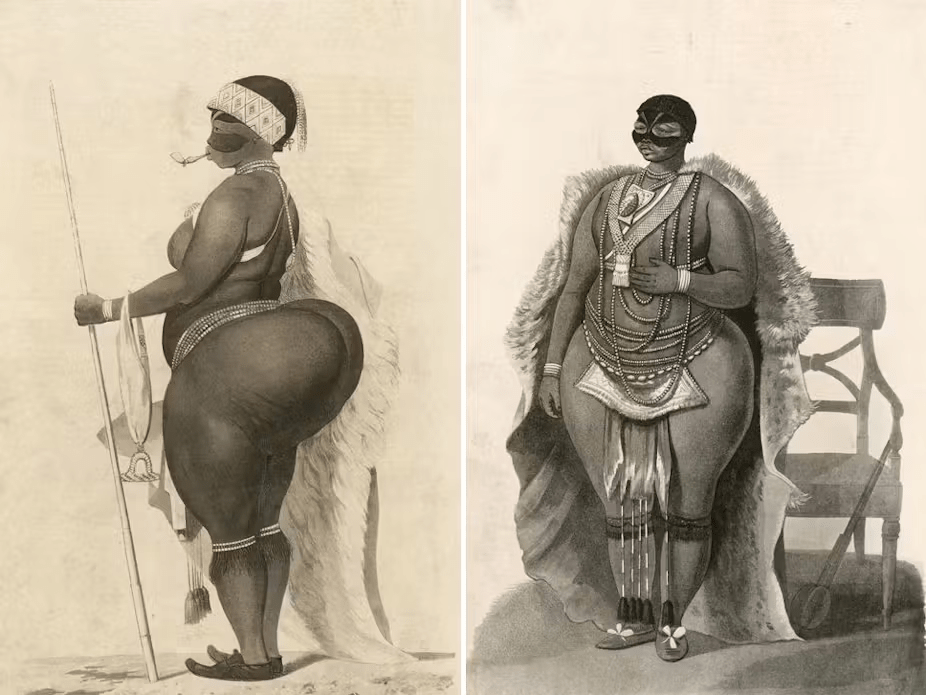
Sarah Baartman. Image source: https://shorturl.at/avLO4
In the 20th century, many groups of people who had been overpowered, subdued, and suppressed by imperialist expansionist movements under arbitrary boundaries began challenging their subjugation. These emancipation struggles resulted in the emergence of quasi-independent, self-governed African nation-states. However, avaricious socio-economic opportunists were aided into political leadership and have continued to perpetuate imperial interests while crippling their own emerging nations. Decades later, it has become clear that these ‘new states’ have become shackled under the grips of strong and powerful men who lead a backward and dysfunctional system with the majority of people impoverished while they enervate justice and political institutions.
Prior to this, the numerous nation states now recognised as African states had developed their distinct social, political, and economic systems which emerged from and reflected their distinctive norms and cultural values. Barring communal disputes and conflicts, robust inter-communal associations, interaction, and commerce subsisted amongst the nations, and paced socio-economic developments were occurring until external incursions under different guises began. Notably, the tripartite monsters of transatlantic slave trade, pillage of natural resources, and colonisation which not only lasted for centuries, disrupted the steady pace and development of these nations. It destroyed all existing social fabric and capital of the people, and forcefully installed a religious, socio-political, and economic systems that are alien to the people.
Ironically, while the transatlantic slave trade and colonialism were perpetuated under the guise of a “civilizing mission,” it took over three centuries for the “civilised” to realise that these abhorrent incursions were far from being civilising, and that they themselves required the civilisation they purported to be administering. However, while one might imagine that this awareness would lead to remorse and guilt-tripped sincere repentance for the pillage, pain, and atrocities, the abolition and relinquishing of political power to natives, the following events symbolized the contrary. Neo-colonialism was born, and international systems and conglomerates have continued the pillage on different fronts as aided by the greedy political class. Thus, it is unsurprising that yet again, strong, and powerful men are revolting against and deposing the self-perpetuating, avaricious socio-economic opportunists who wield political power against the interests of their nations in series of military coup d’état.
It is clear that the legacy of exploitation and subjugation has brought about a new set of challenges. Leaders entrusted with the responsibility of fostering prosperity in their nations often succumbed to personal gain, perpetuating a cycle of exploitation reminiscent of the imperialist era. This grim reality creates a stark contrast: while the majority of citizens are trapped in poverty, a powerful minority wields disproportionate influence, eroding the foundations of justice, economic prosperity, and political stability. As a result, for the vulnerable, seeking safety, economic freedom, and escaping from dysfunctional systems through deadly and illegal migration to other parts of the world becomes the only viable option. However, unbeknownst to many, the lands they risk everything to reach are grappling with their own challenges, including issues of acceptance and association with once labelled ‘uncivilized’ peoples.
Black History Month sheds light on these challenges faced by the black community and other marginalized ethnic groups globally. This year, the theme ‘Saluting our Sisters’ invites us to reflect on the contributions of Black women to society and the challenges they continue to face. It is also important to reflect deeply on how we consciously or unconsciously perpetuate rather than disprove, discourage, and distance ourselves from sustaining and growing the living ghost of the past. As Chimamanda urges, perhaps considering a feminist perspective in our actions, practices, and behaviour can be a powerful step toward recognizing and acknowledging how we perpetuate these problems. Dear Sister, I admire and salute you for your resilience and tenacity in making the world a better place.
Share this:


Behind the Filter: Navigating the Fine Line Between Genuine Parenting and Child Exploitation in the World of Influencers

As the world of social media influencers continues to expand, certain high-profile cases have brought the issue of mum influencers exploiting their children into the spotlight. These cases serve as cautionary tales, highlighting the potential dangers and ethical pitfalls that come with blurring the lines between personal family life and commercial partnerships. It is important to note that while the spotlight has indeed centred on ‘mum’ influencers this discussion cannot go forward without acknowledging, that we should be shaping the discussion on the way PARENTS create content online.
Mum influencers have become a powerful force in the influencer landscape. They provide a glimpse into the daily lives of mothers, discussing topics such as parenting tips, family dynamics, and the challenges of balancing work and family life. Initially, many followers were drawn to these influencers for their relatability and authenticity. This has created an opportunity for dads to also partake in the ‘business’ of family influencing as many people yearn for the whole family picture, which brings a non-traditional demographic of followers and thus an expansion of interest and growth of followers, and thus bringing the allure of financial opportunities.
As followers increase, family influencers often receive offers from brands seeking to collaborate. This is where the ethical dilemma arises – how far is too far when it comes to integrating children into sponsored content? While some collaborations may involve innocent and genuine family moments, others might push the boundaries, putting children in situations that prioritize profit over their well-being. It is essential to differentiate between content that genuinely celebrates parenthood/ family and content that exploits it. Sharing heartfelt stories, documenting milestones, and discussing the challenges of parenthood and family dynamics can be informative and supportive for other parents. However, the line blurs when children are consistently used to endorse products and/ or services in a way that feels forced or invasive.
Children of influencers often have their lives documented from birth, which raises concerns about their privacy. As they grow older, they might not consent to having their childhood experiences permanently etched into the online realm. The potential impact on their mental and emotional well-being as they come to grips with their digital footprint is a significant consideration. We all have that embarrassing childhood picture that parents have on the wall or in a photo album, however that is in the confines of their home and whose eyes view them can be monitored. The tricky nature of the internet removes that possibility. With visibility comes risk. Publicly showcasing one’s life includes exposure to not only praise but also criticism and negativity. Children that have an online presence in the capacity of being influencers can become targets of online trolls or even predators, who might misuse their images or information. Protecting children from these potential dangers should be a priority for any parent, online or offline.
My previous point made on children of influencers being documented from birth begs reflection on the concept of consent. This can be viewed in many ways; however, the notion of consent becomes murky when children are too young to understand the implications of their online presence. While some influencers argue that their children enjoy being part of the content creation process, it is challenging to gauge how much choice a young child truly has. Blurring the lines between what is a personal family moment and what is a scripted advertisement can complicate this matter further.
As family influencers grapple with this dilemma, there’s an increasing call for responsible content creation, and thus drawing clear boundaries between what is acceptable and what crosses the line into exploitation. Making conscious decisions about the type and frequency of content involving children and avoiding situations that compromise their well-being for the sake of likes, shares, and sponsorship should be paramount, but in many ways, this does not always seem to be considered. There are many examples that come to mind, but for this blog entry I will use a particularly shocking case. In 2020 YouTubers Myka and James Stauffer faced backlash after publicly announcing the decision to “rehome” their adopted son with autism. The Stauffer family, known for their parenting content, had initially garnered support for their adoption journey. The family seemed like any other online family that people aspired to be like. They had four biological children and presented their happy loving family for all to see. However, the revelation that they had monetized the adoption process through sponsored content and merchandise raised concerns about the child’s well-being and whether he was being exploited for financial gain. The backlash following their announcement saw them lose thousands of followers. While there were numerous followers and news outlets that spoke out against the Stauffer’s actions, there was little commentary that focused on the impact that the ‘rehoming’ of their adopted son had on him or their other children. The children should have been at the centre of this story but instead they were pushed to the side.

This blog entry servers as poignant reminders of the potential pitfalls in the world of family influencers and their children. While some cases may involve genuine oversight, it’s essential for influencers and brands to exercise caution and ethical responsibility when involving children in their content.
As influencers strive to maintain authenticity while navigating commercial opportunities, it is crucial that they strike a balance between sharing genuine family moments and protecting the well-being, privacy, and dignity of their children. In a landscape where the line between public and private blurs, parent influencers must remember that their children’s well-being is paramount. Instead of exploiting their children for financial gain, fame and clout.
Share this:


Capitalism and tourism: an ethical conundrum

After a two-year delay in our holiday booking due to the Covid pandemic, my wife and I were fortunate enough to spend a two-week holiday in Cape Verde (Cabo Verde) on the island of Sal. We’ve been lucky enough to visit the islands several times over the last ten years. Our first visit was to Boa Vista but since the hotel that we liked no longer seemed to be available through our tour operators, we ended up going to Sal. When we first visited Boa Vista, there was little to be found outside of the hotel other than deserted beaches and the crashing of the Atlantic waves on the seashore. There was a very large hotel on the other side of the island and a smattering of smaller hotels dotted around, but that was it. After several visits we began to notice that other hotels were popping up along the seashore and there was a definite sense of development to cater for the holiday trade. The same can be said of Sal. The first hotel we visited had only just been built and there were the foundations of other buildings creeping up alongside but in the main, it seemed pretty deserted. Now though there are hotels everywhere and a fairly new very large one not that far away from where we stayed.
The first thing you notice as a visitor to the islands is that this is not an affluent country, far from it. Take a short trip into the town centre and you very rapidly see and sense the pervading poverty. This is a former Portuguese colony, and it comes as no surprise that it played a strategic role in the slave trade until the late nineteenth century whereupon it saw a rapid economic decline. Tourism has boosted the economy and plays a significant role in the country’s population, and this became even more evident during our latest visit. The country is only just recovering from the pandemic and several of the hotels were still mothballed as were the various businesses along the sea front. I’m not sure what the situation was or is in the country with regards to welfare, but I wouldn’t mind betting that they’d never heard of the word furlough, let alone implemented any such scheme. Quite simply no tourism means no work and no work means no wages, such as they are. In conversation with a number of the staff at the hotel, it became obvious that they were not only pleased we were there, but that they wanted us to return again. We were often asked if we would come back and one person, I spoke to pleadingly asked us to return as ‘we need the job’. Of course, it’s not just us that need to return, it’s all the tourists. Tourism supports so many aspects of the economy, not just jobs in hotels but local businesses as well. I think the fact that we keep going back there says something about the lovely people that we’ve been privileged to meet.
But then as I sat one night contently sipping a gin and tonic, debating whether I should have another before dinner, I began to think about whether all of this was ethical. The hotel we stayed in was part of a large international chain. Nearly all the hotels are part of large multinational corporations servicing their shareholders. Whilst my relaxation and enjoyment is great for me, it is on the back of the exploitative nature of the service industry. A business that probably doesn’t pay high wages, those working in the service industry in this country can probably attest to that, so goodness knows what it’s like in an impoverished place such as Cape Verde. My enjoyment therefore promotes exploitation and yet vis-a- vie enables people to have much needed work and pay. Of course, I may have this all wrong and the companies are pouring millions into the country to improve living standards for the inhabitants, and they may pay wages that are very reasonable. But somehow, because of the nature of business, and the eye on profit margins, I very much doubt it. When businesses consider business ethics, I wonder how far they cast the ethical net? As for me, it’s a bit of Catch 22, damned if you do and damned if you don’t. But then so much of life seems to be like that.
Share this:


Visiting the Zoo: a staple of privilege
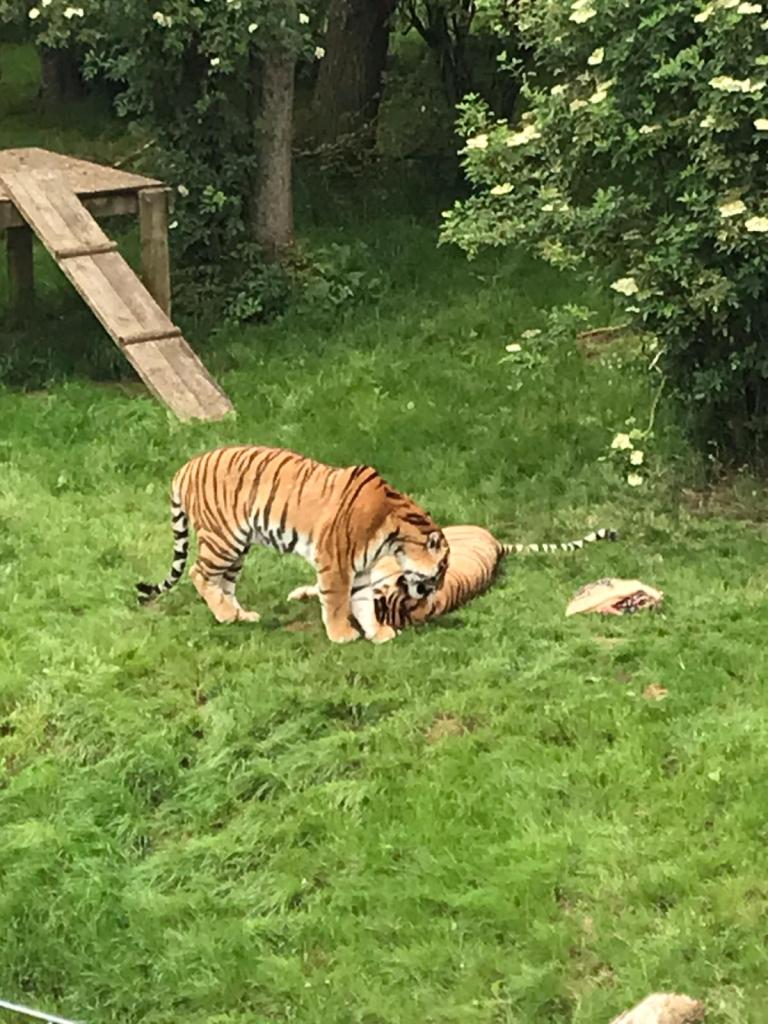
Whilst the current weather may not imply it, we are into the summer months! At this time of year staff and students begin to take a much needed and well-deserved rest after the challenging academic year we have all faced. With this time, holidays, day trips, meals out, picnics, walks and many more joyful pastimes begin to fill up the calendar, although many of us find ourselves quite restricted due to the ongoing pandemic. Nevertheless, we should all make the most of the time off to re-charge and spend time with our loved ones. For myself and my partner, this meant a day trip to Whipsnade Zoo!
Whilst the weather app assured us it would not rain, we spent a fairly windy and wet day walking around Whipsnade Zoo viewing the animals and all in all having a fabulous day. The schools are not out yet, therefore most visitors were adults on annual leave, individuals who I assume are retired, or parents with small children. We had plenty of space and time throughout the day to see the animals, read the information plaques and enjoy a wet but scrummy picnic. I dread to think what it would have been like in the height of the summer holidays!
But where am I going with this other than to brag about my fabulous day at the Zoo and what has this got to do with checking our privilege? Well, it begins with the cost to entire said Zoo. I have not been to a Zoo since I was in my school years. We used to visit Colchester Zoo most summer holidays with the Tesco Clubcard vouchers, which in a nutshell meant you could exchange Clubcard points for vouchers/tickets which included the Zoo. Therefore a trip to the Zoo when we were younger cost petrol money and a picnic (which was always done on the cheap). This is an affordable day out, but we were only a family of 3 (1 adult and 2 children), so not that many Clubcard points required, and quite a minimal picnic. Also we were fortunate enough to have a car which is not the case for all families. So even with the vouchers and picnic I cannot help but reflect and think how privileged we were to be able to visit the Zoo.
The Zoo trip this week cost just short of £50 for a student admission and an adult admission. I did think this was quite a lot. I think about what the cost would be for 2 adults and a child (or multiple children). Already this is gearing up to be an expensive day out. The Zoo has lots of interactive parts for children to engage with and learn from, and of course they have animals. But is the Zoo really aimed at educating all children or is it only those children whose families can afford it (E.I children belonging of a certain socio-economic status)? Once we arrived at the Zoo and looked around the carpark we couldn’t see a Bustop. What about the families who cannot afford a car? The food outlets were extortionate: £4 for a coffee!! Its cheaper in the West End! The same statement although different prices applies to ice-cream. I feel good that we have taken our makeshift picnic and flasks with us: but what about those who cannot?
The long-winded and verbose point I am trying to make is that even everyday things require us to check our privilege. I spoke to my partner on the drive home about the beauty and wonder of the Zoo and how we are fortunate to be able to go and how I was fortunate to go most summers as a child. But once the Clubcard vouchers stopped, so did the trips to the Zoo. There are many who are unable to enjoy the Zoo, to gain from the educational experience of learning about the animals, what they eat, where they live etc. And I can’t help but reflect and wonder is this establishment really inclusive to all? Is there something society can do to break down the class barriers which appear to be present when planning a trip to the Zoo?
Share this:

The ‘other’ BBC worldservice. #BlackenAsianWithLove
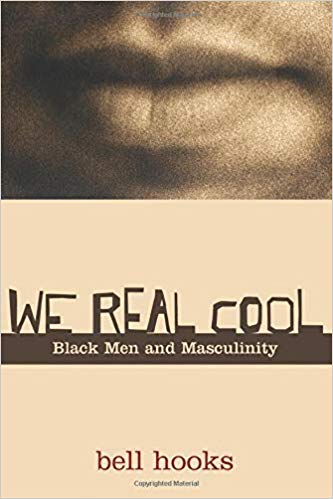
The ‘other’ BBC worldservice.
If you google “BBC+Mandingo,” please be aware that it is NSFW. Use your imagination. Now, imagine an auction block. Imagine a slave standing there. Breeding slaves underpinned the ‘white supremacist, capitalist, patriarchal’ system that placed their bodies upon that auction block. Hyper-sexualisation of Black bodies began right there. It is bell hooks’ Intersectionality lens that’s necessary for a holistic gaze upon consumer commodification.
Now, imagine that one Black boy in class, vying for attention just as any other adolescent, yet he’s got an entire multitude of hyper-sexualised images filling the heads of virtually everyone in the room. By the time they hit the locker-room, everyone is expecting to see this kid’s BBC. I’ve had many (non-Black) adults say that to me explicitly, inexplicably in any given situation where one might not otherwise imagine penis size would surface so casually in conversation. Hence, we can all imagine that with the crudeness of adolescent male vernacular: Your kid is asking my kid why his penis isn’t what all the rappers rap about. 
Why are so many commercially successful rappers’ fantasies reduced to “patriarchal f*cking?” Reading Michael Kimmel’s essay “Fuel for Fantasy: The Ideological Construction of Male Lust,” in her seminal book We Real Cool: Black Masculinity, bell hooks clarifies: “In the iconography of black male sexuality, compulsive-obsessive fucking is represented as a form of power when in actuality it is an indication of extreme powerlessness” (hooks: 67-8).
It’s auto-asphyxiation, a kind of nihilistic sadomasochism that says, if the world thinks of me as a beast, then a beast I shall be. Plenty of kids work this out by the time they hit the playground. “Patriarchy, as manifest in hip-hop, is where we can have our version of power within this very oppressive society,” explains writer/activist Kevin Powell (qtd. in hooks: 56). Ironically, Powell came to fame in the 90’s on MTV through the original reality show aptly entitled “The Real World.”
Plantation Politics 101
Since at least 2017, commercial rap has been the most widely sold musical genre; it’s pop. Beyond roughly 700,000 sales, Black people are not the primary purchasers of commercialised rap, as explained in the documentary Hip-Hop: Beyond Beats and Rhymes. It takes millions to earn ‘multi-platinum’ status. Yet, while created by and for Black and brown people in ghettoized communities, it has morphed into a transnational commodity having little to do with the realities of its originators, save for the S&M fantasies of wealth beyond imagination. And what do they boast of doing with that power, read as wealth? Liberating the masses from poverty? Intervening on the Prison Industrial Complex? Competing with the “nightmare” racist landlords like Donald Trump’s dad Fred? No! They mimic the very gangsters they pretend to be. Once Italian-Americans held hard that stereotype, but now it’s us. It’s always about power. Truly, ‘it’s bigger than Hip-Hop’.
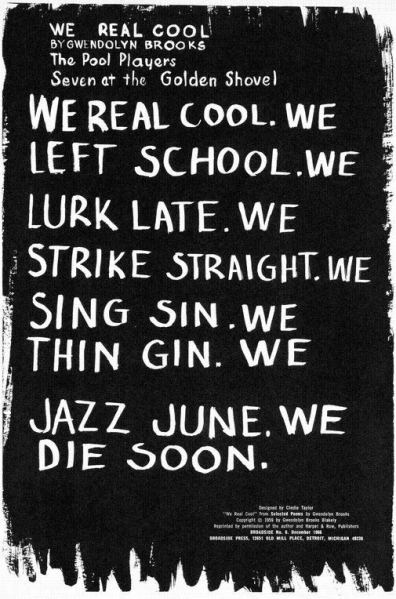 The more painful question few bother asking is why commercial rap music focuses so keenly on pimps, thugs, b*tches and whores? Like other commodities, commercial rap is tailored to the primary consumer base, which isn’t (fellow) Black people, but white youth. What is it about contemporary white youth that craves images of salacious, monstrous, licentious and violent Black people boasting about killing and maiming one another? Describing this mass commercial “Misogynistic rap music,” hooks states: “It is the plantation economy, where black males labor in the field of gender and come out ready to defend their patriarchal manhood by all manner of violence against women and men whom they perceive to be weak and like women” (hooks: 57-8). Plainly, the root of commercial rap’s global prominence is the reenactment of “sadomasochistic rituals of domination, of power and play” (hooks: 65).
Hyper-sexualisation is a form of projection onto Black people a mass white anxiety about our shared “history of their brutal torture, rape, and enslavement of black bodies” (hooks: 63). She goes on to explain: “If white men had an unusual obsession with black male genitalia it was because they had to understand the sexual primitive, the demonic beast in their midst. And if during lynchings they touched burnt flesh, exposed private parts, and cut off bits and pieces of black male bodies, white folks saw this ritualistic sacrifice as in no way a commentary on their obsession with black bodies, naked flesh, sexuality” (ibid). Hence the BBC obsession finds a consumer home safely in pop music!
“I am ashamed of my small penis,” a stranger recently mentioned to me in a grilled wing joint I happened upon here in Hanoi. The confession came from nowhere, having nothing to do with anything happening between us at the time. Is this the locker-room banter I always hear about? Are straight men really so obsessed with their penises? Given his broken English and my non-existent Vietnamese, I tried comforting him by explaining in the simplest terms the saying: “It’s not the size of the wave but the motion of the ocean.” Colloquialisms never translate easily, but I did at least deflect the subject away from ethno-sexual myths spread worldwide through contemporary consumer culture.
We’ve got to talk about ethno-sexual myths with openness, honesty and integrity. Silence is the master’s tool; silence = death! Further, echoing ‘black, lesbian, mother, warrior, poet’ Audre Lorde, ‘The master’s tools will never dismantle the master’s house”. I am Black in Asia, and there are perhaps no two groups of men at polar opposites of ethno-sexual myths. Like the hyper-sexualisation of women of colour, these myths reveal that neither Blackness nor Asianess is at the centre of these globally circulated myths. Hyper-sexual in comparison to who or what? Hegemonic heteronormative whiteness. Say it with me: Duh!
To get In-formation:
hooks, b. (2004) We Real Cool: Black Men and Masculinity. New York: Routledge.
Lorde, A. (1984) Sister Outsider: Essays and Speeches. Berkeley: Crossing Press.
Share this:

Visa by Impression, Atavism or Exploitation?
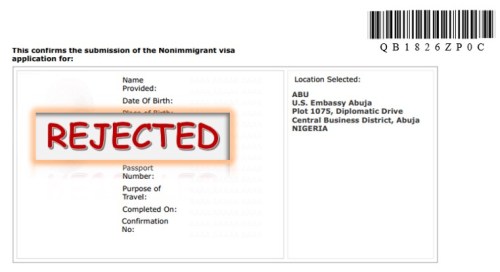
My paper, ‘beyond institutional autonomy: a quadrumvirate interaction theory of civil-military relations’ was accepted for presentation at the 2019 Biennial International Conference of the Inter-University Seminar on Armed Forces and Society scheduled for November 8-10, 2019 at the Hyatt Regency, Reston, Virginia. However, I am unable to attend the conference because I was denied visa at the US Embassy in Abuja, Nigeria. In this entry, I wish to highlight and add my voice to the concerns academics and non-academics, especially those from the ‘Global South’ face in securing visas to enable them attend conferences in the supposed ‘developed world.’ Hence, this entry is a personal reflection on the US visa regime in Nigeria, and its nexus with criminology.
Individual visas are often issued based on the merit of an application and the adequacy of the supporting documents submitted by applicants who are also required to pay certain fees and charges for the application. The issuing authorities would normally consider the criminal background record of an applicant, their previous travel history and the adequacy of funds to cover for the cost of the trip. In some cases, as typical with the US visa regime in Nigeria, applicants are required to present themselves before a consular officer for a visa interview and the decision to issue a visa is at the discretion of the consular officer.
Given this, one would expect that the consular officer would in the least, view/review the supporting documents of an applicant, in addition to asking some pertinent questions. The rationale being that the US visa web-application platform does not provide a link/option for submitting the supporting system prior to the interview. However, this was not the case when I was denied a visa. In fact, the interview barely lasted two minutes, and the following was the ‘interview’ conversation I had with the male consular officer:
Why do you want to go to Reston Virginia? To attend a conference.
What do you intend to do in the conference? I will be presenting a paper, a theory from my PhD research.
Who would pay for the conference and travel fee? The conference organisers and (he interjects with the next question, but I told him I still have another source of income, but he replied saying I had told him enough and that I should answer the next question).
What is your highest academic qualification? A PhD from the University of Stellenbosch, South Africa, I just concluded last December.
What do you do for a living? I just concluded a Postdoctoral Fellowship with the University of Stellenbosch and I have just accepted an appointment with the University of Jos as a Lecturer.
Do you have a family? Yes, a wife and a child, and we are expecting another.
For how long have you been married? 3 years
How old is your child? 1 year and 8 months
What does your wife do for a living? She is a housewife, she looks after the family
Are you travelling alone? Yeah (At this point, he faced his computer keyboard, typed some few words, then turned to me and told me, unfortunately we cannot issue you the visa while handing over a pre-printed form containing the reasons for visa denials).
From this ‘interview’ conversation, two things stood out for me. One is the fact that the consular officer made his decisions without viewing or considering any of my supporting documents and the second was the question, what did I do, say, or answer wrongly?
In terms of the latter, I found nothing wrong with my responses, but I found a huge systemic fault with regards to the former. The internet is rife with complaints from individuals, organisations and recently countries accusing the US of implementing a harsh visa regime which deliberately frustrates and traumatises visa applicants. My web application process in Nigeria is nothing short of this, in fact, I thought it was easier to make heaven than to obtain the US visa from Nigeria.
Having carefully thought about the visa regime in the light of my ‘interview,’ I concluded that the US visa regime is anachronistically atavistic, an exploitative business strategy, or both. My opinion is simply that I was denied visa not because of my responses to the questions but because the consular officer found a questionable impression through observing my face as he had not viewed or considered my supporting documents. For this, I appreciate Cesare Lombroso and one needs not be a Criminologist before knowing that facial impression and appearance are never better yardstick than considering the merits of the supporting documents.
A fair and equitable visa system will consider the merit of an application, the travel history of an applicant (which I have a reasonable one), whether the supporting documents are convincing, the criminal record background, purpose of travel, sufficiency of funds, and the existence of a strong tie with one’s origin. However, this was not the case, and this led me to the business exploitation opinion.
Customarily, when one pays for a service, the norm is to provide quality and effective service worth the value of the money paid or promised, anything short of this is clear exploitation – unfortunately, this is how the US visa regime operates in Nigeria. On the day of my interview, there were at least seventy (70) persons queuing up for theirs early in the morning, but it is not my intention to analyse how much income the US derives from this.

 Thoughts from the criminology team