
Home » Ethnicity
Category Archives: Ethnicity

A Love Letter: in praise of board games
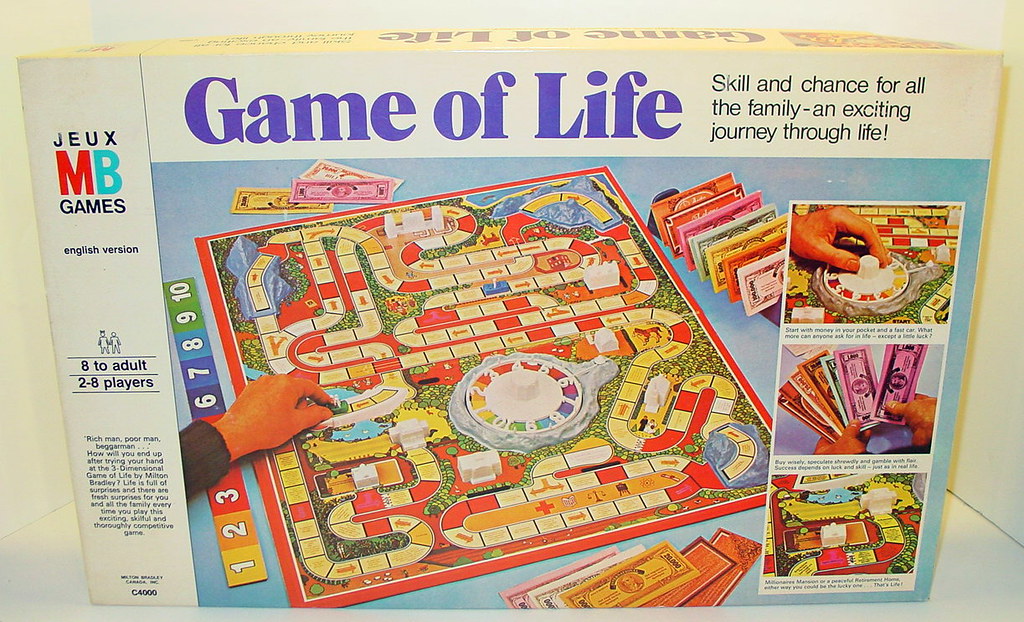
This my fifth love letter, previously I have written in praise of poetry, art, Agatha Christie and the Thoughts from the Criminology Team blog. Since early childhood, I have loved playing games and today’s entry is dedicated to this form of media. In the early years, the focus on fun is paramount, after all who wants to play a dull game? Equally important, the educational aim of games is sometimes explicit, other times less so. Nevertheless, they help us learn to match and sort colours and shapes, to develop our counting skills in an applied setting and improve our memory recall, as well as spelling. Games likes Snap, Happy Families, Hungry Hippos, Snakes and Ladders, Guess Who, Junior Scrabble offer a variety of different ways for children to learn important skills whilst playing. These games enable even very small children to share space, develop important interpersonal skills like taking turns and learn to deal with winning, and of course, losing. Often the latter is a very slow and painful lesson to learn….and one that isn’t always remembered into adulthood!
Of course, one of the most explicit part of playing games is learning the rules of the game, and of course, what happens when we deviate from those rules. It might lead to the loss of a turn or even forfeiture of the entire game. People interpret rules in different ways and families often develop their own “house” rules, but nevertheless there is always an agreed upon set of rules and a way of policing and punishing those who break them.
But once these lessons have been learned, what do games have to teach us as adults? I would say plenty! On a surface level, they offer an opportunity to relax and do something outside of our humdrum lives. Once the games have been purchased, they generally cost nothing to play unlike other forms of leisure time.1 Some can be played alone, others require competitors or even teams. They can aid our thinking, concentration and develop skills of strategy and tactics. They also have the general benefit of not being all consuming (unless at competition level), allowing for conversation to flow. The latter, conversing whilst doing something else, can often be useful for difficult emotional conversations, allowing people to open up without pressure (known colloquially as “health by stealth”).
But do board games have anything to offer to Criminology? Again, I would argue yes! Most games involve chance or luck, will you get the numbers you need, will you have the right pieces/cards in your hand, will the other person play their game in a way that benefits you? It is easy to recognise the role that luck or chance plays in games, but are we equally aware of their role in our lives. More importantly, as criminologists do we fully understand and acknowledge the role played by both in relation to criminality and victimisation?
We have no choice about whether we are born or not, when and where we arrive on the earth, who our parents are. These are all down to forces outside our individual and collective control. Our upbringing, our education, our employment opportunities are largely constrained by geography, money and influence. Compare the opportunities available to a baby born today in Sudan, with one born in the UK, another born in Palestine, and another born in Finland. Compare again, thinking about race, sex, class, disability, sexuality and so on. Very quickly you begin to understand the role played by chance and luck.
So if all of the above are imponderables, how much of a role does luck play in relation to criminality and victimisation? The regular publication of data relating to crime in postcodes, towns/cities and globally show huge diversity in the chance of victimisation. Lucky you, if you were born and live in the ‘Nordic countries of Europe (Norway, Sweden, Denmark, Iceland, and Finland) who rank among the 25 safest globally, most of them also being among the top 10 happiest nations worldwide’. Less fortunate, if you were born in Haiti, Ukraine, Palestine, Sudan or Iraq identified as some of the most dangerous places on earth currently. It is not very difficult to imagine the difference in opportunities in fundamental human rights; food, shelter, healthcare, education and so on. In war ridden nations it is incredibly difficult to separate different typologies of victimisation and for the individuals living under these conditions, it makes no meaningful difference who is/are the perpetrators.
Even if you are living in a “peaceful” state2 such as the UK, there are vast differences in the opportunities available. If you have money you can buy a car to get to work in your evening/night job, if you don’t, maybe you can take a bus, failing that you can walk. Each of those journeys carries its own risks. Your sex, your race, your ethnicity, your sexuality, your abilities/disabilities, your age add the aggravating/mitigating factors and see your risk increase/decrease. All a matter of chance and luck
What about criminality, is this, as the Classical School of Criminology would have us accept, a matter of free will, weighing up the pros and cons and making a deliberate and calculating choice to commit crime? Or can we also identify the same issues of luck and chance as shown above? If your family is loving, everyone has good health, housing is secure, food is plentiful and there are plenty of educational and employment opportunities in your area, would you still choose a life of crime? If there is violence at home, poverty impacts health, housing and regular meals, making it challenging to study or work, would you perceive crime to be a choice?
And what of those board game rules and consequences, real life has its own rules, some written in the forms of laws, others engrained via family, friends, institutions; the norms of our society. In the board game, these rules apply equally (aside from luck and chance) but in real life, not so much. Consider racial and ethnic disproportionality and the treatment of vulnerable women in the CJS, as just two examples. We may all be playing in the same “Game of Life”, but luck, chance and the rules we are subjected to are very different when it comes to criminality and victimisation.
- I appreciate that there are some very expensive board games out there, as well as expansion packs to enhance play. ↩︎
- There are lots of academic arguments around what constitutes a peaceful state, most agree that it more than just the absence of war. Whilst the UK has not seen active warfare on its shores for decades, its military has been involved in conflict throughout the world for more than a century. ↩︎
Share this:


Zemiological Perspective: Educational Experiences of Black Students at the University of Northampton

As a young Black female who has faced many challenges within the education system, particularly related to behavioral issues, I noticed how the system can unintentionally harm black students. I observed that Black children’s experiences in the education system are not always viewed from a deviant perspective, because they are not inherently deviant. The institutional harm faced by Black students is not always a ‘crime’ nor is it illegal, yet it is profoundly damaging.
This realisation prompted me to adopt a zemiological perspective, drawing upon the work of Hillyard et al. (2004) to highlight the subtle yet impactful harms faced by Black students in the educational system. My primary objective was to uncover the challenges these students face, as outlined in my initial research question: ‘To what extent can the experiences of Black students in higher education be understood as a form of social harm?’ To achieve this, I analysed the educational experiences of Black students at the University of Northampton. This involved reviewing the university’s access and participation plans, which detail the performance, access, and progression of various demographics within the institution, with a particular focus on BAME students.
Critical race theory (CRT) was the guiding theoretical framework for this research study. CRT recognises the multifaceted nature of racism, encompassing both blatant acts of racial discrimination and subtler, systemic forms of oppression that negatively impact minority ethnic groups (Gillborn, 2006). This theoretical approach is directly correlated to my research and was strongly relevant. This allowed me to gain insight into the underlying reasons behind the disparities faced by Black students in higher education. As well as enabling me to unpack the complexities of racism and discrimination, providing a comprehensive understanding of how these issues manifest and persist within the educational landscape.
Through conducting content analysis on the UON Access and Participation Plan document and comparing it to sector averages in higher education, four major findings came to light:

Access and Recruitment: The University of Northampton has made impressive progress in improving access and recruitment for BAME students, fostering diversity and inclusivity in higher education, and surpassing sector standards. Yet, while advancements are apparent, there remains a need for more comprehensive approaches to tackle systemic barriers and facilitate academic success across the broader sector.
Non-Continuation: Alarmingly, non-continuation rates among BAME students at the University of Northampton have surpassed the sector average, indicating persistent systemic obstacles within the education system. High non-continuation rates perpetuate cycles of disadvantage and limit opportunities for personal and professional growth.
Attainment Gap: Disparities in academic attainment between White and BAME students have persisted and continue to persist, reflecting systemic inequalities and biases within the academic landscape. UON is significantly behind the sector average when it comes to attainment gaps between BAME students and their white counterparts. Addressing the attainment gap requires comprehensive approaches that tackle systemic difficulties and provide targeted support to BAME students.
Progression to Employment or Further Study: UON is also behind the sector average in BAME students progression in education or further study. BAME students face substantial disparities in progression to employment or further study, highlighting the need for collaborative efforts to promote diversity and inclusivity within industries and professions. Addressing entrenched biases in recruitment processes is essential to fostering equitable opportunities for BAME students.
Contributions to Research: This research deepens understanding of obstacles within the educational system, highlighting the effectiveness of a zemiological perspective in studying social inequalities in education. By applying Critical Race Theory, the study offers insights that can inform policies aimed at fostering equity and inclusion for Black students.
The findings hold practical implications for policy and practice, informing the development of interventions to address disparities and create a more supportive educational environment. This research significantly contributes to our understanding of the experiences of Black students in higher education and provides valuable guidance for future research and practice in the field.
Aside from other limitations in my dissertation, the main limitation was the frequent use of the term ‘BAME.’ This term is problematic as it fails to recognise the distinct experiences, challenges, and identities of individual ethnic communities, leading to generalisation and overlooking specific issues faced by Black students (Milner and Jumbe, 2020). While ‘BAME’ is used for its wide recognition in delineating systemic marginalisation (UUK 2016 cited in McDuff et al., 2018), it may conceal the unique challenges Black students face when grouped with other minority ethnic groups. The term was only used throughout this dissertation as the document being analysed also used the term ‘BAME’.
This dissertation was a very challenging but interesting experience for me, engaging with literature was honestly challenging but the content in said literature did keep me intrigued. Moving forward, i would love Black students experiences to continue to be brought to light and i would love necessary policies, institutional practises and research to allow change for these students. I do wish i was more critical of the education system as the harm does more so stem from institutional practices. I also wish i used necessary literature to highlight how covid-19 has impacted the experiences of black students, which was also feedback highlighted by my supervisor Dr Paula Bowles.
I am proud of myself and my work, and i do hope it can also be used to pave the way for action to be taken by universities and across the education system. Drawing upon the works of scholars like Coard, Gillborn, Arday and many others i am happy to have contributed to this field of research pertaining to black students experiences in academia. Collective efforts can pave the way for a more promising and fairer future for Black students in education.
References
Gillborn, D. (2006). Critical Race Theory and Education: Racism and anti-racism in educational theory and praxis. Discourse: Studies in the Cultural Politics of Education, 27 (1), 11–32. [Accessed 21 April 2024]
Hillyard, P., Pantazis, C., Tombs, S. and Gordon, D., (Eds), (2004). Beyond Criminology: Taking Harm Seriously, London: Pluto Press.
Milner, A. and Jumbe, S., (2020). Using the right words to address racial disparities in COVID-19. The Lancet Public Health, 5(8), pp. e419-e420
Mcduff, N., Tatam, J., Beacock, O. and Ross, F., (2018). Closing the attainment gap for students from Black and minority ethnic backgrounds through institutional change. Widening Participation and Lifelong Learning, 20(1), pp.79-101.
Share this:

By whose standards?
This blog post takes inspiration from the recent work of Jason Warr, titled ‘Whitening Black Men: Narrative Labour and the Scriptural Economics of Risk and Rehabilitation,’ published in September 2023. In this article, Warr sheds light on the experiences of young Black men incarcerated in prisons and their navigation through the criminal justice system’s agencies. He makes a compelling argument that the evaluation and judgment of these young Black individuals are filtered through a lens of “Whiteness,” and an unfair system that perceives Black ideations as somewhat negative.

In his careful analysis, Warr contends that Black men in prisons are expected to conform to rules and norms that he characterises as representing a ‘White space.’ This expectation of adherence to predominantly White cultural standards not only impacts the effectiveness of rehabilitation programmes but also fails to consider the distinct cultural nuances of Blackness. With eloquence, Warr (2023, p. 1094) reminds us that ‘there is an inherent ‘whiteness’ in behavioural expectations interwoven with conceptions of rehabilitation built into ‘treatment programmes’ delivered in prisons in the West’.
Of course, the expectation of adhering to predominantly White cultural norms transcends the prison system and permeates numerous other societal institutions. I recall a former colleague who conducted doctoral research in social care, asserting that Black parents are often expected to raise and discipline their children through a ‘White’ lens that fails to resonate with their lived experiences. Similarly, in the realm of music, prior to the mainstream acceptance of hip-hop, Black rappers frequently voiced their struggles for recognition and validation within the industry due similar reasons. This phenomenon extends to award ceremonies for Black actors and entertainers as well. In fact, the enduring attainment gap among Black students is a manifestation of this issue, where some students find themselves unfairly judged for not innately meeting standards set by a select few individuals. Consequently, the significant contributions of Black communities across various domains – including fashion, science and technology, workplaces, education, arts, etc – are sometimes dismissed as substandard or lacking in quality.
The standards I’m questioning in this blog are not solely those shaped by a ‘White’ cultural lens but also those determined by small groups within society. Across various spheres of life, whether in broader society or professional settings, we frequently encounter phrases like “industry best practices,” “societal norms,” or “professional standards” used to dictate how things should be done.
However, it’s crucial to pause and ask:
By whose standards are these determined?
And are they truly representative of the most inclusive and equitable practices?
This is not to say we should discard all concepts of cultural traditions or ‘best practices’. But we need to critically examine the forces that establish standards that we are sometimes forced to follow. Not only do we need to examine them, we must also be willing to evolve them when necessary to be more equitable and inclusive of our full societal diversity.
Minority groups (by minority groups here, I include minorities in race, class, and gender) face unreasonably high barriers to success and recognition – where standards are determined only by a small group – inevitably representing their own identity, beliefs and values.
So in my opinion, rather than defaulting to de facto norms and standards set by a privileged few, we should proactively construct standards that blend the best wisdom from all groups and uplift underrepresented voices – and I mean standards that truly work for everyone.
References
Warr, J. (2023). Whitening Black Men: Narrative Labour and the Scriptural Economics of Risk and Rehabilitation, The British Journal of Criminology, Volume 63, Issue 5, Pages 1091–1107, https://doi.org/10.1093/bjc/azac066
Share this:


Public confidence in the CJS: ending on a high?

2022 has been a turbulent and challenging year for many. Social inequalities and disadvantage are rife, with those in power repeatedly making bad, inhumane decisions and with very little, to no, accountability or consequences (insert your favourite example from the sh** storm that is the Conservative Party here). Union after Union, across sectors, engage in industrial action in response to poor working conditions and pay, amidst a cost-of-living crisis. And although seemingly unconnected, as the year comes to a close, the Sentencing Guidelines (2022) report on Public Confidence in the Criminal Justice System (CJS) has got me feeling frustrated. My previous blog entries have often been ‘moans’. And whilst January is often dubbed the month of new beginnings and change for the year ahead: we’re not quite there yet so true to form here is my latest moan!
The report exists as one of many conducted by Savanta to collate data on public confidence, in terms of effectiveness and fairness, in the CJS and public awareness of the sentencing guidelines. The data collected in March 2022, was via online surveys given to a “nationally representative sample of 2,165 adults in England and Wales” (Archer et al., 2022, p.9). Some of their highlighted ‘Key Findings’ include that confidence levels in CJS remains relatively stable in comparison to 2018, on the whole, respondents viewed sentences as ‘too lenient’ however this varied based on offence, the existence of the sentencing guidelines improves respondent’s confidence in the fairness of sentencing, and that engagement with broadcast news sources was high across respondents (Archer et al., 2022). It is not the findings, per se, that I take umbrage with, but rather the claim it is a “nationally representative sample of adults in England and Wales” (Archer et al., 2022, p.9).
I take issue on two fronts. The first being that the sample size of 2,165 adult respondents is representative when the demographic factors included are: gender (male and female), age (18-34yo, 35-54yo and 55+), region, ethnicity (White, Mixed, Asian, Black and Other) and socio-economic grade. Now considering we are, thankfully, at the end of 2022 we should all be able to recognise that a sample which only includes cis-gendered options, narrows ethnicity down to 4 categories and the charming ‘other’, and does not include disabilities is problematic. There has been a large body of research done on people with disabilities and their experiences within the CJS, the lack of representation, the lack of accessibility to space and decisions, potentially impacting a defendant’s right to a fair trial, and a victim’s right to justice (Equality and Human Rights Commission, 2021; Hyun et al., 2013 ). So I ask, is this not something which needs considering when looking at public confidence in the CJS of a “nationally representative” sample?
In addition to this, I take issue with the requirement that the sample be “nationally representative”. We have research piece upon research piece about how Black men and Black boys experience the CJS and its various agencies disproportionately to their white counterparts (Lammy, 2017; Monteith et al., 2022; Parmar, 2012). Their experiences of stop and search, sentencing, bail, access to programmes within the Secure and Youth estate. There is nothing representative about our CJS in terms of who it processes, how this is done, and by whom. According to Monteith et al., (2022) 1% of Judges in the CJS are Black, and there are NO Black judges on the High Court, Court of Appeal of Supreme Court: this is not representative! Why then, are we concerned with a representative sample when looking at public confidence in CJS and the sentencing guidelines, when it is not experienced in a proportionate manner?
Maybe I’ve missed the point?
The report is clear, accessible, visible to the public: crucial concepts when thinking about justice, and measuring public confidence in the CJS is fraught with difficulties (Bradford and Myhill, 2015; Kautt and Tankebe, 2011). But this just feels like another nail being thumped into the coffin that is 2022. Might be the eagerness I possess to leave 2022 behind, or the impeding dread for the year to follow but the report has angered me rather than reassured me. As a criminologist, I am hopeful for a more inclusive, representative, fair and accountable CJS, but I am not sure how this will be achieved if we do not accept that the system disproportionately impacts (but not exclusively) Black men, women and children. Think it might be time for another mince pie…
Happy New Year to you all!
References:
Archer, N., Butler, M., Avukatu, G. and Williams, E. (2022) Public Knowledge of Confidence in the Criminal Justice System and Sentencing: 2022 Research. London: Sentencing Council.
Bradford, B. and Myhill, A. (2015) Triggers of change to public confidence in the police and criminal justice system: Findings from the crime survey for England and Wales panel experiment, Criminology and Criminal Justice, 15(1), pp.23-43.
Equality and Human Rights Commission (2021) Does the criminal justice system treat disabled people fairly? [Online] Available at: https://www.equalityhumanrights.com/en/inquiries-and-investigations/does-criminal-justice-system-treat-disabled-people-fairly [ Accessed 4th November 2021].
Hyun, E., Hahn, L. and McConnell, D. (2013) Experiences of people with learning disabilities in the criminal justice system, British Journal of Learning Disabilities, 42: 308-314.
Kautt, P. and Tankebe, J. (2011) Confidence in the Criminal Justice System in England and Wales: A Test of Ethnic Effects, International Criminal Justice Review, 21(2),pp. 93-117.
The Lammy Review (2017) The Lammy Review: An independent review into the treatment of, and outcomes for, Black Asian and Minority Ethnic Individuals in the Criminal Justice System, [online] Available at: https://assets.publishing.service.gov.uk/goverment/uploads/system/uploads/attachment_data/file/643001/lammy-review-final-report-pdf [Last Accessed 14th February 2021].
Monteith, K., Quinn, E., Dennis, A., Joseph-Sailsbury, R., Kane, E., Addo, F. and McGourlay, C. (2022) Racial Bias and the Bench: A Response to the Judicial Diversity and Inclusion Strategy (2020-2025), [online] Available at: https://documents.manchester.ac.uk/display.aspax?DOCID=64125 [Accessed 4th November 2022].
Parmar, A. (2012) Racism and ethnicity in the criminal justice process, in: Hucklesby, A. and Wahidin, A. (eds.) Criminal Justice, 2nd ed, Oxford: Oxford University Press, pp.267-296.
Share this:


A racist and no solution

I am a white, middle class some might say (well my students anyway), ageing, male. I wasn’t always middle class, I’m from working class stock. I’m a university lecturer now but wasn’t always. I spent 30 years in the police service in a small, ethnically diverse, county in England. I didn’t consider myself a racist when I was in the police service and I don’t consider myself a racist now. Nobody has called me a racist to my face, so why the title? It’s how I’m constantly labelled. Every time someone says the police are racist or the police are institutionally racist, they are stating that about me. Just because I have left the police organisation doesn’t change who I am, my beliefs or my values. So, if the police are racist, then by default, I must be.
I’m not suggesting that some police officers are not racist, of course some are. Nor am I denying that there has been and probably still is some form of institutional racism within the police service, perhaps as a whole or perhaps at a more localised or departmental level. But bad apples and poorly thought-out, naïve or even reckless policies, strategies and procedures are not enough to explain what is going on in policing and policing of ethnic minority groups in particular. I’m talking about policing in this country, not across the pond where policing is very different in so many ways that it is hard to even suggest a realistic comparison. That of course is the first problem, what happens in the United States of America is immediately translated into what happens here.
As a lecturer, I constantly hear from students and read students’ work about the racist and brutal police, often interchanging commentary from the United States with commentary here in the United Kingdom, whilst also failing to recognise that there is different policing in Scotland and Northern Ireland. Institutional racism, as defined by Macpherson, is now part of the lexicon, but it no longer has the meaning Macpherson gave it, it is now just another way of saying the police are and every police officer is racist. Some students on finding out that I was a police officer show an instant dislike and distrust of me and sometimes it can take the whole three years to gain their trust, if at all. Students have been known to request a different dissertation supervisor, despite the fact that their research subject is in policing. This is not a complaint, just a statement of facts, painful as it is.
As I try to make sense of it all, I have so many unanswered questions. What is exactly going on? What is causing this conflict between the police and ethnic minority groups? Why is there a conflict, why is there distrust? More importantly, how can it be fixed? Some of the answers may lay in what the police are asked to do, or at least think they are asked to do. Reiner suggests that policing is about regulating social conflict, but which conflict and whose conflict is it? Other authors have suggested that the police are simply a means to allow the rich and privileged to maintain power. There may be some merit in the argument, but most policing seems to take place in areas of deprivation where the disadvantaged are committing crimes against the disadvantaged. The rich and powerful of course commit crimes but they are nowhere near as tangible or easy to deal with. One the problems might be that the rich and powerful are not particularly visible to policing but the disadvantaged are.
Maybe some of the answers lay in notions of stereotyping, sometimes even unconsciously. Experience or narratives of experiences cause a wariness, even a different stance to one people might normally assume. Being thumped on the nose by a drunk, does tend to make a person wary of the next drunk they encounter. So, could stereotyping be a problem on both sides of the divide? My dissertation student that didn’t want me as a supervisor was later to reveal experiences of racist abuse aimed at the police officers she went out on patrol with. Policing is dominated by white males and despite recruitment drives to address the ethnicity gap, this really hasn’t been that successful. If it was meant to help solve a problem, it hasn’t.
I get the sense though that the problem is much deeper routed than policing. Policing and the problems of policing is just a sub plot in a much wider issue of a divided society and one that is in constant conflict with itself. If the police are guilty of racism, then it is society that has caused this. Our society’s values, our society’s beliefs. An unequal society where the poorest suffer the most and the rich get richer regardless. A society where we are all equal but only because someone somewhere said so at some time, it is not reality. I think of Merton’s ‘American Dream’, I don’t buy into the whole concept, but there is something about not having opportunities, equally when I think of Lea and Young and the concept of relative deprivation, whilst not explaining all crime, it has some merit in that notion that the disenfranchised have no voice.
As I write this I am conscious that I have commentated on a very emotive subject particularly at this time. As I watch the events unfold in America, I fear the worst, action followed by reaction. Both becoming increasingly violent and I see the possibility of it happening in this country. I fear that the term ‘police racism’ will become another convenient label. Convenient in the sense that the problems are seen solely as that of policing. If we examine it through a different lens though, we might just find that policing is simply part of the whole rotten tree, society. Fix society and you fix policing. If the label racist fits, it fits the society we live in.

Share this:

The ‘other’ BBC worldservice. #BlackenAsianWithLove
The ‘other’ BBC worldservice.
If you google “BBC+Mandingo,” please be aware that it is NSFW. Use your imagination. Now, imagine an auction block. Imagine a slave standing there. Breeding slaves underpinned the ‘white supremacist, capitalist, patriarchal’ system that placed their bodies upon that auction block. Hyper-sexualisation of Black bodies began right there. It is bell hooks’ Intersectionality lens that’s necessary for a holistic gaze upon consumer commodification.
Now, imagine that one Black boy in class, vying for attention just as any other adolescent, yet he’s got an entire multitude of hyper-sexualised images filling the heads of virtually everyone in the room. By the time they hit the locker-room, everyone is expecting to see this kid’s BBC. I’ve had many (non-Black) adults say that to me explicitly, inexplicably in any given situation where one might not otherwise imagine penis size would surface so casually in conversation. Hence, we can all imagine that with the crudeness of adolescent male vernacular: Your kid is asking my kid why his penis isn’t what all the rappers rap about. 
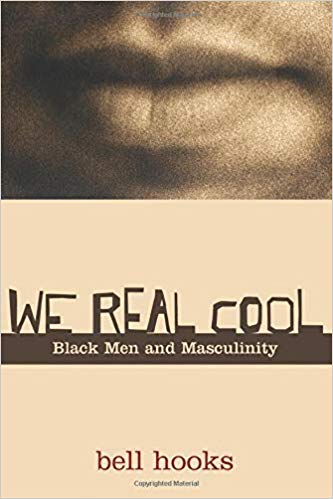
Why are so many commercially successful rappers’ fantasies reduced to “patriarchal f*cking?” Reading Michael Kimmel’s essay “Fuel for Fantasy: The Ideological Construction of Male Lust,” in her seminal book We Real Cool: Black Masculinity, bell hooks clarifies: “In the iconography of black male sexuality, compulsive-obsessive fucking is represented as a form of power when in actuality it is an indication of extreme powerlessness” (hooks: 67-8).
It’s auto-asphyxiation, a kind of nihilistic sadomasochism that says, if the world thinks of me as a beast, then a beast I shall be. Plenty of kids work this out by the time they hit the playground. “Patriarchy, as manifest in hip-hop, is where we can have our version of power within this very oppressive society,” explains writer/activist Kevin Powell (qtd. in hooks: 56). Ironically, Powell came to fame in the 90’s on MTV through the original reality show aptly entitled “The Real World.”
Plantation Politics 101
Since at least 2017, commercial rap has been the most widely sold musical genre; it’s pop. Beyond roughly 700,000 sales, Black people are not the primary purchasers of commercialised rap, as explained in the documentary Hip-Hop: Beyond Beats and Rhymes. It takes millions to earn ‘multi-platinum’ status. Yet, while created by and for Black and brown people in ghettoized communities, it has morphed into a transnational commodity having little to do with the realities of its originators, save for the S&M fantasies of wealth beyond imagination. And what do they boast of doing with that power, read as wealth? Liberating the masses from poverty? Intervening on the Prison Industrial Complex? Competing with the “nightmare” racist landlords like Donald Trump’s dad Fred? No! They mimic the very gangsters they pretend to be. Once Italian-Americans held hard that stereotype, but now it’s us. It’s always about power. Truly, ‘it’s bigger than Hip-Hop’.
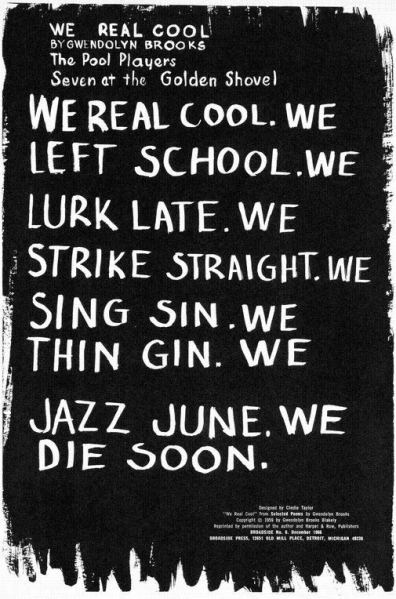 The more painful question few bother asking is why commercial rap music focuses so keenly on pimps, thugs, b*tches and whores? Like other commodities, commercial rap is tailored to the primary consumer base, which isn’t (fellow) Black people, but white youth. What is it about contemporary white youth that craves images of salacious, monstrous, licentious and violent Black people boasting about killing and maiming one another? Describing this mass commercial “Misogynistic rap music,” hooks states: “It is the plantation economy, where black males labor in the field of gender and come out ready to defend their patriarchal manhood by all manner of violence against women and men whom they perceive to be weak and like women” (hooks: 57-8). Plainly, the root of commercial rap’s global prominence is the reenactment of “sadomasochistic rituals of domination, of power and play” (hooks: 65).
Hyper-sexualisation is a form of projection onto Black people a mass white anxiety about our shared “history of their brutal torture, rape, and enslavement of black bodies” (hooks: 63). She goes on to explain: “If white men had an unusual obsession with black male genitalia it was because they had to understand the sexual primitive, the demonic beast in their midst. And if during lynchings they touched burnt flesh, exposed private parts, and cut off bits and pieces of black male bodies, white folks saw this ritualistic sacrifice as in no way a commentary on their obsession with black bodies, naked flesh, sexuality” (ibid). Hence the BBC obsession finds a consumer home safely in pop music!
“I am ashamed of my small penis,” a stranger recently mentioned to me in a grilled wing joint I happened upon here in Hanoi. The confession came from nowhere, having nothing to do with anything happening between us at the time. Is this the locker-room banter I always hear about? Are straight men really so obsessed with their penises? Given his broken English and my non-existent Vietnamese, I tried comforting him by explaining in the simplest terms the saying: “It’s not the size of the wave but the motion of the ocean.” Colloquialisms never translate easily, but I did at least deflect the subject away from ethno-sexual myths spread worldwide through contemporary consumer culture.
We’ve got to talk about ethno-sexual myths with openness, honesty and integrity. Silence is the master’s tool; silence = death! Further, echoing ‘black, lesbian, mother, warrior, poet’ Audre Lorde, ‘The master’s tools will never dismantle the master’s house”. I am Black in Asia, and there are perhaps no two groups of men at polar opposites of ethno-sexual myths. Like the hyper-sexualisation of women of colour, these myths reveal that neither Blackness nor Asianess is at the centre of these globally circulated myths. Hyper-sexual in comparison to who or what? Hegemonic heteronormative whiteness. Say it with me: Duh!
To get In-formation:
hooks, b. (2004) We Real Cool: Black Men and Masculinity. New York: Routledge.
Lorde, A. (1984) Sister Outsider: Essays and Speeches. Berkeley: Crossing Press.
Share this:


The Euthanasia of the Youth in Asia: Milky White Skin #BlackenAsiawithLove
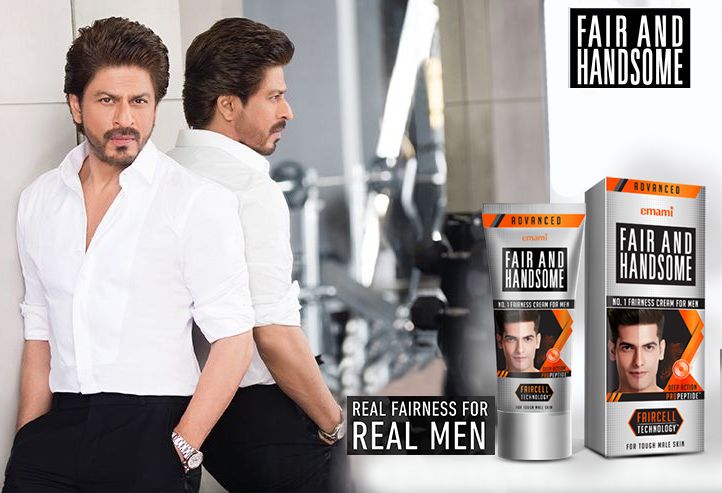
Shahrukh Khan (SRK) is arguably the Indian film industry’s biggest global star and commercial brand ambassador. In one early advertisement, he strikes a match from a dark-skinned kid’s face to show just how abhorrent it is as a trait. In another ad, ostensibly more humorous, SRK disses a group of traditional Northern Indian wrestlers for wearing skirts and make-up. The star chides them for using the feminine product instead of (converting to) the newly available male version (i.e. re-packaged in gray rather than pink). The product? The skin bleach Fair and Handsome. In both ads, the transformed, ‘fairer’ skinned consumer is pummeled with young girls virtually appearing from nowhere.
This follows the ty pical consumerist trope: The product makes users more popular and sexually appealing. Yet, things got worse. Clean and Dry’s ‘intimate’ bleaching shower gel for women (C&D). Yes, you read right: A bleaching shower gel aimed at lightening brown women’s crotches. There’s no male equivalent, save for a well-circulated spoof called Gore Gote: India’s #1 Testicular Fairness Cream (Mukherjee). In the initial shot of the C&D advertisement, a pouty-mouthed (fair-skinned) woman is ignored by her (fair-skinned) husband in their (upper-middle-class) apartment. Naturally, it seems, she bleaches her labia with C&D. After displaying the product’s virtues, the husband literally chases the wife around the fancy flat as she playfully dangles (his) keys. Her secret to happiness: A newly bleached intimate area. Is this a proxy for a white woman’s vagina?
What’s wrong with consumerism? The marketplace will not save you. As a Black person interested in self-love, it is clear that the market is murderous. There, the fetish of blackness is made widely available, as if one could bottle stereotypical ‘coolness’ and sell it to the youth in Asia, one of the largest consumer groups in the world. Fashion shops targeting youth regularly plaster posters of Bob Marley or Hip-Hop thugs to peddle goods to youth. Yet, standing in the rotunda of this mall, one could see shops of every major western cosmetics brand, including Clinique, Mac, Estée Lauder. Here in Asia, the flagship product in each shop is skin bleach! Black is cool, but white is power. Ironically, at the time I was modeling for a campaign in Vogue and Elle Décor in India, yet none of the make-up artists carried my mocha shade (shady, right).
YELLOW FEVER
 The skin bleach industry is by far the most virulent of all consumer products – even fast food. The bulk of this industry is meted out on the bodies of women…and girls who learn early that fate of darkness (just check out any Indian Matrimonials page). According to an August 2019 article in Vogue: “Per a recent World Health Organization report (WHO), half of the population in Korea, Malaysia, and the Philippines uses some kind of skin lightening treatment. And it’s even higher in India (60%) and African countries, such as Nigeria (77%).” After a 7 minutes instrumental intro to his 1976 hit, Yellow Fever, Fela Kuti chants: “Who steal your bleaching?/Your precious bleaching?…/Your face go yellow/Your yansh go show/Your mustache go show/Your skin go scatter/You go die o.”
It’s lethal, often a mercurous poison used to kill the soul. It is a fetishization of whiteness, that reveals the “internalization of the coloniser’s inferiorisation of dark skin as native and Other” (Thapan: 73). It’s euthanasia. Skin bleachers are painlessly killing themselves, willingly participating in their own annihilation. Not only does it quite literally murder the melanin in one’s skin, it symbolically kills one’s ‘dark and native’ self, giving birth to a new and improved modern identity. It requires constant application and reflects a consumerist’s self-regulation. Bleach is expensive, despite the industry’s ‘bottom of the pyramid’ approach to the marketing 4P’s – bleach sold in cheap tiny packages for the poor. Skin bleach is a form of mimesis, to actually embody modernity through crafting the ‘cultivated, developed and perfected’ self (Thapan: 70).
When I began teaching at UoN, I was asked to propose topics for business ethics modules, which were then optional. Hesitantly, I suggested skin bleach and hair weaves. Looking at the composition of the student body, this would be as familiar to them, as the products were locally available (see picture below taken in an ‘ethnic’ hair shop on Northampton’s high street). Several students have subsequently pursed these subjects in their dissertations. I was sad to learn that in colloquial Somali, ‘fair skin’ is a moniker for pretty, just as we western Blacks use ‘light skin and long hair’. Colourism makes dark-skinned people unsafe in our own homes.
I was pleasantly surprised at the support from the module leader, an older, straight white man. He said he knew little about the politics of black and brown skin and hair, yet listened with great interest and did his own research into the matter. What’s more, he stood by me both literally and figuratively. He was there when I was called to account for some negative student feedback such as “I’m a guy, I don’t wear make-up,” when asked to consider the differential impact of beauty standards on the psyches and earnings of women in business. He stood by me when I’d dropped the F-word (feminism) into the curriculum. This was before the Gender Pay Gap became more widely known or theBritish government required audits from large organisations. He is an ally. He stood by me in ways that may have been riskier for individuals outside the circles of normative power of gender, race and class. Talk about a way to use one’s privilege!

References
Kuti, F. (1976). Yellow Fever. [LP] Decca 8 Track Studios. Available at: https://genius.com/Fela-kuti-and-africa-70-yellow-fever-annotated [Accessed 13 Nov. 2019].
Mukherjee, R., Banet-Weiser, S. and Gray, H. (2019). Racism Postrace. Durham, N.C.
Thapan, M. (2009). Living the Body: Embodiment, Womanhood and Identity in Contemporary India. New Delhi: SAGE.
Share this:


A month of Black history through the eyes of a white, privileged man… an open letter
Dear friends,
Over the years, in my line of work, there was a conviction, that logic as the prevailing force allows us to see social situations around (im)passionately, impartially and fairly. Principles most important especially for anyone who dwells in social sciences. We were “raised” on the ideologies that promote inclusivity, justice and solidarity. As a kid, I remember when we marched as a family against nuclear proliferation, and later as an adult I marched and protested for civil rights on the basis of sexuality, nationality and class. I took part in anti-war marches and protested and took part in strikes when fees were introduced in higher education.
All of these were based on one very strongly, deeply ingrained, view that whilst the world may be unfair, we can change it, rebel against injustices and make it better. A romantic view/vision of the world that rests on a very basic principle “we are all human” and our humanity is the home of our unity and strength. Take the environment for example, it is becoming obvious to most of us that this is a global issue that requires all of us to get involved. The opt-out option may not be feasible if the environment becomes too hostile and decreases the habitable parts of the planet to an ever-growing population.
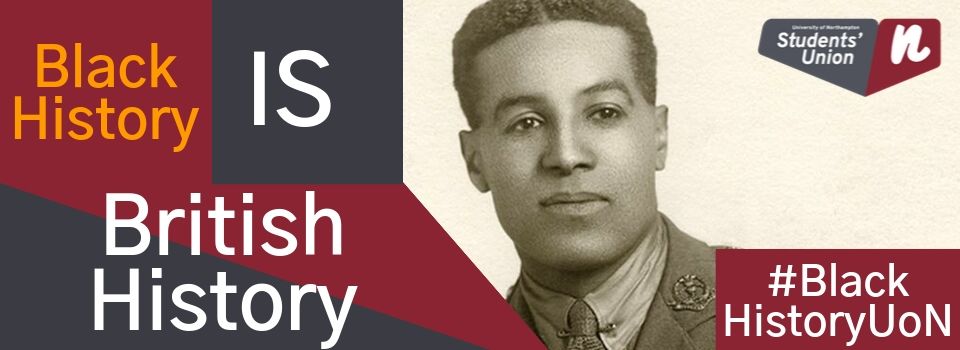
As constant learners, according to Solon (Γηράσκω αεί διδασκόμενος)[1] it is important to introspect views such as those presented earlier and consider how successfully they are represented. Recently I was fortunate to meet one of my former students (@wadzanain7) who came to visit and talk about their current job. It is always welcome to see former students coming back, even more so when they come in a reflective mood at the same time as Black history month. Every year, this is becoming a staple in my professional diary, as it is an opportunity to be educated in the history that was not spoken or taught at school.
This year’s discussions and the former student’s reflections made it very clear to me that my idealism, however well intended, is part of an experience that is deeply steeped in white men’s privilege. It made me question what an appropriate response to a continuous injustice is. I was aware of the quote “all that is required for evil to triumph is for good men to do nothing” growing up, part of my family’s narrative of getting involved in the resistance, but am I true to its spirit? To understand there is a problem but do nothing about it, means that ultimately you become part of the same problem you identify. Perhaps in some regards a considered person is even worse because they see the problem, read the situation and can offer words of solace, but not discernible actions. A light touch liberalism, that is nice and inclusive, but sits quietly observing history written in the way as before, follow the same social discourses, but does nothing to change the problems. Suddenly it became clear how wrong I am. A great need to offer a profound apology for my inaction and implicit collaboration to the harm caused.
I was recently challenged in a discussion about whether people who do not have direct experience are entitled to a view. Do those who experience racism voice it? Of course, the answer is no; we can read it, stand against it, but if we have not experienced it, maybe, just maybe, we need to shut up and let other voices be heard and tell their stories. Black history month is the time to walk a mile in another person’s shoes.
Sincerely yours
M
[1] A very rough translation: I learn, whilst I grow, life-long learning.
Share this:

Your Name Is Not BAME
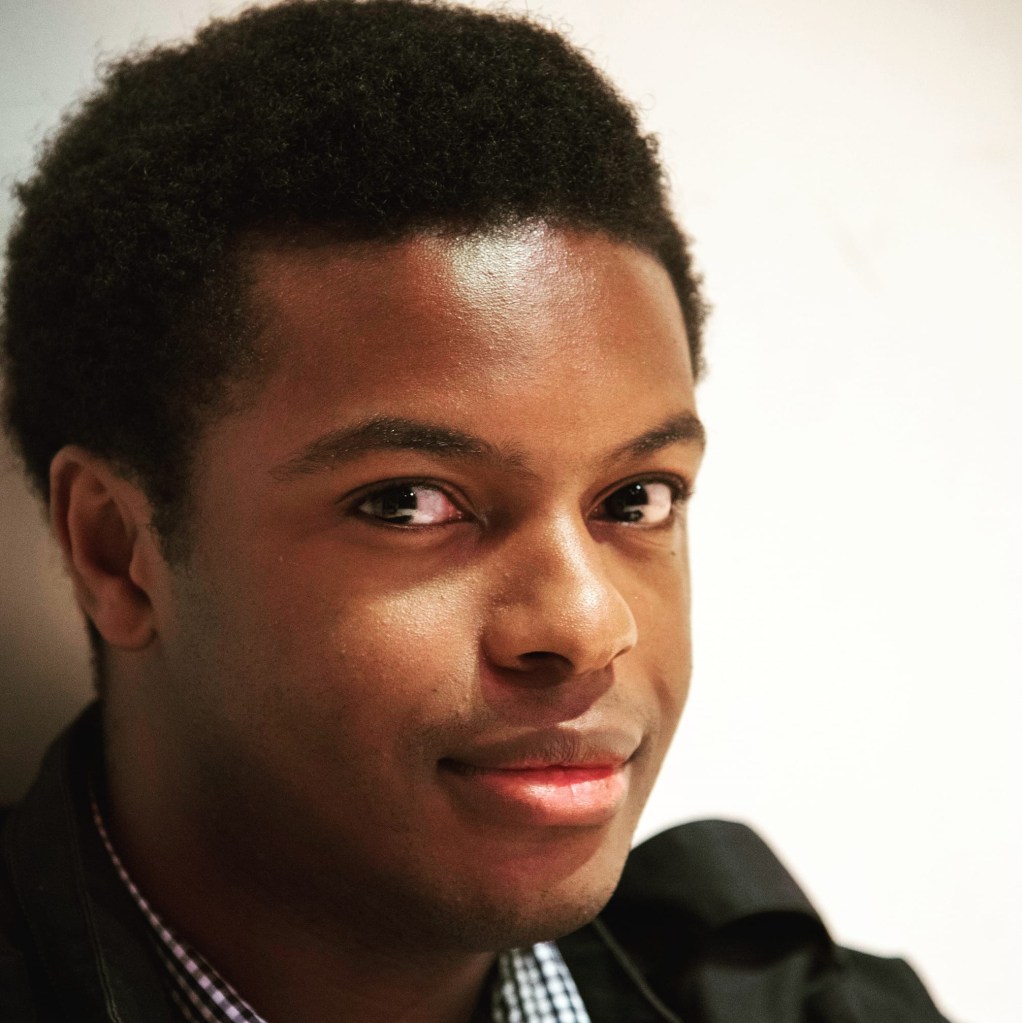
My name is Tré Ventour and I am the Students’ Union’s Vice President BME Sabbatical Officer. When I’ve asked students what BME stands for, most have been clueless – Black Minority Ethnic. The same could be said for BAME – Black Asian Minority Ethnic. I was elected to represent ethnic minority students. But I’ve been asking myself how much longer will this 47% be an ethnic minority? At Northampton, they will soon be the majority. This 14,000-student university in which nearly 7000 fit into this BME box.
Pigeon-holed. To be put into a box. I don’t like to think in boxes. I try not to think in labels but in this world, it’s naive to be colourblind. In the education sector, in this day and age, especially at Northampton, to not see race is to ignore the experiences of nearly 7,000 students – nearly 7,000 stories about potential hate crimes, and what about BAME members of staff? We must see race. We must see sex, class, and gender (all genders).
To be colourblind is to live life high on privilege – to exist without the consequences of hate crime. Some people live with racism, sexism and / or homophobia all their lives.
Many say “there’s one race, the human race.” That may be true but how comfortable must you be in your existence to come to that notion? And then push that notion on those who experience racism on a daily basis.
When I’ve spoken to students about BAME or ethnic minority, they say “Just call me by my name.” Students are flesh and bone, more than acronyms. And I do what they tell me to do (in a manner of speaking / within reason). I’m not Vice President, I’m not Mr Ventour; I am Tré and I am here to help students, to represent students (of colour) – more so Black students that look at White authority and see invader. Who I have heard compare university to apartheid South Africa – one in, one out – to a Zimbabwe under British rule – De Beers, Rhodes and racism. Fear and exclusion.
Call them minorities, call them BME, call them BAME. Yet, this acronym just seems like coded language for Black. And at Northampton, when people say BME or BAME, they mean Black students, so just say what you mean, “Black.”
And if these labels, if these pigeon-hole terms help Higher Education solve issues like attainment perhaps it’s worth it. But what I can say is that not all Black experiences are the same. To be a Black British student is not the same as to be a Black international from Africa, the EU or elsewhere.

But to be a person of colour in this country is to be immigrant, British or otherwise. To be overly polite. To be overly grateful or gracious. To be a good immigrant.
Share this:


The tyranny of populism

Himmler (1943)
So, we have a new prime minister Boris Johnson. Donald Trump has given his endorsement, hardly surprising, and yet rather than having a feeling of optimism that Boris in his inaugural speech in the House of Commons wished to engender amongst the population, his appointment fills me with dread. Judging from reactions around the country, I’m not the only one, but people voted for him just the same as people voted for Donald Trump and Volodymyr Zelensky, the recently elected Ukrainian president.
The reasons for their success lie not in a proven ability to do the job but in notions of popularity reinforced by predominantly right-wing rhetoric. Of real concern, is this rise of right wing populism across Europe and in the United States. References to ‘letter boxes’ (Johnson, 2018), degrading Muslim women or tweeting ethnic minority political opponents to ‘go back to where they came from’ (Lucas, 2019) seems to cause nothing more than a ripple amongst the general population and such rhetoric is slowly but surely becoming the lingua franca of the new face of politics. My dread is how long before we hear similar chants to ‘Alle Juden Raus!’ (1990), familiar in 1930s Nazi Germany?
It seems that such politics relies on the ability to appeal to public sentiment around nationalism and public fears around the ‘other’. The ‘other’ is the unknown in the shadows, people who we do not know but are in some way different. It is not the doctors and nurses, the care workers, those that work in the hospitality industry or that deliver my Amazon orders. These are people that are different by virtue of race or colour or creed or language or nationality and, yet we are familiar with them. It is not those, it is not the ‘decent Jew’ (Himmler, 1943), it is the people like that, it is the rest of them, it is the ‘other’ that we need to fear.
The problems with such popular rhetoric is that it does not deal with the real issues, it is not what the country needs. John Stuart Mill (1863) was very careful to point out the dangers that lie within the tyranny of the majority. The now former prime minister Theresa May made a point of stating that she was acting in the national Interest (New Statesman, 2019). But what is the national interest, how is it best served? As with my university students, it is not always about what people want but what they need. I could be very popular by giving my students what they want. The answers to the exam paper, the perfect plan for their essay, providing a verbal precis of a journal article or book chapter, constantly reminding them when assignments are due, turning a blind eye to plagiarism and collusion*. This may be what they want, but what they need is to learn to be independent, revise for an exam, plan their own essays, read their own journal articles and books, plan their own assignment hand in dates, and understand and acknowledge that cheating has consequences. What students want has not been thought through, what students need, has. What students want leads them nowhere, hopefully what students need provides them with the skills and mindset to be successful in life.
What the population wants has not been thought through, the ‘other’ never really exists and ‘empire’ has long gone. What the country needs should be well thought out and considered, but being popular seems to be more important than delivering. Being liked requires little substance, doing the job is a whole different matter.
*I am of course generalising and recognise that the more discerning students recognise what they need, albeit that sometimes they may want an easier route through their studies.
Alle Juden Raus (1990) ‘All Jews Out’, Directed by Emanuel Rund. IMDB
Himmler, H. (1943) Speech made at Posen on October 4, 1943, U.S. National Archives, [online] available at http://www.historyplace.com/worldwar2/holocaust/h-posen.htm [accessed 26 July 2019].
Johnson, B. (2018) Denmark has got it wrong. Yes, the burka is oppressive and ridiculous – but that’s still no reason to ban it, The Telegraph, 5th August 2018.
Lucas, A. (2019) Trump tells progressive congresswomen to ‘go back’ to where they came from, CNBC 14 July 2019 [online] available at https://www.cnbc.com/2019/07/14/trump-tells-progressive-congresswomen-to-go-back-to-where-they-came-from.html [accessed 26 July 2019]
Mill, J. S. (1863) On Liberty, [online] London: Tickner and Fields, Available from https://play.google.com/store/books [accessed 26 July 2019]
New Statesman (2019) Why those who say they are acting in “the national interest” often aren’t, [online] Available at https://www.newstatesman.com/politics/uk/2019/01/why-those-who-say-they-are-acting-national-interest-often-arent [accessed 26 July 2019]

 Thoughts from the criminology team