
Home » Ethics
Category Archives: Ethics

Doing the right thing
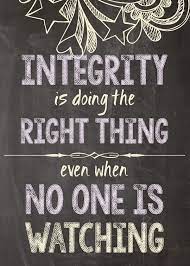
It seems that very often, the problem with politics in this country is that it gets in the way of doing the right thing. Despite the introduction of the The Seven Principles of Public Life known as the Nolan Principles, politicians (not all of them of course, but you will have seen ample examples) still seem to be hell bent on scoring political advantage, obfuscating on matters of principle and where possible avoiding real leadership when the country is crying out for it. Instead, they look to find someone, anyone, else to blame for failures that can only be described as laying clearly at the door of government and at times the wider institution of parliament.
One example you may recall was the complete farce in parliament where the speaker, Sir Lyndsay Hoyle, was berated for political interference and breaking the rules of the house prior to a debate about a ceasefire in Gaza. It became quite obvious to anyone on the outside that various political parties, Conservatives, Labour and the Scottish National Party were all in it to score points. The upshot, rather than the headlines being about a demand for a ceasefire in Gaza, the headlines were about political nonsense, even suggesting that the very core of our democracy was at stake. Somehow, they all lost sight of what was important, the crises, and it really is still a crisis, in Gaza. Doing the right thing was clearly not on their minds, morals and principles were lost along the way in the thrust for the best political posturing.
And then we come to the latest saga involving political parties, the WASPI women (Women Against State Pension Inequality) campaign. The report from the Parliamentary and Health Service Ombudsman has ruled that the Department for Work and Pensions (DWP) “failed to provide accurate, adequate and timely information” about changes to pension ages for women. The report makes interesting reading. In essence, it accuses the DWP of maladministration on several counts.
The Pensions Act 1995 changed the way in which women could draw their pensions in an effort to equalise the age with men. A timetable was drawn up raising the qualifying age for women from 60 to 65, with the change phased in between 2010 and 2020. However, under the Pensions Act 2011, the new qualifying age of 65 for women was brought forward to 2018. The report acknowledges that the DWP carried out campaigns from 1995 onwards but in 2004 received results of research that a considerable number of affected women still believed that their retiring age was 60. Unfortunately, through prevarication and for some quite inexplicable reasoning the women affected were not notified or were notified far too late. There was a calculation carried out that suggested some women were not told until 18 months before their intended retirement date. The matter was taken before the courts but the courts ruling did nothing to resolve the issue other than providing a ruling that the DWP were not required by law to notify the women.
You can read about the debacle anywhere on the Internet and the WASPI women have their own Facebook page. What seems astounding is that both the Government and the opposition have steadfastly avoided being drawn on the matter of compensation for these women. I should add that the maladministration has had serious detrimental impacts on many of them. Not even a sorry, we got it wrong. Instead we see articles written by right wing Conservatives suggesting the women had been provided with ample warning. If you read the report, it makes it clear that provisions under the Civil Service Code were not complied with. It is maladministration and it took place under a number of different governments.
Not getting it right in the first instance was compounded by not getting it right several times over later on. It seems that given the likely cost to the taxpayer, this maladministration is likely, like so many other cock ups by government and its agencies, to be kicked into the long grass. Doing the right thing is a very long, long way away in British politics. And lets not forget the Post Office scandal, the infected blood transfusion scandal and the Windrush scandal to name but a few. So little accountability, such cost to those impacted.
- The quotation in the image is often wrongly misattributed to C. S. Lewis. ↩︎
Share this:


Festive messages, a legendary truce, and some massacres: A Xmas story

Holidays come with context! They bring messages of stories that transcend tight religious or national confines. This is why despite Christmas being a Christian celebration it has universal messages about peace on earth, hope and love to all. Similar messages are shared at different celebrations from other religions which contain similar ecumenical meanings.
The first official Christmas took place on 336 AD when the first Christian Emperor declared an official celebration. At first, a rather small occasion but it soon became the festival of the winter which spread across the Roman empire. All through the centuries more and more customs were added to the celebration and as Europeans “carried” the holiday to other continents it became increasingly an international celebration. Of course, joy and happiness weren’t the only things that brought people together. As this is a Christmas message from a criminological perspective don’t expect it to be too cuddly!
As early as 390 AD, Christmas in Milan was marked with the act of public “repentance” from Emperor Theodosius, after the massacre of Thessalonica. When the emperor got mad they slaughtered the local population, in an act that caused even the repulson of Ambrose, Bishop of Milan to ban him from church until he repented! Considering the volume of people murdered this probably counts as one of those lighter sentences; but for people in power sentences tend to be light regardless of the historical context.
One of those Christmas celebrations that stand out through time, as a symbol of truce, was the 1914 Christmas in the midst of the Great War. The story of how the opposing troops exchanged Christmas messages, songs in some part of the trenches resonated, but has never been repeated. Ironically neither of the High Commands of the opposing sides liked the idea. Perhaps they became concerned that it would become more difficult to kill someone that you have humanised hours before. For example, a similar truce was not observed in World War 2 and in subsequent conflicts, High Commands tend to limit operations on the day, providing some additional access to messages from home, some light entertainment some festive meals, to remind people that there is life beyond war.
A different kind of Christmas was celebrated in Italy in the mid-80s. The Christmas massacre of 1984 Strage Di Natale dominated the news. It was a terrorist attack by the mafia against the judiciary who had tried to purge the organisation. Their response was brutal and a clear indication that they remained defiant. It will take decades before the organisation’s influence diminishes but, on that date, with the death of people they also achieved worldwide condemnation.
A decade later in the 90s there was the Christmas massacre or Masacre de Navidad in Bolivia. On this occasion the government troops decided to murder miners in a rural community, as the mine was sold off to foreign investors, who needed their investment protected. The community continue to carry the marks of these events, whilst the investors simply sold and moved on to their next profitable venture.
In 2008 there was the Christmas massacre in the Democratic Republic of Congo when the Lord’s Resistance Army entered Haut-Uele District. The exact number of those murdered remains unknown and it adds misery to this already beleaguered country with such a long history of suffering, including colonial ethnic cleansing and genocide. This country, like many countries in the world, are relegated into the small columns on the news and are mostly neglected by the international community.
So, why on a festive day that commemorates love, peace and goodwill does one talk about death and destruction? It is because of all those heartfelt notions that we need to look at what really happens. What is the point of saying peace on earth, when Gaza is levelled to the ground? Why offer season’s wishes when troops on either side of the Dnipro River are still fighting a war with no end? How hypocritical is it to say Merry Christmas to those who flee Nagorno Karabakh? What is the point of talking about love when children living in Yemen may never get to feel it? Why go to the trouble of setting up a festive dinner when people in Ethiopia experience famine yet again?
We say words that commemorate a festive season, but do we really mean them? If we did, a call for international truce, protection of the non-combatants, medical attention to the injured and the infirm should be the top priority. The advancement of civilization is not measured by smart phones, talking doorbells and clever televisions. It is measured by the ability of the international community to take a stand and rehabilitate humanity, thus putting people over profit. Sending a message for peace not as a wish but as an urgent action is our outmost priority.
The Criminology Team, wishes all of you personal and international peace!
Share this:


Behind the Filter: Navigating the Fine Line Between Genuine Parenting and Child Exploitation in the World of Influencers

As the world of social media influencers continues to expand, certain high-profile cases have brought the issue of mum influencers exploiting their children into the spotlight. These cases serve as cautionary tales, highlighting the potential dangers and ethical pitfalls that come with blurring the lines between personal family life and commercial partnerships. It is important to note that while the spotlight has indeed centred on ‘mum’ influencers this discussion cannot go forward without acknowledging, that we should be shaping the discussion on the way PARENTS create content online.
Mum influencers have become a powerful force in the influencer landscape. They provide a glimpse into the daily lives of mothers, discussing topics such as parenting tips, family dynamics, and the challenges of balancing work and family life. Initially, many followers were drawn to these influencers for their relatability and authenticity. This has created an opportunity for dads to also partake in the ‘business’ of family influencing as many people yearn for the whole family picture, which brings a non-traditional demographic of followers and thus an expansion of interest and growth of followers, and thus bringing the allure of financial opportunities.
As followers increase, family influencers often receive offers from brands seeking to collaborate. This is where the ethical dilemma arises – how far is too far when it comes to integrating children into sponsored content? While some collaborations may involve innocent and genuine family moments, others might push the boundaries, putting children in situations that prioritize profit over their well-being. It is essential to differentiate between content that genuinely celebrates parenthood/ family and content that exploits it. Sharing heartfelt stories, documenting milestones, and discussing the challenges of parenthood and family dynamics can be informative and supportive for other parents. However, the line blurs when children are consistently used to endorse products and/ or services in a way that feels forced or invasive.
Children of influencers often have their lives documented from birth, which raises concerns about their privacy. As they grow older, they might not consent to having their childhood experiences permanently etched into the online realm. The potential impact on their mental and emotional well-being as they come to grips with their digital footprint is a significant consideration. We all have that embarrassing childhood picture that parents have on the wall or in a photo album, however that is in the confines of their home and whose eyes view them can be monitored. The tricky nature of the internet removes that possibility. With visibility comes risk. Publicly showcasing one’s life includes exposure to not only praise but also criticism and negativity. Children that have an online presence in the capacity of being influencers can become targets of online trolls or even predators, who might misuse their images or information. Protecting children from these potential dangers should be a priority for any parent, online or offline.
My previous point made on children of influencers being documented from birth begs reflection on the concept of consent. This can be viewed in many ways; however, the notion of consent becomes murky when children are too young to understand the implications of their online presence. While some influencers argue that their children enjoy being part of the content creation process, it is challenging to gauge how much choice a young child truly has. Blurring the lines between what is a personal family moment and what is a scripted advertisement can complicate this matter further.
As family influencers grapple with this dilemma, there’s an increasing call for responsible content creation, and thus drawing clear boundaries between what is acceptable and what crosses the line into exploitation. Making conscious decisions about the type and frequency of content involving children and avoiding situations that compromise their well-being for the sake of likes, shares, and sponsorship should be paramount, but in many ways, this does not always seem to be considered. There are many examples that come to mind, but for this blog entry I will use a particularly shocking case. In 2020 YouTubers Myka and James Stauffer faced backlash after publicly announcing the decision to “rehome” their adopted son with autism. The Stauffer family, known for their parenting content, had initially garnered support for their adoption journey. The family seemed like any other online family that people aspired to be like. They had four biological children and presented their happy loving family for all to see. However, the revelation that they had monetized the adoption process through sponsored content and merchandise raised concerns about the child’s well-being and whether he was being exploited for financial gain. The backlash following their announcement saw them lose thousands of followers. While there were numerous followers and news outlets that spoke out against the Stauffer’s actions, there was little commentary that focused on the impact that the ‘rehoming’ of their adopted son had on him or their other children. The children should have been at the centre of this story but instead they were pushed to the side.

This blog entry servers as poignant reminders of the potential pitfalls in the world of family influencers and their children. While some cases may involve genuine oversight, it’s essential for influencers and brands to exercise caution and ethical responsibility when involving children in their content.
As influencers strive to maintain authenticity while navigating commercial opportunities, it is crucial that they strike a balance between sharing genuine family moments and protecting the well-being, privacy, and dignity of their children. In a landscape where the line between public and private blurs, parent influencers must remember that their children’s well-being is paramount. Instead of exploiting their children for financial gain, fame and clout.
Share this:


Reflecting on Research Access

I am currently undertaking a part-time PhD and, as part of my qualitative research project, I need to keep a reflexivity diary, reflecting on my own position in relation to the subjects of my research. My first entry reflects on the process of negotiating access, and I thought it might make an interesting subject for a criminology blog!
As a reflexive qualitative researcher it is important constantly to reflect on my own position in relation to my research and my participants. I am about to start collecting data but only after a very lengthy process of negotiating access (12 months). This process was one in which my own position and history had a significant influence.
For my first project, I am conducting detailed qualitative interviews with serving prisoners. This required approval from the HMPPS National Research Committee (NRC). As a former HMPPS employee, I thought that my inside knowledge would be helpful – indeed at a later stage, in negotiating access to specific prisons, I think it has been. However, at the stage of submitting my application for national approval my prior experience added emotional baggage.
I worked for the Prison Service for nearly 12 years. I really enjoyed working with prisoners and I also enjoyed the camaraderie of working within the tight community of a prison. I worked with some lovely individuals who were dedicated to helping people and who supported me personally in my career. However, the Prison Service is a large, unwieldy organisation and large unwieldy organisations do not always treat individuals well. There were several times in my career when I felt that the organisation had treated me badly: when a recruitment freeze was introduced just after I passed the assessment centre so that I was stuck in limbo without a permanent job; when the in-house MSc was abolished (with no replacement) just before I was due to start it; when I ended up taking on my boss’ responsibilities as well as my own with no promotion or increase in pay; when my request to work part-time after maternity leave was declined; when my post was put on the “surplus list” during a phase of job cuts. It was not all negative – as I say, I enjoyed the work very much, I was proud to be a prison psychologist and there were times when the organisation was good to me (I eventually had a different distance learning MSc funded by the Prison Service, and I was able to take a 12 month career break following my maternity leave) but those negative incidents felt like personal insults when I was working hard. The biggest kick in the teeth came more recently in 2020 when I applied to re-join HMPPS when my tenure on the Parole Board came to an end. I had an unremarkable remote interview and was then turned down. I knew that HMPPS advertised for qualified psychologists every month, so there were plenty of vacancies – that they didn’t want me when I knew I was a good psychologist and had already given them the best years of my career really hurt.
Since then, I have started my PhD and secured a great job with St Andrew’s Healthcare which suits me better and has taken me in a new direction. The memory of the rejection was still lingering, however, when my initial research application to the HMPPS NRC was rejected. I felt like they were kicking me in the teeth again. My initial application was for a piece of research with both a quantitative and a qualitative element. The feedback in relation to the quantitative project was so devastating that I scrapped this part of the research altogether and focused on the qualitative part only. To be fair, the feedback was justified and the re-written proposal is for a much more methodologically sound piece of research, but it still felt personal at the time.
Conducting research during a pandemic is not easy. By the time I had responded to the NRC feedback and was ready to re-submit, there was a resurgence in COVID-19 cases and the NRC were not accepting any further applications. I was advised not to re-submit until applications were being accepted again, otherwise I would have been rejected with no chance to re-submit again. This caused a three-month delay and I had to chase to find out when applications re-opened. When I finally re-submitted, my application was not rejected, but I did receive a long list of requests for further information. Some of these seemed very petty. Responding to them was a significant piece of work and the sense of personal rejection and being made to jump through hoops returned. I was very grateful to one of my supervisors who read my responses before I submitted them and helped to remove the irritation that was evident!
Having submitted the answers to these further questions I waited for ages for a reply. By this stage, I was on first name terms with the reviewer on the NRC. She had sent my application for further feedback from the HMPPS Interventions Team (one of whom I had worked closely with in the past). I was given further questions to answer (which seemed to miss the point of what I was trying to achieve). I tried my hardest to remain positive and to suppress the irritation. HMPPS had the power and were entitled to it. They had every right to reject my research application. Just because I had been a good employee in the past, did not oblige them to give me research access. I resigned myself to receiving a final rejection and started to think of other ways to explore my research questions. And as I reached this point of acceptance, I finally received a positive response saying that my application had been accepted!
Since then, things have moved quickly. I revised my University ethics application in the light of all the amendments I had made following the HMPPS feedback and this was quickly approved. I approached individual prisons for specific access and received positive responses from HMP Grendon and HMP Onley – in these cases possibly reaping the benefits of personal connections from my time in the Prison Service. I will be going into HMP Grendon in early January to start to recruit participants. I no longer work for HMPPS or for the Parole Board, but my status as a Forensic Psychologist and as a former HMPPS employee and Parole Board member will have an influence on my relationships with participants. They will have had experiences with psychologists (and may have had experiences with the Parole Board) which may be positive or negative and which may facilitate or hinder trust in me as a researcher. I will need to look out for these influences and reflect on them as the research progresses.
Share this:


Is Criminology Up to Speed with AI Yet?
On Tuesday, 20th June 2023, the Black Criminology Network (BCN) together with some Criminology colleagues were awarded the Culture, Heritage, and Environment Changemaker of the Year Award 2023. The University of Northampton Changemaker Awards is an event showcasing, recognising, and celebrating some of the key success and achievements of staff, students, graduates, and community initiatives.
For this award, the BCN, and the team held webinars with a diverse audience from across the UK and beyond to mark the Black History Month. The webinars focused on issues around the ‘criminalisation of young Black males, the adultification of Black girls, and the role of the British Empire in the marking of Queen Elizabeth’s Jubilee.’. BCN was commended for ‘creating a rare and much needed learning community that allows people to engage in conversations, share perspectives, and contextualise experiences.’ I congratulate the team!
The award of the BCN and Criminology colleagues reflects the effort and endeavour of Criminologists to better society. Although Criminology is considered a young discipline, the field and the criminal justice system has always demonstrated the capacity to make sense of criminogenic issues in society and theorise about the future of crime and its administration/management. Radical changes in crime administration and control have not only altered the pattern of some crime, but criminality and human behaviour under different situations and conditions. Little strides such as the installation and use of fingerprints, DNA banks, and CCTV cameras has significantly transformed the discussion about crime and crime control and administration.
Criminologist have never been shy of reviewing, critiquing, recommending changes, and adapting to the ever changing and dynamic nature of crime and society. One of such changes has been the now widely available artificial intelligence (AI) tools. In my last blog, I highlighted the morality of using AI by both academics and students in the education sector. This is no longer a topic of debate, as both academics and students now use AI in more ways than not, be it in reading, writing, and formatting, referencing, research, or data analysis. Advance use of various types of AI has been ongoing, and academics are only waking up to the reality of language models such as Bing AI, Chat GPT, Google Bard. For me, the debate should now be on tailoring artificial intelligence into the curriculum, examining current uses, and advancing knowledge and understanding of usage trends.
For CriminologistS, teaching, research, and scholarship on the current advances and application of AI in criminal justice administration should be prioritised. Key introductory criminological texts including some in press are yet to dedicate a chapter or more to emerging technologies, particularly, AI led policing and justice administration. Nonetheless, the use of AI powered tools, particularly algorithms to aid decision making by the police, parole, and in the courts is rather soaring, even if biased and not fool-proof. Research also seeks to achieve real-world application for AI supported ‘facial analysis for real-time profiling’ and usage such as for interviews at Airport entry points as an advanced polygraph. In 2022, AI led advances in the University of Chicago predicted with 90% accuracy, the occurrence of crime in eight cities in the US. Interestingly, the scholars involved noted a systemic bias in crime enforcement, an issue quite common in the UK.
The use of AI and algorithms in criminal justice is a complex and controversial issue. There are many potential benefits to using AI, such as the ability to better predict crime, identify potential offenders, and make more informed decisions about sentencing. However, there are also concerns about the potential for AI to be biased or unfair, and to perpetuate systemic racism in the criminal justice system. It is important to carefully consider the ethical implications of using AI in criminal justice. Any AI-powered system must be transparent and accountable, and it must be designed to avoid bias. It is also important to ensure that AI is used in a way that does not disproportionately harm marginalized communities. The use of AI in criminal justice is still in its early stages, but it has the potential to revolutionize the way we think about crime and justice. With careful planning and implementation, AI can be used to make the criminal justice system fairer and more effective.
AI has the potential to revolutionize the field of criminology, and criminologists need to be at the forefront of this revolution. Criminologists need to be prepared to use AI to better understand crime, to develop new crime prevention strategies, and to make more informed decisions about criminal justice. Efforts should be made to examine the current uses of AI in the field, address biases and limitations, and advance knowledge and understanding of usage trends. By integrating AI into the curriculum and fostering a critical understanding of its implications, Criminologists can better equip themselves and future generations with the necessary tools to navigate the complex landscape of crime and justice. This, in turn, will enable them to contribute to the development of ethical and effective AI-powered solutions for crime control and administration.
Share this:


Is the cost of living crisis just state inflicted violence

Back in November 2022, social media influencer Lydia Millen was seen to spark controversy on the popular app ‘TikTok’ when she claimed that her heating was broken, so she therefore was going to check into the Savoy in London.
Her video, which she filmed whilst wearing an outfit worth over £30,000, sparked outrage on the app and across popular social media platforms. People began to argue that her comment was not well received in our current social climate, where people have to choose whether they should spend money on heating or groceries. For many, no matter your financial situation, problems with heating rarely resorts in a luxury stay in London.
With pressure mounting, Lydia decided to reply to comments on her video. When one individual stated “My heating is off because I can’t afford to put it on”, Lydia replied “It’s honestly heart breaking I just hope you know that other people’s realities can be different and that’s not wrong”. Sorry, Lydia; it is wrong. Realities are not different; they are miles apart. This is clearly seen in the fact that the National Institute of Economic and Social Research estimate that 1.5 million households in the UK over the next year will be landed in poverty (NIESR, 2022).
Ultimately, this is a social issue. Like Lydia said, in a society in which individuals are stratified based on their economic, cultural and social capital, we are conditioned to believe that this is just the way it is, and therefore, it is not wrong that other people have different realities. However, for me, it is not ‘different realities’, it is a matter of being able to eat and be warm versus being able to stay in a luxury hotel in London.
So, why is this a criminological issue? The cost of living crisis is simply just state inflicted poverty. Alike to Lydia with her social following, the government have the power to make change and use their position in society to remedy cost of living issues, but they don’t. This is not a mark of their failure as a government, it is a mark of their success. You only have to look at the government’s complete denial surrounding social issues to realise that this was their plan all along, and the longer this denial continues, the longer they succeed. This is seen in the case of Lydia Millen, who has acted as a metaphor for the level of negligence in which the government exercises over its citizens. Ultimately, for Lydia, it is very easy to tuck yourself into a luxury bed in the Savoy and close the curtains on the real world. The people affected by the crisis are not people like Lydia Millen, they are everyday people who work 40+ hours a week, and still cannot make ends meet. For the government, the cost of living crisis is the perfect way to separate the wheat from the chaff.
Ultimately, the cost of living crisis is not too dissimilar to the strikes that the UK is currently experiencing. Alike to the strikes, the cost of living crisis was always going to happen at the hands of a negligent government. The only way we can begin to address this problem is by giving our support, by supporting strikes all across the country, and by standing up for what is right. After all, the powers in our country have shown that our needs as a society are not a priority, so it is time to support ourselves.
“Injustice anywhere is a threat to justice everywhere.” ― Martin Luther King Jr.
References:
National Institute of Economic and Social Research (2022) What Can Be Done About the Cost-of-Living Crisis? NIESR [online]. Available from: https://www.niesr.ac.uk/blog/what-can-be-done-about-the-cost-of-living-crisis [Accessed 23/01/23].
Share this:


“Quelle surprise” – another fine mess
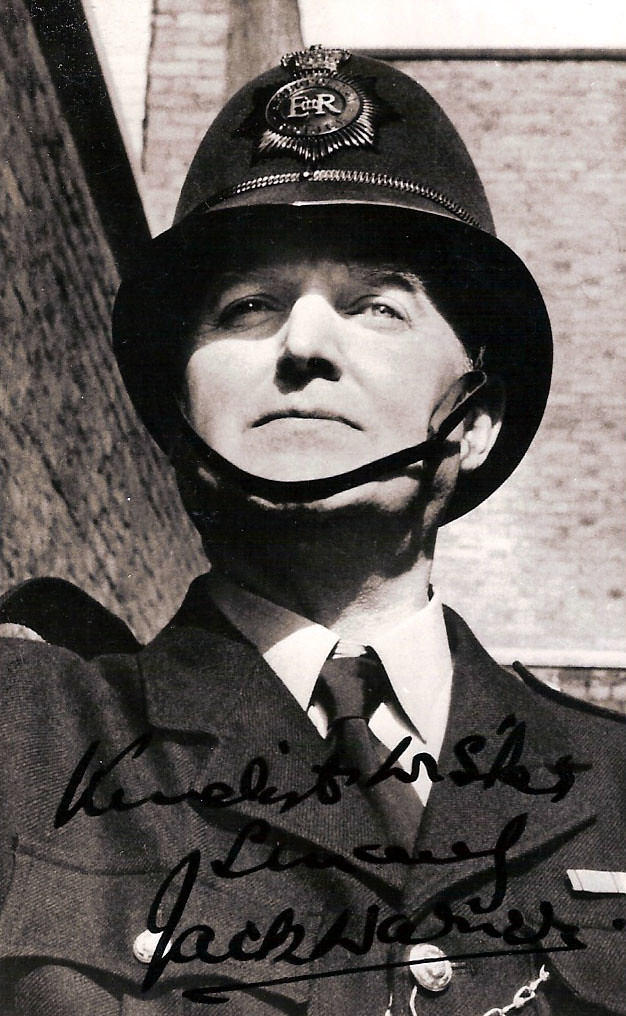
The recent HMICFRS publication An inspection of vetting misconduct and misogyny in the police service makes difficult reading for those of us that have or have had any involvement in the police service in England and Wales. Of course, this is not the first such report and I dare say it will not be the last. There is enough evidence both academic and during the course of numerous inquiries to suggest that there is institutional corruption of all sorts in the police service, coupled with prevailing racist and misogynistic attitudes. Hardly a surprise then that public confidence is at an all-time low.
As with so many reports and associated inquiries, the finger of blame is pointed at the institution or individuals within it. The failings are organisational failings or departmental or individual. I cast my mind back to those inquiries into the failings of social services or the failings of NHS trusts or the failings of the Fire and Rescue service or any other public body, all the fault of the organisation itself or individuals within it. Too many inquiries and too many failings to count. More often than not the recommendations from these reports and inquiries involve rectifying processes and procedures and increasing training. Rarely if ever do these reports even dare to dip their toe into the murky waters relating to funding. Nobody on these inquiries would have the audacity to suggest that the funding decisions made in the dark corridors of government would later have a significant contribution to the failings of all of these organisations and the individuals within them. Perhaps that’s why those people are chosen to head the inquiries or maybe the funding decisions are long forgotten.
Twenty percent budget cuts in public services in 2010/11 meant that priorities were altered often with catastrophic consequences. But to be honest the problems go much further back than the austerity measures of 2010/11. Successive governments have squeezed public services in the interest of efficiency and effectiveness. The result, neither being achieved, just some tinder box ready to explode into disaster. And yet more hand wringing and finger pointing and costly inquiries.
The problem is not just that the organisations failed or that departments or individuals failed, the problem is that all the failings might have been prevented if there was money available to deliver the service properly in the first place. And to do that, there needs to be enough staff, enough training, and enough equipment. And who is responsible for ensuring that happens?
Now you may say that is all very well but what of the police officers that are racist and misogynistic or corrupt and what of institutional corruption? After all the HMICFRS report is not just about vetting procedures but about the attitudes and behaviours of staff. A good point but let me point you to the behaviour of government, not just this government but preceding governments as well. The expenses scandal, the bullying allegations, the improper behaviour in parliament, the complete disregard for the ethics or for that matter, common decency. And what of those successive budget cuts and lack of willingness to address very real issues faced by staff in the organisations.
Let me also point you to the behaviour of the general public from whom the police officers are recruited. A society where parents that attend children’s football matches and hurl abuse at the referee and linesmen, even threatening to see them in the car park after the match. Not a one off but from recent reports a weekly occurrence and worse. A society now where staff in shops are advised not to challenge shoplifters in fear of their own safety. A society where there is a complete disregard for the law by many on a daily basis, including those that consider themselves law abiding citizens. A society where individuals blame everyone else, always in need of some scapegoat somewhere. A society where individuals know individually and collectively how they want others to behave but don’t know or disregard how they should behave.
I’m not surprised by the recent reports into policing and other services, saddened but not surprised. I’m not naïve enough to think that society was really any better at some distant time in the past, in fact there were some periods where it was definitely worse and policing of any sort has always been problematic. My fear is we are heading back to the worst times in humanity and these reports far from highlighting just an organisational problem are shining a floodlight on a societal one. But it suits everyone to confine the focus to the failings of organisations and the individuals within them. Not my fault, not my responsibility it’s the others not me, quelle surprise.
Share this:


Capitalism and tourism: an ethical conundrum

After a two-year delay in our holiday booking due to the Covid pandemic, my wife and I were fortunate enough to spend a two-week holiday in Cape Verde (Cabo Verde) on the island of Sal. We’ve been lucky enough to visit the islands several times over the last ten years. Our first visit was to Boa Vista but since the hotel that we liked no longer seemed to be available through our tour operators, we ended up going to Sal. When we first visited Boa Vista, there was little to be found outside of the hotel other than deserted beaches and the crashing of the Atlantic waves on the seashore. There was a very large hotel on the other side of the island and a smattering of smaller hotels dotted around, but that was it. After several visits we began to notice that other hotels were popping up along the seashore and there was a definite sense of development to cater for the holiday trade. The same can be said of Sal. The first hotel we visited had only just been built and there were the foundations of other buildings creeping up alongside but in the main, it seemed pretty deserted. Now though there are hotels everywhere and a fairly new very large one not that far away from where we stayed.
The first thing you notice as a visitor to the islands is that this is not an affluent country, far from it. Take a short trip into the town centre and you very rapidly see and sense the pervading poverty. This is a former Portuguese colony, and it comes as no surprise that it played a strategic role in the slave trade until the late nineteenth century whereupon it saw a rapid economic decline. Tourism has boosted the economy and plays a significant role in the country’s population, and this became even more evident during our latest visit. The country is only just recovering from the pandemic and several of the hotels were still mothballed as were the various businesses along the sea front. I’m not sure what the situation was or is in the country with regards to welfare, but I wouldn’t mind betting that they’d never heard of the word furlough, let alone implemented any such scheme. Quite simply no tourism means no work and no work means no wages, such as they are. In conversation with a number of the staff at the hotel, it became obvious that they were not only pleased we were there, but that they wanted us to return again. We were often asked if we would come back and one person, I spoke to pleadingly asked us to return as ‘we need the job’. Of course, it’s not just us that need to return, it’s all the tourists. Tourism supports so many aspects of the economy, not just jobs in hotels but local businesses as well. I think the fact that we keep going back there says something about the lovely people that we’ve been privileged to meet.
But then as I sat one night contently sipping a gin and tonic, debating whether I should have another before dinner, I began to think about whether all of this was ethical. The hotel we stayed in was part of a large international chain. Nearly all the hotels are part of large multinational corporations servicing their shareholders. Whilst my relaxation and enjoyment is great for me, it is on the back of the exploitative nature of the service industry. A business that probably doesn’t pay high wages, those working in the service industry in this country can probably attest to that, so goodness knows what it’s like in an impoverished place such as Cape Verde. My enjoyment therefore promotes exploitation and yet vis-a- vie enables people to have much needed work and pay. Of course, I may have this all wrong and the companies are pouring millions into the country to improve living standards for the inhabitants, and they may pay wages that are very reasonable. But somehow, because of the nature of business, and the eye on profit margins, I very much doubt it. When businesses consider business ethics, I wonder how far they cast the ethical net? As for me, it’s a bit of Catch 22, damned if you do and damned if you don’t. But then so much of life seems to be like that.
Share this:


A moment of volition and free will

On Good Friday, Christians will remember one of the most important covenants in their faith. The arrest, trial and execution of the head of their church. Jesus, an inspiring figure across centuries, will be in the garden of Gethsemane asking his father “to take this cup from me” (Luke 22:42), but finally accepting his fate. The significance of this self-sacrifice is the glue that connects the faith to its followers, because it is a selfless act, despite knowing in advance all that is to follow. The betrayal, the rejection, the torture, the humiliation and the eventual death. Even the resurrection, appears distant and therefore he will momentarily wish to abstain. Then, comes the thought; if not me, who? This act is conditional to all that will follow and so his free will ultimately condemn him.
These are steps that inspired many of his followers to take his word further across the world and subject themselves to whatever fate they were to suffer. The message rests in pure religious motives and motivations and over the years has eroded the implicit humanity that it contains. People have been able to demonstrate their destructive nature in wars, crime and continued injustices. Against them some people have taken exception and in acts of altruism willingly, sacrifice themselves for the greater good. People of, or without, faith, but with a firm conviction on the sacrament of humanity.
People stood up against oppression and faced the judgement of the apartheid regime that murdered them, like Steve Biko. People who spoke out against social injustice like Oscar Romero, who was shot during mass. Those who resisted fascism like Ilektra Apostolou, a woman tortured and executed by the Nazis, and countless others throughout time. These people maybe knew the “risks” of speaking out, of making a stand, but did it anyway. A free will that led them to their damnation, but for millions of others, they became an inspiration. At the worst of times, they shine and take their place in history, not for conquering and victories, but for reminding us all of the nobility in being principled.
Selflessness offers a signal to all, of how important it is, for all of us to be part of our society. It is when we dig deep on those qualities, that some may not even know that they have. I remember reading the interview of a person tortured during a dictatorship, being described as a hero; their response was incredibly disarming. “I am not a hero; I was just there”. I am quite aware that I write this blog at a time of self-isolation, lockdowns and the daily body count of the dead. Over a period of weeks, our lives have radically changed, and we live in self-imposed confinement. We are spectators in a medical drama with serious social implications. Those we do not quite know, but it looks very likely that these reverberations will last for at least a while.
It is interesting to see a renewed appreciation for professionals, namely health care and for those professions that we did not hold in high regard previously. Hero as a term seems to be rebranding itself and this may be one of those long-term effects afterwards. Just to remind us all that on this Good Friday, numerous professionals in the health care system, carers, teachers, public transport, logistics, council and retail workers will be going to work with their free will, knowing some of the risks for them and their families. This is their testament, this is their covenant and that forms part of our collective civilisation. Whilst people remind us to wash our hands, I kiss their hands for their altruism
Share this:


Some kind of normality in times of turmoil, or is it?

Way back when before we were in lockdown, social distancing and self-isolation, myself and my partner started to look for somewhere to move to. It wasn’t a decision made lightly, moving never is, but we had been in our current place of residency for 6 years and had got unlucky this year with the neighbours. Very unlucky! Fast forward to today, and we have signed contracts exchanged monies, and have received keys: a time to celebrate or a time of guilt?
Considering the circumstances we leave behind regarding neighbours, I am mostly happy, and grateful that the Government have stated moving is essential and still able to go ahead. The issues with this are as we have gone from a furnished property to an unfurnished property, we will be sleeping on a mattress until normalcy returns (or whatever that will look like when we are eventually through the end of the tunnel). Additionally we can’t help feeling guilty with being outside, packing/ unpacking cars, walking mattresses through the streets (because you cannot hire a van), and potentially increasing the risk of spreading anything. We are both fine, and have been in isolation since teaching moved online so we believe we are not carrying anything, but then I assume that is what everyone thinks.
So, it is an exciting time for us, but also a time filled with unease. What will people think of us moving in this time, should we have cancelled/pulled out? But then equally having this normal part of life during this time, I know, is making us happy: but is this selfish? My parents, whom I am contacting daily, and my grandparents are very excited and it seems to also be bringing them some kind of escape (not literally, they are isolating as hopefully we all are), so should I feel guilty?
Would this be something we could universalise? Is this absolutely wrong? I am not saying it is right, but knowing our previous circumstances and why we are moving, it is not a case of we want to live somewhere different (I would have stayed indefinitely – its home), but we were left with little choice, and the timing just outright sucks. But we will be sensible and get moved as soon as possible, and maintain social distancing whilst moving, and also fully submerge back into isolation when we are done!
Maybe I am being selfish, maybe us moving is wrong? What do you think?

 Thoughts from the criminology team