
Home » Eradicating racism (Page 3)
Category Archives: Eradicating racism

‘White Women, Race Matters’: The White Saviour Industrial Complex
Chapter I: No More White Saviours
This post in-part takes its name from a book by the late Whiteness Studies academic Ruth Frankenberg (1993) while the subtitle is taken from a journal article by Brittany Aronson (2017), the first of three blogs that will discuss Whiteness, women, and racism.
In the middle of August 2021, I saw a Facebook post by an institution platforming one of their staff who happened to say that she helped build a playground in an African country. I shared this post with a gentle critique of Whiteness attached. In the comments some of my friends and colleagues gave their two cents, with comments such as ‘white privilege’ and ‘gap-year activism’. It would be useful to say this staff member was White. A week to ten days later I recieved of a hostile message from one of their friends claiming I had upset the person in question with the comments. In the conversation I had with the third party (over messenger), I was witness to the hostility that Black and Brown people often experience from White women via tone-policing and their emotions as weapons (Hamad, 2018; Phipps, 2021). Her friend thus began to lecture me on the work of East African Playgrounds and use the so-called ethnically diverse makeup of the group that built the playground as a cover for the friend’s participation. In short, “I have Black / Asian / POC friends so it’s all good” – not, let me check my White privilege.
After being called a “bully” I did apologise, as maybe some of the comments did make it about the individual in question. However, in hindsight I do not think I should have (I was manipulated). I do not think the comments were bullyish, but this was simply a response consistent with ‘White defense’ (Lewis, 2000; Gunaratnam, 2003; DiAngelo, 2019), and I was not as savvy because it happened online rather in person. I was bullied as a youth so I have done my utmost since to not be one of those people. However, in this first act of ‘White defense’ it brought me to think about charity as one of the sectors where Whiteness is most pervasive. As an undergrad, I remember attending a presentation evening at Park Campus aiming to convince students to do aid work in East Africa, presented as “good for the CV”. How HE works with charities to send students to these places is problematic revisiting violent histories of colonial paternalism and the place of Blackness and Browness in the White imagination. Or as one postcolonial theorist writes:
“The Orient is not only adjacent to Europe; it is also the place of Europe’s greatest and richest and oldest colonies, the source of its civilizations and languages, its cultural contestant, and one of its deepest and most recurring images of the Other. In addition, the Orient has helped to define Europe (or the West) as its contrasting image, idea, personality, experience.”
Said, 1978: 2
The “helping hand of the West” in countries that are seemingly presented as unable to help themselves (or so is the concept / idea that White Western Aid presents) is rooted in White supremacy. When White people go to these countries under the guise of “good intent”, it brings the histories of White supremacy in these nations back to the floor. For Black/Brown people, who do this work, irrespective of our ancestries in global southern countries, I have to ask myself if I’m wanted there. Although I’m racialised outside of Whiteness, I was still reared in Europe. It is also a reminder of the differences between race and culture, as a Black person that was raised in Britain compared to my grandfather, for example, who spent nearly all of his childhood in Grenada. “Aid” reminds me of Othering through how previously colonised nations “still apparently” need “the help” of the West, countries that were never able to realise their potentials because of colonial exploitation wrought by Europe (re: the plot to Black Panther) colonialisms they still continue to do through different means. i.e the Israeli state’s illegal occupation of Palestine. Colonialism never ended.
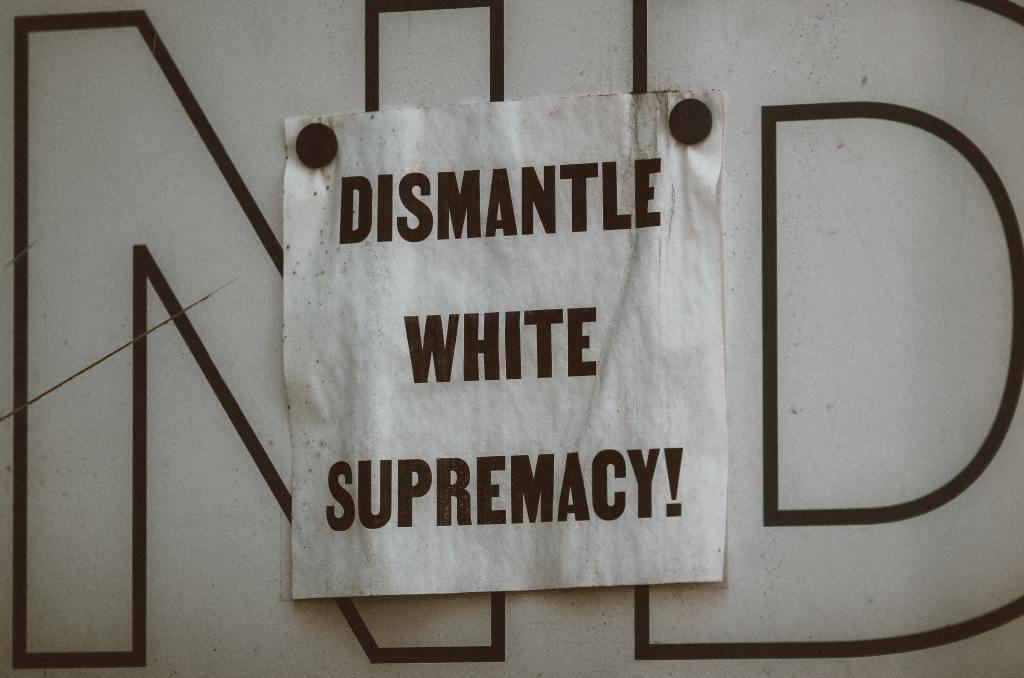
It reminds me of the so-called “inferiority” of countries in the Global South (what many sectors call developing nations) when westerners continue to go there in the name of aid, whilst at the same time not helping these countries to be self-sufficient. Simply we just send people there hoping that is enough. And we do this yearly without thinking about the broader problems. The roles of individuals in doing that, is really complicit into Whiteness through aid AKA White savourism. Short term, it feels good; long-term, this does more for the West than it does for those we want to help.
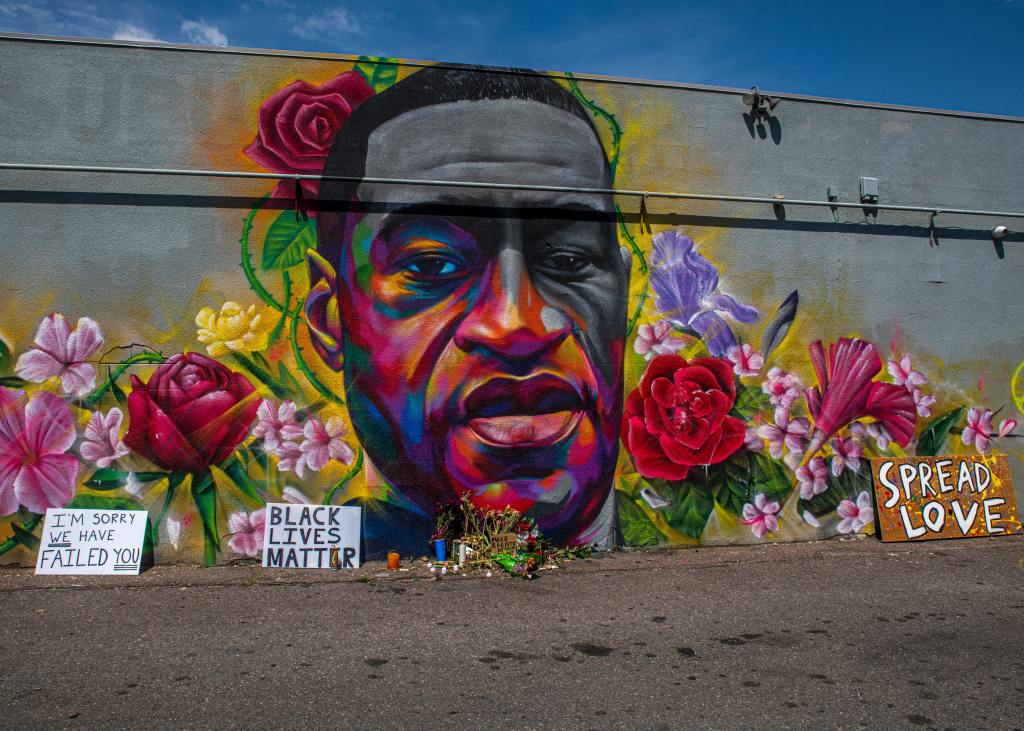
Aid aside, a comparison could be how following the Murder of George Floyd, lots of White people felt the euphoria of the protests and solidarity, but when it came to making good on pledging to dismantle systems of violence they benefit from, I could hear a pin drop. Seldom do we seek to empower these nations. What we frequently do is send westerners, often (but not always) for that feeling of goodness in building schools and their CVs, but at the end of it all, these tourists get to come back to the West. And when global sourthern nations have organised themselves historically, western governments have assasinated their leaders (i.e Belgium and Congo’s Patrice Lumumba).
What has become known as ‘poverty tourism’ is purported by not just White people from the Global North but also people like me who have ancestry in the Global South but were born and raised in the West. For those of us that do aid work, it would be worth thinking about how Whiteness can appear in the faces of Black and Brown people through the social, economic, and political investments institutions continue to have in these nations via the actions of individuals on the ground. That aside, it is seen as much more acceptable for a White person to do this work than it is for people of colour. When White people do “aid work” in previously colonised nations, it is viewed as “adventure” (i.e look at lit canon works of White westerners going to these nations). However, when Black and Brown people do this, in Northampton we just call it community work. To see an institution platform this ‘white saviourism’, it was insulting to many of my friends and colleagues, and their heritage, as descendants of indentured and enslaved labour.
Whilst I know there are many people ignorant to this history, I also know there are many people that know this and still continue to do it anyway. They may well go to countries in the African and Asian continents with good intentions, but those intentions are not divorced from histories of colonial exploitation these countries still haven’t recovered from. In seeing numbers of White people celebrating these “achievements” supported by White institutions, White privilege is evidently in-play in charity and in education, when the institutional thought plays into ‘institutional Whiteness’ because:
“the everyday work of establishing whiteness as a racialised enactment; of doing whiteness; of getting into it, is also institutional work. Whiteness is not just a personal investment practice it frames our chances for life or death, whether we are imprisoned or walk free, we are rich or poor, which university or not we attend, what marks we attain when we get there, if we do. The notion of institutional whiteness is a way of recognising the links between whiteness and institutional reproduction.”
White Spaces
In charity and by association third sector, this is an environment dominated by White middle-class women and White women are not divorced from histories of racism, in fact they are an important part of it (Ware, 1992). Rather than send students into these countries, I ask what global northern universities are doing with their global sourthern partner institutions to help on the ground. It is all very well sending students to build schools, but decolonisation is more than a curriculum-focussed endeavour. We must understand as Prof. Tao Leigh Goffe writes, “colonialism is ongoing … profound, sad, and beautiful because … decolonization is a prophecy and urgent call to action” Decolonisation requires colonisers to give the colonised their lands back and she goes on to say that “…decolonize is a a verb not a metaphor as Tuck and Yang teach us they wonder why Afro-Asian solidarity and Afro-Native coalition does not always exist in the world where it should or could.” I question if it is appropriate for higher education to send, often people who are westerners, to these countries, without any prior exploration of Whiteness nor the overarching system of White supremacy as a social and political system (Mills, 2003; 2004). My encounter with this White woman also saw her position bodies like mine in effort to cover Whiteness, but when we have a history/present of Black/Brown bodies being used as a flimsy cover for White supremacy (Ash Sakar in DDN, 2021), it makes sense that she would do this.
As a precedent, discourses around David Lammy and Stacey Dooley are worth looking at. Brittany Aronson (2017) argues that in the system of White supremacy, “we are falsely taught that being white is better so it makes sense why we would instill our white values upon students of color.” The hostility of this encounter in my direct messages reflects the ongoing systematic racism that people of colour face, via tone-policing because so often White people do not like how we experess ourselves, be it through speech or even in body language. For me, this has come more from White women than it has from White men. Today, I am still more conscious of them in anti-racism spaces than men. With the added intersection of womanhood, women of colour frequently experience this, with one of the most vivid examples of policing women of colour being when Matt Hancock tone-policed Dr Rosena Allin-Khan MP in May 2020.
When White people go into these countries to build schools, it makes many of us Black/Brown people uncomfortable when we as POCs have done this historically, only for these buildings to have been destroyed by White supremacists, or when we do like-for-like community work in the Global North … it is scorned. And whilst the woman in my messenger praised the diversity of this project, this revisits how Whiteness as an action can also be done by people that are not racialised as White (i.e The Sewell Report). So, although POCs took part, they are enacting the dominant thought of the institution which is the White institution. Seeing that western institutions are shaped by Euroecentricism AKA White thought / epistemologies, we can see regardless of how institutions can sometimes position POCs on these trips, they are in some ways doing the bidding of the institution really showing how Whiteness can appear with Black and Brown faces. The comments from the staff member’s friend in my messenger claimed the comments of my friends were “hateful” and “bullying”, this is a covert example of tone-policing when White people are held accountable.
After to-ing and fro-ing, this conversation ended with an obligation for the commenters and I to educate her and her friend. I’m not against aid work per sé, simply the lack of analysis or critique of aid work through a Whiteness lens by the institutions initiating those projects is troubling. Furthermore, I do not see White people that want to think about their own complicity in White supremacy in this work. If I saw more of an anti-racist commitment from aid institutions and so proclaimed White anti-racists, I would be less cynical about it. Yet, until that day comes, it will always be an uncomfortable topic especially when these countries only need aid namely because of colonialism and the postcolonial aftershocks countries like Britain left behind. It’s one thing saying these countries are “unstable” politically and socially as I am often told (but when you start asking why, it leads in one direction). It’s really an open secret that lots of White people, do emotionally benefit from this work (verily women), and that is Whiteness. This happens at the same time as White subjects really benefiting from Black/Brown trauma. If all of the above is acknowledged and explored in doing the work, then I might relax a bit more but it looks to me that the West is still profitting from the issues they create(d).
We said our goodbyes. Actually, I said goodbye, and that was that.
One thing is certain, this encounter for me, assured the everlasting relevance of Critical Race and Whiteness Studies further showing how Whiteness happens on social media. The microaggressions felt like bell hooks’ “white terror” (1992: 167) … it’s violence upon the body via stress. I’m tired now.
References
Aronson, B (2017) The White Savior Industrial Complex … Journal of Critical Thought and Praxis, 6(3), pp. 36-54.
DiAngelo, R (2019) White Fragility. London: Allen Lane.
[DDN] Double Down News (2021) The Alternative Race Report. YouTube.
Frankenberg, R (1993) White Women, Race Matters: The Social Construction of Whiteness. MI: UoM Press.
Gunaratnam, Y (2003) Researching ‘Race’ and Ethnicity: Methods, Knowledge and Power. London, Sage.
hooks, b. (1992) Black Looks: Race and Representation. MA: Southend Press.
Hamad, R (2018) How white women use strategic tears to silence women of colour. The Guardian.
Lewis, G (2000) Race, Gender, Social Welfare: Encounters in a Postcolonial Society. Oxford: Polity Press.
Mills, C. (2003) White Supremacy as a Sociopolitical System: A Philosophical Perspective. In: Doane, A and Bonilla-Silva, E (eds) White Out: The Continuing Significance of Racism. London: Routledge, pp. 35-48.
Mills, C. W (2004) Racial Exploitation and the Wages of Whiteness. In: Yancy, G (ed.) What White Looks Like: African-American Philosophers on the Whiteness Question. London: Routledge. pp. 25-54.
Phipps, A (2021) White tears, white rage: Victimhood and (as) violence in mainstream feminism. European Journal of Cultural Studies, 24(1), pp. 81-93.
Said, E (1978) Orientalism. London: Penguin.
Ware, V. (1992/2015) Beyond the Pale: White Women, Racism, and History. London: Verso.
White Spaces. Institutional Witnesses. White Spaces.
Share this:


Gypsy, Roma, Traveller History Month: #MakeSomeSpace

When I reflect upon my childhood, I recall the fondness that I have towards the Romany culture. I am reminded of the wonderful bond that my family had with horses, of good people, of the older generations of my family telling stories and singing Romany songs around tables at parties, of a strong sense of tight-knit togetherness and resilience when times got tough. I remember being educated about life from a young age and being taught the skills needed to be able to earn a living when it became difficult to do so. I am also reminded of the generosity involved in giving all that you can to your family and friends despite not having much. I especially think of this generosity in relation to the Irish Travellers that welcomed my brothers into their homes and provided for them when they were in times of need.
My instant thoughts about Gypsy, Romany Travellers (GRT) is that of fondness, but living in our society I have learnt that this is not the typical thoughts of the dominant public, media or government. When considering dominant media, public and government attitudes towards travellers, I am reminded of the GRTs that live in a society where people are prejudice because of long-standing stereotypes that have been created about their culture. I am also reminded of the lack of understanding and/or empathy that others have about the disproportionate amounts of social harm that those within the GRT families will encounter.
Since the recent Black Lives Matter protests there has been an explosion of anti-racist efforts, which I am hopeful of, yet, even some of those who are passionately ‘anti-racist’ continue to either project prejudice towards GRT people or deny that prejudice towards GRT is a problem. Adding to this, anti-racist messages communicated via the media do not seem to apply to GRT. A recent example of this is Dispatches: The Truth About Traveller Crime which is like a thorn in my side. This documentary discusses GRT as though they are a group of ‘dangerous criminals’. With an ‘expert’ criminologist present within the documentary it becomes difficult for the public to understand the stereotypes and lack of understanding that the documentary includes.
This year I have been able to incorporate GRT into the modules that I teach. I am pleased that some students have been able to navigate themselves to information about GRT from organisations like Traveller Movement and Friends Families and Travellers as these provide me with some hope in terms of GRT awareness and inclusion. However, it seems that these organisations will continue to have many pressing concerns to deal with, especially as the recent government proposals included within the Police, Crime, Sentencing and Courts Bill seem to be nothing more than another attack on the more traditional way GRT of life.

There is a worry for some GRT that upon moving into housing these cultures will decline. In terms of my own family my Nan was my idol, she was born in the 1920s in a traditional horse drawn wagon. Since moving into housing my Nan remained proud of her Romany heritage and she instilled this within my Dad’s upbringing. I only ever practiced aspects of the Romany culture in a marginal sense, and the decline of this part of my own heritage is connected to the social harm that my own family have experienced.
With GRT month I hope that more people question the prejudices that they have about others, I hope that people also question the media, government and supposed ‘experts’. You could begin by attempting to put yourself in the shoes of others, try to imagine how you would feel if society collectively judged yourself or your family despite knowing little to nothing about who you/they are. After all, this kind of overt prejudice that GRT encounter would not be acceptable in many situations if this was aimed at other groups, so why should it be acceptable when aimed at GRT?
Share this:


Not so Priti politics: setting a clear example
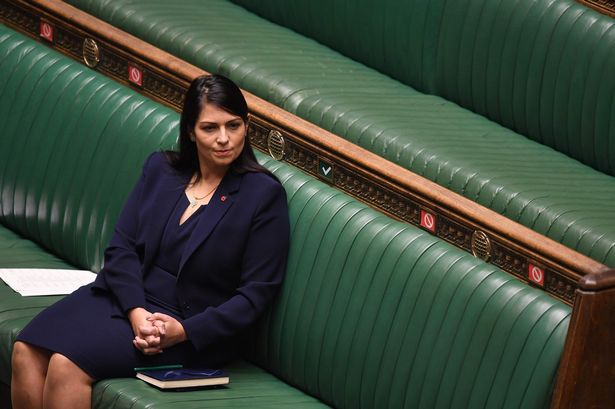
Of course Priti Patel the home secretary is correct when she declared that England fans have a right to boo England football players taking the knee before the England versus Croatia match on Sunday. Correct that is, in considering the spirit of the European Convention on Human Rights and Article 10, Freedom of Expression. This being encapsulated in our own Human Rights Act 1998. But whilst, the home secretary considers such booing, lets call it a form of protest, acceptable, she then adds that the ‘taking of the knee’ is simply ‘gesture politics’ and finds this form of protest unacceptable. The players and others through television advertising have made it clear that the statement is not political, it is simply a reminder of the need to tackle inequality and racism.
So, I’m left considering this, according to Priti Patel, it is acceptable to protest against those that oppose inequality and in particular racism, but it is not acceptable to protest against that in equality and racism. The first is a right, the second is some form of gesture politics. Ms Patel doesn’t end it there though but bemoans the Black Lives Matter protests and the ‘devastating impact they had on policing’. Somehow, I think she’s missed the point. If it is simply about the resources required to police the BLM protests, well the right of expression you say people have (you can boo if you want to) was simply being exercised and the police have a duty to facilitate those protests, devastating or not. If the devastation was about some other impact such as morale, then I think a bit of introspection wouldn’t go amiss. There is far too much evidence to show that the criminal justice system and the application of policing in particular is unequal, unfair and in need of change.
The home secretary is ultimately in charge of policing in this country. A politician, yes, but also supposedly a leader, who should be leading by example. What sort of example have her views set police forces across the country? Carry on folks, this is just gesture politics. No empathy, no understanding and a devil may care attitude, suggests that tackling inequality is not on the home secretary’s, let alone this government’s, agenda. This is not politics of the right, this smacks of politics of the far right. This is something we should all be worried about.
Share this:

Chauvin’s Guilty Charges #BlackAsiaWithLove
Charge 1: Killing unintentionally while committing a felony.
Charge 2: Perpetrating an imminently dangerous act with no regard for human life.
Charge 3: Negligent and culpable of creating an unreasonable risk.
Guilty on all three charges.
Today, there’s some hope to speak of. If we go by the book, all the prosecution’s witnesses were correct. Former police officer Chauvin’s actions killed George Floyd. By extension, the other two officers/overseers are guilty, too, of negligence and gross disregard for life. They taunted and threatened onlookers when they weren’t helping Chauvin kneel on Floyd. Kneeling on a person’s neck and shoulders until they die is nowhere written in any police training manual. The jury agreed, and swiftly took Chauvin into custody . Yet, contrary to the testimonials of the police trainers who testified against Chauvin’s actions, this is exactly what policing has been and continues to be for Black people in America.
They approached Floyd as guilty and acted as if they were there to deliver justice. No officer rendered aid. Although several prosecution witnesses detailed how they are all trained in such due diligence, yet witnesses and videos confirm not a bit of aid was rendered. In fact, the overseers hindered a few passing-by off-duty professionals from intervening to save Floyd’s life, despite their persistent pleas. They acted as arbiters of death, like a cult. The officers all acted in character.
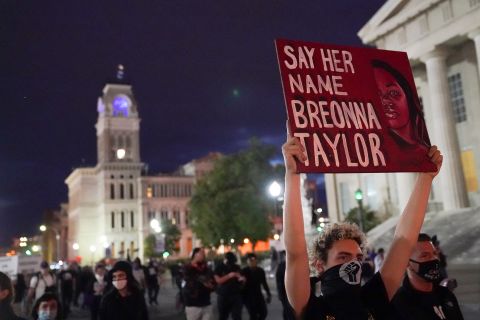
Teenager Darnella Frazier wept on the witness stand as she explained how she was drowning in guilt sinceshe’d recorded the video of Chauvin murdering Mr. Floyd. She couldn’t sleep because she deeply regrated not having done more to save him, and further worried for the lives many of her relatives – Black men like George Floyd, whom she felt were just as vulnerable. When recording the video, Ms. Frazier had her nine-year-old niece with her. “The ambulance had to push him off of him,” the child recounts on the witness stand. No one can un-see this incident.
History shows that her video is the most vital piece of evidence. We know there would not have even been a trial given the official blue line (lie). There would not have been such global outcry if Corona hadn’t given the world the time to watch. Plus, the pandemic itself is a dramatic reminder that “what was over there, is over here.” Indeed, we are all interconnected.
Nine minutes and twenty seconds of praying for time.
Since her video went viral last May, we’d seen footage of 8 minutes and 46 seconds of Chauvin shoving himself on top of ‘the suspect’. Now: During the trial, we got to see additional footage from police body-cameras and nearby surveillance, showing Chauvin on top of Mr. Floyd for nine minutes and twenty seconds. Through this, Dr. Martin Tobin, a pulmonary critical care physician, was able to walk the jury through each exact moment that Floyd uttered his last words, took his last breath, and pumped his last heartbeat. Using freeze-frames from Chauvin’s own body cam, Dr. Tobin showed when Mr. Floyd was “literally trying to breathe with his fingers and knuckles.” This was Mr. Floyd’s only way to try to free his remaining, functioning lung, he explained.
Nine minutes and twenty seconds. Could you breathe with three big, angry grown men kneeling on top of you, wrangling to restrain you, shouting and demeaning you, pressing all of their weight down against you?
Even after Mr. Floyd begged for his momma, even after the man was unresponsive, and even still minutes after Floyd had lost a pulse, officer Chauvin knelt on his neck and shoulders. Chauvin knelt on the man’s neck even after paramedics had arrived and requested he make way. They had to pull the officer off of Floyd’s neck. The police initially called Mr. Floyd’s death “a medical incident during police interaction.” Yes, dear George, “it’s hard to love, there’s so much to hate.” Today, at least, there’s some hope to speak of.

Share this:


MLK: In his day-n-this day in 2021. #BlackedAsiaWithLove
In his day, they called Martin Luther King a thug. They said that he was disturbing the peace. They accused him of sedition, and jailed him on any charge they could find. The got him on any perceivable and inconceivable traffic violation. Mostly, the only charges they could find were loitering or disobeying a police order – do what I say, niggra! They convicted him to a 4-month sentence for a sit-in. They fined him and anyone in the movement for anything. You can’t imagine the trial/fiasco around his arrest for leading a bus boycott.
Sending his kids to school, peacefully.
Attending a comrade’s trial, peacefully. Loitering, peacefully. Sitting-in, peacefully. Driving, peacefully. Marching, peacefully. Preaching in the pulpit about the Prince of Peace, peacefully. Harassed, taunted, goaded, surveilled, bullied, bashed, arrested, convicted, abused by the police and their brethren among politicos – violently. Dear reader, please don’t find me pedantic by pointing out that this all sounds like 2020.
Here’s Dr. King’s full arrest record. He never once incited riots, yet they called him a thug. He never once missed an opportunity to call for calm, yet they said he was a looter. They made him a repeat offender, notoriously flaunting the law. Who was notoriously flaunting the law? The same sorts of folks who flaunted the law on January 6, 2021!
MLK grew up in the tradition of Black Liberation Theology, radically different from the individualist salvation and racism preached in white churches. King began to address this in a letter to white clergy, he wrote from a jail cell in bloody Birmingham. The pen is indeed mightier than the…cowardice of mobs and bombs.
Follow the drinking gourd
Dr. King understood that resistance is in our blood as strongly as the will to survive. Even with all of the stories I’ve heard from my elders, I still can’t imagine what it was like, even for my grandparents growing up picking cotton deep in the Jim Crow south. Yet, they resisted. And while I am sure that they feared white people their whole lives, they refused to study hate on them. Growing up, my grandparents had few choices in how they dealt with their white masters. Yet, they resisted hate. The roots of non-violence runs deep in our culture.
The roots of non-violent protest runs deep in American culture, but particularly so in terms of righting the legacy of our nation’s original sin: Slavery. In 1892, Homer Plessy was arrested for sitting in the white section of a street car in New Orleans. Four years later, the US Supreme Court upheld states’ right to segregate by race. This solidified Jim Crow at the highest court, and gave way to a host of racial segregation laws, policies and everyday practices that means virtually every aspect of life was unequal. This is the world into which Dr. King was born.
Culminating nearly a century after the Civil War the Civil Rights Movement worked to address the legacy of Slavery. It took that long, so dear reader, please do imagine a century of Jim Crow. Emancipation, then that.
Dr. King, Bayard Rustin and plenty, plenty others in their crew were repeatedly jailed and dismissed as agitators. Now, how many poor people sit in jail because in the New Jim Crow, they can’t afford the fines and fees, that means you pay for your own bondage. This is where your taxes go. Violence won’t solve this problem, but they won’t listen when you take a knee. They call you an agitator.
We chose the BALLOT they chose the BULLET
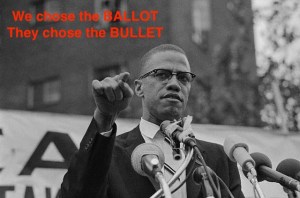
Dr. King used all his power to negotiate reconciliation, peacefully, yet he was gunned down and murdered, violently. Now, they advocate for their right to bear arms, knowing they’ve always been spurred to arm themselves in order to squash us (and not their own masters). They traded in whips and chains for guns and jails upon Emancipation. Now, their descendants are so twisted and confused about it that they claim not to know that’s also our blood shed and the Rebel flag, not just theirs. They still don’t get it. They are threatened by inclusion, perhaps fearing their own mediocracy, so they’d rather build a wall. In 2021, they were finally able to wave the Confederate Battle Flag in the halls of the US Capitol.
Their people fought and died for the independent right to bond and enslave us, yet now they speak of Dr. King like he’s some poster child for kneeling and praying for forgiveness in response to any atrocity they commit (even that kid who staged a massacre in a Black church was taken into custody, peacefully). Now, the same people call Dr. King a national hero in the same breath used to denounce those peacefully protesting for equity and justice today. For them, Black Lives do not Matter.
Share this:


What’s the Capitol of Insurrection? #BlackenAsiaWithLove
A week ago, I was writing -hopefully – about the peaceful transition of power. I was thinking to myself that even if Georgia’s run-off election didn’t release the American senate from the hooves and cleaves of the CONservative right, that somehow, the world would be in a better state now that dialogue-oriented ‘liberals’ were leading the administrative cabinet. This week, however, I am writing about a failed coup d’etat in the United States.
Lynch mob
Much of American history is steeped in the struggle for freedom. To be clear: WE have never, ever been free in America. None of us. Sure, relative to where I sit right now in S.E. Asia, the fact that I am talking openly about politics, and speaking ill of other people’s nasty votes, attests to this relative freedom I enjoy just by having that bald eagle on my passport. The fact that it’s a national pass-time to be critical of power, all the while coveting it for myself, points to the hypocrisy with which each and every American struggles internally. It’s not that people of other nations don’t share this struggle, but it’s just that we Americans do this in the world’s richest, most ethnically diverse nation. And ‘the problem we all live with’ persists.
By signing the Emancipation Proclamation, Lincoln didn’t defeat white supremacy any more than the Declaration of Independence defeated tyranny and injustice. “With great power comes great responsibility,” goes the Spiderman mantra. Yet, here I am on my knees, in tears, crying for the death a of a democracy that’s been in decay ever since my people were brought to those shores in shackles, owned by those mentally enslaved by white-washed Jesus.
Unfortunately, it would be facile and naïve to pretend that this American moment isn’t painful. It hurt me, personally, to see the siege of our Capitol, live and in technicolor, more vivid than any dream I’ve dreamt or nightmare about this very scenario. And I have had both dreams and nightmares about the siege. My mother’s parents grew up southern, Black, poor and politically disenfranchised as a matter of everyday practice under Jim and Jane Crow. It’d would have been nothing for a lynch mob to tackle any negro attempting to vote. That was business as usual, even as they conscripted my grandfather into the army to go to Europe and fight Hitler. The irony has never, ever been lost on any of us.
Many days, in my daydreams, I’ve often wondered what it’d be like if a bunch of freedom-loving folks just stormed the Capitol and occupied the seats of power until the elected leaders conceded to formally grant our freedom. Yet, I would never want to see the mass graves they’d have to dig should any negro or negro-loving white person even gather to talk about storming the Capitol – let alone share plans and munitions. Besides, I am an earnest follower of non-violence and genuinely believe liberation is found therein. Instead, we’ve spent years – decades, nearly a century of recorded history – warning the world where white supremacy would lead us, if left unchecked. I’d be as rich as Jeff Bezos if I had a nickel for every time someone told me that racism was dead, and that I was dredging up hate by insisting we speak about it. Yet, here we are. Whatcha gonna do now?
Share this:


2020: A Year on “Plague Island”

Last year in this blog, I argued that 2019 had been a year of violence. My colleague, @5teveh provided a gentle riposte, noting that whilst things had not been that good, they were perhaps not as bad as I had indicated. Looking back at both entries it is clear that my thoughts were well-evidenced, but it is @5teveh‘s rebuttal that has proved most prescient in respect of what was to come….
The year started off on a positive, personally and professionally, when both @manosdaskalou and I were nominated for Changemaker Awards. Although beaten by some very tough competition, shortly before leaving campus we were both awarded High Sheriff Awards, alongside our prison colleagues, for our module CRI3006 Beyond Justice. As colleagues and students will know, this module is taught entirely in prison to year 3 criminology students and their incarcerated peers. Unfortunately, the awards took place in the last week on campus, but we are hopeful that we can continue to work together in the near future.
Understandably much of our attention this year has been on Covid-19 and the changes it has wrought on individuals, communities, society and globally. Throughout this year, the Thoughts from the Criminology Team have documented the pandemic in a variety of different ways. From my very early thoughts, written in the panic of abandoning campus for the experience of lockdown to entries from @helentrinder @treventoursu @jesjames50 @cherylgardner2015 @5teveh @manosdaskalou @anfieldbhoy @samc0812 @drkukustr8talk @zeechee @saffrongarside @svr2727 @haleysread The blog has explored Covid-19 from a variety of different angles reflecting on the unprecedented experience of living through a pandemic. It is interesting to see how the situation and our understanding and responses have adapted over the past 9 months.
Alongside the serious materials, it was obvious very early on that we also needed to ensure some lightness for the team and our readers. With this in mind, early in the first lock down, we created the #CriminologyBookClub. We’re currently on our 8th novel and we’ve been highly critical of some of the texts ;), as well as fallen in love with others. However, I know I speak for my fellow members when I say this has offered some real respite for what’s going on around us.
Another early initiative was to invite all our bloggers to contribute an entry entitled #MyFavouriteThings. We ended up with over twenty entries (which you’ll find via the link) from the criminology team, students, as well as a our regular and occasional contributors. Surprisingly we learnt a lot about each other and about ourselves. The process of something as basic as writing down your favourite things, proved to be highly cathartic.
Whilst supporting each other in our learning community, we also didn’t forget our friends and colleagues in prison. Although, the focus has rightly been on the NHS and carers, the pandemic has hit the prison communities very hard. Technology can solve some of the issues of loneliness, but to be locked in a small room, far away from family and friends creates additional problems. For the men and the staff, the last 9 months has brought challenges never seen before. Although, we could not teach the module, we did our best, along with colleagues in Geography and the Vice Chancellor @npetfo, to provide quizzes and competitions to help pass the hours.
In June, the world was shocked by the killing of George Floyd in the USA. For many of us, this death was one in a long line of horrific killings of Black men and women, whereby society generally turned a blind eye. However, in the middle of a pandemic, the killing of George Floyd meant that people could not turn away from what was playing on every screen and every platform. This lead to a resurgence of interest in Black Lives Matter and an outpouring of statements by individuals, organisations, institutions and the State.
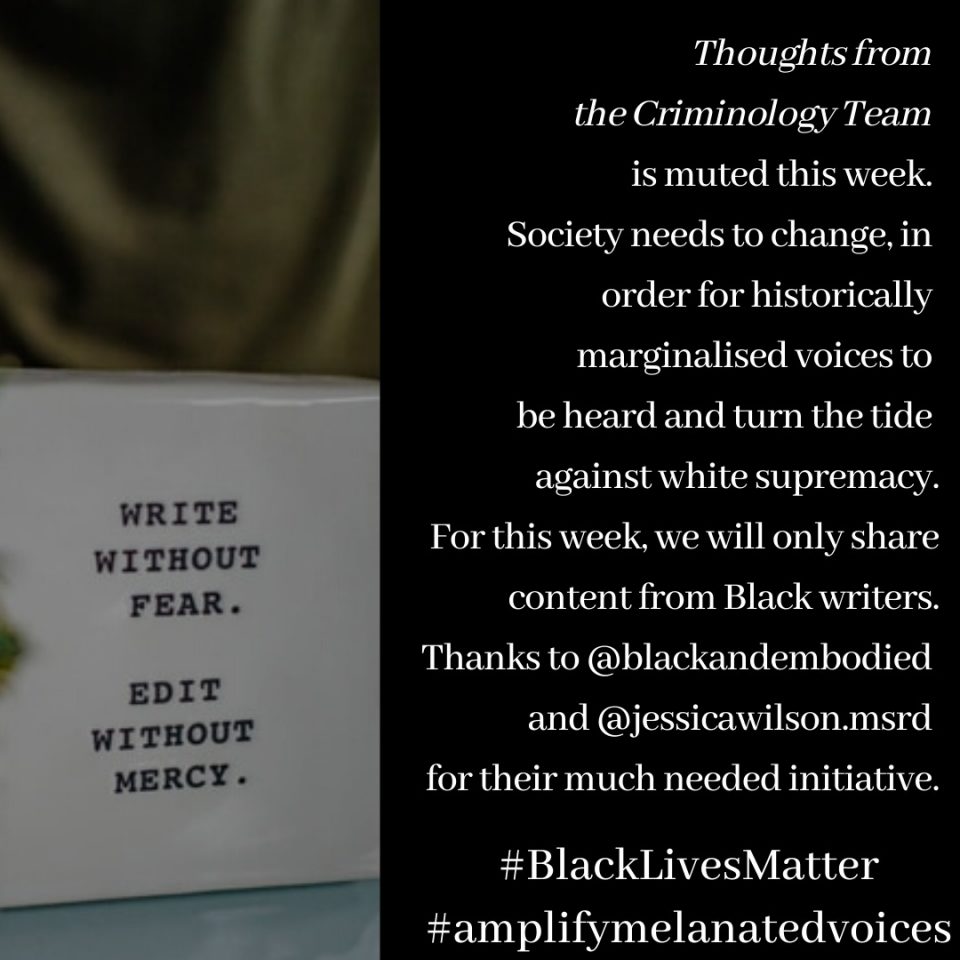
For a week in June, the Thoughts from the Criminology Team muted all their social media to make space for the #AmplifyMelanatedVoices initiative from Alishia McCullough and Jessica Wilson This was a tiny gesture in the grand scheme of things but refocused the team’s attention on making sure there is a space for anyone who wants to contribute.
Whether this new found interest in Black Lives Matters and discussions around diversity, racism, decolonisation and disproportionality continue, remains to be seen. Hopefully, the killing of George Floyd, alongside the profound evidence of privilege and need made evident by the pandemic, has provided a catalyst for change. One thing is clear, everyone knows now, we can no longer hide, there are no more excuses and we all can and must do better.
This year some old faces left for pastures new and we welcomed some new colleagues to the Criminology Team. If you haven’t already, you can read about our new (or, in some cases, not so new) team members’ – @jesjames50 @haleysread and @amycortvriend – academic journeys to becoming Lecturers in Criminology.
Finally, looking back over the last 12 months, certain themes catch my eye. Some of these are obvious, the pandemic and Black Lives Matter have occupied a lot of our minds. The focus has often been on high profile individuals – Captain Tom Moore, Joe Wickes, Marcus Rashford – but has also shone on teams/organisations/institutions such as the NHS, carers, shop workers, delivery drivers, the scientists working on the vaccines, the list goes on. Everyone has played a part, even if that is just by staying at home and out of the way, leaving space for those with a frontline role to play. Upon reflection it is evident that the over-riding themes (and why @5teveh was right last year) are ones of kindness, of going the extra mile, of trying to listen to each other, of reaching out to each other, acknowledging unfairness and privileges, recognising the huge loss of life and the impact of illness and bereavement and trying to make things a little better for all. Hope has become the default setting for all of us, hope that the pandemic will be over, alongside hopes that we can build a better world with its passing. It has also become extremely clear that critical thinking is at a premium during a pandemic, with competing narratives, contradictory evidence and uncertainty, testing all of our ability to cope with change and respond with humility and humanity.
There is no doubt 2020 has been an unprecedented year and one that will stay with us for ever in the collective memory. Going into 2021 it’s important that we remember to consider the positives and keep trying to do better. Hopefully, in 2021 we will get to celebrate Criminology’s 21st Birthday together
Remember to stay safe, strong and well and look out for yourself and others.

Share this:


Your god is cruel #BlackAsiaWithLove

I don’t trust your god
Your god is cruel
Your god is mean
Your god allowed generations of your people to enslave mine
Your god made it okay to look into the Bible and see white power.
You prayed to your god with every slave you took.
You prayed that your catch would be bountiful, and
Your enslavers safe.
You’ve prayed that you would gain money, and fame, and power.
And you did.
Your god gave you everything.
Thanks to your god-given wealth,
You built church after church, and
Cathedral after cathedral, all around the globe,
So that everyone could worship your god.
You prayed that we’d all pay homage to a mean and cruel god.
Your god’s played a trick on you,
Convincing you slavery was god-like, that white was right!
That dark was evil, and so
Your god’s given you moral dominion over the darker peoples of the world.
You and your god dominate.
Don’t you know,
Your god’s cross was used to conquer the Americas, and
A church sits smack in the middle of west Africa’s biggest, extant slave castle!?!
Yes, your god was right there with you as you captured human cargo, and
Stored them right next to your church so they could hear you pray, and
Marched them out of the door of no return, onto feed your greed that your god sanctioned.
You grew fat, bloated with power,
Thanks to your god.
I don’t trust your god.
Nor should you.
Now, with every attempt we have to take back our humanity, you resist.
We say “Black Lives Matter,” and you pray they don’t.
You pray for a champion – a big man – to come down from above and save you.
And when that big, rich, powerful man does descend,
And threatens to shore off all apologists for your god’s cruel past,
You treat him as heaven-sent!
And call out all defectors from your church,
All those so-called Liberals who’ve turned away from your god.
You pray that this big man and his family will bask in the gains of your god’s glory.
That somehow this big man’s glory attests to your god’s power.
You cheer when that big man waves a bible at you, in front of any church, and
You tell yourself: “My God is good,” and
You run-n-fetch your god every time the big man blows the dog-whistle,
Which you hear clear as day.
Run. Stay. Sit.
You follow your god’s orders.
Free yourself from your old god.
To erase that history, to look away from those facts, you must also erase yourself…
Because slavery, and continued subjugation is not just my problem, it’s…
The Problem We All Live With.
It’s in you, too.
Share this:


It’s Autumn, and my hometown is on fire. #BlackenAsiaWithLove
It’s Autumn, and my hometown is on fire. [Theme song: When You Gonna Learn, by Jamiroquai]
Jay Kay sang: “Yeah, yeah, have you heard the news today?”
Me: Yeah, yeah, my hometown is on fire.
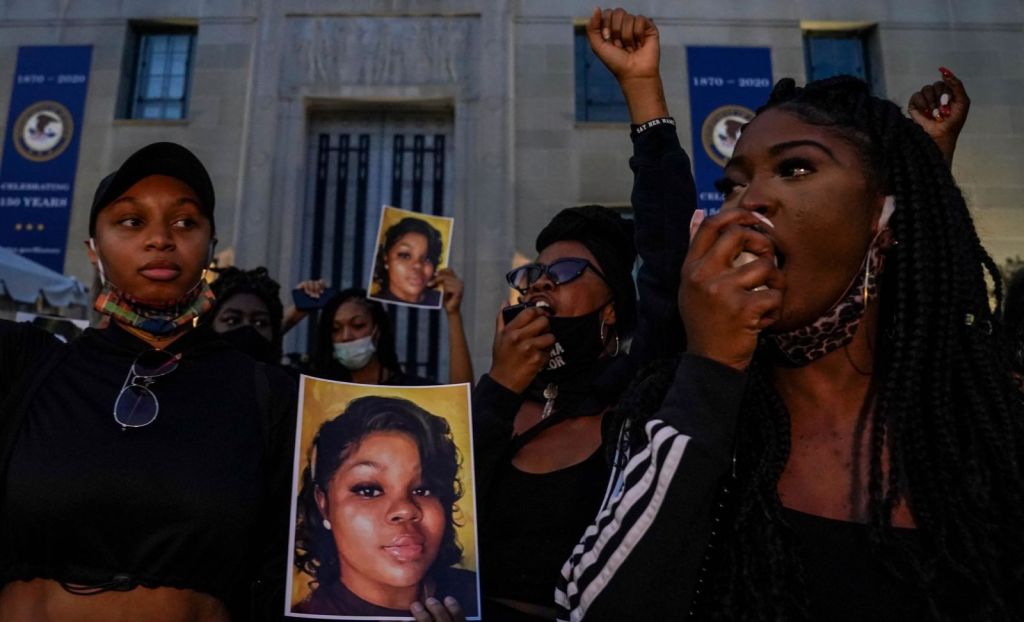
My hometown is on fire. In March, SWAT-armed officers served a warrant, and an EMS worker ended up dead. The deceased was Black and poor, and lived in the poor Black part of town. The officers adhered to the codes of the ruling caste. The media covered the death matter-of-factly. The tag line is: “Breonna Taylor was an innocent person in her own home.” So, by extension, all the other victims were not innocent, and therefore deserved to die. Only Jesus’ death warrants defense…and outrage – according to the actions of the folks who James Baldwin called those who believe themselves to be white. So, Breonna, George Floyd, all of them…these were justifiable killings? Yeah, yeah, casualties of the race war where white supremacy has always had the whip.
My hometown is on fire. The mayor put the city on lockdown days ahead of the grand jury’s announcement, not Corona. Trucks block traffic now; windows were boarded up days ago. All to announce that (only) one of the shooters would be indicted, and on the lower end of charges. The officer was initially denounced and fired, and (only) now charged with “wanton, reckless endangerment.” None of the charges relate to Breonna’s death, so that’s exactly what the courts won’t be able to address.
My hometown is on fire. Locals who believe themselves to be white char the memory of the victim, each victim, individually. For Breonna was not perfect, nor was Trayvon, nor George Floyd, nor Sandra Bland, nor countless others … all just human. Not even Amadou Diallo was a perfect-enough-victim for ‘those who believe themselves to be white’. Each family of each victim has had to fight the system individually, as if in a vacuum. Little attention to this incident was paid until the bodies mounted around the country. Everything changed when people of all races marched together, looters rioted and property was lost. Only then did “voters” take notice.
My hometown is on fire. The police have never been held accountable for such deaths. Apparently, the deceased liked bad boys, and was a victim of circumstance. White citizens – the so-called “voters” – resist seeing the systemic causes to these deaths. Just a few weeks ago, after MONTHS of national outrage and protest, the police reached a 12-million-dollar settlement with Breonna Taylor’s family. Every Kentucky tax payer will pay for our collective neglect. My hometown held it down, made the world say her name.
My hometown is on fire. Say her name. “Say her name,” is now a moniker for another fallen Black body. Where whites see no systemic problem, there can be no systemic solutions. Please, “stop it going on.”

Share this:


“I can’t breathe”: Criminology, Science and Society

Sometimes the mind wanders; the associations it produces are random and odd, but somehow, they connect. In the book of Genesis, there is reference to the first murder. Cain murdered Abel with a stone making it the original murder weapon. After some questioning from God, who acted as an investigating officer, and following a kind-of admission, God then assumed the role of the judge and jury, sentencing him to wander the earth. This biblical tale is recounted by all three main monotheistic religions, a what to do in the case of murder. The murderer is morally fallen and criminally dealt by with a swift punishment.
There is no reason to explore the accuracy of the tale because that is not the point. Religion, in the absence of science, acted as a moral arbitrator, sentencing council and overall the conscience of society. In a society without science, the lack of reason allows morality to encroach on personal choices, using superstition as an investigative tool. As scientific discovery grew, the relevance of religion in investigation was reduced. The complexity of society required complex institutions that cared for people and their issues.
When the Normans landed in England, they brought with them a new way of dealing with disputes and conflict. Their system of arbitration, using the King as a divine representative, was following Roman tradition and theology but it soon became apparent that a roaming court may not be as efficient. The creation of the magistrates and the statutes on legal representation introduced the idea of bringing professionals into justice. The creation of new institutions fostered the age of the scholar, who uses evidence-based practice.
This new approach removed more religious practices, instead favouring the examination of facts, the investigation of testimony and the study of law. It was a long way away from the system we know now as the witch trials can attest to; a number of whom took place in East Anglia (including Northampton). In the end the only thing that has been left from the early religious trials is the oath witness take when they submit their testimony.*
The more we learn the better we become in understanding the world around us. The conviction that science can resolve our problems and alleviate social issues was growing and by the 19th century was firm. The age of discovery, industrialisation and new scientific reasoning introduced a new criminal justice system and new institutions (including the police). Scientific reasoning proposed changes in the penal code and social systems. Newly trained professionals, impervious to corruption and nepotism, were created to utilise a new know-how to investigate people and their crimes.
Training became part of skilling new mandarins in a system that reflected social stratification and professionalism. The training based on secular principles became focused on processes and procedures. The philosophy on the training was to provide a baseline of the skills required for any of the jobs in the system. Their focus on neutrality and impartiality, seemed to reflect the need for wider social participation, making systems more democratic. At least in principle that was the main idea. Over centuries of public conflict and social unrest the criminal justice system was moving onto what people considered as inclusive.
Since then the training was incorporated into education, with the new curriculum including some BTECs, diplomas, foundation studies and academic degrees that take on a variety of professions from investigative fields to law enforcement and beyond. This academic skilling, for some was evidence that the system was becoming fairer and their professionals more educated. Police officers with knowledge of the system, akin to lawyers to the probation service and so on. So far so good…but then how do we explain the killing of George Floyd? Four officers trained, skilled, educated and two of them experienced in the job.
If this was a one, two three, four, -offs then the “bad apple” defence seems to be the most logical extrapolation on what went wrong. If, however this is not the case, if entire communities are frightened of those who allegedly serve and protect them, then there is “something rotten in the state of Denmark”. Whilst this case is American, it was interesting to read on social media how much it resonated, in communities across the globe of those who felt that this was nothing more than their own everyday experience with law enforcement. For them, police is merely a mechanism of repression.
Since the murder I have read a number of analyses on the matter and maybe it worth going a bit further than them. In one of them the author questioned the validity of education, given than two of the officers in the Floyd case hold a criminal justice and a sociology degree respectively. There is a vein of truth there; educators have some responsibility to forge and promote professional conduct and ethical practice among their alumnus. There are however some other issues that have not been considered and it is time for these to be brought to the surface.
Education or training alone is not adequate to address the complexities of our society. Social awareness, cultural acceptance and the opportunity to reflect on the rules using problem solving and insight are equally important. Foucault has long argued that the justice system is inherently unfair because it preserves privileges and blocks anyone outside from challenging it. Reflecting on that, all major constitutional changes took place after a revolution or a war, indicating the truism in his observation.
If we are to continue to train people on procedures and processes the “bad apples” are likely to strike again. The complexity of social situations requires an education that ought to be more rounded, critical and evaluative. If a doctor takes an oath to do no harm, then so should every other professional who works in their community. If the title of the office is more appealing than the servitude, then the officer is not fulfilling their role. If we do not recognise equality among all people, then no training will allow us to be fair. Suddenly it becomes quite clear; we need more education than less, we need knowledge instead of information and we need more criminology for those who wish to serve the system.
*Even that can now be given as an affirmation


