
Home » Environmental crimes
Category Archives: Environmental crimes

25th Year Reflection

I have been part of Criminology at UON as BA Criminology student, then Associate Lecturer then Lecturer in Criminology for about 13 years in total. My last reflection on my Criminology journey was in 2020 as I had just embarked on my new role as a Lecturer in Criminology. Every now and then I reflect on how lucky I am to be able to have a job role which has the potential to encourage a passion for learning, reading, writing, critical thinking as well as other life skills.
When reflecting on the 25th year Criminology anniversary I think mostly of the old Park Campus that I used to frequent and study at as a student. It had quite a nice feel to it and there was also enough surrounding nature for a famous badger to make this place part of its habitat! There were less books available online when I was an undergraduate compared to today so I have fond memories of going to the library often to have a browse and coming away with as many criminology related books that I could fit in my bag at once. Finding places where I could study for hours that were less frequented than the main library also gave me a bit of a buzz. There also used to be a Pavilion bar near to where the majority of exams would take place, one of my favorite past time memories is sipping on a beer in the Pavilion just after the end of my final third year Criminology exam season, (whilst secretly thinking of how I thought the exams went much better than expected).
When reflecting I am also reminded of how lecturers like Dr @manosdaskalou and Dr @paulaabowles can be incredibly inspirational and influential at guiding academic paths (such as my own!). The re-occurring ideas that ‘criminology is everywhere’ and that we should ‘question everything’ has boded well for helping me to make difficult decisions and in thinking about how I interacted with people when I was working within crime related industries.
In more recent years staff and students have moved to a new campus, have worked and studied through the challenges that come with Covid-19 and contextual uncertainties. This year has had some highlights for me, such as working on a new module Imagining Crime. Whereby we used inspiration from the novel 1984 by George Orwell to task students with committing weekly ‘thought crimes’ by seeing/hearing/reading about something criminological and questioning this by using critical thinking. Listening to the development of critical thinking via the ‘thought crime’ method has been a delight. The flexible, creative and multidisciplinary nature of criminology is also quite fabulous for maintaining interest in criminology over a long period of time but also for venturing into new and less explored areas. For instance, staff and students in Imagining Crime had the pleasure of attending a guest speaker session with @saffrongarside about children’s literature and the environment this academic year – at a time when Northampton itself seemed to be struggling to cope with flooding. Of course, this did highlight the importance of seeing environmental issues as criminological issues, but also the importance of considering children’s books as criminologically cultural artifacts, was something completely new and intriguing for me. I also gained a lot from hearing what our students (who are predominantly) young people think about environmental issues outside of the mainstream media angles that I have seen.
To round up, I loved my student life whilst studying BA Criminology and I am sure many others will say ‘ditto to that’. Long may the love for Criminology at UON continue!
Share this:


Uncertainties…
Sallek Yaks Musa

Who could have imagined that, after finishing in the top three, James Cleverly – a frontrunner with considerable support – would be eliminated from the Conservative Party’s leadership race? Or that a global pandemic would emerge, profoundly impacting the course of human history? Indeed, one constant in our ever-changing world is the element of uncertainty.
Image credit: Getty images

The COVID-19 pandemic, which emerged in late 2019, serves as a stark reminder of our world’s interconnectedness and the fragility of its systems. When the virus first appeared, few could have foreseen its devastating global impact. In a matter of months, it had spread across continents, paralyzing economies, overwhelming healthcare systems, and transforming daily life for billions. The following 18 months were marked by unprecedented global disruption. Lockdowns, travel restrictions, and social distancing became the new norms, forcing us to rethink how we live, work, and interact.
The economic fallout was equally staggering. Supply chains crumbled, unemployment surged, and entire industries teetered on the brink of collapse. Education was upended as schools and universities hastily shifted online, exposing the limitations of existing digital infrastructure. Yet, amid the chaos, communities displayed remarkable resilience and adaptability, demonstrating the need for flexibility in the face of uncertainty.
Beyond health crises, the ongoing climate and environmental emergencies continue to fuel global instability. Floods, droughts, erratic weather patterns, and hurricanes such as Helene and Milton not only disrupt daily life but also serve as reminders that, despite advances in meteorology, no amount of preparedness can fully shield us from the overwhelming forces of nature.
For millions, however, uncertainty isn’t just a concept; it’s a constant reality. The freedom to choose, the right to live peacefully, and the ability to build a future are luxuries for those living under the perpetual threat of violence and conflict. Whether in the Middle East, Ukraine, or regions of Africa, where state and non-state actors perpetuate violence, people are forced to live day by day, confronted with life-threatening uncertainties.
On a more optimistic note, some argue that uncertainty fosters innovation, creativity, and opportunity. However, for those facing existential crises, innovation is a distant luxury. While uncertainty may present opportunities for some, for others, it can be a path to destruction. Life often leaves little room for choice, but when faced with uncertainty, we must make decisions – some minor, others, life-altering. Nonetheless, I am encouraged that while we may not control the future, we must navigate it as best we can, and lead our lives with the thought and awareness that, no one knows tomorrow.
Share this:


Festive messages, a legendary truce, and some massacres: A Xmas story

Holidays come with context! They bring messages of stories that transcend tight religious or national confines. This is why despite Christmas being a Christian celebration it has universal messages about peace on earth, hope and love to all. Similar messages are shared at different celebrations from other religions which contain similar ecumenical meanings.
The first official Christmas took place on 336 AD when the first Christian Emperor declared an official celebration. At first, a rather small occasion but it soon became the festival of the winter which spread across the Roman empire. All through the centuries more and more customs were added to the celebration and as Europeans “carried” the holiday to other continents it became increasingly an international celebration. Of course, joy and happiness weren’t the only things that brought people together. As this is a Christmas message from a criminological perspective don’t expect it to be too cuddly!
As early as 390 AD, Christmas in Milan was marked with the act of public “repentance” from Emperor Theodosius, after the massacre of Thessalonica. When the emperor got mad they slaughtered the local population, in an act that caused even the repulson of Ambrose, Bishop of Milan to ban him from church until he repented! Considering the volume of people murdered this probably counts as one of those lighter sentences; but for people in power sentences tend to be light regardless of the historical context.
One of those Christmas celebrations that stand out through time, as a symbol of truce, was the 1914 Christmas in the midst of the Great War. The story of how the opposing troops exchanged Christmas messages, songs in some part of the trenches resonated, but has never been repeated. Ironically neither of the High Commands of the opposing sides liked the idea. Perhaps they became concerned that it would become more difficult to kill someone that you have humanised hours before. For example, a similar truce was not observed in World War 2 and in subsequent conflicts, High Commands tend to limit operations on the day, providing some additional access to messages from home, some light entertainment some festive meals, to remind people that there is life beyond war.
A different kind of Christmas was celebrated in Italy in the mid-80s. The Christmas massacre of 1984 Strage Di Natale dominated the news. It was a terrorist attack by the mafia against the judiciary who had tried to purge the organisation. Their response was brutal and a clear indication that they remained defiant. It will take decades before the organisation’s influence diminishes but, on that date, with the death of people they also achieved worldwide condemnation.
A decade later in the 90s there was the Christmas massacre or Masacre de Navidad in Bolivia. On this occasion the government troops decided to murder miners in a rural community, as the mine was sold off to foreign investors, who needed their investment protected. The community continue to carry the marks of these events, whilst the investors simply sold and moved on to their next profitable venture.
In 2008 there was the Christmas massacre in the Democratic Republic of Congo when the Lord’s Resistance Army entered Haut-Uele District. The exact number of those murdered remains unknown and it adds misery to this already beleaguered country with such a long history of suffering, including colonial ethnic cleansing and genocide. This country, like many countries in the world, are relegated into the small columns on the news and are mostly neglected by the international community.
So, why on a festive day that commemorates love, peace and goodwill does one talk about death and destruction? It is because of all those heartfelt notions that we need to look at what really happens. What is the point of saying peace on earth, when Gaza is levelled to the ground? Why offer season’s wishes when troops on either side of the Dnipro River are still fighting a war with no end? How hypocritical is it to say Merry Christmas to those who flee Nagorno Karabakh? What is the point of talking about love when children living in Yemen may never get to feel it? Why go to the trouble of setting up a festive dinner when people in Ethiopia experience famine yet again?
We say words that commemorate a festive season, but do we really mean them? If we did, a call for international truce, protection of the non-combatants, medical attention to the injured and the infirm should be the top priority. The advancement of civilization is not measured by smart phones, talking doorbells and clever televisions. It is measured by the ability of the international community to take a stand and rehabilitate humanity, thus putting people over profit. Sending a message for peace not as a wish but as an urgent action is our outmost priority.
The Criminology Team, wishes all of you personal and international peace!
Share this:


Alex park: a space of criminological interest?
Almost every day I walk my puppy in the local park. Most days I go around 6-7am when there’s barely anyone around. He’s made a couple of dog friends and we often stop for a chat. It’s tranquil and calm. I’ll listen to an audio book or the birds. The dog mother of Hazel the Italian greyhound tells me which birds are calling.
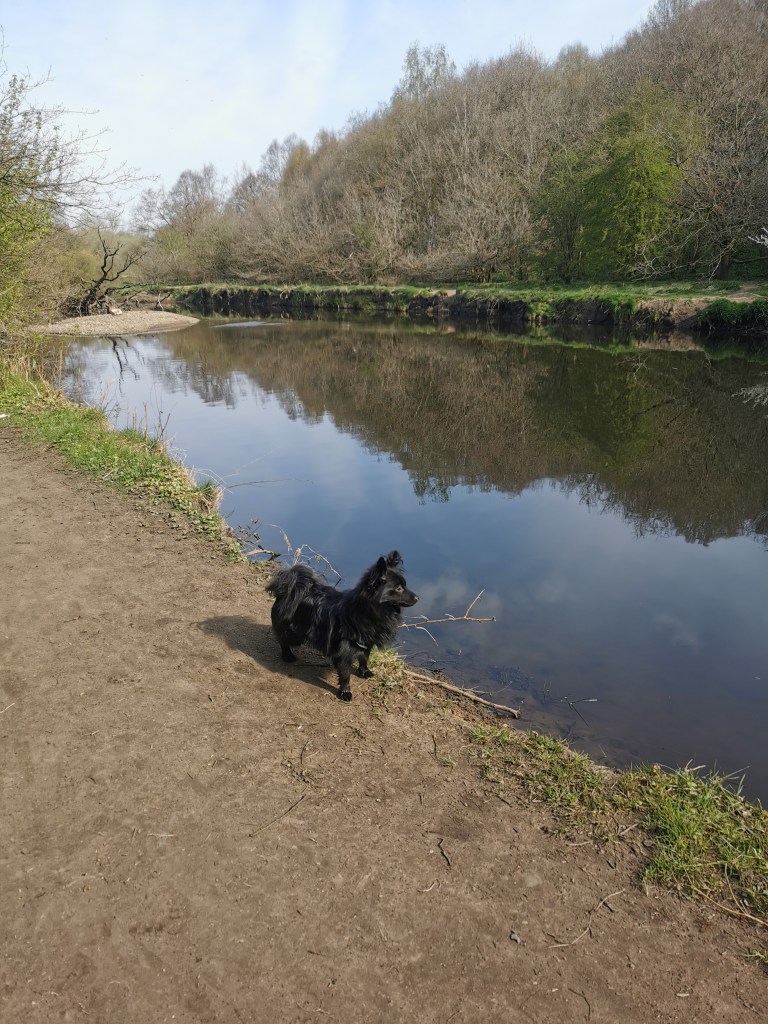
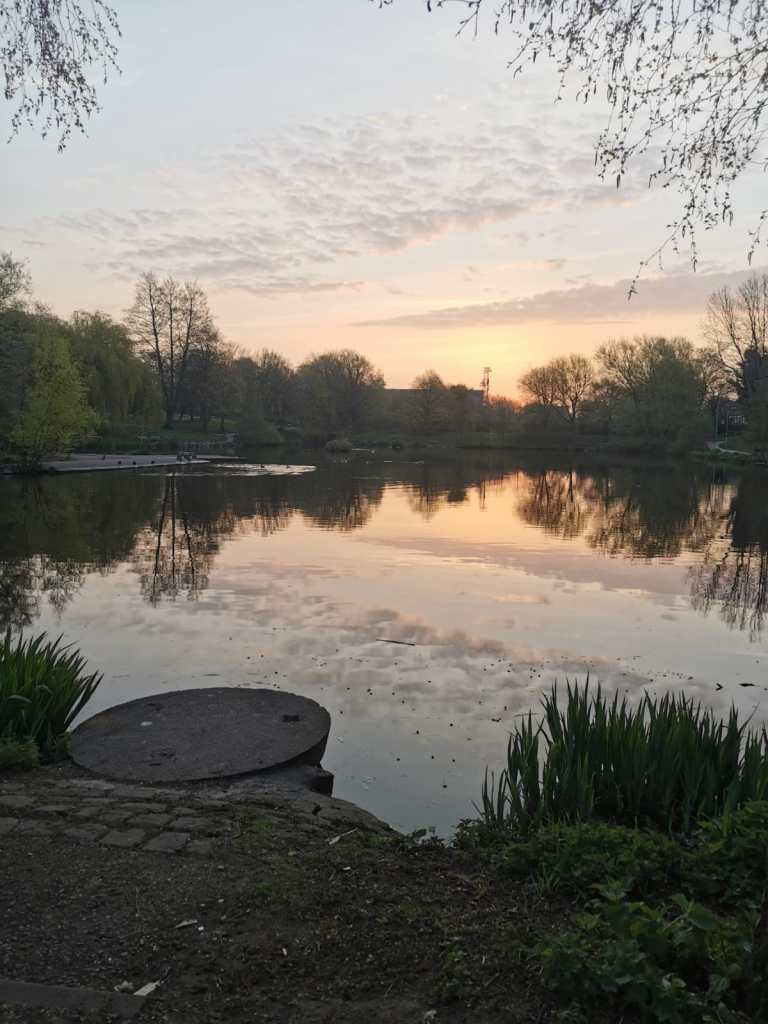
Usually in the evening we go to a huge field so he can quite literally run rings around me. A few weeks ago, we broke tradition and went to the local park in the late afternoon. I had spent the entire day in front of a screen and needed a break. We got to the park and it was different – it looked different, sounded different, and felt different. The sun was out so of course it was busier, and as you’d expect after school there were children playing on the skate park and the playground. There were about a dozen dogs in the dog park (it’s not as fancy as it sounds – just a patch of grass where the dogs dig holes and fetch sticks). Prince was a bit overwhelmed and so was I – at this point I hadn’t seen so many people in one place since pre-covid!
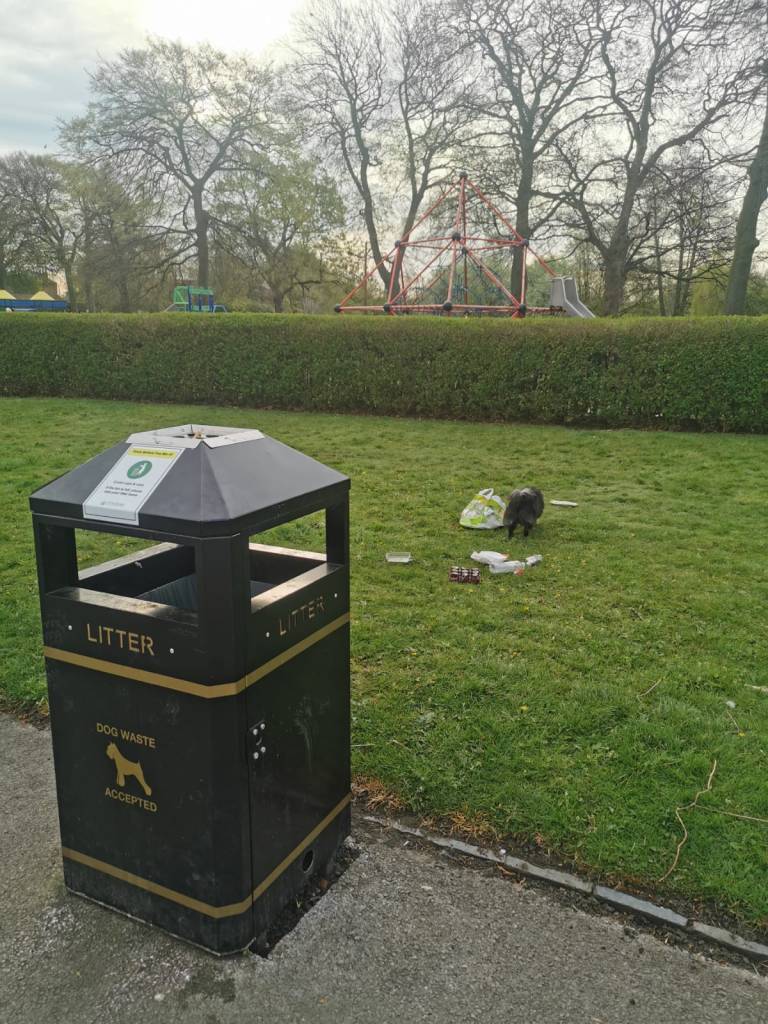
I soon learned that I couldn’t let Prince off his lead on a Monday because the mess from the weekend (even before the outdoor rule of six) would not yet be cleaned and he would eat everything. One Monday he walked an entire lap of the park with a croissant in his mouth that was bigger than his head. Another day he picked up half a joint of cooked meat. I noticed the signs of people having good (and not so good) times, particularly after sunny weekends. Sometimes when it’s warm there’s groups of men fishing, pulling all-nighters, smoking cannabis and drinking. Once, we followed a trail of blood around the path and although it could just as easily come from a child after a fall, the empty, broken alcohol bottles led me to imagine scenarios of violence.
During my visits to the park over the last few months I have seen evidence of alcohol and drug use, and possible violence. In May last year, there were reports of gunshots fired, leading to a man being arrested on suspicion of possessing a firearm. Quite worrying considering I live only a couple of hundred metres away. There have also been incidents involving youths wielding baseball bats and setting fires before attacking firefighters. I had a look at the crime data for the area but Greater Manchester Police have had some IT issues affecting data from 2019 onwards (that’s another story…), however older data showed a pattern of anti-social behavior, arson and a few violent offences as well. This is all very different to the place of tranquility I visit daily with the puppy.

The next day we returned for our early morning walk and I reflected upon the changes in the character of the park and the actors and events that create this. I started thinking about criminology and the environment around us, about how places can change so much throughout the day and across the seasons. I thought about situational crime prevention. My work brain truly switched on and I stopped hearing the birds and started seeing the CCTV and the lighting. I thought to myself that I would not go to the park when it gets dark but if I did, I would stay in the lit areas where the cameras could see me. I would stay away from the groups of fishermen because they were sure to be drunk and stoned by nightfall. I haven’t seen them behave in a threatening manner although I have overheard verbal threats. They are usually asleep when I walk by but as a single woman I’d think twice about walking past a group of lively, drunk men at night.
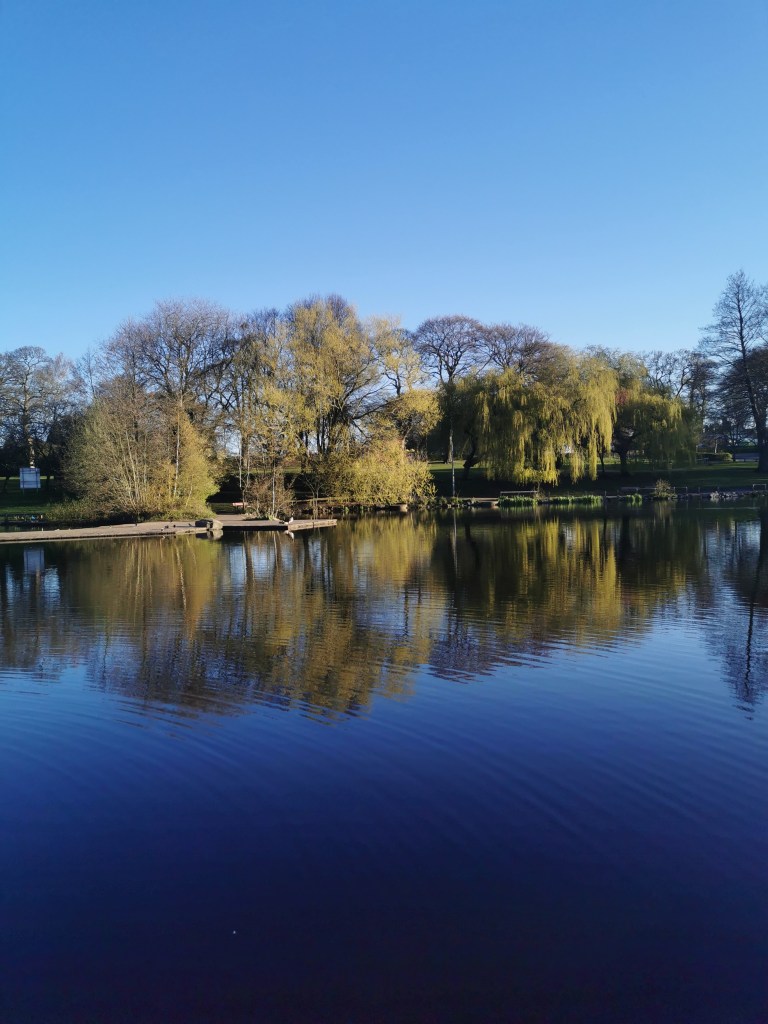
This local park is just one example based on my observations, but the question is, is it a criminogenic space? Or am I criminologist who sees things of criminological interest in everything, everywhere? Or a woman who constantly assesses personal safety? Luckily I haven’t had enough thinking time and space to ponder these questions otherwise this would have been a long read.
Share this:


What’s in the future for criminology?

This year marks 20 years that we have been offering criminology at the University of Northampton and understandably it has made us reflect and consider the direction of the discipline. In general, criminology has always been a broad theoretical discipline that allows people to engage in various ways to talk about crime. Since the early days when Garofalo coined the term criminology (still open to debate!) there have been 106 years of different interpretations of the term.
Originally criminology focused on philosophical ideas around personal responsibility and free will. Western societies at the time were rapidly evolving into something new that unsettled its citizens. Urbanisation meant that people felt out of place in a society where industrialisation had made the pace of life fast and the demands even greater. These societies engaged in a relentless global competition that in the 20th century led into two wars. The biggest regret for criminology at the time, was/is that most criminologists did not identify the inherent criminality in war and the destruction they imbued, including genocide.
In the ashes of war in the 20th century, criminology became more aware that criminality goes beyond individual responsibility. Social movements identified that not all citizens are equal with half the population seeking suffrage and social rights. It was at the time the influence of sociology that challenged the legitimacy of justice and the importance of human rights. In pure criminological terms, a woman who throws a brick at a window for the sake of rights is a crime, but one that is arguably provoked by a society that legitimises inequality and exclusion. Under that gaze what can be regarded as the highest crime?
Criminologists do not always agree on the parameters of their discipline and there is not always consensus about the nature of the discipline itself. There are those who see criminology as a social science, looking at the bigger picture of crime and those who see it as a humanity, a looser collective of areas that explore crime in different guises. Neither of these perspectives are more important than the other, but they demonstrate the interesting position criminology rests in. The lack of rigidity allows for new areas of exploration to become part of it, like victimology did in the 1960s onwards, to the more scientific forensic and cyber types of criminology that emerged in the new millennium.
In the last 20 years at Northampton we have managed to take onboard these big, small, individual and collective responses to crime into the curriculum. Our reflections on the nature of criminology as balancing different perspectives providing a multi-disciplinary approach to answering (or attempting to, at least) what crime is and what criminology is all about. One thing for certain, criminology can reflect and expand on issues in a multiplicity of ways. For example, at the beginning of 21st terrorism emerged as a global crime following 9/11. This event prompted some of the current criminological debates.
So, what is the future of criminology? Current discourses are moving the discipline in new ways. The environment and the need for its protection has emerge as a new criminological direction. The movement of people and the criminalisation of refugees and other migrants is another. Trans rights is another civil rights issue to consider. There are also more and more calls for moving the debates more globally, away from a purely Westernised perspective. Deconstructing what is crime, by accommodating transnational ideas and including more colleagues from non-westernised criminological traditions, seem likely to be burning issues that we shall be discussing in the next decade. Whatever the future hold there is never a dull moment with criminology.
Share this:


At what point do we act? There is plastic in the Mariana Trench!

I do not usually write about environmental issues, but I have reflected and read recently on zemiological perspectives with regard to social harms caused by excessive consumerism, and those in powerful positions who are determined to deny the impact of this on the planet. I examine this to some degree in my year two module on ‘Outsiders’, to ask students to think about their own consumer habits, perceived needs and also, the admiration and aspirations associated with wealth. I try to do my bit – I recycle, I am eating more vegetarian meals, but I also drive pretty much everywhere, and it is clear I could do more. However, I really do sympathise with those who ask whether concerned individuals can actually make a difference. This seems impossible in light of the scale of CO2 emissions from industrialised countries with high productivity and an unrelenting focus on increasing GDP. We also see football field sized areas of trees being cut from the Amazon rainforest on a daily basis, plastic in our oceans and food chains, and just recently, found at the bottom of the Mariana Trench. As consumers, we can perhaps demand change, shift our consumer habits to use more recycled materials, move towards using sustainable resources where we have the choice and contribute to broader campaigns for change.
But this can feel insignificant in the light of world leaders denying there is a problem, refusing to invest in alternative energy resources and therefore, enabling the plundering of Earth’s resources. I am not sure what it will take to change our behaviour – I am hopeful younger generations, groups like Extinction Rebellion and campaigners such as Greta Thunberg mean governments who refuse to engage with the need for change will find themselves consigned to the past, with a legacy of being very much on the wrong side of history. I hope in 10 years time we can talk about being taken to the brink and pulling back, recognising the harms being caused, meaning we focus more on the welfare of the planet and less on accruing wealth and goods. Jacinda Ardern, the Prime Minister of New Zealand recently spoke out about changing the priorities of her government in a pre-budget speech, which demanded a focus on environmental change through developing a low emissions economy and considering the welfare of citizens alongside economic growth. Alexandra Ocasio-Cortez, who serves as the U.S. Representative for New York’s 14th congressional district presented her ‘Green New Deal’, to the US Congress, receiving both criticism and praise for the bold ideas – the central premise being the need to ‘reject economic orthodoxy to confront climate change’ (Guardian, 2019). Those facing harms of climate change have been and still are disproportionally represented by developing countries, less powerful states who struggle to get their voice heard, compared to world leaders who still focus on GDP and their own interests. Now that climate change is affecting North America and Europe more consistently, with rising temperatures and extreme weather patterns, we might start to see a response to these calls for change.
It is serendipitous that I write this during the British Society of Criminology conference at the University of Lincoln, where green criminology has a clear presence and profile. By following the twitter feeds @BscGreenCrim and @BSCLincs_19, we can see a range of issues being explored under the remit of #greencriminology, which has sparked my interest further and made me regret not going this year – there is always next year at the University of Liverpool! The papers include an examination by John E. McDonnell (2017) on Genocide and Green Criminology, looking at the case of the ‘Merauke integrated food and energy estate’ – a quick search reveals a project billed as increasing self-sufficiency and wealth for Indonesia is actually a ‘land grab’ and displacement of indigenous populations, alongside deforestation and numerous other impacts, all to produce food for export. Rowland Atkinson reiterates this theme examining the impact of the over consumption of the global rich on urban life – at the conference and in an extensive list of research studies. Angus Nurse examines environmental crimes committed by corporations (Nurse, 2017), who are no doubt propped up by consumer habits which demand choice and value, at the expense of creating pollution and waste which poisons our air, oceans and rivers and, as with climate change, disproportionately affects the less powerful. Finally, a shift to another fascinating area of research was presented by Tanya Wyatt, exploring the link between wildlife and drug trafficking, the former being cited as a leading cause of animal extinction (Wyatt, 2016).
Another article which then caught my eye, came from the Guardian, by Chris Packham, detailing the plans for companies who want to mine the ocean floor, the largest ecosystem on the planet, which Packham describes as ‘quite clearly an awful idea’. It amazes me that this is even been discussed as a possibility, but in light of the behaviour of some of our world leaders, perhaps this displays my own naivety as to just how far some will go to create wealth. There has to be a tipping point, a point at which we simply ask, what is more important to us? The stuff we buy? The acceptance of states enabling the use of the Earth’s resources, no matter the cost to us? The article describes oceans as the last ‘industrial frontier’, but it is also clear that more us of need to fully understand how vital they are to the health of our planet – they regulate our climate, provide food and an ecosystem which if damaged or even lost, would have serious consequences for all of us. The signs of change are there, and it is clear alongside the small efforts we make ourselves, we also need to start holding governments to account on this issue.
References
Atkinson R (2019) Necrotecture: lifeless dwellings and London’s super-rich. International Journal of Urban and Regional Research.
Guardian Editorial (2019) The Guardian view on a Green New Deal: we need it now, The Guardian.
Kenner, D. (2015) Inequality of overconsumption: The ecological footprint of the richest, Working Paper: 2015/2, Global Sustainability Institute
McDonnell, J.E. (2017) Can a genocide lens be of use in our understanding of the effects of the Indonesian Transmigration Program on the Indigenous People of West Papua?, Unpublished essay written for MA in Understanding and Securing Human Rights at the School of Advanced Study, University of London.
Nurse, Angus (2017) Green criminology: shining a critical lens on environmental harm. Palgrave Communications, 3, pp. 1-4. ISSN 2055-1045
Packham, C. (2019) In too deep: why the seabed should be off-limits to mining companies, The Guardian.
Wyatt, Tanya (2016) A comparative analysis of wildlife trafficking in Australia, New Zealand and the United Kingdom. Journal of Trafficking, Organized Crime and Security, 2 (1). pp. 62-81. ISSN 2374-118X

 Thoughts from the criminology team