
Home » Employment
Category Archives: Employment

A Love Letter: in praise of board games
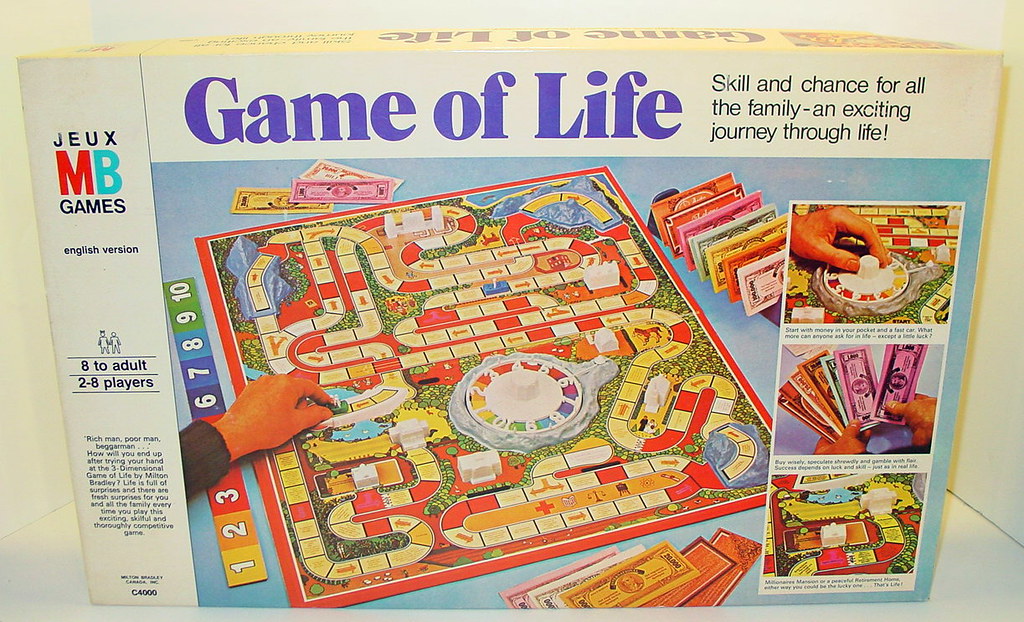
This my fifth love letter, previously I have written in praise of poetry, art, Agatha Christie and the Thoughts from the Criminology Team blog. Since early childhood, I have loved playing games and today’s entry is dedicated to this form of media. In the early years, the focus on fun is paramount, after all who wants to play a dull game? Equally important, the educational aim of games is sometimes explicit, other times less so. Nevertheless, they help us learn to match and sort colours and shapes, to develop our counting skills in an applied setting and improve our memory recall, as well as spelling. Games likes Snap, Happy Families, Hungry Hippos, Snakes and Ladders, Guess Who, Junior Scrabble offer a variety of different ways for children to learn important skills whilst playing. These games enable even very small children to share space, develop important interpersonal skills like taking turns and learn to deal with winning, and of course, losing. Often the latter is a very slow and painful lesson to learn….and one that isn’t always remembered into adulthood!
Of course, one of the most explicit part of playing games is learning the rules of the game, and of course, what happens when we deviate from those rules. It might lead to the loss of a turn or even forfeiture of the entire game. People interpret rules in different ways and families often develop their own “house” rules, but nevertheless there is always an agreed upon set of rules and a way of policing and punishing those who break them.
But once these lessons have been learned, what do games have to teach us as adults? I would say plenty! On a surface level, they offer an opportunity to relax and do something outside of our humdrum lives. Once the games have been purchased, they generally cost nothing to play unlike other forms of leisure time.1 Some can be played alone, others require competitors or even teams. They can aid our thinking, concentration and develop skills of strategy and tactics. They also have the general benefit of not being all consuming (unless at competition level), allowing for conversation to flow. The latter, conversing whilst doing something else, can often be useful for difficult emotional conversations, allowing people to open up without pressure (known colloquially as “health by stealth”).
But do board games have anything to offer to Criminology? Again, I would argue yes! Most games involve chance or luck, will you get the numbers you need, will you have the right pieces/cards in your hand, will the other person play their game in a way that benefits you? It is easy to recognise the role that luck or chance plays in games, but are we equally aware of their role in our lives. More importantly, as criminologists do we fully understand and acknowledge the role played by both in relation to criminality and victimisation?
We have no choice about whether we are born or not, when and where we arrive on the earth, who our parents are. These are all down to forces outside our individual and collective control. Our upbringing, our education, our employment opportunities are largely constrained by geography, money and influence. Compare the opportunities available to a baby born today in Sudan, with one born in the UK, another born in Palestine, and another born in Finland. Compare again, thinking about race, sex, class, disability, sexuality and so on. Very quickly you begin to understand the role played by chance and luck.
So if all of the above are imponderables, how much of a role does luck play in relation to criminality and victimisation? The regular publication of data relating to crime in postcodes, towns/cities and globally show huge diversity in the chance of victimisation. Lucky you, if you were born and live in the ‘Nordic countries of Europe (Norway, Sweden, Denmark, Iceland, and Finland) who rank among the 25 safest globally, most of them also being among the top 10 happiest nations worldwide’. Less fortunate, if you were born in Haiti, Ukraine, Palestine, Sudan or Iraq identified as some of the most dangerous places on earth currently. It is not very difficult to imagine the difference in opportunities in fundamental human rights; food, shelter, healthcare, education and so on. In war ridden nations it is incredibly difficult to separate different typologies of victimisation and for the individuals living under these conditions, it makes no meaningful difference who is/are the perpetrators.
Even if you are living in a “peaceful” state2 such as the UK, there are vast differences in the opportunities available. If you have money you can buy a car to get to work in your evening/night job, if you don’t, maybe you can take a bus, failing that you can walk. Each of those journeys carries its own risks. Your sex, your race, your ethnicity, your sexuality, your abilities/disabilities, your age add the aggravating/mitigating factors and see your risk increase/decrease. All a matter of chance and luck
What about criminality, is this, as the Classical School of Criminology would have us accept, a matter of free will, weighing up the pros and cons and making a deliberate and calculating choice to commit crime? Or can we also identify the same issues of luck and chance as shown above? If your family is loving, everyone has good health, housing is secure, food is plentiful and there are plenty of educational and employment opportunities in your area, would you still choose a life of crime? If there is violence at home, poverty impacts health, housing and regular meals, making it challenging to study or work, would you perceive crime to be a choice?
And what of those board game rules and consequences, real life has its own rules, some written in the forms of laws, others engrained via family, friends, institutions; the norms of our society. In the board game, these rules apply equally (aside from luck and chance) but in real life, not so much. Consider racial and ethnic disproportionality and the treatment of vulnerable women in the CJS, as just two examples. We may all be playing in the same “Game of Life”, but luck, chance and the rules we are subjected to are very different when it comes to criminality and victimisation.
- I appreciate that there are some very expensive board games out there, as well as expansion packs to enhance play. ↩︎
- There are lots of academic arguments around what constitutes a peaceful state, most agree that it more than just the absence of war. Whilst the UK has not seen active warfare on its shores for decades, its military has been involved in conflict throughout the world for more than a century. ↩︎
Share this:


Starting a new school year
What makes university unique?
Unlike school, students make the choice to come to university. What’s more, it is often a student’s first-time experiencing independence from caregivers, e.g. outside the purview of their own parents. For many, this may mean learning how to shop, cook, budget, clean and take care of their own stuff. This is an entirely new series of decisions leading to the person you will become. Never shy away from seeking help, support and advice, and use every resource at hand, including and especially people.
Build relationships. You will undoubtedly be tempted to spend lots of time on your digital devices – alone – but this will most certainly lead you down a dark path towards isolation, loneliness and the false feeling of control. Instead, accept that you must fashion a new independent self. Who are you outside your caregivers/parent’s home? Put the phone down and give yourself a fighting chance to find out!
Find kinship beyond superficial similarities, and sow the seeds for happiness in your new environment. At our university, the biggest mistake I’ve consistently seen students make is failing to create community here. Often, for example, UK-based students are anxious to spend the weekend at home with their parents or school friends. International students may either indulge in regional tourism, indulge their homesickness, and/or only seek to build relationships within their own ethno-linguistic group. Again, this all feeds a false sense of control.
This mirrors my experiences at Hanoi University of Science and Technology, where I taught during my sabbatical year in Vietnam (see featured image). There, I had to not only learn from my students how to navigate the local environment, but crucially, learn local classroom norms from both them and colleagues so that I could teach more effectively.
With that said: Build relationships right here through the university community. Join a club, explore and develop your interests and cultivate support networks. These may overlap or be three different ventures. If you work, then find employment that anchors you here in Northampton. Use every job experience as A) An opportunity to improve your communication skills, and B) As building blocks towards your own goals.
Within the first few weeks of starting university 30 years ago, I met a student who quickly became my best friend. He came from a country I couldn’t have pointed out on a map, was from a different religion, and studied something far from my own interests. As our friendship blossomed, we easily discovered that we had far more in common than not, which in turn fed my own curiosity and confidence to get to know more about this planet we all call home. Even though he’s passed away, our friendship still sustains me to this day (Rest in Power, dear Numair).
On the mentor/disciple relationship between students and teachers
At university, there is no separation between staff/students, adults/youth like in school. Please find opportunities to develop mentor/mentee relationships with your tutors*. Find a tutor with whom you can share your new world and reflect upon your growth. Ask them exactly what excellence looks like in their classroom and on assessments so you can foster the right study skills.
Yes, find mentors and become one, too! Learn from others who are further along the journey you now tread. At the same time, find ways to work with youth to inspire those who follow your path. This not only develops your own confidence and communication skills, but collectively contributes to a vibrant university community.
As someone who has studied and practiced Buddhism my whole life, I am convinced that what we give, we get in return. Cultivate a spirit of generosity and feed your own open-mindedness. This support and tolerance will be returned to you ten-fold.
*hooks, bell (2003). Teaching Community: A pedagogy of hope. New York ; Routledge.
Share this:


Zemiological Perspective: Educational Experiences of Black Students at the University of Northampton

As a young Black female who has faced many challenges within the education system, particularly related to behavioral issues, I noticed how the system can unintentionally harm black students. I observed that Black children’s experiences in the education system are not always viewed from a deviant perspective, because they are not inherently deviant. The institutional harm faced by Black students is not always a ‘crime’ nor is it illegal, yet it is profoundly damaging.
This realisation prompted me to adopt a zemiological perspective, drawing upon the work of Hillyard et al. (2004) to highlight the subtle yet impactful harms faced by Black students in the educational system. My primary objective was to uncover the challenges these students face, as outlined in my initial research question: ‘To what extent can the experiences of Black students in higher education be understood as a form of social harm?’ To achieve this, I analysed the educational experiences of Black students at the University of Northampton. This involved reviewing the university’s access and participation plans, which detail the performance, access, and progression of various demographics within the institution, with a particular focus on BAME students.
Critical race theory (CRT) was the guiding theoretical framework for this research study. CRT recognises the multifaceted nature of racism, encompassing both blatant acts of racial discrimination and subtler, systemic forms of oppression that negatively impact minority ethnic groups (Gillborn, 2006). This theoretical approach is directly correlated to my research and was strongly relevant. This allowed me to gain insight into the underlying reasons behind the disparities faced by Black students in higher education. As well as enabling me to unpack the complexities of racism and discrimination, providing a comprehensive understanding of how these issues manifest and persist within the educational landscape.
Through conducting content analysis on the UON Access and Participation Plan document and comparing it to sector averages in higher education, four major findings came to light:

Access and Recruitment: The University of Northampton has made impressive progress in improving access and recruitment for BAME students, fostering diversity and inclusivity in higher education, and surpassing sector standards. Yet, while advancements are apparent, there remains a need for more comprehensive approaches to tackle systemic barriers and facilitate academic success across the broader sector.
Non-Continuation: Alarmingly, non-continuation rates among BAME students at the University of Northampton have surpassed the sector average, indicating persistent systemic obstacles within the education system. High non-continuation rates perpetuate cycles of disadvantage and limit opportunities for personal and professional growth.
Attainment Gap: Disparities in academic attainment between White and BAME students have persisted and continue to persist, reflecting systemic inequalities and biases within the academic landscape. UON is significantly behind the sector average when it comes to attainment gaps between BAME students and their white counterparts. Addressing the attainment gap requires comprehensive approaches that tackle systemic difficulties and provide targeted support to BAME students.
Progression to Employment or Further Study: UON is also behind the sector average in BAME students progression in education or further study. BAME students face substantial disparities in progression to employment or further study, highlighting the need for collaborative efforts to promote diversity and inclusivity within industries and professions. Addressing entrenched biases in recruitment processes is essential to fostering equitable opportunities for BAME students.
Contributions to Research: This research deepens understanding of obstacles within the educational system, highlighting the effectiveness of a zemiological perspective in studying social inequalities in education. By applying Critical Race Theory, the study offers insights that can inform policies aimed at fostering equity and inclusion for Black students.
The findings hold practical implications for policy and practice, informing the development of interventions to address disparities and create a more supportive educational environment. This research significantly contributes to our understanding of the experiences of Black students in higher education and provides valuable guidance for future research and practice in the field.
Aside from other limitations in my dissertation, the main limitation was the frequent use of the term ‘BAME.’ This term is problematic as it fails to recognise the distinct experiences, challenges, and identities of individual ethnic communities, leading to generalisation and overlooking specific issues faced by Black students (Milner and Jumbe, 2020). While ‘BAME’ is used for its wide recognition in delineating systemic marginalisation (UUK 2016 cited in McDuff et al., 2018), it may conceal the unique challenges Black students face when grouped with other minority ethnic groups. The term was only used throughout this dissertation as the document being analysed also used the term ‘BAME’.
This dissertation was a very challenging but interesting experience for me, engaging with literature was honestly challenging but the content in said literature did keep me intrigued. Moving forward, i would love Black students experiences to continue to be brought to light and i would love necessary policies, institutional practises and research to allow change for these students. I do wish i was more critical of the education system as the harm does more so stem from institutional practices. I also wish i used necessary literature to highlight how covid-19 has impacted the experiences of black students, which was also feedback highlighted by my supervisor Dr Paula Bowles.
I am proud of myself and my work, and i do hope it can also be used to pave the way for action to be taken by universities and across the education system. Drawing upon the works of scholars like Coard, Gillborn, Arday and many others i am happy to have contributed to this field of research pertaining to black students experiences in academia. Collective efforts can pave the way for a more promising and fairer future for Black students in education.
References
Gillborn, D. (2006). Critical Race Theory and Education: Racism and anti-racism in educational theory and praxis. Discourse: Studies in the Cultural Politics of Education, 27 (1), 11–32. [Accessed 21 April 2024]
Hillyard, P., Pantazis, C., Tombs, S. and Gordon, D., (Eds), (2004). Beyond Criminology: Taking Harm Seriously, London: Pluto Press.
Milner, A. and Jumbe, S., (2020). Using the right words to address racial disparities in COVID-19. The Lancet Public Health, 5(8), pp. e419-e420
Mcduff, N., Tatam, J., Beacock, O. and Ross, F., (2018). Closing the attainment gap for students from Black and minority ethnic backgrounds through institutional change. Widening Participation and Lifelong Learning, 20(1), pp.79-101.
Share this:


The racialised cost of e-waste
We are in a climate where electronic goods are the norm and the way ‘forward’ for the modern society in which we live. But what of the effects of living in a world with so much technology and a constant need to replace and upgrade our electrical goods? One of these effects is toxic waste and pollution. According to the Global E-Waste Monitor, of the 53.6 million metric tons of e-waste generated in 2019, only 17.4% was collected and recycled properly (ITU, 2020)
When you get rid of an old phone or laptop, where does it go? In some cases, it may be reused or recycled safely, but for many, they may end up in parts of Asia or on a site like Agbogbloshie in Accra, Ghana.

Agbogbloshie was one of the largest e-waste sites in the world, hundreds of thousands of tons of waste were dumped at this site. Workers at this site spent hours looking through the waste site for valuable parts and scrap metal they could sell. Doing this on a daily basis for years had adverse effects on the health of these workers: skin problems, headaches, stomach ulcers, and those are the health effects that are more easily identified, but what of those health defects not yet visible.
In July 2021, the Agbogbloshie site was demolished suddenly and without warning. Whilst some have heralded this as a great move, the way it was done was arguably inhumane and irresponsible. Workers at the site were not notified of the demolition and were forcibly removed from the site without time to take their belongings with them. They were not given the time or support to find alternative employment arrangements, leaving many in financial difficulty. For many, they have now moved to smaller waste sites, or they bring scrap metal into their homes and around their families as they no longer have a site to work from. Is this better? It could be argued that if the aim was to help these individuals minimise the health risks associated with working on the scrapyard, then they have failed. If the claim is that human rights were being violated by allowing individuals to work on the scrapyard, what of the human rights violations when the workers were forcibly removed?
I draw similarities to the aerial destroying of coca crops in countries such as Colombia. Hidden under the guise of the greater good and supporting the impoverished, why is it always those at the bottom of the ladder who are adversely affected. It is time for governments to be held accountable for the harms they cause and to start supporting and investing in their citizens.
To find out more: https://africanarguments.org/2022/07/agbogbloshie-a-year-after-the-violent-demolition/
Share this:


When will these issues be addressed?

In the realm of education, inclusivity and accessibility should be the foundation of any society aspiring for progress. However, in the case of special education schools in the United Kingdom, there exists a troubling narrative of systemic failings. Despite efforts to provide tailored education for students with diverse needs, the British educational system’s shortcomings in special education have cast a shadow over the pursuit of equal opportunities for all.
One of the main challenges facing special education schools in the UK is inadequate funding. These institutions often struggle with limited resources, hindering their ability to provide the necessary support for students with special educational needs. Insufficient funding results in larger class sizes, fewer specialized staff, and a lack of essential resources, all of which are detrimental to the quality of education these schools can offer. Furthermore, the heavy reliance on the UKs crumbling social care services and the overstretched NHS within special education settings exasperate poor outcomes for children and young people.
Special education students require a range of support services tailored to their individual needs. However, the inconsistency in the provision of support services across different regions of the UK is a glaring issue. Disparities in access to speech therapists, occupational therapists, and other essential services create an uneven educational landscape, leaving some students without the critical support they require to thrive.
Effective collaboration and communication between educators, parents, and support professionals are vital for the success of any special education school. Unfortunately, there is often a lack of seamless coordination. The lack of collaboration can and has result in fragmented support for the students, hindering their overall development and thus making it difficult to implement cohesive and effective educational plans.
The success of special education programs relies heavily on well-trained and empathetic educators. Unfortunately, the British educational system falls short in providing comprehensive training for teachers, working in special education schools. Many teachers express a lack of preparation to address the unique challenges posed by students with diverse needs, leading to a gap in understanding and effective teaching strategies. It is also important to note that many staff members that work within special education settings are not trained teachers, although they have been given the title of teachers. This further leads to inadequate education for children and young people. Moreover, post-covid has seen a high staff turnover within these settings. There have been many reports that have alluded to the notion that British schools are failing our children, but it seems that children from special education provisions are ignored, and families are dismissed when concerns are raised about the lack of education and preparation for the ‘real world’.
I am also critical of the overreliance of labelling students with specific disabilities. While categorization can be useful for designing targeted interventions, it can also lead to a narrow understanding of a student’s capabilities and potential. This labelling approach inadvertently contributes to stereotypes and stigmas, limiting the opportunities available to students with special needs….. There tends to be a focus on the troubling history of the way people with disabilities in the UK have been treated, but what I find interesting is there is a sense of disregard for the issues that are occurring in the here and now.
There is also a lack of special education provisions in the UK. This has led to many children with additional needs without a school place. And while a specific figure of the number of children being excluded from education has not been disclosed, West Northamptonshire, has awarded families over £49,000 over special education failings in 2023 (ITV, 2023). Furthermore, Education health care plan recommendations (EHCP) have not been followed within schools. These are legally binding documents that have been continuously dismissed which has led to further legal action against West Northants council in recent years (Local Government and Care Ombudsman, 2023).
The failings in special education schools have repercussions that extend beyond the classroom. Many students who leave these schools face challenges in transitioning to higher education, entering the workforce or living independently. The lack of adequately tailored support for post-education opportunities leaves these individuals at a disadvantage, perpetuating a cycle of limited prospects, which inevitably pull people with disabilities into a cycle of poor health and poverty (Scope, 2023). The disability employment gap in the UK is 29% and the average disabled household faces a £975 a month in extra costs (Scope, 2023) access to employment and financial independence is out of reach for disabled people due to failings within education because lack of preparation for life beyond school.
There needs to be reform in British schools from mainstream to special education. There are failings across the board. Adequate funding, improved teacher training, consistent support services, enhanced collaboration, and a shift away from overreliance on labelling are all crucial steps toward creating an inclusive educational environment. It is difficult to draw on optimism when the UK government continues to ignore age old concerns. This blog entry is to bring awareness to an issue, that may not be on your radar, but will hopefully get you to reflect on the copious barriers that people with disabilities face. Childhood should be a time when there is a fence built to protect children is schools. As we get older and face the challenges of the wider world, we should be equipped with some skills. Special education schools should not be used as a holding place until a child comes of age. There should be provisions put in place to give all young people an equitable chance.
Share this:


Christmas Toys

In CRI3002 we reflected on the toxic masculine practices which are enacted in everyday life. Hegemonic masculinity promotes the ideology that the most respectable way of being ‘a man’ is to engage in masculine practices that maintain the White elite’s domination of marginalised people and nations. What is interesting is that in a world that continues to be incredibly violent, the toxicity of state-inflicted hegemonic masculinity is rarely mentioned.
The militaristic use of State violence in the form of the brutal destruction of people in the name of apparent ‘just’ conflicts is incredibly masculine. To illustrate, when it is perceived and constructed that a privileged position and nation is under threat, hegemonic masculinity would ensure that violent measures are used to combat this threat.
For some, life is so precious yet for others, life is so easily taken away. Whilst some have engaged in Christmas traditions of spending time with the family, opening presents and eating luxurious foods, some are experiencing horrors that should only ever be read in a dystopian novel.
Through privileged Christmas play-time with new toys like soldiers and weapons, masculine violence continues to be normalised. Whilst for some children, soldiers and weapons have caused them to be victims of wars with the most catastrophic consequences.
Even through children’s play-time the privileged have managed to promote everyday militarism for their own interests of power, money and domination. Those in the Global North are lead to believe that we should be proud of the army and how it protects ‘us’ by dominating ‘them’ (i.e., ‘others/lesser humans and nations’).
Still in 2023 children play with symbolically violent toys whilst not being socialised to question this. The militaristic toys are marketed to be fun and exciting – perhaps promoting apathy rather than empathy. If promoting apathy, how will the world ever change? Surely the privileged should be raising their children to be ashamed of the use of violence rather than be proud of it?
Share this:


Stop the boats, Stop the visas, Meet the thresholds and You are in!

The Tory party has witnessed a number of challenges in recent years and with the appointment of Rishi Sunak, a brief sense of stability was felt amidst the chaos. As different parties look to the upcoming elections, each party have begun to move pieces on its chess board. While campaigns have unofficially begun, some commentators have argued that Sunak’s recent policy on migration could be one of his game plans.
Let’s take a closer look into this recent migration policy. Attention seemed to have slowly shifted away from the plan of redirecting boats to Rwanda to the need to suppress legal migration. To restrict LEGAL migration, Sunak’s government instituted policies limiting opportunities on student visas, banning dependents on care visas, increasing the minimum income threshold for skilled worker and family visas, and revising rules around shortage occupation lists.
Starting with the skilled worker visas, the government imposed a £38,700 minimum salary requirement to gain entry into the UK. Simply put, if you are coming to work in the UK, you must search for a job that pays nothing less than £38,700 in annual income, or else you will not qualify. For me, I think some clarification is needed here for what the government considers as skilled jobs exactly. I say this because junior doctors, nurses and train operators would be considered as being part of a skilled workforce. However, these skilled work force have undertaken multiple strike action over dispute on wages in the last few months. This leads me to another question – how many ‘skilled job’ workers earn a salary of £38,700 in the current day economy? Although the government implied that the reason for this is to force organisations to look to British citizens first rather than relying on legal migrants – which could be thought as quite commendable however, a number of UK workers earn less than the new threshold annually anyway. So this logic needs further clarity in my view.
In terms of curbing student’s visas, UK higher education has long attracted international students, yet these new policies outrightly banning postgraduate dependents and targeting post-study work visas seem quite harsh, especially given the exorbitant £13,000 to £18,000 yearly tuition fees already paid by these students. If the aim is transforming education into a type of transitory/knowledge based tourism, this should be transparent so aspiring international scholars are not misled into believing they are wanted for anything beyond their hefty bank balances.
On family visas and so forth, it is without a doubt that these new rules will tear apart families because it also imposes a £38,700 minimum income threshold on family visas from £18,600. The technicality around this is that legal migrants will not be the only ones to be affected by these new rules, British citizens will also be affected. Let us consider this scenario. Consider Linda, a British citizen working part-time in retail earning £33,000 annually. She aims to marry her long-term boyfriend from Sri Lanka next summer, but both of them fall short of the minimum income threshold. Under the current rule, Linda now faces a dilemma. It’s either she increases her earnings above the threshold by the next spring or uproot her British life to reunite with her partner abroad. Contrast her plight with Kelvin, a non British citizen who has recently secured a Band 7 physiotherapy role in the NHS. He is entering the UK from Mozambique and has managed to negotiate a £47,000 pay deal with his trust. Kevin has the right to move his family freely over to the UK without any disruption. This seems more like double standards because for the less affluent, it seems the right to create a family across borders will become an exclusive privilege reserved only for the rich under this new policy.
The clock may be running out for advocacy groups hoping to see a repeal of these new regulations by the House of Lords and it seems doubtful there is enough procedural means in the Commons to withdraw the policies.
Share this:


Here to serve but not your slave

My wife and I were fortunate enough to go on holiday this year to a beautiful island in the Caribbean. Palm Island, a stone’s throw, well 10-minute boat ride (I’m not prone to exaggeration you understand) from Union Island, and some 45 minutes by plane to Barbados is a unique paradise described as the Maldives in the Caribbean.
The circumstances of the people that work on Palm Island (and history) are perhaps not too dissimilar to those that work in Cape Verde, a subject of a previous blog. Wages are poor, the staff are not exactly affluent, and work is hard to come by. Many have gravitated to Palm Island from nearby islands to find work and have subsequently stayed on Union Island, commuting every day after a long shift. Others stay on Palm Island in staff accommodation, returning home to their families every few months in St. Vincent and elsewhere. Whilst guests enjoy luxurious accommodation, great food and plentiful drinks, the workers receiving low wages, relying on a percentage of the service charge and tips, do not even have the luxury of a constant water supply on Union Island. Palm Island has its own water processing plant, Union Island does not. Hence the gardener telling me he had to pay $250 dollars to have water delivered to his home; £100 for the water and $150 for the delivery. The dry season is hard going and financially precarious.
The Island shut down during Covid and many of the workers returned home with no wages for the duration. Poverty is not an alien concept to them. Their lives and that of the visitors couldn’t be further apart and yet are intertwined by capitalism in the form of tourism. They need the tourists to sustain the jobs, the more tourists, the more in service charges and tips. Of course, the owners of the island want more tourists because it brings in more revenue. A moral dilemma for some perhaps, well for me anyway. I won’t be pretentious and state that I go to the island to support the local economy, vis-a-vie the poor people, I go there for a really good holiday. But here is the crux of the matter, and hence the title, I try my utmost to treat the staff with respect. I recognise that they are paid to serve me and other guests, and they do a brilliant job, but they are not my servants or slaves (the historical significance should be obvious). And yet I have witnessed people demanding drinks without a please or thank you, “give me a vodka”, “she wants a rum and coke”. I have seen people coming off yachts with day passes for the island, they came, they saw, they made a complete mess and they left…. You can clear up our mess! Glasses left all over the beach, beach towels left wherever, they last used them. “What did your last servant die of”, I ask, as they slope off into the rum filled sunset? “It certainly wasn’t old age” I shout after them. But it just seems lost on them.
I ask myself would they have treated me like that had I been the one behind the bar? I think not, perhaps the lighter colour of my skin may have persuaded them that I am worthy of some courtesy. But then who knows, it seems that some people that have money have a certain arrogance and disregard for anyone else.
Not all of the customers were like that, most were polite and some very friendly with the staff. But we shouldn’t forget the power dynamics, and above all else the privilege that some of us enjoy. Above all else it is a useful reminder that when people are there to serve, they are not your servant nor your slave and they and the job they do deserves respect.
Share this:


Rise of the machines: fall of humankind

May is a pretty important month for me: Birthdays, graduations, what feels like a thousand Bank Holidays, marking deadlines, end of Semester 2 and potentially some annual leave (if I haven’t crashed and crumbled beforehand). And all of the above is impacted by, or reliant on the use of machines. Their programming, technology, assistance, and even hindrance will all have a large impact on my month of May and what I am finding, increasingly so, is that the reliance on the machines for pretty much everything in relation to my list above is making my quite anxious for the days to come…
Employment, education, shopping, leisure activities are all reliant on trusty ol’ machines and technology (which fuels the machines). The CRI1003 cohort can vouch, when I claim that machines and technology, in relation to higher education, can be quite frustrating. Systems not working, or going slow, connecting and disconnecting, machines which need updates to process the technology. They are also fabulous: online submissions, lecture slides shown across the entirety of the room not just one teeny tiny screen, remote working, access to hundreds of online sources, videos, typing, all sorts! I think the convoluted point I am trying to get too is that the rise of the reliance on machines and technology has taken humankind by storm, and it has come with some frustrations and some moments of bliss and appreciation. But unfortunately the moments of frustration have become somewhat etched onto the souls of humankind… will my laptop connect? Will my phone connect to the internet? Will my e-tickets download properly? Will my banking app load?
Why am I pondering about this now?
I am quite ‘old school’ in relation to somethings. I am holding on strong to paper books (despite the glowing recommendations from friends on Kindles and E-readers), I use cash pretty much all the time (unless it is not accepted in which case it is a VERY RARE occasion that the business will receive my custom), and I refuse to purchase a new phone or update the current coal fuelled device I use (not literally but trying to be creative). Why am I so committed to refusing to be swept along in the rise of the machines? Simple: I don’t trust them.
I have raised views about using card/contactless to purchase goods elsewhere and I fully appreciate I am in a minority when it comes to the reliance on cash. However, what happens when the card reader fails? What happens when the machine needs an update which will take 40mins and the back up machine also requires an update? Do traders and businesses just stop? What happens when the connection is weak, or the connection fails? What happens when my e-tickets don’t load or my reservation which went through on my end, didn’t actually go through on their end? See, if I had spoken to someone and got their name and confirmed the reservation, or had the physical tickets, or the cash: then I would be ok. The reliance on machines removes the human touch. And often adds an element of confusion when things go wrong: human error we can explain, but machine error? Harder to explain unless you’re in the know.
May should be a month of celebrations and joy: Birthdays, graduations, end of the Semester, for some students the end of their studies. But all of this hinders of machines. Yes, it requires humans to organise and use the technology but very little of it is actually reliant on humans themselves. I am oversimplifying. But I am also anxious. Anxious that a number of things we enjoy, rely on and require for daily life is becoming more and more machine-like by the day. I have an issue, can I talk to a human- nope! Talk to a bot first then see if a human is needed. So much of our lives are becoming reliant on machines and I’m concerned it means more will go wrong…
Share this:


Food Banks: The Deserving vs Undeserving

A term that has been grating on me recently is ‘hard work’. I have had a recent bout of watching lots of television. From my observations it appears that more commentators within the media have grasped the idea that the continued need for Food Banks in the United Kingdom is awful. Yet commentators still continue with the same old deserving/undeserving tripe which has existed for centuries (which CRI2002 students are well-aware of). That being, that we should be concerned about food banks… ‘because now even hard-working people are using them!’, aka those within formal (preferably full-time) employment.
What is it that is not being said by such a statement? That being unable to survive off benefits is perfectly fine for people who are unemployed as they do not deserve to eat? If that is the case perhaps a reconsideration of the life experiences of many unemployed people is needed.
To provide some examples, a person might claim unemployment benefits because they are feeling mentally unwell or harmful to themselves but a variety of concerns have prevented them from seeking additional support and claiming sickness benefits, in this situation working hard on survival might be prioritised over formal employment. Another person might sacrifice their work life to work hard to unofficially care for relatives who have slipped through cracks and are unknown to social services, whilst not reaching out for support due to fear/a lack of trust social services – they have good reasons to be concerned. Some people might have dropped out of formal employment due to experiencing a traumatic life event(/s) which means that they now need to work hard on their own well-being. Or, shock-horror, people may be claiming unemployment benefits because they are working hard post-pandemic to find a job which pays enough for them to survive.

Let’s not forget that many of those who access Food Banks are on sickness benefits because they cannot work due to experiencing a physical and/or mental health disability. The underserving/deserving divide appears to be further blurred these days as those who claim sickness benefits are frequently accused of being benefits cheats and therefore undeserving of benefits and Food Bank usage. Even so, the acknowledgement of disability and Food Bank usage within the media is rare.
Is it really ok to perceive that the quality of a person’s life and deserved access to necessities should depend on their formal employment status?
There is twisted logic in the recent conservative government discourse about hard work. There is the claim that if we all work hard we will reap the rewards, yet in the same breath ‘deserving hard workers’ are living from payslip to payslip due to the cost of living crisis, poor quality pay and employment. Hence the need to use Food Banks.
The conservatives hard working mantra that all people can easily gain employment is certainly a prejudiced assumption. With oppressive, profit seeking, exploitative and poor quality employment there is little room allowed for humans to deal with their personal, family life pains and struggles which makes job retention very difficult. Perhaps the media commentators need a re-phrase: It is awful that any person needs to use a Food Bank!

 Thoughts from the criminology team