
Home » Economy (Page 4)
Category Archives: Economy

A Lockdown Moan
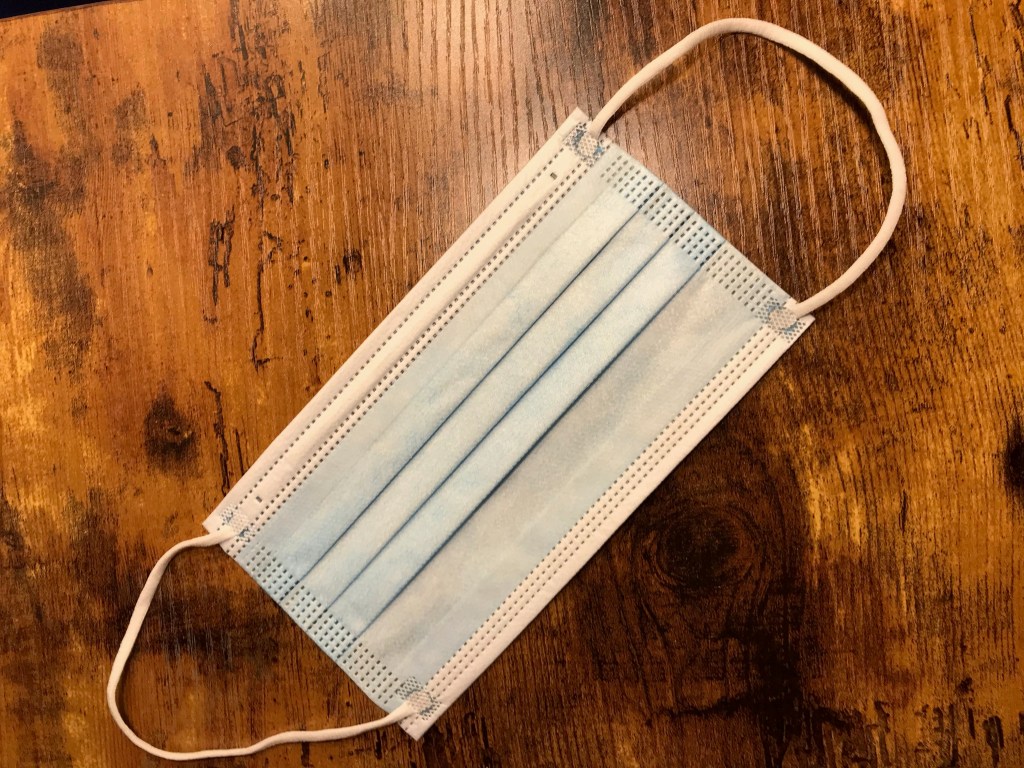
As the second lockdown has come to an end, I find myself reflecting on my own lockdown experiences quite a lot. My overall sense is that of gratitude, in that I have been fortunate enough to maintain and be offered new employment during this difficult time.
During the first lockdown I was a key worker and travelled to and from work on public transport whilst everyone else was ordered to ‘stay safe, and stay at home’. At times this was frustrating, and although I generally had faith in humanity my views on this were tested. During, lockdown 1.0 I witnessed people being much more aggressive to key workers. I worked in a place where I did not expect people to be nice to me, but even on my route to and from work I found that I was subjected to the odd remark.
One morning at 6am whilst in the city center I was even called ‘a rapist’ because I did not have any change to give to a homeless person, he then sort of offered to fight me. Of course, I wouldn’t ever fight anyone, and he would have been completely unaware that I had just finished a night shift so I would not prove to be a worthy opponent in any sense. I also remember sitting on the bus one night whilst a man, who appeared mentally unwell, persisted to cough all over me (mask free) before exiting at his stop.
I didn’t take any of these experiences personally, and thankfully I didn’t get Covid. It was clear that these people had many of their own problems – many of which may have been exacerbated due to Covid. The lack of understanding of Covid for some people also highlights a key issue i.e., that mainstream concerns are not being communicated to wider population within our society.
I did find myself frustrated by the general population who in my experience, did not appear as positive and kind as the media seemed to suggest. I experienced many incidents of people being selfish, such as people snapping and venting their frustrations at others who are simply just trying to do their jobs (with shocking pay and poor contracts might I add). On top of this was the notion of visiting a supermarket after a 12 hour night shift whilst people scramble for the last scraps of essentials whilst you are walking around like a zombie. With bare shelves, rude people and long queues….what more could key workers ask for? For Christ sake, someone even tried to steal a tin of beans out of my shopping trolley on one occasion!
During lockdown 2.0 I have been very privileged indeed, as I am able to work from home. Staying in this bubble of mine has also made me feel much less frustrated. But I do still wonder, why is it that we feel that those who provide a ‘service’ to us are not people themselves? People with their own problems, thoughts and feelings. Do we think that people are robots? Is this why some people think that it is ok to vent their frustrations at others? I am sure that other people have had more positive experiences than this, but I can’t understand why people aren’t being more kind and understanding of each other. There is a difference between being a service provider and being a servant…people seem to forget this sometimes.
Share this:


What price justice?

Having read a colleague’s blog Is justice fair?, I turned my mind to recent media coverage regarding the prosecution rates for rape in England and Wales. Just as a reminder, the coverage concerned the fact that the number of prosecutions is at an all-time low with a fall of 932 or 30.75% with the number of convictions having fallen by 25%. This is coupled with a falling number of cases charged when compared with the year 2015/16. The Victims’ Commissioner Dame Vera Baird somewhat ironically, was incensed by these figures and urged the Crown Prosecution Service to change its policy immediately.
I’m always sceptical about the use of statistics, they are just simple facts, manipulated in some way or another to tell a story. Useful to the media and politicians alike they rarely give us an explanation of underlying causes and issues. Dame Vera places the blame squarely on the Crown Prosecution Service (CPS) and its policy of only pursuing cases that are likely to succeed in court. Now this is the ironic part, as a former Labour member of parliament, a minister and Solicitor General for England and Wales, she would have been party to and indeed helped formalise and set CPS policy and guidelines. The former Labour Government’s propensity to introduce targets and performance indicators for the public services knew no bounds. If its predecessors, the Conservatives were instrumental in introducing and promulgating these management ideals, the Labour government took them to greater heights. Why would we be surprised then that the CPS continue in such a vein? Of course, add in another dimension, that of drastic budget cuts to public services since 2010, the judicial system included, and the pursuit of rationalisation of cases looks even more understandable and if we are less emotional and more clinical about it, absolutely sensible.
My first crown court case involved the theft of a two-bar electric fire. A landlady reported that a previous tenant had, when he moved out, taken the fire with him. As a young probationary constable in 1983, I tracked down the culprit, arrested him and duly charged him with the offence of theft. Some months later I found myself giving evidence at crown court. As was his right at the time, the defendant had elected trial by jury. The judicial system has moved a long way since then. Trial by jury is no longer allowed for such minor offences and of course the police no longer have much say in who is prosecuted and who isn’t certainly when comes to crown court cases. Many of the provisions that were in place at the time protected the rights of defendants and many of these have been diminished, for the most part, in pursuit of the ‘evil three Es’; economy, effectiveness and efficiency. Whilst the rights of defendants have been diminished, so too somewhat unnoticed, have the rights of victims. The lack of prosecution of rape cases is not a phenomenon that stands alone. Other serious cases are also not pursued or dropped in the name of economy or efficiency or effectiveness. If all the cases were pursued, then the courts would grind to a halt such have been the financial cuts over the years. Justice is expensive whichever way you look at it.
My colleague is right in questioning the fairness of a system that seems to favour the powerful, but I would add to it. The pursuit of economy is indicative that the executive is not bothered about justice. To borrow my colleague’s analogy, they want to show that there is an ice cream but the fact that it is cheap, and nasty is irrelevant.
Share this:


Coronavirus (Covid-19): The greatest public health crisis in my lifetime
The coronavirus has caused an ongoing pandemic of coronavirus disease 2019 (COVID-19), caused by severe acute respiratory syndrome. The outbreak started in Wuhan, Hubei province, China, as early as November 2019. The World Health Organization (WHO) declared the outbreak to be a Public Health Emergency of International Concern on 30 January 2020 and recognized it as a pandemic on 11 March 2020. Whilst we all have an interest in the ongoing spread and consequence of the greatest public health crisis in generations it holds a specific interest for me given my visits to Wuhan and Hubei province whilst working for Coventry University. Wuhan is a massive city with over 11 million of a population, but little heard of until this outbreak. It is believed that its origins are most likely linked to the Huanan Seafood Wholesale Market, in Wuhan which also sold live animals, and one theory is that the virus came from one of these kinds of animals. The virus spread quickly through the population of Wuhan City which led to comprehensive lockdown to contain the virus. However, the virus spread beyond the city across China and into other countries. The scale of the spread has been significant and by the time the World Health Organisation declared the outbreak a full pandemic in March 2020 there were cases recorded in hundreds of countries.
Cases in the UK emerged on January 31st 2020, which prompted a government response to manage the outbreak. In the early stages there was some discussion about “taking it on the chin” and allowing the virus to spread through the population in order to gain “herd immunity”. However, the public health, medical and scientific experts at Imperial College London suggested that the death toll through their modelling exercises, if this strategy played out, could be in excess of 500,000. This was a situation that would be socially and politically unpalatable, and a change of thinking emerged with a combination of social distancing, public health advice on washing hands and a strategy to protect the capacity of the NHS to cope with escalating cases. A new lexicon emerged that we are now all familiar with: flattening the curve, delaying the spread, the peak of the infection and latterly the language of the health professionals in the frontline supporting and caring for people acutely ill with Covid-19; Personal Protective Equipment (PPE), Continuous Positive Airway Pressure (CPAP), ventilation and oxygen saturation and therapy. This is because the virus can attack the respiratory system leading to pneumonia and in several cases an immune response that leads to multi-organ shutdown. The media presentation of this crisis is all very frightening.
At the time of writing the pandemic has progressed relentlessly in the UK with currently over 65,000 people have tested positive and of those hospitalised nearly 8,000 patients have died. Some commentators have suggested that the UK was slow to recognise the seriousness of the virus and was slow to initiate the “lockdown” measures required to halt the spread. In addition, the UK’s position on testing for the virus has been criticised as slow, lacking preparation despite the global warnings from WHO and a shortage of the essential materials required. Whether these criticisms are valid only time will tell but the UK’s data on cases, hospitalisation, need for critical care and deaths is on a trajectory like other countries which could be described as liberal democracies. Here is the first clue to the timing of the response. The measures required to halt the spread of the virus have massive economic consequences. Balancing these two issues is incredibly difficult and has led to some commentators suggesting all liberal democracies will struggle to respond quickly enough.
What is now abundantly clear is that this is going to take some time for us to get through as a society and the consequences for large sections of our society are going to be devastating. However, what I’d like to discuss in the remainder of this blog are a number of early lessons and personal observations in terms of what we are seeing play out.
First, the data emerging indicates that the narrative about the “virus does not discriminate” is a false one. It is clear that health professionals are much more greatly exposed and that the data on cases and deaths indicate higher numbers of the socially deprived and BAME community. This should not be a surprise as the virus will be keenest felt in communities negatively impacted by health inequalities. This has been the case ever since we recognised this in the “Black Report” (DHSS 1980). The Report showed in detail the extent to which ill-health and death are unequally distributed among the population of Britain and suggested that these inequalities have been widening rather than diminishing since the establishment of the National Health Service in 1948. It is generally accepted that those with underlying health issues and therefore most at risk will be disproportionately from socially deprived communities.
Second, the coronavirus will force the return of big government. The response already supports this. In times of real crisis, the “State” always takes over. Will this lead to more state intervention going forward? If so then we will witness the greatest interventionist Conservative government in my lifetime.
Third, the coronavirus provides one more demonstration of the mystique of borders and will help reassert the role of the nation state. Therefore, the coronavirus is likely to strengthen nationalism, albeit not ethnic nationalism. To survive, the government will ask citizens to erect walls not simply between states but between individuals, as the danger of being infected comes from the people we meet most often. It is not the stranger but those closest to you who present the greatest risk.
Fourth, we see the return of the “expert”. Most people are very open to trusting experts and heeding the science when their own lives are at stake. One can already see the growing legitimacy that this has lent to the professionals who lead the fight against the virus. Professionalism is back in fashion, including recognition of the vital role of the NHS.
Fifth, the coronavirus could increase the appeal of the big data authoritarianism employed by some like the Chinese government. One can blame Chinese leaders for the lack of transparency that made them react slowly to the spread of the virus, but the efficiency of their response and the Chinese state’s capacity to control the movement and behaviour of people has been impressive.
Sixth, changing views on crisis management. What governments learned in dealing with economic crises, the refugee crisis, and terrorist attacks was that panic was their worst enemy. However, to contain the pandemic, people should panic – and they should drastically change their way of living.
Seventh, this will have an impact on intergenerational dynamics. In the context of debates about climate change and the risk it presents, younger generations have been very critical of their elders for being selfish and not thinking about the future seriously. Ironically the coronavirus reverses these dynamics.
Finally, I return to a point made earlier, governments will be forced to choose between containing the spread of the pandemic at the cost of destroying the economy or tolerating a higher human cost to save the economy. In conclusion, I have heard many say that this crisis is different to others we may have faced in the past 30 years and that as a result we can see society changing. Whilst I’m sure a number of the issues raised in this blog could potentially lead to society change it is also a truism that our memories are short, and we may return to life as it looked before this crisis quite quickly. Only time will tell.
Reference
“The Black Report” (1980): Inequalities in Health: Report of a Research Working Group. Department of Health and Social Security, London, 1980.


