
Home » Discussion
Category Archives: Discussion

#UONCriminologyClub: Introduction to Criminology with Dr Manos Daskalou

In celebration of the 25 years of Criminology at UON, we have been hosting a number of events that demonstrate the diversity and reach criminology has as a discipline in different communities. In a spirit of opening a wider dialogue we have created a series of online classes for young home educated learners (10-15) to provide some taster sessions about criminology. This is a reflection of the very first one.
Setting up a session for young learners is not an easy feat! The introduction session was about to set the tone with the newly formed “Criminology Club” like the old Micky Mouse Club, only with more crime and less mice! The audience of our new crime-busters was ready to engage. The pre-session activity was set and the tone for what was to follow was clear. For an hour I would be conversing on crime. To get through the initial introductions with the group, we went over the activity. Top crimes and reasons for arranging them in that order. Our learners went into a whole range of criminalities and provided their own rationale for what they thought made them serious. There is a complex simplicity in this activity; regardless of age or experience, our understanding and most importantly justification of crime, tells us more about us, than the person committing it. Once we were done with the “pleasantries” we moved into the main part of the class.
Being an introductory session, it was important to set it right; telling a story and framing it into a conversation is important. What’s the best way to start the story of crime, but to tell a story we all know about when growing up; a fairy-tale. Going for a classic fairy-tale seemed to be the best way to go!
For this session the fairy tale chosen was Cinderella.
“I really enjoyed today’s session! I feel enlightened – Dr @manosdaskalou was great and I really loved the activities. I didn’t know the original story of Cinderella – it’s so horrifying. I didn’t think of crime in fairy-tales before but now I will be on the look out.” (Quinn age 12).
The original tale, like most fairy-tales has a fairly brutal twist that reinforces strongly the cautionary tale within the story. This was an audience participation narration and the help of the “crime-busters” was necessary every step of the way. Understanding the types of crimes being committed at every turn of the tale, while wondering if this was to be regarded appropriate behaviour now. Suddenly the fairy tale becomes an archive of social trends, beliefs and actions, captioned into the spin of the story. The hour was far too little time covering a simple fairy tale!
“I would like to thank Dr @manosdaskalou for today. I had an amazing time. The only thing I didn’t like was when it ended. I like stories so I enjoyed when we talked about Cinderella, I didn’t realise how gruesome the original one was!” (Paisley age 10).
There is something interesting running over a familiar tale and looking at it from a different perspective. The process of decoding messages and reviewing narratives. For a younger audience the terms may sound incomprehensible but it is amazing how much narrative analysis the new “crime-busters” did! Our social conventions are so complex yet despite that a child at the age of 10 can pick them up and put them in the right order. Seeing them confronting the different dilemmas, the story took them on so many different levels, was an interesting process. It is always a challenge to pitch any material at the right level but on this occasion, for this group, about this story in this instance, the “crime-busters” were introduced to Criminology!
“We had so much fun today in our first criminology lesson with Dr @manosdaskalou from UON. Time flew by so quickly, I was so interested in everything we were discussing and wanted to know more and more. In today’s session we pulled apart the fairytale Cinderella discussing what crimes the characters in it had committed and why. I thought this was a really great idea. I was having so much fun in the lesson that I didn’t realise how much I was actually learning but now that we have finished I realise I know much more about criminology and how to study a classic text with Criminology in mind. A big thank you to @manosdaskalou who made it an incredibly fun and engaging session. I’m sure I speak for most of us when I say I can’t wait to come back next time and learn more.” (Atty aged 14).
The end of the session left the group of “crime-busters” wanting more. Other colleagues will continue offering more sessions to an early generation of learners getting to know the basics about “Criminology” a discipline that many people think they know from true crime, little realising we spend so much time dispelling the myths! Who would imagine that the best way to do so, was to tell them a fairy tale.
Share this:


Changing the Narrative around Violence Against Women and Girls

For Criminology at UON’s 25th Birthday, in partnership with the Northampton Fire, Police and Crime Commissioner, the event “Changing the Narrative: Violence Against Women and Girls” convened on the 2nd April. Bringing together a professional panel, individuals with lived experience and practitioners from charity and other sectors, to create a dialogue and champion new ways of thinking. The first in a series, this event focused on language.
All of the discussions, notes and presentations were incredibly insightful, and I hope this thematic collation does it all justice.
“A convenient but not useful term.”
Firstly an overwhelming reflection on the term itself; ‘Violence Against Women and Girls’ – does it do justice to all of the behaviour under it’s umbrella? We considered this as reductionist, dehumanising, and often only prompts thinking and action to physical acts of violence, but perhaps neglects many other harms such as emotional abuse, coercion and financial abuse which may not be seen as, or felt as ‘severe enough’ to report. It may also predominantly suggest intimate partner or domestic abuse which may too exclude other harms towards women and girls such as (grand)parent/child abuse or that which happens outside of the home. All of which are too often undetected or minimised, potentially due to this use of language. Another poignant reflection is that we may not currently be able to consider ‘women and girls’ as one group, given that girls under 16 may not be able to seek help for domestic abuse, in the same way that women may be able to. We also must consider the impact of this term on those whose gender identity is not what they were assigned at birth, or those that identify outside of the gender binary. Where do they fit into this?
To change the narrative, we must first identify what we are talking about. Explicitly. Changing the narrative starts here.
“I do not think I have survived.”
We considered the importance of lived experience in our narratives and reflected on the way we use it, and what that means for individuals, and our response.
Firstly, the terms ‘victim’ and ‘survivor’ – which we may use without thought, use as fact, particularly as descriptors within our professions, but actually these are incredibly personal labels that only individuals with such experience can give to themselves. This may be reflective of where they are in their journey surrounding their experiences and have a huge impact on their experience of being supported. It was courageously expressed that we also must recognise that individuals may not identify with either of those terms, and that much more of that person still exists outside of that experience or label. We also took a moment to remember that some victims, will never be survivors.
Lived experience is making its way into our narratives more and more, but there is still much room for improvement. We champion that if we are to create a more supportive, inclusive, practical and effective narrative, we must reflect the language of individuals with lived experience and we must use it to create a narrative free from tick boxes, from the lens of organisational goals and societal pressure.
Lived experience must be valued for what it is, not in spite of what it is.
“In some cases, we allow content – which would otherwise go against our standards – if its newsworthy.”
A further theme was a reflection on language which appears to be causing an erosion of moral boundaries. For example, the term ‘misogyny’ – was considered to be used flippantly, as an excuse, and as a scapegoat for behaviour which is not just ‘misogynistic’ but unacceptable, abhorrent, inexcusable behaviour – meaning the extent of the harms caused by this behaviour are swept away under a ‘normalised’ state of prejudice.
This is one of many terms that along with things like ‘trauma bond’ and ‘narcissist’ which have become popular on social media without any rigour as to the correct use of the term – further normalises harmful behaviour, and prevents women and girls from seeking support for these very not normal experiences. In the same vein it was expressed that sexual violence is often seen as part of ‘the university experience.’
This use of language and its presence on social media endangers and miseducates, particularly young people, especially with new posting policies around the freedom of expression. Firstly, in that many restrictions can be bypassed by the use of different text, characters and emoji so that posts are not flagged for certain words or language. Additionally, guidelines from Meta were shared and highlighted as problematic as certain content which would, and should, normally be restricted – can be shared – as long as is deemed ‘newsworthy.’
Within the media as a whole, we pressed the importance of using language which accurately describes the actions and experience that has happened, showing the impact on the individual and showing the extent of the societal problem we face… not just what makes the best headline.
“We took action overnight for the pandemic.”
Language within our response to these crimes was reflected upon, in particular around the term ‘non-emergency’ which rape, as a crime, has become catalogued as. We considered the profound impact of this language for those experiencing/have experienced this crime and the effect it has on the resources made available to respond to it.
Simultaneously, in other arenas, violence toward women and girls is considered to be a crisis… an emergency. This not only does not align with the views of law enforcement but suggests that this is a new, emerging crisis, when in fact it is long standing societal problem, and has faced significant barriers in getting a sufficient response. As reflected by one attendee – “we took action overnight for the pandemic.”
“I’ve worked with women who didn’t report rape because they were aroused – they thought they must have wanted it.”
Education was another widely considered theme, with most talk tables initially considering the need for early education and coming to the conclusion that everyone needs more education; young and old – everything in between; male, female and everything in between and outside of the gender binary. No-one is exempt.
We need all people to have the education and language to pass on to their children, friends, colleagues, to make educated choices. If we as adults don’t have the education to pass on to children, how will they get it? The phrase ‘sex education’ was reflected upon, within the context of schools, and was suggested to require change due to how it triggers an uproar from parents, often believing their children will only be taught about intercourse and that they’re too young to know. It was expressed that age appropriate education, giving children the language to identify harms, know their own body, speak up and speak out is only beneficial and this must happen to help break the cycle of generational violence. We cannot protect young people if we teach them ignorance.
Education for all was pressed particularly around education of our bodies, and our bodily experiences. In particular of female bodies, which have for so long been seen as an extension of male bodies. No-one knows enough about female bodies. This perpetuates issues around consent, uneducated choices and creates misplaced and unnecessary guilt, shame and confusion for females when subjected to these harms.
“Just because you are not part of the problem, does not mean you are part of the solution.“
Finally, though we have no intention or illusion of resolution with just one talk, or even a series of them – we moved to consider some ways forward. A very clear message was that this requires action – and this action should not fall on women and girls to protect themselves, but for perpetrators for be stopped. We need allies, of all backgrounds, but in particular, we need male allies. We need male allies who have the education, and the words necessary to identify and call out the behaviour of their peers, their friends, their colleagues, of strangers on the bus. We asked – would being challenged by a ‘peer’ have more impact? Simply not being a perpetrator, is not enough.
Share this:


Witches, Broomsticks and Libraries
My son has been gifted and collected many delightful children’s books since his recent birth. A book which stands out to me on Women’s History Month is: Room on the Broom (2001) by writer Julia Donaldson and Illustrator Axel Scheffler.
Aside from the fabulous use of words and illustrations, the main character of the story is a lovely witch who makes room on her broom for her cat, a dog, bird and frog. The latter part of the story consists of the broom snapping, presumably due to the extra weight of these passengers, then the witch risks being eaten by a dragon. But eventually all is well as the witch creates a new super broomstick with;
seats for the witch
and the cat and the dog,
a nest for the bird and
a shower for the frog.

This book’s depiction of the witch as a morally good character is wonderful but this is not usual. In popular culture, such as fiction, television and film witches seem to have flawed character traits, are morally bad cackling devious women who fly about casting spells on poor and (un/)suspecting folk.
The negative connotations of witches today reflect a long dreadful real-life history of outsiders being accused of being witches – with some being tortured and murdered due to this. The outsiders aka witches tended to be women, women who were providing a service for other women, such as support during childbirth or healing practices, or those that practice spiritualisms that differ to dominant religions. If re-born today some of these women may have been celebrated as midwifes and nurses, although their wages and workloads would still illustrate that predominantly women centered roles tend to be under appreciated.
On International Women’s Day I finished reading Disobedient Bodies (2023) by Emma Dabiri. Disobedient Bodies reminds me about how in a white capitalist cis male world bodies categorised as female and women are constructed as deviant. Proof of being a witch was apparently not just found in practices but on the bodies of women. Emma Dabiri adds to the discussion on witches that I did not consider; that groups of women aka groups of deviant witches were considered to be the most threatening to witch hunters. For a long time women have been pitted against each other, the historical nature of women meeting in groups to support each other as a threat to patriarchal capitalist white systems has added to this.
My son is very privileged to have so many book at the age of 1. Unfortunately I am writing during a time where there are threats to close 25 libraries in Birmingham. Notably, the libraries that me and my son frequent consist of mostly women staff (both paid and volunteers). In addition to the potential for job losses, if this happens there will be babies, children and adults without access to books, artistic classes, warm and safe spaces. To quote my friend and colleague, “soon there will be nothing left”.
Share this:


Meet the Team: Angela Charles, Senior Lecturer in Criminology

I would like to take this opportunity to say a warm hello to my colleagues and to the students at the University of Northampton.
I am Angela Charles, a senior lecturer in criminology. I have a passion and deep interest in this discipline for a number of reasons. Firstly, criminology is such a fascinating and thought-provoking subject that is constantly evolving and expanding. Secondly, criminology is a subject where I believe social justice can be fought for and in many cases achieved, through researching and gaining evidence to push for change, and through perseverance. Thirdly, criminology requires us to discuss, debate, analyse and build on what has been previously argued and discussed; thereby strengthening, tweaking or dismantling and rebuilding previous theoretical knowledge and criminological concepts.
My research interests are within prisons and penology, and race and gender. My most recent research explored and analysed the experiences of Black women in English prisons, paying particular attention to the intersections of race, class and gender. Black women are at the margins of society and face multiple intersecting oppressions. The prison is arguably a microcosm of society and perpetuates the same oppressive structural inequalities. It is often these racialised and gendered pains of imprisonment that are rarely discussed or mentioned both within scholarly literature and the public realm more widely. I hope to disseminate my research in the coming years and amplify some of the voices of Black women in UK prisons.
I’m also keen to explore research methods that arguably move away from traditional research methods and instead aim to decolonise research methods. Criminologists need to adapt the methods they use to suit the differing backgrounds and cultures of the participants that we research, and we need to incorporate different cultural aspects into the research process. I believe this not only will create richer data, but will also increase participant engagement as they become co-producers of knowledge.
Lastly, I look forward to working closely with my colleagues to learn about their research interests, passions and to collaborate on ensuring that studying criminology is enjoyable, rewarding and insightful at the University of Northampton!

Share this:


“Over-policed and under-protected”- School children and policing: some criminological discussions

During the first week of Semester 2, the Criminology team put on a number of small sessions designed around topic areas to encourage some ‘radical’ discussion. Topic areas were designed to deliberately encourage debate and critical consideration. Due to the increasing use of police in schools, and relatively recent (within the past few years) issues around police stop and search in schools, disproportionately being used in schools with a majority Black and Brown cohort, often framed as ‘urban’ schools: it is an area of great interest for both Stephanie and myself. We were expecting some lively discussions around whether the Police should be in schools, and if so, in what capacity: and whilst the students did not disappoint in relation to this matter, they also raised some excellent points around the policing of school children and the control the school forces upon them. It is this area of the discussions that I would like to share with you.
Policing as a form of social control, exerted by schools, not necessarily the Police force, is rife within schools: something the students were quick to draw attention to. This was raised in relation to the policing of Black children’s hair. They are told to alter their appearances based on white standards, have been sent home for not conforming to the school dress code, sent to the back of classrooms for having distracting hair: in both primary and secondary school settings. This power over Black children’s hair, stands in contrast to the idea that children have no say over their hair, and are held to white westernised standards, yet can be held criminally responsible and subject to the force of the law as they are recognised as mature enough to understand crime and its consequences.
This baffling, controlling narrative is also evident in the use of school uniforms. Students raised the inappropriateness of some of the school uniforms in relation to the length of skirts, banning trainers, and piercings, which was a method of control which removed all sense of individuality and identity. It was recognised that children are encouraged to ‘grow up’ and ‘mature’ and ‘figure out’ what they want to do, but they had the methods of exploring this, especially in relation to their identity, restricted and policed. The limited autonomy over hair, clothes, piercings and children’s bodies stands in stark contrast to the legal discourse of children being criminally responsible at the age of 10years old in England and Wales. This was baffling to us!
A further way of policing students in school was through the surveillance the schools exerted over children. The use of CCTV, fingerprints as a method of purchasing lunch was originally considered as a form of security: the all seeing eye of big brother, oops sorry the school, and the attempt to reduce bullying by removing the carrying of cash was originally framed as a way of protecting children. However, the students were very critical of whether this surveillance was intended as protection, or rather as control. The idea of being deterred from delinquency through the use of CCTV, and preventing bullying by removing the possibility of money was considered, but again this refers back to the controlling of children’s behaviour.
There isn’t enough space to include all areas of the 2 hour discussion, and the time flew by quickly as the students and staff lost themselves in considering the role police play in schools, and the role schools play in policing children. The session concluded with us considering the school as an institution and whether its primary role was that of education, or of the creation of obedient bodies. I won’t tell you where we settled, but it is worth a ponder…
With thanks to all those who attended and stimulated the critical discussions around over-policed and under-protected: school children and policing: Gloria, Lucy, Kayode, Uche, Christivie, Joseph, Rosemary, Katya, Kayleigh, Chrissy, Diamante, Shola-Renee, Ellie, Sarah, Zoe, Stephanie and Jessica.
Share this:


Avoiding challenge: A strategy for organisational change

Have you ever wondered as a manager or worker what the best way is to avoid having your ideas challenged? Tired of trying to make organisational changes and having those changes called into question. Fed up with trying to instigate something only for someone else to be less than keen. Had enough of trying to do things that will promote your ambitions only to be thwarted by others that just have to add their two pennorth in? Annoyed at extra work being created for you because of a lack of acceptance of your ideas? Are you fed up with the ‘nay sayers’? The answer is simple… don’t communicate anything, just make the changes, and wait for yet another calamity.
The above of course is somewhat tongue in cheek and I am reminded of working with some consultants several years ago (you know the ones; steal your watch to tell you the time). I jest, as they had some sage advice on change management. Two things that come to mind: If you think you have communicated enough about change, you haven’t; communicate more. And find the person or group that needs convincing and work with them, it’s the ‘nay sayers’ that need to be convinced, not the ‘yay sayers’. They are far more valuable to your organisation than those that say ‘yes’.
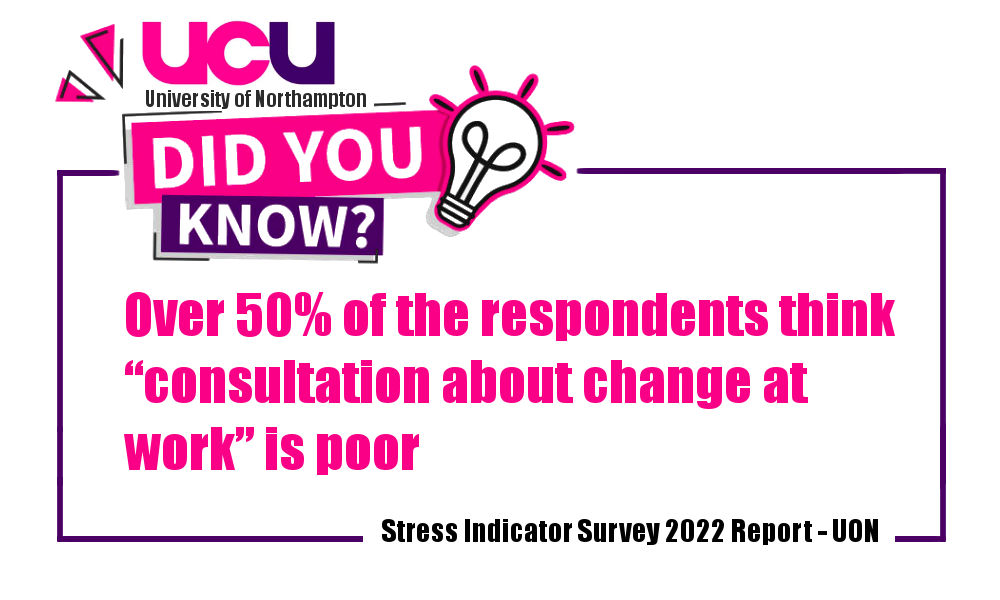
What we were talking about was major organisational change, but even small changes can have a major impact on a workforce. In our own organisation a recent staff survey suggested that ‘Over 50% of respondents considered that consultation about change at work is poor’. That of course relates to previous iterations of change and a new management team would hope to address the issues. However, in doing so there is a need for organisational change.
I’ve had recent experience of being told that something was happening because someone, in agreement with someone else, thought it was a good idea. It promotes their department, showing them in a good light; they took the idea to a meeting and lo and behold, it is agreed. No consultation with those that need to implement the idea, which may be good or bad, who knows. The point being that it is not just change brought about by managers without consultation that causes annoyance, anxiety and stress, it is those daily working practices of people in the organisation that fear challenge of their ideas. Changes are often made with the best of intentions. Sometimes those intentions are to alleviate burgeoning workloads within a department, sometimes to promote the organisation or individuals or to lighten the burden on students, for example. Often, there is consultation, but it is consultation with the wrong people, consultation with the ‘yay sayers’ and those that have little idea about the impact of the change (for the best will in the world, managers can’t know every detail of the work carried out by their staff). Such consultation avoids scrutiny but provides a thin veneer of respectability. Time and again we see staff queuing up to join consultative groups, but how many of these do so with a view to providing a real critique? Take the idea to a management meeting, get it agreed and there you are, its done. If asked about consultation, then the answer is ‘yes of course we did’. The problem is nobody asks the question ‘who exactly did you consult with’?
It will take a huge shift in organisational culture to get the ‘nay sayers’ to volunteer for consultative exercises. They need convincing that their voice is valued and yet they are a valuable asset. Challenge and scrutiny are healthy and help to mitigate unwanted and unintended consequences.
There is nothing worse than having it done to you when it could so easily have been a case of having it done with you. Next time you think about changing something, don’t assume you know best, by doing so you demonstrate how little you value others.

Share this:


Black History Month: A Final Thought

As we come to the end of Black History Month it is important to shine a light on the Black Lives Matters Movement and highlight the historical significance to the problematic discourse of racialisation.
Black history month is an opportunity for people from the various pockets of the Black community to learn about our own history and educate those who are not from the Black community, in order to decolonise our institutions and our society. As Black people we have our own history formed by systemic oppressions and great triumphs. While it is easy (and lazy) for institutions to use terms such as BAME and People of Colour (POC) these problematic uses of language oppress blackness. We are not a monolith of coloured people. Different racialised groups have and will experience, and uphold difference, harms and achievements within society. Furthermore, it would be naïve to ignore the narrative of anti-blackness that people from racialised groups uphold. Therefore, it is important for us and people that look like us, to continue to have the space to talk about our history and our experiences.
For many people in the UK and indeed around the world BLM became a mainstream topic for discussion and debate following the murder of George Floyd. While the term BLACK LIVES MATTER is provocative and creates a need for debate, it signifies the historical ideology that black lives haven’t mattered in historical and in many ways, contemporary terms.
While it is easy to fall into the trap of describing the Black experience as an experience of victimhood, Black history months allows us to look deep at all our history and understand why and where we are as a society.
The UK is one of the most diverse places in the world, yet we continue to fall prey to the Eurocentric ideology of history. And while it is important to always remember our history, the negativity of only understanding black history from the perspective of enslavement needs to be questioned. Furthermore, the history of enslavement is not just about the history of Black people, we need to acknowledge that this was the history of the most affluent within our society. Of course, to glaze over the triangle trade is problematic as it allows us to understand how and why our institutions are problematic, but it is redundant to only look at Black history from a place of oppression. There are many great Black historical figures that have contributed to the rich history of Britain, we should be introducing our youth to John Edmonstone, Stuart Hall, Mary Prince and Olive Morris (to name a few). We should also be celebrating prominent Black figures that still grace this earth to encourage the youth of today to embrace positive Black role models.
Black history for us, is not just about the 1st-31st of October. We are all here because of history we need to start integrating all our history into our institutions, to empower, educate and to essentially make sense of our society.
Share this:


“TW3” in Criminology
In the 1960s, or so I am told, there was a very popular weekly television programme called That Was The Week That Was, informally known as TW3. This satirical programme reflected on events of the week that had just gone, through commentary, comedy and music. Although the programme ended before I was born, it’s always struck me as a nice way to end the week and I plan to (very loosely) follow that idea here.
This week was particularly hectic in Criminology, here are just some of the highlights. On Monday, I was interviewed by a college student for their journalism project, a rather surreal experience, after all, ‘Who cares what I think?’
On Tuesday, @manosdaskalou and I, together with a group of enthusiastic third years, visited the Supreme Court in London. This trip enabled a discussion which sought to unpack the issue of diversity (or rather the lack of) within justice. Students and staff discussed a variety of ideas to work out why so many white men are at the heart of justice decisions. A difficult challenge at the best of times but given a new and urgent impetus when sat in a courtroom. It is difficult, if not impossible, to remain objective and impartial when confronted with the evidence of 12 Supreme Judges, only two of which are women, and all are white. Arguments around the supposed representativeness of justice, falter when the evidence is so very stark. Furthermore, with the educational information provided by our tour guide, it becomes obvious that there are many barriers for those who are neither white nor male to make their way through the legal ranks.

Wednesday saw the culmination of Beyond Justice, a module focused on social justice and taught entirely in prison. As in previous years, we have a small ceremony with certificate presentation for all students. This involves quite a cast, including various dignitaries, as well as all the students and their friends and family. This is always a bittersweet event, part celebration, part goodbye. Over the months, the prison classroom leaves its oppressive carceral environment behind, instead providing an intense and profound tight-knit learning community. No doubt @manosdaskalou and I will return to the prison, but that tight-knit community has now dissipated in time and space.

On Thursday, a similarly bitter-sweet experience was my last focused session this year on CRI3003 Violence: From Domestic to Institutional. Since October, the class has discussed many different topics relating to institutional violence focused on different cases including the deaths of Victoria Climbié, Blair Peach, Jean Charles de Menezes, as well as the horror of Grenfell. We have welcomed guest speakers from social work, policing and the fire service. Discussions have been mature, informed and extremely sensitive and again a real sense of a learning community has ensued. It’s also been my first experience of teaching an all-female cohort which has informed the discussion in a variety of meaningful ways. Although I haven’t abandoned the class, colleagues @manosdaskalou and @jesjames50 will take the reins for a while and focus on exploring interpersonal violence. I’ll be back before the end of the academic year so we can reflect together on our understanding of the complexity of violence.
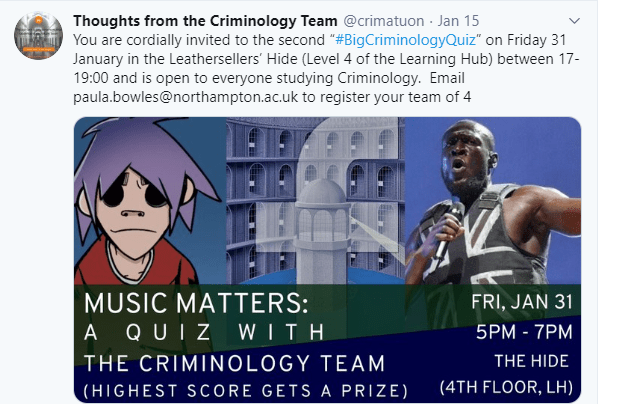
Finally, Friday saw the second ever #BigCriminologyQuiz and the first of the new decade. At the end of the first one, the participants requested that the next one be based on criminology and music. Challenge completed with help from @manosdaskalou, @treventoursu, @svr2727, @5teveh and @jesjames50. This week’s teams have requested a film/tv theme for the next quiz so we’ll definitely have our work cut out! But it’s amazing to see how much criminological knowledge can be shared, even when you’re eating snacks and laughing. [i]
So, what can I take from my criminological week:
- Some of the best criminological discussions happen when people are relaxed
- Getting out of the classroom enables and empowers different voices to be heard
- Getting out of the classroom allows people to focus on each and share their knowledge, recognising that
- A classroom is not four walls within a university, but can be anywhere (a coach, a courtroom a prison, or even the pub!)
- A new environment and a new experience opens the way for discord and dissent, always a necessity for profound discussion within Criminology
- When you open your eyes and your mind you start to see the world very differently
- It is possible (if you try very hard) to ignore the reality of Friday 31 January 23:00 ☹
- It is possible to be an academic, tour guide, mistress of ceremonies and quiz mistress, all in the same week!
Here’s looking forward to next week….not least Thursday’s Changemaker Awards where I seem to have scored a nomination with my #PartnerinCriminology @manosdaskalou.
[i] The first quiz was won by a team made up of 1st and 2nd years. This week’s quiz was won by a group of third years. The next promises to be a battle royale 😊 These quizzes have exposed, just how competitive criminologists can be….
Share this:


Things I used to could do without a phone. #BlackenAsiaWithLove
A Spoken Word poem for young people everywhere, esp Youth in Asia, who may never know WE LIVED before smartphones…and live to tell about it.
Walk.
Walk down the street.
Find my way.
Go someplace.
Go someplace I had previously been.
Go someplace I had previously not been.
Meet.
Meet friends.
Meet friends at a specific time and place.
Meet new people.
Meet new people without suspicion.
Strike up a conversation with a stranger.
Make myself known to a previously unknown person.
Now, everything and everyone unknown is literally described as ‘weird’.
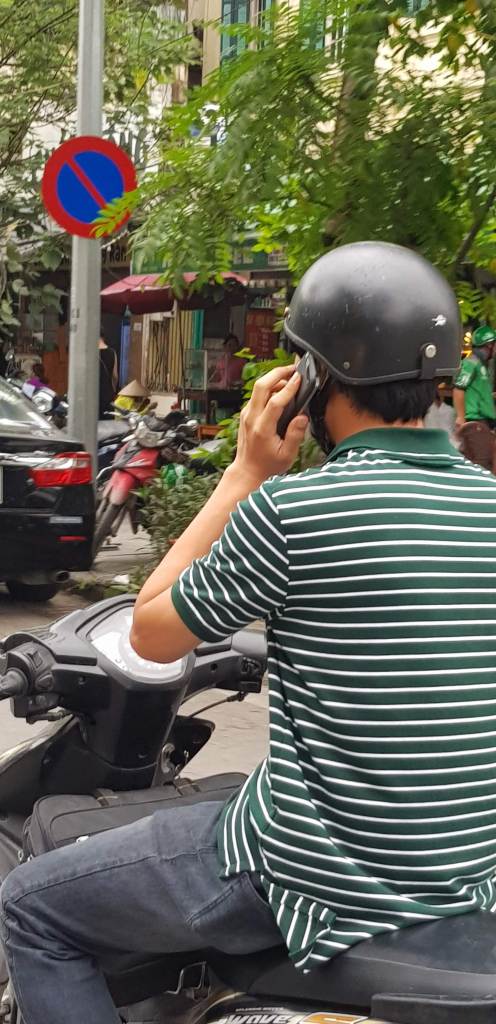
Eat.
Eat in a restaurant by myself.
Pay attention to the waiter.
Wait for my order to arrive.
Sit.
Sit alone.
Sit with others.
Listen.
Listen to the sound of silence.
Listen to music.
Listen to a whole album.
Listen to the cityscape.
Overhear others’ conversations in public.
Watch kids play.
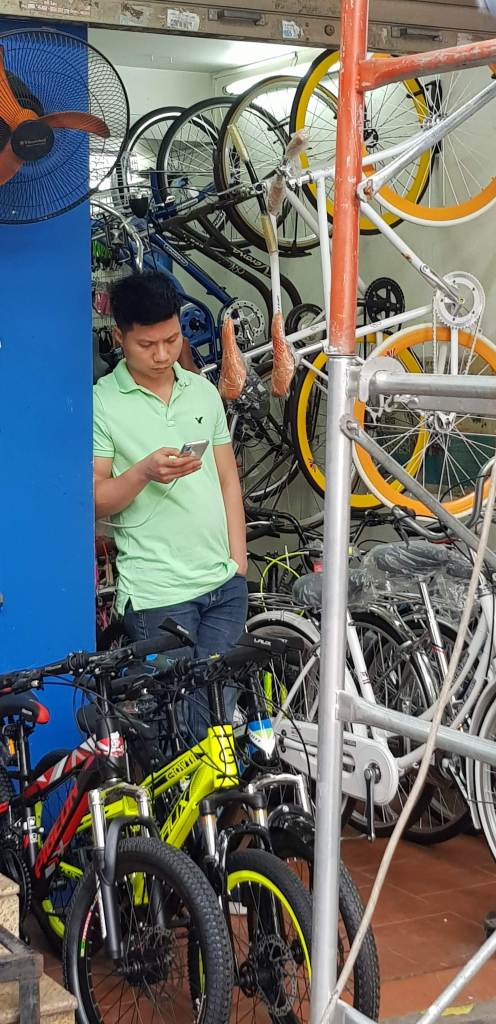
Shop.
Share.
Share pictures.
Take pictures.
Develop pictures.
Frame pictures.
See the same picture in the same spot.
Read.
Read a book.
Read a long article.
Read liner notes.
Pee.
I used to be able to stand at a urinal and focus on what I was doing,
Not feeling bored,
Not feeling the need to respond to anything that urgently.
Nothing could be so urgent that I could not, as the Brits say, ‘take a wee’.
Wait.
Wait at a traffic light.
Wait for a friend at a pre-determined place and time.
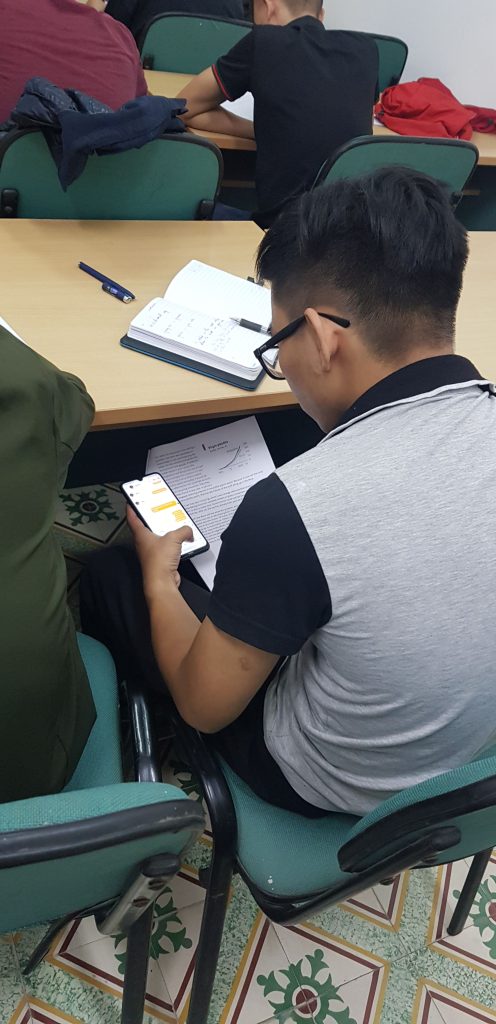
Wait for my turn.
Wait for a meal I ordered to arrive.
Wait in an office for my appointment.
Wait in line.
Wait for anything!
I used to appreciate the downtime of waiting.
Now waiting fuels FOMO.
I used to enjoy people watching…
Now I just watch people on their phones.
It’s genuine anxiety.
Walk.
Walk from point A to B.
I used to could walk between two known points without having to mark the moment with a post.
Now I can’t walk down the hall,
Or through the house or even to the toilet without checking my phone.
I avoid eye contact with strangers.
Anyone I don’t already know is strange.
I used to could muscle through this awkwardness.
Talk.
Have a conversation.
A friend and I recently lamented about how you used to could have a conversation and
Even figure out a specific thing that you couldn’t immediately recall…
Just by talking.
I also appreciate the examples we discussed.
Say you wanted to mention a world leader but couldn’t immediately remember their name. What would you do before?
Rattle off the few facts you could recall and in so doing you’d jog your memory.
Who was the 43rd US president?
If you didn’t immediately recall his name,
You might have recalled that the current one is often called “45” since
Many folks avoid calling his name.
You know Obama was before him, therefore he must’ve been number “44.”
You know Obama inherited a crap economy and several unjust wars,
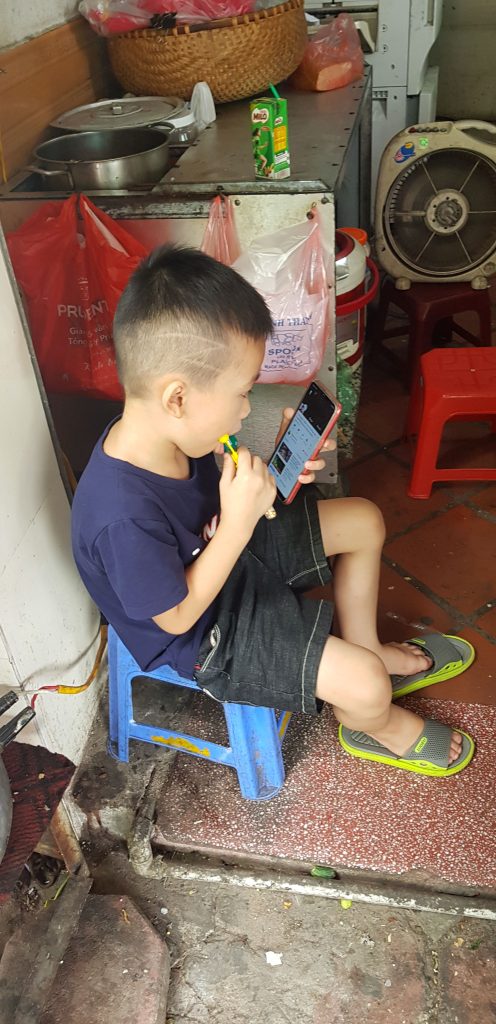
Including the cultural war against Islam. And
That this was even one of the coded racial slurs used against him: “A Muslim.”
Putting these facts together,
You’d quickly arrive at Dubya! And
His whole warmongering cabinet. And
Condi Rice. And
General Powell’s botched PowerPoint presentation at the UN. And
Big dick Cheney, Halliburton and that fool shooting his friend while hunting.
That whole process might have taken a full minute,
But so would pulling up 43’s name on the Google.
This way, however, you haven’t lost the flow of conversation nor the productive energy produced between two people when they talk.
(It’s called ‘limbic resonance’, BTW).
Yeah, I used to be able to recall things…
Many more things about the world without my mobile phone.

Wonder.
Allow my mind to wander.
Entertain myself with my own thoughts.
Think.
Think new things.
Think differently just by thinking through a topic.
I used to know things.
Know answers that weren’t presented to me as search results.
I used to trust my own knowledge.
I used to be able to be present, enjoying my own company,
Appreciating the wisdom that comes with the mental downtime.
Never the fear of missing out,
Allowing myself time to reflect.
It is in reflection that wisdom is born.
Now, most of us just spend our time simply doing:
Surfing, scrolling, liking, dissing, posting, sharing and the like.
Even on a wondrous occasion, many of us would rather be on our phones.
Not just sharing the wonderful occasion –
Watching an insanely beautiful landscape through our tiny screens,
Phubbing the people we’re actually with,
Reducing a wondrous experience to a well-crafted selfie –
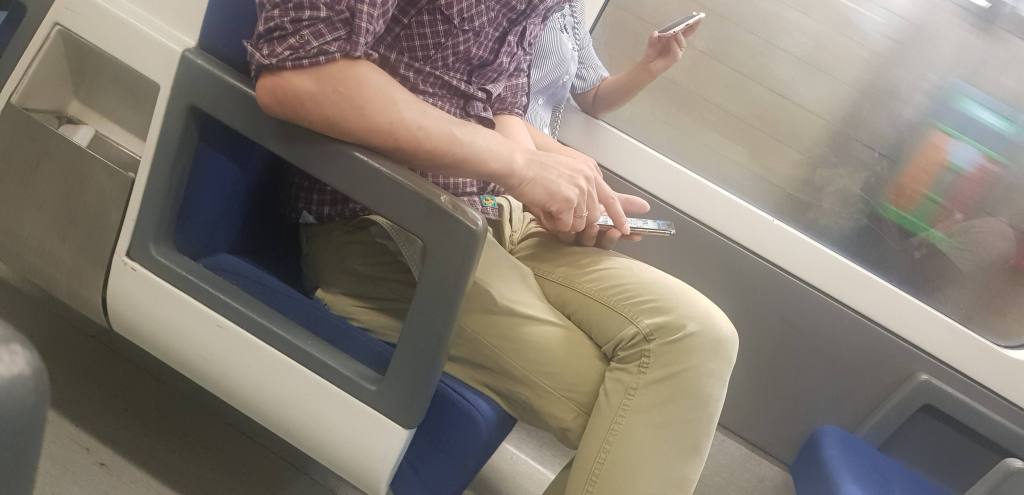
But just making sure we’re not missing out on something rather mundane happening back home.
I used to could be in the world.
Now, I’m just in cyberspace.
I used to be wiser.
Share this:


Empathy Amid the “Fake Tales of San Francisco”*

This time last week, @manosdaskalou and I were in San Francisco at the American Society of Criminology’s conference. This four-day meeting takes place once a year and encompasses a huge range of talkers and subjects, demonstrating the diversity of the discipline. Each day there are multiple sessions scheduled, making it incredibly difficult to choose which ones you want to attend.
Fortunately, this year both of our two papers were presented on the first day of the conference, which took some of the pressure off. We were then able to concentrate on other presenters’ work. Throughout discussions around teaching in prison, gun violence and many other matters of criminological importance, there was a sense of camaraderie, a shared passion to understand and in turn, change the world for the better. All of these discussions took place in a grand hotel, with cafes, bars and restaurants, to enable the conversation to continue long after the scheduled sessions had finished.
Outside of the hotel, there is plenty to see. San Francisco is an interesting city, famous for its Golden Gate Bridge, the cable cars which run up and down extraordinarily steep roads and of course, criminologically speaking, Alcatraz prison. In addition, it is renowned for its expensive designer shops, restaurants, bars and hotels. But as @haleysread has noted before, this is a city where you do not have to look far to find real deprivation.
I was last in San Francisco in 2014. At that point cannabis had been declassified from a misdemeanour to an infraction, making the use of the drug similar to a traffic offence. In 2016, cannabis was completely decriminalised for recreational use. For many criminologists, such decriminalisation is a positive step, marking a change from viewing drug use as a criminal justice problem, to one of public health. Certainly, it’s a position that I would generally subscribe to, not least as part of a process necessary to prison abolition. However, what do we really know about the effects of cannabis? I am sure my colleague @michellejolleynorthamptonacuk could offer some insight into the latest research around cannabis use.
When a substance is illegal, it is exceedingly challenging to research either its harms or its benefits. What we know, in the main, is based upon problematic drug use, those individuals who come to the attention of either the CJS or the NHS. Those with the means to sustain a drug habit need not buy their supplies openly on the street, where the risk of being caught is far higher. Thus our research population are selected by bad luck, either they are caught or they suffer ill-effects either with their physical or mental health.
The smell of cannabis in San Francisco is a constant, but there is also another aroma, which wasn’t present five years ago. That smell is urine. Furthermore, it has been well documented, that not only are the streets and highways of San Francisco becoming public urinals, there are also many reports that public defecation is an increasing issue for the city. Now I don’t want to be so bold as to say that the decriminalisation of cannabis is the cause of this public effluence, however, San Francisco does raise some questions.
- Does cannabis cause or exacerbate mental health problems?
- Does cannabis lead to a loss of inhibition, so much so that the social conventions around urination and defecation are abandoned?
- Does cannabis lead to an increase in homelessness?
- Does cannabis increase the likelihood of social problems?
- Does the decriminalisation of cannabis, lead to less tolerance of social problems?
I don’t have any of the answers, but it is extremely difficult to ignore these problems. The juxtaposition of expensive shops such as Rolex and Tiffany just round the corner from large groups of confused, homeless people, make it impossible to avoid seeing the social problems confronted by this city. Of course, poor mental health and homelessness are not unique to San Francisco or even the USA, we have similar issues in our own town, regardless of the legal status of cannabis. Certainly the issue of access to bathroom facilities is pressing; should access to public toilets be a right or a privilege? This, also appears to be a public health, rather than CJS problem, although those observing or policing such behaviour, may argue differently.
Ultimately, as @haleysread found, San Francisco remains a City of Contrast, where the very rich and the very poor rub shoulders. Unless, society begins to think a little more about people and a little less about business, it seems inevitable that individuals will continue to live, eat, urinate and defection and ultimately, die upon the streets. It is not enough to discuss empathy in a conference, no matter how important that might be, if we don’t also empathise with people whose lives are in tatters.
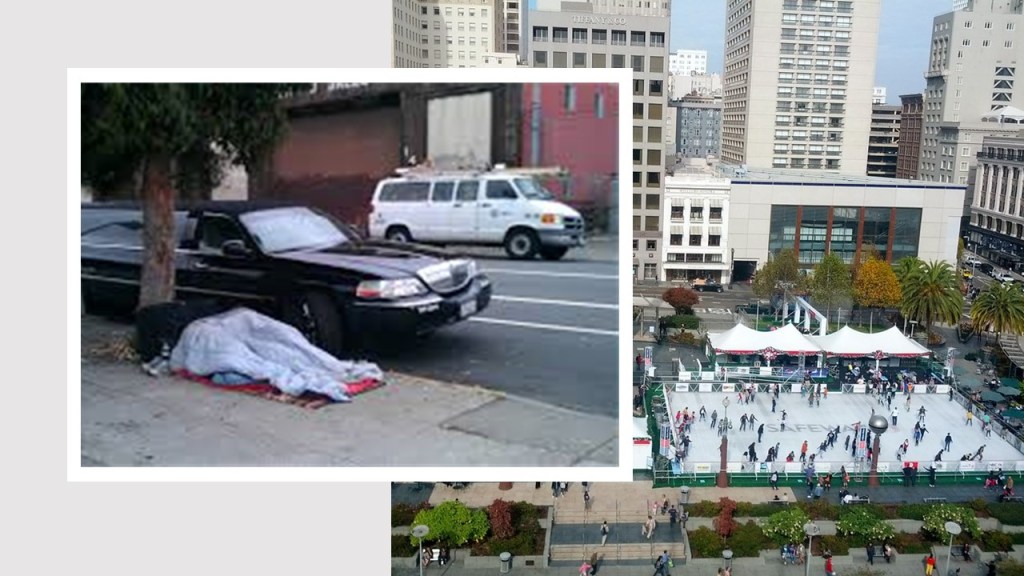
*Turner, Alex, (2006), Fake Tales of San Francisco, [CD]. Recorded by Arctic Monkeys in Whatever People Say I Am, That’s What I’m Not, The Chapel: Domino Records

 Thoughts from the criminology team